
Chobe Day Trip from Victoria Falls 2026: Safari & Waterfall Combo Guide
Key Takeaways
- Chobe National Park day trips from Victoria Falls cost $150-350 per person in 2026, including transportation, border crossings, park fees, game drives, boat cruises, and meals
- The park hosts Africa’s largest elephant population—over 120,000 animals—with virtually guaranteed sightings, especially during dry season (May-October)
- Day trips depart Victoria Falls or Livingstone at 7:00-8:00 AM and return by 6:00-7:00 PM, providing 6-8 hours of actual safari time
- Border crossing at Kazungula takes 1-2 hours depending on immigration queues, requiring valid passports and sometimes Botswana visas
- Dry season delivers optimal wildlife viewing as animals concentrate around permanent water sources, while green season (November-April) offers lush landscapes and bird diversity
- Game drives and boat cruises are both included in standard packages, providing terrestrial and riverine wildlife perspectives in a single day
Why Combine Chobe Safari with Victoria Falls in 2026
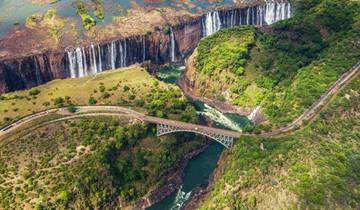
Victoria Falls and Chobe National Park create one of Africa’s most compelling destination pairings, combining the world’s largest sheet of falling water with the continent’s densest elephant population—all within a day’s journey. This combination delivers two UNESCO-worthy experiences without the logistical complexity of separate safari and waterfall itineraries, making it possible to witness both Mosi-oa-Tunya’s thundering cascade and Africa’s greatest wildlife spectacle during a single regional visit.
The 2026 season continues refined day trip operations connecting Victoria Falls with Chobe’s wildlife riches. Professional operators have optimized itineraries to maximize safari time while managing border crossings efficiently, delivering comprehensive wildlife exposure that rivals multi-day safaris elsewhere in Africa. Understanding the logistics, wildlife patterns, and seasonal variations enables travelers to extract maximum value from this powerful destination combination.
People Also Ask About Chobe Day Trips 2026
Is a day trip to Chobe from Victoria Falls worth it in 2026?
Chobe day trips deliver exceptional value for travelers unable or unwilling to commit to multi-day safaris. The park’s wildlife density—particularly elephants—produces more reliable sightings in a single day than many reserves offer over multiple days. The combination of morning game drives through diverse habitats and afternoon boat cruises along the Chobe River provides both terrestrial and aquatic wildlife perspectives. Travelers with limited time frequently rate Chobe day trips among their trip highlights, particularly during dry season when animals congregate around permanent water.
How much does a Chobe day trip from Victoria Falls cost in 2026?
Chobe day trips range from $150-350 per person depending on operator quality, group size, and included services (check individual tour operator websites for current rates as pricing may vary). Standard packages at $150-200 include shared vehicle transportation, border assistance, park fees, game drive, boat cruise, and lunch. Premium packages at $250-350 add smaller group sizes, superior vehicles, quality meals, and enhanced guide expertise. All packages include Victoria Falls/Livingstone hotel transfers, park entrance fees ($12 per person), and government levies.
What wildlife will I see on a Chobe day trip in 2026?
Elephant sightings are virtually guaranteed—herds numbering dozens to hundreds frequent the riverfront daily, particularly during dry season. Hippo and crocodile sightings along the Chobe River approach certainty. Buffalo herds, giraffe, zebra, and various antelope species are highly probable. Predator sightings including lion and leopard occur on approximately 30-40% of trips, increasing during dry season. Wild dogs, Africa’s most endangered large predator, maintain resident populations though sightings require luck. Bird diversity is exceptional year-round with over 450 recorded species.
When is the best time for a Chobe day trip from Victoria Falls in 2026?
Dry season (May-October) delivers optimal wildlife viewing as animals concentrate around the Chobe River and permanent water sources. September and October produce the most dramatic elephant gatherings with herds numbering hundreds at river crossings. Green season (November-April) offers lush landscapes, baby animals, and outstanding birding but dispersed wildlife as water becomes available throughout the park. April-May and October-November transition periods provide reasonable wildlife viewing with fewer tourists.
Extended multi-day tours – 5+ days
Featured Park Victoria Falls Multi-Day Tour Packages

22 days
Cape Town to Vic Falls (19 destinations)
- ✓ Comprehensive Park Victoria Falls tour
- ✓ Expert local guides included
- ✓ All accommodation arranged
- ✓ Transportation provided
3 days
Victoria Falls Zimbabwe
- ✓ Comprehensive Park Victoria Falls tour
- ✓ Expert local guides included
- ✓ All accommodation arranged
- ✓ Transportation provided

8 days
Premium Southern Africa (from Johannesburg to Chobe National Park)
- ✓ Comprehensive Park Victoria Falls tour
- ✓ Expert local guides included
- ✓ All accommodation arranged
- ✓ Transportation provided
14 days
Premium Southern Africa in Depth (8 destinations)
- ✓ Comprehensive Park Victoria Falls tour
- ✓ Expert local guides included
- ✓ All accommodation arranged
- ✓ Transportation provided
Multi-day tour packages powered by TourRadar. Prices and availability subject to change.
Understanding Chobe National Park in 2026
Africa’s Elephant Capital
Chobe National Park encompasses 11,700 square kilometers of protected wilderness in northern Botswana, supporting one of Africa’s most diverse and concentrated wildlife populations. The park’s elephant population exceeds 120,000 individuals—the largest of any park on the continent—with spectacular concentrations along the Chobe River during dry season when animals travel vast distances for water.
Beyond elephants, Chobe maintains substantial populations of buffalo (estimated 20,000+), hippo, crocodile, lion, leopard, wild dog, spotted hyena, cheetah, giraffe, zebra, kudu, impala, sable antelope, and dozens of additional mammal species. The Chobe River corridor attracts this density through permanent water availability in a region where seasonal rivers dry completely during winter months.
Chobe River Wildlife Corridor
The Chobe River forms the park’s northeastern boundary, creating a wildlife corridor where terrestrial and aquatic ecosystems intersect. Animals from vast distances congregate here during dry season, producing wildlife concentrations rivaling East Africa’s famous migrations. The river itself teems with hippo pods, Nile crocodiles, and bird species dependent on aquatic habitats.
Day trips focus on this riverfront zone where wildlife density is highest and access is most practical. The combination of game drives through mopane woodlands, floodplains, and riverine forest with boat cruises along the river channel provides comprehensive exposure to the area’s ecosystems and inhabitants.
Day Trip Logistics from Victoria Falls 2026
Departure Points and Pick-Up 2026
Day trips depart from both Zambian (Livingstone) and Zimbabwean (Victoria Falls) starting points. Hotel pick-up times range from 6:30-8:00 AM depending on accommodation location and operator schedules. Livingstone departures reach the Kazungula border crossing faster, while Victoria Falls departures cross at the Victoria Falls/Kazungula route or transfer through Livingstone.
Pick-up logistics require accurate hotel information during booking. Remote lodges may require meeting at central collection points. Operators confirm exact pick-up times 24-48 hours before the trip. Early departures enable arrival at Chobe during prime morning activity hours when wildlife is most active.
Border Crossing at Kazungula 2026
The Kazungula border crossing connects Botswana with Zambia and Zimbabwe through a modern bridge and ferry facility. Crossing procedures involve exit immigration from your departure country, brief transit through Zambia (if approaching from Zimbabwe), and entry immigration into Botswana. Total border time ranges from 45 minutes under optimal conditions to 2+ hours during peak periods or with complications.
Visa requirements for Botswana vary by nationality. Many Western passport holders receive free entry stamps valid for 90 days. Some nationalities require advance visas obtained at Botswana embassies. KAZA UniVisa holders enjoy streamlined processing. Tour operators assist with immigration procedures and typically handle logistical coordination, but visitors must ensure valid passports and correct visa status before departure.
Border documentation requires valid passports with at least six months validity and two blank pages. Carrying copies of return flight itineraries and accommodation confirmations sometimes assists with immigration queries. Tour operators provide guidance during booking about specific nationality requirements.
Transportation and Vehicles 2026
Transportation from Victoria Falls to Kasane (Chobe’s gateway town) takes 2-3 hours including border crossing. Vehicles range from minibuses (budget operators) to Land Cruisers (premium operators). Once in Botswana, dedicated safari vehicles with elevated seating and open sides provide game drive transportation. Boat cruises use motorized pontoons or smaller vessels depending on operator.
Vehicle quality significantly impacts safari experience. Premium operators use well-maintained 4×4 vehicles with charging ports, shade covers, and refrigerated coolers. Budget operators sometimes use overloaded minibuses with limited visibility. Asking about vehicle specifications during booking clarifies expectations.
Sample Day Trip Itinerary 2026
Morning Schedule 2026
6:30-7:00 AM: Hotel pick-up in Victoria Falls or Livingstone. Drivers collect guests from various accommodations, consolidating at central meeting points before proceeding to the border.
7:30-9:00 AM: Kazungula border crossing. Operators assist with immigration procedures across multiple checkpoints. Refreshment stops and restroom facilities available during processing.
9:00-9:30 AM: Arrival at Kasane and transfer to safari vehicles. Brief orientation from guides explains the day’s program, safety protocols, and wildlife expectations.
9:30 AM-12:30 PM: Morning game drive through Chobe National Park. Routes traverse riverfront woodlands, floodplains, and elevated viewing points. Elephant encounters are almost certain during dry season. Lion sightings possible around buffalo herds. Stops for photography and guide explanations enhance educational value.
Midday Break 2026
12:30-2:00 PM: Lunch at riverside lodge or safari camp. Standard packages include buffet lunches; premium packages offer seated meals with enhanced menus. Restroom facilities, gift shops, and river viewing areas fill the break. Some operators offer optional activities during lunch breaks including cultural demonstrations.
Afternoon Schedule 2026
2:00-5:00 PM: Chobe River boat cruise. Pontoon or motorized boat cruises navigate channels and backwaters where elephants drink, hippos wallow, and crocodiles sun themselves. Afternoon light creates optimal photography conditions. Bird watching peaks as species return to roost.
Elephant swimming and playing in the river ranks among Chobe’s signature sights, with herds crossing between Namibian and Botswanan banks. Young elephants learning to swim create heartwarming scenes. Large breeding herds numbering 50-200 individuals appear regularly during peak dry season.
5:00-5:30 PM: Disembarkation and transfer to return vehicles. Brief refreshment stop before departure.
5:30-7:30 PM: Return journey to Victoria Falls via Kazungula border. Evening border crossings typically move faster than mornings. Hotel drop-off by 7:00-7:30 PM for most locations.
Wildlife Guide for Chobe Day Trips 2026
Elephants: The Main Attraction
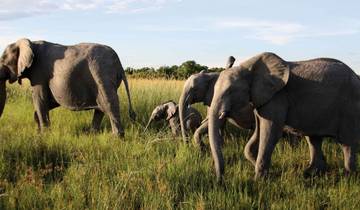
Chobe’s elephants display remarkable diversity in size, behavior, and social structure. Breeding herds led by matriarchs contain females and juveniles of various ages, often spanning four generations. Bachelor groups of young males roam separately, occasionally challenging each other with mock battles. Large bulls, some carrying massive ivory, appear solitary or in small groups.
Peak elephant viewing occurs during dry season (May-October) when herds travel to the Chobe River daily. Morning and late afternoon concentrations produce the most dramatic scenes—hundreds of elephants drinking, bathing, and socializing along riverbanks. During green season, elephants disperse inland where seasonal water reduces river dependency.
Behavioral highlights include dust-bathing (elephants throwing dirt to protect skin from parasites and sun), mud-wallowing, social interactions between family members, and the famous river crossings where herds swim between banks with trunks raised like snorkels.
Big Cats and Predators 2026
Lion sightings occur on roughly 30-40% of Chobe day trips, with odds improving during dry season when prey concentrates around water. Chobe’s lion prides hunt buffalo, which gather in enormous herds along the river—dramatic predator-prey interactions sometimes unfold during game drives. Female lions with cubs provide photogenic family scenes when located.
Leopards inhabit Chobe’s riverine forests but their secretive nature makes sightings relatively rare—perhaps 10-15% of trips. Experienced guides reading alarm calls and territory patterns improve chances. Early morning and late afternoon offer best opportunities.
Wild dogs (African painted wolves) maintain resident populations in Chobe with sightings on approximately 5-10% of trips. These endangered predators roam vast territories, making encounters special when they occur. Their cooperative hunting and social behaviors create memorable observations for fortunate visitors.
Spotted hyenas appear regularly, particularly around lion kills or during morning activity. Cheetahs occasionally pass through the riverfront zone though they prefer more open habitats in the park’s interior.
Hippos and Crocodiles 2026
Hippo sightings approach 100% probability on Chobe River boat cruises. Pods of 10-40 animals populate every bend and backwater, displaying behaviors ranging from yawning threat displays to full submersion with only eyes and ears visible. Hippos are responsible for more human deaths than any other large African mammal—boats maintain safe distances despite their placid appearance.
Nile crocodiles sun themselves on sandbanks and lurk in shallows throughout the river system. Specimens exceeding 4-5 meters inhabit the Chobe, with smaller individuals more commonly observed. Guides point out camouflaged crocodiles that untrained eyes miss among driftwood and vegetation.
Other Wildlife Highlights 2026
Buffalo herds in Chobe number among Africa’s largest, with gatherings exceeding 1,000 animals during dry season. These dangerous bovines attract lions, creating predator-prey dynamics visible during fortunate game drives. Giraffe browse acacia woodlands in small groups, with Chobe’s population classified as the endangered Southern giraffe subspecies.
Zebra and wildebeest migrate seasonally through Chobe’s grasslands, though the famous Botswana zebra migration occurs in the park’s interior rather than the riverfront zone covered by day trips. Kudu, impala, waterbuck, bushbuck, and warthogs appear regularly. Rare sable and roan antelope inhabit certain areas though sightings require luck.
Bird Watching in Chobe 2026
Chobe’s 450+ recorded bird species make it a premier birding destination. Day trips encounter spectacular species including African fish eagle (virtually guaranteed on boat cruises), goliath heron, saddle-billed stork, yellow-billed stork, malachite kingfisher, pied kingfisher, carmine bee-eater (seasonal), and various raptor species.
Green season (November-April) attracts migratory species from Europe and North Africa, dramatically expanding bird diversity. Breeding plumage and nesting behaviors add interest during this period. Dry season concentrates residents around water, improving sighting reliability for key species.
Choosing a Chobe Day Trip Operator 2026
Budget Operators 2026
Budget operators offer Chobe day trips at $150-180 per person using larger group sizes (12-20 passengers), shared minibus transportation to the border, and standard game drive vehicles. Meals consist of buffet lunches at large lodges. These options deliver Chobe’s core wildlife experiences at accessible prices, with savings enabling additional activities elsewhere.
Budget operator considerations include potential crowding in vehicles reducing photography opportunities, less personalized guide attention, and longer travel times with multiple hotel pickups. For travelers primarily seeking elephant encounters without safari photography ambitions, budget options deliver satisfactory experiences.
Mid-Range Operators 2026
Mid-range operators at $200-280 per person improve experiences through smaller groups (8-12 passengers), dedicated safari vehicle transportation throughout, better meal quality, and more experienced guides. These operators often use purpose-built safari vehicles rather than modified minibuses, improving game viewing comfort and photographic opportunities.
This category represents optimal value for most travelers, balancing cost with experience quality. Ask operators about maximum group sizes, vehicle specifications, and guide certifications when comparing options at this price point.
Premium Operators 2026
Premium operators charge $300-350+ per person for small group experiences (4-8 passengers), luxury vehicle transportation, gourmet meals, expert guides with specialist knowledge, and enhanced amenities including premium drinks and flexible schedules. Some premium operators offer private vehicle options for couples or families.
Premium experiences suit serious wildlife enthusiasts, photographers requiring optimal shooting positions, and travelers valuing comfort and exclusivity. The additional cost delivers measurably superior experiences for those prioritizing safari quality over budget optimization.
Operator Selection Criteria 2026
Beyond price, evaluate operators on several factors. Safety records and insurance coverage protect travelers during border crossings and game activities. Guide qualifications including Botswana Professional Guide certifications indicate expertise levels. Vehicle maintenance and age affects reliability and comfort. Guest reviews on independent platforms reveal consistent performance patterns.
Recommended questions during booking include: What is the maximum group size? What type of vehicles are used for border transfers and game drives? What is included in lunch? What guide certifications do your guides hold? What happens if wildlife viewing is poor—do you extend the drive? These questions reveal operator quality beyond marketing materials.
Seasonal Considerations for 2026
Dry Season (May-October 2026): Peak Wildlife
Dry season delivers Chobe’s finest wildlife viewing as animals concentrate around the permanent river. July through October produces the most dramatic concentrations with elephant herds numbering hundreds gathering at water sources. Vegetation dieback improves visibility, and animals are predictably located around known water points.
Dry season drawbacks include dust, brown landscapes (less photogenic than green season), maximum tourist numbers, and premium pricing for accommodation throughout the region. Booking day trips and Victoria Falls activities 2-4 weeks ahead is advisable during peak months.
Green Season (November-April 2026): Lush and Quiet
Green season transforms Chobe’s landscapes with verdant growth following seasonal rains. Baby animals including elephant calves, lion cubs, and various antelope young appear during this period. Migratory birds arrive from Europe and North Africa. Tourist numbers decrease significantly, creating more intimate experiences with lower pricing.
Green season challenges include dispersed wildlife as seasonal water reduces river dependency, afternoon thunderstorms potentially disrupting activities, higher humidity and temperatures, and some roads becoming impassable during heavy rains. Wildlife sightings remain good but require more effort than dry season certainties.
Shoulder Seasons (April-May and October-November 2026)
Transition months combine elements of both seasons. Early dry season (April-May) retains green landscapes while animals begin concentrating as water sources diminish. Late dry season (October-November) sees first rains bringing relief from heat and dust while wildlife remains accessible. These periods offer excellent value with moderate crowds and reasonable wildlife viewing.
Combining Chobe with Victoria Falls Activities 2026
Optimal Itinerary Sequencing 2026
Position Chobe day trips strategically within Victoria Falls itineraries. Early placement (Day 1-2) establishes wildlife context before falls-focused activities. Late placement (final days) provides contrast after adventure activities and creates a calm conclusion. Middle placement breaks up activity-heavy schedules with a change of pace.
Avoid scheduling Chobe immediately after exhausting activities like white water rafting—early wake-up times (6:30 AM) and long days (12+ hours) demand reasonable energy levels for maximum enjoyment.
Sample Combined Itineraries 2026
Four-Day Victoria Falls and Chobe combination:
Day One: Arrival and sunset cruise. Arrive Victoria Falls, settle into accommodation, evening Zambezi sunset cruise ($50-80) as orientation. Light start accommodating travel fatigue. Sunset cruise $50-80, dinner $35-45. Total: $85-125 (excluding accommodation).
Day Two: Victoria Falls exploration. Morning visit to Victoria Falls National Park ($50 Zimbabwe side), midday helicopter flight ($150-200) for aerial perspective, afternoon Zambian viewpoints ($30). Falls entrance Zimbabwe $50, helicopter $150-200, Zambia entrance $30, lunch $20-30, dinner $35-45. Total: $285-355 (excluding accommodation).
Day Three: Chobe day safari. Full-day Chobe excursion ($150-250) including game drive and boat cruise. This experience requires 12+ hours but delivers Africa’s premier elephant viewing alongside Victoria Falls. Chobe day trip $150-250 (includes lunch), dinner $35-45. Total: $185-295 (excluding accommodation).
Day Four: Adventure activities and departure. Morning Devil’s Pool swimming ($100-160) if seasonal, or alternative activity. Afternoon departure or additional exploration. Devil’s Pool $100-160, lunch $20-30. Total: $120-190 (excluding accommodation).
Four-day total activity costs: $675-965 per person (excluding accommodation, international flights).
Multi-Day Chobe Extensions 2026
Travelers seeking deeper safari experiences can extend Chobe visits beyond day trips. Overnight options range from $300-600 per person for standard lodges to $800-2,000+ for luxury camps. Multi-day stays enable night drives (unavailable during day trips), extended wildlife viewing, and exploration of areas beyond riverfront zones.
Two-night Chobe extensions integrate naturally with Victoria Falls visits, allowing comprehensive wildlife photography without the time pressure of day trips. Flying safaris using small aircraft connect Victoria Falls to Chobe camps in 45 minutes, eliminating border crossing time for premium travelers.
Practical Information for 2026 Chobe Day Trips
What to Bring 2026
Essential items for Chobe day trips include valid passport with sufficient validity and blank pages, camera with zoom lens capability (200mm+ recommended for wildlife), binoculars for distant animals and birding, sun protection (hat, sunscreen, sunglasses), warm layers for early morning and boat cruises, and sufficient battery capacity for full-day shooting.
Useful additions include dust protection for camera equipment during game drives, waterproof layer for unexpected boat spray, snacks supplementing provided lunch, and small amounts of US dollars or Botswana Pula for souvenirs or tips.
What to Wear 2026
Neutral-colored clothing (khaki, green, tan, brown) helps wildlife observation by minimizing visual disturbance. Layers accommodate temperature variations from cool early mornings through hot midday to cooling boat cruises. Comfortable closed-toe shoes suit vehicle-based activities—walking requirements are minimal. Long sleeves and pants protect against sun and insects, though shorts are acceptable for vehicle-based safaris.
Avoid bright colors (especially white and bright blue) that can disturb wildlife and attract insects. Camouflage patterns are prohibited in some African countries for security reasons—stick with solid neutral colors.
Photography Equipment 2026
Chobe wildlife photography benefits from serious camera equipment. Telephoto lenses (200-400mm range) capture compelling animal portraits from safe distances. Wide-angle options document landscape scenes and herd compositions. High ISO capability enables sharp shots in forest shade and late afternoon light. Bean bags or clamps stabilize cameras against vehicle movements.
Smartphone cameras capture memories adequately but rarely produce publication-quality wildlife imagery. Travelers prioritizing photography should consider renting professional lenses or booking premium operators offering optimal photography positioning.
Health and Safety 2026
Malaria precautions are essential for Chobe visits—the region maintains year-round malaria risk. Prophylactic medications (consult travel medicine specialists for current recommendations), insect repellent, and long clothing reduce transmission probability. Yellow fever vaccination is required for travelers arriving from endemic countries.
Wildlife safety requires following guide instructions precisely. Remaining seated during game drives, maintaining silence near animals, and never feeding or approaching wildlife prevent dangerous incidents. Hippos and elephants cause more tourist injuries than any other African animals—respect is non-negotiable.
Chobe Day Trip Costs Summary 2026
Complete Cost Breakdown 2026
Understanding full day trip costs enables accurate budgeting. Core package costs range $150-350 depending on operator tier. Packages include Victoria Falls/Livingstone transfers, border crossing assistance, Chobe park fees, morning game drive, lunch, and afternoon boat cruise.
Additional costs may include gratuities ($10-20 per guide recommended), alcoholic beverages with lunch (sometimes extra), and souvenirs at gift shops. Border fees are typically included but verify during booking.
Sample day budget for mid-range Chobe day trip: Day trip package $200-250, gratuities $15-25, dinner (post-return) $35-45. Total day cost: $250-320 per person (excluding accommodation).
Comparison with Multi-Day Safaris 2026
Chobe day trips deliver exceptional value compared to traditional safari itineraries. Multi-day Botswana safaris typically cost $500-1,500+ per person per night including accommodation, activities, and meals. A single Chobe day trip at $150-350 provides substantial wildlife exposure at a fraction of multi-day costs.
However, day trips limit geographic range, exclude night activities, and compress experiences into exhausting schedules. Travelers specifically seeking comprehensive safari experiences should consider multi-day extensions rather than expecting day trips to replicate extended safari depth.
Alternatives to Chobe Day Trips 2026
Zambezi National Park 2026
Zambezi National Park on the Zimbabwean side of Victoria Falls offers half-day safari experiences without border crossing requirements. Game drives cost $80-150 for 3-4 hour excursions encountering elephant, buffalo, giraffe, and various antelope. Wildlife density is lower than Chobe but convenience is higher.
Mosi-oa-Tunya National Park 2026
The Zambian Mosi-oa-Tunya National Park combines falls viewing with wildlife experiences including white rhino tracking. Walking safaris with armed rangers cost $60-100 and provide intimate wildlife encounters impossible from vehicles. The park’s small size limits species diversity but rhino sightings are virtually guaranteed.
Hwange National Park 2026
Zimbabwe’s Hwange National Park offers day trip alternatives 2-3 hours from Victoria Falls. At 14,600 square kilometers, Hwange provides more diverse habitats than Chobe’s riverfront zone, with strong elephant, lion, and wild dog populations. Day trips cost $200-350 with less time pressure than border-crossing Chobe excursions.
Frequently Asked Questions About Chobe Day Trips 2026
Do I need a visa for a Chobe day trip from Victoria Falls in 2026?
Visa requirements depend on nationality. Many Western passport holders (US, UK, EU, Australia) receive free Botswana entry stamps on arrival valid for 90 days. Some nationalities require advance visas from Botswana embassies. KAZA UniVisa ($50) covers Zimbabwe, Zambia, and Botswana for eligible nationalities, streamlining multi-country movements. Tour operators advise on specific requirements during booking.
How early should I book a Chobe day trip for 2026?
Peak season (July-October) bookings should be made 1-2 weeks in advance, especially for premium operators with limited capacity. Shoulder and green seasons accommodate shorter booking windows, sometimes same-day reservations. Travelers with specific date requirements or operator preferences should book earlier regardless of season.
What if it rains during my Chobe day trip in 2026?
Light rain rarely cancels Chobe day trips—animals remain active and operators provide rain covers on vehicles. Heavy storms may delay departures or modify activities. Most operators proceed with trips regardless of weather, offering alternative experiences if specific activities become impossible. Full refunds are unusual unless complete cancellation occurs, though rescheduling may be offered.
Can children participate in Chobe day trips in 2026?
Children of all ages can join Chobe day trips, though operators may require minimum ages (typically 5-7 years) for certain vehicles or activities. Long days (12+ hours) and early wake-ups challenge young children’s stamina. Family-focused operators accommodate children’s needs better than standard group tours. Discuss specific requirements during booking.
Is it possible to see the Big Five on a Chobe day trip in 2026?
Chobe hosts four of Africa’s Big Five: elephant (virtually guaranteed), buffalo (highly likely), lion (30-40% probability), and leopard (rare). The fifth species—rhino—is not present in Chobe, though neighboring reserves including Mosi-oa-Tunya host white rhino populations. “Big Five” expectations should be tempered, but elephant concentrations far exceed anywhere else in Africa.
What meals are included on Chobe day trips in 2026?
Standard packages include lunch at riverside lodges, typically buffet format with varied protein options, salads, and local dishes. Drinks (soft drinks and sometimes alcohol) may be included or cost extra depending on operator. Snacks during game drives vary—premium operators provide refreshments throughout; budget operators may not. Vegetarian and dietary accommodations require advance notice.
How does wildlife viewing in Chobe compare to other safari destinations in 2026?
Chobe’s elephant density is unmatched globally—no other destination guarantees similar concentrations. Overall wildlife diversity ranks somewhat below East African destinations (Kenya, Tanzania) due to narrower habitat range covered by day trips. However, the riverfront setting creates unique wildlife behaviors unavailable elsewhere. For elephant-focused visitors, Chobe surpasses all alternatives.
Can I combine Chobe with an overnight stay instead of a day trip in 2026?
Overnight extensions to Chobe provide enhanced experiences including night drives, extended wildlife viewing, and reduced time pressure. Lodges and camps around Kasane offer packages starting at $300-600 per person per night. Adding one or two nights dramatically improves photography opportunities and overall wildlife exposure compared to day trip limitations.
What currency should I bring for a Chobe day trip in 2026?
US dollars are accepted throughout Botswana’s tourism sector. Most expenses are covered by pre-paid packages, but carry $20-50 USD for gratuities, drinks, and souvenirs. Botswana Pula is the local currency though tourists rarely need it for day trip purchases. Credit cards work at established lodges but not at small vendors.
Are Chobe day trips tiring in 2026?
Yes—12+ hour days starting before 7:00 AM challenge most travelers. Border crossings, vehicle transfers, and active wildlife watching demand sustained attention. Most visitors report satisfying exhaustion after Chobe day trips, having filled the day with memorable experiences. Scheduling rest days before and after helps maintain energy levels for broader Victoria Falls itineraries.