Chillon Castle Ultimate Travel Guide 2026: Everything You Need to Know
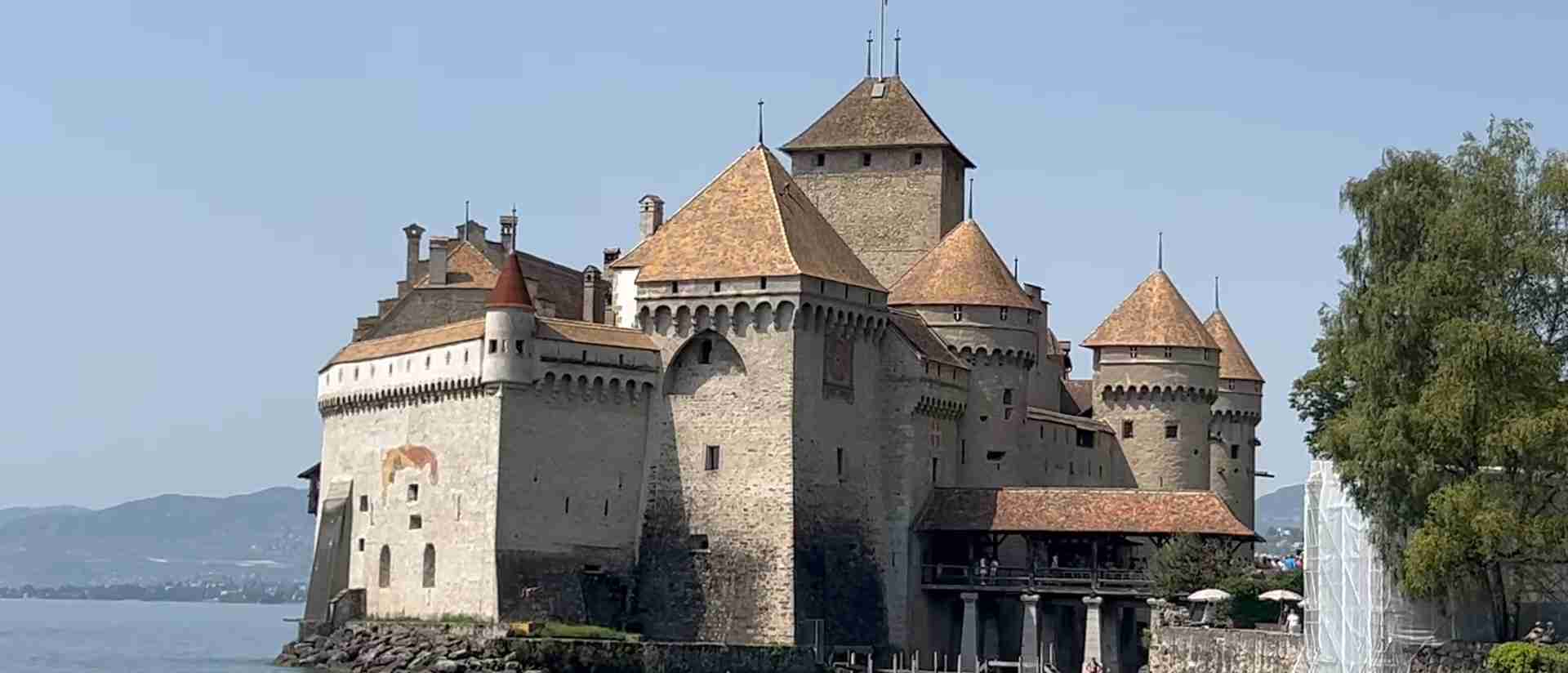
Chillon Castle stands as Switzerland’s most visited historic monument, welcoming over 400,000 visitors annually to its stunning lakeside location near Montreux. This remarkably preserved medieval fortress offers an extraordinary journey through a thousand years of Swiss history, from its strategic role guarding Alpine trade routes to its immortalization in Lord Byron’s poetry, all set against the dramatic backdrop of Lake Geneva and the French Alps.
Key Takeaways: Essential Chillon Castle Facts
- Strategic Location & Setting: Built on a rocky island at Lake Geneva’s eastern end near Montreux, the castle comprises 25 interconnected buildings, three courtyards, and atmospheric underground vaults spanning nearly 1,000 years of continuous occupation
- 2026 Admission Essentials: Adult tickets cost CHF 15 ($16) with reduced rates at CHF 7 ($8) for children ages 6-15, while Swiss Travel Pass holders enjoy complimentary entry and children under 6 enter free
- Seasonal Opening Hours: The castle maintains extended summer hours from 9:00 AM to 7:00 PM (April-September), transitional spring/fall hours from 9:30 AM to 6:00 PM (March and October), and winter hours from 10:00 AM to 5:00 PM (November-February), closed only on January 1 and December 25
- Rich Historical Periods: Experience three distinct eras through preserved architecture and artifacts: the Savoy dynasty period (12th-16th centuries) when it served as a summer palace, the Bernese bailiff administration (1536-1798), and the Canton of Vaud ownership (1803-present)
- Literary & Cultural Fame: The castle gained international recognition through Lord Byron’s 1816 poem “The Prisoner of Chillon,” inspired by François Bonivard’s imprisonment, making it a pilgrimage site for Romantic-era travelers and artists including Victor Hugo, Jean-Jacques Rousseau, and J.M.W. Turner
- Comprehensive Visitor Experience: Plan 2-3 hours to explore 46 numbered points of interest including magnificent Gothic frescoes, medieval dungeons, grand banqueting halls, defensive towers, and an exceptional collection of 300 artifacts discovered during archaeological excavations from 1896 to 1903
People Also Ask About Chillon Castle 2026
Is Chillon Castle worth visiting in 2026?
Chillon Castle absolutely justifies its status as Switzerland’s most visited historic monument in 2026. The fortress delivers exceptional value through its remarkable state of preservation, stunning lakeside setting, and comprehensive historical narrative spanning nearly a millennium. Unlike many European castles that exist primarily as ruins or heavily reconstructed sites, Chillon presents an authentic medieval experience with original 14th-century frescoes, intact Gothic vaulted chambers, and defensive architecture that remains largely unaltered since the Savoy dynasty period. The castle’s strategic location on Lake Geneva creates breathtaking photographic opportunities from virtually every window and rampart, while the underground dungeons immortalized by Lord Byron provide a genuinely atmospheric experience that connects visitors directly to documented historical figures. The admission price of CHF 15 ($16) grants access to 46 numbered rooms and viewing points, three courtyards, and a permanent collection of 300 artifacts, making it competitively priced compared to similar European heritage sites. The professional multilingual interpretation available through free brochures in 19 languages, optional audio guides in nine languages, and regular guided tours ensures accessibility for international visitors, while the castle’s year-round operation and convenient public transport connections from Montreux make it an easily achievable day trip from Geneva, Lausanne, or any Lake Geneva destination.
How do I get to Chillon Castle from Montreux in 2026?
Reaching Chillon Castle from Montreux offers multiple convenient transportation options in 2026, all within 15 minutes of the city center. The most scenic approach involves a 40-minute lakeside walk along the well-maintained promenade path connecting Montreux to Veytaux, offering continuous views of Lake Geneva and the French Alps while passing through flower-lined gardens and Belle Époque architecture. For faster transit, local trains depart Montreux station for Veytaux-Chillon stop every 20-30 minutes, completing the journey in just 4 minutes, followed by a 6-minute walk to the castle entrance. Bus route 201 provides another efficient option, running frequently between Vevey, Montreux, and Villeneuve with a dedicated “Chillon” stop directly in front of the castle entrance, with the journey from Montreux taking approximately 9 minutes. Lake Geneva boat services operated by CGN (Compagnie Générale de Navigation) offer perhaps the most memorable approach, with regular departures from Montreux’s Embarcadère landing stage taking 10-20 minutes to reach the Château-de-Chillon pier, where passengers disembark just 2 minutes from the castle entrance. The boat option particularly appeals during April-September when extended sailing schedules align with the castle’s longer opening hours, and the approach by water recreates the historical arrival experience of medieval nobles and merchants. Drivers can reach the castle via the lakeside cantonal road with a large parking area available at CHF 3 for three hours, though spaces fill rapidly during peak summer months and weekends, making public transport the recommended choice for most visitors.
What are the must-see highlights inside Chillon Castle in 2026?
The castle’s 46 numbered points of interest reward prioritization during your 2026 visit, beginning with the atmospheric underground dungeons where François Bonivard spent six years chained to the fifth pillar from 1530 to 1536, his imprisonment inspiring Lord Byron’s famous poem whose signature remains visible carved into the stone. The Grand Hall of the Counts features remarkably preserved 14th-century Gothic frescoes depicting heraldic shields and religious imagery, while the adjacent Camera Domini (Lord’s Bedroom) showcases authentic medieval furnishings including a massive four-poster bed with heating system, private facilities, and windows overlooking Lake Geneva. The Chapel of Saint George contains the castle’s finest architectural elements with its vaulted ceiling, stone columns, and original religious sculptures and paintings from the 14th century, representing exceptional examples of Gothic ecclesiastical art. The four defensive towers connected by rampart walkways provide spectacular panoramic views encompassing Lake Geneva, the Vaud Riviera, the Dents du Midi mountain range, and the terraced Lavaux vineyards designated as a UNESCO World Heritage Site. The Bernese Great Hall demonstrates the transition from medieval fortress to administrative center with its massive fireplace, weapons displays, and period furniture reflecting 16th-18th century Swiss governance, while the Treasury room houses significant artifacts including ceremonial weapons, silver items, and archaeological finds excavated during the 1896-1903 restoration campaign. The permanent exhibition route takes visitors through residential chambers, watchtowers, courtyards, armories, and storage vaults, each contributing to understanding how the castle functioned simultaneously as military fortress, customs control point, noble residence, and civil prison across eight centuries of occupation.
Can I visit Chillon Castle with children in 2026?
Chillon Castle welcomes family visitors in 2026 with specific programming and considerations for children of all ages. Children under 6 enter free while those ages 6-15 benefit from reduced admission at CHF 7 ($8), and the castle’s inherently engaging architecture captures young imaginations through atmospheric dungeons, defensive towers, hidden staircases, and lakeside ramparts that feel like stepping into a storybook. The Foundation offers dedicated family discovery trails available at the ticket desk, designed with age-appropriate challenges and activities that transform the visit into an interactive treasure hunt through medieval history. Weekend family workshops run throughout the year, while school holiday periods feature special educational programs focusing on medieval life, castle defense systems, and historical storytelling techniques. The multilingual brochures include child-friendly maps highlighting points of particular interest to younger visitors, and the 13 touchscreen stations throughout the castle present short films with visual storytelling that maintains children’s engagement. Practical considerations include that strollers cannot navigate the castle’s medieval staircases and uneven floors, requiring visitors with infants to use baby carriers available for loan or bring their own, while the cafeteria provides changing facilities and the unattended cloakroom offers storage for strollers during the visit. The castle’s typical 2-hour exploration time can be adjusted based on children’s attention spans, with families often combining the visit with time at the small beach adjacent to the castle during warm weather or a boat ride on Lake Geneva to create a full day experience. The genuine medieval atmosphere, complete with authentic dungeons and defensive architecture, creates memorable educational experiences that bring history textbooks to life for school-age children, while the stunning natural setting provides ample outdoor space for activity between castle exploration.
Extended multi-day tours – 5+ days
Featured Montreux Multi-Day Tour Packages
6 days
Switzerland in a Nutshell Small Group Tour 2026
- ✓ Comprehensive Montreux tour
- ✓ Expert local guides included
- ✓ All accommodation arranged
- ✓ Transportation provided

5 days
5-Days in Genava : Scenic Switzerland Wonders of Annecy & Zermatt
- ✓ Comprehensive Montreux tour
- ✓ Expert local guides included
- ✓ All accommodation arranged
- ✓ Transportation provided
7 days
Tailor-Made 7 Days Luxury Golden Pass Line of Switzerland Trip, Daily Depart
- ✓ Comprehensive Montreux tour
- ✓ Expert local guides included
- ✓ All accommodation arranged
- ✓ Transportation provided

6 days
Switzerland in a Nutshell Small Group Tour 2027
- ✓ Comprehensive Montreux tour
- ✓ Expert local guides included
- ✓ All accommodation arranged
- ✓ Transportation provided
Multi-day tour packages powered by TourRadar. Prices and availability subject to change.
Introduction: Switzerland’s Premier Historic Monument
Chillon Castle commands one of Europe’s most photographed locations, its medieval walls and turrets rising directly from Lake Geneva’s crystalline waters at the foot of the French Alps. This architectural masterpiece has witnessed nearly a millennium of continuous human occupation, from Bronze Age settlements to its current role as Switzerland’s most visited historic building. The castle’s strategic position on a natural rocky platform between the lake and steep mountains made it an invaluable military and commercial asset for successive rulers who controlled the vital north-south trade route connecting Germanic lands with Italy through the Great Saint Bernard Pass. Today’s visitors encounter a remarkably authentic medieval experience, as Chillon escaped the destruction that befell so many European castles during warfare, religious conflicts, and revolutionary periods.
The fortress complex sprawls across an oval-shaped limestone outcrop measuring approximately 110 meters long by 45 meters wide, its distinctive ship-like profile comprising 25 interconnected buildings, three courtyards, and extensive underground vaulting systems carved into the living rock. The castle’s architectural evolution reflects eight centuries of construction and modification under three primary ruling periods: the House of Savoy (12th-16th centuries) who transformed a simple watchtower into a magnificent fortified palace, the Bernese administration (1536-1798) who utilized it as a bailiff’s residence and regional governance center, and the Canton of Vaud (1803-present) who have maintained it as a public cultural monument. This layered history creates a fascinating palimpsest where Romanesque foundations support Gothic halls, Renaissance modifications blend with Baroque updates, and careful 19th and 20th-century restorations have preserved the essential medieval character while enabling modern visitor access.
Chillon’s fame extends beyond architectural significance through its powerful connections to European Romantic literature and art. Lord Byron’s 1816 visit during his famous tour of Lake Geneva with Percy Bysshe Shelley resulted in “The Prisoner of Chillon,” a narrative poem that transformed the dungeon where François Bonivard was imprisoned into an international symbol of the fight for liberty and the cruelty of tyranny. Byron’s literary treatment, combined with Jean-Jacques Rousseau’s earlier reference in “Julie, or the New Heloise” (1761), established Chillon as an essential destination on the Grand Tour, attracting Victor Hugo, Alexandre Dumas, Gustave Flaubert, and countless other writers, painters, and musicians who found inspiration in its Gothic atmosphere and stunning natural setting. This cultural resonance continues in 2026, with the castle’s dungeons displaying Byron’s signature carved into the stone column where Bonivard was chained, creating a tangible link between historical events, literary imagination, and contemporary visitors’ experiences.
The castle’s exceptional state of preservation results from pioneering conservation work undertaken from 1887 onward, when the Association for the Restoration of Chillon Castle initiated systematic archaeological study and careful restoration under architect-archaeologist Albert Naef. Naef’s revolutionary approach prioritized historical accuracy over aesthetic enhancement, conducting extensive archival research and archaeological excavations while meticulously documenting all interventions through plans, photographs, and detailed journals. His methods included marking replacement stones with inscriptions (R for Restored, RFS for Restoration Facsimile, RL for Free Restoration), differentiating new work through color changes or red lines on masonry, and refusing to “complete” missing elements through speculative reconstruction. This ethical approach to heritage conservation, developed at Chillon from 1896 to 1903, influenced restoration practices throughout Europe and established principles still followed by the Technical Commission of architects, historians, and heritage specialists who oversee all work on the building today.
Modern visitors in 2026 benefit from this conservation legacy through access to genuinely medieval spaces with minimal modern intervention. The permanent exhibition route leads through 36 numbered rooms containing approximately 300 artifacts, most discovered during Naef’s archaeological campaigns and now maintained by the Cantonal Museum of Archaeology and History in Lausanne. The collections encompass weapons and armor demonstrating medieval military technology, period furniture illustrating noble and administrative living conditions, and archaeological objects revealing daily life across the castle’s occupation periods. Thirteen touchscreen stations provide multimedia content including eight short films explaining the castle’s historical narrative, architectural evolution, and cultural significance, while the Foundation produces temporary exhibitions examining specific aspects of Chillon’s history through contemporary scholarship and innovative presentation techniques. This combination of authentic medieval architecture, professional interpretation, spectacular natural setting, and accessible location makes Chillon Castle an essential destination for anyone exploring Swiss heritage, medieval European history, or the Lake Geneva region’s extraordinary cultural landscape.
History of Chillon Castle: From Bronze Age to Modern Monument
Prehistoric and Roman Origins
Archaeological evidence confirms human occupation of the Chillon site extends back to the Bronze Age, approximately 3,000-4,000 years before present, with excavations revealing tools, pottery fragments, and structural remains indicating seasonal or permanent settlement on the rocky outcrop. The site’s strategic value was immediately apparent to early inhabitants: the natural limestone platform provided defensive advantages, controlled access to the narrow shoreline passage between steep mountains and deep water, and offered protection from flooding while maintaining access to Lake Geneva’s fishing and transportation resources. Roman military engineers recognized these same advantages during their conquest and occupation of Helvetia following Julius Caesar’s campaigns against the Helvetii in 58 BCE. Although direct evidence of Roman military structures at Chillon remains limited, the location’s proximity to major Roman roads connecting Italy through the Great Saint Bernard Pass to Gaul and Germania, combined with Roman engineering practices of fortifying strategic chokepoints, suggests at minimum a watchtower or signal station occupied the site during the Imperial period from the 1st to 4th centuries CE.
The collapse of Roman authority in the 5th century initiated centuries of instability and political fragmentation across the former province of Helvetia. The site likely maintained some military or observation function under successive Burgundian, Frankish, and local lordships who controlled the Lake Geneva region during the Early Middle Ages (500-1000 CE). Documentary silence regarding Chillon during this period reflects the general scarcity of written records rather than site abandonment, and the continuous strategic importance of controlling the lakeside passage ensures some form of fortification or toll collection point operated throughout these centuries. The Bishops of Sion, whose ecclesiastical authority extended over much of the Valais and surrounding territories, controlled the Chillon site during the 10th and 11th centuries, using it as both a defensive position and a revenue source through tolls levied on merchants and travelers utilizing the north-south trade corridor.
The Savoy Dynasty Period (12th-16th Centuries)
The transformation from simple watchtower to magnificent fortified palace began when the ambitious Counts of Savoy gained control over Chillon during the 11th century, recognizing its unparalleled strategic value for controlling trade and military movements between their expanding territories. The first written documentation of Chillon Castle appears in a 1150 charter in which Count Humbert III granted the Cistercian monastery of Hautcrêt free passage rights through the toll collection point at Chillon, confirming the castle’s role as both fortress and customs station. The Counts systematically exploited Chillon’s geographic advantages to accumulate vast wealth through taxation of merchants traveling the Via Francigena pilgrimage route to Rome, traders moving goods between Italian city-states and northern European markets, and military forces requiring passage through the Alpine valleys. This commercial revenue funded successive construction campaigns that expanded the modest 11th-century donjon (keep) into the sprawling fortified complex visitors encounter today.
Count Thomas I (reigned 1189-1233) initiated major architectural expansion, employing the renowned architect Pierre Mainier to design defensive walls, residential quarters, and administrative facilities that reflected Savoy’s growing power and sophistication. His successor Peter II (reigned 1263-1268) oversaw Chillon’s golden age during the 1240s, transforming the fortress into a luxurious summer residence while maintaining its military strength. Peter II’s renovations created the Grand Hall with its Gothic vaulted ceilings and decorative frescoes, the Camera Domini with private chambers suitable for a ruling count, the Chapel of Saint George with its elegant religious architecture, and the system of interconnected courtyards and buildings that gave the castle its current configuration. The 13th and 14th centuries saw Chillon function simultaneously as military stronghold, administrative headquarters for Savoy’s northern territories, commercial toll station, storage depot for grain and supplies, occasional prison for political enemies, and elegant noble residence where the counts hosted banquets, received diplomatic missions, and administered justice.
The castle’s defensive underground vaulting dates primarily from Peter II’s reign, carved directly into the limestone bedrock to create storage chambers, dungeons, and protected spaces that could withstand siege conditions. These Gothic vaulted spaces feature distinctive pointed arches supported by massive stone pillars, with the easternmost chambers later gaining infamy as the prison where François Bonivard and other political prisoners endured years of captivity chained to the pillars. The Savoy family’s power reached its zenith in the 14th century when they controlled territories spanning from Lake Geneva to the Mediterranean coast, but internal succession disputes, military defeats, and the Black Death’s demographic catastrophe gradually weakened their position. By the 15th century, the Counts of Savoy (elevated to Dukes in 1416) increasingly favored residences at Chambéry, Ripaille, and Thonon over Chillon, relegating the castle to more purely administrative and military functions while reducing investment in its maintenance and enhancement.
The Bernese Period (1536-1798)
The Reformation’s religious and political upheavals transformed Chillon’s fate in March 1536 when Bernese Protestant forces conquered the Pays de Vaud, ending nearly 400 years of Savoy Catholic rule in a military campaign that lasted mere weeks. The Bernese recognized Chillon’s strategic and symbolic importance, liberating all prisoners including François Bonivard who had spent six years chained in the dungeons for advocating Geneva’s independence and supporting Protestant religious reforms. Bonivard’s release and subsequent fame as a martyr for liberty and religious conscience made him a powerful propaganda figure for Protestant forces, though the historical Bonivard proved far more complex and morally ambiguous than his later literary representations suggested. The Bernese converted Chillon into the residence for their regional bailiff (Vogt), the appointed administrator responsible for governing the conquered Vaud territories, collecting taxes, administering justice, and maintaining order in this newly Protestant region.
Under Bernese administration from 1536 to 1798, Chillon’s character shifted from noble residence to bureaucratic headquarters and military arsenal. The bailiffs modified interior spaces to suit administrative needs, updated some furnishings to reflect 16th-18th century tastes, and maintained the castle’s defensive capabilities as insurance against potential Savoy reconquest attempts or French military threats. The Great Bernese Hall exemplifies this period with its massive fireplace, functional rather than ornamental décor, and emphasis on practical governance spaces over aristocratic luxury. The castle continued serving as a prison for common criminals and political dissidents, as an armory storing weapons and gunpowder for regional defense, and as a warehouse for grain reserves and government supplies. By 1733, Bernese bailiffs had relocated to more modern and comfortable quarters elsewhere, leaving Chillon primarily as a military and storage facility with minimal residential function, a status that contributed to the deterioration of its residential quarters while ironically preserving its medieval architectural character through benign neglect.
Canton of Vaud Ownership and Modern Heritage Management (1798-Present)
The French Revolution’s ideological shockwaves reached Lake Geneva in 1798 when patriots from Vevey and Montreux seized control from the Bernese administration, declaring the Lemanic Republic and inviting French revolutionary forces to support their independence movement. The transfer of power occurred peacefully at Chillon, with departing Bernese officials avoiding armed conflict in recognition of their untenable political position. French occupation forces utilized Chillon as an ammunition depot and military warehouse from 1798 to 1803, when Napoleon’s Act of Mediation reorganized Swiss cantons and assigned Chillon Castle to the newly created Canton of Vaud. The canton initially continued using the castle for storage and occasionally as a prison, allowing the building to deteriorate significantly through neglect and inappropriate modifications that damaged historical fabric in favor of short-term utilitarian needs.
The Romantic movement’s passionate interest in medieval architecture and Gothic atmosphere began transforming Chillon’s cultural status during the early 19th century, particularly following Lord Byron’s 1816 visit and his subsequent publication of “The Prisoner of Chillon.” This literary fame combined with growing scholarly and public interest in preserving Switzerland’s historical monuments led to the formation of the Association for the Restoration of Chillon Castle in 1887. The Association’s charter committed to creating a museum exhibiting Vaudois history while restoring the castle through scientifically rigorous methods that prioritized historical accuracy over aesthetic appeal. Architect Albert Naef assumed leadership of the restoration project in 1892, devoting twenty years to systematic archaeological investigation, archival research, and careful conservation work that established international standards for heritage preservation ethics. Naef’s approach subordinated personal aesthetic judgments to documentary evidence, marking all restoration work clearly to distinguish original medieval fabric from modern interventions, and refusing to “complete” missing architectural elements through speculative reconstruction.
The restoration campaign from 1896 to 1903 included extensive archaeological excavations that revealed Bronze Age artifacts, Roman-era objects, and countless items from the castle’s medieval and early modern occupation periods. These finds formed the core of the castle’s museum collections, now maintained by the Cantonal Museum of Archaeology and History in Lausanne with approximately 300 objects displayed within the castle itself. Naef’s meticulous documentation through photographs, measured drawings, and detailed written journals created an invaluable archive recording the castle’s condition before intervention and every stage of restoration work. His ethical framework influenced global conservation practice, establishing principles including minimal intervention, clear differentiation between original and restored elements, reversibility of conservation treatments, and comprehensive documentation that remain fundamental to heritage preservation today. The canton transferred management responsibility to the independent Chillon Castle Foundation in 2002, ensuring professional governance focused entirely on the monument’s preservation, research, public education, and cultural programming missions while maintaining public accessibility and scholarly study opportunities for future generations.
Architecture and Layout: Understanding Chillon’s Medieval Design
Strategic Siting and Overall Configuration
Chillon Castle’s architectural genius begins with its extraordinary site selection, occupying a natural limestone platform that extends into Lake Geneva while remaining connected to the mainland by a narrow causeway, now reinforced and expanded to accommodate modern vehicle access. The rocky outcrop’s oval shape measuring approximately 110 meters long by 45 meters wide determined the castle’s distinctive ship-like profile, with builders adapting their architectural plans to the irregular natural foundation rather than attempting to reshape the rock to fit preconceived geometric designs. This adaptive approach created the castle’s organic layout where buildings cluster irregularly, courtyards occur at varying levels, and defensive walls follow the island’s natural contours rather than imposing regular geometric fortification patterns. The site’s surrounded-by-water position provided natural moat protection on three sides, eliminating the need for extensive earthwork fortifications while creating a visually dramatic setting where medieval walls appear to rise directly from the lake’s surface.
The castle’s position between the steep mountains descending to Lake Geneva’s shore and the deep water created an impassable bottleneck controlling the only practical land route along the lake’s eastern end. This geographic chokepoint enabled a small garrison to monitor and tax all commercial traffic, military movements, and pilgrim groups traveling between northern Europe and Italy, generating substantial revenue that funded the castle’s continuous expansion and enhancement. The defensive advantages extended beyond toll collection to genuine military value: attackers approaching by land faced a narrow corridor with no room for maneuvering large forces, while naval assault proved impractical given the limited boat capacities available during the medieval period and the difficulty of coordinating amphibious operations against well-defended stone fortifications. The surrounding mountains prevented artillery positions from achieving effective range until modern cannon technology emerged in the 16th century, by which point the castle’s military significance had already declined in favor of its administrative and symbolic functions.
The Three Courtyards and Building Clusters
Chillon’s 25 interconnected buildings organize around three principal courtyards that developed sequentially during successive construction campaigns, each reflecting different functional priorities and architectural styles. The First Courtyard near the landward entrance served defensive and service functions with guard posts, storage facilities, stables, workshops, and the fortified gatehouse controlling access to the castle’s interior. Medieval visitors entering through this courtyard encountered the castle’s military character through weapon displays, garrison quarters, and deliberate architectural intimidation designed to impress both peaceful guests and potential enemies with Savoy power. The courtyard’s buildings primarily date from the 13th and 14th centuries with Gothic architectural elements including pointed arches, stone vaulting, and defensive arrow slits integrated into residential and storage structures.
The Second Courtyard represents the castle’s ceremonial and residential core, where the Counts of Savoy maintained their summer palace with grand halls for banquets and official ceremonies, private apartments for the count and countess, administrative offices for managing regional governance, and the Chapel of Saint George for religious observances. This courtyard’s buildings showcase the finest medieval architecture at Chillon with elaborately decorated chambers, large windows overlooking Lake Geneva (a luxury possible only because the water provided natural defensive protection making small defensive slits unnecessary), original 14th-century frescoes depicting heraldic shields and religious imagery, and sophisticated Gothic stonework in the chapel’s vaulted ceiling and carved capitals. The Camera Domini (Lord’s Bedroom) exemplifies medieval noble luxury with its four-poster bed, private fireplace with heating system, attached garderobe (medieval toilet), and windows positioned to capture morning light and lake views while maintaining reasonable security against external threats.
The Third Courtyard and associated buildings at the castle’s lakeside extremity housed additional residential quarters, defensive towers commanding views up and down Lake Geneva, storage vaults carved into the bedrock, and the notorious dungeons that gained literary fame through Lord Byron’s poetry. This section’s architecture demonstrates pure military functionality with thick walls designed to absorb siege weapon impacts, minimal decorative elements, emphasis on structural strength over aesthetic refinement, and the underground vaulted chambers that served variously as grain storage, wine cellars, armories, and prisons depending on the castle’s changing needs across eight centuries. The dungeons’ Gothic pointed arches rest on seven massive stone pillars, with prisoners historically chained to the fifth pillar where François Bonivard endured six years of captivity and where Lord Byron carved his signature during his 1816 visit.
Defensive Architecture and Military Features
Chillon’s military architecture evolved continuously from the 11th through 16th centuries, incorporating successive advances in siege warfare technology and defensive design theory while adapting to the unique challenges of the lakeside site. The oldest surviving structure, the square donjon (keep) built in the late 11th century, served as the castle’s ultimate defensive redoubt and residence for the garrison commander, featuring thick stone walls, minimal openings for natural light, internal wooden floors accessed by removable ladders, and storage capacity for food and water enabling the garrison to withstand extended siege conditions. Subsequent construction campaigns added concentric defensive walls, creating multiple defensive lines that attackers had to overcome sequentially while defenders could retreat to inner fortifications, maintain crossfire coverage of outer walls from protected positions, and concentrate forces at threatened sectors without exposing the entire garrison to attack.
The castle’s towers served overlapping defensive, residential, and symbolic functions, with each major tower commanding specific approach routes while housing residential or storage space during peacetime. The rampart walkways connecting towers enabled defenders to move rapidly between threatened positions, maintain visual communication across the complex, and deliver defensive fire including arrows, crossbow bolts, and later firearms against attackers attempting to scale walls or force gates. The machicolations (projecting gallery structures atop walls with floor openings) allowed defenders to drop stones, pour boiling liquids, or shoot vertically downward at enemies reaching the wall base, while murder holes in gateway passages created killing zones where attackers crowding through narrow entrances faced weapons fire from multiple directions with no possibility of escape or effective countermeasure.
The underground vaulted chambers provided crucial defensive capabilities beyond their peacetime storage functions, offering protected spaces for garrison and civilians during bombardment, maintaining food and water supplies during siege blockades, securing weapons and ammunition in fireproof stone chambers, and creating structural foundations strong enough to resist siege mining attempts to undermine walls. The dungeons’ repurposing as prison cells represented a later adaptation of military architecture to administrative needs, with the same features that made these chambers secure against external attack (thick walls, minimal openings, controlled access) making them equally effective for confining prisoners. The integration of Lake Geneva into the defensive system proved particularly ingenious: the water-filled moat on three sides prevented siege tower approaches, undermining operations, and massed infantry assaults while providing the garrison fresh water access, escape routes by boat during emergencies, and resupply capabilities that land-locked fortresses could not match.
Religious and Ceremonial Spaces
The Chapel of Saint George represents Chillon’s finest architectural achievement and best-preserved medieval religious space, constructed in the early 14th century during the castle’s transformation from pure fortress to noble residence under the Counts of Savoy. The chapel’s Gothic architecture features a ribbed vaulted ceiling with elegant stone ribs meeting at decorated bosses, pointed arch windows with original tracery work, carved stone capitals depicting stylized foliage and heraldic symbols, and wall spaces decorated with religious frescoes including representations of Saint George (the chapel’s patron saint and symbol of Christian military virtue), the Virgin Mary, and various biblical scenes executed in the tempera technique characteristic of 14th-century religious art. The chapel’s relatively large windows facing Lake Geneva demonstrate the luxury possible in spaces protected by water-moat rather than requiring minimal defensive openings, allowing natural light to illuminate religious services and showcase the counts’ wealth through expensive stained glass (now lost to later modifications and restorations).
The chapel served multiple functions beyond religious observance, hosting coronation-equivalent ceremonies when new counts assumed authority, providing neutral ground for diplomatic negotiations and treaty signings under religious sanction, conducting noble weddings that created political alliances between Savoy and other European dynasties, and offering spiritual legitimacy for the counts’ secular authority through architectural assertion that their power derived from divine providence as well as military strength. The integration of religious and military architecture at Chillon reflects medieval worldviews that saw no contradiction between Christian faith and armed violence in defense of legitimate authority, with Saint George (a military saint who slayed dragons and defended the faithful) serving as perfect symbolic patron for a warrior nobility that viewed itself as God’s instrument for maintaining social order and defending Christendom against external and internal threats.
Residential Quarters and Noble Living Spaces
The counts’ residential apartments demonstrate medieval noble lifestyle expectations through architectural features including multiple interconnected chambers for different functions (sleeping, dressing, receiving visitors, private dining), sophisticated heating systems using fireplaces with flues designed to maximize heat retention while minimizing smoke infiltration, garderobe facilities (toilets) built into wall thickness with waste chutes dropping to lake water or collection chambers, and large windows positioned to capture morning light, afternoon sun, or specific views while maintaining defensive security through elevated positions inaccessible to ground-level attack. The Camera Domini exemplifies this integrated approach to comfort and security with its four-poster bed occupying a recessed alcove, fireplace with decorated stone surround and efficient flue system, private garderobe with wooden seat, windows providing Lake Geneva views and Alpine panoramas, and attached antechamber where servants slept to provide immediate attendance while maintaining the count’s privacy.
The Great Hall represents the castle’s primary ceremonial space where the counts held banquets for vassals and allies, received diplomatic missions from foreign powers, dispensed justice to subjects and resolved legal disputes, displayed wealth through elaborate furnishings and tapestries, and performed the theatrical aspects of medieval governance that reinforced social hierarchies through visual splendor and carefully choreographed ritual. The hall’s architecture supports these functions through generous dimensions accommodating hundreds of guests, windows providing natural light and ventilation for crowded events, massive fireplace capable of heating the entire space during winter gatherings, high ceilings creating acoustic properties suitable for music and oratory, and doorway positions allowing servants to circulate with food and drink while maintaining visual separation between service spaces and noble display areas. Original 14th-century frescoes decorating the hall’s walls depicted heraldic shields of Savoy vassals and allies, religious imagery legitimizing comital authority, and decorative patterns demonstrating sophisticated artistic patronage that paralleled the counts’ political and military achievements.
Visiting Chillon Castle 2026: Practical Information
2026 Admission Prices and Ticketing Options
Chillon Castle maintains straightforward pricing for individual visitors in 2026, with adult admission at CHF 15 ($16), providing access to all 46 numbered points of interest, three courtyards, underground dungeons, permanent exhibitions, and temporary special exhibitions (check official site for current rates as pricing may vary). Children ages 6-15 receive reduced admission at CHF 7 ($8), while children under age 6 enter free, making family visits highly affordable for Swiss and international tourists. Students with valid identification, seniors over 65, and persons with disabilities receive the same CHF 7 ($8) reduced rate, with accompanying caregivers for persons with disabilities admitted free. Swiss Travel Pass holders enjoy complimentary castle admission as part of their rail pass benefits, eliminating the need to purchase separate tickets and creating excellent value for multi-day Switzerland itineraries that include Lake Geneva destinations. The Swiss Museum Pass similarly grants free entry, rewarding culture-focused travelers who plan to visit multiple museums and heritage sites throughout Switzerland.
Advance online ticket purchase through the official Chillon Castle website enables visitors to skip potential ticket office queues, particularly advantageous during peak summer months (June-August) and holiday periods when daily visitor numbers can exceed 2,000 people. Online tickets allow purchase up to three months in advance, with e-tickets delivered immediately by email in PDF format suitable for display on smartphones or printing for traditional presentation. The tickets remain valid for entry any time on the specified date without designated time slots, providing flexibility for visitors coordinating castle visits with other Lake Geneva activities or managing unpredictable train/bus/boat schedules. On-site ticket purchase remains available at the castle’s ticket office located immediately after crossing the entry bridge, accepting credit cards (Visa, Mastercard, American Express), Swiss francs in cash, and contactless payment including TWINT (the Swiss mobile payment system), though lines during peak periods can extend 30-45 minutes before reaching the ticket window.
Group visits of 15 or more people require advance reservation at least 48 hours before the planned visit date, coordinated through the castle’s booking department via their online reservation form. Group rates provide modest discounts, with specific pricing dependent on group size, visitor ages, and selected services (self-guided versus guided tour options). Educational groups from schools and universities receive additional discounted rates, recognizing the castle’s pedagogical value for teaching medieval history, architecture, Swiss regional development, and heritage conservation ethics. Private events including weddings, corporate functions, and special celebrations can be arranged through the Foundation’s event booking service, with certain historic halls available for rental with appropriate catering partners and event coordination that respects the castle’s cultural heritage status while creating memorable occasions in genuinely medieval settings.
Opening Hours and Seasonal Variations 2026
Chillon Castle operates year-round with seasonally adjusted hours that balance maximum public access against energy efficiency, conservation requirements, and operational costs. The extended summer season from April through September provides the longest visiting hours from 9:00 AM to 7:00 PM, with last admission at 6:00 PM, enabling evening visits that capture the spectacular Alpine sunset light on Lake Geneva and the surrounding mountains while accommodating tourists on extended summer days. These hours align perfectly with Lake Geneva’s boat schedules, which operate most frequently during summer months and include late afternoon departures suitable for combining boat transportation with castle visits. The shoulder seasons of March and October maintain intermediate hours from 9:30 AM to 6:00 PM with last admission at 5:00 PM, reflecting moderate tourist demand and transitional weather patterns when some visitors prefer shorter outdoor activities. The winter period from November through February operates on reduced hours from 10:00 AM to 5:00 PM with last admission at 4:00 PM, accommodating Switzerland’s early sunset times (as early as 4:30 PM in December) while recognizing that fewer tourists visit Lake Geneva during cold weather months when mountain resort destinations attract primary winter tourism flows.
The castle closes completely on only two days annually: January 1 (New Year’s Day) and December 25 (Christmas Day), maintaining accessibility throughout every other day of the year including all other public holidays when many museums and attractions close. This near-continuous operation reflects the Foundation’s commitment to public access and recognizes international tourists’ often limited time windows when visiting Switzerland, ensuring that spontaneous visits remain possible rather than being thwarted by unexpected closures. Visitors should note that last admission occurs one hour before closing time at every season, with castle staff beginning to shepherd visitors toward the exit starting 30 minutes before final closure to ensure all guests can safely exit the complex, retrieve personal belongings from the cloakroom, and make their way to the parking area or public transport stops before full darkness during winter months.
Getting to Chillon Castle: Transportation Options
Chillon Castle’s location at Veytaux, 3 kilometers southeast of Montreux, provides excellent accessibility through multiple transportation modes suitable for varied traveler preferences, physical abilities, and time constraints. The Swiss Federal Railways (SBB/CFF/FFS) local train network offers the fastest approach for rail travelers, with trains departing Montreux station approximately every 20-30 minutes for the 4-minute journey to Veytaux-Chillon station. Upon disembarking, visitors follow well-marked signage for a flat, paved 6-minute walk (approximately 400 meters) along the lakeside path directly to the castle entrance, with the entire door-to-door journey from Montreux city center requiring about 15 minutes total. Train travelers arriving from more distant Swiss cities including Geneva, Lausanne, Bern, Zurich, or Basel can reach Montreux easily through the intercity network, then transfer to local trains for the final Veytaux-Chillon segment.
Public bus route 201, operated by Transports Publics Vevey-Montreux-Chillon-Villeneuve (VMCV), provides convenient alternative service connecting Vevey, Montreux, and Villeneuve with frequent departures throughout the day. The dedicated “Chillon” bus stop sits directly opposite the castle entrance, eliminating walking requirements for passengers with mobility limitations, heavy luggage, or young children. The bus journey from Montreux requires approximately 9 minutes depending on traffic conditions, while Villeneuve lies just 5 minutes south and Vevey approximately 25-35 minutes north. Bus schedules coordinate reasonably well with train arrivals and boat departures, though specific timing varies by season and day of week, making advance schedule consultation advisable through the Swiss public transport journey planner or mobile applications.
Lake Geneva boat services operated by CGN (Compagnie Générale de Navigation sur le Lac Léman) offer perhaps the most romantic and scenic approach to Chillon, with Belle Époque paddle steamers and modern motor vessels departing from Montreux, Lausanne, Geneva, Evian (France), and numerous smaller lakeside communities throughout the sailing season. The Château-de-Chillon pier sits approximately 2 minutes’ walk from the castle entrance via a paved, accessible path, with boats offering spectacular views of the castle’s waterside profile as they approach the landing. Sailing schedules vary dramatically by season, with summer months (May-September) featuring frequent all-day service and occasional evening cruises, while winter months (November-March) offer limited schedules focused on weekends and midday departures. The journey from Montreux requires 10-20 minutes depending on vessel type (faster motor boats versus leisurely paddle steamers), from Lausanne 1 hour 10 minutes to 1 hour 40 minutes, and from Geneva approximately 3-4 hours on boats serving the entire lake route. Swiss Travel Pass holders enjoy unlimited free boat travel on CGN services, making combined train-boat-castle itineraries exceptionally economical.
The picturesque lakeside promenade walk from Montreux to Chillon Castle represents a highlight for many visitors, covering approximately 3 kilometers (1.9 miles) along a perfectly flat, paved, accessible path lined with flowers, sculptures, and Belle Époque architectural monuments. The walk requires 40-45 minutes at a leisurely pace with stops for photographs, or 30 minutes at a brisk walking speed without interruptions. The path provides continuous Lake Geneva views, passes through Montreux’s famous lakefront gardens, offers benches at regular intervals for rest stops, and features several cafés and restaurants suitable for refreshment breaks. Visitors can extend the walk further by continuing from Chillon to Villeneuve, creating a pleasant 5-kilometer one-way lakeside stroll that can be combined with bus or train return transportation.
Automobile access via the A9 motorway and cantonal lakeside road provides convenient options for visitors with vehicles, though parking challenges during peak periods favor public transport for most tourists. A large parking area directly in front of the castle accommodates approximately 150 vehicles, with tickets purchased at CHF 3 for three hours from a machine near the castle entrance. Parking spaces fill rapidly during summer weekends, school holidays, and any day with particularly fine weather, often reaching capacity by 11:00 AM and remaining full until late afternoon. Overflow parking exists at the Tronchenaz lot in nearby Villeneuve, approximately 1.5 kilometers south, from which visitors can walk, take the bus, or board boats to reach the castle. International visitors driving rental cars should note that Swiss motorway vignettes (annual toll permits costing CHF 40) are required for A9 motorway travel, though the lakeside cantonal road provides a vignette-free alternative with more scenic but slower travel.
Planning Your Visit: Duration and Route Through the Castle
Most visitors require 2-3 hours for a thorough exploration of Chillon Castle’s 46 numbered points of interest, permanent exhibitions, and atmospheric courtyards, though motivated history enthusiasts can easily extend visits to 4-5 hours through careful study of architectural details, medieval artifacts, and the extensive interpretive information available through multimedia touchscreens, multilingual brochures, and optional audio guides. The self-guided visitor route follows a logical progression through the castle’s historical spaces, beginning at the First Courtyard near the entrance, proceeding through residential and ceremonial areas in the Second Courtyard, continuing to defensive towers and dungeons in the Third Courtyard and lakeside sections, ascending to rampart walkways with panoramic views, and concluding with descent through service areas back to the exit and museum shop.
The free explanatory brochure distributed at the ticket office provides essential navigation and interpretation in 19 languages including English, French, German, Italian, Spanish, Portuguese, Russian, Japanese, Korean, Mandarin Chinese, Arabic, Hebrew, Dutch, Czech, Polish, Hungarian, Thai, Traditional Chinese, and Ukrainian, ensuring international visitors can access high-quality information regardless of linguistic background. The brochure includes a detailed floor plan showing the numbered visitor route, brief historical context for each major space, highlights of particular architectural or artistic significance, and practical information about facilities, accessibility, and photography policies. Thirteen multimedia touchscreen stations positioned throughout the castle present eight short films (3-7 minutes each) explaining the castle’s construction history, the Savoy dynasty period, Bernese administration, the François Bonivard imprisonment story, Lord Byron’s literary treatment, and modern conservation efforts, with touch-screen interfaces providing language selection and topic navigation without requiring guides or staff assistance.
Optional audio guide rental at CHF 6 per device offers significantly more detailed commentary with approximately 90 minutes of recorded content covering all major spaces and many minor architectural details, historical anecdotes, and connections to broader Swiss and European history. Audio guides operate in nine languages (French, English, German, Italian, Spanish, Portuguese, Russian, Japanese, and Chinese with Mandarin or Cantonese options), using numbered stations corresponding to the brochure’s floor plan for easy navigation. The audio guide content includes professional narration by historians and heritage specialists, ambient sound recordings creating atmospheric period immersion, occasional music from medieval and Renaissance periods, and interview segments with conservation experts explaining restoration challenges and methodologies. Audio guides use standard headphone jacks enabling visitors to share content through personal earbuds or enable multiple listeners through splitters, though each rented device includes basic over-ear headphones suitable for individual use.
A downloadable smartphone application developed by the Chillon Castle Foundation provides another digital interpretation option at CHF 3, with the purchase price covering up to six users simultaneously, making it economical for families or small groups. The app includes all audio guide content plus additional multimedia features such as photographic comparisons showing rooms before and after restoration, 360-degree panoramic images enabling virtual exploration of spaces currently closed for conservation, interactive maps with user location tracking through bluetooth beacons, augmented reality experiences overlaying medieval furnishings onto currently empty rooms, and gamified educational content particularly designed for children and teenagers. The app requires download before arrival (approximately 250MB file size) via iOS App Store or Google Play Store, though the castle provides free WiFi in the ticket office area and café for visitors who need to download on-site.
Guided Tours and Special Programming
Professional guided tours led by trained historians and heritage interpreters provide deeper engagement with Chillon’s architecture, history, and cultural significance, available through advance booking at least 72 hours before the desired visit date. Standard guided tours lasting 50 minutes present essential historical narrative, architectural highlights, and the François Bonivard imprisonment story, operating in French, English, German, Spanish, Portuguese, Italian, Russian, Japanese, and Chinese (Mandarin or Cantonese). Extended thematic tours of 80 minutes explore specialized topics including medieval military architecture and defensive systems, the Savoy dynasty’s political and cultural patronage, Gothic artistic styles evident in frescoes and sculpture, conservation ethics and restoration methodologies, or the castle’s role in Romantic literature and 19th-century cultural history. These thematic tours particularly appeal to visitors with specific academic or professional interests in architecture, military history, art conservation, or literature, providing expertise levels exceeding standard tourist-oriented presentations.
Costumed guided tours introduce theatrical elements to historical interpretation, with guides dressed as medieval nobles, Bernese bailiffs, or 19th-century Romantic-era visitors presenting first-person narratives that bring historical periods to life through character-based storytelling, period-appropriate language and social attitudes, interactive dialogue encouraging visitor questions and participation, and atmospheric settings utilizing candlelight or torchlight during evening programs. These costumed experiences particularly engage families with children, school groups, and visitors seeking memorable entertainment alongside educational content, though historical accuracy remains paramount with costumes based on documentary evidence and narrative content derived from primary source research rather than pure theatrical invention.
The wine-themed tour combines architectural exploration with viticulture education and tasting experiences, highlighting Chillon Castle’s ownership of productive vineyards in the adjacent Lavaux wine region (designated UNESCO World Heritage Site for its terraced vineyards and viticultural heritage). These specialized tours lasting approximately 90 minutes include guided walks through castle spaces relevant to wine storage and consumption, visits to the cellars where the estate’s Clos de Chillon wine ages in oak barrels, explanation of traditional and modern winemaking techniques employed on the castle’s steep vineyard plots, and professional wine tasting of 3-5 wines produced from the estate’s grapes. The wine tour concludes with opportunities to purchase bottles directly from the castle’s wine shop, with proceeds supporting the Foundation’s conservation and educational missions while enabling visitors to bring home authentic souvenirs directly connected to their visit experience.
Family workshops operate primarily during weekends and school holiday periods, offering hands-on educational activities designed for children ages 6-12 accompanied by parents or guardians. These workshops explore topics including medieval architectural techniques through model castle construction, heraldry and coat-of-arms design with shield painting activities, medieval manuscript illumination creating decorated letters using gold leaf and period pigments, historical cooking demonstrating medieval recipes with period cooking equipment, and archaeological methods introducing scientific techniques for studying historical artifacts. Workshop registration requires advance booking due to space limitations (typically 15-20 participants maximum), with fees generally lower than standard admission while providing 2-3 hours of supervised activity combining education and creative expression. Family discovery trails available free at the ticket desk transform regular visits into treasure hunts with age-appropriate challenges, observation tasks, and puzzle-solving activities that maintain children’s engagement while teaching historical and architectural content through playful interaction rather than passive listening.
What to See Inside Chillon Castle: Highlights and Hidden Gems
The Gothic Dungeons and François Bonivard’s Prison
The underground vaulted chambers at Chillon’s eastern extremity represent the castle’s most atmospherically powerful spaces and historically significant locations, where the junction of authentic medieval architecture, documented historical events, and literary imagination creates a uniquely moving visitor experience. The dungeons occupy natural caverns enlarged and regularized through stone carving, their Gothic pointed-arch vaulting supported by seven massive pillars carved directly from the limestone bedrock with only the upper portions constructed from individual stone blocks. The chambers’ original functions included food storage during the Savoy period when the cool underground temperature and consistent humidity provided ideal conditions for preserving grain, wine, cheese, and cured meats against seasonal shortages or siege conditions. The transformation into prison cells began during the 15th century, accelerating under Bernese administration (1536-1798) when the dungeons housed common criminals, political dissidents, military prisoners captured during regional conflicts, and the occasional aristocratic prisoner whose status prohibited execution but demanded secure confinement away from potential rescue attempts.
François Bonivard, prior of Saint Victor’s Abbey in Geneva, endured six years of captivity chained to the dungeon’s fifth pillar from 1530 to 1536, imprisoned by Charles III of Savoy for supporting Genevan independence and advocating Protestant religious reforms threatening Catholic Savoy’s political and spiritual authority. Historical records document Bonivard’s conditions including a four-foot iron chain attached to his leg iron allowing minimal movement radius around the pillar, periodic food deliveries through dungeon guardians, complete darkness except for weak natural light filtering through narrow ventilation shafts, and psychological torment from constant dampness, cold, isolation, and hopelessness that permanent imprisonment without trial or defined sentence imposed on prisoners. Bonivard’s liberation came on March 29, 1536, when victorious Bernese Protestant forces seized Chillon and released all prisoners as both humanitarian gesture and political propaganda demonstrating Protestant mercy versus Catholic tyranny. The historical Bonivard proved a complex figure, advocating genuine political reforms while also displaying personal ambitions and moral compromises that complicate simplistic martyr narratives, though his genuine suffering during six years of unjust imprisonment remains historically undeniable.
Lord Byron’s transformation of Bonivard from historical figure to literary symbol occurred during the poet’s famous 1816 Lake Geneva summer with Percy Bysshe Shelley, Mary Godwin (later Shelley), and Claire Clairmont. Byron visited Chillon during a boat tour around the lake, heard Bonivard’s story from local guides, and felt immediate poetic inspiration connecting the prisoner’s suffering to broader Romantic themes of individual liberty versus tyrannical authority, spiritual freedom versus physical confinement, and human resilience against oppression. Byron carved his signature into the third pillar (still visible today though protected by plexiglass barrier against further vandalism), then wrote “The Prisoner of Chillon” as a dramatic monologue from Bonivard’s perspective, taking considerable poetic license with historical facts while creating powerful imagery exploring psychological deterioration during solitary confinement, the subtle tyrannies that break human spirits more thoroughly than open violence, and ultimate spiritual transcendence through suffering. The poem’s publication in December 1816 achieved immediate international success, translated within months into French, German, Italian, Spanish, and eventually twenty languages total, transforming Chillon from regional Swiss attraction into essential Grand Tour destination and cementing Byron’s reputation as the Romantic era’s defining poetic voice.
Today’s visitors descend the steep stone staircase into the dungeons experiencing palpable atmospheric change from the bright upper courtyards to the cold, damp, dim underground chambers where medieval stonework and architectural authenticity create powerful historical immersion. The dungeons’ interpretive displays include historical documentation of prisoner treatment, photographs from 19th-century visits showing the space before electric lighting installation, quotations from Byron’s poem connecting literary representation to physical location, and explanatory panels discussing Romanticism’s idealization of suffering and liberty that made Bonivard’s story resonate so powerfully with 19th-century audiences. The fifth pillar where Bonivard was chained displays worn stone at its base where prisoners’ feet shuffled during exercise within the chain’s radius, creating visible erosion that makes historical suffering tangible and immediate for contemporary visitors. The dungeons accommodate large visitor numbers during peak periods but reward early morning or late afternoon visits when reduced crowds enable quiet contemplation of the space’s historical significance and genuine medieval character.
The Chapel of Saint George
The Chapel of Saint George represents Chillon’s architectural masterpiece and spiritual center, constructed in the early 14th century during the castle’s transformation from purely military fortress to noble residence and ceremonial palace under Count Amadeus V of Savoy. The chapel’s Gothic architecture demonstrates sophisticated stone craftsmanship with ribbed vaulting creating elegant pointed arches that meet at carved stone bosses depicting heraldic shields, religious symbols, and decorative foliage patterns. The nave’s modest proportions (approximately 12 meters long by 6 meters wide) reflect the chapel’s function as private religious space for the count’s household and inner circle rather than public parish church serving broader populations. The intimacy creates powerful aesthetic impact with every architectural element visible in clear detail, the vaulting’s structural logic immediately comprehensible, and the integration of architecture, sculpture, and painting apparent in ways impossible in larger cathedral spaces where distance reduces decorative details to abstraction.
The chapel’s wall frescoes date from multiple periods between the 14th and 16th centuries, with layers of painting reflecting changing religious practices, artistic styles, and patron preferences across the Savoy and early Bernese periods. The most significant surviving fragments include a 14th-century Last Judgment scene above the altar area depicting Christ in majesty surrounded by angels, apostles, and the resurrected dead rising from their graves for final judgment, executed in the tempera technique on prepared plaster using mineral pigments creating durable if somewhat faded colors. Additional frescoes represent Saint George (the chapel’s patron saint) slaying the dragon in classic knightly fashion, the Virgin Mary receiving prayers from kneeling donors (likely Count Amadeus V and family members), various local saints with particular veneration in the Savoy territories, and decorative patterns including faux-architectural elements painted to enhance the actual stone architecture’s visual complexity. The Reformation’s advent in 1536 ended Catholic religious services at Chillon with Bernese Protestant authorities whitewashing many frescoes considered religiously inappropriate or idolatrous, though Albert Naef’s restoration campaigns carefully removed later layers to reveal original medieval paintings without destroying the historical evidence of Protestant modifications.
The chapel’s furnishings include a simple stone altar, wooden choir stalls with carved armrests and misericords (small ledges allowing elderly or infirm worshippers to lean during long standing services), and metal candlesticks providing pre-electric illumination during services. The windows’ original stained glass disappeared during either the Bernese period’s iconoclastic reforms or later modifications and renovations, with current glazing using clear glass allowing natural light while protecting interior spaces from weather. The chapel floor preserves some original tile work with geometric patterns, though centuries of foot traffic and periodic flooding when Lake Geneva waters rose during exceptional weather events have damaged and replaced portions of the medieval flooring. The chapel continues occasional use for special events including weddings, concerts of sacred music utilizing the space’s exceptional acoustics, and ecumenical services during heritage commemoration ceremonies, maintaining living religious function alongside museum interpretation.
The Grand Hall and Camera Domini
The Grand Hall (Aula Magna) served as Chillon’s primary ceremonial and social space during the Savoy period, hosting banquets for vassals and allied nobles, diplomatic receptions for foreign ambassadors, judicial proceedings when the count dispensed justice, and celebratory events marking military victories, dynastic marriages, and religious festivals. The hall’s generous dimensions (approximately 15 meters long by 8 meters wide with 6-meter ceiling height) accommodated several hundred guests during major events, with trestle tables and benches set up temporarily for dining then removed to create open floor space for dancing, theatrical performances, or military ceremonies. The walls’ original decoration included extensive fresco programs depicting heraldic shields of Savoy vassals and allied families, religious imagery legitimizing comital authority through divine-right ideology, and narrative scenes from chivalric romances celebrating knightly virtues the counts wished to associate with their dynasty.
The hall’s massive fireplace dominates one end wall, its stone surround carved with Savoy heraldic symbols and architectural moldings framing an opening large enough to roast entire animals for feast preparations. The fireplace’s sophisticated flue system drew smoke efficiently upward while radiating heat into the hall, with the fire’s visual drama during winter banquets creating focal points for social gathering and dramatic stage-setting for the count’s ceremonial appearances. The window positions balance defensive considerations (avoiding ground-level openings vulnerable to attack) with desire for natural light and Lake Geneva views that enhanced the hall’s palatial rather than martial character. The floor’s uneven flagstones worn smooth through centuries of foot traffic preserve tangible physical connection to the thousands of medieval banquet attendees, dancers, supplicants, and spectators who wore down the stone through the simple friction of their presence, creating historical link more visceral and immediate than any written document.
The Camera Domini (Lord’s Bedroom) adjacent to the Grand Hall represents the count’s private chambers where he slept, dressed, conducted confidential meetings, and retreated from the ceremonial demands of public rulership. The room’s centerpiece is a massive four-poster bed with carved wooden frame, heavy textile hangings providing warmth and privacy, and positioning near the fireplace maximizing heat during cold Alpine winters. The bed’s scale reflects both the count’s personal comfort and symbolic importance, as the bed represented dynastic continuity (heirs conceived and born there), political power (confidential meetings conducted in bedchamber audiences), and social status (bed hangings’ quality and decoration demonstrating wealth). The adjacent garderobe (medieval toilet) built into the wall thickness with chute directing waste to Lake Geneva demonstrates sophisticated sanitary engineering, offering private facilities matching 14th-century noble hygiene standards that far exceeded common people’s access to dedicated sanitation infrastructure.
The Defensive Towers and Rampart Walkways
Chillon’s defensive towers served overlapping military, residential, and symbolic functions throughout the castle’s occupied history, with each major tower commanding specific approach routes, housing residential or storage space during peacetime, and projecting visual symbols of Savoy power visible from considerable distances across Lake Geneva. The rampart walkways connecting towers enable visitors to experience the castle’s defensive systems firsthand while accessing arguably the best panoramic views available anywhere on Lake Geneva, with vistas encompassing the lake’s full breadth, the Vaud Riviera’s vineyard-covered slopes, the Lavaux terraced vineyards climbing steep hillsides, the Dents du Midi’s jagged Alpine peaks, and on exceptionally clear days, Mont Blanc rising 4,809 meters above sea level approximately 80 kilometers southeast.
The towers’ medieval military functions included observation posts where sentries watched for approaching threats, signal stations communicating with other Savoy fortifications through fire beacons or flags, artillery platforms (after cannon introduction in the 15th-16th centuries) commanding approaches with increasingly sophisticated gunpowder weapons, and final defensive redoubts where garrison forces could retreat if attackers breached outer walls. The machicolations projecting from tower tops with floor openings allowed defenders to drop stones or shoot vertically downward at enemies reaching the wall base, creating killing zones where attackers faced defensive fire from multiple directions with no effective countermeasure. The arrow slits (narrow exterior openings widening to interior shooting positions) enabled crossbowmen and later musketeers to target attackers while remaining protected behind thick stone walls, with slit angles calculated to maximize defensive fire coverage while minimizing exposure to enemy projectiles.
The rampart walkway route begins at the Third Courtyard, ascending stairs to the eastern defensive walls and proceeding westward along elevated stone walkways with protective battlements (crenellations) providing alternating solid merlons (upright sections) and open crenels (gaps) through which defenders shot arrows, crossbow bolts, or firearms. The walkways’ positions 15-20 meters above ground level and lake water surface provide strategic viewpoints explaining exactly why medieval military engineers positioned towers and walls where they did, making abstract defensive theory concrete through direct visual evidence. Photography enthusiasts particularly value the ramparts for capturing Chillon’s iconic profiles against Lake Geneva, the play of Alpine light on medieval stonework, and the integration of natural and built landscapes that makes Chillon perhaps Switzerland’s most photographed castle. Sunrise visits reward photographers with soft golden light illuminating the French Alps across the lake, while sunset captures warm glow on the castle’s western walls with Dents du Midi peaks silhouetted dramatically against evening sky.
The Archaeological Collections and Interpretive Exhibits
Chillon Castle’s permanent collection comprises approximately 300 objects displayed throughout the visitor route, with most artifacts discovered during systematic archaeological excavations conducted from 1896 to 1903 under architect-archaeologist Albert Naef’s supervision. The collections belong legally to the Cantonal Museum of Archaeology and History in Lausanne under the designation “Fonds Chillon” (Chillon Collection), though display within the castle itself enables interpretation in authentic historical context rather than decontextualized museum gallery settings. The collection divides into three principal categories: weapons and armor demonstrating medieval military technology evolution, furniture illustrating noble and administrative living conditions across multiple periods, and archaeological objects revealing daily life aspects including cooking utensils, personal items, decorative objects, and structural fragments from demolished or modified building sections.
The weapons collection includes crossbows with sophisticated steel spring mechanisms, swords ranging from 13th-century crusader styles to 16th-century Swiss mercenary designs, pole-arms including halberds and pikes distinctive to Swiss military traditions, armor pieces demonstrating plate armor development from chain mail predecessors, and early firearms representing gunpowder technology’s gradual displacement of traditional archery and close combat weapons. The display contexts explain not only individual object functions but broader technological developments, social practices surrounding weapon ownership and military service, evolution of combat tactics as weapons technology changed, and symbolic meanings that weapons carried beyond pure military utility. A late medieval halberd, for example, appears not just as a pole-arm combining axe blade, spear point, and hook in a single multipurpose weapon, but as symbol of Swiss martial prowess, evidence of specialized craft guilds producing standardized military equipment, and artifact demonstrating transition from feudal cavalry-dominated warfare to pike square infantry tactics that Swiss mercenaries perfected during the 15th-16th centuries.
The furniture collection enables visitors to understand medieval and early modern living conditions through tangible objects rather than abstract historical descriptions. Examples include the massive four-poster bed in the Camera Domini with its carved wooden frame and reproduction textile hangings (originals deteriorated beyond preservation), storage chests with iron reinforcement protecting valuables against theft and fire, tables and benches demonstrating varying quality levels from crude servants’ furniture to refined noble pieces, ecclesiastical furniture from the chapel including choir stalls and processional crosses, and decorative items like candlesticks, mirrors, and wall hangings illustrating standards of comfort and aesthetic sophistication that elite medieval society achieved. The furniture’s wear patterns, repair evidence, and modification traces provide insights into how objects were actually used rather than how medieval artistic representations depicted idealized aristocratic life, revealing gap between theoretical noble luxury and practical daily realities even for Switzerland’s ruling elites.
Special Experiences: Wine Tasting, Events, and Seasonal Activities
The Clos de Chillon Vineyard and Wine Program
Chillon Castle owns productive vineyards in the Lavaux wine region, the terraced vineyard landscape designated UNESCO World Heritage Site in 2007 for its exceptional beauty, viticultural heritage spanning over 800 years, and cultural significance demonstrating human interaction with challenging alpine topography. The castle’s Clos de Chillon vineyard produces white wines from Chasselas grapes, the traditional grape variety of the Lake Geneva region valued for expressing subtle terroir differences through minimal winemaking intervention. The vineyard’s steep slopes facing south and southeast capture maximum sunlight while the nearby lake moderates temperature extremes, creating microclimate conditions ideal for white wine grape cultivation. The vineyard management follows sustainable viticulture practices minimizing chemical interventions, respecting historical terracing systems that prevent erosion while maximizing sun exposure, and maintaining traditional vine training methods that preserve the landscape’s cultural heritage character while producing quality grapes for commercial winemaking.
The Clos de Chillon wine offers visitors authentic souvenirs directly connected to their castle experience, with bottle sales in the castle’s museum shop generating revenue supporting the Foundation’s conservation and educational missions. Wine-themed guided tours combine architectural exploration with viticulture education, including guided walks through relevant castle spaces, visits to the aging cellars where wine matures in oak barrels, explanation of traditional and modern winemaking techniques, and professional wine tasting of multiple vintages enabling comparison of year-to-year variations reflecting weather patterns and winemaking decisions. These specialized tours particularly appeal to wine enthusiasts interested in Swiss viticulture, cultural heritage organizations combining historic preservation with productive land use, and the UNESCO Lavaux designation’s significance for protecting living agricultural landscapes rather than purely museum-like preservation approaches.
The annual Clos de Chillon bottling ceremony in autumn represents a public celebration of the harvest and winemaking traditions, typically held in September or October when the new vintage completes fermentation and transfers from fermentation tanks to oak barrels for aging. The public event includes opportunities to observe traditional bottling processes, taste current vintage wines before bottle aging, meet the winemakers and viticulturists managing the vineyard, and purchase specially marked bottles commemorating the ceremony. The event attracts local residents and international visitors interested in experiential tourism that connects cultural heritage, agricultural traditions, and regional gastronomy in authentic rather than purely touristic contexts. Advance booking proves necessary for wine-themed tours given limited participation capacities, with reservation available through the castle’s website or direct contact with the booking office.
Cultural Events and Performances Throughout the Year
Chillon Castle hosts approximately 40 cultural events annually ranging from classical music concerts utilizing the castle’s exceptional acoustics to theatrical performances, art exhibitions, educational workshops, and historical commemoration ceremonies. The Grand Hall and Chapel of Saint George serve as performance venues for early music ensembles performing medieval and Renaissance compositions on period instruments, chamber music concerts showcasing works by Swiss and international composers, choral performances presenting sacred music from Gregorian chant through contemporary compositions, and occasional jazz or world music events creating innovative dialogues between historical architecture and diverse musical traditions. The castle’s stone architecture produces rich acoustic reverberations particularly flattering to vocal music and acoustic instruments while creating atmospheric backdrops where candlelit medieval spaces transport audiences temporally as well as musically.
Temporary art exhibitions occupy designated gallery spaces, typically running 3-6 months and exploring themes connecting to Chillon’s history, Lake Geneva cultural heritage, medieval art and architecture, conservation ethics, or contemporary artists’ engagement with historical subjects. Recent exhibitions have examined topics including medieval manuscript illumination techniques, Romantic-era artistic representations of Chillon, archaeological discoveries from recent restoration campaigns, and contemporary photography documenting Switzerland’s castle heritage. The exhibitions combine historical artifacts, scholarly research, innovative presentation techniques, and public programming including curator talks, artist conversations, and educational workshops that deepen visitor engagement beyond passive gallery viewing. Exhibition admission includes in regular castle admission price, making them accessible to all visitors rather than requiring special tickets or additional fees.
The castle occasionally hosts evening events including candlelit tours recreating pre-electric illumination conditions, medieval banquet dinners featuring historically-researched menus prepared using period cooking techniques, theatrical performances of Byron’s “The Prisoner of Chillon” or other historically-relevant literary works, and summer concerts in the lakeside courtyards taking advantage of warm weather and extended daylight hours. These special events require separate ticketing beyond standard admission, with advance booking essential given limited capacity and high demand. Event programming information appears on the castle’s website typically 2-3 months before dates, with email newsletter subscribers receiving priority notification enabling early booking before public announcement. The Foundation balances cultural programming ambitions against conservation requirements, limiting events to protect vulnerable historical spaces from excessive wear while ensuring the castle remains living cultural venue rather than purely static museum display.
Practical Visitor Information: Facilities, Accessibility, and Tips
On-Site Facilities and Services
Chillon Castle provides essential visitor facilities balancing modern comfort requirements against heritage conservation obligations and the challenges of adapting medieval architecture to contemporary accessibility expectations. The Café Byron cafeteria located near the entrance bridge operates during castle opening hours, offering light meals, beverages, pastries, and regional specialties at moderate prices suitable for refreshment before or after castle exploration. The café’s outdoor terrace provides Lake Geneva views and convenient rest area for visitors needing breaks between intensive castle touring, particularly families with young children requiring snack opportunities to maintain energy and attention. Two additional restaurants operate within short walking distance (approximately 100-300 meters) along the lakeside road, providing fuller dining options for visitors planning extended Chillon area stays. The unattended rest area with vending machines supplements café services during periods when cafeteria remains closed or experiences high demand exceeding seating capacity.
The museum shop located adjacent to the exit sells curated merchandise emphasizing quality over quantity, including books about Chillon’s history and architecture in multiple languages, reproductions of medieval artifacts from the castle’s collections, locally produced crafts and artworks, wines from the Clos de Chillon vineyard, children’s educational toys and games with medieval themes, postcards and photography books, and distinctive souvenirs reflecting genuine Swiss cultural heritage rather than generic tourist kitsch. The shop’s revenue supports the Foundation’s preservation and educational missions, making purchases a meaningful contribution to castle conservation while providing visitors with authentic mementos of their experience. The shop accepts credit cards, Swiss francs in cash, and contactless payment methods including TWINT, with tax-free shopping available for non-Swiss residents purchasing goods valued over CHF 300 through appropriate customs documentation.
Restroom facilities available in the Second Courtyard provide accessible toilets, baby changing tables, and standard amenities meeting Swiss public facility standards. The medieval architecture’s constraints prevent full modern accessibility standards, though the Foundation has implemented reasonable accommodations within heritage conservation limitations including grab bars, wider doorways where structurally feasible, and clear wayfinding signage to facilities. Small and medium lockers in the cafeteria area provide secure storage for bags, coats, and personal belongings during castle visits, operating on CHF 1 deposit basis (coin returned upon locker opening). The limited number of available lockers can create challenges during peak visitor periods, though staff can arrange alternative storage solutions for groups or visitors with exceptional needs. Four specialized lockers equipped with electrical outlets support electric bicycle battery charging for visitors arriving via e-bike, with Shimano and Bosch charger types available through free loan during cafeteria operating hours upon presentation of valid identification and maximum three-hour charging period limitation.
Accessibility Considerations and Physical Requirements
Chillon Castle’s authentic medieval architecture creates inherent accessibility challenges that conservation ethics and structural limitations prevent entirely resolving through modern interventions. The castle’s visitor route includes steep stone staircases connecting different levels, uneven flagstone floors worn by centuries of foot traffic, narrow passages through defensive walls and towers, low doorway heights requiring tall visitors to duck their heads, and rampart walkways accessed only via steps ascending from courtyard levels. These architectural features, while historically authentic and educationally valuable, create barriers for visitors with mobility limitations, wheelchair users, and persons requiring accessible pathways. The Foundation openly acknowledges these limitations rather than claiming accessibility the building cannot provide, directing visitors with significant mobility challenges to assess their capabilities honestly before attempting castle tours that may prove frustrating or physically impossible.
Visitors using wheelchairs or other mobility devices can access some ground-level areas including the First Courtyard, portions of the Second Courtyard, and the museum shop, enabling limited castle experience though missing key highlights including the dungeons (down steep stairs), defensive towers (up multiple stair flights), rampart walkways (steep stair access), and upper residential chambers. The castle’s medieval construction predates accessibility concepts, with doorway widths, threshold heights, and passage configurations designed for medieval human traffic patterns and defensive requirements rather than modern universal access standards. Visitors with mobility concerns should contact the castle’s visitor services in advance to discuss specific limitations and receive candid assessments of which areas remain accessible versus inaccessible, avoiding disappointment from unrealistic expectations about experiencing the complete castle tour.
Families with infants and toddlers face the specific challenge that strollers and pushchairs cannot navigate the castle’s medieval staircases, uneven floors, narrow passages, and multi-level route requiring frequent stair climbing. The castle’s unattended cloakroom in the cafeteria area provides storage for strollers during visits, with parents strongly advised to bring baby carriers or similar equipment enabling hands-free infant transport while maintaining mobility through the castle’s challenging architectural spaces. Baby changing facilities in the Second Courtyard restrooms provide appropriate hygiene amenities, though parents should plan for limited private nursing spaces and understand that the visit will involve considerable physical exertion carrying infants through extensive vertical circulation. Families should realistically assess whether very young children will maintain interest and cooperation through 2-3 hour castle tours involving constant stair climbing, or whether abbreviated visits focusing on specific highlights like the dungeons and courtyards might prove more enjoyable for all participants than attempting comprehensive exploration.
Photography, Dress Code, and Visitor Conduct Policies
Photography for personal, non-commercial use receives enthusiastic encouragement throughout Chillon Castle, with the Foundation recognizing that visitor photographs shared through social media and personal networks effectively market the castle while creating meaningful personal mementos of visits. Visitors may photograph all public areas without restriction, though professional photography using tripods, specialized lighting equipment, or requiring models posing in ways that block public access requires advance permission and potentially fees through the Foundation’s communications office. Flash photography and tripod use indoors receive prohibition given potential damage to light-sensitive frescoes and tapestries, disruption to other visitors navigating through crowded spaces, and safety hazards created by equipment blocking passages or creating tripping risks. The castle’s interior lighting levels, while carefully designed to protect vulnerable artifacts, sometimes create photographic challenges requiring higher ISO sensitivity settings, wider lens apertures, or stabilization techniques to avoid motion blur during slower shutter speeds.
Drone photography over the castle and immediate surroundings requires explicit advance permission through the Foundation’s administrative office, never assumed as permitted based on general Swiss aviation regulations. Unauthorized drone flights create safety risks to visitors, privacy violations, potential damage to historical architecture if crashes occur, and disruption to the contemplative atmosphere the Foundation seeks to maintain. Commercial photography, videography, film production, and professional media shoots always require advance coordination through proper channels, with fees assessed based on production scale, commercial versus editorial usage, and impact on regular visitor access. The Foundation generally welcomes professional media attention given its marketing value and public education potential, though maintains authority to refuse permissions conflicting with conservation requirements, visitor experience priorities, or institutional dignity.
Visitor dress code requirements enforce basic standards of appropriate public attire, refusing entry to persons wearing swimwear, appearing topless, or walking barefoot through the castle. These policies protect historical floors and furnishings from accelerated wear caused by bare feet, maintain dignified atmosphere appropriate to cultural heritage sites, and ensure reasonable standards of public decency expected in Swiss cultural institutions. Visitors arriving from the adjacent small beach during warm weather should ensure they cover swimwear with appropriate clothing before entering the castle, with no exceptions granted regardless of weather conditions or personal preferences. The policy creates no significant burden given that appropriate footwear and clothing represent standard expectations for cultural heritage site visits throughout Europe.
Weather Considerations and Seasonal Visiting Strategies
Chillon Castle’s location directly on Lake Geneva’s shores creates microclimate conditions influenced by the large water body’s temperature-moderating effects, the surrounding Alps’ weather patterns, and the site’s relatively low elevation (approximately 375 meters above sea level) compared to nearby mountain locations. Summer temperatures (June-August) typically range from 20-28°C (68-82°F) with generally stable weather dominated by high pressure systems, occasional afternoon thunderstorms developing over the Alps, and excellent visibility for photography capturing the French Alps across the lake and the Dents du Midi peaks rising southeast. The summer season provides optimal weather for combining castle visits with outdoor activities like lakeside walks, boat cruises, and exploration of Montreux’s gardens and waterfront attractions, though also coincides with peak tourist crowds reaching 2,000-3,000 daily visitors on busy weekends when the castle’s medieval passages feel congested and atmospheric experience diminishes through sheer visitor volume.
Spring (April-May) and autumn (September-October) shoulder seasons offer compelling advantages balancing pleasant weather against reduced crowds, with daytime temperatures typically 15-22°C (59-72°F), lower visitor numbers enabling more contemplative castle exploration, and Alpine scenery enhanced by spring wildflowers or autumn foliage colors. These transitional seasons occasionally bring rain requiring appropriate waterproof clothing and accepting that outdoor rampart walkway visits may be less pleasant, though the castle’s primarily indoor route means weather affects relatively small portions of the total visit. Spring visits capture the Lavaux vineyards’ bright green spring growth contrasting dramatically with dark stone castle walls, while autumn visits coincide with grape harvest activities, changing vineyard colors, and the Clos de Chillon bottling ceremony for wine enthusiasts. Shoulder season travel frequently provides better value for accommodations in Montreux, Lausanne, and other Lake Geneva destinations compared to peak summer rates, while offering comparable cultural access with superior weather-to-crowd ratios.
Winter visits (November-March) present decidedly different atmospheric experiences with bare vineyard terraces, snow-covered Alps creating dramatic backdrops, occasional rare snowfalls at the castle’s low elevation, and significantly reduced visitor numbers enabling nearly private exploration of spaces that feel crowded during summer months. The castle’s primarily indoor route with heated areas in ticket office, café, and museum shop makes winter visits perfectly comfortable despite cold outdoor temperatures, though visitors should dress appropriately for the unheated medieval chambers where temperatures remain cool year-round and can feel quite cold during winter months when outdoor temperatures drop below 5°C (41°F). The rampart walkways and towers offer spectacular winter light photography opportunities with crisp Alpine air creating exceptional visibility, though wind chill on exposed ramparts can make extended outdoor photography uncomfortable without appropriate cold-weather clothing. Winter visitors benefit from experiencing the castle’s medieval character more authentically than summer crowds permit, understanding how cold, damp, drafty medieval architecture felt to historical occupants before modern heating technologies, and appreciating the defensive advantages of sites like Chillon where Lake Geneva’s winter storms would have made assault virtually impossible during months of foul weather.
Beyond Chillon: Combining Your Visit with Other Lake Geneva Attractions
Montreux and the Vaud Riviera
Montreux sits just 3 kilometers northwest of Chillon Castle, offering complementary attractions that combine naturally with castle visits to create full-day or multi-day Lake Geneva itineraries. The city’s Belle Époque lakeside promenade stretches approximately 8 kilometers from Villeneuve through Montreux to Vevey, lined with flower gardens, sculpture installations, Belle Époque hotels and villas, mountain views, and waterfront cafés perfect for leisurely strolls or bicycle rides. The annual Montreux Jazz Festival in July transforms the city into international music destination attracting 200,000-250,000 visitors over two weeks, with free outdoor stages along the lakefront complementing ticketed concerts featuring jazz, blues, rock, and world music legends performing in venues ranging from intimate clubs to the massive Montreux Jazz Lab and the outdoor Lac Léman stage. Festival dates create peak accommodation demand and pricing throughout the Lake Geneva region, requiring advance reservations months before the July festival period for visitors hoping to combine Chillon visits with jazz festival attendance.
The Freddie Mercury statue on Montreux’s lakefront commemorates Queen’s connection to the city where they recorded multiple albums at Mountain Studios (now part of the Queen Studio Experience museum) and where Mercury spent final years before his 1991 death. The 3-meter bronze statue unveiled in 1996 attracts Queen fans worldwide who recreate the iconic fist-raised pose for photographs while paying respects to the legendary performer. Nearby Chaplin’s World museum in Corsier-sur-Vevey presents comprehensive exhibition about Charlie Chaplin’s life, career, and family in the Manoir de Ban estate where he lived from 1953 until death in 1977. The museum combines biographical exhibitions in the historic manor, recreation of Chaplin’s film sets in the modern visitor center, and maintained gardens where Chaplin walked daily, creating immersive cultural experience requiring 2-3 hours that combines well with half-day Chillon visits for visitors planning full-day cultural itineraries.
The Lavaux Vineyards UNESCO World Heritage Site
The Lavaux wine region extends approximately 30 kilometers from Lausanne’s eastern suburbs to Montreux, comprising 800 hectares of terraced vineyards climbing steep slopes between Lake Geneva and the Jura mountains. UNESCO designated Lavaux World Heritage Site in 2007 recognizing the cultural landscape’s exceptional beauty, outstanding universal value as example of centuries-long interaction between people and environment, and viticultural heritage dating to 11th-12th centuries when Cistercian and Benedictine monks began systematic vineyard development on previously forested hillsides. The terraced landscape visible from Chillon Castle and throughout the Lake Geneva region represents collective achievement of countless generations of vignerons (wine growers) who constructed and maintained dry-stone walls, maximized sun exposure through south-facing terrace orientation, and developed grape varieties and winemaking techniques specifically adapted to the challenging terrain and microclimate conditions.
The Lavaux region’s primary grape variety, Chasselas, produces light, minerally white wines expressing subtle terroir variations between different vineyard sites despite identical grape genetics. Wine tourism infrastructure includes tasting rooms at individual wineries (cave visits), wine routes marked for hiking or cycling, village cellars offering tastings and direct sales, wine-themed museums explaining viticulture history and techniques, and restaurants serving regional cuisine paired with local wines. The town of Lutry offers medieval historic center and numerous wine cellars, Cully hosts annual Cully Jazz Festival in April showcasing wine-and-music pairing, Epesses provides central access to Calamin and Dézaley grand cru vineyards producing Lavaux’s most prestigious wines, and Rivaz offers spectacular terrace viewpoints over Lake Geneva. Visitors can combine Chillon Castle morning visits with Lavaux afternoon exploration via train (regular service connects Montreux, Vevey, Cully, and Lausanne with vineyard villages just minutes inland from the lakeside rail line), boat (CGN vessels call at Rivaz and other wine village piers during summer season), or organized wine tours departing from Lausanne, Vevey, or Montreux offering transportation, guided tastings, and expert interpretation.
Lausanne and the Olympic Museum
Lausanne, the canton capital and second-largest city on Lake Geneva (after Geneva itself), sits approximately 25 kilometers northwest of Chillon with easy rail connections (30-40 minutes) making it accessible for day trips or multi-day itinerary combinations. The city’s medieval old town occupies a dramatic hillside site with the Gothic Lausanne Cathedral (13th century) dominating the skyline, the historic Escaliers du Marché connecting lower commercial districts to upper residential and administrative quarters, and the Place de la Palud with its Renaissance town hall and traditional Wednesday and Saturday morning markets. The Collection de l’Art Brut presents outsider art by self-taught artists working outside mainstream cultural institutions, the Palais de Rumine houses natural history, archaeology, and fine arts museums in an ornate Belle Époque building, and the Hermitage Foundation hosts temporary exhibitions showcasing Swiss and international art in an elegant 19th-century villa with lakefront gardens.
The Olympic Museum represents Lausanne’s most visited cultural attraction, celebrating the International Olympic Committee’s headquarters location in the city since 1915 and presenting comprehensive exhibitions about Olympic history, athletic achievement, cultural impact, and contemporary issues facing international sports. The museum occupies a waterfront site with extensive gardens featuring monumental sculptures celebrating athletic movement and Olympic ideals, thematic exhibition galleries exploring topics including ancient Greek Olympic origins, modern Olympic revival under Pierre de Coubertin, Olympic torch relay traditions, national participation patterns, political controversies and boycotts, technological innovations in athletic equipment and training, and profiles of legendary Olympic athletes across multiple sports and eras. Interactive exhibits enable visitors to test their skills against Olympic standards in various sports, virtual reality experiences recreate competition environments, and extensive Olympic artifact collections include medals, torches, equipment, and memorabilia from 1896 Athens Olympics through contemporary games. The museum requires 2-3 hours for thorough visits, with combined admission and Swiss public transport day tickets available offering good value for travelers planning Lausanne-Chillon itineraries.
Frequently Asked Questions About Chillon Castle
Can I buy Chillon Castle tickets in advance online for 2026?
Yes, the Chillon Castle official website enables advance ticket purchase up to three months before your intended visit date, with e-tickets delivered immediately by email in PDF format suitable for smartphone display or traditional printing. Advance purchase offers two significant advantages: guaranteed admission on your preferred date (particularly important during peak summer months when daily visitor numbers occasionally approach capacity) and ability to bypass the ticket office queue entirely by proceeding directly to the entrance with your pre-purchased digital or printed ticket. The online booking system requires selecting a specific visit date though does not mandate designated entry time slots, preserving flexibility for visitors coordinating castle visits with train schedules, boat departures, or other Lake Geneva activities. The tickets permit entry any time during the castle’s operating hours on the selected date, valid from opening until the last admission time (one hour before closing). Online booking accepts international credit cards and processes transactions in Swiss francs with real-time currency conversion displayed during checkout for international visitors, though final credit card charges may include small foreign transaction fees depending on your card issuer’s policies. The confirmation email includes practical visitor information, directions, and suggestions for maximizing your visit experience, making advance purchase valuable beyond pure queue-skipping convenience.
What is the best time of day to visit Chillon Castle to avoid crowds?
Early morning visits immediately at opening time (9:00 AM during April-September, 9:30 AM during March and October, 10:00 AM during November-February) provide the calmest visitor experiences with minimal crowds, optimal natural light for photography, and opportunities to explore atmospheric spaces like the dungeons without competing for space and views against dozens of simultaneous visitors. The first hour after opening remains relatively quiet as most tourists complete breakfast, check out of accommodations, and make their way to the castle, creating window when dedicated early risers enjoy nearly private access to spaces that feel congested by midday. Photography enthusiasts particularly value morning light illuminating the castle’s eastern facades and Lake Geneva’s surface, creating soft golden tones superior to harsh midday overhead sun or shadowy afternoon lighting when the sun moves behind the castle’s western profile.
Late afternoon visits beginning approximately two hours before closing time (last admission one hour before closing) offer second-best crowd-avoidance strategy, as day-tripping tourists depart to catch trains and boats back to Geneva, Lausanne, or other base locations, tour buses empty as scheduled departure times approach, and the castle gradually quiets through the late afternoon hours. Late visits work especially well during extended summer hours (April-September closing at 7:00 PM) when visitors can explore the castle during golden hour lighting and remain through sunset, experiencing the dramatic transformation as natural light fades and the castle’s exterior illumination activates. The late afternoon strategy proves less effective during winter months when early closing times (5:00 PM November-February) and abbreviated daylight hours compress tourist flows into narrower time windows, though even winter late afternoons typically see somewhat reduced visitor numbers compared to midday peaks.
Midweek visits (Tuesday-Thursday) generally encounter lighter crowds than weekends (Saturday-Sunday) and Monday when regional visitors and Swiss residents add to international tourist flows, particularly during summer months and school holiday periods when families visit in large numbers. Weather patterns also influence crowd density, with rainy days typically seeing reduced visitor numbers as tourists postpone castle visits or choose alternative indoor activities, creating opportunities for visitors willing to accept some outdoor dampness in exchange for nearly private access to the castle’s atmospheric medieval spaces. The combination of early weekday morning visits during shoulder seasons (April-May and September-October) produces absolute minimum crowd conditions for visitors prioritizing contemplative experiences over weather guarantees, though even peak summer weekend afternoons rarely feel oppressively crowded given the castle’s extensive spaces distributed across multiple levels and building clusters.
Is Chillon Castle suitable for a rainy day visit?
Chillon Castle ranks among the Lake Geneva region’s best rainy weather activities, with approximately 90% of the visitor route occurring indoors through heated or climate-controlled medieval chambers, courtyards partially protected by building clusters, and covered walkways connecting major building sections. The castle’s primary attractions including the dungeons, Grand Hall, Camera Domini, Chapel of Saint George, and interpretive exhibition spaces remain completely protected from weather, enabling comprehensive historical and architectural exploration regardless of precipitation levels. The rampart walkways and defensive towers require brief outdoor exposure traversing courtyards and ascending stone staircases, though these segments occupy small portions of the total visit duration (perhaps 15-20 minutes across a 2-3 hour tour) and remain accessible in light rain for visitors wearing appropriate waterproof clothing and suitable footwear with good traction on potentially slippery medieval stone surfaces.
Rainy conditions actually enhance the castle’s medieval atmospheric character, with gray clouds creating moody lighting that heightens the dungeons’ somber character, rain sounds on stone courtyards evoking centuries of similar weather experienced by historical occupants, and reduced tourist crowds (many visitors postpone castle trips during rain) enabling quieter, more contemplative exploration. The wet stone architecture and glistening surfaces create distinctive photographic opportunities impossible during sunny conditions, particularly for visitors interested in atmospheric imagery emphasizing the castle’s age, weathering, and authentic medieval character over postcard-perfect blue-sky compositions. The lake views from windows and ramparts lose clarity during rain and low clouds that obscure the French Alps and reduce visibility across Lake Geneva’s full breadth, though the immediate castle architecture and Lavaux vineyards climbing nearby slopes remain visible, and many visitors appreciate the authentic experience of seeing the castle under varied weather conditions that medieval occupants would have known intimately.
How long does a typical visit to Chillon Castle take?
Most visitors spend 2-3 hours exploring Chillon Castle comprehensively, with this duration enabling thorough examination of all 46 numbered points of interest, careful viewing of the permanent collection’s 300 artifacts, walking the complete rampart circuit for panoramic photography, watching the multimedia touchscreen presentations, and taking appropriate time in the atmospheric dungeons and principal ceremonial spaces. Visitors utilizing audio guides or participating in guided tours should allocate the longer end of this range (closer to 3 hours) to accommodate the detailed commentary and information provided through professional interpretation. Faster-paced visitors focusing exclusively on major highlights like the dungeons, Chapel of Saint George, Grand Hall, and rampart views can complete abbreviated tours in 1.5-2 hours, though this approach sacrifices comprehensive understanding for schedule efficiency and potentially misses smaller but significant details that reward slower, more attentive exploration.
Families with young children should plan for variable visit durations depending on children’s ages, attention spans, physical stamina for extensive stair climbing, and genuine interest in historical architecture versus adult-imposed cultural education expectations. Children ages 8-15 with genuine curiosity about medieval history, castle architecture, or the Byron literary connection often maintain engagement for full 2-3 hour visits, particularly when audio guides, family discovery trails, or parent-led storytelling transforms the visit into interactive adventure rather than passive museum tour. Younger children (ages 4-7) typically enjoy the dungeons’ atmospheric qualities and the defensive towers’ adventurous stair climbing for 60-90 minutes before attention and patience fade, suggesting strategies like focusing visits on specific highlights that children find most engaging rather than attempting comprehensive exploration that deteriorates into frustration and tears. Infants and toddlers carried in baby carriers provide no input regarding visit duration, though parents should realistically assess their own physical stamina for carrying additional weight while climbing the castle’s extensive vertical circulation before planning visits extending beyond 90-120 minutes.
Can I bring my dog to Chillon Castle?
Dogs and other pets receive prohibition from Chillon Castle’s interior spaces with the single exception of certified service dogs accompanying persons with disabilities who present valid documentation and appropriate harnesses identifying the animals as trained assistance dogs rather than pets. This policy protects the castle’s historical artifacts, prevents damage to vulnerable architectural elements from animal claws and accidents, respects visitors who may have allergies or fears regarding dogs, and maintains appropriate decorum expected at cultural heritage sites. The castle provides unattended dog enclosures (kennels) near the entrance where visitors can secure their dogs during castle visits, though the enclosures offer minimal protection from weather and no supervision, making them suitable only for well-behaved dogs comfortable with temporary confinement and short-term separation from owners. Visitors planning Lake Geneva trips with dogs should recognize that many Swiss cultural attractions maintain similar no-pet policies, making advance research essential for travelers hoping to combine sightseeing with pet-accompanied travel.
What languages are available for tours and information at Chillon Castle?
Chillon Castle demonstrates exceptional multilingual accessibility, with free explanatory brochures available in 19 languages including English, French, German, Italian, Spanish, Portuguese, Russian, Japanese, Korean, Mandarin Chinese, Arabic, Hebrew, Dutch, Czech, Polish, Hungarian, Thai, Traditional Chinese, and Ukrainian. The brochures provide comprehensive orientation including detailed floor plans, brief historical context for each major space, highlights of architectural and artistic significance, and practical information enabling independent visits without requiring guided tours or audio guide rentals. The thirteen multimedia touchscreen stations throughout the castle present eight short films with language selection enabling visitors to access content in their preferred language, though not all 19 brochure languages appear in the touchscreen programming which focuses on the most commonly spoken visitor languages.
Optional audio guide rental at CHF 6 per device offers detailed commentary in nine languages: French, English, German, Italian, Spanish, Portuguese, Russian, Japanese, and Chinese (with Mandarin or Cantonese dialect options). The audio guides provide approximately 90 minutes of recorded content covering all major spaces plus many architectural details, historical anecdotes, and broader contextual information connecting Chillon to Swiss and European history, making them valuable for visitors seeking deeper engagement beyond the free brochure’s essential information. Professional guided tours led by trained historians operate in French, English, German, Spanish, Portuguese, Italian, Russian, Japanese, and Chinese (Mandarin or Cantonese), requiring advance booking at least 72 hours before the desired visit date and available as standard 50-minute tours covering essential highlights or extended 80-minute thematic tours exploring specialized topics in greater depth.
Are there combination tickets available for Chillon Castle and other attractions?
Swiss Travel Pass holders receive complimentary admission to Chillon Castle as part of their rail pass benefits, which also includes unlimited travel on Swiss Federal Railways, regional trains, buses, boats (including CGN Lake Geneva services), and free or reduced admission to over 500 Swiss museums and attractions. The Swiss Travel Pass represents excellent value for multi-day Switzerland itineraries combining Chillon with other destinations, available in 3-day, 4-day, 8-day, and 15-day consecutive validity periods plus Flex versions allowing non-consecutive use days within one-month windows. First-class and second-class versions exist with pricing differentiated accordingly, and children under 16 travel free when accompanied by at least one parent holding a valid Swiss Travel Pass and registered through the free Swiss Family Card program.
The Swiss Museum Pass provides free admission to over 500 Swiss museums including Chillon Castle, operating on annual subscription basis (valid one year from purchase date) rather than short-term visit passes. The Museum Pass particularly suits Swiss residents, extended-stay visitors, or culture-focused tourists planning intensive museum itineraries across multiple Swiss regions over weeks or months, though the annual format makes it impractical for typical tourist visits of 1-2 weeks duration. Regional pass options include the Montreux Riviera Card issued by participating hotels providing free or discounted access to local attractions including Chillon Castle, though specific benefits vary by hotel and season making advance confirmation essential rather than assuming comprehensive coverage.
What are the best photo opportunities at Chillon Castle?
The classic Chillon Castle photograph captures the eastern profile with medieval walls and turrets rising directly from Lake Geneva’s surface, the French Alps forming dramatic backdrop across the lake, and the Dents du Midi’s distinctive peaks visible to the southeast. This iconic composition is best achieved from the lakeside path between the castle and Montreux, approximately 100-200 meters northwest of the castle entrance, during morning hours when soft golden light illuminates the castle’s eastern facades while side-lighting creates dimensional modeling on the stone architecture. Early morning photography (approximately one hour after sunrise) benefits from warm light quality, minimal tourist activity in foreground areas, and often calm lake surface creating mirror reflections when weather conditions cooperate, though wind and boat traffic frequently disturb water surface during daytime hours when perfect reflections prove elusive.
Interior photography highlights include the atmospheric dungeons where low natural light filtering through ventilation shafts creates dramatic chiaroscuro effects emphasizing the Gothic vaulting’s architectural drama, the stone pillars’ massive scale, and the genuine medieval character preserved through minimal modern intervention. Successful dungeon photography requires high ISO sensitivity settings (1600-3200 or higher), wide apertures (f/2.8 or faster lenses), and either tripods (if permitted during uncrowded periods) or image stabilization to prevent motion blur during the slower shutter speeds necessitated by limited natural light. The Chapel of Saint George’s 14th-century frescoes present photographic challenges from conservation-driven lighting limitations, though patient photographers can capture the religious artwork’s surviving colors and Gothic architectural details using available light techniques that respect flash photography prohibition protecting vulnerable medieval pigments from light damage.
The rampart walkways provide spectacular panoramic photography encompassing Lake Geneva’s full breadth, the Vaud Riviera’s terraced vineyards, the Lavaux UNESCO landscape, and the French and Swiss Alps forming mountainous horizons in multiple directions. Wide-angle lenses (16-35mm on full-frame cameras) capture sweeping vistas incorporating castle architecture in foreground with landscape and mountain elements, while telephoto lenses (70-200mm or longer) isolate specific Alpine peaks, compress perspective emphasizing the castle’s relationship to surrounding mountains, and enable detailed architectural photography focusing on defensive towers, decorative elements, and stone craftsmanship. Sunset photography from the ramparts during extended summer hours creates opportunities for silhouette compositions with the castle’s western walls backlit against colorful evening sky, golden hour warm light on Lake Geneva’s surface, and the Dents du Midi peaks silhouetted dramatically as day transitions to evening.
Is there parking available at Chillon Castle and how much does it cost?
A large parking area directly in front of Chillon Castle accommodates approximately 150 vehicles, with payment required at CHF 3 for three hours through automated machines located near the castle entrance. The machines accept Swiss franc coins and credit cards, issuing printed tickets that drivers must display on vehicle dashboards for parking enforcement verification. The three-hour limit matches well with typical castle visit durations (2-3 hours), though visitors combining castle tours with extended lakeside walks, restaurant meals, or other area activities may exceed the permitted duration and face parking violations or need to return to purchase additional parking time. The relatively modest CHF 3 fee for three hours represents good value compared to urban Swiss parking rates, though the frequent capacity issues during peak periods create frustration when visitors arrive to find no available spaces despite willingness to pay the parking fee.
Peak summer weekends, public holidays, school vacation periods, and any day with particularly fine weather typically see the castle parking area reach capacity by 10:30-11:00 AM, remaining full through afternoon hours until visitor departures begin around 4:00-5:00 PM. Visitors arriving midday during peak periods should anticipate potential parking unavailability and prepare alternative strategies including use of the overflow Tronchenaz parking area in Villeneuve approximately 1.5 kilometers south (requiring walking, bus, or boat transfers to reach the castle), parking in Montreux and accessing the castle via the lakeside walk (40 minutes), or relying entirely on public transportation that eliminates parking concerns while often proving faster and more convenient than automobile travel along the frequently congested lakeside cantonal road. Electric vehicle charging facilities do not exist at the castle parking area, though e-bike battery charging lockers inside the castle provide alternatives for visitors arriving via electric bicycles rather than automobiles.
What should I wear and bring for a visit to Chillon Castle?
Comfortable walking shoes with good traction represent the single most important clothing consideration for Chillon Castle visits, as the medieval architecture includes uneven flagstone floors worn smooth through centuries of foot traffic, steep stone staircases connecting different levels, and outdoor rampart walkways that become slippery when wet from rain or morning dew. Athletic shoes, hiking boots, or sturdy walking shoes with rubber soles provide appropriate footwear, while fashion-oriented footwear including high heels, sandals with minimal support, or completely flat shoes like ballet flats create discomfort and potential injury risks during the extensive walking and stair climbing required for comprehensive castle exploration. Layered clothing enables adaptation to variable temperature conditions, as the castle’s interior spaces range from cool underground dungeons (always chilly regardless of season) through moderately temperature-controlled residential chambers to exposed outdoor rampart walkways experiencing full sun, wind, and weather conditions.
Light jacket or sweater proves valuable even during summer months when outdoor temperatures may reach 25-28°C (77-82°F), as the dungeons and certain vaulted chambers maintain cool temperatures year-round and the lake breezes on rampart walkways create wind chill requiring additional insulation for comfort during extended photography sessions or contemplative viewing. Winter visits (November-February) demand full cold-weather clothing including warm coats, hats, gloves, and scarves, as the unheated medieval chambers can feel quite cold when outdoor temperatures drop near or below freezing and the rampart walkways expose visitors to Alpine winds that create significant wind chill effects. Rain gear including waterproof jackets and possibly umbrellas provides insurance against Lake Geneva’s changeable weather, particularly during shoulder seasons (March-May and September-October) when weather patterns prove less predictable than stable summer high pressure systems or consistent winter cold conditions.
Photography equipment decisions depend on individual artistic goals and physical willingness to carry weight during extensive castle exploration. Smartphone cameras produce perfectly acceptable photographs for documentation and social media sharing, while serious photography benefits from DSLR or mirrorless cameras with wide-angle lenses (16-35mm) capturing architectural interiors and panoramic rampart views, normal lenses (35-70mm) for environmental portraits and medium-distance architectural details, and telephoto lenses (70-200mm) isolating specific architectural elements or compressing landscape perspectives. Tripods face restrictions during crowded periods when they obstruct visitor circulation through narrow medieval passages, though limited tripod use may be permitted during quiet early morning or late afternoon hours when visitor density allows equipment use without creating safety hazards or blocking other tourists’ access to viewing positions.