
Complete Guide to Chichen Itza Tourism: Tips & Essential Info
The Historical Significance of Chichen Itza
The ancient Mayan city of Chichen Itza as seen from above, showcasing its remarkable layout and architectural precision
Built between the 9th and 12th centuries, Chichen Itza served as a major focal point of the Mayan civilization. The name “Chichen Itza” comes from the Mayan words “Chi” (mouth), “Chen” (well), and “Itza” (of the witch water) – referring to the sacred cenotes that provided water to this thriving city.
At its peak, this powerful city covered approximately six square miles and housed up to 50,000 people. Chichen Itza rose to prominence around the same time that other major Mayan centers like Tikal and Palenque were being abandoned, suggesting a significant shift in power and population within the Mayan world.
What makes Chichen Itza particularly fascinating is the blend of architectural styles found throughout the site. The structures display influences from both the Maya and Toltec civilizations, indicating a cultural exchange that shaped the city’s development. This syncretism is evident in the detailed carvings, astronomical alignments, and ceremonial spaces throughout the ancient city.
The Fall of a Great City
After centuries of prosperity, Chichen Itza mysteriously declined. Scholars debate the exact timeline, placing its abandonment somewhere between 1000 AD and the 1400s. The people fled to the jungle, leaving no written record explaining their departure – adding another layer of mystery to this already enigmatic site.
Chichen Itza was more than just a religious and ceremonial site. It was also a hub for regional trade. But after centuries of prosperity and absorbing influxes of other cultures, the city met a mysterious end.
How to Get to Chichen Itza
Major transportation routes connecting Chichen Itza to Cancun and Merida
Located in Mexico’s Yucatan Peninsula, Chichen Itza sits approximately 120 miles east of Merida and about 120 miles west of Cancun. The archaeological site is easily accessible from both cities, with several transportation options available to suit different preferences and budgets.
Extended multi-day tours – 5+ days
Featured Chichen Itza Multi-Day Tour Packages
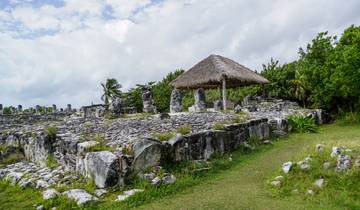
7 days
Riviera Maya Adventure 7D/6N
- ✓ Comprehensive Chichen Itza tour
- ✓ Expert local guides included
- ✓ All accommodation arranged
- ✓ Transportation provided
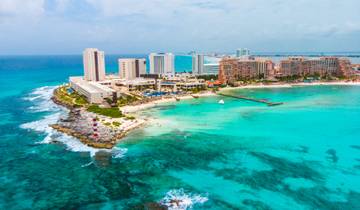
5 days
Riviera Maya Discovery – 5 Days
- ✓ Comprehensive Chichen Itza tour
- ✓ Expert local guides included
- ✓ All accommodation arranged
- ✓ Transportation provided

1 days
Chichen Itza Tour: Explore Mayan Ruins, Valladolid and a Cenote
- ✓ Comprehensive Chichen Itza tour
- ✓ Expert local guides included
- ✓ All accommodation arranged
- ✓ Transportation provided
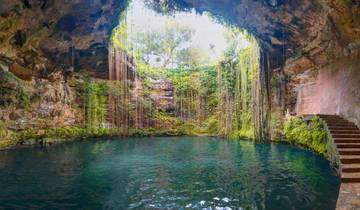
4 days
4-Day Dream Vacation in Cancun
- ✓ Comprehensive Chichen Itza tour
- ✓ Expert local guides included
- ✓ All accommodation arranged
- ✓ Transportation provided
Multi-day tour packages powered by TourRadar. Prices and availability subject to change.
From Cancun to Chichen Itza
By Guided Tour
The most popular and hassle-free option is joining a guided tour from Cancun. These typically include round-trip transportation, entrance fees, a professional guide, and sometimes visits to nearby attractions like cenotes or the colonial town of Valladolid.
Tours depart early in the morning (around 7-8 AM) and return in the evening, with the journey taking approximately 2.5 hours each way. This option eliminates the stress of navigation and parking while providing valuable historical context.
By Rental Car
For independent travelers, renting a car offers flexibility and the ability to explore at your own pace. The route follows Highway 180D, a well-maintained toll road with clear signage. The drive takes about 2.5 hours, and parking is available at the site for a small fee.
This option allows you to arrive early (before tour buses) or stay later, potentially avoiding the largest crowds. It also enables side trips to nearby attractions like cenotes or Valladolid.
From Merida to Chichen Itza
By Public Bus
ADO buses run regularly from both Cancun and Merida to Chichen Itza. From Merida, the journey takes about 1.5 hours, while from Cancun, it can take up to 4 hours. Buses are comfortable and air-conditioned, making this an economical option for budget travelers.
The main limitation is the schedule – there are only a few departures daily, which may restrict your time at the site. Check the latest timetables on the ADO website.
By Colectivo (Shared Van)
From the charming town of Valladolid, which is just 45 minutes from Chichen Itza, you can catch a colectivo (shared van) for a more local experience. These depart when full from the main square and are significantly cheaper than private transportation.
This option works well if you’re staying in Valladolid or planning to visit the town as part of your itinerary. The vans are basic but efficient for the short journey.
Best Time to Visit Chichen Itza
The famous serpent shadow effect visible on El Castillo during the spring equinox
Seasonal Considerations
Weather Patterns
The Yucatan Peninsula has a tropical climate with two distinct seasons:
- Dry Season (November to April): Lower humidity, pleasant temperatures (70-85°F/21-29°C), and minimal rainfall make this the ideal time for Chichen Itza tourism. December through February offers the most comfortable weather.
- Rainy Season (May to October): Higher temperatures (80-95°F/27-35°C), increased humidity, and afternoon showers characterize this period. Hurricane season peaks from August to October, potentially disrupting travel plans.
Crowd Patterns
Visitor numbers fluctuate throughout the year:
- Peak Season (December to April): Coinciding with the dry season and winter holidays, this period sees the highest tourist numbers, especially around Christmas, New Year, and Easter.
- Shoulder Season (November, May): These transitional months offer a good balance between favorable weather and manageable crowds.
- Low Season (June to October): Fewer visitors during the rainy season, but with higher temperatures and humidity.
Special Events
Equinox Phenomenon: During the spring (around March 20-21) and autumn (around September 22-23) equinoxes, the setting sun creates a shadow pattern on El Castillo that resembles a serpent descending the pyramid. This spectacular display draws enormous crowds, so book accommodations and transportation well in advance if planning to visit during these times.
Time of Day
The time of day significantly impacts your Chichen Itza experience:
- Early Morning (8:00-10:00 AM): The site opens at 8:00 AM. Arriving early helps you beat both the crowds and the midday heat. This is ideal for photography with softer light and fewer people in your shots.
- Midday (11:00 AM-2:00 PM): Peak visitor hours coincide with the hottest part of the day. Tour buses from Cancun typically arrive around this time, creating the most crowded conditions.
- Late Afternoon (3:00-5:00 PM): Crowds begin to thin as day-trippers depart. The light becomes warmer for photography, but you’ll have less time to explore before the 5:00 PM closing.
Each year during the spring equinox a natural phenomenon occurs: the sunlight creates a shadow image of a plumed serpent descending the pyramid’s stairs, drawing thousands of visitors to witness this ancient astronomical marvel.
Must-See Attractions at Chichen Itza
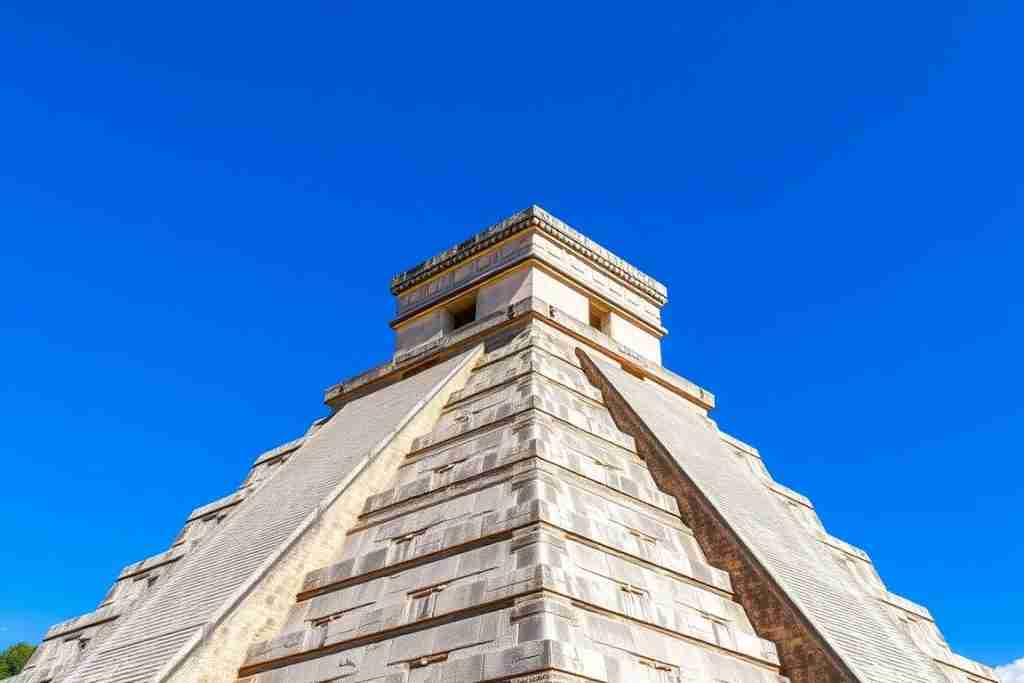
El Castillo (Pyramid of Kukulcan), the iconic centerpiece of Chichen Itza
El Castillo (Pyramid of Kukulcan)
The crown jewel of Chichen Itza tourism, this 30-meter tall pyramid is a testament to the Maya’s architectural and astronomical prowess. Named one of the New Seven Wonders of the World in 2007, El Castillo features 91 steps on each of its four sides, plus the temple platform, totaling 365 steps – one for each day of the year.
The pyramid’s design incorporates sophisticated mathematical concepts and precise astronomical alignments. During the spring and autumn equinoxes, the afternoon sun creates a shadow pattern resembling a serpent descending the northern staircase – representing the feathered serpent deity Kukulcan.
Photography Tip: For the best shots of El Castillo with fewer crowds, arrive at opening time (8:00 AM) and head directly to the main plaza. The morning light creates beautiful shadows and definition on the pyramid’s eastern face.
Great Ball Court
The Great Ball Court, the largest in Mesoamerica, where ancient Maya played their sacred ballgame
Measuring 168 meters long and 70 meters wide, this is the largest ball court in Mesoamerica. Here, Maya men played a ritual game called Pok Ta Pok, where players attempted to pass a rubber ball through stone hoops mounted high on the walls – without using their hands.
The acoustics of the ball court are remarkable – a whisper at one end can be heard clearly at the other, 168 meters away. The walls feature detailed carvings depicting players and scenes from the game, including controversial depictions of sacrifice that have fueled much debate among historians.
Sacred Cenote (Cenote Sagrado)

The Sacred Cenote where Maya made offerings to the rain god Chaac
This large natural sinkhole measures 60 meters in diameter and was a site of great religious significance. Archaeological excavations have recovered gold, jade, pottery, and human remains, supporting historical accounts of offerings and sacrifices made to Chaac, the Maya rain god.
The cenote was considered a portal to the underworld (Xibalba) and played a crucial role in Maya cosmology. During times of drought, ceremonies would be conducted here to appease the gods and bring rain to nourish crops.
Temple of the Warriors
The Temple of the Warriors with its impressive columns depicting warriors and females bearing gifts
This impressive structure features rows of carved columns depicting warriors in battle preparation. At the top sits a Chac Mool statue – a reclining figure holding a plate over its stomach, believed to have received offerings during ceremonies.
The temple shows strong Toltec influence, reflecting the cultural exchange that characterized Chichen Itza. The adjacent “Group of a Thousand Columns” likely supported a massive roof structure, creating a covered marketplace or gathering space.
El Caracol (The Observatory)

El Caracol, the ancient astronomical observatory used to track celestial movements
This unusual round building served as an astronomical observatory. Its name (“The Snail”) comes from the spiral staircase inside. The structure features windows precisely aligned to track celestial events, particularly the movements of Venus, which held special significance in Maya religion.
The Maya’s astronomical knowledge was remarkably advanced – they could predict solar eclipses and created calendars of astonishing accuracy. El Caracol stands as a testament to their scientific achievements and the importance of astronomy in guiding agricultural and ceremonial activities.
Practical Tips for Visiting Chichen Itza

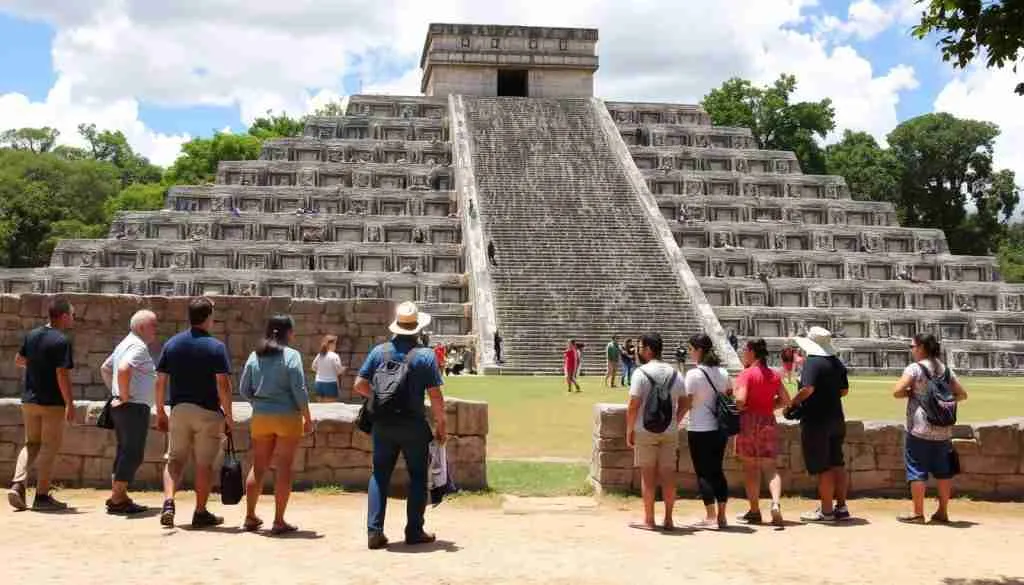
Visitors exploring Chichen Itza with guides, wearing appropriate clothing for the tropical climate
Entry Fees and Hours
| Fee Type | Cost (2023) | Notes |
| General Admission | 533 MXN (approx. $30 USD) | Includes both federal and state fees |
| Mexican Citizens (with ID) | Free on Sundays | Regular price on other days |
| Children under 13 | Free | Must be accompanied by an adult |
| Video Camera Fee | 45 MXN (approx. $2.50 USD) | Additional to entry fee |
Opening Hours: 8:00 AM to 5:00 PM daily, with last entry at 4:00 PM. The site is open 365 days a year, including holidays.
Important: Climbing the pyramids and structures at Chichen Itza has been prohibited since 2006 to preserve the site and ensure visitor safety.
Guided Tours vs. Self-Guided Exploration
Guided Tours
- Rich historical context and stories not found in guidebooks
- Explanation of architectural features and astronomical alignments
- No need to navigate the large site or worry about missing important structures
- Often include transportation from major tourist areas
- May include visits to nearby attractions (cenotes, Valladolid)
Self-Guided Exploration
- Freedom to explore at your own pace
- Ability to avoid crowds by timing your visit strategically
- More time for photography without group constraints
- Often less expensive than guided options
- Flexibility to focus on areas of personal interest
For first-time visitors, a guided tour offers valuable insights that enhance appreciation of the site. If choosing self-guided exploration, consider downloading an audio guide or detailed app before your visit, as internet connectivity can be limited on-site.
Essential Packing Checklist
What to Bring
- Water bottle: Refillable to stay hydrated in the heat
- Sun protection: Hat, sunglasses, and reef-safe sunscreen
- Comfortable walking shoes: You’ll cover several miles exploring the site
- Light, breathable clothing: Preferably with UPF protection
- Small backpack: For carrying essentials while keeping hands free
- Camera: With extra batteries and memory cards
- Cash: For entrance fees, souvenirs, and refreshments (small denominations preferred)
- Insect repellent: Especially during rainy season
Photography Tips
- Early morning: Best light for El Castillo’s east face
- Late afternoon: Golden light on the western structures
- Wide-angle lens: For capturing the massive scale of structures
- Polarizing filter: To enhance sky contrast and reduce glare
- Tripod: For low-light situations (check current regulations)
Top 5 Photo Spots:
1. Main plaza facing El Castillo (early morning)
2. Great Ball Court from the Temple of the Jaguars (midday)
3. Sacred Cenote from the viewing platform (any time)
4. Temple of the Warriors with columns (late afternoon)
5. El Caracol against the sky (golden hour)
Safety and Etiquette
- Heat safety: The Yucatan sun is intense. Stay hydrated, take breaks in shaded areas, and consider bringing electrolyte packets.
- Respect barriers: Don’t climb or touch structures, and stay within designated visitor areas.
- Cultural sensitivity: Remember that Chichen Itza remains spiritually significant to Maya descendants. Avoid loud behavior near ceremonial areas.
- Vendor interactions: Polite but firm “No, gracias” if you’re not interested in purchasing souvenirs.
- Photography etiquette: Ask permission before photographing local people, especially indigenous vendors.
Nearby Attractions to Enhance Your Chichen Itza Tourism Experience
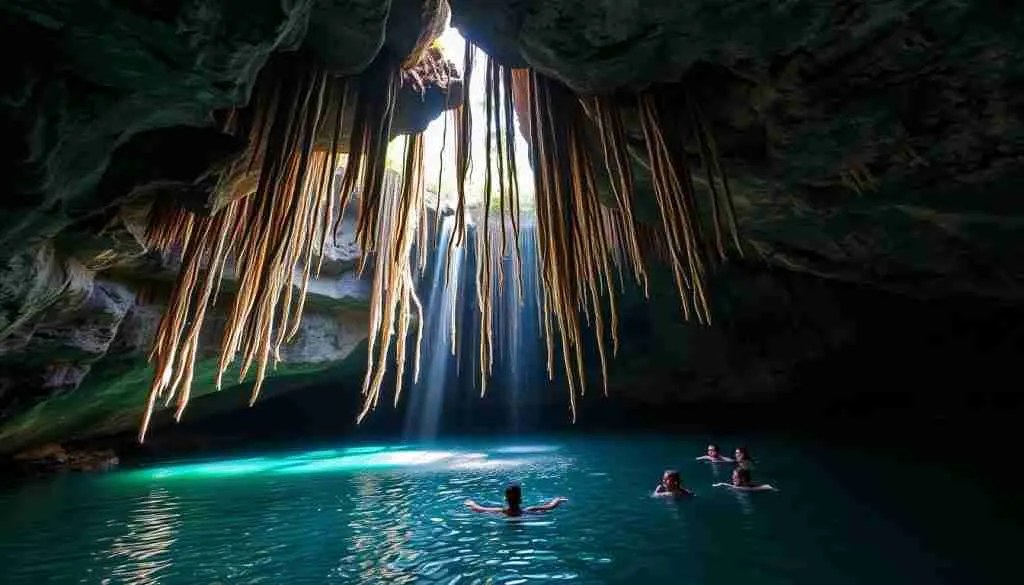
Cenote Ik Kil, a popular swimming spot just minutes from Chichen Itza
Refreshing Cenotes
The Yucatan Peninsula is dotted with thousands of cenotes – natural sinkholes filled with crystal-clear groundwater. These were sacred to the Maya and now offer visitors a refreshing swim after exploring Chichen Itza. The most popular nearby options include:
Cenote Ik Kil
Just 3km from Chichen Itza, this spectacular cenote features hanging vines, crystal-clear water, and a 26-meter drop from the surface to the water. Facilities include changing rooms, lockers, and a restaurant.
Tip: Visit early morning or late afternoon to avoid tour groups.
Cenote Sagrado
Located within the Chichen Itza archaeological zone, this cenote was used for ceremonial purposes. While swimming is not permitted, its historical significance and natural beauty make it worth visiting.
Tip: Included with your Chichen Itza entrance ticket.
Cenote X’Canche
Near the lesser-known ruins of Ek Balam, this cenote offers a more authentic, less crowded experience. Activities include swimming, zip-lining, and kayaking in pristine waters.
Tip: Combine with a visit to Ek Balam for an off-the-beaten-path day trip.
Colonial Valladolid

The charming colonial architecture of Valladolid, a perfect stop before or after visiting Chichen Itza
Just 45 minutes from Chichen Itza, the colonial town of Valladolid offers a delightful contrast to the ancient ruins. This “Pueblo Mágico” (Magical Town) features:
- San Servacio Cathedral: Imposing church facing the main square
- Calzada de los Frailes: Picturesque street lined with colorful buildings
- Casa de los Venados: Private home housing over 3,000 pieces of Mexican folk art
- Mercado Municipal: Local market for authentic Yucatecan food and crafts
- Cenote Zaci: Urban cenote right in the center of town
Valladolid makes an excellent base for exploring Chichen Itza, offering more authentic accommodations and dining options than the tourist-oriented options near the archaeological site.
Other Archaeological Sites

The Pyramid of the Magician at Uxmal, showcasing the distinctive Puuc architectural style
For archaeology enthusiasts, several other significant Mayan sites are within day-trip distance:
- Ek Balam: Less crowded ruins featuring well-preserved stucco facades and the massive Acropolis structure (30 minutes from Valladolid)
- Coba: Ancient city where visitors can still climb the 120-foot Nohoch Mul pyramid for panoramic jungle views (1 hour from Tulum)
- Uxmal: UNESCO site showcasing the elegant Puuc architectural style, with fewer crowds than Chichen Itza (1 hour from Merida)
Sustainable Tourism at Chichen Itza
Responsible tourism helps preserve Chichen Itza for future generations
As one of Mexico’s most visited archaeological sites, Chichen Itza faces significant conservation challenges. By practicing sustainable tourism, you can help preserve this cultural treasure for future generations.
Environmental Responsibility
- Waste management: Carry out all trash and dispose of it properly in designated bins.
- Water conservation: Bring a refillable water bottle rather than purchasing multiple plastic bottles.
- Stay on marked paths: Venturing off-trail damages fragile archaeological features and surrounding ecosystems.
- Reef-safe sunscreen: When visiting cenotes, use only biodegradable sunscreen to protect the delicate aquatic environments.
Cultural Respect
- Support local communities: Purchase crafts directly from indigenous artisans rather than mass-produced souvenirs.
- Learn basic phrases: A few words of Spanish or Mayan (like “Dios bo’otik” – thank you in Mayan) show respect for local culture.
- Respect sacred spaces: Some areas hold spiritual significance for Maya descendants. Follow guidelines about appropriate behavior.
- Choose responsible tour operators: Look for companies that employ local guides and support community initiatives.
Sustainable tourism isn’t just about environmental conservation—it’s about ensuring that tourism benefits local communities while preserving cultural heritage for future generations.
The timeless beauty of Chichen Itza continues to captivate visitors from around the world
Chichen Itza stands as a testament to the ingenuity, astronomical knowledge, and artistic vision of the ancient Maya civilization. Whether you’re marveling at the mathematical precision of El Castillo, contemplating the rituals once performed at the Sacred Cenote, or admiring the detailed carvings of the Great Ball Court, this UNESCO World Heritage site offers a profound connection to one of history’s most fascinating cultures.
By planning your visit thoughtfully – considering the best times to avoid crowds and extreme heat, arranging reliable transportation, and perhaps engaging a knowledgeable guide – you’ll maximize your Chichen Itza tourism experience. The nearby attractions of refreshing cenotes and colonial Valladolid further enrich your journey through the Yucatan’s cultural and natural landscape.
As you walk among these ancient stones, remember that you’re participating in a tradition of wonder and discovery that spans centuries. By practicing sustainable tourism and approaching the site with respect, you help ensure that future generations can continue to be inspired by the remarkable achievements of the Maya at Chichen Itza.
Frequently Asked Questions About Chichen Itza Tourism
How much time should I spend at Chichen Itza?
A thorough visit requires 2-3 hours minimum. If you’re particularly interested in Maya history or photography, consider allocating 4-5 hours to fully appreciate the site. Guided tours typically spend about 2 hours at the main structures.
Can I climb the pyramids at Chichen Itza?
No, climbing the structures at Chichen Itza has been prohibited since 2006 to protect both the monuments and visitors. If you’re keen to climb a Maya pyramid, consider visiting Coba where climbing is still permitted (though this may change in the future).
Is Chichen Itza worth visiting despite the crowds?
Absolutely. Despite its popularity, Chichen Itza remains one of the most impressive and well-preserved Mesoamerican sites. To minimize crowd impact, visit early in the morning or late afternoon, or consider staying nearby to enter when the site first opens.
Are there food options at Chichen Itza?
Yes, there are restaurants and food vendors near the entrance. However, prices are higher than in surrounding towns. For better value and more authentic cuisine, consider dining in Valladolid or at local establishments near Piste village.
Is Chichen Itza accessible for visitors with mobility challenges?
The main plaza and central structures are accessible via flat, wide pathways suitable for wheelchairs and those with limited mobility. Some outlying areas may be more challenging to access. The site offers wheelchair rentals, though availability may be limited.