Chicago Museums & Galleries 2026: Complete Cultural Guide
Chicago’s museum landscape offers unparalleled access to world-class art, natural history, and scientific innovation across Museum Campus, the Loop, and distinguished cultural districts throughout the city. From the Art Institute’s renowned Impressionist collection to the Field Museum’s SUE the T. rex and the Shedd Aquarium’s marine ecosystems, Chicago’s cultural institutions deliver exceptional experiences for every interest and budget. This comprehensive 2026 guide provides current admission pricing, extensive free-day schedules for Illinois residents, detailed museum coverage, and strategic planning advice to maximize your cultural exploration.
Key Takeaways About Chicago Museums 2026
- Budget Planning 2026: General admission ranges $18-38 per institution depending on museum and residency status, with Chicago CityPASS offering substantial savings when visiting multiple attractions. Illinois residents access extensive free-day programs throughout 2026, particularly concentrated January through March.
- Museum Campus Advantage 2026: Three world-class institutions cluster on Lake Michigan’s shoreline within walking distance—Field Museum, Shedd Aquarium, and Adler Planetarium—enabling efficient multi-museum visits. Plan minimum two days to adequately experience all three major Museum Campus attractions.
- Art Institute Dominance 2026: Consistently rated the number one museum in the United States by TripAdvisor, the Art Institute houses the largest Impressionist collection outside Paris, with masterworks by Monet, Renoir, Van Gogh, and Seurat’s iconic A Sunday on La Grande Jatte. General admission $25 provides access to vast permanent galleries plus most temporary exhibitions.
- Illinois Resident Benefits 2026: Free admission programs expand significantly in early 2026, with Art Institute offering free weekday entry January 5 through February 28, Field Museum providing free Wednesdays year-round, and Museum of Contemporary Art maintaining free Tuesday evenings throughout 2026. Advanced online reservations strongly recommended despite free admission.
- Strategic Timing 2026: Weekday mornings (Tuesday-Thursday 10 AM-12 PM) deliver smallest crowds at major institutions, while Illinois resident free days concentrate visitors but provide significant savings. CityPASS and multi-attraction passes work best for visitors planning 3-5 major museums within one trip.
- Specialized Collections 2026: Beyond headline attractions, Chicago sustains exceptional specialized institutions including Museum of Contemporary Art (cutting-edge installations), DuSable Black History Museum (free Wednesdays), National Museum of Mexican Art (always free), and Chicago History Museum (extensive local heritage collections). Budget 2-3 hours minimum per specialized museum visit.
People Also Ask About Chicago Museums 2026
How much does it cost to visit Chicago museums in 2026?
Individual museum admission in Chicago ranges $18-38 per person in 2026, with exact pricing varying by institution and residency status. The Art Institute charges $25 general admission for adults, Field Museum costs $29 for basic entry, Museum of Science and Industry prices range $26-38 depending on included experiences, Shedd Aquarium implements plan-ahead pricing starting around $20, and Museum of Contemporary Art charges $18-22 for non-residents. Chicago residents receive discounted rates at most institutions, typically $3-9 below standard admission. Illinois residents access extensive free-day programs throughout 2026, particularly January through March when many museums offer multiple free admission dates weekly.
What is the best museum pass for visiting Chicago in 2026?
Chicago CityPASS represents the best value for visitors planning multiple major museum visits in 2026, offering admission to five top attractions at significantly reduced cost compared to individual ticket purchases. The pass includes Art Institute (with Fast Pass entry bypassing general admission lines), Field Museum, Shedd Aquarium, and choice between Adler Planetarium or Museum of Science and Industry, plus access to either Skydeck Chicago or 360 Chicago observation deck. CityPASS costs significantly less than buying five separate admissions and includes premium experiences like special exhibitions at Field Museum. Alternative options include Go City Chicago passes for visitors wanting broader attraction variety beyond museums, though CityPASS specifically targets Chicago’s premier cultural institutions.
Are Chicago museums free on certain days in 2026?
Illinois residents enjoy extensive free admission opportunities at Chicago’s major museums throughout 2026, with particularly generous programs January through March. Art Institute offers free weekday admission to Illinois residents January 5 through February 28 (Monday, Wednesday, Thursday, Friday), then continues with Third Thursday evenings April through September and Free Summer Thursdays June through September. Field Museum provides free Wednesday admission to Illinois residents year-round. Shedd Aquarium offers numerous free days January through June including Tuesday evening hours March through June. Museum of Science and Industry schedules free days throughout January and February. Museum of Contemporary Art maintains free Tuesday evening admission 5-9 PM for Illinois residents throughout 2026. All free admission requires advance online reservation or proof of Illinois residency at admissions desk, and some experiences like special exhibitions or 3D films carry additional charges even on free days.
How many days do you need to see Chicago museums in 2026?
A comprehensive Chicago museum experience requires minimum four full days in 2026 to adequately explore the city’s premier cultural institutions. Museum Campus alone (Field Museum, Shedd Aquarium, Adler Planetarium) demands two days—one full day for Field Museum including special exhibitions, and a second day split between Shedd Aquarium (3-4 hours) and Adler Planetarium (2-3 hours). Art Institute warrants a dedicated full day given its vast collections spanning 5,000 years across multiple floors and wings. A fourth day accommodates Museum of Science and Industry (4-5 hours) plus either Museum of Contemporary Art or specialized institutions like Chicago History Museum or DuSable Black History Museum. Visitors with particular subject interests (contemporary art, architecture, natural history) may extend to five or six days. Weekend visitors can efficiently experience three major museums (Art Institute, Field Museum, one Museum Campus partner) across Saturday and Sunday using early arrival strategies and prioritizing must-see galleries.
Extended multi-day tours – 5+ days
Featured Midwest Usa Multi-Day Tour Packages
7 days
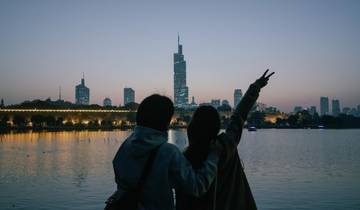
Chicago – The Home of Skyscrapers
- ✓ Booking needs min. 2 travelers
8 days
Chicago and Niagara ROT (including Niagara Falls)
- ✓ Comprehensive Midwest Usa tour
- ✓ Expert local guides included
- ✓ All accommodation arranged
- ✓ Transportation provided

8 days
From Chicago's Skyline to Niagara's Mist – 8 days
- ✓ Comprehensive Midwest Usa tour
- ✓ Expert local guides included
- ✓ All accommodation arranged
- ✓ Transportation provided

4 days
City Break in Chicago Among Skyscrapers
- ✓ Booking needs min. 2 travelers
Multi-day tour packages powered by TourRadar. Prices and availability subject to change.
Introduction to Chicago Museums and Galleries 2026
Chicago sustains one of the world’s great museum ecosystems, anchored by institutions that rank among the finest in their respective disciplines globally. The Art Institute of Chicago holds the distinction of being the only museum awarded TripAdvisor’s number one ranking for five consecutive years, while the Field Museum houses the most complete Tyrannosaurus rex fossil ever discovered and maintains research facilities advancing paleontology and conservation science. The city’s museum culture extends far beyond these household names—the Museum of Contemporary Art operates as one of the largest contemporary art venues in the United States, the DuSable Black History Museum preserves vital African American heritage, and specialized institutions like the National Museum of Mexican Art and Chicago Architecture Center deliver world-class exhibitions focused on specific cultural or disciplinary domains.
The concentration of premier institutions along Museum Campus creates exceptional visitor efficiency. Within a compact lakefront zone bounded by Solidarity Drive and Lake Shore Drive, three world-renowned museums—Field Museum, Shedd Aquarium, and Adler Planetarium—cluster within comfortable walking distance. This geographic proximity enables thoughtful visitors to experience multiple major attractions in a single day, though each institution individually warrants 3-5 hours for thorough exploration. The Museum Campus configuration represents intentional urban planning, establishing Chicago’s museum district as easily navigable by public transit via CTA buses and trains serving Roosevelt Road and Museum Campus stations.
Understanding Chicago’s museum pricing structure proves essential for effective budget planning in 2026. Standard individual admissions range $18-38 per institution, positioning multi-museum visits as potentially expensive undertakings for families or travelers planning comprehensive cultural exploration. However, Chicago provides extensive value mechanisms including resident discounts, free admission programs, and multi-attraction passes that significantly reduce total costs. Illinois residents access the most substantial savings through free-day programs particularly generous January through March 2026, while out-of-state visitors maximize value through Chicago CityPASS or similar bundled admission products delivering approximately 50% savings across five major attractions.
The 2026 museum landscape reflects both continuity and evolution. Core permanent collections remain stable—the Art Institute’s Impressionist masterworks, Field Museum’s dinosaur halls, Shedd Aquarium’s aquatic ecosystems—providing reliable baseline experiences. Simultaneously, temporary exhibitions rotate regularly, with Art Institute hosting major traveling shows, Museum of Contemporary Art featuring cutting-edge installations, and Field Museum integrating special exhibitions into basic admission. This combination of permanent excellence and rotating novelty rewards both first-time visitors and Chicago residents making repeated visits throughout the year.
Strategic planning maximizes Chicago museum experiences while minimizing costs and crowds. Illinois residents should prioritize free-day programs but recognize that these popular dates concentrate visitors, requiring early arrival or midday patience. Out-of-state travelers benefit from weekday visits Tuesday through Thursday when crowds thin noticeably compared to weekends. Multi-attraction passes work best for visitors planning 3-5 museums within a condensed trip window, while those focusing on one or two institutions may find individual tickets more economical. The following comprehensive sections detail each major institution, current 2026 pricing, free admission opportunities, must-see collections, and strategic visiting recommendations to support informed planning.
Art Institute of Chicago Admission and Collections 2026
The Art Institute of Chicago stands as America’s premier art museum and consistently earns recognition as one of the world’s finest cultural institutions, holding TripAdvisor’s number one museum ranking for five consecutive years through 2024. General admission costs $25 for adults in 2026, with Fast Pass premium tickets at $35 allowing entry bypass of general admission lines—a worthwhile investment during peak summer months and weekends when queue times extend significantly. Chicago residents pay $20 and Illinois residents $22, while children under 14 enter free alongside Chicago teens under 18, active-duty military, and Illinois educators. The museum operates 11 AM-5 PM Monday, Wednesday, and Friday, with extended 8 PM closing on Thursdays, and remains closed Tuesdays and Wednesdays.
The museum’s collection spans 5,000 years of creativity across cultures and continents, but the Art Institute achieved international fame through its unparalleled Impressionist and Post-Impressionist holdings—the largest such collection outside Paris. Gallery 201 houses iconic masterworks including Claude Monet’s monumental water lily paintings, Pierre-Auguste Renoir’s Two Sisters (On the Terrace), and Georges Seurat’s A Sunday on La Grande Jatte—1884, the pointillist masterpiece that revolutionized painting technique. Vincent van Gogh’s The Bedroom and Self-Portrait anchor the Post-Impressionist galleries alongside Paul Cézanne’s The Basket of Apples and Henri de Toulouse-Lautrec’s cabaret scenes. These works alone justify the admission price, representing paintings studied in art history courses worldwide and reproduced in countless textbooks.
Beyond Impressionism, the Art Institute maintains exceptional strength across multiple departments and historical periods. The American Art galleries showcase Edward Hopper’s Nighthawks, Grant Wood’s American Gothic, and Mary Cassatt’s mother-and-child intimacies, capturing defining moments in American visual culture. Modern and contemporary collections feature Pablo Picasso’s The Old Guitarist, Salvador Dalí’s surrealist visions, and Andy Warhol’s pop art innovations alongside extensive holdings of works by Kerry James Marshall, Cindy Sherman, and other contemporary masters. The museum’s Asian art collections rank among the finest in the Western Hemisphere, with Japanese screens, Chinese ceramics, and South Asian sculptures filling entire galleries. Medieval and Renaissance holdings include El Greco’s The Assumption of the Virgin and significant Italian panel paintings.
The Modern Wing, designed by Renzo Piano and opened in 2009, provides dedicated space for 20th and 21st-century art within a light-filled architectural landmark. The Nichols Bridgeway connects the Modern Wing’s third floor to Millennium Park, creating seamless integration between museum and urban landscape while offering spectacular Chicago skyline views. Griffin Court, the Modern Wing’s soaring central gallery, hosts rotating large-scale installations and provides natural gathering space. The wing houses the museum’s photography collection, film and video galleries, and contemporary painting and sculpture from 1960 forward. This architectural addition effectively doubled the museum’s exhibition space while establishing visual dialogue between historical and contemporary collections.
Illinois residents access significant free admission opportunities throughout 2026. The Art Institute offers free weekday entry (Monday, Wednesday, Thursday, Friday) from January 5 through February 28, available 11 AM through closing each day. Free Third Thursday evenings run 5-8 PM beginning April 16, 2026, and Free Summer Thursdays continue 5-8 PM from June 11 through September 17. All free admission requires advance ticket reservation through the museum’s website or presentation of Illinois ID at the admissions desk. Free admission covers permanent collections and most temporary exhibitions, though occasional special exhibitions like the current Matisse’s Jazz exhibition require $5 supplemental tickets even for free-day visitors. The museum recommends arriving early on free days as capacity limits may restrict entry during peak afternoon hours.
Visitors should allocate minimum 3-4 hours for first-time Art Institute visits, with art enthusiasts easily spending 5-6 hours exploring the full collection. Priority galleries for time-limited visits include Gallery 201 (Impressionism), American Art (Nighthawks and American Gothic), Modern Wing Contemporary Art, and the Thorne Miniature Rooms—68 intricately detailed period room recreations scaled at one inch to one foot. The museum provides free mobile app with audio tours and collection highlights, while docent-led tours run daily covering various themes and collection areas. The Terzo Piano restaurant in the Modern Wing offers upscale dining with spectacular city views, while the Museum Café provides more casual fare. Coat check remains free for all visitors. Bags larger than 13 × 17 × 4 inches must be checked and cannot be brought into galleries.
Field Museum Natural History and Admission Costs 2026
The Field Museum anchors Chicago’s Museum Campus as one of the world’s premier natural history institutions, housing over 40 million specimens and artifacts spanning 4.6 billion years of Earth history. General admission costs $29 for adults in 2026, providing access to permanent exhibitions including the legendary SUE the T. rex, Ancient Egypt mummies, evolving planet dinosaur halls, and extensive cultural anthropology collections from across the globe. Discovery Pass tickets at approximately $35-40 add either one special exhibition or one Giant Dome Theater 3D film, while All-Access Pass at approximately $45-50 includes all special exhibitions and one 3D film. Chicago residents pay reduced rates—adult general admission drops to $24—making residency verification worthwhile through driver’s license or utility bill presentation.
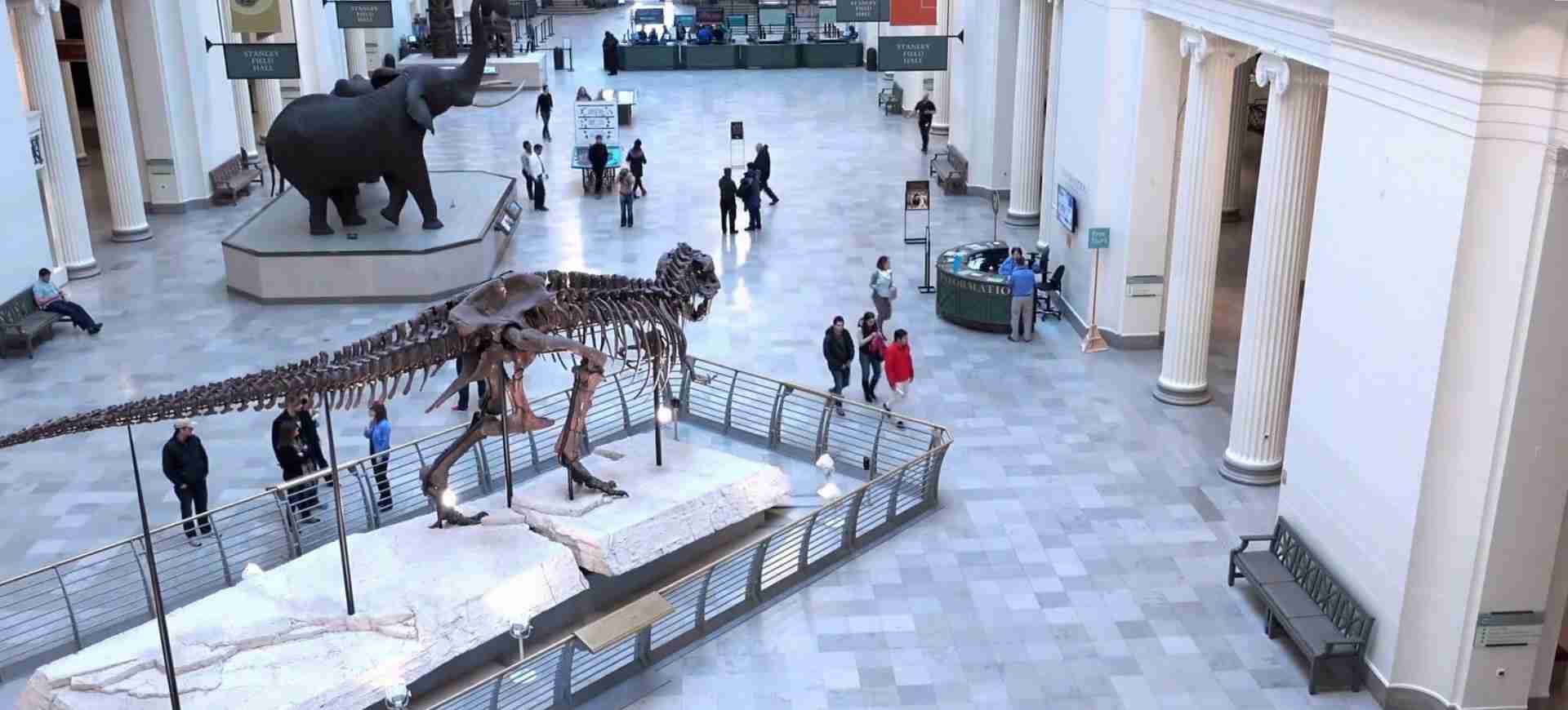
SUE the Tyrannosaurus rex represents the Field Museum’s most celebrated resident and the most complete T. rex fossil ever discovered, displayed in dramatic pose within Stanley Field Hall’s soaring central space. At 40.5 feet long and 13 feet tall at the hips, SUE lived approximately 67 million years ago and died at age 28 after sustaining multiple injuries visible in bone structure. The actual skull, too heavy for mount safety, occupies a dedicated second-floor gallery where visitors examine its massive jaws and bone pathology up close. SUE’s presence alone draws hundreds of thousands of annual visitors, but the surrounding dinosaur galleries extend the prehistoric experience through dozens of additional fossil specimens including Brachiosaurus, Allosaurus, and recently added Máximo the titanosaur—the largest dinosaur ever discovered, stretching 122 feet through multiple galleries.
The museum’s cultural collections rival its natural history holdings in depth and significance. The Ancient Egypt galleries transport visitors through 5,000 years of Nile civilization via 23 human mummies, numerous animal mummies, elaborate funerary artifacts, and multiple complete mastaba tomb chapels removed from Saqqara and reconstructed stone by stone. The Ancient Americas exhibitions chronicle 13,000 years of indigenous civilizations from Arctic to Tierra del Fuego, featuring Aztec featherwork, Moche ceramics, and extensive Plains Indian collections including ceremonial regalia. The Grainger Hall of Gems dazzles with rare gemstones, meteorites, and the striking Crown Family PlayLab where children engage hands-on with fossil casting and artifact examination activities.
Illinois residents enjoy exceptional free admission access in 2026, with the Field Museum offering free general admission every Wednesday throughout the year. Free Wednesday tickets cover all permanent exhibitions—Evolving Planet, Ancient Egypt, Ancient Americas, Pacific cultures, African wildlife dioramas, and more—but exclude special ticketed exhibitions and 3D films which require additional purchase even on free days. Advance online reservation strongly recommended as free Wednesdays attract heavy attendance with ticket availability often exhausted by noon. The museum also schedules additional Illinois resident free days throughout January and February 2026, though specific dates require verification through the museum’s official website. Illinois teachers and active-duty military personnel receive free general admission year-round with valid identification.
Special exhibitions rotate regularly, typically requiring supplemental tickets beyond basic admission. Recent and upcoming exhibitions include the Pokémon Fossil Museum examining paleontology through popular culture, traveling exhibitions featuring global archaeology and anthropology, and in-house curated shows drawing from the museum’s vast storage collections rarely displayed publicly. These special exhibitions generally cost $10-15 additional per person, positioning All-Access Pass as economical choice for visitors planning to see multiple special exhibitions during a single visit. Giant Dome Theater 3D films ($12 adults, $9 children) present nature documentaries on five-story wraparound screen, typically running 40-45 minutes and offering immersive experiences particularly appealing to families with children.
Effective Field Museum visits require 4-5 hours minimum to adequately explore permanent halls and allow time for special exhibitions or 3D films if purchased. Strategic visitors prioritize SUE and dinosaur galleries early before crowds build, then proceed to Ancient Egypt and cultural halls during peak midday congestion. The museum’s McDonald’s restaurant provides full-service dining, while the Field Bistro offers grab-and-go options. Free docent tours depart daily covering various themes—ask at information desk for current schedule. The museum opens 9 AM daily (last entry 4 PM), closing at 5 PM. Underground parking costs approximately $25-30 for full day, though CTA Roosevelt Road station on Red, Green, and Orange lines sits two blocks west, providing economical transit access. Chicago CityPASS includes Field Museum with Fast Pass entry and one special experience (U-505 submarine or Coal Mine tour when visiting Museum of Science and Industry), delivering substantial savings for multi-museum visitors.
Museum of Science and Industry Experiences 2026
The Griffin Museum of Science and Industry operates as the Western Hemisphere’s largest science center, occupying the sole remaining structure from the 1893 World’s Columbian Exposition and housing over 400,000 square feet of interactive exhibits spanning scientific disciplines from physics to space exploration. General admission prices range $26-38 for adults in 2026 depending on included experiences, with basic Museum Entry at the low end and comprehensive packages including U-505 submarine tour, Coal Mine descent, or Giant Dome Theater film at the high end. Chicago residents receive $9 discount on adult tickets and $5 discount on children ages 3-11. The museum opens 9:30 AM daily (last entry 4 PM) and closes at 5:30 PM, located at 5700 South DuSable Lake Shore Drive in Hyde Park—notably farther south than Museum Campus institutions, requiring dedicated transportation planning.
The captured German U-505 submarine represents the museum’s signature artifact and one of the world’s most significant World War II relics—the only German submarine captured by U.S. forces during the war. Basic admission includes exterior viewing of the massive submarine in its dedicated underground gallery, but the U-505 On-Board Tour ($18 adults, $14 children) provides access inside the cramped vessel where visitors experience the claustrophobic conditions endured by German crew. Tour guides explain submarine operations, wartime context, and the dramatic 1944 capture off West Africa that yielded invaluable Enigma machine code materials. The combination of scale, historical significance, and immersive access makes U-505 the museum’s most popular paid experience, easily justifying supplemental ticket cost for history enthusiasts and families with older children capable of navigating tight interior passages.
Science Storms exemplifies the museum’s interactive exhibit philosophy through dramatic large-scale demonstrations including a 40-foot indoor tornado visitors walk around while controlling rotation speed, a 20-foot Tesla coil generating spectacular electrical arcs on regular schedules, and a 30-foot avalanche disc illustrating momentum transfer. The exhibit continues with fire physics demonstrations, water vapor vortexes, and chemistry interactions, all designed for hands-on engagement rather than passive observation. This approach characterizes the entire museum—exhibits invite button-pushing, lever-pulling, and active experimentation across hundreds of stations. The Transportation Gallery suspends vintage aircraft overhead while visitors board a real United Airlines 727 jetliner and climb into historic locomotives. The Pioneer Zephyr, the first diesel-powered streamlined train that revolutionized rail travel, occupies a dedicated gallery where visitors enter the gleaming silver passenger cars.
Contemporary science and technology fill the museum’s upper floors through exhibits examining genetics, robotics, future energy systems, and biomedicine. The Baby Chick Hatchery allows visitors to observe chicks emerging from eggs daily, while the Science Storms chemistry labs invite participation in supervised experiments. The recently added Blue Paradox exhibition explores ocean conservation challenges through immersive environments, and rotating special exhibitions bring traveling shows covering topics from Marvel superheroes to scientific breakthroughs. Special exhibitions typically require separate admission $18-22 adults, though some integrate into general admission. The Giant Dome Theater presents nature documentaries and scientific films in wraparound format on the museum’s five-story domed screen, with films cycling every few months—tickets cost $12 additional per person and can be added to Museum Entry at purchase or bought separately at theater entrance.
Illinois residents access extensive free admission opportunities throughout early 2026, with the museum scheduling numerous free days particularly concentrated January and February. Advance online reservation required even for free admission as capacity limits exist. Free days include general Museum Entry covering all permanent exhibitions but exclude U-505 On-Board Tour, Coal Mine experience, special exhibitions, and Giant Dome Theater films—these premium experiences require additional purchase even when basic admission is free. The museum remains free year-round for United States military active-duty personnel and veterans, Illinois prisoners of war, Chicago firefighters and police officers, and Illinois teachers pre-K through 12th grade—all with valid identification. Chicago CityPASS includes Griffin Museum of Science and Industry with Museum Entry plus one premium experience (U-505 or Coal Mine), making the pass particularly valuable for visitors planning both Museum Campus and Hyde Park museum visits.
Allocate minimum 4-5 hours for comprehensive Museum of Science and Industry visits, with families easily spending 6-7 hours given the interactive nature encouraging extended engagement. Strategic visitors arrive at opening to experience U-505 tour and Coal Mine before midday crowds intensify, then proceed to Science Storms and upper-level exhibits during peak periods. The museum’s food court provides various dining options from pizza to Asian fare, with outdoor seating in surrounding Jackson Park during pleasant weather. Underground parking ($20-25 full day) provides most convenient access, though the museum sits approximately 25 minutes south of downtown via CTA Red Line to Garfield or CTA #6 Jackson Park Express bus. The museum’s Hyde Park location positions it separate from Museum Campus, making same-day visits to both areas challenging without car. Plan Griffin Museum of Science and Industry as dedicated half-day or full-day destination rather than quick addition to Museum Campus itinerary.
Shedd Aquarium Marine Life and Pricing 2026
Shedd Aquarium ranks among the world’s largest indoor aquariums and holds the distinction of America’s most-visited aquarium, welcoming over 2 million annual guests to experience aquatic ecosystems from around the globe. Admission in 2026 employs plan-ahead pricing similar to airline tickets, with costs varying by visit date and time selected—early booking during off-peak periods yields lower prices while last-minute peak-day purchases cost significantly more. Chicago residents pay flat rate $20 adults and $15 children regardless of date or demand. Non-residents typically pay $25-40 depending on advance planning and peak versus off-peak timing. The museum strongly encourages online advance reservation as same-day walk-up tickets subject to availability and higher pricing. General admission includes all permanent exhibits—Caribbean Reef, Amazon Rising, Wild Reef sharks, Waters of the World, and Oceanarium belugas and dolphins—but excludes 4D Experience films available for supplemental $8 fee.
The Oceanarium represents Shedd’s signature space, a massive saltwater habitat housing Pacific white-sided dolphins and beluga whales visible both above and below water through floor-to-ceiling viewing windows. The facility extends over three acres with Lake Michigan skyline providing dramatic backdrop through the rear glass wall, creating illusion that dolphins and belugas swim within the lake itself. Daily aquatic presentations showcase natural behaviors as trainers work with animals for enrichment rather than traditional “show” format—the emphasis remains educational, highlighting whale and dolphin intelligence, social structures, and conservation challenges. Underwater viewing galleries allow face-to-face encounters with swimming belugas whose curiosity about visitors leads to extended eye contact and playful interactions. The Oceanarium alone justifies Shedd admission, representing one of the finest marine mammal facilities globally and providing experiences impossible to replicate elsewhere.
Caribbean Reef recreates a Bahamian coral reef environment within a 90,000-gallon circular tank surrounded by viewing windows at multiple levels. Divers enter the tank four times daily to feed fish, sharks, and sea turtles while communicating via microphone with audiences, answering questions and explaining reef ecology. The diversity astounds—tropical fish in electric blues and yellows dart among coral formations, nurse sharks cruise the bottom, sea turtles glide overhead, and moray eels peer from crevices. The Wild Reef exhibit continues the shark theme through Philippine coral reef recreation where visitors walk through curved tunnels surrounded by swimming predators—blacktip reef sharks, sandbar sharks, and zebra sharks patrol overhead and alongside the acrylic viewing panels. Amazon Rising recently underwent major renovation, transforming the space into immersive rainforest environment featuring anacondas, caimans, piranhas, poison dart frogs, and the massive arapaima—one of the world’s largest freshwater fish reaching 10 feet length and 400 pounds weight.
Illinois residents benefit from extensive free admission opportunities throughout 2026, particularly generous in the first half of the year. Free days include numerous January dates, February dates, and continuing into spring with specific dates announced several months ahead through the museum’s website. Additionally, Illinois residents access free Tuesday evening admission 5-9 PM from March through June 2026, providing after-work visit options. All free admission requires advance reservation through the museum’s website or by calling guest relations at 312-939-2438 (reservation by phone avoids the $5 online convenience fee charged for free ticket booking). Free admission covers all permanent exhibits but excludes 4D Experience films and special extraordinary experiences like Beluga Encounter or Penguin Encounter which always carry additional fees. The aquarium remains free year-round for Chicago police officers and firefighters, active-duty military personnel, and educators from Illinois, Indiana, Michigan, and Wisconsin—all requiring valid identification.
Special extraordinary experiences provide behind-scenes access and animal interactions for supplemental fees. Beluga Encounter ($250 adults, $225 children) allows participants to touch beluga whales, observe training sessions, and engage with marine mammal specialists—limited capacity makes this among the aquarium’s most coveted experiences. Penguin Encounter ($110 adults, $85 children) brings visitors behind the penguin exhibit for close observation and keeper Q&A. Asleep with the Sharks overnight program ($130 per person) lets families spend the night sleeping on the Wild Reef floor surrounded by swimming sharks visible through floor-to-ceiling glass—an unforgettable experience for children and adults alike. These extraordinary experiences require advance booking often weeks ahead during peak summer season, though last-minute availability sometimes appears for off-peak winter weekdays.
Plan 3-4 hours minimum for thorough Shedd Aquarium visits, arriving early for least crowded conditions and optimal viewing at popular exhibits like Oceanarium and Caribbean Reef. The aquarium operates 9 AM-6 PM most days with extended evening hours during summer peak season and Illinois resident free Tuesday evenings. Dining options include Soundings restaurant (seasonal operation), Bubble Net food court providing pizza and sandwiches, and Deep Ocean café for snacks and beverages. Underwater viewing areas maintain dim lighting optimal for observing aquatic life—this lighting enhances the experience but requires visual adjustment from bright outdoor conditions. Parking costs approximately $25-30 in adjacent Soldier Field lots, while CTA Roosevelt Road station on Red, Green, and Orange lines connects via short walk or #146 Inner Lake Shore Express bus. Chicago CityPASS includes Shedd Aquarium general admission, delivering significant savings when combined with other Museum Campus institutions in multi-day visit itineraries.
Museum of Contemporary Art Chicago 2026
The Museum of Contemporary Art Chicago operates as one of the nation’s largest institutions devoted exclusively to contemporary art created after 1945, presenting cutting-edge exhibitions that change entirely every few months as the museum maintains no permanent displays. General admission costs $18-22 for adults in 2026 depending on day and booking method, with Chicago residents paying $19 and students, teachers, and seniors 65+ receiving reduced rates at $14. The museum operates under pay-what-you-can policy—no visitor will be turned away regardless of ability to pay, making this one of Chicago’s most accessible cultural institutions. Admission remains free for anyone 18 and under, Illinois elementary and high school teachers with valid ID, active military personnel, veterans, police and firefighters, and visitors with disabilities plus their caregivers. Operating hours run 10 AM-5 PM Wednesday through Sunday and 10 AM-9 PM Tuesday, with Monday closures year-round.
Unlike traditional museums displaying permanent collections in stable configurations, the MCA reinvents its galleries every few months with completely new exhibitions featuring contemporary artists working across all media—painting, sculpture, video, installation, performance, and hybrid forms defying traditional categorization. Recent exhibitions have showcased major retrospectives of established contemporary masters alongside emerging artists gaining international recognition, with emphasis on artists challenging conventional boundaries and engaging pressing social issues. This rotating exhibition model means the museum experience changes dramatically from visit to visit, rewarding repeated attendance throughout the year. The museum’s collection exceeds 2,600 works spanning 1940s forward, including significant holdings of Chicago-based artists and major figures like Andy Warhol, Cindy Sherman, Jeff Koons, and Kerry James Marshall, though collection displays rotate and occupy only portions of gallery space at any time.
The D. Daskalopoulos Collection Gift in 2024 represented one of the most significant donations in MCA history, bringing over 100 contemporary artworks to the permanent collection including pieces by Kara Walker, Glenn Ligon, and other artists engaging themes of identity, power, and representation. This acquisition substantially strengthened the museum’s holdings in socially engaged contemporary art and positions the institution for expanded exhibitions drawing from expanded collection depth. The gift’s impact will manifest increasingly over coming years as curators integrate donated works into rotating displays and thematic exhibitions, with some pieces viewable in current installations. The museum publishes detailed exhibition schedules months in advance through its website, allowing visitors to time visits around specific artists or themes of personal interest.
Illinois residents access free admission every Tuesday evening 5-9 PM throughout 2026, providing after-work visit opportunities and avoiding weekend crowds. The museum also schedules free Family Days typically on second Saturdays October through May, featuring special programming, artist demonstrations, and hands-on activities. The combination of pay-what-you-can admission policy and regular free hours makes the MCA one of Chicago’s most financially accessible major museums—visitors genuinely unable to afford $18-22 admission can enter for any amount they choose including $0, a policy reflecting the museum’s commitment to making contemporary art accessible across all economic circumstances. This accessibility extends to programming, with the museum presenting free public programs including artist talks, performances, film screenings, and panel discussions regularly throughout exhibition cycles.
Museum amenities enhance the visit beyond galleries. Marisol restaurant and bar, located on the museum’s ground floor, earned Michelin Bib Gourmand recognition for its seasonal contemporary cuisine featuring globally influenced flavors in an immersive art environment designed by artist Chris Ofili. The restaurant operates lunch and dinner service with weekend brunch, while The Counter provides quick-service coffee, tea, and light snacks. The MCA Store curates design objects, artist-made goods, and contemporary publications reflecting the museum’s aesthetic and mission. The museum occupies a distinctive contemporary building at 220 East Chicago Avenue near Water Tower Place and Michigan Avenue shopping, positioning it convenient to downtown hotels and retail districts. Parking garage on Chicago Avenue adjacent to museum charges standard downtown rates with reduced rate available through admissions desk validation.
Budget 2-3 hours for comprehensive MCA visits, though the museum’s compact size compared to encyclopedic institutions like Art Institute makes shorter focused visits feasible. Visitors particularly interested in specific exhibitions or artists can thoroughly experience targeted galleries in 60-90 minutes. The museum’s location four blocks east of the Chicago Avenue CTA Red Line station makes transit access straightforward, with numerous Michigan Avenue bus routes also stopping nearby. The museum works particularly well as afternoon or evening destination after morning visits to Art Institute or shopping along Magnificent Mile. Contemporary art newcomers should approach with open minds—the MCA specializes in challenging, thought-provoking work that may not align with conventional aesthetic expectations but rewards engagement with fresh perspectives on art’s possibilities and purposes in contemporary culture.
Specialized Museums and Cultural Institutions 2026
Chicago History Museum preserves and interprets the city’s complex narrative from indigenous settlements through contemporary urban development, occupying a stately building at 1601 North Clark Street in Lincoln Park. Admission costs $19 adults, $17 seniors and students, and $13 children 3-12 in 2026, with Illinois residents under 18 entering free alongside Chicago residents receiving modest discounts. The museum maintains always-free admission for active-duty military, veterans, Chicago police and firefighters, and Illinois teachers with valid identification. Illinois residents access numerous free days throughout 2026, concentrated in January and February with weekday free admission. The museum’s permanent exhibitions trace Chicago’s evolution through the Great Chicago Fire, World’s Columbian Exposition, jazz age, industrial might, and contemporary challenges, featuring artifacts ranging from Abraham Lincoln’s deathbed to Chicago Cubs World Series memorabilia. Specialized galleries examine Chicago’s architectural revolution, political machine, labor movements, and diverse neighborhoods. Budget 2-3 hours for thorough visits.
DuSable Black History Museum and Education Center, formerly DuSable Museum of African American History, chronicles African American history with particular focus on Chicago’s significant Black communities and cultural contributions. Located at 740 East 56th Place in Washington Park, the museum offers free admission every Wednesday throughout 2026, with additional free admission for military personnel, first responders, University of Chicago students, Chicago Park District employees, and Illinois public school students. Standard admission costs approximately $10-15 for non-free days. Named for Jean Baptiste Point du Sable, Chicago’s Black founder who established the first non-indigenous settlement in the 1780s, the museum houses extensive collections documenting Black history from African origins through contemporary civil rights struggles. Exhibitions examine slavery’s legacy, Great Migration northward, Bronzeville renaissance, and ongoing pursuit of equality and justice. The museum particularly excels in chronicling Chicago-specific African American history often overlooked in mainstream historical narratives.
National Museum of Mexican Art maintains always-free admission as founding principle, making exceptional Mexican and Latino art accessible to all audiences regardless of economic circumstances. Located in Pilsen neighborhood at 1852 West 19th Street, the museum operates Tuesday-Sunday with $0 admission covering all galleries and most programming. The permanent collection spans ancient pre-Columbian artifacts, colonial religious art, modern Mexican muralism, and contemporary Chicano art movements, with rotating exhibitions featuring living artists addressing immigration, identity, borderlands experience, and cultural preservation. The museum achieved particular renown through its Day of the Dead exhibitions each autumn, elaborate installations celebrating Mexican traditions surrounding death and remembrance. This free-admission policy combined with exceptional collection quality positions the National Museum of Mexican Art as essential destination for visitors interested in Latino cultural expression and Mexican artistic traditions. Budget 1-2 hours for focused visits, located 20 minutes southwest of downtown via CTA Pink Line.
Chicago Architecture Center occupies unique position as museum and educational institution focused exclusively on Chicago’s architectural heritage and contemporary building design. Located at 111 East Wacker Drive along the Chicago River, the center charges $20 general admission for gallery exhibitions including the Chicago City Model Experience—a 3D scale model of downtown featuring over 4,250 buildings with interactive presentations explaining Chicago’s architectural evolution. The center’s primary offerings extend beyond static museum displays to include extensive architecture tours—popular Chicago River Architecture Cruise ($47-52) departs from center’s Riverwalk location, while neighborhood walking tours ($30-35) explore specific districts with expert docent narration. Gallery admission alone warrants visit for architecture enthusiasts, though the center functions primarily as launch point for deeper architectural exploration through tours revealing Chicago’s built environment in comprehensive detail. Operating hours vary seasonally; check website before visiting.
Adler Planetarium rounds out Museum Campus as America’s first planetarium, presenting astronomy exhibitions and sky shows examining stellar evolution, planetary science, and space exploration. General admission costs approximately $30-35 for adults including access to all exhibitions and one sky show in either Grainger Sky Theater or Definiti Theater. Chicago residents receive reduced pricing, and Illinois residents access extensive free days particularly concentrated January through April 2026 including Monday and Wednesday free admission in early months. The planetarium’s signature telescope, Doane Observatory, operates public viewings on clear nights. The museum excels in interactive astronomy exhibits explaining celestial mechanics, navigational history, and contemporary space science through hands-on demonstrations. The facility underwent significant renovations expanding exhibition space and updating sky theaters with advanced projection systems. Budget 2-3 hours for comprehensive visits, easily combined with Field Museum or Shedd Aquarium given the Museum Campus proximity—all three institutions sit within 10-minute walk of each other along lakefront paths.
Chicago CityPASS and Multi-Attraction Pass Strategies 2026
Chicago CityPASS represents the most economical option for visitors planning to experience multiple major museums within a single Chicago trip, bundling admission to five premier attractions for approximately half the cost of individual ticket purchases. The 2026 CityPASS includes guaranteed admission to Shedd Aquarium and Art Institute with Fast Pass entry bypassing general admission lines, plus visitor choice between Field Museum or Museum of Science and Industry, between Adler Planetarium or Skydeck Chicago, and between 360 Chicago Observation Deck or Chicago Architecture Center River Cruise. Total CityPASS cost runs approximately $109 adults and $89 children ages 3-11, delivering savings of roughly $65-75 per adult compared to purchasing five separate admissions at full price. The pass activates upon first use and remains valid for nine consecutive days, providing flexibility for visitors spreading attractions across multiple days rather than cramming all five into exhausting marathon itinerary.
CityPASS works best for first-time Chicago visitors planning comprehensive cultural exploration across 3-5 days. The pass particularly benefits those prioritizing Museum Campus attractions (Shedd, Field Museum, Adler Planetarium) plus Art Institute, as these four institutions alone would cost approximately $110-120 purchased separately. The pass structure forces strategic choice between Field Museum and Museum of Science and Industry—both warrant full-day visits, making the selection significant. Visitors particularly interested in natural history and convenient Museum Campus routing typically choose Field Museum, while science and technology enthusiasts willing to travel to Hyde Park select Museum of Science and Industry. The pass does not include special exhibitions at Field Museum or premium experiences like U-505 submarine tour at Museum of Science and Industry, though modest discounts sometimes apply for pass holders adding these experiences.
Alternative multi-attraction passes include Go City Chicago All-Inclusive Pass and Chicago Explorer Pass, both offering broader attraction variety extending beyond museums to include boat tours, observation decks, and experience attractions like Navy Pier. Go City All-Inclusive Pass provides unlimited admission to 25+ included attractions over 1, 2, 3, or 5 consecutive days, with pricing scaling based on duration—1-day pass costs approximately $120 adults, scaling up to approximately $220 for 5-day pass. This pass works best for highly active visitors planning 3-4 attractions daily over multiple days. The Chicago Explorer Pass uses credit system allowing purchase of 2, 3, 4, or 5 attraction credits redeemable over 60 days, priced approximately $75-145 depending on credit quantity. This flexible structure suits visitors wanting museum visits plus selective experiences spread across longer Chicago stays without consecutive-day pressure.
Comparing pass economics against individual admissions reveals break-even thresholds. CityPASS ($109 adults) essentially provides five attractions for the price of three, breaking even at three admissions. Go City All-Inclusive 2-day pass ($160 adults) requires approximately 5 attractions across two days to justify cost versus individual tickets—achievable but demanding. Explorer Pass with 3 credits ($95) works economically for visitors wanting Art Institute ($25) plus two Museum Campus attractions ($29 each), totaling $83 individually, making the pass marginally beneficial. However, pass convenience—skip-the-line privileges, no separate ticket purchases, pre-payment simplifying budgeting—adds value beyond pure economics. Visitors should analyze planned itineraries against pass inclusions before purchasing, recognizing that passes only deliver savings when actually using included attractions rather than purchasing aspirational access never utilized.
Illinois residents should weigh pass value against free admission opportunities. A resident planning Art Institute visit during free winter weekday hours, Field Museum on free Wednesday, and Museum of Contemporary Art on free Tuesday evening essentially accesses three major museums for $0 versus CityPASS $109. However, passes provide scheduling flexibility not requiring visit coordination around specific free days, and Fast Pass entry at Art Institute proves valuable during high-traffic periods. Out-of-state visitors without free-day access gain substantially more value from passes. Purchase passes directly through CityPASS website or at first attraction visited—buying at attraction allows immediate use versus ordering online requiring shipment waiting time or mobile ticket download. Read pass terms carefully regarding activation, validity period, included attractions, and any blackout dates or restrictions before purchasing. Some attractions require advance reservation even with pass in hand, particularly during summer peak season.
Strategic Planning for Museum Visits 2026
Maximizing Chicago museum experiences requires strategic thinking about timing, sequence, and logistics to avoid crowds, minimize costs, and ensure adequate time for thorough exploration. Weekday visits Tuesday through Thursday generally provide smallest crowds at major institutions, with Tuesday particularly quiet at museums closed that day to tourists (Art Institute closes Tuesdays, for example—wait, no, checking: Art Institute closes Tuesdays and Wednesdays). Wednesday emerges as optimal weekday given Field Museum Illinois resident free admission and generally lighter tourist traffic midweek. Weekends attract heavy local and tourist crowds, particularly Saturday afternoons when museums hit peak capacity. Sunday mornings immediately at opening (typically 10-11 AM) offer respectable crowd conditions before families arrive midday.
Seasonal patterns significantly impact crowd levels and museum experience quality. Summer months June through August bring peak tourism with families, creating crowded conditions at all major museums—arrive at opening or use Fast Pass options when available. Spring months April-May and fall September-October provide excellent shoulder season visiting with moderate crowds and pleasant weather for Museum Campus outdoor walking. Winter January-March delivers lightest tourist crowds plus extensive Illinois resident free admission opportunities, though weather extremes can disrupt travel plans and outdoor transit becomes less pleasant. Holiday periods (Thanksgiving week, Christmas week, spring break) concentrate heavy attendance despite winter or shoulder season timing—avoid these periods if possible or arrive extra early and embrace patience.
Geographic clustering enables efficient multi-museum days with proper planning. Museum Campus (Field Museum, Shedd Aquarium, Adler Planetarium) represents the obvious cluster, all within 10-minute walk along scenic lakefront paths. A dedicated Museum Campus day typically accommodates two of three institutions—Field Museum plus Shedd Aquarium works well, or Shedd plus Adler for lighter natural history emphasis. Attempting all three in single day results in exhausting surface-level experiences rather than meaningful engagement. Downtown museums cluster less tightly but remain walkable: Art Institute (Michigan Avenue at Adams), Chicago Cultural Center (Michigan at Washington), and Chicago Architecture Center (Wacker at Wabash) occupy compact Loop area manageable in combined half-day to full-day circuit. Museum of Contemporary Art (Chicago Avenue near Michigan) sits 1 mile north of Loop museums, reasonable walk or quick transit ride.
Transportation planning reduces friction and saves time navigating between dispersed institutions. CTA transit proves most economical and often fastest option—Red Line stops at Roosevelt (Museum Campus), Jackson (Art Institute area), and Chicago Avenue (Museum of Contemporary Art) cover major destinations. CTA day pass ($5) provides unlimited rides preferable to individual fares ($3 per ride) when making 2+ trips. Museum of Science and Industry in Hyde Park requires dedicated transit planning via Red Line to 55th Street plus 10-minute walk, or CTA #6 Jackson Park Express bus from downtown. Driving proves most flexible but parking costs mount quickly—$25-30 typical daily rate at museum garages and downtown lots. Rideshare services (Uber/Lyft) cost $15-25 between major museum zones, economical for groups of 3-4 splitting fares but expensive for solo travelers making multiple trips.
Advance planning pays dividends through guaranteed admission and streamlined entry. Most major museums now encourage or require advance ticket purchase with timed entry, particularly during free admission periods when demand exceeds capacity. Purchase tickets 1-2 weeks ahead for peak summer weekends, and book free Illinois resident admission 2-3 weeks ahead as these popular dates fill rapidly. Chicago CityPASS requires reservation at specific attractions like Shedd Aquarium even though pass provides admission—failure to reserve risks capacity-full denial of entry. Download museum apps and mobile tickets before arrival to avoid ticket desk lines and enable quick barcode scanning at entry. Review individual museum websites 24-48 hours before visits to verify operating hours, identify temporary exhibition closures, and confirm any COVID-era policies still affecting access or capacity. Bringing water bottles and snacks reduces costs, as most museums allow outside food in designated areas though not in galleries near artworks or artifacts.
Family-Friendly Museum Experiences 2026
Chicago museums excel in providing engaging experiences for families with children across age ranges, from toddlers through teenagers. Field Museum ranks as top family destination through dinosaur appeal—virtually all children respond to SUE the T. rex and surrounding prehistoric creatures. The museum’s Crown Family PlayLab provides dedicated hands-on space where children ages 2-6 engage fossil casting, costume try-on, and artifact handling supervised by museum educators. Older children gravitate toward Ancient Egypt mummies and interactive touchscreens throughout galleries explaining scientific concepts at age-appropriate levels. Field Museum typically requires 3-4 hours for families allowing time for children to engage thoroughly rather than rushing through exhibits. Plan bathroom breaks proactively as restrooms cluster in specific locations requiring navigation back through galleries.
Museum of Science and Industry delivers supreme family value through interactive exhibit design encouraging hands-on engagement. Children happily spend 30-45 minutes at Science Storms manipulating tornado controls, watching Tesla coil demonstrations, and experimenting with physics principles through dozens of interactive stations. The Baby Chick Hatchery fascinates younger children who observe chicks emerging from eggs on daily schedules posted at entrance. Transportation Gallery allows children to board real airplane and climb into locomotive engineer seats, creating memorable photo opportunities and tactile engagement impossible through glass barriers. The museum’s sprawling scale can overwhelm—focus on 2-3 priority areas rather than attempting comprehensive coverage. U-505 submarine tour works best for children ages 8+, as younger children may find cramped interior spaces unsettling and tour pace challenging to maintain sustained attention.
Shedd Aquarium captivates children through live animals and dramatic viewing opportunities. Caribbean Reef diver presentations provide scheduled entertainment as divers feed sharks and turtles while answering questions—these 15-20 minute programs hold children’s attention effectively and occur four times daily at posted times. Oceanarium beluga whales and dolphins generate endless fascination, with underwater viewing galleries allowing face-to-face encounters that thrill children of all ages. Stingray Touch provides hands-on interaction opportunity during seasonal availability (typically Memorial Day through Labor Day), allowing gentle contact with rays gliding through shallow touch pools—staff supervision ensures appropriate touching technique and animal welfare. Budget extra time beyond planned visit duration as children often want extended periods at favorite exhibits rather than following adult-paced routing through sequential galleries.
Art Institute challenges family visits due to art museum conventions discouraging running, loud voices, and close approaches to artworks—exhausting to enforce with energetic young children. However, the museum provides excellent family resources including free Family Guides available at information desk with scavenger hunt activities keyed to specific artworks. Thorne Miniature Rooms captivate children through incredibly detailed 1:12 scale period room recreations—68 rooms spanning European and American design history prove surprisingly engaging even for children typically uninterested in decorative arts. Modern Wing sculpture installations, Chagall stained glass windows, and Impressionist galleries with recognizable famous paintings provide successful family touring targets. Limit Art Institute family visits to 60-90 minutes focusing on highlights rather than attempting comprehensive coverage inevitably frustrating both children and adults. The museum café offers child-friendly food options preferable to prolonged restaurant dining when managing younger children.
Free admission for children significantly reduces family visit costs. Art Institute admits all children under 14 free regardless of residency, while Field Museum, Museum of Science and Industry, and Shedd Aquarium all provide free admission for children under 3. Chicago CityPASS includes children ages 3-11 at reduced rate $89 versus $109 adults, delivering family savings when visiting multiple attractions. Plan museum visits around children’s natural rhythms—morning visits immediately at opening capitalize on fresh energy and smaller crowds, while afternoon visits post-nap work well for younger children requiring midday rest. Bring strollers for children under 5 as museum scale involves extensive walking exhausting little legs. All major museums provide stroller parking areas near gallery entrances though policies prohibit strollers in some galleries during crowded periods. Pack children’s favorite snacks and water bottles permitted in most museum non-gallery spaces, preventing meltdowns triggered by hunger or thirst during extended visits.
Dining and Amenities at Chicago Museums 2026
Museum dining options range from grab-and-go cafeterias to upscale restaurants serving seasonal contemporary cuisine, with pricing and quality varying significantly across institutions. Art Institute operates multiple dining venues serving visitors throughout the museum’s extensive campus. Terzo Piano, located on Modern Wing’s third floor with spectacular city and Millennium Park views, provides upscale Italian-influenced lunch and weekend brunch with reservations strongly recommended—entrees run $18-28, positioning the restaurant as special-occasion choice rather than quick refueling. The Modern Wing’s outdoor terrace extends dining into pleasant weather months with commanding skyline perspectives. Museum Café in lower-level Griffin Court offers more casual sandwiches, salads, and hot dishes in cafeteria format at moderate pricing ($10-15 per person), while Museum Bar provides coffee, pastries, and light snacks for quick service.
Field Museum dining centers on McDonald’s restaurant occupying corner location with Lake Michigan views—full-service dining includes burgers, chicken, salads, and children’s meals at standard McDonald’s pricing ($8-12 per person). Field Bistro provides grab-and-go sandwiches, snacks, and beverages for visitors preferring lighter quick options. The museum allows outside food in designated eating areas, making packed lunches economical alternative particularly valuable for families managing multiple children. Vending machines distribute snacks and beverages at strategic locations throughout the museum, though pricing runs high typical of captive-audience venues. Water fountains throughout the museum provide free refills for reusable water bottles. The museum’s massive scale and 4-5 hour typical visit duration makes dining planning essential—arriving with food or budgeting $12-18 per adult for on-site dining proves prudent.
Museum of Science and Industry operates food court featuring multiple stations including pizza, Asian dishes, American classics, and grab-and-go options, with seating accommodating several hundred visitors—pricing runs $10-15 per person for full meal. The food court’s variety accommodates diverse tastes and dietary requirements more successfully than single-vendor cafeterias. Outdoor seating in surrounding Jackson Park provides pleasant dining during warm months. The museum’s Hyde Park location offers limited nearby off-site dining options within comfortable walking distance, making on-site facilities or pre-arrival meal planning necessary. Vending machines supplement food court offerings. The museum’s policy allows outside food in designated areas, though bringing substantial meals proves cumbersome given distance from downtown hotels and limited storage during visit.
Shedd Aquarium dining includes Soundings Café providing sandwiches, salads, and light fare seasonally (typically operates during summer peak season), and Bubble Net food court offering pizza, chicken tenders, and grab-and-go items year-round—pricing runs $12-18 per person for meal. The aquarium’s location on Museum Campus positions it near Field Museum dining options as backup. Deep Ocean café serves Starbucks coffee, pastries, and snacks near oceanarium. The aquarium enforces stricter outside-food policies than other museums, allowing packed lunches only in designated outdoor areas rather than interior seating, making on-site dining or pre-visit meals more practical. The 3-4 hour typical visit duration often spans lunch period, necessitating dining consideration in planning. Museum Campus food trucks sometimes operate along Solidarity Drive during summer months, providing additional options though availability varies daily.
Museum amenities beyond dining enhance visitor comfort and accessibility. All major museums provide coat check (typically free), essential during winter months when bulky outerwear becomes cumbersome navigating galleries. Bag size restrictions vary—Art Institute prohibits bags larger than 13 × 17 × 4 inches in galleries requiring mandatory coat check for oversized items. Most museums rent wheelchairs and provide strollers free on first-come basis subject to availability—arrive early for best selection. Family restrooms and nursing rooms accommodate parents with young children, while most museums maintain sensory-friendly spaces providing quiet retreat for visitors with autism or sensory processing needs. Free WiFi operates throughout museums enabling mobile app use and social media posting. Museum shops sell books, gifts, and exhibition-related merchandise ranging from affordable postcards to expensive art reproductions—budget accordingly if planning souvenir purchases.
Accessibility and Accommodations 2026
Chicago museums maintain comprehensive accessibility features ensuring visitors with disabilities access exhibitions and programs fully. All major museums comply with Americans with Disabilities Act standards including wheelchair-accessible entrances, elevators serving all public floors, accessible restrooms, and gallery clearances accommodating wheelchairs and mobility devices. Art Institute provides wheelchair access through Modern Wing entrance on Monroe Street, with elevators connecting all exhibition floors and accessible pathways throughout galleries. The museum loans wheelchairs free at coat check on first-come basis, and offers assistive listening devices for visitors with hearing impairments. Touchable reproductions of selected artworks provide tactile experience for visitors with vision impairments, while large-print gallery guides accommodate low-vision visitors. Service animals welcome throughout museum following standard service animal policies.
Field Museum wheelchair accessibility extends throughout the building including dinosaur halls, Ancient Egypt galleries, and all permanent exhibitions. The museum provides wheelchair loans free at coat check, and offers sensory-friendly resources for visitors with autism including quiet spaces and advance visual guides downloadable from website preparing visitors for museum environment. Audio description tours provide narrated exhibition information for visitors with vision impairments, while sign language interpretation available for programs with advance request. The museum’s vast scale and multiple levels connected by stairs and elevators requires planning for visitors with mobility limitations—reviewing museum map and identifying priority galleries before arrival streamlines navigation and conserves energy.
Museum of Science and Industry’s sprawling layout across multiple floors and wings presents navigation challenges for visitors with mobility limitations, though all exhibits remain wheelchair accessible via elevators and ramps. The museum loans wheelchairs free, provides assistive listening devices, and offers sensory-friendly resources including designated quiet spaces for visitors needing sensory breaks. The U-505 submarine tour poses particular accessibility challenges—the submarine’s interior requires navigating steep stairs and cramped passages impossible for wheelchair users and challenging for visitors with mobility limitations. The museum provides thorough exterior submarine viewing accessible to all visitors, ensuring those unable to tour interior still engage the exhibit. Interactive exhibits throughout the museum design for universal access though some require reaching, button-pushing, or lever-pulling that may challenge visitors with limited dexterity.
Shedd Aquarium accessibility includes wheelchair-accessible viewing at all major exhibits including Caribbean Reef, Oceanarium, and Wild Reef. The aquarium loans wheelchairs free and provides assistive listening devices for presentations and programs. Stingray Touch (seasonal) accommodates wheelchair users through barrier-free pool edges allowing comfortable touching access. The aquarium’s lighting maintained deliberately dim in most galleries optimizes aquatic animal viewing but requires visual adjustment for visitors with low vision—museum staff provide guidance and assistance as needed. Sensory-friendly visiting times occasionally scheduled provide reduced sound levels and lighting adjustments for visitors with autism or sensory processing needs. The aquarium’s compact footprint compared to sprawling institutions like Field Museum or Museum of Science and Industry makes thorough visits less physically demanding for visitors with mobility limitations or endurance concerns.
Museum of Contemporary Art maintains barrier-free access throughout its compact building, with elevator connecting all public floors and galleries designed with generous clearances. The museum’s smaller scale and typically uncrowded conditions create comfortable visiting environment for people with various disabilities. Wheelchair loans available free, and museum provides assistive listening devices, large-print materials, and touch tours by advance arrangement for visitors with vision impairments. The museum’s contemporary art focus occasionally presents accessibility considerations when installations involve performance elements, participation requirements, or immersive environments—museum staff provide accommodations and alternatives ensuring equitable access. The museum schedules sensory-friendly programs periodically with reduced sound levels and lighting adjustments, promoted through website and email newsletters.
Visitors requiring accommodations should contact museums directly 1-2 weeks before visits to arrange sign language interpretation, audio description, or specialized assistance beyond standard accessibility features. Museums generally accommodate requests with adequate notice though rush requests may prove challenging to fulfill. Service animals welcome at all museums following standard policies—animals must remain leashed or harnessed, behave appropriately, and stay under handler control throughout visit. Museums maintain right to exclude animals exhibiting aggressive behavior or lack of control though this rarely occurs with properly trained service animals. Emotional support animals and therapy animals without specific task training do not qualify as service animals under ADA and museums may deny entry absent formal service animal credentials.
Photography Policies and Social Media 2026
Museum photography policies vary significantly across institutions, with general trend toward permitting personal photography while prohibiting commercial shooting and flash use. Art Institute allows personal photography for private, noncommercial purposes throughout permanent collection galleries, though special exhibitions frequently prohibit photography when traveling shows involve artwork loans from other institutions with restrictive policies. No flash photography permitted anywhere protecting light-sensitive artworks, and tripods prohibited due to visitor safety and gallery space constraints. Selfie sticks banned for similar reasons. The museum encourages social media sharing and maintains active Instagram presence featuring visitor photos tagged with museum handles. Professional photography for commercial purposes requires advance written permission and typically involves usage fees. Sketch artists welcome throughout galleries as traditional museum practice supporting artistic development and education.
Field Museum permits personal photography including flash in most permanent exhibitions, recognizing that natural history specimens tolerate light exposure unlike light-sensitive fine art. Special exhibitions may prohibit photography—check signage at exhibition entrances. Tripods and selfie sticks prohibited throughout museum. The museum’s photogenic dinosaurs, particularly SUE the T. rex, generate thousands of daily social media posts with museum encouraging sharing via official hashtags. Professional photography and commercial filming require advance permission and coordination with museum communications department. The museum’s dramatic Stanley Field Hall with soaring columns and SUE’s commanding presence creates Instagram-worthy compositions even for amateur photographers with smartphones. Photography policies extend to filming—short personal videos acceptable while extended video recording or professional equipment use requires permission.
Museum of Science and Industry encourages photography throughout exhibitions given educational mission and recognition that visitors enjoy documenting interactive experiences. Flash photography permitted protecting light-sensitive specimens not present in science and technology museum. Tripods and selfie sticks prohibited. The museum’s most photogenic locations include U-505 submarine, Pioneer Zephyr streamlined train, hanging aircraft in Transportation Gallery, and Science Storms tornado and Tesla coil demonstrations. Professional filming or photography requires advance permission particularly when involving museum staff or access to restricted areas. The museum’s interactive exhibits encourage visitor participation photos showing hands-on engagement with scientific principles and demonstrations. Social media hashtags promoted throughout museum and on signage near photogenic installations.
Shedd Aquarium photography policies aim to protect aquatic animals from flash disturbance while permitting visitors to document experiences. Flash photography prohibited throughout aquarium given potential stress to marine life from sudden bright lights in dimmed viewing environments. Personal photography encouraged otherwise, with underwater viewing galleries at Caribbean Reef, Wild Reef sharks, and Oceanarium belugas providing dramatic photo opportunities. Tripods and selfie sticks prohibited. The aquarium’s social media presence actively features visitor photos tagged with official handles. Professional photography requires advance coordination given animal welfare considerations and potential visitor flow disruption. Some extraordinary experiences like Beluga Encounter include professional photography packages optional at additional cost—staff photographers capture participants interacting with beluga whales impossible to document otherwise due to hands-on participation requirements.
Museum of Contemporary Art photography policies require particular attention given contemporary art’s varied media. Personal photography generally permitted in gallery installations, though specific artworks may prohibit photography when copyright restrictions apply—signage indicates prohibited works. Video installations and time-based media artworks often prohibit photography protecting artists’ intellectual property rights. Flash prohibited universally. The museum’s distinctive architecture and artist-designed spaces including Chris Ofili’s Marisol restaurant murals create photogenic environments beyond traditional gallery photography. Professional photography requires advance permission given artists’ rights and intellectual property protections stricter in contemporary art than historical works. The museum’s rotating exhibitions mean photography policies update frequently as new shows install—check with admissions staff or gallery attendants if uncertain about specific artwork photography permissions.
Seasonal Considerations and Weather Planning 2026
Chicago’s dramatic seasonal weather variations significantly impact museum visiting conditions, crowd levels, and overall experience quality. Winter months December through February deliver bitterly cold temperatures frequently below freezing with wind chill creating dangerous outdoor conditions—museum visits provide excellent indoor refuge during Chicago’s harshest weather. However, winter brings advantage of smallest tourist crowds, shortest admission lines, and extensive Illinois resident free admission programs concentrated January through March 2026. Museum Campus outdoor walking between institutions becomes unpleasant in deep winter requiring bundled layers and limited outdoor duration. Transit proves more challenging as bus and train waiting exposes riders to elements. Plan indoor-focused itineraries during winter, potentially limiting to single museum per day rather than attempting multi-institution Museum Campus tours requiring outdoor navigation.
Spring months March through May deliver variable weather from lingering winter cold through emerging warmth and frequent precipitation. Shoulder season tourist levels remain moderate through April, building toward summer peaks in May particularly Memorial Day weekend marking traditional vacation season start. Spring proves ideal for Museum Campus visits as pleasant temperatures make lakefront walking enjoyable connecting Field Museum, Shedd Aquarium, and Adler Planetarium without winter’s bitter cold or summer’s oppressive heat. However, spring rain common in Chicago—check weather forecasts before departure and carry compact umbrellas for outdoor museum-to-museum navigation. Grant Park and Millennium Park bloom beautifully in late April and May, combining museum visits with outdoor enjoyment impossible during winter months. Illinois resident free admission programs extend into spring at several institutions though less extensively than winter concentrations.
Summer June through August brings peak tourist season with maximum crowds, longest admission lines, and highest prices. Family vacations concentrate during school summer break creating crowded conditions at all major museums particularly weekdays and weekends alike. Summer heat occasionally reaches uncomfortable levels mid-July through August with high humidity making outdoor Museum Campus walking unpleasant midday—plan early morning museum visits 9-11 AM avoiding afternoon heat peaks. Summer advantages include extended museum operating hours, most special exhibitions and temporary installations, full programming calendars with lectures and performances, and optimal weather for combining indoor museum visits with outdoor activities along lakefront trails and beaches. Chicago summers justify the crowds through warm evenings enabling pre- or post-museum dining at outdoor patios and extended daylight supporting full-day itineraries.
Autumn September through November delivers optimal visiting conditions combining moderate crowds, pleasant temperatures, and fall color enhancing lakefront scenery around Museum Campus. September particularly recommended as schools return to session reducing family tourist traffic while weather remains warm and humidity drops. October provides comfortable temperatures and Chicago’s stunning autumn color particularly visible in Grant Park and Jackson Park surrounding museums. November grows progressively colder but maintains reasonable visiting conditions until Thanksgiving week when family holiday travel creates crowd surges. Fall shoulder season often features special museum exhibitions timed to major autumn attendance before winter slowdowns. Illinois resident free admission programs generally restart November after summer suspension, though less extensively than winter concentrations.
Holiday periods create specific planning considerations. Thanksgiving week (typically late November) brings heavy tourist crowds and traffic congestion as families travel. Museums remain open Thanksgiving Day exceptions—most close for the holiday, requiring verification through individual museum websites. Christmas week through New Year’s concentrates tourist and local visitor traffic with extended families entertaining visiting relatives through museum outings. Museums close Christmas Day universally with varying policies for Christmas Eve, New Year’s Eve, and New Year’s Day—verify hours before planning holiday visits. Spring break (typically late March/early April) drives family travel creating moderate crowd surges. Presidents’ Day weekend (mid-February), Memorial Day (late May), and Labor Day (early September) all generate three-day weekend tourist traffic though impacts remain moderate compared to major holidays.
Beyond Major Museums: Hidden Cultural Gems 2026
Chicago sustains numerous smaller specialized museums and cultural centers offering exceptional experiences often overlooked by visitors concentrating on headline institutions. Chicago Cultural Center, located at 78 East Washington Street in the Loop, provides always-free admission to rotating exhibitions, concerts, and programs within an architectural landmark featuring world’s largest Tiffany dome. The building functions as active cultural venue rather than traditional museum, hosting free lunchtime concerts, art exhibitions, author talks, and cultural programs daily. The stunning Renaissance Revival architecture warrants visit independent of programming, with grand staircases, mosaic walls, and two magnificent stained-glass domes creating Instagram-worthy spaces. The center’s location across from Millennium Park makes quick visits easy to integrate into Loop touring itineraries.
International Museum of Surgical Science, operated by International College of Surgeons, occupies a lakeside mansion at 1524 North Lake Shore Drive displaying medical history from ancient trepanning through modern robotic surgery. Admission costs $20 adults, $15 seniors and students, free for children under 14 and active military. The museum’s unsettling collections include amputation saws, early anesthesia equipment, and vintage medical illustrations documenting surgery’s evolution from barbarism to precision science. The mansion’s period rooms and architecture create atmospheric setting for medical artifacts spanning global surgical traditions from Chinese, European, and Islamic medical practices. Budget 60-90 minutes for focused visits. This specialized museum serves particular appeal for medical professionals, pre-med students, and visitors fascinated by medical history, though graphic content may disturb squeamish visitors.
Money Museum within Federal Reserve Bank of Chicago at 230 South LaSalle Street offers free admission to exhibitions explaining monetary policy, currency design, and Federal Reserve operations. The museum displays the famous million-dollar cube—$1 million in actual currency stacked for scale visualization—and interactive exhibits demystifying inflation, interest rates, and economic cycles. Security screening required for Federal Reserve entry given government building status. Budget 45-60 minutes for thorough visits. The museum appeals particularly to business visitors, economics students, and families teaching children about money and banking systems. Free admission and compact size make this hidden gem worthy addition to Loop museum touring when time permits.
National Hellenic Museum at 333 South Halsted Street in Greektown chronicles Greek and Greek American history through exhibitions examining ancient civilization, modern Greek nation-state formation, and Greek immigration to America. Admission costs $15 adults, $12 seniors and students, free for children under 12. The museum hosts cultural programs including Greek language classes, film screenings, and lecture series. The nearby Greektown restaurant district enables combining museum visits with authentic Greek dining—Pegasus, Greek Islands, and Athena provide traditional Greek cuisine within blocks of museum. Budget 60-90 minutes for museum visits. Greek heritage families find particular value though general visitors interested in immigration history and classical civilization enjoy exhibits regardless of personal heritage connections.
Swedish American Museum Center at 5211 North Clark Street in Andersonville celebrates Swedish immigration and cultural preservation through exhibitions, archives, and children’s museum. Admission costs modest $10 adults, less for children, with free admission for museum members. The neighborhood itself warrants exploration—Andersonville maintains strong Swedish cultural identity through shops, restaurants, and annual midsummer festival. Budget 60 minutes for museum visits combined with Andersonville neighborhood walking exploring Swedish bakeries, bookstores, and specialty shops. This small community-oriented museum delivers authentic cultural experience contrasting with blockbuster institutions downtown. First Friday each month often features free admission and special programming. The museum appeals particularly to Swedish American families and visitors interested in immigrant cultural preservation narratives.
Museum Membership Value Analysis 2026
Museum membership programs provide free unlimited admission, guest privileges, special exhibition access, and various perks potentially delivering exceptional value for Chicago residents or frequent visitors. Art Institute membership costs $115 annually for individual level, $180 for dual membership admitting two adults, and scaling upward for family and higher tiers. Membership includes free admission every visit including special exhibitions requiring supplemental tickets for general admission visitors, member-only morning hours 10-11 AM before public opening, exclusive exhibition previews, and discounts at museum store and restaurants. The membership mathematically breaks even at five visits annually given $25 general admission—achievable threshold for art enthusiasts or Chicago residents visiting seasonally. Additional benefits include reciprocal admission at select other museums nationwide through partnerships, though reciprocal admission excludes special exhibitions.
Field Museum membership similarly costs $115 individual, $145 dual, with family memberships admitting two adults plus children at higher tiers. Membership provides free basic admission plus free entry to one special exhibition during membership year—subsequent special exhibitions require additional tickets though at member-discounted rates. Free parking for members represents substantial additional value given $25-30 typical parking costs, potentially saving $100-150 annually for drivers making regular visits. The museum hosts member nights with after-hours access, special programming, and exhibition previews. Membership breaks even at four annual visits, reasonable target for natural history enthusiasts, families with children fascinated by dinosaurs, or locals making repeat visits across seasons as temporary exhibitions rotate.
Museum of Science and Industry membership costs $120 individual, $150 dual, $180 family. Membership includes free general admission, complimentary Giant Dome Theater films, and free parking—collectively representing $40-50 value per visit considering admission, films, and parking. The membership breaks even at three annual visits making it immediately valuable for Chicago-area families planning repeat visits throughout year. Additional benefits include member-only hours before public opening, discounted extraordinary experiences, and invitations to member events featuring behind-scenes tours and scientist presentations. The museum’s interactive nature and regular exhibition rotation support repeat visits without feeling repetitive—Science Storms experiments produce different results based on visitor manipulation, and temporary special exhibitions cycle throughout the year.
Shedd Aquarium membership costs $135 individual, $195 dual, $245 family. Membership provides free admission plus fast-lane priority entry bypassing general admission lines—significant benefit during peak summer weekends when entry lines extend 30-45 minutes. Members receive free access to all permanent exhibits plus discounted 4D Experience films and extraordinary experiences like Beluga Encounter. The aquarium’s marine life generates repeat-visit appeal as animal behaviors vary daily—beluga whales exhibit different moods and interactions, while Caribbean Reef diver presentations answer different audience questions each show. Membership breaks even at approximately seven visits annually given plan-ahead pricing variability, achievable for aquarium enthusiasts or families with children passionate about marine life. Member events include sleep-overs, behind-scenes tours, and animal care presentations.
Museum of Contemporary Art membership costs $75 individual, $125 dual, dramatically lower than larger institutions reflecting the museum’s commitment to accessibility and its pay-what-you-can admission policy. Membership provides guaranteed free admission, priority exhibition access during crowded periods, member previews for major exhibitions, and discounts at MCA Store and Marisol restaurant. The membership breaks even at approximately four visits for dual memberships—reasonable threshold given rotating exhibitions changing every few months creating fresh content. Members receive advance notice of performances, film screenings, and artist talks often selling out quickly. The modest membership cost combined with downtown location convenient to residents and frequent-downtown workers makes MCA membership particularly compelling value proposition for contemporary art enthusiasts interested in regular engagement with cutting-edge installations and programming.
Budget Planning for Museum Visits 2026
Comprehensive museum visits can accumulate substantial costs beyond admission prices, requiring thoughtful budget planning to avoid expense surprises. A typical single-day Museum Campus visit for two adults visiting Field Museum and Shedd Aquarium generates costs including general admissions approximately $60 per person for both museums, parking $25-30, museum food approximately $25-30 per person for lunch, potential special exhibitions or experiences $10-15 per person additional, and museum store purchases variable $20-50 typical. Total single-day Museum Campus visit costs approximately $260-340 for two adults including parking, admissions, dining, and modest special experience access. Adding Adler Planetarium or attempting third museum increases costs accordingly.
Illinois residents dramatically reduce expenses through free admission programs. Two adults visiting Field Museum on free Wednesday, Art Institute during free winter weekday hours, and Museum of Contemporary Art on free Tuesday evening access three major museums for $0 admission charges. However, “free” visits still incur parking ($25-30 if driving), meals ($25-30 per person for museum dining or packed lunch savings), and potential special exhibition supplements ($5-15 per person when applicable). Even exploiting free admission maximally, Chicago resident couples typically spend $60-80 per museum day when accounting for transportation, parking, dining, and incidental costs. Families with children multiply these costs significantly despite children’s free admission at many institutions—feeding family of four at museum cafeterias runs $40-60 per meal.
Budget-conscious strategies reduce total expenses while preserving quality experiences. Purchase Chicago CityPASS ($109 adults) immediately saving approximately $60-75 versus individual five-attraction admissions. Pack lunches and snacks avoiding museum food pricing—most museums permit outside food in designated areas yielding $12-15 per person savings per meal. Use CTA public transit ($5 day pass unlimited rides) instead of parking ($25-30) saving $20-25 daily. Prioritize free admission programs for Illinois residents eliminating largest expense category. Visit museums during late afternoon hours (3-4 PM arrivals) enabling 2-3 hour focused visits without requiring meal planning within museum timeframes. Limit museum store purchases to postcards and small souvenirs rather than expensive art books and reproductions. Calculate total projected costs including transportation, parking, admissions, meals, and incidentals before trip to establish realistic budgets preventing overspending.
Luxury museum experiences maximize convenience and access at premium prices. Purchase Fast Pass tickets ($35 Art Institute) bypassing entry lines during peak periods. Book extraordinary experiences like Shedd Aquarium Beluga Encounter ($250) or Penguin Encounter ($110) providing behind-scenes access impossible through general admission. Dine at upscale museum restaurants like Terzo Piano ($25-35 per person entrees) rather than cafeterias. Purchase All-Access passes at Field Museum and Museum of Science and Industry including all special exhibitions and premium experiences. Arrange private docent tours through museum education departments (costs vary, typically $150-300 for small group tours). Drive and park for maximum flexibility despite $25-30 daily parking costs. Budget $300-400 per person daily for luxury museum experiences including admissions, dining, special experiences, and transportation—significant investment but delivering premium access and convenience particularly valuable for time-limited visitors prioritizing quality over economy.
Family budget planning requires particular attention given children’s admission policies varying by institution and age. A family of four (two adults, children ages 7 and 12) visiting Field Museum, Shedd Aquarium, and Art Institute across two days generates costs: Field Museum general admission two adults $58, two children $42, total approximately $100; Shedd Aquarium two adults approximately $60, two children approximately $40, total approximately $100; Art Institute two adults $50, two children free (under 14), total $50. Three museums total admission approximately $250, parking $50-60 two days, meals approximately $150-200 two days (museum dining $40-50 per meal × 3-4 meals), museum stores $40-60, grand total approximately $490-570 excluding hotel and non-museum activities. Families leveraging Illinois resident free admission save $250 admission costs dramatically reducing total expenses to $240-320 for same three museums. Chicago CityPASS for family of four costs approximately $400 including parents $218 and children $178, essentially prepaying multi-museum admissions at slight discount while adding observation deck or architectural cruise.
Professional Development and Educational Programming 2026
Chicago museums extend missions beyond public exhibitions through extensive professional development programs, educational outreach, and specialized learning opportunities serving teachers, students, researchers, and lifelong learners. Art Institute offers comprehensive teacher resources including professional development workshops, curriculum guides aligned to Common Core standards, and digital learning tools accessible through museum’s education portal. Illinois teachers receive free admission enabling independent gallery exploration informing classroom instruction. The museum’s School and Educator Programs provide guided tours for student groups, pre-visit preparation materials, and post-visit activities extending museum learning into classroom contexts. The museum also operates acclaimed School of the Art Institute of Chicago, training next generation of artists, designers, and scholars through undergraduate and graduate degree programs ranked among nation’s premier art schools.
Field Museum maintains active scientific research across paleontology, anthropology, botany, zoology, and conservation biology, with collections supporting hundreds of research projects annually by museum scientists and visiting scholars from universities worldwide. The museum’s academic programs include graduate student opportunities, postdoctoral fellowships, and research assistantships. Public programming extends research discoveries to general audiences through Evolving Planet lecture series featuring museum scientists, visiting experts, and field researchers presenting current investigations. Teachers access free professional development workshops focused on natural history, anthropology, and science education pedagogy. Student field trips receive structured programming developed by museum education department, with docent-led tours, hands-on activities, and curriculum-aligned content supporting learning objectives. The museum’s extensive digital resources include virtual exhibitions, educational videos, and online collections access beneficial for distance learning and flipped classroom models.
Museum of Science and Industry emphasizes STEM education through hands-on learning programs targeting K-12 students, teachers, and families. The museum’s Center for the Advancement of Science Education develops curriculum materials, teacher professional development workshops, and student programs encouraging scientific literacy and interest in STEM careers. Programs like Science Minors bring student volunteers into museum for extended learning experiences combining exhibit interpretation with scientific investigation. Teachers access free admission and professional development workshops throughout school year. The museum partners with Chicago Public Schools and regional school districts providing subsidized admission and transportation enabling Title I schools to afford educational field trips. The museum also offers homeschool days with specialized programming and extended access for homeschool families, and hosts science fairs providing student scientists opportunities to present research.
Shedd Aquarium conservation and research programs focus on Great Lakes ecosystems, Caribbean coral reefs, and marine animal welfare, with findings presented through public lectures, publications, and exhibit integration. The aquarium’s conservation programs engage citizen scientists through initiatives like monitoring urban wildlife corridors and documenting local species distributions. Educational programming includes teacher workshops focused on aquatic ecology, conservation biology, and environmental education pedagogy. Summer camps provide immersive multi-day experiences for children and teens including behind-scenes tours, animal care observations, and marine science investigations. The aquarium’s Microsite programs bring portable aquatic ecosystems and marine biology lessons directly to Chicago-area schools unable to visit aquarium—particularly valuable for under-resourced schools lacking funds for field trip transportation. The aquarium publishes educational videos, virtual tours, and online resources supporting remote learning and classroom integration of marine science concepts.
Museum of Contemporary Art extends contemporary art education through artist talks, exhibition walkthroughs, panel discussions, and performances integrated with gallery exhibitions. These programs provide context and interpretation for challenging contemporary artworks, making cutting-edge art more accessible to general audiences. Teen programs including Teen Creative Agency train high school students as museum ambassadors, docents, and program facilitators developing youth leadership while expanding museum’s capacity to engage young visitors. Family programs scheduled monthly provide hands-on art-making activities, interactive gallery experiences, and child-friendly exhibition introductions. The museum partners with Chicago Public Schools art teachers providing professional development, curriculum resources, and classroom visits by museum educators. Free admission for teachers and students facilitates regular school group visits independent of museum-organized programming. The museum maintains extensive online resources including exhibition archives, artist interviews, and educational videos supporting art education in formal and informal learning contexts.
Frequently Asked Questions About Chicago Museums 2026
Do I need to buy tickets in advance for Chicago museums in 2026?
Advance ticket purchase strongly recommended though not universally required in 2026, with specific policies varying by museum. Art Institute encourages advance tickets but accepts walk-up purchases subject to capacity availability—advance tickets guarantee entry at chosen time avoiding sold-out situations during peak periods. Field Museum accepts walk-up tickets though advance purchase recommended, particularly for Illinois resident free Wednesday when attendance surges. Shedd Aquarium implements plan-ahead pricing rewarding advance purchase with lower prices while last-minute tickets cost significantly more—advance purchase saves money beyond capacity guarantees. Museum of Science and Industry recommends advance tickets for Illinois resident free days when capacity fills rapidly. Museum of Contemporary Art accepts walk-ups comfortably given smaller crowds. Generally purchase tickets 1-2 weeks ahead for summer weekends and Illinois resident free days, while weekday off-season visits accommodate walk-ups successfully at most institutions.
Can I visit multiple museums on Museum Campus in one day in 2026?
Yes, Museum Campus geography enables visiting two museums comfortably in single day, though attempting all three (Field Museum, Shedd Aquarium, Adler Planetarium) results in exhausting surface-level experiences rather than meaningful engagement. Optimal strategies pair Field Museum morning visit (3-4 hours) with afternoon Shedd Aquarium (3 hours) for full day totaling 6-7 hours excluding meal breaks and transit between institutions. Alternatively visit Shedd Aquarium (3-4 hours) and Adler Planetarium (2-3 hours) for lighter natural history emphasis totaling 5-7 hours. All three museums sit within comfortable 10-minute walks along lakefront paths. Summer extended hours (many museums open until 6 PM) provide more flexibility than winter shorter days. Plan arrival at first museum 30 minutes after opening avoiding initial rush, visit thoroughly without rushing, walk to second museum for afternoon entry allowing 3+ hours. Attempting three museums in single day forces 90-minute visits each—insufficient for meaningful exploration and exhausting both physically and cognitively.
Are Chicago museums suitable for young children in 2026?
Chicago museums vary significantly in age appropriateness, with some institutions excellently designed for young children while others better suit older children and adults. Field Museum ranks as top family destination for children ages 4-12 through dinosaur appeal, interactive Crown Family PlayLab for ages 2-6, and mummy exhibitions fascinating school-age children. Museum of Science and Industry excels for children 5-14 through hands-on interactive exhibits, Baby Chick Hatchery, and climbable transportation exhibits. Shedd Aquarium captivates children as young as 2-3 through live animals, touch pools (seasonal), and dramatic underwater viewing. Art Institute challenges family visits with children under 8—galleries require quiet behavior and no-touch policies difficult for energetic young children, though Thorne Miniature Rooms engage children surprisingly well. Museum of Contemporary Art generally suits teenagers and adults better than young children given contemporary art’s conceptual nature. Plan museum visits matching children’s developmental stages, limit duration to 2-3 hours maximum for children under 10, and time visits around children’s natural energy rhythms avoiding late afternoon when fatigue creates behavioral challenges.
What is the best single museum to visit in Chicago for first-time visitors in 2026?
Art Institute of Chicago represents the single essential museum for first-time Chicago visitors given its world-class collections, consistent number one museum rankings, and unique holdings impossible to experience elsewhere. The museum houses the largest Impressionist collection outside Paris including iconic masterworks by Monet, Renoir, Van Gogh, and Seurat studied in art history courses worldwide. American masterpieces like American Gothic and Nighthawks alongside Picasso’s The Old Guitarist deliver immediately recognizable paintings reproduced countless times but experiencing vastly different impact in person. The Modern Wing’s contemporary collections and Renzo Piano’s acclaimed architecture enhance the experience beyond historical galleries. Budget minimum 3-4 hours for first-time comprehensive visits. Alternative priorities depend on specific interests—Field Museum serves natural history enthusiasts and dinosaur lovers, Museum of Science and Industry appeals to science and technology buffs, Shedd Aquarium satisfies aquatic life fascination. However, Art Institute delivers unmatched breadth, depth, and quality across centuries and cultures positioning it as Chicago’s premier cultural attraction and essential single-museum choice for time-limited visitors.
How long should I spend at each major Chicago museum in 2026?
Allocate minimum 3-4 hours for thorough first-time visits to major encyclopedic museums while smaller specialized institutions require less time. Art Institute demands 3-4 hours minimum covering Impressionist galleries, American art highlights, Modern Wing contemporary collections, and architectural touring—art enthusiasts easily spend 5-6 hours. Field Museum requires 4-5 hours for permanent halls including dinosaurs, Ancient Egypt, cultural anthropology, plus special exhibitions when purchased. Museum of Science and Industry needs 4-5 hours given interactive exhibit nature encouraging extended engagement and sprawling facility requiring significant walking between floors and wings. Shedd Aquarium warrants 3-4 hours allowing time for Caribbean Reef and Oceanarium presentations, underwater viewing, and comprehensive exhibit touring. Museum of Contemporary Art accommodates thorough visits in 2-3 hours given compact size and focused contemporary art scope. Specialized institutions like Chicago History Museum, DuSable Black History Museum, and National Museum of Mexican Art require 1.5-2.5 hours. These durations assume focused engaged visiting rather than rushed surface-level touring—reduce by 30% for visitors wanting highlights only, extend by 50% for deep enthusiasts wanting comprehensive coverage and repeated viewing of favorite works.
Can I bring food into Chicago museums in 2026?
Most Chicago museums permit outside food in designated eating areas though not within galleries near artworks or artifacts, with specific policies varying by institution. Field Museum allows outside food and operates designated eating areas separate from exhibition halls—many families bring packed lunches reducing costs significantly compared to museum dining. Museum of Science and Industry similarly permits outside food in designated areas, pragmatic given museum’s distance from downtown and extended typical visit durations spanning meal times. Art Institute prohibits outside food except for visitors with medical dietary needs—the museum operates multiple dining venues at various price points serving visitors throughout facility. Shedd Aquarium restricts outside food to outdoor areas only rather than interior dining spaces, effectively limiting packed lunch practicality except during pleasant weather months when outdoor Museum Campus picnicking proves enjoyable. Museum of Contemporary Art permits outside food in designated areas. All museums prohibit food and beverages in galleries protecting artworks and specimens from accidental spills and attracting pests. Museums provide water fountains throughout facilities for free water bottle refills—bringing reusable water bottles recommended for hydration during extended visits involving substantial walking across sprawling museum campuses.
Are audio guides or tours available at Chicago museums in 2026?
All major Chicago museums provide guided tour options enhancing visitor understanding through expert interpretation, with availability and formats varying by institution. Art Institute offers free mobile app with audio tours covering collection highlights, thematic paths, and special exhibitions—download app before visit as museum WiFi can experience heavy demand during peak periods. The museum also provides free docent-led tours departing daily from specific gallery locations at scheduled times posted at information desk. Field Museum similarly offers free docent tours on various themes (dinosaurs, Ancient Egypt, biodiversity) plus audio guide rentals for self-guided touring. Museum of Science and Industry provides free docent-led tours focusing on particular exhibits like U-505 submarine context, and the museum’s app includes interactive content for many exhibits. Shedd Aquarium audio guides available for rental provide narrated content for major exhibits, while scheduled presentations at Caribbean Reef and Oceanarium deliver live interpretation by aquarists explaining animal behaviors and conservation. Museum of Contemporary Art typically provides free guided tours on weekends, and exhibition didactics often include QR codes linking to artist interviews and interpretive content accessed via smartphone. Virtual tours and audio content available through museum websites enable pre-visit preparation and post-visit extended learning.
Do Chicago museums offer senior discounts in 2026?
Most Chicago museums provide senior discounts recognizing older visitors’ often fixed incomes and encouraging cultural participation across age demographics. Art Institute charges $19 for seniors 65+ versus $25 general admission, representing $6 savings. Field Museum offers senior discounts typically $3 off general admission prices. Museum of Science and Industry provides senior discounts at $24-36 depending on ticket tier versus $26-38 regular adult pricing. Museum of Contemporary Art charges $14 for seniors versus $18-22 general admission. Shedd Aquarium plan-ahead pricing varies but generally provides modest senior discounts. Requirements typically specify age 65+ with valid identification though some institutions accept 62+ qualifying age. Free admission programs for Illinois residents apply to all ages including seniors—free Wednesday Field Museum admission, free Tuesday evening Museum of Contemporary Art admission, and various free days throughout year at other institutions provide even greater savings than senior discounts. AARP membership sometimes generates additional discounts or benefits—inquire at admissions desks. Museums also maintain free admission programs for active military, veterans, teachers, and other categories potentially relevant to senior visitors depending on professional backgrounds.
What are the least crowded times to visit Chicago museums in 2026?
Weekday mornings Tuesday through Thursday 10 AM-12 PM deliver smallest crowds at virtually all major Chicago museums, with midweek visits avoiding both weekend family crowds and Monday tour group concentrations. Winter months January through March provide lightest overall tourist traffic though Illinois resident free days during this period concentrate local visitors creating paradoxically crowded conditions on specific free dates. Summer peak season June through August generates heaviest crowds with family vacations, though early morning arrival immediately at opening (9-10 AM depending on museum) provides manageable conditions before midday surge. Weekday afternoons 2-4 PM experience moderate crowds heavier than morning but lighter than noon peaks. Museum late hours—Art Institute until 8 PM Thursdays, Museum of Contemporary Art until 9 PM Tuesdays—provide uncrowded evening visiting particularly appealing to working professionals unable to visit during business hours. Avoid Saturday afternoons and Sunday middays when crowds peak throughout year. Special exhibition opening weeks and major blockbuster shows generate sustained heavy attendance regardless of typical patterns—check museum social media for crowd warnings during particularly popular exhibitions. Holidays and school breaks concentrate crowds—Presidents’ Day, spring break, Memorial Day, Labor Day all drive visitor surges. Weather impacts crowds unpredictably—rainy days concentrate indoor visitors while beautiful weather disperses people to outdoor activities reducing museum attendance.
Can I purchase Chicago museum tickets as gifts in 2026?
Yes, Chicago museums offer various gift ticket and membership options suitable for presents, with specific options varying by institution. Most museums sell gift certificates redeemable for admission, memberships, or museum store purchases—available online through museum websites or at admissions desks and museum stores. Museum memberships make particularly thoughtful gifts for Chicago residents or regular visitors, providing year-round admission and additional benefits. Many museums offer gift memberships at various tiers from individual ($75-115 typical) through family memberships ($180-250 typical). Chicago CityPASS also works as gift—purchase vouchers and present to recipients who activate passes on first use. Physical gift certificates provide tangible presents opening on special occasions, while electronic gift certificates email directly to recipients for immediate use. Some museums also sell gift experiences like Shedd Aquarium Beluga Encounter or Museum of Science and Industry U-505 submarine tour as special occasion presents. Museum store gift certificates represent alternative gifts when uncertain about recipient’s specific interests or visit timing—certificates purchase books, art reproductions, jewelry, educational toys, or other merchandise. Consider pairing gift certificates with handwritten notes suggesting specific exhibitions or highlights matching recipient’s interests, adding personal touch to standardized gift certificates.