
Caserta Best Tours & Walking Routes 2026: Secret Spots & Lesser-Known Treasures
Italy’s Royal Palace of Caserta dominates every list of southern Italy’s must-see monuments, yet the UNESCO-inscribed complex conceals an extraordinary range of experiences beyond its famous grand staircase and fountain axis. This guide covers every tour option and walking route available in 2026, from rarely visited upper galleries inside the palace to a free medieval hilltop village 10 kilometres away and an 18th-century aqueduct spanning a valley that almost no tourists ever reach.
Key Takeaways: Caserta Tours 2026
- Official ticket pricing: The full ticket covering the Royal Palace, Royal Park, and English Garden costs €18 (plus €1 online booking fee via TicketOne). Check reggiadicaserta.cultura.gov.it for current official rates. Under-18s enter free; EU citizens aged 18–24 pay €3.
- Four private guided tour themes: The Reggia offers four specialist private tour routes — Historic Apartments, History of Art, Park and English Garden, and the Hidden Treasures tour that unlocks areas closed to independent visitors — all running 90 minutes for groups of 2 to 11.
- Budget day costs €40–50 per person: A return train from Naples, the full entry ticket, and picnic food adds up to €40–50 per person. A mid-range day with audio guide, electric shuttle, and a restaurant lunch runs €65–80.
- Organised tours from Naples cost €75–115 per person: Small group guided tours including return transport, entry, and 2–3 hours of expert commentary are the most efficient option for first-time visitors.
- The UNESCO property extends well beyond the palace walls: The inscribed heritage includes the 38-kilometre Acquedotto Carolino and the Royal Silk Factory at San Leucio — both dramatically undervisited and both reachable from the palace on the same day.
- The Royal Palace closes on Tuesdays: Plan ticket purchases and tour bookings accordingly; the park may have different hours than the interior on certain days.
People Also Ask About Caserta Tours and Walking Routes 2026
How much does a day visit to Caserta cost per person in 2026?
A budget self-guided day trip from Naples costs €40–50 per person, covering a return train ticket (€8–10), the full palace and park entry ticket (€18), and basic food. A mid-range day with the audio guide covering both the apartments and the park (€8), the electric shuttle to the top of the park (€3), and a sit-down lunch at a local trattoria runs €65–80 per person. Organised small group tours from Naples that include transport, entry, and a licensed guide cost €75–115 per person including lunch. All figures are per person for a solo traveller or couple travelling independently; family costs scale linearly as children under 18 enter free and EU citizens aged 18–24 pay only €3 for admission.
What are the hidden spots and secret rooms most visitors miss at the Reggia di Caserta?
Four areas consistently escape the standard visitor flow. The Quadreria Reale (Royal Gallery) holds an outstanding collection of 18th- and 19th-century paintings commissioned or collected by the Bourbon monarchs, but most visitors rush past it toward the more theatrical apartment rooms. The Teatrino di Corte (Court Theatre), a miniature version of Naples’ Teatro San Carlo, opens only on certain days and is included with the standard ticket on those dates. The Elliptical Vault above the Grand Staircase of Honour is a geometric masterpiece that almost nobody looks at, because every eye is drawn downward to the marble staircase itself. The Helicoidal Staircase, a spiralling service stair tucked into the palace’s massive footprint, appears exclusively on the Hidden Treasures private guided tour. Outside the palace, the Bosco Vecchio — the old oak forest at the eastern edge of the Royal Park — sees a fraction of the foot traffic that concentrates along the central fountain axis.
Can you visit San Leucio and Casertavecchia on the same day as the Reggia in 2026?
Yes, with careful planning, but the logistics differ for each addition. The Royal Silk Factory at San Leucio is 5 kilometres from the Reggia and reachable by local bus from Caserta train station for under €2 each way, making it an easy pairing for a half-day afternoon visit after the palace. Casertavecchia, the medieval hilltop village, sits 10 kilometres uphill from the city centre and requires either a taxi (approximately €30–40 round trip) or a rental car, since public transport to the village is infrequent. A practical day combining all three sites — the Reggia in the morning, San Leucio in the early afternoon, and Casertavecchia in the late afternoon — costs €85–105 per person and demands an early start; arriving at the Reggia by 9:00 creates enough margin to cover all three without rushing.
What is the best way to visit the Reggia di Caserta in 2026 — self-guided or with a guide?
First-time visitors benefit most from a licenced local guide for the Royal Apartments, where the context of each room — who lived there, which political events unfolded within it, and which artistic commissions were driven by specific dynastic ambitions — transforms a sequence of opulent rooms into a coherent narrative. The audio guide (€8 for the apartments and park combined) covers the essential information in English, French, German, and Spanish and suits repeat visitors or budget travellers. The Royal Park and English Garden are straightforward to explore independently, though the Hidden Treasures private tour (available from specialist operators) unlocks architectural spaces on the upper levels and behind the standard rope lines that no independent visitor can access. For the wider UNESCO territory — San Leucio and the Acquedotto Carolino — independent exploration works well, as both sites are visually self-explanatory and guided options are less developed there.
Extended multi-day tours – 5+ days
Featured Campania Multi-Day Tour Packages
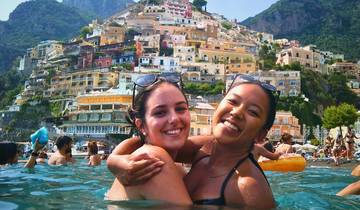
4 days
Amalfi Coast Experience – Budget Friendly Small Group Tour
- ✓ Comprehensive Campania tour
- ✓ Expert local guides included
- ✓ All accommodation arranged
- ✓ Transportation provided
9 days
Campania Region Highlights, Private Tour
- ✓ Comprehensive Campania tour
- ✓ Expert local guides included
- ✓ All accommodation arranged
- ✓ Transportation provided
6 days
Best of Rome, Naples, Pompeii & Sorrento – 6 Days
- ✓ Comprehensive Campania tour
- ✓ Expert local guides included
- ✓ All accommodation arranged
- ✓ Transportation provided
7 days
Historic Rome To Sorrento Coastal Bliss
- ✓ Comprehensive Campania tour
- ✓ Expert local guides included
- ✓ All accommodation arranged
- ✓ Transportation provided
Multi-day tour packages powered by TourRadar. Prices and availability subject to change.
Introduction: The Royal Capital That Rewards the Curious Traveler in 2026
Caserta’s Royal Palace was conceived as an act of political theatre. When King Charles of Bourbon commissioned Luigi Vanvitelli to design his new Neapolitan capital in 1752, the brief was explicit: create a residence that outstripped Versailles and announced the power of the Kingdom of Naples to all of Europe. Vanvitelli spent the rest of his life on the project, dying in 1773 before its completion, and his son Carlo carried the work forward through the 1780s. The result is, by most measures, the largest royal palace ever built: more than 1,200 rooms, 1,742 windows, 34 staircases, and a park stretching three kilometres from the rear façade to the Great Cascade.
The UNESCO inscription of 1997 — formally titled “18th-Century Royal Palace at Caserta with the Park, the Aqueduct of Vanvitelli, and the San Leucio Complex” — recognised not just the palace but the entire Bourbon royal infrastructure of the Campania plain: the aqueduct that brought water 38 kilometres from the Taburno mountains to feed the park’s fountains, and the utopian silk-working community that Ferdinand IV established at San Leucio, five kilometres uphill from the palace. Together, these three components form one of the most ambitious 18th-century building programmes anywhere in Europe, and yet most visitors who make the 40-minute train journey from Naples see only the central fountain axis and return without grasping the scale of what they have encountered.
In 2026, the Reggia di Caserta is easier to navigate than ever, with a clear ticketing system through TicketOne, an expanded audio guide programme covering both the apartments and the park, four specialist guided tour themes for smaller groups, and an electric shuttle running the full length of the central axis. The challenge for most visitors is not access but orientation — knowing which rooms inside the palace reward extra time, which sections of the park most visitors walk straight past, and how to combine a palace visit with the three or four other extraordinary sites within 15 kilometres of the main entrance. This guide provides that orientation, covering every tour option, every walking route, and every secret corner available to visitors in 2026.
Caserta is also one of southern Italy’s most accessible day trips. Direct regional trains from Naples Centrale depart approximately every 30 minutes throughout the day, take 30–44 minutes, and cost €4–5 each way. The train station sits directly across the square from the palace main entrance, making the transfer from platform to ticket office a two-minute walk. For visitors with more time, a rental car expands the range dramatically, opening up the Valle di Maddaloni viaduct section of the aqueduct, Casertavecchia, and several lesser-known Bourbon sites in the surrounding countryside.
Official Guided Tours of the Reggia di Caserta 2026
The Reggia offers four distinct private guided tour themes, each designed to give small groups of 2 to 11 people a 90-minute deep dive into a specific aspect of the complex. All four tours are private — meaning no strangers are mixed into your group — and prices reflect that exclusivity, falling per person as group size increases. Licenced local guides operate independently, and the best way to book is through specialist booking platforms or directly through the palace’s partner operators.
Tour A: Historic Apartments (Appartamenti Storici)
This is the closest to a standard palace tour but at a level of detail that the independent audio guide cannot match. The guide takes the group through the most sumptuous rooms of the Royal Apartments — the Hall of Alexander, the Throne Room, the Hall of Mars, the private apartments of King Ferdinand II and Queen Maria Teresa — explaining not just what is in each room but the political and dynastic reasoning that drove every decorative commission. A highlight is access to the Quadreria Reale, the Royal Gallery housing canvases commissioned directly by the Bourbon monarchs and rarely examined closely by unaccompanied visitors. If any temporary exhibitions are active during your visit, the tour adapts to include them.
Tour B: History of Art (Storia dell’Arte)
Designed for visitors with a particular interest in painting, fresco technique, and applied decorative arts, this tour adapts its route to the interests of each group. The guide is a specialist art historian who draws out the connections between individual works — the Flemish and Spanish influences on the Bourbon collection, the extraordinary ceiling frescoes by Jacob Philipp Hackert and Fedele Fischetti, the neoclassical transition visible in later decorative commissions — and can focus depth of attention on portraits, architectural painting, or sculptural programmes according to what the group finds most compelling. Temporary exhibitions are included when active.
Tour C: Park and English Garden (Parco e Giardino Inglese)
The park tour covers the full central axis from the palace façade to the Great Cascade, but with narrative depth that transforms what many visitors experience as a long walk into an exploration of hydraulic engineering, landscape philosophy, and Bourbon dynastic mythology. The guide explains the system of 67 ventilation towers that mark the underground course of the Acquedotto Carolino, the mythological programme of each fountain group — Diana and Actaeon, Venus and Adonis, Ceres, Aeolus — and the engineering ingenuity that maintains water pressure across a 3-kilometre cascade of descending pools. The English Garden section covers the 23-hectare garden created for Queen Maria Carolina of Austria, including the Bath of Venus grotto, the rare plant collections introduced from across the British Empire, and the romantic philosophy that shaped the design.
Tour D: Hidden Treasures (Tesori Nascosti)
This is the tour most worth seeking out in 2026, and the one that repays the effort of booking most fully. The guide takes the group to areas inaccessible on any other tour format: the Elliptical Vault above the Grand Staircase, an extraordinary piece of geometric masonry visible only from a specific upper-level access point; the Helicoidal Staircase, a spiralling service stair that was once the private circulation route for court staff; attic spaces that were converted into accommodation during the Second World War and retain visible evidence of that occupation; and the Court Theatre (Teatrino di Corte), one of the finest small court theatres in 18th-century Europe, which opens to the public on limited days and deserves far more attention than it receives. The outdoor component of this tour covers the aqueduct arrival point in the park and the climb to the Carolina Aqueduct vantage point, from which the full panorama of the palace, the park, and the Bay of Naples unfolds on clear days.
Organised Day Tours from Naples
For visitors based in Naples who want a structured introduction without the logistics of independent travel, small group day tours are the most efficient option in 2026. These tours depart Naples around 8:00, take around 50 minutes by private minibus to reach Caserta, include entry tickets and skip-the-queue access, provide 2–3 hours of expert guided access to the apartments and park, and return to Naples by mid-afternoon. Prices range €60–90 per person for the tour package itself; lunch in Caserta (not included in most packages) adds €15–25. Total cost for a guided day from Naples runs €75–115 per person. Check Viator, GetYourGuide, and Musement for current operator listings and departure schedules. An e-bike tour option that combines the Reggia, the San Leucio village, and a section of the Vaccheria district is available for approximately €36 per person for a two-hour circuit.
Self-Guided Walking Routes Through the Royal Palace 2026
The standard self-guided route through the Royal Palace follows the ticketed circuit through the state apartments, taking between 90 minutes and 2 hours depending on how closely individual rooms are examined. The palace’s visitor flow is one-directional, so there is no risk of getting disoriented, but there are several points within the circuit where most visitors move too quickly and miss significant detail.
The Grand Staircase and Vestibule
The Grand Staircase (Scalone d’Onore) is the palace’s most dramatic architectural space and the one that consistently appears in photographs, but most visitors focus on the staircase itself and miss the Elliptical Vault overhead — a tour de force of masonry geometry that Vanvitelli considered his most technically difficult achievement. Look up before ascending. The octagonal vestibule at the top of the staircase is where to pause: from this point, the sightlines extend through the entire state apartment enfilade in one direction and across the full depth of the palace to the park vista in the other, giving the clearest sense of the building’s scale and the deliberateness of its spatial planning.
The State Apartments: Where to Slow Down
The standard circuit passes through 24 public rooms. Four deserve substantially more time than the average visitor gives them. The Palatine Chapel, positioned on the ground floor between the main entrance and the staircase, is the only space in the palace that approaches a sacred atmosphere and is frequently rushed past by visitors eager to reach the upper floor apartments. The Hall of Alexander (Sala di Alessandro) contains the largest single canvas in the building, a painting by Philipp Hackert depicting the Battle of Actium, and the ceiling fresco is among the most technically ambitious in the palace. The Throne Room, despite its heavy restoration and somewhat austere character, is the room where the constitutional monarchy of the Kingdom of the Two Sicilies was proclaimed in 1820 — a historical fact that most visitors walk through without knowing. The Quadreria Reale, the Royal Gallery, holds approximately 150 paintings and is routinely undervisited; allow 20–30 extra minutes if painting interests you.
The Court Theatre
The Teatrino di Corte occupies a wing of the palace and opens on specific days; it is included in the standard full ticket on those dates. Entry is from inside the main visitor circuit. The theatre is a miniature version of Naples’ San Carlo — horseshoe-shaped, with 12 boxes on two levels painted in ivory, crimson, and gold, with a royal box at the centre directly opposite the stage. It was completed in 1769 and used by the Bourbon court for private performances. The acoustic quality is extraordinary. Arrive early on days when it opens, as access is controlled and queues form quickly.
Using the Audio Guide Effectively
The audio guide costs €8 for the combined apartments and park version in English, French, German, Italian, and Spanish, and is available at the ticket office near the main entrance. For the standard self-guided visitor, the audio guide provides sufficient context for each major room, though it moves at a pace calibrated for general visitors rather than specialists. The device is rented at the ticket office and returned on exit; a deposit is required.
Secret Rooms and Hidden Corners Inside the Reggia
Three spaces inside the Reggia consistently go unnoticed by the majority of visitors — either because they fall slightly off the main route, open only on certain days, or require advance booking through a specialist tour.
The Helicoidal Staircase (Scala Elicoidale)
Vanvitelli designed two staircases inside the Reggia: the dramatic public Grand Staircase that every visitor ascends, and the Helicoidal Staircase — a tight spiral that served as the service route for court staff. Where the Grand Staircase is about theatrical impact, the Helicoidal Staircase is a demonstration of pure technical mastery: a self-supporting stone helix that climbs without a central column, held in place by the geometry of the stone itself. It is accessible only on the Hidden Treasures guided tour and represents one of the genuine architectural surprises of the entire complex.
The Elliptical Vault
The attic level above the Grand Staircase contains one of Vanvitelli’s most daring structural solutions: an elliptical masonry vault that spans the central octagonal lantern without visible support. It was designed partly to carry the weight of the terrace above and partly to create a concealed performance space — court musicians would play from the vault level during grand receptions, and the effect of disembodied music floating down from the dome astonished guests. The Hidden Treasures tour climbs to this level through a staircase in the palace walls; the view both down onto the staircase and out across the palace roofscape is available from no other vantage point.
The Royal Silk Rooms (Stanze della Seta) and War Quarters
A section of the palace’s attic floor was adapted as living quarters during the Second World War, when the Reggia served as Allied Force headquarters (General Mark Clark commanded from here during the Italian campaign of 1943–44). Graffiti, modified alcoves, and patched masonry from that period survive intact in certain attic rooms, creating an unexpected layer of 20th-century history within the 18th-century fabric. The Hidden Treasures tour includes these spaces. The Palatine Library, located in the palace’s main wing, is accessible to researchers by appointment and occasionally to tour groups during special events; it holds a collection of maps, architectural drawings, and Bourbon-era printed materials of considerable scholarly interest.
The Royal Park Walking Circuit 2026: Beyond the Central Axis
The Royal Park stretches across 120 hectares behind the palace, and the vast majority of visitors walk the central axis — the Via d’Acqua — from the rear façade of the palace to the Great Cascade at the far end, a one-way distance of approximately 3 kilometres. This walk is extraordinary, but it is only a fraction of the park’s total area. Three sections of the park away from the central axis offer experiences that are quieter, in some cases wilder, and in all cases more deeply atmospheric than the crowded fountain route.
The Central Axis: Reading the Fountain Sequence 2026
For first-time visitors, the central axis is non-negotiable. The fountain sequence follows a mythological programme designed to glorify the Bourbon monarchy: the Fountain of Margherita at the near end, then the Fountain of Dolphins (Fontana dei Delfini), the Fountain of Aeolus (Fontana di Eolo) with its 54 wind god figures, the Fountain of Ceres (Fontana di Cerere), the Fountain of Venus and Adonis, and the Great Cascade (Cascata Grande) at the far end, where the monumental sculptural group of Diana and Actaeon marks the point where the water arrives from the Acquedotto Carolino. Most visitors photograph the Great Cascade then turn around and walk back. The correct approach is to walk the axis uphill — from the palace to the cascade — to see it as Vanvitelli intended, each fountain successively revealed as you climb.
The electric shuttle (€3 return) runs from near the palace entrance to the top of the axis, near the Fountain of Diana and Actaeon. Taking the shuttle up and walking down combines energy efficiency with the best visual sequence: the vista from the Great Cascade looking back down the full 3-kilometre axis to the palace façade is the single most impressive image in the entire complex.
The Bosco Vecchio: The Old Forest
The Bosco Vecchio (Old Forest) occupies the eastern portion of the Royal Park, separated from the central axis by a long avenue of ancient oaks. It predates the palace — this was the ancient hunting woodland of the Acquaviva di Caserta family from whom the Bourbons purchased the estate — and its character is completely different from the formal fountain sequence. The paths here are shaded, the trees are enormous, and on a weekday in any season you can walk for 30 minutes without encountering another visitor. The Bosco Vecchio connects at its northern end to the English Garden and at its southern end back to the lower section of the central axis. Bring water; there are no services in this section of the park.
The Peschiera Grande (Great Fishpond)
The Peschiera Grande, the large rectangular fishpond near the palace’s east wing, is one of the park’s most underrated spaces. The Bourbon court used it for fishing — a royal leisure activity that strikes modern visitors as endearingly informal given the grandeur surrounding it. The pond is surrounded by a low parapet, and the perspective from its far end back toward the palace façade is one of the quieter, more contemplative views available in the complex. The fountain at the centre of the pond is operational in summer and creates a pleasant microclimate on hot days.
Cycling the Park 2026
Bike rental is available inside the park through Nolo Bici Reali, located near the main entrance. Classic bikes cost €5 per hour; electric bikes cost €6 per hour. The park’s flat central section and the loop roads of the Bosco Vecchio are ideal for cycling. A complete loop of the full park perimeter by bike takes approximately 2 hours at a relaxed pace and covers sections invisible from the central axis, including the service roads and secondary avenues along the park’s northern and southern edges. Reservations for bike rental can be made at noleggiobicireali.com or by calling +39 335 6780524.
The English Garden: Caserta’s Most Overlooked Treasure
The English Garden (Giardino Inglese) occupies 23 hectares at the upper end of the Royal Park, above and to the left of the Great Cascade, and is included in the full €18 ticket. It was created for Queen Maria Carolina of Austria — wife of Ferdinand IV, sister of Marie Antoinette — between 1786 and the early 19th century, with input from the Scottish botanist John Andrew Graefer, who managed the garden for its first decades. Its character is entirely different from the formal geometry of the park below: winding paths, mature trees from around the globe, deliberately irregular terrain, and a series of small architectural follies placed at unexpected moments in the landscape.
The Bath of Venus
The Bath of Venus (Bagno di Venere) is the English Garden’s centrepiece — a grotto with a small pool, a reclining Venus sculpted from marble, and a carefully manipulated spring that feeds the water feature. The path to the Bath of Venus winds through a section of the garden deliberately overgrown to heighten the sense of romantic discovery. Most visitors who enter the English Garden turn back after the first 10 minutes; those who push forward another 15 minutes reach a completely different atmosphere. The Bath of Venus rewards persistence.
The Rare Plant Collections
Graefer sourced plants from across Europe, North America, and the colonial territories for Maria Carolina’s garden, and several descendants of those original plantings survive. The garden contains exceptional specimens of Quercus cerris (Turkey oak), Camellia japonica varieties brought from Portugal, a collection of cycads acquired through the Neapolitan botanical network, and several examples of Gingko biloba planted in the early 19th century. The English Garden also contains a small collection of antiquities — classical and pseudo-classical sculptural fragments — placed to enhance the romantic atmosphere.
Visiting the English Garden in 2026
The English Garden always closes 30 minutes before the Royal Park, and closes entirely in poor weather. Closing times vary by month: January and February at 3:30 PM; March at 5:00 PM; April at 7:00 PM; May at 6:00 PM; June through September at 7:00 PM; October at 5:30 PM; November and December at 3:30 PM. Last admission to the English Garden is 30 minutes before these closing times. In autumn and winter, this means arriving at the main park entrance by noon at the latest to allow time to reach the English Garden. The walk from the palace to the English Garden entrance takes 40–50 minutes on foot, or 10 minutes by shuttle plus a further 5-minute walk.
Hidden Caserta: Beyond the UNESCO Site 2026
Within 15 kilometres of the Reggia di Caserta lie several sites that receive a fraction of the visitor traffic of the main palace yet offer experiences that are in some respects more memorable — because they are quieter, more intimate, and less mediated by tourist infrastructure. Three destinations stand out: Casertavecchia to the northeast, the Belvedere di San Leucio to the northwest, and the Valle di Maddaloni viaduct section of the Acquedotto Carolino to the north. A fourth option — the Royal Site of Carditello, about 20 kilometres southwest of Caserta — offers an extraordinary Bourbon hunting lodge that was abandoned for years and is now undergoing restoration.
Planning a Multi-Site Day in 2026
The logistics differ significantly between the three main additions. San Leucio is the easiest: buses from Caserta train station reach the village in 15–20 minutes for under €2 each way, and the silk museum and royal apartments combined fill a satisfying 2-hour visit. The Acquedotto Carolino viaduct is best by car, as the site at Valle di Maddaloni is 10 kilometres from the palace and not well served by public transport; the drive takes 20 minutes from the palace car park. Casertavecchia requires either a taxi (approximately €30–40 round trip from Caserta) or a car, as the public bus service to the medieval village is infrequent. Combining the palace with San Leucio on the same day costs €55–75 per person; combining the palace with Casertavecchia costs €85–105 per person. All three sites in one day is achievable only with a car and an early start at the palace.
Casertavecchia: The Medieval Village Above Caserta
Casertavecchia sits on a ridge 350 metres above sea level, 10 kilometres northeast of the modern city, and is precisely the kind of southern Italian medieval village that appears on travel magazine covers. The streets are narrow, cobbled, and virtually traffic-free; the stone buildings are amber-coloured in afternoon light; and the central piazza, framed by the Norman cathedral, is entirely unspoiled. On a clear day, the view from the village ridge extends south across the Campania plain to the Bay of Naples and Vesuvius. What makes Casertavecchia genuinely extraordinary for the informed visitor is the quality of its Norman-era architecture, which dates to the 11th and 12th centuries and survives in unusually complete condition.
The Norman Cathedral
The Cattedrale di San Michele Arcangelo was begun in 1113 and consecrated in 1153, and it remains the most important medieval building in the province of Caserta. Its Romanesque façade combines southern Italian Norman stonework with clear Arab-Byzantine influences in the blind arcade decoration — the same multicultural synthesis found in the great churches of Palermo and Monreale. The octagonal lantern tower above the transept crossing, added in the 12th century, is the most photographed element from outside, but the interior rewards equal attention: the nave columns were salvaged from ancient Roman buildings in the area, and the cosmati pavement inlays survive in the apse area in remarkably good condition. Entry to the cathedral is free.
The Torre del Falco
The Torre del Falco (Falcon Tower), which once formed part of the Norman city walls, rises above the village skyline to the southeast of the cathedral. It was partially damaged by an earthquake in 1349 and has never been fully rebuilt, giving it a deliberately ruined character that enhances the medieval atmosphere of the surrounding streets. The tower’s base is accessible from the external street, though the interior is closed. The best view of the tower is from the small piazza to its south, from where the relationship between the tower, the cathedral lantern, and the ridge escarpment is clearly legible as a unified defensive composition.
Eating and Drinking in Casertavecchia
The village has several restaurants serving Campanian cuisine at prices significantly lower than equivalent quality in Naples or in the tourist-facing cafes outside the Reggia. Dishes to look for include pasta e fagioli prepared with local lagenelle pasta, baked ricotta from the casertano buffalo herds of the Campania plain, and grilled sausages made with the nero casertano pig breed. A full lunch with wine in Casertavecchia runs €20–30 per person. For visitors combining the village with a morning at the palace, arriving for lunch at 13:00 after the taxi ride from Caserta gives the best rhythm: the village crowds (such as they are) thin after the lunch service, and the late afternoon light on the cathedral façade is exceptional.
Getting to Casertavecchia in 2026
The most practical option for visitors without a car is a taxi from Caserta train station or from the Reggia car park, which takes 25–30 minutes and costs approximately €15–20 one way (agree the price before departure). The return taxi can be arranged with the same driver or called from the village. Rideshare apps operate in Caserta, though response times outside the city centre are longer than in Naples. Driving from the palace takes 20–25 minutes; the final approach road winds steeply up the hillside and has limited parking just outside the village entrance.
San Leucio and the Royal Silk Factory 2026
The Belvedere di San Leucio, 5 kilometres northwest of the Reggia di Caserta, is the most undervisited component of the UNESCO World Heritage property. King Ferdinand IV of Bourbon established it in 1789 with a dual purpose: the hill provided a hunting lodge with panoramic views, and the adjacent buildings were converted into a working silk factory staffed by a specifically created artisan community governed by a progressive social statute that Ferdinand himself drafted.
The San Leucio community was revolutionary for its time. The statute abolished inheritance — all property was held communally — established free education for all children, prohibited begging, created a public healthcare system for workers and their families, and mandated equal rights for men and women. Workers were paid fairly, housed in identical two-room dwellings, and governed by elected representatives. The resulting village, which survives largely intact today, is one of the earliest planned industrial communities in Europe and was recognised as part of the UNESCO inscription precisely because of its social and architectural uniqueness.
The Silk Museum (Museo della Seta)
The Museo della Seta del Real Belvedere occupies part of the original Belvedere complex and traces the full silk production process from silkworm cultivation through thread extraction, dyeing, and weaving. The museum holds original Bourbon-era looms, some still functional, along with examples of the distinctive San Leucio silk damask that furnished palaces across Europe. The Weaver’s House (Casa del Tessitore), a short walk from the Belvedere, is accessible with a separate ticket and shows a reconstructed 18th-century weaver’s domestic environment. Guided visits to the museum last approximately one hour and are led by knowledgeable local guides who bring considerable personal investment to the story. Entry costs approximately €5–8 (check with the museum at +39 0823 301817 for current rates); visits are conducted as guided tours and reservation is advisable at weekends.
The Royal Apartments and Frescoes
Above and behind the museum, the Belvedere Palace’s royal apartments include a series of rooms frescoed by Fedele Fischetti (The Marriage of Bacchus and Ariadne, in the dining room) and Philipp Hackert (who also worked extensively in the Reggia di Caserta), and the bathroom of Queen Maria Carolina, decorated with exquisite neoclassical wall paintings. These rooms are visited on the guided tour and provide a fascinating complement to the state apartments in the main palace: the scale is human rather than theatrical, and the paintings have an intimate freshness that the more formal palace rooms sometimes lack.
Views and the Belvedere Terrace
The Belvedere terrace above the complex offers what is arguably the most dramatic panoramic view available anywhere in the Caserta area: the Reggia di Caserta is directly visible to the south, its vast façade foreshortened by distance into a single horizontal stroke; the Campania plain extends south to the Bay of Naples; Vesuvius is visible on clear days beyond the city of Caserta; and the spine of the Apennines rises to the north and east. The view alone justifies the visit even for visitors with limited time. The terrace is free to access; only the museum and apartments require tickets.
Getting to San Leucio in 2026
From Caserta train station, local buses serve San Leucio directly; the journey takes 15–20 minutes and costs approximately €1–2 each way. Ask at the station information point for the current schedule, as service frequency is limited. By car from the Reggia, the drive takes 10–12 minutes via Via Gasparri. Taxis from the Reggia to San Leucio cost approximately €10–15 one way.
The Acquedotto Carolino: Vanvitelli’s Most Dramatic Surviving Work
The Acquedotto Carolino is the least-visited component of the Caserta UNESCO property and arguably the most visually dramatic. Commissioned by Charles of Bourbon in 1753 and designed by Luigi Vanvitelli, the aqueduct carries water 38 kilometres from the springs of the Fizzo at the foot of Mount Taburno to the palace park, where it feeds the waterway and all the fountain systems. Most of its length runs underground; but at Valle di Maddaloni, 10 kilometres north of the palace, the conduit emerges from the earth and crosses a valley on a three-tier viaduct of 44 arches — 529 metres long and 55.8 metres high at its tallest point — that was directly modelled on Roman hydraulic engineering and remains one of the most impressive feats of 18th-century civil construction in Europe.
The Valle di Maddaloni Viaduct Section
The viaduct section crosses the Valle di Maddaloni between Monte Longano and Monte Garzano, spanning what is now the SP335 provincial road. From the road below, the scale is almost incomprehensible: the arches of the lowest tier rise 22 metres above the valley floor, and above them two further tiers of diminishing span carry the conduit to the hilltops on either side. The structure is built entirely from local tufa blocks, giving it a warm honey colour that deepens in afternoon light. A visitor trail follows the valley floor alongside the viaduct and climbs to an observation point above, from which the full three-tier elevation is visible.
Several arches were damaged during the Second World War and subsequently repaired; the repairs are visible on close inspection but do not diminish the overall effect. The aqueduct is surrounded by protected vegetation and the walking path through the valley is one of the pleasanter short walks in the Campania countryside. The site is free to visit.
Getting to the Acquedotto Carolino
The Valle di Maddaloni viaduct is best reached by car. From the Reggia di Caserta, drive north on the A1 motorway toward Rome, exit at Caserta Sud, and follow the SP335 toward Valle di Maddaloni; the aqueduct spans the road approximately 3 kilometres past the motorway exit. Total driving time from the palace is 20–25 minutes. Parking is available on the road shoulder below the viaduct. Without a car, the most practical approach is a taxi from the Reggia (approximately €15–20 one way). The official Reggia di Caserta occasionally organises guided walks to the aqueduct on Sunday mornings, departing from the Valle di Maddaloni parking area; check the museum website for upcoming dates.
The Acquedotto Carolino and the Royal Park
Inside the park, the arrival point of the Acquedotto Carolino is marked by the Carolina Aqueduct terminal structure at the top of the Via d’Acqua, just above the Great Cascade. From this point, the water has travelled 38 kilometres underground and on the viaduct structure to reach the park. On the Hidden Treasures guided tour, the guide walks visitors up to this terminal structure and explains the full hydraulic circuit — from the Taburno springs through the 67 underground ventilation towers to the terminal — in a way that changes how the entire park is understood. The Great Cascade is not merely decorative; it is the end point of a 17-year engineering project that Vanvitelli considered his greatest technical achievement.
E-Bike and Alternative Tour Routes 2026
The terrain around Caserta is ideally suited to cycling, and in 2026 several e-bike tour options have established themselves as among the most enjoyable ways to experience the wider UNESCO territory. The flat Campania plain surrounding the palace, the gentle incline of the road to San Leucio, and the relatively quiet provincial roads connecting the palace to the Vaccheria district and the industrial heritage sites of the Bourbon plain all work well on electric bikes.
The San Leucio E-Bike Circuit
The most popular organised e-bike tour from Caserta combines the Reggia, the village of San Leucio, and the Vaccheria district — a Bourbon-era agricultural estate complex that formed part of the same royal land system as the palace and the silk factory — in a two-hour, 15-kilometre circuit. The tour is available in English and Italian, takes groups of maximum 10 people, and costs approximately €36 per person including the bike, a guide, and entry to the San Leucio complex. It operates year-round and is particularly good in spring and autumn when the Campania plain is green and temperatures allow extended cycling. Book through GetYourGuide or local operators in Caserta.
The Carolino Cycle Route
A longer cycling option follows the approximate course of the Acquedotto Carolino across the Campania plain, tracing the underground conduit between the palace and the Valle di Maddaloni viaduct. The route runs along quiet provincial roads and agricultural tracks and offers a way to understand the scale of Vanvitelli’s hydraulic infrastructure in direct physical terms. The one-way distance is approximately 10 kilometres; most e-bike riders complete the circuit (out to the viaduct and back) in around 90 minutes. Bike rental inside the Royal Park (€5–6 per hour) does not cover external routes; if planning to ride outside the park, rent from one of the rental shops near Caserta train station.
Self-Guided Walking in the Royal Park
For visitors who want to walk the park independently without a guide, a free map is available at the bookshop inside the main entrance. The map shows all secondary paths, the Bosco Vecchio circuit, the English Garden access paths, and the locations of all fountain groups. A complete walking circuit of the full park perimeter, including the Bosco Vecchio and the English Garden, takes 4–5 hours at a comfortable pace and is best undertaken in spring or autumn. The park is largely shadeless in summer; carry water, as the only refreshment point is near the main entrance. Comfortable, closed-toe shoes are essential — the paths are mostly gravel and uneven in the Bosco Vecchio section.
Tour Costs and Budget Breakdown for Caserta 2026
All costs below are per person, for a visitor travelling independently from Naples. There are no hotel costs in a standard Caserta visit, as the city is almost universally visited as a day trip.
Budget Day (Self-Guided, Palace and Park Only)
A budget self-guided day covers the full palace and park on the standard ticket without extras. Return train from Naples Centrale to Caserta costs €8–10 per person on the regional Trenitalia service. The full ticket (Royal Palace, Royal Park, English Garden) costs €18, purchased at the ticket office in Piazza Carlo di Borbone or €19 with the online booking fee via TicketOne. Lunch from a nearby café, supermarket, or the park vendors runs €10–15; water and snacks add €3–5. The shuttle is optional at €3. A budget day without the shuttle totals €40–50 per person.
Mid-Range Day (Audio Guide, Shuttle, Restaurant Lunch)
Return train: €8–10. Full ticket with online booking fee: €19. Audio guide covering both the apartments and the park: €8. Electric shuttle (round trip along the central axis): €3. Lunch at a traditional trattoria in Caserta: €20–30. Coffee and gelato: €5–8. Total for a mid-range day: €65–80 per person, covering all primary costs with no shortcuts on the visit experience.
Organised Small Group Tour from Naples
Small group tours from Naples include return transport, entry tickets, skip-the-queue access, and 2–3 hours of expert-guided access to the apartments and park. Tour packages cost €60–90 per person depending on the operator, group size, and whether transport is a private minibus or the regional train. Lunch is not included in most packages and costs €15–25 in Caserta. Total cost for an organised guided day from Naples: €75–115 per person (check reggiadicaserta.cultura.gov.it for official guided tour options, and Viator, GetYourGuide, or Musement for operator listings).
Extended Day Adding San Leucio
Return train from Naples: €8–10. Full ticket with booking fee: €19. Audio guide: €8. Bus to San Leucio and back from Caserta station: €2–4. San Leucio Silk Museum entry: approximately €5–8. Lunch in Caserta or San Leucio: €15–25. Total for the palace plus San Leucio: €55–75 per person — a full and highly varied day.
Extended Day Adding Casertavecchia
Return train from Naples: €8–10. Full ticket with booking fee: €19. Audio guide: €8. Taxi round trip to Casertavecchia: €30–40. Lunch in Casertavecchia: €20–30. Total for the palace plus medieval village: €85–105 per person. This option works best as a relaxed half-day at the palace followed by lunch and the afternoon in Casertavecchia, arriving back in Caserta in time for an early evening train to Naples.
Savings and Free Admission
The first Sunday of every month, the Reggia di Caserta offers free admission to all visitors (Domenica al Museo programme). Tickets must still be reserved in advance through TicketOne, which opens reservations approximately five days before the free Sunday; they sell out quickly. On these days, some ancillary areas (the Vanvitelli Rooms, the Grand Gallery) remain closed. EU citizens aged 18–24 pay €3 for admission year-round. Under-18s enter free. ArteCard Campania holders pay €7. Teachers and students in Architecture, Heritage Conservation, and related disciplines enter free on presentation of a valid identification document.
Practical Tips and Booking Strategies for 2026
Online booking through TicketOne is strongly recommended for any visit from Wednesday to Sunday between April and October. The palace operates with timed-entry slots for the Royal Apartments, and all slots for peak-period Saturdays and Sundays frequently sell out by Wednesday of the same week. The online booking fee of €1 per ticket is a negligible cost against the risk of arriving to find no slots available. Booking also allows entry from both the main entrance on Piazza Carlo di Borbone and from Corso Giannone, the secondary entrance, which is useful for visitors arriving from the east side of the city.
When to Arrive
Arriving at opening time (8:30) on any day of the week provides approximately 90 minutes of near-solitude in the Royal Apartments before the tour group tide reaches full strength. The apartments are almost always crowded between 11:00 and 15:00 on any day from April through October. Visiting the park in the middle of the day and returning to the apartments in the late afternoon (the evening ticket at €5 covers the apartments after 17:00) is a useful strategy for avoiding peak apartment crowds while also catching the best light in the park.
What Not to Miss
First-time visitors prioritise the Grand Staircase and the state apartments sequence, the Throne Room, the Quadreria Reale, and the Court Theatre on days when it is open. The park is non-optional; at least 2 hours should be reserved for the central axis and the Great Cascade. Visitors with an extra hour should enter the English Garden and walk to the Bath of Venus. Visitors making a return trip have the luxury of reserving the Hidden Treasures private tour, which unlocks the most architecturally surprising experiences in the entire complex.
What to Know Before You Go
The palace is closed on Tuesdays, 25 December, and 1 January. Pets are not admitted to the palace or park. Large bags, suitcases, and luggage cannot be brought inside, but a free left-luggage service is available near the main entrance (hours 8:30–19:00). Photography is permitted throughout the complex without flash; tripods require advance written authorisation from the museum administration. The park paths are mostly gravel and uneven in the Bosco Vecchio section; closed-toe shoes are essential. A café-restaurant operates near the main entrance; there are no food services inside the park beyond the entrance area.
Getting to Caserta
Direct regional trains (Regionale Veloce or standard Regionale) from Naples Centrale depart every 30 minutes on average throughout the day, take 29–44 minutes depending on the service type, and cost €4–5 per person one way. Approximately 57–60 trains per day run on this route. The Caserta train station exits directly onto Piazza Carlo di Borbone, which faces the palace main entrance. Tickets are available from vending machines at Naples Centrale or from the Trenitalia app; validate before boarding on the regional network. By car from Naples, the journey takes 35–50 minutes via the A1 motorway (exit Caserta Sud); parking is available on Piazza Carlo di Borbone and in the surrounding streets.
Frequently Asked Questions About Caserta Tours 2026
How much does the Reggia di Caserta cost to enter in 2026?
The full ticket covering the Royal Palace, Royal Park, and English Garden costs €18, plus €1 for online booking through TicketOne (the only authorised online reseller). A park-only ticket without the palace costs €9 plus €1 online. An apartments-only ticket (available only when the park is closed) costs €12 plus €1 online. An evening apartments ticket (valid after 17:00) costs €5. Under-18s enter free; EU citizens aged 18–24 pay €3; ArteCard Campania holders pay €7. The first Sunday of each month is free for all visitors but requires advance reservation on TicketOne.
How long does a visit to Caserta take?
A minimum thorough visit covering the Royal Apartments and walking the central axis of the park to the Great Cascade takes 4–5 hours. Adding the English Garden extends this to 5–6 hours. A full day’s visit including the Bosco Vecchio, the English Garden, time in the Court Theatre, and a relaxed lunch in the park covers everything and takes 7–8 hours from opening to late afternoon. The Reggia rewards a slow visit; rushing through in 2 hours misses the majority of what makes the complex extraordinary.
Is the Reggia di Caserta better than Versailles?
The comparison is direct and deliberate — Vanvitelli was explicitly instructed to surpass Versailles — and on several measures the Reggia succeeds. The palace building itself is larger by floor area. The park’s central water axis is more dramatic, partly because the water moves visibly and audibly downhill in a way that Versailles’ flat geometry cannot match. The English Garden is generally considered finer. What Versailles has that Caserta lacks is the historical weight of the French monarchy — the Hall of Mirrors, the royal apartments of Louis XIV — and the scale of visitor infrastructure. For visitors who want dramatic 18th-century architecture and garden design without the Versailles crowds, Caserta in 2026 is the correct choice.
What films were made at the Reggia di Caserta?
The palace’s most famous film appearances are in George Lucas’s Star Wars prequel trilogy: the courtyard and exterior loggia appeared as the Theed Royal Palace of Naboo in Episode I: The Phantom Menace (1999) and Episode II: Attack of the Clones (2002). The palace has also featured in Mission: Impossible III, The Young Pope (HBO/Sky series), Angels & Demons, and several Italian television productions. The Star Wars connection is widely noted in the palace promotional materials, and guides on the Historic Apartments tour can point out the specific locations used in the films.
What are the opening hours of the Reggia di Caserta in 2026?
The Royal Palace opens at 8:30 and closes at 19:30, with last admission to the apartments at 18:45. The palace is closed on Tuesdays, 25 December, and 1 January. The Royal Park and gardens open at 8:30; closing times vary by month from 15:30 (January, February, November, December) to 19:00 (April, June–September). Last admission to the park is always one hour before closing. The English Garden closes 30 minutes before the park and is closed entirely in poor weather. The Court Theatre has variable opening days; check the museum website before booking around this. The ticket office in Piazza Carlo di Borbone is open 8:30–18:00 on ordinary days.
How do you get from Naples to Caserta by public transport in 2026?
The direct regional Trenitalia service from Naples Centrale to Caserta runs approximately every 30 minutes throughout the day, with around 57–60 trains daily. Journey time is 29–44 minutes depending on the service type. Tickets cost €4–5 per person one way and are available from vending machines at Naples Centrale, from the Trenitalia app or website, or from ticket windows. Validate the ticket before boarding. On arrival, the Caserta station exit opens directly onto Piazza Carlo di Borbone, with the palace entrance immediately across the square.
Can you cycle through the Royal Park?
Yes. Bike rental is available inside the park through Nolo Bici Reali at €5 per hour for classic bikes and €6 per hour for electric bikes. The flat central axis is ideal for cycling, as is the loop through the Bosco Vecchio. The electric shuttle and bicycles cannot use the same path simultaneously, so cyclists and shuttle passengers share the central axis road with appropriate spatial separation. The park’s secondary paths in the Bosco Vecchio are gravel and suitable for standard bikes. Cycling outside the park perimeter (to San Leucio or toward Valle di Maddaloni) is possible with bikes rented from shops near Caserta train station.
What is the best time of year to visit Caserta in 2026?
April and May offer the best combination of long park closing hours (the gardens are open until 18:00–19:00), mild temperatures, and full fountain operation. September and October are the second-best window: summer crowds diminish after mid-August, temperatures are comfortable for long park walks, and the autumn light is extraordinarily beautiful on the stone of the Great Cascade. Summer (June–August) is very hot for the long walk of the park central axis; the English Garden, being shaded, is a better summer option. Winter visits (November–February) offer the palace apartments at minimal crowds but significantly reduced park hours (closing at 15:30), which makes combining the palace interior with the full park difficult without very careful timing.
Is the Acquedotto Carolino free to visit?
Yes. The Valle di Maddaloni viaduct section of the Acquedotto Carolino is free to visit and has no ticket requirement. Parking is available at the road shoulder below the viaduct on the SP335. A visitor trail along the valley floor provides the best views of the three-tier structure. The official Reggia di Caserta museum occasionally organises guided walks to the aqueduct on Sunday mornings; check the events calendar at reggiadicaserta.cultura.gov.it for scheduled dates in 2026.
What private guided tours are available inside the Reggia in 2026?
Four specialist private tour themes are available for groups of 2 to 11 people, each lasting 90 minutes: Tour A (Historic Apartments) covers the most sumptuous state rooms and the Quadreria Reale; Tour B (History of Art) focuses on paintings, frescoes, and applied decorative arts with content adapted to the group’s specific interests; Tour C (Park and English Garden) explores the hydraulic engineering and landscape design of the outdoor areas; and Tour D (Hidden Treasures) unlocks areas inaccessible on independent visits, including the Helicoidal Staircase, the Elliptical Vault, and the Court Theatre. Bookings are through specialist operators including tickitaly.com; prices are per group and fall per head as group size increases toward the 11-person maximum.