Capri Travel Guide 2026: Ultimate Planning Resource
Capri rises dramatically from the Tyrrhenian Sea as Italy’s most glamorous island destination, combining stunning natural beauty with sophisticated Mediterranean charm through dramatic limestone cliffs, azure waters, legendary Blue Grotto sea cave, and exclusive boutique-lined piazzas that have attracted Roman emperors, international celebrities, and discerning travelers for over two millennia. This 10-square-kilometer island paradise in the Bay of Naples, accessible only by ferry from Naples or Sorrento, offers comprehensive 2026 planning opportunities spanning affordable day trips, mid-range overnight stays, and luxury multi-day escapes across two distinct towns—Capri and Anacapri—each providing unique perspectives on island life, Roman archaeological ruins, breathtaking viewpoints, and authentic island culture beyond the tourist-focused harbor area.
Key Takeaways
- Ferry service from Naples costs €19-25 for 50-minute hydrofoil crossings with 20+ daily departures April-October 2026, while Sorrento ferries cost €21.50-24 for 20-minute crossings providing the fastest mainland access
- Blue Grotto admission requires €18 entrance fee (€14 rowboat transport + €4 entrance) paid on-site plus €24 boat transfer from Marina Grande, with wait times frequently exceeding one hour during peak summer months and closures occurring during rough seas
- Accommodation costs range €80-150 nightly for budget guesthouses, €200-350 for mid-range hotels, and €500-2,000+ for luxury properties, with peak season (July-August 2026) commanding 30-50% price premiums over shoulder season rates
- Mount Solaro chairlift reaches Capri’s highest peak (589 meters) from Anacapri for €11 round-trip or €8 one-way, providing 12-minute rides with panoramic views across the Bay of Naples, Sorrento Peninsula, and Amalfi Coast
- Optimal visiting periods for 2026 span mid-May through June and September, balancing pleasant weather, moderate crowds, 25-30% lower accommodation costs versus August, and full ferry service before November’s seasonal reductions
- Capri town and Anacapri maintain distinct characters, with Capri offering luxury shopping and celebrity-watching opportunities while Anacapri provides quieter atmosphere, lower prices, access to Blue Grotto and Mount Solaro, and more authentic island life
People Also Ask About Capri Travel 2026
Is Capri expensive to visit in 2026?
Capri ranks among Italy’s three most expensive destinations with average daily costs ranging €150-350 per person in 2026, reflecting the island’s limited 10-square-kilometer size, exclusive reputation, seasonal demand dynamics, and transportation constraints requiring all visitors to arrive by ferry. Accommodation represents the largest expense category with budget options starting €80-150 nightly, mid-range hotels €200-350, and luxury properties €500-2,000+, while peak season (July-August 2026) commands 30-50% premiums over May-June and September shoulder periods. Dining costs exceed mainland Italian averages by 30-50%, with coffee at cafés ranging €3-5 standing or €6-8 seated with views, casual restaurant meals €20-35 per person, and upscale dining €50-100+ per person before wine. Transportation adds €40-50 round-trip ferry costs plus €2.40 funicular, €18 Blue Grotto entrance, €11 Mount Solaro chairlift, and potential €24 boat tours, totaling €75-100 in basic transportation expenses. However, strategic planning reduces costs significantly through Sorrento or Naples day trips eliminating accommodation expenses, visiting during shoulder season capturing 25-30% hotel savings, choosing Anacapri over Capri town for lower restaurant and lodging prices, and utilizing public buses rather than taxis for island transportation.
How much time do I need in Capri in 2026?
Day trips from Naples or Sorrento provide sufficient time experiencing Capri’s highlights—Blue Grotto visit, funicular ride to Capri town, La Piazzetta exploration, brief shopping, and either Mount Solaro chairlift or Gardens of Augustus—spanning 6-8 hours total including ferry crossings, though this rushed approach sacrifices the island’s peaceful late afternoon and evening atmosphere after day-trippers depart around 5-6 PM. Overnight stays capturing Capri’s full character require minimum two days allowing morning Blue Grotto visit avoiding peak crowds, comprehensive exploration of both Capri and Anacapri towns, Villa Jovis Roman ruins requiring two-kilometer uphill walk, leisurely dining at restaurants without time pressure, experiencing Capri after crowds depart, and sunrise/sunset viewing from optimal vantage points impossible for day-trippers. Three-day visits enable comprehensive experience adding boat circumnavigation tours, multiple beaches including Marina Piccola, additional Roman villas (Villa Damecuta, Villa Lysis), Gardens of Augustus extended exploration, leisurely shopping without rushing, day trip to nearby Amalfi Coast from Capri, and truly relaxed Mediterranean island pace experiencing why celebrities and artists have chosen Capri for extended stays throughout history. Budget-conscious travelers maximize value through one overnight plus partial days (arriving afternoon before, departing afternoon after) capturing evening and morning magic while limiting accommodation costs to single night.
What is the best time to visit Capri in 2026?
Mid-May through June and September represent optimal visiting periods for 2026, balancing pleasant weather (temperatures 20-28°C/68-82°F), moderate tourist volumes allowing reasonable Blue Grotto wait times under one hour, 25-30% lower accommodation costs versus July-August peak, full ferry service with 20+ daily departures, all attractions and restaurants operating full schedules, and Mediterranean Sea warm enough for swimming (20-24°C/68-75°F). July-August peak season delivers guaranteed sunshine and warmest temperatures (25-32°C/77-90°F) but suffers highest prices (€350+ mid-range hotels), overwhelming crowds creating two-hour Blue Grotto waits, packed ferries requiring advance booking, and intense heat making uphill walks to Villa Jovis or walking tours uncomfortable, though vibrant atmosphere and extended daylight hours (sunset after 8 PM) appeal to travelers prioritizing guaranteed weather over value and comfort. April and October shoulder months offer 40-50% accommodation savings versus summer and reduced crowds, though April risks cooler swimming temperatures (16-18°C) and occasional rain, while October faces increasing ferry cancellations from autumn storms and some restaurants closing for season. November through March represents low season with lowest prices (€80-120 mid-range hotels), minimal crowds, and peaceful authentic island experience, but many hotels, restaurants, and boat services close entirely, Blue Grotto frequently closes from rough seas, reduced ferry schedules (6-8 daily crossings), and cool temperatures (8-15°C) limiting outdoor activities, making this period suitable only for budget-conscious travelers accepting significant service limitations.
Can I visit Capri as a day trip from Naples or Sorrento in 2026?
Day trips from Sorrento provide the most practical Capri access for 2026 with 20-minute ferry crossings (versus 50 minutes from Naples), departures every 30-60 minutes peak season, €21.50-24 round-trip costs, and Sorrento’s compact size allowing quick accommodation-to-ferry terminal access on foot, making Sorrento the preferred base for Capri day trips especially for travelers also exploring the Amalfi Coast. Naples day trips remain viable offering more ferry departure time flexibility through 20+ daily crossings, potential cost savings combining Capri visit with Naples sightseeing before or after ferry, and convenient connection from Naples airport or rail station for travelers not staying in Sorrento/Amalfi area, though 50-minute crossing time plus crowded Naples port navigation adds stress and reduces Capri time. Typical day-trip itineraries allocate 7-8 hours on Capri (9 AM ferry arrival, 4-5 PM departure) allowing Blue Grotto visit if weather cooperates and wait reasonable, funicular to Capri town, 90 minutes La Piazzetta and shopping, lunch at restaurant, and either Mount Solaro chairlift from Anacapri or Gardens of Augustus, though this rushed schedule eliminates Villa Jovis, multiple beaches, boat tours, and relaxed dining essential to full Capri experience. Budget considerations favor day trips saving €200-350 accommodation costs, though when combined with €40-50 ferry, €18 Blue Grotto, €11 chairlift or other admissions, and €30-40 meals, day-trip costs still reach €100-120 per person, making overnight stays worthwhile for travelers prioritizing comprehensive experience over pure budget minimization.
Extended multi-day tours – 5+ days
Featured Capri Multi-Day Tour Packages
3 days
Capri 3-Day Discovery Tour
- ✓ Comprehensive Capri experience
- ✓ Expert local guides included
- ✓ All accommodation included
- ✓ Transportation provided

5 days
Capri 5-Day Highlights Experience
- ✓ Comprehensive Capri experience
- ✓ Expert local guides included
- ✓ All accommodation included
- ✓ Transportation provided

7 days
Capri 7-Day Cultural Journey
- ✓ Comprehensive Capri experience
- ✓ Expert local guides included
- ✓ All accommodation included
- ✓ Transportation provided

10 days
Capri 10-Day Complete Adventure
- ✓ Comprehensive Capri experience
- ✓ Expert local guides included
- ✓ All accommodation included
- ✓ Transportation provided
Multi-day tour packages powered by TourRadar. Prices and availability subject to change.
Introduction: Planning Your Capri Experience in 2026
Capri occupies a singular position in Mediterranean travel consciousness, combining extraordinary natural beauty—vertical limestone cliffs plunging into cobalt waters, hidden grottoes glowing with ethereal blue light, aromatic lemon groves terraced across steep hillsides—with sophisticated cultural cachet derived from millennia as retreat for Roman emperors, 18th-19th century Grand Tour destination for European aristocracy, early 20th century artists colony, and contemporary playground for international celebrities and affluent travelers. The island’s modest 10-square-kilometer size belies its outsized reputation and visiting complexity, requiring strategic 2026 planning addressing ferry logistics from Naples or Sorrento, accommodation booking timing and location choices between Capri town and Anacapri, weather-dependent Blue Grotto access, crowd management during peak summer months, and budget allocation across transportation, lodging, dining, and activities that collectively create Italy’s most expensive destination outside Venice and the Amalfi Coast.
The island’s geography divides into two distinct municipalities—Capri town on the island’s eastern section and Anacapri occupying the western higher elevations—connected by winding mountain road traversed by public buses. This geographical division creates fundamentally different visitor experiences, with Capri town offering luxury boutiques concentrated along Via Camerelle, celebrity-watching opportunities in La Piazzetta (the famous small square serving as island’s social heart), Marina Piccola beach access, and proximity to Villa Jovis Roman ruins requiring two-kilometer uphill walk from town center. Anacapri provides quieter atmosphere with fewer tourists, lower accommodation and dining prices, access to Blue Grotto by bus or walk, Mount Solaro chairlift reaching island’s 589-meter summit, Villa San Michele with spectacular views and archaeological collections, and more authentic glimpse of island life beyond tourism-dominated harbor and Capri town areas.
Capri’s historical significance extends back to Roman imperial times when Emperor Augustus first claimed the island around 29 BCE, constructing numerous villas and establishing Capri as private paradise retreat from Rome’s political turmoil. His successor Tiberius relocated permanently to Capri in 27 CE, ruling the Roman Empire for final decade from Villa Jovis—whose extensive ruins remain Capri’s most significant archaeological site—and constructing additional villas across the island including Villa Damecuta on Anacapri side. Following the Roman period’s end, Capri endured centuries of obscurity punctuated by pirate raids, brief periods under various Mediterranean powers, and subsistence agriculture and fishing sustaining small permanent population. The island’s modern tourism origins trace to August Kopisch and Ernst Fries’ 1826 “rediscovery” of the Blue Grotto, bringing attention from German Romantic movement artists and writers who publicized Capri’s dramatic scenery throughout European cultural circles.
The late 19th and early 20th centuries transformed Capri into international destination attracting artists, writers, and political exiles including Oscar Wilde, D.H. Lawrence, Maxim Gorky, Lenin, and Graham Greene, establishing bohemian reputation that evolved into mid-20th century celebrity culture as film stars, musicians, and aristocracy discovered Capri during Italy’s Dolce Vita era. This celebrity association continues contemporary Capri’s identity, with luxury boutiques from international fashion houses, Michelin-starred restaurants, five-star hotels, and yacht-filled Marina Grande reflecting upscale clientele while creating accessibility challenges for budget-conscious travelers navigating Italy’s most expensive destination.
Planning Capri visits for 2026 requires understanding seasonal patterns affecting prices, crowds, weather, and service availability across the year’s distinct periods. Peak season spanning July-August delivers guaranteed sunshine, warmest swimming temperatures, full ferry schedules, all businesses operating, and vibrant cosmopolitan atmosphere, but suffers overwhelming crowds creating two-hour Blue Grotto waits, premium accommodation prices (€350+ mid-range hotels), packed ferries and restaurants requiring advance reservations, and intense heat making uphill walks uncomfortable. Shoulder season covering mid-May through June and September offers sweet spot balancing pleasant weather, moderate crowds, 25-30% accommodation savings, full services, and comfortable temperatures for exploration. Low season November through March provides dramatic cost savings and peaceful atmosphere but confronts closed hotels and restaurants, reduced ferry schedules, frequent Blue Grotto closures from rough seas, and cool temperatures limiting swimming and outdoor activities, suitable only for budget travelers accepting significant service limitations.
This comprehensive guide addresses all 2026 planning components—ferry logistics and pricing, accommodation booking strategies across price ranges, transportation within Capri, Blue Grotto visit optimization, budget allocation, itinerary suggestions for different trip durations, and seasonal considerations—enabling informed decisions maximizing value while managing expectations about costs, crowds, and logistics for Mediterranean travel’s most celebrated island destination.
Getting to Capri in 2026: Ferry Services and Logistics
Ferry and hydrofoil services from mainland Italy represent Capri’s only public access, with no airport on the 10-square-kilometer island requiring all visitors to cross the Bay of Naples by sea from primary departure ports in Naples and Sorrento or seasonal routes from Amalfi Coast towns (Positano, Amalfi, Salerno) operating April through October. Ferry selection significantly impacts travel experience through crossing duration, departure frequency, vessel comfort, and cost variations that 2026 travelers should evaluate when planning arrivals and departures coordinating with accommodation check-in times, day-trip schedules, and connecting transportation from Naples airport or mainland hotels.
Naples to Capri represents the most frequent route operating year-round with 20+ daily departures during summer 2026 (April-October) reducing to 10-12 daily crossings November through March. Hydrofoil vessels departing from Molo Beverello complete the crossing in 45-50 minutes for €19-25 one-way depending on operator (Alilauro, NLG, SNAV) and booking timing, while slower ferries departing from Calata Porta di Massa require 60-80 minutes for similar or slightly lower prices. Naples’ dual departure points connect via free shuttle bus, though hydrofoil embarkation from Molo Beverello proves more convenient for most travelers arriving from Naples Centrale train station or Napoli Capodichino airport. Early morning departures begin around 7 AM with final evening hydrofoils departing around 7 PM summer (5 PM winter), allowing flexible day-trip timing or mid-day arrivals for overnight stays. Naples ferries accommodate the largest passenger volumes and provide backup options when weather cancels faster hydrofoils, though 50-minute crossing time and crowded Naples port make this secondary choice versus Sorrento for travelers already based in Sorrento Peninsula or Amalfi Coast region.
Sorrento to Capri provides optimal access for 2026 with shortest 20-25 minute crossings, departures every 30-60 minutes peak season (15-20 daily crossings), €21.50-24 one-way pricing, and compact Marina Piccola port allowing easy walking access from Sorrento hotels and town center. Multiple operators (Alilauro Gruson, NLG, SNAV) service this route using primarily fast ferries and hydrofoils, with first departures around 7:30 AM and final evening crossings around 7 PM summer season (reduced to 3-4 daily crossings November-March). Sorrento’s advantages include minimal crossing time reducing seasickness risk, frequent departures providing schedule flexibility, convenient port location eliminating Naples’ confusing multi-terminal layout, and ideal positioning for travelers combining Capri with Amalfi Coast exploration or staying in Sorrento as base for regional touring. Budget-conscious travelers achieve savings using Sorrento as accommodation base for Capri day trips rather than expensive Capri lodging, though missing island’s magical evening atmosphere after day-trippers depart.
Seasonal Amalfi Coast routes from Positano, Amalfi, Salerno, and smaller coastal towns operate April through October 2026 providing convenient access for travelers already exploring UNESCO World Heritage Amalfi Coast, though these services suffer frequent weather cancellations from exposed coastal positions making seas rougher than protected Naples and Sorrento routes. Positano to Capri crossings take approximately 30 minutes for €25-28, Amalfi to Capri requires 50-60 minutes for €26-28, while Salerno to Capri spans 90+ minutes for €30-35, with 1-3 daily departures per route depending on season. These coastal routes prove valuable for multi-destination itineraries combining Positano or Amalfi stays with Capri visits, though travelers should maintain backup plans given higher cancellation frequency and limited departure timing versus Naples and Sorrento’s reliable year-round schedules.
All ferry tickets include mandatory landing fee automatically added to published prices: €5 per person April 1 through October 31, €2.50 November 1 through March 31. This municipal charge supports island infrastructure and environmental protection, making total ferry costs €24-30 one-way from Naples, €26-29 from Sorrento including landing fee. Luggage allowances vary by operator, with most permitting one bag maximum 50x35x20 cm and 9-10 kg included in ticket price, while larger bags incur €2-3 surcharges. Advance booking proves unnecessary except peak season weekends and July-August when afternoon return ferries from Capri can sell out, though purchasing tickets 1-2 days ahead online or at port ticket offices provides peace of mind and sometimes modest savings versus same-day walk-up purchases.
Ferry arrival at Marina Grande places all passengers at Capri’s main harbor requiring immediate decision about ascending to Capri town via funicular (€2.40, 5 minutes, departures every 15 minutes), bus (same price, 15 minutes including potential wait), or taxi (€15-20, 5 minutes). The funicular represents most efficient choice depositing passengers directly at Piazza Umberto I (La Piazzetta) in Capri town center, though peak season queues can exceed 30 minutes making early arrival advantageous. Travelers heading directly to Anacapri should take bus from Marina Grande (€2.40, 15 minutes, every 15-20 minutes), while those planning immediate Blue Grotto visit can catch buses or boats from Marina Grande pier avoiding need to first ascend to Capri town.
Accommodation Planning and Booking Strategies for 2026
Accommodation represents Capri visitors’ largest expense category, with the island ranking among Italy’s three costliest destinations (alongside Venice and select Amalfi Coast towns) through limited lodging supply constrained by 10-square-kilometer size, high land values, and regulations protecting island character from overdevelopment. Strategic 2026 accommodation planning addresses timing of reservations securing best rates and availability, location selection between Capri town and Anacapri determining atmosphere and convenience trade-offs, property type choices spanning budget guesthouses through luxury villas, and alternative strategies like Sorrento-based day trips eliminating Capri accommodation costs entirely while sacrificing island’s evening magic.
Budget accommodation in Capri 2026 spans €80-150 per night for basic guesthouses, B&Bs away from prime Capri town and Marina Grande locations, and simple hotels in Anacapri offering clean rooms with private bathrooms, air conditioning, basic breakfast, but limited amenities and views. These properties concentrate in Anacapri where lower prices reflect quieter location away from celebrity-watching Piazzetta scene and boutique shopping, requiring bus rides accessing Capri town, Marina Grande, and most restaurants. True budget travelers find limited Capri options below €80 nightly even low season given the island’s overall cost structure, making €80-100 properties legitimate “budget” category despite exceeding budget standards elsewhere in Italy. Properties in this range typically lack elevators in multi-story buildings, offer small rooms with dated furnishings, provide continental breakfast only, and close during November-March low season when insufficient demand justifies remaining open.
Mid-range hotels charging €200-350 per night provide comfortable 3-4 star accommodations with superior locations in Capri town or better Anacapri properties, spacious rooms with modern bathrooms and quality linens, swimming pools or beach club access, comprehensive buffet breakfasts, multilingual staff, and often sea views or garden settings justifying premium over budget category. This category represents optimal value for most 2026 travelers balancing comfort, location, and cost, delivering authentic Capri experience without luxury property’s €500+ nightly rates. Booking 4-6 months advance for peak season (July-August) secures best availability and sometimes early-bird discounts, while shoulder season (May-June, September) allows 2-3 month advance booking capturing 25-30% savings versus summer rates. Mid-range properties in Anacapri cost €180-280 versus €220-350 in Capri town for comparable quality, making Anacapri attractive for travelers prioritizing accommodation budget over Piazzetta proximity, though requiring bus rides for evening Capri town dining and nightlife.
Luxury accommodations spanning €500-2,000+ per night include Capri’s famous 5-star hotels and exclusive villas where celebrities, honeymooners, and affluent travelers experience island’s glamorous reputation through Michelin-starred restaurants, infinity pools overlooking Faraglioni rocks, private beach clubs, spa facilities, designer suite furnishings, concierge services arranging private boat tours and restaurant reservations, and incomparable views justifying premium pricing. Properties like Capri Palace Jumeirah, JK Place Capri, Caesar Augustus, and Villa Marina exemplify this category, offering experiences beyond mere accommodation into luxury lifestyle territory. These hotels require 6-12 month advance booking for peak season securing prime rooms, though last-minute availability sometimes emerges when cancellations open up opportunities for flexible travelers willing to book days before arrival.
Location considerations between Capri town and Anacapri significantly impact daily experience beyond pure cost differences. Capri town accommodations provide walking access to La Piazzetta (the famous small square), Via Camerelle luxury shopping, concentration of upscale restaurants and bars, evening promenade atmosphere after day-trippers depart, proximity to Gardens of Augustus and Marina Piccola beach access, and prestige address associated with island’s glamorous reputation. However, Capri town suffers highest prices, most tourist congestion during daytime, limited budget options, and requires bus or taxi reaching Blue Grotto, Mount Solaro, and Villa San Michele in Anacapri. Anacapri accommodations offer 15-20% lower costs for comparable quality, quieter atmosphere with fewer tourists, authentic local character beyond tourism focus, walking access to Blue Grotto bus stop, Mount Solaro chairlift, Villa San Michele, and Chiesa di San Michele, plus often superior views from higher elevation overlooking island and bay. Anacapri’s disadvantages include requiring buses to Capri town (€2.40, 15 minutes) for evening dining and entertainment, less glamorous address for status-conscious travelers, and fewer high-end hotels given most luxury properties concentrate in Capri town’s prestigious center.
Alternative accommodation strategies for 2026 include staying in Sorrento (20-minute ferry, €45-50 round-trip) visiting Capri as day trip, providing 40-50% accommodation savings (Sorrento hotels €100-200 versus €200-350 Capri mid-range), access to Sorrento’s restaurants and sightseeing, flexibility visiting other destinations like Pompeii and Amalfi Coast, and avoiding Capri accommodation booking challenges during peak season. This approach sacrifices experiencing Capri’s peaceful evenings after day-trippers leave around 5-6 PM, requires early morning ferry commitments and fixed departure schedules reducing flexibility, and adds €45-50 daily transportation costs somewhat offsetting accommodation savings. Naples accommodation (€60-150 mid-range hotels) combined with Capri day trips saves more money but involves 50-minute each-way crossings consuming vacation time better spent on Capri.
Transportation Within Capri 2026: Funicular, Buses, Chairlift, and Taxis
Capri’s compact 10-square-kilometer size and steep terrain create unique transportation dynamics requiring strategic use of funicular, buses, chairlift, boats, and taxis connecting Marina Grande harbor, Capri town, Anacapri, Blue Grotto, Mount Solaro, beaches, and archaeological sites. Understanding this transportation network’s costs, schedules, and optimal usage patterns proves essential for 2026 visitors maximizing efficiency while managing budgets across what becomes Italy’s most expensive destination when transportation expenses combine with accommodation, dining, and attraction admission costs.
The funicular railway connecting Marina Grande port with Capri town represents most travelers’ first Capri transportation experience, ascending 150 meters vertical rise in 5-minute rides departing every 15 minutes (more frequently during peak periods) for €2.40 one-way. This iconic transportation climbs dramatically from harbor to deposit passengers at Piazza Umberto I (La Piazzetta) in Capri town’s heart, operating daily 6:30 AM until midnight summer season (reduced to 9 AM-8 PM winter) with January-February maintenance closures replacing funicular with substitute bus service. Peak season queues at both ends can exceed 30-45 minutes during midday ferry arrivals and late afternoon departures when hundreds of day-trippers simultaneously attempt ascending or descending, making early morning or late afternoon timing advantageous for avoiding waits. The funicular’s single-track design with passing point midway creates 15-minute intervals between departures regardless of crowds, meaning arriving just after departure creates full waiting period before next ascent.
Public buses operated by ATC Capri connect all island locations for €2.40 per ride regardless of distance, with frequent service (every 15-20 minutes peak season) along primary routes: Marina Grande-Capri-Anacapri, Anacapri-Blue Grotto, Anacapri-Faro (lighthouse), and Capri-Marina Piccola. These orange buses accommodate standing passengers during peak periods when seated capacity fills quickly, creating uncomfortable crowding on winding mountain roads with steep drop-offs and hairpin turns that can induce anxiety in nervous passengers. Strategic bus usage involves boarding at terminals (Marina Grande, Capri Piazza Martiri d’Ungheria, Anacapri Piazza Vittoria) rather than intermediate stops where already-full buses may not stop, traveling against peak flows (uphill morning, downhill afternoon when most day-trippers reverse this pattern), and considering pleasant downhill walks like Capri town to Marina Grande (20-30 minutes via steps) or Anacapri to Blue Grotto (45 minutes) as bus alternatives avoiding queues while enjoying scenery.
Mount Solaro chairlift from Anacapri’s Piazza Vittoria ascends 589 meters to Capri’s highest peak in scenic 12-minute rides offering panoramic views across Bay of Naples, Sorrento Peninsula, Amalfi Coast, and on clear days even distant Calabria’s mountains. Operating March through October 9:30 AM-5:30 PM (November-February 10:30 AM-5 PM), the chairlift costs €11 round-trip or €8 one-way for those preferring to hike down the moderate trail requiring 60-90 minutes descending through Mediterranean vegetation. The single-person chairlift seats (though pairs can ride adjacently) operate continuously with boarding every 30-40 seconds, making wait times minimal except peak midday periods when 15-20 minute queues develop. Summit facilities include café with terrace dining, restrooms, and various viewpoint walks along ridge, though high winds can close the chairlift temporarily creating schedule uncertainty that travelers should accommodate through flexible daily planning.
Capri’s distinctive open-top convertible taxis provide convenient but expensive island transportation, with fixed rates posted at taxi stands: Marina Grande to Capri town €15-20 (versus €2.40 funicular), Marina Grande to Anacapri €25-30 (versus €2.40 bus), Capri town to Anacapri €20-25 (versus €2.40 bus), and hourly rates €90-120 for tours. These vintage-style taxis accommodating up to 7 passengers offer advantages for groups splitting costs, travelers with heavy luggage avoiding bus crowds and funicular queues, time-pressed visitors maximizing efficiency, and those wanting photogenic open-air transport experience. However, solo and couple travelers find taxi costs prohibitive given excellent bus coverage making taxis luxury rather than necessity except perhaps post-dinner returns from remote restaurants or late-night Marina Grande descents when bus frequencies reduce and funicular closes.
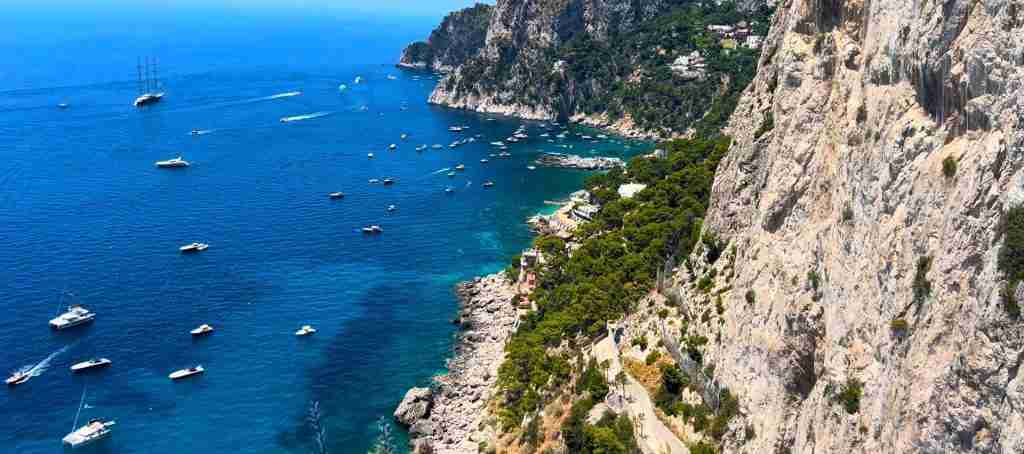
Boat transportation proves essential for Blue Grotto access and optional for island circumnavigation tours revealing Capri’s dramatic coastal cliffs, sea caves, Faraglioni rock formations, and remote beaches inaccessible by land. Dedicated Blue Grotto boat transfers from Marina Grande cost €24 round-trip transporting visitors to cave entrance where separate €18 admission (€14 rowboat + €4 entrance) provides access inside glowing azure cavern, making total Blue Grotto visit €42 from Marina Grande before considering potential taxi or bus to port. Comprehensive boat tours circumnavigating Capri span 90-120 minutes for €24-30, stopping at Blue Grotto (admission extra), passing Faraglioni rocks, green and white grottoes, and providing swimming stops weather permitting, delivering perspectives on Capri’s geology and coastal beauty impossible from land.
Scooter rentals available at Marina Grande, Capri town, and Anacapri (€40-60 daily) provide independent mobility for experienced riders comfortable navigating narrow winding roads with frequent hairpin turns, steep grades, and tourist pedestrian traffic. The island’s small size makes scooters practical for active days visiting multiple locations, though narrow Via Krupp’s closure, one-way street systems in towns, limited parking in town centers, and prohibition on Via Camerelle’s pedestrian shopping street reduce scooter advantages versus bus/walk combinations. Bicycles prove impractical given steep grades requiring strong fitness for uphill climbs, making cycling recreational rather than practical transportation except for serious cyclists treating Capri’s hills as training challenges.
Blue Grotto Access and Optimization Strategies for 2026
The Grotta Azzurra (Blue Grotto) stands as Capri’s single most famous natural attraction, where sunlight filtering through underwater opening creates ethereal blue illumination transforming the sea cave’s interior into glowing azure chamber that has captivated visitors since German writer August Kopisch and painter Ernst Fries “rediscovered” the grotto in 1826 after centuries of local avoidance due to superstitions about spirits inhabiting the cave. This 60-meter-long, 25-meter-wide cavern accessed through meter-high opening requiring passengers to recline in small rowboats while boatmen navigate through narrow entrance using chains attached to cave walls represents bucket-list experience for most Capri visitors, though successful 2026 visits require understanding admission costs, access logistics, weather dependencies, crowd management, and realistic expectations about brief 5-minute interior visits following potentially lengthy waits.
Blue Grotto admission costs €18 per person (€14 rowboat transport + €4 entrance fee to municipalities and cultural ministry) paid cash-only at floating ticket office just outside cave entrance, representing the grotto’s status as cultural museum site rather than simple natural attraction. This €18 fee covers only the rowboat ride through cave entrance and 5-minute circuit inside illuminated cavern, not including boat transport from Marina Grande (€24 round-trip) or bus from Anacapri (€2.40 each way) required reaching the grotto. Total Blue Grotto visit costs thus reach €42 from Marina Grande by boat or €22.40 from Anacapri by bus, before considering any taxi costs if chosen over public transport. Reduced rates apply for EU citizens: children under 6 enter free (rowboat only, no entrance fee), ages 6-18 pay €12 total (free entrance, €12 rowboat), ages 18-25 pay €14 total (€2 reduced entrance, €12 rowboat), while non-EU visitors pay full €18 regardless of age except under-6 free admission.
Three primary access routes reach the Blue Grotto with distinct advantages and challenges that 2026 visitors should evaluate based on accommodation location, schedule flexibility, and budget priorities. Marina Grande boat transfers (€24 round-trip) provide convenient direct transport from ferry arrival point to cave entrance, eliminating bus transfers and walking, delivering ocean perspective on Capri’s dramatic coastal geology during 15-20 minute journey each way, and allowing flexible departure timing based on wait queue lengths, though adding €24 to per-person costs and creating total Blue Grotto expense of €42 from Marina Grande. Anacapri bus route (€2.40 each way from Piazza Vittoria to Blue Grotto bus stop, 15 minutes) offers budget-conscious access followed by 100-meter staircase descent to cave entrance and rowboat boarding, providing cost savings versus boat transfers and flexibility timing visits throughout day, though requiring Anacapri accommodation or bus connections from Capri town/Marina Grande adding complexity and travel time. Walking from Anacapri follows scenic 3.5-kilometer Via Grotta Azzurra (40-50 minutes downhill) providing exercise, photography opportunities, and crowd avoidance during high season, though the uphill return journey proves strenuous in summer heat making this option appealing primarily for athletic visitors or those taking bus uphill after walking down.
Weather and sea condition dependencies create Blue Grotto access uncertainty that travelers must accommodate through flexible daily planning rather than fixed schedules. The cave closes completely during rough seas when waves make navigating the meter-high entrance dangerous, during strong winds (particularly north-northwest winds) creating swells outside the entrance, and during high tide raising water level too close to cave mouth ceiling for safe passage. Each morning at 9 AM, boat operators arrive at cave entrance evaluating conditions and determining opening or closure, posting updates on official websites and communicating via phone (+39 081 837 5646 after 9 AM) whether the grotto operates that day. Closures can occur suddenly during apparent calm periods when underground swells invisible from shore make interior conditions unsafe, or conversely the cave may reopen late morning after early closure when conditions improve, creating unpredictability that day-trippers struggling to accommodate given fixed ferry return schedules. The grotto closes entirely December 25 and January 1, while November-February period sees frequent closures from winter storm systems and higher seas making summer visits (May-September) dramatically more reliable than off-season attempts.
Queue management strategies significantly impact Blue Grotto experience quality, as summer peak season wait times routinely exceed one hour and occasionally reach two hours when hundreds of tourists arrive via boat tours, cruise ship day-trippers, and independent visitors simultaneously. Arriving before 9:30 AM captures first boats to the grotto after morning opening assessment, typically finding 15-30 minute waits versus midday 60-90+ minute queues, though requiring early ferry from mainland and immediate boat/bus to grotto rather than Capri town breakfast or shopping. The supposed optimal 12 PM-2 PM period for maximum light intensity and blue color saturation proves worst for crowds when boat tours converge creating longest waits, making early morning (9-10 AM) or late afternoon (after 3 PM) superior timing balancing acceptable light, reduced crowds, and weather reliability given seas often roughen late afternoon potentially causing closures. Boarding location selection influences wait times, with land-based queue at bus stop/walking path entrance sometimes moving faster than marina boat queue though requiring staircase descent, while boat-based waiting proves more comfortable avoiding Mediterranean sun exposure during hour-long waits. Seasickness-prone visitors should queue on land rather than bobbing in boats awaiting entry.
Interior experience inside the Blue Grotto lasts approximately 5 minutes as rowboat operator navigates through narrow entrance requiring passengers to recline fully backwards avoiding head contact with low ceiling, then paddles circuit around 60×25-meter cavern while pointing out features, often singing Neapolitan songs for acoustical effect, and assisting with photography despite restrictions on flash and tripods. The famous blue illumination results from sunlight entering through underwater opening and filtering through water creating brilliant azure glow that appears almost supernatural, complemented by silvery reflections when objects break water surface. Weather significantly affects interior light quality, with overcast days producing muted blue tones versus brilliant sapphire on sunny days, though the difference proves minimal versus often-claimed dramatic variation making sunrise/sunset timing unnecessary. Rowboat operators expect but do not require tips of €5-10 per boat particularly when they sing or assist extensively with photography, creating social pressure toward tipping despite €14 rowboat fee theoretically covering service.
Major Attractions and Activities for 2026
Beyond the Blue Grotto’s singular fame, Capri offers diverse attractions spanning Roman archaeological ruins, dramatic viewpoints, botanical gardens, charming town centers, beaches, and walking trails that collectively justify multi-day visits versus rushed day-trips attempting to compress Mediterranean island’s full character into 6-8 hours between ferry arrivals and departures. Strategic 2026 planning allocates time across these attractions based on personal interests, physical abilities for uphill walks, weather considerations affecting outdoor activities, and seasonal closures limiting some sites during November-February low season when reduced tourism makes certain businesses and attractions economically unviable.
Villa Jovis (Emperor Tiberius’s Palace) crowns Monte Tiberio on Capri’s northeastern promontory, representing the most significant and best-preserved of twelve Roman villas Emperor Tiberius constructed after relocating permanently to Capri in 27 CE and ruling the Roman Empire from this island retreat for his final decade. The extensive ruins spanning multiple levels down steep cliff faces reveal palace complex including imperial quarters, servants’ areas, cisterns for water collection essential on water-scarce island, and archaeological remains of elaborate bath complexes, all positioned to maximize dramatic views across Bay of Naples and surrounding islands that made this site Tiberius’s preferred residence. Reaching Villa Jovis requires two-kilometer uphill walk from Capri town (45-60 minutes) via Viale Amedeo Mauri and Via Tiberio, making this visit moderate physical challenge unsuitable for those with mobility limitations or during intense summer heat, though reward includes historical significance, spectacular views, and relative tourist absence compared to Blue Grotto and town center crowds. The site opens daily 10 AM-6 PM (reduced winter hours 10 AM-3 PM) for €6 admission (free first Sunday of month), with occasional closures for maintenance or weather requiring verification before undertaking uphill walk.
Mount Solaro summit accessed via 12-minute chairlift from Anacapri Piazza Vittoria delivers Capri’s most comprehensive panoramic views from 589-meter peak across Bay of Naples to Vesuvius and Naples, Sorrento Peninsula, Amalfi Coast, and on exceptional days even Calabria’s distant mountains. The summit offers café with terrace dining, restrooms, and various walking paths along ridge exploring different viewpoints while immersing in Mediterranean vegetation of wild herbs, flowers, and shrubs covering mountain slopes. The chairlift €11 round-trip or €8 one-way (descend by moderate hiking trail 60-90 minutes) makes this Capri’s most accessible major viewpoint requiring minimal physical exertion while delivering maximum scenic reward, though high winds can temporarily close the lift creating schedule uncertainty. Summit visits work optimally morning or late afternoon avoiding midday crowds and haze that sometimes obscures distant views, with sunset timing particularly spectacular for photographers and couples though requiring evening Anacapri dining or taxi back to Capri town given limited late bus service.
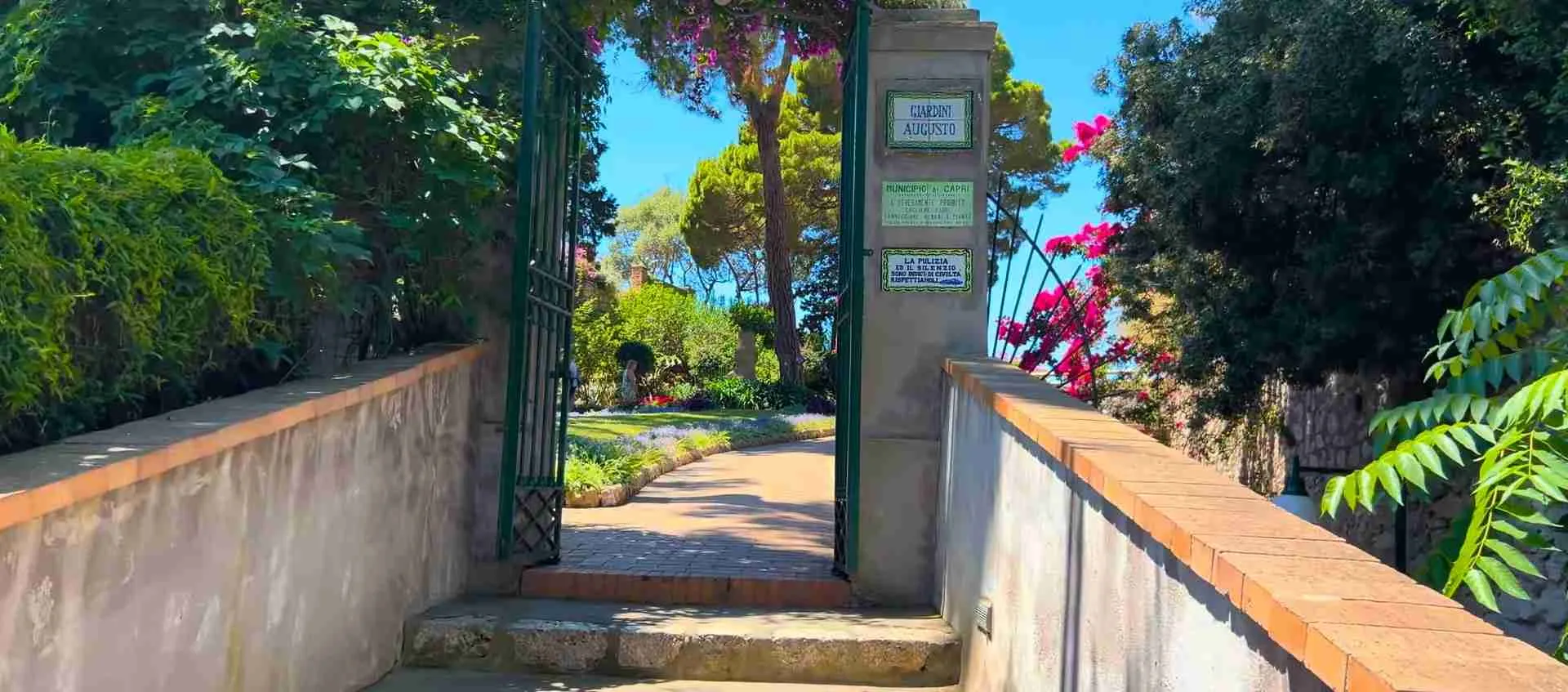
Gardens of Augustus (Giardini di Augusto) provide terraced botanical gardens overlooking Faraglioni sea stack rocks and Marina Piccola bay from Capri town’s southern edge, featuring colorful flower displays, shaded benches, and incomparable coastal views from multiple vantage points along descending pathways. The gardens’ primary draw combines botanical interest with photography opportunities framing Capri’s iconic Faraglioni through flowers and greenery, making this essential stop for visitors prioritizing Instagram-worthy images and scenic beauty over historical or geological significance. Entry costs €1, making this Capri’s most affordable paid attraction while delivering exceptional value through numerous photo opportunities and peaceful atmosphere just steps from Capri town center. Adjacent Via Krupp, the historic serpentine roadway designed by German industrialist Friedrich Alfred Krupp descending from gardens to Marina Piccola, remains closed indefinitely due to rockfall danger, eliminating the spectacular coastal walk once connecting this area but leaving gardens themselves intact and accessible.
La Piazzetta (Piazza Umberto I) functions as Capri’s social heart rather than traditional tourist attraction, offering outdoor cafés with premium-priced seating (€6-8 coffee, €15-20 drinks) where people-watching opportunities span tourists, local residents, and occasional celebrities producing the glamorous atmosphere justifying Capri’s exclusive reputation. The small square surrounded by shops, cafés, Chiesa di Santo Stefano (Capri’s main church), and Torre dell’Orologio (clock tower) becomes particularly magical evenings after day-trippers depart around 5-6 PM when locals reclaim the space and relaxed Mediterranean ambiance emerges. Budget-conscious visitors can enjoy Piazzetta people-watching without expensive café seating by standing at bars (€3-4 coffee), purchasing gelato from nearby shops, or perching on church steps, though premium café tables purchase not just refreshments but prime viewing positions at Capri’s most famous social theater.
Villa San Michele in Anacapri, built by Swedish physician Axel Munthe in early 20th century, combines beautiful gardens with archaeological museum displaying Roman sculptures and artifacts Munthe collected from Capri excavations, all positioned at dramatic clifftop location offering spectacular views across island and bay. The villa particularly appeals to garden enthusiasts and history buffs interested in Capri’s archaeological heritage beyond major Roman sites, operating daily 9 AM-6 PM (reduced winter hours) for €10 admission. The property’s peaceful atmosphere and Munthe’s fascinating life story as doctor to Swedish royalty, archaeologist, and World War I medical volunteer create compelling visit complementing Capri’s natural attractions with cultural and historical dimensions.
Beaches and swimming access centers on Marina Piccola on Capri’s southern coast, offering public beach sections alongside private beach clubs (€15-25 daily including loungers, umbrellas, and changing facilities) beneath towering Faraglioni rocks creating photogenic setting. Marina Piccola reaches via bus from Capri town or pleasant 20-minute downhill walk via steps, though uphill return proves strenuous making bus preferable unless seeking exercise. Alternative beaches include Marina Grande’s small pebble beach sections convenient for quick swims before ferry departures, and remote coves accessible only by boat tours or ambitious coastal trail hiking for adventurous visitors prioritizing secluded swimming over convenience.
Dining and Food Budget Planning for 2026
Dining represents Capri’s second-largest expense category after accommodation, with restaurants charging 30-50% premiums over mainland Italian averages reflecting island transportation costs for supplies, high rent in prime locations, exclusive clientele expectations, and limited competition from the few establishments operating on 10-square-kilometer island with restricted development. Strategic 2026 food budgeting addresses meal type selection balancing sit-down restaurants against takeaway options, location choices between premium-priced Capri town and more affordable Anacapri, timing meals around peak tourist crowds affecting both prices and table availability, and realistic daily allocations spanning budget-conscious €40-60, mid-range €80-120, or splurge €150+ per person depending on dining style preferences and overall trip budget parameters.
Breakfast options span hotel-included buffets provided by most mid-range and luxury properties eliminating separate breakfast costs, €8-15 café breakfast of cappuccino and cornetto (Italian croissant) at standing bar counters versus €15-25 for same items consumed at outdoor Piazzetta café tables where €6-8 coffee alone purchases premium people-watching position. Budget travelers minimize breakfast costs through supermarket purchases (yogurt, fruit, pastries) consumed in hotel rooms or during morning walks, while luxury travelers embrace €25-40 hotel terraces delivering elaborate breakfast buffets with views justifying premium as experience rather than mere sustenance.
Lunch represents critical budget decision point between €15-25 takeaway panini (sandwiches), pizza slices, or salads from bakeries and cafés allowing picnic lunches with views, versus €30-50 casual restaurant meals at interior tables, rising to €50-80 for premium restaurant locations with Faraglioni views or Piazzetta positioning. Traditional Caprese salad (insalata caprese)—the dish originating on Capri featuring fresh mozzarella, tomatoes, basil, and olive oil—appears on most menus for €12-18, while seafood pasta dishes cost €18-28, grilled fish €25-40, and pizza €12-18. Lunch timing proves strategic, with noon-1 PM attracting largest crowds creating waits for tables and rushed service, while 2-3 PM late lunch or light bites around 4-5 PM find quieter restaurants and more relaxed atmosphere though reducing afternoon sightseeing time. Budget-conscious travelers achieve significant savings through supermarket lunches (€8-12 assembling bread, cheese, fruit, drinks) consumed at scenic viewpoints like Gardens of Augustus or Marina Piccola beaches providing better views than many restaurant tables while eliminating €30-40 meal costs.
Dinner constitutes Capri’s social highlight and largest food expense, with casual trattorias charging €40-70 per person for three courses plus house wine, mid-range restaurants €70-100, and upscale establishments €100-150+ before premium wines that can double bills. Capri town concentrates most expensive dining particularly along Via Camerelle and Piazzetta periphery where table positioning premium reaches €20-30 per person for same food available at lower prices in less-scenic interior locations or Anacapri restaurants. Dinner timing traditionally spans 8-10 PM Italian style, though tourists often request 7 PM seatings creating earlier availability at expense of less authentic Italian dining atmosphere. Reservations prove essential July-August for popular restaurants though May-June and September often accommodate walk-ins except weekends and special events. Budget allocation for nice dinner should consider €15-25 antipasti, €18-30 pasta or risotto, €25-45 main courses (meat/fish), €8-12 dessert, €5 coperto (cover charge), and €15-40 wine per person, totaling €86-162 before tips (not obligatory in Italy though appreciated 5-10% for exceptional service).
Anacapri dining provides 15-25% savings over Capri town for comparable quality meals, with family-run trattorias offering €30-50 complete dinners versus Capri town’s €50-70 minimum, though sacrificing glamorous atmosphere and celebrity-spotting opportunities. Budget travelers seeking authentic Italian meals at reasonable prices should concentrate Anacapri dining, using buses (€2.40, last departure around 11 PM summer) or taxis (€20-25) returning to Capri town accommodations if staying there. Street food and takeaway options remain limited compared to mainland Italian cities, though pizza by slice shops and panini bars exist near funicular and bus terminals providing €8-15 meals for budget-conscious visitors or quick lunches between sightseeing.
Beverage costs significantly impact dining budgets, with coffee at standing bar counters costing €1.50-2.50 versus €3-5 at tables without views, rising to €6-8 for Piazzetta café seating. Soft drinks cost €4-6 at restaurants, beer €6-8, cocktails €12-18, and wines by glass €8-15 (house) or €12-25+ (quality selections). Full bottles of wine range €25-40 house wines to €60-150+ for quality regional wines or €200+ prestigious labels, with many restaurants applying 2-3x retail markups making wine major expense for serious wine enthusiasts who might consider limiting restaurant wine consumption to house carafes (€15-25 per liter) while purchasing quality bottles at supermarkets (€10-30) for hotel room or picnic consumption.
Supermarkets (Conad, Decò, smaller alimentari) provide budget-conscious alternatives to restaurant dining through €3-6 prepared sandwiches, €4-8 ready-meals, fresh mozzarella €4-6, prosciutto €8-12 per etto (100 grams), bread €2-4, fruit and vegetables at reasonable prices, and house wine €5-10 per bottle, allowing picnic lunches totaling €12-18 per person delivering better views than most restaurants while reallocating saved €20-40 toward dinner upgrades or other activities. Daily food budgets spanning budget €40-60 per person (supermarket breakfast and lunch, modest dinner), mid-range €80-120 (café breakfast, casual lunch, nice dinner), or splurge €150+ (hotel breakfast, restaurant lunch with view, upscale dinner with wine) should match overall trip budget and priorities balancing food experiences against accommodation comfort, activities spending, and transportation costs in comprehensive Capri financial planning.
Day Trip Itineraries and Multi-Day Planning for 2026
Single-day Capri visits from Naples or Sorrento require strategic prioritization accepting certain attractions must be sacrificed given 6-8 hours available between ferry arrivals and departures, particularly when Blue Grotto wait times consume 90-120 minutes of precious island time. Optimal day-trip itineraries prioritize Blue Grotto early (9 AM arrival, immediate boat transfer hoping for 30-minute wait versus noon’s 90+ minutes), followed by funicular to Capri town for 90-minute Piazzetta coffee and Via Camerelle shopping, quick lunch (takeaway or casual €20-30 restaurant), afternoon choice between Mount Solaro chairlift from Anacapri OR Gardens of Augustus and Marina Piccola beach walk, concluding with 4-5 PM ferry departure. This compressed schedule sacrifices Villa Jovis, Villa San Michele, boat circumnavigation tours, relaxed dining, and experiencing Capri’s evening atmosphere after day-trippers leave, but delivers signature experiences within day-trip timeframe for travelers prioritizing efficiency over comprehensive exploration.
Two-day overnight stays transform Capri visits from rushed sightseeing into genuine island experience, allowing Day 1 afternoon/evening arrival via leisurely ferry timing, hotel check-in and room orientation, late afternoon Gardens of Augustus visit for sunset photography, relaxed dinner at nice restaurant without time pressure, evening Piazzetta atmosphere after day-trippers depart capturing local flavor impossible for day visitors, and Day 2 early Blue Grotto attempt (8:30 AM bus or boat), Mount Solaro chairlift mid-morning avoiding crowds, Anacapri lunch at authentic trattoria, afternoon Villa Jovis walk for history and views OR boat tour circumnavigating island, late afternoon ferry departure. This pacing eliminates rushed feeling, allows weather flexibility (Blue Grotto closure one day permits attempt next day), and provides evening/morning magic hours that justify Capri’s romantic reputation beyond daytime tourist congestion.
Three-day comprehensive visits enable thorough island exploration adding Marina Piccola beach afternoon, Villa San Michele cultural visit, shopping without rushing along Via Camerelle, additional dining experiences sampling multiple restaurants rather than single hurried dinner, day trip to Amalfi Coast from Capri (seasonal ferry April-October), and true relaxation absorbing Mediterranean pace rather than checking sights off lists. This duration particularly suits honeymoon couples, photography enthusiasts requiring multiple sunrise/sunset sessions for optimal lighting, and travelers prioritizing quality over quantity who appreciate Capri’s lifestyle and atmosphere beyond mere sightseeing. Three days also enables optimal weather windows for Blue Grotto and boat tours, as failed attempts due to sea conditions can be rescheduled next day without sacrificing other major attractions.
Seasonal itinerary modifications address weather patterns, service availability, and crowd conditions affecting activity feasibility across the year. May-June and September shoulder season itineraries can maintain ambitious full-day schedules with Blue Grotto, multiple attractions, boat tours, and extensive walking given comfortable 20-26°C temperatures and moderate crowds, while July-August peak requires early starts before 10 AM heat and afternoon siestas during 2-4 PM intensity with evening activities resuming around 5 PM when temperatures moderate. November-March low season itineraries must accommodate frequent Blue Grotto closures, reduced ferry schedules limiting arrival/departure flexibility, closed restaurants and shops reducing dining options, cool temperatures (8-15°C) preventing beach activities, and shortened daylight hours (sunset around 5 PM) compressing available sightseeing time, making this period suitable only for hardcore budget travelers or those prioritizing authentic winter island experience over comprehensive activity access.
Budget Planning and Money-Saving Strategies for 2026
Comprehensive Capri budgeting for 2026 requires realistic daily allocations spanning budget €150-250 per person (Sorrento-based day trip or €80-150 Capri accommodation sharing, modest meals, public transport only, selective attractions), mid-range €300-450 per person (€200-350 Capri accommodation, nice meals, major attractions, occasional taxis), or luxury €600+ per person (€500+ accommodation, upscale dining, private boat tours, unrestricted spending), with these ranges reflecting the island’s position as Italy’s second-most-expensive destination after Venice demanding financial preparation versus typical Italian travel budgets.
Accommodation timing strategies generate major savings through shoulder season (May-June, September) booking capturing 25-30% discounts versus July-August peak rates, with September particularly advantageous combining reduced crowds, pleasant weather, full services, and lowest shoulder-season pricing. Anacapri location selection provides 15-20% accommodation savings over Capri town for comparable quality while delivering quieter atmosphere and authentic local character, though requiring bus commutes for evening Capri town dining and nightlife. Early booking (4-6 months advance for peak season) secures best rates and availability before prices increase as remaining inventory diminishes, while paradoxically last-minute booking (1-2 weeks before) sometimes captures distressed inventory hotels prefer selling at discounts rather than leaving empty, though this strategy involves availability risk unsuitable for inflexible travelers.
Dining cost management focuses on breakfast elimination through hotel buffets or supermarket purchases (€3-5 yogurt, fruit, pastries) versus €15-25 café breakfast, lunch downgrades to takeaway panini and picnics (€12-18) versus sit-down restaurant meals (€30-50), strategic dinner location selection choosing Anacapri trattorias (€40-60 complete meals) over Capri town premium establishments (€70-100+), and beverage moderation given €8-15 cocktails, €25-40 wine bottles, and even €6-8 Piazzetta coffee adding substantially to meal costs. Budget travelers achieving €40-50 daily food costs through supermarket breakfast, picnic lunch, and modest dinner contrast with €120+ daily dining at tourists targeting nice restaurants for each meal, creating €80 daily savings that accumulates to €160-240 over two-three night stays substantially offsetting accommodation costs or enabling room upgrades.
Transportation optimization begins with Sorrento-based day trips (€45-50 ferry round-trip, no Capri accommodation) versus Capri overnight stays potentially saving €120-200 nightly when comparing mid-range Sorrento versus Capri lodging, though sacrificing evening island atmosphere that justifies Capri’s premium prices for many travelers. Within Capri, public bus commitment (€2.40 per ride) versus taxi convenience (€15-30 per trip) generates €40-60 daily savings for active travelers willing to accommodate bus schedules and occasional waits, while walking replaces buses on downhill routes (Capri town to Marina Grande 20 minutes, Anacapri to Blue Grotto 40-50 minutes) providing free transportation plus exercise and photography opportunities.
Attraction prioritization eliminates expensive boat tour costs (€24-30 island circumnavigation, €24 Blue Grotto transfer) for budget travelers choosing Blue Grotto bus access (€4.80 round-trip) and foregoing boat tours, while Villa Jovis (€6) and Gardens of Augustus (€1) provide exceptional value versus multi-hour boat tours. Free activities including Piazzetta people-watching, town wandering, coastal trail walks, sunset viewpoints, and swimming at public beach sections deliver authentic Capri experiences without admission costs, allowing budget travelers to experience island character while allocating limited funds toward signature paid attractions like Blue Grotto (€22.40 total from Anacapri) and Mount Solaro chairlift (€11) offering unique experiences impossible to replicate elsewhere.
Peak season avoidance through May-June or September visits provides the single most effective savings strategy, combining 25-30% accommodation discounts, reduced restaurant crowding enabling walk-in dining versus expensive advance reservations, shorter Blue Grotto waits minimizing time-is-money calculations, and more pleasant weather for walking versus intense July-August heat requiring taxi use between shaded locations. May particularly appeals to budget travelers through pre-peak pricing, warm swimming temperatures (20-22°C), spring flowers at maximum bloom, and adequate daylight hours without summer’s tourist intensity, while September delivers similar benefits plus warmest sea temperatures (23-25°C) from summer heat accumulation.
Seasonal Considerations for 2026 Planning
Capri’s Mediterranean climate and tourism infrastructure create four distinct seasonal periods demanding different planning approaches, budget allocations, and expectation adjustments around weather reliability, crowd intensity, service availability, and activity feasibility that significantly impact visitor experiences beyond simple month selection affecting hotel rates and ferry schedules.
Peak season spanning July-August 2026 delivers guaranteed sunshine (less than 5 rainy days monthly), warmest temperatures (25-32°C daily highs), ideal swimming conditions (24-26°C sea temperature), longest daylight hours (sunset after 8 PM), full ferry schedules (20+ daily Naples crossings, 15-20 Sorrento crossings), all hotels and restaurants operating, vibrant cosmopolitan atmosphere with celebrity sightings, and comprehensive activity availability. However, this perfection carries severe disadvantages including highest accommodation costs (€350+ mid-range hotels, €80-100 even basic rooms), overwhelming crowds creating 90-120 minute Blue Grotto waits and packed ferries/buses/restaurants requiring advance reservations, intense midday heat making uphill Villa Jovis walks uncomfortable 11 AM-3 PM, highest restaurant prices with tourist menus replacing seasonal specials, and crowded beaches with limited space at both public sections and private clubs. Peak season suits travelers prioritizing guaranteed weather and full service availability while accepting premium costs and intensive crowds, particularly families constrained to school vacation schedules or sun-worshippers unwilling to risk shoulder-season weather variability.
Shoulder season covering mid-May through June and September provides optimal balance for 2026 through pleasant temperatures (20-28°C), moderate crowds allowing reasonable Blue Grotto waits (30-60 minutes versus peak’s 90-120), 25-30% accommodation savings versus peak rates, full ferry service and attraction hours, warm swimming temperatures (20-24°C), comfortable walking conditions without extreme heat, and more authentic atmosphere as tourism intensity moderates. June risks occasional heat waves approaching peak-season intensity, while September delivers warmest sea temperatures (23-25°C) from summer heat accumulation plus fewer crowds as children return to school after August holidays. Both periods suffer slightly elevated rainfall risk (6-8 rainy days monthly) versus peak season’s near-guaranteed sunshine, though Mediterranean climate makes multi-day rain unlikely and brief showers more typical than day-long downpours. Shoulder season maximizes value while maintaining comprehensive service availability, making this period ideal for budget-conscious travelers, photography enthusiasts benefiting from softer light versus harsh summer sun, and visitors prioritizing authentic local atmosphere over cosmopolitan peak-season energy.
Early spring (April-early May) and late fall (October) constitute fringe shoulder periods delivering lower costs (30-40% below peak) and minimal crowds but facing increased weather uncertainty, cooler swimming temperatures (16-20°C requiring wetsuit comfort), potential attraction closures for maintenance between seasons, and transitional ferry schedules as operators adjust between winter and summer frequencies. April particularly challenges swimmers with 16-18°C sea temperatures comfortable only for hardy individuals, while October’s 20-22°C proves acceptable though cool by Mediterranean standards. These periods appeal to budget travelers prioritizing cost savings over comprehensive activity access, culture-focused visitors emphasizing archaeology and towns over beaches, and flexibility-blessed travelers accommodating weather-induced plan changes including potential Blue Grotto closures from autumn storms.
Winter low season (November-March) provides dramatic cost reductions (50-60% below peak with mid-range hotels €120-180 versus €300-400 summer) and authentic island experience void of tourists, but confronts severe service limitations including 60-70% hotel closures leaving limited accommodation options, many restaurants closed, reduced ferry schedules (6-10 daily crossings with frequent weather cancellations), frequent Blue Grotto closures from rough seas, Mount Solaro chairlift reduced hours or closures for maintenance, cool temperatures (8-15°C) preventing beach activities and making outdoor dining uncomfortable, increased rainfall (8-12 rainy days monthly), and short daylight hours (sunset around 5 PM) compressing sightseeing time. The January-February funicular replacement by buses during maintenance further complicates winter visits. This period suits hardcore budget travelers and off-season enthusiasts prioritizing authentic local life experience over comprehensive tourist infrastructure, though most 2026 travelers find spring-fall periods providing better value balancing costs against activity access.
Frequently Asked Questions About Capri Travel in 2026
How do I get from Naples airport to Capri in 2026?
Naples Capodichino Airport to Capri requires first reaching Naples port (Molo Beverello for hydrofoils or Calata Porta di Massa for ferries) via Alibus airport shuttle costing €5 one-way and operating every 20-30 minutes for the 20-minute journey, or airport taxi costing €25-35 for 15-20 minute direct transfer to port depending on traffic. From Naples port, hydrofoils to Capri operate 20+ times daily April-October (10-12 daily November-March) for €19-25 one-way completing the crossing in 45-50 minutes, making total journey Naples airport to Capri Marina Grande approximately 90-120 minutes port-to-port plus ferry wait time. Alternative route via Naples Centrale train station (€1.10 metro or €20 taxi from airport) to Sorrento (Circumvesuviana train €5.80, 65 minutes) then Sorrento-Capri ferry (€21.50-24, 20 minutes) proves slower overall but positions travelers in Sorrento for potential multi-destination itineraries including Pompeii and Amalfi Coast. Direct Naples airport to Sorrento buses (Curreri, €10, 75 minutes, limited frequency) offer streamlined alternative for travelers preferring Sorrento-based Capri access over Naples route. Travelers should allocate 2-3 hours total for Naples airport to Capri accommodations including connections, security margins for ferry departures, and Marina Grande funicular or bus to hotel, with early morning flights enabling same-day Capri arrival while afternoon/evening flights may necessitate Naples or Sorrento overnight before next-morning Capri ferry.
Is Capri suitable for travelers with mobility limitations in 2026?
Capri presents significant accessibility challenges for wheelchair users and travelers with serious mobility limitations given the island’s mountainous terrain, extensive staircases connecting different elevation levels, historic town centers with narrow pedestrian lanes and cobblestones, and major attractions like Villa Jovis requiring kilometer-plus uphill walks on uneven paths. The funicular from Marina Grande to Capri town accommodates wheelchairs though boarding requires assistance navigating narrow cars, buses feature steps creating access barriers, and Capri town’s compact historic center concentrates shopping and dining along pedestrian streets with steps and inclines making wheelchair navigation difficult though not impossible. Mount Solaro chairlift cannot accommodate wheelchairs given single-person open-seat design, Blue Grotto rowboats require climbing down into small boats and reclining backwards making this attraction effectively inaccessible for mobility-limited visitors, and Villa Jovis involves extensive walking on uneven archaeological site unsuitable for wheelchairs. Gardens of Augustus feature mostly paved paths accessible to mobility-limited visitors willing to accept some inclines, while Marina Piccola beach access requires steep descent from bus stop though some beach clubs offer assistance. Travelers with moderate mobility limitations comfortable with some walking and stair climbing but requiring rest periods find Capri manageable through strategic taxi use (wheelchair-accessible taxis available with advance request), accommodation selection near funicular and bus terminals minimizing walking, and attraction prioritization toward accessible sites like Piazzetta, Via Camerelle shopping, and Gardens of Augustus over challenging Villa Jovis and Blue Grotto. Those requiring comprehensive wheelchair accessibility should realistically assess whether Capri’s natural terrain and historic infrastructure suit their needs versus more accessible destinations, though accompanied travelers willing to provide assistance and accept some activity limitations can still enjoy Capri’s beauty, dining, and atmosphere even when certain signature attractions remain inaccessible.
Can I bring my car to Capri in 2026?
Non-resident vehicles face strict access restrictions on Capri, with private cars and motorcycles completely prohibited April through October (exact dates vary annually, roughly Easter through early November) when tourism peaks create unsustainable traffic and parking pressure on the 10-square-kilometer island with narrow historic streets. November through March low season permits non-resident vehicle ferries from Naples (Calata Porta di Massa) and Sorrento on Caremar routes, though vehicle transport adds €40-80 to ferry costs depending on vehicle size plus standard €19-25 passenger fares, making this option economically questionable given Capri’s compact size allows walking/bus navigation and accommodation package often includes Marina Grande pickup eliminating transport necessity. Resident vehicles (Capri residents) operate year-round but tourist rentals do not qualify for exemptions, while commercial vehicles delivering goods operate under separate permitting outside tourist scope. The November-March vehicle window theoretically enables driving enthusiasts to bring cars for winter Capri exploration avoiding bus schedules, though numerous closed hotels, restaurants, and attractions during this period reduce motivation for car-inclusive visits. Practical reality suggests 99.9% of 2026 Capri visitors should plan car-free trips using ferries as foot passengers, public buses and funicular for island transportation, and occasional taxis for convenience, accepting that Capri’s pedestrian-friendly scale and traffic restrictions create optimal experience without personal vehicles that would generate parking challenges, limited driving access in historic centers, and unnecessary expense for minimal utility.
What should I pack for Capri in 2026?
Essential Capri packing emphasizes comfortable walking shoes with good traction for cobblestone streets, steep inclines, and uneven archaeological site paths (Villa Jovis particularly requires sturdy footwear), with heels impractical except perhaps evening dining at upscale restaurants. Modest dress code for churches (Chiesa di Santo Stefano, Chiesa di San Michele) requires covered shoulders and knees though requirements prove less strict than Vatican or major cathedrals, while upscale restaurants and Piazzetta cafés expect smart-casual dress versus beachwear that should remain confined to beach areas and pool settings. Layered clothing accommodates temperature variations between hot sunny afternoons and cooler sea-breeze evenings, with light jacket or sweater essential even summer for evening ferry returns, air-conditioned restaurants, and Mount Solaro summit where elevation creates 5-8°C cooler temperatures than sea level. Sun protection through high-SPF sunscreen, hat, and sunglasses proves critical given Mediterranean sun intensity and limited shade on boat tours, hillside walks, and beach time, while reusable water bottle allows filling from public fountains saving €2-4 per purchased bottle. Swimsuit and beach towel enable spontaneous swimming opportunities at Marina Piccola, during boat tours, or hotel pools, though beach clubs provide towel rentals if travelers prefer minimizing luggage. Small daypack carries water, snacks, sunscreen, and purchased items during full-day island exploration, while waterproof phone case protects electronics during Blue Grotto visits and boat tours where splash exposure occurs. Cash (€50-100) proves essential for Blue Grotto admission (cash-only floating ticket office), some small restaurants and shops preferring cash over cards, and tipping boat operators and hotel staff where cash gratuities remain customary. Medications, basic first aid supplies, and any prescription items should exceed trip duration given limited pharmacy access and potential Italian-labeling challenges even for common medications, while mosquito repellent proves useful for evening outdoor dining though Capri suffers less mosquito pressure than mainland coastal areas.
Is Capri worth visiting in 2026 compared to other Italian destinations?
Capri delivers uniquely concentrated Mediterranean island beauty, combining dramatic limestone geology creating vertical cliffs and glowing sea caves, sophisticated cosmopolitan atmosphere attracting international elite for two millennia, compact size allowing comprehensive exploration within 2-3 days, and convenient access from Naples-Sorrento-Amalfi area enabling integration into broader Campania itineraries. The island’s extraordinary cost-to-value equation creates the central question for budget-conscious travelers, as €200-350 nightly mid-range Capri accommodations plus €80-120 daily dining and €40-60 activities total €320-530 daily per person significantly exceeding alternative Italian destinations like Sicily (€180-280 daily mid-range), Puglia (€150-250), or even Amalfi Coast mainland (€220-380) delivering comparable Mediterranean scenery, beaches, and cultural attractions at lower costs. Capri justifies premium pricing through signature experiences impossible elsewhere—Blue Grotto’s ethereal illumination, Piazzetta’s celebrity-studded café culture, Faraglioni’s iconic sea stacks, Villa Jovis’s imperial Roman ruins, Mount Solaro’s panoramic views—that collectively create bucket-list destination status transcending simple cost-benefit analysis. First-time Italy visitors prioritizing Rome, Florence, Venice, and Cinque Terre might reasonably defer Capri to future trips avoiding overextension in single journey, while travelers already experienced with Italy’s highlights find Capri delivering fresh Mediterranean island perspective complementing previous mainland visits. Budget travelers should realistically assess whether Capri’s €300-500 daily mid-range costs align with overall financial parameters, potentially substituting Ischia (30 minutes from Naples, similar island atmosphere, 40-50% lower costs) or Procida (smaller fishing island, ultra-budget friendly) delivering island experiences at fraction of Capri’s premium, though lacking Capri’s specific attractions and glamorous reputation. Luxury travelers find Capri’s five-star hotels, Michelin restaurants, yacht culture, and exclusive shopping justifying any costs through world-class execution meeting highest expectations, while mid-range travelers should visit Capri if budget permits knowing the island delivers memorable experiences commensurate with premium pricing but understanding alternatives exist for those prioritizing value over prestige. The honest assessment: Capri merits its fame and rewards visitors with extraordinary beauty and atmosphere, but prices reflect that reputation making this splurge destination rather than budget option, appropriate for travelers willing to allocate significant resources toward Mediterranean island perfection.
What is the best neighborhood to stay in Capri for 2026?
Capri town provides prestige location for luxury travelers and status-conscious visitors prioritizing glamorous Piazzetta café society, Via Camerelle boutique shopping, upscale restaurant concentration, evening promenade atmosphere, walking access to Gardens of Augustus and Marina Piccola, and address cachet associated with island’s famous name. However, Capri town suffers highest accommodation costs (€250-400 mid-range versus €180-280 comparable Anacapri properties), most intense daytime tourist congestion, and requires buses or taxis reaching Blue Grotto, Mount Solaro, and Villa San Michele concentrated in Anacapri area. Anacapri offers 15-25% cost savings for equivalent quality hotels while delivering quieter authentic island atmosphere, walking access to Blue Grotto bus stop, Mount Solaro chairlift, Villa San Michele, Chiesa di San Michele, and higher elevation providing superior views overlooking island and bay from many hotel terraces and restaurant settings. Anacapri disadvantages include requiring €2.40 buses (15 minutes, frequent daytime service reducing to hourly after 9 PM) accessing Capri town for evening dining and nightlife, less prestigious address for reputation-focused travelers, and fewer luxury five-star options given most concentrate in Capri town. Marina Grande area provides extremely limited accommodation options—mostly budget guesthouses—appealing solely to extreme budget travelers or those prioritizing immediate ferry terminal proximity, as this harbor zone offers minimal charm, restaurants, or attractions beyond port functionality making staying here miss fundamental Capri experience available in proper towns. The optimal 2026 choice balances personal priorities: choose Capri town if budget permits €250+ nightly accommodation and glamorous Piazzetta scene proves essential to desired experience, select Anacapri for better value, authentic atmosphere, and quieter base while accepting bus commutes to Capri town evenings, or employ hybrid strategy booking one night each location experiencing both areas’ distinct characters before deciding preference for potential return visits. Solo luxury travelers and couples celebrating special occasions typically prefer Capri town’s romantic Piazzetta evenings and designer shopping, while families, budget-conscious couples, and travelers prioritizing nature over nightlife find Anacapri delivering superior value without sacrificing essential Capri experiences given the island’s compact size makes everywhere accessible within 15-minute bus rides.
How crowded is Capri in 2026 and how can I avoid crowds?
Capri experiences extreme crowd variations spanning nearly empty November-March when day-trippers disappear and overnight visitors diminish to handful occupying limited open hotels, to overwhelming July-August peak when 10,000-15,000 daily visitors converge on 10-square-kilometer island creating ferry boarding scrums, hour-plus Blue Grotto waits, packed buses requiring multiple passes before boarding, restaurant reservation requirements, and Piazzetta congestion resembling major city plaza more than intimate island square. Crowd avoidance strategies begin with shoulder season timing (May-June, September) delivering 40-50% fewer visitors than July-August while maintaining full services and pleasant weather, followed by within-day timing emphasizing early mornings (arrive 9 AM ferry, visit Blue Grotto before 10 AM, explore Capri town 10-11 AM before crowds) and late afternoons (most day-trippers depart 4-6 PM creating peaceful island evenings). Blue Grotto optimization requires arriving opening hours (9 AM cave assessment, 9:30 AM first entries) rather than midday tourist convergence (11 AM-2 PM), while Mount Solaro chairlift proves quietest early morning or late afternoon versus midday queues. Villa Jovis benefits from morning visits beating tour groups and afternoon heat, while Gardens of Augustus receives heaviest traffic 11 AM-3 PM making early or late visits preferable. Location strategy favors Anacapri accommodation providing peaceful evenings and mornings versus Capri town’s constant activity, while dining early (7 PM) or late (9:30 PM) versus peak 8-9 PM avoids restaurant crowding. Seasonal crowd patterns show May and late September as sweet spots combining acceptable weather with moderate visitors, June building toward peak but remaining manageable, July-August overwhelming particularly weekends when day-trippers join overnight guests creating maximum pressure, and September’s first half still busy before post-Labor Day drop-off. Cruise ship impact proves significant, with ships docked in Naples disgorging 500-1,000 day-trippers to Capri creating noticeable spikes 10 AM-4 PM that evaporate evenings, making overnight stays essential for experiencing Capri’s peaceful character beyond daytime tourist onslaught. Accept that complete crowd avoidance proves impossible in reasonable-weather months (April-October) when Capri’s fame attracts visitors globally, but strategic timing, location selection, and within-day scheduling minimize exposure to worst congestion while maximizing time experiencing the island’s natural beauty and authentic atmosphere that persists beneath tourist overlay for those willing to seek it through early mornings, late afternoons, and Anacapri’s quieter streets.
Do I need to book Blue Grotto tickets in advance for 2026?
Blue Grotto admission cannot be pre-purchased or reserved, requiring on-site cash payment at floating ticket office outside cave entrance regardless of arrival method or season, though boat transfers from Marina Grande (€24 round-trip) can be pre-booked through operators like Motoscafisti Capri or Laser Capri if desired for schedule certainty. The €18 Blue Grotto entrance fee (€14 rowboat + €4 admission) must be paid cash at time of visit with no advance booking option available, no credit cards accepted, and no online ticket sales permitted given the grotto’s nature as weather-dependent natural attraction that may close unexpectedly from sea conditions making advance sales impractical. Travelers should carry adequate cash (€20-30 per person accounting for €18 admission plus optional €5-10 rowboat operator tip) before reaching the grotto, as no ATMs exist at Blue Grotto bus stop or boat landing areas. The boat transfer from Marina Grande to Blue Grotto cave entrance operates on walk-up basis with tickets purchased at harbor pier booths (Laser Capri office at Via Cristoforo Colombo 69 near ferry terminal), though pre-booking through websites provides confirmation of departure times without actual cave admission guarantee since that depends on weather conditions determined morning of visit. Bus from Anacapri to Blue Grotto requires only standard €2.40 bus ticket purchased from tobacco shops or bus driver, no special Blue Grotto bus reservations needed. The absence of advance booking means travelers cannot guarantee Blue Grotto access before arriving on Capri, must carry cash for admission, should build schedule flexibility allowing reattempts if weather closes cave initially, and understand that queue wait times (15-120 minutes depending on season and time of day) cannot be avoided through advance planning beyond optimal early-morning timing strategy.
What day trips can I take from Capri in 2026?
Seasonal ferry routes (April-October) enable Capri-based day trips to Amalfi Coast destinations including Positano (30-minute ferry, €25-28 one-way), Amalfi (50-60 minutes, €26-28), and Salerno (90 minutes, €30-35), allowing travelers staying on Capri to explore UNESCO World Heritage Amalfi Coast without relocating accommodation. These routes typically offer 1-3 daily departures requiring careful schedule coordination and morning departures with late afternoon returns, making full-day Amalfi visits feasible though somewhat rushed. Positano day trips prove most practical given shortest crossing time allowing 6-7 hours exploring vertical coastal town’s beaches, boutiques, and cliffside dining before afternoon ferry return, while Amalfi trips enable cathedral visit, paper museum, and harbor area exploration in similar timeframe. Naples day trips (50-minute ferry, €19-25) from Capri enable archaeological museum visits, Pompeii access (additional Circumvesuviana train), pizza at historic pizzerias, and urban Italian culture contrast to island atmosphere, though the day’s logistics (ferry both directions, Naples navigation) consume significant time better allocated to multi-night Naples stays rather than day excursions from Capri. Sorrento proves impractical as Capri day-trip destination given 20-minute ferry each way for limited sightseeing in Sorrento’s compact center offering less unique character than Capri itself, making this route sensible only for travelers needing mainland banking, shopping, or services unavailable on island. Most 2026 travelers find Capri’s compact size with Blue Grotto, Capri town, Anacapri, Villa Jovis, Mount Solaro, beaches, and boat tours providing 2-3 days of on-island activities before considering day trips, making Amalfi Coast excursions valuable for 4+ day Capri stays when main island attractions are exhausted but leaving Capri feels premature. The honest assessment: Capri functions better as day-trip destination FROM Sorrento/Amalfi than as base FOR day trips TO mainland, though seasonal Amalfi ferries enable convenient exploration for extended Capri stays beyond standard 2-3 day visits.
Is Capri safe for solo travelers in 2026?
Capri ranks among Italy’s safest destinations for solo travelers including women, with extremely low violent crime rates, strong police presence during tourism season, well-lit evening streets in Capri town and Anacapri, and generally respectful local population and fellow tourists given the island’s upscale positioning attracting mature, affluent clientele over party-focused demographics. The primary safety considerations involve petty theft (pickpocketing in crowded ferry terminals and busy Piazzetta area), overcharging by unscrupulous taxi drivers or restaurants (verify meter activation or menu prices before ordering), and general tourist-area scams targeting inattentive visitors rather than violent crime or serious security threats. Solo female travelers should exercise standard precautions including avoiding isolated areas after dark (though limited truly isolated spaces exist on small compact island), maintaining awareness in crowded ferry and bus situations where bag-snatching could occur, and possibly avoiding excessive alcohol consumption when alone given general vulnerability this creates anywhere regardless of location safety. The island’s compact size and tourism infrastructure create natural safety through constant activity and witness presence during daytime and evening hours in main areas (Capri town, Anacapri, Marina Grande), while overnight stays in smaller hotels foster relationships with staff who monitor comings and goings providing informal security. Solo travelers find Capri more welcoming than party destinations where single visitors face unwanted attention, with upscale atmosphere and focus on scenery, dining, and shopping attracting solo travelers seeking relaxation over social scenes. The practical challenges solo Capri visitors face involve cost multiplication (paying full double occupancy hotel rates without sharing, dining solo at restaurants designed for couples and groups, organizing activities without companions to split expenses) rather than safety concerns, though these financial pressures exist anywhere and Capri’s accommodation costs make solo supplement particularly expensive (€200-350 mid-range hotel rooms charge same rate whether occupied by one person or two). Budget-conscious solo travelers might consider hostel-style accommodations or guesthouses offering genuine single rooms at reduced rates, though these options remain limited on upscale Capri versus backpacker-friendly destinations. Overall safety assessment: Capri presents minimal security risks for solo travelers willing to exercise standard awareness and precautions, with financial considerations and potential loneliness in romantic destination proving greater challenges than safety threats.