
Cancún & Riviera Maya Photography Guide: Mastering Iconic & Hidden Perspectives
Key Takeaways
- Caribbean coastal photography requires understanding intense tropical light conditions, with golden hours producing spectacular turquoise water enhancement and dramatic cloud formations over the crystal-clear Caribbean Sea
- Ancient Mayan ruins photography demands technical mastery of harsh midday lighting through strategic positioning, shadow utilization, and composition techniques that emphasize architectural grandeur against jungle backdrops
- Cenote photography presents unique challenges combining underwater techniques, natural cave lighting, dramatic light shafts, and specialized equipment for capturing ethereal subterranean beauty
- Wildlife photography opportunities span reef ecosystems, jungle fauna, coastal birds, and marine life requiring telephoto capabilities, underwater housings, and patience for behavioral documentation
- Cultural street photography captures vibrant Mexican traditions, colonial architecture, local markets, and authentic Caribbean coastal life through respectful engagement and compositional awareness
- Advanced techniques including HDR bracketing for extreme contrast scenes, panoramic stitching for expansive vistas, long exposure for water smoothing, and night photography for capturing bioluminescence create professional-level imagery
Understanding Cancún & Riviera Maya’s Photographic Potential
The Cancún and Riviera Maya region presents photographers with an extraordinary diversity of subjects spanning Caribbean coastal beauty, ancient Mayan archaeological wonders, mystical cenote systems, lush tropical jungles, and vibrant Mexican culture. This 150-kilometer stretch of Mexico’s Caribbean coastline offers photographic opportunities that few destinations worldwide can match, combining natural splendor with profound historical significance.
The region’s photographic appeal stems from dramatic contrasts: brilliant white sand beaches meet impossibly turquoise waters, ancient limestone temples rise from dense jungle canopies, and underground rivers flow through cathedral-like caverns illuminated by shafts of penetrating sunlight. These elements create visual narratives that capture both the immediate sensory experience and deeper cultural resonance.
Successful photography in this environment requires technical proficiency across multiple disciplines including landscape photography for coastal vistas, architectural photography for Mayan ruins, cave and low-light photography for cenotes, underwater photography for reef systems, and cultural documentary approaches for authentic local life. Each photographic category demands specific equipment choices, technical settings, and compositional strategies.
The tropical latitude location creates consistent lighting patterns throughout the year, with sun angles remaining relatively high even during golden hours, requiring photographers to adapt traditional temperate-zone techniques. The intense brightness of Caribbean sunlight produces strong contrast ratios that challenge camera dynamic range, while the brilliant reflectivity of white sand and clear water creates unique exposure considerations.
Understanding seasonal variations enhances photographic planning. The dry season from November through April offers consistently clear skies ideal for landscape photography but with harsher midday light, while the rainy season from May through October provides dramatic cloud formations, lush vegetation, and atmospheric conditions perfect for moody compositions. Hurricane season brings spectacular storm photography opportunities for experienced shooters willing to monitor weather patterns carefully.
People Also Ask About Cancún & Riviera Maya Photography
What makes Cancún and Riviera Maya exceptional for photography?
The region combines multiple photographic subjects in close proximity: Caribbean coastal scenery with world-class beaches and turquoise waters, significant Mayan archaeological sites including Tulum, Cobá, and Chichén Itzá, extensive cenote systems offering unique cave photography, vibrant reef ecosystems for underwater work, and authentic Mexican cultural experiences. This diversity allows photographers to capture varied content without extensive travel between locations.
The Caribbean Sea’s distinctive turquoise coloration results from shallow white sand bottoms reflecting sunlight through crystal-clear water, creating colors that appear artificially enhanced even in unprocessed images. Ancient Mayan ruins provide architectural subjects with historical gravitas set against dramatic jungle backdrops. Cenotes offer ethereal underground environments with natural light shafts and crystal-clear water creating otherworldly compositions.
What equipment works best for Riviera Maya photography?
A versatile kit includes a wide-angle lens (16-35mm) for landscapes, cenotes, and architectural work, a standard zoom (24-70mm) for general shooting and cultural photography, and a telephoto lens (70-200mm) for wildlife and detail work at archaeological sites. A sturdy tripod handles long exposures in cenotes and golden hour coastal work.
Specialized equipment expands creative possibilities: underwater housing or waterproof camera for cenote and reef photography, neutral density filters for long exposure water smoothing, polarizing filter for reducing water surface glare and enhancing sky contrast, remote shutter release for shake-free long exposures, and portable LED light panels for illuminating dark cenote areas. Weather-sealed camera bodies handle humid tropical conditions and occasional rain exposure.
When does the best natural lighting occur for photography?
Golden hour provides optimal lighting despite the tropical latitude limiting the duration and intensity compared to temperate regions. Sunrise occurs around 6:00-6:30 AM depending on season, offering soft directional light with fewer crowds at popular locations. Sunset happens between 5:30-7:30 PM seasonally, creating warm tones across Caribbean waters and dramatic silhouettes against colorful skies.
Blue hour before sunrise and after sunset produces ethereal atmospheric conditions perfect for long exposure coastal work and illuminated architectural subjects. Midday harsh lighting, while challenging for traditional landscape work, creates ideal conditions for underwater photography with maximum light penetration and can be managed at Mayan ruins through careful shadow utilization and HDR techniques.
How do photographers capture cenotes effectively?
Cenote photography requires wide-angle lenses to capture expansive cave spaces, sturdy tripods for long exposures in low light, and understanding of natural light shaft timing. Light beams penetrating through openings create dramatic effects when suspended particles in water scatter the light, occurring most prominently during midday hours when sun angles align with cave openings.
Technical settings typically include ISO 800-3200 depending on available light, apertures around f/8-f/11 for depth of field throughout cave spaces, and shutter speeds of 1-30 seconds requiring stable tripod support. Some cenotes permit artificial lighting to illuminate rock formations and stalactites, while others restrict equipment to preserve natural environments. Underwater photography in cenotes demands specialized skills combining cave diving certification with technical camera handling.
Extended multi-day tours – 5+ days
Featured Cancun Multi-Day Tour Packages
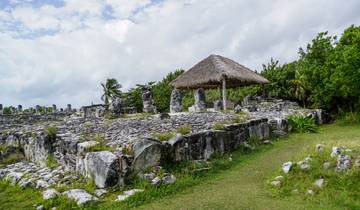
7 days
Riviera Maya Adventure 7D/6N
- ✓ Comprehensive Cancun tour
- ✓ Expert local guides included
- ✓ All accommodation arranged
- ✓ Transportation provided
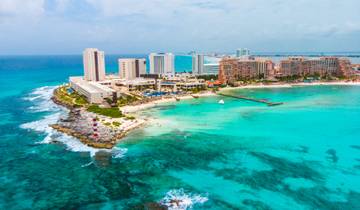
5 days
Riviera Maya Discovery – 5 Days
- ✓ Comprehensive Cancun tour
- ✓ Expert local guides included
- ✓ All accommodation arranged
- ✓ Transportation provided

1 days
Chichen Itza Tour: Explore Mayan Ruins, Valladolid and a Cenote
- ✓ Comprehensive Cancun tour
- ✓ Expert local guides included
- ✓ All accommodation arranged
- ✓ Transportation provided
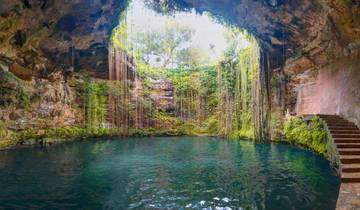
4 days
4-Day Dream Vacation in Cancun
- ✓ Comprehensive Cancun tour
- ✓ Expert local guides included
- ✓ All accommodation arranged
- ✓ Transportation provided
Multi-day tour packages powered by TourRadar. Prices and availability subject to change.
Essential Photography Equipment for the Region
Building an effective photography kit for the Cancún and Riviera Maya region requires balancing versatility with the realities of travel weight, tropical conditions, and diverse shooting scenarios. The foundation consists of a professional or advanced amateur camera body with good low-light performance, weather sealing, and reliable autofocus capabilities essential for capturing moving subjects from sea turtles to birds.
The core lens trio addresses the majority of photographic situations: a wide-angle zoom (16-35mm or similar) handles expansive coastal vistas, cenote interiors, and architectural perspectives at Mayan sites; a standard zoom (24-70mm) covers cultural photography, street scenes, and general-purpose shooting; and a telephoto zoom (70-200mm) brings distant wildlife closer and isolates architectural details against jungle backgrounds. These focal lengths overlap strategically, ensuring no gaps in coverage while maintaining manageable kit weight.
Specialized optics enhance specific applications. An ultra-wide lens (10-16mm for crop sensors, 14-24mm for full frame) creates dramatic perspectives in cenote caves and emphasizes foreground elements in coastal compositions. A macro lens (90-105mm) reveals intricate details of Mayan stone carvings, tropical flora, and reef creatures. A fast prime lens (35mm or 50mm f/1.4-f/1.8) excels in low-light cultural photography and creates beautiful bokeh for portrait work.
Support equipment proves essential for technical quality. A carbon fiber tripod balances stability with portability for long exposures in cenotes and coastal golden hour work. A ball head with quick-release plate enables rapid compositional adjustments. Remote shutter release eliminates camera shake during long exposures. A sturdy camera backpack with weatherproof covering protects equipment during transport and sudden tropical downpours.
Filters expand creative control and protect optics. Circular polarizing filters reduce water surface reflections to reveal underwater features, enhance sky contrast against clouds, and reduce glare on foliage. Neutral density filters (3-stop and 6-stop) enable long exposures for water smoothing effects even in bright daylight. Graduated neutral density filters balance exposure between bright skies and darker foregrounds in coastal landscapes, though increasingly replaced by HDR bracketing techniques.
Underwater photography equipment ranges from simple waterproof cameras to sophisticated DSLR or mirrorless housings. Entry-level options include action cameras (GoPro-style) for snorkeling documentation and casual underwater shots. Intermediate solutions feature dedicated underwater compact cameras with excellent image quality and underwater-specific shooting modes. Advanced setups involve camera housings for professional bodies, strobes for proper underwater lighting, and dome ports for wide-angle reef photography.
Accessory items enhance workflow and protect equipment. Extra batteries accommodate intensive shooting days in warm conditions that accelerate battery drain. High-capacity memory cards (64GB or larger) handle RAW files from extended shooting sessions. Lens cleaning kit with microfiber cloths, blower, and cleaning solution maintains optics in dusty and salty environments. Weather-sealed camera bag or dry bag provides protection during beach visits and boat transport. Silica gel packets combat humidity in camera storage.
Digital workflow equipment completes the professional kit. Laptop computer enables on-location RAW processing and backup. Portable hard drive or cloud storage service safeguards images against card failure or loss. Card reader accelerates image transfer compared to direct camera connection. Color-calibrated monitor ensures accurate editing and exposure assessment in varying lighting conditions.
Mastering Caribbean Coastal Photography
The Caribbean coastline of the Riviera Maya presents distinctive photographic challenges stemming from intense tropical sunlight, brilliant water coloration, and expansive beach environments. Successful coastal photography requires technical understanding of exposure management, compositional strategies that emphasize the region’s unique qualities, and timing that leverages optimal natural lighting conditions.
The trademark turquoise water coloration results from specific conditions: shallow white sand bottoms reflecting sunlight upward through clear water, creating brilliant cyan and turquoise hues that intensify with proper exposure. Photographers must expose for the water while preventing sky blowout, often requiring graduated neutral density filters or HDR bracketing techniques. Slight underexposure (1/3 to 2/3 stop) often enhances water color saturation in post-processing.
Beach composition benefits from strategic foreground elements that add depth and visual interest to otherwise two-dimensional scenes. Palapa umbrellas, weathered wooden boats, coconut palm trunks leaning into frame, or tidal pools with reflected sky create leading lines and layered compositions. Low camera angles emphasize foreground details while maintaining horizon placement according to rule of thirds principles.
Wave photography captures Caribbean Sea dynamics through varied shutter speed approaches. Fast shutter speeds (1/500 second or faster) freeze wave action showing texture and spray patterns. Medium speeds (1/30 to 1/125 second) blur wave motion while maintaining structure. Long exposures (1 second to several minutes with neutral density filters) smooth water into ethereal fog-like textures contrasting with sharp rocks or structures.
Sunrise photography along the Caribbean coast offers distinct advantages over sunset shooting. The sun rises over ocean horizons creating dramatic backlighting opportunities, silhouettes, and sun star effects through small apertures. Morning light tends clearer with less atmospheric haze. Beach crowds remain minimal. Disadvantages include requiring early morning commitment and shorter golden hour periods at tropical latitudes.
Sunset photography faces logistical challenges as beaches fill with tourists and commercial activity intensifies, but offers warmer color temperatures and dramatic cloud illumination. The sun sets over land rather than ocean, shifting compositional strategies toward capturing reflected light on water surfaces and silhouetted palm trees. Blue hour following sunset produces subtle gradations and long exposure opportunities with minimal movement in calm Caribbean waters.
Aerial perspective photography transforms coastal documentation. Drone photography reveals patterns invisible from ground level: sandbar formations, reef structures visible through clear water, beach curve dynamics, and resort layouts integrated into coastline. Successful drone work requires understanding Mexican aviation regulations, respecting archaeological site restrictions, avoiding crowded beach areas, and timing flights during optimal lighting conditions.
Weather conditions dramatically affect coastal photography quality. Clear blue skies, while beautiful in person, can appear monotonous in photographs without clouds to add visual interest. Partly cloudy conditions provide ideal balance: blue sky patches contrast with white clouds creating depth, while cloud shadows add texture to water surfaces. Overcast conditions produce soft even lighting suitable for detail work and reduce harsh contrast ratios.
Polarizing filter usage proves essential for Caribbean coastal work. Rotating the polarizer reduces surface reflections revealing underwater features like sandbars, coral heads, and sea grass beds. The filter enhances sky color and cloud contrast while reducing atmospheric haze. Maximum polarization occurs at 90-degree angles to the sun position, affecting filter effectiveness based on shooting direction relative to light source.
Photographing Ancient Mayan Archaeological Sites
Mayan ruins scattered throughout the Riviera Maya present extraordinary architectural photography opportunities combining massive limestone temples, intricate stone carvings, and dramatic jungle settings. Sites like Tulum perched on coastal cliffs, Cobá with its towering pyramid, Ek Balam with detailed stucco decorations, and the iconic Chichén Itzá slightly inland offer diverse photographic subjects requiring adapted techniques.
Midday harsh lighting, typically avoided in landscape photography, can be strategically utilized at archaeological sites. Strong overhead sun creates deep shadows that emphasize three-dimensional architectural relief, highlight carved stone textures, and separate structural elements through contrast. Temple steps, decorative friezes, and carved glyphs gain dramatic depth when side-lighting or top-lighting creates shadow patterns that reveal sculptural qualities.
Wide-angle architectural photography captures the monumentality of Mayan constructions while incorporating environmental context. Shooting from low angles emphasizes vertical height and creates powerful perspective convergence. Including jungle vegetation in frame edges provides scale reference and contextualizes ruins within their natural setting. Careful horizon leveling prevents perspective distortion that undermines architectural integrity.
Detail photography reveals the sophisticated artistry of Mayan stone carving. Telephoto compression isolates decorative elements like masks, glyphs, and geometric patterns from busy backgrounds. Macro focal lengths document fine carving details and weathering patterns that demonstrate age and craftsmanship. Side lighting accentuates surface texture and relief sculpture details that disappear in flat frontal illumination.
Environmental portraiture places ruins within broader landscape context. Elevated viewpoints from adjacent pyramids or natural high points reveal site layouts, relationships between structures, and integration with surrounding jungle. Including sky with dramatic clouds adds atmospheric quality and prevents dead space in upper frame areas. Sunrise and sunset provide directional lighting that models architectural forms and casts long shadows across plaza spaces.
Human scale elements enhance architectural comprehension. Including visitors provides size reference that emphasizes the massive scale of pyramids and temples. Careful positioning places figures in compositionally strategic locations using rule of thirds or golden ratio principles. Silhouettes against bright sky or illuminated stone surfaces create dramatic effect while maintaining focus on architectural subjects.
HDR bracketing techniques manage extreme contrast ratios common at archaeological sites. Bright tropical sky combined with deep shadow areas under temple overhangs exceeds most camera dynamic ranges. Shooting 3-5 exposure brackets (2-stop intervals) captures full tonal range for blending in post-processing. Natural-looking HDR maintains architectural detail in shadows while preserving sky color and cloud definition.
Monochrome conversion emphasizes structural forms and textural qualities while removing color distractions. Stone’s natural gray tones translate well to black and white photography. Increased contrast enhances architectural details and carved elements. Split toning adds subtle color shifts that enhance mood while maintaining monochrome aesthetic. Black and white particularly suits rainy day photography when overcast conditions reduce color vibrancy.
Compositional strategies balance archaeological documentation with artistic interpretation. Centered symmetrical compositions work well for pyramids and temple facades emphasizing their formal qualities. Asymmetrical rule-of-thirds placement creates dynamic tension and visual flow. Framing through doorways, arches, or jungle vegetation adds depth and focuses attention on key architectural elements. Diagonal lines create energy and movement in otherwise static architectural subjects.
Tulum presents unique challenges combining ruins with Caribbean coastal settings. Photographing temples against turquoise water backgrounds requires careful exposure management to maintain detail in both stone structures and bright water. Early morning light provides optimal conditions before crowds arrive and when soft directional illumination models architectural forms. The iconic clifftop temple image benefits from elevated beach perspectives that include foreground wave action for compositional depth.
Cenote Photography: Capturing Underground Beauty
The Yucatan Peninsula’s extensive cenote systems create extraordinary photography opportunities combining natural cave formations, crystal-clear underground water, dramatic light shafts, and otherworldly atmospheric conditions. Successful cenote photography requires technical expertise in low-light situations, understanding of natural light behavior in cave environments, and specialized equipment handling in challenging conditions.
Light shaft photography captures the most iconic cenote images: brilliant sun beams penetrating through openings in cave roofs, scattering through suspended particles in water, creating ethereal illumination in otherwise dark underground spaces. Light shaft intensity and visibility depend on precise timing when sun angles align with cave openings, particle density in water providing scatter effect, and contrast between illuminated shafts and surrounding darkness.
Optimal light shaft photography timing occurs during midday hours (approximately 10:00 AM to 2:00 PM) when sun reaches sufficient altitude to penetrate vertical or near-vertical openings in cenote roofs. Seasonal variations affect exact timing and intensity. Morning hours often provide clearer water with less stirred sediment. Afternoon sessions may encounter more particles suspended from earlier swimming activity, potentially enhancing light scatter effects.
Technical camera settings for cenote photography push equipment capabilities. ISO levels climb to 800-3200 depending on available light and desired shutter speed. Wide apertures (f/2.8-f/5.6) maximize light gathering while requiring careful focus placement in three-dimensional cave spaces. Shutter speeds range from 1/30 second for handheld shots with image stabilization to 30+ seconds for tripod-mounted long exposures capturing maximum detail in dark areas.
Tripod stability proves essential for quality cenote images. Carbon fiber construction provides necessary rigidity while minimizing weight for transport through jungle paths and down steep stairs. Sturdy ball heads enable precise positioning on uneven cave floors. Remote shutter releases prevent vibration during long exposures. Some cenotes feature viewing platforms or walkways where tripods set up easily, while others require careful positioning on slippery limestone surfaces.
Wide-angle lenses work best for cenote interiors, capturing expansive cave spaces, curved rock formations, and the relationship between light sources and surrounding environment. Ultra-wide focal lengths (14-24mm) emphasize perspective and depth while exaggerating spatial dimensions. Rectilinear wide-angle lenses minimize distortion of rock formations and water surfaces compared to fisheye alternatives, though fisheyes create dramatic curved perspectives in some compositions.
Exposure management in cenotes requires balancing extreme contrast between light shafts and dark cave areas. Spot metering on mid-tone rock formations provides accurate starting exposures. Histogram evaluation prevents clipped highlights in bright shafts or blocked shadows in dark corners. HDR bracketing captures full dynamic range for post-processing blend, shooting 3-5 exposure brackets spanning 2-3 stops each direction from base exposure.
Water surface photography in cenotes benefits from still conditions when surface acts as perfect mirror reflecting cave roofs and formations. Slight ripples create abstract patterns and light refraction effects. Underwater perspective from just beneath the surface captures both above and below water simultaneously when shooting with dome ports, revealing swimmers, rock formations, and light shafts in single compositions.
Artificial lighting augments natural illumination in cenotes where permitted. Portable LED panels provide continuous lighting for video recording and prolonged exposure work. Camera-mounted flashes freeze motion and add fill light to dark areas, though multiple flash exposures or off-camera positioning creates more natural-looking results. Some photographers use underwater strobes for illuminating submerged formations and cave features.
Safety considerations accompany cenote photography. Wet slippery surfaces require careful footing while carrying expensive equipment. Changing from bright exterior sunlight to dark cave interiors demands time for eye adaptation. Some cenotes feature steep stairs or require swimming to reach optimal shooting positions. Waterproof bags protect equipment during transport through humid environments. Photography should never compromise personal safety or that of other visitors.
Post-processing cenote images typically involves contrast management, shadow detail recovery, and highlight protection. Graduated adjustments lighten foreground elements while maintaining light shaft brilliance. Clarity and structure adjustments enhance rock texture and water definition. Color temperature tweaking balances cool blue tones of water with warm rock colors. Subtle vignetting focuses attention on central light shafts and main compositional elements.
Underwater and Reef Photography Techniques
The Caribbean waters off Cancún and Riviera Maya provide exceptional underwater photography opportunities featuring vibrant coral reefs, diverse marine life, crystal-clear visibility, and shallow accessible dive sites. Successful underwater photography requires specialized equipment, technical diving skills, and compositional understanding adapted to aquatic environments.
Equipment options range from simple waterproof cameras to sophisticated DSLR housings. Action cameras offer wide-angle perspectives suitable for reef scenics and swimming documentation, with limitations in low-light performance and manual control. Waterproof compact cameras balance image quality with ease of use, often featuring underwater shooting modes optimized for blue water color correction and white balance. Advanced systems involve camera housings for professional bodies enabling full manual control and lens versatility.
Underwater housings protect cameras while maintaining access to controls through mechanical or electronic interfaces. Polycarbonate housings offer lightweight affordable options suitable for snorkeling depths. Aluminum housings provide professional durability and depth ratings suitable for technical diving. Housing selection must match specific camera models with consideration for lens port compatibility, control access, and future equipment upgrades.
Strobes provide essential lighting for underwater color restoration and creative illumination. Natural sunlight loses color spectrum as depth increases, with reds disappearing first followed progressively by warmer tones, leaving predominantly blue-green hues beyond shallow depths. Strobes restore full color spectrum, eliminate backscatter from suspended particles, and create dramatic lighting effects emphasizing subject three-dimensionality.
Wide-angle reef photography captures expansive underwater landscapes showing coral formations, schooling fish, and environmental context. Ultra-wide lenses with dome ports create immersive perspectives emphasizing foreground coral detail while maintaining background definition. Optimal technique involves close approach to foreground elements creating layered compositions with near and far subjects, compensating for water’s magnification effect that makes subjects appear closer and larger than reality.
Macro underwater photography reveals intricate beauty of small reef inhabitants including nudibranchs, shrimp, juvenile fish, and coral polyp details. Macro lenses with flat ports provide magnification revealing details invisible to naked eye. Ring lights or twin strobes create even illumination eliminating shadows on small subjects. Patience and breath control enable close approach without disturbing subjects or stirring sediment.
Natural light underwater photography works effectively in shallow clear Caribbean waters. Shooting upward toward surface creates silhouettes and emphasizes light penetration through water. Side lighting from low sun angles during golden hours adds warmth and directional quality. Overcast conditions provide soft even illumination reducing harsh contrast. Free diving or snorkeling in 10-30 foot depths enables natural light work without color loss requiring strobes.
White balance correction compensates for blue-green color cast in underwater images. Custom white balance using white slate or underwater neutral reference establishes accurate color at specific depths. Shooting RAW format enables post-processing white balance adjustment without image degradation. Some underwater cameras feature specific shooting modes that apply automatic color correction based on depth sensors.
Composition underwater follows surface photography principles with adaptations for three-dimensional environment. Rule of thirds placement creates balanced compositions. Leading lines from coral formations or swimmer perspectives guide viewer attention. Negative space in blue water emphasizes subject isolation. Including divers or snorkelers provides scale reference for reef features and creates human interest elements.
Buoyancy control proves essential for stable underwater photography. Neutral buoyancy enables hovering at optimal shooting positions without drifting or sinking. Proper weighting prevents excessive kicking that stirs sediment or damages coral. Breath control affects buoyancy and creates subtle positioning adjustments. Many underwater photographers wear slightly negative weighting enabling them to rest on sandy areas without floating upward.
Marine life behavioral photography captures creatures in natural activities rather than static portraits. Anticipating fish movement patterns enables action shots of feeding behavior, cleaning stations, or predator-prey interactions. Patience and observation reveal behavioral opportunities. Slow deliberate movements avoid spooking subjects. Some reef creatures like sea turtles, rays, and nurse sharks tolerate close photographer approach with respectful non-threatening behavior.
Conservation awareness accompanies underwater photography. Photographers must avoid touching or disturbing coral, maintain proper buoyancy preventing fin contact with reef, and refuse to handle or harass marine life for photo opportunities. Many locations enforce marine protected area regulations limiting access or prohibiting certain activities. Responsible underwater photography prioritizes reef health over image acquisition.
Wildlife and Nature Photography Opportunities
Beyond beaches and ruins, the Riviera Maya region supports diverse wildlife populations in jungle reserves, coastal wetlands, reef systems, and open ocean waters. Successful wildlife photography requires telephoto lenses, patient observation, understanding of animal behavior, and respect for natural habitats.
Avian photography captures both resident tropical species and migratory birds utilizing coastal flyways. Frigate birds with distinctive wing shapes soar on thermal currents over beaches. Pelicans dive for fish in shallow waters. Herons and egrets stalk prey in lagoons and mangroves. Colorful toucans, parrots, and motmots inhabit jungle canopy. Telephoto lenses (300-600mm) enable frame-filling bird portraits from non-intrusive distances.
Marine life photography extends beyond underwater work. Sea turtles surface to breathe creating opportunities for photographing heads and shells from boat or beach vantage points. Dolphins occasionally appear offshore creating action photography challenges. Whale sharks migrate through area seasonally, with licensed tour operators enabling close encounters. Manta rays glide through shallows occasionally approaching snorkelers.
Reptile photography focuses on endemic species including iguanas, various lizard species, and occasional crocodiles in protected wetlands. Iguanas tolerate close approach particularly at archaeological sites where they’ve habituated to human presence. Macro lenses reveal scales, eye details, and textures. Patient observation captures behavioral moments like feeding, territorial displays, or thermoregulation behaviors.
Butterfly photography flourishes in gardens and jungle edges where numerous tropical species feed on flowering plants. Colorful morpho butterflies flash iridescent blue wings. Monarchs pass through during migration seasons. Close-focusing telephoto lenses or macro lenses enable detailed wing pattern documentation. Fast shutter speeds freeze wing movement, while slower speeds create motion blur emphasizing flight.
Nocturnal wildlife emerges after dark including bats, night-foraging birds, and various insects. Flash photography reveals creatures otherwise invisible. Red light flashlights minimize disturbance to adapted night vision. Some cenotes feature bioluminescent organisms creating ethereal glow effects in long exposure photographs. Night photography at ruins occasionally permits capturing archaeological structures under moonlight with jungle sounds of nocturnal creatures.
Conservation documentation photography serves important ecological purposes. Population studies benefit from individual identification through photographic records. Behavioral documentation informs research. Habitat photography demonstrates environmental conditions and conservation needs. Tourism impact assessment uses photographic evidence of crowding or environmental degradation. Photographers contributing to conservation efforts should coordinate with relevant organizations.
Ethical wildlife photography principles must guide all animal photography. Maintain respectful distances preventing stress or behavioral disruption. Never bait wildlife with food to attract subjects for photographs. Avoid flash photography with nocturnal species or nesting birds where it may cause distress. Do not touch, chase, or handle wild creatures. Respect protected area regulations limiting access to sensitive habitats during breeding seasons.
Cultural and Street Photography in the Region
Beyond natural and archaeological subjects, authentic Mexican Caribbean culture provides rich documentary photography opportunities. Markets, festivals, street scenes, architecture, and daily life offer insights into regional identity blending Mayan heritage, Spanish colonial influence, and contemporary Caribbean coastal culture.
Playa del Carmen’s Quinta Avenida pedestrian street combines tourist commerce with glimpses of local life. Vendors selling traditional crafts, street performers entertaining crowds, restaurants displaying colorful facades, and architectural details reveal cultural fusion. Photographing crowded tourist areas requires awareness of personal space, permission for recognizable portraits, and timing that captures authentic moments rather than staged tourist scenes.
Traditional markets in Cancún, Playa del Carmen, and smaller towns showcase daily life through commerce. Produce vendors arrange colorful fruit and vegetable displays. Butchers and fishmongers present fresh catches and meat selections. Handicraft stalls display traditional textiles, carved wooden figures, and silver jewelry. Natural window light illuminates market interiors creating dramatic contrast. Permission should be requested before photographing vendors, with small purchases building rapport.
Colonial architecture in smaller towns like Valladolid provides colorful building facades, ornate churches, and traditional plaza layouts. Pastel painted walls create vibrant backdrops. Carved wooden doors and iron window grilles add architectural detail. Church interiors when photography is permitted showcase baroque religious art and vaulted spaces. Late afternoon light enhances building colors and creates shadows defining architectural elements.
Festival photography captures cultural celebrations including religious processions, traditional dance performances, and community gatherings. Events like Day of the Dead celebrations, Christmas posadas, and saint day festivals offer documentary opportunities. Photographing celebrations requires cultural sensitivity, avoiding intrusive presence during religious ceremonies, and understanding when photography is appropriate versus when respectful observation without cameras is preferable.
Portrait photography of local residents demands cultural respect and communication. Approaching potential subjects politely, explaining photographic interest, and requesting permission builds trust. Learning basic Spanish phrases facilitates interaction. Sharing contact information to send finished photographs creates reciprocal relationships. Some subjects may request small payment for formal portrait sessions, particularly those in tourist areas who pose regularly for photographers.
Food photography documents regional cuisine from street tacos to fine dining. Natural window light works well for restaurant interiors. Close-up details emphasize textures and colors of traditional dishes. Overhead perspectives show complete plate compositions. Photographing food preparation in market stalls or street vendors reveals culinary traditions. Always request permission before photographing commercial food operations.
Architectural detail photography reveals decorative elements throughout the region. Colorful tile work, carved stone capitals, ironwork balconies, and traditional palm thatch roofing showcase construction techniques and aesthetic traditions. Macro perspectives isolate patterns and textures. Wide angles show details within architectural context. Different times of day create varied lighting emphasizing three-dimensional relief.
Advanced Technical Techniques for the Region
Mastering advanced photographic techniques elevates imagery beyond conventional tourist snapshots, creating professional-quality work that captures the region’s essence while demonstrating technical proficiency. These techniques address specific challenges presented by Caribbean tropical environments and diverse subject matter.
HDR bracketing manages extreme contrast ratios common in tropical lighting. Bracketing 3-5 exposures (typically 2-stop intervals) captures full tonal range from deep shadows to bright highlights. Natural-looking HDR processing maintains realistic appearance while revealing detail throughout tonal range. Tone mapping software blends exposures, with careful adjustment preventing halo artifacts and maintaining color accuracy. HDR works particularly well for cenote photography, sunset beach scenes, and archaeological sites where bright sky meets dark stone.
Panoramic stitching creates expansive views exceeding single frame limitations. Overlap 30-40% between adjacent frames for reliable alignment. Lock exposure and white balance across sequence preventing brightness shifts between frames. Shoot in portrait orientation capturing more vertical detail for horizontal panoramas. Level horizons carefully as misalignment compounds across multiple images. Specialized panoramic software handles stitching with various projection options from rectilinear to cylindrical presentations.
Long exposure photography transforms water into smooth ethereal surfaces contrasting with sharp stationary elements. Neutral density filters reduce light transmission enabling extended shutter speeds even in bright conditions. 1-2 minute exposures smooth Caribbean waves into mist-like fog. 10-20 second exposures retain some wave texture while creating motion blur. Twilight enables long exposures without filters when ambient light drops sufficiently. Sturdy tripods prevent any camera movement during extended exposures.
Focus stacking combines multiple exposures with different focus points creating extended depth of field impossible with single exposures. Particularly useful for macro photography of coral, flowers, or Mayan carved details where shallow depth of field limits sharpness. Software aligns and blends sharp areas from each exposure creating image sharp throughout. Requires tripod stability and static subjects as movement between frames causes misalignment artifacts.
Time-lapse photography documents changing conditions over time. Sunset transitions over Caribbean waters, storm systems moving across sky, star trails over ruins, or tide changes revealing reef features create dynamic sequences. Interval timers shoot frames at preset intervals (2-10 seconds typically). Sequences require hundreds to thousands of frames compiled into video. Lock exposure or use manual exposure preventing flicker between frames. Time-lapse demands significant post-processing but produces compelling results.
Night sky photography captures stars over Mayan temples or Caribbean beaches. Dark sky locations away from city light pollution enable clear Milky Way photography. Wide apertures (f/1.4-f/2.8) maximize light gathering. High ISO (1600-6400) compensates for low light with acceptable noise levels. Shutter speeds follow 500-rule dividing 500 by focal length determining maximum exposure before star trailing becomes apparent. Light painting with flashlights illuminates foreground ruins during long exposures.
Multiple exposure compositing combines elements from different frames creating impossible single-exposure results. Blending darker exposure for sky with brighter exposure for foreground, combining architectural detail from one frame with dramatic clouds from another, or positioning sun placement from multiple sunset times creates technically perfect final images. Photoshop layers with masks enable precise control over blending.
Color grading establishes consistent aesthetic across image series. Selecting color palette emphasizing Caribbean turquoise blues, tropical vegetation greens, and warm sunset oranges creates cohesive portfolio appearance. Custom camera profiles or preset development settings ensure consistent color rendering. Selective color adjustments enhance specific hues while subduing others, directing viewer attention through color relationships.
Optimal Timing and Seasonal Considerations
Seasonal variations significantly impact photographic conditions in the Riviera Maya, affecting weather patterns, crowd levels, water clarity, and natural phenomena. Understanding these patterns enables strategic timing for specific photographic goals.
Dry season from November through April offers consistently clear skies ideal for landscape and architectural photography. Minimal rainfall prevents cloudy conditions and ensures predictable weather for planned shoots. Lower humidity reduces atmospheric haze improving distant vista clarity. Cooler temperatures make midday shooting more comfortable. Disadvantages include higher tourist crowds at popular locations and premium pricing for accommodations and tours.
Rainy season from May through October brings afternoon thunderstorms, dramatic cloud formations, and lush green vegetation. Morning hours often feature clear skies before afternoon storm development. Storm clouds create dynamic skies for landscape work. Rain-washed vegetation appears vibrant green. Fewer tourists mean uncrowded archaeological sites and beaches. Hurricane season (August-October) requires monitoring weather forecasts carefully.
Shoulder seasons (May and November) balance favorable conditions with moderate crowds. May transitions from dry to wet season with occasional rain but generally good weather. November sees decreasing rainfall and pleasant temperatures. Both periods offer good value for accommodations while maintaining reasonable weather for photography.
Moon phases affect night photography and light conditions. New moon periods provide darkest skies for Milky Way photography over ruins. Full moon creates enough ambient light for night landscape work without artificial illumination. Quarter moons balance some starlight visibility with moonlit landscape illumination. Lunar calendars inform planning for specific night sky photography goals.
Tidal cycles influence beach photography and reef access. Low tides expose tidal pools, reveal reef formations close to shore, and create wider beach areas. High tides bring water to beach edges enabling wave action photography. Tide tables available from marine services inform planning for water-dependent photography.
Wildlife activity patterns vary seasonally. Sea turtle nesting occurs May through October with peak activity in summer months. Whale shark migration brings these gentle giants to Caribbean waters June through September. Bird migrations bring transient species through the region during spring and fall passages. Seasonal timing targets specific wildlife photography opportunities.
Festival and cultural event timing provides documentary opportunities. Day of the Dead celebrations in early November, Christmas posadas in December, and various saint day festivals throughout the year offer cultural photography. Regional tourism offices maintain event calendars. Advance planning secures accommodation during popular celebration periods.
Location Scouting and Planning Strategies
Successful photography in the Riviera Maya requires advance research, location scouting, and logistical planning maximizing shooting efficiency and creative results. Professional photographers invest significant time in preparation before triggering shutters.
Digital mapping tools enable virtual exploration identifying potential locations. Satellite imagery reveals beach access points, reef formations visible from above, and archaeological site layouts. Street view imagery previews ground-level perspectives. Elevation data shows viewpoint locations and topographic features. GPS coordinates marked in advance guide navigation to scouted locations.
Sun position apps calculate exact sunrise, sunset, golden hour, and blue hour timing for specific dates and locations. Solar azimuth determines sun direction relative to subjects, informing optimal timing for directional lighting on architectural features or landscape elements. Shadow patterns at Mayan ruins change dramatically with sun position affecting photographic results. Planning shoots based on solar calculations ensures ideal lighting conditions.
Weather forecast monitoring tracks approaching systems, cloud coverage, and wind conditions. Multiple weather services provide forecasts with varying accuracy and detail. Marine forecasts indicate offshore conditions relevant for boat-based photography. Satellite imagery shows cloud patterns and storm development. Flexibility in scheduling allows shifting shoots based on conditions.
Social media and photography communities provide location intelligence. Instagram location tags reveal popular viewpoints and lesser-known alternatives. Photography forums share technical information about specific locations including best times, access restrictions, and recommended equipment. Local photography groups offer insider knowledge and potential guide services.
Advance permissions secure legal access to controlled locations. Many archaeological sites restrict tripod usage or require special permits for commercial photography. Some cenotes limit visitor numbers or prohibit certain equipment. Private properties may grant access with advance requests. Professional photographers often need documentation including identification, equipment lists, and liability insurance information.
Backup planning accounts for unexpected circumstances. Alternative locations provide options when primary sites prove unsuitable due to weather, crowds, or access issues. Flexible scheduling allows rearranging shoot priorities based on actual conditions encountered. Equipment redundancy prevents single-point failures from ending shoots prematurely.
Post-Processing Workflow for Caribbean Images
Raw capture represents merely the first step in creating finished images that fully realize the Caribbean region’s photographic potential. Strategic post-processing enhances visual impact while maintaining natural appearance and photographic integrity.
RAW file workflow preserves maximum image data enabling extensive adjustment without quality degradation. RAW formats record unprocessed sensor data with significantly greater dynamic range and color information than JPEG. All serious photography should use RAW capture with post-processing applied during RAW conversion rather than editing compressed JPEGs.
Import and organization establishes efficient file management. Catalog software (Lightroom, Capture One) manages image databases enabling keyword tagging, rating systems, and collections organization. Backup protocols prevent data loss through redundant storage. Logical folder structures by date, location, or project facilitate later retrieval.
Initial adjustments establish baseline image quality. White balance correction neutralizes color casts or enhances creative color direction. Exposure adjustment recovers shadow detail and protect highlights. Contrast management creates tonal separation without blocked blacks or blown whites. Lens corrections remove vignetting, distortion, and chromatic aberration artifacts.
Color grading enhances Caribbean aesthetic. Boosting blue and cyan saturation emphasizes turquoise water tones characteristic of the region. Warming overall temperature adds tropical feeling to beach scenes. Selective color adjustments enhance specific elements like sunset oranges or vegetation greens while subduing competing colors. Split toning adds subtle color shifts to highlights and shadows creating cohesive color palette.
Detail enhancement brings textures and patterns forward. Clarity adjustment adds midtone contrast emphasizing clouds, water texture, and architectural details. Sharpening compensates for lens softness and emphasizes fine details. Noise reduction addresses high ISO artifacts while preserving detail. Structure adjustment enhances three-dimensional appearance without haloing artifacts.
Local adjustments target specific image areas. Graduated filters darken skies while maintaining foreground exposure. Radial filters create vignettes or brighten specific subjects. Adjustment brushes lighten shadows, darken bright areas, or enhance specific elements. Local adjustments create visual hierarchy directing viewer attention to primary subjects.
Special effect processing creates artistic interpretations. Black and white conversions emphasize form and texture over color. HDR processing combines bracketed exposures managing extreme contrast. Panoramic stitching creates wide vistas. Time-lapse compilation transforms image sequences into video. Creative effects should enhance rather than overwhelm underlying photographic quality.
Export optimization prepares images for specific uses. Web display requires smaller file sizes with sRGB color space and appropriate pixel dimensions. Print preparation uses larger files with high resolution and appropriate color space (Adobe RGB or ProPhoto RGB). Social media platforms require specific aspect ratios and sizing. Watermarking protects copyright in shared images.
FAQ: Cancún & Riviera Maya Photography
What camera equipment do I need for a photography trip to Cancún?
A versatile kit includes a camera body with good low-light performance, wide-angle lens (16-35mm) for beaches and cenotes, standard zoom (24-70mm) for general shooting, telephoto lens (70-200mm) for wildlife and ruins details, tripod for long exposures and cenotes, polarizing filter for water photography, neutral density filters for long exposures, remote shutter release, and weatherproof camera bag. For underwater work add waterproof housing or dedicated underwater camera with strobes.
When is the best time of day to photograph Caribbean beaches?
Golden hour provides optimal lighting: sunrise around 6:00-6:30 AM offers soft directional light with minimal crowds, while sunset between 5:30-7:30 PM creates warm tones across water surfaces. Blue hour before sunrise and after sunset produces ethereal atmospheric conditions perfect for long exposures. Midday harsh light works for underwater photography with maximum light penetration but creates challenging contrast for beach landscapes.
How do I photograph light shafts in cenotes effectively?
Visit cenotes during midday hours (10 AM-2 PM) when sun angles align with cave openings creating visible light beams. Use wide-angle lenses (16-35mm) to capture expansive cave spaces, tripod for long exposures (1-30 seconds), and settings around ISO 800-3200, f/8-f/11 aperture for depth of field. Expose for mid-tone rock formations and consider HDR bracketing for extreme contrast between bright shafts and dark cave areas. Suspended particles in water enhance light beam visibility.
What are the best locations for sunrise photography in Cancún?
Playa Delfines offers unobstructed Caribbean sunrise horizons with iconic Cancún sign as foreground element. Isla Blanca north of Cancún provides pristine beaches with minimal development. Tulum archaeological site positions ancient temples against sunrise over ocean. Puerto Morelos beach features reef-protected waters with fishing boats as compositional elements. Arrive 30-45 minutes before sunrise for setup and blue hour photography preceding golden hour.
Can I use a drone for aerial photography at Mayan ruins?
Drone regulations vary by specific archaeological site. Major UNESCO World Heritage sites like Chichén Itzá and Tulum generally prohibit drone flights within protected zones. Some smaller archaeological parks may permit drone use with advance permission and proper licensing. Mexican aviation regulations require drone registration and operator certification for commercial use. Always verify specific site regulations before arriving with drone equipment, and respect any restrictions protecting cultural heritage and visitor safety.
What underwater photography equipment works best for beginners?
Entry-level options include waterproof compact cameras with underwater modes providing automatic color correction and white balance. GoPro-style action cameras work well for snorkeling documentation and wide-angle reef scenics. These require minimal learning curve while producing good results in clear Caribbean waters. As skills develop, consider dedicated underwater housings for mirrorless or DSLR cameras enabling manual control, RAW shooting, and accessory strobes for professional results.
How do I protect camera equipment from tropical humidity and salt?
Store equipment with silica gel packets in weather-sealed camera bags or dry boxes. Clean equipment daily removing salt spray and moisture with microfiber cloths. Allow gradual temperature adjustment when moving from air-conditioned spaces to hot humid exteriors preventing condensation. Use weather-sealed camera bodies and lenses when possible. After beach shooting, wipe down equipment with slightly damp cloth removing salt residue. Never leave equipment in direct sunlight or sealed cars where heat buildup occurs.
What post-processing techniques enhance Caribbean water colors?
Boost blue and cyan saturation in HSL/Color panel emphasizing turquoise tones. Adjust luminance of blue channel controlling brightness of water. Use polarizing filter during capture reducing surface reflections. Slight underexposure (1/3-2/3 stop) during shooting enhances saturation in post-processing. Apply graduated filters darkening sky while maintaining water color. Vibrance adjustment affects blue tones less aggressively than saturation. Color grading with split toning adds subtle shifts enhancing Caribbean aesthetic.
Are there photography workshops or guided photo tours available?
Numerous photography workshops operate in the Riviera Maya region focusing on underwater photography, Mayan archaeological site photography, cenote photography, and wildlife photography. Local photography tour operators provide guided excursions to optimal locations with insider knowledge about timing, access, and positioning. Photography retreat organizations offer multi-day intensive workshops combining instruction with location shooting. Check credentials, past participant reviews, and specific itineraries when selecting workshops. Private photography guides provide customized experiences for serious photographers with specific goals.
What are the most photogenic lesser-known locations beyond popular sites?
Isla Holbox offers pristine beaches and flamingo photography without Cancún crowds. Sian Ka’an Biosphere Reserve provides wildlife photography in protected wetlands. Ek Balam features well-preserved stucco decorations rarely photographed. Bacalar Lagoon shows incredible color gradients in freshwater environment. Puerto Morelos maintains authentic fishing village atmosphere. Punta Allen at Sian Ka’an’s tip offers remote coastal scenery. Cenotes outside tourist circuits provide uncrowded underground photography. These locations require more planning and sometimes longer travel but reward photographers with unique imagery.