Exploring ancient wonders knows no age limit. Nestled high in Peru’s Andes Mountains, the historic Machu Picchu citadel welcomes travelers of all generations with its breathtaking vistas and rich cultural heritage. For older adventurers, this UNESCO World Heritage Site offers an unforgettable journey through time—provided they approach it with thoughtful preparation.
Perched at 2,430 meters (7,972 feet) above sea level, the iconic Inca ruins attract over 1.5 million visitors annually. While the elevation may seem daunting, many seniors successfully navigate the site with proper pacing and guidance. The Peruvian government’s conservation-focused visitor policies ensure pathways remain accessible, though sturdy footwear and walking poles are recommended for uneven terrain.
Successful trips often hinge on tailored itineraries. Reputable tour operators design routes that balance exploration with rest, prioritizing key highlights like the Sun Gate or Temple of the Condor. Acclimatization days in Cusco, hydration strategies, and lightweight packing further enhance comfort for mature travelers.
Key Takeaways
- Machu Picchu has no official age restrictions and accommodates seniors with accessible pathways.
- Altitude management and gradual acclimatization are critical for a comfortable visit.
- Expert-guided tours optimize itineraries for safety and cultural enrichment.
- Visitor limits and conservation rules protect the site while enhancing the experience.
- Proper footwear and pacing strategies help navigate stone steps and slopes.
- Contact us for a comfortable and personalized itinerary (Free Service)
Can an 80 year old go to Machu Picchu?
Machu Picchu remains accessible to passionate explorers of all generations, with Peruvian authorities confirming no official age restrictions. While the journey requires physical stamina, thousands of mature travelers explore the stone pathways annually. A 2023 tourism report revealed 18% of visitors to the ancient citadel were over 65, demonstrating its senior-friendly appeal.
Success hinges on realistic preparation rather than birth dates. Guides recommend assessing mobility for navigating uneven steps and slopes spanning the 80-acre site. Many tour operators provide private assistants or paced group itineraries specifically designed for older visitors.
Peru’s Ministry of Culture maintains clearly marked routes and safety rails at steep sections. Rangers patrol frequently, offering water refills and rest recommendations. As one Cusco-based guide notes: “We’ve accompanied travelers in their 90s – it’s about smart pacing, not speed.”
Upcoming sections detail how to optimize health management and activity schedules. With thoughtful planning, this bucket-list destination becomes an achievable dream rather than a youthful privilege.
Planning a Senior-Friendly Itinerary
Crafting the perfect journey to ancient ruins requires thoughtful adaptation for seasoned explorers. A well-designed personalized itinerary transforms Machu Picchu’s challenges into manageable triumphs, blending cultural discovery with physical comfort.
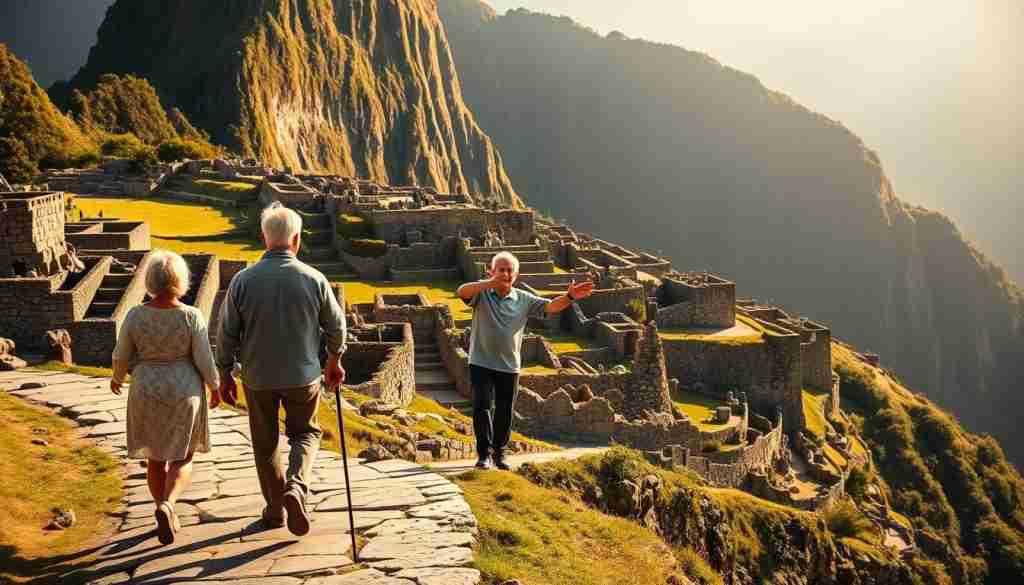
Choosing the Right Tour Options
Reputable tour operators specializing in senior travel curate experiences prioritizing accessibility. Look for guided tours offering:
- Private transportation with elevated seating
- Flexible schedules with shaded rest areas
- Alternate routes through the Cusco Sacred Valley avoiding steep climbs
Many companies now offer modified Inca Trail itineraries featuring shorter walking distances between archaeological sites. As noted by Andean travel expert Marco Tapia:
“The best tours match pacing to capability – it’s about savoring history, not racing through it.”
Pacing Your Visit for Comfort
Strategic planning phase includes mapping rest stops near key landmarks like the Temple of the Sun. Morning visits avoid afternoon crowds while capturing soft light perfect for photography. Most seniors benefit from:
- 90-minute exploration blocks followed by seated breaks
- Pre-arranged porter services for carrying supplies
- Private guides who adjust commentary speed
This balanced itinerary approach lets travelers absorb the site’s grandeur without fatigue. Thoughtful planning ensures every step becomes part of the adventure rather than an obstacle.
Essential Tips for Senior Travelers
Smart preparation transforms challenging journeys into rewarding adventures. For mature explorers visiting Peru’s crown jewel, practical strategies enhance safety while preserving the magic of discovery.
Packing Smart for a Stress-Free Journey
Lightweight layers prove invaluable in the Andes’ unpredictable climate. Moisture-wicking fabrics paired with a waterproof jacket handle shifting weather effortlessly. Supportive hiking shoes with non-slip soles are non-negotiable – test them on local trails before departure.
Organize medications in labeled, waterproof containers. Include altitude-adjusted prescriptions if required. A compact first-aid kit with blister pads and pain relievers addresses minor issues quickly.
Staying Hydrated and Maintaining Health
Dehydration accelerates altitude sickness symptoms. Carry an insulated water bottle and sip hourly, even without thirst signals. Guides recommend electrolyte tablets for enhanced absorption at elevation.
Schedule morning medical check-ups before departure. Share itinerary details with healthcare providers to review vaccination needs and oxygen supplementation options. As Cusco-based nurse Rosa Quispe advises: “Prevention beats treatment when exploring high-altitude sites.”
- Hire certified guides trained in senior mobility support
- Use telescopic trekking poles for stability on stone paths
- Pack high-energy snacks like nuts and dried fruit
- Book accessible hotels with 24/7 medical assistance
Flexible pacing allows time to appreciate intricate stonework and panoramic views. With thoughtful preparation, seniors confidently embrace Machu Picchu’s wonders while prioritizing well-being.


Navigating Altitude and Health Considerations
Conquering high-altitude adventures demands more than enthusiasm—it requires strategic health planning. The Sacred Valley serves as nature’s perfect acclimatization chamber, with elevations lower than Cusco yet rich in cultural immersion. Spending two to three days here allows travelers to adapt gradually while exploring vibrant markets and archaeological gems.
Acclimatization in the Sacred Valley
Local guides strongly recommend beginning journeys in the Cusco Sacred Valley region. At 2,860 meters (9,380 feet), this fertile basin offers gentler conditions than Machu Picchu’s peaks. A 2024 Andean Travel Health study found visitors who acclimatized here experienced 40% fewer altitude-related issues. As explorer Maria Fernandez notes: “The valley isn’t just a scenic stop—it’s your body’s training ground.”
Preventing Altitude Sickness
Headaches and fatigue often signal altitude sickness, but proactive measures minimize risks. Start with slow-paced activities and hydrate aggressively—electrolyte-enhanced water combats dehydration. The train from Aguas Calientes to Machu Picchu reduces physical strain, while shuttle buses handle steep ascents.
Consider modified trail hikes like the one-day Inca Trail option, designed for manageable exertion. Schedule rest periods every 90 minutes and monitor oxygen levels with portable pulse oximeters. Many hotels in Aguas Calientes provide oxygen-enriched rooms, creating safe havens for recovery.
Prioritizing gradual exposure and smart transportation choices transforms high-altitude exploration from daunting to achievable. Listen to your body’s signals, and let the Sacred Valley work its adaptive magic.
Experiencing the Rich Culture and History of Machu Picchu
Machu Picchu stands as a timeless testament to Inca ingenuity, where stone walls whisper stories of a civilization that mastered astronomy and agriculture. This UNESCO World Heritage Site offers more than panoramic views—it’s a portal to understanding pre-Columbian achievements through carefully preserved architecture and spiritual landmarks.
Exploring the Inca Legacy and Scenic Views
The Temple of the Sun exemplifies Inca precision, with windows aligning perfectly with solstice sunbeams. Nearby, the Sacred Plaza served as the ceremonial heart of the ancient citadel. Travelers often pause here to absorb the interplay of history and nature, framed by the iconic Huayna Picchu peak.
| Landmark | Historical Significance | Visitor Tip |
|---|---|---|
| Intihuatana Stone | Astronomical calendar marker | Visit at dawn for fewer crowds |
| Guardhouse | Strategic viewpoint | Ideal for photography |
| Agricultural Terraces | Engineering marvel | Guided tours explain irrigation systems |
Understanding Local Traditions and Landmarks
Modern Quechua communities maintain ancestral practices, from textile weaving to harvest festivals. Specialized Picchu tours often include interactions with local artisans near Ollantaytambo. As guide Elena Quispe explains: “Our travelers gain deeper insights when connecting ruins to living traditions.”
Shorter hikes like the Machu Picchu Mountain trail reveal hidden water channels and ceremonial rocks. These paths let visitors engage with history at their own pace while enjoying Andean landscapes. Every step through this Inca citadel becomes a dialogue between past and present.
Conclusion
Age becomes irrelevant when ancient stones tell their stories through sunlit terraces and whispering mountain winds. Thoughtful preparation transforms potential challenges into triumphant achievements at this legendary site. Countless travelers across generations have proven that detailed itinerary planning and paced exploration unlock the citadel’s wonders.
Seasoned visitors consistently emphasize three pillars: strategic rest days in lower elevations like Aguas Calientes, hydration-focused health routines, and expert-guided tours. These elements create a foundation for savoring multi-day adventures without compromising comfort. The train journey through lush valleys often ranks as a highlight, blending convenience with breathtaking scenery.
Testimonials from recent travelers reveal profound satisfaction in customizing experience levels. One adventurer noted: “Our guide adjusted the pace so we could absorb every carved stone and sunset.” Such tailored approaches ensure every trip aligns with personal capabilities while respecting conservation guidelines.
Embrace this adventure knowing that wisdom and preparation outweigh physical demands. The path to understanding Inca brilliance awaits – a journey measured in cultural connections, not birthdays. Explore curated tours to craft your perfect chapter in this living history book.
