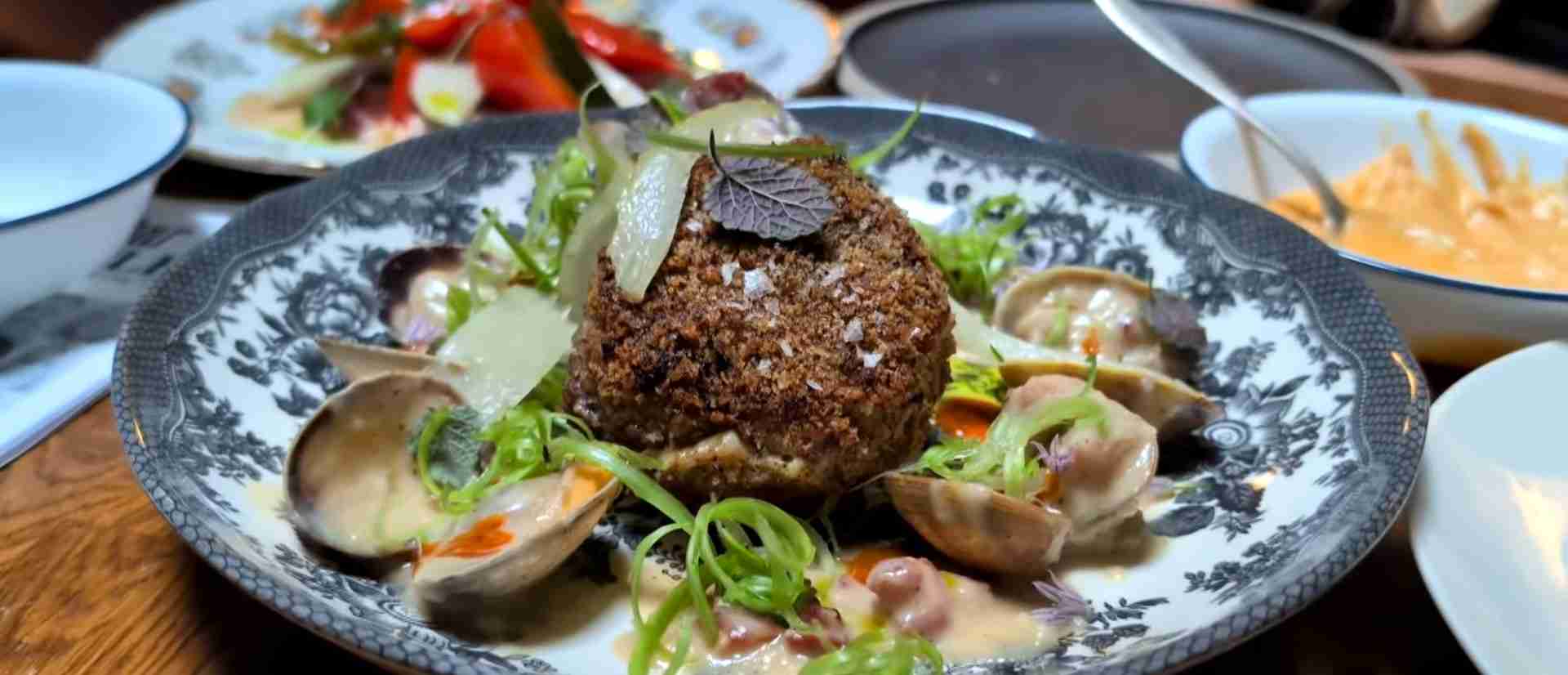
Calgary Food Guide: Western Canadian Cuisine
Calgary’s culinary landscape reflects its position at the crossroads of prairie agriculture, Rocky Mountain wilderness, and global immigration, creating a food scene where world-class Alberta beef anchors menus alongside innovative international cuisines. The city’s 40-plus craft breweries, year-round farmers’ markets, and restaurants spanning steakhouses to Filipino bakeshops demonstrate how Western Canadian food culture evolves while honoring ranching traditions. This guide explores Calgary’s signature dishes, dining neighborhoods, local ingredients, and the chefs reshaping Alberta’s culinary identity through both traditional and contemporary approaches.
Key Takeaways About Calgary’s Food Scene
- Alberta Beef Dominance: Calgary’s steakhouses serve Canadian AAA and Prime beef from local ranches, aged minimum 28 days and graded under Canada’s rigorous beef classification system that produces marbling superior to most international standards.
- Craft Brewery Concentration: Over 40 breweries operate across concentrated neighborhoods including Inglewood’s Brewery Flats, the Manchester industrial district, and the Beltline, with most taprooms offering house-made food and rotating seasonal beer releases.
- Year-Round Farmers’ Markets: Calgary Farmers’ Market locations in South and West operate Thursday through Sunday with 75-plus vendors selling Alberta-grown produce, bison meat, elk sausage, artisan cheeses, and Indigenous food products including pemmican.
- Indigenous Food Revival: Restaurants and food companies led by Indigenous chefs showcase traditional preparations including pânsâwân (thin-sliced dried meat), pemmican made from bison with Saskatoon berries, and contemporary interpretations of pre-contact North American cuisine.
- International Cuisine Growth: Neighborhoods like Chinatown, Forest Lawn, and the Northeast quadrant contain Vietnamese pho houses, Filipino grill-and-bakeshops, Indian curry restaurants, and Turkish kebab establishments reflecting Calgary’s immigrant communities.
- Farm-to-Table Philosophy: Restaurants including River Café source ingredients from Alberta farms within 100 kilometers of Calgary, emphasizing seasonal menus that change with harvest cycles from spring asparagus through fall root vegetables.
People Also Ask About Calgary Food and Dining
What makes Alberta beef different from other Canadian beef?
Alberta beef achieves distinctive quality through three interconnected factors: grassland ecology, finishing practices, and grading standards. The province’s native fescue and mixed-grass prairie produces cattle with ideal fat distribution during grass-feeding phases. Ranchers then grain-finish animals on Alberta-grown barley, which creates finer marbling patterns than corn-based finishing common in American beef production. Canadian beef grading evaluates marbling density more strictly than USDA standards—Canadian AAA grade requires marbling levels equivalent to USDA Choice, while Canadian Prime surpasses USDA Prime specifications. Calgary steakhouses source exclusively from Alberta ranches including Benchmark Black Angus and Pine Haven Prime, with many restaurants maintaining direct relationships with specific ranchers. The combination of climate, feed, and grading creates beef recognized internationally for tenderness and flavor complexity.
How does Calgary’s food scene reflect its Western Canadian identity?
Calgary’s cuisine demonstrates Western Canadian identity through its integration of ranching heritage, Indigenous food traditions, resource industry prosperity, and geographic isolation that historically limited ingredient access. Steakhouses dominate the fine dining sector because cattle ranching remains Alberta’s agricultural foundation—restaurants celebrate this heritage through aged Alberta beef presentations and cowboy-themed décor referencing Stampede culture. Indigenous chefs reclaim traditional food preparation methods including meat drying and pemmican production, connecting contemporary Calgary dining to pre-contact plains cultures. The city’s craft brewery explosion mirrors Western Canada’s entrepreneurial culture and nouveau-riche energy wealth that funds culinary experimentation. International restaurants reflect immigration patterns driven by oil industry employment, particularly South Asian, Filipino, and Vietnamese communities. Farm-to-table restaurants emphasize Alberta ingredients because provincial pride runs deep and because Rocky Mountain geography once made ingredient importation difficult. This combination—ranching tradition, Indigenous reclamation, resource wealth, and geographic pride—distinguishes Calgary’s food culture from Eastern Canadian cities like Toronto or Montreal.
Where do Calgary chefs source local ingredients?
Calgary restaurants source local ingredients through four primary channels: direct farm relationships, wholesale distributors specializing in Alberta products, year-round farmers’ markets, and Indigenous food suppliers. Restaurants including River Café and The Guild maintain standing orders with farms in the Calgary-Edmonton corridor, receiving weekly deliveries of vegetables, eggs, and specialty meats. TK Ranch near Czar supplies grass-fed beef directly to multiple Calgary steakhouses. Distributors like Broek Pork and Broxburn Vegetables consolidate products from dozens of Alberta farms for restaurant delivery. Calgary Farmers’ Market South and West host 75-plus vendors including Grampa’s Honey Farm for honey, Dietz Meats for sausages, and seasonal vegetable growers from Foothills County. Indigenous suppliers including Mitsoh offer bison pemmican, dried elk, and traditional preparations to restaurants incorporating pre-contact cuisine elements. The Saskatoon Farm near Calgary grows organic vegetables and operates a farm store where chefs purchase directly. These relationships enable Calgary restaurants to feature Alberta lamb, Rocky View County potatoes, Peace River honey, and Lacombe pork on seasonal menus that change with provincial harvest cycles.
What neighborhoods have the best restaurant concentrations?
Six Calgary neighborhoods contain the highest restaurant densities with distinct culinary personalities. The Beltline along 17th Avenue Southwest hosts over 200 restaurants spanning steakhouses, ramen bars, pizza joints, and cocktail lounges within 15 walkable blocks—this strip functions as Calgary’s primary dining and nightlife district. Inglewood features heritage buildings converted to farm-to-table restaurants, craft breweries, and artisan bakeries with emphasis on local sourcing and historical preservation. Kensington offers casual bistros, coffee roasters including Phil & Sebastian, and health-conscious restaurants in walkable blocks north of downtown. Chinatown contains Vietnamese pho restaurants, Chinese dim sum houses, and the recent addition of French bistros including Francine’s in converted heritage spaces. Marda Loop has evolved into a brewery-and-bistro neighborhood with Vaycay Brew Co, new Turkish restaurants, and French bakeries. Forest Lawn and the Northeast quadrant contain Calgary’s most authentic international cuisine including Filipino, Vietnamese, Indian, Pakistani, and Middle Eastern restaurants serving immigrant communities. Each neighborhood’s restaurant character reflects its demographics, architecture, and historical development patterns.
Extended multi-day tours – 5+ days
Featured Calgary Multi-Day Tour Packages

3 days
Calgary 3-Day Discovery Tour
- ✓ Comprehensive Calgary experience
- ✓ Expert local guides included
- ✓ All accommodation included
- ✓ Transportation provided

5 days
Calgary 5-Day Highlights Experience
- ✓ Comprehensive Calgary experience
- ✓ Expert local guides included
- ✓ All accommodation included
- ✓ Transportation provided

7 days
Calgary 7-Day Cultural Journey
- ✓ Comprehensive Calgary experience
- ✓ Expert local guides included
- ✓ All accommodation included
- ✓ Transportation provided

10 days
Calgary 10-Day Complete Adventure
- ✓ Comprehensive Calgary experience
- ✓ Expert local guides included
- ✓ All accommodation included
- ✓ Transportation provided
Multi-day tour packages powered by TourRadar. Prices and availability subject to change.
Introduction to Calgary’s Culinary Landscape
Calgary’s food culture exists at the intersection of multiple identities: Western Canadian ranching capital, energy industry boomtown, Rocky Mountain gateway, and increasingly diverse immigrant destination. This convergence creates a culinary scene where century-old steakhouses serve Alberta beef to oil executives while Vietnamese restaurants in Forest Lawn prepare phở for refugee communities and Indigenous chefs in Inglewood revive pemmican traditions abandoned during reservation periods. Understanding Calgary’s food requires recognizing how geography, economics, and demographics shape what people eat and why certain ingredients matter.
The city sits on Treaty 7 territory where Blackfoot, Tsuut’ina, and Stoney Nakoda peoples harvested bison and preserved meat for millennia before European contact. These Indigenous food traditions—dried meat, pemmican, berry preservation—nearly disappeared during the 20th century but now experience revival through chefs and food companies reclaiming cultural practices. Calgary’s modern food identity emerged from ranching settlement in the 1880s when the Canadian Pacific Railway enabled cattle shipping eastward. Alberta established itself as Canada’s premier beef producer, creating the economic foundation for Calgary’s contemporary steakhouse culture and the social identity linking meat consumption to Western prosperity.
Immigration waves transformed Calgary’s culinary landscape beginning in the 1970s. Vietnamese refugees opened pho restaurants in the Northeast. Lebanese families established shawarma shops. Indian and Pakistani immigrants created curry houses and tandoori restaurants. Filipino communities built bakeries and grill restaurants. Chinese families operated traditional Cantonese restaurants in Chinatown. These immigrant-run establishments initially served ethnic communities but gradually influenced Calgary’s broader food culture as second-generation chefs opened contemporary restaurants blending traditional techniques with local ingredients.
Calgary’s craft brewery explosion beginning in 2010 paralleled North America’s beer revolution but reflected specifically Western Canadian characteristics: resource industry wealth funding brewery startups, entrepreneurial risk-taking culture, and vast warehouse spaces converted from oil-and-gas industrial uses. Big Rock Brewery pioneered Calgary craft brewing in 1985, followed by decades of stagnation until the 2010s brewery boom produced 40-plus operations within a decade. Breweries cluster in industrial neighborhoods including Manchester, Inglewood, and the Beltline, creating brewery-hopping districts where walking routes connect multiple taprooms.
Farm-to-table philosophy arrived later in Calgary than in Vancouver or Toronto because Alberta’s agricultural abundance made local sourcing unremarkable rather than distinctive. Why advertise Alberta beef or Taber corn when every restaurant used them? The movement gained traction when restaurants including River Café began emphasizing not just provincial origin but specific farms, ranchers, and seasonal harvest timing. This hyper-local approach differentiates contemporary Calgary restaurants from previous generations that treated local sourcing as default rather than philosophy.
Calgary’s food festivals demonstrate the city’s culinary evolution. The Calgary Stampede remains the dominant food event despite its corndog-and-mini-donut carnival associations—the event now includes Indigenous food pavilions, brewmaster seminars, and farm dinners highlighting Alberta agriculture. The Calgary International Beerfest attracts 200-plus breweries showcasing 700-plus beers, establishing Calgary as Western Canada’s beer festival capital. The YYC Food and Drink Experience features fixed-price menus at 115 participating restaurants, introducing diners to establishments they might otherwise overlook.
This guide explores Calgary’s food scene through multiple lenses: signature ingredients that define Alberta cuisine, neighborhood dining districts worth exploring, restaurant categories from steakhouses to international eateries, craft brewery culture, farmers’ market shopping, Indigenous food revival, and practical dining information including price ranges and reservation strategies. Each section provides the context necessary to understand why Calgary’s food culture developed its particular characteristics and how contemporary chefs balance tradition with innovation.
Alberta Beef and Calgary’s Steakhouse Culture
Alberta beef represents Calgary’s most significant culinary contribution and the ingredient most strongly identified with the city’s food culture. Calgary steakhouses serve beef from provincial ranches where cattle graze fescue grasslands before grain-finishing on Alberta-grown barley. This production system creates marbling patterns and flavor profiles that steakhouse patrons worldwide recognize as distinctively Canadian. Understanding Calgary’s beef culture requires examining how ranchers produce it, how grading systems evaluate it, and how steakhouses prepare and present it.
Alberta cattle ranching developed from the late 1800s when the Canadian Pacific Railway enabled beef shipping to Eastern Canadian markets. The province’s geography—vast grasslands, reliable water sources, moderate summer temperatures—proved ideal for cattle raising. Ranchers established breeding programs emphasizing Angus and Hereford cattle that tolerate cold winters while producing well-marbled beef. Modern Alberta ranches grass-feed cattle for 16-20 months before transitioning to barley-based grain finishing for the final 150-200 days. This two-phase system produces beef with fine intramuscular fat distribution rather than the coarse marbling common in continuous grain-feeding operations.
Canadian beef grading operates under standards more rigorous than American USDA classifications. The Canadian Beef Grading Agency evaluates carcasses for marbling density, meat color, fat color, and maturity. Canadian AAA grade requires minimum marbling equivalent to USDA Choice with additional fat distribution consistency. Canadian Prime grade—rarely seen in restaurants because ranches sell it to premium markets—surpasses USDA Prime specifications. Most Calgary steakhouses serve exclusively Canadian AAA beef from specific Alberta ranches, with some offering Canadian Prime selections as premium menu items. Restaurants including Modern Steak and Caesar’s Steakhouse identify source ranches on menus, connecting diners directly to production origins.
Calgary steakhouses fall into three categories: historic institutions, contemporary ranch-specific restaurants, and chain steakhouses maintaining consistent quality. Historic steakhouses including Wellington’s (opened 1979) and Caesar’s (opened 1972) represent traditional Calgary beef culture with tableside Caesar salad preparation, twice-baked potatoes, and formal service in burgundy leather booths. These establishments serve beef aged minimum 28 days and charbroiled over open flames, producing the crust-and-char texture steakhouse patrons expect. Contemporary steakhouses including Modern Steak source from single ranches and specify breeding lines—Modern’s Benchmark Black Angus descends from the restaurant’s proprietary bull, while their Brant Lake Wagyu comes from Japanese cattle raised in Alberta. Chain steakhouses including The Keg and Ruth’s Chris maintain multiple Calgary locations offering reliable quality and extensive wine selections suitable for business dinners.
Steakhouse preparation methods emphasize high-heat cooking that develops crust while maintaining interior doneness. Charbroiling over natural gas or charcoal flames remains the dominant technique, though some restaurants use cast-iron searing or sous-vide followed by flame-finishing. Calgary steakhouses serve cuts including ribeye (prized for fat content), New York strip (leaner with robust flavor), filet mignon (most tender, minimal fat), and Chateaubriand (center-cut tenderloin for sharing). Porterhouse and T-bone steaks combine strip and tenderloin. Some restaurants offer lesser-known cuts including hanger steak, flat iron, and Denver steak as alternatives to premium selections.
Steakhouse pricing reflects beef grade, aging method, and establishment prestige. Mid-range steakhouses including Cattle Baron serve AAA Alberta beef with 10-ounce steaks around CAD $35-45 ($25-32 USD). Upscale establishments including Vintage Chophouse price similar cuts at CAD $55-75 ($40-55 USD) with dry-aged options adding CAD $15-25 ($11-18 USD). Premium steakhouses including Modern Steak and The Guild offer specialized beef selections at CAD $80-120 ($58-88 USD) for 12-ounce cuts. These prices include no sides—potatoes, vegetables, and sauces cost an additional CAD $8-15 ($6-11 USD) each. Wine pairings add substantially to final bills, with steakhouse wine lists emphasizing bold reds including Cabernet Sauvignon, Malbec, and Italian Barolo.
Beyond traditional steakhouses, many Calgary restaurants feature Alberta beef preparations. River Café serves beef tenderloin with foie gras ravioli and truffle sauce, elevating ranch beef through French techniques. The Guild emphasizes whole-animal utilization, serving beef alongside game meats including elk, bison, and wild boar from Alberta ranches. Charcut Roast House focuses on butchery and whole-animal cooking, offering beef cuts unavailable at conventional steakhouses. These contemporary approaches demonstrate how Calgary chefs innovate within beef-centric traditions rather than abandoning them.
Steakhouse culture extends beyond restaurants into Calgary’s social identity. Business dinners occur at steakhouses where oil executives close deals over ribeyes and Scotch. The Calgary Stampede celebrates ranching heritage annually, reinforcing connections between beef production and Western Canadian identity. Steakhouse employment provides career paths for servers, sommeliers, and chefs who learn traditional preparations and formal service standards. This cultural significance explains why Alberta beef remains Calgary’s culinary calling card despite the city’s increasingly diverse food scene.
Craft Brewery Scene and Beer Culture
Calgary’s craft brewery explosion transformed the city into Western Canada’s beer capital with over 40 breweries producing styles from traditional European lagers to experimental fruit-infused sours. Brewery taprooms function as community gathering spaces combining beer service with food programs, live music, and social events. Understanding Calgary’s beer culture requires examining brewery locations, beer styles, taproom atmospheres, and how craft brewing fits Calgary’s entrepreneurial identity.
Calgary breweries cluster in four geographic concentrations enabling brewery-hopping walks or bicycle routes. The Manchester industrial district south of downtown contains six breweries including Annex Ale Project, The Establishment, Zero Issue, Last Best, Beltline Brewing, and 88 Fingers Brewery within walking distance. This concentration developed in repurposed industrial warehouses with high ceilings, loading docks converted to patios, and zoning permitting brewery operations. Inglewood’s Brewery Flats neighborhood hosts Cold Garden Beverage Company, Eighty-Eight Brewing, High Line Brewing, Village Brewery, and others along a corridor once home to Calgary’s first brewery established 1892. The Beltline and adjacent neighborhoods including Sunalta contain Trolley5 Brewpub, Tailgunner Brewing, Two House Brewing, and Wild Rose Brewing in walkable blocks along 17th Avenue. Northern Calgary including Foothills Industrial Park hosts Big Rock Brewery (Calgary’s craft beer pioneer since 1985), Tool Shed Brewing, Citizen Brewing, and others in larger production facilities with extensive taprooms.
Calgary breweries produce diverse beer styles reflecting both traditional European brewing and contemporary American craft beer innovation. IPAs dominate taproom offerings with variations including West Coast IPAs (bitter, piney), hazy New England IPAs (juicy, low bitterness), and session IPAs (lower alcohol, high drinkability). Lagers including pilsners, Vienna lagers, and Mexican-style lagers provide alternatives to hop-forward beers. Wheat beers including hefeweizens and witbiers appear seasonally. Stouts and porters range from dry Irish stouts to pastry stouts loaded with adjuncts including vanilla, coffee, and chocolate. Sour beers and fruited ales incorporate berries, stone fruits, and citrus. Many breweries produce rotating seasonal releases—pumpkin ales in fall, winter warmers in December, fruit beers in summer—keeping regular customers returning to sample new offerings.
Brewery taprooms vary dramatically in atmosphere and amenities. Trolley5 Brewpub occupies three floors on 17th Avenue with open-concept brewing visible from dining areas, large-screen televisions broadcasting sports, and full restaurant menus including barbecue and burgers. Cold Garden Beverage Company features adjoining patios and taprooms creating Calgary’s largest brewery outdoor space, popular for late-evening gatherings. Village Brewery combines sleek industrial design with craft beer flights and partnerships with pizza vendors including Noble Pie. Tool Shed Brewing maintains a smaller, intimate taproom emphasizing conversation over entertainment with minimal food beyond bar snacks. Wild Rose Brewing occupies a former Air Force hangar creating a mess hall-style space with hearty pub meals. These varied formats reflect brewery founders’ visions ranging from community gathering spots to beer-focused tasting rooms.
Brewery food programs range from full restaurant service to food truck partnerships and outside food policies. Trolley5, Citizen Brewing, and Wild Rose operate full kitchens serving burgers, wings, pizza, and entrees designed to complement beer selections. Other breweries partner with rotating food vendors—Village Brewery hosts Noble Pie, Last Best works with Sidewalk Citizen Bakery, and Cold Garden accommodates multiple food trucks. Some breweries including Tool Shed permit outside food, allowing patrons to bring meals from nearby restaurants or order delivery. This flexibility enables breweries to focus on beer production while providing dining options.
Calgary’s beer festival calendar demonstrates the city’s commitment to craft brewing culture. The Calgary International Beerfest ranks among Canada’s five largest beer festivals, attracting 200-plus breweries showcasing 700-plus beers across multiple sessions at BMO Centre. The event includes brewmaster seminars, food pairing demonstrations, and distillery showcases. Alberta Ale Trail organizes brewery tours connecting Calgary breweries with accommodation packages. Individual breweries host tap takeovers, collaboration brew days, and anniversary celebrations creating year-round beer-focused events beyond the major festivals.
Calgary brewery tours follow concentrated geographic routes. The Manchester route begins at Annex Ale Project, continues to The Establishment and Zero Issue, and concludes at Last Best. The Inglewood route starts at High Line Brewing on the main commercial strip, proceeds to Eighty-Eight Brewing’s 1980s-themed space, and finishes at Cold Garden’s expansive patio complex. The Beltline route combines Trolley5’s three-story brewpub, Tailgunner’s hazy IPAs paired with Acme Pizza, and Wild Rose’s hangar taproom. These routes accommodate walking or cycling between breweries within 30-60 minutes, enabling sampling without driving concerns.
Brewery pricing reflects Calgary’s craft beer market dynamics. Standard pints cost CAD $7-9 ($5-7 USD), with specialty or higher-alcohol beers reaching CAD $10-12 ($7-9 USD). Flights of four 5-ounce samples cost CAD $12-16 ($9-12 USD), providing economical tasting options. Growler fills (64-ounce containers for home consumption) range CAD $15-20 ($11-15 USD) depending on beer style, offering significant savings versus liquor store purchases. Food prices vary with program sophistication—full restaurant menus at Trolley5 or Citizen Brewing charge CAD $14-22 ($10-16 USD) for burgers and entrees, while pizza partnerships cost CAD $12-18 ($9-13 USD) for personal pizzas.
Calgary’s brewery culture reflects the city’s entrepreneurial identity and industrial character. Many brewery founders worked in oil-and-gas before launching brewing operations, bringing business experience and capital accumulated during boom periods. Warehouse conversions preserve industrial architecture while creating atmospheric drinking spaces. The concentration of breweries in specific neighborhoods mirrors Calgary’s cluster-development patterns seen in energy industry office parks. Brewery culture emphasizes experimentation and risk-taking—characteristics aligning with Calgary’s resource industry mentality. This alignment explains why craft brewing flourished in Calgary compared to more conservative Canadian cities, creating a beer scene rivaling Vancouver’s despite Calgary’s smaller population.
International Cuisine and Immigrant Food Traditions
Calgary’s international restaurants reflect immigration waves that diversified the city beginning in the 1970s, with Vietnamese, Filipino, Indian, Chinese, and Middle Eastern communities establishing authentic eateries initially serving co-ethnic populations before gaining broader patronage. These restaurants preserve traditional cooking methods and recipes while adapting to Canadian ingredient availability and taste preferences. Understanding Calgary’s international food scene requires examining neighborhood concentrations, cuisine categories, and how immigrant-run establishments function within Calgary’s food economy.
Forest Lawn and the Northeast quadrant contain Calgary’s highest concentration of authentic international restaurants serving immigrant communities. Vietnamese restaurants including Pho Pham and Noodle King prepare traditional beef pho with 12-hour bone broths, rice noodles, and herb garnishes. Filipino establishments including Amihan Grill and Bakeshop serve adobo, pancit noodles, and pan de sal bread alongside grilled meats. Indian and Pakistani restaurants including Calcutta Cricket Club and Tandoori Hut offer butter chicken, palak paneer, tandoori specialties, and biryanis. Middle Eastern restaurants including Lebanese, Syrian, and Iraqi establishments prepare shawarma, falafel, and mezze platters. These Northeast restaurants maintain authentic preparations because they serve immigrant customers who recognize and demand traditional flavors rather than Canadianized adaptations.
Chinatown along Centre Street South hosts Chinese restaurants spanning Cantonese, Szechuan, and northern Chinese cuisines. Traditional dim sum restaurants including Silver Dragon serve weekend brunches with steamed dumplings, barbecue pork buns, and rice noodle rolls from rolling carts. Szechuan restaurants emphasize chili oil, Szechuan peppercorns, and ma la (numbing-spicy) flavors in dishes including mapo tofu and dry-fried green beans. Northern Chinese restaurants prepare hand-pulled noodles, lamb skewers, and cumin-spiced dishes. Chinatown also contains Vietnamese pho houses, bubble tea shops, and Chinese bakeries selling egg tarts, pineapple buns, and winter melon cakes. The neighborhood’s restaurant concentration developed from Chinese immigration beginning in the late 1800s railroad construction period, establishing Calgary’s oldest ethnic food district.
Downtown and Beltline neighborhoods contain international restaurants targeting broader audiences rather than specific ethnic communities. Japanese restaurants including Shokunin and Anju serve sushi, ramen, and izakaya small plates in contemporary settings. Korean restaurants offer Korean barbecue, bibimbap, and fried chicken. Thai restaurants prepare pad thai, curries, and som tam salads with heat levels adjustable for Western palates. Ethiopian restaurants serve injera bread with stewed meats and vegetables for communal eating. Greek restaurants including Pegasus offer souvlaki, moussaka, and seafood preparations. These establishments balance authenticity with accessibility, introducing unfamiliar cuisines to diners who might find neighborhood immigrant restaurants intimidating.
Calgary’s Filipino food scene demonstrates immigrant cuisine evolution from community-focused to mainstream popularity. Amihan Grill and Bakeshop operates multiple locations serving traditional Filipino breakfast including longganisa sausage, garlic fried rice, and tocino pork. Jollibee, a Filipino fast-food chain, opened Calgary locations serving spaghetti with hot dog slices, fried chicken, and palabok noodles. Filipino bakeries sell pan de sal, ensaymada pastries, and ube (purple yam) desserts. These establishments initially served Calgary’s substantial Filipino community concentrated in the Northeast but gained broader patronage as Canadians discovered Filipino flavors through workplace interactions and social media exposure.
Vietnamese pho restaurants represent Calgary’s most established immigrant cuisine category with dozens of restaurants across the city. Traditional pho preparation requires 12-18 hour beef bone broth simmered with star anise, cinnamon, and ginger, served over rice noodles with thinly sliced beef, brisket, or tripe. Garnish plates include bean sprouts, Thai basil, lime wedges, jalapeños, and hoisin-Sriracha sauces for customization. Beyond pho, Vietnamese restaurants serve bun (vermicelli bowls with grilled meats), banh mi sandwiches, and spring rolls. Restaurants including Pho Hoai and Pho 777 maintain decade-long reputations for authentic preparations and generous portions. Vietnamese cuisine achieved mainstream Calgary acceptance earlier than other Asian cuisines because pho’s soup-and-noodles format felt familiar to Canadian palates accustomed to chicken noodle soup.
Indian and Pakistani restaurants span casual curry houses to upscale establishments featuring regional specialties. Casual restaurants including Tamarind and Bombay Chaat House serve butter chicken, dal makhani, and naan bread at prices accessible for weeknight dining. Upscale Indian restaurants including Calcutta Cricket Club and White Marble prepare regional dishes including Bengali fish curries, Hyderabadi biryanis, and Goan vindaloos. Pakistani restaurants emphasize tandoori meats, nihari stews, and haleem porridge. Many restaurants operate lunch buffets offering all-you-can-eat sampling of multiple dishes for fixed prices around CAD $16-20 ($12-15 USD). The curry house category’s success reflects Calgary’s substantial South Asian population and the cuisine’s compatibility with Alberta’s cold winters—rich, warming curries appeal to Canadians seeking comfort food.
Middle Eastern and Mediterranean restaurants include Lebanese, Syrian, Turkish, Greek, and Persian establishments serving overlapping but distinct cuisines. Lebanese restaurants including Tazza serve mezze platters with hummus, baba ghanoush, tabbouleh, and falafel alongside shawarma and kebabs. Turkish restaurants including Bereket Kebab House prepare doner kebabs, pide flatbreads, and Turkish breakfast platters. Greek restaurants focus on souvlaki, moussaka, and seafood grilled with lemon and olive oil. Persian restaurants serve kebabs with saffron rice, stews including ghormeh sabzi and fesenjan, and tahdig (crispy rice). These restaurants operate across price ranges from quick-service shawarma shops to white-tablecloth Mediterranean dining.
Japanese cuisine in Calgary ranges from sushi-focused restaurants to ramen specialists and izakaya pubs. Sushi restaurants including Zipang and Shiki Menya prepare nigiri, sashimi, and maki rolls with fish flown from Japanese markets. All-you-can-eat sushi restaurants including Wa’s Japanese Restaurant offer unlimited ordering for fixed prices around CAD $30-35 ($22-26 USD), popularizing sushi consumption among budget-conscious diners. Ramen specialists including Shiki Menya and Menya Iroichi prepare tonkotsu, shoyu, and miso broths with handmade noodles. Izakaya restaurants serve small plates including yakitori skewers, gyoza dumplings, and karaage fried chicken designed for beer pairing. Marugame Udon recently opened Calgary’s first location for this Japanese chain specializing in fresh-made udon noodles, adding another Japanese cuisine category to Calgary’s offerings.
International cuisine pricing varies with restaurant format and target audience. Casual ethnic restaurants in Northeast neighborhoods charge CAD $12-18 ($9-13 USD) for entrees, making them Calgary’s most affordable full-meal options. Mid-range international restaurants in Beltline or Kensington price entrees at CAD $18-28 ($13-21 USD) with contemporary atmospheres justifying premiums over neighborhood establishments. Upscale international restaurants including Calcutta Cricket Club or Persian establishments charge CAD $25-40 ($18-29 USD) for entrees with refined preparations and wine programs. These price differentials reflect location, décor investment, and target demographics rather than ingredient quality—authentic neighborhood restaurants often use superior ingredients compared to polished downtown establishments.
Calgary’s international food scene demonstrates how immigrant cuisines progress from ethnic enclaves to mainstream acceptance. Vietnamese pho achieved broad popularity decades ago. Filipino cuisine currently experiences growth from community restaurants to wider audiences. Ethiopian and Nepalese cuisines represent emerging categories with few restaurants but growing awareness. This progression pattern reflects immigrant community establishment, second-generation entrepreneurship, and Canadian diners’ increasing adventurousness with unfamiliar cuisines. International restaurants enrich Calgary’s food culture while providing economic opportunities for immigrant families and preserving culinary traditions threatened by assimilation pressures.
Farmers’ Markets and Local Food Movement
Calgary’s farmers’ markets function as both food retail spaces and community gathering points where vendors sell Alberta-grown produce, ranch-raised meats, artisan cheeses, baked goods, and handcrafted products. These markets connect urban consumers directly with rural producers, eliminating distribution intermediaries while educating shoppers about seasonal availability and production methods. Understanding Calgary’s farmers’ market scene requires examining market locations, vendor categories, seasonal variations, and how markets support Alberta’s agricultural economy.
Calgary Farmers’ Market operates two year-round locations serving different geographic areas. Calgary Farmers’ Market South on 77th Avenue Southeast opened first, occupying 84,000 square feet with over 75 vendors selling produce, meats, baked goods, and prepared foods. The market includes a food court with 20-plus family-owned restaurants serving international cuisines from Filipino to Italian, plus a barnyard-themed indoor playground for children. Operating hours run Thursday through Sunday 9:00 AM to 5:00 PM year-round, providing consistent shopping access regardless of season. Calgary Farmers’ Market West on Greenbriar Drive Northwest opened more recently with 54,000 square feet, 60-plus vendors, and similar food court and playground amenities. This location operates Wednesday through Sunday, adding midweek shopping unavailable at the South location. Both markets attract over 1 million annual visitors combined, establishing them as Calgary’s dominant year-round food retail alternatives to supermarket chains.
Seasonal outdoor farmers’ markets operate across Calgary neighborhoods from May through October, providing localized access to Alberta produce during peak growing seasons. Millarville Farmers’ Market operates Saturdays June through October at the Millarville Racetrack 50 kilometers southwest of Calgary, attracting 100-plus vendors in a scenic rural setting. Hillhurst Sunnyside Farmers’ Market runs Wednesdays year-round (outdoor May-October, indoor October-May) near downtown Calgary, making it the most accessible market for central residents without vehicles. Bridgeland Riverside Farmers’ Market occurs Thursdays with food trucks and live entertainment. Crossroads Market operates year-round Friday through Sunday combining farmers’ market vendors with flea market sellers in a 125-vendor indoor facility. These neighborhood markets provide alternatives to the large Calgary Farmers’ Market locations while supporting community identities through regular gathering events.
Farmers’ market produce reflects Alberta’s agricultural seasons and climate constraints. Spring markets (May-June) feature asparagus, rhubarb, greenhouse tomatoes, lettuce, and early herbs from greenhouse production. Summer markets (July-August) offer the year’s greatest variety including heirloom tomatoes, sweet corn, zucchini, beans, berries (strawberries, raspberries, Saskatoon berries), stone fruits, and cucumbers. Fall markets (September-October) emphasize storage crops including potatoes, carrots, beets, turnips, cabbages, winter squash, and apples from Alberta orchards. Winter markets (November-April) sell greenhouse-grown produce, stored root vegetables, and preserved items including jams, pickles, and dried herbs. This seasonal cycle educates shoppers about Alberta’s growing calendar—tomatoes disappear in November not because vendors neglect shoppers but because outdoor tomato production ceases.
Meat vendors at Calgary farmers’ markets offer alternatives to supermarket selections including bison, elk, wild boar, and heritage breed pork and beef. Broxburn Vegetables sells produce but also connects shoppers to their partner ranches’ meat products. Dietz Meats specializes in sausages including European-style preparations unavailable at chain stores. Some vendors sell whole or half animals for freezer filling, reducing per-pound costs dramatically for families with chest freezers. Bison vendors offer ground bison, steaks, and roasts from animals raised on Alberta grasslands—bison meat contains less fat and more protein than beef, appealing to health-conscious consumers. Elk and venison vendors sell similar lean game meats from ranch-raised herds. These specialty meats rarely appear in conventional supermarkets, making farmers’ markets essential access points for consumers seeking alternatives to industrial beef, pork, and chicken.
Dairy and cheese vendors including Say Cheese Fromage sell artisan cheeses from Alberta creameries using milk from local dairy farms. Cheese varieties range from soft fresh cheeses like chèvre and ricotta to aged hard cheeses including cheddar and Gouda. Some vendors produce cheese on-site at their farms, bringing weekend’s production directly to market for immediate sale. Milk vendors sell unhomogenized whole milk in glass bottles, cream, butter, and yogurt from specific dairy farms. The direct farm-to-consumer relationship enables cheese makers to educate customers about production methods, aging processes, and optimal serving suggestions—knowledge transfer impossible in supermarket refrigerated aisles.
Bakery vendors prepare breads, pastries, and desserts using traditional methods and natural leavening. Sourdough bread vendors maintain starter cultures years or decades old, producing loaves with complex flavor profiles impossible from commercial yeast. Some bakers mill their own flour from Alberta-grown wheat, connecting bread directly to provincial grain production. Pastry vendors sell butter croissants, Danish pastries, cinnamon buns, and seasonal fruit pies made that morning or the previous evening. The fresh-baked quality and artisan production methods justify premium pricing over supermarket bakeries—naturally leavened sourdough costs CAD $8-12 ($6-9 USD) per loaf compared to CAD $4-5 ($3-4 USD) for commercial sourdough, reflecting labor intensity and ingredient quality.
Prepared food and specialty vendors sell products reflecting Alberta’s agricultural diversity and immigrant food traditions. Honey vendors including Grampa’s Honey Farm sell honey harvested from hives across Alberta with flavor variations depending on flowers bees visit—canola honey tastes mild and light, buckwheat honey dark and robust. Jam and preserve vendors prepare small-batch preserves from berries, stone fruits, and unusual combinations including jalapeño jelly and rhubarb chutney. Hot sauce makers sell artisan preparations from fermented peppers and creative ingredient combinations. Indigenous food vendors including Mitsoh sell pemmican (dried meat with berries and rendered fat), bison jerky, and elk sausage connecting shoppers to pre-contact plains cuisine. Ethnic food vendors prepare samosas, spring rolls, tamales, and other international specialties reflecting Calgary’s diversity.
Farmers’ market food courts provide immediate consumption options for shoppers wanting meals rather than just groceries. Calgary Farmers’ Market locations host 20-plus restaurants serving cuisines from Thai to Mexican to Italian. These restaurants source ingredients from market vendors when possible, creating closed-loop systems where market produce appears in market meals. Coffee roasters including Phil & Sebastian maintain market locations, supplying caffeine for morning shopping trips. Crepe stands, smoothie vendors, and bakery cafés offer lighter breakfast and snack options. The food court model transforms farmers’ markets from pure retail spaces into social destinations where families spend Saturday mornings eating brunch, shopping, and socializing.
Farmers’ market pricing runs higher than supermarket equivalents, reflecting small-scale production, labor intensity, and direct farmer compensation. Heirloom tomatoes cost CAD $6-8 ($4-6 USD) per pound at farmers’ markets compared to CAD $3-4 ($2-3 USD) for greenhouse tomatoes at supermarkets. Artisan bread costs CAD $8-12 ($6-9 USD) per loaf versus CAD $4-5 ($3-4 USD) for supermarket sourdough. Grass-fed beef costs CAD $16-22 ($12-16 USD) per pound compared to CAD $10-14 ($7-10 USD) for supermarket beef. These premiums compensate farmers directly rather than distributing revenue across supply chains including wholesalers, trucking companies, and retail corporations. Shoppers pay more but support Alberta farmers while obtaining superior ingredient quality and production transparency impossible through conventional retail channels.
The local food movement in Calgary extends beyond farmers’ markets into restaurant sourcing, community-supported agriculture (CSA) programs, and farm-direct sales. Restaurants including River Café, Rouge, and The Guild maintain standing orders with specific farms, designing menus around seasonal availability rather than demanding year-round ingredient access. CSA programs allow consumers to purchase farm shares, receiving weekly produce boxes throughout growing seasons—farms including The Saskatoon Farm offer CSA subscriptions connecting urban families to harvest cycles. Some ranches sell directly to consumers through online ordering and periodic Calgary deliveries, enabling freezer filling without farmers’ market visits. These alternatives to conventional supermarket shopping reflect consumer desires for production transparency, environmental sustainability through reduced food miles, and direct support for Alberta agricultural producers.
Farmers’ markets preserve agricultural diversity by providing retail outlets for small-scale farmers growing heritage vegetables, rare fruit varieties, and unusual livestock breeds that industrial agriculture abandons. Without farmers’ markets, these growers lack viable sales channels—supermarkets demand uniform products in bulk quantities that small farms cannot supply. Markets enable farmers growing purple carrots, yellow beets, and fingerling potatoes to find customers willing to pay premiums for unusual varieties. Heritage livestock breeders raising Tamworth pigs or Gloucester Old Spots sell meat directly to consumers who appreciate breed characteristics and humane raising methods. This diversity preservation function extends beyond nostalgia into food security—heritage varieties often exhibit disease resistance or climate adaptability that modern industrial breeds lack, providing genetic insurance against agricultural catastrophes.
Indigenous Food Revival and Traditional Cuisine
Indigenous food culture in Calgary experiences revival after generations of suppression during reservation periods when traditional hunting, gathering, and food preservation practices faced legal restrictions and cultural erasure pressures. Contemporary Indigenous chefs and food entrepreneurs reclaim pre-contact cuisine elements including bison meat, pemmican, berry preservation, and plant gathering while adapting traditional preparations for modern commercial contexts. Understanding Calgary’s Indigenous food revival requires examining historical suppression, contemporary reclamation efforts, and how traditional foods connect to cultural identity beyond mere nutrition.
Pre-contact Indigenous peoples including Blackfoot, Tsuut’ina, and Stoney Nakoda nations utilized bison as their primary protein source, developing sophisticated preservation techniques enabling year-round meat consumption despite seasonal availability. Hunters dried thin-sliced bison meat over smoldering fires, creating pânsâwân that remained edible for months without refrigeration. Women pounded dried meat into powder, mixed it with rendered bison fat and dried berries (particularly Saskatoon berries), and formed the mixture into compact blocks called pemmican. This preparation provided complete nutrition—protein from meat, fat for calories, berries supplying vitamins—in portable form suitable for winter survival and long-distance travel. Plains peoples also harvested roots including prairie turnips, gathered berries, and processed chokecherries despite their astringency. These food practices sustained populations across harsh prairie environments for millennia before European contact.
Reservation establishment and treaty restrictions disrupted traditional food systems beginning in the late 1800s. The Canadian government confined Indigenous peoples to reserves, restricting hunting territories and implementing pass systems that limited travel for hunting and gathering. Bison populations collapsed from commercial overhunting by European settlers, eliminating the primary traditional protein source. Residential schools introduced European diets emphasizing wheat flour, sugar, and processed foods while punishing children for speaking Indigenous languages or discussing traditional practices including food preparation. These combined pressures nearly eradicated traditional food knowledge within two generations—children raised in residential schools never learned meat drying, pemmican production, or plant identification from elders, creating knowledge gaps that persisted into the late 20th century.
Contemporary Indigenous food revival gained momentum in the 2010s as Indigenous entrepreneurs recognized traditional foods as both cultural reclamation and commercial opportunity. Chef Ian Gladue founded Mitsoh (meaning “eat” in Cree) to produce commercial-scale pânsâwân and pemmican using traditional methods adapted for food safety regulations. Gladue sources bison, elk, and moose from Alberta suppliers, dries the meat using temperature-controlled processes replicating smoking, and produces pemmican in flavors including blueberry and Saskatoon berry. Mitsoh products appear in natural food stores including Community Natural Foods and conventional supermarket chains including Sobeys, making Indigenous foods accessible beyond Indigenous communities. The company won People’s Choice Award at the Canadian Health Food Association trade show, demonstrating mainstream commercial viability for traditional food products.
Other Indigenous food entrepreneurs focus on restaurant service rather than packaged products. Calgary-area Indigenous chefs prepare contemporary dishes incorporating traditional ingredients including bison, wild game, foraged mushrooms, and prairie herbs. Some restaurants organize seasonal wild game dinners featuring elk, venison, and rabbit prepared using both traditional and contemporary techniques. Indigenous food trucks occasionally appear at Calgary events, serving bannock tacos, bison burgers, and Indian tacos (fried bread with savory toppings). These restaurant ventures introduce non-Indigenous diners to traditional ingredients and flavor profiles while providing Indigenous community members access to cultural foods often unavailable through conventional retail channels.
Bannock represents the most widely available Indigenous food in contemporary Calgary, though its origins contain complexity. While often described as traditional Indigenous bread, bannock actually derives from Scottish fry bread introduced during fur trade periods. Indigenous peoples adopted and adapted bannock because it utilized imported flour while accommodating nomadic cooking methods (frying in rendered fat rather than baking). Modern bannock appears at powwows, Indigenous cultural events, and increasingly in restaurants serving fusion cuisine. Some chefs prepare bannock as bread service, others use it as taco shells (Indian tacos), and creative interpretations include bannock pizza and sweet bannock with berry compotes. This widespread adoption demonstrates how “traditional” foods sometimes reflect cultural synthesis rather than pure pre-contact practices.
The Calgary Stampede now includes Indigenous food pavilions showcasing traditional preparations and contemporary Indigenous cuisine. These pavilions provide educational opportunities explaining food histories, preparation methods, and cultural significance while selling food to Stampede attendees. Indigenous chefs demonstrate meat drying, pemmican production, and traditional cooking techniques using tripod stands and open fires. The presence of Indigenous food at Calgary’s signature event—historically celebrating European ranching culture—represents significant symbolic recognition of Indigenous peoples’ prior occupancy and food systems predating settler agriculture.
Foraging practices experience revival as Indigenous elders teach younger generations plant identification and traditional uses. Prairie turnips, dandelion greens, wild mushrooms, and medicinal plants including sage and sweetgrass require knowledge of identification, seasonal timing, and sustainable harvesting practices. Some Indigenous organizations organize foraging workshops connecting urban Indigenous youth to land-based practices their grandparents knew but parents often missed due to residential school disruptions. These workshops teach not just plant identification but ethical harvesting principles including taking only what’s needed and ensuring plant population sustainability for future generations.
Berry harvesting and preservation connect contemporary Indigenous families to seasonal food traditions. Saskatoon berries ripen in July across southern Alberta, providing opportunities for gathering expeditions that combine food collection with cultural transmission and outdoor recreation. Families freeze berries for winter use, prepare jams and jellies, and dry berries for pemmican production. Chokecherry harvesting occurs in late summer despite the fruit’s astringency—proper preparation through cooking and straining creates syrups and jellies with unique tart flavors. These gathering practices maintain connections to land and seasons that urban Indigenous peoples risk losing through complete reliance on supermarket food systems.
Indigenous food sovereignty movements emphasize community control over food production, distribution, and access rather than dependence on external food systems. Some Alberta reserves operate community gardens, greenhouse projects, and small-scale meat processing facilities providing reserve residents with affordable access to nutritious foods. These initiatives address food insecurity problems on reserves where supermarket monopolies charge inflated prices for low-quality processed foods. Food sovereignty also encompasses cultural dimensions—reclaiming traditional foods represents resistance to colonial impositions that attempted erasing Indigenous identities through dietary control in residential schools and rationing on reserves.
The Indigenous food revival in Calgary functions simultaneously as cultural reclamation, economic opportunity, and educational movement. Commercial products including Mitsoh’s pemmican introduce traditional foods to mainstream consumers while generating revenue for Indigenous entrepreneurs. Restaurant ventures showcase Indigenous culinary innovation and challenge stereotypes portraying Indigenous cuisine as primitive or irrelevant to contemporary food culture. Educational programs including Stampede pavilions and foraging workshops transmit traditional knowledge to younger generations and non-Indigenous people interested in learning about pre-contact food systems. These combined efforts demonstrate how food preservation and traditional ingredient use transcend nostalgia, connecting Indigenous peoples to cultural identities while influencing Calgary’s broader culinary landscape through introduced ingredients and preparation methods adopted by non-Indigenous chefs.
Calgary Dining Neighborhoods and Restaurant Districts
Calgary’s restaurant geography reflects the city’s development patterns, demographic distributions, and transit infrastructure with dining concentrations in historic neighborhoods, downtown corridors, and immigrant-heavy quadrants. Understanding where to eat in Calgary requires knowing neighborhood characteristics, restaurant densities, and how location affects cuisine types, prices, and atmospheres. This section examines Calgary’s primary dining districts and what makes each neighborhood distinctive.
The Beltline and 17th Avenue Southwest form Calgary’s most concentrated restaurant district with over 200 establishments spanning fifteen walkable blocks. This strip serves as the city’s primary nightlife corridor, combining bars, clubs, and restaurants in Victorian-era buildings and modern constructions. Trolley5 Brewpub anchors the western end with three-story brewing and dining facility. Mid-corridor restaurants include Una Pizza, Shokunin sushi, and Model Milk contemporary Canadian. Eastern sections contain dive bars, live music venues, and late-night pizza joints. The Beltline’s restaurant diversity accommodates every budget and cuisine preference within walking distance, making it Calgary’s default dining recommendation for visitors unsure where to eat. The neighborhood’s density developed from streetcar lines that historically ran along 17th Avenue, creating commercial corridors where restaurants replaced hardware stores and tailors as Calgary’s economy shifted from blue-collar industry to white-collar services.
Inglewood occupies Calgary’s oldest neighborhood along 9th Avenue Southeast with restaurants in heritage buildings dating to the 1890s when Inglewood served as Calgary’s first commercial district. Contemporary Inglewood emphasizes farm-to-table restaurants, craft breweries, and artisan food shops reflecting gentrification that transformed the neighborhood from working-class residential to affluent foodie destination. River Café sits on Prince’s Island Park preparing seasonal menus from Alberta ingredients. Sidewalk Citizen Bakery produces naturally leavened breads and operates a café in a converted garage. Phil & Sebastian Coffee Roasters’ flagship location serves single-origin coffees in a minimalist space. Multiple breweries including Cold Garden, High Line, and Eighty-Eight occupy former industrial buildings with exposed brick and timber. Inglewood’s restaurant character emphasizes quality ingredients, craft production, and local sourcing rather than cuisine variety—most restaurants serve contemporary Canadian or European food rather than international cuisines.
Kensington north of downtown across the Bow River contains 50-plus restaurants, cafés, and bars in walkable blocks along Kensington Road. This neighborhood appeals to young professionals and families seeking casual dining rather than fine dining formality or nightlife intensity. Restaurants including Modern Steak’s Kensington location, Niko’s Greek taverna, and OEB Breakfast Co. serve lunch and dinner crowds in relaxed atmospheres. Multiple coffee shops including Rosso Coffee Roasters and Good Earth Coffeehouse provide morning gathering spots. Independent retailers, bookshops, and boutiques create a neighborhood feel distinct from Beltline’s party atmosphere or downtown’s corporate character. Kensington’s restaurant pricing runs moderate—entrees at CAD $18-28 ($13-21 USD) fit comfortably between fast-casual and upscale fine dining, making it accessible for frequent dining rather than special occasions only.
Downtown Calgary contains restaurants serving business lunch crowds and convention center visitors rather than neighborhood residents. Stephen Avenue Walk pedestrian mall hosts chain restaurants including Earls, Joey, and The Keg alongside downtown locations of Calgary-originated restaurants. Caesar’s Steakhouse maintains its historic downtown location since 1972. Teatro occupies a converted bank building near the theatre district serving contemporary Italian cuisine. The downtown restaurant character emphasizes expense account dining, pre-theatre meals, and power lunch venues where business deals occur over ribeyes and expensive wines. These restaurants offer polished service, extensive wine lists, and refined atmospheres suitable for client entertainment and special occasions. Downtown dining empties evenings and weekends when office workers depart—neighborhoods including Beltline and Inglewood serve as downtown’s nighttime dining alternatives.
Mission district adjacent to downtown contains 4th Street Southwest’s restaurant strip with upscale and mid-range establishments targeting young professionals. Notable restaurants include Le Petit Boeuf (French steakhouse), Anejo (Mexican), and Native Tongues Taqueria. The neighborhood’s proximity to downtown combined with Victorian residential character creates dinner destination appeal for couples seeking atmospheres more intimate than Beltline’s party energy. Mission restaurants emphasize date-night appropriate environments with moderate noise levels, thoughtful wine lists, and plated presentations rather than shared plates or casual formats. The neighborhood’s restaurant density developed from commercial zoning along 4th Street that preserved the street’s walkable scale while allowing conversion of ground-floor residential spaces into restaurants.
Marda Loop southwest of downtown along 33rd Avenue contains a developing restaurant scene emphasizing breweries and bistros. Vaycay Brew Co. combines brewery, distillery, and restaurant under one roof. Brasserie Kensington operates a Marda Loop location. Turkish restaurants, French bakeries, and burger chains recently opened in the neighborhood. Marda Loop’s restaurant growth reflects Calgary’s residential expansion southwest combined with the neighborhood’s established middle-class character supporting higher-end dining than typical suburban strips. The neighborhood functions as alternative dining destination for southwest Calgary residents avoiding downtown or Beltline drives.
Chinatown along Centre Street South and 2nd Avenue contains Calgary’s oldest ethnic restaurant concentration with Chinese, Vietnamese, and pan-Asian establishments. Silver Dragon, The Regal, and Great Taste serve dim sum during weekend brunches. Vietnamese pho restaurants including Pho Hoang and Golden Bell prepare traditional beef noodle soups. Francine’s recently opened bringing French bistro cuisine to Chinatown’s traditionally Asian restaurant base. Chinatown’s pedestrian-friendly design with Chinese gates and architectural elements creates distinct neighborhood identity despite small geographic area. The neighborhood’s restaurant character balances authentic Chinese-Vietnamese cuisine serving immigrant communities with increasing gentrification introducing non-Asian restaurants targeting downtown workers and visitors.
Forest Lawn and the Northeast quadrant contain Calgary’s most authentic international restaurants serving immigrant communities rather than adventurous food tourists. Vietnamese, Filipino, Indian, Pakistani, Lebanese, and other immigrant-run restaurants occupy strip mall storefronts with minimal décor investment but authentic preparations and generous portions at prices 20-30 percent below comparable downtown establishments. These neighborhoods function as Calgary’s real ethnic food destinations for diners prioritizing authenticity over atmosphere. The restaurants concentrate near International Avenue (17th Avenue Southeast) and scattered throughout Northeast residential neighborhoods. Accessing these restaurants requires vehicles—transit connections from downtown remain poor and walking between restaurants proves impractical due to geographic spread across multiple kilometers.
Each Calgary dining neighborhood reflects distinct demographics, development patterns, and dining motivations. Beltline serves nightlife seekers and young professionals wanting variety and energy. Inglewood attracts food culture enthusiasts seeking farm-to-table philosophy and craft production. Kensington appeals to families and professionals desiring quality without formality. Downtown serves business diners and special occasions. Mission caters to date nights and intimate dinners. Marda Loop provides suburban alternative to downtown trips. Chinatown preserves Asian food traditions while experiencing gentrification pressures. Forest Lawn and Northeast maintain authentic immigrant cuisine despite minimal recognition from mainstream food culture. Understanding these neighborhood distinctions enables selecting appropriate dining locations matching specific occasions, preferences, and transportation capabilities.
Practical Dining Information and Restaurant Culture
Calgary restaurant culture combines Western Canadian informality with oil-industry prosperity, creating dining environments where patrons wear business casual to steakhouses but jeans to breweries while spending freely on premium ingredients and extensive wine lists. Understanding Calgary’s restaurant norms requires knowing reservation protocols, tipping practices, pricing structures, and seasonal dining variations. This practical information enables visitors to navigate Calgary restaurants confidently while avoiding cultural misunderstandings or logistical frustrations.
Restaurant reservations in Calgary follow standard North American protocols with increasing reliance on online platforms rather than telephone bookings. Popular restaurants including River Café, Teatro, and Calgary steakhouses accept reservations through OpenTable, Resy, or proprietary systems accessible via restaurant websites. Weekend dinner reservations at sought-after establishments require booking days or weeks in advance, particularly for 7:00 PM prime dining slots. Many casual restaurants and breweries operate walk-in only, refusing reservations to maintain flexibility and reduce no-show problems. When restaurants offer reservations, booking them protects against hour-plus waits on Friday-Saturday evenings. Cancellation policies vary—fine dining establishments may charge credit card deposits for no-shows while casual restaurants simply release tables after 15-minute grace periods.
Calgary restaurant pricing spans fast casual to fine dining with considerable variation within categories. Fast casual restaurants including A&W, Subway, and local chains charge CAD $10-14 ($7-10 USD) for meals including burgers, sandwiches, or bowls. Casual sit-down restaurants including brewpubs, pizza restaurants, and ethnic establishments charge CAD $14-22 ($10-16 USD) for entrees with beer or wine adding CAD $7-10 ($5-7 USD) per drink. Mid-range restaurants including contemporary Canadian, Italian, and better ethnic establishments charge CAD $22-35 ($16-26 USD) for entrees with cocktails or wine at CAD $12-16 ($9-12 USD). Upscale restaurants including steakhouses charge CAD $40-75 ($29-55 USD) for entrees with wine programs emphasizing bottles at CAD $60-150 ($44-110 USD). Fine dining establishments offering tasting menus charge CAD $100-200 ($73-146 USD) per person before wine pairings. These price ranges exclude 5 percent Goods and Services Tax (GST) added to all restaurant bills—final costs run 5 percent higher than menu prices suggest.
Tipping practices in Calgary follow standard Canadian conventions where 15-20 percent gratuity on pre-tax totals represents expected compensation for table service. Servers earn minimum wage plus tips rather than reduced sub-minimum wages common in American states, but tips still constitute substantial income portions. Calculating appropriate tips requires determining 15-20 percent of the bill before taxes—for a CAD $100 meal, appropriate tip ranges CAD $15-20 ($11-15 USD). Some restaurants add automatic gratuities for large parties, typically 18 percent for groups exceeding six people. Bar service tips follow similar 15-20 percent guidelines or CAD $1-2 ($0.75-1.50 USD) per drink for simple beer pours. Counter-service establishments including coffee shops and fast-casual restaurants provide tip jars or payment terminal tip prompts, though tipping for counter service remains optional rather than expected as with table service.
Restaurant dress codes in Calgary lean informal compared to Eastern Canadian or American cities. Most restaurants including upscale steakhouses accept business casual attire without requiring jackets or ties. Chairman’s Steakhouse maintains the city’s strictest dress code, prohibiting ball caps, t-shirts, shorts, ripped jeans, hoodies, and sandals in dining rooms while permitting casual attire in lounges. Other restaurants suggest rather than enforce dress standards. Breweries, pizza restaurants, and casual establishments welcome jeans and athletic wear without judgment. This informality reflects Calgary’s Western Canadian identity and oil-industry culture where executives wear jeans on casual Fridays and cowboy boots constitute acceptable business attire during Stampede.
Calgary’s restaurant culture emphasizes dietary accommodation without judgment. Most restaurants prepare gluten-free, vegetarian, and vegan modifications willingly, listing options on menus or preparing custom dishes when requested. Servers routinely ask about food allergies and dietary restrictions before ordering. This accommodation reflects both legal liability concerns and Calgary’s service-oriented restaurant culture where customer satisfaction drives repeat business. Vegan and vegetarian restaurants including The Coup and Hearts Choices Café serve plant-based menus, though omnivorous restaurants increasingly offer substantial vegetarian sections rather than treating plant-based eating as afterthought requiring modifications.
Seasonal variations affect Calgary restaurant operations significantly given the city’s harsh winters and pleasant summers. Patio dining from May through September allows restaurants to dramatically increase seating capacity—establishments with south-facing patios remain full during warm weather while indoor dining drops. Winter months see reversed patterns with patios closed and indoor tables in demand. Some restaurants close entirely during slow winter months, particularly in tourist-dependent areas. Seasonal menu changes reflect Alberta ingredient availability—spring asparagus gives way to summer tomatoes then fall squash as farms’ production cycles dictate ingredient access. These seasonal rhythms influence reservation difficulty, wait times, and menu offerings throughout the year.
Calgary restaurant weeks and food festivals provide opportunities for experiencing upscale restaurants at reduced prices. The YYC Food and Drink Experience runs in late winter-early spring with 115 participating restaurants offering fixed-price multi-course menus at CAD $25, $35, or $45 ($18, $26, or $33 USD) depending on restaurant tier. These fixed-price menus enable trying expensive restaurants for approximately half normal costs while supporting restaurants during slow winter months. The Calgary Stampede in July brings food-focused events including brewmaster dinners, farm tours, and Indigenous food pavilions beyond the fairground’s carnival food. The Calgary International Beerfest in May attracts beer enthusiasts for weekend-long tasting events. These festivals concentrate dining experiences into specific dates when Calgary’s food scene receives heightened attention and participation.
Payment protocols in Calgary restaurants follow standard North American practices. Most restaurants accept major credit cards including Visa and Mastercard while American Express acceptance varies. Debit cards using Interac system enable direct bank account debiting, providing alternative to credit cards. Cash acceptance remains universal though declining as electronic payments dominate transactions. Restaurants typically bring bills to tables after meal completion rather than presenting bills preemptively. Split bills for separate parties at shared tables accommodate easily when requested before ordering. Some restaurants add service charges to bills rather than leaving tipping to customer discretion—these charges appear as line items labeled gratuity or service charge and should be verified before adding additional tips.
Calgary’s restaurant culture reflects the city’s economic foundations in resource extraction industries. Oil-and-gas prosperity during boom periods fills steakhouses with executives closing deals and conducting client entertainment. Recessions empty expensive restaurants while casual establishments maintain traffic. This boom-bust volatility creates challenging business environments for restaurateurs but also opportunities for aggressive expansion during prosperous periods. The culture emphasizes quality ingredients and generous portions—Alberta beef portions run larger than Eastern Canadian equivalents, beer pours favor pints over half-pints, and restaurants avoid stinginess that could imply cheapness. This abundance mentality reflects Western Canadian self-perception as prosperous, generous, and unconcerned with Eastern affectations including portion control or food rationing.
Frequently Asked Questions About Calgary Food and Dining
What are Calgary’s signature dishes that visitors should try?
Calgary’s signature dishes center on Alberta beef preparations, with AAA grade ribeye steak representing the city’s most iconic food experience. Wellington’s Beef Wellington—beef tenderloin wrapped in mushroom duxelles and puff pastry—references both the restaurant name and classical French-Canadian haute cuisine traditions. Ginger beef, created by Calgary’s Silver Inn restaurant in the 1970s, combines crispy-fried beef strips with sweet-spicy ginger sauce in a dish now common across North American Chinese restaurants despite its Calgary origins. Caesar cocktail, invented in Calgary at the Calgary Inn (now Westin Hotel) in 1969, mixes vodka with Clamato juice, hot sauce, and Worcestershire sauce with celery salt rim. Pemmican from Indigenous producers including Mitsoh offers traditional bison-berry-fat preparation representing plains food culture predating European settlement. These dishes reflect Calgary’s ranching heritage, immigrant creativity, and Indigenous food traditions converging in Western Canadian cuisine.
How expensive is dining out in Calgary compared to other Canadian cities?
Calgary restaurant prices fall slightly below Vancouver and Toronto while exceeding Montreal and Halifax, positioning the city as moderately expensive for Canadian dining. Casual restaurant entrees average CAD $18-24 ($13-18 USD) compared to CAD $20-28 ($15-21 USD) in Vancouver and Toronto. Mid-range restaurants charge CAD $28-38 ($21-28 USD) for entrees versus CAD $32-45 ($24-33 USD) in coastal cities. Calgary steakhouses price comparably to other major cities at CAD $50-80 ($37-58 USD) for premium cuts. The cost differential reflects Calgary’s lower commercial rents and labor costs compared to Vancouver and Toronto where real estate prices drive restaurant expenses higher. Calgary’s craft beer scene offers better value than Eastern cities—pints cost CAD $7-9 ($5-7 USD) versus CAD $9-12 ($7-9 USD) in Toronto breweries. Overall, Calgary dining provides 15-20 percent savings compared to Canada’s most expensive cities while maintaining comparable ingredient quality and preparation standards.
Do Calgary restaurants accommodate dietary restrictions and allergies?
Calgary restaurants accommodate dietary restrictions including vegetarian, vegan, gluten-free, and allergy requirements as standard practice across all restaurant categories from fast casual to fine dining. Most restaurants mark menu items with symbols indicating gluten-free, dairy-free, vegetarian, or vegan options. Servers routinely inquire about allergies and dietary restrictions when taking orders, communicating requirements to kitchen staff who prepare modifications or substitutions. Celiac-safe gluten-free preparation receives particular attention given legal liability and increased awareness—restaurants maintain separate preparation surfaces and dedicated fryers for gluten-free items. Vegan modifications including plant-based cheese, meat substitutes, and dairy alternatives appear increasingly standard rather than requiring special requests. This accommodation reflects both Canadian food safety regulations requiring allergy protocols and Calgary’s service-oriented restaurant culture where customer satisfaction drives business success. Restaurants struggling with complex restrictions explain limitations honestly rather than attempting accommodations that compromise safety or quality.
Where can visitors find authentic international cuisine in Calgary?
Authentic international cuisine concentrates in Calgary’s Northeast quadrant and Forest Lawn neighborhood where immigrant communities operate restaurants serving co-ethnic populations rather than mainstream tourists. Vietnamese pho houses including Pho Hoang Pasteur and Pho Noodle Saigon prepare traditional beef noodle soups with 12-hour broths. Filipino restaurants including Amihan Grill serve adobo, pancit, and pan de sal bread. Indian restaurants including Calcutta Cricket Club and Moti Mahal prepare regional specialties including Bengali fish curries and tandoori meats. These establishments occupy strip mall storefronts with minimal décor but authentic preparations and prices 20-30 percent below downtown equivalents. Chinatown along Centre Street South contains Chinese dim sum restaurants including Silver Dragon and Vietnamese establishments serving refugee communities. International Avenue (17th Avenue Southeast) hosts Middle Eastern, African, and Asian restaurants spanning Lebanese, Ethiopian, Vietnamese, and Filipino cuisines. Accessing these authentic restaurants typically requires vehicles—transit connections remain limited and walking distances between establishments exceed practical ranges.
What role do farmers’ markets play in Calgary’s food culture?
Farmers’ markets function as year-round retail alternatives connecting urban consumers directly with Alberta agricultural producers while serving as community gathering spaces combining shopping, dining, and social interaction. Calgary Farmers’ Market operates two locations with 75-plus vendors selling produce, meats, cheeses, baked goods, and prepared foods every Thursday through Sunday regardless of season. Seasonal outdoor markets including Millarville, Hillhurst Sunnyside, and neighborhood markets operate May through October providing localized access during peak growing seasons. Markets enable shoppers to purchase directly from farmers rather than through supermarket intermediaries, supporting rural producers while obtaining ingredient quality and freshness impossible through conventional retail. Markets also preserve agricultural diversity by providing sales channels for heritage vegetables, rare fruit varieties, and specialty livestock that industrial agriculture abandons. Educational dimensions include farmer conversations about production methods, seasonal availability, and preparation suggestions. Markets attract over 1 million annual visits combined, establishing them as significant cultural institutions beyond pure food retail functions.
How does Calgary’s brewing culture compare to other Canadian cities?
Calgary operates over 40 craft breweries creating Western Canada’s highest brewery density after Vancouver, with brewery culture emphasizing experimental styles, industrial taproom aesthetics, and neighborhood clustering enabling brewery-hopping routes. Calgary’s brewery explosion began later than Vancouver’s pioneering craft beer movement but developed more rapidly during the 2010s, producing mature brewery infrastructure including established taprooms, distribution networks, and festival culture. The Calgary International Beerfest ranks among Canada’s largest beer festivals with 700-plus beers from 200-plus breweries, establishing Calgary as Western Canada’s beer festival capital. Calgary breweries concentrate in specific neighborhoods including Inglewood’s Brewery Flats and Manchester industrial district, creating walkable brewery routes impossible in Vancouver where breweries scatter across broader geography. Calgary’s brewing culture reflects the city’s entrepreneurial resource-industry identity where oil-and-gas wealth funds brewery startups and industrial warehouse conversions create atmospheric drinking spaces. This combination of brewery quantity, geographic concentration, and festival infrastructure positions Calgary competitively with Vancouver despite Vancouver’s longer craft beer history and larger population base.
What makes Alberta beef superior to beef from other regions?
Alberta beef achieves superior quality through integrated factors including grassland ecology, barley-based finishing, aging protocols, and Canadian grading standards that collectively produce marbling density, tenderness, and flavor profiles distinguishing Alberta beef internationally. Native fescue and mixed-grass prairie provides ideal grazing during 16-20 month grass-feeding phases, developing muscle structure and preliminary fat distribution. Ranchers then grain-finish cattle on Alberta-grown barley for 150-200 days—barley creates finer intramuscular fat marbling compared to corn finishing common in American beef production. Canadian grading evaluates marbling more strictly than USDA standards, with Canadian AAA requiring marbling equivalent to USDA Choice plus additional fat distribution consistency. Most Calgary steakhouses age beef minimum 28 days, allowing natural enzymes to tenderize muscle fibers while concentrating flavors through moisture evaporation. Climate contributes through cold winters that slow cattle growth, developing meat with superior texture compared to year-round warm-climate production. These production advantages explain why Alberta beef commands premium prices internationally and why Calgary’s steakhouse culture emphasizes beef origins, grading, and aging as essential quality markers rather than mere marketing claims.
Are reservations necessary at Calgary restaurants?
Reservations necessity varies with restaurant category, dining day, and meal timing. Fine dining establishments including Teatro, River Café, and upscale steakhouses require reservations for weekend dinners, with prime 7:00 PM slots booking days or weeks in advance. Mid-range restaurants accept reservations but accommodate walk-ins during non-peak hours—arriving before 6:00 PM or after 8:30 PM typically yields immediate seating. Casual restaurants including pizza joints, brewpubs, and ethnic eateries operate walk-in only, refusing reservations to maintain flexibility. Weekend brunches at popular spots including OEB Breakfast Co. generate hour-plus waits without reservations. Making reservations through OpenTable or restaurant websites protects against waits and guarantees seating at desired times, particularly for special occasions or group dining. Restaurants that accept reservations typically hold tables for 15-minute grace periods before releasing them to walk-ins. Calgary’s restaurant culture leans less formal than Eastern Canadian cities—many excellent restaurants operate walk-in only because reservation systems impose administrative burdens and generate no-show losses that hurt small operators.
How do Indigenous food traditions influence contemporary Calgary cuisine?
Indigenous food traditions influence contemporary Calgary cuisine through ingredient reintroduction, preparation method adoption, and cultural recognition of pre-contact plains food systems that sustained Indigenous populations for millennia before European settlement. Commercial products including Mitsoh’s pemmican and dried meat appear in natural food stores and conventional supermarkets, making traditional Indigenous foods accessible beyond Indigenous communities. Restaurants increasingly feature bison, elk, and game meats that reference plains hunting traditions, though most game now comes from ranch operations rather than wild harvests. Foraging practices including wild mushroom collection, berry harvesting, and plant gathering inform farm-to-table restaurant philosophies emphasizing seasonal ingredient access over year-round availability. The Calgary Stampede’s Indigenous food pavilions showcase traditional preparations including meat drying and open-fire cooking, educating mainstream audiences about pre-contact cuisine. Some chefs incorporate Indigenous ingredients including Saskatoon berries, wild rice, and prairie herbs into contemporary dishes that blend traditional elements with European techniques. This influence operates more through ingredient recognition and cultural acknowledgment than wholesale adoption of traditional recipes—contemporary restaurants reference Indigenous food systems as historical foundations while developing hybrid cuisines that combine multiple traditions rather than purely replicating pre-contact preparations.
What seasonal factors affect Calgary restaurant dining?
Seasonal factors dramatically affect Calgary restaurant operations through patio availability, ingredient access, tourist traffic, and weather-related dining patterns shaped by the city’s harsh winters and pleasant summers. Summer months May through September enable patio dining that doubles or triples seating capacity at restaurants with outdoor spaces, creating reservation competition for south-facing patios during warm weather. Winter months force indoor-only dining with reduced seating and higher demand for limited tables. Ingredient seasonality dictates menu changes—Alberta produce peaks July through September when tomatoes, corn, berries, and stone fruits achieve optimal ripeness, while winter menus emphasize storage crops including root vegetables and greenhouse production. Tourist traffic increases during Calgary Stampede in July, creating restaurant crowding and reservation difficulties during the 10-day event. The YYC Food and Drink Experience runs in late winter when restaurants struggle with reduced traffic, using fixed-price menus to attract diners during slow months. Craft breweries release seasonal beers matching weather—light lagers and fruit beers in summer, dark stouts and winter warmers in December. These seasonal rhythms require Calgary diners to adapt expectations regarding patio availability, menu offerings, and restaurant crowding throughout the year’s dramatic weather variations.