
Cairo Complete History Guide: 5000 Years of Civilization
Key Takeaways
- Cairo’s history spans over 5,000 years from ancient Memphis as Egypt’s first capital through Pharaonic dynasties, Roman occupation, Islamic conquest, and emergence as the modern Middle East’s largest metropolis
- The strategic location at the Nile Delta apex enabled Cairo to control trade routes between Upper and Lower Egypt, becoming the political, economic, and cultural center of successive civilizations
- Islamic Cairo represents one of the world’s greatest concentrations of medieval Islamic architecture, with over 600 registered monuments from the Fatimid, Ayyubid, Mamluk, and Ottoman periods
- The Giza Pyramids and Memphis Necropolis predate the modern city by 2,000+ years, representing Old Kingdom Egypt’s architectural and engineering zenith under the Fourth Dynasty pharaohs
- Cairo’s transformation from al-Qahira (“The Victorious”) founded in 969 CE to a 20+ million person megacity illustrates continuous urban evolution while preserving layered historical identity
- UNESCO World Heritage recognition covers both ancient Memphis sites and Historic Cairo’s Islamic monuments, acknowledging Cairo’s dual role as guardian of both Pharaonic and Islamic civilizational heritage
Understanding Cairo’s Historical Significance
Cairo stands as one of humanity’s longest continuously inhabited urban regions, with settlement patterns stretching back to the earliest Pharaonic civilization around 3100 BCE. The modern city emerged from multiple historical layers: ancient Memphis serving as Egypt’s first capital during the Old Kingdom, the Roman fortress of Babylon controlling the Nile crossing, the Arab garrison town of Fustat marking Islamic Egypt’s beginning, and finally al-Qahira established by the Fatimid Caliphate in 969 CE as the ceremonial capital that would evolve into today’s sprawling metropolis.
The city’s exceptional historical significance derives from its role as political power center across five millennia of civilizations. Memphis-Giza served as the administrative heart of Old Kingdom Egypt during the pyramid age (2686-2181 BCE). Islamic Cairo functioned as capital for the Fatimid, Ayyubid, Mamluk, and Ottoman dynasties, becoming the preeminent city of the medieval Islamic world. Modern Cairo emerged as capital of independent Egypt and the Arab world’s cultural and intellectual center. This continuous political centrality created accumulating layers of monumental architecture, cultural institutions, and urban development that remain visible throughout the contemporary city.
Cairo’s position at the Nile Delta apex provided strategic control over Egypt’s entire river valley, managing the junction between Upper Egypt’s agricultural surplus and Lower Egypt’s Mediterranean trade connections. This geographic advantage enabled successive rulers to concentrate wealth, talent, and resources in the Cairo region, creating the monumental building programs that define the city’s heritage landscape. The Giza Pyramids, Islamic Cairo’s mosques and madrasas, Ottoman-era palaces, and colonial-period downtown all reflect this pattern of capital city investment producing architectural masterpieces that survive as historical testimony to Cairo’s enduring importance.
People Also Ask About Cairo History
When was Cairo founded and by whom?
Cairo as a distinct city was founded in 969 CE by the Fatimid general Jawhar al-Siqilli, who named it al-Qahira (“The Victorious” or “The Conqueror”) as the new capital of the Fatimid Caliphate after their conquest of Egypt. However, the Cairo region hosted much older settlements including ancient Memphis (founded around 3100 BCE as Egypt’s first capital), the Roman fortress Babylon (established 1st century CE), and the Arab garrison town Fustat (founded 641 CE after the Islamic conquest). The Fatimid foundation of al-Qahira established the ceremonial royal city that would eventually absorb these earlier settlements and evolve into modern Cairo. The name “Cairo” derives from the Arabic al-Qahira, though Egyptians traditionally called their capital “Misr” (meaning Egypt itself, reflecting the city’s identity with the nation).
Why were the Pyramids built at Giza near Cairo?
The Fourth Dynasty pharaohs (2613-2494 BCE) selected the Giza plateau for their pyramid complexes due to several strategic factors. The location provided elevated limestone bedrock capable of supporting massive pyramid foundations without subsidence, essential for structures weighing millions of tons. Giza’s position on the Nile’s west bank aligned with Egyptian religious beliefs associating the west with the afterlife and the setting sun with death and rebirth. The proximity to Memphis, Egypt’s administrative capital located just 20 kilometers south, enabled efficient mobilization of the enormous workforce (estimates suggest 20,000-30,000 workers) and resources required for pyramid construction. The Giza plateau’s elevation offered commanding views across the Nile Valley, creating visible symbols of royal power that reinforced the pharaoh’s divine authority. The site’s limestone quarries provided building material directly adjacent to construction areas, reducing transportation costs for the millions of stone blocks used in pyramid construction.
What was Cairo’s role during the Islamic Golden Age?
Cairo served as one of the Islamic world’s preeminent intellectual, cultural, and commercial centers during the medieval period, particularly under Fatimid (969-1171 CE), Ayyubid (1171-1250 CE), and Mamluk (1250-1517 CE) rule. The city hosted al-Azhar University, founded in 970 CE and continuing as one of the world’s oldest degree-granting institutions, which became the leading center for Islamic jurisprudence, theology, and Arabic scholarship. Cairo’s libraries preserved Greek, Roman, and Persian texts translated into Arabic, contributing to the transmission of classical knowledge to medieval Europe. The city’s strategic position on trade routes between the Mediterranean, Red Sea, and Indian Ocean generated enormous commercial wealth that funded architectural patronage, producing the exceptional concentration of mosques, madrasas, and mausoleums that define Historic Cairo’s character. Mamluk Cairo (1250-1517 CE) reached its cultural zenith, with over 600 significant monuments constructed during this period including the Sultan Hassan Mosque-Madrasa complex and the Qalawun complex, representing the pinnacle of Islamic architectural achievement.
How did Cairo become Egypt’s capital?
Cairo’s emergence as Egypt’s definitive capital occurred through stages spanning over 4,000 years. Memphis functioned as the Old Kingdom’s administrative center from approximately 3100 BCE, with the capital location shifting between various Nile Valley cities (Thebes, Akhetaten, Pi-Ramesses) during subsequent dynasties based on each pharaoh’s regional power base and religious preferences. The Fatimid establishment of al-Qahira in 969 CE created a new royal enclosure intended as ceremonial capital distinct from the existing settlement of Fustat, Egypt’s administrative center under previous Islamic dynasties. The Ayyubid dynasty (1171-1250 CE) unified al-Qahira and Fustat into a single urban entity while expanding defensive fortifications including the Citadel of Saladin. Mamluk rule (1250-1517 CE) consolidated Cairo as the Islamic world’s most powerful city, with the Ottoman conquest in 1517 CE maintaining Cairo as the provincial capital of Ottoman Egypt. Muhammad Ali’s modernization program in the early 19th century transformed Cairo into a European-style capital city with planned neighborhoods, broad boulevards, and institutional buildings. Independent Egypt after 1952 confirmed Cairo as national capital, with the city experiencing explosive growth reaching its current status as the Arab world’s largest metropolitan area.
Extended multi-day tours – 5+ days
Featured Cairo Multi-Day Tour Packages
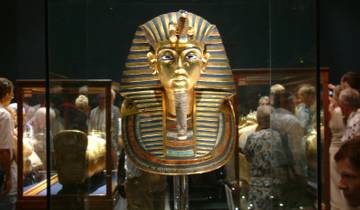
2 days
2 Days Private in Giza and Cairo
- ✓ Comprehensive Cairo tour
- ✓ Expert local guides included
- ✓ All accommodation arranged
- ✓ Transportation provided
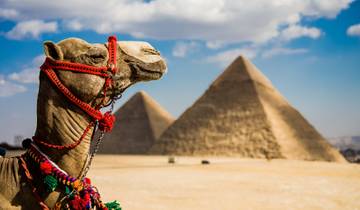
3 days
3 Days of Wonder: Explore Giza, Cairo & Alexandria
- ✓ Comprehensive Cairo tour
- ✓ Expert local guides included
- ✓ All accommodation arranged
- ✓ Transportation provided
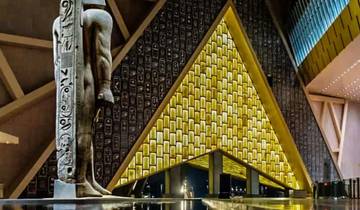
2 days
2 Days Luxury Private Tour to all Pyramids and Old Cairo
- ✓ Comprehensive Cairo tour
- ✓ Expert local guides included
- ✓ All accommodation arranged
- ✓ Transportation provided
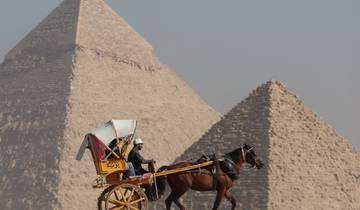
3 days
City of Wonders: 3-Day Private Cairo Tour – Pyramids, Sphinx, Egyptian Museum & Nile Dinner Cruises
- ✓ Comprehensive Cairo tour
- ✓ Expert local guides included
- ✓ All accommodation arranged
- ✓ Transportation provided
Multi-day tour packages powered by TourRadar. Prices and availability subject to change.
Ancient Memphis and the Old Kingdom
Foundation of Memphis as Egypt’s First Capital
Memphis emerged around 3100 BCE as the newly unified Egypt’s administrative capital under the legendary King Menes (possibly Pharaoh Narmer), who according to Egyptian tradition joined Upper and Lower Egypt into a single kingdom. The city’s Egyptian name “Ineb-Hedj” (meaning “White Walls,” referring to the palace’s whitewashed mud-brick fortifications) reflected its role as royal residence and administrative center. Memphis occupied a strategic location at the Nile Valley’s apex where Upper and Lower Egypt meet, enabling control over the entire river system and facilitating centralized administration of the united kingdom.
The city grew into ancient Egypt’s largest and most important urban center during the Old Kingdom (2686-2181 BCE), with estimates suggesting populations reaching 30,000-35,000 inhabitants at its peak—extraordinary for Bronze Age urbanism. Memphis functioned as the kingdom’s religious center hosting the temple of Ptah, patron deity of craftsmen and architects, whose high priests wielded significant political influence alongside the pharaoh. The city’s workshops produced the fine craftsmanship, artistic traditions, and technical expertise that characterized Old Kingdom material culture, with Memphis artisans developing the sculptural canons and architectural conventions that would define ancient Egyptian aesthetics for millennia.
The Pyramid Age at Giza and Saqqara
The Memphis Necropolis extending from Abu Rawash through Giza to Dahshur represents humanity’s most ambitious early architectural achievement, with over 100 pyramids constructed during the Old and Middle Kingdoms. The Giza pyramid complex, built during the Fourth Dynasty (2613-2494 BCE), showcases Old Kingdom engineering at its apex. The Great Pyramid of Khufu, constructed approximately 2560 BCE, originally stood 146 meters tall using an estimated 2.3 million limestone blocks averaging 2.5 tons each, with some granite blocks weighing up to 80 tons transported from Aswan quarries 800 kilometers upriver.
The construction methodology demonstrates sophisticated organizational capacity and engineering knowledge. Recent archaeological discoveries at workers’ villages near the pyramids reveal that skilled laborers (not slaves, as popular mythology suggests) organized into specialized teams rotated through construction duties during Nile flood seasons when agricultural work ceased. The precision of pyramid construction—the Great Pyramid’s base achieves near-perfect right angles with less than 0.05% deviation—indicates advanced surveying and mathematical capabilities. The internal chamber systems, including the Grand Gallery’s corbelled vault and the King’s Chamber’s relieving arches, represent innovative structural solutions to support immense stone masses while creating interior spaces.
Saqqara’s Step Pyramid complex, constructed for Third Dynasty Pharaoh Djoser around 2670 BCE by the architect Imhotep, marks the transition from mud-brick mastaba tombs to monumental stone architecture. Imhotep’s design stacked six progressively smaller mastabas to create a 62-meter-tall stepped pyramid, surrounded by ceremonial structures enclosed within a 10.5-meter-high perimeter wall. This revolutionary complex established architectural principles—stone construction, massive scale, geometric precision—that subsequent Fourth Dynasty architects expanded into the true smooth-sided pyramids at Giza.
Greco-Roman Period and Early Christianity
Alexander and the Ptolemaic Dynasty
Alexander the Great’s conquest of Egypt in 332 BCE ended Persian rule and initiated Hellenistic influence that would transform Egyptian culture while maintaining pharaonic traditions. The Ptolemaic dynasty (323-30 BCE) ruled from Alexandria rather than Memphis, diminishing the ancient capital’s political importance but maintaining its religious significance. Memphis continued hosting pharaonic religious ceremonies with Ptolemaic rulers observing traditional rituals to legitimize their rule as successors to the native dynasties.
The Ptolemaic period witnessed cultural synthesis between Greek and Egyptian traditions, producing hybrid artistic styles and religious practices. The Serapeum at Saqqara, burial site of the sacred Apis bulls associated with the god Ptah, received expanded facilities under Ptolemaic patronage. Greek settlers established communities in Memphis and throughout the Nile Valley, introducing Hellenistic architectural elements, philosophical schools, and administrative practices while Egyptian priesthoods preserved traditional religious knowledge and temple rituals.
Roman Egypt and the Babylon Fortress
Roman conquest in 30 BCE following Cleopatra VII’s defeat transformed Egypt into a Roman province directly controlled by the emperor through an appointed prefect. The Romans constructed the fortress of Babylon in the 1st century CE at the strategic Nile crossing point that would become Old Cairo. This fortified settlement controlled river traffic between Upper and Lower Egypt while protecting the route to Red Sea ports connecting Mediterranean trade with the Indian Ocean commercial network.
Babylon fortress featured massive walls punctuated by circular towers, enclosing administrative buildings, military barracks, and residential quarters. The fortress served as headquarters for Roman military forces stationed in Egypt to ensure grain shipments to Rome—Egypt functioned as the empire’s primary wheat supplier, with Alexandria’s annual grain fleet crucial to feeding Rome’s population. The fortress location at the Nile Delta’s apex enabled efficient tax collection from agricultural produce transported downriver from Upper Egypt.
Early Christian Communities
Christianity arrived in Egypt during the 1st century CE, with tradition attributing the faith’s introduction to Saint Mark the Evangelist around 42 CE. The Babylon fortress area developed as an early Christian center, with Coptic communities establishing churches within and around the Roman fortifications. The Hanging Church (Al-Mu’allaqa), built in the 3rd-4th centuries CE atop the fortress’s southern gate, exemplifies early Coptic church architecture with its basilica plan, wooden roof supported by columns, and iconostasis separating the sanctuary from the nave.
Egypt’s Christian communities developed distinctive theological traditions that sometimes diverged from Roman and Byzantine orthodoxy. The Coptic Orthodox Church emerged from Christological controversies of the 5th century CE, maintaining beliefs about Christ’s nature that differed from the Council of Chalcedon’s formulations. Coptic monasticism, pioneered by Saint Anthony and Saint Pachomius in the Egyptian desert, influenced Christian monastic traditions throughout the Mediterranean world and medieval Europe. The Coptic language, representing the final evolutionary stage of ancient Egyptian linguistic tradition written in modified Greek alphabet, preserved pre-Islamic Egyptian identity that continues in contemporary Coptic Christian communities.
Islamic Conquest and Foundation of Fustat
The Arab Conquest of Egypt
Arab Muslim forces under General ‘Amr ibn al-‘As conquered Byzantine Egypt in 641 CE, establishing Islamic rule that continues to the present. The conquest proceeded relatively peacefully, with many Egyptian Christians (Copts) initially welcoming Arab rule as preferable to Byzantine religious persecution and taxation. The Byzantine garrison at Babylon fortress surrendered after a brief siege, giving Arab forces control of the Nile Delta’s strategic apex.
Rather than occupying the existing Byzantine cities, ‘Amr ibn al-‘As established a new garrison town called Fustat immediately north of the Babylon fortress. This decision followed Islamic military colonization patterns used throughout conquered territories, creating Arab-Muslim settlements distinct from existing urban populations while maintaining control over strategic locations. Fustat’s location at the Nile crossing enabled administrative control over Egypt while the city’s proximity to the Babylon fortress provided defensive advantages and access to existing infrastructure.
Fustat’s Development as Islamic Egypt’s Capital
Fustat grew rapidly from military camp to Egypt’s administrative and commercial capital under successive Islamic dynasties. The ‘Amr ibn al-‘As Mosque, originally constructed in 642 CE and subsequently expanded, became Egypt’s first mosque and served as the community’s religious, judicial, and educational center. The original simple structure evolved through successive renovations into a grand congregational mosque with arcaded courtyards, multiple prayer halls, and elaborate decorative programs reflecting Egypt’s increasing wealth under Islamic rule.
The city developed as a major Mediterranean trading center, with merchants establishing souks (markets) specializing in textiles, ceramics, metalwork, and spices. Archaeological excavations reveal sophisticated urban infrastructure including multi-story residential buildings, elaborate water supply systems, bathhouses (hammams), and workshops producing pottery, glass, and metalwork for export throughout the Islamic world and Mediterranean basin. Fustat’s port facilities on the Nile handled commercial traffic connecting Upper Egypt’s agricultural products with Mediterranean markets, generating customs revenues that enriched both the city and the central treasury.
The Abbasid Caliphate’s rise to power in 750 CE brought changes to Fustat’s urban structure. The Abbasid governor established a new administrative quarter called al-Askar (“The Cantonments”) northeast of Fustat in 751 CE, creating physical separation between the ruling elite and the general population. This pattern of successive dynasties building new quarters rather than occupying predecessors’ districts would characterize Cairo’s urban development through the Islamic period.
Fatimid Foundation of al-Qahira
The Fatimid Conquest and New Capital
The Fatimid Caliphate, a Shi’a Islamic dynasty controlling North Africa, conquered Egypt in 969 CE under the general Jawhar al-Siqilli. The Fatimids claimed descent from Fatima, daughter of the Prophet Muhammad, positioning themselves as rightful leaders of the Islamic world in opposition to the Sunni Abbasid Caliphate based in Baghdad. Their conquest of Egypt aimed to establish a base for eventual control of the entire Islamic realm, with Egypt’s agricultural wealth and strategic position enabling the necessary military and economic power.
Jawhar al-Siqilli founded al-Qahira (“The Victorious”) in 969 CE as a royal enclosure north of Fustat, designing the new capital as an exclusive palace-city for the Fatimid caliph, his court, and military forces. The circular city plan, enclosed within massive walls punctuated by monumental gates, reflected Byzantine and earlier Islamic palace-city traditions while creating a ceremonial capital distinct from the commercial city of Fustat where the general population resided. This dual-city structure separated sacred caliphal authority from mundane commercial activity, reinforcing the Fatimid claim to religious leadership of the Islamic world.
Al-Azhar and Fatimid Cultural Institutions
The Fatimids established al-Azhar Mosque in 970 CE, just one year after founding al-Qahira, as the dynasty’s primary congregational mosque and center for Shi’a Islamic education. The mosque’s name, meaning “The Resplendent” or “The Flourishing,” reflects Fatimid aspirations for cultural and religious preeminence. Al-Azhar evolved into a comprehensive educational institution teaching Islamic jurisprudence, theology, Arabic grammar, logic, and mathematics, attracting scholars from throughout the Islamic world despite its Shi’a orientation.
The Fatimids patronized extensive cultural and intellectual activity, establishing libraries containing hundreds of thousands of manuscripts covering religious sciences, philosophy, mathematics, astronomy, and medicine. The dynasty’s relative religious tolerance allowed Christian and Jewish scholars to participate in Cairo’s intellectual life, creating a cosmopolitan atmosphere where scholars of different faiths engaged in philosophical debates and scientific collaboration. This intellectual openness contributed to the transmission of Greek philosophical and scientific texts preserved in Arabic translation, which would later reach medieval Europe through Andalusian and Sicilian intermediaries.
Fatimid architectural patronage introduced distinctive design elements including the pointed arch, muqarnas (stalactite vaulting), and sophisticated masonry techniques that influenced subsequent Islamic architecture throughout the Mediterranean. The dynasty’s ceremonial processions, featuring elaborate costumes, banners, and choreographed movements through Cairo’s streets, created public spectacles reinforcing Fatimid claims to sacred authority while engaging Cairo’s population in the dynasty’s religious and political program.
Ayyubid Dynasty and Saladin’s Citadel
Saladin’s Conquest and Sunni Restoration
Salah al-Din al-Ayyubi (known in European sources as Saladin) ended Fatimid rule in 1171 CE, restoring Sunni Islamic orthodoxy in Egypt while establishing the Ayyubid dynasty that would rule Egypt and Syria until 1250 CE. Saladin’s rise from military commander to sultan occurred during a period of Crusader threats to Islamic territories, with his eventual reconquest of Jerusalem in 1187 CE establishing his reputation as Islam’s defender and greatest medieval military leader.
Saladin implemented systematic policies to eliminate Shi’a influence from Egyptian religious and educational institutions. He transformed al-Azhar from a Shi’a teaching center into a Sunni mosque, while establishing new madrasas (theological colleges) throughout Cairo to propagate Sunni doctrine and train scholars in Shafi’i jurisprudence. This religious reorientation aligned Egypt with the broader Sunni Islamic world while ending the ideological competition between the Fatimid and Abbasid caliphates.
Construction of the Cairo Citadel
Saladin began construction of the Cairo Citadel in 1176 CE as part of a comprehensive defensive system designed to protect Cairo and Fustat from Crusader attacks. The citadel’s elevated position on the Muqattam Hills provided commanding views across the Nile Valley, enabling defenders to observe approaching threats while the fortification’s massive walls and towers created a nearly impregnable stronghold. The citadel would serve as Egypt’s government seat for over 700 years, housing successive dynasties through the Ottoman period until the mid-19th century.
The citadel’s original plan included the Yusuf’s Well (Bir Yusuf), an extraordinary 87-meter-deep well using water-wheels to lift Nile water to the citadel’s elevation, ensuring the fortress could withstand extended sieges without water shortage. Saladin’s engineers quarried limestone from the small Giza pyramids and ancient Memphis monuments for citadel construction, controversially repurposing ancient structures for medieval military needs while demonstrating the citadel’s massive scale.
Ayyubid urban planning unified al-Qahira and Fustat into a single defended city, with new walls extending from the citadel to encompass both earlier settlements. This unification created the foundation for Cairo’s development as a coherent urban entity rather than separate quarters, though distinct neighborhoods maintained individual characters based on economic activities, religious communities, and historical settlement patterns.
Mamluk Sultanate and Islamic Cairo’s Golden Age
Mamluk Political System and Rise to Power
The Mamluk Sultanate emerged from the military slave system employed by Ayyubid rulers, who imported young men (primarily Turkic and Circassian) from Central Asia and the Caucasus, trained them in military arts, converted them to Islam, and employed them as elite cavalry forces. These mamluks (literally “owned” or “slave soldiers”) formed a powerful military caste that seized political control in 1250 CE after defeating the Seventh Crusade and deposing the last Ayyubid sultan.
The Mamluk political system operated through a unique succession mechanism where the strongest military commander, rather than hereditary succession, typically claimed the sultanate after the previous ruler’s death. This meritocratic but unstable system produced frequent dynastic changes while maintaining the mamluk military elite’s collective control over Egypt and Syria. Despite political instability, the Mamluk Sultanate achieved remarkable cultural and architectural achievements while successfully defending Islamic territories against both Crusader and Mongol invasions.
Cairo as Medieval Islamic World’s Preeminent City
Cairo reached its cultural, economic, and architectural zenith during Mamluk rule (1250-1517 CE), becoming the Islamic world’s most populous and wealthiest city after the Mongol destruction of Baghdad in 1258 CE. Cairo’s strategic position on trade routes between the Mediterranean, Red Sea, and Indian Ocean generated enormous commercial revenues, with the transit trade in Asian spices alone providing the Mamluk treasury with substantial customs income. The city’s population grew to an estimated 500,000 inhabitants by the 14th century—one of the world’s largest urban concentrations.
Mamluk sultans and amirs (military commanders granted revenue-producing estates) competed in architectural patronage, commissioning mosques, madrasas, mausoleums, caravanserais, and public fountains (sabils) throughout Cairo. This building boom produced over 600 significant monuments that survive in Historic Cairo, representing the greatest concentration of medieval Islamic architecture in the world. The Mamluk architectural style synthesized earlier Fatimid and Ayyubid traditions while introducing innovations including elaborate stone carving, colored marble inlay (ablaq), ornate bronze doors, stained glass windows, and sophisticated muqarnas vaulting.
Major Mamluk Architectural Achievements
The Sultan Hassan Mosque-Madrasa complex (1356-1363 CE) exemplifies Mamluk architecture at its monumental scale, with the structure’s 38-meter-high portal representing the tallest entrance in Islamic architecture. The complex combined congregational mosque with four madrasas organized around a central courtyard, each madrasa dedicated to one of Sunni Islam’s four legal schools (Hanafi, Maliki, Shafi’i, Hanbali). The Sultan’s mausoleum, attached to the qibla (prayer direction) wall, features a massive dome and elaborate marble mihrab, establishing patterns for subsequent Mamluk mosque-mausoleum complexes.
The Qalawun complex (1284-1285 CE) integrated mosque, madrasa, mausoleum, and hospital (maristan) into a single architectural unit, demonstrating Mamluk sultans’ comprehensive approach to urban patronage. The complex’s hospital provided free medical care regardless of religion or wealth, maintaining Qalawun’s charitable foundation for over 500 years until the 19th century. The mausoleum’s Gothic-influenced pointed arches and elaborate stucco decoration reflect cross-cultural architectural exchange between Mamluk Egypt and medieval Europe.
The Mamluk sultans developed Qarafa, Cairo’s cemetery district, into a vast necropolis featuring elaborate mausoleums, mosques, and residential structures where family members and Sufi communities maintained the dead’s commemorations through prayer and religious activities. The Northern Cemetery’s concentration of Mamluk royal mausoleums creates an extraordinary architectural landscape where monumental domed structures punctuate the desert terrain, preserving Mamluk architectural achievement in remarkably intact condition.
Ottoman Period and Muhammad Ali’s Modernization
Ottoman Conquest and Provincial Administration
The Ottoman Sultan Selim I conquered Mamluk Egypt in 1517 CE, incorporating the region into the expanding Ottoman Empire as a crucial province providing grain supplies, tax revenues, and strategic control over Red Sea trade routes. The Ottoman administration maintained Cairo as Egypt’s capital while reducing the city’s political autonomy. Cairo became one Ottoman province among many rather than an independent sultanate, with appointed Ottoman governors (pashas) representing imperial authority from Constantinople.
Despite diminished political status, Cairo remained economically vital to the Ottoman Empire. The city’s position on coffee trade routes from Yemen to Europe generated substantial revenues in the 16th-17th centuries when coffee consumption spread throughout the Islamic world and Europe. Ottoman architectural patronage added new mosques, public baths, markets, and residential quarters, introducing Istanbul-influenced designs featuring slender minarets, pencil-shaped domes, and extensive Iznik ceramic tile decoration that differed aesthetically from earlier Mamluk traditions.
Muhammad Ali’s Revolutionary Changes
Muhammad Ali seized power as Ottoman viceroy in 1805 CE following the French evacuation and subsequent power struggles, establishing a dynasty that would rule Egypt until 1952. His modernization program transformed Egypt from a medieval society into a regional power with modern military, industrial capacity, and administrative structures. Muhammad Ali’s reforms fundamentally reshaped Cairo’s urban character, introducing European planning concepts, architectural styles, and urban services while maintaining Islamic traditions.
The viceroy’s most visible Cairo project involved clearing medieval neighborhoods to create broad boulevards, public squares, and planned residential districts modeled on contemporary European cities. The Azbakiyya Garden development exemplified this approach, transforming a historic pond and surrounding informal settlements into a formal French-style garden surrounded by elite residences for government officials and wealthy merchants. These interventions destroyed portions of historic Islamic Cairo while introducing urban planning concepts that would guide Cairo’s expansion through the 19th and 20th centuries.
Muhammad Ali commissioned the Alabaster Mosque (Muhammad Ali Mosque) within the Cairo Citadel (1830-1848), designed by Greek architects in Ottoman imperial style. The mosque’s profile, dominated by a large central dome flanked by semi-domes and slender minarets, consciously imitated Istanbul’s imperial mosques rather than Cairo’s Mamluk architectural traditions. This architectural choice symbolized Muhammad Ali’s political orientation toward Istanbul while asserting his dynasty’s power through monumental religious architecture visible throughout Cairo from the citadel’s elevated position.
Colonial Period and Modern Cairo’s Emergence
Khedival Cairo and European Influence
Khedive Isma’il (ruled 1863-1879), Muhammad Ali’s grandson, implemented ambitious plans to transform Cairo into a “Paris on the Nile” featuring European architectural styles, urban planning principles, and modern infrastructure. The construction of new quarters west of historic Islamic Cairo created a dual city: the medieval Islamic city continuing traditional patterns while new European-style districts featured grid street plans, wide boulevards, public squares, Opera House, railway stations, and hotels catering to European tastes and increasing tourist traffic.
The Suez Canal’s opening in 1869 connected the Mediterranean and Red Sea, dramatically increasing Egypt’s strategic importance while exposing the country to European imperial competition. Cairo’s development accelerated with international investment financing hotels, banks, department stores, and residential neighborhoods for the growing European expatriate community. Downtown Cairo emerged as a cosmopolitan district with Art Nouveau and neo-Islamic architecture, European-style cafes and theaters, and multilingual street life reflecting Egypt’s integration into global commercial and cultural networks.
British Occupation and Nationalist Movement
British military occupation began in 1882 following Egyptian government debt default and nationalist unrest threatening European financial interests. Britain established a protectorate maintaining nominal Ottoman suzerainty and Khedival rule while British advisors controlled Egyptian administration, particularly finances and foreign policy. Cairo served as headquarters for British military forces and administrative apparatus governing Egypt as a de facto colony despite the protectorate’s legal ambiguity.
Egyptian nationalist movements opposing British occupation coalesced in Cairo, with the city’s intellectuals, journalists, and lawyers articulating demands for Egyptian independence. The 1919 Revolution, triggered by British exile of nationalist leader Saad Zaghloul, brought mass demonstrations throughout Cairo challenging British authority. Britain granted nominal independence in 1922 while maintaining military presence and control over Egypt’s foreign policy, creating an unstable political situation that continued until the 1952 Free Officers coup.
Contemporary Cairo and UNESCO Recognition
Modern Urban Development
Post-independence Cairo experienced explosive population growth from approximately 2 million inhabitants in 1947 to over 20 million in the greater metropolitan area today. This growth pressured historic districts, with informal housing spreading into agricultural lands and desert margins while traffic congestion, pollution, and infrastructure deficits challenged urban livability. The government responded with suburban development projects including satellite cities, though informal settlements absorbed much of the population increase.
Cairo’s dual character as guardian of ancient and Islamic heritage while functioning as a modern megacity creates constant tensions between preservation and development pressures. Historic Islamic Cairo faced particular threats from rising groundwater levels, traffic vibration, and aging infrastructure until comprehensive conservation programs began addressing these challenges. The removal of informal housing from sensitive heritage zones, while necessary for monument preservation, raised questions about balancing conservation with residents’ housing rights.
UNESCO World Heritage Designation
UNESCO inscribed Historic Cairo on the World Heritage List in 1979, recognizing the city’s exceptional concentration of medieval Islamic architecture and urban fabric. The designation covers over 600 listed monuments spanning the Fatimid, Ayyubid, Mamluk, and Ottoman periods, including mosques, madrasas, mausoleums, city gates, fortifications, and residential quarters. This recognition acknowledged Cairo’s unique testimony to Islamic urban civilization’s development over eight centuries.
The Memphis and its Necropolis World Heritage site (inscribed 1979) extends from Giza through Saqqara to Dahshur, protecting the pyramid fields, mastaba tombs, valley temples, and ancient urban remains representing Old Kingdom Egypt’s architectural and artistic achievements. This designation recognizes the site’s outstanding universal value as testimony to ancient Egyptian civilization at its zenith, protecting monuments spanning from the Third Dynasty’s Step Pyramid through Fourth Dynasty pyramids to later period pyramid complexes.
UNESCO recognition brought international attention to preservation challenges while providing frameworks for conservation planning and heritage management. Egyptian authorities and international organizations collaborated on monument conservation, documentation projects, and training programs for heritage professionals. The designation elevated Cairo’s global heritage profile while imposing responsibilities for maintaining sites according to international standards, balancing tourism development with protection of irreplaceable historical assets.
Frequently Asked Questions – Cairo History
What is the oldest part of Cairo?
The Babylon fortress area in Old Cairo represents the oldest continuously inhabited part of the modern city, with Roman fortifications dating to the 1st century CE built atop earlier Pharaonic settlements. However, the broader Cairo region includes much older sites: Memphis, located approximately 20 kilometers south of modern Cairo, served as Egypt’s capital from around 3100 BCE. The Giza Pyramids, now within Cairo’s metropolitan area, date to approximately 2560 BCE. The name “Cairo” specifically refers to al-Qahira founded by the Fatimids in 969 CE, though this city incorporated and eventually absorbed much older settlements including the Roman Babylon and the Islamic garrison town Fustat established in 641 CE. Old Cairo’s Coptic churches, including the Hanging Church and Saint Sergius Church, preserve architectural and religious traditions connecting contemporary Cairo to Late Antique Christianity preceding the Islamic period.
Why is Cairo called “The City of a Thousand Minarets”?
Cairo earned this poetic epithet due to the extraordinary concentration of mosques built during successive Islamic dynasties, particularly the prolific Mamluk period (1250-1517 CE). The city’s skyline features hundreds of minarets representing different architectural styles and historical periods: early Fatimid square minarets, Mamluk octagonal minarets with elaborate carved decoration, and Ottoman pencil-shaped minarets influenced by Istanbul architectural traditions. The phrase captures both the literal profusion of mosque minarets punctuating Cairo’s urban landscape and metaphorically represents the city’s identity as a center of Islamic learning, religious devotion, and architectural achievement. Historic Cairo alone contains over 600 registered Islamic monuments, many featuring multiple minarets, creating the dense concentration of vertical elements that inspired this traditional description. The minarets serve functional purposes (calling Muslims to prayer five times daily) while creating distinctive urban iconography that identifies Cairo as one of the Islamic world’s preeminent cities.
What happened to ancient Memphis?
Memphis gradually declined after the Ptolemaic period shifted Egypt’s capital to Alexandria (founded 331 BCE), though the ancient city maintained religious significance through the Roman period. The population dispersed as political power moved elsewhere, while periodic Nile flooding and the practice of quarrying ancient monuments for building materials in Cairo and elsewhere systematically eroded Memphis’s structures. Medieval Arab historians described Memphis’s ruins, but systematic stone robbing for Cairo’s Islamic monuments during the medieval period removed much of the remaining architecture. The city’s mud-brick residential structures, temples, and palaces largely disintegrated when no longer maintained, leaving primarily stone monuments that were themselves often dismantled. The site today preserves scattered remains including a massive Ramesses II statue, a sphinx, embalming beds, and foundation traces indicating former temple locations. The Memphis Necropolis on the desert plateau west of the ancient city—including the pyramids of Giza, Abusir, Saqqara, and Dahshur—survived in much better condition due to their stone construction, desert environment protection, and relative distance from population centers that might quarry them for building materials.
How did Cairo survive so many conquests and dynasties?
Cairo’s survival through successive civilizations derives from several factors. The city’s strategic location at the Nile Delta apex provided irreplaceable geographic advantages that each new ruling power needed to exploit, ensuring Cairo’s continued importance regardless of political changes. Rather than destroying the existing city, most conquerors recognized Cairo’s value and simply imposed new administrative structures while maintaining urban functions. The Islamic pattern of new rulers building separate quarters or palace complexes rather than occupying predecessors’ buildings allowed architectural accumulation rather than replacement, preserving earlier monuments while adding new layers. Cairo’s economic vitality independent of political control—based on Nile Valley agriculture, Red Sea trade routes, and craft production—meant the city maintained prosperity and population through political transitions. The Mamluk period exemplifies this resilience: despite frequent sultanate changes through military coups, Cairo continued functioning and even flourished because the mamluk elite collectively benefited from the city’s commercial success. Finally, Islamic architectural traditions emphasized building for charitable purposes (mosques, madrasas, hospitals) that served community needs regardless of political regime, creating monuments with functional value ensuring their maintenance across dynastic changes.
What was Cairo’s role in the Arab Spring?
Cairo’s Tahrir Square became the focal point of the 2011 Egyptian Revolution, with mass protests beginning January 25 demanding President Hosni Mubarak’s resignation after 30 years of authoritarian rule. The square, located in downtown Cairo adjacent to the Egyptian Museum, hosted millions of protesters over 18 days until Mubarak’s resignation on February 11. The location’s symbolism—Tahrir means “Liberation” in Arabic, commemorating the 1952 Free Officers Revolution—combined with its accessibility via multiple metro lines and central position made it the natural gathering point for opposition movements. The revolution demonstrated Cairo’s continued role as Egypt’s political heart where challenges to national authority traditionally concentrate. The subsequent political instability, including Muslim Brotherhood electoral victory, military coup, and President Sisi’s consolidation of power, unfolded largely through Cairo-based events despite affecting all Egypt. Tahrir Square’s transformation from traffic circle to revolution symbol to increasingly militarized and monitored space reflects contemporary Egypt’s political evolution, with the square’s history adding another layer to Cairo’s continuous role as stage for Egyptian political transformations.
How many people have lived in the Cairo region throughout history?
Population estimates for historical Cairo demonstrate the region’s sustained importance across millennia. Ancient Memphis at its Old Kingdom peak (2686-2181 BCE) likely housed 30,000-35,000 inhabitants—exceptional for Bronze Age urbanism. Roman-era Babylon and surrounding settlements probably contained 20,000-40,000 people. Islamic Fustat in the 8th-9th centuries grew to approximately 100,000-150,000 inhabitants. Fatimid Cairo in the 11th century reached similar numbers. Mamluk Cairo achieved extraordinary growth with estimates of 400,000-500,000 inhabitants by the 14th century, making it one of the world’s largest cities and significantly larger than any contemporary European city. Plague epidemics in the 14th-15th centuries caused severe population decline. Ottoman Cairo recovered to approximately 300,000 by the 18th century. Muhammad Ali’s modernization era saw growth to about 600,000 by mid-19th century. Colonial period expansion pushed Cairo past 1 million by World War I, reaching approximately 2 million by 1947. Post-independence population explosion accelerated dramatically: 5 million (1970), 10 million (1985), 20 million+ (2020s) in the greater metropolitan area. This sustained demographic importance over 5,000 years, punctuated by periods of growth and decline but never complete abandonment, distinguishes Cairo from most historical cities and reflects the site’s enduring geographic and strategic advantages.
Who were the most important historical figures in Cairo’s development?
Pharaoh Khufu (ruled approximately 2589-2566 BCE) commissioned the Great Pyramid of Giza, creating ancient Egypt’s most iconic monument and establishing the Giza plateau’s significance. Jawhar al-Siqilli, Fatimid general, founded al-Qahira in 969 CE as the new capital, establishing the urban core that would evolve into modern Cairo. Salah al-Din (Saladin, ruled 1174-1193) unified Egypt and Syria, constructed the Cairo Citadel, and restored Sunni Islam after Fatimid Shi’ism. Sultan al-Nasir Muhammad ibn Qalawun (ruled 1293-1294, 1299-1309, 1310-1341 in three separate reigns) commissioned numerous mosques, madrasas, and urban infrastructure during the Mamluk golden age. Sultan Hassan (ruled 1347-1351, 1354-1361) built the monumental Sultan Hassan Mosque-Madrasa complex, representing Mamluk architecture’s pinnacle. Muhammad Ali (ruled 1805-1848) implemented comprehensive modernization transforming Egypt from medieval state into regional power while reshaping Cairo’s urban character. Khedive Isma’il (ruled 1863-1879) created European-style Cairo with planned neighborhoods, Opera House, and modern infrastructure. President Gamal Abdel Nasser (ruled 1956-1970) led independent Egypt’s development while Cairo emerged as the Arab world’s cultural and political capital. These rulers shaped Cairo’s physical development and political importance through monumental building programs, administrative innovations, and urbanization initiatives that created the layered historical city visible today.
What is the significance of the Citadel in Cairo’s history?
The Cairo Citadel served as Egypt’s government seat from its construction beginning in 1176 CE until the mid-19th century, housing Ayyubid, Mamluk, and Ottoman administrations over nearly 700 years. Saladin conceived the citadel as part of comprehensive defensive fortifications protecting Cairo from Crusader threats, choosing the Muqattam Hills’ elevated position for strategic visibility across the Nile Valley. The fortress’s political significance extended beyond military functions, serving as administrative center where sultans and pashas exercised power, received ambassadors, dispensed justice, and stored treasuries. The citadel became architectural palimpsest with successive rulers adding palaces, mosques, barracks, and government buildings, creating a layered historical landscape reflecting Egypt’s political evolution. Muhammad Ali’s construction of his namesake mosque (1830-1848) within the citadel marked the complex’s transformation from medieval fortress into symbolic representation of modern Egypt’s power, with the mosque’s Ottoman imperial style dome and minarets dominating Cairo’s skyline and asserting the dynasty’s legitimacy. The British and later Egyptian governments continued using the citadel for military purposes through the 20th century. Today the citadel functions as museum complex and tourist destination, with the Muhammad Ali Mosque, earlier Mamluk mosques, museums housed in former palaces, and panoramic views across Cairo attracting millions of visitors who encounter Cairo’s multilayered history concentrated in this single fortified site.
How did Cairo become a center of Islamic learning?
Cairo’s emergence as an Islamic intellectual center began with the Fatimid foundation of al-Azhar Mosque in 970 CE, established as a teaching institution for Shi’a Islamic doctrine but evolving into comprehensive university after Saladin’s restoration of Sunni orthodoxy. Al-Azhar’s curriculum expanded beyond religious sciences to include Arabic grammar, logic, mathematics, and medicine, attracting students from throughout the Islamic world. The institution developed a residential college system where students lived near the mosque, studied with recognized scholars, and upon completing their education received ijazas (teaching licenses) authorizing them to teach the texts and subjects they had mastered. This system created networks of scholarly authority extending from Cairo throughout the Islamic world. Mamluk sultans enhanced Cairo’s educational infrastructure by founding numerous madrasas—specialized colleges teaching Islamic law, theology, and related sciences—throughout the city. These institutions competed for prestige through architectural magnificence, generous endowments supporting scholars and students, and recruiting distinguished faculty. The madrasa-mausoleum complexes combined rulers’ charitable educational foundations with their burial monuments, linking political patronage, religious devotion, and scholarly activity. Cairo’s libraries preserved vast manuscript collections including Greek philosophical and scientific texts translated into Arabic, making the city a crucial link in intellectual transmission between classical antiquity and medieval Islamic civilization. This accumulated intellectual infrastructure, combined with Egypt’s relative political stability and economic prosperity during the Mamluk period, established Cairo as preeminent center for Islamic learning—a status al-Azhar particularly maintains into the present as one of Sunni Islam’s most authoritative institutions.
What archaeological discoveries have been made in Cairo recently?
Contemporary archaeological work in the Cairo region continues revealing new insights into ancient Egyptian civilization. Saqqara excavations have produced remarkable discoveries including intact burial chambers with painted decorations, gilded statues, and mummified remains. The 2020 discovery of over 100 sealed wooden sarcophagi at Saqqara, many containing well-preserved mummies with elaborate decorations, demonstrated that major finds remain possible at supposedly well-explored sites. Ground-penetrating radar surveys at Giza have detected previously unknown void spaces within the Great Pyramid, suggesting unexplored chambers that might contain additional archaeological material, though accessing these voids without damaging the monument presents significant challenges. Islamic Cairo archaeological surveys have documented previously unrecorded medieval buildings, mapped subsurface remains of Fustat showing the early Islamic city’s extent, and analyzed pottery, glass, and metalwork assemblages illuminating daily life in medieval Cairo. Conservation work at major monuments often reveals hidden architectural features, earlier building phases, or painted decorations obscured by later modifications. The ongoing excavations near the Grand Egyptian Museum site have uncovered worker villages, tool caches, and administrative records relating to pyramid construction, providing concrete evidence about ancient Egyptian labor organization and construction techniques that challenge popular misconceptions. These discoveries demonstrate that Cairo’s archaeological resources, despite over 200 years of professional excavation, continue yielding significant new information about ancient Egyptian, Greco-Roman, and Islamic civilization, justifying continued research investment and heritage protection measures.