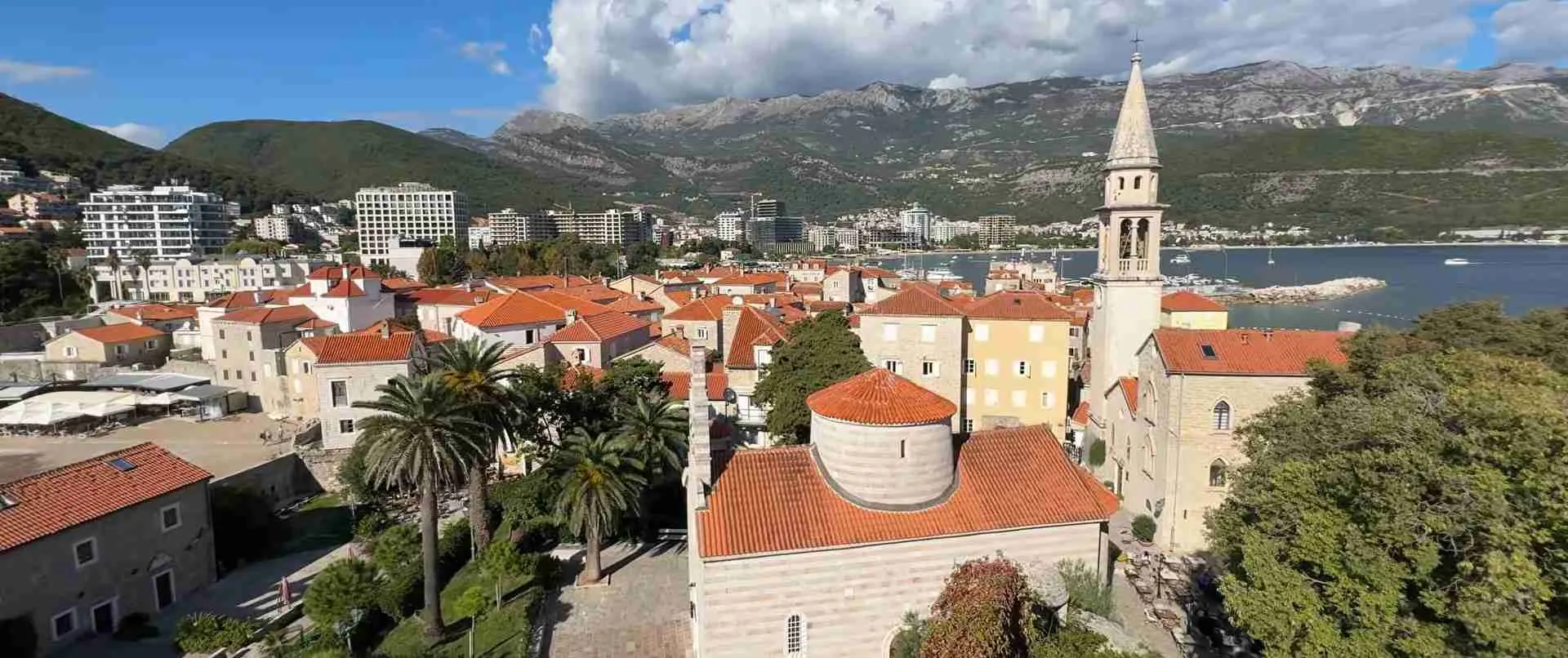
Budva Travel Guide 2026: Montenegro’s Riviera Beach Capital
Budva stands as Montenegro’s tourism crown jewel, blending 2,500 years of Mediterranean history with pristine Adriatic beaches and Europe’s most vibrant coastal nightlife. This ancient walled city on the Budva Riviera offers travelers an exceptional value proposition where medieval fortifications meet crystal waters, authentic Balkan culture thrives alongside modern resort amenities, and daily costs remain remarkably affordable compared to neighboring Croatia and Italy.
Key Takeaways for Budva 2026
- Budget Range 2026: Budget travelers need €50-85 per person daily (two sharing budget accommodation), mid-range comfort runs €150-240 per person daily (two sharing mid-range hotel), while luxury visitors invest €380-615 per person daily (two sharing luxury hotel). Weekly costs span €350-595 budget, €1,050-1,680 mid-range, and €2,660-4,305 luxury.
- Peak Season Strategy 2026: June through September delivers guaranteed sunshine and maximum energy but brings peak accommodation rates and crowded beaches. April-May and September-October offer ideal conditions with 40% lower hotel prices, pleasant swimming temperatures, and significantly fewer crowds while maintaining full service availability.
- Location Advantage 2026: Budva serves as the perfect Montenegro base with Kotor’s UNESCO Bay just 25 minutes away, Sveti Stefan’s iconic island resort 10 minutes south, Tivat Airport 20 minutes north, and dozens of pristine beaches stretching along an 11-kilometer coastline accessible via frequent local buses costing €1-2 per ride.
- Old Town Experience 2026: The car-free medieval quarter features Venetian architecture, Byzantine churches, the 15th-century Citadel with panoramic Adriatic views (€5 admission), and atmospheric stone alleyways lined with restaurants, bars, and boutiques. Walking the ancient city walls costs €2 and provides even better photography angles than the Citadel.
- Value Proposition 2026: Budva delivers exceptional quality-price ratios with fresh seafood dinners costing €25-40, three-star hotels at €70-120 nightly, and comprehensive day tours to Kotor, Perast, or Lake Skadar running €50-100 per person. Prices remain 30-50% below comparable Croatian coastal destinations while offering superior beach access and nightlife variety.
- Transportation Excellence 2026: Reliable local buses connect all Budva neighborhoods and nearby beaches for €1-2 per ride, intercity buses reach Kotor (€3-5), Podgorica (€6-10), and coastal towns throughout the day, while taxis within Budva run €5-10 and airport transfers from Tivat cost €20-35 via shared shuttle or €40-60 private taxi.
People Also Ask About Budva 2026
How Much Does Budva Cost Per Day in 2026?
Budva costs €50-85 per person daily for budget travelers (two sharing budget hotel), €150-240 per person daily for mid-range comfort (two sharing mid-range hotel), and €380-615 per person daily for luxury experiences (two sharing luxury hotel). Budget travelers stay in guesthouses or hostels at €20-35 per person (€40-70 room rate divided by two), eat at bakeries and local restaurants for €28-42 daily, use public buses for €2-4, and visit free beaches plus the €2 city walls. Mid-range travelers choose three-star hotels at €60-90 per person (€120-180 room divided by two), dine at established restaurants spending €56-89 on meals, take occasional taxis adding €8-15 transportation costs, and budget €25-45 for the Citadel and organized tours. Luxury visitors book four-star or boutique properties at €150-225 per person (€300-450 room divided by two), enjoy upscale dining totaling €130-200 daily, rely on taxis and private transfers costing €20-40, and allocate €80-150 for private tours and premium experiences. These figures assume two people sharing accommodation, which is standard for couples or travel partners and significantly reduces per-person costs compared to solo travel where the full room rate applies to one individual.
Is Budva Cheaper Than Dubrovnik in 2026?
Budva costs 30-50% less than Dubrovnik across accommodation, dining, and activities while offering comparable coastal beauty and superior beach access. Mid-range hotels in Budva run €120-180 per night compared to Dubrovnik’s €180-280 for equivalent quality, seafood restaurants charge €25-40 for fresh catch versus Dubrovnik’s €40-65, and organized day tours cost €50-100 in Montenegro versus €70-140 from Dubrovnik. The Old Town admission remains free in Budva while Dubrovnik’s city walls cost €35 per person. Budget travelers find Budva particularly advantageous with hostel beds at €15-25 versus Dubrovnik’s €30-45, street food at €3-7 versus €8-12, and local buses at €1-2 versus €3-4. The value proposition extends beyond prices to practical advantages including less aggressive tourist crowds, more authentic local restaurant options outside the walled quarter, and better beach variety with both sandy and pebble options stretching for kilometers rather than Dubrovnik’s limited rocky coastline. Transportation connectivity favors Budva for regional exploration with quick access to the entire Montenegrin coast and Bay of Kotor compared to Dubrovnik’s more isolated position requiring longer drives to reach similar attractions.
What’s the Best Month to Visit Budva in 2026?
May and September represent the optimal months for visiting Budva in 2026, delivering warm swimming temperatures, manageable crowds, lower accommodation rates, and reliable sunshine without the intense August heat or tourist saturation. May sees water temperatures reaching 19-21°C, air temperatures of 22-26°C, and hotel rates 35-40% below July-August peaks while all restaurants, beach facilities, and tour operators run full schedules. September maintains summer warmth with 23-25°C water and 25-28°C air temperatures, adds the advantage of calmer seas perfect for snorkeling and boat trips, and extends the shoulder season pricing advantage through the first three weeks before rates drop further in late September. June and early October also deliver excellent conditions for travelers prioritizing value over guaranteed beach weather. July and August guarantee perfect beach conditions with 25-27°C water temperatures and minimal rainfall but bring maximum accommodation costs, fully booked hotels requiring advance reservations, crowded beaches where prime sunbed spots disappear by 9 AM, and intense heat averaging 30-32°C that makes midday exploration uncomfortable. April and late October suit active travelers focusing on hiking, cultural sites, and photography rather than swimming, with pleasant 18-22°C temperatures, rock-bottom accommodation rates, and nearly empty Old Town streets perfect for capturing the medieval atmosphere without tourist crowds blocking every photo angle.
How Many Days Should I Spend in Budva 2026?
Three to five days provides the ideal Budva duration for experiencing the Old Town thoroughly, sampling multiple beaches, taking at least one major day trip, and enjoying the nightlife without feeling rushed. Three-day visitors can explore the walled quarter and Citadel on day one, dedicate day two to beach time and a boat trip to Sveti Nikola Island, and spend day three on an organized excursion to Kotor and Perast or self-guided exploration of nearby Sveti Stefan. Five-day itineraries add flexibility for a full-day Lake Skadar National Park tour, visiting the Lovćen National Park and Njegoši village for prosciutto tasting, and experiencing both the main Mogren Beach and quieter alternatives like Jaz Beach while maintaining relaxed morning starts and unhurried evening dining. Two nights suffices for travelers on tight schedules prioritizing the Old Town and one beach day, though this pace sacrifices the opportunity to experience Budva’s varied beach options and misses the remarkable day trip possibilities within 30-60 minutes. Week-long stays suit visitors using Budva as a Montenegro base for exploring the entire coast from Ulcinj in the south to Herceg Novi in the north, those dividing time between beach relaxation and mountain excursions to Durmitor or Biogradska Gora, and travelers seeking a genuine work-remote opportunity with proper downtime built into the schedule. The compact Old Town itself requires just 2-3 hours for thorough exploration, but Budva’s value proposition lies in the beach variety, day trip accessibility, and the relaxed Mediterranean pace that rewards slower, more immersive travel rather than aggressive sightseeing schedules.
Extended multi-day tours – 5+ days
Featured Budva Multi-Day Tour Packages
2 days
From Tirana, 2 Days: Budva – Kotor
- ✓ Comprehensive Budva tour
- ✓ Expert local guides included
- ✓ All accommodation arranged
- ✓ Transportation provided
1 days
From Tirana/Durres/Golem -> Montenegro: Budva & Kotor day tour
- ✓ Comprehensive Budva tour
- ✓ Expert local guides included
- ✓ All accommodation arranged
- ✓ Transportation provided
2 days
Tour of Montenegro and Kosovo in 2 days from Tirana or Durres
- ✓ Comprehensive Budva tour
- ✓ Expert local guides included
- ✓ All accommodation arranged
- ✓ Transportation provided
3 days
All seasons 3 days micro tour to Montenegro and Bosnia from Dubrovnik. Visit Venetians towns, monasteries, taste Herzegovina wines. Gorgeous scenery!
- ✓ Comprehensive Budva tour
- ✓ Expert local guides included
- ✓ All accommodation arranged
- ✓ Transportation provided
Multi-day tour packages powered by TourRadar. Prices and availability subject to change.
Introduction to Budva: Montenegro’s Adriatic Gateway 2026
Budva occupies a privileged position on Montenegro’s central Adriatic coast where the ancient meets the contemporary in one of the Balkans’ most compelling travel destinations. Founded over 2,500 years ago according to archaeological evidence and local legend attributing its establishment to Cadmus, the Phoenician hero fleeing Thebes, the city grew through successive Illyrian, Greek, Roman, Byzantine, Venetian, and Austrian occupations before joining independent Montenegro. This layered history manifests physically in the remarkably preserved medieval Old Town where Venetian stone buildings, Orthodox churches, and narrow cobblestone alleys create an atmospheric warren of exploration possibilities contained within 15th-century defensive walls rising directly from the Adriatic shoreline.
Beyond the historical core, Budva functions as the undisputed tourism capital of Montenegro, welcoming more visitors annually than any other destination in the country thanks to its winning combination of cultural authenticity, beach variety, nightlife energy, and strategic location for regional exploration. The Budva Riviera extends along 38 kilometers of dramatic coastline where limestone mountains plunge into turquoise waters, encompassing the resort’s 11 kilometers of beaches ranging from organized stretches with sunbed services to hidden coves accessible only by boat or hiking trail. This geographic diversity allows visitors to customize their beach experience from party-central Slovenska Beach with thumping music and beach bars to tranquil Jaz Beach’s 800-meter sandy expanse or the intimate atmosphere of Mogren Beach tucked beneath towering cliffs just steps from the Old Town.
The city’s appeal extends far beyond sun-and-sand tourism to encompass serious cultural offerings including summer festivals hosting international performers, a vibrant local art scene with contemporary galleries operating inside medieval walls, and authentic culinary traditions serving fresh Adriatic seafood alongside traditional Montenegrin mountain specialties from the nearby interior. Budva’s nightlife reputation rivals any Mediterranean destination with mega-clubs like Top Hill attracting internationally-known DJs, intimate cocktail bars hidden in Old Town courtyards, and beachfront venues transitioning seamlessly from sunset dinners to late-night dancing. This entertainment infrastructure operates at European standards with modern sound systems, professional service, and reasonable drink prices that contrast sharply with the premium nightlife costs in nearby Dubrovnik or Italian coastal resorts.
Strategic positioning makes Budva the logical base for exploring Montenegro’s greatest hits within day-trip range. The UNESCO World Heritage Bay of Kotor lies just 25 minutes north via the scenic coastal highway, offering the medieval walled town of Kotor itself, the baroque jewel of Perast with its island churches, and the dramatic coastal road sometimes called Europe’s southernmost fjord. Sveti Stefan’s iconic island resort sits 10 minutes south, providing photography opportunities and luxury hotel access whether as a day visitor or overnight guest. Tivat Airport’s 20-minute proximity simplifies arrivals and departures while keeping transfer costs manageable compared to Dubrovnik Airport’s position in Croatia requiring border crossings and extended drives. Further afield but still feasible as full-day excursions, Lake Skadar National Park delivers pristine wetland ecosystems and wine village experiences within 90 minutes, while Lovćen National Park’s mountain heights and the former royal capital Cetinje sit 75 minutes inland through spectacular hairpin roads climbing from sea level to alpine meadows.
Infrastructure development accelerated dramatically over the past decade with improved road connections, expanded accommodation options across all budget categories, and professionalized tour operations meeting international service standards. The Adriatic Highway now offers smooth two-lane travel linking Budva to neighboring towns, though summer traffic can slow considerably during peak August weeks. Accommodation spans the full spectrum from backpacker hostels charging €15 per bed to five-star properties commanding €300+ per night, with the mid-range sweet spot delivering three-star comfort at €70-120 nightly. Dining options similarly cover every price point and cuisine preference from €3 street-food burek to €60 multi-course seafood feasts featuring catches landed that morning from local fishing boats. This variety ensures Budva accommodates every travel style from budget backpackers to luxury seekers, solo adventurers to family groups, active hikers to beach loungers.
Practical considerations favor Budva for 2026 travel planning starting with the advantageous euro currency eliminating exchange hassles and simplifying price comparisons for visitors from eurozone countries. English proficiency among tourism workers reaches high levels particularly in hotels, restaurants, and tour companies catering to international clientele, though learning basic Serbian/Montenegrin phrases for “hello” (zdravo), “thank you” (hvala), and “check please” (račun, molim) enhances interactions with locals outside pure tourist zones. Safety standards rank among Europe’s highest with extremely low violent crime rates, though typical tourist precautions apply regarding valuables on crowded beaches and in bars. Transportation reliability supports independent exploration with punctual buses, regulated taxi meters, and well-maintained rental car fleets available from numerous agencies near the bus station. Internet connectivity meets modern standards in virtually all accommodations and many restaurants offering free WiFi, while mobile data plans from local providers come cheaply for visitors needing constant connection.
The 2026 season promises continued growth in Montenegro’s tourism sector following several years of infrastructure investment and international promotion positioning the country as the Mediterranean’s value alternative. New hotel openings concentrated in the mid-range segment increase accommodation supply without compromising the authentic character that distinguishes Budva from overdeveloped coastal mega-resorts elsewhere in Southern Europe. Improved ferry connections to Italy’s Adriatic ports simplify combined itineraries linking Montenegrin coast exploration with Italian cultural cities. Environmental consciousness grows among tour operators with increased emphasis on sustainable practices including organized beach cleanups, plastic reduction initiatives, and responsible wildlife observation standards for boat tours in protected marine areas. Cultural programming expands with extended festival seasons, more contemporary art exhibitions in the Citadel spaces, and restored historical buildings reopening as museums or cultural centers providing deeper context for understanding Budva’s remarkable history.
Understanding Budva’s Geography and Layout 2026
Budva spreads along a crescent-shaped bay where the Adriatic coast curves gently between dramatic limestone headlands, with the compact Old Town occupying a small peninsula jutting into the sea on the bay’s western end. This geographic arrangement creates distinct neighborhood zones each offering different experiences and serving different traveler needs. The medieval quarter itself covers just 0.1 square kilometers but packs remarkable density with churches, restaurants, boutiques, and residential buildings layered inside Venetian fortification walls. A narrow isthmus connects the Old Town to the mainland, historically a defensive feature now creating the atmospheric entrance through stone gates leading from modern Budva into the preserved historical core.
The modern city center extends eastward from the Old Town along Mediteranska Street, Budva’s main commercial thoroughfare lined with shops, travel agencies, exchange offices, and casual dining establishments. This area lacks architectural charm but provides essential services at better prices than inside the tourist-focused Old Town. The central bus station sits here just 400 meters from the Old Town entrance, making arrivals and departures straightforward without taxi needs. Slovenska Beach, Budva’s largest and most developed strand, stretches along the bay immediately east of the Old Town, offering organized beach services with sunbed and umbrella rentals, watersports concessions, and numerous beach bars creating the party atmosphere that defines summer Budva for many visitors.
Residential neighborhoods spread up hillsides rising steeply behind the coastal strip, with mid-range apartment buildings and family homes climbing the slopes. Budget accommodations often occupy these elevated positions requiring 10-20 minute walks to reach the beach and Old Town but offering the advantage of cooler evening temperatures and spectacular sunset views over the bay. The Jadranski Put, or Adriatic Highway, runs through Budva’s eastern neighborhoods parallel to the coast, carrying all vehicle traffic between Kotor in the north and Bar in the south. This main road creates some traffic noise but provides excellent bus connections with frequent services linking Budva to every coastal town and major inland destinations.
West of the Old Town, the coastline becomes more rugged with the protected Mogren Beach occupying a scenic cove accessed via a pleasant 10-minute coastal path from the city center. This 150-meter beach split into Mogren I and Mogren II by a small rocky outcrop offers calmer water than the main bay, dramatic cliff backdrops, and a more relaxed atmosphere compared to party-central Slovenska. The path continues west beyond Mogren through a nature area leading eventually to the villages of Bečići and Rafailovići with their extensive sandy beaches popular among families seeking shallower water and more space than central Budva provides. Local buses run frequently to these western beaches during summer months, making them easily accessible for day visits without accommodation needs in those areas.
South of Budva, the coast road passes the luxury enclave of Sveti Stefan after 6 kilometers, where the famous island resort dominates photographs representing Montenegro tourism worldwide. Public beach access exists on both sides of the island causeway, allowing day visitors to swim near the iconic sight without paying resort guest rates. Further south at 8 kilometers, Pržno offers a small fishing village atmosphere with excellent seafood restaurants and a compact pebble beach. The premium Miločer Beach, once a royal retreat during the Yugoslav period, occupies a pine-forested cove just beyond Sveti Stefan with limited public access and significant entrance fees during peak season, though the beach’s beauty justifies the cost for luxury seekers wanting Montenegro’s most exclusive strand.
North from Budva toward Kotor, beaches become fewer and rockier as the coastline grows increasingly mountainous approaching the Bay of Kotor’s dramatic entrance. Jaz Beach sits 3 kilometers north of the city center, offering an 800-meter sandy expanse that hosts occasional international music festivals and provides significantly more space than Budva’s central beaches during peak summer weeks. The beach’s western section remains organized with sunbed services while the eastern end allows free beach access for travelers bringing their own towels and umbrellas. Local buses reach Jaz Beach year-round with increased frequency during summer, and the spacious layout means arriving even at noon typically allows finding decent beach positions unlike the earlier-the-better scramble at Slovenska.
Understanding Budva’s layout informs practical planning decisions around accommodation locations balancing price, convenience, and preferred atmosphere. Staying inside or immediately adjacent to the Old Town maximizes walkability but commands premium rates especially in restored medieval buildings now operating as boutique hotels. The central zone along Mediteranska Street offers mid-range value with 5-minute walks to both Old Town sights and Slovenska Beach. Hillside neighborhoods provide budget options and local authenticity at the cost of steeper walks and reduced restaurant variety within immediate proximity. Beach resort areas like Bečići to the west or Sveti Stefan to the south deliver premium beach experiences with less cultural immersion and dependence on transportation for Old Town visits. Most first-time visitors prioritize central locations for maximizing sightseeing efficiency and minimizing transportation time, while repeat visitors or longer-term stays might choose quieter neighborhoods offering better price-quality ratios once initial explorations complete the major attractions.
Best Time to Visit Budva: Complete Seasonal Guide 2026
Budva’s Mediterranean climate delivers hot, dry summers and mild, wet winters creating distinct seasonal characters that fundamentally alter the visitor experience beyond simple temperature variations. Understanding these patterns allows strategic planning around personal priorities balancing weather reliability, crowd levels, activity options, and budget considerations. The peak summer months from June through August guarantee excellent beach conditions but bring maximum costs and crowds, while shoulder seasons offer compelling advantages for travelers flexible on timing.
Summer Peak Season (June-August 2026)
June through August represents Budva’s high season when tourism infrastructure operates at full capacity, weather delivers consistent sunshine, and the Adriatic reaches its warmest temperatures. June sees gradual momentum building as European schools break for summer, with average highs of 27-29°C, water temperatures reaching 22-24°C by month end, and accommodation rates transitioning from shoulder season pricing to peak levels during the final two weeks. July and August bring guaranteed beach weather with daily highs of 30-32°C, occasional spikes to 35°C during heatwaves, water temperatures at a perfect 25-27°C, and minimal rainfall averaging just 30-40mm monthly. These conditions create ideal circumstances for beach-focused vacations, water sports, and boat trips, with calm seas and clear visibility perfect for snorkeling or diving expeditions.
The summer peak delivers maximum energy and social atmosphere with beach clubs operating full entertainment programs, nightclubs bringing international DJ talent, Old Town restaurants bustling from lunch through late dinner services, and organized tours departing hourly for popular destinations. This vibrant scene attracts party crowds, young couples, and social travelers thriving in high-energy environments. Families dominate July-August as school holidays concentrate visits, with children filling beaches and hotels catering specifically to this market with kids’ clubs and family-friendly restaurant menus. The downside manifests in accommodation scarcity and premium pricing, with mid-range hotels at €150-200 nightly compared to €70-100 during shoulder months, while popular restaurants require reservations days ahead and prime beach sunbed spots fill by 9 AM requiring early arrivals.
Practical challenges during peak summer include heat intensity making midday exploration uncomfortable, with air-conditioned breaks necessary between morning and late afternoon activities. The Old Town’s stone surfaces radiate stored heat creating surprisingly high temperatures even in shade, while exposed beach time requires vigilant sun protection given the intensity of Mediterranean summer sun. Traffic congestion peaks along the Adriatic Highway particularly during late July and August, with rental cars sitting in queues during weekend beach migration hours. Bus services experience capacity issues on popular routes, sometimes requiring waits for the next departure when vehicles fill. Despite these inconveniences, many travelers specifically seek the energy and social opportunities summer brings, viewing crowds as enhancing rather than detracting from the experience when vacation mood prioritizes meeting fellow travelers and participating in organized beach entertainment.
Shoulder Season Excellence (April-May and September-October 2026)
April through May and September through October deliver Budva’s optimal conditions for travelers prioritizing value, manageable crowds, and comfortable exploration temperatures alongside acceptable swimming conditions. May stands out as particularly attractive with air temperatures of 22-26°C perfect for both beach time and active exploration, water reaching 19-21°C suitable for swimming by mid-month, and spring landscapes displaying maximum color before summer’s heat browns hillside vegetation. Accommodation costs run 35-40% below July-August peaks while maintaining full service availability, with nearly all restaurants, tour operators, and beach facilities operating standard schedules. May brings occasional rain with 60-80mm monthly average, but precipitation typically arrives as brief afternoon thunderstorms clearing quickly rather than all-day weather systems.
September rivals May for ideal conditions while adding the advantage of warmer water temperatures sustained from summer heating. The first three September weeks maintain summer warmth with 25-28°C air and 23-25°C water, but accommodation rates drop 30-35% compared to August as families return for school starts. Beaches experience dramatically reduced crowding with ample space for finding premium positions even with late morning arrivals. September seas tend calmer than June, benefiting boat trips and snorkeling visibility. Restaurant reservations become unnecessary again, and Old Town exploration occurs at comfortable temperatures without the intense summer heat. Late September and early October see gradual temperature declines to 20-23°C air and 20-22°C water, remaining pleasant for hardy swimmers while deterring cold-sensitive visitors, which further reduces crowds and drives accommodation prices down to their lowest annual levels outside the November-March winter closure period.
April and early May appeal to active travelers prioritizing hiking, photography, and cultural sites over guaranteed swimming weather. Air temperatures of 17-22°C feel perfect for walking Old Town streets, climbing to the Citadel, and taking day trips to Lovćen National Park where mountain heights remain too cool for summer hiking comfort. Water temperatures of 15-18°C discourage swimming for most visitors, though hardy locals begin beach seasons, and the lack of crowds transforms popular beaches into private paradises for those braving the chilly water. Accommodation availability reaches maximum levels with competitive pricing as hotels compete for off-peak business, and restaurants offer better service with staff attention not stretched across rushed table turns. Spring wildflowers cover hillsides, bird migration adds nature interest, and photographic light delivers richer colors than summer’s harsh Mediterranean glare.
Winter Quiet Season (November-March 2026)
November through March represents Budva’s quiet season when tourism infrastructure scales back dramatically, many hotels close entirely, and weather delivers Mediterranean winter’s characteristic variability mixing sunny mild days with rainy cool periods. Temperatures range from 10-15°C through winter months, with occasional dips to 5-7°C during cold snaps but rarely reaching freezing. Rain increases substantially to 150-200mm monthly November-December, then gradually decreasing through winter before spring transitions begin in March. Swimming remains purely for dedicated cold-water enthusiasts with sea temperatures of 13-16°C, and organized beach services shut down completely with sunbeds removed for winter storage.
This quiet period appeals to specific traveler types including long-term remote workers seeking rock-bottom accommodation rates and peaceful environments for focused work, retirees escaping Northern European winter darkness, and cultural tourists prioritizing historical exploration and authentic local interaction over beach activities. Budget guesthouses drop rates to €25-40 nightly for rooms that command €70-100 in summer, restaurants offer leisurely dining experiences with engaged chef conversations, and Old Town streets belong to residents and the handful of off-season visitors willing to brave occasional rain showers. Museums and cultural sites maintain winter hours with reduced schedules but typically opening several days weekly, while the Citadel stays accessible year-round weather permitting.
Practical challenges include limited restaurant options with many establishments closing November through March, reduced public transportation frequency to outlying areas, and some tour operators suspending services until spring. Hotel availability concentrates in year-round properties rather than seasonal resort hotels, requiring research to identify winter-open options. The advantages counterbalance these limitations through authentic experiences impossible during tourist season, genuine interactions with local residents, and photography opportunities capturing medieval architecture without tourist crowds obscuring every frame. Winter hiking in nearby mountains becomes prime season with snow-covered peaks visible from Budva’s coastline, while day trips to Kotor or Lake Skadar deliver the UNESCO Bay’s dramatic scenery without the summer tour bus convoys.
Accommodation Options and Neighborhoods 2026
Budva’s accommodation landscape spans every category from backpacker hostels to five-star luxury, with particularly strong mid-range offerings delivering excellent value compared to Western European coastal destinations. Choosing the right neighborhood and property type significantly impacts both budget and experience, with trade-offs between convenience, price, local authenticity, and specific amenities. Understanding options across categories allows strategic booking aligned with individual priorities and travel styles.
Budget Accommodation €20-35 Per Person (€40-70 Per Room)
Budget lodging in Budva concentrates in guesthouses, hostels, and simple apartments typically located in residential neighborhoods 10-20 minutes walk from the Old Town and beaches. Hostel dormitory beds range €15-25 per night in summer, dropping to €10-15 during shoulder seasons, with properties like Freedom Hostel and High Hostel offering social common areas, shared kitchens, and organized activities attracting backpacker crowds. Private rooms in budget guesthouses or family-run apartments cost €40-70 nightly for doubles with basic amenities including private bathrooms, simple furnishings, and occasional breakfast service. These properties rarely offer luxury touches like pools or gyms but provide clean, safe accommodation with WiFi and air conditioning as standard.
Location choices matter significantly in the budget segment, with hillside properties requiring steep uphill walks home after beach days and evening Old Town dining. The physical effort trades for superior views, cooler evening temperatures, and authentic neighborhood settings where local bakeries and markets serve residents rather than tourists. Budget travelers maximizing beach time might prioritize lower-elevation properties near Slovenska Beach accepting more tourist-oriented surroundings in exchange for reducing daily walking distances. The central zone along Mediteranska Street occasionally offers budget rooms in older buildings lacking renovation polish but providing unbeatable location five minutes from both Old Town entrance and main beaches.
Budget accommodation requires early booking for July-August peak weeks when inventory tightens and prices increase 40-50% above shoulder season rates. Properties accepting online reservations through major platforms offer more security and standardized service compared to informal arrangements, though direct contact sometimes yields better rates for longer stays. Reading recent reviews proves essential given quality variation in the budget segment, with particular attention to cleanliness standards, noise levels, and owner responsiveness. Many budget properties occupy residential buildings where thin walls transmit neighbor sounds, making light sleepers favor quieter hillside locations over central party zones.
Mid-Range Comfort €60-90 Per Person (€120-180 Per Room)
The mid-range category delivers Budva’s strongest value proposition with three-star hotels and quality apartments providing modern amenities, central locations, and professional service at rates well below comparable Western European coastal properties. These establishments typically feature pools, restaurant facilities or included breakfast, fitness equipment, and room sizes adequate for comfortable extended stays. Properties like Hotel Budva, Hotel Astoria, and Avala Resort & Villas demonstrate the category’s appeal with renovated facilities, English-speaking staff, and locations balancing Old Town proximity with lower rates than inside-the-walls premium addresses.
Mid-range choices divide between full-service hotels offering daily housekeeping, on-site dining, and reception services versus apartment rentals providing kitchenettes, washing machines, and more residential character. Hotels suit travelers prioritizing convenience and social common areas, while apartments appeal to families, longer stays, or those enjoying meal preparation flexibility for budget control. Many apartment buildings include pool facilities and provide weekly cleaning service representing middle ground between hotel servicing and independent living. Location variations within the mid-range segment create price differences of €30-50 nightly, with beachfront properties commanding premiums while 10-minute-walk properties deliver identical room standards at lower costs.
Peak summer rates in the mid-range segment reach €180-220 per night, but strategic timing captures excellent deals with €120-140 nightly during June and September shoulder weeks, dropping further to €80-110 during May and October. Seven-night minimum stays sometimes unlock additional discounts of 10-15% through direct property negotiations, particularly attractive for travelers combining work and leisure in extended visits. Reading property websites directly often reveals package deals bundling spa treatments, rental car days, or tour inclusions that don’t appear on third-party booking platforms. The mid-range segment rarely sells out completely even during August peaks, allowing more flexibility than either budget or luxury categories where inventory constraints force early booking.
Luxury Excellence €150-225 Per Person (€300-450 Per Room)
Luxury accommodation in Budva centers on boutique hotels within the Old Town’s medieval walls, modern five-star properties along premium beach stretches, and villa rentals offering complete privacy with dedicated staff. Properties like Hotel Moskva occupy restored Venetian buildings inside the Old Town featuring rooms with exposed stone walls, original architectural details, and direct access to historical atmosphere while providing modern luxury touches including Egyptian cotton linens, rainfall showers, and attentive concierge services. Beachfront luxury resorts like Splendid Conference & Spa Resort and Dukley Hotel & Resort offer private beach access, multiple restaurant options, extensive spa facilities, and service standards meeting international five-star expectations.
Luxury hotel guests receive significant value-adds beyond room quality, including complimentary airport transfers, breakfast buffets featuring fresh local ingredients, evening cocktail receptions, and dedicated concierge assistance with restaurant reservations, tour bookings, and special arrangements. Many properties provide beach services as included amenities with reserved sunbeds, towel service, and beach bar privileges eliminating typical separate charges for beach equipment rentals. Spa facilities range from simple massage rooms to comprehensive wellness centers offering full treatment menus, saunas, indoor pools, and fitness studios with personal training available.
Peak season luxury rates reach €400-600 nightly for premium suites with sea views, private balconies, and enhanced amenities, while standard luxury rooms bottom out at €300-350 during July-August peaks. Shoulder season pricing drops dramatically with €200-280 nightly during May-June and September-October representing exceptional value for five-star facilities and service. Some luxury properties close entirely November through March, while year-round operations offer winter rates of €150-200 attracting long-term guests and providing opportunities for affordable luxury experiences during quiet months. Villa rentals through specialized agencies provide ultimate privacy for groups, with multi-bedroom properties including pools, full kitchens, and daily cleaning service running €500-1,200 nightly depending on size, location, and season.
Food and Dining Costs Budva 2026
Budva’s dining scene combines authentic Montenegrin cuisine, fresh Adriatic seafood, international options, and quick casual formats across every price point from €3 street snacks to €60 multi-course seafood feasts. Understanding where and what to eat allows significant budget control while ensuring quality meals showcasing local ingredients and traditional preparations. The Mediterranean diet emphasis on fresh vegetables, olive oil, seafood, and grilled meats delivers healthy options alongside more indulgent choices.
Budget Dining €28-42 Per Person Daily
Budget travelers eating strategically achieve satisfying meals at €28-42 daily combining bakery breakfasts, quick lunches, budget restaurant dinners, and coffee breaks. Bakeries (pekare) open early throughout Budva offering fresh burek for €2-3, cheese or meat-filled pastries providing substantial breakfast alongside €1-2 coffee. These traditional Balkan breakfast spots serve locals and tourists equally, delivering authentic food at authentic prices in simple take-away or basic seating formats. Supermarkets like Idea and Voli provide picnic supplies, fresh produce, and prepared foods allowing beach lunch assemblies at €5-8 per person versus €15-25 for beachside restaurant service.
Fast food lunch options include ćevapi (grilled meat sausages) or pljeskavica (Serbian burger) in flatbread costing €3-5 from small grill stands scattered around the Old Town periphery and modern city center. These traditional street foods deliver filling portions of grilled meat with onions, ajvar (red pepper spread), and fresh bread representing quintessential Balkan flavors at minimal cost. Pizza slices cost €2-3 for substantial pieces, while gyros or similar wraps run €4-6 providing quick refueling during beach days without significant budget impact. International fast food franchises exist but price similarly to traditional options without the local flavor appeal.
Budget dinner destinations include local restaurants (konobe) outside the Old Town tourist zone where mixed grills cost €8-12, pasta dishes €6-9, and simple seafood preparations €10-15. Restaurant Porto near the marina receives consistent recommendations from locals for reasonable seafood pricing and authentic preparations, with grilled squid at €12 and sea bass at €15 representing fair value for fresh catch. Restaurants along Mediteranska Street in the modern center typically charge 20-30% less than equivalent Old Town locations while maintaining quality standards. Budget travelers adding one coffee or beer daily at €2-3 plus occasional gelato at €2-3 per scoop reach the €28-42 daily food budget providing three solid meals and refreshments without resorting to constant self-catering or sacrificing quality for price.
Mid-Range Dining €56-89 Per Person Daily
Mid-range dining budgets allow comfortable restaurant meals throughout the day, occasional splurges on premium seafood, and drinks with dinner without constant price consciousness. Breakfast at hotel buffets when included or cafe breakfast sets typically cost €8-12 featuring eggs, pastries, yogurt, fruit, and coffee providing energy for morning exploration. Lunch at established restaurants including appetizer, main course, and drink runs €15-25, with options ranging from hearty Montenegrin mountain specialties like lamb under the bell to lighter seafood salads and grilled fish. These midday meals might alternate between sit-down restaurants and higher-quality quick service maintaining variety while controlling spending.
Dinner represents the day’s main meal with €25-40 budgets supporting seafood dinners at recommended restaurants like Restaurant Jadran, Azzuro, or Mozart. Fresh fish priced by kilogram typically runs €35-50 per kilogram yielding 2-3 portions depending on fish type and appetite, with grilled octopus at €20-25 and seafood risotto at €18-24 providing excellent alternatives. Meat dishes cost less with veal or lamb preparations at €15-22 and mixed grill platters at €12-18 delivering substantial portions suitable for sharing. Wine adds €15-30 for decent local bottles, with Montenegrin wines from the Plantaže winery or Skadar Lake region offering excellent value compared to imports, and craft beers at €3-4 per bottle providing casual drink accompaniment.
Daily coffee breaks, afternoon gelato, and occasional cocktails add €10-15 to food budgets without extravagance, with espresso at €1-2, cappuccino at €2-3, gelato at €2-3 per scoop, and cocktails at €6-10 in stylish Old Town bars or beachfront venues. Mid-range travelers dining at this level enjoy variety spanning traditional Montenegrin cuisine, Italian influences from Venetian history, fresh seafood showcasing Adriatic catches, and international options when seeking familiar flavors. The budget supports trying multiple restaurants rather than repeating favorites, dining in atmospheric Old Town venues with ambiance enhancing meals, and occasional premium selections like oysters or high-quality steaks without budget stress.
Luxury Dining €130-200 Per Person Daily
Luxury dining experiences in Budva emphasize premium ingredients, sophisticated preparations, exceptional wine selections, and memorable settings whether inside medieval walls, on romantic beachfront terraces, or at exclusive resort restaurants. Breakfast at five-star hotels features extensive buffets with champagne, smoked salmon, made-to-order omelets, fresh pastries from hotel bakeries, and multiple coffee preparations. Lunch at upscale venues runs €35-55 per person with refined presentations, premium ingredients like truffles or imported cheeses, and wine pairings elevating casual midday meals to events.
Dinner at destination restaurants commands €60-90 per person before wine, with establishments like Citadela Restaurant inside the fortress walls offering spectacular views alongside sophisticated menus, or high-end resort restaurants providing multi-course tasting menus showcasing seasonal ingredients. Premium fresh fish at top seafood restaurants reaches €60-80 per kilogram for specialties like dentex or sea bream, with lobster at market prices typically €80-120 per kilogram representing ultimate splurges. Wine selections at luxury levels include premium Montenegrin bottles at €40-80, celebrated regional wines from Croatian or Slovenian producers at €50-100, and international selections reaching €100+ for prestigious labels.
Luxury travelers typically include cocktails at stylish bars, premium coffee at specialty roasters, and indulgent desserts at celebrated pastry shops like those producing Kotor cake or elaborate Italian-style dolci. Daily spending reaching €130-200 per person allows complete freedom to order without price checking, trying multiple restaurants rated highest in regional guides, including premium wine with every dinner, and adding pre-dinner cocktails and post-dinner digestifs. This level supports exclusive experiences like private chef arrangements, wine tasting sessions with local producers, or traditional Montenegrin feasts in village settings outside the city where whole lamb roasts and unlimited local wine create memorable evenings.
Transportation and Getting Around Budva 2026
Budva’s compact size makes most destinations accessible on foot from central accommodations, but understanding available transportation options allows efficient beach exploration, regional day trips, and airport transfers without excessive costs or logistical complications. The city benefits from reliable public buses, regulated taxis, and convenient rental car access providing flexibility for various travel styles and activity preferences.
Airport Transfers and Arrivals 2026
Most Budva visitors arrive via Tivat Airport (TIV) located 20 kilometers north along the coast, offering the shortest transfer time and lowest costs. Shared shuttle services operate regularly during peak season charging €10-15 per person with departures timed to flight arrivals, delivering passengers directly to Budva hotels within 30-40 minutes depending on stop count. Private taxi transfers from Tivat cost €40-60 for standard sedans accommodating four passengers with luggage, offering convenience for groups, families with children, or travelers arriving late evening when shuttle services reduce frequency. Pre-booking taxis through accommodation providers or online platforms ensures fixed rates avoiding potential overcharging that occasionally occurs with non-metered airport taxis soliciting passengers at arrivals.
Alternative arrival via Podgorica Airport (TGD) located 70 kilometers inland requires longer transfers but serves more international routes including low-cost carriers not operating to Tivat. Shared shuttles from Podgorica run less frequently charging €15-20 per person with 75-90 minute journey times, while private taxis cost €60-80 reflecting the increased distance. Some travelers combine public buses from Podgorica bus station adjacent to the airport via local shuttle, then intercity bus to Budva for total costs around €8-10 per person, but this option requires more time, involves luggage handling across multiple transfers, and saves minimal money compared to shared shuttles making it impractical for most visitors.
Dubrovnik Airport (DBV) in Croatia serves some travelers to Budva, particularly those combining Montenegro with Croatian coast visits, but the 70-kilometer distance includes an international border crossing adding complexity. Private transfer services charge €80-120 for the cross-border journey requiring passport checks but providing door-to-door convenience. Shared shuttles exist but operate less reliably than domestic options given border crossing variables. Independent bus travel from Dubrovnik to Budva requires traveling to Dubrovnik bus station, then catching intercity service with total journey times exceeding three hours and costs around €15-20, making this approach suitable mainly for ultra-budget travelers or those specifically wanting to see the scenic coastal route.
Local Transportation Within Budva 2026
Walking serves as primary transportation within central Budva given the compact area encompassing Old Town, main beaches, modern city center, and most tourist restaurants within 20-minute walks from any accommodation. The waterfront promenade connecting Slovenska Beach to Mogren Beach provides pleasant pedestrian routes with sea views, while Mediteranska Street offers the main commercial corridor for walking between neighborhoods. Hillside accommodations involve steeper climbing but sidewalks and street lighting maintain pedestrian safety, though steep grades challenge those with mobility limitations or returning from late beach days.
Local buses operate along the Adriatic Highway with multiple lines connecting neighborhoods and nearby beach areas for €1-2 per ride with tickets purchased from drivers. Frequent services run during summer months with buses every 10-15 minutes to popular destinations like Bečići, Sveti Stefan, and Jaz Beach, while shoulder seasons see reduced schedules with 30-60 minute frequencies requiring more planning. Buses display route numbers and major destinations on front panels, though English signage varies making some advance research helpful for ensuring correct lines. Standing-room-only conditions occur during peak summer beach migration hours, with locals and tourists alike packing vehicles for popular afternoon beach departures.
Taxis remain readily available throughout Budva with vehicles congregating near the Old Town entrance, main hotels, and the central bus station. Regulated meters ensure standardized pricing with short trips within central Budva costing €5-10, rides to Bečići or Jaz Beach €8-12, and Sveti Stefan trips €12-18 depending on exact pickup and dropoff locations. Negotiating fixed fares before departure remains advisable for trips beyond city limits where meter rates might exceed reasonable amounts, particularly for excursions to more distant beaches or interior villages. Ride-hailing apps operate with limited coverage compared to major European cities, making traditional taxi stands or hotel arrangements more reliable for quick transportation needs.
Regional Day Trips and Intercity Travel 2026
Budva’s central coast location makes it ideal for exploring Montenegro’s highlights via public buses, rental cars, or organized tours each offering distinct advantages. The well-developed intercity bus network connects Budva to Kotor (25 minutes, €3-5), Bar (45 minutes, €4-6), Podgorica (90 minutes, €6-10), Herceg Novi (75 minutes, €7-9), and beyond with reliable punctual services departing from the central bus station. Buses to Kotor depart hourly throughout the day allowing flexible scheduling, while less frequent connections to Cetinje, Lake Skadar area villages, or northern Montenegro require checking schedules carefully and potentially limiting day trip duration given return departure timing constraints.
Rental cars provide maximum flexibility for exploring Montenegro’s dramatic landscapes at personal pace, visiting multiple destinations in single days, and reaching remote locations poorly served by public transport. Daily rental rates from local agencies start €30-40 for compact manual transmission vehicles during shoulder seasons, increasing to €50-80 during July-August peaks when advance booking proves essential. International chains including Hertz, Europcar, and Sixt operate from Budva with higher rates but consistent vehicle standards and comprehensive insurance options. Mountain driving requires confidence given narrow roads, hairpin turns lacking guardrails, and steep grades between coast and interior destinations, though main routes maintain good pavement and clear signage. Parking in Budva costs €1-2 hourly at metered spaces or municipal lots, while many hotels include parking as amenity or charge €5-10 daily.
Organized tours eliminate navigation stress, provide expert commentary, and allow relaxation without driving responsibilities while grouping popular attractions efficiently. Half-day tours to Kotor and Perast typically cost €30-50 per person including transportation and guided Old Town walks but excluding meals or entrance fees. Full-day Lake Skadar tours with boat trips, wine tasting, and village visits run €60-90 per person with lunch often included. Bay of Kotor boat cruises visiting Our Lady of the Rocks island church and Perast cost €35-50 for half-day excursions providing unique water-level perspectives on UNESCO World Heritage fjord landscapes. Private tours for couples or small groups command €150-300 daily depending on destinations and inclusions but offer completely customized itineraries, flexible timing, and personalized attention from guides.
Top Attractions and Activities Budva 2026
Budva’s appeal spans historical exploration in the medieval Old Town, beach relaxation along 11 kilometers of coastline, cultural experiences ranging from ancient churches to contemporary galleries, and outdoor adventures including boat trips, hiking, and watersports. Understanding priority attractions allows efficient itinerary planning maximizing experiences while avoiding tourist trap disappointments.
Budva Old Town: Medieval Quarter Exploration 2026
The walled Old Town occupies a compact peninsula where Venetian stone architecture, Byzantine churches, and narrow alleyways create atmosphere-rich exploration requiring 2-3 hours for thorough discovery. The main entrance through land gates leads immediately into the tight street network where tourist shops, restaurants, and boutiques occupy ground floors of centuries-old buildings while residential apartments fill upper stories maintaining living community character rather than museum sterility. Wandering without specific destination allows discovering hidden courtyards, architectural details carved in stone doorways, and unexpected viewpoint corners where the Adriatic appears between buildings.
The Citadel dominates the Old Town’s southern tip, a 15th-century fortress built on earlier foundations possibly dating to Greek and Roman periods. Admission costs €5 (€4 in some sources, check current rates) providing access to defensive walls, small maritime museum displaying ship models, library with rare books behind glass displays, and most importantly the panoramic viewing platform overlooking Old Town’s orange tile roofs, the yacht-filled marina, Sveti Nikola Island, and the entire Budva Riviera coastline. The views justify admission despite modest interior exhibits, with sunset visits offering particularly photogenic lighting though crowds increase during golden hour. The Citadel also houses an upscale restaurant and cafe where cocktails accompany views though prices reflect the premium location.
The city walls encircling the Old Town offer an alternative viewing experience at €2 admission, with the walking circuit requiring 15-20 minutes at leisurely pace and providing eye-level engagement with the fortifications rather than the elevated Citadel perspective. Many visitors consider the walls superior for photography given less-crowded conditions and multiple vantage points rather than the single Citadel platform where positioning becomes competitive during busy periods. The walls also deliver closer proximity to the Adriatic with waves literally crashing below certain sections during rough sea conditions, adding drama absent from inland viewpoints.
Five churches within the tiny Old Town demonstrate layered religious history spanning Byzantine, medieval, and baroque periods. Saint Ivan Church serves as Budva’s Catholic cathedral with baroque interior and signature twin bell towers visible throughout the city. The Holy Trinity Church represents Orthodox tradition with a simpler exterior but elaborate iconostasis and religious art inside. The Church of Santa Maria in Punta occupies the city’s westernmost point near the marina, partially damaged in earthquakes but retaining atmospheric ruins blending with the fortification walls. The ancient Church of Saint Sava dating to the 14th century now functions as gallery space exhibiting contemporary art rather than active worship, demonstrating adaptive reuse preserving architectural heritage while serving modern cultural needs.
The Archaeology Museum occupying a baroque building on the main square displays artifacts from Greek, Roman, Illyrian, and medieval periods discovered in Budva and surroundings. The modest collection suits history enthusiasts appreciating context for the Old Town’s layered past but won’t sustain hours of attention for casual visitors. Entry costs €3-4 with descriptions in local language and limited English signage, though the building itself represents architectural interest. The Modern Art Gallery in the Citadel spaces rotates exhibitions featuring contemporary Montenegrin and regional artists, with free admission during most periods and quality varying depending on current shows.
The Dancing Ballerina statue on the promenade just outside the Old Town ranks among Montenegro’s most photographed monuments, a bronze figure of a graceful gymnast poised on a small rock with Adriatic backdrop creating instantly recognizable imagery. The statue’s origin traces to local legend about a young woman waiting eternally for her sailor lover lost at sea, though modern installation dates only to 1990s. Early morning visits avoid crowds competing for photos, while sunset provides atmospheric lighting enhancing the romantic associations.
Beaches and Coastal Activities 2026
Budva’s beach variety accommodates every preference from organized party central to quiet cove escapes, with each strand offering distinct character and attracting different crowds. Slovenska Beach stretches along the main bay immediately east of the Old Town, serving as default choice for visitors prioritizing convenience and social atmosphere. The 1,600-meter beach features organized sections with sunbed and umbrella rentals at €15-20 daily for two loungers and parasol, beach bars serving cocktails and light meals throughout the day, watersports concessions offering jet ski rentals (€40-60 per 15 minutes), parasailing (€50-70), and banana boat rides (€15-20). The energetic scene includes music, beach games, and constant activity appealing to party crowds and social travelers but overwhelming those seeking tranquil relaxation.
Mogren Beach occupies a scenic cove 10-minute walk west from the Old Town via a pleasant coastal path passing through a short tunnel carved through the headland. The 150-meter beach splits into Mogren I and Mogren II by a small rocky promontory, with clearer water than Slovenska thanks to position outside the harbor bay and dramatic limestone cliff backdrops providing spectacular natural scenery. The beach offers organized services with sunbed rentals at similar €15-20 rates, but the smaller size and access effort create more relaxed atmosphere compared to main bay party central. Swimming conditions suit families with gradual depth increases and calmer water protected from prevailing winds. The beach bar serves drinks and simple meals at inflated location prices (€6-8 for cocktails, €12-15 for sandwiches), though the convenience justifies premiums for all-day beach stays.
Jaz Beach located 3 kilometers north of the city center provides spacious alternative with 800 meters of sandy beach subdivided into organized western section with full services and free-access eastern section where independent beach-goers spread towels without rental fees. The beach hosts occasional international music festivals including Montenegro’s largest open-air concerts, with temporary stages and camping facilities transforming the strand into event venue during select summer weekends. Normal conditions provide ample space even during peak August weeks, with afternoon arrivals still finding good positions unlike early-morning-or-bust Slovenska. Local buses reach Jaz year-round with increased summer frequency, while easy parking makes it accessible for rental car visitors. Beach restaurant facilities concentrate in the organized western zone, with eastern free section requiring bringing own refreshments or walking to the services area.
Sveti Stefan’s public beaches on both sides of the iconic island causeway allow non-guests to swim near Montenegro’s most photographed location without paying resort rates. The northern beach offers wider sand and better facilities though views of the island favor the southern position where villa-covered promontory appears closer for photography. Parking costs €5-10 daily during peak season with spaces limited near the beach requiring early arrival or using designated lots 5-10 minute walk away. Beach services exist but command premium rates given the luxury resort proximity. The 10-minute drive or 20-minute bus ride from Budva makes this feasible for day trips though the small public beach sections become crowded when cruise groups arrive during morning hours.
Bečići Beach stretches for 2 kilometers south of Budva proper, offering family-friendly shallow water, organized services, and more relaxed atmosphere than the city center. Hotels line the beach providing direct access for guests while public sections remain open to all visitors. The sandy texture and gentle slope into the sea suit children and non-swimmers better than pebble beaches common elsewhere along the coast. Local buses run frequently during summer making it easily accessible from Budva center without taxis or rental cars. The beach holds Blue Flag environmental certification indicating water quality and facility standards meeting European Union criteria.
Boat trips to Sveti Nikola Island depart from the marina near the Old Town throughout the day during summer season, with round-trip tickets costing €6 per person and boats leaving every 30 minutes from 9 AM through early evening. The uninhabited island features multiple beaches on the northern side named Hawaii, Sveti Nikola, and Halfmoon Beach, with restaurant facilities and sunbed rentals available. The main appeal lies in escaping crowded mainland beaches for quieter cove settings, though summer weekends see substantial boat traffic diminishing the isolation advantage. The 800-meter crossing takes 10-15 minutes each direction, with calm summer seas making the trip suitable for most travelers including families with children.
Cultural Sites and Museums 2026
Beyond the Old Town churches and fortifications, Budva offers modest but worthwhile cultural experiences for travelers interested in deeper historical context and artistic traditions. The City Museum occupying a renovated baroque building on the main square presents archaeological findings from Greek, Roman, and medieval periods discovered through excavations in Budva and immediate surroundings. The permanent collection includes ceramics, coins, jewelry, and funerary objects illustrating settlement patterns and daily life across centuries. Temporary exhibitions focus on local history topics or contemporary art when space allows. Entry costs €3-4 with opening hours typically 9 AM to 9 PM daily during summer, reduced winter schedules. English signage remains limited making the experience more rewarding for those with background knowledge or using audio guides when available.
The Modern Art Gallery within the Citadel complex rotates exhibitions featuring contemporary Montenegrin artists working in painting, sculpture, photography, and mixed media. Quality varies depending on current programming but generally maintains professional standards showcasing the country’s active contemporary art scene. The gallery spaces themselves interest architecturally given their adaptation from military storage rooms and barracks to exhibition halls. Admission typically free though special exhibitions occasionally charge €2-3. The gallery provides air-conditioned refuge during hot summer afternoons when outdoor exploration becomes uncomfortable, with exhibition viewing combining naturally with Citadel wall walks.
Podmaine Monastery sits 3 kilometers northeast of the city center, a Serbian Orthodox religious complex dating to the 15th century with subsequent renovations following earthquake damage. The church interior features religious frescoes and iconography typical of Orthodox tradition, while the monastery grounds provide peaceful garden settings and mountain views contrasting with coastal resort energy. Entry remains free as functioning religious site, though modest dress codes apply with shoulders and knees covered, and photography restrictions exist inside the church. Local buses pass nearby making visits feasible without taxis though schedule coordination requires planning given infrequent service. The monastery offers authentic religious and cultural experience beyond tourist-oriented attractions, with monks sometimes available for conversations providing insight into Orthodox traditions and monastic life.
Villa Urbana represents Budva’s Roman heritage with remains of a substantial villa discovered during 20th-century construction work and now partially preserved as archaeological site. The exposed foundations, mosaic fragments, and architectural elements illustrate Roman-era occupation and building techniques. The site occupies a small square in the modern city center with free access though limited interpretation makes it primarily interesting for history enthusiasts or those seeking completist exploration of all historical layers.
Day Trip Destinations from Budva 2026
Budva’s central coastal position enables remarkable day trip range covering UNESCO World Heritage sites, pristine national parks, traditional villages, and dramatic mountain landscapes all within 90-minute reach. These excursions transform a beach-focused vacation into comprehensive Montenegro exploration sampling the country’s remarkable diversity compressed into one of Europe’s smallest nations.
Bay of Kotor: Europe’s Southernmost Fjord 2026
The Bay of Kotor represents Montenegro’s flagship attraction, a UNESCO World Heritage landscape where mountains plunge directly into the Adriatic creating a dramatic fjord-like bay (technically a drowned river canyon) lined with medieval towns. Kotor town itself justifies the 25-minute drive north from Budva with its remarkably preserved walled quarter featuring Venetian palaces, Orthodox churches, baroque squares, and atmospheric alleyways even more extensive than Budva’s Old Town. The city walls climb the mountainside behind the town reaching the fortress at 280 meters elevation after 1,350 steps, with the 60-90 minute climb rewarding endurance with spectacular bird’s-eye views over the UNESCO Bay, though summer heat makes early morning or late afternoon timing essential.
Entry to Kotor Old Town remains free with city walls charging €8 per person for the climbing experience. The town fills with cruise ship passengers during midday hours when Mediterranean cruise routes include Kotor stops, with 2-4 ships occasionally docked simultaneously releasing thousands of visitors into the compact quarter. Strategic timing avoids crowds by arriving early (before 9 AM) or late afternoon (after 4 PM) when ships depart and tour groups clear. Walking Kotor’s main streets and squares requires 1-2 hours, with serious exploration including museums, churches, and complete wall circuits extending to half-day commitments.
Perast occupies a baroque jewel position 15 minutes beyond Kotor where a small town of ornate palaces lines the bay beneath mountain backdrops. The highlight involves boat trips to Our Lady of the Rocks, an artificial island topped by a 17th-century Catholic church containing baroque art and votive offerings from seafarers. Boat tickets cost €5 per person for the 10-minute crossing, with the island allowing 20-30 minutes exploration before return boats depart. Perast itself rewards wandering with well-preserved architecture, waterfront promenade, and excellent seafood restaurants like Conte charging €25-40 for fresh fish preparations. The town’s small size means complete exploration requires just 1-2 hours, making it natural to combine with Kotor in single day trips visiting both highlights.
Organized tours from Budva combine Kotor and Perast with possible add-ons including the cable car above Kotor reaching 1,300 meters for stunning panoramic views (€20 round trip), typically charging €50-80 per person for half-day excursions with transportation, guide commentary, and Perast boat trip included but excluding meals and entrance fees. Independent travel via public bus costs €3-5 each way to Kotor plus €2-3 local bus or taxi to Perast, with the budget option providing flexibility for custom timing and pace. Rental cars simplify logistics allowing easy stops at multiple viewpoints along the scenic bay road where dramatic mountain-sea juxtapositions create photography opportunities.
Lake Skadar National Park: Balkan Wetland Paradise 2026
Lake Skadar National Park encompasses the Balkans’ largest lake where freshwater wetlands create critical bird habitat hosting over 280 species including rare pelicans, with traditional fishing villages, medieval monasteries, and wine production adding cultural dimensions to natural beauty. The lake sits 50 kilometers south of Budva requiring 75-90 minute drives through dramatic mountain roads transitioning from coastal limestone to interior valleys. The most accessible entry point via Virpazar village offers boat tours, kayak rentals, and waterfront restaurants serving fresh lake fish specialties.
Organized full-day tours from Budva typically cost €60-90 per person including transportation, 2-3 hour boat cruise exploring lake channels and birdwatching sites, wine tasting at traditional cellars producing Vranac and Krstač local varietals, and lunch at village restaurants featuring carp, eel, or bleak prepared in traditional styles. These comprehensive tours handle logistics seamlessly while providing expert naturalist or historian guides explaining the ecosystem, cultural traditions, and regional history. Independent visits require rental cars given limited public bus service to park entry points, with boat rentals at Virpazar costing €40-80 for 2-4 person boats exploring at personal pace for 2-3 hours.
Swimming remains possible in designated lake areas though most visitors focus on boat-based exploration, photography, and wildlife observation rather than water activities. The serene environment contrasts dramatically with Budva’s beach resort energy, offering peaceful morning cruises through water lily channels, afternoon wine tastings at family vineyards, and sunset viewing from elevated monastery positions overlooking the vast lake expanse. Spring and autumn migration periods (April-May, September-October) deliver peak birdwatching with maximum species diversity, while summer visits prioritize the cultural and scenic elements over exceptional wildlife encounters.
Lovćen National Park and Cetinje 2026
Lovćen National Park occupies the mountain massif rising directly behind the coast, with dramatic serpentine roads climbing from sea level to alpine heights through 25 hairpin turns locally called the “Ladder of Kotor.” The park protects dense forests, karst landscapes, and endemic plant species while serving as cultural symbol for Montenegro with the Njegoš Mausoleum crowning the 1,657-meter summit. The mausoleum honors Petar II Petrović-Njegoš, Montenegro’s beloved poet-prince and philosopher-ruler, with an imposing modernist structure containing his tomb accessible after climbing 461 steps from the parking area. Admission costs €3 with the summit views spanning from Adriatic coast to interior mountain ranges justifying the effort on clear days.
Cetinje, Montenegro’s historic capital, sits on the park’s eastern slopes serving as cultural heart despite losing political capital status to coastal Podgorica. The compact town features the former royal palace now operating as museum, Orthodox monasteries holding precious manuscripts and relics, embassies from the early 20th century kingdom period, and streets lined with period architecture creating time-capsule atmosphere. Museum entry costs €3-5 with the palace providing insight into Montenegrin royal history and traditional life. The town’s elevation at 650 meters delivers pleasant temperatures during summer when coastal heat becomes oppressive, making afternoon visits from Budva practical for escaping beach crowds.
The traditional mountain village Njegoši sits between Lovćen summit and Cetinje, famous for producing Montenegro’s finest smoked ham (pršut) and local cheese. Restaurant stops allow tasting these specialties alongside local honey, rakija (fruit brandy), and traditional bread, with tasting menus at €10-15 per person providing satisfying lunch components. The village maintains authentic character with stone houses, family-run smokehouses, and pastoral settings far from beach resort commercialization. Combined Lovćen-Cetinje-Njegoši day trips require full days given the mountain driving and multiple stops, with organized tours from Budva costing €55-75 per person or independent rental car exploration allowing custom pace and extended photography stops at scenic overlooks.
Sample Budva Itineraries 2026
Strategic itinerary planning maximizes Budva experiences while maintaining comfortable pacing appropriate to travel style and priorities. These sample schedules demonstrate budget, mid-range, and luxury approaches across different durations, with costs calculated per person assuming two travelers sharing accommodation.
3-Day Budget Itinerary: Essential Budva €165-270 Total
Day 1 – Old Town Discovery: Arrive via shared airport shuttle (€12), check into hillside guesthouse, late morning Old Town exploration visiting churches and walking city walls (€2), budget lunch at local grill stand (€5), afternoon beach time at Slovenska with own towel, evening dinner at Restaurant Porto (€15), drinks at budget bar (€6). Daily costs: accommodation €25, meals €26, transport €12, attractions €2. Total: €65 per person.
Day 2 – Beaches and Bay of Kotor: Bakery breakfast (€4), local bus to Kotor (€4), self-guided Kotor Old Town walk (free), walls climb (€8), late lunch in Kotor (€12), return bus to Budva, evening at Mogren Beach, pizza dinner (€10), gelato (€3). Daily costs: accommodation €25, meals €29, transport €8, attractions €8. Total: €70 per person.
Day 3 – Beach Day and Departure: Breakfast at guesthouse, morning at Jaz Beach via local bus (€2), beach restaurant lunch (€12), afternoon return to Budva, Old Town final walk and souvenir shopping, early dinner at konoba (€14), shared shuttle to airport (€12). Daily costs: accommodation €25, meals €26, transport €14, attractions €0. Total: €65 per person.
Three-day budget total: €200 per person at low end, €270 at high end depending on dining choices and attraction additions, demonstrating Budva’s accessibility for budget travelers willing to use public transport, self-cater occasional meals, and prioritize free or low-cost activities while maintaining comfortable standards and experiencing core attractions.
5-Day Mid-Range Itinerary: Comprehensive Budva €760-1,205 Total
Day 1 – Arrival and Beach Introduction: Private airport taxi (€25), check into three-star hotel near Old Town, afternoon Slovenska Beach with sunbed rental (€8), sunset Old Town walk, dinner at Jadran restaurant (€32), cocktails at atmospheric bar (€12). Daily costs: accommodation €65, meals €44, transport €25, attractions €8. Total: €142 per person.
Day 2 – Old Town and Culture: Hotel breakfast included, morning Citadel visit (€5), Museum tour (€4), lunch at cafe (€18), afternoon boat trip to Sveti Nikola Island (€6), island beach time, return for shower, upscale dinner with wine (€45), Old Town evening atmosphere. Daily costs: accommodation €65, meals €63, attractions €15. Total: €143 per person.
Day 3 – Bay of Kotor Day Trip: Hotel breakfast, organized tour to Kotor, Perast, and cable car (€70 including boat trip and cable car, excluding lunch), tour lunch at Perast restaurant (€25), return early evening, light dinner at hotel restaurant (€20). Daily costs: accommodation €65, meals €45, tours €70. Total: €180 per person.
Day 4 – Lake Skadar National Park: Hotel breakfast, full-day organized tour including boat cruise, wine tasting, and traditional lunch (€85), return late afternoon, relaxed evening at hotel pool, dinner at nearby restaurant (€28). Daily costs: accommodation €65, meals €28, tours €85. Total: €178 per person.
Day 5 – Beach Day and Departure: Hotel breakfast, rental car for day exploration (€40 divided by two = €20 per person), drive to Sveti Stefan for morning beach, lunch there (€30), return via coastal road stopping at viewpoints, afternoon at Mogren Beach, farewell dinner at Mozart (€40), private taxi to airport (€25). Daily costs: accommodation €65, meals €70, transport €45, beach €0. Total: €180 per person.
Five-day mid-range total: €823 per person at low end, €1,205 at high end depending on dining choices, tours selected, and transportation preferences, representing excellent value for comprehensive Montenegro experience including major attractions, organized day trips, quality accommodation, and freedom from constant budget consciousness while avoiding luxury premium pricing.
5-Day Luxury Itinerary: Premium Budva Experience €1,930-3,085 Total
Day 1 – Sophisticated Arrival: Private airport transfer with meet-and-greet service (€60), check into five-star beachfront resort, afternoon spa treatment and pool time, sunset cocktails at hotel bar (€25), gourmet dinner at hotel fine dining restaurant with wine pairing (€95). Daily costs: accommodation €165, meals €120, transport €60. Total: €345 per person.
Day 2 – Cultural Immersion with Style: Extensive hotel breakfast buffet, private guide for Old Town morning walk (€100 divided by two = €50 per person), Citadel VIP tour (€5), gourmet lunch at Citadela Restaurant (€55), afternoon at hotel private beach with all services included, evening fine dining experience at boutique Old Town restaurant (€75), premium cocktails (€30). Daily costs: accommodation €165, meals €160, experiences €55. Total: €380 per person.
Day 3 – Exclusive Bay of Kotor: Hotel breakfast, private guided tour to Kotor and Perast with luxury vehicle and expert art historian guide (€250 divided by two = €125 per person), wine cave lunch in Perast (€70), Our Lady of the Rocks private boat charter with extended island time, return to Budva via coastal mansion viewpoints, intimate dinner at high-end seafood restaurant (€85). Daily costs: accommodation €165, meals €155, tour €125. Total: €445 per person.
Day 4 – Yacht Experience: Hotel breakfast, private yacht charter for day exploring hidden coves and swimming spots (€400 divided by two = €200 per person), chef-prepared onboard lunch with champagne included in yacht rate, return late afternoon, spa couples massage (€120 divided by two = €60 per person), romantic beachfront dinner (€95). Daily costs: accommodation €165, meals €95, experiences €260. Total: €520 per person.
Day 5 – Farewell Luxury: Hotel breakfast, morning shopping in Old Town boutiques with personal styling consultation if desired, gourmet lunch with wine flight at destination restaurant (€80), afternoon at hotel pool with cocktail service, early evening preparation for departure, premium airport transfer with champagne sendoff (€80). Daily costs: accommodation €165, meals €80, transport €80. Total: €325 per person.
Five-day luxury total: €2,015 per person at low end, €3,085 at high end depending on yacht charter specifications, private tour customizations, and fine dining selections, delivering premium Montenegro experience emphasizing exclusive access, personalized service, gourmet dining, and relaxation without logistical stress while showcasing the country’s remarkable natural beauty and cultural heritage from privileged perspectives.
Budva Nightlife and Entertainment 2026
Budva claims Montenegro’s nightlife crown with concentrated entertainment options ranging from intimate cocktail bars to mega-clubs hosting international DJs, beachfront lounge venues, and late-night party boats. Summer season from June through August delivers peak energy with nightly programming, while shoulder months offer more selective schedules focused on weekends and special events. Understanding neighborhood concentrations and venue types allows matching entertainment preferences to appropriate destinations.
The Old Town concentrates intimate bars and restaurants with outdoor seating in atmospheric squares and along narrow streets where ambient lighting and medieval architecture create romantic settings. These venues typically operate until 1-2 AM serving cocktails at €6-12, craft beers at €4-6, and wine by glass at €4-8, with some locations offering DJ sets or live acoustic music creating background energy without overwhelming conversation. Casper Bar and Greco gain recommendations from locals for quality cocktails and relaxed sophistication, while Hemingway Bar attracts literary-minded crowds with book-lined walls and vintage decor providing alternative to purely party-focused venues.
Slovenska Beach transforms after sunset with beach bars and clubs establishing beachfront party zones operating until 4-5 AM during peak summer. Budva’s famous Top Hill club sits on the hillside overlooking the city, an open-air mega-venue accommodating thousands with multiple levels, international DJ bookings, elaborate production including pyrotechnics and laser shows, and entrance fees ranging €10-30 depending on performer prominence and night of week. The club opens around midnight with peak energy arriving 2-4 AM, and taxi access proves essential given the hilltop location making walking impractical. Dress codes lean smart casual with no beachwear, and VIP table service exists for groups willing to pay bottle minimums starting €150-200 for standard vodka selections.
Beach club venues like Trocadero operate hybrid restaurant-bar-club formats starting dinner service around 8 PM, transitioning to cocktail lounge atmosphere by 10 PM, and evolving into full dance club environments by 1 AM with resident DJs or occasional live performances. These beachfront locations offer the advantage of sea breezes cooling dance floor temperatures compared to enclosed venues, with barefoot-optional dress codes maintaining beach resort casualness alongside energetic party atmosphere. Cover charges apply during peak season weekends when prominent DJs perform, typically €10-20 including first drink.
Casinos exist for gambling-inclined visitors with several establishments inside major hotels offering roulette, blackjack, poker, and slot machines in environments mimicking Las Vegas or Monte Carlo aesthetics on smaller scales. Dress codes require smart casual attire with no shorts or flip-flops, minimum gambling stakes vary by table with €5 blackjack hands and €1 roulette spins representing accessible entry points. These venues attract particular demographics including luxury travelers, regional visitors from countries with stricter gambling laws, and yacht guests from the marina seeking evening entertainment beyond beach clubs.
Live music programming increases during summer festival season with the Budva City Theater hosting international jazz, classical, and world music performances in atmospheric Old Town venues. The ancient stone amphitheater occasionally presents concerts under stars combining historical settings with contemporary performances. Ticket prices vary widely from €15 for local acts to €50-100 for prominent international artists, with advance booking recommended for major concerts given limited capacity. Cultural programming details appear on city tourism websites and local event listings, allowing visitors to time trips around specific performances when music interests align with travel dates.
Practical Travel Tips Budva 2026
Successful Budva visits benefit from understanding practical considerations around currency, communication, safety, local customs, and logistical details that smooth daily experiences and prevent common complications. These tested tips derive from extensive regional travel and recent visitor feedback compiled through 2025.
Money Matters and Banking 2026
Montenegro uses the euro despite not belonging to the European Union, simplifying transactions for visitors from eurozone countries and eliminating exchange rate complications. ATMs operate throughout central Budva dispensing euros with international cards, though foreign transaction fees of 1-3% plus potential ATM operator charges of €2-5 per withdrawal make withdrawing larger amounts less frequently more economical than multiple small transactions. Notify banks before travel about Montenegro usage preventing fraud flags that freeze cards abroad requiring lengthy international phone calls for resolution.
Credit cards gain acceptance at hotels, established restaurants, organized tour operators, and shops catering to tourists, but cash remains necessary for small purchases, market stalls, local transportation, and budget dining establishments. Carrying €50-100 daily cash covers typical expenses without excessive amounts risking loss. Exchange offices exist but offer poor rates given euro circulation, making them relevant only for travelers arriving with other currencies needing conversion. Tipping practices follow European customs with 10% appreciated for good restaurant service but not mandatory, rounding up taxi fares to nearest euro standard, and hotel porter tips of €1-2 per bag appropriate though not expected.
Communication and Connectivity 2026
WiFi availability reaches near-universal status in Budva hotels, most restaurants, and many cafes, with network passwords posted prominently or available upon request. Connection quality varies from excellent fiber speeds at upscale hotels to marginal bandwidth at budget properties, but basic web browsing, messaging, and email remain reliable across the category spectrum. Public WiFi networks require typical security precautions avoiding financial transactions or password entries on unsecured connections.
Mobile data coverage from local providers including Crnogorski Telekom and Telenor offers alternatives to WiFi dependence, with tourist SIM cards available at the airport, mobile shops in the city center, or supermarkets for €10-20 including substantial data allowances suitable for week-long visits. These prepaid options work in unlocked phones, providing navigation, translation apps, and constant connectivity supporting independent exploration without relying on sporadic WiFi. EU residents benefit from roaming agreements eliminating additional charges for using home country data plans in Montenegro, making separate SIM purchases unnecessary for that demographic.
English proficiency among tourism workers reaches high levels particularly in hotels, restaurants, tour operators, and shops frequenting international visitors, with younger demographics generally speaking better English than older generations. Serbian/Montenegrin serves as the local language, though learning basic greetings like “Dobar dan” (good day), “Hvala” (thank you), and “Molim” (please) enhances interactions and receives appreciative responses from locals. Translation apps help restaurant menu navigation and market shopping when encountering language barriers, though most tourist menus include English translations.
Safety and Health Considerations 2026
Budva ranks among Europe’s safest destinations with extremely low violent crime rates and tourist-specific issues limited to petty theft and scams rather than serious security threats. Standard precautions protect against pickpocketing in crowded Old Town areas and on packed buses during peak season, with valuables stored in hotel safes rather than left on beaches during swimming. Unlocked beach bags invite opportunistic theft, though violent muggings or aggressive confrontations remain exceptionally rare. Women traveling solo report generally positive experiences with respectful treatment and minimal harassment beyond occasional unwanted attention manageable through standard boundary-setting.
Healthcare facilities meet basic standards with a public hospital in Budva handling emergencies and routine care, while pharmacies widely available throughout the city dispense over-the-counter medications and prescription drugs with less regulatory restriction than many Western countries. Travel insurance remains advisable covering potential medical costs, evacuation needs for serious incidents, and trip cancellation protection. EU citizens carrying European Health Insurance Cards receive reciprocal care, though private facilities offer superior service for those willing to pay premium rates. Basic medications like painkillers, anti-diarrhea pills, and sunburn treatment sell cheaply at pharmacies identifiable by green cross signage, with pharmacists often speaking English and providing informal medical advice for minor ailments.
Sun exposure requires serious attention during Budva’s intense summer months when Mediterranean sun causes rapid burning particularly for pale-skinned Northern European visitors unaccustomed to the intensity. High SPF sunscreen (50+) deserves priority packing rather than purchasing locally where prices reach 2-3 times home country costs and selection limits quality options. Reapplying every 2 hours during beach days prevents vacation-ruining burns, while sun hats and protective swimwear extend comfortable exposure time. Heat exhaustion risks increase during July-August peaks when temperatures exceed 32°C, with adequate hydration, midday shade breaks, and alcohol moderation preventing complications.
Local Customs and Etiquette 2026
Montenegrins display relaxed Mediterranean temperament with less formal social interactions compared to Northern European cultures but maintaining traditional courtesies around greetings, dining, and personal space. Saying “Dobar dan” when entering shops or restaurants, making eye contact during conversations, and taking time for proper farewells rather than abrupt departures all align with local expectations for polite behavior. Rushing interactions or displaying obvious impatience registers as rude, with the slow-paced service sometimes frustrating visitors accustomed to North American efficiency but reflecting cultural norms valuing personal connections over transactional speed.
Dress codes remain casual in beach resort contexts with swimwear acceptable on promenades and at beachfront restaurants, though entering churches or upscale restaurants requires covering shoulders and avoiding beachwear. Old Town evening dining attracts smart-casual dress with many visitors changing from beach attire to nicer clothing for dinner, though formal requirements don’t exist outside luxury hotel restaurants. Modest dress when visiting religious sites shows respect, with women often carrying scarves for covering shoulders and men wearing long pants rather than shorts, though enforcement varies with tourist-frequented churches more flexible than remote monasteries.
Photography requires sensitivity around religious sites where interior shooting may be restricted or require permission, though exterior and Old Town street photography generally causes no issues. Asking permission before photographing local people maintains courtesy, particularly market vendors or elderly residents who may object to casual tourist snapping. Beach photography deserves particular care avoiding images that inadvertently include sunbathing strangers in compromising positions or children whose parents may object to their photos appearing in social media posts.
Budva with Kids: Family Travel Guide 2026
Budva accommodates family travel successfully with gentle beaches, safe environments, kid-friendly restaurants, and activities suiting various age ranges from toddlers through teenagers. Understanding which attractions engage children, where family-oriented services concentrate, and how to manage practical challenges like heat and pacing ensures enjoyable multi-generational experiences rather than vacation stress.
Beach selection matters significantly for families with young children, with Slovenska Beach’s organized sections providing flat entry, shallow water extending considerable distances, and lifeguard presence during peak season. The busy atmosphere and music may overwhelm some children while exciting others who enjoy social energy. Bečići Beach south of Budva offers wider sand expanses, shallower gradients perfect for confident young swimmers, and slightly calmer atmosphere compared to party-central Slovenska. Jaz Beach’s spacious layout allows spreading out away from crowds, while the eastern free-access section permits building sand castles and playing beach games without rental fee requirements for simple towel-on-sand setups.
Accommodations catering to families include apartment rentals providing full kitchens for meal preparation flexibility, separate bedrooms allowing parents adult evening space after children sleep, and washing machines eliminating luggage filled entirely with children’s clothing. Many mid-range hotels offer family rooms with bunk beds or connecting units accommodating four to six people more economically than booking multiple standard rooms. All-inclusive resort options exist at properties like Iberostar Slavija providing buffet meals reducing restaurant decision fatigue, kids’ clubs offering supervised activities during parents’ beach relaxation time, and pools with children’s sections when sea swimming feels too challenging for youngest family members.
Dining with children benefits from early restaurant arrivals around 6-7 PM before peak crowds when staff provides more attentive service and tables better accommodate high chairs and children’s needs. Most restaurants welcome families with children’s menus offering pasta, pizza, grilled chicken, and similar kid-friendly options at reduced prices, though portions often size large enough that ordering one adult plate for two young children proves economical. Budva’s restaurant scene displays patience with children unlike more formal dining destinations, though basic manners and volume control remain expected with parents managing disruptive behavior before it impacts other diners.
Activities engaging children beyond beaches include boat trips to Sveti Nikola Island where the 10-minute crossing provides adventure for young travelers, the island’s beach exploring creates novelty, and the return journey offers repeated excitement. The Old Town’s maze-like alleys create exploration games for school-age children, while climbing the city walls delivers adventure with the elevation changes and sea views maintaining interest. Older children and teenagers might enjoy Citadel visits for dramatic views and medieval atmosphere, though the small museum spaces offer limited engagement time. Water sports at main beaches including banana boat rides, paddleboard rentals, and snorkeling gear provide active entertainment for energetic children burning excess energy.
Day trip modifications accommodate family pacing by shortening distances and duration compared to adult-only itineraries. Kotor visits might focus on walking the town walls rather than including Perast add-ons, with the physical challenge of stair climbing burning energy while the fortress exploration feels adventurous. Lake Skadar boat tours engage nature-interested children through wildlife spotting converted to scavenger hunt games, though attention spans for traditional boat cruising limit recommended ages to eight and older. Lovćen National Park suits active families willing to attempt summit stairs, though 461 steps challenge young children making the experience better suited to teenagers capable of appreciating the views and historical significance.
Practical family travel tips include early morning beach sessions before midday heat peaks, midday breaks for rest and cooling in air-conditioned accommodations, and late afternoon returns to beaches when temperatures moderate. Sunscreen vigilance prevents burns that ruin vacation enjoyment, with children’s sensitive skin requiring SPF 50+ and frequent reapplication. Packable swim diapers for toddlers maintain beach access without sanitation concerns, while rash guards provide sun protection reducing sunscreen quantities. Comfortable walking shoes matter given Old Town cobblestones and distances between accommodation and attractions, with strollers manageable on main promenades but impractical in Old Town’s stepped alleys and irregular paving requiring baby carriers for infants.
Solo Travel in Budva 2026
Solo travelers find Budva welcoming and accessible with safe environments, social opportunities, and infrastructure supporting independent exploration. The compact city layout enables confident navigation, English prevalence reduces language barriers, and the tourism focus creates fellow-traveler interactions without the isolation sometimes experienced in off-beaten-path destinations. Understanding solo-specific considerations around accommodation, dining, activities, and safety allows maximizing benefits while managing potential challenges of traveling alone.
Accommodation choices for solo travelers divide between hostels prioritizing social interaction and private rooms emphasizing personal space and comfort. Hostels like Freedom Hostel and High Hostel organize social events, common area gatherings, and group outings to beaches or bars facilitating meeting fellow travelers interested in combining resources for taxi sharing, restaurant company, or day trip coordination. Private rooms in guesthouses or small hotels provide independence while maintaining budget consciousness, though the trade-off involves reduced spontaneous social encounters compared to hostel common rooms. Some solo travelers alternate between hostel dormitories for social nights and private rooms for rest nights when needing recovery from constant interaction.
Dining solo in Budva causes no difficulty with restaurants accustomed to independent travelers and service remaining professional regardless of party size. Bringing reading material, phones, or journals provides comfortable occupation during waits and between courses if feeling self-conscious eating alone, though people-watching in atmospheric Old Town settings often engages more than electronic devices. Sitting at bars rather than tables sometimes facilitates easier conversation with bartenders or neighboring diners when seeking interaction, while table seating emphasizes solitude for those preferring their own company. Lunch proves easier than dinner for solo dining given the more casual midday atmosphere and faster service reducing alone time.
Activities suiting solo travelers include organized group tours where solo participants share costs and company, beach clubs and bars with communal seating encouraging conversations, and walking tours where guides facilitate group bonding through shared experiences. Some solo travelers use apps like Meetup or travel-specific social platforms to connect with others in Budva for ad-hoc groupings, though the city’s small size means chance encounters at popular beaches or Old Town bars often lead to spontaneous friendships. Solo beach time requires valuables management since swimming means leaving belongings unattended, with hotel safes storing electronics and significant cash while bringing minimal phone and towel reduces theft risk.
Safety considerations for solo travelers particularly women remain generally positive with Budva’s low crime rates, though standard precautions apply including avoiding excessive alcohol consumption, sharing accommodation details and daily plans with trusted contacts, and trusting instincts when situations feel uncomfortable. Walking alone at night in the main tourist areas presents minimal risk, though sticking to well-lit populated streets makes more sense than exploring dark hillside residential zones. Taxis offer safe transportation to accommodations after late nights, with clear addresses provided to drivers and no getting into unmarked vehicles lacking company identification.
Budget implications of solo travel include absorbing full accommodation costs rather than splitting with partners or friends, though hostel dormitories and budget guesthouses keep costs manageable at €15-35 per night. Restaurant bills obviously cost less than group dining, and activities like boat trips or tours charge per person regardless of solo or group booking. The primary solo travel premium hits accommodation where couples or friends sharing rooms halve per-person costs, making Budva’s budget accommodation options especially valuable for solo travelers watching expenses. Some travelers address this through strategic hostel choices, apartment rentals with weekly rates providing good value, or even seeking roommate arrangements through traveler forums when longer stays justify the coordination effort.
Seasonal Events and Festivals Budva 2026
Budva’s cultural calendar peaks during summer months when festivals, concerts, and special events transform the ancient city into cultural destination beyond beach resort reputation. Understanding major events allows timing visits to experience unique programming or alternatively avoiding peak crowds when cultural events hold less personal appeal. The 2026 season promises continued expansion of festival offerings following several years of growing international recognition.
The Budva City Theater Summer Festival operates from June through September bringing international and regional performers to historical venues including the ancient amphitheater and Citadel spaces. Programming spans classical music, jazz, world music, drama performances, and contemporary dance with ticket prices ranging €15-100 depending on performer prominence. The atmospheric settings combining contemporary performances with medieval backdrops create unique experiences impossible in standard theaters, with candlelit evening concerts under stars adding romance and drama. Advance ticket booking proves essential for prominent performances given limited seating capacities, with the tourism office website publishing complete schedules typically by April allowing summer planning.
Mediterranean Dance Festival typically scheduled for July brings international dance companies to Budva for performances, workshops, and street presentations showcasing contemporary and traditional dance forms. The festival creates visible city-wide energy with daily outdoor performances in squares and pedestrian zones reaching audiences beyond ticket-buying theater-goers, while evening headline shows in the amphitheater deliver major productions. Festival passes offering multiple performance access provide better value than individual tickets for serious dance enthusiasts planning to attend numerous shows.
International Music Festival scattered across July-August sees rock, pop, and electronic music performers taking stages at venues including Top Hill club, Jaz Beach’s concert area, and temporary stages erected near the marina. Major international artists performing at these festivals in past years included established acts attracting thousands, with ticket prices reaching €50-150 for headline performers and camping or hotel packages bundling accommodation with festival access. The music festival atmosphere brings particular demographics of younger party-oriented travelers creating distinct summer weeks with maximum energy and crowds but compromising tranquil beach vacation experiences for those preferring quieter environments.
Cultural events during shoulder seasons occur less frequently but include Budva Carnival in May featuring parades, costume competitions, and street parties celebrating spring arrival after winter quiet season. The smaller scale compared to major summer festivals creates more authentic local participation rather than international tourist dominance, with the May timing delivering pleasant weather and manageable crowds. Orthodox Christmas and New Year celebrations in January provide cultural immersion opportunities for travelers interested in religious traditions and winter festivities, though reduced tourism infrastructure operations and weather uncertainties make this primarily suitable for dedicated cultural travelers rather than casual beach visitors.
Frequently Asked Questions About Budva 2026
Do I Need a Car to Visit Budva?
Cars remain unnecessary for experiencing Budva itself given the compact walkable city center, frequent local buses serving beaches and nearby areas for €1-2 per ride, and readily available taxis costing €5-10 for typical destinations. The Old Town operates as pedestrian zone eliminating driving access, while parking challenges and narrow streets throughout central Budva make cars more burden than benefit for city-based stays. Rental cars become valuable for extensive regional exploration visiting multiple destinations daily, reaching remote beaches or mountain parks poorly served by buses, or maintaining flexible schedules independent of public transport timetables. Day-trippers from cruise ships or other coastal bases might find rental cars justified for maximizing Budva area exploration in limited time, while week-long residents focused primarily on beaches and the Old Town save money avoiding rental costs entirely. The Bay of Kotor, Lovćen National Park, and Lake Skadar all become more convenient with rental cars, though organized tours provide no-drive alternatives at reasonable prices.
Can I Drink Tap Water in Budva?
Montenegro’s tap water meets safety standards and locals drink it without concerns, though some visitors experience minor digestive adjustments to different mineral content and water treatment approaches compared to home countries. Bottled water costs €1-2 for 1.5-liter bottles at supermarkets providing cheap insurance against potential issues, with most hotels and restaurants serving bottled water by default. The plastic waste implications of exclusively bottled water consumption deserve consideration for environmentally-conscious travelers, with reusable water bottles filled from taps representing sustainable alternatives. Sensitive stomachs or travelers visiting during hot summer months when any dehydration compounds issues might prefer bottled water for peace of mind, while most healthy adults experience no problems drinking tap water throughout their stays. Ice cubes in restaurants use filtered or bottled water, eliminating that potential exposure point for those concerned about water quality.
How Much Should I Budget for Shopping and Souvenirs?
Souvenir shopping costs vary dramatically depending on quality desires and quantity planned, with basic budgets of €30-50 covering t-shirts (€10-15), magnets (€3-5), local food products like rakija or honey (€8-15), and small handicrafts. Mid-range shoppers allocating €100-150 might purchase quality clothing items, leather goods, local artwork, or olive wood products representing better value than cheap tourist trinkets. Luxury shoppers interested in authentic Montenegrin handicrafts, fine jewelry, or high-end clothing from Old Town boutiques could easily spend €300-500 on unique pieces. Markets throughout Budva including the main city market near the bus station offer fresh produce, local cheeses, dried fruits, and artisan foods making excellent edible souvenirs at reasonable prices with typical spending of €20-40 assembling gift packages. Negotiating prices rarely succeeds in established shops but sometimes works at market stalls for larger purchases, with polite attempts at bargaining acceptable though aggressive haggling considered rude.
Is Budva Safe for Solo Female Travelers?
Solo female travelers consistently rate Budva as safe and welcoming with respectful treatment in most situations and safety levels comparable to Western European destinations. Street harassment remains relatively uncommon compared to some Mediterranean destinations, though occasional unwanted attention occurs particularly in nightlife settings where alcohol consumption increases boundary-pushing behavior. Standard safety practices apply including avoiding excessive alcohol consumption, staying in well-lit populated areas at night, using licensed taxis rather than walking long distances after dark, and trusting instincts when situations feel uncomfortable. Most solo female travelers report positive experiences with friendly locals, fellow travelers providing spontaneous social opportunities, and infrastructure supporting independent exploration without significant concerns. The combination of low violent crime rates, tourist police presence during summer season, and cultural attitudes generally respectful toward women creates environment where reasonable precautions suffice without requiring excessive vigilance or anxiety.
What Should I Pack for Budva in Summer?
Summer Budva packing priorities emphasize sun protection, beach essentials, comfortable walking shoes, and modest coverage for church visits. High SPF sunscreen (50+) deserves carry-on protection rather than checked luggage given importance and high local prices if needing replacements. Lightweight breathable clothing in natural fabrics handles heat better than synthetic materials, with multiple swimsuits allowing rotation while one dries. Comfortable walking sandals or shoes with grip manage cobblestone streets and beach access better than flip-flops alone, though beach-specific footwear helps on pebble beaches where hot stones challenge barefoot walking. Light cardigan or shawl provides coverage for air-conditioned restaurants, evening temperature drops, and church visits requiring covered shoulders. Small daypack carries beach essentials, water bottles, sunscreen, and shopping finds during day explorations. Evening attire remains casual with smart-casual outfits suitable for upscale restaurants though formal requirements don’t exist. Waterproof phone cases protect electronics during beach days, while portable chargers maintain device functionality for navigation and photography.
Are Beaches in Budva Sandy or Rocky?
Budva beaches vary between pebble, sand, and mixed compositions depending on specific locations, with most central beaches featuring pebble surfaces requiring water shoes for comfortable entry though the underwater seabed smooths after initial shoreline. Slovenska Beach combines pebbles near the waterline with some sandy sections, while Mogren Beach maintains primarily pebble character. Jaz Beach offers the largest sandy expanse in immediate Budva vicinity with fine sand ideal for sunbathing and building castles, making it particularly popular for families with young children preferring gentle sandy entry over pebble beaches requiring water shoes. Bečići Beach south of the city features mostly sand appealing to those prioritizing traditional sandy beach experiences. The pebble beaches common along this Adriatic coastline deliver clearer water compared to sandy alternatives since wave action doesn’t stir sediment, benefiting snorkelers and swimmers valuing underwater visibility. Water shoes or beach sandals costing €5-15 at local shops solve the hot pebble discomfort issue, with many travelers purchasing them during first beach days after discovering the challenge of barefoot pebble walking.
What’s the WiFi Situation in Budva?
WiFi availability reaches near-universal standards in Budva accommodations across all price categories, from budget hostels to five-star resorts, with network passwords typically posted in rooms or available from reception. Connection quality varies from excellent fiber speeds at modern hotels to adequate but slow connections at older properties, though basic web browsing, messaging, and email function reliably even on slower networks. Many restaurants, cafes, and bars offer free WiFi to customers with passwords on menus or available upon request, though public spaces like beaches lack organized WiFi infrastructure. Coverage strength occasionally weakens in hillside accommodations or older thick-walled buildings where modern routers struggle penetrating stone construction, potentially frustrating remote workers needing consistent connectivity. Travelers requiring reliable high-speed internet for work purposes should research accommodation reviews specifically mentioning WiFi performance before booking, as hotel websites universally claim “free WiFi” regardless of actual quality delivered.
Can I Visit Budva as a Day Trip from Kotor?
Budva functions perfectly as a day trip from Kotor given the 25-minute drive or frequent bus connections costing €3-5 each direction with services running hourly throughout the day. Day-trippers typically arrive mid-morning after Kotor breakfast, spend 6-7 hours exploring Budva’s Old Town, enjoying beach time, and having lunch, then return to Kotor for evening. The compact Old Town allows thorough exploration in 2-3 hours, beach time fills 2-4 hours depending on swimming interest, and lunch occupies another hour, creating satisfying full-day itinerary without accommodation needs. Some travelers reverse the arrangement staying in Budva while day-tripping to Kotor, though Kotor’s UNESCO Bay scenery and dramatic mountain setting often make it the preferred overnight base with Budva visited for beach access and nightlife energy. Combining both destinations through strategic accommodation choices staying several nights in each location maximizes Montenegro’s coastal highlights given their distinct characters and close proximity. The decision between day-trip versus overnight accommodation depends on trip duration, beach versus cultural priorities, and nightlife interest, as Budva’s evening energy reaches peaks unavailable to day visitors departing before darkness falls.
What Language Do They Speak in Budva?
The official language is Montenegrin which is mutually intelligible with Serbian, Croatian, and Bosnian forming what linguists sometimes call Serbo-Croatian language continuum. Residents understand and speak Serbian freely given Montenegro’s recent history as part of Yugoslavia and Serbia-Montenegro union until 2006 independence, with political independence creating the “Montenegrin language” distinction though linguistic differences remain minimal. English reaches high proficiency levels among tourism workers including hotel staff, restaurant servers, tour guides, and shop employees particularly in the Old Town and major hotels where international visitors concentrate. Younger generations generally speak better English than older demographics given increased English education emphasis and exposure through media and internet. Learning basic Serbian/Montenegrin phrases like greetings and thank you enhances interactions and receives appreciative responses, though English alone suffices for navigating tourist needs. Translation apps help occasional situations where English-speaking staff aren’t available, particularly in budget establishments outside main tourist zones, though these situations occur infrequently enough that language barriers rarely create significant complications for English-speaking visitors.
How Crowded Does Budva Get in August?
August represents Budva’s absolute peak season when European summer holidays concentrate visits creating maximum crowds, full accommodation, and premium pricing across all services. Slovenska Beach reaches capacity by mid-morning with finding premium sunbed positions requiring 8-9 AM arrivals, while even arriving earlier may not guarantee ideal spots during the busiest weeks. Old Town streets pack with visitors creating congestion that slows movement and compromises photography given the impossibility of capturing atmospheric alleyways without tourist crowds filling every frame. Restaurants require reservations days in advance for prime dinner times, with walk-in diners facing waits or relegated to less desirable tables. The energy appeals to social travelers thriving in busy atmospheres and enjoying the sense of eventfulness when destinations operate at full capacity, while tranquility-seekers find August overwhelming and better served by June, September, or other shoulder months. Prices reach annual peaks with accommodation rates 50-80% above May or October levels, tour operators maximizing rates given high demand, and even casual restaurant meals costing more through seasonal menu pricing adjustments. Traffic congestion along the Adriatic Highway becomes problematic particularly during weekend beach migration hours, while parking challenges intensify with spaces requiring early arrival or acceptance of distant lots followed by walks. These factors make August suitable primarily for travelers prioritizing guaranteed weather and maximum social atmosphere while accepting crowds and premium costs as necessary trade-offs.