Budapest 3-Day Itinerary 2026: First-Time Visitor Guide
Three days in Budapest provides the perfect introduction to Hungary’s magnificent capital, allowing time to explore both historic Buda and vibrant Pest while experiencing thermal baths, riverfront architecture, and local cuisine. This comprehensive itinerary balances major UNESCO sites with practical planning advice for 2026, including current transportation options, accommodation strategies, and realistic daily budgets that maximize your Budapest experience without rushing through this captivating city.
Key Takeaways
- Purchase a 72-hour Budapest travel pass (5,500 HUF/€14.50) immediately upon arrival for unlimited metro, tram, and bus access throughout your stay
- Book Parliament tours and Széchenyi Baths tickets online weeks in advance, as daily capacity limits frequently cause same-day sellouts during peak season
- Budget €40-60 daily per person for mid-range dining, with breakfast €3-4, lunch €4-8, and dinner €8-20 at local restaurants outside tourist zones
- Base yourself in District V (Belváros-Lipótváros) for walkable access to both Buda and Pest attractions, with mid-range hotels averaging €80-150 nightly
- Expect total daily costs of €60-90 per person including accommodation, meals, transport, and attraction entries when following this moderate-budget approach
- Download offline maps and the BudapestGO app before arrival, as reliable navigation proves essential for efficient metro transfers and tram connections
People Also Ask About Budapest 3-Day Itinerary 2026
How much should I budget for 3 days in Budapest in 2026?
Budget €180-270 per person for three days in Budapest using moderate spending strategies. This breaks down to €60-90 daily including accommodation (€30-50 for hostel dorm or budget hotel share), meals (€15-25 for breakfast, lunch, and dinner at local restaurants), transport (€5 with the 72-hour pass), and attraction entries (€15-30 depending on choices). Solo travelers pay higher accommodation costs while couples or groups sharing rooms reduce per-person expenses significantly. Budget travelers using hostels, eating street food, and skipping paid attractions manage on €100-150 total for three days, while luxury travelers spending €150+ daily enjoy four-star hotels, fine dining, and premium spa experiences. These estimates exclude flights, travel insurance, and shopping. Budapest remains significantly cheaper than Western European capitals—expect costs 30-40% lower than Paris or London for equivalent quality experiences.
What’s the best base location for first-time visitors in Budapest 2026?
District V (Belváros-Lipótváros) provides the ideal base for first-time Budapest visitors, placing you within walking distance of Parliament, Chain Bridge, St. Stephen’s Basilica, and the Danube promenade. This central district offers excellent metro access via M1, M2, and M3 lines meeting at Deák Ferenc tér, plus tram routes 2, 47, and 49 serving major attractions. Accommodation ranges from budget hostels (€15-25 per dorm bed) to mid-range hotels (€80-150 per night) with numerous restaurants, cafés, and services catering to tourists while maintaining authentic local character. Alternative options include District VII (Erzsébetváros) for nightlife and ruin bars proximity, or District I (Castle District) for quieter Buda atmosphere with stunning Danube views. Avoid staying far from metro stations or in outer districts beyond the M0 ring road, as commute times reduce sightseeing hours significantly. Book accommodation near major metro intersections for maximum flexibility accessing all Budapest attractions efficiently.
Do I need to pre-book attractions for Budapest in 2026?
Pre-booking remains essential for Parliament Building tours and strongly recommended for Széchenyi Thermal Baths during peak season (April-October). Parliament tours sell out weeks ahead in summer, with limited daily capacity and specific tour times in English, German, French, Italian, and Spanish. Book through the official parlament.hu website or authorized resellers at least 2-3 weeks before your visit. Széchenyi Baths accepts walk-ins but online booking guarantees entry and skips ticket counter queues, particularly valuable during weekends when locals and tourists create 30-60 minute waits. Other major attractions—St. Stephen’s Basilica, Buda Castle, Fisherman’s Bastion, and Heroes’ Square—accept walk-in visitors without advance tickets, though guided tour options improve the experience and often include priority access. Restaurant reservations prove unnecessary except for high-end dining at New York Café or Michelin-starred establishments. Many attractions offer skip-the-line options or Budapest Card discounts that justify advance purchase for convenience even when not required.
How do I get from Budapest Airport to the city center in 2026?
Three main options connect Budapest Ferenc Liszt International Airport to the city center 16 kilometers away. The 100E Airport Express bus provides the fastest, most convenient public transport option, running directly to Deák Ferenc tér metro hub in 30-40 minutes for 2,200 HUF (€6) per person—purchase tickets from machines at the airport terminal before boarding, as drivers don’t sell tickets. The 100E operates 4:00 AM-1:30 AM with 10-20 minute frequency during peak hours. Budget travelers using regular public transport take bus 200E to Kőbánya-Kispest metro station (450 HUF/€1.15), then M3 metro to city center (total 45-60 minutes, 900 HUF/€2.30 for two single tickets). This option works with the Budapest travel pass once you have one. Private airport taxis cost 8,500-10,000 HUF (€22-26) for up to four passengers to central Budapest, taking 20-35 minutes depending on traffic—use only official Főtaxi or pre-booked services to avoid overcharging. Rideshare apps like Bolt often provide slightly cheaper alternatives. Your 72-hour travel pass doesn’t cover the 100E Airport Express but works for the 200E bus combination.
Extended multi-day tours – 5+ days
Featured Budapest Multi-Day Tour Packages

3 days
Budapest 3-Day Discovery Tour
- ✓ Comprehensive Budapest experience
- ✓ Expert local guides included
- ✓ All accommodation included
- ✓ Transportation provided
5 days
Budapest 5-Day Highlights Experience
- ✓ Comprehensive Budapest experience
- ✓ Expert local guides included
- ✓ All accommodation included
- ✓ Transportation provided

7 days
Budapest 7-Day Cultural Journey
- ✓ Comprehensive Budapest experience
- ✓ Expert local guides included
- ✓ All accommodation included
- ✓ Transportation provided

10 days
Budapest 10-Day Complete Adventure
- ✓ Comprehensive Budapest experience
- ✓ Expert local guides included
- ✓ All accommodation included
- ✓ Transportation provided
Multi-day tour packages powered by TourRadar. Prices and availability subject to change.
Introduction: Planning Your Budapest Experience in 2026
Budapest presents a remarkable concentration of architectural grandeur, cultural richness, and urban vitality that rewards three-day visits with balanced exploration rather than exhaustive rushing. The city’s division into Buda and Pest by the Danube River creates natural geographic organization, with Buda’s hills containing Castle District and Gellért Hill while Pest’s flatter terrain holds Parliament, Great Market Hall, and the Jewish Quarter. This structure allows efficient daily planning that clusters attractions geographically, minimizing transport time while maximizing immersion in distinct neighborhood characters.
First-time visitors benefit from understanding Budapest’s seasonal patterns when planning 2026 visits. Spring (April-May) and autumn (September-October) provide optimal conditions with mild weather, moderate crowds, and full attraction access without winter closures or summer heat. Summer (June-August) brings peak tourism, longer daylight hours, and outdoor thermal bath enjoyment but requires advance booking and tolerance for crowded major sites. Winter (November-March) offers the cheapest accommodation and smallest crowds but shorter days, cold weather, and reduced outdoor pool appeal—though Christmas markets (late November through December) create magical atmosphere compensating for weather challenges.
This three-day itinerary prioritizes UNESCO World Heritage sites, essential cultural experiences, and practical logistics while building in flexibility for personal interests and energy levels. Each day balances structured sightseeing with unscheduled time for wandering, spontaneous café stops, and response to weather or fatigue. The routing minimizes backtracking through strategic geographic clustering and realistic timing that accounts for attraction queue times, meal breaks, and the walking pace sustainable over three consecutive days of urban exploration.
Essential Planning Information for Budapest 2026
Transportation System and Travel Passes
Budapest’s integrated public transport system—operated by BKK (Centre for Budapest Transport)—combines four metro lines, extensive tram and bus networks, and suburban railway (HÉV) lines serving destinations within city limits. The metro system forms the core, with M1 (yellow line) connecting central Pest attractions, M2 (red line) crossing the Danube between Buda and Pest, M3 (blue line) running north-south through Pest, and M4 (green line) providing newer service between main railway stations. Trams prove particularly valuable for sightseeing, with Line 2 running along the Pest embankment offering continuous Parliament and Danube views, while Lines 4 and 6 circle the city providing access to most major districts.
The 72-hour Budapest travel pass costs 5,500 HUF (€14.50) in 2026 and provides unlimited rides on all metro, tram, bus, and trolleybus lines (except the 100E Airport Express) for three consecutive calendar days from first validation. Purchase passes at metro station ticket machines, at BKK customer service points, or through the BudapestGO mobile app. Validate digital tickets by scanning QR codes at metro entrances or on-board validators for surface transport. Single tickets (450 HUF/€1.15) prove inefficient for multi-day visits—four journeys daily already justify the travel pass cost while providing unlimited flexibility for spontaneous route changes or extra stops.
Metro trains operate 4:30 AM-11:30 PM weekdays, with slightly extended weekend hours on major lines. Night buses (routes starting with 9) provide comprehensive overnight service from midnight-4:00 AM, though most tourist areas remain safely walkable during evening hours. Download the BudapestGO app for real-time journey planning, service updates, and digital ticket purchases. The app displays current vehicle positions, estimates arrival times, and suggests optimal routes combining multiple transport types. Google Maps also provides accurate Budapest public transport routing, though the official app offers more detailed local information.
Accommodation Strategies and Neighborhoods
Budapest accommodation spans wide price and quality ranges, from party hostels in District VII to luxury hotels along the Danube embankment. Mid-range travelers find excellent value in three-star hotels and boutique guesthouses charging €80-150 nightly for double rooms with private bathrooms, breakfast, and central locations. Budget-conscious visitors use hostels (€15-30 per dorm bed) or budget hotels (€40-70 for private rooms), while luxury seekers enjoy four-star properties (€150-250) offering spa facilities, river views, and premium service levels. Apartment rentals through platforms like Booking.com or Airbnb (note the ban on short-term rentals in parts of District VI from January 2026) provide space and kitchen facilities benefiting groups or longer stays.
District V (Belváros-Lipótváros) positions you closest to major Pest attractions with walkable access to Parliament, St. Stephen’s Basilica, and Chain Bridge. Properties here cost premium prices but save transport time and provide immediate access to restaurants, cafés, and services. District VII (Erzsébetváros) offers younger atmosphere centered on the Jewish Quarter and ruin bars, with slightly lower prices and excellent nightlife proximity. District I (Castle District) in Buda provides quieter residential character, stunning Danube views, and romantic hillside setting but requires more metro or bus use reaching Pest attractions. Districts VI (Terézváros) and XIII (Újlipótváros) balance local residential atmosphere with good metro connections and moderate pricing.
Book accommodation 6-8 weeks ahead for spring/summer 2026 visits to secure better rates and availability near desired locations. Winter bookings can wait until 2-4 weeks before arrival, taking advantage of last-minute deals during low season. Compare prices across Booking.com, Hotels.com, and property websites directly, as rates vary and many hotels offer direct booking discounts or breakfast inclusions. Read recent reviews carefully regarding noise (street-facing rooms in central districts can be loud), air conditioning (essential for summer visits), and actual location versus marketed “city center” claims that sometimes mean 20-minute walks from core attractions.
Dining Budget and Food Culture
Budapest dining costs remain significantly lower than Western European capitals while offering excellent quality traditional Hungarian cuisine alongside international options. Budget €3-4 for café breakfast with pastries, coffee, and juice at neighborhood bakeries (pékség) or cafés outside tourist zones. Lunch at casual local restaurants (vendéglő) costs €4-8 for substantial soups, main courses, and soft drinks—look for daily lunch menus (napi menü) offering multi-course meals at discounted midday prices. Dinner at mid-range restaurants runs €8-20 per person for appetizers, mains, sides, and drinks, with traditional Hungarian dishes like goulash, chicken paprikash, and Wiener schnitzel representing authentic local eating.
Street food provides quick, affordable options for meals between sightseeing. Lángos—deep-fried flatbread traditionally topped with sour cream and cheese—costs €2-3 from market stalls and vendors. Kürtőskalács (chimney cake) offers sweet pastry treats for €2-4. Turkish-style döner kebab or gyros platters run €3-5 for filling meals. The Great Market Hall (Nagyvásárcsarnok) features upstairs food stalls serving traditional Hungarian dishes at reasonable prices in authentic atmosphere, though quality varies and tourist-oriented pricing appears—compare prices before ordering.
Avoid restaurants with aggressive touts, picture menus displayed at entrances, and locations directly on Váci utca or around Vörösmarty Square where tourist-trap establishments charge double for mediocre quality. Venture two-three blocks off main tourist thoroughfares to find establishments serving locals where portions improve and prices drop 30-40%. Check bills carefully for included service charges—many Budapest restaurants automatically add 10-15% service, making additional tipping unnecessary. When service isn’t included, rounding up or adding 10% represents standard practice. Water comes as bottled rather than free tap water in most restaurants, adding €1-2 to meal costs.
Day 1: Pest Essentials and Parliament District 2026
Morning: Parliament Tour and Danube Promenade
Begin your first Budapest day with a guided tour of the Hungarian Parliament Building, the city’s most iconic landmark and third-largest parliament building worldwide. Tours depart hourly 8:00 AM-4:00 PM, with exact times varying by language and season—English tours typically run every 30-60 minutes during peak season. The 45-minute guided visit includes the magnificent Grand Staircase, the Dome Hall displaying Hungary’s Crown Jewels, and the former Upper House Chamber with its elaborate neo-Gothic decoration. Parliament tours cost 4,000 HUF (€10.50) for EU citizens and 8,000 HUF (€21) for non-EU visitors in 2026, with advance online booking through parlament.hu essential as daily capacity limits create frequent sellouts.
Arrive 20 minutes before your scheduled tour time at the Visitor Center entrance (Gate X on Kossuth Lajos tér) for security screening. Photography inside is permitted in most areas but prohibited in the security checkpoint and Dome Hall containing the Crown Jewels. The tour provides audio guides in multiple languages or live guides for major languages, explaining the building’s construction history, architectural significance, and role in Hungarian democracy. The neo-Gothic structure, completed in 1904, stretches 268 meters along the Danube with 365 towers representing each day of the year and a central dome rising 96 meters—symbolizing the Magyar conquest year 896 CE.
After your Parliament tour, walk south along the Danube embankment promenade (Duna-korzó) toward Chain Bridge, enjoying continuous views of Buda Castle and the river. This 15-20 minute walk passes several smaller attractions including the Shoes on the Danube Bank memorial commemorating Holocaust victims, and connects Parliament to the next destination. The promenade offers excellent photo opportunities with morning light illuminating Buda’s historic architecture across the water. Numerous benches provide rest spots, while seasonal vendors sell refreshments during warmer months.
Late Morning: Chain Bridge and Buda Castle Funicular
Cross Chain Bridge (Széchenyi Lánchíd) on foot to reach the Buda side, spending time on the bridge itself to appreciate its 1849 construction, decorative stone lions guarding both ends, and spectacular views up and down the Danube. The bridge spans 375 meters between neoclassical towers supporting the iron chains from which the structure takes its name. Walking across requires 5-10 minutes, with pedestrian sidewalks on both sides providing safe passage separated from vehicle traffic. Stop midway for photographs capturing Parliament to the north and Gellért Hill to the south, with the bridge’s architectural details framing compositions.
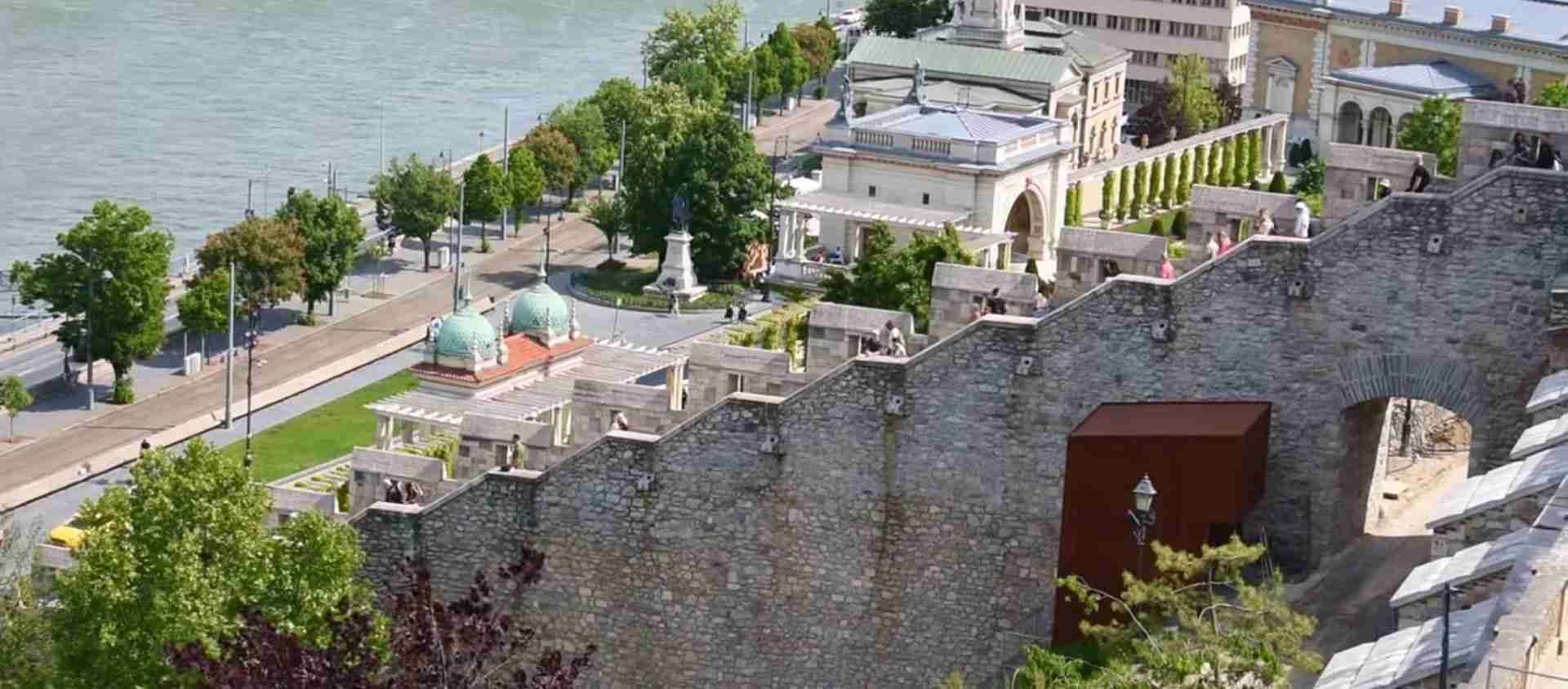
At the Buda approach, board the historic Castle Hill Funicular (Budavári Sikló) for the scenic 1.5-minute ride up to Buda Castle. The funicular operates daily 7:30 AM-10:00 PM (verify current hours on bkk.hu), charging 1,500 HUF (€4) one-way or 2,400 HUF (€6) round-trip in 2026—your Budapest travel pass doesn’t cover this heritage railway. The short journey climbs the steep Castle Hill slope in restored 19th-century cabins, offering dramatic views over the Danube and Pest as you ascend. Skip the funicular and climb the adjacent stairs or serpentine pathways if preferring exercise over expenditure—the walking route takes 10-15 minutes and provides equivalent views while saving the ticket cost.
Midday: Buda Castle District Exploration
Spend midday exploring the Castle District’s cobblestone streets, baroque townhouses, and medieval remnants surrounding the Royal Palace complex. The Hungarian National Gallery occupies much of the palace building, offering extensive collections of Hungarian art from medieval altarpieces through 20th-century works—entry costs 3,200 HUF (€8) in 2026 if interested in the collections, though many visitors prefer exploring exterior courtyards, terraces, and surrounding streets without entering museums. The Matthias Fountain in the palace courtyard depicts King Matthias on a hunting expedition, creating popular photo opportunities amid baroque sculptural details.
Walk north through the Castle District toward Matthias Church (Mátyás-templom), passing historic houses with colorful facades, carved doorways, and wrought-iron details. The medieval street network preserves its original layout despite World War II destruction and subsequent reconstruction, creating intimate urban spaces contrasting with Pest’s grand boulevards. Tárnok utca and Úri utca contain particularly well-preserved architecture and numerous small museums, galleries, and craft shops selling traditional Hungarian products. Allow flexibility to wander down narrow passages and discover hidden courtyards rather than rushing directly to major landmarks.
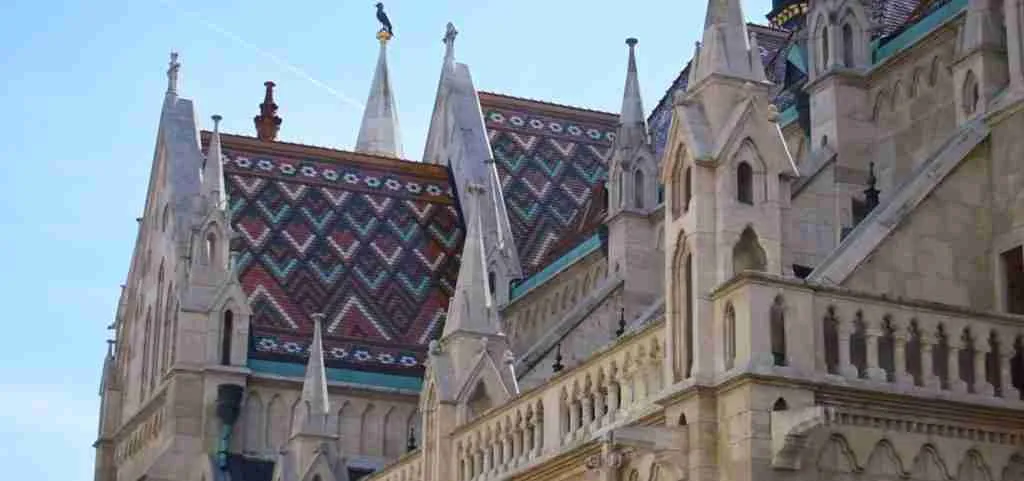
Matthias Church dominates the Castle District skyline with its 80-meter neo-Gothic tower and distinctive diamond-patterned roof using colorful Zsolnay ceramic tiles from Pécs. Church entry costs 2,000 HUF (€5.50) in 2026, providing access to the ornate interior featuring frescoes, stained glass, and decorative stonework representing multiple architectural styles from Gothic origins through baroque modifications to 19th-century restoration. The church museum in the crypt displays ecclesiastical artifacts and explains the building’s role in Hungarian coronations. Budget 30 minutes for comprehensive church visits or 10 minutes viewing the exterior if time presses.
Afternoon: Fisherman’s Bastion and Castle District Cafés
Fisherman’s Bastion (Halászbástya) sits immediately north of Matthias Church, offering Budapest’s most photographed viewpoints across the Danube to Parliament and the Pest skyline. The neo-Romanesque terrace, built 1895-1902 purely for decorative purposes, features seven towers representing the seven Magyar tribes that founded Hungary. The lower terrace remains free to access year-round, providing excellent Parliament views framed by the bastion’s white limestone architecture. The upper terrace requires tickets (1,000 HUF/€2.75 in 2026) during peak hours (9:00 AM-7:00 PM, March-October) but offers additional viewpoints and photographic angles justifying the modest cost for serious photographers.
Time your Fisherman’s Bastion visit for midday light illuminating Parliament directly across the river, creating optimal conditions for photography without harsh shadows or backlighting. The equestrian statue of King Stephen I stands between the bastion and church, creating foreground interest for compositions including both architectural elements and distant Parliament. Expect crowds during midday peak hours—arrive before 10:00 AM or after 5:00 PM for quieter conditions if photography or contemplation takes priority over convenience.
Break for late lunch or afternoon refreshments at one of the Castle District’s historic cafés. Ruszwurm Cukrászda, operating since 1827, serves traditional Hungarian pastries and coffee in intimate 19th-century interiors—expect premium prices (€8-12 for cake and coffee) but authentic atmosphere in Budapest’s oldest continuously operating confectionery. Alternatives include numerous cafés along Szentháromság tér and Országház utca offering outdoor seating with Castle District views at moderate prices. Avoid obvious tourist traps with aggressive multilingual menus and inflated pricing in favor of quieter establishments serving local clientele.
Evening: Return to Pest and Danube River Cruise
Return to Pest via Bus 16 from Dísz tér (near Buda Castle) to Deák Ferenc tér, or walk down Castle Hill via the Royal Palace gardens to Chain Bridge—the descent takes 15-20 minutes through pleasant terraced gardens with continued Danube views. The walking route provides exercise after an afternoon of sitting while offering different perspectives on the Castle District architecture and relationship to the river below.
Evening Danube river cruises provide relaxing conclusions to first days in Budapest, showcasing illuminated landmarks from water-level perspectives impossible to experience otherwise. Cruises typically last 60-90 minutes, departing from docks near Chain Bridge or Parliament between 7:00-9:00 PM depending on season and sunset timing. Basic sightseeing cruises cost €12-15 in 2026, while dinner cruises with buffets and live music run €40-60. The illuminated Parliament Building, Chain Bridge, and Buda Castle create spectacular nighttime views as boats pass beneath Margaret, Chain, Elizabeth, and Liberty Bridges. Book cruises online through operators like Legenda or Duna Bella for confirmed availability and slight discounts over dock purchases.
Alternatively, skip the cruise and enjoy illuminated Budapest from land viewpoints. Walk along the Pest embankment or cross Chain Bridge after dark to experience Parliament’s golden illumination reflected in the Danube. The Buda side of Chain Bridge provides excellent photo opportunities with the bridge’s suspension cables framing illuminated Parliament beyond. Many visitors find this free walking experience equally compelling as paid river cruises, though weather dependency and lack of narration limit educational value.
Day 1 Cost Summary
Parliament tour €10.50-21, Castle Hill Funicular €6 round-trip, Matthias Church €5.50, Fisherman’s Bastion upper terrace €2.75, breakfast €3-4, lunch €8-12, dinner €12-18, Danube cruise €12-15 (optional). Total Day 1 cost: €60-95 per person excluding accommodation, using mid-range dining and skipping optional cruise. Budget travelers using free viewpoints, skipping paid church entries, and eating street food manage €30-40 daily while luxury travelers adding fine dining and premium cruises reach €120-150.
Day 2: Thermal Baths, Heroes’ Square, and City Park 2026
Morning: Széchenyi Thermal Baths Experience
Devote your second morning to Széchenyi Thermal Baths, Budapest’s largest and most popular spa complex in City Park. The neo-baroque yellow palace contains 18 pools (three outdoor, 15 indoor) with water temperatures ranging 26-40°C (79-104°F), plus saunas, steam rooms, and massage services. Arrive when the baths open (6:00 AM weekdays, 6:00 AM weekends) to experience the atmospheric outdoor pools with minimal crowds before tourist groups arrive mid-morning. The thermal waters contain minerals including calcium, magnesium, and sulfate offering therapeutic benefits for joint problems, circulation, and relaxation.
Full-day tickets with locker access cost approximately €15-20 in 2026 depending on weekday versus weekend pricing—check current rates on szechenyibath.hu and book online to skip ticket counter queues. Private cabins cost €2-3 extra but provide more space and privacy than gendered locker rooms for changing. Bring swimwear (required in all pools), flip-flops or water shoes (mandatory for walking around the complex), and towels (available for rental but bringing your own saves €3-5). Consider adding a 20-minute massage (€15-20) or 45-minute treatment (€25-35) when booking if interested in spa services beyond thermal bathing.
Budget 2.5-3 hours minimum for meaningful thermal bath experiences—rushing defeats the relaxation purpose. Rotate between hot thermal pools (38-40°C), cooler swimming pools (26-28°C), and saunas to avoid overheating. The outdoor pools create Budapest’s most iconic scenes, with steam rising dramatically during cooler months while bathers play chess on floating boards. Focus morning hours on bathing relaxation rather than intense sightseeing, as the thermal waters induce sleepiness inappropriate for active museum visits immediately after.
Late Morning: City Park and Vajdahunyad Castle
Vajdahunyad Castle sits within City Park immediately adjacent to Széchenyi Baths, offering architectural contrast after your thermal experience. This eclectic structure, built for the 1896 Millennium celebration, combines Romanesque, Gothic, Renaissance, and baroque architectural elements representing different Hungarian historical periods in a single complex. The castle houses the Agricultural Museum (entry €5 if interested) but provides excellent photo opportunities from exterior courtyards and surrounding park paths without entry fees.
City Park (Városliget) covers 1.2 square kilometers with tree-lined paths, decorative ponds, and the Budapest Zoo if traveling with children. Walk through the park toward Heroes’ Square via the main pathway, enjoying the greenspace providing relief from urban density. The park features Europe’s oldest public ice-skating rink (operating October-March) and boating lakes during summer months. Seasonal food vendors and cafés near Vajdahunyad Castle serve refreshments though prices reflect tourist location—better options appear along Andrássy Avenue approaching Heroes’ Square.
Midday: Heroes’ Square and Andrássy Avenue
Heroes’ Square (Hősök tere) anchors the eastern end of Andrássy Avenue with its monumental Millennium Memorial featuring statues of Hungarian kings, tribal leaders, and allegorical figures representing virtues and national concepts. The square took its current form for the 1896 Millennium celebrations commemorating the Magyar conquest and remains Budapest’s ceremonial center for state events. The surrounding colonnades display statues of Hungarian historical figures while the central column topped by Archangel Gabriel rises 36 meters commemorating the nation’s conversion to Christianity. Photography works best from multiple angles approaching across the square rather than directly beneath the monument where scale overwhelms composition.
The Museum of Fine Arts and Palace of Art (Műcsarnok) flank Heroes’ Square on north and south sides, housing extensive collections of European art and contemporary exhibitions respectively. Budget 1.5-2 hours if entering the Museum of Fine Arts (€12-15 entry) to see works by European masters including El Greco, Goya, and significant Egyptian and classical antiquities. Most visitors photograph the exterior architecture and square layout without museum entries, saving time and expense for other Budapest attractions.
Walk west along Andrássy Avenue, Budapest’s grand boulevard and UNESCO World Heritage site, toward central Pest. The 2.5-kilometer avenue lined with neo-Renaissance mansions, luxury shops, and cultural institutions takes 30-40 minutes to walk completely or can be shortened by taking M1 metro (the continental Europe’s oldest underground railway, opened 1896) from Heroes’ Square to Oktogon or Opera stations. Stops along Andrássy include the Hungarian State Opera House (€12-15 for guided tours if interested in ornate interior) and the House of Terror museum (€12 entry) documenting 20th-century totalitarian regimes in Hungary.
Afternoon: St. Stephen’s Basilica and Central Pest
St. Stephen’s Basilica dominates central Pest with its 96-meter dome (matching Parliament’s height in deliberate symbolic parity). The neo-Renaissance church completed 1905 after 54 years construction houses the mummified right hand of St. Stephen, Hungary’s first king, in the Holy Right Chapel. Basic basilica entry remains free though donations (1,000 HUF/€2.75 suggested) support maintenance. The panoramic terrace requires separate tickets (€5 for elevator access) but provides 360-degree Budapest views from the dome’s base, with Parliament, Castle Hill, and Gellért Hill all visible. Budget 30-45 minutes for church interior exploration or 60 minutes including dome ascent.
The basilica’s interior features extensive marble decoration, elaborate frescoes, and ornate side chapels worth careful examination. Free organ concerts occur regularly (check basilica schedule) offering brief classical music performances in acoustics designed specifically for the instrument. The square outside hosts seasonal markets and events, particularly during Christmas when the St. Stephen’s Basilica Christmas Market creates festive atmosphere with food stalls, crafts, and decorative lighting.
Spend the remaining afternoon exploring central Pest’s pedestrian zones, high-end shops, and cafés around Vörösmarty Square. Traditional cafés like Gerbeaud (operating since 1858) serve coffee and pastries in elegant 19th-century settings though expect tourist prices (€10-15 for cake and coffee). The pedestrianized Váci utca runs south from Vörösmarty Square toward the Great Market Hall, lined with international brands, souvenir shops, and restaurants—quality varies dramatically with numerous tourist traps requiring careful selection based on visible menus and customer demographics.
Evening: Jewish Quarter and Ruin Bars
Transition from afternoon sightseeing to evening cultural immersion in District VII’s Jewish Quarter (Erzsébetváros), centered around Kazinczy utca and Wesselényi utca. This historically Jewish neighborhood suffered massive destruction during World War II and decades of communist-era neglect before recent transformation into Budapest’s most vibrant nightlife district. The area combines synagogues, Holocaust memorials, street art, vintage shops, and the famous ruin bars occupying abandoned buildings and courtyards.
The Great Synagogue (Dohány Street Synagogue) ranks as Europe’s largest synagogue and second-largest worldwide, with Moorish Revival architecture accommodating 3,000 worshippers. Entry costs €12-15 in 2026 including access to the synagogue interior, Jewish Museum, and Holocaust Memorial Garden containing the Tree of Life sculpture. Evening lighting hours vary seasonally—verify current closing times on dohany-zsinagoga.hu if planning late afternoon visits. Respectful dress (covering shoulders and knees) and head coverings for men are required. Photography policies vary by area within the complex.
Ruin bars represent Budapest’s unique nightlife innovation, transforming derelict buildings into eclectic drinking establishments filled with mismatched furniture, artistic installations, and creative lighting. Szimpla Kert, the original and most famous ruin bar, occupies a former apartment building with multiple rooms, courtyards, and levels creating labyrinthine spaces for exploration. Entry remains free with drinks priced moderately (€2-4 for beer, €5-8 for cocktails). The atmosphere skews young and international though diverse age groups appreciate the unconventional aesthetics and relaxed vibe. Arrive before 10:00 PM for easier seating or after midnight for full party atmosphere.
Day 2 Cost Summary
Széchenyi Baths €15-20, St. Stephen’s Basilica dome €5, Great Synagogue €12-15 (optional), breakfast €3-4, lunch €8-12, dinner €12-18, ruin bar drinks €6-10. Total Day 2 cost: €60-90 per person excluding accommodation, depending on museum entries and evening drinking. Budget travelers skipping paid entries and limiting alcohol reduce costs to €35-50 while luxury travelers adding multiple museum visits and extensive dining reach €100-130.
Day 3: Gellért Hill, Great Market Hall, and Departure Planning 2026
Morning: Gellért Hill Climb and Citadella
Complete your Budapest introduction with sunrise or early morning ascent of Gellért Hill for panoramic city views encompassing all major landmarks visited during previous days. Multiple routes climb the 235-meter hill from the Buda embankment—the main path begins near Elisabeth Bridge and climbs gradually through terraced gardens reaching the Liberty Statue summit in 20-30 minutes depending on fitness and photo stops. Alternative routes offer steeper ascents or approach from different angles, all converging near the hilltop.
The Liberty Statue (Szabadság-szobor) crowns Gellért Hill with a 14-meter female figure holding a palm leaf, originally erected by the Soviet occupation but reinterpreted after 1989 to represent freedom rather than communist liberation. The statue platform provides 360-degree panoramas showing Parliament and the Danube’s sweep to the north, Buda Castle and Castle District to the west, and Pest’s urban grid extending eastward. Early morning visits (before 8:00 AM) offer softer light, fewer tourists, and often dramatic atmospheric conditions as fog lifts from the Danube valley.
The Citadella fortress sits slightly below the Liberty Statue, a Habsburg-era fortification built after the 1848 Revolution to control Budapest through artillery positions commanding the city. The fortress now houses a café and small museum (entry €3-5) though most visitors prefer exterior exploration and viewpoint photography to museum visits. The southern ramparts provide excellent perspectives on the Danube bridges strung like pearls from Margaret Island to beyond Liberty Bridge, with morning light illuminating architectural details across the river.
Late Morning: Gellért Baths or Cave Church
Descend Gellért Hill’s southern slope to either Gellért Thermal Baths or the Cave Church (Sziklatemplom), depending on interests and whether repeating thermal bathing appeals after Széchenyi yesterday. Gellért Baths occupy an Art Nouveau palace noted for elaborate architectural decoration and smaller scale than Széchenyi—some visitors prefer Gellért’s aesthetic refinement though others find Széchenyi’s outdoor pools and size more impressive. Full-day Gellért admission costs €15-20 in 2026 with similar locker/cabin options and thermal pool temperatures. Note that Gellért Baths undergo major renovations through 2028, potentially limiting access—verify current status on gellertbath.hu before planning visits.
The Cave Church occupies natural caves in Gellért Hill’s southern face, serving as a functioning Pauline monastery with chapels carved into the limestone rock. Entry costs €3 (donations accepted) for chapel access and brief exhibits explaining the monastery’s history including communist-era closure and post-1989 restoration. The cave chapel’s unusual setting and historical significance create memorable visits even for non-religious visitors, requiring only 15-20 minutes to experience fully. Morning light entering the cave mouth creates dramatic effects on altar areas and religious sculptures.
Midday: Great Market Hall and Lunch
Great Market Hall (Nagyvásárcsarnok), completed 1897, represents Budapest’s largest and most architecturally significant market building. The neo-Gothic structure topped with colorful Zsolnay tiles contains three levels, with the ground floor dedicated to produce, meat, fish, spices, and Hungarian products like paprika, foie gras, and salamis. The upper level houses souvenir stalls, embroidered textiles, carved wood items, and simple food vendors serving traditional Hungarian dishes at moderate prices. The basement level features fish vendors and pickle shops in vaulted spaces reminiscent of medieval markets.
Time Great Market Hall visits for late morning or early afternoon when produce displays appear freshest and food stalls serve lunch crowds. The market operates Monday-Friday 6:00 AM-6:00 PM, Saturday 6:00 AM-3:00 PM, closed Sundays. Vendors accept cash (Hungarian forints preferred) though some larger stalls handle credit cards. Prices for tourists can run high—compare costs between multiple vendors before purchasing and be aware that many “authentic Hungarian” souvenirs actually come from China or Romania. The market’s architectural grandeur and bustling atmosphere justify visits even without purchasing anything.
Lunch on the Great Market Hall’s upper floor provides affordable traditional options like goulash soup (€3-5), chicken paprikash (€6-8), or lángos with toppings (€3-4). Food quality varies between stalls—observe which attract local customers versus obvious tourists for guidance. Seating consists of simple benches and tables with limited comfort, suiting quick meals rather than leisurely dining. Better restaurant options appear nearby along Ráday utca or Vámház körút if preferring sit-down service and more sophisticated preparation.
Afternoon: Final Explorations and Departure Preparation
Use your final afternoon based on remaining interests, energy levels, and departure timing. Options include revisiting favorite neighborhoods for photography in different light, shopping for last-minute Hungarian products (paprika, Tokaji wine, Herend porcelain if budget allows), or relaxing in cafés reviewing photos and experiences. Margaret Island offers peaceful greenspace escape from urban intensity, accessible via tram or bus connections from central Pest. The 2.5-kilometer island in the Danube’s center contains parks, gardens, swimming complexes, and the medieval ruins providing car-free walking and cycling environments.
Museum enthusiasts might add the Hungarian National Museum (€12-15 entry) covering Hungarian history from prehistory through modern independence, or the Museum of Applied Arts (€12 entry) featuring Art Nouveau architecture and decorative arts collections. Photography buffs could revisit Parliament or Fisherman’s Bastion for golden hour light creating different atmospheric effects than morning visits. Shoppers explore Andrássy Avenue boutiques, central Pest malls, or the vintage shops and design stores in the Jewish Quarter selling unique Hungarian crafts, fashion, and artwork.
Plan departure logistics according to flight times and accommodation checkout. Most hotels require checkout by 11:00 AM-12:00 PM though many offer luggage storage for late afternoon departures. Use the 100E Airport Express bus (2,200 HUF/€6) from Deák Ferenc tér or Astoria stations for direct airport transfer in 30-40 minutes, or the budget 200E bus plus M3 metro combination (900 HUF/€2.30) requiring 45-60 minutes with one change. Book airport transfer taxis through hotel concierges or reputable companies rather than hailing street taxis to avoid overcharging on final moments in Budapest.
Day 3 Cost Summary
Gellért Baths €15-20 OR Cave Church €3, Great Market Hall free entry (purchases extra), breakfast €3-4, lunch €6-10, afternoon café €3-5, final dinner €12-18, airport transfer €2.30-6. Total Day 3 cost: €45-70 per person excluding accommodation, assuming moderate dining and Gellért skip. Budget travelers using only free attractions manage €25-35 while luxury travelers adding shopping and fine dining reach €90-120.
Practical Planning Tips for Budapest 2026
Packing and Seasonal Considerations
Budapest requires weather-appropriate clothing varying dramatically by season. Summer visits (June-August) need light clothing, sun protection, and swimwear for thermal baths, with temperatures reaching 25-35°C (77-95°F). Spring and autumn (April-May, September-October) demand layered clothing for 10-20°C (50-68°F) temperatures that fluctuate throughout days. Winter visitors (November-March) pack warm coats, hats, and gloves for 0-5°C (32-41°F) conditions, though thermal baths remain pleasant year-round. Comfortable walking shoes prove essential regardless of season—expect 8-12 kilometers daily walking even with public transport use.
Rain gear benefits all seasons as Budapest experiences variable weather particularly during spring and autumn transition periods. Compact umbrellas serve better than rain jackets for urban sightseeing, though waterproof footwear helps during prolonged wet periods. Summer sun protection including hats, sunglasses, and high-SPF sunscreen prevents discomfort during extended outdoor sightseeing. Water bottles reduce beverage costs and ensure hydration—Budapest tap water remains perfectly safe for drinking though many visitors prefer bottled water despite the expense.
Communication and Connectivity
English proficiency varies in Budapest, with younger people, hotel staff, and tourist-oriented businesses generally communicating well while older residents and neighborhood establishments may require Hungarian or basic gestures. Learning basic Hungarian phrases (köszönöm = thank you, viszlát = goodbye, bocsánat = excuse me) demonstrates respect though most situations manage with English and patience. Restaurant menus increasingly include English translations, though authentic neighborhood eateries may present Hungarian-only options requiring translation apps or pointing at dishes.
Wi-Fi availability extends throughout Budapest hotels, cafés, restaurants, and many public spaces including metro stations and major attractions. Most accommodations provide free Wi-Fi though connection quality varies—verify during booking if remote work or heavy internet use necessitates reliable speeds. Consider purchasing local SIM cards for cellular data if requiring constant connectivity beyond Wi-Fi hotspots—Hungarian carriers like Telenor or Vodafone offer prepaid tourist packages with adequate data allowances for navigation, translation apps, and communication. EU citizens benefit from roaming-free data usage though non-EU visitors face expensive roaming charges without local SIMs.
Safety and Health Considerations
Budapest maintains relatively safe conditions for tourists with violent crime remaining rare in central districts and tourist areas. Pickpocketing represents the primary concern, particularly on crowded metro trains, at major attractions during peak hours, and in busy nightlife zones. Keep valuables secured in front pockets or interior compartments, maintain awareness in crowded situations, and avoid displaying expensive electronics unnecessarily. Women traveling solo report generally comfortable experiences though standard urban precautions regarding well-lit areas and avoiding isolated locations late at night apply.
Public drinking water meets EU safety standards and tastes acceptable from taps throughout Budapest. Restaurants serve bottled water by default, charging €2-4 per bottle—requesting tap water (csapvíz) remains acceptable though some establishments discourage the practice. Thermal bath water contains minerals making it unsuitable for drinking despite contact with skin and accidental ingestion—use provided drinking fountains at bath complexes for hydration during extended soaking sessions.
European Health Insurance Cards (EHIC) provide EU citizens with necessary medical coverage in Hungary, while non-EU visitors should verify travel insurance includes adequate medical evacuation and treatment coverage. Pharmacies (gyógyszertár or patika) displaying green cross signs sell over-the-counter medications though stronger prescriptions require Hungarian doctor authorization. Emergency services use 112 as the universal European emergency number for ambulance, police, or fire department assistance.
Money and Tipping Practices
Hungarian forint (HUF or Ft) serves as Budapest’s currency, with 1 euro equaling approximately 380-400 HUF depending on exchange rates. ATMs provide best exchange rates through direct bank withdrawals, while currency exchange offices (váltó) vary dramatically in rates and commissions—compare carefully and avoid airport exchanges offering poorest rates. Many Budapest establishments accept euros though provide change in forints at unfavorable internal exchange rates making forint use more economical. Credit cards work widely in hotels, restaurants, and shops though smaller establishments, markets, and taxis often require cash.
Tipping customs in Budapest include 10-15% in restaurants when service isn’t automatically added to bills—verify carefully as many tourist-area restaurants include service charges making additional tips unnecessary. Taxi drivers receive 10% tips for good service or rounding up to convenient amounts. Hotel porters appreciate 500-1,000 HUF per bag while housekeeping receives 500 HUF daily. Thermal baths attendants providing locker services or assistance expect small tips (200-500 HUF) though no obligation exists. Tour guides receive €5-10 per person for satisfactory experiences or more for exceptional service.
Beyond the Three Days: Extension Options
Visitors extending Budapest stays beyond three days gain opportunities for deeper neighborhood explorations, day trips to surrounding regions, or slower-paced experiences eliminating the rush inherent in concentrated itineraries. Fourth days allow visiting attractions skipped during the core three days—the Hungarian National Museum, Museum of Fine Arts, or House of Terror provide cultural depth for history enthusiasts. Additional time supports relaxed neighborhood wandering in areas like Újlipótváros (District XIII) offering authentic residential Budapest without tourist crowds.
Popular day trips from Budapest include Szentendre (30 minutes by HÉV suburban railway), a riverside artist town with museums, galleries, and Serbian Orthodox churches creating picturesque atmosphere; Eger (2 hours by train), famous for wine production, thermal baths, and medieval castle; and the Danube Bend region combining Szentendre, Visegrád castle ruins, and Esztergom’s massive basilica in single-day excursions. Longer trips reach Lake Balaton (1.5-2 hours), Hungary’s largest lake offering summer swimming and resort towns, or Pécs (3 hours south), a university city with early Christian heritage and cultural attractions.
Extended stays enable attending concerts at the Franz Liszt Academy or Hungarian State Opera, taking Hungarian cooking classes learning traditional recipes, or scheduling additional thermal bath visits at Budapest’s lesser-known facilities like Rudas, Király, or Lukács baths each offering distinct architectural styles and atmospheres from the famous Széchenyi and Gellért. Multi-day stays support adjusting to local rhythms rather than maintaining tourist intensity—enjoying leisurely café mornings, evening promenades, and spontaneous discoveries that rushed three-day visits necessarily limit.
Frequently Asked Questions
Can I see Budapest’s main attractions in just two days instead of three?
Two days covers Budapest’s absolute highlights through rushed scheduling but sacrifices depth, flexibility, and relaxation that make travel enjoyable. A compressed two-day itinerary fits Parliament, Buda Castle, Fisherman’s Bastion, one thermal bath, Heroes’ Square, and St. Stephen’s Basilica with early starts, efficient transport use, and minimal meal breaks. This pace proves exhausting and eliminates spontaneity—unexpected café discoveries, leisurely neighborhood strolls, or extended museum visits become impossible when fighting tight schedules. The Jewish Quarter and ruin bars receive evening-only visits without daytime context, while secondary attractions like Gellért Hill, Great Market Hall, or Andrássy Avenue disappear entirely from two-day plans. Three days provide breathing room for weather adjustments, energy dips, or pursuing personal interests whether photography, shopping, or simply sitting in thermal pools. First-time visitors particularly benefit from the extra day establishing orientation before rushing between attractions. Consider two days only if absolutely time-constrained, recognizing you’ll leave wanting to return for missed experiences.
How family-friendly is this Budapest itinerary for traveling with children?
This itinerary adapts well for families with children aged 8-16 though requires modifications for younger kids. Thermal baths work wonderfully for families—Széchenyi allows children over 14 in all pools, while Palatinus Strand on Margaret Island provides family-friendly pools welcoming all ages during summer months. Kids generally enjoy the Buda Castle funicular, Chain Bridge walks, and viewing Parliament’s exterior though lengthy indoor tours test younger attention spans—skip Parliament tours for under-10s. The Great Market Hall, street food, and ruin bar daytime visits (Szimpla Kert opens afternoons) create engaging experiences. Modify the itinerary by reducing museum visits, adding Budapest Zoo in City Park, incorporating Margaret Island’s sports facilities and musical fountain, and allowing frequent breaks in playgrounds scattered throughout Budapest. Public transport fascinates many children—riding various metro lines, trams, and buses becomes entertainment itself. Book family rooms or apartments for more space and kitchen facilities reducing dining costs and accommodating pickier eaters. Budget extra time for slower walking paces and unexpected bathroom stops. Budapest remains safer and more manageable for family travel than many European capitals, with relatively short distances between attractions reducing transit fatigue.
What’s the best way to spend a rainy day in Budapest?
Rainy Budapest days shift focus to covered markets, museums, thermal baths, and café culture without eliminating enjoyment. The Great Market Hall provides extensive undercover exploration with ground-floor produce shopping and upper-level food sampling occupying 1-2 hours comfortably. The Museum of Fine Arts and Hungarian National Museum offer comprehensive indoor attractions with 2-3 hours of art and history exhibitions. St. Stephen’s Basilica interior viewing works well during rain though dome access becomes less appealing without clear views. Thermal baths actually improve during rain—Széchenyi’s outdoor pools create magical atmosphere as rain patters on warm water while you soak undisturbed by weather. Indoor pools and saunas provide complete weather protection. Extended café sessions in historic establishments like New York Café or Gerbeaud transform rain delays into cultural experiences—budget extra for premium pricing but enjoy ornate interiors and leisurely coffee service. The House of Terror museum provides sobering historical education during 1.5-2 hour visits. Shopping malls like Arena Plaza or Westend City Center offer climate-controlled retail therapy. Budapest’s metro system allows moving between districts without surface exposure—use rainy days for Andrássy Avenue walking via underground tunnels connecting M1 stations. Many visitors remember rainy day indoor experiences more fondly than rushed sunny sightseeing—embrace the slower pace and atmospheric mood rain creates.
How much Hungarian language do I need for this Budapest trip?
Virtually no Hungarian language skills are required for successfully completing this itinerary, though learning basic phrases enhances experiences and demonstrates cultural respect. English functions adequately in all tourist areas, hotels, major restaurants, and attractions where staff specifically hired for international visitor communication. Younger Budapest residents generally speak workable English while older generations may struggle. Critical tourism vocabulary—bathroom, bill, thank you, excuse me—appears widely understood through repetition and context clues. Restaurant menus increasingly include English translations or picture supplements, though authentic neighborhood eateries may present Hungarian-only options requiring Google Translate app assistance or pointing at dishes other diners enjoy. Public transport ticket machines offer English language options, while metro announcements include English station names. Pharmacies and medical facilities maintain English-speaking staff for essential health situations. The Budapest mobile apps (BudapestGO, Google Maps) function in English with accurate navigation and transport routing. Learning pronunciation for basic courtesies (hello: szia, thank you: köszönöm, please: kérem, excuse me: bocsánat) creates positive interactions with locals who appreciate attempts at their notoriously difficult language. Street signs and directions use Hungarian exclusively though smartphone navigation eliminates directional challenges. Emergency English support exists through 112 operators and tourist police. Overall, English suffices for all practical needs while basic Hungarian phrase knowledge enriches cultural exchanges and demonstrates respect beyond minimum tourist effort.
What’s the cheapest way to visit Budapest in 2026?
Budget Budapest visits manage €25-35 daily per person through strategic choices prioritizing free attractions, hostel accommodation, and street food dining. Stay in hostel dorms (€15-25 per bed) rather than private rooms, cooking basic meals in hostel kitchens when available. Buy the 72-hour transport pass (€14.50) for unlimited movement but skip paid attraction entries—photograph Parliament, Fisherman’s Bastion lower terrace (free), and Heroes’ Square from outside, walk Buda Castle grounds without museum entries, and enjoy Gellért Hill views at no cost. The Cave Church, St. Stephen’s Basilica basic entry, Great Market Hall, and Jewish Quarter street wandering provide free cultural experiences. Eat breakfast from supermarkets (Tesco, Spar) for €2-3, lunch from street food vendors (lángos, gyros) for €2-4, and dinner at budget local eateries or self-catered for €5-8. Skip thermal baths entirely or visit only once at Széchenyi using weekday morning discount rates. Drink at supermarkets (beer €1-2) rather than bars (€3-5). Walk extensively rather than taking taxis or paid transport. Visit during January-March when accommodation costs drop 40-50% and many attractions reduce prices. Book flights months ahead for best airfare. Bring water bottles, snacks, and necessary medications from home. Share accommodation costs with travel companions. This extreme budget approach sacrifices comfort, spontaneity, and major experiences like Parliament tours or thermal baths but makes Budapest accessible to truly budget-constrained travelers prioritizing destination visit over luxury comforts.
How does Budapest compare to Prague or Vienna for first-time visitors?
Budapest offers more authentic, less touristy atmosphere than Prague while providing comparable value to Vienna at significantly lower costs. Prague exceeds Budapest in preserved medieval architecture and concentrated fairy-tale atmosphere but suffers from overwhelming tourism that crowds major areas and drives prices toward Western European levels. Budapest’s grand imperial architecture rivals Vienna’s Habsburg heritage while maintaining more approachable costs—expect Budapest daily expenses 30-40% less than Vienna for equivalent quality hotels, meals, and experiences. Vienna surpasses both cities for classical music heritage, museum density, and refined cultural sophistication but creates more formal, expensive visitor experiences. Budapest’s thermal bath culture provides unique attractions Prague and Vienna lack—neither Czech nor Austrian capitals offer comparable spa traditions. The Danube setting creates dramatic urban landscapes in all three cities though Budapest arguably maximizes river views through Parliament and Buda Castle positioning. Budapest nightlife, particularly ruin bars, generates more innovative, affordable scene than Prague’s expensive beer halls or Vienna’s upscale wine taverns. Prague’s compact size suits shorter 2-day visits while Budapest and Vienna reward longer 3-4 day explorations. Budapest attracts more diverse international visitors than Prague’s overwhelming Western European and Asian tourist demographic. Language barriers appear similar across all three cities—minimal English in neighborhood businesses but adequate communication in tourist zones. First-time Central European visitors often enjoy all three cities in combined trips—Budapest serves as excellent starting or ending point for Prague-Vienna-Budapest circuits spanning 8-10 days total.
Can I use euros in Budapest or should I exchange for Hungarian forints?
While some Budapest establishments accept euros, using Hungarian forints proves more economical and practical throughout your visit. Many tourist-oriented restaurants, hotels, and shops accept euro payments but apply disadvantageous internal exchange rates (typically 350-370 HUF per euro versus market rates of 380-400 HUF), effectively adding 3-5% premium to purchases. Change comes in forints at these unfavorable rates, creating mixed-currency complications. Public transport, markets, casual restaurants, cafés, and most local businesses require forints exclusively—attempting euro payment causes confusion and delays. ATM withdrawals from bank machines provide optimal exchange rates with only standard foreign transaction fees (verify your bank’s charges before traveling). Withdraw larger amounts to minimize ATM fee repetition while staying within daily withdrawal limits. Currency exchange offices (váltó) vary wildly in rates—avoid airport exchanges offering poorest rates (340-360 HUF/euro), train station and tourist area exchanges charging high commissions. Use bank-affiliated exchange offices on major streets displaying current rates clearly, verifying no hidden commission charges before transactions. Many Budapest businesses accept credit cards (Visa, Mastercard widely accepted; American Express less common) with competitive exchange rates though smaller establishments prefer cash. Budget approximately €150-200 cash for three days covering meals, small purchases, transport tickets, and attraction entries not accepting cards. Keep small denomination forints (500, 1000, 2000 notes) for tipping, street food, and market purchases where large notes create change-making difficulties. Overall, exchange €50-100 upon arrival for immediate needs then withdraw additional forints from ATMs as required throughout your stay.
What should I know about Budapest’s thermal bath etiquette?
Budapest thermal baths operate under specific etiquette expectations ensuring comfortable experiences for all visitors. Swimwear remains mandatory in all pool areas—no nude bathing permitted in Budapest’s major public baths (unlike some German or Scandinavian facilities). Men wear swim trunks or speedos; women wear one-piece suits, bikinis, or tankinis. Footwear (flip-flops, water shoes, or waterproof sandals) is mandatory when walking around bath complexes outside pools—bare feet violate hygiene regulations and risk slipping on wet surfaces. Shower thoroughly before entering pools, removing all soap residue and body lotions that contaminate thermal waters. Most baths provide gender-segregated changing areas with lockers stored via electronic wristbands issued at entry. Private changing cabins cost modest extras but provide more space and privacy than communal locker rooms. Bring or rent towels (€3-5 rental) and consider bathrobes for winter visits when walking between indoor and outdoor pools requires brief cold exposure. Speaking quietly and avoiding loud behavior respects other bathers seeking relaxation—thermal baths function as tranquil spa environments, not swimming pools or party venues. Photography policies vary by bath—some permit photography freely while others restrict it in changing areas or require discretion regarding other bathers’ privacy. Always verify specific bath rules. Limit continuous hot pool soaking to 15-20 minutes before cooling in swimming pools or rest areas, preventing overheating and dizziness. Hydrate regularly using provided drinking fountains rather than pool water containing minerals unsuitable for consumption. Remove all jewelry before entering pools, as thermal water minerals can damage metals and stones. Respect cultural norms by observing how Hungarian bathers behave, following their lead regarding pool etiquette and facility navigation.