Brussels Travel Guide 2026: Best Things to Do & See
Brussels combines medieval grandeur, Art Nouveau architecture, world-class museums, and vibrant European culture into one of the continent’s most rewarding destinations. This comprehensive 2026 guide covers everything from UNESCO World Heritage sites and iconic landmarks to practical planning details, helping you navigate Belgium’s capital with confidence and make the most of every moment in this fascinating city.
Key Takeaways
- Four UNESCO World Heritage Sites: Grand-Place (1998), Victor Horta’s Art Nouveau houses (2000), Stoclet House (2009), and Sonian Forest (2017) showcase Brussels’ architectural and natural heritage
- Budget-Friendly Access: Brussels Card (from €44) includes 49 museums, Atomium entry, and unlimited public transport; single metro/tram/bus rides cost €2.40 with contactless payment
- Compact City Center: Most major attractions cluster within walking distance of Grand-Place, while efficient metro, tram, and bus networks connect outlying sites like Atomium
- Cultural Diversity: Experience bilingual Belgian culture (French/Dutch), international European institutions, comic book heritage, Art Nouveau architecture, and world-renowned chocolate and beer
- Year-Round Destination: Spring (April-May) and fall (September-October) offer ideal weather, while winter brings festive Christmas markets and summer features outdoor events
- Free Experiences: Many attractions including Grand-Place, Manneken Pis, Royal Galleries, and free walking tours allow budget-conscious exploration, with museums offering free entry first Wednesday afternoons monthly
People Also Ask About Brussels 2026
How Many Days Do You Need in Brussels in 2026?
Three days provides an ideal timeframe for experiencing Brussels in 2026. Day one covers the historic center including Grand-Place, Manneken Pis, Royal Galleries, and initial museum visits. Day two explores Art Nouveau architecture (Victor Horta houses), the Atomium, and additional museums like the Magritte Museum or Royal Museums of Fine Arts. Day three allows for day trips to nearby destinations like Bruges, Ghent, or Antwerp, or deeper exploration of Brussels neighborhoods like Sablon, Marolles, or the European Quarter.
Two days works for focused visits concentrating on major highlights, while four to five days enables comprehensive exploration including multiple museums, diverse neighborhoods, culinary experiences, and multiple day trips. Weekend visitors can cover essential sites efficiently by prioritizing Grand-Place, one major museum, Atomium, and walking the historic center, though this provides only a surface introduction to the city’s rich cultural offerings.
Is Brussels Expensive to Visit in 2026?
Brussels offers moderate pricing compared to other major European capitals, with strategic planning enabling budget-conscious visits. Mid-range hotels cost €100-180 per night, while budget accommodations range €50-80 and luxury options exceed €200-300 nightly. Daily food expenses vary significantly: budget travelers manage on €30-40 (supermarket meals, casual cafes), mid-range visitors spend €60-80 (restaurant lunches and dinners), while fine dining experiences cost €100+ per person.
Attraction costs remain manageable through passes and free options. The Brussels Card (€44-60 depending on duration) provides substantial savings for museum enthusiasts, covering 49 museums plus unlimited transport. Individual museum tickets cost €10-15, while the Atomium charges €16 for adults. Free experiences include Grand-Place, Manneken Pis, Royal Galleries, Royal Palace gardens (summer), and numerous free walking tours operating tip-based models. Public transport costs €2.40 per ride or €8.50 daily maximum with contactless payment.
What’s the Best Way to Get Around Brussels in 2026?
Brussels’ efficient STIB-MIVB public transport network combining metro, tram, and bus services provides the best mobility option for visitors in 2026. Contactless payment directly with bank cards, smartphones, or smartwatches simplifies access, charging €2.40 per journey (60-minute validity for transfers) with an automatic €8.50 daily maximum after four trips. This convenient system eliminates ticket purchasing needs while capping daily transport costs.
The compact historic center remains highly walkable, with Grand-Place to Atomium requiring only metro Line 6 (about 20 minutes). Brussels Card holders enjoy unlimited transport access plus museum entry, making it ideal for intensive sightseeing schedules. The integrated Brupass system extends coverage to regional trains, TEC, and De Lijn services within Brussels-Capital Region. Taxis cost €20-35 for typical city center journeys but prove less economical than public transport for regular travel.
Are Brussels’ UNESCO Sites Worth Visiting in 2026?
Brussels’ four UNESCO World Heritage Sites represent essential visits offering diverse architectural and natural experiences. Grand-Place, inscribed in 1998, stands as one of Europe’s most magnificent squares, showcasing exceptional 17th-century guild houses, the Gothic Town Hall, and vibrant public space – completely free to visit and perpetually impressive. Victor Horta’s Major Town Houses (inscribed 2000) revolutionized architecture through Art Nouveau innovation; while Horta Museum charges €15 admission, the architectural exteriors provide free appreciation opportunities.
Stoclet House (2009 inscription) remains privately owned and inaccessible to interior visits, though architecture enthusiasts find value in exterior viewing of Josef Hoffmann’s Art Nouveau/Art Deco masterpiece. Sonian Forest (2017), part of the transnational Ancient and Primeval Beech Forests site, offers free access to 270 hectares of protected beech forest just south of Brussels, providing natural respite and hiking opportunities. Together, these sites span medieval civic architecture, revolutionary modernist design, and primeval natural landscapes, justifying dedicated exploration time.
Extended multi-day tours – 5+ days
Featured Belgium Multi-Day Tour Packages
7 days
7 Day Brussels including Antwerp, Battle of the Bulge, Flanders Fields, Ghent, Bruges, Luxemburg & Dinant
- ✓ Comprehensive Belgium tour
- ✓ Expert local guides included
- ✓ All accommodation arranged
- ✓ Transportation provided
7 days
7 Days Across Paris & Brussels: From Eiffel Tower to Grand Place
- ✓ Comprehensive Belgium tour
- ✓ Expert local guides included
- ✓ All accommodation arranged
- ✓ Transportation provided
6 days
6 Days of Belgian Charm: Bruges, Ghent, Antwerp, Dinant & Luxembourg
- ✓ Comprehensive Belgium tour
- ✓ Expert local guides included
- ✓ All accommodation arranged
- ✓ Transportation provided

9 days
9 Days in Brussels and Luxembourg by Train: Fairytale Cities, Castles & Culture
- ✓ Comprehensive Belgium tour
- ✓ Expert local guides included
- ✓ All accommodation arranged
- ✓ Transportation provided
Multi-day tour packages powered by TourRadar. Prices and availability subject to change.
Introduction: Why Brussels Matters in 2026
Brussels stands at the crossroads of European culture, serving simultaneously as Belgium’s capital, the administrative heart of the European Union, and a vibrant multicultural metropolis blending Flemish and French traditions. This unique positioning creates a city where medieval squares coexist with modernist architecture, international institutions operate alongside traditional chocolate shops, and visitors encounter experiences ranging from world-class art museums to casual beer cafes. Understanding Brussels requires appreciating these layered identities rather than seeking a single narrative.
The city’s manageable size – most central attractions cluster within 2-3 kilometers of Grand-Place – makes Brussels exceptionally accessible for first-time visitors while offering sufficient depth for extended exploration. Four UNESCO World Heritage Sites anchor the cultural landscape, while museums covering everything from Magritte’s surrealism to natural history provide intellectual stimulation. Art Nouveau architecture decorates entire neighborhoods, demonstrating how a revolutionary design movement transformed urban environments. The compact geography encourages walking while efficient public transport extends reach to outlying attractions like Atomium.
Brussels’ reputation for excellent food, chocolate, beer, and waffles reflects genuine culinary excellence rather than tourist marketing. The city produces internationally recognized chocolatiers, breweries crafting hundreds of beer varieties, and restaurants earning Michelin stars while maintaining accessible pricing for everyday dining. Markets like Sablon’s weekend antiques fair or Midi’s Sunday food market showcase local life alongside tourist attractions. This combination of high culture, approachable experiences, reasonable costs, and efficient logistics positions Brussels as an ideal European destination for 2026 travelers seeking substance over superficiality.
Essential Brussels Attractions 2026
Grand-Place: UNESCO World Heritage Square
Grand-Place (Grote Markt in Dutch) anchors Brussels’ historic center as one of Europe’s most spectacular squares, earning UNESCO World Heritage inscription in 1998 for its exceptional architectural ensemble and cultural significance. The square showcases remarkable Gothic and Baroque architecture through ornate guild houses reconstructed after French bombardment in 1695, the Gothic Town Hall (Hôtel de Ville) with its 96-meter spire, and the King’s House (Maison du Roi) housing the Brussels City Museum. This architectural unity creates overwhelming visual impact particularly when viewed from the square’s center or surrounding cafe terraces.
The Town Hall offers guided tours (€8 adults) revealing Gothic interior details, historic council chambers, and city government functions, though exterior appreciation remains free and equally impressive. The Brussels City Museum in the King’s House presents city history, archaeological finds, and the extensive Manneken Pis costume collection for €8 admission. Grand-Place transforms throughout the year with the spectacular Flower Carpet (biennial August event, next scheduled August 2026), Christmas markets (late November-early January), and evening light shows illuminating the ornate facades.
Surrounding streets radiating from Grand-Place offer additional historic interest: Rue des Bouchers features restaurant-lined medieval lanes, Galeries Royales Saint-Hubert showcases 19th-century covered shopping arcades, and narrow passages reveal hidden courtyards and architectural details. The square remains accessible 24/7 free of charge, though surrounding cafes charge premium prices for terrace seating – worthwhile for the unique atmosphere but costly for budget-conscious visitors. Early morning visits before 9 AM provide photographer-friendly emptier conditions, while evening illumination creates magical atmospheres.
Manneken Pis: Brussels’ Quirky Icon
Manneken Pis, the small bronze fountain statue of a urinating boy, represents Brussels’ irreverent spirit and most photographed landmark despite its modest 61-centimeter height. Located at the corner of Rue de l’Étuve and Rue du Chêne, five minutes’ walk from Grand-Place, the statue draws crowds perpetually photographing this cheeky symbol. The current statue dates from 1619, replacing earlier versions lost to theft or damage, and wears elaborate costumes donated from around the world on special occasions – over 1,000 outfits stored in the Brussels City Museum.
The statue’s appeal lies more in cultural significance than artistic merit – visitors often express surprise at the small size after building expectations from photographs. However, the surrounding area offers pleasant exploration opportunities through medieval streets, the nearby Jeanneke Pis (female counterpart) and Zinneke Pis (dog version) completing the irreverent trilogy. Free to visit at any time, Manneken Pis works best as a quick photo stop integrated into broader historic center exploration rather than a standalone destination.
The Brussels City Museum at Grand-Place displays the extensive costume collection on rotation, showing outfits representing everything from Elvis Presley to Santa Claus, various national costumes, and commemorative uniforms. Costume changes occur on special dates announced through the official Brussels tourism website. The statue’s location near chocolate shops and waffle stands facilitates combining cultural visits with culinary experiences, while street performers and souvenir vendors animate the surrounding area.
Royal Palace and Museums Quarter 2026
The Royal Palace serves as the official palace of the King and Queen of Belgium, opening to free public visits during summer months (typically late July-early September 2026) when the royal family vacations elsewhere. The palace interior features elaborate state rooms, throne room, hall of mirrors, and impressive art collections displayed in ornate 19th-century settings. Summer opening hours run 10:30 AM-4:30 PM Tuesday-Sunday, with security screening requiring 15-20 minute waits during peak periods. Completely free admission makes this a valuable summer attraction, though off-season visitors can only appreciate the elegant exterior facades.
The surrounding Royal Quarter concentrates multiple major museums within walking distance. The Royal Museums of Fine Arts complex houses several collections: Old Masters Museum showcasing Flemish Primitives, Rubens, and Bruegel (€10 admission); Magritte Museum dedicated to Belgium’s surrealist master (€10); and Fin-de-Siècle Museum covering late 19th-early 20th century art. Combination tickets cost €15 covering two museums, while Brussels Card holders enjoy free access. First Wednesday of each month offers free entry after 1 PM to permanent collections, though temporary exhibitions require tickets.
Mont des Arts, the elevated arts district between palace and city center, provides spectacular viewpoints over Brussels’ historic center and houses additional cultural institutions including the Musical Instruments Museum (€10), featuring 8,000+ instruments in an Art Nouveau building with rooftop cafe views. The compact museum quarter enables efficient cultural immersion, with most institutions maintaining 10 AM-5 PM schedules Tuesday-Sunday. Allocate minimum two hours per major museum, three hours for Royal Museums given their extensive collections.
Atomium: Brussels’ Retro-Future Icon 2026
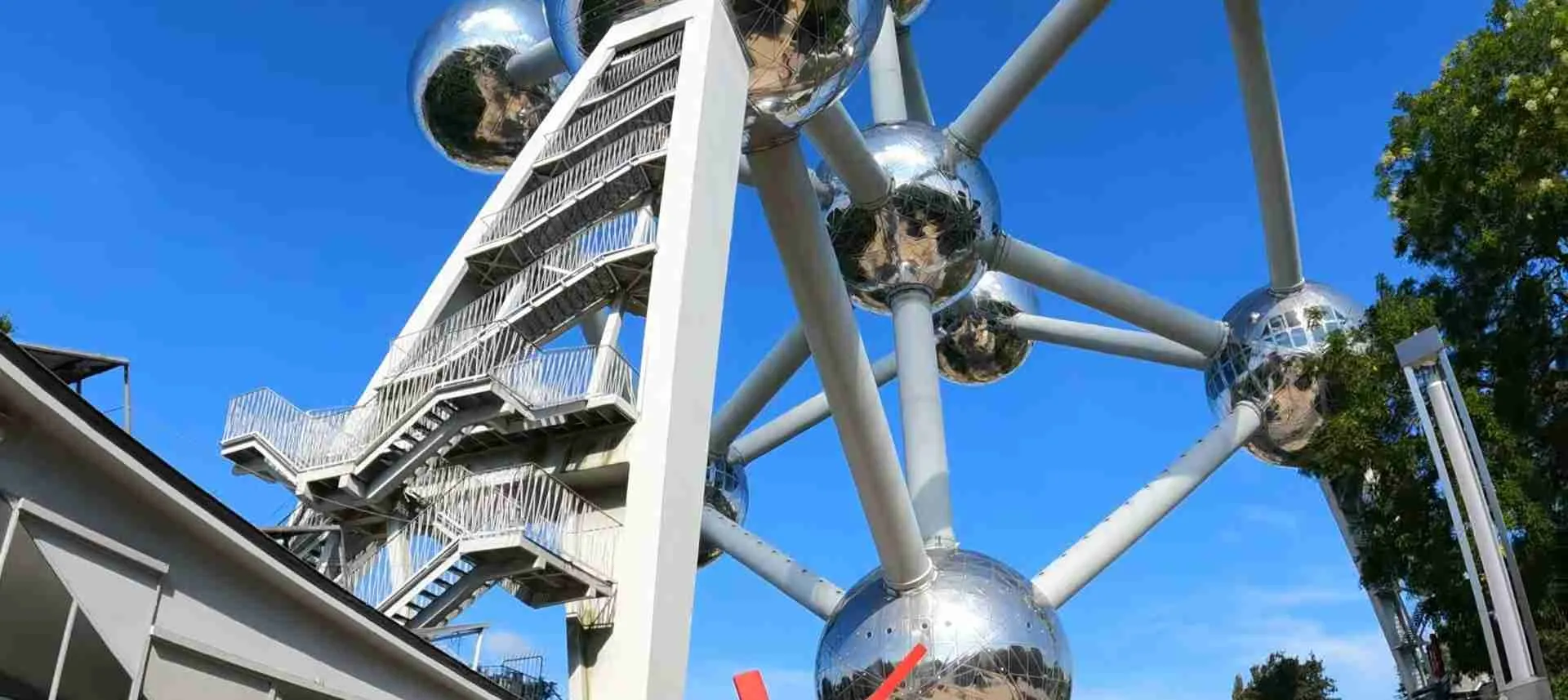
The Atomium, Brussels’ most recognizable landmark after Grand-Place, dominates the northern skyline as a 102-meter iron crystal structure magnified 165 billion times. Built for the 1958 World’s Fair and originally intended as temporary, the building now represents Brussels internationally while housing exhibitions, observation spheres, and a panoramic restaurant. Tickets cost €16 for adults, €8-9 for children 6-12, and free for children under 6, with online booking recommended to avoid queues (check official site for current rates).
Six of the nine spheres open to visitors, connected by escalators and elevators enabling exploration of the entire structure. The permanent exhibition traces Atomium’s history from 1958 construction through restoration and current status, while rotating temporary exhibitions cover diverse themes from design to photography. The top sphere offers panoramic Brussels views through telescopes, with the restaurant providing elevated dining experiences (reservations essential). Design Museum Brussels adjacent to Atomium includes free access with Atomium tickets, covering Belgian design history and contemporary exhibitions.
Reach Atomium via metro Line 6 to Heysel station (20 minutes from city center), with the structure visible from the platform. The surrounding Heysel area includes Mini-Europe theme park (€17.50) showcasing miniature European landmarks, Kinepolis cinema complex, and Brussels Expo grounds. Combination tickets (Atomium + Mini-Europe €25) provide savings for families. Visit duration typically runs 1-2 hours for Atomium exploration, expandable to half-day including Design Museum and surrounding area. Early morning weekday visits minimize crowds, while evening illumination creates striking photographs.
Art Nouveau Architecture: Victor Horta’s Legacy
Brussels pioneered Art Nouveau architecture in the 1890s-1900s, with Victor Horta revolutionizing building design through four major townhouses earning UNESCO World Heritage inscription in 2000. These buildings – Hôtel Tassel, Hôtel Solvay, Hôtel van Eetvelde, and Horta Museum (Maison & Atelier Horta) – demonstrate radical innovations including exposed iron structures, organic decorative motifs, integrated light design, and fluid spatial planning that influenced international architecture.
Horta Museum, the only house regularly open to visitors, occupies Horta’s former residence and studio at Rue Américaine 27. The museum charges €15 admission (€10 students) for guided exploration revealing Art Nouveau principles through original furniture, decorative details, innovative use of materials, and architectural philosophy. Reserve tickets online for guaranteed entry, particularly weekends and summer months when demand exceeds capacity. The museum operates Tuesday-Sunday 2-5:30 PM with last entry 5 PM, closed Mondays and certain holidays.
Beyond Horta’s UNESCO buildings, Brussels contains hundreds of Art Nouveau structures scattered throughout neighborhoods like Ixelles, Saint-Gilles, and Schaerbeek. The Belgica building (Rue de la Bourse), Old England building housing Musical Instruments Museum (Rue Montagne de la Cour), and Comic Strip Museum building (Rue des Sables) demonstrate Art Nouveau’s versatility. Self-guided walking tours following Art Nouveau routes provide free architectural appreciation, with detailed route maps available from tourism offices. Architecture enthusiasts should allocate full days for neighborhood exploration rather than rushing between isolated examples.
Museums and Culture 2026
Royal Museums of Fine Arts Complex
The Royal Museums of Fine Arts complex encompasses Belgium’s premier art collections across multiple specialized museums concentrated in the Royal Quarter. The Old Masters Museum presents exceptional Flemish Primitives including Rogier van der Weyden, Hans Memling, and Pieter Bruegel the Elder, plus Baroque masterpieces by Rubens, Van Dyck, and Jordaens. The chronological presentation guides visitors through five centuries of Flemish and Belgian art development in well-lit galleries designed for focused appreciation.
Magritte Museum, dedicated entirely to René Magritte, houses over 200 works spanning the surrealist master’s career from early experiments through iconic paintings to late works. The chronological layout reveals Magritte’s evolution while thematic sections explore recurring motifs: the bowler-hatted man, clouds, pipes, and windows. Audio guides (included with admission) provide essential context for understanding Magritte’s philosophical approach to art. The museum ranks among Europe’s finest single-artist institutions, justifying at least two hours for proper appreciation.
Fin-de-Siècle Museum covers the transformative period 1868-1914 through Belgian and international art spanning Symbolism, Art Nouveau, Realism, and Impressionism. Works by James Ensor, Fernand Khnopff, and Constantin Meunier showcase Belgian contributions to modern art alongside international masters. The museum closed temporarily for renovations in 2024; verify reopening status for 2026 visits. Individual museum tickets cost €10, while combination tickets (€15) cover two museums. Brussels Card holders enjoy free access to permanent collections, though special exhibitions may require supplements.
Musical Instruments Museum (MIM)
The Musical Instruments Museum occupies one of Brussels’ most spectacular Art Nouveau buildings, the former Old England department store designed by Paul Saintenoy in 1899. The collection encompasses 8,000+ instruments from around the world, though exhibitions display rotating selections focusing on Western classical, traditional Belgian, mechanical instruments, and world music. Audio headphones provided with admission play recordings of instruments as visitors approach displays, creating immersive sonic experiences matching visual examination.
The museum arranges collections across five floors spanning prehistory to contemporary electronic instruments. Highlights include rare violins, ornate harpsichords, African drums, Asian string instruments, and experimental 20th-century creations. The rooftop cafe (accessible without museum ticket) offers panoramic Brussels views alongside Art Nouveau architectural details, making it worthwhile even for non-museum visitors. Full museum exploration requires 2-3 hours, with admission costing €10 (included in Brussels Card).
Operating Tuesday-Friday 10 AM-5 PM and weekends 11 AM-6 PM, the museum tends toward quieter conditions during weekday afternoons. Temporary exhibitions supplement permanent collections, often focusing on specific instruments, musical traditions, or composer-related displays. The combination of exceptional architecture, unique collections, and rooftop views makes MIM one of Brussels’ most rewarding cultural institutions despite receiving less attention than major art museums.
Comics Art Museum
Belgium’s rich comic book tradition, particularly Tintin by Hergé and The Smurfs by Peyo, receives comprehensive celebration at the Belgian Comic Strip Center housed in another Horta-designed Art Nouveau building (formerly Waucquez department store). The museum traces comic art evolution from 19th-century origins through contemporary graphic novels, with extensive focus on Belgian contributions to the medium. Permanent exhibitions cover comic creation processes, major Belgian artists, and iconic characters.
Temporary exhibitions rotate quarterly, exploring specific artists, themes, or international comic traditions. The museum library contains 60,000+ comic books available for reading, while the museum shop stocks extensive Belgian and international comics including rare editions. Admission costs €10 (Brussels Card included), with the museum operating 10 AM-6 PM daily except Mondays. Comic enthusiasts should allocate 2-3 hours for thorough exploration, though casual visitors can tour highlights in one hour.
Brussels complements the museum with an outdoor Comic Book Trail marking 50+ building murals featuring famous comic characters throughout the city center. Free route maps from tourism offices enable self-guided walking tours connecting Tintin, Asterix, Lucky Luke, and Smurfs murals across diverse neighborhoods. The trail provides engaging family activities combining art appreciation with urban exploration, typically requiring 3-4 hours for complete coverage or selective targeting of favorite characters.
Brussels Neighborhoods 2026
Sablon: Antiques and Chocolatiers
The Sablon district splits into Upper (Grand Sablon) and Lower (Petit Sablon) sections, both offering refined atmospheres dominated by antique dealers, chocolate shops, art galleries, and upscale cafes. Grand Sablon’s weekend antiques market (Saturday 9 AM-6 PM, Sunday 9 AM-2 PM) attracts serious collectors and casual browsers, featuring furniture, jewelry, books, paintings, and curiosities spread across the square. The Notre-Dame du Sablon church, built in flamboyant Gothic style, displays impressive stained glass windows and ornate interior details accessible free during daylight hours.
Chocolate enthusiasts find paradise along Sablon streets housing legendary chocolatiers: Pierre Marcolini, Wittamer, Neuhaus, and Godiva all maintain flagship stores offering tastings, elaborate displays, and fresh pralines. Prices reflect premium quality – expect €30-50 per 500-gram box – though small purchases or individual pieces enable sampling without major expense. The Sablon atmosphere leans decidedly upscale compared to other Brussels neighborhoods, with restaurant prices and boutique costs reflecting the refined clientele.
Petit Sablon’s small formal garden features statues representing medieval guilds surrounding a central fountain, providing peaceful respite from shopping activities. The surrounding area transitions toward the Royal Quarter and museums, enabling logical combination of Sablon exploration with cultural visits. Visit Saturday mornings for maximum antiques market activity or Sunday mornings for quieter browsing, allowing 2-3 hours for thorough Sablon exploration including market wandering, chocolate shopping, and church visits.
Marolles: Working-Class Heritage and Flea Markets
The Marolles neighborhood contrasts sharply with upscale Sablon, retaining working-class character despite increasing gentrification. The daily Place du Jeu de Balle flea market (7 AM-2 PM daily) represents Brussels’ most authentic market experience, spreading secondhand goods, antiques, vintage clothing, records, books, and curiosities across the square and surrounding streets. Serious bargain hunters arrive early (before 9 AM) for best selection, though casual browsers enjoy the atmosphere throughout morning hours.
Marolles showcases Brussels’ multicultural reality through diverse restaurants, immigrant-run shops, and mixed architectural styles from Art Nouveau townhouses to social housing blocks. The neighborhood produces some of Brussels’ best-value restaurants, particularly along Rue Haute and Rue Blaes, offering authentic Belgian, Portuguese, Moroccan, and international cuisines at modest prices. Street art and community murals decorate building facades, adding visual interest to residential exploration.
The imposing Palais de Justice (Law Courts), Europe’s largest 19th-century building, towers over Marolles from elevated positions, offering panoramic views across the neighborhood and toward Grand-Place. Access to the building exterior and viewing platforms remains free, though interior access may be restricted. Combine Marolles visits with Sablon exploration – the neighborhoods adjoin each other, enabling easy walking between contrasting atmospheres within 10-15 minutes.
European Quarter: Brussels’ International Heart
The European Quarter houses European Union institutions including Parliament, Commission, and Council, transforming Brussels into the de facto capital of Europe. The Parlamentarium (free admission) provides interactive exhibitions explaining EU history, institutions, and contemporary functioning through multimedia displays, virtual reality experiences, and informative presentations. Operating Monday-Friday 9 AM-6 PM, weekends 10 AM-6 PM, the center requires 90 minutes-2 hours for thorough exploration.
The House of European History (also free) examines European history from ancient times through contemporary integration, housed in a renovated Art Deco building. Permanent exhibitions trace political, social, cultural, and economic developments through artifacts, documents, and multimedia presentations. Both institutions offer valuable context for understanding European integration’s impact on Brussels and contemporary politics. Reserve ahead for European Parliament plenary session visits when Parliament operates in Brussels (typically four days monthly).
The European Quarter feels markedly different from historic Brussels, dominated by modern office buildings, international restaurants, and weekday business activity that diminishes sharply on weekends. Parc du Cinquantenaire anchors the area’s eastern edge, featuring triumphal arch, expansive lawns, and museums including Autoworld (classic car collection) and Royal Museum of Art and History. The neighborhood works best as specialized interest destination rather than atmospheric exploration, though EU enthusiasts find it essential.
Day Trips from Brussels 2026
Bruges: Medieval Masterpiece
Bruges ranks among Europe’s best-preserved medieval cities, located 90 kilometers northwest of Brussels and easily accessible via hourly direct trains requiring 60 minutes travel time. Train tickets cost €17 each way for standard second-class service, with return day tickets (€24-28) providing savings over single purchases. The compact historic center, itself a UNESCO World Heritage Site, enables comprehensive walking exploration within single day visits, though overnight stays reward travelers with evening and early morning atmospheres after day-trippers depart.
Essential Bruges attractions include the Belfry tower (366 steps, €15 admission), canals offering boat tours (€12-15), Markt square, Burg square with Basilica of the Holy Blood, Groeningemuseum (Flemish Primitives, €12), and chocolate shops rivaling Brussels’ finest. The city’s small size means most sites cluster within 1-2 kilometers of the train station, walkable in under 30 minutes or serviced by local buses. Budget €60-80 per person for day trips including train, admission fees, meals, though costs increase with canal tours, additional museums, or upscale dining.
Visit weekdays when possible to avoid weekend crowds overwhelming narrow streets and major sites. Arrive on early trains (before 9 AM) to maximize exploration time and enjoy morning tranquility before tour groups arrive around 10-11 AM. Bruges rewards slow exploration through atmospheric streets, canal-side benches, and quiet courtyards rather than rushing between major attractions. Three to four hours provides minimum coverage, though full days enable relaxed pace including museums, canal tours, and meal breaks.
Ghent: Underrated Gem
Ghent combines Bruges’ medieval charm with genuine urban vitality, university energy, and fewer tourists despite equal historical significance. Direct trains from Brussels require 35 minutes (€10-12 each way), with frequent service throughout the day enabling flexible scheduling. The compact historic center radiates from three connected squares – Sint-Baafsplein, Korenmarkt, and Vrijdagmarkt – housing major attractions within walking distance of each other and the train station (15-minute walk or short tram ride).
Saint Bavo’s Cathedral (free entry, €4 to view Ghent Altarpiece) houses Van Eyck’s Adoration of the Mystic Lamb, one of art history’s most significant works. The recently restored altarpiece reveals unprecedented detail, justifying the admission fee and allocated viewing time. Gravensteen castle (€12) offers interactive medieval history exhibitions and tower views, while the Graslei and Korenlei canal quays showcase exceptional guild house architecture best appreciated from canal-level or bridge viewpoints.
Ghent’s vibrant restaurant scene, university atmosphere, and canal-side terraces create more authentic Belgian experiences than tourist-focused Bruges while maintaining equal architectural interest. The city works brilliantly for combined visits with Bruges – both destinations fit comfortably into well-planned single days, or extended weekend itineraries allowing overnight stays in each. Budget €50-70 for Ghent day trips including train, cathedral, castle admission, and meals at local-priced rather than tourist-targeted establishments.
Antwerp: Diamonds and Design
Antwerp, Belgium’s second-largest city, offers contemporary urban experiences complementing Brussels’ mix of historic and modern. Direct trains require 45 minutes from Brussels (€9-11 each way), arriving at the spectacular Antwerp Central Station, itself an architectural landmark worth dedicated appreciation. The city excels in fashion, design, contemporary art, and diamond trading, providing contrasting interests to medieval heritage sites dominating other Belgian cities.
Major attractions include Rubens House (€10), the baroque master’s former home and studio containing works and period settings; Cathedral of Our Lady (€8) housing four Rubens paintings in Gothic architectural context; MAS Museum (Museum aan de Stroom, €12) covering Antwerp history and international collections with rooftop panoramic views; and the Diamond District where 80% of global rough diamond trade occurs. The fashion district showcases Belgian designers’ boutiques, demonstrating Antwerp’s contemporary creative reputation.
Food enthusiasts appreciate Antwerp’s diverse culinary scene ranging from traditional Belgian restaurants to innovative contemporary establishments, Moroccan cafes, Vietnamese restaurants, and specialty shops. The city rewards full-day visits allowing proper museum time, fashion exploration, dining, and atmospheric wandering through diverse neighborhoods. Weekend days feature local markets and heightened street activity, while weekday visits provide easier restaurant access and reduced crowding at major sites.
Practical Information Brussels 2026
Getting to Brussels
Brussels Airport (Zaventem) handles international flights from across Europe and intercontinental destinations, located 12 kilometers northeast of the city center. Airport trains depart every 15 minutes to Brussels Central, North, and South stations, requiring 20-25 minutes travel time and costing €10.30 for one-way tickets. This represents the fastest and most reliable airport connection, avoiding traffic delays affecting buses and taxis. Airport express buses (line 12) provide alternative access for €7.90 to Brussels European Quarter.
Charleroi Airport (Brussels South), actually 60 kilometers south near Charleroi, serves budget airlines including Ryanair but requires longer transfer times. Shuttle buses connect to Brussels South station in 60-90 minutes, costing €17-24 one-way depending on advance booking. Factor this additional time and cost into total journey planning when comparing flight prices – apparent savings on Charleroi flights often disappear when accounting for transfers.
Eurostar high-speed trains connect Brussels with London (2 hours), Paris (90 minutes), and Amsterdam (2 hours 45 minutes), arriving at Brussels Midi/Zuid station. Thalys trains link Brussels with Paris, Amsterdam, and Cologne at similar speeds. Belgium’s extensive domestic rail network enables easy arrivals from other Belgian cities. International train travel often proves more convenient than flying for nearby European destinations when considering total journey time including airport procedures.
Accommodation Strategies 2026
Brussels offers diverse accommodation from budget hostels to luxury hotels, with pricing generally more moderate than Paris or Amsterdam. Mid-range hotels near Grand-Place or in Sainte-Catherine, Sablon, or European Quarter neighborhoods cost €100-180 nightly for standard doubles, increasing to €200-300 for boutique or luxury properties. Budget options including hostels and basic hotels range €50-80 per night for dorms or simple private rooms, while Airbnb apartments provide alternative options particularly for groups or extended stays.
Neighborhoods for consideration: near Grand-Place provides maximum convenience for sightseeing but often higher prices and tourist atmosphere; Sainte-Catherine offers restaurant density, authentic character, and walking proximity to major sites; Ixelles and Saint-Gilles provide residential atmospheres, Art Nouveau architecture, and reasonable prices with 20-30 minute metro access to the center; European Quarter suits business travelers but feels empty weekends and evenings.
Book summer accommodations (June-August) 2-3 months ahead for best selection and pricing, though Brussels rarely sells out completely except during major events or EU summits closing large hotel blocks. Winter and shoulder seasons often feature competitive pricing and easier last-minute bookings. Chain hotels maintain consistent quality standards, while independent properties offer more character though variable quality – research reviews carefully before booking unknown establishments.
Brussels Card and Museum Pass Options
The Brussels Card provides comprehensive value for museum-intensive itineraries, costing €44 (24 hours), €54 (48 hours), or €60 (72 hours) including unlimited public transport and free access to 49 museums. The card covers Royal Museums of Fine Arts, Magritte Museum, Musical Instruments Museum, Comic Strip Center, Atomium, and dozens more, plus discounts at selected restaurants and shops. Calculate whether planned visits justify card costs – three to four museum admissions plus transport typically reach break-even, with additional visits providing savings.
The Belgian museumPASSmusées offers year-long access to 260+ Belgian museums for €64.95, worthwhile for extended Belgium stays or multiple trips but impractical for single Brussels visits. First Wednesday monthly free museum afternoons (after 1 PM) provide budget alternatives for permanent collections, though special exhibitions require tickets. Many smaller museums and galleries maintain free admission always, while outdoor attractions like Grand-Place, Manneken Pis, and Royal Galleries cost nothing.
Purchase Brussels Cards from tourism offices at Grand-Place or Brussels Airport, online through the official Brussels tourism website, or through select hotels. Activate cards at first use, with validity calculated from that moment rather than calendar days – a 72-hour card purchased Monday morning remains valid until Thursday morning. Cards include companion map and guide booklet listing all included attractions and current special exhibitions.
Safety and Practical Considerations
Brussels maintains generally safe conditions for visitors, though standard urban precautions apply particularly around crowded areas like Grand-Place, Midi station, and public transport. Pickpocketing occurs in tourist zones and on metro lines, so secure valuables in front pockets or internal bags, remain aware of surroundings, and avoid displaying expensive electronics or jewelry ostentatiously. The city experiences rare incidents of violent crime affecting tourists, though late-night empty streets in certain neighborhoods warrant reasonable caution.
Emergency services dial 112 for police, fire, or ambulance throughout Belgium and the EU. Police stations cluster throughout the city center, with tourist police maintaining specific presence around Grand-Place. Pharmacies (recognizable by green cross signs) provide medical advice for minor ailments, with rotating 24-hour emergency pharmacies identified through pharmacy window displays or by calling 0903-99-000. Major hospitals include UZ Brussel, Cliniques Universitaires Saint-Luc, and Hôpital Erasme, all offering emergency services.
Belgium’s bilingual status means street signs, announcements, and official communications appear in both French and Dutch (Flemish), occasionally causing confusion. Brussels leans predominantly French-speaking in practice, though official bilingualism applies to all government services and public transport. English proficiency remains high among service industry workers, younger generations, and international business sector, enabling comfortable navigation for English-speaking visitors. Learn basic French or Dutch phrases for courtesy rather than necessity.
Food and Drink Brussels 2026
Belgian Specialties Beyond Chocolate and Waffles
Belgian cuisine extends far beyond chocolate and waffles into substantial regional specialties worth intentional seeking. Moules-frites (mussels with fries) represents the quintessential Belgian dish, available across restaurants from casual bistros to upscale establishments. Mussels arrive in large pots cooked various styles – marinière (white wine), provençale (tomato), or cream-based – accompanied by crispy twice-fried Belgian frites. Prices range €18-28 for generous portions feeding one person comfortably, with mussel season running September-March for optimal quality.
Carbonnade flamande, a rich beef stew braised in Belgian beer with onions and spices, demonstrates Flemish cooking traditions while warming visitors during cooler months. Waterzooi, a creamy chicken or fish stew originating in Ghent, offers lighter yet flavorful alternatives. These traditional dishes appear on menus throughout Brussels, with authentic preparation distinguishing quality restaurants from tourist-oriented establishments serving mediocre versions at inflated prices. Budget €15-25 for main courses at respectable local restaurants.
Brussels’ multicultural population creates diverse culinary landscape including excellent Moroccan, Vietnamese, Turkish, and Portuguese restaurants alongside Belgian classics. The Matonge neighborhood (Ixelles) concentrates African restaurants and groceries, while Saint-Gilles offers Mediterranean and Middle Eastern options. This diversity enables varied dining throughout extended stays while maintaining reasonable costs – ethnic restaurants typically charge €10-18 for substantial mains versus €18-30 at Belgian establishments.
Belgian Beer Culture
Belgium produces 1,500+ beer varieties spanning Trappist monastery ales, lambics, saisons, abbey beers, and contemporary craft creations, making beer exploration essential Brussels experiences. Delirium Café (near Grand-Place) claims Guinness World Record for largest beer selection (2,000+ varieties) though touristy atmosphere and prices reflect central location. Moeder Lambic (Saint-Gilles and Fontainas locations) offers expert guidance through carefully curated selections in neighborhood settings attracting serious beer enthusiasts alongside curious visitors.
Traditional Belgian cafes (“brown cafes”) serve beer in proper glassware – each beer has designated glass shape enhancing flavor and presentation – alongside simple food in atmospheric settings. Café prices range €4-8 for standard beers, €6-12 for specialty Trappists or aged varieties. Lambic breweries Cantillon (Anderlecht) and 3 Fonteinen (Beersel, just outside Brussels) offer brewery tours revealing traditional spontaneous fermentation processes unique to Brussels region, costing €10-15 including tastings.
Beer tourism extends beyond drinking into cultural appreciation – beer pairs thoughtfully with Belgian cuisine, brewing traditions connect to regional history, and contemporary craft movement demonstrates ongoing innovation. Join organized beer tastings (€40-60 for 2-3 hour experiences sampling 6-8 beers with expert guidance) or explore independently through diverse cafes. Beer shops throughout Brussels sell bottles for takeaway, enabling apartment or hotel sampling at significant savings versus cafe prices.
Chocolate and Sweet Treats
Belgian chocolate traditions center on pralines – filled chocolates with various creams, ganaches, or nuts – rather than solid bars, with legendary chocolatiers Pierre Marcolini, Wittamer, Neuhaus, and Laurent Gerbaud maintaining Brussels workshops and shops. Prices reflect premium ingredients and craftsmanship: €40-60 per kilogram represents standard range, with small boxes or individual pieces enabling affordable sampling. Neuhaus claims praline invention in 1912, adding historical interest to contemporary enjoyment.
Supermarket chocolate (Côte d’Or, Jacques, Galler) provides quality daily indulgence at accessible prices (€2-5 per bar), demonstrating Belgian chocolate superiority extends beyond luxury chocolatiers into mass-market production. Chocolate museums including Choco-Story Brussels (€10) explain production processes, ingredient sourcing, and chocolate history through interactive exhibitions and tastings, though some visitors find the chocolate shopping temptation more rewarding than museum displays.
Brussels waffles appear in two varieties: Brussels waffles (light, rectangular, crispy) typically eaten plain or with minimal toppings; Liège waffles (dense, oval, containing pearl sugar creating caramelized pockets). Street vendors charge €3-5 for basic waffles, €6-8 with toppings including whipped cream, strawberries, or chocolate sauce. Tourist-area vendors often serve mediocre versions – seek local recommendations or established shops like Maison Dandoy for superior quality. Savory waffles topped with cheese, ham, or salmon provide alternative takes on traditional sweet preparations.
Frequently Asked Questions
Is the Brussels Card Worth It in 2026?
The Brussels Card provides excellent value for museum-intensive itineraries, particularly for visitors planning three or more museum visits daily combined with extensive public transport use. Calculate based on planned activities: the 72-hour card (€60) breaks even with just the Atomium (€16), two Royal Museums visits (€20), Musical Instruments Museum (€10), Comic Strip Center (€10), plus €8.50 daily transport costs for three days (€25.50). Any additional museum visits, transport days, or included discounts represent pure savings. The card proves less valuable for visitors prioritizing outdoor attractions, limiting museum visits to one or two institutions, or staying centrally without needing transport.
What Language Should I Speak in Brussels?
French dominates daily Brussels communication despite official bilingualism requiring French/Dutch equality in government and signage. English proficiency runs high in tourist areas, hotels, restaurants, and among younger residents, enabling comfortable English-language navigation for most situations. Learning basic French greetings (“Bonjour,” “Merci,” “S’il vous plaît”) demonstrates courtesy and sometimes receives warmer responses than assuming English, though service industry workers readily switch to English when detecting non-French speakers. Dutch/Flemish serves limited practical purposes for short Brussels visits despite appearing on street signs and official communications.
How Do I Use Brussels Public Transport?
Brussels public transport operates through the STIB-MIVB network combining metro, tram, and bus services covering the city comprehensively. The simplest payment method uses contactless bank cards, smartphones, or smartwatches tapped on validators when boarding or entering stations, charging €2.40 per journey (60-minute validity allowing multiple transfers) with automatic €8.50 daily maximum after four trips. No ticket purchase required – just tap and travel. Alternative options include MOBIB cards loaded with tickets or day passes, though contactless payment provides maximum convenience for short visits. Brussels Card holders show cards to validators for free unlimited access.
Can I Visit Brussels’ UNESCO Sites for Free?
Grand-Place, Brussels’ most spectacular UNESCO site, remains completely free to visit 24/7, offering unrestricted access to one of Europe’s finest squares. The Sonian Forest UNESCO site provides free access to 270 hectares of protected beech forest ideal for walks, cycling, or nature appreciation. Victor Horta’s UNESCO-listed townhouses include one accessible museum (Horta Museum, €15) while the remaining three serve as private residences or offices viewable only from exterior sidewalks free of charge. Stoclet House remains privately owned and completely inaccessible, though dedicated architecture enthusiasts can appreciate its Art Nouveau/Art Deco facade from the street at no cost.
Is Brussels Safe for Solo Travelers in 2026?
Brussels maintains generally safe conditions for solo travelers including women, families, and seniors, with standard urban precautions sufficient for comfortable visits. Tourist areas including Grand-Place, museums quarter, and Sablon experience minimal safety concerns beyond occasional pickpocketing in crowded situations. Avoid isolated areas late at night, particularly around Midi station and certain neighborhoods southwest of the center. Solo diners receive normal service in Brussels restaurants without awkwardness – bring books, phones, or simply enjoy meals alone as locals commonly do. Day trips from Brussels present no special solo travel concerns, with reliable trains and walkable historic centers throughout Belgian cities.
What Are the Best Free Things to Do in Brussels?
Grand-Place exploration costs nothing while providing world-class architectural experiences. Manneken Pis, Royal Palace exterior (summer interior visits also free), and Royal Galleries offer additional free landmark visits. The Comic Book Route marking 50+ building murals creates free self-guided walking tours throughout diverse neighborhoods. Sonian Forest provides free natural escapes with hiking trails, cycling paths, and forest walks. Museums offer free entry first Wednesday afternoons monthly (after 1 PM) to permanent collections. Free walking tours operate tip-based models daily from Grand-Place, providing 2-2.5 hour guided introductions to Brussels history and culture for whatever contribution visitors feel appropriate.
How Much Should I Budget Per Day in Brussels?
Daily Brussels budgets vary significantly based on accommodation choices, dining preferences, and activity selections. Budget travelers manage on €60-80 daily through hostel accommodations (€25-35 per bed), supermarket breakfast and lunch (€10-15), modest restaurant dinner (€15-20), one museum admission or Brussels Card day (€10-20), and public transport (€8.50). Mid-range visitors spend €150-200 daily including hotel accommodation (€100-180), restaurant meals for lunch and dinner (€30-50), multiple museum visits or Brussels Card (€15-20), transport, and occasional cafe expenses. Luxury budgets exceed €300 daily with upscale hotels, fine dining, private tours, and extensive shopping.
When Is the Best Time to Visit Brussels in 2026?
Spring (April-May) and fall (September-October) provide optimal Brussels visits through pleasant weather, manageable crowds, and seasonal attractions. Spring features blooming parks, outdoor cafe season beginning, and Easter events, while fall offers harvest festivals, autumn colors in Sonian Forest, and comfortable walking temperatures. Summer (June-August) brings warmest weather enabling outdoor dining and Royal Palace interior access but increased tourist volumes and higher accommodation prices. Winter (November-March) features Christmas markets (late November-early January), festive atmosphere, lowest accommodation rates, and authentic local experiences, though cold rainy weather requires appropriate clothing and indoor activity backup plans.
Can I Do Brussels as a Day Trip?
Brussels works as day trip destination from nearby cities though barely scratches surface of available experiences. From Amsterdam, Paris, or Cologne, early Eurostar/Thalys arrival (9-10 AM) enables Grand-Place, one major museum (Magritte or Royal Museums), Manneken Pis, quick Atomium visit, and late afternoon/evening departure – exhausting but feasible. From Bruges or Ghent, frequent train service and shorter distances allow more relaxed single-day exploration though still limiting museum visits and neighborhood wandering. Day trips sacrifice evening atmosphere, restaurant diversity, and deeper cultural engagement that multi-day stays enable. Consider Brussels worthy of 2-3 dedicated nights for proper appreciation rather than rushed day trip unless testing interest for future longer visits.
What Should I Know About Tipping in Brussels?
Belgian restaurants include service charges in menu prices, making tipping optional rather than expected. Satisfied diners commonly round up bills or leave 5-10% for particularly good service, though 15-20% American-style tipping exceeds local norms and marks visitors as tourists. Restaurant receipts show “service compris” (service included) confirming this policy. Cafe bills for drinks require no additional tipping beyond rounding to nearest euro. Taxi drivers appreciate rounding up fares or €1-2 additions for luggage assistance though no strict percentage expectations apply. Hotel housekeeping staff, tour guides, and similar service providers appreciate €2-5 gratuities but don’t expect them as automatic entitlements. Brussels Card-included free walking tours operate tip-based – €10-15 per person represents typical contribution for quality guides.