
Bratislava 10 Free Things to Do: 2026 Budget Travel Guide
Slovakia’s capital offers exceptional value for budget-conscious travelers, with dozens of attractions requiring no admission fee. From medieval architecture and panoramic viewpoints to quirky street art and peaceful riverside walks, Bratislava proves that memorable European travel experiences don’t demand expensive entry tickets.
Key Takeaways
- Bratislava Castle grounds provide free access to stunning panoramic views, baroque gardens, and courtyards overlooking the Danube River and three countries
- The Old Town’s pedestrian zone offers free exploration of medieval streets, historic squares, and famous quirky statues including Čumil and Napoleon’s Army Soldier
- St. Martin’s Cathedral allows free entry to this Gothic masterpiece where Hungarian kings were crowned, combining history and architecture at no cost
- Public parks like Sad Janka Kráľa (Europe’s oldest public park) and the Danube promenade deliver nature experiences and river views completely free
- Strategic use of free attractions combined with affordable public transport (€3.50 for 24-hour pass) makes Bratislava one of Europe’s most budget-friendly capitals
- Free walking routes connect all major no-cost attractions within a compact, walkable city center requiring no transportation expenses
People Also Ask About Bratislava Free Activities 2026
What are the best free viewpoints in Bratislava in 2026?
Bratislava Castle grounds offer the premier free panoramic viewpoint, with sweeping vistas across the city, Danube River, and into Austria and Hungary on clear days. The Slavín War Memorial provides equally spectacular 360-degree views from its hilltop position, combining memorial significance with outstanding photography opportunities. Both locations require no entrance fee and remain accessible year-round during daylight hours.
Can you visit Bratislava Castle for free in 2026?
The Bratislava Castle grounds, courtyards, and baroque gardens are completely free to access in 2026. While the interior museum charges €10 admission (check official site for current rates), visitors can explore the exterior architecture, walk through the formal gardens, enjoy panoramic viewpoints, and photograph the iconic white facade without spending anything. The grounds open daily from dawn until dusk.
How much does it cost to see Bratislava’s main sights in 2026?
Bratislava’s main free attractions include the Castle grounds, Old Town streets, St. Martin’s Cathedral, Grassalkovich Palace garden, Slavín Memorial, and the Danube promenade—creating a full day of sightseeing at zero admission cost. Optional paid additions like Michael’s Gate tower (€5), UFO Observation Deck (€10), and the Castle interior museum (€10) enhance but aren’t essential for experiencing the city. A 24-hour public transport pass costs €3.50 for reaching outlying free sites.
What free activities can families enjoy in Bratislava in 2026?
Families find abundant free activities including the Old Town statue hunt (finding Čumil, Napoleon’s Soldier, and other quirky sculptures), exploring Bratislava Castle grounds with spacious courtyards for children to run, picnicking in Sad Janka Kráľa park, and walking the Danube promenade. The Blue Church’s fairytale architecture fascinates children, while Medická záhrada park features playgrounds and open spaces. All these family-friendly options require no admission fees.
Extended multi-day tours – 5+ days
Featured Bratislava Multi-Day Tour Packages
3 days
Bratislava 3-Day Discovery Tour
- ✓ Comprehensive Bratislava experience
- ✓ Expert local guides included
- ✓ All accommodation included
- ✓ Transportation provided

5 days
Bratislava 5-Day Highlights Experience
- ✓ Comprehensive Bratislava experience
- ✓ Expert local guides included
- ✓ All accommodation included
- ✓ Transportation provided

7 days
Bratislava 7-Day Cultural Journey
- ✓ Comprehensive Bratislava experience
- ✓ Expert local guides included
- ✓ All accommodation included
- ✓ Transportation provided

10 days
Bratislava 10-Day Complete Adventure
- ✓ Comprehensive Bratislava experience
- ✓ Expert local guides included
- ✓ All accommodation included
- ✓ Transportation provided
Multi-day tour packages powered by TourRadar. Prices and availability subject to change.
Introduction: Bratislava’s Free Attractions for 2026 Travel
Bratislava challenges the misconception that European capital cities demand expensive budgets. Slovakia’s capital delivers a remarkable concentration of world-class attractions requiring zero admission fees, making it one of the continent’s most accessible destinations for budget-conscious travelers in 2026.
The city’s compact historic center places free attractions within easy walking distance of each other. Medieval architecture, baroque gardens, Gothic cathedrals, and panoramic viewpoints create a full itinerary without purchasing any entrance tickets. Unlike Prague, Vienna, or Budapest—where major sights command €15-25 admission fees—Bratislava’s top experiences remain genuinely free.
This guide documents the city’s best no-cost attractions for 2026, verified through current operational status and access policies. Each recommendation provides practical visiting information including exact locations, opening hours, and strategic tips for maximizing free experiences. Whether planning a single day or a longer stay, these attractions demonstrate how Bratislava rewards visitors who appreciate quality over expense.
Essential Free Attractions in Bratislava 2026
Bratislava Castle Grounds and Gardens
The white Baroque castle dominates Bratislava’s skyline from its hilltop position 85 meters above the Danube. While the interior museum charges €10 admission (check official site for current rates), the extensive grounds remain completely free to explore, offering some of Central Europe’s finest panoramic views.
The castle courtyards span several hectares, with formal baroque gardens featuring geometric hedges, seasonal flowers, and shaded walking paths. Stone terraces provide viewpoints across three countries—Slovakia, Austria, and Hungary—visible on clear days. The Danube River curves below, with the UFO Bridge and Petržalka district spreading toward the horizon.
Photography opportunities abound throughout the grounds. The castle’s four corner towers create iconic architectural frames, while the gardens offer foreground elements for landscape compositions. Late afternoon delivers golden light across the facades, enhancing the white stone’s warm tones.
Access the castle grounds from multiple routes. The main entrance climbs from the Old Town via Zámocká Street (15-20 minute uphill walk). Bus 203 from the city center stops near the castle entrance for those preferring mechanized transport. The grounds open daily from dawn until dusk year-round, with extended evening access during summer months.
Strategic visiting tip: Arrive early morning (before 9 AM) or late afternoon (after 4 PM) to avoid tour group crowds and secure the best photography conditions. The western terraces catch sunset light beautifully between April and September.
Old Town Historic Center Walking Tour
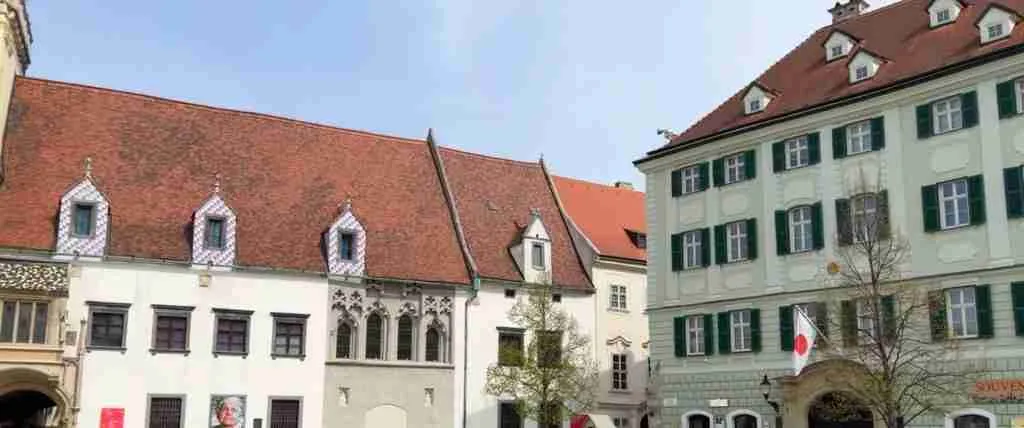
Bratislava’s Old Town (Staré Mesto) creates a pedestrian paradise of cobblestone streets, medieval squares, and historic buildings requiring no entrance fees. The compact area covers roughly 800 meters by 600 meters, easily explored in 2-3 hours of leisurely walking.
Main Square (Hlavné námestie) forms the Old Town’s heart, surrounded by colorful baroque and rococo buildings. The Roland Fountain (Maximilian Fountain) provides the square’s centerpiece, with cafés and restaurants lining the perimeter. While dining costs money, simply being present and observing the architectural details remains free.
Narrow lanes radiate from Main Square into quieter residential areas. Ventúrska Street preserves medieval character with Gothic portals and Renaissance facades. Michalská Street leads toward Michael’s Gate, passing artisan shops and historic townhouses. These streets reward slow exploration—architectural details appear in doorways, windows, and decorative elements overhead.
The famous quirky statues scatter throughout the Old Town, creating a free scavenger hunt. Čumil (Man at Work) emerges from a manhole on Panská Street near Rybárska brána. Napoleon’s Army Soldier leans casually on a bench near the Main Square. Schöne Náci tips his hat on Rybárska brána. Paparazzi lurks near the corner of Laurinská and Rybárska. Finding all the statues costs nothing but adds playful discovery to the walking experience.
The Old Town operates as a largely pedestrian zone, eliminating traffic concerns. Free public toilets exist at specific locations (small fee typically €0.50), or use facilities in cafés after purchasing an inexpensive coffee. The entire area remains accessible 24/7, though shops and many attractions follow regular business hours.
St. Martin’s Cathedral
This Gothic cathedral served as the coronation church for Hungarian kings and queens between 1563 and 1830, hosting 19 coronation ceremonies during Bratislava’s time as the Hungarian capital (when the city was known as Pressburg). The cathedral allows free entry, making it accessible to all visitors regardless of budget.
The cathedral’s exterior impresses with its 85-meter tower topped by a gold-plated crown on a cushion, visible throughout the Old Town. The three-nave interior features Gothic vaulting, baroque altars, and the Chapel of St. John the Almsgiver with original 14th-century frescoes. The high altar showcases St. Martin on horseback, honoring the cathedral’s patron saint.
Free access allows visitors to experience the building’s acoustic properties—the cathedral hosts concerts and organ recitals, though these ticketed events differ from general admission. During regular hours, visitors can walk through the nave, observe the architectural details, and sit in quiet contemplation without any charge.
The cathedral opens daily with varying hours: Monday-Saturday 9 AM-6 PM, Sunday 1 PM-6 PM (verify current hours before visiting as they may adjust for services). Modest dress is appreciated—covered shoulders and knees. Photography is permitted without flash. Donations are welcome but not required for entry.
Location convenience enhances the cathedral’s appeal—it sits at the edge of the Old Town, easily included in any historic center walking route. The approach from the castle provides excellent photography angles, with the cathedral’s tower rising against the city backdrop.
Grassalkovich Palace and Presidential Garden
The official residence of Slovakia’s president occupies an 18th-century Rococo palace, but the Presidential Garden opens to the public free of charge (when the president is not in residence). The formal baroque garden provides a green oasis just steps from the city center’s bustle.
Geometric flowerbeds, manicured hedges, and gravel paths create classical European garden design. Mature trees provide shade during summer months, while benches invite rest and observation. The palace facade forms an elegant backdrop for photos, though interior access remains restricted.
The garden’s relatively small size—approximately 200 meters by 150 meters—makes it ideal for a brief interlude during Old Town exploration. Visitors often combine it with nearby attractions like the Archbishop’s Palace or continue walking toward the Danube promenade.
Opening hours vary seasonally and depend on official functions. Generally accessible Tuesday-Sunday during daylight hours from April through October, with winter closures common. Check current status before visiting, as presidential events close the garden without advance notice. When open, admission remains completely free.
Michael’s Gate and Tower Views
Michael’s Gate (Michalská brána) stands as Bratislava’s only preserved medieval city gate, dating from 1300. While the tower’s interior museum charges €5 admission, the gate itself can be photographed and walked through without cost, and the surrounding area offers free cultural experiences.
The gate’s green copper roof topped by the Archangel Michael statue creates Bratislava’s most photographed landmark. The structure spans Michalská Street, with the Old Town spreading to one side and the castle district to the other. Walking under the arch places visitors on the ancient route that connected the castle to the city center.
At the gate’s base, the Kilometer Zero marker shows distances to other world capitals—Moscow (1,798 km), Paris (1,193 km), New York (6,857 km). This free photo opportunity attracts countless visitors documenting their Bratislava visit.
The surrounding streets—Michalská and Ventúrska—preserve medieval character with Gothic and Renaissance architecture. These narrow lanes cost nothing to explore but deliver concentrated historic atmosphere. Small courtyards and passages reveal themselves to observant walkers, offering architectural discoveries beyond the main thoroughfares.
The Museum of Arms and City Fortifications inside Michael’s Tower showcases medieval weapons and city history. The €5 admission provides tower access and panoramic views, but visitors can enjoy the exterior architecture and street-level experience without paying.
Blue Church (Church of St. Elisabeth)
The Art Nouveau Church of St. Elisabeth earns its “Blue Church” nickname from the comprehensive blue-and-white color scheme covering every surface. Built between 1909-1913 in the Hungarian Secessionist style, this architectural gem offers free entry and creates one of Bratislava’s most photographed locations.
The exterior features distinctive blue majolica tiles, white decorative elements, and a cylindrical tower topped with a blue tiled roof. The oval-shaped church resembles a fairytale illustration, particularly appealing to families with children. The surrounding fence and small front plaza complete the cohesive blue design.
Inside, blue painted walls, white details, and Art Nouveau motifs continue the color scheme. Blue pews, blue ceiling, and blue-tinted light create an ethereal atmosphere unique among Bratislava’s churches. The relatively small interior (capacity about 300) maintains intimate proportions despite the elaborate decoration.
The church functions as an active Catholic parish, so opening hours align with mass schedules and religious functions. Generally accessible Monday-Saturday 7 AM-7 PM, Sunday 7:30 AM-noon and 2 PM-7 PM, though these hours vary. Always check the door notice for current times, and respect any closures for services.
Location: Bezručova Street, approximately 10 minutes walk east of the Old Town center. The slightly removed position keeps crowds manageable compared to Old Town hotspots. Free access makes this architectural treasure accessible to all visitors, though donations support church maintenance.
Parks and Natural Spaces in Bratislava 2026
Sad Janka Kráľa: Europe’s Oldest Public Park
Established in 1774-1776, Sad Janka Kráľa holds the distinction of being Central Europe’s oldest public park. Located on the Danube’s right bank (Petržalka district), this 42-hectare green space offers diverse tree species, romantic walking paths, playgrounds, and river views—all completely free.
The park’s English landscape design features winding paths, mature trees (including rare species like ginkgo biloba and sequoia), and open meadows. Small monuments and sculptures dot the landscape, including fountains and memorial busts. The park’s age shows in the massive tree trunks and established character absent from newer urban parks.
Access the park via the UFO Bridge (Most SNP) on foot or bicycle—the pedestrian/cycle path runs along the bridge’s edge, providing free Danube crossing. The 10-15 minute walk from the Old Town delivers you to the park entrance, where multiple paths invite exploration.
The park attracts local families, joggers, and cyclists, creating authentic Bratislava neighborhood atmosphere beyond the tourist-focused Old Town. Playgrounds serve children at no cost, while benches and picnic areas accommodate lunch breaks or afternoon rest. The park operates 24/7 with no admission fee or restrictions.
Combine park visits with views of the UFO Bridge from below—while ascending the UFO Observation Deck costs €10, viewing the striking structure from the park remains free and offers unique photography angles.
Danube River Promenade
The Danube embankment stretches several kilometers along Bratislava’s riverside, offering free walking, cycling, and river observation. The promenade connects multiple districts and provides different character depending on the section explored.
The central section near the Old Town features the renovated Eurovea development with modern architecture, restaurants, and shopping. While establishments charge for goods, simply walking the riverside promenade costs nothing and delivers river views, boat watching, and people observation.
Moving east from Eurovea, the promenade becomes less developed and more natural. Cycling paths run along the embankment, accessible free to anyone with a bicycle. The flat terrain makes this section ideal for casual riders or families with children.
West toward the UFO Bridge and beyond, the promenade passes under the bridge structure and continues toward Devín. This section attracts joggers and dog walkers, with the river’s broader views and fewer commercial developments.
Free activities along the promenade include: walking or jogging any distance, cycling (if you have a bicycle), sitting on public benches, photographing river scenes and boats, and observing the UFO Bridge from various angles. Sunset hours (summer months) deliver particularly attractive light conditions for photography.
Access points exist at multiple locations—the UFO Bridge, near the Slovak National Theatre, at Eurovea, and at various bridges crossing the Danube. The entire promenade operates 24/7 with free public access throughout.
Medická Záhrada (Medical Garden)
This baroque-style park near the city center offers a quiet green retreat with historical atmosphere. Dating from the 18th century, the garden features a bronze fountain, statuary, mature trees, and walking paths—all accessible without charge.
The park’s compact size (roughly 200 meters by 150 meters) makes it manageable for brief visits. Shaded benches line the paths, while an outdoor café operates seasonally (purchases optional). Families appreciate the playground area where children can play free.
The garden’s formal design reflects baroque planning principles with geometric beds and axial paths. Water ponds add reflective elements, while the diverse tree species provide shade and seasonal interest. Spring brings flowering plants, summer delivers full canopy shade, and autumn creates colorful foliage displays.
Location on Špitálska Street places the garden conveniently near the main bus station and within walking distance of the Old Town. This positioning makes it useful as a rest stop during city exploration or a peaceful interlude before catching buses from the station.
Opening hours vary by season but generally align with daylight hours. The garden closes at dusk, with gates locked after closing time. Public toilets exist on-site (small fee typical), and the space remains family-friendly with local residents using it for casual recreation.
Slavín War Memorial and Viewpoint
This military cemetery and monument honors Soviet soldiers who died liberating Bratislava in April 1945. The hilltop location provides outstanding panoramic views across the city, while the memorial’s historical significance adds depth to the visit—all completely free to access.
The 39.5-meter obelisk topped by a statue of a victorious soldier dominates the site. Terraced gardens with memorial plaques and the cemetery containing nearly 7,000 graves create a somber atmosphere appropriate for reflection. The well-maintained grounds respect the site’s commemorative purpose while allowing visitor access.
From Slavín’s terraces, views sweep across Bratislava’s Old Town, the castle, the Danube River, and Petržalka district. The elevated position (240 meters above sea level) provides perspective on the city’s geography and layout. Clear days reveal distant views into Austria and Hungary.
Access Slavín by trolleybus 203 from the city center (stops near the memorial), or walk uphill from the Old Town in approximately 25-30 minutes. The walk climbs through residential neighborhoods, providing local atmosphere beyond tourist areas. The site operates 24/7 with free public access.
Photography is permitted throughout the memorial and cemetery. The combination of memorial architecture, city views, and historical significance creates powerful visual opportunities. Respect the site’s commemorative nature by maintaining appropriate behavior.
Free Cultural Experiences in Bratislava 2026
Bratislava Quirky Statues Walking Tour
Bratislava’s collection of bronze statues creates a free city-wide scavenger hunt. These whimsical sculptures, installed in the 1990s and 2000s, add playful elements to historic streets while commemorating local characters and culture.
Čumil (Man at Work or The Watcher) emerges from a manhole at the corner of Panská and Rybárska streets. This 1997 sculpture shows a worker peering from the sewer, supposedly watching women’s skirts pass overhead. The most photographed statue in Bratislava, Čumil’s head bears a polished shine from countless tourists touching it for luck.
Napoleon’s Army Soldier (1997) leans on a bench in Hlavné námestie (Main Square), arms draped casually over the backrest. The sculpture commemorates Napoleon’s troops who camped in Bratislava during their campaigns. Visitors photograph themselves sitting beside the soldier, creating interactive free photo opportunities.
Schöne Náci (Beautiful Ignác) stands on the corner of Rybárska brána and Rybárske námestie, tipping his top hat in gentlemanly greeting. This statue honors Ignác Lamár (1897-1967), a beloved Bratislava eccentric who dressed elegantly and greeted everyone with courtly manners despite mental challenges. Local tradition says touching his hat brings good luck.
Paparazzi lurks on Laurinská Street corner, camera in hand, capturing an imaginary celebrity. This 2001 sculpture plays with themes of fame and observation, positioned where it can “photograph” passersby.
Other statues include the French Soldier on Hlavné námestie, the Poet on Hviezdoslavovo námestie, and the Sewer Worker near the waterfront. Finding all the sculptures costs nothing but adds discovery elements to Old Town exploration. Local tourism offices provide free maps marking statue locations.
Street Art and Creative Quarter
Bratislava’s street art scene concentrates in several neighborhoods beyond the Old Town, offering free contemporary culture experiences. While the historic center preserves traditional architecture, outlying districts showcase modern creative expression.
The Nové Mesto and Ružinov districts feature murals, graffiti art, and installations. Searching for these works leads visitors through authentic residential neighborhoods where locals live and work. The art changes periodically as new pieces appear and older works fade, making each visit potentially different from previous experiences.
Notable areas include streets around the new JAMA building on Račianska Street, underpasses with legal graffiti walls, and industrial areas where artists create large-scale murals. These locations require no admission fees and operate as public spaces accessible to all.
Photography is encouraged—street art exists specifically for public viewing and documentation. The variety of styles, from realistic murals to abstract graffiti to political commentary, provides artistic diversity beyond traditional museum collections. The outdoor setting and natural light create different viewing conditions throughout the day.
Combine street art exploration with public transport use (€1.20 for a 30-minute ticket to reach outer districts). This creates a low-cost cultural experience showcasing contemporary Bratislava creativity alongside the historic Old Town attractions.
Free Market Hall Browsing
The Old Market Hall (Stará Tržnica) dates from 1910 and serves as an urban meeting point combining food markets and cultural events. While purchasing goods costs money, simply walking through and observing the activity remains free and provides authentic local atmosphere.
The Art Nouveau building features an impressive iron and glass structure. Inside, Saturday markets bring farmers, artisans, and food vendors selling Slovak specialties. The bustling atmosphere, colorful displays, and vendor interactions create vibrant experiences without requiring purchases.
The hall occasionally hosts free exhibitions, performances, or cultural events. Check the venue’s schedule before visiting to coincide with special programs. Even without events, the architectural merit and market activity justify a visit during regular opening hours.
Location on Námestie SNP (SNP Square) places the Market Hall central to other attractions. It functions as a logical stop during Old Town exploration, providing indoor shelter during rain and authentic local character beyond tourist-focused venues.
Strategic Free Visit Planning for Bratislava 2026
Creating a Free Full-Day Bratislava Itinerary
Combining Bratislava’s free attractions creates comprehensive full-day itineraries without admission costs. This sample schedule maximizes no-cost experiences while maintaining logical geographic flow:
Morning (8 AM – 12 PM): Start at Bratislava Castle grounds (arrive early for fewer crowds). Walk through courtyards and gardens, photograph panoramic views. Descend through Old Town via Zámocká Street. Explore St. Martin’s Cathedral (free entry). Walk Old Town streets searching for quirky statues (Čumil, Napoleon’s Soldier, Schöne Náci). Visit Main Square and surrounding medieval lanes.
Afternoon (12 PM – 4 PM): Walk to Grassalkovich Palace Presidential Garden (if open). Visit Blue Church on Bezručova Street. Walk to Medická Záhrada park for rest and picnic (bring food from grocery stores to save money). Continue to Danube promenade for riverside walking.
Evening (4 PM – 7 PM): Cross UFO Bridge to Sad Janka Kráľa park. Explore Europe’s oldest public park and photograph the bridge from below. Return to Old Town via bridge. Visit Slavín Memorial for sunset views across the city (requires uphill walk or €1.20 bus ride).
This itinerary covers 10-12 kilometers of walking but visits all major free attractions. Costs limited to food (purchased from grocery stores for budget savings) and one potential €1.20 bus ticket for Slavín access. Total daily cost: €5-10 for food, potentially €1.20 for transport = €6.20-11.20 total (excluding accommodation).
Transport Optimization for Free Attractions
Most free attractions cluster in the compact Old Town and immediate surroundings, requiring no public transport. Strategic use of Bratislava’s transport system extends access to outlying free sites economically.
The 24-hour pass costs €3.50 (check official site for current rates) and covers unlimited bus, tram, and trolleybus rides across the city. This single purchase enables visits to Slavín Memorial (trolleybus 203), Sad Janka Kráľa (walk across UFO Bridge or bus connections), and street art areas in outer districts—all within one day.
Without the 24-hour pass, single rides cost €1.20 for 30 minutes. Strategic trip planning limits transport to reaching Slavín (€1.20 each way) while walking to all other attractions. This reduces daily transport costs to €2.40-3.50 depending on the day pass decision.
Walking itself costs nothing and provides the most flexible free attraction access. The Old Town to UFO Bridge to Sad Janka Kráľa route covers roughly 3 kilometers—easily walkable in 30-40 minutes. The castle to Old Town to Blue Church route spans approximately 2.5 kilometers. Most visitors comfortably walk 8-12 kilometers daily, accessing all central free attractions without transport costs.
Seasonal Considerations for Free Activities 2026
Bratislava’s free outdoor attractions operate year-round but deliver different experiences across seasons:
Spring (April-May 2026): Ideal for garden visits with flowering plants in Grassalkovich Palace garden and Medická záhrada park. Castle grounds bloom with seasonal color. Comfortable temperatures (15-20°C) make walking pleasant. Days lengthen, providing more daylight for exploration.
Summer (June-August 2026): Peak season brings crowds but longest daylight hours. Morning and evening visits avoid midday heat and tour group congestion. Parks and river promenades maximize appeal with full foliage. Outdoor seating fills squares (no purchase required to observe the atmosphere). Sunset occurs around 9 PM, extending photography opportunities.
Autumn (September-October 2026): Excellent visiting conditions with moderate crowds, comfortable temperatures (12-18°C), and fall foliage in parks. Clear days deliver outstanding castle and Slavín viewpoint visibility. Shorter days require earlier afternoon starts for adequate light.
Winter (November-February 2026): Some attractions reduce hours or close (Grassalkovich Palace garden typically closed). Christmas markets populate main squares (browsing free, purchases cost money). Cold temperatures (0-5°C) limit outdoor time but reduce crowds significantly. Indoor free attractions (St. Martin’s Cathedral, Blue Church, Old Market Hall) gain importance. Snow creates photographic opportunities on castle grounds and Slavín Memorial.
Combining Free and Paid Attractions Strategically
Budget travelers can enhance free attractions with selective paid additions that provide maximum value:
High-value paid additions: Michael’s Gate tower (€5) adds panoramic Old Town views and armor museum access. UFO Observation Deck (€10) delivers the city’s highest viewpoint at 95 meters. Bratislava Castle interior museum (€10) provides historical context for the free exterior grounds.
Budget allocation strategy: Focus spending on unique experiences unavailable free. Viewpoints justify costs for extraordinary perspectives, while general city walking and architectural observation cost nothing. A budget of €15-20 for paid attractions covers 1-2 strategic additions while maintaining predominantly free experiences.
Free alternatives to paid attractions: Skip UFO Observation Deck and instead visit free Slavín Memorial for equally impressive views. Skip Bratislava Castle interior and instead thoroughly explore the free grounds and gardens. Skip paid tours and instead walk independently using free online guides or tourism office materials.
Practical Information for Free Bratislava Visits 2026
Free Resources and Information
Bratislava Tourism Office operates information points providing free maps, brochures, and advice. The main office in the Old Town offers city maps marking free attractions, public transport routes, and walking paths—all without charge. Staff answer questions and suggest itineraries at no cost.
Free WiFi exists at many public spaces including Main Square, major parks, and the train station. This enables map access, transport planning, and information research without data charges. Many cafés offer WiFi to customers, making a €2-3 coffee purchase worthwhile for extended planning sessions.
Free public toilets operate at limited locations. Most free attractions lack facilities, so strategic café stops (€2-3 for coffee or soft drink) provide restroom access. The Old Market Hall and major parks have paid toilets (€0.50-1.00 typical).
Budget Accommodation Near Free Attractions
Strategic accommodation location minimizes transport costs while maximizing access to free attractions. The Old Town and immediate surroundings place visitors within walking distance of most no-cost sites, eliminating transport expenses entirely.
Budget hostel options in Bratislava start at €15-25 per bed in dormitory rooms. Mid-range hotels and apartments range €50-80 per night. Booking outside peak summer months (June-August) secures lower rates. Accommodations slightly outside the Old Town (but still within 2 kilometers) often cost 20-30% less while remaining easily walkable.
Calculate total costs including accommodation plus transport when comparing options. A €55 Old Town hotel requiring no transport often costs less than a €40 suburban hotel requiring €3.50 daily transport passes, particularly for multi-day stays.
Food Strategies to Complement Free Attractions
Meals represent most visitors’ largest daily costs after accommodation. Strategic food choices dramatically reduce daily expenses while exploring free attractions:
Grocery store meals cost €5-8 daily for breakfast, picnic lunch, and simple dinner. Tesco, Billa, and Kaufland supermarkets near the city center sell bread, cheese, yogurt, fruit, and prepared foods. Assemble picnic lunches enjoyed in free parks (Sad Janka Kráľa, Medická záhrada, castle grounds).
Budget restaurant meals cost €8-12 for traditional Slovak dishes like bryndzové halušky (potato dumplings with sheep cheese). One restaurant meal combined with grocery store purchases creates a balanced €15-18 daily food budget.
Public water fountains exist at several locations including Main Square and parks—refill water bottles free rather than purchasing €2 bottled water repeatedly. This small saving accumulates across multi-day visits.
Safety and Local Customs for Free Areas
Bratislava ranks among Europe’s safest capitals. Free public attractions like parks, promenades, and squares maintain safe environments throughout daylight hours and reasonable evening hours. Standard precautions apply: watch belongings in crowded Old Town areas, avoid completely deserted locations late night, and stay aware of surroundings.
Parks close at dusk with locked gates—plan to exit before official closing times (typically 30 minutes after sunset). The Danube promenade and Old Town squares remain accessible 24/7 but attract fewer people late night.
Respect church visiting protocols at St. Martin’s Cathedral and Blue Church—modest dress (covered shoulders and knees), quiet voices, and photography without flash. These free attractions function as active religious sites, not museums.
At memorial sites like Slavín, maintain respectful behavior appropriate to the commemorative purpose. The free access doesn’t diminish the site’s significance or the expectation for dignified conduct.
Day Cost Summary for Free Activities Bratislava 2026
Budget travelers can experience Bratislava’s free attractions with minimal daily costs:
Transport: €0-3.50 (depending on whether 24-hour pass purchased or only walking). Food: €5-8 (grocery store meals) to €15-20 (mix of grocery and budget restaurant). Optional paid attractions: €0-15 (if adding 1-2 strategic paid sites). Miscellaneous: €1-3 (paid toilets, occasional coffee).
Total daily cost: €6-42 per person (excluding accommodation).
The low end (€6-10) represents dedicated budget travel using only free attractions, grocery store food, and walking transport. The middle range (€15-25) includes the 24-hour transport pass, mix of grocery and budget restaurant meals, and 1-2 paid attractions. The higher end (€35-42) adds premium food choices and multiple paid admission sites to the free attraction base.
This cost structure makes Bratislava among Europe’s most affordable capitals for quality sightseeing experiences, particularly compared to Vienna (€60-100 daily for similar activities) or Prague (€50-80 daily).
Frequently Asked Questions
Are Bratislava’s major attractions really free in 2026?
Yes, Bratislava Castle grounds, Old Town streets, St. Martin’s Cathedral, multiple parks, the Danube promenade, and the Slavín Memorial all offer completely free access with no admission charges. While some sites like the castle interior museum and Michael’s Gate tower charge admission (€5-10), the exterior grounds and basic access remain free. This differs from cities like Prague or Vienna where major castle and cathedral sites typically charge €10-20 entrance fees.
How much money should I budget for a day visiting Bratislava’s free attractions?
Dedicated budget travelers can visit all major free attractions for €6-15 daily (excluding accommodation), covering public transport (€3.50 for 24-hour pass) and grocery store meals (€5-8). A comfortable budget allowing restaurant meals and 1-2 paid attractions ranges €25-40 daily. This makes Bratislava significantly cheaper than nearby Vienna or Prague where similar sightseeing costs €50-100 daily.
Can I see all of Bratislava’s highlights in one day without paying admission fees?
Yes, a well-planned single day covers Bratislava Castle grounds, the entire Old Town with its statues and squares, St. Martin’s Cathedral, the Blue Church, Danube promenade, and one major park (Sad Janka Kráľa or Slavín Memorial) with no admission charges. This provides comprehensive city experience representing Bratislava’s historical, architectural, and cultural highlights. Adding optional paid sites like the UFO Observation Deck or castle interior enhances but isn’t essential for a quality visit.
Do I need to book or reserve free attractions in advance for 2026?
No, Bratislava’s free outdoor attractions (castle grounds, parks, squares, Danube promenade) require no advance booking or reservations. Simply arrive during daylight hours and explore freely. Churches like St. Martin’s Cathedral and Blue Church operate on walk-in basis, though they may close temporarily for services. The tourism office provides free maps and information without appointments. This spontaneous accessibility makes Bratislava ideal for flexible, unstructured exploration.
What’s the best time of day to visit free attractions to avoid crowds in 2026?
Early morning (7-9 AM) offers the quietest visiting conditions at popular sites like Bratislava Castle grounds and Main Square. Late afternoon (4-6 PM) sees reduced tour group presence while maintaining good light for photography. Summer evenings extend visiting hours with daylight until 9 PM, allowing post-dinner exploration of Old Town streets and the Danube promenade when crowds disperse. Weekday visits encounter fewer people than weekends, particularly at the castle grounds and major viewpoints.
Are Bratislava’s free parks and outdoor spaces safe for families with children?
Yes, Bratislava’s parks like Sad Janka Kráľa and Medická záhrada maintain safe, family-friendly environments with playgrounds, open spaces, and local families using them regularly. The Old Town squares and castle grounds provide car-free zones where children can move safely. Standard supervision applies, but the city ranks among Europe’s safest capitals with low crime rates. Parks close at dusk (gates locked), so plan family visits during daylight hours for maximum access and comfort.
Can I visit free attractions year-round or do some close in winter?
Most free outdoor attractions operate year-round including Bratislava Castle grounds, Old Town streets, St. Martin’s Cathedral, Blue Church, Danube promenade, and Slavín Memorial. Some seasonal closures affect Grassalkovich Palace Presidential Garden (typically closed November-March) and reduced hours at certain churches. Winter conditions (0-5°C, potential snow) make outdoor exploring less comfortable but don’t prohibit access. Indoor free options like churches and the Old Market Hall gain importance during cold months. Summer (June-August) provides maximum access to all free sites.
Is the walk from Bratislava Castle to free attractions difficult or steep?
The castle sits 85 meters above the Danube, requiring uphill walking on approach but delivering downhill routes into the Old Town. The main walking route via Zámocká Street climbs steadily over 15-20 minutes—manageable for most fitness levels but challenging with mobility limitations. Alternative: take trolleybus 203 uphill, then walk down to enjoy views without exhausting uphill effort. The descent through Old Town to river level is gradual and easily walkable. Within the Old Town and along the Danube promenade, terrain remains flat and fully accessible.
Are there free guided walking tours in Bratislava in 2026?
Some companies offer “free” walking tours operating on a tips-expected basis—guides work for gratuities (€10-20 per person typical) rather than fixed fees. These tours visit the same free attractions you can explore independently using free maps from the tourism office. The value depends on whether you want historical narration and group structure. For truly free exploration, use tourism office maps and online resources to create self-guided tours visiting all the same sites without tipping expectations. Both approaches access identical free attractions.
How does Bratislava compare to Vienna for free attractions?
Bratislava offers substantially more free access to major attractions than Vienna. While Vienna charges admission to Schönbrunn Palace grounds (€20-30), St. Stephen’s Cathedral tower (€7), and most imperial sites, Bratislava provides free castle grounds, free cathedral entry, and free access to top viewpoints. Vienna’s parks and promenades are free (similar to Bratislava), but major sightseeing costs significantly more. A Vienna day costs €40-80 for similar experiences that cost €10-25 in Bratislava. This makes Bratislava ideal for budget travelers seeking European capital experiences without premium prices.