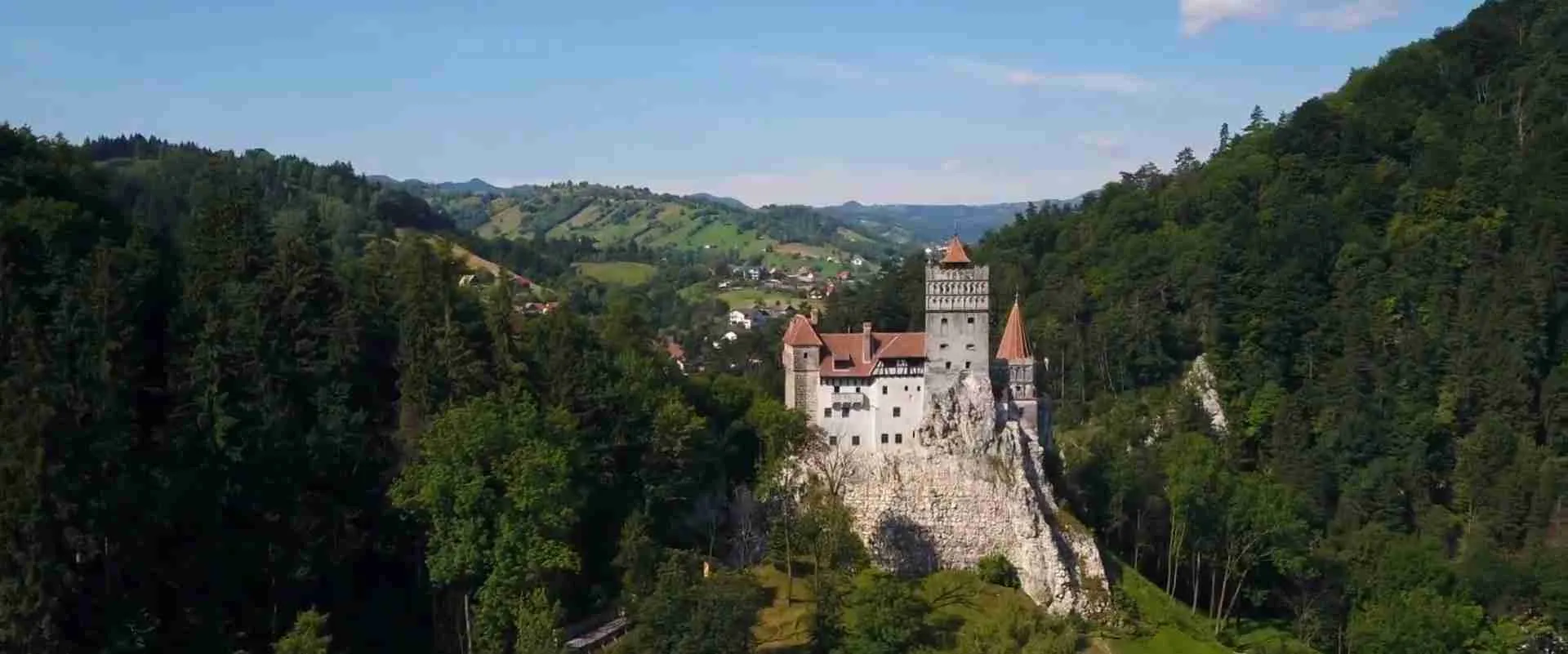
Bran Castle Transylvania: Dracula’s Castle Complete Visitor Guide
Perched dramatically on a rocky precipice between Transylvania and Wallachia, Bran Castle stands as Romania’s most iconic medieval fortress, drawing over one million visitors annually to its storied towers and hidden passageways. While the world knows it as Dracula’s Castle, the reality encompasses centuries of strategic military importance, a beloved queen’s cherished sanctuary, and a remarkable journey from 14th-century defensive stronghold to modern private museum showcasing Romanian royal heritage.
Key Takeaways: Essential Bran Castle Insights
- Historical Reality vs. Literary Legend: Bran Castle’s association with Dracula stems from resemblance to Bram Stoker’s fictional description rather than documented connection to Vlad the Impaler, who likely never resided here despite popular mythology linking the two.
- Queen Marie’s Royal Sanctuary: The castle’s most significant historical period came when Queen Marie of Romania transformed this medieval fortress into an elegant royal summer residence between 1920 and 1938, creating the romantic interior visitors explore today.
- Strategic Medieval Fortress: Constructed between 1377 and 1388 by the Saxons of Kronstadt under authorization from King Louis I of Hungary, the castle guarded the critical mountain pass linking Transylvania with Wallachia while serving as a customs checkpoint for centuries of trade.
- Architectural Complexity: The fortress features four interconnected levels of narrow staircases, hidden passages, and tower chambers that reflect both defensive medieval design and Queen Marie’s early 20th-century romantic renovations.
- Museum Collections: Today’s private museum showcases Queen Marie’s furniture and art collection, medieval weapons and armor, traditional Romanian ethnography in the open-air museum, and exhibits exploring both genuine history and Dracula mythology.
- Living Monument: As Romania’s first private museum following restitution to the Habsburg heirs in 2009, Bran Castle represents both preserved medieval architecture and ongoing cultural stewardship, balancing tourist appeal with historical authenticity.
People Also Ask About Bran Castle Transylvania
Did Dracula really live in Bran Castle?
No, neither the fictional Count Dracula nor the historical Vlad the Impaler lived in Bran Castle. Bram Stoker never visited Romania and likely knew nothing specific about Bran Castle when writing his 1897 novel. The connection arose because Stoker’s description of Dracula’s lair—a castle on a rocky precipice commanding a narrow valley—superficially resembles Bran’s dramatic setting. Vlad the Impaler, the 15th-century Wallachian prince who inspired aspects of the Dracula character, possibly spent two months imprisoned at Bran in 1462, but historical records provide no evidence he ever resided there. His actual fortress stood at Poenari, now in ruins. The Dracula association began as marketing strategy in the 1960s-1970s when American tourists and later Romanian authorities promoted the castle as “Dracula’s Castle” to boost tourism, a designation that proved remarkably successful despite historical inaccuracy.
What is the historical significance of Bran Castle?
Bran Castle’s historical importance derives from its strategic position guarding the Bran Pass, the closest mountain route between Transylvania and Wallachia through the Carpathian Mountains. Built 1377-1388 by the Saxons of Kronstadt (Brașov) under authorization from King Louis I of Hungary, the fortress served dual purposes: defending against Ottoman expansion northward and controlling customs collection on vital trade routes. The castle changed hands multiple times through medieval conflicts, housing garrisons of mercenaries including English ballista specialists. Its most culturally significant period came during Queen Marie of Romania’s tenure from 1920 to 1938, when she transformed the military stronghold into a beloved royal summer residence. During World War II, her daughter Princess Ileana operated the Hospital of the Queen’s Heart here, treating wounded Romanian soldiers. The castle represents Romanian resilience through centuries of border conflicts, changing empires, communist nationalization, and eventual restoration to royal heirs as the country’s first private museum.
How does Bran Castle architecture reflect its history?
The castle’s architecture reveals distinct historical layers spanning six centuries. The medieval core, constructed 1377-1388, features classic defensive elements: thick stone walls, narrow arrow slits designed for crossbow defense, strategic positioning atop a 60-meter cliff commanding valley approaches, and an interior layout emphasizing military function over comfort. The Saxons built using local stone and timber, creating a fortress optimized for small garrisons defending the mountain pass. When Queen Marie assumed ownership in 1920, Czech architect Karel Zdeněk Líman executed extensive romantic renovations, converting defensive openings into mullioned windows, adding Saxon-style tiled stoves for heating, installing custom furniture in European styles, and creating intimate living spaces within the medieval framework. The queen commissioned a 57-meter well in the courtyard, a hydroelectric plant powered by the Turcu River, and most famously a lift connecting the castle to the gardens below—an engineering marvel that allowed her to descend the cliff without climbing steep medieval staircases. Modern visitors navigate this architectural palimpsest: medieval defensive passages juxtaposed with Art Nouveau furnishings, fortress towers converted to royal apartments, and the 2018 “Time Tunnel” multimedia lift replacing Queen Marie’s original.
Why did Queen Marie love Bran Castle?
Queen Marie of Romania, granddaughter of Queen Victoria and one of the most influential royal figures in Romanian history, transformed Bran Castle into her personal sanctuary because it offered escape from royal protocol and Bucharest court intrigue. The castle represented creative freedom—she designed gardens in English style, furnished rooms according to her artistic vision, and created intimate spaces reflecting her personality rather than state requirements. Historical accounts describe her profound attachment to Bran as a place where she could be herself rather than performing queenly duties. Following King Ferdinand I’s death in 1927, she increasingly retreated to Bran for solitude and reflection. The people of Brașov had gifted her the castle in 1920 as recognition of her wartime service, when she personally nursed wounded soldiers and pressured her husband to enter WWI on the Allied side despite German family connections. This gesture of national gratitude deepened her emotional bond to the property. She requested her heart be preserved in a chapel at her Balchik Palace on the Black Sea, but after that territory returned to Bulgaria, Princess Ileana transferred her mother’s heart to Bran Castle’s chapel—a poignant testament to the queen’s spiritual connection to this Transylvanian refuge.
Extended multi-day tours – 5+ days
Featured Brasov Multi-Day Tour Packages

3 days
Brasov 3-Day Discovery Tour
- ✓ Comprehensive Brasov experience
- ✓ Expert local guides included
- ✓ All accommodation included
- ✓ Transportation provided

5 days
Brasov 5-Day Highlights Experience
- ✓ Comprehensive Brasov experience
- ✓ Expert local guides included
- ✓ All accommodation included
- ✓ Transportation provided

7 days
Brasov 7-Day Cultural Journey
- ✓ Comprehensive Brasov experience
- ✓ Expert local guides included
- ✓ All accommodation included
- ✓ Transportation provided

10 days
Brasov 10-Day Complete Adventure
- ✓ Comprehensive Brasov experience
- ✓ Expert local guides included
- ✓ All accommodation included
- ✓ Transportation provided
Multi-day tour packages powered by TourRadar. Prices and availability subject to change.
Introduction: Separating Myth from Medieval Reality
Among the pine-covered slopes of the Carpathian Mountains, where Transylvania’s highlands descend toward the Wallachian plains, stands a fortress that has captivated imaginations far beyond its actual historical significance. Bran Castle’s global fame rests on a foundation of literary fiction, strategic medieval engineering, royal romance, and shrewd 20th-century marketing—a complex tapestry where separating documented history from popular mythology requires examining evidence with critical precision.
The castle’s international reputation as “Dracula’s Castle” represents one of history’s most successful place-branding campaigns, yet the connection between this real fortress and Bram Stoker’s fictional vampire remains largely circumstantial. The Irish author never visited Romania, never mentioned Bran Castle by name in his correspondence, and drew his Transylvanian Gothic atmosphere from diverse sources including British Library research, European travelogues, and imagination. When Stoker described Count Dracula’s lair in his 1897 novel as a castle “on the very edge of a terrible precipice,” with windows commanding views of valley forests below, he created a description that happens to match Bran’s dramatic setting—but so do dozens of other Carpathian fortresses.
The historical Vlad III, Prince of Wallachia from 1456 to 1462, earned his gruesome nickname “the Impaler” through documented brutality that terrorized enemies and subjects alike. His reputation for impaling victims on wooden stakes and displaying the results as psychological warfare became legendary across Europe. Yet serious historians find scant evidence linking Vlad to Bran Castle beyond a possible two-month imprisonment in 1462 when Hungarian King Matthias Corvinus held him captive. Vlad’s actual seat of power stood at Târgoviște, and his mountain fortress at Poenari, not Bran. The conflation of Vlad the Impaler with both Dracula and Bran Castle emerged primarily through 20th-century cinema and tourism marketing rather than medieval documentation.
What Bran Castle actually represents—stripped of vampire mythology—proves equally fascinating. The fortress embodies medieval Central European border defense architecture, the strategic importance of mountain passes in pre-modern trade and warfare, Saxon colonization of Transylvania, Hungarian-Wallachian relations during Ottoman expansion, and the transformation of military strongholds into royal residences. Most significantly, Bran preserves the legacy of Queen Marie of Romania, whose conversion of this fortress into a beloved summer retreat between 1920 and 1938 created the romantic interior that visitors experience today.
Understanding Bran Castle requires acknowledging both what it is and what it is not. It is not Vlad the Impaler’s residence, not the inspiration for Stoker’s fictional castle, and not an authentic medieval interior—most furnishings date from Queen Marie’s early 20th-century renovations. It is an exceptionally well-preserved 14th-century Saxon fortress, a masterwork of strategic military architecture, a monument to Romanian royal history, and Romania’s most visited tourist attraction. The castle’s power lies not in spurious vampire connections but in its genuine role guarding the crossroads of empires, its transformation from military stronghold to royal sanctuary, and its survival through seven centuries of conquest, war, political upheaval, and changing borders.
This guide examines Bran Castle’s documented history, architectural evolution, connection to Romanian royalty, relationship to Dracula mythology, and practical visitor information—providing context that enhances rather than diminishes the castle’s mystique. The real story of this Carpathian fortress, properly understood, surpasses the fictional legends that made it famous.
Historical Foundations: From Teutonic Knights to Saxon Fortress
Bran Castle’s origins trace to the early 13th century when the region stood on the frontier between Christian Europe and encroaching threats from the east. In 1211, King Andrew II of Hungary invited the Teutonic Order—a German Christian military order formed during the Crusades—to settle in the Burzenland region (modern Țara Bârsei) and defend the southeastern approaches to Transylvania. The knights established a wooden fortress called Dietrichstein at the mouth of the Bran Pass, named after the regional commander Frater Theodericus mentioned in 1212 documents. This early fortification stood as the first documented defensive structure guarding the strategic mountain route between Transylvania and Wallachia.
The Teutonic Order’s tenure proved brief and turbulent. King Andrew intended the knights to defend against Cuman and Pecheneg raiders while colonizing the frontier, but the order’s growing independence and territorial ambitions alarmed the Hungarian crown. Around 1225, King Andrew II’s successor expelled the Teutonic Knights from Transylvania, destroying their fortifications including the wooden castle at Bran. The Mongol invasion of 1241-1242 devastated the region, demonstrating the continued need for fortified defenses along the Carpathian passes.
The castle visitors see today dates from the late 14th century. On November 19, 1377, King Louis I of Hungary issued a charter granting the Saxons of Kronstadt (Brașov) the privilege to build a stone fortress at Bran at their own expense and with their own labor. This represented an unusual arrangement in medieval castle construction—typically monarchs funded and controlled fortress building, but Louis I required the Brașov Saxons to finance the project themselves in exchange for defensive obligations and commercial benefits from controlling the pass.
The Saxon community invested heavily in the construction, which proceeded rapidly between 1377 and 1388. They built the fortress using local limestone quarried from the surrounding mountains, creating walls up to three meters thick at the base. The castle’s positioning atop a narrow 60-meter cliff provided natural defensive advantages, requiring attackers to scale steep slopes under fire from defenders above. The interior layout prioritized military function: multiple levels connected by narrow staircases that could be defended by small numbers of troops, arrow slits positioned to cover all approaches, and minimal creature comforts for garrison soldiers.
The architectural design reflected Central European castle-building traditions adapted to the specific topography and defensive requirements of the Bran Pass. Unlike palace-castles built for noble residences, this fortress served purely military and commercial purposes. The lower levels housed customs officials who collected tolls on goods passing between Transylvania and Wallachia, while upper levels provided barracks for rotating military garrisons. Historical records mention English crossbowmen among the mercenary forces stationed at Bran—a detail revealing the castle’s importance and the diversity of medieval military recruitment.
Throughout the late 14th and 15th centuries, Bran Castle changed hands according to the shifting fortunes of regional powers. King Sigismund of Hungary temporarily granted possession to Prince Mircea the Elder of Wallachia in the early 1400s, recognizing Wallachia’s role in resisting Ottoman expansion. This period established Bran’s function beyond simple border defense—it became a diplomatic tool in the complex alliance networks required to resist Turkish invasions. Customs revenues from the fortress provided funding for garrison upkeep and fortification repairs, creating a self-sustaining defensive system.
The castle’s medieval heyday as an active military installation gradually waned as border dynamics shifted. By the mid-18th century, political changes had moved the strategic frontier elsewhere, reducing Bran’s military importance while its customs functions continued. The fortress ownership bounced between the Hungarian crown and the people of Brașov depending on loan arrangements—Brașov citizens lent money to Hungarian kings using the castle as collateral, and when monarchs failed to repay debts, ownership reverted to the city. By 1533, Brașov gained permanent control when the crown defaulted on outstanding loans.
This Saxon period of ownership lasted until the 20th century, with Brașov administering the castle as both historical monument and practical administrative facility. The fortress required constant maintenance to prevent deterioration—medieval stone construction demands ongoing attention to prevent water damage, structural settling, and defensive system decay. The Saxons performed these repairs inconsistently, leading to gradual decline through the 18th and 19th centuries as the castle’s strategic value diminished in the age of gunpowder artillery and modern nation-states.
By 1900, Bran Castle stood as an aging medieval relic, architecturally significant but functionally obsolete. The dramatic transformation that would make it Romania’s most famous castle lay two decades in the future, awaiting political upheaval, border redrawing, and the arrival of a British-born queen who would fall in love with these Transylvanian mountains and the fortress commanding them.
The Vlad the Impaler Connection: Separating Historical Record from Legend
No aspect of Bran Castle’s identity generates more confusion than its relationship to Vlad III Drăculea, known to history as Vlad the Impaler. The historical record provides minimal documented connection between the 15th-century Wallachian prince and this Transylvanian fortress, yet popular culture has welded them together so firmly that millions of visitors arrive expecting to tour Vlad’s residence. Understanding what actually links Vlad to Bran requires examining three separate questions: What historical evidence exists? How did the association develop? Why does it persist despite contradictory documentation?
The documented historical connection consists of three potential points of contact, none establishing Bran as Vlad’s residence. First, the castle stood on the trade route between Vlad’s Wallachian territories and the Saxon merchants of Brașov, meaning he would have passed near or through Bran when traveling to Transylvania. Second, Vlad launched military campaigns against Brașov merchants in 1457-1459 when they refused to pay taxes to the Wallachian throne and supported his rival for the princely seat. These punitive expeditions took Vlad through the Bran Pass, and some victims of his legendary impalements may have included German colonists from the Brașov region. Third, after his deposition in 1462, Hungarian King Matthias Corvinus imprisoned Vlad for approximately two months, and some accounts place this imprisonment at Bran Castle, though documentation remains uncertain.
These three points—passage through the area, military conflict with nearby Brașov, possible brief imprisonment—constitute the entirety of documented connection between Vlad and Bran Castle. No historical source places him as resident, lord, or long-term occupant of the fortress. His seats of power were Târgoviște (the Wallachian capital) and the mountain fortress of Poenari, now ruins but historically far more significant to Vlad’s reign than Bran. The customs officials at Bran collected tolls from merchants traveling between his territories and Transylvania, creating an administrative rather than residential relationship.
Vlad’s actual historical legacy stems from his brutal methods of maintaining power and defending Wallachia against Ottoman invasion. Contemporary accounts—particularly pamphlets circulated by Saxon merchants hostile to Vlad—describe horrific tortures including impalement, boiling alive, skinning, beheading, and disembowelment. The most famous incident involved impaling thousands of captured Ottoman soldiers and civilians, creating a “forest of the impaled” outside Târgoviște to terrify the advancing Turkish army. These tactics earned Vlad the nickname Țepeș (the Impaler) and made him simultaneously a Romanian national hero for resistance to Ottoman conquest and a symbol of medieval cruelty across Europe.
The name “Dracula” derives from his father’s membership in the Order of the Dragon (Dracul in Romanian), a Christian military order formed to resist Ottoman expansion. Vlad III inherited the designation “Drăculea” (son of Dracul), which appears in contemporary documents—an authentic historical connection between the Wallachian prince and the name later associated with vampires. However, this linguistic link alone does not establish Bram Stoker’s awareness of Vlad when creating his fictional count, much less prove Stoker modeled Dracula on the Wallachian prince.
The question of whether Bram Stoker knew about Vlad the Impaler when writing “Dracula” remains debated among scholars. Stoker’s notes and correspondence show he researched Eastern European geography, folklore, and history at the British Museum, but no direct evidence proves he read about Vlad specifically. The name “Dracula” appears in Stoker’s notes, but whether derived from knowledge of Vlad Drăculea or independently chosen for its evocative sound remains uncertain. Stoker’s description of Count Dracula’s biography—a Transylvanian nobleman claiming descent from Attila the Hun—matches neither Vlad’s Wallachian origins nor his historical lineage. The fictional count’s castle “on the very edge of a terrible precipice” describes dozens of Carpathian fortresses, none specifically.
The association between Vlad, Dracula, and Bran Castle solidified through 20th-century mass media rather than historical documentation. In the 1960s and 1970s, American tourists visiting Romania began asking about Dracula’s castle, driven by Hollywood films and popular culture linking vampires to Transylvania. Romanian authorities under the communist regime recognized the tourism potential and began marketing Bran Castle as “Dracula’s Castle” despite knowing the historical connection was tenuous at best. The strategy proved remarkably successful—visitor numbers increased dramatically, foreign currency flowed into the Romanian economy, and Bran became internationally famous as the home of Count Dracula despite no serious historian supporting the claim.
The marketing persists today because it serves multiple interests. Tourists seeking Dracula experiences find atmospheric medieval architecture on a rocky precipice surrounded by Carpathian forests—a setting that satisfies their expectations regardless of historical accuracy. The Romanian tourism industry benefits from millions of visitors annually, many specifically drawn by vampire mythology. Even serious scholars acknowledge that popular interest in Dracula legends brings visitors who might otherwise never explore Romanian medieval history, creating opportunities for education about the genuine historical significance of Transylvanian Saxon fortifications, Hungarian-Wallachian relations, and Ottoman resistance.
The castle itself reflects this dual identity through its exhibition strategy. Museum displays acknowledge both the limited historical connection to Vlad the Impaler and the cultural impact of Dracula mythology. Visitors find exhibits exploring Vlad’s actual history, the development of vampire folklore in Eastern Europe, and Bram Stoker’s creation of the Dracula character—presented as cultural history rather than literal truth. The gift shops sell vampire merchandise alongside books about Queen Marie and medieval Romania, recognizing that different visitors seek different experiences from their visit.
Understanding Bran Castle’s relationship to Vlad the Impaler requires accepting that popular mythology and historical documentation tell different stories. The mythology has cultural reality—millions of people associate Bran with Dracula, creating a legitimate aspect of the castle’s modern identity regardless of medieval facts. The historical documentation tells a different story of Saxon defense, Wallachian-Transylvanian trade, and royal residence. Both narratives coexist within the castle’s stones, and visitors who arrive seeking vampires can leave having learned about the genuine complexities of 14th-century border fortifications, Ottoman resistance, and Romanian royalty—a richer education than any fictional count could provide.
Queen Marie’s Royal Transformation: From Fortress to Palace
The transformation that defines Bran Castle’s present appearance began on December 1, 1920, when the people of Brașov offered the medieval fortress to Queen Marie of Romania as a gift commemorating two years since the formation of Greater Romania. The presentation document described her as “the great queen who spread her blessing everywhere she walked, thus winning, with an irresistible momentum, the hearts of the entire country’s population.” This gesture of national gratitude recognized Queen Marie’s crucial role in Romanian unification and her tireless wartime service nursing wounded soldiers. The queen, granddaughter of Britain’s Queen Victoria and wife of King Ferdinand I, accepted the gift and began an extensive renovation that would convert the military stronghold into a romantic royal summer residence.
Queen Marie engaged Czech architect Karel Zdeněk Líman to execute renovations balancing preservation of medieval character with modern comforts suitable for royal habitation. The architectural challenge involved inserting 20th-century amenities into a 14th-century defensive structure without destroying the fortress’s historical integrity. Líman’s solutions demonstrated remarkable sensitivity to the building’s original character while creating spaces reflecting the queen’s artistic vision and personal style.
The renovation began with essential infrastructure. The castle lacked running water, so engineers drilled a well 57 meters deep in the courtyard, reaching natural springs that provided reliable water supply. For electricity, Queen Marie commissioned construction of a hydroelectric plant powered by the Turcu River in 1932, with a turbine manufactured by the Voith company. This installation powered not only the castle but also the surrounding villages of Bran, Șimon, and Moeciu—communities that could not have afforded electrification independently. The grateful villagers sent letters thanking the queen for this transformative benefit, recognizing that royal modernization had brought their rural communities into the 20th century.
Perhaps the most innovative addition was the lift connecting the castle’s upper levels to the gardens at the base of the 60-meter cliff. This engineering marvel allowed Queen Marie to descend from the castle to her beloved gardens without navigating steep medieval staircases—a practical solution reflecting both her advancing age and desire for easy access to outdoor spaces. The original lift operated until the royal family’s expulsion in 1948, then fell into disrepair during communist administration. In 2018, the current museum operators installed a modern replacement called the “Time Tunnel,” incorporating multimedia exhibits about the castle’s history during the 31.5-meter descent. The entirely Romanian-produced installation features original music scores and historical imagery, creating an immersive experience honoring Queen Marie’s original vision while adding contemporary interpretation.
Interior renovations transformed defensive spaces into comfortable living quarters. Líman converted arrow slits into mullioned windows admitting natural light while maintaining the medieval aesthetic. He installed Saxon-style tiled stoves throughout the castle for heating, combining traditional Transylvanian craftsmanship with efficient heat distribution. The fortress’s original narrow defensive staircases remained, but connecting passages were widened where structurally possible. Multiple rooms were added adjacent to the entrance tower, creating guest accommodations and expanded living space.
Queen Marie’s personal touch appeared most clearly in the interior decoration. She furnished rooms in various European styles—some chambers featured Gothic revival elements echoing medieval heritage, others incorporated Art Nouveau influences reflecting contemporary design trends, still others embraced neoclassical elegance. This eclectic approach created a lived-in atmosphere rather than museological uniformity. The queen collected furniture, art, textiles, and decorative objects during travels across Europe, assembling a collection that reflected her cosmopolitan background and artistic sensibility rather than imposing a single design scheme.
The castle’s exterior gardens demonstrated Queen Marie’s English upbringing. She designed parkland in the English romantic style, with winding paths, varied plantings, and views carefully framed to emphasize the dramatic Carpathian landscape. The Tea House, the castle’s principal modern outbuilding, served as both private retreat and entertainment venue for royal guests. This structure later operated as a restaurant, maintaining its function as a welcoming space while transitioning from royal use to public tourism.
Queen Marie’s relationship to Bran Castle transcended ownership or decoration—historical accounts describe genuine emotional attachment. Following King Ferdinand I’s death in 1927, she increasingly retreated to Bran for solace and reflection. Unlike the Peleș Castle complex near Sinaia, which represented official royal presence, or the Cotroceni Palace in Bucharest, associated with state duties, Bran offered privacy and creative freedom. The queen designed interiors according to personal preference rather than protocol, entertained friends rather than dignitaries, and pursued artistic projects including painting and writing.
Her will specified that her heart be preserved separately from her body—an unusual request reflecting deep spiritual connections to specific places. Originally, she requested her heart be kept at Balchik Palace on the Black Sea coast, a summer residence she had built and loved. The heart was placed in a silver box covered with a double-faced flag: the Romanian tricolor representing her adopted country and royal duties, the British Union Jack representing her English birth and heritage. When the 1940 Treaty of Craiova returned Balchik to Bulgaria, Princess Ileana retrieved her mother’s heart and transferred it to Bran Castle’s chapel, recognizing this Transylvanian fortress as the place most closely associated with Queen Marie’s authentic self.
Queen Marie died in 1938 at age 62. Contemporary accounts describe national mourning for a queen beloved not only for her regal bearing but for genuine engagement with Romanian society. Historian Constantin Argetoianu recalled: “Pain was everywhere, because Queen Maria was loved by all: she was beautiful and charming.” Her legacy at Bran Castle includes not only the physical transformation from fortress to residence but the preservation of a uniquely personal royal space—the castle reveals Queen Marie’s interior life in ways formal palaces cannot.
The castle passed to her daughter Princess Ileana, who inherited both the property and her mother’s deep attachment to it. Princess Ileana maintained the castle’s character while adapting it to wartime necessity, converting spaces into the Hospital of the Queen’s Heart during World War II. She personally served as a nurse, treating wounded Romanian soldiers in the very rooms her mother had furnished for peacetime entertaining. This transformation honored both the castle’s defensive origins and Queen Marie’s legacy of service—the fortress that once protected Transylvania from invaders now sheltered Romanian defenders wounded protecting their homeland.
The communist seizure of all royal properties in 1948 ended Habsburg family ownership and the castle’s role as royal residence. The new regime converted Bran into a state-run museum with three departments: Royal Heritage (displaying Queen Marie’s furniture and art), Medieval Customs (interpreting the castle’s defensive history), and Ethnography (preserving traditional Romanian rural culture). This structure acknowledged the castle’s layered significance while serving communist ideological goals of state control over cultural heritage.
Visitors today experience Bran Castle primarily through Queen Marie’s renovations rather than its medieval origins. The furnishings, decorations, and interior layouts they explore date overwhelmingly from the 1920s-1930s royal period. This means understanding Bran requires appreciating not only 14th-century fortress architecture but early 20th-century romantic historicism—the castle represents both medieval defensive engineering and a modern queen’s vision of medieval charm. The result is not historically “pure” in either direction, but rather a fascinating architectural palimpsest where different centuries coexist within the same stone walls.
Architectural Character: Medieval Defense Meets Royal Romance
Bran Castle’s architectural significance derives from the layering of distinct historical periods within a single structure, creating a complex built environment where 14th-century defensive engineering, 15th-16th century modifications, 20th-century royal renovations, and 21st-century museum adaptations coexist. Understanding the building requires reading these layers, recognizing which elements reflect medieval military function, which represent Queen Marie’s romantic vision, and which serve contemporary tourism needs.
The medieval core follows principles of Central European fortress design adapted to the specific topography of the Bran Pass. The castle’s foundation rises directly from bedrock at the summit of a narrow 60-meter cliff, maximizing natural defensive advantages. This positioning forced attackers to scale steep slopes under fire from defenders above, while the cliff’s sheer faces prevented siege engines from approaching walls directly. The fortress plan forms an irregular rectangle conforming to available space on the clifftop, with towers projecting at corners to provide enfilade fire along walls.
The walls themselves demonstrate 14th-century military engineering priorities. Base thickness reaches three meters at ground level, tapering to approximately two meters at upper ramparts—sufficient to resist medieval siege weapons while minimizing construction material and labor. The Saxons built using local limestone bonded with lime mortar, a technique providing both structural integrity and relative ease of repair when damage occurred. Arrow slits pierce walls at strategic intervals, designed for crossbow defense with wider interior openings allowing defenders to aim while presenting minimal targets to attackers outside.
The castle’s interior organization prioritizes defensive efficiency over comfort or aesthetics. Four main levels connect via narrow spiral staircases that could be defended by small numbers of troops—a single defender at a stairwell’s top could hold off multiple attackers ascending the confined space. Room sizes remained modest, reflecting the castle’s function housing rotating military garrisons rather than permanent noble residents. Original medieval chambers lacked fireplaces in many cases, with garrison soldiers using portable braziers for heat—a stark contrast to the elaborate Saxon stoves Queen Marie later installed.
The courtyard occupies the castle’s center, providing sheltered space for well drilling, food storage, and garrison assembly. This open area served critical defensive functions: allowing rapid troop movement between threatened sections of wall, providing refuge for civilians during attacks, and maintaining morale through access to open sky during prolonged sieges. The well drilled by Queen Marie’s engineers in the 1920s reached 57 meters to natural springs, but even medieval garrisons required water access, likely from earlier wells or cisterns collecting rainwater.
Defensive towers punctuate the fortress perimeter, each serving specific tactical purposes. The tallest tower commanded views of the valley approaches, allowing early warning of enemy forces while providing elevated positions for crossbowmen to rain arrows on attackers. Lower towers covered specific angles and approaches where natural topography created blind spots. The towers’ upper levels featured battlements with crenellations—the characteristic notched parapets allowing defenders to fire between protective stone merlons while remaining partially shielded.
Queen Marie’s renovation transformed this austere military architecture into romantic royal residence while preserving medieval character. Architect Karel Líman faced the challenge of inserting modern comforts without destroying historical authenticity. His solutions demonstrate sophisticated understanding of both preservation principles and practical requirements for royal habitation.
The most visible exterior change involved converting defensive arrow slits into mullioned windows. Líman carefully selected openings where enlargement would not compromise structural integrity, then installed multi-paned windows that admitted natural light while maintaining Gothic aesthetic. These windows transform the castle’s appearance from forbidding fortress to welcoming residence, yet their placement follows the original defensive openings, preserving the medieval spatial logic.
Interior modifications created comfortable living spaces within medieval constraints. Líman could not alter the fundamental floor plan—load-bearing walls, stairwell positions, and tower structures remained fixed by the original construction. Instead, he worked within existing spaces, adding wood paneling to stone walls for warmth, installing elaborate Saxon tiled stoves in chambers previously heated by simple braziers, and creating custom furniture sized to fit medieval room proportions. The result maintains authentic medieval spatial experience—narrow passages, irregular room shapes, varying ceiling heights—while providing 20th-century comfort.
The architectural detail reflects Queen Marie’s eclectic artistic vision. Some rooms feature Gothic revival elements echoing the castle’s medieval heritage: pointed arches, carved wooden ceilings, and heavy furniture suggesting age even when newly made. Other spaces embrace Art Nouveau: flowing organic forms, stylized floral motifs, and elegant proportions. Still others incorporate neoclassical elements: symmetrical arrangements, restrained ornamentation, and classical proportions. This stylistic diversity creates visual interest while avoiding the monotony of single-period reproduction.
The integration of modern infrastructure required careful concealment. Electrical wiring installed after the 1932 hydroelectric plant construction runs through walls and beneath floors, invisible to visitors. Plumbing for bathrooms and the kitchen occupies service spaces carved from medieval chambers. Heating ducts connect the elaborate tiled stoves without visible modern ductwork. These interventions demonstrate early preservation sensitivity—making the castle functional for modern use while maintaining historical appearance.
The famous lift represents both functional necessity and symbolic statement. Queen Marie’s advancing age made climbing steep medieval staircases increasingly difficult, while her beloved gardens at the cliff base offered peaceful retreat from castle life. The original lift mechanism has been replaced, but the 2018 “Time Tunnel” installation occupies the same shaft, maintaining the connection between castle and gardens while adding multimedia interpretation of the castle’s history during the descent.
Contemporary museum adaptations continue the layering process. Modern fire suppression systems protect priceless collections while remaining unobtrusive. Climate control maintains appropriate temperature and humidity for furniture and textiles without visible modern equipment. Visitor circulation patterns guide crowds through the castle without damaging fragile spaces, using subtle barriers and directional signage rather than intrusive modern construction.
The castle’s architectural significance extends beyond individual elements to the holistic experience of moving through the building. Visitors navigate the same narrow staircases medieval soldiers climbed to battle stations, experience the same dramatic views from tower windows, and negotiate the same irregular floor plans that confused attackers seeking to penetrate the fortress. Simultaneously, they experience Queen Marie’s vision of romantic medievalism: furnishings suggesting royal comfort, decorative details expressing artistic sensibility, and the emotional resonance of spaces shaped by a beloved queen’s personal attachment.
This architectural layering creates authenticity of a different kind than strictly preserved medieval structures offer. Bran Castle is not a museum-piece fortress frozen at completion in 1388, nor a completely reconstructed royal palace ignoring medieval origins. Instead, it represents the genuine way historic buildings evolve through continuous use—defensive fortress becoming customs house becoming royal residence becoming museum—each period leaving marks that subsequent eras incorporate rather than erase. The result is architecture that tells multiple stories simultaneously, requiring visitors to read the building’s complexity rather than accepting a single simplified narrative.
The Collections: From Royal Treasures to Medieval Artifacts
Bran Castle’s museum collections span centuries of Romanian history, combining Queen Marie’s personal possessions with medieval artifacts, ethnographic materials, and exhibits interpreting both genuine history and popular mythology. The current collection strategy reflects the castle’s complex identity: preserving royal heritage, educating visitors about medieval Transylvania, acknowledging Dracula legends without perpetuating historical inaccuracies, and presenting traditional Romanian culture. Understanding the collections requires recognizing their diverse sources, acquisition histories, and interpretive purposes.
The core collection consists of furniture, decorative arts, and personal objects belonging to Queen Marie of Romania. When the communist regime seized the castle in 1948, authorities confiscated royal possessions, dispersing them among various state institutions. Some items remained at Bran, forming the nucleus of the communist-era museum’s Royal Heritage department. Others circulated through government repositories, museum storage facilities, and even private hands during the chaotic post-war years.
The restitution process following the castle’s return to Habsburg heirs in 2006-2009 involved painstaking research to identify and recover Queen Marie’s original furnishings. Some pieces had remained at Bran throughout communist administration. Others returned from the National Museum of Bran, established nearby to house overflow royal collections. Still others emerged from private ownership—items sold or gifted during the royal family’s flight from Romania in 1948, later donated or purchased by the museum. The result is an incomplete but substantial reconstruction of the castle’s 1920s-1930s appearance.
The furniture collection demonstrates Queen Marie’s eclectic taste and European connections. Pieces include Gothic revival cabinets suggesting medieval heritage, Art Nouveau chairs reflecting contemporary design trends, neoclassical tables expressing restrained elegance, and Romanian folk furniture celebrating national traditions. Each room’s furnishings create distinct atmospheres—some chambers feel like medieval halls despite containing 20th-century reproductions, others embrace lightness and modernity, still others blend styles according to the queen’s artistic vision rather than period consistency.
Personal objects provide intimate glimpses of royal life. Queen Marie’s writing desk preserves the space where she composed memoirs and correspondence. Her art supplies reflect her painting hobby—watercolors, brushes, and unfinished canvases showing her artistic engagement. Clothing and accessories demonstrate both royal fashion and the queen’s personal style. These objects humanize the royal occupants, revealing individual personalities rather than presenting generic monarchical grandeur.
The medieval collections complement royal heritage by contextualizing the castle’s origins. Weapons and armor demonstrate 14th-16th century defensive technology: crossbows used by Saxon garrison soldiers, swords and pikes for close combat, helmets and breastplates showing evolution of protective equipment. These artifacts were not necessarily used at Bran Castle specifically—many represent typical medieval armaments displayed to illustrate the castle’s military function rather than claiming direct provenance from Bran’s garrison.
Architectural elements recovered during renovations provide tangible connection to original construction. Stone carvings showing medieval craftsmanship, timber beams from early building phases, and fragments of original defensive structures allow visitors to see actual 14th-century materials. These elements ground the castle’s history in physical evidence rather than solely relying on documentary sources.
The Dracula-related exhibits occupy a deliberately ambiguous position. Museum curators acknowledge visitor interest in vampire legends while refusing to perpetuate historical falsehoods about Vlad the Impaler residing at Bran. Displays present Vlad’s actual biography, explaining his brutal reputation and resistance to Ottoman expansion while clarifying the limited historical connection to Bran Castle. Other exhibits explore Bram Stoker’s novel, vampire folklore in Eastern European cultures, and the development of Dracula mythology in cinema and popular culture. This approach treats Dracula associations as cultural history rather than medieval fact—legitimate topics for museum interpretation but separate from the castle’s documented past.
The ethnographic collections preserve traditional Romanian rural life from the Bran region. The open-air museum adjacent to the castle displays peasant cottages, barns, water-driven mills, and agricultural equipment, reconstructing a traditional village environment. Interior furnishings show folk crafts: hand-woven textiles, carved wooden furniture, painted ceramics, and tools for agriculture, food processing, and household production. These collections serve multiple purposes: documenting disappearing traditional lifeways, providing context for understanding the rural economy that surrounded the castle, and celebrating Romanian cultural heritage.
Temporary exhibitions rotate through available display spaces, addressing topics ranging from royal photography collections to medieval manuscript illumination to contemporary Romanian art. These changing displays keep repeat visitors engaged while allowing the museum to explore subjects beyond the permanent collection’s scope. Recent exhibitions have examined Queen Marie’s wartime nursing service, Princess Ileana’s hospital during World War II, and the castle’s architectural evolution through centuries.
The collection management strategy faces ongoing challenges. Climate control in a medieval stone building requires balancing preservation needs against maintaining historical character—modern HVAC systems can protect fragile textiles but may alter the authentic experience of moving through the castle. Security systems must protect valuable collections while remaining unobtrusive to visitors. Conservation work on furniture, textiles, and paintings requires specialized expertise and funding, with restoration projects proceeding gradually as resources allow.
Documentation of the collections continues evolving as research reveals new information about object histories, royal provenance, and medieval contexts. Museum staff collaborate with Romanian archives, international royal collections, and academic researchers to expand understanding of individual pieces. Digital cataloging projects make collection information accessible to scholars worldwide while improving internal inventory management.
The visitor experience of the collections depends significantly on guidance quality. Audio guides available in multiple languages provide detailed interpretation of rooms and objects, enriching self-guided tours. Knowledgeable tour guides offer deeper insights, answering questions and contextualizing displays according to visitor interests. Without interpretation, the collections risk appearing as generic period furnishings rather than specific historical materials with documented connections to Queen Marie, Princess Ileana, and Bran Castle’s evolution.
The collections’ significance extends beyond individual objects to their collective narrative power. Together, they tell the story of a medieval fortress transformed into royal residence, of a British-born queen who made Transylvania her spiritual home, of Romanian cultural heritage preserved through political upheaval, and of the complex relationship between historical documentation and popular mythology. The objects serve as tangible anchors for these intangible stories, allowing visitors to connect abstract historical concepts to specific material things they can see and examine.
Visiting Bran Castle: Practical Information and Visitor Experience
Bran Castle welcomes visitors year-round with varying hours accommodating seasonal tourism patterns and operational requirements. The castle operates every day including holidays, with Monday hours beginning later than other weekdays. From October through July, Monday hours run 12:00 PM to 6:00 PM, while Tuesday through Sunday the castle opens 9:00 AM to 6:00 PM. August features extended evening hours: Monday 12:00 PM to 7:30 PM, Tuesday through Sunday 9:00 AM to 7:30 PM. September offers moderate evening extension: Monday 12:00 PM to 7:00 PM, Tuesday through Sunday 9:00 AM to 7:00 PM. These schedules accommodate summer tourism peaks while maintaining access during slower winter months.
Ticket prices reflect the castle’s status as Romania’s first private museum. Standard admission costs 45 lei for adults, approximately €9 or $11. This basic ticket provides access to the castle interior, courtyard, and open-air ethnographic museum, allowing self-guided exploration at individual pace. Audio guides in multiple languages rent separately, offering detailed interpretation of rooms and exhibits for visitors preferring structured narrative over independent wandering.
The Royal Tour with Priority Access represents premium ticket options, priced at 160 lei for adults and 100 lei for children. This package includes expedited entry avoiding standard ticket queues, access to special areas including the Torture Chambers and Time Tunnel multimedia lift experience, and enhanced interpretation of royal history. The Guided Royal Tour adds expert guide commentary to these benefits, costing 170 lei for adults and 110 lei for children. These premium options suit visitors seeking deeper engagement or traveling during peak seasons when standard admission queues extend wait times significantly.
Students, seniors, and group visitors receive discounted admission. Student groups of minimum 20 people pay 30 lei per person, encouraging educational visits. Specific pricing for other concession categories varies, with details available on the official castle website. Children under certain ages receive free admission, though exact age cutoffs should be verified before visiting as policies adjust periodically.
Advance booking online provides several advantages beyond simple convenience. During summer months, Halloween season, and major holidays, walk-up ticket lines can extend 40 minutes or longer as crowds overwhelm on-site ticket capacity. Online tickets with QR codes allow bypassing these queues, proceeding directly to entry gates where staff scan digital tickets from smartphones or printed confirmations. The time saved often justifies online booking even when modest service fees apply. Booking windows typically close 12 hours before visit time, so advance planning of at least one day proves necessary.
Reaching Bran Castle from major Romanian cities involves several transportation options accommodating different budgets and travel styles. From Brașov, the closest major city 27 kilometers northeast, local buses depart Autogara 2 bus terminal approximately every 30 minutes throughout the day. Journey time runs 45-60 minutes depending on traffic and intermediate stops, with fares typically 13-15 lei each way. Buses display “Bran” or “Moieciu” as destinations, dropping passengers in Bran village within easy walking distance of the castle.
Organized day tours from Brașov and Bucharest combine transportation with guided interpretation, often including additional stops at Rasnov Fortress, Peles Castle, or Brașov’s Old Town. These tours eliminate transportation logistics while providing expert commentary, though the structured itineraries reduce individual exploration time. Prices vary significantly based on group size, included sites, and guide quality, ranging from budget multi-destination tours to exclusive small-group experiences.
Taxis and ride-hailing services offer door-to-door convenience for travelers prioritizing flexibility over cost savings. From Brașov, taxi fares run approximately 100-150 lei depending on negotiation and precise pickup/dropoff locations. From Bucharest, the 170-kilometer journey costs significantly more, typically 400-500 lei, making this option suitable primarily for groups splitting costs or travelers with mobility limitations requiring private transport.
Self-drive rental cars provide maximum flexibility for visitors planning broader Transylvania exploration. The DN73 road from Brașov to Bran offers scenic mountain driving through forested valleys, with clear signage marking the castle route. Parking facilities at the castle base charge nominal fees, with spaces typically available except during extreme peak periods. Car rental allows combining Bran Castle with nearby attractions including Rasnov Fortress, Piatra Craiului National Park, and traditional mountain villages not easily accessible by public transport.
The visitor experience begins before entering the castle itself. The approach road climbs through Bran village, where local market stalls line streets selling traditional crafts, food products, and abundant Dracula-themed souvenirs. This commercial environment divides opinion—some visitors appreciate the festive atmosphere and shopping opportunities, while others find the vampire kitsch detracts from historical dignity. The market reality reflects tourism economics: local vendors depend on castle visitors for income, creating a symbiotic relationship between medieval fortress and contemporary commerce.
Physical accessibility presents challenges inherent to medieval fortress architecture. The castle features numerous narrow spiral staircases, uneven stone floors, low doorways, and passages requiring agility to navigate safely. No elevator access serves the medieval sections—only the modern Time Tunnel lift connects upper castle to lower gardens, and this serves as experiential exhibit rather than accessibility solution. Visitors with mobility limitations, families with very young children in strollers, and anyone uncomfortable with steep stairs should carefully consider whether Bran Castle suits their capabilities. The castle management acknowledges these limitations without apologizing—medieval fortresses were never designed for universal access, and modern retrofitting would destroy architectural authenticity.
Inside the castle, visitor flow follows a prescribed route through interconnected rooms and levels, preventing congestion while ensuring all visitors experience key spaces. The path winds through royal apartments furnished as during Queen Marie’s residence, climbs to tower chambers offering panoramic valley views, descends to lower levels housing medieval weapon displays and Dracula exhibits, and eventually emerges in the courtyard where the open-air ethnographic museum awaits exploration. Total visit time varies from 90 minutes for brisk tours to three hours for detailed examination, with most visitors spending approximately two hours including grounds exploration.
Photography policies permit non-flash photography throughout the castle for personal use. Professional photography, commercial filming, and tripod use require advance permission and typically incur fees. The policy balances visitor desire to document experiences against preservation concerns—flash photography damages light-sensitive textiles and paintings, while tripods create tripping hazards in narrow passages filled with crowds.
The open-air ethnographic museum adjacent to the castle deserves dedicated attention beyond the fortress itself. Traditional Romanian peasant structures reconstructed here demonstrate vernacular architecture from the Bran region: wooden cottages with steep roofs shedding heavy snow, barns for livestock and hay storage, water-powered mills for grain processing, and outbuildings for food preservation and craft production. Interior furnishings show folk crafts including hand-woven textiles, carved furniture, and ceramic household implements. This museum-within-museum provides crucial context for understanding the rural economy surrounding the medieval castle and preserves building traditions rapidly disappearing from modern Romanian countryside.
Visitor facilities include restrooms, a café serving light refreshments, and the gift shop offering books, postcards, reproductions, and the inevitable vampire merchandise. The café prices reflect captive-audience tourism economics but provide welcome respite during extended visits. The gift shop ranges from scholarly books about Romanian history to plastic fangs, accommodating diverse visitor interests and budgets.
Seasonal considerations significantly affect visitor experience. Summer brings peak crowds, extended hours, and optimal weather for enjoying castle grounds and valley views. However, popularity creates congestion inside narrow medieval passages where groups bottleneck. Spring and fall offer moderate crowds and pleasant temperatures, though weather proves less predictable. Winter reduces visitor numbers dramatically, creating opportunities for intimate castle experiences with minimal crowding, though shorter days limit visit windows and harsh weather can close mountain roads unexpectedly.
Halloween represents the ultimate peak season. The castle embraces its Dracula associations with special events, extended hours, theatrical performances, and vampire-themed programming. Reservations months in advance become essential, crowds reach overwhelming levels, and prices increase for special Halloween experiences. Visitors seeking genuine historical engagement rather than themed entertainment should avoid Halloween entirely, while those embracing the vampire mythology find this period uniquely atmospheric.
Security measures include bag checks at entry, metal detectors, and visible security personnel throughout the castle. These precautions protect both visitors and collections without creating oppressive atmosphere. Visitors should expect routine security screening similar to major museums worldwide.
The visitor experience ultimately depends on managing expectations appropriately. Those arriving expecting Vlad the Impaler’s actual residence will encounter disappointment when learning the historical connection is minimal. Those seeking Gothic horror atmosphere may find Queen Marie’s romantic royal apartments too cheerful and refined. However, visitors approaching Bran Castle as a well-preserved medieval fortress, a monument to Romanian royal history, and an architectural palimpsest showing centuries of evolution discover a genuinely fascinating destination deserving its international reputation, Dracula mythology aside.
Photography at Bran Castle: Capturing Iconic Perspectives
Bran Castle’s dramatic setting and distinctive architecture create exceptional photographic opportunities, from classic exterior shots capturing the fortress’s commanding position to intimate interior details revealing centuries of history. Understanding the castle’s photographic potential requires recognizing optimal viewpoints, lighting conditions, compositional strategies, and technical considerations that maximize visual impact while respecting preservation requirements and visitor etiquette.
The classic exterior view—the image that appears on countless postcards, travel guides, and website headers—photographs best from the village approach road at the castle’s base. This elevated viewpoint places the fortress against the wooded mountain backdrop while including the cliff foundation in the frame, emphasizing the castle’s defensive position. Morning light illuminates the castle’s eastern face, creating texture in the stone walls and highlighting architectural details. Late afternoon provides warmer color temperatures and dramatic sidelight that enhances three-dimensional form. Midday overhead sun flattens architectural modeling and creates harsh shadows, requiring careful exposure management or digital post-processing to recover detail in shadow areas.
The market area at the castle entrance offers alternative perspectives incorporating the festive commercial environment that some photographers embrace as part of the contemporary castle experience. Including market stalls, vendors, and tourists creates documentary images showing how the castle functions as living tourist attraction rather than isolated monument. However, these compositions sacrifice medieval atmosphere for modern context, a trade-off requiring deliberate choice aligned with photographic goals.
Approaching the castle entrance provides opportunities for detail shots highlighting medieval construction techniques. Close examination of stone walls reveals masons’ marks from 14th-century construction, weathering patterns showing centuries of exposure, and repairs using different stone types marking various restoration campaigns. Narrow passages, iron-bound doors, and defensive arrow slits create atmospheric compositions emphasizing the fortress’s military origins. Wide-angle lenses capture the imposing scale and geometric complexity, while telephoto compression flattens perspective to emphasize pattern and texture.
The courtyard interior presents compositional challenges and opportunities. The enclosed space requires wide-angle lenses to capture overall environment, but distortion at extreme focal lengths compromises architectural accuracy. The well and surrounding arcades provide strong geometric elements anchoring compositions. Looking upward from courtyard level toward surrounding towers and ramparts creates dynamic perspectives emphasizing vertical scale. Including human figures for scale helps viewers comprehend the castle’s dimensions while adding life to architectural studies.
Tower windows offer panoramic views across the Carpathian landscape that rival the castle architecture itself. These vantage points photograph best with telephoto lenses compressing distant mountain layers into dramatic stacked compositions. Morning mist in the valleys creates atmospheric layering that enhances depth perception. Clear days with defined clouds provide visual interest in sky areas that would otherwise appear as featureless blue. Sunset from tower windows transforms the valley into glowing gold, though interior castle hours typically close before optimal sunset timing except during summer extended hours.
Interior photography confronts multiple challenges: low light levels in medieval stone structures, prohibition on flash photography to protect light-sensitive collections, narrow spaces limiting lens choice, and crowds restricting shooting positions. Wide-aperture lenses (f/1.4-f/2.8) gather maximum available light while creating shallow depth of field that isolates subjects from busy backgrounds. High ISO capability in modern cameras allows handheld shooting in dim conditions without motion blur, though noise management becomes critical at ISO 3200 and above. Tripods would provide optimal image quality through longer exposures but remain prohibited due to safety concerns in crowded passages.
The royal apartments showcase Queen Marie’s decorative vision through elaborate furnishings, textiles, and art objects. Available light from mullioned windows creates painterly illumination highlighting textures in carved wood, woven fabrics, and metalwork. Detail shots isolating individual objects—a carved chair, a painted ceramic stove, a royal portrait—document the collection while creating compositionally refined images. Environmental portraits showing complete rooms establish spatial context and demonstrate how furnishings create cohesive atmospheres despite stylistic eclecticism.
The narrow spiral staircases connecting levels offer striking geometric compositions. Looking upward through the spiraling stone steps toward distant light creates vertiginous perspectives emphasizing the castle’s vertical organization. The worn stone treads show centuries of foot traffic, with depressions in the center of each step documenting countless ascents and descents. Side-lit conditions from narrow windows accent the three-dimensional form of spiral geometry. Including ascending or descending figures adds scale and narrative while creating visual anchors in otherwise abstract compositions.
Medieval weapon and armor displays present opportunities for still-life compositions highlighting form, texture, and historical craftsmanship. Crossbows, swords, helmets, and other artifacts create graphic shapes against neutral backgrounds. Dramatic lighting from available window sources models metal surfaces and emphasizes decorative details. Selective focus isolates specific objects within crowded display cases, simplifying busy visual environments into coherent compositions.
The open-air ethnographic museum provides contrasting photographic opportunities from the castle itself. Traditional wooden structures with organic forms, weathered surfaces, and rural contexts create rustic atmospheres distinct from castle grandeur. Wide-angle landscape compositions establish the museum’s setting within mountain valleys and forests. Detail shots document folk crafts, architectural construction methods, and traditional Romanian decorative motifs. Golden hour light transforms simple wooden buildings into glowing sculptural forms, while overcast conditions create even illumination ideal for documenting architectural details without harsh shadows.
Technical considerations specific to Bran Castle photography include managing dynamic range in high-contrast conditions where bright window light coexists with deep interior shadows. Exposure bracketing and HDR processing balance these extremes, though excessive HDR creates artificial appearance inappropriate to historical subjects. Careful histogram monitoring ensures highlight and shadow detail retention in single exposures when bracketing isn’t practical in crowded conditions with moving people.
Color temperature varies dramatically between cool blue daylight entering through windows and warm incandescent lighting from museum fixtures. Auto white balance handles this variability reasonably well, but manual white balance or RAW capture with post-processing adjustment provides greater control over final color character. Some photographers embrace the warm cast from tungsten lighting as atmospheric and historically evocative, while others prefer neutral correction showing “accurate” color.
Crowd management presents ongoing challenges for castle photography. Peak visiting hours fill rooms and passages with tourists, making clean architectural shots difficult without extensive waiting for momentary clearings. Arriving at opening time or visiting during off-peak seasons reduces crowding substantially. Alternatively, embracing crowds as part of the contemporary castle experience creates documentary images showing how visitors engage with the space, though this approach sacrifices the timeless quality many architectural photographers seek.
Ethical considerations include respecting other visitors’ experiences—extended tripod setups blocking passages would be prohibited regardless, but even handheld shooting that obstructs flow or creates distraction raises courtesy questions. Privacy concerns arise when photographing recognizable individuals without permission, particularly children. While public museum spaces reduce privacy expectations, thoughtful photographers avoid intrusive documentary approaches that make subjects uncomfortable.
Photographic goals ultimately determine optimal strategies. Travel photographers documenting visit experiences prioritize classic viewpoints and iconic compositions that clearly identify the location. Architecture enthusiasts focus on construction details, spatial relationships, and design elements. Documentary photographers explore how the castle functions as contemporary tourist attraction rather than treating it as isolated historical monument. Fine art photographers pursue personal visions that may diverge entirely from conventional castle imagery, using the building as raw material for creative interpretation rather than straight documentation.
The castle’s photographic appeal transcends any single approach, offering rich subject matter for varied interpretations. The fortress’s dramatic setting, complex architecture, layered history, and ongoing life as museum and tourist destination provide endless possibilities for visual exploration. Photographers who invest time understanding the castle’s character beyond superficial “Dracula’s Castle” mythology discover subjects rewarding sustained creative engagement.
Bran Castle and Dracula Tourism: Cultural Impact and Contemporary Reality
The transformation of Bran Castle into “Dracula’s Castle” represents one of tourism history’s most successful branding campaigns, generating economic benefits while creating complex tensions between historical accuracy and popular mythology. Understanding this phenomenon requires examining how literary fiction, cinematic adaptation, marketing strategy, and tourist expectations intersect at a medieval fortress with minimal documented connection to either vampires or Vlad the Impaler. The result illuminates broader questions about heritage tourism, authenticity, and the relationship between academic history and popular culture.
The economic impact proves substantial and measurable. Bran Castle attracts over one million visitors annually, making it Romania’s most visited tourist attraction and generating significant revenue for the castle operators, local vendors, regional accommodations, and national tourism infrastructure. The vampire association drives this success—surveys consistently show that “Dracula’s Castle” recognition motivates international visitors far more effectively than accurate descriptions of “14th-century Saxon fortress and Queen Marie’s former residence.” This reality creates pragmatic incentives for continued Dracula marketing regardless of historical questionability.
The local economy depends substantially on castle tourism. Bran village’s restaurants, guesthouses, and shops serve visitors drawn primarily by Dracula associations. Market vendors selling vampire-themed merchandise earn livelihoods from supernatural fiction rather than medieval history. Regional tour operators structure itineraries around Dracula sites, combining Bran Castle with Poenari Fortress (Vlad’s actual stronghold), Sighișoara (Vlad’s birthplace), and other locations claiming vampire connections of varying legitimacy. Employment throughout Brașov County links directly or indirectly to tourism generated by Dracula mythology.
This economic dependence creates resistance to demythologization. When historians and preservationists object to inaccurate Dracula marketing, local communities counter that vampire tourism provides sustainable income supporting heritage preservation, infrastructure development, and cultural maintenance that would otherwise lack funding. The philosophical question arises: Is economically beneficial mythology that supports preservation more valuable than academically accurate but economically unproductive historical presentation? Different stakeholders answer differently based on priorities—scholars emphasize truth, communities emphasize livelihood.
The castle’s management navigates these tensions through careful exhibit design that acknowledges both myth and reality. Museum displays explain Vlad the Impaler’s actual history separate from Dracula fiction, present Bram Stoker’s creative process without claiming he modeled the castle on Bran, and explore vampire folklore as cultural phenomenon rather than historical fact. This approach educates visitors about genuine history while respecting their interest in Dracula mythology, attempting to transform curiosity about vampires into appreciation for Romanian medieval history.
The effectiveness of this educational approach varies by visitor engagement. Motivated learners who read exhibit texts carefully, listen to audio guides attentively, or join guided tours discover the historical reality beyond Dracula myths. However, many visitors consume the castle superficially—taking selfies at iconic viewpoints, browsing rooms quickly, purchasing vampire souvenirs, and departing without substantially revising their preexisting beliefs about Dracula’s connection to Bran. Museum educators confront the challenge that correcting popular mythology requires active learning that entertainment-oriented tourists may resist.
Halloween events exemplify the castle’s embrace of supernatural associations despite historical inaccuracy. Special Halloween programming includes vampire-themed performances, Gothic atmosphere enhancement, extended evening hours exploiting the castle’s spooky potential, and premium ticket pricing reflecting increased demand. These events generate substantial revenue during an otherwise slow tourism season while providing entertainment experiences visitors explicitly seek. The trade-off involves temporarily subordinating historical accuracy to theatrical performance—a compromise justified by economic necessity and visitor satisfaction.
Academic historians express mixed feelings about Dracula tourism’s impact on Romanian historical understanding. Some argue that vampire mythology trivializes serious medieval history, reduces complex political and military conflicts to simplistic fiction, and perpetuates stereotypes about Romania as backward, superstitious, and Gothic. Others recognize that Dracula interest creates entry points for deeper historical education—visitors arriving for vampires may leave having learned about Ottoman resistance, Saxon colonization, and Romanian royal history. The question becomes whether popular mythology serves as gateway to genuine knowledge or obstacle preventing serious engagement.
International perceptions of Romania demonstrate Dracula tourism’s cultural impact. For many people worldwide, “Transylvania” and “Dracula” function as synonyms, with Bran Castle representing the physical manifestation of fictional vampire lore. This association overshadows other Romanian attractions, historical achievements, and cultural contributions. Tourism authorities grapple with whether embracing Dracula mythology reinforces limiting stereotypes or pragmatically leverages existing international awareness to attract visitors who might then discover Romania’s broader appeal.
The castle’s social media presence and digital marketing reflect these tensions. Official channels balance historical content about Queen Marie, architectural details, and genuine medieval heritage with Dracula references that drive engagement and shareability. Posts about royal history generate modest interactions from dedicated history enthusiasts, while vampire-themed content circulates widely among casual audiences. This engagement disparity incentivizes emphasizing Dracula elements despite historical inaccuracy—social media metrics reward mythology over scholarship.
Contemporary Romanian attitudes toward Dracula tourism reveal generational and geographic divisions. Older Romanians and urban intellectuals often express frustration that international audiences know Romania primarily through fictional vampires rather than genuine cultural achievements. Younger Romanians and those economically dependent on tourism tend toward pragmatic acceptance, viewing Dracula associations as harmless quirk that generates income and international attention. Rural communities near Bran generally embrace vampire tourism as economic lifeline, while preservationists in Bucharest debate whether this commercialization degrades national heritage.
The philosophical question underlying these debates asks what “authenticity” means in heritage tourism. Bran Castle is authentically a 14th-century fortress and authentically Queen Marie’s former residence—these historical facts remain true regardless of Dracula marketing. However, the contemporary visitor experience is authentically shaped by vampire mythology—millions genuinely come seeking Dracula’s castle, making their expectations and experiences real regardless of historical basis. Which authenticity matters more: historical documentation or contemporary cultural meaning? Different stakeholders prioritize differently, creating ongoing tensions without clear resolution.
Comparisons to other historically inaccurate but culturally successful tourist sites provide context. Troy in Turkey attracts visitors based on Homer’s Iliad despite uncertainty about connections between archaeological remains and literary events. Salem, Massachusetts, capitalizes on witch trial history despite executions occurring elsewhere. Robin Hood sites throughout England ignore the lack of historical evidence for Robin Hood’s existence. These examples suggest that cultural tourism frequently prioritizes compelling narratives over strict historical accuracy, with visitors accepting or even preferring mythologized versions.
The castle’s long-term sustainability depends on balancing mythology with preservation. Excessive commercialization risks damaging the medieval structure through visitor wear, inadequate maintenance funding, or modifications prioritizing entertainment over conservation. However, insufficient tourism revenue would eliminate funding for preservation, potentially leading to deterioration. The optimal balance requires generating sufficient income from vampire-interested visitors while directing resources toward maintaining genuine historical fabric and educational programming.
Future trajectories remain uncertain. As older vampire films fade from popular culture, will younger generations maintain Dracula interest sufficient to sustain tourism? Or will changing entertainment preferences require new marketing strategies emphasizing Queen Marie’s story, medieval architecture, or other aspects less dependent on 19th-century fiction? Castle management must navigate between exploiting existing Dracula brand recognition and developing alternative appeals that will remain viable as cultural tastes evolve.
Ultimately, Bran Castle’s Dracula association functions as both blessing and curse. The mythology generates economic benefits enabling preservation and international recognition that genuine medieval history alone might not achieve. Simultaneously, vampire fixation obscures the castle’s actual significance, perpetuates historically questionable associations, and reduces complex Romanian history to Gothic stereotype. Visitors who look beyond surface mythology discover a genuinely fascinating destination whose real history—Saxon defense, royal residence, communist seizure, Habsburg restitution—exceeds any fictional vampire tale in complexity and human drama. The challenge for contemporary castle management involves guiding Dracula-curious visitors toward appreciation of these deeper stories without alienating the vampire-seeking audience that funds the entire operation.
Frequently Asked Questions
How long should I spend visiting Bran Castle?
Plan a minimum of 90 minutes for basic castle exploration, though two to three hours provides comfortable pacing for thorough visits including the open-air ethnographic museum and castle grounds. The castle interior requires 60-90 minutes navigating through royal apartments, tower levels, medieval weapon displays, and exhibition spaces at a moderate pace that allows reading interpretive panels and appreciating architectural details. Rushed visits under one hour sacrifice meaningful engagement with collections and history. Additional time permits exploring the ethnographic museum’s traditional Romanian structures, relaxing in castle gardens, browsing the market area at the village entrance, and capturing photographs from various vantage points. Visitors combining Bran with other regional attractions in a single day—Rasnov Fortress, Peles Castle, Brașov Old Town—should allocate two hours maximum at Bran to maintain reasonable schedules. Those making Bran the primary destination can easily spend three to four hours between castle, museum, village exploration, and dining at local restaurants. Photography enthusiasts seeking optimal lighting conditions and uncrowded compositions may prefer multiple shorter visits at different times rather than single extended sessions.
Is Bran Castle suitable for young children?
Bran Castle presents mixed suitability for families with young children depending on individual child temperament, mobility, and tolerance for crowds and confined spaces. The castle’s numerous narrow spiral staircases, steep steps without railings in some sections, low medieval doorways, and uneven stone floors create safety challenges for toddlers and young children requiring close supervision. No stroller access exists through medieval sections—parents must carry young children or use child carriers rather than wheeled strollers. The castle’s atmospheric darkness in some passages, dramatic medieval architecture, and Dracula associations may frighten sensitive children, though most displays emphasize history over horror. However, many families successfully visit with school-age children who find the fortress exciting rather than intimidating. The open-air ethnographic museum offers more child-friendly exploration with traditional cottages and outdoor spaces providing less confinement than castle interiors. The village market area and surrounding grounds allow active children to move freely between structured castle touring. Parents should realistically assess their children’s abilities regarding stair climbing, crowd tolerance, and attention span for historical content before visiting. Families with children under age five or with mobility limitations should carefully consider whether Bran Castle’s physical demands exceed their capabilities, as the medieval architecture cannot accommodate modern accessibility requirements without destroying historical authenticity.
What’s the best time of year to visit Bran Castle?
Late spring (May-June) and early autumn (September-early October) offer optimal conditions balancing pleasant weather, moderate crowds, and full castle operations without peak summer congestion or winter limitations. These shoulder seasons provide comfortable temperatures for exploring castle and grounds, reliably clear weather for photography and mountain views, and manageable visitor numbers that allow appreciating exhibits without excessive crowding in narrow medieval passages. Spring brings wildflowers blooming in mountain valleys surrounding the castle, fresh green foliage, and longer daylight hours extending visit windows. Autumn offers spectacular fall color in Carpathian forests, harvest season atmosphere in local markets, and crystalline air creating exceptional visibility for panoramic photography from tower windows. Summer (July-August) delivers peak crowds, extended opening hours, and guaranteed warm weather, but narrow castle passages become uncomfortably congested during midday hours when multiple tour groups converge. Winter reduces crowds dramatically, creating opportunities for intimate castle experiences, but shorter daylight hours limit visit timing, harsh mountain weather can close roads unexpectedly, and some outdoor areas may be inaccessible due to snow and ice. Halloween represents ultimate peak season for visitors embracing Dracula mythology—special events, theatrical performances, and vampire-themed programming create unique atmosphere but require advance reservations months ahead and acceptance of overwhelming crowds and premium pricing. Visitors prioritizing historical authenticity over supernatural tourism should avoid Halloween entirely, while those seeking vampire-themed entertainment find this period uniquely atmospheric.
Can I visit Bran Castle as a day trip from Bucharest?
Bran Castle functions well as day trip from Bucharest, though the 170-kilometer distance requires early departure and efficient planning to maximize on-site time while accommodating round-trip travel. Organized day tours departing Bucharest typically combine Bran Castle with Peles Castle and Brașov Old Town in full-day itineraries lasting 10-12 hours including transportation. These structured tours eliminate logistics complexity but reduce individual exploration time at each location according to fixed group schedules. Self-drive rental cars from Bucharest to Bran require approximately 2.5-3 hours each direction on the DN1 highway through Ploiești to Brașov, then DN73 to Bran village. Driving provides maximum flexibility for timing, additional stops at Sinaia or other mountain towns, and ability to avoid group tour constraints, though Romanian mountain driving requires attention to road conditions and local traffic patterns. Public transportation from Bucharest to Bran involves either train to Brașov followed by bus to Bran village, or direct bus services when available. Train journeys to Brașov take 2.5-3 hours, with additional 45-60 minutes by bus to Bran, making total transit time comparable to driving but eliminating rental car expenses. The day-trip viability depends on priorities—rushing through castle in limited time to accommodate Bucharest return misses depth that leisurely exploration provides, while overnight accommodation in Brașov or Bran allows splitting visits across two days, experiencing the castle during quieter morning or evening hours, and exploring surrounding Transylvanian region. Visitors attempting Bucharest-Bran day trips should depart before 8 AM to arrive during morning hours, allocate two hours for castle exploration, and accept that return travel will consume afternoon and evening. Those preferring relaxed pacing should consider overnight stays in Brașov, which offers excellent accommodations, dining, and itself merits dedicated exploration as one of Transylvania’s most charming medieval cities.
What should I wear and bring when visiting Bran Castle?
Comfortable walking shoes with good traction prove essential for navigating medieval stone staircases, uneven floors, and potentially slippery surfaces, with closed-toe footwear strongly recommended over sandals or high heels that create safety hazards on steep steps. Layered clothing accommodates temperature variations between warm sunlight in courtyards and cool stone interiors, with spring and autumn visitors particularly needing flexibility to add or remove layers as microclimate shifts throughout the castle. Summer visitors should bring sun protection including hats and sunscreen for outdoor portions while carrying light jackets for temperature drops in shaded medieval passages. Winter requires substantial warm clothing, insulated footwear, and weather protection against potential snow or rain, as castle interiors retain cold despite heating systems. Modest day packs or small bags easily carry personal items, cameras, water bottles, and purchased souvenirs, though large backpacks may require checking at entrance for safety in confined spaces. Water bottles prove valuable during extended visits, though the castle operates a café providing refreshments. Camera equipment merits careful consideration—serious photographers benefit from fast lenses (f/1.4-f/2.8) for low-light interior shooting without flash, wide-angle lenses for architectural documentation, and possibly telephoto lenses for valley panoramas from tower windows. However, crowds and narrow spaces make elaborate photography setups impractical for most visitors, with smartphone cameras or compact cameras providing sufficient capability for documentary images. Cash in Romanian lei facilitates market purchases in the village and tips for tour guides, though the castle ticket office accepts credit cards. Mobile devices should arrive fully charged for digital tickets, photography, and audio guide apps. Rain protection including compact umbrellas or waterproof jackets guards against sudden mountain weather changes, particularly during spring and autumn shoulder seasons. Visitors with mobility limitations should honestly assess capabilities regarding stair climbing and uneven surfaces before visiting, potentially bringing walking assistance devices if permitted, though the medieval architecture ultimately cannot accommodate all accessibility needs. Most importantly, visitors should bring realistic expectations about the castle’s historical character—this is a genuine medieval fortress and royal residence, not a theme park recreation, so modern amenities, universal accessibility, and climate control remain limited compared to purpose-built tourist facilities.
Are guided tours better than self-guided exploration at Bran Castle?
The choice between guided and self-guided exploration depends on individual learning preferences, time availability, budget constraints, and desired depth of engagement, with each approach offering distinct advantages. Guided tours provide expert interpretation that contextualizes architecture, explains historical events beyond label text, reveals details casual observers might miss, and answers questions arising during exploration. Knowledgeable guides distinguish historical fact from Dracula mythology, explain Queen Marie’s renovations within medieval framework, and share anecdotes that humanize royal residents and bring centuries of history to life. The guided approach works particularly well for visitors unfamiliar with Romanian history, those preferring structured narrative over independent discovery, and travelers seeking efficient information delivery within limited time windows. However, guided tours follow fixed pacing that may frustrate visitors wanting to linger in particular spaces, force adherence to group schedules rather than individual rhythms, and potentially provide superficial coverage of topics that serious enthusiasts would explore more deeply independently. Self-guided exploration using audio guides or interpretive panels allows personal pacing—lingering in rooms of particular interest, skipping past less compelling sections, and revisiting spaces for photography or contemplation. This approach suits independent travelers, photography enthusiasts requiring flexible timing for optimal lighting, and repeat visitors wanting focused examination of specific aspects rather than comprehensive overviews. Audio guides available in multiple languages provide detailed interpretation comparable to human guides while maintaining self-paced flexibility, offering optimal compromise between structured information and individual control. The self-guided approach requires more effort—reading labels carefully, following logical progression through complex spaces, and possibly missing subtle details that expert guides would highlight. Budget considerations favor self-guided exploration, as standard admission costs substantially less than guided tour packages, though the price difference often proves modest relative to overall trip expenses. Many visitors optimize their experience by combining approaches—joining guided tour for initial orientation and expert commentary, then revisiting independently to explore particular rooms or take photographs without group constraints. This hybrid strategy provides comprehensive information delivery plus personalized engagement suited to individual interests.
How does Bran Castle compare to Peles Castle and other Romanian castles?
Bran Castle, Peles Castle, and Romania’s other major castles offer distinct historical periods, architectural styles, and visitor experiences that make comparison illuminating rather than competitive, with each meriting visits for different reasons. Bran represents medieval defensive architecture transformed by early 20th-century royal renovation, combining authentic 14th-century Saxon fortress construction with Queen Marie’s romantic vision. The castle’s appeal rests on dramatic clifftop setting, complex layered history, atmospheric medieval passages, and the Dracula mythology that drives international tourism. Bran’s interior reflects royal residence adapted from military stronghold rather than purpose-built palace, creating intimate spaces constrained by medieval walls rather than grand ceremonial rooms. Peles Castle near Sinaia represents peak Neo-Renaissance palace architecture built specifically as royal residence by King Carol I in the late 19th century. Peles features elaborate decorative programs, cutting-edge technology for its era including electrical systems and central heating, purpose-designed palace spaces rather than adapted fortress rooms, and extraordinary wealth reflected in materials, craftsmanship, and artistic collections. Where Bran feels intimate and historically authentic, Peles impresses through opulence, technological innovation, and architectural ambition. Corvin Castle (Hunyadi Castle) in Hunedoara rivals Bran as Transylvania’s most impressive medieval fortress, offering more extensive Gothic architecture, better-preserved defensive systems, and equally dramatic setting without Bran’s commercial tourism atmosphere. Rasnov Fortress provides peasant fortress experience contrasting with noble castles—this citadel sheltered entire village populations during attacks rather than housing aristocratic residents. The combination of Bran, Peles, and Corvin creates comprehensive understanding of Romanian castle architecture spanning medieval defense, peasant refuge, and royal opulence. Serious castle enthusiasts should visit multiple sites recognizing each contributes distinct perspective on Romanian history, while time-limited tourists might prioritize based on specific interests—Bran for medieval atmosphere and Dracula associations, Peles for palace grandeur and royal luxury, Corvin for Gothic architecture and authentic fortress experience. Geographic proximity allows combining Bran and Peles in single-day itineraries from Brașov or Bucharest, though doing justice to both requires early starts and acceptance of rushed pacing that reduces depth of engagement at each location.
What’s the truth about Queen Marie’s heart at Bran Castle?
Queen Marie of Romania’s heart underwent a remarkable posthumous journey reflecting both her deep attachment to specific places and the political upheavals that repeatedly disrupted her wishes, creating a story more dramatic than many Dracula legends associated with the castle. Upon her death in 1938, Queen Marie’s will specified that her heart be preserved separately from her body, which was buried alongside King Ferdinand I at Curtea de Argeș Monastery. She requested her heart be kept at Balchik Palace on the Black Sea coast in present-day Bulgaria, a summer residence she had commissioned and loved deeply. The heart was placed in a golden casket within a chapel at Balchik, wrapped in a flag with the Romanian tricolor on one side representing her adopted country and royal duties, and the British Union Jack on the other representing her English birth and heritage as Queen Victoria’s granddaughter. This arrangement honored her dual identity and ensured her heart rested in the place she found most spiritually meaningful. However, the 1940 Treaty of Craiova returned Southern Dobruja, including Balchik, from Romanian to Bulgarian sovereignty as part of territorial adjustments preceding World War II. Princess Ileana, Queen Marie’s daughter who had inherited Bran Castle, retrieved her mother’s heart from the Balchik chapel before the territory transfer, recognizing that leaving it in Bulgaria would separate this sacred relic from Romanian soil and royal family control. Princess Ileana brought the heart to Bran Castle, placing it in a chapel there as the next most appropriate location given her mother’s known love for this Transylvanian refuge. The heart remained at Bran through the early war years until communist seizure of royal properties in 1948 forced Princess Ileana into exile. The new regime removed the heart from Bran, considering it both royal relic and potential religious symbol contradicting communist atheism. Authorities transferred the golden casket to the National History Museum in Bucharest, where it remained in storage for decades during communist rule—neither displayed publicly nor returned to its intended resting place, existing in bureaucratic limbo reflecting the regime’s ambivalence about royal heritage. Following the 1989 revolution and Romania’s transition to democracy, discussions began about appropriately honoring Queen Marie’s memory and fulfilling her posthumous wishes. In 2016, nearly 78 years after her death, a royal procession finally delivered the heart to its current resting place at Pelișor Castle in Sinaia, part of the Peles Castle complex. Pelișor had served as Queen Marie’s primary residence, making it more personally significant than Bran despite the latter’s fame. This final transfer honored both her original desire for heart preservation at a place she loved and practical realities—Pelișor remained under royal family control through heritage restitution, while Bran had been returned to Habsburg heirs as private property complicating permanent installation of Romanian state relics. Today, visitors to Pelișor can pay respects at the chapel where Queen Marie’s heart finally rests, while Bran Castle interprets this complex history through exhibits explaining the heart’s temporary residence there and its significance to understanding the queen’s deep emotional connection to this Transylvanian fortress. The story illustrates how even death could not provide the beloved queen permanent peace, as political upheavals, territorial changes, ideological conflicts, and bureaucratic considerations repeatedly disrupted her posthumous wishes before eventual resolution decades after her passing.
How accurate is the castle’s Dracula marketing given historical evidence?
The marketing of Bran Castle as “Dracula’s Castle” represents commercial branding rather than historical documentation, with the connection between the castle, Vlad the Impaler, and Bram Stoker’s fictional count resting on circumstantial resemblance rather than proven fact. Scholarly consensus acknowledges three potential links, none establishing Bran as Dracula’s residence: First, Bram Stoker’s description of Count Dracula’s castle “on the very edge of a terrible precipice” matches Bran’s dramatic clifftop setting, but also describes dozens of other Carpathian fortresses, and no evidence proves Stoker knew about Bran specifically or modeled his fictional castle on any particular real building. Stoker never visited Romania, researched his novel primarily through British Library materials, and his notes mention “Dracula” as a name without clearly connecting it to Vlad the Impaler or referencing Bran Castle specifically. Second, the name “Dracula” derives from Vlad III’s designation as “Drăculea” (son of Dracul, meaning dragon or devil), creating linguistic connection between the historical Wallachian prince and Stoker’s vampire, but whether Stoker intentionally drew on Vlad’s biography when creating Count Dracula remains debated among scholars with no definitive proof. Third, Vlad the Impaler possibly spent two months imprisoned at Bran Castle in 1462 when Hungarian King Matthias Corvinus held him captive, but no documentation confirms Bran as the imprisonment location, and even if accurate, brief captivity differs dramatically from the residence or ownership implied by “Dracula’s Castle” marketing. Historical records show Vlad’s actual seats of power were Târgoviște (the Wallachian capital) and Poenari fortress (now ruins), not Bran. His connection to Bran consisted primarily of passing through during military campaigns against Brașov Saxon merchants and using the customs post that collected tolls on trade routes—administrative relationships rather than residential occupation. The marketing association developed primarily during the 1960s-1970s when communist Romanian authorities recognized international tourist interest in Dracula, driven by Hollywood films and popular culture linking vampires to Transylvania. American tourists arriving in Romania asked about Dracula’s castle, and authorities designated Bran for this role based on location in Transylvania, dramatic clifftop setting resembling cinematic vampire lairs, and relative proximity to other tourist infrastructure. The strategy proved remarkably successful commercially, transforming Bran into Romania’s most visited attraction and generating substantial tourism revenue, but this economic success rested on marketing savvy rather than historical accuracy. Contemporary castle management acknowledges this complexity through exhibits that present Vlad the Impaler’s genuine biography, explain Bram Stoker’s creative process, explore vampire folklore as cultural phenomenon, and clarify the limited documented connection between all these elements. However, the “Dracula’s Castle” branding persists in marketing materials, website descriptions, and popular understanding because it drives tourism that funds preservation, supports local economies, and maintains international awareness of Romanian heritage. Visitors seeking absolute historical accuracy should recognize Bran Castle as 14th-century Saxon fortress, Queen Marie’s former residence, and monument to Romanian royal history—the Dracula association represents modern marketing rather than medieval reality. However, those approaching the mythology as itself historically interesting—examining how popular culture creates lasting associations regardless of factual basis—find Bran Castle a legitimate site for exploring the cultural impact of vampire legends and the complex relationship between tourism marketing and historical documentation.
What makes Bran Castle architecturally significant beyond the Dracula connection?
Bran Castle’s architectural significance rests on multiple factors independent of vampire mythology: exceptional preservation of 14th-century Saxon defensive architecture, strategic adaptation to challenging clifftop topography, documented evolution showing how military fortresses transformed into royal residences, and the layering of distinct historical periods within a single cohesive structure. The castle represents Central European border fortress design at its most refined, demonstrating how medieval builders balanced defensive requirements against construction constraints imposed by limited clifftop space. The Saxon builders achieved remarkable engineering in positioning walls and towers on narrow bedrock outcrop 60 meters above the valley floor, creating defensible stronghold that maximized natural advantages while minimizing vulnerable approaches. The interior organization reflects sophisticated understanding of defensive architecture—narrow spiral staircases that small numbers of defenders could hold against larger attacking forces, arrow slits positioned to provide overlapping fields of fire covering all approaches, walls three meters thick at base to resist siege weapons, and irregular floor plan conforming to available space rather than imposing geometric regularity that would compromise defensive efficiency. This adaptation to topography rather than forcing standardized design onto unsuitable terrain demonstrates architectural sophistication that scholars recognize as characteristic of the most effective medieval fortifications. The castle’s preservation state exceeds most comparable structures—while many medieval fortresses survive only as ruins or underwent such extensive later modification that original character disappeared, Bran retains substantial 14th-century fabric including original walls, defensive towers, arrow slits, and spatial organization. This preservation allows architectural historians to study medieval construction techniques, defensive strategies, and Saxon building traditions with unusual clarity compared to more compromised sites. The castle documents the transformation from military stronghold to royal residence, showing how Queen Marie’s architect Karel Líman inserted modern comfort into medieval constraints without destroying historical character. This renovation represents early 20th-century historic preservation philosophy, demonstrating how architects balanced heritage conservation against functional requirements for modern habitation. Líman’s solutions—converting arrow slits to windows while maintaining Gothic aesthetic, installing heating systems without visible modern intrusions, creating romantic interiors within medieval spaces—influenced subsequent castle restoration projects across Central Europe. The architectural layering creates a palimpsest readable by trained observers: 14th-century defensive core, 15th-16th century modifications reflecting changing military technology, Queen Marie’s 1920s-1930s romantic renovations, communist-era museum adaptations, and contemporary preservation interventions each leaving marks in the physical fabric. This complexity makes Bran Castle valuable for understanding how buildings evolve through continuous use rather than remaining static monuments. The castle demonstrates successful long-term adaptation—the structure served military functions for four centuries, transformed to royal residence, functioned as hospital during World War II, operated as museum under communist administration, and continues as museum under private management. This functional continuity while maintaining architectural integrity shows how historic buildings survive through adaptation rather than museum preservation. Scholarly publications on medieval architecture, Saxon colonization of Transylvania, and Central European defensive systems regularly cite Bran Castle as significant example, independent of any Dracula associations. The castle appears in architectural surveys, preservation case studies, and historical analyses based on its documented medieval character and exceptional preservation rather than literary mythology. For architecture students, preservation professionals, and medieval scholars, Bran Castle offers valuable lessons about defensive design, topographic adaptation, historic renovation techniques, and building evolution—lessons entirely separate from vampire tourism that drives popular visitation but represents culturally rather than architecturally significant aspect of the castle’s modern identity.