
Bordeaux Travel Guide 2027: Wine Country Planning Resource
Bordeaux pairs a UNESCO-listed riverfront city with one of the world’s best-known wine regions, and 2027 is a strong year to see both. Trains from Paris take just over two hours, the tram network covers the center, and the vineyards of Saint-Émilion, the Médoc and Sauternes sit within an hour. Use this resource to choose your dates, budget, bases and wine routes.
Key Takeaways
- Plan three days for Bordeaux city plus one wine day trip; four to five days adds the Médoc or Arcachon Bay without rushing.
- Mid-range travelers spend €160-260 per person daily (two sharing a mid-range hotel); budget travelers need €80-130; luxury visitors invest €370-760.
- The fastest route from Paris is the TGV to Bordeaux Saint-Jean in 2 hours 8 minutes; Saint-Émilion is a 35-40 minute regional train ride from the same station.
- Book château tastings and the Cité du Vin timed tickets in advance, especially for May-June and the September-October harvest season.
- Bordeaux has five UNESCO World Heritage listings within day-trip range: the Port of the Moon (2007), Saint-Émilion (1999), the Santiago de Compostela routes in France (1998), the Vauban fortifications at Blaye (2008) and the Cordouan Lighthouse (2021).
- Never drive after a tasting day without a designated driver or a guided tour; French law sets the blood-alcohol limit at 0.5 g/L.
People Also Ask About Bordeaux Travel 2027
How many days do you need in Bordeaux in 2027?
Three full days cover Bordeaux city and one wine day trip comfortably. The city itself needs about two days for the Cité du Vin, the old center, the Bassins des Lumières and the markets, while a third day suits Saint-Émilion or a Médoc château route. Visitors who want Arcachon Bay or a second wine appellation should add one or two more days. A five-day stay lets you alternate city days with excursions and avoids rushing the tastings.
What is the best month to visit Bordeaux in 2027?
May, June and September are the strongest months for most travelers. Temperatures are warm without the heat of late July and August, terraces are open, and château visits are widely available. September adds the grape harvest in many vineyards, which brings atmosphere but also busier estates and higher hotel rates. Winter is quiet and cheaper, though some small estates limit visits to appointments only and the Arcachon coast feels empty.
How much does a trip to Bordeaux cost per person in 2027?
Budget travelers need €80-130 per person daily, mid-range travelers spend €160-260, and luxury visitors invest €370-760, all assuming two people share a hotel room. A week at the mid-range level costs approximately €1,120-1,820 per person before international flights. Solo travelers paying for a full room spend about €115-185 on a budget and €235-380 at mid-range. The budget section of this guide breaks every tier into hotel, food, transport and attractions.
Do you need a car to visit Bordeaux wine country?
No. Saint-Émilion is reachable by regional train from Bordeaux Saint-Jean, and guided half-day and full-day tours cover the Médoc, Pomerol, Graves and Sauternes with pickup in the city. A rental car makes sense only for visitors who want to string together several small estates in one day, and then one person must stay sober. Within the city, trams, buses and walking cover everything.
Extended multi-day tours – 5+ days
Featured Bordeaux Multi-Day Tour Packages
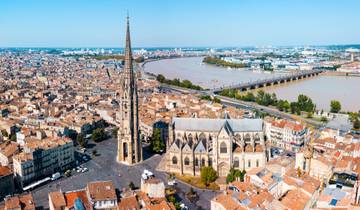
7 days
From Bordeaux to Toulouse or Toulouse to Bordeaux by Bike Self-Guided
- ✓ Comprehensive Bordeaux tour
- ✓ Expert local guides included
- ✓ All accommodation arranged
- ✓ Transportation provided
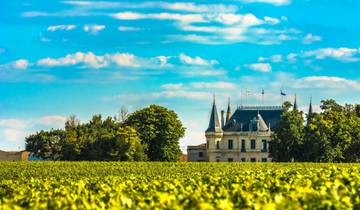
6 days
Cycling The Grand Crus of Bordeaux
- ✓ Comprehensive Bordeaux tour
- ✓ Expert local guides included
- ✓ All accommodation arranged
- ✓ Transportation provided
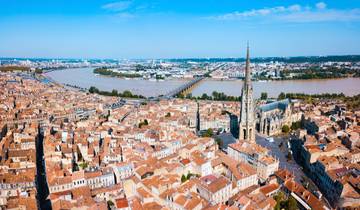
11 days
Beautiful Bordeaux 2026
- ✓ Comprehensive Bordeaux tour
- ✓ Expert local guides included
- ✓ All accommodation arranged
- ✓ Transportation provided
8 days
Wellness Retreat South of France
- ✓ Comprehensive Bordeaux tour
- ✓ Expert local guides included
- ✓ All accommodation arranged
- ✓ Transportation provided
Multi-day tour packages powered by TourRadar. Prices and availability subject to change.
Planning a Bordeaux Trip in 2027: Introduction
Bordeaux is a port city on a curve of the Garonne River, about 100 kilometers from the Atlantic by water, and it has spent most of its history turning the wine of its hinterland into wealth. The 18th-century façades that line the quays, the monumental squares and the theater are the product of that trade. In 2007 UNESCO inscribed the city center as Bordeaux, Port of the Moon, recognizing an exceptional urban and architectural ensemble from the Age of Enlightenment, and the river crescent that gave the inscription its name still defines how the city looks and feels.
The city has changed sharply over the past two decades. The quays that were once cut off by warehouses and traffic are now promenades, the tram reaches both banks of the river, and former industrial sites have become cultural venues. The Cité du Vin opened in the Bacalan district in 2016, and the Bassins des Lumières, a digital art center inside a former submarine base, followed in 2020. For a visitor in 2027, Bordeaux works equally well as a city break, as a base for wine country, or as a stop on a longer route between Paris, the Pyrenees and Spain.
This resource is organized around the decisions that shape a Bordeaux trip. It starts with trip length and timing, then covers transport, neighborhoods and hotels, the city’s main attractions and the UNESCO sites. It then moves into the wine regions, explaining how appellations differ and how to book visits, followed by Arcachon Bay and other day trips, food, a full budget breakdown for 2027, sample itineraries, money-saving tactics and practical advice for different kinds of travelers. Every price is given in euros, and each figure is meant to be checked against the official source before you book.
How Many Days Do You Need in Bordeaux in 2027?
Three days is the most efficient length for a first visit: two in the city and one in wine country. The right number depends on whether you want a city break, a wine trip or both.
- One day: The old center on foot, the Water Mirror, the Cité du Vin and dinner. Possible only as a stopover on a longer trip.
- Two days: Adds the Bassins des Lumières, the Chartrons district, a market morning and a longer wine tasting in the city.
- Three days: Adds a Saint-Émilion day trip by train, the most popular single excursion from Bordeaux.
- Four to five days: Adds a Médoc château route, a Sauternes or Graves half day, or a full day at Arcachon Bay and the Dune du Pilat.
- Seven days: Allows two or three different wine appellations, Arcachon Bay, a river excursion toward the Cordouan Lighthouse, and slow city days in between.
Travelers who focus on wine should divide their time by geography rather than by château count. Left Bank estates in the Médoc sit north-west of the city, Saint-Émilion and Pomerol lie to the east, and Sauternes and Graves extend to the south. Combining two of these in one day is realistic with a driver; combining three is not. Travelers who focus on heritage can fit the city’s monuments and the UNESCO sites in the region into four days if they use trains and organized transport for the outlying sites.
Best Time to Visit Bordeaux and Wine Country in 2027
The best window is late April to June and again from early September to mid-October. These months balance weather, opening hours and the rhythm of the wine year.
Spring in Bordeaux: April to June 2027
Spring brings mild days, blossoming gardens and the first open terraces on the quays. Easter falls on March 28, 2027, with Easter Monday on March 29, Ascension Thursday on May 6 and Whit Monday on May 17; each of these produces a busy long weekend for domestic travelers. June 21 is the Fête de la Musique, with free concerts across the city. Vineyards are green and flowering, the harvest is far away, and estates have time to host visitors at a relaxed pace.
Summer in Bordeaux: July and August 2027
July highs average around 26°C, and heat waves above 35°C occur in some summers. The city feels livelier, riverbank bars fill, and Arcachon Bay is at its peak. Bastille Day falls on Wednesday, July 14, and August 15 falls on a Sunday. Some small independent restaurants, bakeries and boutiques close for part of August, so book dinners ahead and confirm hours for specialist shops. Hotel rates in the city are often softer in August than in May or September, because business travel drops, while coastal and Saint-Émilion rates rise.
Autumn and Harvest in Bordeaux: September to November 2027
September and October are the wine region’s most atmospheric months. Harvest timing varies by grape variety, vintage and appellation, with white grapes often picked first and Cabernet Sauvignon last. Many estates are busy and some limit visitor access during picking, so book early and expect tasting slots to be shorter or reserved. European Heritage Days fall on September 18-19, 2027, when many monuments and some institutions open free or with special programs. November 1, 2027 is a Monday, so the long All Saints weekend is busy with domestic visitors.
Winter in Bordeaux: December to March 2027
January highs hover around 9-10°C with frequent rain. The city is quiet, hotel rates are lowest, and museums are comfortable. Many châteaux still receive visitors but by appointment only, and some close for several weeks after the holidays. Christmas markets and winter lights animate the center in December. The Arcachon coast is peaceful but many seaside businesses are shut.
Getting to Bordeaux in 2027: Trains, Flights and Road
The TGV from Paris Montparnasse reaches Bordeaux Saint-Jean in 2 hours 8 minutes, making it the fastest and most popular route from the capital. The same line connects Bordeaux with Lille, Strasbourg, Lyon, Marseille and Toulouse by direct or connecting services.
- Train from Paris: The TGV INOUI runs frequent daily services from Paris Montparnasse. The budget operator OUIGO offers advance tickets from €16 on its no-frills services. Fares rise as departure approaches; book as soon as the sales window opens, usually three to four months ahead.
- Flights: Bordeaux-Mérignac Airport receives direct routes from many European cities, and visitors from other continents usually connect through Paris, Amsterdam, London or Madrid. A tram line, shown as line F on the current TBM network map, links the airport with the city center, and taxis and ride-hailing services also operate from the terminal.
- By road: The A10 motorway from Paris covers roughly 580 kilometers. Allow around six hours with stops, plus motorway tolls and parking in Bordeaux, where many central hotels do not include parking.
- From Spain and the Pyrenees: Long-distance coaches and trains connect Bordeaux with Biarritz, Bayonne and San Sebastián, making the city a natural stop on a route through the south-west.
Bordeaux Saint-Jean station sits south of the center and is linked to it by the tram, with line C stopping at the station. Walking from the station to the old center is a long trek with luggage, so the tram or a short taxi ride is the better option.
Many travelers combine Bordeaux with Paris, the Dordogne, the Basque coast or Toulouse. A one-way rail ticket from Paris is a better value when booked early, while a rental car suits itineraries that continue into the Dordogne or Cognac regions. Most major rental agencies operate from the station and the airport.
Getting Around Bordeaux in 2027: Trams, Buses, Bikes and Walking
The historic center is compact, and a visitor can reach most major sights on foot. For the Cité du Vin, Bassins des Lumières, Bordeaux Saint-Jean station and the outer districts, the TBM public transport network of trams, buses and river shuttles covers the rest.
A single ticket costs about €2 and a 24-hour pass about €5; check the TBM network for 2027 fares and for the validity of contactless payment on board. Tickets must be validated on the tram platform or on board the bus. Tram lines A, B, C and D radiate across the city and reach both banks of the Garonne. Line B serves the Bassins des Lumières and the Cité du Vin area, and line C reaches the main station.
- Walking: The distance from the Grand Theatre to the Water Mirror is under one kilometer along the quays, and the old center between Place de la Bourse and Saint-Michel Basilica takes about 20 minutes to cross.
- Cycling: The city has dedicated bike lanes and a public bike-share system. The Roger Lapébie greenway, a former railway line of about 50 kilometers, leads east through the Entre-Deux-Mers vineyards and suits confident cyclists.
- Taxis and ride-hailing: Available throughout the city, with higher rates at night and on Sundays. Use them for late returns from restaurants across the river.
- River shuttles: The BAT³ river shuttles connect points along the Garonne and offer a pleasant alternative to the tram for reaching the Bastide district across the river.
Most tram stops are step-free and trams are generally accessible to wheelchair users; older streets near Saint-Michel have cobbles and uneven pavement.
Where to Stay in Bordeaux in 2027: Neighborhoods and Hotel Costs
The old center and Chartrons are the best bases for a first visit. Both are walkable, central and well supplied with restaurants, while Bacalan and Saint-Jean suit specific purposes.
Hotel rates in 2027 follow three broad bands per room per night in Bordeaux city: budget hotels and guesthouses at €70-110, mid-range hotels at €150-240, and luxury hotels and palace-style properties at €350-700 or more. Rates rise during harvest weeks, the wine trade fairs, long weekends and school holidays, and fall in January and February. Check booking platforms and hotel websites for current 2027 rates.
Old Center and Saint-Pierre: Best for First-Time Visitors
The area between the Grand Theatre, Place de la Bourse and Saint-Pierre contains the densest concentration of monuments, bars and restaurants. Rooms are compact and prices are higher, but every sight is on foot. Evening noise on busy squares is the main drawback; ask for an upper-floor or courtyard room.
Chartrons: Best for Food, Antiques and Quieter Evenings
Chartrons is the former wine merchants’ district north of the center, with antique dealers, independent shops, wine bars and a Sunday market on the quay. It offers a calmer atmosphere and is connected by tram line B. It is the most convenient base for the Cité du Vin and the Bassins des Lumières.
Saint-Michel and Victoire: Best for Budget Stays
The south of the center is lively, student-oriented and less expensive, with the Saint-Michel flea market and Capucins Market close by. The neighborhood is fine for most visitors but is busier at night than the old center.
Bastide: Best for Skyline Views
The right bank has newer hotels, the Darwin eco-district and a skyline view across the water. It is a tram ride from the center and offers good value for money.
Near Saint-Jean Station: Best for Early Trains
Hotels near the station suit early departures but the area has little atmosphere. Choose it only when you must catch a first train.
Saint-Émilion and Wine Country Stays
Staying in Saint-Émilion or in a château guesthouse gives early access to the village after the day-trippers leave. Rates are high in season and rooms sell out well ahead of harvest weekends. For most first-time visitors, a Bordeaux base with train and tour excursions costs less and offers more dining choice.
Bordeaux UNESCO World Heritage Sites to Visit in 2027
Five UNESCO World Heritage listings can be reached from Bordeaux in a day or less: the city center itself, the wine town of Saint-Émilion, Santiago de Compostela pilgrim monuments, the Vauban citadel at Blaye and the Cordouan Lighthouse. Each one illustrates a different strand of the region’s history, from medieval pilgrimage to Enlightenment trade and the engineering of the coast.
Bordeaux, Port of the Moon (inscribed 2007)
The inscription covers a large part of the city center and recognizes it as an exceptional urban and architectural ensemble of the Age of Enlightenment. The name comes from the crescent shape of the river as it curves through the city. Highlights within the listed area include Place de la Bourse, the Grand Theatre, the quays, the Cailhau Gate and the old streets around Saint-Pierre. A visitor sees most of it on a two- to three-hour walk, and the best light for the riverfront falls in the morning and around sunset.
Jurisdiction of Saint-Émilion (inscribed 1999)
Saint-Émilion was the first vineyard landscape inscribed on the World Heritage List. The listing covers the medieval hilltop village with its monolithic church and the surrounding vineyards, which UNESCO recognizes as a continuing cultural landscape of winegrowing. The next section of this guide covers visiting details and costs.
Routes of Santiago de Compostela in France (inscribed 1998)
Pilgrim routes crossed Bordeaux on the way to Spain, and several monuments in the region belong to the serial listing, including Saint-André Cathedral and Saint-Seurin Basilica in the city and the ruins of Sauve-Majeure Abbey in the Entre-Deux-Mers countryside. Visitors with an interest in medieval architecture can combine these on a heritage-focused day.
Fortifications of Vauban: Blaye and Cussac-Fort-Médoc (inscribed 2008)
The Citadel of Blaye, Fort Paté and Fort Médoc were designed under the military engineer Vauban to control the Gironde estuary. The citadel stands on the right bank about 50 kilometers north of Bordeaux and offers wide views of the estuary. A passenger ferry links Blaye with Lamarque in the Médoc, allowing a loop that combines the citadel with a château visit; confirm the ferry timetable before planning around it.
Cordouan Lighthouse (inscribed 2021)
The Cordouan Lighthouse stands on a rock in the Gironde estuary mouth, a Renaissance-era structure begun in the 1580s and completed in the early 17th century. Boat trips depart from the Médoc side at Le Verdon-sur-Mer and from Royan on the opposite shore, and landing depends on tides and weather. Trips run mainly in the warmer months, so book as soon as 2027 sailings open and keep a flexible day in your itinerary.
Top Attractions in Bordeaux City in 2027: What to See and What It Costs
The two blockbuster visits are the Cité du Vin and the Bassins des Lumières; both are worth booking in advance for peak days. The rest of the city rewards unhurried walking, with several of its best sights costing nothing.
Cité du Vin: Bordeaux’s Wine Museum
The Cité du Vin is an interactive museum on the history and cultures of wine around the world, housed in a curved, gilded building on the Garonne in the Bacalan district. A full adult ticket costs €23 (check the official site for current 2027 rates and opening hours), with reduced tickets at €17 and €10 for eligible categories. The visit follows a self-guided route with an audio guide, and the ticket has included a glass of wine at the eighth-floor Belvedere with panoramic views over the city. Allow two to three hours. The museum is reached by tram line B in about 15 minutes from the old center.
Bassins des Lumières: Digital Art in a Former Submarine Base
The Bassins des Lumières presents large-scale immersive digital art projected across the walls and flooded basins of a World War II submarine base. Admission costs €16 for adults, with reduced rates for young visitors and certain categories; the exhibitions change on a regular schedule, so check what is showing in 2027 before buying tickets. Visits last about 45 to 60 minutes, and the concrete interior stays cool, so bring a light layer even in summer. The site is in the Bassins à Flot district, next to a tram stop on line B.
Place de la Bourse and the Water Mirror
Place de la Bourse is the city’s showpiece square, laid out in the 18th century under the royal intendant Tourny with designs by Jacques Gabriel and his son Ange-Jacques Gabriel. The Water Mirror, a shallow reflecting pool of granite in front of it, was designed by the landscape architect Michel Corajoud and opened in 2006. Admission is free. The mirror alternates between a thin film of water and a drained surface with a mist effect, and runs mainly in the warmer months. The square is at its best early in the morning, when it is empty, and after dark, when the façades are lit.
Grand Theatre
The Grand Theatre was designed by Victor Louis and opened in 1780. Its portico of twelve Corinthian columns carries twelve statues, and the interior includes a monumental staircase that influenced later opera house design. Interior visits are available through guided tours organized by the tourist office; performances by the Bordeaux National Opera are held in the main auditorium during the season.
Saint-André Cathedral, Pey-Berland Tower and Saint-Michel Basilica
Saint-André Cathedral, whose consecration is dated to 1096, stands in the old center, and the separate bell tower beside it, the Pey-Berland Tower, can be climbed for a view over the rooftops for a modest fee. Saint-Michel Basilica, a Gothic church in the south of the old center, has a freestanding spire of more than 100 meters that dominates the skyline; the climb is available in the warmer months. Both churches are included in walking routes through the old center.
Cailhau Gate and the Great Bell
The Cailhau Gate, a late 15th-century gate by the river, and the Great Bell, a medieval belfry and gate in the old town, give a sense of the medieval city that preceded the 18th-century rebuilding. Both can be seen from outside in minutes.
Capucins Market and the Chartrons Sunday Market
Capucins Market, the city’s main covered market, operates in the morning and early afternoon, with oyster counters, cheese stalls and small restaurants where locals eat lunch. On Sunday mornings a market lines the quay in Chartrons with produce, seafood and prepared food, and a flea market takes place around Saint-Michel Basilica. Arrive early for the best selection; stalls and counters begin winding down after lunch.
Museums: Aquitaine Museum and Fine Arts Museum
The Aquitaine Museum covers the region’s history from prehistory through the modern era, including permanent galleries on Bordeaux’s role in the Atlantic trade and its links to the slave trade, an essential context for understanding the wealth behind the 18th-century city. The Fine Arts Museum holds European paintings in a building near the cathedral. Admission to the permanent collections of the city museums is modest; check each museum’s website for 2027 prices and closing days.
Public Garden, Darwin and the Quays
The Public Garden is a 19th-century landscaped park in the center, good for families and for a rest between museums. Across the river in the Bastide, the Darwin eco-district occupies a converted military barracks with a skate area, a large restaurant and shops. The quays on the left bank are a continuous promenade of several kilometers suitable for cycling, running and relaxed evening walks.
Understanding Bordeaux Wine Country in 2027: Appellations, Grapes and Classifications
Bordeaux wine is defined by geography, grapes and classification. The Gironde estuary and two rivers divide the region into a Left Bank west of the Garonne and Gironde, a Right Bank north of the Dordogne and an inland area between the rivers called Entre-Deux-Mers.
- Left Bank reds: Cabernet Sauvignon leads the blends, supported by Merlot and smaller amounts of Cabernet Franc and Petit Verdot. The appellations include Margaux, Saint-Julien, Pauillac and Saint-Estèphe in the Médoc, and Pessac-Léognan and Graves to the south.
- Right Bank reds: Merlot leads, with Cabernet Franc, in Saint-Émilion, Pomerol and Fronsac.
- Dry whites: Sauvignon Blanc and Sémillon dominate, notably in Entre-Deux-Mers and Pessac-Léognan.
- Sweet whites: Sauternes and Barsac produce sweet wines from Sémillon, Sauvignon Blanc and Muscadelle grapes affected by noble rot, a beneficial fungus that concentrates the sugars.
The 1855 classification, drawn up for the Paris Universal Exhibition at the request of Napoleon III, ranked 61 red-wine estates from the Médoc and Graves into five growths, and ranked sweet wines of Sauternes and Barsac separately. Four estates stood at the top as first growths (Lafite Rothschild, Latour, Margaux and Haut-Brion), and Mouton Rothschild was promoted to that level in 1973. Saint-Émilion operates a separate classification revised roughly every decade, the most recent in 2022 covering 85 properties. Pomerol has no official classification. Wine labels also carry regional appellations such as Bordeaux, Bordeaux Supérieur and Côtes de Bordeaux, which cover the wider region and are generally more affordable.
For a visitor the practical lesson is simple: a famous name does not guarantee a better visit. Smaller family estates often offer longer conversations with the owner or winemaker and lower prices, while classified growths provide polished tours, architecture and history. Mix both on a multi-day trip.
Saint-Émilion Day Trip 2027: Train, Underground Tour and Tastings
Saint-Émilion is the easiest wine excursion from Bordeaux because the regional train runs from Bordeaux Saint-Jean station in about 35-40 minutes. A one-way ticket costs about €11-13, so a return trip costs about €22-26 (check the TER fares for 2027). The station sits about 1 kilometer from the village, a 15-20 minute walk uphill on cobbled streets.
What to See in Saint-Émilion in 2027
- Monolithic Church: A church carved directly into the limestone hillside, entered only through a guided tour. The tourist office runs underground tours that cover the monolithic church, catacombs and the Trinity Chapel.
- King’s Tower: A medieval keep with a view across the roofs and vineyards.
- Bell tower: The climb of the monolithic church’s bell tower costs about €2 extra on top of the guided visit.
- Cordeliers Cloister: Ruined cloister and arches used today for sparkling wine production and tastings.
- The village streets: Steep limestone lanes, shops selling wine and local macarons, and viewpoints over the vineyards.
Guided underground tours cost about €9-11 for adults and about €7 for ages 3-18; confirm the exact 2027 price when booking. Tours operate in several languages at fixed times, and slots fill quickly on summer weekends and in harvest season, so reserve ahead.
Tasting Wine in Saint-Émilion Without a Car
Wine shops in the village pour by the glass or the flight, and several châteaux within walking distance receive visitors with reservations. For estates farther out, take a taxi, e-bike or a guided minibus tour. Expect to pay about €15-40 for a tasting at a small estate and €50-120 for a visit to a classified growth that includes a cellar tour; these are indicative rates and individual estates set their own.
How Long to Plan for Saint-Émilion
A comfortable visit takes six to eight hours from the station: a morning underground tour, a long lunch, an afternoon estate visit and an evening train back. An early start avoids the heat and the crowds that arrive by coach after 11 AM. Last trains return in the evening; check the TER timetable before booking dinner.
Médoc and Left Bank Château Visits in 2027
The Médoc is the largest and most famous area for Left Bank châteaux, a flat peninsula of gravel vineyards north-west of Bordeaux along the Gironde. Margaux is about 45 minutes by car from the center and Pauillac about an hour, and the D2 road known as the Châteaux Route passes many of the most famous estates in succession.
- Margaux: Elegant, perfumed wines, and the estate of Château Margaux among the first growths.
- Saint-Julien: A compact appellation with a high density of classified growths.
- Pauillac: Home to Château Lafite Rothschild, Château Latour and Château Mouton Rothschild.
- Saint-Estèphe: The northernmost of the four famous communes, with more structured wines.
Visiting policies vary widely. Some of the most famous estates admit visitors only by prior request or restrict tours to trade and groups, while many other classified growths run regular English-language tours with tastings. Confirm availability on each estate’s website at least two to four weeks before your trip and earlier for May, June, September and October. Visit prices for classified growths run about €30-120 per person; smaller estates charge less. A hired driver or a guided Médoc tour is the practical way to see two or three estates in a day, and the roads are mostly flat and good for cycling groups in the dry months.
The Médoc also pairs well with the Vauban fortifications at Cussac-Fort-Médoc and Blaye, and with Atlantic beaches at Soulac and Lacanau for a longer excursion.
Pomerol, Fronsac, Graves, Sauternes and Entre-Deux-Mers: Other Wine Areas in 2027
Pomerol and Fronsac on the Right Bank
Pomerol is a small appellation near Saint-Émilion whose Merlot-based wines are among the most sought after in the world, produced at estates such as Pétrus. Many of these properties are small and do not welcome walk-in visitors, so tours of this area are usually arranged through guided operators. Fronsac, a hillier area to the west, offers more accessible visits and good value.
Pessac-Léognan and Graves Just South of the City
Pessac-Léognan starts at the edge of the city, and tram line B reaches Pessac. Château Haut-Brion stands in the Bordeaux metropolitan area, which makes this the easiest red-wine area to visit without a car. The region also makes some of Bordeaux’s finest dry whites. Half-day trips cost less than Médoc excursions because of the shorter distances.
Sauternes and Barsac for Sweet Wine
Sauternes lies about 50 minutes south-east of Bordeaux by car. Autumn mists from the Ciron River encourage the noble rot that concentrates the grapes, and harvests take place in several passes through the vineyard. Château d’Yquem is the best-known estate, with visits by reservation; many smaller estates offer tastings that pair the sweet wines with foie gras, blue cheese or desserts.
Entre-Deux-Mers and Sauve-Majeure Abbey
Entre-Deux-Mers, the area between the Garonne and the Dordogne, produces fresh white wines and is quieter and cheaper than the famous appellations. Its landscape of villages, bastide towns and rural lanes suits cyclists, with the Roger Lapébie greenway running through it. The ruins of Sauve-Majeure Abbey, a Romanesque abbey and a stage on the pilgrim routes, make a good heritage stop.
How to Book Wine Tastings and Château Visits in 2027
Book most château visits at least two to four weeks in advance, and several months ahead for first growths and for harvest-season weekends. Estates rarely accept walk-ins, and many close during harvest or in winter.
- Pick two or three estates in the same appellation to avoid long drives.
- Book through the estate’s own website or by email, stating group size, language and date.
- Choose a time for the first tasting at 10 or 10:30 AM and leave a break for lunch, because many estates close from noon to 2 PM.
- Confirm the price, whether it covers a cellar tour and how many wines you taste.
- Ask whether children are welcome and whether the estate can provide a taxi number for the return.
The Bordeaux tourist office and the regional wine council both publish lists of estates open to visitors and run a wine school in the city center that offers short tasting courses for beginners. Tastings are structured: you swirl, smell and taste, and spitting into the bucket is normal professional practice, not rudeness. Tipping at estates is not expected, and buying a bottle after a free tasting is a courtesy that is appreciated but not obligatory.
Wine Tours from Bordeaux in 2027: Guided Tour, Train or Self-Drive
A guided tour is the best choice for most visitors because it removes driving, reserves the tastings and explains the wine. Half-day tours cost about €60-120 per person and full-day tours about €120-220 per person, depending on group size, the estates visited and whether lunch is included (check operator websites for 2027 rates).
- Small-group minibus tour: Pickup in the city, three estates, English-speaking guide. The easiest option for couples and solo travelers.
- Private driver or guide: Flexible, priced per vehicle rather than per person, best for groups of four to six or for visits to restricted estates.
- Train plus walking (Saint-Émilion): The cheapest option and no driving, but limited to the village and a few nearby estates.
- Rental car: Maximum flexibility, but you need a designated driver. French law sets the legal blood-alcohol limit at 0.5 g/L, and a few small tastings can exceed it.
- Bicycle: The Roger Lapébie greenway and the Entre-Deux-Mers lanes combine cycling with small estates; e-bikes are available for hire.
Whichever option you choose, eat a proper breakfast, drink water between tastings and keep a bottle in the car or the minibus for the return. Estates sell wine by the bottle at the cellar door, and many can arrange shipping for larger orders.
Arcachon Bay, Dune du Pilat and Cap Ferret Day Trip 2027
Arcachon Bay is the region’s classic coastal excursion, about an hour from Bordeaux by regional train, with oysters, villas and the largest sand dune in Europe. The bay combines a resort town, oyster villages and the dune on its southern edge, and works as a full day in any season except mid-winter.
Getting to Arcachon and the Dune du Pilat
Regional trains run from Bordeaux Saint-Jean to Arcachon in about an hour, and fares are modest (check TER prices for 2027). From Arcachon station, a seasonal bus runs to the Dune du Pilat, and taxis are available for the 10 km transfer. A rental car is more flexible for combining the dune with the coastal villages, but parking is crowded in July and August, and the dune car park charges a fee.
Dune du Pilat: Climbing Europe’s Tallest Sand Dune
The Dune du Pilat rises more than 100 meters above the Atlantic and stretches for nearly three kilometers along the coast. Access is free, and a wooden staircase is installed on the main slope in season, with the remaining climb through soft sand. Visit in the early morning or at sunset, when the sand is cool and the light is strong. In summer the sand reaches temperatures that burn bare feet by midday. Bring water, a hat and sturdy sandals, and expect a fine view of the Arguin Sandbank and the Cap Ferret peninsula across the bay.
Arcachon Town and the Winter District
Arcachon town has a long beachfront promenade, a harbor and a hillside district of 19th-century villas built as a winter health resort. The walk through the villas takes about an hour and costs nothing.
Cap Ferret, Oysters and Boats
Cap Ferret is a peninsula with small oyster villages, wooden huts and a lighthouse that can be climbed in season. Regular boat services connect Arcachon with Cap Ferret in the warmer months, and the crossing is one of the most pleasant ways to see the bay. Local oysters are served in simple huts, usually with bread, butter, lemon and white wine, and a dozen typically costs about €12-25 depending on size and venue. For a traditional local variation, order oysters with the small grilled sausages known as crépinettes.
Other Day Trips from Bordeaux in 2027: Blaye, Cognac, Dordogne and Beyond
Besides Saint-Émilion and Arcachon, four more day trips deserve a place in a longer stay.
- Blaye and the Gironde estuary: A walk around the Vauban citadel, wine tasting in the Côtes de Blaye area and the ferry to the Médoc side. About an hour by car or by regional bus and train connections.
- Cordouan Lighthouse boat trip: A full day with travel to Le Verdon-sur-Mer or Royan, then a boat to the lighthouse, depending on tides.
- Bergerac and the Dordogne Valley: Wine from the Bergerac and Monbazillac areas, medieval towns and the river. Bergerac is roughly one and a half to two hours by train or car.
- Cognac: The home of cognac houses with cellars open to visitors, around two hours by car.
Longer drives such as Cognac or the Dordogne work best as overnight stays rather than rushed day trips, and trains to the Dordogne require connections that limit flexibility.
Food and Dining in Bordeaux 2027: What to Eat and What It Costs
Bordeaux cuisine rests on seafood from the Atlantic, beef and lamb from the south-west, and the region’s wine. A good lunch menu costs about €18-30, and dinner at a solid mid-range restaurant about €30-60 before wine.
Local Specialties to Try in Bordeaux
- Canelés: Small caramelized pastries with a soft custard center flavored with rum and vanilla; bakeries sell them for a couple of euros each.
- Entrecôte bordelaise: Rib steak cooked with a sauce of red wine and shallots, often served with fries.
- Arcachon oysters: Eaten raw with lemon or shallot vinegar, and in autumn and winter with crépinettes.
- Lamprey in the Bordeaux style: Eel-like river fish stewed in red wine, a seasonal specialty in late winter and spring that suits adventurous eaters.
- Pauillac lamb: Milk-fed lamb from the Médoc, a spring specialty.
- Saint-Émilion macarons: Almond cookies made to a traditional recipe in the village.
- Foie gras and duck: Staples across the south-west.
Eating Well in Bordeaux on Any Budget
Capucins Market is the best-value lunch in the city, with oysters, cheese and fresh bread served at counters. Weekday lunch menus fixed at two or three courses offer the best value in restaurants, often priced much lower than dinner. Wine bars pour excellent regional wines by the glass, typically for about €5-10, and the best of them let you try a Saint-Émilion or Pauillac that would cost more per bottle at a restaurant. Coffee at the counter costs about €2-3.
Restaurant Etiquette and Hours
Lunch runs from noon to about 2 PM, and dinner starts at 7:30 PM. Many restaurants close on Sunday evening and Monday, and some small places close for part of August. Book dinner a few days ahead for popular restaurants, especially on weekends. Service is included in the menu price in France, and leaving a few extra euros for good service is a courtesy and not an obligation.
How Much Does a Trip to Bordeaux Cost in 2027? Daily Budget by Tier
Budget travelers need €80-130 per person daily (two sharing a budget hotel), mid-range travelers spend €160-260 per person daily (two sharing a mid-range hotel), and luxury visitors invest €370-760 per person daily (two sharing a luxury hotel). All figures exclude international flights and any shopping for wine.
Budget Traveler Costs in Bordeaux: €80-130 Per Person Daily
Budget travelers stay in guesthouses and simple hotels at €70-110 per room, which comes to €35-55 per person when two share. Meals cost €30-45 per person, transport €4-8, and attractions €10-20 when you balance one paid visit with free sights such as the Water Mirror, the quays and the markets. Total: approximately €80-130 per person daily. A week at this level costs approximately €560-910 per person.
Mid-Range Traveler Costs in Bordeaux: €160-260 Per Person Daily
Mid-range travelers stay in three- and four-star hotels at €150-240 per room, which comes to €75-120 per person when two share. Meals cost €60-90 per person with a restaurant dinner, transport €6-12, and attractions and tastings €20-40. Total: approximately €160-260 per person daily. A week at this level costs approximately €1,120-1,820 per person.
Luxury Traveler Costs in Bordeaux: €370-760 Per Person Daily
Luxury visitors stay in palace hotels and château hotels at €350-700 per room, which comes to €175-350 per person when two share. Meals cost €140-250 per person including a gastronomic dinner, transport €15-40 for taxis and private transfers, and attractions and tastings €40-120 including private estate visits. Total: approximately €370-760 per person daily. A week at this level costs approximately €2,590-5,320 per person.
Solo Travel Costs in Bordeaux
Solo travelers pay the full room rate rather than half. At the budget level, a solo traveler needs approximately €115-185 per person daily, and at the mid-range level approximately €235-380 per person daily (private room, no sharing). Hostel dorm beds cost much less than private rooms, and solo travelers can lower their costs further by joining small-group wine tours instead of hiring a private driver.
Bordeaux Accommodation, Food, Transport and Attraction Costs in 2027: Line-by-Line
This section lists each cost category that feeds the daily budgets above, so you can adjust the numbers to your own style.
- Hotel, per room per night: Budget €70-110, mid-range €150-240, luxury €350-700 or more. Divide by two for per-person costs when sharing.
- Breakfast: About €5 at a bakery in a budget plan, €10-15 at a hotel or café in a mid-range plan, €25-40 at a luxury hotel.
- Lunch: €10-15 at the market or a bakery, €20-30 for a restaurant lunch menu, €45-80 at a high-end restaurant.
- Dinner: €15-25 at a casual bistro, €30-45 at a mid-range restaurant, €70-130 at a gastronomic restaurant, before wine.
- Public transport: About €2 per single ride and about €5 for a 24-hour pass (verify 2027 TBM fares).
- Cité du Vin: €23 for adults (check the official site for current rates).
- Bassins des Lumières: €16 for adults.
- Saint-Émilion underground tour: About €9-11, and the train about €22-26 return.
- Estate tastings: €15-40 at small estates and €30-120 at classified growths.
- Half-day wine tour: About €60-120 per person; full-day about €120-220.
Sample 3-Day Bordeaux Itinerary 2027: Mid-Range
This three-day route combines the city highlights and a Saint-Émilion day trip, with hotel costs shown per person for two sharing a €190 room. The three days cost approximately €675 per person in total.
Day 1: Old Center, Cité du Vin and the River
- Hotel (two sharing): €95
- Breakfast at a café: €10
- Walk through Place de la Bourse, the Water Mirror and the old center: free
- Cité du Vin: €23
- Lunch near the Bacalan quay: €25
- Tram rides: €4
- Dinner at a mid-range restaurant: €45
The day costs approximately €200 per person.
Day 2: Saint-Émilion by Train
- Hotel (two sharing): €95
- Breakfast: €10
- Regional train return: €24
- Underground tour: €11
- Lunch in the village: €30
- Estate tasting: €25
- Dinner in Bordeaux: €45
The day costs approximately €240 per person.
Day 3: Bassins des Lumières, Markets and Wine Bars
- Hotel (two sharing): €95
- Breakfast: €10
- Bassins des Lumières: €16
- Lunch at Capucins Market: €25
- Coffee and pastry: €8
- Wine bar flight: €30
- Tram rides: €4
- Dinner: €45
The day costs approximately €235 per person.
Sample 3-Day Bordeaux Itinerary 2027: Budget
A budget version keeps the same structure with a €90 room shared by two (hotel €45 per person), market lunches and one paid museum per day. The three days cost approximately €310 per person in total.
- Day 1: Hotel €45, breakfast €5, Bassins des Lumières €16, lunch €12, tram €4, dinner €20. Approximately €100.
- Day 2 (Saint-Émilion): Hotel €45, breakfast €5, train €24, underground tour €11, lunch €15, dinner €20. Approximately €120.
- Day 3 (free sights): Hotel €45, breakfast €5, a walk through the old center, the Water Mirror and the quays at no cost, lunch €12, tram €4, dinner €20. Approximately €85.
Seasonal Price Variations in Bordeaux in 2027
Hotel rates move the most between seasons, while restaurant and attraction prices stay close to stable all year. The three bands used in this guide (budget €70-110, mid-range €150-240 and luxury €350-700 per room) reflect the full year, so the low end applies in quiet periods and the high end in peak periods.
- January and February: The lowest rates of the year, with the low end of each band easy to find and good availability at central hotels.
- March to early May: Rates climb steadily, with spikes around Easter on March 28 and the May long weekends.
- Late May and June: Strong demand from leisure travelers and business events, with mid-to-high rates in the city and in Saint-Émilion.
- July and August: City hotels are often softer than in June because business demand falls, while the coast and village stays are at their highest.
- September and October: The harvest period brings the highest rates of the year in the city and in the wine villages; book early.
- November and December: Rates ease, though the All Saints long weekend (Monday, November 1) and the December holiday period stay busy.
Wine tours and estate visits follow the same pattern: the most popular slots in May, June, September and October sell out first, and prices do not drop much in the off-season. The best saving comes from traveling in the shoulder periods of late March to early May and late October to November, or in January and February if limited estate access is acceptable.
Money-Saving Tips for Bordeaux in 2027
The biggest savings come from timing, from lunch menus and from choosing free sights, rather than from cutting the experiences you came for.
- Book trains early: Advance TGV and OUIGO fares from Paris start low and rise toward departure; OUIGO fares start from €16.
- Eat the main meal at lunch: Weekday lunch menus at €18-30 offer the same cooking as dinner at a lower price.
- Use the market: Capucins Market provides oysters, cheese and bread for a budget lunch, and a picnic by the river costs very little.
- Ask for tap water: Restaurants in France must serve a free carafe of tap water on request; ask for une carafe d’eau.
- Choose the train for Saint-Émilion: A return rail ticket of about €22-26 costs far less than a guided tour at €60-220, though it limits you to the village and nearby estates.
- Join small-group tours: Per-person prices fall sharply compared with private drivers.
- Stay outside the old center: Chartrons, Saint-Michel and the Bastide offer lower rates and good transit links.
- Visit on Heritage Days: European Heritage Days on September 18-19, 2027 open monuments and some institutions free or at reduced rates.
- Consider the CityPass only if it fits your plan: Resellers list the Bordeaux CityPass at about €37 for 24 hours, €48 for 48 hours and €56 for 72 hours, including transport and entry to participating sites; compare the participating sites with your own list and check the official offer for 2027 before buying.
Hidden Costs and Fees in Bordeaux in 2027
Most extra costs are small, but they add up over a week. Plan for them in the daily budget, especially the tourist tax and parking.
- Tourist tax: Hotels add a per-person nightly tourist tax that varies by category and municipality, usually about €1-5 per person per night, and is often paid at check-in rather than included in the room price.
- Parking: Central hotels often charge for parking, and public car parks near the old center are priced by the hour. Most visitors do better without a car in the city.
- Tasting fees: Some estates credit the tasting fee against bottle purchases and others do not; ask before booking.
- Airport and late-night taxis: Fares rise at night and on Sundays and public holidays.
- Luggage storage: Short-term storage near the station costs a few euros per bag, useful for check-out day.
- Shipping wine: Estates and wine shops can ship cases, and the cost depends on destination and customs duties.
- Cancellation terms: Many guided tours and estate visits require a cancellation notice of 24 to 48 hours or more.
Non-EU residents can claim a refund of French VAT on larger purchases in participating shops (the minimum purchase in one shop on one day is around €100), and the paperwork must be stamped at customs on departure, so keep the receipts and bottles accessible if you are flying out of the EU.
Bordeaux Travel Planning for Different Travelers in 2027
Couples and Wine Lovers
A three-night base in the old center or Chartrons, a Saint-Émilion train day, a private or small-group Médoc tour and one splurge dinner make a classic first trip. Book tastings first, then build the schedule around them.
Families Visiting Bordeaux With Children
The Water Mirror, the Public Garden, the Cité du Vin and Arcachon’s beaches and the Dune du Pilat are the most reliable child-friendly sights. Reduced rates apply for young visitors at the Cité du Vin, the Bassins des Lumières and the Saint-Émilion underground tour (about €7 for ages 3-18). Tram stops are step-free and suit strollers; cobbled streets in Saint-Émilion do not. Avoid estate visits with young children unless the estate has outdoor space and welcomes families.
Solo Travelers in Bordeaux
Bordeaux is an easy city for solo travel: compact, walkable, well lit and social along the quays. Solo budgets run approximately €115-185 per person daily at the budget level and approximately €235-380 at the mid-range level. Small-group tours, wine bars with a counter and communal market lunches make it simple to meet other travelers.
Travelers Who Do Not Drink Wine
Bordeaux works well without wine. The city has architecture, markets, museums, the Bassins des Lumières, the Cité du Vin (which presents wine as culture), the Dune du Pilat and Arcachon Bay, and many estates also offer cellar tours that focus on history and architecture.
Visitors with Mobility Needs
Trams and most buses are accessible, the quays are flat and the Cité du Vin and Bassins des Lumières are modern buildings with step-free access. The old center has cobbles and narrow pavements, Saint-Émilion is steep, and the monolithic church requires walking on uneven and stepped ground. Contact each venue in advance and plan taxi transfers for Saint-Émilion.
Heritage and History Travelers
The five UNESCO listings, the Aquitaine Museum, the medieval churches and the Vauban fortifications make a strong itinerary for visitors who prefer monuments to cellars. Combine the Port of the Moon, Saint-Émilion and Blaye in four days with train and ferry connections.
Practical Tips for Visiting Bordeaux in 2027
- Language: French is the working language. English is widely understood at hotels, major attractions and estates that welcome visitors, and a friendly “Bonjour” at the start of every interaction goes a long way.
- Payments: Cards and contactless payments are accepted nearly everywhere; carry a little cash for markets and small cafés.
- Tipping: Service is included in restaurant prices; rounding up or leaving a few euros for good service is optional.
- Opening hours: Many small shops and restaurants close on Sunday and Monday, and some close for lunch. Museums commonly close one day a week, and holidays alter hours.
- Strikes: Rail and transport strikes happen in France from time to time; check train status before departure and keep flexible tickets for important connections.
- Safety: Bordeaux is a generally safe city. Watch for pickpockets in crowds, on trams and around Saint-Jean station, and avoid leaving valuables in parked cars.
- Emergencies: 112 is the European emergency number; 15 reaches medical emergency services, 17 the police and 18 the fire service.
- Electricity: France uses 230 V and standard European two-pin plugs.
- Weather: Carry a light rain jacket year-round and layers in spring and autumn. Summer calls for sun protection and a hat.
- Drinking and driving: The legal limit is 0.5 g/L; a few tastings can exceed it, so never drive after a tasting day.
When to Book Your Bordeaux Trip in 2027: A Planning Timeline
Book in this order: trains and flights first, hotels second, estate visits and guided tours third, and restaurants last.
- Three to four months ahead: Book TGV or OUIGO tickets as soon as sales open and flights if you are arriving from abroad.
- Two to three months ahead: Book hotels, especially for May, June, September and October, and for the harvest weekends in Saint-Émilion.
- Four to six weeks ahead: Book Cité du Vin and Bassins des Lumières time slots if your dates fall on a weekend or a holiday.
- Two to four weeks ahead: Book château visits, wine tours and the Saint-Émilion underground tour; book earlier for first growths.
- One week ahead: Book dinners at popular restaurants and the Cordouan boat trip, and check the weather forecast for Arcachon and Cap Ferret.
Frequently Asked Questions About Bordeaux Travel in 2027
Is Bordeaux worth visiting if you do not drink wine?
Yes. Bordeaux is a UNESCO-listed city with 18th-century architecture, a restored riverfront, strong markets and museums, and the Bassins des Lumières, and it is close to Arcachon Bay and the Dune du Pilat. A three-day city stay without wine costs approximately €240-390 per person at a budget level and approximately €480-780 at a mid-range level, with two sharing a hotel room.
How much money do you need for three days in Bordeaux in 2027?
Three days cost approximately €240-390 per person at the budget level, approximately €480-780 at the mid-range level and approximately €1,110-2,280 at the luxury level, all with two people sharing a hotel room and excluding international flights. These figures follow the daily rates of €80-130, €160-260 and €370-760. The sample mid-range itinerary in this guide comes to approximately €675 per person, including a Saint-Émilion day trip.
Can you visit Saint-Émilion in a day from Bordeaux without a car?
Yes. A regional train from Bordeaux Saint-Jean takes about 35-40 minutes and costs about €22-26 return. The village is a 15-20 minute walk uphill from the station, and the guided underground tour costs about €9-11. Allow six to eight hours, book the tour in advance in summer and harvest season, and check the return train time before dinner.
What is the best way to get from Paris to Bordeaux?
The TGV from Paris Montparnasse to Bordeaux Saint-Jean takes 2 hours 8 minutes and is the fastest and most convenient option. OUIGO offers advance fares from €16 on its no-frills services, while driving the 580 kilometers takes around six hours plus tolls. Book trains three to four months ahead for the lowest fares.
Which area is best to stay in Bordeaux?
The old center and Saint-Pierre suit first-time visitors who want to walk everywhere, and Chartrons suits travelers who prefer quieter evenings and want easy access to the Cité du Vin and the Bassins des Lumières. Saint-Michel and the Bastide offer lower rates. Mid-range rooms cost €150-240 per night in 2027, which is €75-120 per person when two share.
When should you book château visits for 2027?
Book two to four weeks ahead for most estates and several months ahead for first growths, and for visits in May, June, September and October. Estates rarely accept walk-ins, and many restrict visits during harvest, so confirm availability, language and price on each estate’s website.
Is Bordeaux safe for tourists?
Yes. Bordeaux is a generally safe city for visitors, including solo travelers and women traveling alone. Pickpocketing occurs in crowds, on trams and near Saint-Jean station, so keep bags closed and phones secure. Emergency services respond to 112.
Do you need to speak French in Bordeaux?
No. English is widely understood at hotels, major attractions, tourist offices and estates that receive visitors. A “Bonjour” and a few basic phrases are appreciated, particularly in markets and small restaurants where English is less common.
Is the Bordeaux CityPass worth it in 2027?
It is worth it only when you plan to visit several participating sites and use public transport heavily within the pass period. Resellers list the pass at about €37 for 24 hours, €48 for 48 hours and €56 for 72 hours, so compare these with the Cité du Vin at €23, the Bassins des Lumières at €16 and the 24-hour transport pass at about €5, and confirm the current 2027 rates and included sites before buying.
How do you get from Bordeaux airport to the city center?
A tram line, shown as line F on the current TBM network map, links Bordeaux-Mérignac Airport with the center, and taxis and ride-hailing services are available at the terminal. Check the TBM website for the current route and fare before you travel, and allow extra time for night arrivals.