Bohemian Switzerland Day Trip from Prague 2026: Complete Planning Guide
Bohemian Switzerland National Park offers one of the most spectacular day trips from Prague, featuring dramatic sandstone formations, Europe’s largest natural arch, and fairy-tale landscapes just 130 kilometers north of the capital. This comprehensive guide provides all the practical information you need to plan your 2026 visit, from transportation options and hiking routes to costs and seasonal considerations.
Key Takeaways
- Distance & Duration: 130 km from Prague, 2 hours by car or 2.5-3 hours by public transport; plan for a full 10-12 hour day including travel
- Main Highlights: Pravčická Gate (Europe’s largest natural sandstone arch), Kamenice Gorges boat rides, Edmund and Wild Gorges, and optional extension to Saxon Switzerland’s Bastei Bridge in Germany
- Budget Options 2026: Independent trip €25-40 per person (transport and entrance fees), guided tours €130-170 per person (all-inclusive with lunch and guide)
- Best Season: April-October for full trail access and gorge boat rides; winter offers unique snow-covered landscapes but limited attractions
- Fitness Level: Moderate hiking required, 8-12 km walking distance with elevation changes; well-maintained trails suitable for active travelers
- Essential Planning: Some trails remain closed due to 2022 fire damage; Edmund Gorge reopening expected May-June 2026; always verify current trail status before departure
People Also Ask About Bohemian Switzerland Day Trip from Prague 2026
How much does a day trip from Prague to Bohemian Switzerland cost in 2026?
A self-guided day trip costs €25-40 per person covering train tickets (€6-10 Prague to Děčín), local bus (€2-3 to Hřensko), entrance fees (€3-4 for Pravčická Gate), and gorge boat rides (€2.60-3.50 per gorge). Add €20-30 for meals. Guided small-group tours range €130-170 per person with transport, lunch, guide, and all entrance fees included. Private tours start around €250-500 total for groups of 2-6 people, working out to €83-250 per person depending on group size.
Can I visit Bohemian Switzerland from Prague in one day in 2026?
Yes, Bohemian Switzerland works perfectly as a day trip from Prague in 2026. The park is 130 km north of Prague, reachable in 1.5-2 hours by car or 2.5-3 hours by public transport. Plan for a full 10-12 hour day departing Prague by 7-8 AM and returning around 7-8 PM. This allows 6-7 hours in the park to hike to Pravčická Gate, explore the gorges, and see major highlights. Tours typically pick up at 6:30-8 AM from Prague hotels and return by 6-8 PM.
What is the best way to get to Bohemian Switzerland from Prague in 2026?
The easiest option in 2026 is joining a guided tour with hotel pickup and drop-off in Prague, eliminating navigation concerns and maximizing time in the park. For independent travel, take a train from Praha Hlavní Nádraží to Děčín (90 minutes, €6-10), then local bus 434 or 438 to Hřensko (20-40 minutes, €2-3). By car, the drive takes 1.5-2 hours via E55 highway, though parking fills quickly in peak season. Tours offer best value for single-day visits, while independent travel suits multi-day stays or experienced hikers.
Is Bohemian Switzerland suitable for beginners and families in 2026?
Bohemian Switzerland offers moderate hiking suitable for active families and beginners with reasonable fitness in 2026. Main trails to Pravčická Gate involve 8-12 km walking with elevation changes but follow well-maintained paths with clear signage. The hike from Hřensko to Pravčická Gate takes 45-60 minutes uphill, manageable for most ages 8+. Gorge boat rides provide easy breaks from walking. Avoid the trip with very young children under 5, those with mobility issues, or anyone unable to handle stairs and moderate inclines. Guided tours accommodate beginners by setting appropriate pace and providing rest stops.
Extended multi-day tours – 5+ days
Featured Bohemia Multi-Day Tour Packages
4 days
Prague, Czechia (Czech Rep.)
- ✓ Comprehensive Bohemia tour
- ✓ Expert local guides included
- ✓ All accommodation arranged
- ✓ Transportation provided

4 days
Czech Republic – Bohemian Treasures (Spa Retreat & Beer Heritage) 4-Day Tour
- ✓ Booking needs min. 2 travelers

5 days
Between Stories and Castles (7 destinations)
- ✓ Comprehensive Bohemia tour
- ✓ Expert local guides included
- ✓ All accommodation arranged
- ✓ Transportation provided
4 days
Prague Christmas Markets
- ✓ Comprehensive Bohemia tour
- ✓ Expert local guides included
- ✓ All accommodation arranged
- ✓ Transportation provided
Multi-day tour packages powered by TourRadar. Prices and availability subject to change.
Introduction to Bohemian Switzerland Day Trips 2026
Bohemian Switzerland National Park (Národní park České Švýcarsko) stands as one of Central Europe’s most extraordinary natural wonders, drawing visitors with its otherworldly sandstone formations, deep river gorges, and pristine forests. Located in the northernmost reaches of the Czech Republic along the German border, this 79-square-kilometer protected area creates a dramatic landscape that has inspired artists, filmmakers, and adventurers for generations.
The park gained international recognition as a filming location for “The Chronicles of Narnia: The Lion, the Witch and the Wardrobe,” with Pravčická Gate serving as the entrance to Aslan’s camp. This connection to Narnia captures the magical quality of the landscape, where massive sandstone cliffs rise from dense forests and narrow gorges reveal hidden waterways navigable only by traditional wooden boats.
For Prague visitors in 2026, Bohemian Switzerland represents the perfect escape from urban sightseeing. Just 130 kilometers north of the capital, the park offers a complete contrast to Prague’s architectural splendors: dramatic natural beauty, active outdoor exploration, and the chance to experience the Czech countryside at its most spectacular. The journey from Prague takes 1.5-2 hours by car or 2.5-3 hours by public transport, making it feasible as an intensive day trip while providing enough time to see the park’s premier attractions.
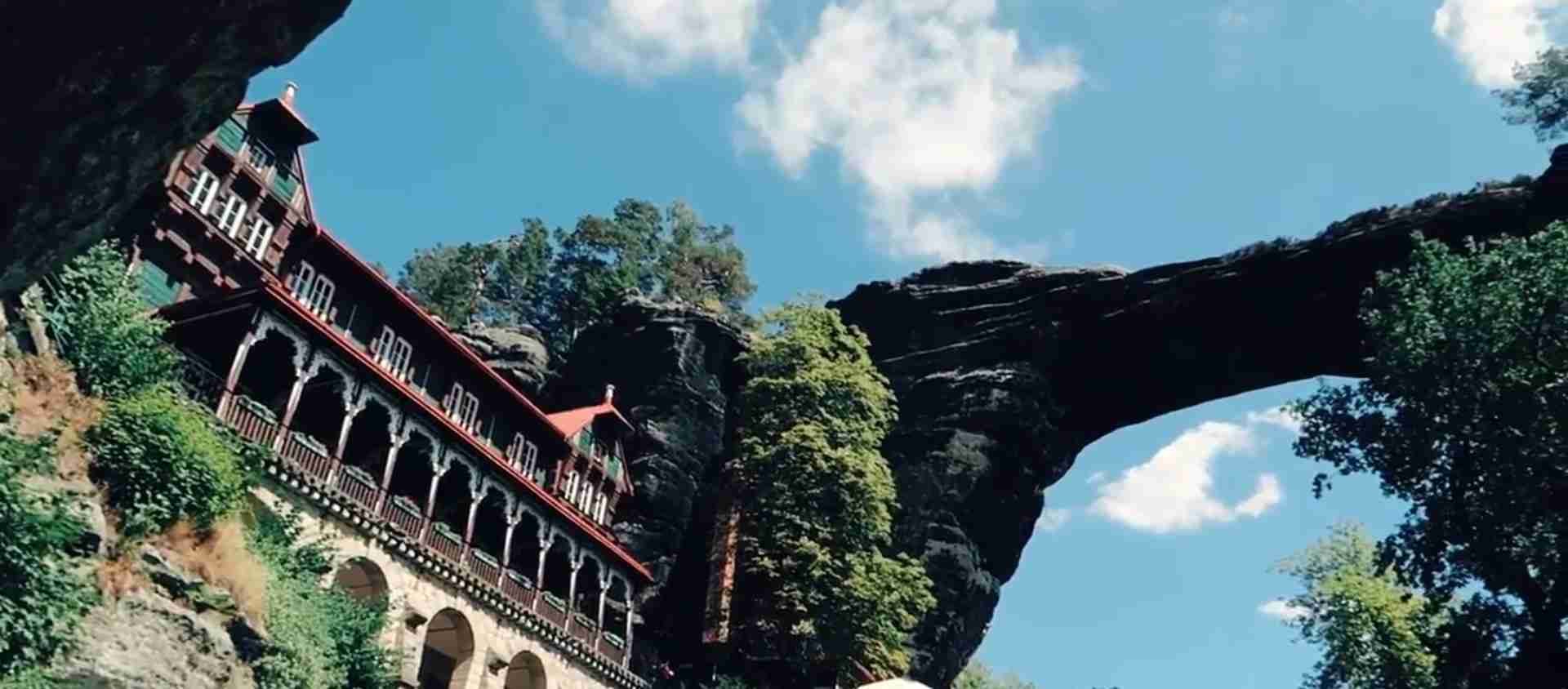
The park’s highlight, Pravčická Gate (Pravčická brána), holds the distinction of being Europe’s largest natural sandstone arch, measuring an impressive 26.5 meters wide and 16 meters high. Formed over millions of years through erosional processes, this geological marvel stands as the symbol of Bohemian Switzerland and draws visitors from around the world. The hike to reach it winds through peaceful forests punctuated by towering rock formations, offering increasingly dramatic views as you approach.
Beyond Pravčická Gate, the park features the spectacular Kamenice Gorges, where visitors board traditional wooden boats to navigate between sheer sandstone walls rising 50-80 meters overhead. The Edmund Gorge (Edmundova soutěska) stretches 960 meters with a 20-minute boat journey, while the shorter Wild Gorge (Divoká soutěska) covers 450 meters in 15 minutes. These boat rides operate from April through October, weather permitting, with Edmund Gorge expected to reopen in May or June 2026 following extended closures for fire damage repairs.
Planning a 2026 day trip to Bohemian Switzerland requires understanding several practical factors. The 2022 wildfire that affected portions of the park resulted in some ongoing trail closures and restrictions, particularly around the gorge areas. While major attractions remain accessible, it’s essential to verify current trail status before departure. The park experiences peak visitation from June through August, when trails can become crowded and parking scarce. Shoulder seasons (April-May and September-October) offer better conditions with fewer crowds, pleasant temperatures, and full access to boat rides.
Visitors choose between independent exploration using public transportation or joining organized tours departing from Prague. Each approach offers distinct advantages: independent travel provides flexibility and lower costs (€25-40 per person), while guided tours eliminate navigation concerns and maximize time in the park through hotel pickup, expert guidance, and included meals (€130-170 per person). Most first-time visitors find guided tours worthwhile for a single day trip, as they handle all logistics and provide context through knowledgeable local guides.
The physical demands of visiting Bohemian Switzerland fall into the moderate category. Typical itineraries involve 8-12 kilometers of walking with elevation changes, steep sections, and numerous stairs. The main trail from Hřensko village to Pravčická Gate climbs approximately 300 meters over 3.5 kilometers, taking 45-60 minutes for most hikers. Well-maintained paths with clear signage make navigation straightforward, but proper footwear and reasonable fitness levels are essential. The park is not wheelchair accessible due to uneven terrain and extensive stairways.
This comprehensive guide covers everything you need to plan your 2026 Bohemian Switzerland day trip: detailed transportation options with current costs, complete hiking route descriptions, budget breakdowns for different travel styles, seasonal considerations for optimal timing, and practical tips for making the most of your visit. Whether you’re seeking an active outdoor adventure, photography opportunities, or simply an escape into nature from Prague, Bohemian Switzerland delivers an unforgettable experience just two hours from the capital.
Understanding Bohemian Switzerland National Park 2026
Geography and Location
Bohemian Switzerland National Park occupies the northwestern corner of the Czech Republic, straddling the border with Germany’s Saxony region. The Czech section covers 79 square kilometers, while the adjacent German portion (Saxon Switzerland National Park) extends an additional 93.5 square kilometers, creating a cross-border protected area of exceptional geological and ecological significance.
The park sits approximately 130 kilometers north of Prague in the Ústí nad Labem Region, centered around the Elbe River (Labe in Czech) as it cuts through massive sandstone formations. The landscape features dramatic elevation changes, with the Elbe flowing at 115 meters above sea level (the Czech Republic’s lowest point) while surrounding plateaus reach 400-600 meters elevation. This topographical diversity creates the park’s characteristic deep gorges, towering cliffs, and panoramic viewpoints.
The gateway town of Hřensko marks the park’s southern entrance, a picturesque village of half-timbered houses nestled where the Kamenice River meets the Elbe. From Hřensko, the main trails radiate outward: northwest to Pravčická Gate and the ridge trail system, northeast along the Edmund and Wild Gorges, and across the border to Saxon Switzerland’s attractions. The town’s position at the convergence of multiple valleys makes it the natural starting point for most visitors.
Geological Formation and Significance
The spectacular rock formations that define Bohemian Switzerland originated approximately 90 million years ago during the Late Cretaceous period when this region lay beneath a shallow sea. Marine sediments accumulated in thick layers, which later solidified into sandstone through compression and mineralization. As tectonic forces uplifted the area and erosional processes carved through the sandstone, the distinctive landscape emerged: towering rock pillars, natural arches, narrow gorges, and labyrinthine cave systems.
Pravčická Gate represents the most impressive result of these geological processes. The arch formed as softer sandstone eroded away beneath a more resistant cap layer, creating the massive opening over millions of years. At 26.5 meters wide, 16 meters high, and 7-8 meters thick, it stands as Europe’s largest natural sandstone arch and ranks among the continent’s most significant geological monuments.
The Kamenice Gorges demonstrate a different erosional pattern, where the river carved deep channels through the sandstone over millennia. In some sections, the gorge walls rise nearly vertically 50-80 meters overhead while spanning just 5-10 meters wide at the base, creating the dramatic narrow passages navigable by boat. The combination of sandstone’s relative softness and the region’s water flows continues to shape these features today, though at an imperceptible human timescale.
Flora and Fauna
Bohemian Switzerland supports diverse ecosystems ranging from riverine habitats in the gorges to old-growth forests on the plateaus. The sandstone cliffs create unique microclimates that harbor rare plant species, while the extensive forest cover provides habitat for numerous animals. The park represents one of Central Europe’s most important natural refuges, particularly given the surrounding agricultural and urbanized landscapes.
Forest coverage dominates the park, primarily mixed stands of beech, oak, and fir with significant spruce populations. The 2022 wildfire damaged portions of the forest, particularly in the Edmund Gorge area, leading to ongoing restoration efforts throughout 2025-2026. Conservation work focuses on reintroducing native silver firs and promoting natural regeneration rather than monoculture replanting, a process expected to take several decades to fully mature.
Wildlife sightings include deer, wild boar, foxes, and numerous bird species. The gorges provide habitat for kingfishers, white-throated dippers, grey wagtails, and the rare black stork. Conservation programs work to reintroduce peregrine falcons to the cliff faces and restore Atlantic salmon populations in the Elbe River system. Eurasian otters inhabit the quieter stretches of the Kamenice River, though they remain elusive and rarely seen by visitors.
Cultural and Historical Context
The landscape that appears wild and pristine to modern visitors has been shaped by human activity for centuries. Medieval trade routes passed through these valleys, defended by castles like Šaunštejn built in the 14th century to protect merchants traveling between Bohemia and Lusatia. The strategic importance of controlling the Elbe Valley led to fortification construction throughout the region, though most now exist only as romantic ruins incorporated into hiking routes.
Tourism in Bohemian Switzerland began in the early 19th century when Romantic artists and writers discovered the dramatic landscapes. Swiss painters working in the area inspired the region’s name, comparing the sandstone formations to their Alpine homeland despite the complete absence of actual mountains. This artistic heritage continues today, with numerous viewpoints named after painters and poets who captured these scenes in their work.
The gorge boat rides represent a tradition dating to the 19th century when local entrepreneurs recognized the attraction’s potential. The Edmund Gorge opened to visitors in 1890, with wooden boats poled by skilled guides becoming an instant attraction. This tourism tradition survived two world wars, Communist-era state management, and the transition to the modern Czech Republic, maintaining the same basic boat design and navigation techniques used 130+ years ago.
Transportation Options from Prague 2026
Guided Tours: All-Inclusive Convenience
Organized tours represent the most popular option for day trips from Prague to Bohemian Switzerland in 2026, particularly for first-time visitors or those seeking hassle-free experiences. Tour operators handle all logistics from hotel pickup to park navigation, allowing you to focus entirely on enjoying the landscape rather than managing transportation connections, trail planning, or timing concerns.
Small-group tours accommodate 7-15 participants in comfortable minivans with air conditioning and WiFi. Pickup occurs at Prague hotels between 6:30-8:00 AM depending on the operator and your accommodation location. The drive to Bohemian Switzerland takes approximately 1.5-2 hours, with guides providing context about Czech history, culture, and the park itself during transit. Most tours include bathroom breaks and opportunities to purchase coffee or snacks en route.
Standard small-group tours cost €130-170 per person in 2026 (check tour operators for current rates). This price includes round-trip transportation from Prague, English-speaking guide, all park entrance fees, gorge boat rides (when operating), and a traditional Czech lunch at a local restaurant within the park. Some tours incorporate visits to both Bohemian Switzerland and Saxon Switzerland’s Bastei Bridge in Germany, requiring a valid passport or EU ID card for the border crossing.
The typical tour itinerary spans 10-12 hours total: 2 hours driving to the park, 6-7 hours exploring with lunch, and 2 hours returning to Prague. Activities include hiking to Pravčická Gate (45-60 minutes uphill), exploring the gorges with boat rides when available, visiting viewpoints, and often crossing into Germany for the Bastei Bridge. Some winter tours substitute the Tisa Rocks Labyrinth for closed gorge areas, maintaining adventure quality despite seasonal limitations.
Private tours offer enhanced flexibility for groups of 2-6 people, with customized itineraries matching your interests and fitness level. Prices start around €500 total for couples, reaching €500-900 for larger groups depending on vehicle size and inclusions. Private tours allow you to set the pace, choose specific attractions, extend or reduce hiking distances, and adjust the schedule to your preferences. Families with young children or travelers with specific needs often find private tours worthwhile despite higher per-person costs for small groups.
Reputable tour operators for 2026 include Bohemia Adventures, Northern Hikes, and Saxon Tours, all highly rated on TripAdvisor with thousands of five-star reviews. These family-run companies specialize in Bohemian Switzerland tours, employing knowledgeable local guides who grew up in the region. Booking in advance (1-2 months for peak season) ensures availability, though some operators accept last-minute bookings if space permits.
Independent Travel by Train and Bus
Traveling independently to Bohemian Switzerland using public transportation costs significantly less than tours (€25-40 total versus €130-170) but requires more planning, flexibility, and time. The journey involves two connections—Prague to Děčín by train, then Děčín to Hřensko by local bus—with schedule coordination essential for efficient travel.
Trains depart Praha Hlavní Nádraží (Prague Main Station) for Děčín approximately every 30-60 minutes throughout the day, operated by České dráhy (Czech Railways). The journey takes 90 minutes on express EC trains or 2 hours on regional services. Tickets cost €6-10 (CZK 150-250) one-way for second class, purchased online at cd.cz, through the mobile app, or at the station ticket office. Express trains require seat reservations (included in the ticket price), while regional trains allow flexible seating.
From Děčín hlavní nádraží (main station), local buses 434 and 438 depart for Hřensko from the stop directly outside the station building. The journey takes 20-40 minutes depending on the route and stops, costing approximately €2-3 (CZK 50-80) one-way. Buses run roughly hourly during peak season (April-October) but reduce frequency in winter, making schedule verification essential before departure. Purchase tickets from the driver using cash (Czech crowns or euros accepted on most routes).
Recommended morning departure from Prague: 7:00-8:00 AM arrival in Děčín around 8:30-10:00 AM, bus to Hřensko arriving 9:00-10:30 AM for a full day in the park. For the return journey, late afternoon buses from Hřensko (typically 4:00-6:00 PM) connect to evening trains back to Prague, arriving 7:00-9:00 PM. Allow buffer time between connections, as delayed trains or missed buses can disrupt the schedule. Weekend and holiday schedules may differ from weekday services.
An alternative route involves taking the train to the German village of Schöna (across the Elbe from Hřensko) and using the foot ferry to cross the river, adding a scenic element to the journey. This option works well for exploring both Czech and German sections of the park but requires a passport for the border crossing. The ferry operates during daylight hours from April through October, weather permitting.
Independent travel works best for experienced hikers comfortable with navigation, travelers planning multi-day visits with overnight accommodation in Hřensko or nearby villages, or budget-conscious visitors willing to trade convenience for savings. The main disadvantages include transportation coordination, carrying food and water for the day, navigation responsibility, and reduced time in the park due to transit duration. Benefits include lower costs, flexibility to explore at your own pace, and the satisfaction of independent adventure.
Driving from Prague: Freedom and Flexibility
Renting a car provides maximum flexibility for exploring Bohemian Switzerland and surrounding areas in 2026, particularly appealing for groups of 3-4+ people where per-person costs become competitive with public transport. The drive from Prague to Hřensko covers approximately 130 kilometers via the D8/E55 highway, taking 1.5-2 hours depending on traffic and route choices.
Car rental in Prague costs €30-70 per day for a compact vehicle, with automatic transmissions commanding premium prices and limited availability. Major international agencies (Sixt, Europcar, Budget) operate at Prague Airport and city locations, while local Czech companies often offer better rates with more flexible policies. Book well in advance for peak season (June-August) when demand exceeds supply, particularly for automatic vehicles. Expect additional charges for young drivers under 25, extra insurance, GPS rental, and cross-border travel permissions if entering Germany.
The driving route follows the D8 highway north from Prague through Ústí nad Labem, exiting for secondary roads leading to Hřensko. The highway section moves quickly with 130 km/h speed limits, while the final 20-30 kilometers wind through small towns requiring slower speeds and attention to local traffic. GPS navigation works reliably throughout the route, though downloading offline maps provides backup for areas with weak mobile signals.
Parking at Hřensko presents challenges during peak season when lots fill by 9:00-10:00 AM on weekends and holidays. The main public parking area charges €5-10 (CZK 120-250) per day and accommodates approximately 200 vehicles. Arrive before 9:00 AM for guaranteed spots, or consider weekday visits when crowds thin significantly. Parking enforcement operates throughout the day, with fines for illegal parking exceeding the legitimate parking fee several times over.
Alternative parking locations include Mezní Louka (higher elevation access point for Pravčická Gate) and the village of Jetřichovice (eastern park entrance). These options reduce crowds but require different trail approaches and hiking routes. Some visitors park in Děčín (free or minimal cost) and use local buses to Hřensko, combining driving flexibility with reduced parking stress.
Driving proves most economical for groups of 3-4 people splitting rental and fuel costs (approximately €15-20 total per person including parking), families requiring car seats and gear storage, or travelers planning multi-destination trips combining Bohemian Switzerland with other Czech regions. The independence to explore at your own pace, stop at viewpoints, and adjust timing based on weather or energy levels makes driving attractive despite higher costs than public transport for solo travelers or couples.
Main Attractions and Hiking Routes 2026
Pravčická Gate (Pravčická brána)
Pravčická Gate stands as Bohemian Switzerland’s iconic attraction and primary goal for most visitors. This natural sandstone arch spans 26.5 meters wide and rises 16 meters high, holding the distinction of Europe’s largest natural rock arch and ranking among the world’s most impressive geological formations. The gate’s massive scale becomes apparent only upon arrival, as the surrounding forest conceals it until the final approach reveals the dramatic opening framing distant forested valleys.
The standard hiking route from Hřensko to Pravčická Gate covers 3.5 kilometers with 300 meters elevation gain, taking 45-60 minutes for most hikers. The well-maintained trail climbs steadily through mixed forest, crossing several small streams and passing viewpoints that offer preview glimpses of the rock formations ahead. Red trail markers guide the route, with clear signage at intersections preventing navigation errors.
Upon reaching Pravčická Gate, visitors find a viewing platform positioned for optimal photographs of the arch without climbing onto the gate itself—access to the top has been prohibited since 1982 to prevent further erosion damage. The platform provides sweeping views across the Elbe Sandstone Mountains extending into Germany, particularly spectacular during sunrise or late afternoon when golden light illuminates the sandstone faces.
Adjacent to the gate sits the Falcon’s Nest (Sokolí hnízdo), a charming mountain chalet built in 1881 serving as a restaurant and small museum. The building hosts exhibitions about the park’s geology, history, and conservation efforts, providing context for the natural wonders surrounding it. The restaurant offers traditional Czech cuisine with outdoor seating facing the gate, though prices reflect the remote location and captive audience (expect €15-25 for main courses, €3-5 for beer).
Entrance to the Pravčická Gate viewing area costs €3-4 (CZK 75-100) in 2026, paid at a small booth near the entrance. This fee supports trail maintenance and conservation work throughout the protected area. The gate area opens year-round during daylight hours, though winter visits require appropriate footwear for potentially icy conditions on the approach trail.
Photography enthusiasts should visit during golden hour for dramatic lighting—sunrise light strikes the gate from the east, while late afternoon sun creates warm tones from the west. The most photographed angle captures the gate from the main viewing platform with forested valleys visible through the opening. Alternative perspectives exist along the ridge trail system, requiring additional hiking but offering unique compositions unavailable from the standard viewpoint.
Edmund Gorge (Edmundova soutěska)
Edmund Gorge represents one of Bohemian Switzerland’s most atmospheric experiences, where visitors board traditional wooden boats to navigate a narrow channel between sheer sandstone walls rising 50-80 meters overhead. The 960-meter gorge requires 20 minutes to traverse by boat, with skilled guides poling the vessels through sections so narrow that only single-file passage is possible.
The boat journey begins at a dock along the Kamenice River trail, accessible via an easy 2-kilometer walk from Hřensko or descent from higher trail systems. The wooden boats hold 20-25 passengers, with guides standing at bow and stern using long poles to push off from rocks and maintain course through the current. The technique remains unchanged since the gorge opened to tourism in 1890, preserving authentic traditional navigation methods.
Edmund Gorge suffered damage during the 2022 wildfire when burning debris fell into the channel and subsequent flooding altered the riverbed. Extensive restoration work continued through 2024-2025, with partial reopening expected in May or June 2026. Verify current operational status before planning your visit, as reopening dates depend on weather, funding, and safety assessments beyond operator control.
When operating, Edmund Gorge boat rides cost €3.50 (CZK 80) for adults and €2 (CZK 40) for children in 2026. Boats depart continuously based on demand during peak season (June-August), with 10-15 minute waits typical. Shoulder season (April-May, September-October) sees reduced frequency, potentially requiring 30-minute waits between departures. Purchase tickets at the dock from attendants; credit cards accepted though cash (Czech crowns) remains preferred.
The gorge operates from late March or early April through the end of October, weather and water levels permitting. High water from spring snowmelt or heavy rains occasionally forces temporary closures for safety reasons. Winter closure (November-March) results from ice formation and low water flows making navigation impossible. The gorge environment maintains cool temperatures even in summer—air trapped between the narrow walls stays 5-10°C cooler than surrounding areas, making light jackets comfortable even in July.
Wild Gorge (Divoká soutěska)
Wild Gorge offers a shorter but equally dramatic boat experience, covering 450 meters in approximately 15 minutes. Located upstream from Edmund Gorge on the Kamenice River, this narrow channel features even tighter passages where boat width barely fits between sandstone walls. The “wild” designation reflects the untamed character of the surrounding vegetation and the dramatic rock formations overhanging the waterway.
Access to Wild Gorge requires hiking from Edmund Gorge (1.5 kilometers, 20-30 minutes) or descending from upper trail systems through forest paths. The connecting trail between gorges follows the Kamenice River through relatively flat terrain, providing an easy walk between boat experiences. Many visitors combine both gorges in a single visit, spacing the boat rides with the connecting hike for varied experiences.
Wild Gorge boat rides cost €2.60 (CZK 60) for adults and €1.30 (CZK 30) for children in 2026. The same operational season applies as Edmund Gorge (late March/April through October), with boats departing based on demand. Lower visitor numbers at Wild Gorge compared to Edmund Gorge mean potentially longer waits between departures, particularly in shoulder season when boats require minimum passenger counts for economic operation.
The Wild Gorge sustained less fire damage than Edmund Gorge and remained operational throughout 2024-2025, expected to continue normal operations in 2026. The narrowest sections create dramatic photo opportunities where sandstone walls appear to close overhead, with vegetation clinging to vertical faces creating a lush green corridor even in the confined space. Wildlife spotting opportunities include kingfishers darting along the water and occasional glimpses of white-throated dippers feeding in the shallows.
Bastei Bridge and Saxon Switzerland Extension
Many Bohemian Switzerland day trips from Prague include an extension into Germany’s Saxon Switzerland National Park to visit the Bastei Bridge, one of Central Europe’s most photographed viewpoints. This 194-meter sandstone bridge connects several rock pinnacles 194 meters above the Elbe River, offering vertiginous views across forested canyons and the winding river below.
The Bastei complex sits approximately 30 kilometers from Hřensko via winding mountain roads, adding 45-60 minutes driving each way from the Czech park attractions. This time investment means combining both parks in a single day requires careful schedule management or acceptance that you’ll see less of each area. Most guided tours incorporate both destinations, handling the logistics and border crossing formalities.
Access to Bastei requires a valid passport or EU ID card for the Czech-German border crossing. The actual crossing involves no border controls under Schengen Agreement rules, but authorities can conduct random checks and require valid documentation. US, Canadian, Australian, and other non-EU visitors need their passports; EU citizens can use national ID cards.
The Bastei Bridge itself requires no entrance fee—the viewing platforms and bridge access are free to all visitors. The parking area charges €2-4 for cars, with fees collected via automated machines accepting coins and cards. The short walk from parking to the bridge takes 5-10 minutes, following paved paths suitable for all mobility levels including wheelchairs (though some viewpoints require stairs).
Photography opportunities abound at Bastei, particularly from the bridge itself looking along the rock formations, and from the trail below the bridge looking up at the structure framed against sky. Sunset provides dramatic lighting, though morning light better illuminates the Elbe Valley views. Crowds peak midday during summer, making early morning or late afternoon visits preferable for unobstructed shots.
For day-trippers from Prague attempting both parks independently, realistic assessment suggests this creates a rushed experience sacrificing depth for breadth. Better options include dedicating a full day to Bohemian Switzerland, taking a separate day trip to Saxon Switzerland from Prague or Dresden, or spending 2-3 days in the region with accommodation in Hřensko, Děčín, or German towns allowing thorough exploration of both parks.
Tisa Rocks Labyrinth (Tiské stěny)
The Tisa Rocks Labyrinth presents an alternative attraction when gorge boat rides are closed (winter) or when seeking different geological formations than the main park areas. Located near the village of Tisá about 15 kilometers from Hřensko, these rock formations create a maze-like landscape of towers, caves, passages, and natural sculptures carved by erosion into fantastical shapes.
The labyrinth features two marked trails: a shorter 30-minute circuit suitable for families, and a longer 60-90 minute route exploring deeper into the rock maze with some scrambling required. Well-maintained stairways, railings, and boardwalks make most of the formations accessible, though the complex requires moderate fitness and comfortable footwear. The formations reach heights of 30-40 meters with narrow passages barely shoulder-width and small caves offering shelter and exploration opportunities.
Tisa Rocks served as another Chronicles of Narnia filming location, with several rock formations appearing in key scenes. Information plaques throughout the labyrinth identify filming locations and provide geological context for formation processes. The movie connection adds interest for families with children, creating a tangible link between fantasy films and real landscapes.
Entrance to Tisa Rocks costs €3-4 (CZK 75-100) in 2026, paid at the entrance booth near the parking area. The site opens year-round during daylight hours, with winter visits offering unique experiences when snow and ice transform the rocks into a frozen wonderland. The formations maintain access when gorge boat rides close for winter, making Tisa Rocks a popular substitute attraction for November-March visits.
Independent access to Tisa Rocks from Hřensko requires either driving (20-30 minutes) or taking local buses with limited schedules requiring careful planning. Most winter guided tours from Prague incorporate Tisa Rocks specifically because it remains accessible when summer-only attractions close. The formations suit all ages and provide good value for the modest entrance fee, particularly for visitors seeking less strenuous alternatives to the main park hiking routes.
Complete Day Trip Itineraries 2026
Guided Tour Itinerary (10-12 Hours Total)
6:30-7:30 AM: Hotel pickup in Prague by tour minivan. Meet your guide and fellow group members (typically 7-12 people for small-group tours). Receive overview of the day’s activities, safety information, and logistics. The drive to Bohemian Switzerland begins immediately, taking the D8 highway north.
8:30-9:00 AM: Arrive at Bohemian Switzerland National Park. First stop typically at Bastei Bridge in Saxon Switzerland if the tour includes both parks. Park at the Bastei parking area (included in tour price), short walk to the bridge viewpoint. Spend 30-45 minutes photographing the bridge, enjoying Elbe Valley views, and exploring the immediate area.
9:30-10:00 AM: Drive to Hřensko area via scenic route through small German and Czech villages. Guide provides context about the region’s history, geology, and cultural connections between the two countries. Cross the Czech-German border (no stops required under Schengen rules).
10:00 AM-12:00 PM: Begin hiking to Pravčická Gate from designated trailhead. The 3.5-kilometer ascent takes 60-90 minutes including photo stops at viewpoints. Guide sets the pace to accommodate all fitness levels, providing information about geology, flora, fauna, and local history during breaks. Arrive at Pravčická Gate, spend 20-30 minutes at the viewing platform photographing the arch and surrounding landscape.
12:00-1:30 PM: Lunch at a traditional Czech restaurant in the park area, typically at Mezní Louka, U Fořta, or another establishment along the route. Most tours include a main course (traditional options like svíčková, goulash, schnitzel, or vegetarian alternatives), one beverage (beer, soft drink, or water), and sometimes soup or dessert. This provides a chance to rest, refuel, and experience authentic Czech cuisine in a scenic mountain setting.
1:30-3:30 PM: Descend to the gorge areas for boat rides through Edmund and/or Wild Gorge (when operating, typically April-October). The hike down takes 30-45 minutes, followed by boat experiences totaling 35-40 minutes with some wait time between departures. When gorges are closed (winter or due to restoration work), tours substitute Tisa Rocks Labyrinth or additional hiking in accessible areas. Guide handles all ticket purchases and logistics.
3:30-4:30 PM: Complete the hiking circuit back to the vehicle, either retracing steps or following loop trails depending on tour routing and group energy levels. Final photo opportunities, bathroom breaks, and chance to purchase snacks or souvenirs if time permits.
4:30-6:00 PM: Return drive to Prague via D8 highway. Opportunity to rest, review photos, or chat with guide and group members. Some tours include stops at rest areas for bathroom breaks and refreshments.
6:00-7:00 PM: Drop-off at Prague hotels, concluding the day trip. Total hiking distance: 8-12 kilometers depending on exact route. Total elevation change: 400-600 meters cumulative ascent and descent.
Independent Travel Itinerary (Full Day)
7:00 AM: Depart Praha Hlavní Nádraží on express EC train to Děčín. Purchase tickets in advance online or at the station (€6-10 one-way). The 90-minute journey offers views of the Czech countryside and the Elbe Valley as you approach Děčín.
8:30 AM: Arrive Děčín hlavní nádraží. Exit the station and locate bus stop directly outside for buses 434 or 438 to Hřensko. Verify departure times using posted schedules or mobile apps. Purchase tickets from the driver (€2-3, cash preferred). The 20-40 minute bus ride winds through Elbe Valley villages with increasingly dramatic rock formations visible.
9:00-9:30 AM: Arrive Hřensko. Begin hiking immediately to maximize time in the park. Stop at the small visitor information center (when open) to collect trail maps and verify current trail conditions. Start the ascent to Pravčická Gate following red trail markers.
10:00-10:30 AM: Reach Pravčická Gate after 60-90 minutes hiking. Pay entrance fee (€3-4) at the booth. Spend 20-30 minutes at the viewing platform. Consider visiting the Falcon’s Nest restaurant for refreshments if needed, though bringing your own snacks and water from Hřensko saves money.
11:00 AM-1:00 PM: Continue hiking on the ridge trail system or descend toward the gorge areas depending on your preferred route. The loop trail from Pravčická Gate descending past Šaunštejn castle ruins to the gorges covers approximately 5-7 kilometers requiring 2-3 hours. Alternatively, retrace your ascent route and explore different branches of the trail network.
1:00-2:00 PM: Lunch break. Options include returning to Hřensko for restaurant meals (€10-20), picnicking on the trail with supplies brought from Prague, or eating at U Fořta Hotel if your route passes nearby. Budget-conscious travelers save €15-20 by bringing food.
2:00-4:00 PM: Explore the Kamenice Gorges with boat rides through Edmund and Wild Gorge (when operating). Pay separately for each boat experience (€2.60-3.50 per gorge). Factor wait times between boat departures into your schedule. If gorges are closed, extend your hiking to other trail areas or visit alternative viewpoints.
4:00-5:00 PM: Return to Hřensko, completing your hiking loop. Total walking distance: 10-15 kilometers depending on exact route choices. Stop for final photos, use restrooms at the village facilities, and prepare for return journey.
5:00-5:30 PM: Catch bus from Hřensko to Děčín. Verify departure times carefully—late afternoon buses may run less frequently than morning services. The journey back to Děčín takes 20-40 minutes.
5:30-7:00 PM: Arrive Děčín, transfer to Prague train. Express EC trains depart approximately every 2 hours in late afternoon/evening. Purchase return tickets (€6-10) if not bought in advance. The 90-minute journey returns you to Praha Hlavní Nádraží.
7:00-8:00 PM: Arrive Prague. Return to your accommodation via metro, tram, or taxi from the main station. Total cost for independent travel: €25-40 per person (€12-20 transport, €6-10 entrance fees/boat rides, €10-20 food if purchasing in the park).
Winter Alternative Itinerary (November-March)
Winter visits to Bohemian Switzerland offer unique snow-covered landscapes and fewer crowds but require adjusting expectations around attractions and trail accessibility. Gorge boat rides close completely (November-March), while some trails become hazardous from ice requiring either avoidance or proper winter equipment.
Modified Highlights: Focus on Pravčická Gate (accessible year-round with appropriate footwear), Tisa Rocks Labyrinth (excellent in winter with snow-covered formations), viewpoints along maintained trails, and Saxon Switzerland’s Bastei Bridge. Skip gorge areas unless interested in frozen waterfall photography from viewpoint overlooks.
Essential Gear: Insulated waterproof boots with aggressive tread, warm layered clothing, gloves, hat, and potentially traction devices (micro-spikes) for icy trail sections. Daylight hours shorten significantly (8:00 AM-4:30 PM in December-January), requiring earlier starts and faster pace to complete itineraries.
Guided Winter Tours: Most operators offer specialized winter itineraries focusing on accessible attractions and safe trails. These typically include Pravčická Gate, Bastei Bridge, and Tisa Rocks while avoiding closed or hazardous areas. Prices remain similar to summer tours (€130-170) with adjusted activities to maintain value despite reduced attraction access.
Budget Planning for Day Trips 2026
Independent Travel Budget
Transportation Costs:
- Train Prague to Děčín return: €12-20 (CZK 300-500)
- Bus Děčín to Hřensko return: €4-6 (CZK 100-160)
- Total transport: €16-26 per person
Entrance and Activity Fees:
- Pravčická Gate entrance: €3-4 (CZK 75-100)
- Edmund Gorge boat ride: €3.50 (CZK 80) when operating
- Wild Gorge boat ride: €2.60 (CZK 60) when operating
- Total fees: €6-10 per person (both gorges + gate)
Food and Beverage:
- Budget option: Bring food from Prague (€5-10 for supplies)
- Restaurant lunch in park: €10-20 (main course + beverage)
- Snacks and water: €3-5
- Total food: €8-25 depending on choices
Total Independent Budget: €30-61 per person (€30-38 with packed lunch, €44-61 with restaurant meal)
Guided Tour Budget
Small-Group Tours:
- Standard small-group tour: €130-170 per person
- Includes: Round-trip transport, guide, lunch, all fees
- Typical group size: 7-12 participants
- Pickup/drop-off: Prague hotels included
Private Tours:
- Couple (2 people): €500-600 total (€250-300 per person)
- Family of 4: €600-800 total (€150-200 per person)
- Group of 6: €700-900 total (€117-150 per person)
- Includes: Private vehicle, dedicated guide, customized itinerary, all fees, lunch
Value Considerations: Guided tours cost €100-140 more than independent travel but include lunch (€10-20 value), eliminate navigation stress, provide expert interpretation, save 1-2 hours through efficient routing, and handle all logistics. First-time visitors and those preferring hassle-free experiences find good value despite higher costs. Independent travelers save money but invest more time and effort in planning and execution.
Driving Budget (Group of 4)
Car Rental and Fuel:
- One-day car rental: €30-70 (compact car, varies by season/demand)
- Fuel for 260 km round trip: €20-30 (depends on vehicle efficiency and fuel prices)
- Parking in Hřensko: €5-10 (CZK 120-250)
- Total driving costs: €55-110
- Per person (4 people): €14-28 each
Additional Costs:
- Entrance fees per person: €6-10 (same as independent travel)
- Food per person: €8-25 (depending on choices)
- Total per person with driving: €28-63
Value for Groups: Driving becomes economical for groups of 3+ people, offering similar per-person costs to public transport (€28-63 versus €30-61) while providing schedule flexibility and ability to explore beyond main park areas. Solo travelers or couples pay more driving (€55-110 total) than using public transport (€30-61 per person).
Money-Saving Strategies 2026
Visit During Shoulder Season: April-May and September-October offer full attraction access with fewer crowds and sometimes lower tour prices or accommodation costs for multi-day trips. Winter visits sacrifice gorge boat rides but may offer discounted tour rates.
Book Tours in Advance: Some operators offer early booking discounts (5-10% off) for reservations made 4-8 weeks ahead. Compare prices across multiple tour companies as rates vary €20-40 for similar itineraries.
Bring Food and Water: Restaurant meals in the park cost €15-25 versus €5-10 for supplies from Prague supermarkets. Carrying food saves €10-15 per person but requires backpack space and doesn’t include the cultural experience of Czech mountain cuisine.
Combine with Other Destinations: If renting a car, combine Bohemian Switzerland with other northern Czech attractions like Terezín, Litoměřice, or Děčín Castle on multi-day trips, maximizing rental value across several destinations rather than single-day use.
Split Private Tour Costs: For groups of 5-6, private tours (€700-900 total) cost €117-180 per person—competitive with small-group tours (€130-170) while offering personalized attention and flexibility.
Best Time to Visit Bohemian Switzerland 2026
Spring (April-May)
Spring represents an excellent time to visit Bohemian Switzerland with mild temperatures, blooming flora, and reduced crowds compared to summer peak. Late April through May sees daytime temperatures of 12-18°C, comfortable for hiking without summer heat. The forests display fresh green foliage with wildflowers carpeting the understory, creating vibrant colors contrasting with grey sandstone formations.
Edmund and Wild Gorges typically open by late March or early April depending on winter conditions and water levels. However, 2026 may see Edmund Gorge opening later (May-June) due to ongoing restoration work from fire damage. Verify current status before planning a spring visit specifically for gorge boat rides. Weather remains unpredictable in April with occasional cold snaps or rain requiring flexible clothing layers.
Visitor numbers increase gradually through April-May but remain well below summer peaks. Weekend crowds appear at major attractions like Pravčická Gate but disperse quickly along trail networks. Weekday visits offer near-solitude on many trails. Parking at Hřensko stays manageable except holiday weekends.
Spring advantages include lower accommodation prices (if staying overnight), excellent photography conditions with dramatic cloud formations and shifting light, bird migration activity adding wildlife interest, and comfortable hiking temperatures without summer heat. Disadvantages include variable weather requiring rain gear and layers, shorter daylight hours than summer (sunrise 5:30-6:00 AM, sunset 7:30-8:30 PM in May), and potentially muddy trail conditions from snowmelt and spring rains.
Summer (June-August)
Summer brings peak visitation to Bohemian Switzerland with warm temperatures, longest daylight hours, and full attraction access. Daytime temperatures reach 20-26°C, occasionally exceeding 30°C during heat waves. The warm weather suits all-day hiking but requires sun protection, hydration, and heat management strategies. Gorge boat rides provide welcome cooling breaks on hot afternoons.
All attractions operate at full capacity from June through August. Gorge boats depart frequently based on continuous demand, minimizing wait times despite higher visitor numbers. Extended daylight hours (sunrise 4:30-5:00 AM, sunset 8:30-9:00 PM) allow leisurely pacing and the option to start later while still completing full itineraries.
Crowds peak in July-August, particularly weekends and school holiday periods. Pravčická Gate sees continuous streams of visitors midday, making photography challenging without other people in frame. Popular trails experience traffic jams at narrow sections requiring patience. Hřensko parking fills by 9:00-10:00 AM on peak days, forcing late arrivals to seek alternative lots or wait for departures.
Guided tours book out weeks or months in advance during peak summer, requiring early reservations. Restaurant wait times increase at park establishments, particularly for lunch service 12:00-2:00 PM. Despite crowds, the guaranteed weather and full attraction access make summer the most popular season for good reason.
Summer advantages include reliable warm weather, full trail and attraction access, vibrant forest greenery, long daylight hours allowing flexible scheduling, and abundant tour departures. Disadvantages include peak crowds at major attractions, highest prices for tours and accommodation, parking challenges, and potential heat stress during afternoon hiking requiring shade breaks and increased water consumption.
Autumn (September-October)
Autumn rivals spring as the ideal time to visit Bohemian Switzerland, offering many summer benefits with fewer drawbacks. September provides warm, stable weather (15-20°C daytime) with reduced crowds as schools resume and summer vacation season ends. October brings cooler temperatures (10-15°C) and spectacular fall foliage transforming forests into golden and red displays.
Gorge boat rides continue operating through October, weather permitting. Late October may see occasional closures from low water levels or early cold snaps, but generally both Edmund and Wild Gorge maintain service until the official late-October closure. September offers essentially summer conditions without summer crowds.
Visitor numbers drop significantly after mid-September, creating pleasant trail experiences without congestion. Weekday visits in late September-October feel nearly private despite being prime hiking season. Photography benefits from autumn light quality—lower sun angles create dramatic shadows and golden hour extends longer than summer. Fall foliage peaks mid-to-late October depending on weather patterns.
Autumn advantages include optimal weather and crowd balance, lower tour prices than peak summer, spectacular fall colors for photography, comfortable hiking temperatures, and full attraction access through October. Disadvantages include shorter daylight hours than summer (sunrise 6:30-7:00 AM, sunset 6:00-6:30 PM in October), variable weather requiring flexibility, and occasional cool temperatures requiring warm layers for early morning/late afternoon.
Winter (November-March)
Winter transforms Bohemian Switzerland into a quiet, snow-covered landscape offering unique beauty and near-solitude but with significant limitations on attractions and accessibility. Temperatures range from -5 to 5°C, with snow cover typical December-February. Ice and snow create hazardous trail conditions requiring proper winter footwear and potentially traction devices.
Gorge boat rides close completely from November through March, eliminating one of the park’s signature experiences. Some trails close for safety due to ice, rockfall risk, or avalanche potential. Pravčická Gate remains accessible but requires cautious approach on potentially icy paths. Tisa Rocks Labyrinth provides an excellent winter alternative with snow-covered formations creating fairy-tale landscapes.
Visitor numbers plummet in winter, offering near-private experiences for those willing to brave cold conditions. Weekend day-trippers from Prague still appear during sunny periods, but weekdays see almost no other hikers. This solitude appeals to photography enthusiasts and those seeking quiet contemplation.
Daylight hours shrink dramatically with sunrise 7:30-8:00 AM and sunset 4:00-4:30 PM in December-January, limiting viable hiking time to 6-7 hours maximum. Tours adjust itineraries to accessible attractions, often incorporating Saxon Switzerland’s Bastei Bridge (easier winter access) with Pravčická Gate and Tisa Rocks while skipping closed gorge areas.
Winter advantages include dramatic snow and ice photography opportunities, complete solitude on trails, frozen waterfall views, unique atmospheric conditions, and sometimes discounted tour rates. Disadvantages include gorge boat ride closures, hazardous trail conditions, very short daylight hours, harsh weather requiring specialized gear, and some trail/attraction closures for safety.
Recommended Timing for 2026
For first-time visitors seeking optimal balance of weather, crowds, and attraction access: May or September 2026 provide ideal conditions. Both months offer comfortable temperatures, full attraction access, manageable crowds, and excellent photography light. May brings spring greenery and wildflowers; September offers stable weather and early autumn colors.
For budget-conscious travelers: April or October 2026 deliver lower tour prices and accommodation costs with most attractions still accessible. Accept slightly less predictable weather and shorter daylight hours for meaningful savings.
For photography enthusiasts: October 2026 offers fall foliage, dramatic lighting conditions, fewer tourists interfering with compositions, and misty morning conditions creating atmospheric landscapes.
For guaranteed full access: June-August 2026 ensures all trails, boat rides, and facilities operate without seasonal limitations. Accept crowds and peak prices as trade-offs for guaranteed experiences.
Practical Tips and Essential Information 2026
What to Bring and Wear
Footwear: Proper hiking boots or trail shoes with ankle support and aggressive tread are essential. The trails involve uneven surfaces, rocky sections, stairs, and potential mud requiring stable, grippy soles. Standard sneakers or casual shoes prove inadequate for the terrain and increase injury risk. Waterproof footwear helps in wet conditions but isn’t necessary for dry weather.
Clothing: Dress in layers allowing adjustment for temperature changes during the day. Mornings start cool; afternoons warm significantly during summer hiking. A typical summer outfit includes moisture-wicking base layer, lightweight hiking pants or shorts, t-shirt, and light jacket or fleece for the gorge areas (where temperatures drop 5-10°C). Spring and autumn require additional warm layers; winter demands full winter hiking gear with insulation.
Rain Protection: Pack a lightweight rain jacket or poncho regardless of forecast. Mountain weather changes rapidly and afternoon thunderstorms appear frequently in summer. Getting wet without protection miserable during multi-hour hikes far from facilities.
Sun Protection: Bring sunscreen (SPF 30+), sunglasses, and a hat for summer visits. The exposed ridgeline trails offer little shade, particularly approaching Pravčická Gate. UV intensity at elevation exceeds Prague city levels.
Hydration and Snacks: Carry at least 1-1.5 liters of water per person for full-day hikes. Drinking fountains exist at Pravčická Gate and Hřensko but not along trails. Bring energy bars, trail mix, fruit, or other portable snacks for energy during long walks. Tours typically provide water, but independent travelers must carry their own.
Backpack: A 20-30 liter daypack comfortably holds water, snacks, extra layers, rain gear, and personal items. Smaller bags prove insufficient; larger packs add unnecessary weight.
Camera and Phone: Bohemian Switzerland offers spectacular photography opportunities. Bring your camera with extra batteries and memory cards. Phone cameras capture excellent shots, but protect devices from drops on rocky terrain. Consider a small tripod for low-light gorge photography.
First Aid and Toiletries: Pack basic first aid supplies including blister treatment (moleskin or tape), pain relievers, any personal medications, hand sanitizer, and toilet paper. Public restrooms exist at Hřensko, Pravčická Gate, and some trail junctions but not everywhere along routes.
Trail Navigation and Safety
Trail Marking: Czech trails use a color-coded marking system with painted stripes on trees and rocks. Red markers indicate main routes; blue, green, and yellow mark connecting or secondary trails. Pravčická Gate follows red markers from Hřensko. Trail junctions feature signposts with destination names, distances, and walking times.
Maps and Apps: Download offline maps before departure as mobile signals weaken in valleys and remote areas. The Mapy.cz app provides excellent Czech trail maps with GPS tracking. Paper maps are available at visitor centers in Hřensko and at some trailheads. Guided tours eliminate navigation concerns entirely.
Wildlife Encounters: Wild boar inhabit the park and occasionally appear on trails, particularly early morning or evening. Maintain distance, make noise to avoid surprising animals, and never feed wildlife. Deer, foxes, and small mammals present no danger. Ticks exist in the park from April through October—check yourself after hikes and remove any found.
Weather Hazards: Summer thunderstorms develop rapidly in afternoon, bringing lightning risk on exposed ridges. Monitor weather and descend from high points if storms approach. Winter ice creates slip hazards requiring appropriate footwear. Spring snowmelt can flood gorge areas, occasionally forcing closures.
Emergency Services: European emergency number 112 works throughout the Czech Republic including the park. Describe your location using nearby trail markers, junctions, or landmarks. Park rangers patrol main trails during busy periods. Mobile coverage exists at major attractions but weakens in valleys.
Border Crossing and Documentation
Passport Requirements: Visiting Bastei Bridge or other Saxon Switzerland attractions requires crossing the Czech-German border. Under Schengen Agreement rules, no border controls operate and crossing occurs without formalities. However, authorities conduct random identity checks and require valid documentation.
Required Documents: EU citizens need valid national ID card or passport. Non-EU visitors (US, Canadian, Australian, etc.) must carry passports. Leaving your passport at Prague accommodation creates problems if checked at the border—always carry it when visiting German territory.
Currency: Germany uses euros, while Czech Republic uses Czech crowns (CZK). Some German establishments near the border accept crowns at unfavorable exchange rates; euros work universally on the German side. Most Czech park facilities accept cards, reducing currency concerns.
Food and Dining Options
Restaurants in the Park: Several mountain restaurants serve traditional Czech cuisine within the park area. The Falcon’s Nest at Pravčická Gate offers full meal service with outdoor seating overlooking the gate (€15-25 for main courses). U Fořta Hotel and Restaurant at Mezní Louka provides excellent traditional food in a scenic setting (€12-20 for mains). These establishments serve quality food but at tourist prices reflecting remote locations.
Hřensko Village: Multiple restaurants in Hřensko offer Czech and German dishes, river fish, and international options. Prices run slightly lower than in-park locations (€10-18 for mains). This makes Hřensko suitable for pre-hike breakfast or post-hike dinner rather than midday breaks requiring return to the village.
Self-Catering: Bringing food from Prague saves €10-15 per person compared to restaurant meals. Pack sandwiches, fruit, vegetables, nuts, energy bars, and other portable items. No refrigeration concerns exist for single-day trips. This approach suits budget travelers and those preferring control over dietary choices.
Typical Czech Dishes: Try svíčková (beef sirloin in cream sauce with cranberries and dumplings), guláš (goulash), smažený sýr (fried cheese), or bramboráky (potato pancakes). Czech beer accompanies most meals—local breweries produce excellent lagers at €3-5 per half-liter.
Photography Tips
Best Times: Golden hour (first hour after sunrise, last hour before sunset) provides optimal light for landscape photography. Morning light illuminates Pravčická Gate from the east; evening light creates warm tones from the west. The gorges photograph well in diffused midday light when direct sun doesn’t reach the narrow channels.
Key Locations: Pravčická Gate viewing platform (classic arch shot), Bastei Bridge (dramatic bridge and valley views), gorge boat rides (unique water-level perspective), forest trails with rock formations (atmospheric woodland scenes), and Šaunštejn castle ruins (historical elements in natural settings).
Equipment Considerations: Wide-angle lenses (16-35mm) capture the scale of formations and landscapes. Bring a polarizing filter to enhance blue skies and reduce water reflections in gorge areas. Tripods prove useful for long exposures in low-light gorges but add weight for full-day hikes—evaluate whether the benefit justifies the burden.
Crowds and Composition: Summer midday crowds at Pravčická Gate make clean compositions challenging. Visit very early morning (arrive by 8:00 AM) or late afternoon (after 4:00 PM) for fewer people. Alternatively, embrace human scale by including hikers in frame to emphasize formation size.
Accessibility and Special Needs
Mobility Limitations: Bohemian Switzerland National Park offers minimal accessibility for wheelchairs or severe mobility limitations. The main trails involve stairs, uneven surfaces, steep sections, and rough terrain incompatible with wheeled mobility aids. No paved trails exist to major attractions.
Moderate Fitness Requirements: The park suits active travelers with reasonable fitness but challenges those with heart conditions, joint problems, or significant physical limitations. The 8-12 kilometer hiking distances with 400-600 meters cumulative elevation change require stamina and strength.
Age Considerations: Active children ages 8+ generally handle the hiking well with appropriate pace and rest breaks. Very young children under 5 struggle with the distances and terrain. Seniors in good health successfully visit the park; those with mobility concerns should evaluate trail descriptions realistically before committing to the trip.
Guided Tour Accommodations: Inform tour operators about any physical limitations or special needs when booking. Guides adjust pacing and can modify routes within reason to accommodate different abilities. However, the park’s inherent terrain limits how much adjustment is possible.
Frequently Asked Questions
Do I need a guided tour or can I visit Bohemian Switzerland independently in 2026?
Both options work well depending on your priorities. Guided tours (€130-170) eliminate all planning, provide expert interpretation, include lunch, handle logistics, and maximize time in the park through efficient routing. Independent travel (€25-40) costs significantly less but requires managing train/bus connections, trail navigation, timing, and carrying food. First-time visitors and those preferring convenience typically choose tours; experienced hikers and budget travelers often go independently. Consider a guided tour for single-day trips from Prague; independent travel suits multi-day stays with flexibility to explore at your own pace.
How long does it take to get from Prague to Bohemian Switzerland in 2026?
By car, the drive takes 1.5-2 hours covering 130 kilometers via the D8/E55 highway. Public transport requires 2.5-3 hours total: 90 minutes by train from Praha Hlavní Nádraží to Děčín, plus 20-40 minutes by local bus from Děčín to Hřensko, with connection time between. Guided tours pick up at Prague hotels and reach the park in 1.5-2 hours depending on traffic. Plan for a full 10-12 hour day including round-trip travel and 6-7 hours in the park.
What is the Edmund Gorge status in 2026 after the fire damage?
Edmund Gorge suffered damage during the 2022 wildfire affecting portions of Bohemian Switzerland. Restoration work continued through 2024-2025 with partial reopening expected in May or June 2026, though exact timing depends on funding, weather, and safety assessments. Verify current operational status before planning your visit specifically for the gorge boat ride. Wild Gorge sustained less damage and remained operational throughout 2024-2025, expected to continue normal service in 2026. Tours adjust itineraries when Edmund Gorge is closed, substituting other attractions to maintain value.
Can I visit both Bohemian Switzerland and Saxon Switzerland in one day from Prague in 2026?
Yes, most guided tours from Prague combine both parks visiting Pravčická Gate (Czech side) and Bastei Bridge (German side) in a single 10-12 hour day. This provides highlights of both areas but creates a rushed experience with less time at each location than dedicated single-park visits would allow. The 30-kilometer distance between Hřensko and Bastei adds 90 minutes driving to the itinerary. For deeper exploration, consider dedicating separate days to each park or spending 2-3 days in the region with accommodation in Hřensko or Děčín allowing thorough exploration of both areas. Independent day-trippers from Prague typically focus on one park to avoid excessive rushing.
What fitness level is required for hiking in Bohemian Switzerland in 2026?
Moderate fitness suffices for standard itineraries covering 8-12 kilometers with 400-600 meters cumulative elevation change. The trails feature well-maintained paths but include steep sections, stairs, and uneven terrain requiring stable footing and reasonable endurance. The hike from Hřensko to Pravčická Gate climbs 300 meters over 3.5 kilometers, taking 45-60 minutes for most hikers. Active individuals who walk regularly or engage in light exercise handle the park comfortably. Those with heart conditions, severe joint problems, or very sedentary lifestyles may struggle with the demands. Children ages 8+ with hiking experience generally succeed; very young children and those unable to walk extended distances find the park challenging.
What should I do if it rains during my Bohemian Switzerland day trip in 2026?
Light rain shouldn’t cancel your trip—bring rain jacket or poncho and waterproof footwear, and the hike remains enjoyable with dramatic atmosphere from mist and clouds. The gorges actually photograph beautifully in overcast conditions with diffused light. Heavy rain makes trails slippery and potentially dangerous, particularly steep sections and stairs; consider rescheduling if forecast predicts severe weather. Tours typically operate rain or shine (guides provide rain gear if needed), though extreme weather may force cancellations for safety. Summer thunderstorms pass quickly; wait them out at sheltered locations rather than abandoning the day. Winter ice after freezing rain creates serious hazards requiring traction devices or trail avoidance.
Are there restaurants and facilities in Bohemian Switzerland in 2026?
Yes, several facilities serve visitors throughout the park area. Hřensko village offers multiple restaurants, cafes, restrooms, and small shops for supplies. The Falcon’s Nest restaurant at Pravčická Gate provides full meal service, restrooms, and a small museum. U Fořta Hotel at Mezní Louka serves traditional Czech cuisine with overnight accommodation available. Additional mountain restaurants exist at various trail junctions. Public restrooms operate at major attractions (small fee typically required). Mobile coverage works at main attractions but weakens in valleys—don’t rely on phones for critical navigation or emergency contact in remote areas. Bring Czech crowns or euros as cards may not work everywhere, particularly at smaller facilities or public restrooms.
Can I do the Bohemian Switzerland day trip with young children in 2026?
Children ages 8+ with hiking experience typically handle Bohemian Switzerland well with appropriate pacing, rest breaks, and realistic distance expectations. The park offers exciting elements children enjoy: boat rides through gorges, climbing stairs to viewpoints, exploring rock formations, and the Narnia film connection. Very young children under 5 struggle with the hiking distances (8-12 km), elevation changes, and trail duration required to see main attractions. Strollers and child carriers prove impractical on rocky, uneven trails with extensive stairs. Family-friendly alternatives include focusing on shorter sections (gorge boat rides only, or Tisa Rocks Labyrinth), planning multi-day trips with reduced daily distances, or choosing private tours allowing flexibility for children’s pace and needs. Tours explicitly state age restrictions (many require 5+ or 8+); verify policies when booking.
Is Bohemian Switzerland National Park crowded in 2026?
Crowd levels vary dramatically by season and day of week. Summer weekends and holidays (June-August) bring heavy traffic to major attractions like Pravčická Gate, with parking filling by 9:00-10:00 AM and continuous streams of hikers on popular trails. Gorge boat rides may have 15-30 minute waits between departures during peak periods. Shoulder seasons (April-May, September-October) see moderate crowds concentrated at major attractions but disperse quickly along trail networks. Weekday visits in shoulder season offer near-private experiences on many trails. Winter brings near-solitude with few visitors willing to brave cold conditions. Arrive early (before 9:00 AM) even in summer to avoid worst crowds, or visit late afternoon when day-trippers begin departing. Consider weekday visits over weekends when possible.
Do I need travel insurance for a Bohemian Switzerland day trip from Prague in 2026?
Standard travel insurance covering your Czech Republic trip extends to day trips including Bohemian Switzerland. Specific day-trip insurance isn’t necessary, but verify your existing coverage includes hiking activities and medical evacuation if needed. EU citizens can use European Health Insurance Card (EHIC) for basic medical care in Czech Republic; non-EU visitors should ensure their travel insurance covers medical treatment in Czech Republic. Tours don’t include insurance—you’re responsible for your own coverage. Hiking inherently carries injury risks (sprains, falls, exhaustion); basic travel insurance with medical coverage and emergency evacuation protection provides sensible protection. Adventure sports coverage isn’t required as the park doesn’t involve technical climbing, though some insurers classify all hiking as adventure sports requiring upgraded policies.