
Bilbao Travel Guide 2027: Guggenheim & Basque Country Resource
Bilbao’s transformation from declining industrial port to one of Europe’s most visited cultural destinations took less than a decade once Frank Gehry’s titanium Guggenheim opened in 1997. In 2027, the city’s appeal has deepened: a renewed Bilbao Fine Arts Museum, an exceptional pintxos food culture, and a compact well-integrated transport system make it one of northern Spain’s most rewarding cities to visit. This guide covers verified ticket prices, transport fares, accommodation options by budget, and day-trip logistics to help you plan a complete Bilbao trip.
Key Takeaways
- Guggenheim Bilbao adult tickets cost €15; the Artean Pass (€18) covers both the Guggenheim and the Bilbao Fine Arts Museum and represents the best dual-museum value in the city. Under-18s enter the Guggenheim free. Every Tuesday from 6:00 to 8:00 PM, admission is free for everyone.
- Budget travelers spend approximately €75–110 per person daily (two sharing a budget hotel); mid-range visitors typically spend €135–190 per person daily; luxury travelers investing in four- and five-star hotels and fine dining spend €205–300 per person daily.
- Bilbao’s metro, tram, and city buses run on a single Barik card. A zone-1 single metro trip costs €1.60 without the card, or €0.95 with one loaded. The Bilbao Bizkaia Card (€10 for 24 h, €15 for 48 h, €20 for 72 h) offers unlimited transport across the metropolitan network plus perks at major museums.
- The pintxos bar crawl — known locally as a txikiteo — is a core Bilbao ritual: individual pintxos cost €2–4 each, and a thorough evening crawl through the Old Town or the Ensanche typically costs €25–35 per person including drinks.
- Bilbao Airport (BIO) lies 12 km from the city center; the Bizkaibus A3247 connects the two in 30–40 minutes for a single zone-1 fare (verify the current rate at ctb.eus). Taxis cost €25–35. There is no metro connection to the airport.
- The best day trips from Bilbao include Guernica (45 min by Bizkaibus), Gaztelugatxe (bus + 1.5 km walk), San Sebastián (1 h 15 min by express coach, €8–14), and the surfing beach at Mundaka (Euskotren from central Bilbao, under an hour).
People Also Ask About Bilbao 2027
How much does a day in Bilbao cost per person in 2027?
Daily costs in Bilbao depend heavily on accommodation choice and whether you eat at pintxos bars or formal restaurants. Budget travelers sharing a hostel or budget hotel room spend approximately €75–110 per person per day, covering a room share of €30–40, pintxos-centered meals at €35–55, public transport at €5–8, and a daily attractions average of €5–7 (which factors in the several free options available throughout the week). Mid-range visitors spending on a proper three- or four-star hotel, a sit-down lunch, and a pintxos dinner reach €135–190 per person daily. At the luxury end — five-star hotels, Michelin-starred dinners, private guides — expect €205–300 per person daily (two sharing). Bilbao is notably more affordable than Barcelona or Madrid at equivalent quality levels, particularly for food: even a thorough evening spent eating and drinking at pintxos bars rarely exceeds €35 per person.
Is the Guggenheim Bilbao worth visiting in 2027, and how do I book tickets?
The Guggenheim Bilbao remains one of the most compelling museum experiences in Europe — the architecture by Frank Gehry is as visually arresting as the permanent collection, which anchors on Richard Serra’s monumental eight-sculpture series The Matter of Time filling Gallery 104. For 2027 visitors, the standard adult admission is €15 (verify the current rate at tickets.guggenheim-bilbao.eus, where all bookings are timed); reduced rate is €7.50 for visitors aged 65 and over and for students aged 18–26; under-18s enter free. The free Tuesday evening window (6:00–8:00 PM) gives visitors two hours to experience the permanent collection and whatever temporary exhibition is running, first-come first-served, with no booking needed. Book timed tickets directly on the official website rather than through resellers, which charge a markup for no added benefit. Morning slots on weekdays see lighter crowds; summer weekends require booking at least 48–72 hours in advance.
How do I get from Bilbao Airport to the city center in 2027?
There is no metro connection between Bilbao Airport (BIO) and the city center. The standard public transport option is Bizkaibus line A3247, which runs between the airport and Termibus (the main coach station at San Mamés), connecting to the metro at San Mamés station. The journey takes approximately 30–40 minutes; the fare is a single zone-1 charge on a Barik card, payable at the airport or loaded in advance (check ctb.eus for the current 2027 rate, which was around €1.60 without a card as of early 2026 after the March fare update). By taxi the same journey costs €25–35 and takes 20–30 minutes. Ride-hail services are available but regulated in Spain; confirmed platforms include Cabify. No airport buses stop at the Old Town directly: the metro onward from San Mamés is the standard connection.
What are the best day trips from Bilbao in 2027?
Four day trips are particularly well-suited to a Bilbao base. Guernica is the historically significant Basque town whose destruction in 1937 inspired Pablo Picasso’s famous painting; the Guernica Peace Museum holds the original studies for the work, and the Basque Parliament (the Casa de Juntas) in Gernika houses a venerated oak tree. Bizkaibus reaches Guernica in around 45 minutes for a very low fare. Gaztelugatxe is the dramatic tidal islet crowned by a hermitage chapel, reached after a 241-step stone stairway; it served as a filming location for a major fantasy television series, making it one of the most photographed spots on the Basque coast. San Sebastián (Donostia), about 1 h 15 min away by direct express coach (€8–14 with ALSA), is worth a full day for its pintxos scene — if anything denser and more decorated with Michelin stars than Bilbao’s — and for its La Concha beach. The fishing village of Bermeo and the surf beach at Mundaka are reachable by Euskotren narrow-gauge railway in under an hour for a low regional fare.
Extended multi-day tours – 5+ days
Featured Bilbao Multi-Day Tour Packages
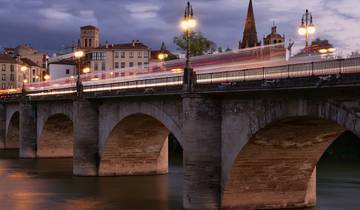
7 days
The North Trail, Self-drive
- ✓ Comprehensive Bilbao tour
- ✓ Expert local guides included
- ✓ All accommodation arranged
- ✓ Transportation provided
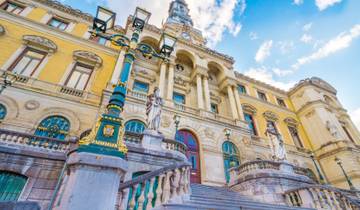
5 days
The Northern Gateway, Self-Drive
- ✓ Comprehensive Bilbao tour
- ✓ Expert local guides included
- ✓ All accommodation arranged
- ✓ Transportation provided
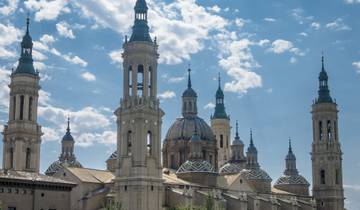
4 days
4-Day Green Spain (Northwest)
- ✓ Comprehensive Bilbao tour
- ✓ Expert local guides included
- ✓ All accommodation arranged
- ✓ Transportation provided
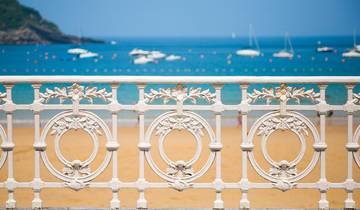
7 days
Best of Basque Country From Bilbao – 7 days (Superior)
- ✓ Comprehensive Bilbao tour
- ✓ Expert local guides included
- ✓ All accommodation arranged
- ✓ Transportation provided
Multi-day tour packages powered by TourRadar. Prices and availability subject to change.
Why Bilbao Belongs on Your 2027 Travel List
The term “Bilbao Effect” entered urban planning literature to describe what happened when the Guggenheim Bilbao opened its titanium doors in October 1997: a city whose economy had been devastated by the collapse of its steel and shipbuilding industries used a single architectural commission to trigger a tourism-led regeneration that became a model studied around the world. The effect worked not just because of the building — though Gehry’s design is genuinely extraordinary — but because it arrived alongside a package of infrastructure investments including the Norman Foster-designed metro stations (their iconic glass-tube entrances, called Fosteritos, are landmarks in their own right), the waterfront Abandoibarra redevelopment, the Arriaga Theatre renovation, and a tramline threading through the historic center.
Nearly three decades on, Bilbao’s appeal has deepened beyond that single architectural magnet. The Bilbao Fine Arts Museum’s major extension, completed in mid-2026, gives the city a second world-class art institution capable of anchoring a separate day’s visit on its own merits. The Old Town’s medieval street grid, laid out in parallel lanes dating — according to local historical accounts, though precise municipal records before the 15th century are fragmentary — to the city’s medieval founding, remains one of the most enjoyable walking environments in northern Spain, dense with pintxos bars, small squares, and the covered expanse of the Ribera Market. The surrounding Basque Country offers some of the most varied and accessible day-trip territory in Spain, from the Atlantic surf coast to historically resonant inland towns.
For travelers in 2027, several factors sharpen Bilbao’s appeal relative to competing Spanish destinations. Price levels remain significantly lower than Barcelona or the Balearic Islands at equivalent quality. The city’s compact geography — the cultural landmarks are walkable within the center, and the metro/tram network covers the rest — reduces the logistical friction that exhausts visitors in sprawling cities. And the Basque food culture, centered on pintxos rather than formal dining, means that eating extraordinarily well does not require expensive restaurant reservations: some of the best food in Spain is available standing at a bar for €3 a piece.
Getting to Bilbao in 2027: Airport, Train & Coach Connections
Bilbao Airport (IATA: BIO), also known as Bilbao-Loiu Airport, sits approximately 12 km northeast of the city center. It handles a wide range of European routes including year-round services from London, Paris, Amsterdam, Frankfurt, Rome, and major Spanish cities, operated by carriers including Vueling, Iberia, Ryanair, easyJet, and British Airways. The terminal was redesigned by Santiago Calatrava and is itself a minor architectural landmark. Direct transatlantic connections to Bilbao are limited; most long-haul visitors route through Madrid or Barcelona. Check current schedules at bilbaoair.es: airline route networks shift seasonally, and new routes to Bilbao have been added incrementally in recent years.
From the airport to the city, the standard public transport route is Bizkaibus line A3247, which runs from the airport terminal to the Termibus coach station at San Mamés, adjacent to San Mamés metro station on both metro lines. The journey takes 30–40 minutes depending on traffic. Tickets are charged at the zone-1 single fare on the Barik integrated transport card; card top-up machines are available at the airport. A taxi from the airport to central Bilbao costs €25–35 and takes 20–30 minutes depending on traffic; rank taxis in Spain are metered and licensed, so agreed fares are unnecessary. Ride-hail services including Cabify operate in the Bilbao metropolitan area.
Travelers arriving overland by train use Bilbao’s main station, Bilbao-Abando, served by Renfe long-distance and medium-distance services. From Madrid Chamartín, the Renfe Alvia service reaches Bilbao-Abando in approximately 4 hours 45 minutes to 5 hours; check renfe.com for the current 2027 timetable and advance fares. From Barcelona Sants, the journey requires a change in Zaragoza or Miranda de Ebro and typically takes 6–7 hours; an overnight option exists depending on the season. From San Sebastián, a change to Euskotren’s narrow-gauge network or the ALSA/Lurraldebus express coach is more practical than the Renfe connection; see the Day Trips section for fares. Bilbao-Concordia station, adjacent to Abando, serves Euskotren lines to the Basque coast.
Long-distance coaches to Bilbao use the Termibus station (also known as the San Mamés Intermodal). ALSA operates regular services from Madrid (approximately 5 hours; check current fares at alsa.es — advance booking is significantly cheaper than on-the-day purchase), Barcelona, and other Spanish cities. The Termibus is directly connected to the metro and to the tram, making onward movement into the city straightforward on arrival.
Getting Around Bilbao in 2027: Metro, Tram & the Barik Card
Bilbao’s public transport network is integrated under the Consorcio de Transportes de Bizkaia (CTB) and centers on three overlapping systems — the metro, the tram, and the Bilbobus city bus network — all of which accept payment via the Barik rechargeable card. New fares introduced in March 2026 apply through 2027; verify exact current figures at ctb.eus, since the numbers below reflect the March 2026 schedule.
The metro (Metro Bilbao) has two lines and 39 stations covering central Bilbao and extending into the metropolitan area. Its station entrances — the glass-tube structures designed by Sir Norman Foster and officially classified as Basque architectural heritage — are among the city’s most photographed elements: walking down into the metro at any central station is itself a small architectural experience. Most central tourist destinations sit in zone 1. A single zone-1 journey without a Barik card costs approximately €1.60; with a loaded Barik card (the Creditrans fare), the same journey costs approximately €0.95. A day ticket covering unlimited metro rides across zone 1 costs approximately €4.90. Service runs daily from 6:00 AM; last trains depart at approximately 11:00 PM Sunday through Thursday, extended to around 2:00 AM Friday, Saturday, and eve-of-holiday nights. Frequency at peak times is every 5–7 minutes.
The tram (Euskotran) runs a single central line connecting San Mamés (bus station and metro connection) through Abandoibarra (where the Guggenheim sits), the Gran Vía commercial district (Abando stop), and across into the Old Town (Arriaga stop) and the Ribera Market area. It is the most tourist-relevant surface transport in the city, placing all the major cultural landmarks on a single route. A single tram fare is €1.50 without a card; with a Barik card, €0.73. The tram runs frequently and is the most practical single link between the Guggenheim district and the Old Town.
For visitors spending multiple days in the city, the Bilbao Bizkaia Card is worth evaluating. It offers unlimited use of metro, tram, and Bizkaibus across the metropolitan network — including the Artxanda funicular — for 24 hours (€10), 48 hours (€15), or 72 hours (€20). The card is sold at tourist offices, the airport, and several metro stations. Against the zone-1 metro fare of €1.60 per trip, the 24-hour card breaks even at seven single journeys; two days of typical tourist movement, involving frequent tram-metro crossings, generally justifies the 48-hour option. The card also includes skip-the-line entry to the Guggenheim Bilbao exterior sculpture garden and discounts at some attractions — verify the current list of perks when purchasing, as the associated benefits are updated periodically.
The Artxanda funicular connects Plaza del Funicular in the city center to the Artxanda hill, a viewpoint that gives a panoramic view over the entire city, the surrounding mountains, and the Nervión estuary. The round-trip fare is €2.50 and the journey takes about three minutes each way. The funicular is included in the Bilbao Bizkaia Card. The hilltop has a park, outdoor restaurant tables, and walking paths; it is one of Bilbao’s most rewarding free views.
Within the city center, walking is the most practical way to move between the Old Town, the Ensanche 19th-century grid, and the Guggenheim riverside. The distance from the Old Town’s Arriaga Theatre to the Guggenheim along the riverbank is approximately 1.5 km, easily walked in 20 minutes and a scenic route in its own right, passing the Zubizuri bridge (another Santiago Calatrava structure), the Abandoibarra park, and the outdoor sculptures in the Guggenheim’s riverside plaza.
Guggenheim Bilbao 2027: Tickets, Highlights & Planning Your Visit
The Guggenheim Bilbao opened on October 18, 1997, to an international response that had more to do with the building than with its inaugural exhibitions. Frank Gehry’s design — an irregular cluster of interlocking volumes clad in titanium panels that shift color with the light, anchored against the curve of the Nervión estuary — has been consistently cited in architectural discourse since its opening as one of the defining works of late-20th-century construction. The building’s effect on viewers seeing it in person for the first time tends to be stronger than photographs suggest: the titanium surfaces are reflective but not glassy, and the way different volumes resolve as you walk around the exterior is genuinely difficult to predict from any fixed viewpoint. The exterior experience alone — free, always accessible, best in morning or late-afternoon light — is worth a circuit of the building.
Inside, the permanent collection organizes around several major works whose scale and ambition are calibrated to Gehry’s enormous gallery volumes. Richard Serra’s The Matter of Time fills Gallery 104 with eight weathered steel sculptures whose curved and torqued surfaces create narrow passages and chambers that visitors walk through rather than simply around; the physical experience of moving through Serra’s corridors of rusted steel is unlike anything available in most major museums. Jeff Koons’ Puppy, the 13-meter topiary-covered West Highland terrier standing in the plaza outside the main entrance, and Louise Bourgeois’ Maman, the nine-meter bronze spider guarding the riverside, are two of the most immediately recognizable outdoor sculptures on the continent. Yves Klein, Cy Twombly, Mark Rothko, and Jenny Holzer are among the artists whose work rotates through the upper galleries alongside a year-round program of temporary exhibitions.
For 2027 visitors: adult admission is €15; reduced rate is €7.50 for visitors aged 65 and over and for students aged 18–26 with valid ID; children under 18 enter free and require no booking if accompanied by an adult. Tickets are timed — you select a 30-minute entry window — and must be booked at tickets.guggenheim-bilbao.eus. Third-party resellers charge more for the same time-slot ticket with no added benefit. In peak summer (July–August) and during major exhibitions, book 48–72 hours ahead. Standard hours are 10:00 AM to 7:00 PM; extended summer hours (typically June 15 through mid-September) run to 8:00 PM. The museum is open seven days a week during most of the year, though check the official calendar for seasonal closures.
The free window every Tuesday from 6:00 PM to 8:00 PM gives two hours of access to the permanent collection and current temporary exhibitions, first-come first-served, with no advance booking. Two hours is tight for a comprehensive visit but ample for The Matter of Time, the Atrium (Gehry’s central void soaring to 50 meters), and a circuit of the upper galleries. Arrive no later than 5:45 PM in summer to avoid queuing behind the first wave.
The Artean Pass (€18) covers admission to both the Guggenheim Bilbao and the Bilbao Fine Arts Museum; if you plan to visit both, it represents a saving against buying separate tickets and should be purchased at either museum on the day or via the Guggenheim’s ticketing site. The Guggenheim also operates the Michelin-starred Nerua restaurant in the basement level, requiring advance reservations (nerua.com), and a café under the cantilevered terrace that is open to all visitors without museum admission. Audio guides are available through the museum’s mobile app and via handheld rental at the cloakroom.
Bilbao Fine Arts Museum 2027: Collection & Visiting Information
The Bilbao Fine Arts Museum — housed on the Plaza del Museo in the Doña Casilda park — predates the Guggenheim by decades and holds one of the most significant art collections in Spain. Its holdings span from Romanesque altarpieces and 15th-century panels through Golden Age masters, 19th-century Basque painting, and into the 20th century, making it a museum with genuine historical breadth rather than a single-period focus. Francisco de Goya, El Greco, Francisco de Zurbarán, Diego Velázquez, and Bartolomé Esteban Murillo represent the Spanish canon in the collection; Paul Gauguin, Francis Bacon, and Eduardo Chillida broaden it significantly into European and international contexts. The Basque painting galleries — devoted to artists including Ignacio Zuloaga, Aurelio Arteta, and Darío de Regoyos — document a regional artistic tradition largely invisible in museum collections outside the Basque Country.
A major expansion designed by Norman Foster (Foster + Partners) and the Basque architect Luis María Uriarte added a new wing that effectively doubled the museum’s gallery space. The works were completed in mid-2026 after approximately 22 months of construction; during the renovation, admission was free and only the historic original building was open. As of late 2026, the full museum — including the Foster extension — should be fully operational. The normal pre-renovation admission fee was €10 for adults; with the expansion complete, verify the current price at museobilbao.com before visiting, as pricing may have been updated following the reopening. Free entry was available every Wednesday evening from 6:00 PM regardless of the renovation; confirm whether this policy continues under the renewed museum.
The Artean Pass at €18 covering both the Guggenheim and the Bilbao Fine Arts Museum is the most practical option if you plan to visit both, since the individual tickets at full price would total approximately €25. The Bilbao Fine Arts Museum is open Wednesday through Monday, 10:00 AM to 8:00 PM, and closed on Tuesdays — the opposite of the Guggenheim’s free Tuesday evening, making it easy to build an itinerary that uses both free windows without conflict. The museum occupies a handsome early-20th-century building in the Doña Casilda park, whose grounds are themselves pleasant for a walk: the park has formal gardens, a duck pond, and the Azkuna Zentroa cultural center nearby, the former wine warehouse redesigned by Philippe Starck that now houses a swimming pool, cinema, auditorium, and exhibition spaces.
Bilbao’s Old Town in 2027: The Seven Streets & Medieval Quarter
The Old Town — Casco Viejo in Spanish, Zazpikaleak in Basque, meaning Seven Streets — is Bilbao’s historic medieval core on the right bank of the Nervión estuary. The settlement that preceded the modern city was organized, according to the historical records of the municipality, around a grid of parallel streets; seven of these original lanes survive as the nucleus of the quarter. The urban fabric mixes narrow pedestrian streets, arcaded squares, Gothic ecclesiastical architecture, and a dense concentration of pintxos bars that make the area the primary evening destination for most visitors.
The Santiago Cathedral of Bilbao (Bilbao Cathedral) is the quarter’s dominant Gothic church, a 14th- and 15th-century structure whose cloister is one of the quieter and more atmospheric spaces in the city. The Arriaga Theatre at the quarter’s southern edge, facing the tram stop and the river, is a late 19th-century opera house with a neo-Baroque exterior that anchors the open plaza where the tram terminates. The Ribera Market — Europe’s largest covered market by one frequently cited measure, though the claim is difficult to verify precisely — occupies a 1929 Art Deco building on the riverbank, housing fish stalls on the lower levels and a pintxos bar area in the galleries above; entry is free and the morning fish display is one of the city’s best free sights.
Plaza Nueva is the Old Town’s principal arcaded square, a formal neoclassical enclosure completed in the early 19th century whose colonnades shelter pintxos bars on all four sides. Sunday morning brings an antiques and book market; Saturday afternoons bring crowds; weekday mornings are the most genuinely local time to visit. The Basque Museum (Euskal Museoa), which normally documents Basque ethnography, history, and culture in a 17th-century former Jesuit college, was temporarily closed for renovation as of late 2025; verify current opening status at euskalmuseoa.eus before planning a visit.
The Old Town is also the starting point for the pintxos crawl that most visitors treat as the quintessential Bilbao evening, described in detail in the following section. Getting to the Old Town from the Guggenheim is a 20-minute walk along the riverbank, or a single tram stop from Abandoibarra to Arriaga. The nearest metro station is Casco Viejo on Line 1, from where it is a short walk into the heart of the quarter.
Bilbao Pintxos Guide 2027: Where to Eat, What to Order & How the Crawl Works
The pintxo (or pincho in Castilian Spanish) is a small bar snack served on a slice of bread, typically secured with a wooden skewer — the word derives from the verb pinchar, to pierce. What distinguishes the Bilbao pintxos culture from tapas elsewhere in Spain is the bar-counter display: dozens of pintxos arranged in rows on the counter, varying from simple combinations like tortilla (Spanish omelette) and anchovies to elaborate preparations involving salt cod, crab, foie gras, and seasonal vegetables. You point to what you want, order a drink, and pay at the end. The individual unit cost — €2–4 per pintxo at most bars — makes it possible to eat extremely well and diversely for under €20 per person at a single bar, or to spread a crawl across five or six venues for €25–35 including drinks.
The txikiteo — the pintxos crawl, moving from bar to bar in a group — is the primary social ritual of Bilbao’s evenings, practiced by locals as much as by visitors. The received wisdom is to have one or two pintxos and one drink at each stop before moving on. The two main districts for crawls are the Old Town’s Seven Streets (particularly Plaza Nueva and the surrounding lanes) and the Ensanche’s Calle Ledesma and surrounding streets; the Ensanche bars tend toward more contemporary, elaborately composed pintxos, while the Old Town leans toward traditional preparations.
In the Old Town, long-established venues include El Globo (Calle Diputación, technically in the Ensanche but close to the border), Bar Txiriboga on Calle Santa María, Sorginzulo on Plaza Nueva, and Café Bar Bilbao at Plaza Nueva 6, whose covered terrace is one of the best settings for a first drink. Among traditional pintxos to order: the gilda (the original pintxo — an olive, a guindilla pepper, and an anchovy on a skewer) originated in San Sebastián but is ubiquitous in Bilbao; bacalao (salt cod) in its various preparations; tortilla (often excellent in Bilbao’s bars, where individual slices are thick and properly set); txampi (garlic mushroom); and the bilbaína, a local brochette found primarily in Café Bar Bilbao. The standard drink to accompany pintxos is txakoli — the local lightly sparkling dry white wine, poured from a height to aerate it — or sidra (cider). A small glass of wine or beer is equally common.
Beyond the pintxos bar scene, Bilbao has a serious restaurant culture. The Gran Vía and the area around the Guggenheim host several Michelin-starred or otherwise notable restaurants. Nerua Guggenheim Bilbao (inside the museum, reservations required weeks in advance) offers a tasting menu focused on Basque produce. Etxanobe, on the top floor of the Euskalduna Palace, and Azurmendi (outside the city in Larrabetzu, accessible by taxi and worth the trip for serious food enthusiasts) represent the higher end of the Basque fine-dining landscape. For a sit-down lunch without the expense of a starred restaurant, most Bilbao neighborhoods offer a menú del día — a fixed-price two- or three-course weekday lunch with wine — for €12–18. The menú del día is genuine value and one of the best money-saving strategies for mid-range travelers.
Where to Stay in Bilbao in 2027: Neighborhoods & Price Ranges
Bilbao is compact enough that almost any central hotel provides easy access to the main sights, but neighborhood character varies considerably across the main accommodation districts.
The Old Town is the most atmospheric location — you wake up in the narrow medieval lanes, steps from the morning fish market and the night’s pintxos bars — but comes with ambient noise on weekends and somewhat smaller, older hotel stock. Guesthouses and pensions (small family-run hotels) in the Old Town are among the best budget options in the city: expect rooms of €60–80 per night in a clean, characterful setting. The Casco Viejo metro station is within the quarter.
The Ensanche — Bilbao’s 19th-century planned expansion district, centered on the Gran Vía and the Plaza Moyua — is quieter than the Old Town and holds the majority of the city’s mid-range and upper-mid-range hotel stock. Chain hotels including NH Collection, Barceló, Mercure, Radisson Collection, and Meliá operate in this area. Room rates in this category run from approximately €120–160 per night for solid four-star properties; the NH Collection Villa de Bilbao and Barceló Bilbao Nervión have historically been popular choices at around €120–165 per night for a double room depending on season. The Gran Vía connects directly to metro Line 1 at Plaza Moyua.
The Abandoibarra riverside district, adjacent to the Guggenheim, hosts the most architecturally striking hotel options. The Artist Grand Hotel of Art (formerly Domine Bilbao) faces the Guggenheim directly and is the quintessential design-hotel experience in the city; room rates in peak summer run to approximately €200–250 per night for a double. The Hotel Miro, designed by Antonio Miró, occupies a position equally close to the Guggenheim at a slightly lower price point. This district is ideal for visitors who want to be embedded in the cultural quarter but who do not need to be within walking distance of the Old Town’s nightlife (the tram and a 20-minute walk connect the two).
For budget accommodations beyond pensions and guesthouses, ibis Bilbao Centro and comparable budget chain hotels in the Ensanche offer reliable, unfussy rooms at €70–120 per night for a double. Hostel dorm beds are available for €20–35 per person per night at established backpacker hostels in and around the Old Town; independent travelers should check current listings on booking platforms as stock changes seasonally.
On pricing: Bilbao is a popular summer conference and trade-fair city as well as a tourist destination, meaning weekend rates in summer (July–August) can be 30–40% higher than midweek equivalents. The Semana Grande (Aste Nagusia) festival in August — nine days of open-air concerts, fireworks, bullfighting, and street events — fills hotels city-wide at peak rates; book several months ahead if visiting during this period. Rates in the shoulder seasons (May–June and September–October) are noticeably lower and the city is equally attractive climatically and culturally.
Day Trips from Bilbao in 2027: Guernica, Gaztelugatxe, San Sebastián & Beyond
The Bizkaia province around Bilbao is unusually rich in day-trip destinations for such a compact region, ranging from historically charged inland towns to dramatic Atlantic coastal scenery.
Guernica (Gernika-Lumo) is the most historically significant Basque town, most widely known internationally through the Pablo Picasso painting produced in response to the aerial bombardment of the town on April 26, 1937 — the original Picasso canvas hangs in the Reina Sofía Museum in Madrid, but the Guernica Peace Museum (Gernikako Bake Museoa) in the town itself holds preparatory studies, documentary photographs, and the contextual history of the bombing and its aftermath. The Basque Parliament (Casa de Juntas) building in the adjacent town of Gernika sits beside the famous Gernikako Arbola, a successor oak to the tree under which Basque lords traditionally convened; the oak and its setting carry deep symbolic weight in Basque political identity. Bizkaibus reaches Guernica from Bilbao’s Termibus in approximately 40–45 minutes for a low regional fare (check bizkaibus.eus for current rates). The return journey is straightforward, making a half-day or full day feasible.
Gaztelugatxe is the most visually dramatic spot on the Basque coast: a rocky tidal islet connected to the mainland by a narrow stone causeway and stairway of 241 steps, topped by a small hermitage chapel dedicated to St. John the Baptist. The location served as a filming site for a prominent fantasy television series and has attracted a significant new wave of visitors since; the Basque government introduced a reservation system for peak season visits (check the official reservation page at reservas.basquetour.eus before traveling). The nearest public transport connection from Bilbao is by Bizkaibus to the village of Bakio, followed by a walk or local taxi to the Gaztelugatxe access point; the full roundtrip walk from the car park to the hermitage and back is approximately 3 km. Afternoon light is better for photography; early morning visits are quieter.
San Sebastián (Donostia) deserves a full day rather than a half-day, though it is compact enough to cover the essentials in a day trip from Bilbao. ALSA and Lurraldebus express coaches run from Termibus (Bilbao) to San Sebastián’s main bus station in approximately 1 hour 15 minutes to 1 hour 30 minutes; fares range from €8 to €14 depending on the operator and booking timing. Services are frequent throughout the day. Alternatively, the Euskotren narrow-gauge railway from Bilbao-Atxuri station runs to San Sebastián-Amara in approximately 2 hours 30 minutes with picturesque coastal views; fares start from approximately €6.50–8.00. San Sebastián’s La Concha beach — a wide crescent of golden sand enclosed by two wooded headlands in the middle of the city — is one of the finest urban beaches in Europe, and the Old Town pintxos scene, concentrated around Calle 31 de Agosto and the surrounding lanes, competes with and in the view of many visitors surpasses Bilbao’s in quality and density of Michelin-starred-adjacent bars. Allow at least 5–6 hours in the city.
Bermeo and Mundaka are adjacent coastal towns reachable on the same Euskotren line from Bilbao-Atxuri station in approximately 45–55 minutes for a regional fare. Bermeo is one of the most active fishing ports on the Basque coast; the Fishermen’s Museum (Arrantzaleen Museoa) in its 15th-century tower documents the maritime history of the region. Mundaka, a short connection or walk from Bermeo, is home to the wave considered one of the finest lefthander surf breaks in Europe. Watching surfers from the clifftop path above the estuary is free; the village itself is quiet and pleasant out of surf season.
Vitoria-Gasteiz, the capital of the Álava province and the administrative capital of the Basque Country, is approximately 65 km from Bilbao and reachable by Renfe regional train in about 1 hour. The city was designated a UNESCO Creative City of Design in 2014 and has a medieval Old Town that is less visited than Bilbao’s and arguably more intact. The Artium Museum of Contemporary Basque Art and the Green Belt — a ring of parks and green corridors that encircles the entire city — are among the more distinctive features. Vitoria-Gasteiz works well as a day trip for visitors who want a contrast to the cultural-tourism density of Bilbao proper.
Bilbao Budget Guide 2027: Daily Cost Breakdown by Travel Style
Bilbao is moderately priced by Western European capital standards — substantially cheaper than Barcelona or Amsterdam at comparable quality levels — and significantly easier to budget for because the pintxos culture means excellent food is available at low price points without sacrificing quality.
Budget travelers sharing a budget hotel room or hostel spend approximately €75–110 per person daily. The room cost per person (two sharing a budget double at €60–80 per night) runs €30–40; meals on a pintxos-centered approach — a few pintxos and a drink for breakfast, a pintxos lunch, a full evening crawl — total €35–55; metro and tram travel for a normal tourist day costs €5–8; and attractions average €5–7 per day when calculated across a visit that uses free Tuesday evenings at the Guggenheim, free Bilbao Fine Arts Museum windows, and the many free outdoor sights (the riverbank walk, the Artxanda funicular view, the Ribera Market, the Old Town). The Artxanda funicular round trip at €2.50 sits comfortably within the attractions budget.
Mid-range travelers sharing a three- or four-star hotel room (€120–160 per night) spend approximately €135–190 per person daily. The accommodation per person reaches €60–80; meals with a café breakfast at €8–12, a proper sit-down menú del día lunch at €14–18, and a pintxos dinner with wine at €30–40 total €55–80 per person; transport with the Bilbao Bizkaia Card and occasional extras runs €8–12; a daily attractions budget covering the Guggenheim, occasional entry to other museums, and one organized activity or guided walk runs €12–18.
Luxury travelers in a five-star hotel near the Guggenheim (€180–250 per night) spend approximately €205–300 per person daily. Hotel costs per person reach €90–125; meals at the Michelin-starred level or top-end pintxos bars with wine pairings run €80–120 per person; transport mixing the Bilbao Bizkaia Card with private taxis costs €15–25; and a daily budget covering full museum experiences, private guided tours, cooking classes, or private wine tastings in the Rioja Alavesa (day trip) runs €20–30.
Money-saving tips: the free Tuesday Guggenheim window saves €15 per adult. The Bilbao Bizkaia Card for 48 hours at €15 versus individual metro and tram fares represents solid savings for a visitor doing three or more transport trips per day. The menú del día at local Ensanche restaurants — typically €12–16 for two courses plus wine and coffee — provides quality Basque cooking at a fraction of restaurant dinner prices. The Artean Pass at €18 for both main museums compares favorably to the combined individual prices. Evening free entry at the Bilbao Fine Arts Museum (when operating) adds another significant saving. Walking the riverbank from the Old Town to the Guggenheim and back — free, and one of the best architectural walks in Spain — replaces multiple tram fares per day.
Bilbao by Season 2027: When to Visit & What to Expect
Bilbao’s climate is oceanic: mild temperatures year-round, relatively high rainfall, and little of the extreme summer heat or winter cold that affects most of peninsular Spain. The Atlantic influence means that even in July and August, temperatures typically stay in the low to mid-20s Celsius; genuine heatwaves, while not unknown, are less frequent than in Madrid or Seville. Rain is possible in any month, and packing a light waterproof layer is advisable regardless of season.
The two shoulder seasons — May through June and September through October — offer the best combination of mild weather, manageable crowd levels, and full museum opening hours. Spring brings green Basque hills in excellent condition; autumn offers the best light for photography and the tail end of the txakoli harvest, when small local wineries in the hills above Bilbao occasionally hold tastings. Hotel rates in shoulder season are meaningfully lower than in July and August.
Summer (July–August) is the busiest period. The Guggenheim reaches its peak attendance; hotel rates climb by 30–40% over midweek; and the Semana Grande (Aste Nagusia) festival in August fills the city for nine consecutive days with free outdoor concerts, street theatre, fireworks, and major events centered on the Old Town and the Arenal. Aste Nagusia is an extraordinary spectacle if you book accommodation months in advance and are comfortable in crowds; it is a stressful period if you are trying to squeeze value from every euro.
Winter (November–March) sees the lowest hotel rates and the smallest crowds. The Guggenheim remains open and is well-heated; the pintxos bars are livelier with local clientele than with tourists; and the atmospheric winter light on the Nervión estuary and the titanium facades has a particular quality. Rain is more frequent in winter, but Bilbao’s compact geography and excellent indoor cultural offering make it a workable cold-season destination for visitors who prioritize museums and food over outdoor sightseeing.
Bilbao Practical Tips 2027: Visas, Language, Currency & Essential Planning
Spain is a member of the European Union and the Schengen Area. Citizens of EU and EEA countries require only a national identity document to enter; citizens of the United States, Canada, Australia, and most other developed nations can enter Spain without a visa for stays of up to 90 days in any 180-day period. The European Travel Information and Authorization System (ETIAS), an advance electronic authorization scheme for visa-exempt non-EU visitors, was in the process of implementation as of late 2026; verify whether ETIAS is required for your nationality and passport at travel.ec.europa.eu before traveling in 2027, as the launch status and applicable nationalities may have changed. Citizens of countries with a visa requirement for Spain should contact the nearest Spanish embassy or consulate well in advance of travel.
Languages in Bilbao are Spanish (Castilian) and Basque (Euskara). Basque is co-official in the Basque Country, and all street signs, metro station names, and public transport displays appear in both languages. Among younger locals in the tourism sector, English is spoken at a functional to good level in hotels, museums, and major restaurants; it is less reliably available in local pintxos bars in the Old Town, where pointing and basic Spanish expressions get you as far as you need to go. A few words of Spanish or Basque — eskerrik asko (thank you in Basque), gracias (thank you in Spanish), bat txakoli mesedez (one txakoli please in Basque) — are genuinely appreciated.
The currency is the Euro (€). ATMs (cajeros automáticos) are widely distributed throughout the city center; major credit and debit cards are accepted in hotels, restaurants, and museums, though some traditional pintxos bars remain cash-preferred. Notify your bank before travel to avoid international transaction blocks.
Safety in Bilbao is generally very good. The city has a low rate of violent crime; standard urban precautions — awareness of your surroundings in crowded areas, keeping bags secured in the Old Town at peak weekend evenings — apply as they would in any major European city. The Basque Country emergency number is the European standard 112.
Tipping is not mandatory in Spain and is not expected at the level it is in the United States. Rounding up a coffee or leaving €1–2 after a meal is appreciated and common; leaving 5–10% at a formal sit-down restaurant after a satisfying meal is appropriate but entirely discretionary. At pintxos bars, the transaction is so rapid and informal that most visitors simply round to the nearest euro at payment.
Pharmacies (farmacias) are marked by a green cross and are well-distributed through the city; staff typically have basic English and can advise on minor ailments and over-the-counter medications. The Hospital Universitario de Basurto is Bilbao’s main public hospital. EU citizens with a European Health Insurance Card (EHIC or its successors) are entitled to necessary public healthcare; all other visitors should carry travel insurance with medical coverage.
The Oficina de Turismo de Bilbao operates a main tourist office at Plaza Circular 1, adjacent to Abando train station and metro stop, with staff who speak English, Spanish, French, and Basque. The Bilbao Turismo website (bilbaoturismo.net) maintains current listings of museum opening hours, event calendars, and transport information.
Frequently Asked Questions: Bilbao Travel 2027
Do I need to book Guggenheim Bilbao tickets in advance in 2027?
Advance booking is strongly recommended and effectively mandatory during peak season. The Guggenheim Bilbao uses timed entry — you book a specific 30-minute arrival window — and popular morning slots on summer weekends regularly sell out 48–72 hours ahead. Outside peak season (October through April, and weekday visits), same-day or next-day booking is generally feasible. Book directly at tickets.guggenheim-bilbao.eus; adult tickets are €15, reduced €7.50, under-18 free. Third-party resellers charge a markup for no added benefit. If you plan to visit on a budget, the free Tuesday window (6:00–8:00 PM) requires no booking but demands arriving early; capacity is not formally capped but demand on peak-season Tuesdays is high.
Is the Bilbao Fine Arts Museum free in 2027?
During the Norman Foster expansion works (approximately late 2024 through June 2026), the Bilbao Fine Arts Museum offered free admission while operating in reduced form. With the expansion now complete, the museum has likely reverted to paid admission — pre-renovation, the standard adult ticket was €10. However, you should verify the current price at museobilbao.com before visiting, since the pricing model may have been revised following the reopening. A free evening window (historically Wednesdays from 6:00 PM) may remain in place; confirm current policy at the official site. The Artean Pass (€18) covers both the Guggenheim and the Bilbao Fine Arts Museum and is worth considering if you plan to visit both.
What is the best neighborhood to stay in Bilbao in 2027?
The answer depends on your priorities. The Old Town (Casco Viejo) is the most atmospheric choice: you are immediately embedded in the pintxos bar scene and medieval lane geography, and the tram stop at Arriaga connects you to the Guggenheim in a single stop. Downside: weekend nights are lively to the point of noise. The Ensanche — the 19th-century planned grid around the Gran Vía — offers quieter streets, the widest range of mid-range and luxury hotels, and easy metro access to both the Old Town and the Guggenheim. The Abandoibarra riverfront district, immediately beside the Guggenheim, is the most design-hotel-oriented area of the city; it is ideal for architecture and museum enthusiasts and for those who want the river views, but is less convenient for spontaneous Old Town evenings.
How many days should I spend in Bilbao in 2027?
Three days is the minimum to cover the Guggenheim properly, the Bilbao Fine Arts Museum, and at least two or three pintxos crawls across different neighborhoods. Four or five days adds the capacity for a full day trip (to San Sebastián or Guernica), a relaxed morning at the Ribera Market, a Artxanda funicular excursion, and the ability to explore less obvious areas including the Basque Sculpture Park near the museum and the 19th-century cemetery of Vista Alegre, which is an unexpectedly beautiful example of Spanish Romantic funerary architecture. A week works well for visitors combining Bilbao with a second Basque base — San Sebastián is the obvious partner — and enables day trips in multiple directions.
What is the Artean Pass and is it worth buying in 2027?
The Artean Pass covers a single admission to both the Guggenheim Bilbao and the Bilbao Fine Arts Museum for €18. Against the combined standard individual admissions — €15 (Guggenheim) plus the Bilbao Fine Arts Museum’s current ticket price (likely around €10) — the pass saves approximately €7 per person. It is available at either museum’s ticket desk or through the Guggenheim’s online booking system. For any visitor planning to visit both museums within the same trip, the Artean Pass is straightforwardly worthwhile. If you plan to use the free Tuesday Guggenheim window, buy the Artean Pass just for the Bilbao Fine Arts Museum portion if that option is available separately, or recalculate whether the savings still apply; confirm the current configuration at the ticket desk.
What is the best way to experience pintxos in Bilbao in 2027?
The best pintxos experience is a txikiteo — a crawl across five or six bars in either the Old Town or the Ensanche over two to three hours, ordering two pintxos and one drink at each stop. Begin before 7:30 PM when counters are fully stocked and freshly replenished; by 9:00 PM in summer, popular bars are crowded and some counter items have run low. Individual pintxos cost €2–4 each; budget €25–35 per person for a thorough evening including drinks. The Old Town (Plaza Nueva area and the Seven Streets) leans toward traditional preparations; the Ensanche around Calle Ledesma and Calle Licenciado Poza tends toward more contemporary, elaborate compositions. Trying both zones on separate evenings reveals distinct personalities. Ask for txakoli as an opening drink at each bar — the pouring ritual alone is worth watching.
Is Bilbao safe for solo travelers in 2027?
Bilbao is consistently rated among the safer large cities in Spain. Violent crime rates are low, and the city center, Old Town, and Guggenheim district are comfortable for solo travelers at all hours that tourism activity continues (essentially until the pintxos bars close, around midnight on weekdays and 1:00–2:00 AM at weekends). Standard urban safety practices apply: keep bags secured in the Old Town during peak evening hours, when pickpocket risk increases in crowded bar areas. Solo female travelers report the city as generally relaxed; bar culture is communal rather than predatory, and the pintxos format — standing at a bar, ordering directly — is particularly comfortable for solo visitors because the social architecture is different from a sit-down table. Emergency services are reached via 112.
What is the best season to visit Bilbao in 2027?
May through June and September through October are the strongest shoulder months for a combination of weather, value, and crowd levels. The hills around Bilbao are at their greenest in May; October light on the titanium Guggenheim facade is particularly warm and photographic. Summer (July–August) delivers the longest days, the most diverse outdoor program, and the city’s Semana Grande festival in August — but at significantly higher hotel prices and with larger crowds at the Guggenheim. Winter (November–March) offers the lowest prices, the most local-feeling pintxos bars (fewer tourists), and workable weather for a city whose appeal is primarily cultural and culinary rather than beach-based. Persistent rain is more likely in winter, but rarely heavy enough to make outdoor movement genuinely difficult.
Can I visit San Sebastián as a day trip from Bilbao in 2027?
A San Sebastián day trip from Bilbao is one of the most popular excursions on the Basque Country tourist circuit and is easily feasible. The most practical transport is the ALSA or Lurraldebus express coach from Bilbao’s Termibus station to San Sebastián’s main bus station; the journey takes approximately 1 hour 15 minutes and costs €8–14 depending on operator and booking timing, with services roughly every 30–60 minutes throughout the day. The Euskotren narrow-gauge railway is scenic and slower — approximately 2 hours 30 minutes — with tickets starting around €6.50–8. Allow at least 5–6 hours in San Sebastián for a proper pintxos lunch, the La Concha beach walk, and the Old Town. Return coaches to Bilbao run into the evening, with the last services typically departing around 10:00–10:30 PM; check current timetables at alsa.es or lurraldebus.eus before traveling.
What are the hidden cultural attractions in Bilbao beyond the Guggenheim in 2027?
Several attractions draw significantly fewer visitors than the Guggenheim despite genuine merit. The Azkuna Zentroa (formerly the Alhóndiga, a 1909 wine warehouse redesigned by Philippe Starck in 2010) is a civic cultural center housing a cinema, library, auditorium, shops, and a rooftop swimming pool with a glass floor over a ground-level courtyard; free entry to most common areas. The Maritime Museum (Itsasmuseum Bilbao) on the riverbank tells the story of Bilbao’s shipbuilding industry and Basque maritime heritage in a converted dry dock — verify current opening hours and ticket prices at itsasmuseum.eus. The Euskalduna Conference Centre and Concert Hall, designed by Federico Soriano and Dolores Palacios and completed in 1999, is a deliberately rust-colored building conceived as an abstract rusting ship hull; it was a second major architectural statement in the post-1997 regeneration and hosts concerts by the Bilbao Symphony Orchestra. Calle Iturribide in the Old Town takes visitors past the district’s quieter northeastern end, including the neoclassical San Francisco church and the San Mamés district’s independent market scene. The Artxanda hilltop, reached by the €2.50 funicular, provides views that photography guides consistently underrate relative to the Guggenheim’s immediate riverbank setting.