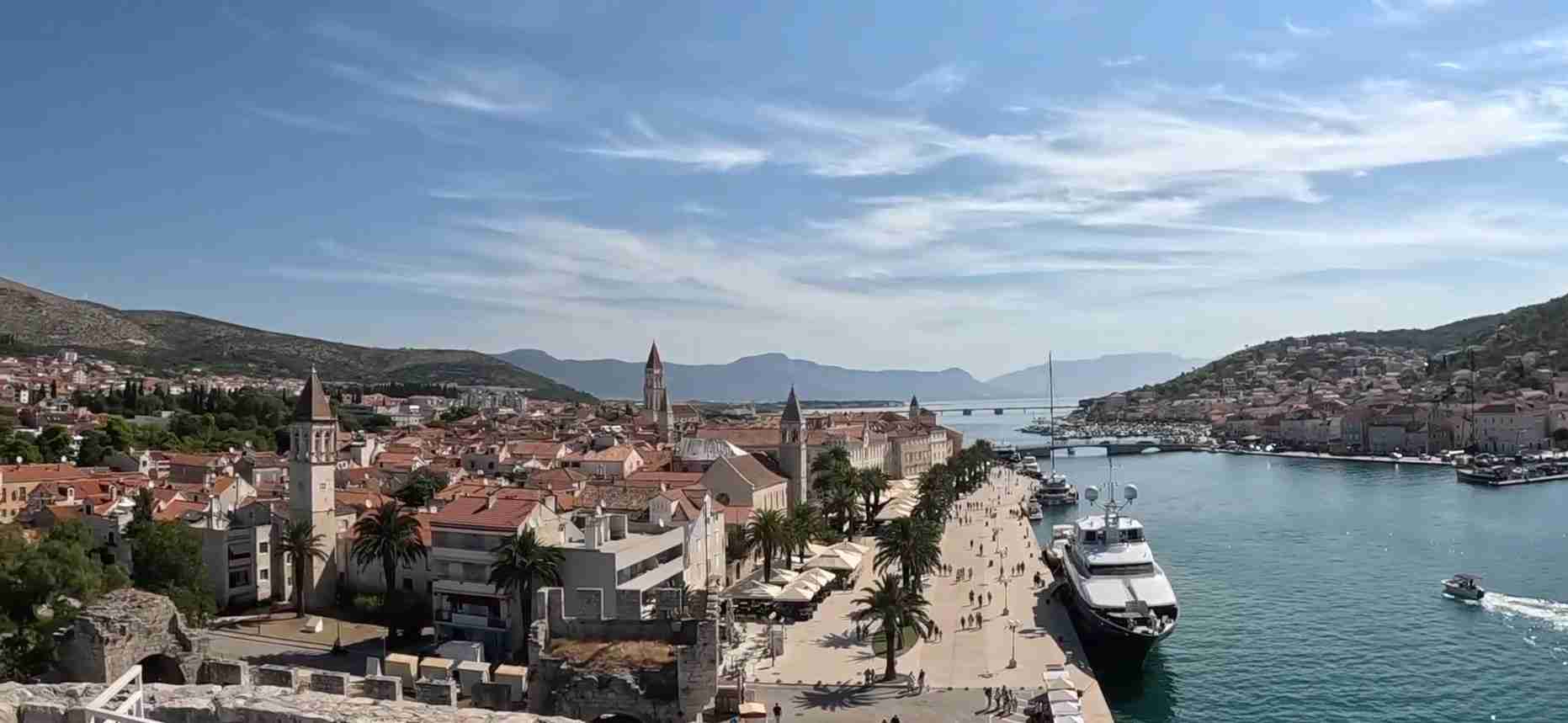
Best Tours & Walking Routes in Trogir 2026: Top Things to Do
Trogir’s UNESCO-listed old town, recognized by National Geographic as one of the world’s most beautiful island cities, offers exceptional walking experiences through 2,300 years of preserved architecture alongside full-day excursions to Croatia’s most spectacular natural wonders. This 2026 guide covers everything from free walking tours through medieval streets to speedboat adventures to the Blue Cave and Hvar, providing verified pricing, booking strategies, and insider recommendations for making the most of your Trogir experience.
Key Takeaways
- Free walking tours operate daily in Trogir’s old town on a tip-based model (€10-20 typical), while guided group tours cost €15-35 per person and private tours range €100-250 for small groups in 2026
- Krka National Park day tours from Trogir cost €30-45 for transport with park entrance fees of €16 (shoulder season) or €30 (summer peak), totaling €46-75 per person for a half-day experience
- Blue Cave and Five Islands speedboat tours range €80-120 per person for group departures, with the Blue Cave entrance fee adding €18-24 depending on season (paid separately in cash)
- Plitvice Lakes full-day tours from Trogir cost €90-160 per person including transport and guidance, with the 11-12 hour journey offering Croatia’s most spectacular waterfall landscapes
- Self-guided walking routes through Trogir’s old town take 90 minutes to 3 hours and are completely free, with the compact island layout making navigation straightforward using the cathedral as a central landmark
- Early morning departures (7:30-8:00 AM) are standard for all full-day tours from Trogir, with return times typically between 5:30-7:00 PM depending on the destination
People Also Ask About Trogir Tours 2026
What are the best walking tours in Trogir for 2026?
The best walking tours in Trogir for 2026 include free GuruWalk tours led by local guides like Daniela and Blanka (tip-based, typically €10-20), organized group tours at €15-35 per person through platforms like Viator and GetYourGuide, and private tours for €100-250 that offer customized experiences. Free walking tours operate daily and cover the UNESCO old town’s major landmarks including the Cathedral of St. Lawrence, Kamerlengo Fortress, and Cipiko Palace over 90-120 minutes. These tours excel at providing historical context and local insights that self-guided exploration cannot match, with guides born and raised in Trogir offering personal family stories alongside architectural explanations.
How much do day tours from Trogir cost in 2026?
Day tours from Trogir in 2026 range from €46-75 for half-day Krka National Park excursions (€30-45 transport + €16-30 park entrance), €80-120 per person for Blue Cave and island-hopping speedboat tours (plus €18-24 Blue Cave entrance), and €90-160 for full-day Plitvice Lakes tours including all transport and guidance. Private boat tours cost €400-800 for the entire vessel accommodating 6-12 passengers, making them economical for larger groups when the cost is divided. Multi-day sailing tours along the Dalmatian coast start around $240 per day per person with accommodations included.
Which tours from Trogir are worth booking in 2026?
The most worthwhile tours from Trogir in 2026 are Krka National Park half-day excursions for spectacular waterfalls just 50-60 minutes away, Blue Cave and Five Islands speedboat tours for the Blue Cave’s ethereal light phenomenon and Hvar’s Venetian architecture, and Plitvice Lakes full-day tours for Croatia’s most famous UNESCO natural site with 16 terraced lakes and 90+ waterfalls. Krka offers the best value at €46-75 total cost with swimming allowed at Skradinski Buk waterfall, while the Blue Cave tour provides the most diverse experience visiting five islands in one day. Plitvice requires the longest travel time (11-12 hours total) but delivers Croatia’s most iconic natural scenery.
Can you explore Trogir without a tour in 2026?
Trogir’s compact old town is perfectly suited for independent exploration in 2026, with the entire UNESCO-listed island walkable in 90 minutes to 3 hours depending on pace and museum visits. Self-guided routes are free and straightforward using the Cathedral of St. Lawrence as a central landmark, with clear sight lines throughout the small island eliminating navigation challenges. However, guided walking tours add significant value through historical context, architectural details, and local stories that plaques and guidebooks cannot provide. For day trips to Krka, Plitvice, or the Blue Cave, organized tours are highly recommended as public transport connections are limited and driving logistics become complex, particularly for Plitvice’s 4-5 hour distance from Trogir.
Extended multi-day tours – 5+ days
Featured Trogir Multi-Day Tour Packages
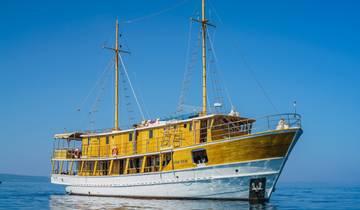
5 days
5-day Dubrovnik to Split, Classic Plus, 18-35s
- ✓ Comprehensive Trogir tour
- ✓ Expert local guides included
- ✓ All accommodation arranged
- ✓ Transportation provided
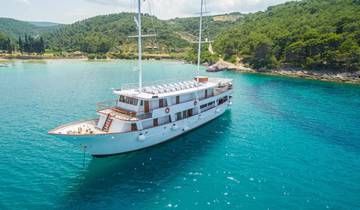
4 days
4-day Split to Dubrovnik, Premier Plus boat, 30-49s
- ✓ Comprehensive Trogir tour
- ✓ Expert local guides included
- ✓ All accommodation arranged
- ✓ Transportation provided
7 days
Trogir to Makarska: Dalmatian Dream
- ✓ Comprehensive Trogir tour
- ✓ Expert local guides included
- ✓ All accommodation arranged
- ✓ Transportation provided
6 days
6 Day Split, Trogir and Dubrovnik Self Guided
- ✓ Comprehensive Trogir tour
- ✓ Expert local guides included
- ✓ All accommodation arranged
- ✓ Transportation provided
Multi-day tour packages powered by TourRadar. Prices and availability subject to change.
Introduction to Trogir Tours and Walking Routes in 2026
Trogir occupies a unique position among Croatia’s UNESCO World Heritage Sites as one of the best-preserved Romanesque-Gothic complexes in Central Europe, compressed onto a small island between the mainland and Čiovo Island. The old town measures just 500 meters by 300 meters, yet contains 2,300 years of continuous urban development from Greek colonization through Roman occupation, medieval Venetian rule, and modern Croatian independence. This exceptional density of historical architecture makes Trogir simultaneously ideal for self-guided walking exploration and perfect for guided tours that unlock layers of meaning invisible to casual observers.
The 2026 tour landscape in Trogir divides into two distinct categories. First, walking tours through the old town itself range from free tip-based GuruWalk experiences to private customized explorations, all covering the same compact geography but with vastly different depths of interpretation. These tours last 90 minutes to 2 hours and require no advance fitness preparation beyond comfortable walking shoes for cobblestone streets.
Second, full-day and half-day excursions depart from Trogir to Croatia’s premier natural and cultural attractions. Krka National Park sits just 50-60 minutes away, making it the most accessible major natural site with its famous Skradinski Buk waterfall where swimming is permitted unlike at Plitvice. Plitvice Lakes National Park, though requiring a full 11-12 hour day with 4-5 hours of driving each direction, offers Croatia’s most spectacular waterfall landscapes across 16 terraced lakes. Blue Cave and Five Islands speedboat tours provide high-speed adventures across the Adriatic to Biševo Island’s famous blue-light phenomenon and the glamorous island town of Hvar.
Trogir’s position creates strategic advantages for tour planning. Located just 27 kilometers from Split Airport and only 7 kilometers from the city of Split itself, Trogir serves as a quieter, more affordable alternative base for exploring the Dalmatian coast. Most tour operators offer pickup points in both Split and Trogir, with Trogir departures typically 30 minutes earlier than Split to account for the additional travel time to destinations. This means Trogir-based travelers experience slightly longer tour days but benefit from a more relaxed, less crowded accommodation base.
The compact nature of Trogir’s old town also means that unlike larger Croatian cities, you can easily combine a morning walking tour with an afternoon of independent exploration, beach time on nearby Čiovo Island, or sunset dining along the waterfront promenade. The island’s small size transforms from limitation to advantage when you want to return to your accommodation between activities or easily navigate back from evening restaurants without lengthy walks or taxi rides.
Weather considerations matter significantly for tour planning in 2026. Summer months from June through September bring peak tourism crowds, highest prices for both tours and Blue Cave entrance, and intense heat that makes full-day bus tours less comfortable. The shoulder seasons of April-May and September-October offer ideal conditions with lower tour prices, reduced crowds at natural parks, and comfortable temperatures for both walking and outdoor activities. Krka’s park entrance fees drop from €30 in summer to €16 in shoulder seasons, directly impacting total tour costs.
Tour booking strategies have evolved significantly post-pandemic. While last-minute bookings remain possible for walking tours even on the same day, popular excursions like Blue Cave speedboat tours and Plitvice full-day trips frequently sell out 3-7 days in advance during peak season. Booking 1-2 weeks ahead ensures availability and often secures better pricing, particularly for private tours where early reservations allow tour operators to optimize boat capacity and group formations.
Trogir Old Town Walking Tours 2026
Trogir old town walking tours in 2026 cost €0-20 for free tip-based GuruWalk experiences, €15-35 per person for organized group tours through platforms like Viator and GetYourGuide, and €100-250 for private tours accommodating 2-8 people. The pricing structure reflects different value propositions: free walking tours operate on voluntary tips after the tour based on satisfaction, group tours include professional licensed guides with fixed itineraries, and private tours offer customized pacing and focus areas for families or small groups wanting personalized attention.
Free walking tours through GuruWalk and similar platforms have become Trogir’s most popular introduction to the old town’s history and architecture. These tours typically last 90-120 minutes and depart daily at 10:00 AM and 5:00 PM from the North Gate (Kopnena Vrata) at the old town entrance. Local guides like Daniela, Blanka, and Kristina, all born and raised in Trogir, lead these experiences with personal family stories interwoven with architectural analysis and historical context. The tip-based model means no upfront cost, with €10-20 per person representing the typical gratuity range based on tour quality and duration.
Reviews consistently highlight how these free tours transform Trogir from a pretty old town into a comprehensible historical narrative. Guides explain the evolution from Greek Tragurion to Roman Tragurium to Venetian Traù, demonstrating how each civilization left architectural layers still visible in building facades, street patterns, and urban planning. The Cathedral of St. Lawrence receives extended treatment including the Romanesque portal by Master Radovan, the Renaissance chapel by Niccolò Fiorentino, and the Venetian-Gothic bell tower offering panoramic views for those willing to climb 47 meters (additional €3 entrance fee not included in tour).
Organized group walking tours at €15-35 per person provide more structured experiences with guaranteed departures regardless of participant numbers. These tours, bookable through Viator, GetYourGuide, and Gray Line Croatia, include licensed guides, fixed itineraries covering 10-15 major landmarks, and typically run 1.5-2 hours. The higher price point compared to free tours reflects guaranteed guide quality, insurance coverage, and professional tour management including rain policies and customer service support.
Standard landmarks covered on both free and paid walking tours include the Cathedral of St. Lawrence with its UNESCO-significant Romanesque portal, the Venetian Loggia and Clock Tower in the main square, Cipiko Palace showcasing Gothic-Renaissance transition architecture, Kamerlengo Fortress and St. Mark’s Tower forming Trogir’s defensive system, the Benedictine Monastery of St. Nicholas housing the ancient Greek relief Kairos, and the waterfront promenade demonstrating Trogir’s evolution from fortified island to modern resort destination.
Private walking tours at €100-250 accommodate specific interests and pacing needs. Families with young children benefit from shorter, more flexible itineraries with bathroom and snack breaks. Photography enthusiasts can focus on architectural details, optimal lighting conditions, and compositional angles. History buffs can dive deeper into Venetian-Ottoman conflicts, local Renaissance artists, or the preservation efforts that earned UNESCO designation. These tours typically last 2-3 hours and can start at times convenient for the client rather than fixed departure schedules.
Specialty walking tours have emerged including food-focused experiences combining architectural tours with stops at family bakeries for traditional pastries, konobas for Dalmatian specialties, and gelaterias for Croatian ice cream flavors. Wine walking tours integrate visits to local wine shops with tastings of Plavac Mali and Pošip from nearby vineyards. Evening walking tours capitalize on Trogir’s illuminated monuments and quieter streets after day-trippers return to Split or cruise ships.
Self-guided walking tour resources in 2026 include audio guide apps available through platforms like Vox City and Trogir Walking Tour app, offering pre-recorded commentary synchronized to GPS locations throughout the old town. These apps cost €5-10 as one-time downloads and allow unlimited replays and flexible pacing. Printed walking tour maps are available free from the Trogir Tourist Information Office at Trg Ivana Pavla II, providing numbered routes and basic historical information in multiple languages.
Tour timing considerations affect the experience significantly. Morning tours from 9:00-11:00 AM enjoy cooler temperatures, better photography light, and fewer crowds before cruise ship arrivals and tour buses. Late afternoon tours from 4:00-6:00 PM benefit from golden hour lighting and cooler conditions but encounter more tourists during peak summer months. Evening tours after 6:00 PM offer the most atmospheric experience with monument illumination but require booking in advance as they operate less frequently than daytime tours.
Accessibility varies across walking tour options. The old town’s cobblestone streets, narrow passages, and occasional steps present challenges for wheelchair users and those with mobility limitations. However, the compact layout means that even with restricted mobility, the main square, waterfront promenade, and cathedral area remain accessible on flat stone pavement. Tour guides can adapt routes to minimize steps and steep sections, though accessing cathedral towers, fortress walls, and certain palace interiors requires climbing.
Self-Guided Walking Routes in Trogir’s Old Town
Self-guided walking routes through Trogir’s UNESCO old town are completely free and require no advance booking, making them ideal for budget travelers, early risers before tours begin, or visitors wanting to explore at their own pace. The island’s compact 500m x 300m dimensions mean that comprehensive exploration takes 90 minutes at a brisk pace or 2-3 hours with museum visits, photography stops, and cafe breaks. Navigation is straightforward with the Cathedral of St. Lawrence’s distinctive bell tower visible from virtually anywhere in the old town, providing a constant orientation landmark.
The Classic UNESCO Route covers Trogir’s most significant architectural landmarks in 90-120 minutes of walking. Begin at the North Gate (Kopnena Vrata), the old town’s main entrance from the mainland, where the 15th-century gate features the winged Lion of St. Mark symbolizing Venetian rule. Enter the old town and proceed 50 meters to Trg Ivana Pavla II, the main square hosting the Cathedral of St. Lawrence, the city’s architectural masterpiece.
The Cathedral of St. Lawrence merits 45-60 minutes of exploration time. The western portal by Master Radovan (1240) stands as Croatia’s finest Romanesque sculptural achievement, depicting biblical scenes and mythological figures in intricate stone carvings that reward close examination. Interior highlights include the Renaissance Chapel of St. John by Niccolò Fiorentino (1468) considered one of Dalmatia’s purest Renaissance works, and the opportunity to climb the 47-meter bell tower for panoramic views (€3 entrance, open 9:00 AM-7:00 PM daily). Cathedral interior admission is free, though donations are encouraged.
From the cathedral, cross the square to the Venetian Loggia and Clock Tower, both 15th century, demonstrating the civic architecture that complemented religious structures. The loggia served as the city’s judgment hall and public meeting space, while the clock tower regulated daily life and market activities. Both buildings showcase Venetian Gothic style with pointed arches, delicate stone tracery, and the repeated lion motifs proclaiming Venetian sovereignty.
Continue east along the main street to Cipiko Palace, the finest example of Gothic-Renaissance architectural transition in Trogir. The palace facades demonstrate how local aristocratic families adopted Italian Renaissance aesthetics while maintaining Gothic structural elements. The triple-arched window on the northern facade represents the quintessential Venetian Gothic form, while Renaissance pilasters and classical proportions appear on the southern facade facing the sea.
The waterfront promenade route extends along the southern edge of the island for 500 meters, providing views across to Čiovo Island and the Adriatic beyond. This route passes Kamerlengo Fortress at the island’s southwestern corner, a 15th-century Venetian fortification open for €3 entrance offering battlements to walk and tower views. The fortress hosts summer concerts and evening events, with sunset visits particularly atmospheric. Continue along the promenade past boat-lined docks where local fishermen still moor alongside modern yachts, creating photo opportunities of traditional Croatian maritime life.
The Benedictine Monastery of St. Nicholas sits at the island’s northeastern corner, housing a remarkable collection including the ancient Greek relief Kairos (God of the Opportune Moment), one of only two known depictions worldwide. The monastery museum charges €2 entrance and opens 9:00 AM-12:00 PM and 5:00 PM-7:00 PM daily except Sundays. The monastery’s small size means 20-30 minutes suffices for a thorough visit.
Secondary streets worth exploring include Gradska ulica and Matije Gupca running parallel to the main thoroughfare, where residential architecture displays how ordinary citizens lived compared to aristocratic palaces. These narrow lanes feature stone staircases, arched passages, and hidden courtyards revealing Trogir’s dense medieval urban fabric. The streets are largely free of commercial activity, offering quieter walking and authentic glimpses of daily life.
St. Mark’s Tower at the island’s southeastern tip provided defensive protection against sea attacks. While not open for interior visits, the exterior demonstrates military architecture’s evolution with its massive stone construction and strategic positioning. The surrounding area offers excellent photography angles of both the tower and Čiovo Island across the narrow channel.
The Complete Island Circuit combines waterfront promenade with backstreet exploration for comprehensive coverage in 2-3 hours. This route follows the island perimeter clockwise from the North Gate, proceeding east along residential streets to the Benedictine Monastery, south down the eastern waterfront past St. Mark’s Tower, west along the southern promenade past Kamerlengo Fortress, and north through commercial streets back to the main square. This circuit provides both landmark visits and authentic neighborhood atmosphere while maintaining clear navigation along the island’s edges.
Photography-focused routes prioritize optimal lighting and compositional opportunities. Morning light (7:00-10:00 AM) illuminates the cathedral’s western portal and main square from ideal angles, with empty streets before tourist crowds arrive. Golden hour (one hour before sunset) transforms the waterfront promenade and fortress walls with warm, directional light perfect for architectural detail. Blue hour (30 minutes after sunset) captures illuminated monuments against twilight skies, particularly effective for the cathedral bell tower and fortress.
Market and local life routes focus on Trogir’s working city rather than monuments. The fish market near the North Gate operates early mornings (6:00-10:00 AM) with local fishermen selling daily catches. The outdoor fruit and vegetable market runs daily except Sundays in the small square behind the main square, where vendors from nearby villages sell seasonal produce. These markets provide authentic cultural experiences and photography subjects absent from purely architectural routes.
Cafe and restaurant stops integrate naturally into walking routes. The main square hosts numerous cafes with outdoor seating ideal for mid-route breaks while observing cathedral and loggia architecture. Waterfront promenade restaurants serve as natural endpoints for sunset walking routes. Budget-conscious walkers can purchase supplies at the small Konzum supermarket near the North Gate rather than paying cafe premiums in tourist areas.
Mobile apps and offline maps enhance self-guided walking. Google Maps offline download for Trogir works reliably for navigation and landmark identification. The Maps.me app provides detailed pedestrian routes and points of interest with user reviews. UNESCO World Heritage site official apps offer historical context and audio commentary for major monuments, though internet connection may be required for full functionality.
Krka National Park Day Tours from Trogir 2026
Krka National Park day tours from Trogir in 2026 cost €30-45 per person for round-trip transport via air-conditioned coach, with park entrance fees of €16 (April, May, October) or €30 (June-September) paid separately, totaling €46-75 per person for a complete half-day experience. Tours depart Trogir at 8:00 AM and return by 5:30-6:00 PM, providing 3-4 hours of free time within the park to explore Skradinski Buk waterfall, walk wooden boardwalk trails, and swim in designated areas where Krka’s cascading waters create natural pools.
Krka National Park sits just 50-60 minutes from Trogir by road, making it the most accessible major natural attraction for day tours. The park encompasses 109 square kilometers along the Krka River, featuring seven waterfalls with Skradinski Buk as the largest and most visited. Unlike Plitvice Lakes where swimming is prohibited, Krka allows swimming at Skradinski Buk’s base, creating a unique experience of bathing in waterfall-fed pools surrounded by 17 natural barriers creating the cascading effect.
Tour logistics follow a standardized pattern across operators. Gray Line Croatia, Viator, GetYourGuide, and local Trogir agencies like EOS Travel Agency all offer nearly identical itineraries. Pickup occurs at Trogir’s North Gate (Kopnena Vrata) at 8:00 AM, with some operators also offering hotel pickup in Trogir area for €5-10 additional fee. The coach journey takes 50-60 minutes to Lozovac entrance, one of Krka’s five access points and the closest to Skradinski Buk.
Upon arrival around 9:00 AM, tour escorts purchase entrance tickets in advance, allowing group members to bypass potential ticket lines during peak season. This service justifies the tour cost compared to independent travel, as entrance queues can extend 30-60 minutes in July-August. The escort provides 15-20 minutes of orientation and park rules explanation before releasing the group for 3-4 hours of independent exploration with a designated meeting time for return departure.
Skradinski Buk waterfall features 17 steps cascading over 800 meters with a total height difference of 45.7 meters, creating one of Europe’s most beautiful travertine cascade systems. Wooden boardwalks and pathways allow close approach to individual cascades, with viewing platforms positioned for optimal photography angles. The circular walking route around Skradinski Buk takes 60-90 minutes at a leisurely pace, including stops for photos and waterfall observation.
Swimming areas are clearly marked near the waterfall base where pools reach 2-4 meters depth. The water temperature ranges 18-24°C depending on season, with June-September offering the warmest conditions. Swimming is permitted but lifeguards are not present, so visitors swim at their own risk. Changing facilities consist of basic wooden structures with limited space, so many visitors wear swimsuits under clothing or change discreetly. Underwater rocks and travertine formations make water shoes highly advisable.
Many tours include an optional boat ride from Skradinski Buk to Skradin town, a picturesque riverside village 3 kilometers downstream. The 25-minute boat journey is typically included in tour price and departs every 30 minutes during peak season. Skradin offers waterfront restaurants serving fresh fish and traditional Dalmatian cuisine, though meals are not included in basic tour packages. Budget travelers can pack lunches or purchase simple sandwiches at Skradin’s small grocery stores.
Enhanced tour options at €60-90 per person add wine tasting visits to family-run wineries near the park. These tours typically stop at small producers for tastings of Babić, Plavac Mali, and other indigenous Dalmatian varietals, with the winery visit adding 60-90 minutes to total tour time. The combined experience appeals to wine enthusiasts but extends the return time to 7:00-7:30 PM.
Photography considerations at Krka differ from typical waterfall locations. The combination of bright sunlight, white water, and dark travertine rocks creates high-contrast scenes challenging for camera meters. Midday light (11:00 AM-2:00 PM) produces harsh shadows, while early morning (9:00-10:30 AM) or late afternoon (4:00-5:30 PM) offers softer directional light. Polarizing filters help manage water glare and enhance green vegetation colors. Waterproof phone cases or camera bags protect equipment near spray zones.
Seasonal variations significantly impact the Krka experience. Spring (April-May) brings highest water flows from snowmelt, creating the most dramatic cascades but cooler water temperatures around 16-18°C. Summer (June-September) offers warm swimming conditions and full facilities but peak crowds with 3,000-5,000 daily visitors during July-August. Fall (September-October) provides ideal balance of comfortable temperatures, reduced crowds, and still-swimmable water. Winter (November-March) sees the park operating on limited schedules with some areas closed and no swimming permitted.
What to bring on Krka tours includes swimsuit and towel for swimming, water shoes or sandals with secure straps (flip-flops not recommended), sunscreen and hat for exposed boardwalks, drinking water (available for purchase but at premium prices), waterproof bag or case for electronics, and light snacks if not purchasing meals at Skradin. Backpacks work better than shoulder bags for hands-free navigation of boardwalks and stairs.
Private Krka tours at €250-350 for small groups offer flexible departure times, customized park routes, and extended winery visits. These tours work well for families with young children needing frequent breaks, photographers wanting to time visits for optimal light, or travelers with limited mobility requiring adapted pacing. Private tours can also combine Krka with Šibenik city visit, adding the UNESCO-listed St. James Cathedral to the day’s itinerary.
Tour booking windows vary by season. April-May and September-October allow last-minute bookings 1-3 days in advance with good availability. June-August require 5-10 days advance booking for guaranteed spaces, with weekends and Croatian holidays filling earliest. Tour operators maintain waiting lists and occasionally add extra departures during peak demand, so contacting multiple providers increases booking chances when preferred dates are initially shown as full.
Plitvice Lakes Full-Day Tours from Trogir 2026
Plitvice Lakes full-day tours from Trogir in 2026 cost €90-160 per person including round-trip coach transport, professional guide, and park entrance fees, with the 11-12 hour commitment providing access to Croatia’s most famous UNESCO natural site featuring 16 terraced lakes connected by 90+ waterfalls across 296 square kilometers of pristine wilderness. Tours depart Trogir between 6:00-7:00 AM and return between 7:00-8:00 PM, with 4-5 hours spent at the park itself and 7-8 hours total in transit due to the 250-kilometer distance each direction.
The distance from Trogir to Plitvice Lakes makes this the most demanding day tour option, requiring early morning departures and long coach journeys each way. However, Plitvice’s extraordinary beauty and UNESCO World Heritage status justify the effort for many travelers, as the park represents a natural phenomenon found nowhere else in Europe. The 16 lakes descend in elevation from 636 meters to 503 meters over 8 kilometers of length, with travertine barriers creating natural dams that produce countless waterfalls, the largest reaching 78 meters in height.
Tour pricing at €90-160 per person reflects several factors. Lower-priced tours (€90-110) operate larger coaches with 40-50 passengers, include basic guiding, and provide minimal flexibility. Mid-range tours (€110-140) use smaller coaches with 25-30 passengers, offer more knowledgeable guides, and may include light refreshments on board. Premium tours (€140-160) limit group sizes to 15-20 participants, employ expert naturalist guides, and sometimes add stops at Rastoke village to view traditional wooden watermills.
The standard Plitvice itinerary from Trogir begins with 6:00-6:30 AM pickup at the North Gate or from Trogir area hotels. The coach journey takes 4-4.5 hours with one rest stop for bathrooms and snacks around the halfway point. Arrival at Plitvice occurs between 10:30-11:00 AM, timing that allows exploration before peak midday crowds from Zagreb and other northern starting points arrive.
Park entrance tickets are included in tour price, saving the €30-40 per person cost if purchasing independently. The guide leads the group along one of four main routes depending on time available and group fitness level. Routes range from 2 hours (3.5 kilometers, Route A) to 6 hours (18 kilometers, Route K), with most tours following Route C at 4 hours and 8 kilometers for balanced coverage of both upper and lower lakes.
The lower lakes section showcases Plitvice’s largest waterfalls including Veliki Slap (78 meters), Milanovac cascades, and Kaluđerovac falls. Wooden boardwalks allow passage directly alongside and sometimes over flowing water, creating intimate encounters with the cascading waters. The upper lakes feature quieter pools with clear water revealing underwater travertine formations and fish populations. Electric boats and panoramic trains included in entrance fees transport visitors between lake sections, reducing walking distances.
Swimming is strictly prohibited at Plitvice Lakes to protect the delicate travertine formations and water quality. This represents the primary difference from Krka National Park and disappoints some visitors expecting swimming opportunities. The prohibition is rigidly enforced with €500+ fines for violations, and park rangers patrol popular areas continuously during summer months.
Photography at Plitvice rewards preparation and patience. The wooden boardwalks create compositional challenges as other visitors appear in virtually every frame during peak season. Early arrival through Trogir tours (10:30-11:00 AM) provides a 60-90 minute window of relatively uncrowded conditions before Zagreb tour groups arrive around noon. Wide-angle lenses capture waterfall contexts while telephoto lenses isolate cascade details. Polarizing filters manage water glare and enhance the turquoise water colors that make Plitvice famous.
Lunch at Plitvice is not included in tour prices, with three options available. Park restaurants near Entrance 1 and Entrance 2 serve basic buffet meals at €15-25 per person with limited quality. Packed lunches from Trogir provide budget-friendly alternatives and can be eaten at designated picnic areas near lake viewpoints. Some premium tours include restaurant lunch as part of the package price, though this adds €20-30 per person to base costs.
The return journey from Plitvice typically begins around 3:00-3:30 PM, allowing 4-4.5 hours back to Trogir with arrival between 7:30-8:00 PM. The long day makes this tour unsuitable for young children under 8 years old, elderly travelers with mobility limitations, or anyone uncomfortable with extended bus travel. However, coach comfort has improved significantly with modern vehicles featuring air conditioning, reclining seats, WiFi, and bathroom facilities on board.
Alternative Plitvice tour options include two-day tours with overnight accommodation near the park, allowing full-day exploration without rush and early morning access before day-trippers arrive. These tours cost €200-280 per person including one night’s accommodation, breakfast, and transport but exclude most meals. The two-day format particularly benefits photographers seeking dawn and dusk light conditions impossible on single-day tours.
Some tour operators offer combined Plitvice and Rastoke village itineraries, adding the “Small Lakes of Plitvice” at Rastoke where traditional wooden watermills straddle the Slunjčica River. This combination adds 60-90 minutes to total tour time but provides cultural context and demonstrates how Croatian communities historically harnessed waterfall power for grain milling and other industries.
What to bring on Plitvice tours includes comfortable walking shoes with good tread for boardwalks that become slippery when wet, light rain jacket as mountain weather changes rapidly, drinking water and snacks for energy during walks, sunscreen and hat despite tree shade, camera with extra batteries or phone chargers, and small backpack for hands-free carrying. Bathrooms exist near main viewpoints but not along boardwalk routes, so plan accordingly.
Seasonal considerations significantly affect Plitvice experiences. Spring (April-May) brings maximum water flow from snowmelt, creating the most powerful waterfalls and lush green vegetation but unpredictable weather with rain and fog common. Summer (June-September) guarantees good weather but brings intense crowds with 10,000+ daily visitors in July-August, though longer days allow extended exploration time. Fall (September-October) offers spectacular autumn colors and reduced crowds but shorter days limiting photography opportunities. Winter (November-March) sees frozen waterfalls creating ice sculptures and snow-covered landscapes, but many facilities close and boardwalks can be dangerous when icy.
Blue Cave & Five Islands Speedboat Tours from Trogir 2026
Blue Cave and Five Islands speedboat tours from Trogir in 2026 cost €80-120 per person for group departures (12 passengers maximum per boat) with the Blue Cave entrance fee of €18-24 depending on season paid separately in cash, creating total costs of €98-144 per person for the complete full-day experience visiting Biševo Island’s famous Blue Cave, the fishing village of Komiža, Stiniva Cove, Budikovac Island’s Blue Lagoon, and Hvar town over 10-12 hours. Private speedboat charters range €400-800 for the entire vessel accommodating 6-12 passengers, making them economical for larger groups when cost is divided among participants.
The Blue Cave (Modra Špilja) on Biševo Island represents the tour’s flagship attraction and primary reason for the high-speed journey across the Adriatic. The cave’s ethereal blue light phenomenon occurs when sunlight enters through an underwater opening, refracting through water to illuminate the cave interior with electric blue light that appears to emanate from the limestone walls themselves. The effect reaches maximum intensity between 10:00 AM-1:00 PM on sunny days when the sun’s angle optimizes light entry through the submerged entrance.
Tour logistics involve significant early morning commitments. Departures from Trogir’s waterfront near Kamerlengo Fortress begin at 7:00-8:00 AM with mandatory check-in 30 minutes earlier for group assembly, safety briefings, and windproof jacket distribution. The speedboat journey to Biševo Island takes 90 minutes at cruising speeds around 35-40 knots, with the ride across open Adriatic waters producing significant bouncing over waves that proves uncomfortable for those with back problems or motion sensitivity.
Upon arrival at Biševo Island around 9:30-10:00 AM, groups transfer to small traditional fishing boats (pomiči) that navigate the narrow cave entrance, as modern speedboats cannot fit through the 1.5-meter-wide opening. Wait times for Blue Cave entry vary from 15 minutes to 2+ hours depending on tour arrival sequence and weather conditions. Morning departures from Trogir optimize arrival timing to minimize waits, though sea conditions ultimately determine cave accessibility as rough water closes the entrance for safety.
The Blue Cave entrance fee of €18 (April 1-June 19 and September 11-October 31) or €24 (June 20-September 10) must be paid in cash euros at the entrance, as card payments are not accepted. The cave visit itself lasts just 5-10 minutes as groups rotate through quickly to accommodate the continuous stream of arriving tours. Photography inside the cave is permitted but challenging due to low light levels and the small fishing boat’s movement, with higher ISO settings and stabilization essential for usable images.
The Monk Seal Cave (Medvidina Špilja), also on Biševo Island, provides an additional stop on most tours. This 160-meter-long cave takes its name from Mediterranean monk seals that historically used it as a breeding ground. The cave features a small pebble beach at its terminus accessible by swimming or paddling, with the dramatic entrance appearing like a secret grotto portal. Unlike the Blue Cave’s strict 5-10 minute limit, Monk Seal Cave allows 15-20 minutes for swimming and exploration.
Komiža village on Vis Island serves as the mid-morning stop around 11:00 AM-12:00 PM for coffee, breakfast snacks, or bathroom facilities at waterfront cafes. This traditional fishing settlement of 1,500 residents offers authentic Dalmatian coastal atmosphere without the heavy tourism development of Split or Hvar. The 30-45 minute stop provides cultural context and break from speedboat travel.
Stiniva Cove ranks among Croatia’s most photographed beaches, accessible only by boat as cliff walls reach 30+ meters on either side of the narrow pebble beach. The cove’s dramatic geology creates a natural amphitheater with clear turquoise water ideal for swimming and snorkeling. Tours allocate 45-60 minutes for swimming, cliff jumping from low rocks (3-5 meters), and photography of the distinctive coastal formations. Water depth reaches 5-10 meters quickly, so swimming ability is essential.
Budikovac Island features the “Blue Lagoon,” a shallow sandbar area with crystal-clear water just 1-2 meters deep perfect for snorkeling, swimming, and relaxing. Unlike the Blue Cave’s brief visit, Blue Lagoon allows 60-90 minutes of water activities with the speedboat anchored nearby. The sandy bottom creates comfortable entry compared to rocky beaches elsewhere, making this stop particularly popular with families. However, the water can be cooler than expected at 18-22°C even in summer due to shallow depth and currents.
Hvar town provides the tour finale with 2-3 hours of free time from approximately 3:00-5:30 PM for lunch, shopping, swimming, or sightseeing. Most tours do not include guided walking tours of Hvar, leaving exploration to individual interests. Key Hvar attractions within walking distance of the harbor include the main square with St. Stephen’s Cathedral, the Spanish Fortress (Fortica) requiring 20-minute uphill walk but offering spectacular harbor views, and numerous waterfront restaurants serving fresh seafood, though prices reflect Hvar’s upscale tourism market with mains at €18-35.
The return speedboat journey from Hvar to Trogir takes 60-75 minutes, with arrival back at Trogir between 6:00-7:00 PM depending on sea conditions and departure timing. The final leg often benefits from calmer afternoon seas, though rough conditions can produce wet, bouncing rides requiring windproof jackets to stay dry.
What to bring on Blue Cave tours includes waterproof bag for phones and cameras as splash is common, secure water shoes or sandals with back straps (flip-flops blow off easily), swimsuit worn under clothes to minimize changing, towel for multiple swimming stops, sunscreen and hat as shade is minimal on speedboats, motion sickness medication if prone to seasickness, and €18-24 cash for Blue Cave entrance. Bringing your own light snacks and water saves money as boat operators typically sell refreshments at premium prices.
Private Blue Cave tours at €400-800 for the full boat provide complete itinerary flexibility, customized timing at each stop, and the ability to skip locations of less interest to extend time at preferred spots. Families with young children benefit from flexible pacing and bathroom stop timing. Photography enthusiasts can request specific light conditions or return visits to locations for optimal shots. Private tours accommodate 6 passengers in standard speedboats or 10-12 in larger vessels, making per-person costs competitive when groups reach 4+ participants.
Tour operator selection matters significantly for Blue Cave experiences. Reputable companies like Mayer Charter, Gray Line Croatia, and established Viator partners maintain newer speedboats with better seating, provide quality windproof jackets, employ experienced skippers who navigate rough seas competently, and have backup plans when Blue Cave closes due to weather. Budget operators may use older, less comfortable boats and employ less experienced guides, though prices typically differ by only €10-20 per person making the premium worthwhile for safety and comfort.
Weather contingency planning is essential as Blue Cave tours cancel frequently due to sea conditions. Operators typically contact participants 12-24 hours before departure if forecasts indicate closure, offering alternative dates or full refunds. The cave itself operates weather permitting year-round but experiences highest closure rates October-April when Adriatic winter storms produce dangerous seas. Summer months June-September see 90%+ operational rates with closures limited to occasional summer thunderstorms.
Wine Tours and Culinary Experiences from Trogir 2026
Wine tours from Trogir in 2026 cost €45-90 per person for half-day experiences visiting family-run wineries in the Dalmatian hinterland, with the higher prices including lunch or dinner at konoba restaurants paired with wine tastings. These tours typically visit 2-3 small producers focusing on indigenous Croatian varietals like Plavac Mali, Babić, and Pošip, with tastings of 4-6 wines per stop accompanied by local cheeses, prosciutto, and olive oil. Full-day wine tours combining multiple regions or adding coastal sightseeing range €120-180 per person including all tastings, lunch, and transport.
The Dalmatian wine region surrounding Trogir produces distinctive wines shaped by Mediterranean climate, karst limestone soils, and sea influence. Unlike Tuscany or Bordeaux’s large estates, Croatian wine production operates on a small family scale with vineyards of 2-5 hectares common. This intimate scale means visiting winery owners personally, tasting in their cellars or family dining rooms, and hearing generational stories of viticulture and winemaking practices.
Plavac Mali represents Croatia’s signature red grape, genetically related to Zinfandel but producing a distinctly different wine profile. The grape thrives on steep coastal slopes where intense sun and poor soils stress vines into producing concentrated, full-bodied reds with 14-16% alcohol, black fruit flavors, and firm tannins. Tours to Plavac Mali producers typically travel 30-45 minutes inland from Trogir to terraced hillside vineyards offering dramatic sea views alongside wine tasting.
Babić, another indigenous red varietal specific to the Primošten and Šibenik areas north of Trogir, produces lighter-bodied wines with bright acidity and red fruit characteristics. Babić vineyards occupy some of Croatia’s most dramatic terrain, planted in small stone-walled plots carved from bare karst rock. The visual spectacle of these vineyards, recognized as UNESCO intangible cultural heritage, adds significant value to wine tour experiences beyond just tasting.
White wine tastings feature Pošip from Korčula Island and Grk from nearby vineyards, both producing full-bodied whites with mineral character reflecting limestone soils. Pošip shows stone fruit and almond notes while Grk (pronounced “gerk”) offers citrus and herbal complexity. These whites pair excellently with Dalmatian seafood and represent Croatia’s emerging reputation for quality white wine production.
Combined wine and food tours integrate konoba visits where traditional Dalmatian dishes complement wine tastings. Typical meals include peka (meat or octopus slow-cooked under bell-shaped lid covered in hot coals), fresh grilled fish, black risotto made with cuttlefish ink, and pršut (Croatian prosciutto) with local cheeses. These culinary experiences at €25-40 per person for full meals add substantial value to wine tours, transforming simple tastings into complete gastronomic journeys.
Olive oil tastings frequently complement wine tours as many family producers cultivate both olives and grapes. Croatia’s Oblica olive variety produces oils with peppery, herbaceous character that exemplifies Dalmatian style. Tasting protocols mirror wine procedures with small quantities, bread for cleansing, and attention to aroma and flavor evolution. Quality Dalmatian olive oils rank among Europe’s finest, regularly winning international awards despite limited international distribution.
Tour timing affects wine experiences significantly. Morning tours (9:00 AM-1:00 PM) provide cooler conditions for visiting vineyards and cellars but require tasting wines relatively early in the day. Afternoon tours (2:00 PM-6:00 PM) better suit wine consumption timing and often include sunset viewing from hilltop vineyards. Evening tours starting around 5:00 PM combine wine tasting with dinner service, creating a complete dining experience rather than brief winery visits.
Group sizes for wine tours typically range from 6-12 participants for shared experiences or 2-8 for private tours. Smaller groups enable more intimate interaction with winemakers, personalized tasting notes, and flexible pacing. Larger groups reduce per-person costs but create more formal, less personal experiences. Private wine tours at €250-400 for small groups allow customization of wineries visited, pacing of tastings, and integration with other sightseeing interests.
Transportation logistics matter as Croatian wine regions occupy challenging terrain. Narrow mountain roads, steep grades, and limited signage make self-driving difficult for visitors unfamiliar with the area. Tour operators provide knowledgeable driver-guides who navigate confidently while explaining regional geography, history, and wine culture. This local expertise adds value beyond simple transportation, contextualizing wine tasting within broader Dalmatian cultural traditions.
Booking wine tours in advance is recommended, particularly for small family wineries that require advance notice to prepare tastings and arrange family member availability. Same-day bookings rarely succeed at quality producers, while 3-7 days advance booking ensures access to preferred wineries. Shoulder season (April-May, September-October) offers advantages as harvest activities in September-October provide opportunities to observe grape processing and fermentation in action.
Multi-Day Tours and Island-Hopping from Trogir 2026
Multi-day tours departing from Trogir in 2026 range from €180-240 per day per person for sailing cruises along the Dalmatian coast to €200-400 per day for land-based tours combining national parks, UNESCO cities, and coastal destinations. These extended itineraries provide comprehensive Croatian experiences impossible in single-day tours, with 3-day, 7-day, and 8-day programs representing the most common formats. Accommodations, most meals, transport, and guided activities are typically included, though entrance fees and some dinners remain additional expenses.
Dalmatian coast sailing cruises operate primarily on traditional wooden gullets or modern motor yachts accommodating 12-40 passengers in private cabins with ensuite bathrooms. The standard 7-8 day itinerary departs Trogir on Saturday or Sunday mornings, sails south calling at Hvar, Korčula, Mljet National Park, Dubrovnik, and various smaller islands before returning to Split or continuing to Dubrovnik. Daily costs around €240 per person include cabin accommodation, breakfast, lunch, and captain/crew but exclude dinners allowing freedom to dine ashore at island restaurants.
Cabin categories on sailing cruises range from lower deck doubles at €180-200 per day to upper deck suites with larger windows and better ventilation at €280-320 per day. Most boats operate on full capacity during July-August with advance booking 3-6 months recommended, while shoulder seasons (May-June, September-October) offer last-minute availability and reduced prices. Single supplements for solo travelers typically add 30-50% to double cabin rates.
Daily sailing itineraries balance morning navigation (3-5 hours) with afternoon anchorage at secluded bays for swimming, snorkeling, and relaxation. Evening arrivals at island towns provide 3-4 hours for exploration, shopping, and dining before overnight mooring in harbor. Unlike cruise ships that depart each evening, small ship cruises remain docked overnight allowing evening strolls and nightlife participation in Hvar, Korčula, and other island destinations.
Activity levels on sailing cruises remain moderate with optional hiking, cycling, and kayaking available at certain stops. Mljet National Park allows walking around two saltwater lakes connected to the sea, while Korčula offers cycling tours through vineyards. Most passengers are 35-65 years old, creating adult-focused atmosphere though family departures accommodate children during school holiday periods. Cabins book by couples or small friend groups, with individual travelers assigned cabins with others unless paying single supplement.
Land-based multi-day tours follow Split-Plitvice-Zagreb or Split-Dubrovnik routes, combining major UNESCO sites with lesser-known destinations. The 3-day Split-Plitvice-Zagreb tour at €350-500 per person includes Trogir walking tour, Plitvice Lakes full-day visit, overnight near Plitvice, and Zagreb city tour before drop-off at Zagreb Airport or continuing to other destinations. This format suits travelers combining coastal and interior Croatia or continuing to Slovenia, Austria, or Hungary.
The 3-day Split-Dubrovnik tour through Mostar (Bosnia-Herzegovina) at €400-600 per person provides intensive Dalmatian coast experience with overnight stops in Makarska or Ploče. Day 1 includes Trogir and Split tours, Day 2 features full-day Mostar excursion crossing into Bosnia-Herzegovina to visit the famous Ottoman bridge and old town, and Day 3 covers Ston’s medieval walls and oyster farms before arriving Dubrovnik. This condensed itinerary maximizes sightseeing but involves significant daily coach travel.
Longer 7-8 day land tours at €1,400-2,000 per person provide comprehensive Croatian coverage from Istrian peninsula through Dalmatian coast to Dubrovnik. These tours include Zagreb, Plitvice, Split, Trogir, Hvar ferry day trip, Korčula, and Dubrovnik with hotel accommodations ranging from 3-star to 4-star categories. Daily breakfast is standard while lunches and dinners are typically not included, allowing culinary flexibility and budget control.
Island-hopping independent tours using public ferries cost dramatically less at €40-80 per day for accommodation plus €8-20 per ferry crossing but require self-planning and navigation. Jadrolinija ferries connect Trogir/Split to Hvar (€8, 60 minutes), Hvar to Korčula (€10, 90 minutes), Korčula to Dubrovnik (€15, 3 hours) with multiple daily departures June-September but reduced winter schedules. This DIY approach suits budget travelers and those wanting longer stays on individual islands rather than overnight stops.
Combination tours mixing sailing and land elements provide variety at €220-280 per day. The typical format includes 3-4 days sailing between islands followed by 3-4 days land-based touring interior national parks and cities. This hybrid approach accommodates travelers wanting both coastal and mountain experiences while avoiding week-long commitments to a single format.
Specialized multi-day tours focus on cycling, kayaking, or walking with active daily programs. Cycling tours along Dalmatian islands cover 35-55 kilometers daily on predominantly flat coastal roads, staying in small hotels or family guesthouses. These active tours at €150-220 per day include bike rental, luggage transfers, detailed route maps, and support vehicle for breakdowns or fatigue. Fitness requirements are moderate as electric-assist bikes are increasingly available.
Booking windows for multi-day tours extend significantly compared to day tours. Sailing cruises require 3-6 months advance booking for July-August departures, 6-12 weeks for shoulder seasons. Land-based tours allow shorter booking windows at 4-8 weeks for peak season, 2-4 weeks for shoulder periods. Last-minute availability occasionally appears 1-2 weeks before departure when cancellations occur, sometimes at discounted prices though choice of cabin or room categories becomes limited.
Specialized Walking Routes: Photography, History, and Architecture Themes
Specialized walking routes in Trogir cater to specific interests beyond general sightseeing, with photography-focused walks targeting optimal light conditions and compositional opportunities, historical routes tracing chronological urban development from Greek foundations through Venetian rule to modern times, and architectural tours analyzing stylistic evolution from Romanesque through Gothic, Renaissance, and Baroque periods. These themed routes, whether self-guided or with specialist guides at €100-180 for 2-3 hour private tours, provide deeper engagement with Trogir’s UNESCO heritage than standard general-interest walks.
Photography walking routes optimize shooting times and locations for both technical quality and artistic impact. The pre-dawn route beginning at 5:30-6:00 AM captures blue hour light on the waterfront promenade and fortress walls, with the cathedral bell tower silhouetted against twilight sky. As sunrise approaches around 6:30-7:00 AM (summer) or 7:00-7:30 AM (winter), light shifts to illuminate the cathedral’s western portal with warm directional light perfect for revealing the Romanesque sculptural details by Master Radovan.
Morning photography routes from 7:00-10:00 AM benefit from low-angle sunlight creating texture and depth on stone facades while tourist crowds remain minimal. The main square empties completely 7:00-8:00 AM allowing unobstructed cathedral shots impossible later in the day. Backstreet routes through residential areas capture daily life as locals open shutters, hang laundry, and set up market stalls, providing authentic Croatian lifestyle images contrasting with tourist-oriented main thoroughfares.
Golden hour photography routes from one hour before sunset (timing varies by season from 6:00 PM summer to 4:00 PM winter) transform Trogir’s warm stone architecture with rich, directional light. The waterfront promenade facing southwest receives ideal lighting for both fortress and Čiovo Island backdrops. Ascending Kamerlengo Fortress or the cathedral bell tower for elevated perspectives captures golden light across red tile roofs with Adriatic backdrop.
Night photography routes require tripods for long exposures of illuminated monuments. The cathedral, loggia, and fortress receive professional lighting after dark, creating dramatic images against black sky. The challenge lies in balancing artificial monument lighting with ambient light and managing tourists who inevitably walk through frame during long exposures. The waterfront promenade benefits from reflections in calm water creating mirror effects impossible during daytime.
Historical walking routes organize Trogir chronologically rather than geographically, demonstrating urban evolution through successive civilizations. The Greek Foundation Route focuses on the original 3rd century BCE grid street pattern still visible in the old town’s orthogonal layout, explaining how Greek colonists from Issa (modern Vis) established Tragurion and created the urban framework that persists 2,300 years later despite numerous rebuilding phases.
The Roman Continuity Route traces how Tragurium evolved from Greek colony to Roman municipium, with the street grid preserved but buildings rebuilt in Roman style. Limited Roman-era structures survive above ground as medieval and Renaissance construction recycled earlier materials, but excavations beneath current pavement levels occasionally reveal Roman foundations and artifacts displayed in situ under protective glass covers visible in several locations.
The Medieval Transformation Route examines the 13th-15th centuries when Trogir developed its current architectural character under Hungarian-Croatian kingdom rule followed by Venetian annexation. This period produced the Cathedral of St. Lawrence’s Romanesque portal (1240), the transition to Gothic style in civic buildings, and the defensive walls and fortresses protecting against Ottoman expansion. Understanding this era requires recognizing how Trogir balanced artistic ambitions with military necessities.
The Venetian Flowering Route covers the 15th-18th centuries of Venetian rule when Trogir’s aristocracy commissioned palaces demonstrating wealth and cultural sophistication. The Lion of St. Mark appears repeatedly on facades, gates, and public buildings as symbol of Venetian sovereignty. Renaissance innovations in proportion, symmetry, and classical reference transformed Gothic structures into the architectural palimpsest visible today, with Cipiko Palace exemplifying the stylistic transition.
Architectural walking routes analyze buildings by style rather than chronology, training observation to recognize distinctive features of each period. The Romanesque Route focuses on 11th-13th century structures characterized by round arches, massive stone construction, minimal decoration, and functional ecclesiastical purposes. The cathedral portal represents Romanesque sculptural achievement while the original cathedral nave demonstrates Romanesque spatial concepts before later Gothic and Renaissance modifications.
The Gothic Route examines 13th-15th century pointed arches, vertical emphasis, elaborate stone tracery, and decorative embellishment. The cathedral bell tower, city loggia, and several palace facades showcase Gothic principles applied in both religious and secular contexts. Understanding Gothic involves recognizing how structural innovations in pointed arches and ribbed vaults enabled taller, lighter buildings compared to Romanesque precedents.
The Renaissance Route traces 15th-16th century classical revival through proportion, symmetry, pilasters, and human-scale ornamentation. The Chapel of St. John within the cathedral by Niccolò Fiorentino represents pure Renaissance ideals directly imported from Florence, while local interpretations in palace facades blend Renaissance vocabulary with existing Gothic structures. This hybrid character defines Trogir’s architectural distinctiveness compared to purely Renaissance cities.
The Baroque Route, though limited in Trogir compared to other Dalmatian cities, identifies 17th-18th century theatrical facades, dramatic entrance portals, and decorative exuberance contrasting with Renaissance restraint. Several churches received Baroque interior renovations even when exteriors remained Gothic or Romanesque, demonstrating how successive eras layered styles atop each other rather than demolishing and rebuilding completely.
Specialized guides for these themed routes typically hold degrees in art history, architecture, or archaeology rather than tourism qualifications alone. Booking through Trogir’s cultural institutions or university-affiliated programs ensures academic depth exceeding standard commercial guides. Prices at €100-180 for 2-3 hour private tours reflect the expertise and specialized knowledge these professionals provide, making them worthwhile for serious students of architecture, history, or photography.
Family-Friendly Tours and Activities from Trogir 2026
Family-friendly tours from Trogir in 2026 accommodate children’s attention spans, safety requirements, and interest levels while providing educational value and memorable experiences for all ages. Walking tours adapted for families last 60-90 minutes rather than standard 2 hours, incorporate interactive storytelling about pirates, knights, and medieval life, and include playground or gelato breaks. Boat tours to nearby beaches cost €20-40 per person including children, while Krka National Park tours work well for families as swimming in natural pools appeals to kids who might otherwise find waterfall viewing tedious.
Trogir’s compact old town suits family exploration as distances remain short, allowing quick returns to accommodations for naps, diaper changes, or meal timing flexibility that strict tour schedules cannot provide. The waterfront promenade features playgrounds, benches, and flat pavement perfect for strollers, while the main square’s open space allows children to run safely away from vehicle traffic. Gelato shops every 50 meters provide incentive for cooperative behavior and breaks between sightseeing stops.
Family walking tours at €80-120 for private groups of 4-6 shorten content and adjust presentation style for children ages 6-14. Guides trained in educational methods use scavenger hunt formats where children search for specific architectural details like stone lions, coats of arms, or gargoyles rather than listening to historical lectures. Interactive elements might include trying on replica knight helmets, solving riddles about medieval life, or role-playing as Venetian merchants trading goods in the loggia. These adaptations transform potentially boring adult content into engaging experiences maintaining children’s interest.
Boat tours to Čiovo Island beaches provide low-cost family activities at €20-40 per person including children over 4 years old. These short 15-30 minute crossings land at beaches with shallow water, beach bars serving simple meals, and water sports rentals. Unlike long-distance island tours requiring hours of speedboat travel unsuitable for young children, Čiovo trips offer beach time similar to resort destinations but with boat adventure excitement. Departures run every 30-60 minutes throughout the day allowing flexible scheduling.
Krka National Park half-day tours work exceptionally well for families as the swimming component at Skradinski Buk waterfall motivates children through boardwalk hiking that might otherwise bore them. The combination of natural beauty, wildlife spotting opportunities (fish visible in clear water, occasional water birds), and swimming creates varied stimulation preventing the complaints common on pure sightseeing tours. The 3-4 hour park visit provides manageable duration before fatigue and whining begin, unlike full-day tours testing children’s limits.
Paddleboard and kayak rentals along Trogir’s waterfront offer active family time at €15-25 per hour per board or kayak. The protected channel between the old town and Čiovo Island provides calm water without Adriatic swells, suiting novice paddlers and young children. Rental companies require children under 12 to wear provided life jackets, with tandem kayaks accommodating parent-child pairs. This self-guided activity allows families to explore at their own pace without tour group constraints.
Bicycle rentals and family cycling routes around Trogir area cost €10-15 per adult bike and €5-8 per child bike per day. The flat coastal road connecting Trogir to nearby villages extends 5-10 kilometers in either direction with minimal vehicle traffic and separated bike lanes in sections. Stops at beaches, cafes, and ice cream shops provide rewards maintaining children’s motivation. Electric-assist adult bikes help parents keep up with energetic children or pull bike trailers with very young children not yet able to ride independently.
Trogir’s small aquarium and maritime museum near the waterfront provides rainy day alternative at €3 adults, €1.50 children. The facility requires only 45-60 minutes for complete visit, preventing boredom while showing Adriatic marine life including small sharks, octopus, and colorful reef fish. Interactive touch tanks allow children to feel sea urchins and starfish under supervision. While not comparable to major aquariums, the intimate scale suits young children’s attention spans better than overwhelming facilities.
Swimming beaches near Trogir offer free or low-cost family activities. Okrug Gornji beach on Čiovo Island sits just 3 kilometers from the old town, accessible by local bus (€2 per person), taxi (€8-12 total), or walking (45 minutes). The long pebble beach features shallow water entry, lifeguard presence during summer, beach restaurant, and public bathrooms. Nearby Medena beach offers similar facilities with added attraction of water slides and paddleboat rentals appealing to slightly older children.
Family-friendly restaurants in Trogir accommodate children better than typical tourist-focused establishments. Konoba Trs near the fish market offers outdoor seating, kid-friendly simple grilled fish and chicken dishes, and tolerant staff accustomed to energetic children. Pizzeria Kristian serves excellent pizza appealing to picky eaters in family-run atmosphere welcoming to children. Both locations price mains at €8-15, making family dining affordable compared to fancier waterfront establishments.
What to bring for family tours from Trogir includes sun protection (hats, sunscreen, lightweight long sleeves), water bottles for each person as dehydration triggers complaints, snacks providing energy and bribery options, small backpack with changing supplies and extra clothes, entertainment for coach journeys (tablets, books, quiet toys), and realistic expectations about children’s limitations recognizing when to skip ambitious itineraries in favor of pool time.
Seasonal Considerations and Best Times for Trogir Tours 2026
Seasonal variations dramatically affect tour availability, pricing, and experience quality in Trogir throughout 2026, with summer months (June-September) offering maximum tour selection and longest operating hours but bringing peak prices, intense crowds, and heat stress, while shoulder seasons (April-May, September-October) provide ideal conditions combining comfortable weather, reduced prices (Krka entrance €16 vs €30), and moderate crowds. Winter months (November-March) see many tours suspended entirely or operating on severely reduced schedules, though Trogir’s old town walking tours continue year-round as weather rarely prevents pedestrian exploration.
Spring season from April through May offers optimal touring conditions for visitors prioritizing value and comfort over guaranteed beach weather. Average temperatures range 18-23°C, warm enough for comfortable walking and outdoor dining but cool enough to prevent overheating during full-day coach tours or extended hiking. Krka National Park exhibits maximum water flow from snowmelt creating the most dramatic waterfall displays, though water temperature at 16-18°C deters most swimming. Tour prices remain at shoulder-season levels saving €10-30 per person compared to summer rates.
Early spring (April) occasionally brings rainy periods with 8-10 days of precipitation monthly, requiring rain jacket packing and flexible scheduling allowing tour date changes if weather deteriorates. However, the same rain creates lush green landscapes and filled waterfalls photographing beautifully in soft overcast light. Tour availability increases through April and May as operators add departures and expand schedules approaching summer season.
Summer season from June through September delivers guaranteed sunny weather with average temperatures 25-32°C but brings corresponding challenges of heat stress, peak tourism crowds, and maximum pricing. Walking tours in July-August require early morning (8:00-10:00 AM) or evening (6:00-8:00 PM) timing to avoid midday heat that makes cobblestone streets uncomfortable and stone walls radiate stored thermal energy. Full-day tours departing 6:00-7:00 AM return by 6:00-7:00 PM, meaning 12-13 hours including transit under summer heat.
Blue Cave and speedboat tours experience highest demand and best weather conditions in summer, with calm seas and optimal cave lighting from sun angle. However, the Blue Cave entrance fee rises to €24 (versus €18 shoulder season), group tours increase to €110-130 per person (versus €80-90), and arrival crowds mean 60-90 minute waits for cave entry. Beach swimming reaches perfect conditions with water temperatures 24-26°C, though popular beaches become crowded by 11:00 AM requiring early arrival for good spots.
August represents peak season’s peak with maximum pricing, highest crowds, and hottest temperatures. Many European countries take August holidays creating intense demand for all tours, accommodations, and restaurants. Booking tours 2-3 weeks minimum in advance becomes essential as popular departures sell out. However, for visitors with school-age children or European holiday schedules, August’s guaranteed weather and full tour selection may justify the premium costs and crowds.
Fall shoulder season in September and early October provides the year’s best touring conditions for most travelers. Temperatures moderate to 22-28°C remaining comfortable for all activities, Adriatic water stays warm at 22-24°C from summer heating enabling swimming through September, crowds diminish significantly as schools reopen across Europe, and prices drop 20-30% compared to summer rates. Tour availability remains high through September with most operators maintaining full summer schedules.
September specifically combines summer benefits (warm water, full tour availability, long days) with shoulder season advantages (fewer crowds, lower prices, comfortable temperatures). This single month arguably offers optimal conditions for Trogir tours, particularly for visitors with schedule flexibility who can travel outside school holiday periods. Booking 1-2 weeks in advance suffices for most tours outside specific holiday weekends.
October transitions toward low season with cooler temperatures 15-20°C, reduced tour frequencies as operators cut schedules, and increasing rainfall probability at 9-11 days monthly. However, the wine harvest occurs in late September through October, making this the ideal time for wine tours when visitors can observe grape processing and fermentation in action. Fall colors begin appearing in national parks by late October, creating beautiful photography conditions. Swimming becomes less appealing as water cools to 18-20°C, though hardy swimmers continue through October.
Winter season from November through March sees dramatic reductions in tour availability and frequency. Many boat tour operators suspend operations entirely as rough winter seas make speedboat travel dangerous and uncomfortable. Plitvice Lakes remains open but operates on reduced schedules with frozen waterfalls creating different but equally beautiful winter landscapes. Krka closes certain sections during winter when freezing makes boardwalks dangerous, though the park itself remains partially accessible.
Walking tours continue year-round in Trogir’s old town as the compact size, numerous indoor shelter options, and moderate winter temperatures (8-15°C) allow comfortable exploration even in December-February. Winter represents the only time to experience Trogir without tourism crowds, creating authentic small-city atmosphere absent during warmer months. Accommodations and restaurants offer lowest prices of the year, with substantial discounts compared to summer rates.
December holiday period (Christmas-New Year) brings temporary tourism increase with special markets, decorations, and events in Trogir, though nothing comparable to major European Christmas markets. New Year’s Eve features waterfront celebrations with fireworks and live music. Tour availability increases slightly during this period compared to January-February doldrums, though still limited versus summer schedules.
Transition periods in late March and late October require careful planning as weather becomes unpredictable and tour schedules fluctuate between winter and summer modes. Operators gradually add departures through late March into April as demand increases, while late October sees progressive schedule reductions. Checking specific tour availability becomes essential during these months rather than assuming summer-level options.
Booking Strategies and Money-Saving Tips for Trogir Tours 2026
Strategic booking approaches for Trogir tours in 2026 save €30-80 per person through advance purchase discounts, shoulder season timing, combined tour packages, and direct operator booking versus third-party platforms. Free walking tours cost nothing upfront versus €15-35 paid tours covering identical content, self-guided exploration eliminates guide fees entirely, and independent travel to Krka (€15 bus round-trip + €16-30 entrance) undercuts organized tours at €46-75 total. However, the convenience, guaranteed transport, and local expertise provided by organized tours often justify price premiums for visitors with limited time or planning capability.
Advance booking discounts ranging 10-20% apply when reserving tours 2-4 weeks ahead versus last-minute purchases. Platform sales on GetYourGuide, Viator, and direct operator websites occur frequently during shoulder seasons and winter months, offering deeper discounts (up to 30% off) for tours with excess capacity. Email newsletter subscriptions to major operators provide early access to sales and promotional codes not available through standard booking channels.
Combined tour packages bundle multiple activities at reduced total cost compared to individual bookings. A Krka + Šibenik combination tour costs €55-75 versus €46-75 for Krka alone plus €30-40 separate Šibenik tour, saving €21-40. Multi-day packages combining several day tours or sailing plus land touring reduce per-day costs 15-25% versus booking each component separately. These packages work best for visitors committed to intensive touring rather than beach/relaxation balance.
Direct operator booking versus third-party platforms (Viator, GetYourGuide) often provides lower prices as platforms charge 15-25% commission ultimately passed to consumers. However, platforms offer consolidated reviews, standardized refund policies, and customer service infrastructure that small local operators cannot match. The tradeoff between marginal savings and booking security depends on individual risk tolerance and preference for consumer protection.
Free walking tours through GuruWalk represent the single best value activity in Trogir, providing professional guiding, historical context, and local insights for voluntary tips of €10-20 versus €15-35 paid tours covering the same ground. The quality often matches or exceeds paid tours as guides depend entirely on tips, incentivizing excellent performance. Visitors uncomfortable with tip ambiguity can simply treat the suggested €10-20 range as the actual price, still saving €5-15 versus fixed-price alternatives.
Self-guided touring using this guide’s walking routes, freely available maps from the tourist office, and offline Google Maps eliminates all guide costs while allowing complete schedule flexibility. A family of four saves €60-140 by self-guiding versus paid walking tour, with the savings funding a nice restaurant meal or other activities. The limitation lies in missing historical context and architectural analysis that skilled guides provide, representing a knowledge-experience tradeoff against financial savings.
Public transport to Krka National Park costs €7-8 round-trip via bus from Trogir to Šibenik then local bus to park entrance, plus €16-30 park admission, totaling €23-38 versus €46-75 for organized tours. The savings of €23-37 per person are substantial for budget-conscious travelers or families where costs multiply by 3-5 members. However, the time investment increases from 6-7 hours on tours to 8-9 hours independently due to less efficient connections and coordination challenges.
Independent island exploration using Jadrolinija ferries costs €8-15 per crossing compared to €80-120 per person for organized island-hopping tours. A DIY Hvar day trip from Trogir costs €16 round-trip ferry plus €15-25 meals and activities versus €100-120 organized tours, saving €60-90 per person. The tradeoff involves missing multiple islands (organized tours visit 4-5 versus 1 independently), swimming stops at hidden coves inaccessible without boats, and guide commentary providing context.
Group formation reduces per-person costs dramatically for private tours and charters. A private Blue Cave speedboat at €600 divided among 8 people costs €75 per person, undercutting €100-120 group tour prices while providing complete itinerary control. Families or friend groups traveling together should automatically consider private options once reaching 4+ participants as the math often favors private versus joining shared tours.
Shoulder season timing (April-May, September-October) reduces costs across all categories. Krka entrance drops from €30 to €16, Blue Cave entrance from €24 to €18, tour operators cut prices 15-25%, accommodations cost 30-50% less than summer rates, and restaurants outside the old town offer off-season promotions. A week in Trogir during May versus August saves €200-400 per person across all expenses while arguably providing better weather for active touring.
Accommodation location affects tour costs indirectly. Staying in Trogir old town versus Split saves €5-15 per person per tour by avoiding Split pickups that require earlier departure times and longer touring days. However, Trogir accommodation costs 10-20% more than Split alternatives per night, creating a calculation requiring individual cost analysis based on number of tours planned and accommodation nights needed.
Meal planning strategies reduce daily costs significantly. Supermarket picnic supplies (bread, cheese, fruit, water) cost €5-10 per person versus €15-25 restaurant lunches on full-day tours. Evening dining at local konobas away from waterfront promenade saves 30-40% compared to tourist-focused restaurants while often providing better quality traditional Dalmatian cuisine. The tourist office provides restaurant recommendations at various price points.
Equipment rental versus purchase decisions matter for certain activities. Water shoes for Krka cost €5-10 to purchase versus €3-5 daily rental, favoring purchase if visiting multiple water activities. Snorkel gear purchases at €15-25 versus €5-10 rental per use reaches break-even after 3 uses. GoPro or waterproof camera rental at €20-30 per day versus €300-500 purchase only makes sense for extended boat touring or multiple water activities across several days.
Child pricing policies vary significantly across operators. Some tours charge 50% rates for children 6-12 years old and free for under 6, while others use age 4 or age 7 as free cutoffs and age 14 or 15 as adult pricing thresholds. Families should compare specific operator policies rather than assuming standard rates, as the variations can mean €20-40 savings per child on expensive tours like Blue Cave or Plitvice.
Cancellation and refund policies deserve attention during booking. Most reputable operators allow free cancellation 24-48 hours before departure, though some budget operators impose 25-50% cancellation fees or refuse refunds entirely. Weather cancellations (Blue Cave closures, rough seas) typically earn full refunds or date changes, though policies vary. Booking through platforms like Viator or GetYourGuide provides standardized protection versus individual operator policies.
Recommended Tour Operators from Trogir 2026
Recommended tour operators from Trogir in 2026 combine safety records, customer reviews, price transparency, and operational reliability, with Gray Line Croatia, Viator-verified local operators, and established Trogir agencies like EOS Travel Agency and Trogir Walking Tour representing dependable choices across walking tours, day excursions, and boat charters. Direct comparison across providers reveals that price variations of just €10-20 per person between operators should not outweigh factors like boat age, guide expertise, group size limits, and cancellation policies when making booking decisions.
Gray Line Croatia operates comprehensive tour programs from Trogir with departures to Krka (€35-45), Plitvice (€110-140), and various island combinations. The company maintains modern coach fleet with air conditioning, WiFi, and bathroom facilities, employs licensed guides with university degrees in history or tourism, and enforces maximum capacity limits preventing overcrowding. Customer service infrastructure includes English-language phone support, email confirmation with detailed meeting instructions, and reliable refund processing for legitimate weather cancellations. Prices trend slightly higher than budget competitors but reviews consistently praise reliability and professionalism.
Viator and GetYourGuide function as booking platforms rather than direct operators, aggregating hundreds of local providers and offering standardized booking interface, review systems, and customer protection. The platforms’ commission structure (15-25%) slightly inflates prices versus direct operator booking, but the consolidated reviews from thousands of previous customers provide valuable quality signals helping avoid substandard operators. Platform guarantees cover cancellations, no-shows, and quality issues that individual operators might dispute.
EOS Travel Agency, based in Trogir, specializes in small-group tours (maximum 8-12 participants) offering personalized attention impossible on 40-person coach tours. Pricing at €30-50 for Krka, €90-120 for Blue Cave, and €120-160 for Plitvice reflects the smaller group premium but creates more intimate experiences with easier guide communication and flexible pacing accommodating slower walkers or photography stops. The agency offers hotel pickup throughout Trogir area included in pricing, eliminating meeting point navigation stress.
Trogir Walking Tour operates the original free walking tour program in Trogir since 2007, employing local guides born and raised in the city who provide authentic insider perspectives beyond standard historical narration. The pay-what-you-want model removes financial barriers while incentivizing excellent service as guides work entirely for tips. Departures run daily at 10:00 AM and 5:00 PM from the North Gate with no reservation required, though arriving 10 minutes early ensures space as group sizes are limited to 20 participants maintaining quality.
GuruWalk platform hosts multiple Trogir guides offering free walking tours on similar tip-based model. Reviews for guides Daniela, Blanka, and Kristina consistently reach 4.8-5.0 stars across hundreds of participants, praising their knowledge, enthusiasm, and ability to make medieval history engaging for all ages. The platform’s booking system allows advance reservation (not required but recommended in peak season) and provides guide contact information enabling questions before tour day.
Mayer Charter specializes in Blue Cave and island speedboat tours with fleet of modern boats purpose-built for Adriatic conditions rather than repurposed fishing vessels. Boats feature cushioned seating, sun canopy providing shade, onboard bathroom facilities (rare on speedboat tours), and marine-grade sound systems. Skippers undergo annual safety training and possess commercial licenses required for passenger transport. Pricing at €100-130 per person for group tours and €600-800 for private charters sits at premium end but includes quality equipment, experienced crew, and superior comfort.
Providenca Charter & Travel operates budget-friendly Blue Cave tours at €80-100 per person, achieving lower pricing through higher passenger capacity (12 vs 8-10 on smaller boats) and basic rather than premium amenities. Reviews note crowded boats and sometimes inexperienced guides but praise value pricing and enthusiastic crew attempting to create party atmosphere with music and energy. This operator suits budget-conscious travelers prioritizing savings over comfort or younger groups valuing social atmosphere.
Small private operators bookable through Airbnb Experiences or direct contact offer personalized tours at competitive pricing. Captains operating their own boats for Blue Cave tours charge €400-600 for private charters accommodating 4-6 passengers, undercutting established company rates while providing intimate experiences. The risk involves limited insurance coverage, inconsistent quality, and no customer service infrastructure if problems arise. Careful review screening and direct pre-trip communication help identify reliable operators versus amateurs.
Operator selection criteria should prioritize safety and reliability over marginal cost savings. Key questions to ask or research before booking include what type of boat is used (modern purpose-built speedboat versus older adapted fishing boat), what is the guide’s qualification and experience level (licensed professional guide versus boat captain narrating without formal training), what is the maximum passenger capacity (8-10 allows everyone window seating versus 12-14 creates cramped conditions), what is included in the price (windproof jackets, snorkel equipment, bottled water), what are the cancellation terms (24-hour free cancellation versus no refunds), and what insurance coverage applies (passenger liability, accident protection).
Online review platforms (TripAdvisor, Google Reviews, platform-specific reviews on Viator/GetYourGuide) provide valuable operator quality signals when interpreted carefully. Reviews from 6-12 months prior give more relevant signals than those from several years ago as operator quality changes with staff turnover, boat maintenance cycles, and management shifts. Reading both 5-star and 1-2 star reviews reveals patterns, as perfect services please everyone while poor services generate consistent complaint themes. Middle-range 3-4 star reviews often provide most balanced perspective.
Local recommendations from Trogir accommodation hosts, restaurant staff, or tourist information office staff offer insider knowledge unavailable in online reviews. These local sources know which operators employ their family members or friends, which companies have excellent safety records, and which should be avoided despite good online presence. However, commission arrangements sometimes bias recommendations, so cross-referencing multiple local opinions prevents being steered toward one operator paying highest kickbacks.
Practical Logistics: Meeting Points, Transportation, and Tour Day Preparation
Tour logistics from Trogir in 2026 require attention to meeting point locations, timing precision, appropriate clothing and equipment, and realistic schedule planning to maximize experience quality while avoiding stress and discomfort. Most tours depart from Trogir’s North Gate at the old town entrance or from the waterfront promenade near Kamerlengo Fortress, with pickup from Trogir area hotels available from many operators for €5-10 additional fee. Arrival 15-30 minutes before stated departure times is mandatory as tours depart punctually without waiting for late arrivals, with no refunds for missing departure due to late arrival.
The North Gate (Kopnena Vrata) serves as primary meeting point for walking tours and coach departures to Krka, Plitvice, and other mainland destinations. This easily identified location at coordinates 43.51763, 16.25066 marks the old town’s main entrance from the mainland causeway connecting to the parking area and bus terminal. Arriving by car requires parking in the large public lot immediately north of the gate (€2-3 per hour, €15-20 per day), while arriving by local bus stops at the terminal 100 meters from the gate.
Waterfront meeting points for boat tours cluster near Kamerlengo Fortress at the island’s southwestern corner where larger tour boats moor. Exact coordinates and landmark descriptions appear in confirmation emails, typically referencing specific boat berths, recognizable cafes, or the fortress itself. The waterfront promenade extends 500 meters making verbal descriptions like “on the waterfront” insufficient, requiring specific landmark or coordinate identification to avoid searching and potential late arrival.
Hotel pickup service offered by many operators provides convenience for €5-10 per person surcharge but requires staying in Trogir area rather than nearby towns. Pickup typically occurs 15-30 minutes before main meeting point departure, with exact times confirmed via email or phone day before tour. Hotels outside Trogir old town in Čiovo Island, Seget Donji, or Arbanija areas qualify for pickup while more distant locations may not. Requesting pickup during booking rather than last-minute addition ensures confirmation.
Check-in procedures vary by tour type and operator. Walking tours require no formal check-in beyond arriving at the meeting point, with guides identifying participants through verbal confirmation. Coach tours to Krka or Plitvice require presenting confirmation voucher (digital or printed) and paying cash for park entrance fees not included in tour price. Boat tours involve safety briefing, life jacket distribution, and sometimes payment for Blue Cave entrance fee before departure.
Timing precision matters as Croatian tour operators maintain strict departure schedules without accommodations for late arrivals. Missing departure time by even 5 minutes may result in watching the boat or coach leave without you, with no refund despite operator policies stating 15-minute early arrival requirement. This reflects different cultural approaches to punctuality compared to more relaxed attitudes in some other Mediterranean countries. Setting phone alarms for 45 minutes before departure and allowing extra time for navigation prevents costly mistakes.
Appropriate clothing varies by tour type and season. Walking tours require comfortable shoes with good tread for cobblestone streets, light layers for temperature changes between sunny squares and shaded narrow streets, and sun protection (hat, sunscreen) for exposed main square areas. Avoid flip-flops or sandals without back straps as uneven cobblestones cause tripping and twisted ankles, with athletic shoes or leather walking shoes recommended instead.
Boat tour clothing must account for sun exposure, water spray, and temperature changes. Windproof jacket provided by operators helps during high-speed travel but underneath layers should include swimsuit worn under clothes, quick-dry shorts and t-shirt, and secured hat or cap that won’t blow off at speed. Sunscreen applied 30 minutes before departure with reapplication every 2 hours prevents severe burns during 10-12 hour days mostly in direct sun. Sunglasses with securing strap prevent loss overboard during bouncing speedboat travel.
Footwear for boat tours requires water shoes or sport sandals with heel straps providing secure fit during boat entry/exit over slippery surfaces and protection from underwater rocks and sea urchins at swimming stops. Flip-flops blow off easily and provide no foot protection, creating twisted ankles or cut feet from sharp rocks. Purpose water shoes at €10-20 purchase price justify the investment versus barefoot risk or unsuitable regular footwear.
What to bring varies by tour duration and type but universal items include water bottle (minimum 1 liter for full-day tours), snacks providing energy between meals, waterproof bag or case for phone/camera protecting from spray or swimming, small amount of cash for entrance fees or purchases as card acceptance is inconsistent, motion sickness medication if prone to seasickness on boats or winding mountain roads, and small first aid kit with bandages and pain relievers for blisters or headaches.
Photography equipment considerations balance desire for quality images against weight and protection challenges. Full-frame DSLR cameras with multiple lenses produce best images but create 3-5 kg backpack weight carried all day. Compact mirrorless cameras or high-quality smartphones reduce weight while sacrificing some image quality and zoom capability. Waterproof cases protect phones during boat tours where spray is common, while dry bags safeguard cameras at swimming stops.
Money and payment logistics require preparation as many tour elements remain cash-only despite increasing card acceptance. Blue Cave entrance fees (€18-24), Krka entrance fees (€16-30), and many small restaurant meals require cash euros. ATMs in Trogir old town charge €3-5 fees per withdrawal plus home bank foreign transaction fees, making larger withdrawals more economical than multiple small transactions. Carrying €100-150 per person in mixed bills covers most tour needs without carrying excessive cash creating security concerns.
Language considerations affect communication as English proficiency varies among tour guides and service staff. Professional tour companies employ English-speaking guides specifically for international tours, but smaller operators or very budget options may provide guides with limited English fluency reducing the interpretive value. Free walking tour guides generally possess excellent English as their tips depend on effective communication. Boat tour skippers may speak minimal English but typically work with bilingual guides handling narration.
Physical fitness requirements for tours are generally modest but vary by specific activity. Walking tours cover 2-4 kilometers at leisurely pace with frequent stops making them accessible to most fitness levels, though cobblestone streets and occasional stairs challenge those with mobility limitations. Krka and Plitvice involve 3-8 kilometers of walking on mostly flat boardwalks manageable for average fitness. Blue Cave boat tours require no significant physical exertion beyond boat entry/exit up steep ladder steps and swimming ability for water stops.
Children’s needs on tours require advance planning for bathroom access, food timing, rest breaks, and entertainment. Full-day tours with limited bathroom access (only at scheduled stops) challenge young children with small bladders. Carrying snacks and distracting toys prevents meltdowns during coach travel. Setting realistic expectations about children’s attention spans and energy levels may mean choosing shorter half-day tours or skipping certain activities rather than forcing experiences creating misery for whole family.
Frequently Asked Questions About Trogir Tours 2026
How much do walking tours cost in Trogir in 2026?
Walking tours in Trogir cost €0-20 for free tip-based tours through platforms like GuruWalk where you pay only voluntary gratuities after the experience, €15-35 per person for organized group tours with fixed pricing through Viator and GetYourGuide, and €100-250 for private tours accommodating 2-8 people with customized itineraries and pacing. The free walking tours typically receive €10-20 tips per person based on satisfaction, making them comparable or better value than paid alternatives while maintaining equal or superior quality as guides work entirely for tips and therefore maintain high performance standards.
Which day tours from Trogir are most worth booking in 2026?
Krka National Park half-day tours provide the best value at €46-75 total cost including transport and entrance, combining spectacular Skradinski Buk waterfall viewing with swimming in natural pools just 50-60 minutes from Trogir. Blue Cave and Five Islands speedboat tours at €98-144 total cost deliver the most diverse experience visiting five islands, the famous Blue Cave light phenomenon, and glamorous Hvar town in one day. Plitvice Lakes requires the longest commitment at 11-12 hours and €90-160 cost but offers Croatia’s most iconic natural scenery with 16 terraced lakes and 90+ waterfalls earning UNESCO designation.
Can you visit Krka National Park independently from Trogir in 2026?
Independent Krka visits are possible using public buses from Trogir to Šibenik (€4, 30 minutes) then local bus to Skradin (€3, 15 minutes) plus park entrance fee of €16-30, totaling €23-38 versus €46-75 for organized tours. However, independent travel requires 8-9 hours versus 6-7 on tours due to less efficient connections, coordination challenges, and navigation complexity. Tours provide advantage of advance ticket purchase eliminating entry queues that reach 30-60 minutes in peak season, professional guiding explaining park ecology and history, and guaranteed transport eliminating risk of missing return connections.
What should I bring on a Blue Cave tour from Trogir in 2026?
Blue Cave tours require waterproof bag for electronics (phones/cameras get wet from spray), water shoes or sport sandals with heel straps (flip-flops blow off and rocks are sharp), swimsuit worn under clothes to minimize changing needs, towel for multiple swimming stops, €18-24 cash for Blue Cave entrance (cards not accepted), sunscreen applied before departure and every 2 hours, hat or cap with securing strap, and motion sickness medication if prone to seasickness as 90-minute high-speed crossings over open Adriatic produce significant bouncing. Tour operators provide windproof jackets and sometimes snorkel equipment, but bringing own snacks and water saves money versus onboard purchases at premium prices.
How early should I book Trogir tours for summer 2026?
Popular summer tours (June-August) require 5-10 days advance booking for guaranteed availability, with Blue Cave speedboat tours and Plitvice full-day trips selling out earliest due to limited daily capacity. Booking 2-3 weeks ahead provides widest selection of departure times and operators, while last-minute bookings 1-2 days before often succeed for walking tours but risk “sold out” status for boat and coach tours during peak July-August weeks. Shoulder seasons (April-May, September-October) allow shorter 3-5 day booking windows with good availability, while winter months (November-March) permit same-day or next-day bookings due to reduced demand.
Are Trogir tours suitable for young children in 2026?
Trogir walking tours work well for children 6+ years when adapted to shorter 60-90 minute duration versus standard 2 hours, with guides incorporating interactive storytelling about pirates and knights maintaining interest. Krka National Park half-day tours suit families as the swimming component motivates children through boardwalk hiking that might otherwise bore them, making this the most family-friendly day tour option. Blue Cave speedboat tours are not recommended for children under 8 years due to 90-minute high-speed journey producing bouncing uncomfortable for small bodies and potential for motion sickness, while Plitvice’s 11-12 hour duration with 4-5 hours each direction of coach travel exhausts most children under 10 years old.
What is the best time of year for Trogir tours in 2026?
September offers the optimal combination of warm weather (22-28°C), warm Adriatic water (22-24°C still swimmable), reduced crowds as schools reopen across Europe, shoulder season pricing saving 20-30% versus summer, full tour availability with most operators maintaining summer schedules, and comfortable temperatures for active touring without heat stress. April-May provides the best value with Krka entrance at €16 versus €30 in summer and tour operators charging shoulder prices, though water temperature (16-18°C) deters swimming and occasional rain requires flexible scheduling. July-August guarantees sunny weather and maximum tour selection but brings peak pricing, intense crowds requiring 60-90 minute Blue Cave waits, and heat stress during full-day coach tours.
Do Trogir tours include lunch or should I bring food in 2026?
Most basic Trogir day tours do not include lunch, with Krka tours providing 2-3 hours at Skradin town where waterfront restaurants serve fresh fish and traditional dishes at €15-25 per person, Blue Cave tours allocating 2-3 hours in Hvar town where restaurants charge €18-35 for mains, and Plitvice tours offering park restaurant buffets at €15-25 per person with limited quality. Budget-conscious travelers save €10-20 per person by packing picnic lunches from Trogir supermarkets where bread, cheese, fruit, and water costs €5-10 per person. Premium tour packages at 20-30% higher pricing sometimes include restaurant meals, though food quality rarely justifies the substantial price increase making self-catering or independent restaurant selection more economical.
Can I do a same-day booking for Trogir tours in 2026?
Same-day bookings succeed for walking tours including free GuruWalk experiences that require no advance reservation beyond arriving at 10:00 AM or 5:00 PM departure times, though peak season July-August may fill the 20-person maximum requiring 30-60 minute early arrival securing space. Day tours to Krka, Plitvice, and Blue Cave rarely accommodate same-day bookings during summer months (June-September) as they sell out 3-7 days in advance, though shoulder seasons (April-May, September-October) occasionally have last-minute availability particularly midweek when demand drops below weekend levels. Calling operators directly rather than booking through platforms improves same-day success rates as platforms update availability slowly while operators know exact real-time capacity.
What happens if my Trogir tour is cancelled due to weather in 2026?
Reputable tour operators offer full refunds or alternative date rebooking when cancelling tours due to weather conditions beyond their control, with notification typically provided 12-24 hours before departure via email or phone. Blue Cave tours experience highest cancellation rates as rough seas close the cave entrance frequently October-April and occasionally during summer thunderstorms, while coach tours to Krka and Plitvice operate in most weather except severe storms or flooding. Operators are not responsible for refunding if you choose to cancel due to rain forecast when the tour proceeds, only when the operator cancels due to safety concerns or attraction closures. Booking through platforms like Viator or GetYourGuide provides standardized refund processing and customer service support handling disputes, while direct operator bookings rely on individual company policies ranging from excellent to restrictive.