
Best Time Visit Cartagena 2026: Seasonal Planning Guide
Key Takeaways
- Peak Season Excellence (December-March 2026): Ideal weather with 28-32°C, minimal rainfall, and consistent sunshine justifies 40-60% price premiums, though booking 2-3 months ahead is essential for quality accommodation
- Shoulder Season Value (April-May, September-November 2026): Perfect balance of favorable weather and 30-50% cost savings, with afternoon rain showers 3-4 days weekly easily managed through flexible scheduling
- Festival Strategic Timing 2026: Hay Festival (late January), Film Festival (March), and Independence Day (November 11) create premium experiences but increase costs 20-40% and require extended advance booking
- Low Season Deep Discounts (June-August 2026): Accommodation savings reach 50-60% below peak rates despite afternoon thunderstorms 5-6 days weekly, with morning activities remaining entirely viable
- Hurricane Season Minimal Impact: June-November poses little direct threat as Cartagena’s protected position rarely experiences hurricanes, with tropical storms more common than severe systems
- Month-by-Month Optimization 2026: February delivers optimal conditions balancing weather, crowds, and pricing, while October offers maximum value for budget-conscious travelers accepting increased rainfall
Understanding Cartagena’s Climate in 2026
Cartagena experiences tropical climate characterized by consistent warmth year-round with two distinct seasons fundamentally shaping travel planning for 2026. The Caribbean coastal location creates reliable weather patterns with minimal temperature variation but significant rainfall differences between dry and wet seasons. Understanding these patterns enables strategic timing maximizing value, comfort, and experience quality during Colombian Caribbean adventures.
The city’s geographic position along Colombia’s northern coast protects it from direct hurricane impacts despite Caribbean location. The Sierra Nevada de Santa Marta mountains to the east deflect major storm systems, while the city’s bay configuration provides additional shelter. This protection creates safer travel conditions compared to other Caribbean destinations experiencing regular hurricane threats, making Cartagena reliable for advance planning throughout 2026.
Annual temperature variation remains minimal with range of just 3-4°C between coolest and warmest months. Daily temperatures fluctuate 27-32°C throughout the year, eliminating concerns about unseasonably cold or excessively hot conditions. The consistency means timing decisions focus primarily on rainfall patterns, crowd levels, and pricing rather than temperature considerations, simplifying seasonal selection for 2026 visitors.
Humidity levels range 75-85% year-round, creating the tropical atmosphere characteristic of Caribbean destinations. Dry season sees slightly lower humidity around 75-80%, while wet season peaks at 80-85%. The difference feels minimal as both ranges create consistently humid conditions requiring light, breathable clothing and frequent hydration. Air conditioning in hotels, restaurants, and vehicles provides comfortable relief from outdoor humidity throughout all seasons.
People Also Ask About Visiting Cartagena in 2026
What is the best month to visit Cartagena in 2026?
February 2026 represents the optimal month for visiting Cartagena, balancing ideal weather conditions, manageable crowds, and reasonable pricing. The month falls within peak dry season delivering daily temperatures 28-31°C, minimal rainfall averaging 2-3 days, consistent sunshine, and comfortable evening breezes. Water temperatures remain perfect at 27-28°C for swimming and water activities throughout the Caribbean coast and Rosario Islands.
February avoids the extreme crowds and pricing of December-January holiday period when accommodation rates peak 60-80% above baseline and popular restaurants require reservations weeks ahead. The month also precedes March spring break influx bringing North American student groups and families. February attracts primarily European tourists escaping winter and North American visitors seeking warmth, creating international atmosphere without overwhelming congestion.
The Hay Festival typically concludes in late January, eliminating competition for accommodation from literary event attendees. Meanwhile, Cartagena International Film Festival doesn’t begin until March, leaving February as a sweet spot between major cultural events. Hotels maintain high season rates but offer better availability than surrounding months, with booking 4-6 weeks ahead securing excellent properties without the 3-4 month advance planning required for December-January.
Alternative optimal months include January (particularly after the 15th when holiday crowds diminish) and early March before spring break. January offers similar weather to February with slightly more tourist presence from extended holiday travelers. Early March (first two weeks) provides excellent conditions before the film festival begins mid-month, representing the final opportunity for peak season weather before shoulder season transition in April.
What is the cheapest time to visit Cartagena in 2026?
October 2026 delivers the lowest accommodation and activity pricing throughout the year, with hotels reducing rates 50-60% below peak season levels to maintain occupancy during the wettest month. Budget travelers find exceptional value with quality boutique hotels in Getsemaní available for $50-80 per night compared to $120-180 during peak season, while Old Town luxury properties drop from $300-400 to $150-220 nightly.
The cost savings extend beyond accommodation to include tour operators offering promotional pricing on Rosario Islands trips ($55-70 versus $75-90 peak season), reduced flight fares from North American cities ($280-450 roundtrip versus $450-650 December-March), and restaurant lunch specials more prevalent as establishments compete for tourist business. Total daily costs for mid-range travelers drop from $180-250 during peak season to $110-160 in October.
October’s low pricing reflects its status as the wettest month with rainfall occurring 15-18 days averaging 200-250mm. However, the rain pattern follows predictable afternoon thunderstorms arriving 2-5 PM and lasting 1-2 hours rather than all-day downpours. Morning activities from 7 AM-1 PM remain entirely viable for sightseeing, tours, and cultural exploration, while evenings after 6 PM typically clear allowing dinner and nightlife without disruption.
Alternative budget-friendly periods include June and September, both offering 40-50% savings compared to peak season with less rainfall than October. June marks wet season beginning with 12-14 rainy days monthly, while September sees 14-16 days. These months provide middle-ground options for budget travelers seeking savings while minimizing weather compromise. May and November represent shoulder season transition months with moderate pricing 30-40% below peak and manageable 8-12 rainy days monthly.
When should I avoid visiting Cartagena in 2026?
Late December 2026 (December 20-31) represents the most challenging period for visiting Cartagena due to maximum crowds, peak pricing, and limited availability despite excellent weather. Colombian domestic tourism peaks during Christmas-New Year holidays when wealthy Colombians from Bogotá, Medellín, and Cali descend upon Cartagena’s colonial streets. The influx creates restaurant reservation challenges, attraction wait times, and accommodation rates increasing 60-80% above baseline.
The period requires booking 4-5 months ahead for quality Old Town hotels, with many properties implementing 5-7 night minimum stays and charging premium rates. Popular restaurants like Carmen and La Vitrola fill weeks in advance, and casual establishments experience 45-60 minute waits without reservations. The Old Town’s narrow streets become congested with pedestrian traffic, and taxis face delays navigating increased vehicle volume on limited roads.
Easter week 2026 (March 24-31) creates similar challenges as the Christmas-New Year period, attracting strong regional tourism from Venezuela, Panama, and Ecuador. Hotels increase rates 40-50% and implement minimum stay requirements, while restaurants require advance reservations and major attractions see extended wait times. The religious holiday adds processions and ceremonies throughout the Old Town creating additional crowds despite cultural authenticity.
However, these busy periods also deliver authentic Colombian cultural experiences with local celebrations, street festivities, and genuine holiday atmosphere. Travelers accepting premium pricing and advance planning requirements may find the cultural immersion rewarding. The key is understanding the tradeoffs: excellent weather and cultural energy versus crowds, higher costs, and reduced spontaneity in planning daily activities.
Does it rain a lot in Cartagena in 2026?
Rainfall patterns in Cartagena follow predictable seasonal variation with dry season (December-April) averaging 2-5 rainy days monthly and wet season (May-November) experiencing 12-18 days. The distinction between seasons is significant but manageable as wet season rain typically arrives as afternoon thunderstorms rather than day-long downpours. Understanding the pattern enables effective planning minimizing weather disruption throughout 2026.
Dry season months deliver minimal precipitation with January-March each averaging 2-3 rainy days. When rain occurs, it typically manifests as brief evening showers lasting 30-60 minutes rather than sustained storms. February stands out as the driest month with average precipitation of just 5-10mm total, creating near-perfect conditions for outdoor activities, beach time, and extensive walking tours throughout colonial streets.
Wet season rainfall concentrates in afternoon hours between 2-5 PM with reliable timing allowing strategic activity scheduling. Morning sightseeing from 8 AM-1 PM proceeds without weather concerns, while afternoon hotel breaks avoid the hottest part of the day and rain period simultaneously. Evening activities resume after 6 PM when rain typically clears, enabling dinner, nightlife, and illuminated Old Town walks without disruption.
October records the highest rainfall at 200-250mm across 15-18 days, representing genuine wet conditions requiring flexibility and rain gear. However, even in October, rain rarely persists all day. The pattern maintains afternoon concentration with morning exploration remaining viable. Budget travelers accepting weather flexibility find exceptional value during this period, while weather-sensitive visitors should choose dry season months despite premium pricing.
Extended multi-day tours – 5+ days
Featured Cartagena Multi-Day Tour Packages
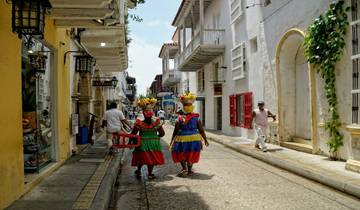
6 days
6 days – Cartagena & Rosario Island & Volcan del Totumo
- ✓ Booking needs min. 2 travelers

7 days
Private Service I Best-Selling Journey: One Week in Bogotá, Medellín & Cartagena — Domestic Flights Included
- ✓ Booking needs min. 2 travelers
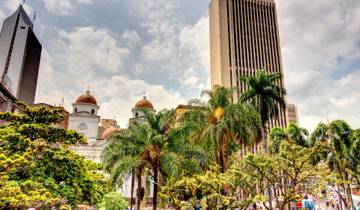
5 days
A Colombian Glimpse: Medellin and Cartagena Tour
- ✓ Comprehensive Cartagena tour
- ✓ Expert local guides included
- ✓ All accommodation arranged
- ✓ Transportation provided

5 days
5 days – Cartagena & Rosario Island
- ✓ Booking needs min. 2 travelers
Multi-day tour packages powered by TourRadar. Prices and availability subject to change.
Month-by-Month Guide for Cartagena 2026
January 2026: Peak Season Excellence
January 2026 delivers optimal weather conditions with daily temperatures 28-31°C, minimal rainfall (2-3 days averaging 5mm total), and consistent sunshine creating ideal circumstances for all activities. The Caribbean waters maintain perfect swimming temperature at 27-28°C, and evening breezes moderate daytime heat making exploration comfortable. Sunrise occurs around 6:15 AM with sunset at 5:45 PM, providing extended daylight for sightseeing and photography.
Tourist crowds peak during the first two weeks as holiday travelers extend Christmas-New Year vacations and Hay Festival attendees arrive late month. Old Town streets experience heavy pedestrian traffic from 10 AM-6 PM, popular restaurants require reservations 2-3 weeks ahead, and major attractions see 30-45 minute midday wait times. After January 15, crowds diminish noticeably while weather remains excellent, creating improved conditions for the month’s second half.
Accommodation pricing remains at peak levels throughout January with boutique Old Town hotels charging $250-400 per night, Getsemaní mid-range properties at $120-180, and budget hostels maintaining $30-50 rates. Last-minute availability proves challenging, particularly during Hay Festival (typically January 25-29) when literary event attendees fill downtown properties. Book 2-3 months ahead for quality accommodation and preferred locations.
January 2026 highlights include the Hay Festival bringing international authors, cultural programming, and literary atmosphere to colonial venues throughout the last week. The Cartagena International Music Festival presents classical performances in churches and plazas with free admission. These cultural offerings enhance the visit despite increased crowds, making January ideal for culture-focused travelers accepting premium pricing for world-class events combined with perfect weather.
February 2026: Optimal Balance Month
February 2026 represents Cartagena’s ideal visiting month, balancing exceptional weather, manageable crowds, and reasonable peak season pricing without extreme premiums. Weather conditions mirror January excellence with temperatures 28-31°C, minimal rainfall (2 days averaging 5-8mm), and consistent sunshine. The shorter month concentrates value into four weeks of near-perfect Caribbean conditions without extended shoulder periods.
Tourist volume decreases 30-40% compared to January as holiday travelers return home and before March spring break arrivals. Old Town exploration becomes more pleasant with reduced congestion, restaurants accommodate walk-ins except weekend evenings, and attractions maintain minimal wait times. The international visitor mix shifts toward European tourists and North American retirees seeking extended warm-weather stays, creating mature, culturally-focused atmosphere.
Accommodation pricing maintains high season rates comparable to mid-January ($250-400 Old Town boutique hotels, $120-180 Getsemaní mid-range, $30-50 budget hostels) but availability improves significantly. Booking 4-6 weeks ahead secures excellent properties without the 3-4 month advance planning required for December-January. Last-minute bookings remain possible, though preferred locations and specific property types may be limited.
February provides the year’s most reliable weather with the lowest probability of rain disruption. Beach days at Bocagrande or Rosario Islands proceed with confidence, walking tours require minimal weather contingency planning, and evening outdoor dining faces no rain concerns. Photographers find consistent lighting conditions ideal for capturing colonial architecture and Caribbean sunsets without cloud interference. The month justifies peak pricing through delivering predictable excellence.
March 2026: Spring Break and Film Festival
March 2026 continues dry season conditions with temperatures warming slightly to 29-32°C, minimal rainfall (3-4 days averaging 10-15mm), and abundant sunshine. Weather remains excellent for all activities, though slightly warmer temperatures make midday outdoor exploration less comfortable than January-February. Morning and evening periods provide optimal timing for walking tours and cultural activities, with afternoon beach time or hotel breaks recommended.
Tourist demographics shift dramatically mid-month with spring break bringing North American university students and families with school-age children. The first half of March (March 1-15) maintains similar crowd levels to late February with primarily European and mature North American visitors. After March 15, younger crowds increase significantly, changing Old Town and Getsemaní atmosphere with more party-focused nightlife and higher energy street scenes.
The Cartagena International Film Festival (FICCI, typically first week of March) attracts cinema enthusiasts, filmmakers, and cultural travelers, increasing accommodation demand and pricing. Hotels near festival venues charge 20-30% premiums during the event, and restaurants experience higher demand from festival attendees. General admission passes cost $40-60, while VIP access runs $150-200. The festival adds cultural value but requires advance planning for optimal positioning.
Accommodation pricing increases through the month, starting at February levels ($250-400 Old Town boutique) for early March and rising to $300-450 by month’s end during peak spring break. Getsemaní properties see similar escalation from $120-180 to $150-220 as budget and mid-range travelers seek alternatives to premium Old Town rates. Book 6-8 weeks ahead for early March, 8-12 weeks for late March to secure preferred properties.
April 2026: Shoulder Season Transition
April 2026 marks the transition from peak dry season to shoulder season with gradually increasing rainfall (6-8 days averaging 40-60mm) and slightly higher humidity. Temperatures remain warm at 29-32°C with occasional afternoon thunderstorms beginning to establish the wet season pattern. The weather remains highly favorable overall, with rain typically arriving in short bursts rather than sustained downpours, making this an excellent value month.
Tourist crowds decrease 40-50% compared to March as spring break concludes and before summer vacation travel begins. The Old Town returns to peaceful exploration conditions, restaurants revert to accepting walk-ins throughout the week, and major attractions maintain minimal wait times. The reduced visitor presence creates more authentic experiences with greater local interaction and less tourist-focused atmosphere in shops and restaurants.
Accommodation pricing drops significantly from peak season levels, with 25-35% reductions creating exceptional value. Old Town boutique hotels that commanded $300-400 in January-March now charge $200-280, Getsemaní mid-range properties drop to $85-130, and budget hostels decrease to $22-38. Tour operators introduce shoulder season promotions with Rosario Islands trips reducing from $85-90 to $65-80, providing comprehensive savings across accommodation, activities, and dining.
April delivers the best weather-to-value ratio of any Cartagena month in 2026. Visitors accepting 6-8 rainy days (primarily afternoon showers) receive near-peak season weather conditions at substantially reduced costs. The month suits flexible travelers who can schedule activities around afternoon rain, photographers appreciating dramatic cloud formations, and budget-conscious visitors maximizing value while maintaining quality experiences. Book 3-4 weeks ahead for best accommodation selection.
May 2026: Early Wet Season Value
May 2026 continues shoulder season conditions with increasing rainfall (10-12 days averaging 80-120mm) establishing wet season patterns. Afternoon thunderstorms occur 3-4 days weekly, typically arriving 2-4 PM and lasting 1-2 hours. Temperatures remain warm at 28-31°C with higher humidity around 82-85% creating more pronounced tropical atmosphere. Mornings consistently provide clear conditions for activities, with flexible scheduling accommodating rain patterns.
Tourist presence continues declining from April levels, creating quiet exploration conditions throughout the historic center. The decrease in international visitors shifts atmosphere toward authentic local character as Cartagena residents reclaim streets and plazas. Restaurants offer lunch specials attracting both tourists and local professionals, and shop owners engage in genuine interaction rather than aggressive sales approaches common during peak season.
Accommodation pricing stabilizes at shoulder season levels with Old Town boutiques at $180-250, Getsemaní properties at $80-120, and budget options at $22-35. The consistent pricing through the month eliminates concerns about booking timing, though 2-3 weeks advance planning still ensures preferred property selection. Last-minute bookings become viable with multiple quality options remaining available even days before arrival.
May appeals to travelers seeking authentic local experiences, photographers desiring dramatic tropical weather lighting, and budget-conscious visitors accepting weather flexibility. The reduced crowds enable deeper cultural immersion through cooking classes, Spanish lessons, and community-based tours without competition for limited spots. Rain gear including lightweight rain jacket, umbrella, and waterproof bags for electronics proves essential. Book 2-3 weeks ahead for optimal selection.
June 2026: Low Season Beginning
June 2026 marks official low season beginning with consistent rainfall (14-16 days averaging 100-140mm) and established afternoon thunderstorm patterns. Rain arrives predictably 2-5 PM lasting 1-2 hours, clearing for pleasant evenings. Temperatures remain 27-30°C with high humidity 83-85%. The weather requires scheduling flexibility but allows comprehensive sightseeing through strategic timing prioritizing morning activities and indoor afternoon options during rain periods.
Tourist numbers reach annual lows despite June being summer vacation period in many countries. The daily afternoon rain deters weather-sensitive travelers, creating exceptional conditions for those accepting climatic compromise. Old Town streets feel authentically local rather than tourist-dominated, Plaza de la Trinidad fills with Colombian families in evenings, and restaurants serve primarily Cartagena residents enjoying their city without international crowds.
Accommodation pricing drops to lowest levels outside October with 45-55% reductions from peak season. Old Town boutique hotels charge $140-200 (versus $300-400 peak), Getsemaní properties offer $60-95 rates (versus $120-180 peak), and budget hostels drop to $18-30. Tour operators implement promotional pricing with Rosario Islands trips at $55-65 and cooking classes reducing to $50-60, creating comprehensive savings across all experience categories.
June suits budget travelers prioritizing cost savings over perfect weather, digital nomads and remote workers seeking extended stays with low accommodation costs, and adventurous visitors embracing tropical rain as authentic Caribbean experience. The month requires rain gear and flexibility but rewards with deep discounts, minimal crowds, and genuine local atmosphere. Book 1-2 weeks ahead, though last-minute bookings face no availability challenges.
July 2026: Mid-Low Season
July 2026 continues low season conditions with sustained rainfall (14-16 days averaging 110-150mm) maintaining afternoon thunderstorm patterns. Weather characteristics mirror June with temperatures 27-30°C, high humidity 83-85%, and predictable 2-5 PM rain timing. The established pattern enables confident morning activity planning while accepting afternoon interruptions. Evenings typically clear by 6 PM allowing unrestricted dining and nightlife.
Tourist demographics shift toward European visitors escaping continental summer, particularly French, Spanish, and Italian travelers comfortable with afternoon rain as acceptable tradeoff for low pricing. The European presence creates international atmosphere despite overall low visitor numbers, with multiple languages heard in Old Town restaurants and plazas. North American tourism remains minimal as most travelers prefer dry season timing for Caribbean destinations.
Accommodation maintains June pricing levels at $140-200 Old Town boutique, $60-95 Getsemaní mid-range, and $18-30 budget hostels. The stable low season rates eliminate timing concerns within the month, allowing spontaneous booking without premium penalties. Properties offer extended stay discounts (weekly rates 10-15% below nightly calculations) attractive to digital nomads and remote workers establishing temporary Cartagena bases.
July appeals to European summer travelers, extended stay visitors seeking low accommodation costs, and weather-flexible tourists accepting rain patterns. The month provides authentic experiences as Colombian families visit during school vacation periods, creating domestic tourism atmosphere distinct from international peak season crowds. Cultural festivals and events cater to local audiences with Spanish-language programming. Book 1-2 weeks ahead for preferred accommodation.
August 2026: Deepest Low Season
August 2026 represents the year’s lowest tourism period despite continued favorable pricing and manageable weather conditions. Rainfall mirrors July at 14-16 days averaging 110-150mm with established afternoon thunderstorm patterns. Temperatures hover 27-30°C with high humidity 83-85%. The weather proves entirely manageable for prepared travelers scheduling activities around predictable rain timing and accepting afternoon indoor periods.
Tourist numbers reach absolute annual minimum as August lacks European school vacation overlap, North American summer travelers prefer dry season destinations, and South American winter holidays concluded in July. The extreme quiet creates surreal experiences walking Old Town streets without tourist crowds, having Plaza de Bolívar virtually alone for photography, and choosing from multiple empty tables at popular restaurants without reservations.
Accommodation pricing remains at June-July levels with occasional promotional discounts as hotels compete for limited tourist presence. Old Town boutiques offer $130-190 rates, Getsemaní properties charge $55-90, and budget hostels drop to $15-28. Some properties close for annual maintenance or renovation, reducing available inventory but remaining options provide excellent value. Tour operators bundle activities creating package deals unavailable during peak season.
August appeals to extreme budget travelers, visitors seeking solitary authentic experiences, and flexible adventurers embracing tropical rain as atmospheric rather than disruptive. The month rewards with rock-bottom pricing, zero crowds, and genuine local immersion as Cartagena residents appreciate tourists choosing their city during slow season. Photography benefits from dramatic weather conditions and empty streets. Book 1 week ahead sufficient.
September 2026: Shoulder Season Beginning
September 2026 marks shoulder season return with sustained rainfall (14-16 days averaging 130-170mm) maintaining wet season patterns. Afternoon thunderstorms continue 2-5 PM timing with occasional morning showers becoming more frequent. Temperatures remain 27-30°C with high humidity 83-85%. The weather requires comprehensive flexibility as rain predictability decreases slightly, though morning activities generally proceed without disruption.
Tourist numbers begin gradual increase from August lows as European autumn travel season starts and North American travelers seeking value discover shoulder season advantages. The modest visitor increase improves tourism infrastructure utilization as restaurants expand hours, tour operators increase departure frequencies, and hotels reopen from maintenance closures. The atmosphere shifts from extreme quiet toward balanced local-tourist mix.
Accommodation pricing maintains low season levels through mid-month before beginning gradual increases toward high season. Early September offers $130-190 Old Town boutique rates and $55-90 Getsemaní properties, while late September sees modest increases to $150-220 and $70-110 respectively as demand strengthens. Booking flexibility remains high with 1-2 weeks advance planning sufficient for excellent property selection.
September suits travelers seeking value without extreme low season tradeoffs, visitors beginning extended Colombian explorations from Caribbean coast, and flexible planners accepting weather variability. The month provides transition period with improving tourism services and modest cost increases still delivering strong value compared to peak season. Cultural events increase as Colombian social calendar resumes after low season. Book 2-3 weeks ahead for optimal selection.
October 2026: Wettest Month Maximum Value
October 2026 records Cartagena’s highest rainfall at 15-18 days averaging 200-250mm, making it genuinely wet with afternoon thunderstorms most days and occasional morning showers. Temperatures decrease slightly to 27-29°C with high humidity 84-86%. The weather requires complete flexibility and acceptance of daily rain as inevitable rather than occasional. However, the pattern maintains afternoon concentration enabling morning activities with evening clearance for dining and nightlife.
Tourist numbers remain low as October’s reputation for rain deters weather-sensitive travelers despite accommodating patterns allowing comprehensive sightseeing. The minimal crowds create exceptional exploration conditions for prepared visitors, with the Old Town feeling like personal discovery and attractions maintaining zero wait times. Street vendors and shop owners appreciate tourist presence during slow season, providing genuine warmth and interaction.
Accommodation pricing reaches absolute annual minimum with properties offering 50-60% discounts from peak season. Old Town boutique hotels charge $120-180 (versus $300-400 peak), Getsemaní properties offer $50-80 rates (versus $120-180 peak), and budget hostels drop to $15-25. The exceptional value extends to activities with tour operators at $55-70 for Rosario Islands (versus $85-90 peak) and restaurants offering lunch specials attracting both tourists and local workers.
October appeals exclusively to extreme budget travelers, weather-flexible adventurers, and experienced tropical travelers understanding that rain enhancement rather than ruins the Caribbean experience. Quality rain gear including waterproof jacket, umbrella, waterproof phone case, and dry bag for valuables proves essential. The month rewards acceptance of wet conditions with unmatched pricing and solitary access to normally crowded attractions. Book 1 week ahead sufficient.
November 2026: Shoulder Season Improvement
November 2026 marks transition toward high season with gradually decreasing rainfall (10-12 days averaging 100-140mm) and improving weather patterns. Early month maintains afternoon thunderstorm frequency while late November sees substantial improvement approaching dry season conditions. Temperatures warm to 28-31°C with humidity decreasing to 80-83%. The weather variability within the month creates distinct early versus late November experiences.
Independence Day celebrations (November 11) bring Colombian domestic tourists celebrating national heritage, creating festival atmosphere throughout Cartagena. The multi-day celebration includes parades, concerts, beauty pageants, street parties, and fireworks, providing authentic cultural immersion. The event increases accommodation demand and pricing 30-40% for the November 9-12 period, requiring advance booking 6-8 weeks ahead for quality properties near the historic center.
Accommodation pricing increases gradually through November reflecting improving weather and approaching high season. Early November maintains shoulder season rates at $150-220 Old Town boutique and $70-110 Getsemaní mid-range, while late November approaches peak levels at $220-300 and $100-150 respectively. The Independence Day period sees premium surcharges making it the month’s most expensive timing. Book 4-6 weeks ahead for general dates, 6-8 weeks for Independence celebrations.
November appeals to culture-focused travelers timing visits for Independence celebrations, value-conscious visitors targeting early month shoulder pricing, and weather-optimizing planners choosing late November for near-peak conditions before December premium pricing. The month provides flexibility accommodating multiple travel styles and priorities. Book according to specific date selection: 2-3 weeks for early month, 6-8 weeks for mid-month Independence period, 4-6 weeks for late month.
December 2026: Peak Season Return
December 2026 marks dry season return with dramatically improving weather as month progresses. Early December (1-15) maintains 5-7 rainy days averaging 40-80mm with lingering wet season patterns, while mid-to-late December (16-31) delivers peak conditions with 2-3 rainy days and minimal precipitation. Temperatures range 28-31°C with decreasing humidity from 82% early month to 77% late month. The weather transformation creates distinct early versus late December experiences.
Tourist numbers increase dramatically as month progresses with moderate crowds early December, heavy traffic mid-month, and overwhelming congestion during Christmas-New Year period (December 20-31). The final ten days see maximum annual visitor presence as Colombian domestic tourists, international holiday travelers, and expatriate Colombians returning home converge on Cartagena’s colonial streets. Restaurants require reservations weeks ahead, attractions see extended wait times, and Old Town feels perpetually crowded.
Accommodation pricing follows tourist volume trajectory with early December at $220-300 Old Town boutique and $100-150 Getsemaní mid-range, mid-month increasing to $280-380 and $130-180, while Christmas-New Year peaks at $400-500+ and $180-250. The final week sees 60-80% premiums above baseline pricing plus minimum stay requirements of 5-7 nights at many properties. Book 4-6 weeks ahead for early December, 8-12 weeks for mid-month, 4-5 months for Christmas-New Year period.
December suits holiday travelers seeking festive atmosphere and guaranteed excellent weather despite premium pricing, families leveraging school vacation timing, and cultural enthusiasts experiencing Cartagena’s Christmas and New Year traditions. Early December provides better value with improving weather and moderate crowds. Avoid December 20-31 unless accepting extreme crowds and pricing or specifically desiring holiday atmosphere. Book according to timing: 4-6 weeks early month, 4-5 months late month.
Weather Considerations for 2026 Activities
Beach and Water Activities
Dry season (December-April) delivers optimal conditions for beach time at Bocagrande, Playa Blanca, and Rosario Islands day trips. Water clarity reaches maximum visibility during these months with calm seas, consistent sunshine, and minimal rainfall creating ideal swimming, snorkeling, and diving conditions. Caribbean water temperature maintains perfect 27-28°C year-round, eliminating wetsuit requirements and enabling comfortable extended water time.
Wet season beach activities remain entirely viable despite afternoon rain patterns. Morning beach time from 8 AM-1 PM proceeds with reliable sunshine before afternoon thunderstorms arrive. Rosario Islands day trips accommodate rain through covered boat transportation and flexible timing, with tours continuing unless severe weather creates unsafe conditions. Beach clubs on islands provide covered areas and facilities enabling comfortable wait during passing showers.
Wind conditions favor water sports during December-March with consistent breezes creating ideal sailing, windsurfing, and kitesurfing opportunities. The trade winds moderate daytime heat while providing propulsion for wind-dependent activities. April-November sees lighter winds and occasional calm days better suited for paddleboarding and kayaking in sheltered bays and mangrove channels.
Sunset sailing cruises operate year-round with dry season providing most reliable clear skies for dramatic sunset photography. Wet season offers alternative experiences with cloud formations creating spectacular light shows and occasional rain showers adding atmospheric drama. Tours proceed unless thunderstorms create safety concerns, with cancellations rare and full refunds provided when weather forces cancellation.
Walking Tours and Historic Exploration
Old Town exploration proves comfortable year-round with colonial architecture providing shade and covered walkways offering rain protection. Dry season enables unrestricted all-day exploration without weather contingencies, while wet season requires strategic timing prioritizing morning hours before afternoon rain arrival. The compact historic center allows completing major attractions within 3-4 hours, fitting easily in morning windows before typical 2 PM rain onset.
Cobblestone streets require appropriate footwear regardless of season, with comfortable walking shoes essential for navigating uneven surfaces. Wet season adds complications as rain creates slippery conditions on smooth stones, requiring careful footing and slower navigation. Sandals prove inadequate for extensive Old Town walking as narrow straps provide insufficient support on uneven terrain.
Photography enthusiasts find different advantages across seasons. Dry season delivers consistent clear light ideal for architectural documentation and standard tourist photography. Wet season provides dramatic clouds, occasional rainbows, and post-rain clarity creating unique atmospheric conditions. Late afternoon after rain clears offers exceptional light quality as setting sun illuminates clean air and wet surfaces creating enhanced colors.
Evening exploration remains pleasant year-round as temperatures moderate after sunset and rain typically clears by 6 PM. The illuminated colonial architecture creates romantic atmosphere enhanced by reduced pedestrian congestion compared to daytime. Street performers, artists, and vendors occupy major plazas creating social energy particularly in Getsemaní’s Plaza de la Trinidad where locals gather nightly regardless of season.
Cultural Activities and Indoor Experiences
Museums, churches, and indoor cultural attractions operate year-round with consistent hours unaffected by weather conditions. Wet season actually enhances indoor activity appeal by providing comfortable rain shelter during afternoon thunderstorms. The Palace of Inquisition, Gold Museum, and San Pedro Claver Museum maintain climate-controlled environments ideal for escaping both rain and heat.
Cooking classes function regardless of season with indoor kitchen facilities and covered market visits accommodating weather. Wet season classes may adjust market timing to morning hours before rain, while dry season allows flexible scheduling. The hands-on experience provides cultural immersion independent of outdoor conditions, making classes valuable activities during rainy afternoons.
Restaurant dining operates year-round with covered outdoor seating and indoor climate-controlled spaces. Rooftop restaurants and bars may close outdoor sections during heavy rain but maintain indoor service and covered terrace areas. The evening dining scene thrives across all seasons with Plaza Santo Domingo and Getsemaní establishments maintaining consistent crowds and atmospheric energy.
Salsa and dance lessons occur in indoor studios with consistent scheduling throughout the year. Evening practice sessions at dance venues provide rain-protected entertainment combining cultural learning with nightlife experiences. The activity suits rainy evenings when outdoor exploration proves less appealing, making dance lessons particularly valuable during wet season visits.
Special Events Calendar 2026
Major Cultural Events
Hay Festival Cartagena (late January, typically January 25-29) represents Latin America’s premier literary event attracting international authors, journalists, and cultural figures. The four-day festival features author discussions, book presentations, cultural panels, and literary workshops across colonial venues. Individual session tickets cost $10-15, while full festival passes run $80-120. Accommodation within Old Town fills 3-4 months ahead with hotels increasing rates 20-30% during the event.
Cartagena International Film Festival (FICCI, early March, typically March 5-10) celebrates its 66th edition in 2026, showcasing Latin American and international cinema. The week-long festival screens films at Teatro Adolfo Mejía, Centro de Convenciones, and colonial venues with director Q&As, industry panels, and special events. General admission passes cost $40-60, VIP access $150-200. The festival attracts cinema professionals and cultural enthusiasts, increasing accommodation demand and restaurant reservations.
Cartagena International Music Festival (January, dates vary) presents classical music in colonial churches, plazas, and cultural centers throughout the historic district. The free festival democratizes access to world-class musicians performing Bach, Mozart, and contemporary works in stunning architectural settings. No advance registration required, though popular venues fill 60-90 minutes before performances. Arrive early for preferred seating at San Pedro Claver church and Cathedral performances.
National and Local Celebrations
Independence Day (November 11) commemorates Cartagena’s 1811 independence declaration with multi-day celebrations including National Beauty Contest, parades, concerts, street parties, and fireworks. The festivities extend November 9-13 with peak activity November 11. Hotels increase rates 30-40% and require minimum 3-4 night stays. The authentic Colombian cultural experience rewards premium pricing through immersive participation in national celebration.
Cartagena’s patron saint festival (Candelaria, February 2) brings religious processions, traditional masses, and community celebrations. The one-day observance features morning religious ceremonies at Cathedral followed by afternoon neighborhood parties and evening fireworks. Hotels maintain standard February pricing as the event attracts primarily local participants. The authentic religious tradition provides cultural insight for visitors coincidentally present.
Christmas season celebrations (December 1-January 6) transform Cartagena with decorations, nativity displays, and festival atmosphere throughout colonial streets. The extended celebration includes Christmas Eve (December 24) family gatherings, Christmas Day (December 25) festivities, and Three Kings Day (January 6) marking celebration conclusion. Restaurants offer special menus, hotels maintain festive decorations, and street energy peaks despite premium pricing.
Festival Planning Strategies
Major event attendance requires extended advance planning with accommodation booking 3-4 months ahead for Hay Festival and Christmas-New Year, 2-3 months for Film Festival and Independence Day. Restaurant reservations become essential during festival periods with popular establishments fully booked 2-3 weeks ahead. Purchase event tickets immediately upon release as film festival and Hay Festival sessions sell out weeks before events.
Festival periods increase overall costs 20-40% across accommodation, dining, and activities. Budget additional $200-400 per person beyond standard trip costs to cover premium pricing, event tickets, and inevitable spontaneous cultural experiences during festival atmosphere. The enhanced cultural immersion and unique programming justify premiums for culture-focused travelers.
Alternative strategy involves timing visits just before or after major events to leverage cultural energy without peak pricing and crowds. Late January after Hay Festival concludes maintains festival atmosphere with improved accommodation availability and standard pricing. Early March before Film Festival or mid-March afterward provides similar advantages of cultural season without event-specific premiums.
Booking Timeline Recommendations for 2026
High Season Booking Windows
Christmas-New Year period (December 20-January 5) requires the longest advance planning with quality Old Town accommodation booking 4-5 months ahead. Properties implement minimum stays of 5-7 nights and charge 60-80% premiums above baseline rates. Restaurant reservations open 4-6 weeks before dates with popular establishments fully booked within days. Flight costs increase 40-60% above typical rates, making early booking essential for cost management.
Peak dry season (January 15-March 15) needs 2-3 months advance accommodation booking for desirable properties in Old Town and Getsemaní. Quality mid-range hotels fill 6-8 weeks ahead, while budget hostels maintain availability closer to travel dates. Restaurant reservations recommended 2-3 weeks ahead for upscale dining, 1 week for mid-range establishments, unnecessary for casual options. Flight prices remain elevated but moderate compared to Christmas-New Year extremes.
Festival periods (Hay Festival late January, Film Festival early March, Independence Day November 11) demand extended booking matching or exceeding Christmas-New Year timelines. Accommodation fills 3-4 months ahead near festival venues with premium pricing. Event tickets require separate purchase upon release, typically 2-3 months before events. Restaurants near festival locations book weeks ahead, making early reservation essential.
Shoulder Season Booking Windows
Shoulder season (April-May, September-November excluding Independence weekend) allows more relaxed booking timelines with 3-4 weeks advance planning securing excellent accommodation selection. Quality properties remain available 2-3 weeks before arrival, and last-minute bookings prove feasible though limiting preferred location choices. Restaurant reservations unnecessary except Friday-Saturday evenings at top establishments.
Tour and activity booking becomes flexible during shoulder season with next-day reservations available for most experiences. Rosario Islands tours maintain consistent departure schedules accepting bookings 2-7 days ahead. Cooking classes and specialized tours (Palenque, private guides) still benefit from 1-2 weeks advance booking but accommodate shorter notice compared to high season’s 3-4 week requirements.
Flight costs decrease 25-35% compared to peak season with advance purchase 6-8 weeks before travel delivering optimal pricing. Last-minute flight deals occasionally appear as airlines fill remaining capacity, though relying on such availability proves risky. Budget 2-3 months advance booking for flight + hotel packages ensuring comprehensive availability and pricing transparency.
Low Season Booking Windows
Low season (June-August) offers maximum booking flexibility with 1-2 weeks advance planning sufficient for excellent accommodation selection. Last-minute bookings face no availability constraints though spontaneous arrival limits preferred property choices. Hotels frequently offer promotional rates for direct bookings and extended stays, rewarding flexibility and negotiation.
Activity and tour booking accepts next-day reservations across all categories. Tour operators maintain reduced departure frequencies during low season but accommodate smaller groups and flexible scheduling. Walking tours may combine private and group bookings, creating semi-private experiences at group pricing. Restaurants operate with minimal advance bookings except weekend evenings at top establishments.
Flight costs reach annual lows during June-August with advance purchase 4-6 weeks before travel delivering optimal pricing. Airlines discount Caribbean routes during North American summer as demand shifts toward European destinations. Complete trip costs (flight + accommodation + activities) decrease 40-60% compared to peak season, making spontaneous low season booking financially attractive.
Weather-Specific Packing Lists
Dry Season Essentials (December-April)
Sun protection dominates dry season packing requirements with high SPF reef-safe sunscreen (SPF 50+) essential for extended outdoor exposure. Wide-brimmed hat provides crucial face and neck protection, while UV-blocking sunglasses shield eyes from intense Caribbean sun. Lightweight long-sleeve sun shirts offer comfortable protection alternative to constant reapplication of sunscreen during beach days and walking tours.
Lightweight breathable clothing in cotton or moisture-wicking fabrics suits consistent warm temperatures and low rainfall probability. Pack multiple changes as humidity increases laundry needs despite minimal rain. Include one light layer (long-sleeve shirt or light sweater) for air-conditioned restaurants and vehicles where temperature differential from outdoor heat creates chill. Evening attire leans slightly formal with locals dressing well for dinner.
Comfortable walking shoes with good support prove essential for cobblestone navigation and extended Old Town exploration. Include sandals for beach time and casual evening wear. Skip rain gear beyond small travel umbrella for rare showers. Bring reusable water bottle for hydration needs with hotel and restaurant refill stations prevalent throughout tourist areas.
Wet Season Essentials (May-November)
Quality rain protection becomes essential with lightweight packable rain jacket providing primary defense against afternoon thunderstorms. Compact travel umbrella supplements jacket for shopping and dining when extended rain shelter proves impractical. Waterproof phone case protects electronics during unexpected downpours, while small dry bag safeguards passports, cash, and other valuables carried during rainy exploration.
Quick-dry clothing in synthetic or moisture-wicking fabrics outperforms cotton during wet season as materials dry rapidly after rain exposure. Pack extra clothing changes anticipating potential rain soaking and slower drying times in humid conditions. Waterproof sandals or water-resistant walking shoes handle wet cobblestone better than standard sneakers becoming waterlogged and uncomfortable.
Include mosquito repellent containing DEET 25-30% as increased rainfall creates breeding conditions for mosquitoes. Apply repellent during dawn and dusk hours when mosquito activity peaks. Wet season travelers benefit from portable phone charger as rainy days increase indoor time and device usage through photography and navigation during covered exploration periods.
Frequently Asked Questions About Cartagena Weather 2026
Can you swim in Cartagena year-round?
Yes, Caribbean water temperature remains consistently warm at 27-28°C throughout 2026, enabling comfortable swimming year-round without wetsuit requirements. Water conditions prove excellent during dry season (December-April) with calm seas, clear visibility, and minimal rainfall creating ideal beach and water activity experiences. Wet season maintains comfortable water temperature though occasional afternoon thunderstorms temporarily interrupt beach time.
Water clarity varies by season and location. Bocagrande beach sees reduced clarity during wet season due to river runoff and increased wave action, while Rosario Islands maintain better visibility year-round due to distance from mainland. Dry season delivers optimal clarity at all locations with 40-80 feet visibility for snorkeling and diving. Beach clubs and tours operate year-round with temporary closures only during severe weather posing safety concerns.
Is Cartagena humid?
Yes, Cartagena experiences tropical humidity ranging 75-85% year-round due to Caribbean coastal location. Dry season sees slightly lower levels around 75-80%, while wet season peaks at 80-85%. The humidity feels noticeable particularly for visitors from arid or temperate climates, creating sensation of persistent warmth and moisture. Lightweight breathable clothing, frequent hydration, and afternoon breaks in air-conditioned spaces help manage humid conditions.
Morning hours provide most comfortable humidity levels before heat intensifies midday. Evening sea breezes moderate humidity along the coast and in Bocagrande, while Old Town’s stone buildings and narrow streets retain heat creating more humid microclimates. Air conditioning is standard in hotels and restaurants, providing comfortable respite from outdoor humidity. Humidity enhancement during wet season feels minimal as range variation remains small.
Does Cartagena get hurricanes?
Cartagena rarely experiences direct hurricane impacts despite Caribbean location and official hurricane season (June-November). The city’s position along Colombia’s northern coast benefits from protection by the Sierra Nevada de Santa Marta mountains to the east deflecting major storm systems. Additionally, Cartagena sits slightly south of primary Caribbean hurricane tracks reducing direct exposure to severe systems.
Tropical storms occur more frequently than hurricanes, bringing heavy rainfall and strong winds but lacking catastrophic hurricane intensity. Weather monitoring systems provide 3-5 days advance warning of approaching systems, allowing itinerary adjustments and safety precautions. Hotels and tourism infrastructure maintain storm preparedness protocols ensuring visitor safety during weather events. Travel insurance covering weather-related cancellations provides protection against rare severe weather disruption.
What is the hottest month in Cartagena?
March and April represent Cartagena’s warmest months with daily temperatures reaching 29-32°C and overnight lows only dropping to 25-26°C. The peak warmth occurs just before wet season transition when dry season sunshine intensifies without rain moderation. Midday outdoor activities feel uncomfortable during these months, making morning and evening exploration preferable with afternoon breaks in air-conditioned spaces or beach time in cooling water.
The temperature variation throughout the year remains minimal with just 3-4°C range between warmest and coolest months. December-February feel marginally cooler at 28-31°C daily, though the difference proves subtle. Humidity variations impact perceived temperature more than actual temperature differences, with wet season’s higher humidity making similar temperatures feel warmer despite lower actual readings.
When is the rainy season in Cartagena?
Cartagena’s rainy season runs May through November with peak rainfall occurring in October. The season brings 12-18 rainy days monthly compared to dry season’s 2-5 days. However, wet season rain typically arrives as afternoon thunderstorms between 2-5 PM lasting 1-2 hours rather than day-long downpours. The pattern enables reliable morning activity scheduling with afternoon flexibility required.
October records the highest rainfall at 200-250mm across 15-18 days, representing genuinely wet conditions requiring comprehensive weather preparation. September and November see 130-170mm and 100-140mm respectively with 14-16 and 10-12 rainy days. June-August maintains moderate precipitation at 100-150mm monthly across 14-16 days. The established pattern means wet season remains navigable for prepared travelers accepting weather flexibility as travel condition.