
Best Time Visit Buenos Aires 2026: Seasonal Planning Guide
Key Takeaways
- Spring (September-November 2026) offers optimal conditions with temperatures 60-75°F, manageable crowds, and mid-range pricing across accommodation and attractions
- Summer (December-February 2026) brings peak tourist season with temperatures 70-90°F, premium pricing, and vibrant cultural festivals including tango festivals and outdoor events
- Autumn (March-May 2026) delivers excellent value with comfortable temperatures 55-75°F, fewer tourists, and 20-30% lower accommodation rates than summer peaks
- Winter (June-August 2026) provides budget opportunities with temperatures 45-60°F, lowest accommodation rates, and authentic local cultural experiences
- UNESCO World Heritage sites remain accessible year-round with La Boca, San Telmo, and Recoleta neighborhoods offering different seasonal advantages
- Tango season peaks March-November 2026 with major festivals in August (World Tango Festival) and October, offering immersive cultural experiences
Planning Your Buenos Aires Visit in 2026
Buenos Aires captivates visitors with its European architecture, passionate tango culture, and UNESCO-recognized heritage neighborhoods. The Argentine capital experiences four distinct seasons with dramatically different characteristics that influence accommodation costs, crowd levels, and cultural event availability. Understanding these seasonal patterns enables you to optimize your 2026 Buenos Aires experience based on your priorities, whether seeking vibrant summer festivals, comfortable spring weather, autumn value, or winter cultural authenticity.
The city’s location in the Southern Hemisphere means seasons run opposite to North America and Europe. Summer arrives December-February when Buenos Aires hosts major outdoor festivals and beach-style activities along the Río de la Plata. Winter spans June-August when locals embrace café culture, indoor tango venues, and cultural performances. Spring and autumn provide transitional periods with outstanding weather conditions and moderate pricing.
Your ideal timing for Buenos Aires in 2026 depends on several factors: weather preferences, budget flexibility, cultural event interests, and tolerance for tourist crowds. This comprehensive seasonal planning guide analyzes each period’s advantages, challenges, and practical considerations to help you select the perfect timing for your Buenos Aires adventure.
People Also Ask About Buenos Aires 2026
What is the best month to visit Buenos Aires in 2026?
October and November 2026 emerge as the best months to visit Buenos Aires, combining comfortable spring temperatures (65-75°F), manageable tourist crowds, and reasonable accommodation rates. These months offer excellent weather for exploring UNESCO heritage neighborhoods like La Boca and San Telmo, with outdoor café culture in full swing and jacaranda trees blooming purple throughout the city. The Spring Tango Festival in October provides authentic cultural immersion, while November brings pre-summer energy without peak season pricing. Hotel rates during these months range $80-150 per night for mid-range properties, representing 15-25% savings compared to December-January peaks.
How is the weather in Buenos Aires during different seasons of 2026?
Buenos Aires experiences Mediterranean-style climate with four distinct seasons in 2026. Summer (December-February) brings hot, humid conditions with temperatures 75-90°F and occasional afternoon thunderstorms. Autumn (March-May) delivers mild, pleasant weather with temperatures gradually cooling from 75°F to 55°F and minimal rainfall. Winter (June-August) brings cool, dry conditions with temperatures 45-60°F and rare freezing nights. Spring (September-November) warms progressively from 60°F to 75°F with moderate rainfall and beautiful flowering trees. The city experiences moderate humidity year-round, with summer feeling more oppressive due to heat combination.
When is Buenos Aires least crowded in 2026?
June and July 2026 represent the least crowded months in Buenos Aires, coinciding with winter season and school terms in both hemispheres. Major tourist attractions like the Recoleta Cemetery, Casa Rosada, and Teatro Colón operate with minimal queues, and popular neighborhoods like Palermo and San Telmo feel authentically local rather than tourist-dominated. This period offers genuine cultural immersion with tango milongas (dance halls) filled primarily with porteños (Buenos Aires locals) rather than tourists. Accommodation availability expands significantly, with hotels offering their lowest rates and greatest flexibility for last-minute bookings.
What are the major festivals and events in Buenos Aires throughout 2026?
Buenos Aires hosts exceptional cultural events throughout 2026. The World Tango Festival dominates mid-August with two weeks of performances, competitions, and milongas across the city. October brings the Spring Tango Festival with outdoor performances in historic plazas. December-February features summer outdoor festivals including free concerts in parks, outdoor cinema series, and New Year’s Eve celebrations along Avenida de Mayo. March hosts the Harvest Festival celebrating Argentine wine culture. May brings the International Book Fair, one of the world’s largest literary events. June-August winter months feature indoor cultural performances, opera season at Teatro Colón, and the Buenos Aires International Festival of Independent Cinema in April.
Extended multi-day tours – 5+ days
Featured Buenos Aires Multi-Day Tour Packages
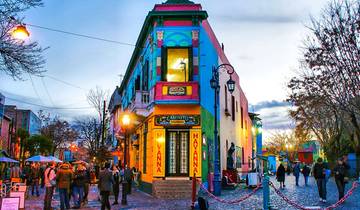
4 days
Tailor-Made Private Argentina 4 Days Tour with 4-star Hotel, Daily Depart
- ✓ Comprehensive Buenos Aires tour
- ✓ Expert local guides included
- ✓ All accommodation arranged
- ✓ Transportation provided
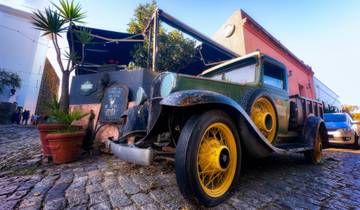
4 days
Buenos Aires & Colonia del Sacramento
- ✓ Comprehensive Buenos Aires tour
- ✓ Expert local guides included
- ✓ All accommodation arranged
- ✓ Transportation provided
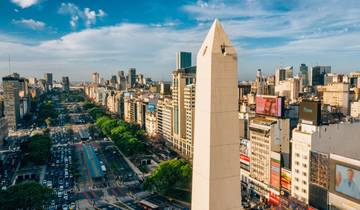
4 days
Tango, Wine & Colonia – Buenos Aires Escape
- ✓ Comprehensive Buenos Aires tour
- ✓ Expert local guides included
- ✓ All accommodation arranged
- ✓ Transportation provided
4 days
Buenos Aires – City & Tradition
- ✓ Comprehensive Buenos Aires tour
- ✓ Expert local guides included
- ✓ All accommodation arranged
- ✓ Transportation provided
Multi-day tour packages powered by TourRadar. Prices and availability subject to change.
Essential Planning Information for 2026
Climate Patterns and Weather Expectations 2026
Buenos Aires experiences a humid subtropical climate with clear seasonal distinctions that directly impact visitor comfort and activity planning. The city sits at 34 degrees south latitude, creating Southern Hemisphere seasons opposite to North America and Europe.
Summer months (December 2026-February 2027) deliver hot, humid conditions with daytime temperatures reaching 85-95°F during heat waves and settling around 75-85°F during typical days. Afternoon thunderstorms arrive 2-3 times weekly, providing brief cooling but creating muddy conditions in unpaved areas of La Boca and San Telmo. The high humidity makes temperatures feel more oppressive than the thermometer indicates. This season brings maximum daylight hours with sunset around 8:30 PM, extending evening exploration time considerably.
Autumn (March-May 2026) provides arguably the most comfortable weather conditions for Buenos Aires exploration. March begins warm at 70-80°F, gradually cooling through April (65-75°F) and May (55-65°F). Rainfall decreases compared to summer, with clear, crisp days becoming more frequent. This period showcases beautiful autumn foliage in parks like Bosques de Palermo and Jardín Botánico. The comfortable temperatures make extended walking tours through neighborhoods highly enjoyable without heat exhaustion concerns.
Winter months (June-August 2026) bring cool, generally dry conditions with temperatures ranging 45-60°F during the day and occasionally dropping to 35-40°F at night. Freezing temperatures occur rarely, perhaps 2-3 nights during the entire winter season. Rain falls infrequently during winter, with June being the driest month of the year. The cooler weather encourages café culture, with porteños spending hours in traditional cafés discussing politics, philosophy, and football. Shorter daylight hours mean sunset around 6:00 PM, shifting evening activities indoors earlier.
Spring (September-November 2026) delivers progressively warming conditions ideal for outdoor activities. September starts cool at 55-65°F, October warms to 60-70°F, and November reaches 65-75°F with occasional warmer days. The famous jacaranda trees bloom purple in October-November, creating spectacular photo opportunities throughout Palermo, Belgrano, and other residential neighborhoods. Spring rainfall increases compared to winter, with occasional thunderstorms in November signaling the approaching summer season.
Tourist Crowd Patterns Throughout 2026
Understanding crowd patterns enables strategic planning for optimal Buenos Aires experiences. The city experiences three distinct tourist seasons with different crowd characteristics.
Peak season (December 2026-February 2027 and July 2026) brings maximum international tourists and domestic travelers. December-January coincides with summer vacation for Argentine families and Northern Hemisphere winter holidays. Major attractions experience significant queues, with Teatro Colón tours requiring advance booking 2-3 weeks ahead and Recoleta Cemetery becoming crowded midday. Popular restaurants in Palermo and San Telmo require reservations 3-5 days advance for weekend dining. July brings a winter peak as North American and European tourists seek cultural experiences, though crowds remain smaller than summer highs.
Shoulder season (March-May and September-November 2026) delivers moderate tourist numbers with excellent balance between availability and atmosphere. These periods attract experienced travelers seeking optimal weather without peak season crowds and pricing. Major museums and attractions operate comfortably busy rather than overwhelmed. Tango shows in San Telmo maintain good audience sizes without feeling overcrowded. Hotels offer moderate pricing and good availability, with reservation flexibility increasing.
Low season (June and August 2026, excluding July) presents minimum tourist numbers, creating authentic local atmosphere throughout the city. International visitors decrease significantly, while domestic Argentine tourists largely avoid Buenos Aires during winter months. This period offers genuine cultural immersion with tango milongas filled primarily with skilled local dancers rather than beginner tourists. Museums, theaters, and cultural venues maintain full operations while feeling pleasantly uncrowded. Restaurants, cafés, and cultural attractions welcome visitors warmly, often providing enhanced service and attention.
Pricing Patterns and Budget Considerations 2026
Accommodation pricing in Buenos Aires fluctuates significantly based on season, with strategic timing potentially saving 30-40% compared to peak periods. Budget hotels in neighborhoods like Congreso or Once range $35-60 per night during low season (June-August excluding July), increasing to $50-80 during shoulder seasons (March-May, September-November), and reaching $70-100 during peak summer season (December-February). Check booking platforms for current rates as pricing varies with demand.
Mid-range hotels in Palermo, Recoleta, or San Telmo cost $80-130 per night during winter low season, $100-160 during spring and autumn shoulder seasons, and $140-200 during summer peak season and July winter peak. Boutique hotels and design-focused properties add $30-50 to these ranges across all seasons.
Luxury hotels in premium locations like Puerto Madero or Recoleta range $180-280 per night during low season, $220-320 during shoulder seasons, and $280-400+ during peak summer and major events like the World Tango Festival in August. Five-star properties like the Alvear Palace Hotel or Four Seasons maintain relatively stable pricing year-round with smaller seasonal fluctuations.
Flight costs to Buenos Aires follow international patterns, with January-February and July representing most expensive periods due to holiday travel. March-May and September-November offer better flight value, while June and August (excluding July) provide lowest airfares. Booking flights 2-3 months advance delivers better pricing than last-minute purchases, with flexibility in exact dates potentially saving $200-400 on international routes.
Restaurant and attraction pricing remains relatively stable year-round in Buenos Aires, with minimal seasonal variation. Tourist-focused tango shows maintain consistent pricing regardless of season, ranging $80-150 per person for dinner shows in San Telmo or La Boca. Museum admission remains constant, with major museums charging $5-15 per person. The economic advantage of visiting during shoulder or low seasons comes primarily from accommodation savings rather than daily activity cost reductions.
Seasonal Analysis for 2026 Buenos Aires Visits
Summer Season December 2026-February 2027: Peak Energy and Premium Pricing
Summer represents Buenos Aires at its most vibrant and expensive, combining maximum cultural energy with challenging heat and humidity. This season attracts visitors seeking energetic atmosphere, outdoor festivals, and summer vacation timing.
Weather Characteristics: Expect hot, humid conditions with daytime temperatures 80-90°F and heat waves occasionally reaching 95-100°F. High humidity makes temperatures feel more oppressive, with the heat index often 5-10 degrees higher than actual temperature. Afternoon thunderstorms arrive regularly, bringing brief cooling and dramatic lightning displays but creating temporary flooding in low-lying areas. These storms clear quickly, with evenings often pleasant for outdoor dining and tango performances.
Cultural Highlights: Summer brings maximum cultural activity with outdoor festivals dominating weekends. Free concerts fill parks throughout Palermo and Recoleta, with jazz, rock, and tango performances under the stars. New Year’s Eve celebrations transform Avenida de Mayo into a massive street party with fireworks at midnight. Outdoor cinema series screen classic Argentine films in parks, while open-air tango performances occur in historic plazas. The Teatro Colón reduces regular opera season during January, with many performers on summer break, though special summer concerts continue.
Practical Considerations: Accommodation costs peak during December-February, with hotels raising rates 30-50% above winter levels. Book accommodations 2-3 months advance for December-January visits, as availability tightens significantly. Many porteños vacation during January, creating a slightly quieter local atmosphere while tourist numbers surge. Some traditional restaurants and cultural venues close for 2-3 weeks during January for annual maintenance and staff holidays. Air conditioning becomes essential in accommodations, with budget hotels without AC feeling uncomfortable during heat waves.
Advantages: Maximum cultural events, vibrant outdoor atmosphere, extended daylight hours for evening activities, beach-style activities along the Río de la Plata, perfect timing for Northern Hemisphere winter escape, energetic nightlife scene, outdoor tango performances in historic locations.
Challenges: Oppressive heat and humidity, afternoon thunderstorms disrupting outdoor plans, highest accommodation costs, maximum tourist crowds at major attractions, some local businesses closed during January, increased booking requirements for popular restaurants and tango shows.
Best For: Visitors prioritizing cultural festivals, travelers comfortable with hot weather, those seeking vibrant nightlife, Northern Hemisphere residents wanting summer vacation, outdoor activity enthusiasts, visitors interested in beach activities along the river.
Autumn Season March-May 2026: Optimal Comfort and Excellent Value
Autumn emerges as many experienced travelers’ preferred season for Buenos Aires, combining comfortable weather, manageable crowds, and reasonable pricing with full cultural calendar.
Weather Characteristics: March begins warm at 70-80°F with conditions similar to late summer, gradually cooling through April (65-75°F) and settling into mild May temperatures (55-65°F). The humidity decreases significantly compared to summer, creating comfortable conditions for extended walking tours through neighborhoods. Rainfall occurs less frequently than summer, with clear, sunny days dominating. Beautiful autumn foliage appears in parks and tree-lined streets, with golden leaves creating photogenic scenes throughout Palermo and Belgrano.
Cultural Highlights: The Harvest Festival (Fiesta de la Vendimia) in March celebrates Argentine wine culture with tastings, cultural performances, and food events throughout the city. The International Book Fair arrives in late April or early May, transforming La Rural exhibition center into one of the world’s largest literary gatherings with author presentations, book sales, and cultural discussions. Tango season continues strong through autumn, with milongas operating full schedules and skilled dancers filling venues. The Teatro Colón maintains regular opera and ballet season, offering world-class performances at accessible prices compared to European or North American equivalents.
Practical Considerations: Accommodation costs decrease 20-30% below summer peaks while maintaining good availability and quality. Many hotels offer special autumn packages combining accommodation with tango shows or cultural experiences. Restaurants operate regular schedules without January closures, with reservation requirements relaxing compared to summer months. Advanced booking becomes less critical, though weekend dinner reservations remain advisable for popular Palermo restaurants. The comfortable weather makes outdoor activities like cycling through Palermo parks or walking tours through La Boca highly enjoyable without heat exhaustion concerns.
Advantages: Comfortable temperatures for outdoor exploration, decreased tourist crowds, 20-30% lower accommodation costs than summer, beautiful autumn foliage for photography, full cultural calendar without January closures, excellent weather for neighborhood walking tours, moderate rainfall with many sunny days, easier restaurant reservations, genuine local atmosphere.
Challenges: Gradually cooling temperatures require layered clothing, occasional rainy days disrupting outdoor plans, shorter daylight hours by May reducing evening exploration time, some outdoor festivals ending after March, fewer beach-style activities along the river.
Best For: Budget-conscious travelers seeking value, visitors prioritizing comfortable weather, photography enthusiasts attracted to autumn colors, wine lovers attending Harvest Festival, literary enthusiasts visiting during Book Fair, travelers seeking authentic local atmosphere, those combining cultural exploration with outdoor activities.
Winter Season June-August 2026: Budget Opportunities and Cultural Authenticity
Winter transforms Buenos Aires into an authentic local experience with lowest prices, minimal crowds, and deep cultural immersion opportunities, though cooler weather shifts activities indoors.
Weather Characteristics: Expect cool, dry conditions with daytime temperatures 50-60°F and nighttime lows occasionally reaching 35-40°F. Freezing temperatures occur rarely, perhaps 2-3 nights during the entire winter. Rain falls infrequently, with June being the driest month of the year. While cool, the weather remains manageable with proper layering, and the lack of extreme cold makes outdoor exploration comfortable during sunny afternoons. Shorter daylight hours mean sunset around 6:00 PM, encouraging earlier dinner times and indoor evening activities.
Cultural Highlights: The World Tango Festival in mid-August represents winter’s cultural peak, bringing two weeks of intensive tango performances, competitions, workshops, and milongas throughout Buenos Aires. This internationally renowned event attracts world-class tango dancers and enthusiasts, creating an electric cultural atmosphere. Winter months feature peak opera and ballet season at Teatro Colón, with regular performances by international and Argentine artists. The Buenos Aires International Festival of Independent Cinema arrives in April (late autumn), screening hundreds of independent films from around the world. Traditional cafés reach peak atmosphere during winter, with porteños spending hours discussing politics, philosophy, and football over endless rounds of coffee and medialunas.
Practical Considerations: Accommodation costs reach their lowest levels during June and August (excluding July’s winter peak), with mid-range hotels offering rates 30-40% below summer peaks. Budget properties provide exceptional value, with clean, comfortable rooms in central neighborhoods available for $35-60 per night. Advanced booking becomes unnecessary outside the World Tango Festival period, when accommodation in tango-focused neighborhoods like San Telmo and Abasto should be reserved 1-2 months ahead. Many hotels offer winter specials combining accommodation with tango lessons, cultural tours, or spa services.
Winter shifts activities indoors, with tango milongas, museums, theaters, and cafés becoming primary attractions. The reduced tourist presence creates authentic experiences, with milongas filled primarily with skilled local dancers rather than tourists taking beginner lessons. Museums and cultural attractions operate regular schedules with minimal queues, allowing leisurely exploration without time pressure. Restaurants maintain full operations with easy reservation availability, even at top establishments in Palermo and Puerto Madero.
Advantages: Lowest accommodation costs of the year, minimum tourist crowds creating authentic atmosphere, World Tango Festival in August offering intensive cultural immersion, peak opera and ballet season at Teatro Colón, traditional café culture at its finest, easy availability for restaurants and attractions, excellent value for budget travelers, genuine porteño lifestyle experience, comfortable indoor tango learning conditions.
Challenges: Cool temperatures requiring layered clothing, shorter daylight hours limiting evening outdoor activities, reduced outdoor festival schedule, some outdoor cafés closing or reducing hours, cooler weather less appealing for neighborhood walking tours, occasional cold nights requiring heating in accommodations, fewer international flight options compared to peak seasons.
Best For: Budget-conscious travelers prioritizing savings, tango enthusiasts attending World Tango Festival, visitors seeking authentic local culture, opera and ballet lovers, café culture enthusiasts, travelers comfortable with cooler weather, those avoiding tourist crowds, cultural immersion seekers, solo travelers wanting to engage with locals.
Spring Season September-November 2026: Ideal Balance and Beautiful Blooms
Spring delivers the optimal balance of pleasant weather, reasonable pricing, manageable crowds, and full cultural programming, making it the most recommended season for first-time Buenos Aires visitors.
Weather Characteristics: Progressive warming creates comfortable conditions throughout spring. September begins cool at 55-65°F, requiring light jackets for morning and evening but warming pleasantly during sunny afternoons. October reaches ideal temperatures of 60-70°F with beautiful sunny days and minimal rainfall. November warms to 65-75°F, approaching summer conditions but without oppressive humidity. The famous jacaranda trees bloom spectacular purple throughout October-November, transforming tree-lined streets in Palermo, Belgrano, and Recoleta into photogenic wonderlands. Parks and gardens reach peak beauty with spring flowers creating colorful displays.
Cultural Highlights: The Spring Tango Festival in October brings outdoor tango performances to historic plazas throughout Buenos Aires, combining the dance’s passion with comfortable outdoor conditions. Weekend parks fill with cultural activities, outdoor markets, and family-friendly events. The mild weather encourages outdoor dining, with sidewalk cafés and parrillas (steakhouses) operating at full capacity. Cultural venues maintain regular programming with theater, opera, concerts, and art exhibitions filling the calendar. November marks the beginning of summer festival announcements and preparations, creating energetic anticipation throughout the city.
Practical Considerations: Accommodation pricing sits comfortably between winter lows and summer peaks, offering good value with 15-25% savings compared to December-January. Spring represents the ideal time for advance booking, with 1-2 months notice securing good rates at quality properties. Restaurant reservations become more important as tourist numbers increase through November, though weekend booking 2-3 days advance remains sufficient for most establishments. The pleasant weather makes outdoor activities like bicycle tours through Palermo parks, walking tours through La Boca and San Telmo, and river activities highly enjoyable.
Spring attracts sophisticated travelers who research optimal timing, creating a pleasant visitor demographic interested in cultural experiences rather than just tourist highlights. This results in respectful, engaged atmosphere at cultural venues and attractions. The growing tourist numbers remain manageable, with attractions operating comfortably busy rather than overcrowded.
Advantages: Ideal temperatures for outdoor exploration, spectacular jacaranda blooms in October-November, moderate accommodation pricing with good value, manageable tourist crowds, full cultural calendar with spring festivals, comfortable conditions for extended walking tours, beautiful park and garden displays, excellent weather for photography, easier restaurant reservations than summer, perfect balance of local and tourist atmosphere, increasing daylight hours extending evening activities.
Challenges: Increasing tourist numbers through November raising prices, advanced booking becoming more important for popular dates, occasional spring rainfall disrupting outdoor plans, November temperatures approaching summer warmth, growing reservation requirements at popular restaurants, higher flight costs than winter months.
Best For: First-time Buenos Aires visitors seeking optimal conditions, photography enthusiasts attracted to jacaranda blooms, travelers prioritizing comfortable weather, budget-conscious visitors seeking good value, cultural experience seekers wanting full programming, outdoor activity enthusiasts, families with children on spring break, romantic travelers attracted to beautiful settings, travelers combining multiple outdoor and indoor activities.
Monthly Breakdown for 2026 Buenos Aires Planning
January 2026: Peak Summer Heat and Maximum Tourism
January represents peak summer with maximum heat, highest tourist numbers, and premium pricing. Temperatures reach 85-95°F with high humidity making conditions feel oppressive during midday. Many porteños vacation during January, creating a slightly quieter local atmosphere while international tourists surge. Some traditional restaurants and cultural venues close for 2-3 weeks for annual maintenance. Accommodation costs peak at their highest levels, requiring booking 2-3 months advance. New Year celebrations extend through early January with ongoing festivities. Beach-style activities along the Río de la Plata reach peak popularity. The Teatro Colón reduces regular opera season, though summer concerts continue. Outdoor festivals dominate weekends with free concerts in parks.
Weather: Hot and humid, 85-95°F, frequent afternoon thunderstorms
Crowds: Maximum international tourists, some locals vacationing
Pricing: Highest accommodation rates of the year
Best For: Summer festival enthusiasts, heat-tolerant visitors, Northern Hemisphere winter escape
February 2026: Continued Summer Energy with Carnival
February maintains summer heat while adding Carnival celebrations and continued outdoor festival programming. Temperatures remain 80-90°F with afternoon thunderstorms continuing. Tourist numbers begin declining slightly from January peaks but remain elevated. Some Argentine families extend summer vacations through early February, particularly during Carnival period. Accommodation costs remain high, though slightly below January peaks. Outdoor tango performances continue in historic plazas. Carnival celebrations bring colorful parades and street parties, particularly in neighborhoods with strong immigrant communities. The month represents the last period of peak summer energy before autumn transition.
Weather: Hot and humid, 80-90°F, regular afternoon storms
Crowds: High tourist numbers beginning to decline
Pricing: High accommodation rates, slightly below January
Best For: Carnival enthusiasts, summer festival lovers, outdoor activity seekers
March 2026: Early Autumn Comfort and Harvest Festival
March marks the transition to autumn with gradually cooling temperatures creating increasingly comfortable conditions. Early March feels summer-like at 75-80°F, while late March reaches ideal 65-75°F. Tourist numbers decrease significantly from summer peaks, creating more relaxed atmosphere at attractions. Accommodation costs drop 20-30% below summer highs. The Harvest Festival (Fiesta de la Vendimia) celebrates Argentine wine culture with tastings and cultural events. Autumn foliage begins appearing in parks by late March. Outdoor café culture continues comfortably. The month represents excellent timing for visitors seeking summer-like weather without peak season crowds and pricing.
Weather: Warm early month cooling to comfortable, 65-80°F, decreasing humidity
Crowds: Moderate, significantly reduced from summer
Pricing: Mid-range, 20-30% below summer peaks
Best For: Wine enthusiasts attending Harvest Festival, value seekers, comfortable weather lovers
April 2026: Peak Autumn Beauty and Book Fair
April delivers peak autumn conditions with ideal temperatures 60-70°F and beautiful foliage throughout the city. Tourist numbers remain moderate with excellent balance between availability and atmosphere. The International Book Fair transforms La Rural into one of the world’s largest literary events with author presentations and book sales. The Buenos Aires International Festival of Independent Cinema screens hundreds of films. Accommodation offers good value with comfortable mid-season pricing. Parks showcase spectacular autumn colors, creating photogenic settings. Outdoor activities remain highly comfortable without summer heat. The month represents arguably the best overall timing for Buenos Aires visits.
Weather: Ideal autumn conditions, 60-70°F, minimal rainfall, beautiful foliage
Crowds: Moderate, comfortable at all attractions
Pricing: Mid-range, excellent value for conditions
Best For: Literary enthusiasts attending Book Fair, film lovers, autumn photography enthusiasts, value seekers
May 2026: Late Autumn Coolness and Cultural Depth
May brings cooler autumn conditions with temperatures 55-65°F requiring layered clothing. Tourist numbers decrease further, creating authentic local atmosphere. Accommodation costs continue at mid-season rates with increasing availability and flexibility. Cultural programming maintains full schedule with theater, opera, and concerts operating regularly. The cooler weather encourages café culture, with porteños spending increased time in traditional cafés. Late May begins feeling winter-like, particularly during evening hours. The month appeals to travelers prioritizing cultural depth over weather perfection, offering genuine porteño lifestyle experience.
Weather: Cool, 55-65°F, occasional rain, shorter daylight hours
Crowds: Low-moderate, increasingly local atmosphere
Pricing: Moderate, transitioning toward winter lows
Best For: Cultural immersion seekers, budget-conscious travelers, cool weather enthusiasts
June 2026: Winter Arrival and Lowest Pricing
June marks winter’s arrival with cool, dry conditions 45-55°F during the day. This represents the driest month of the year with minimal rainfall. Tourist numbers reach their lowest levels, creating maximum authenticity. Accommodation costs drop to their lowest rates, with exceptional budget opportunities throughout the city. Advanced booking becomes unnecessary, with excellent last-minute availability. Tango milongas fill primarily with skilled local dancers rather than tourists. Traditional cafés reach peak atmosphere with porteños gathering for extended conversations. The Teatro Colón maintains regular opera season. The month provides genuine cultural immersion for visitors comfortable with cooler weather.
Weather: Cool and dry, 45-55°F, minimal rainfall, shortest daylight hours
Crowds: Minimum tourist numbers, authentic local experience
Pricing: Lowest accommodation rates of the year
Best For: Budget travelers, cultural authenticity seekers, tango enthusiasts wanting local milongas
July 2026: Winter Peak and School Holidays
July brings a winter tourist peak as Northern Hemisphere summer vacations and Argentine winter school holidays overlap. Temperatures remain cool at 45-60°F with occasional warmer days. Tourist numbers increase significantly compared to June, though remaining below summer levels. Accommodation costs rise to mid-season rates during school holiday weeks (typically mid-July through early August). The month requires more advanced booking, particularly during peak holiday weeks. Cultural programming continues strongly with winter performances at Teatro Colón. Many porteño families travel during July, creating somewhat quieter local atmosphere. The month offers cultural experiences with increased tourist infrastructure compared to June.
Weather: Cool, 45-60°F, dry conditions, moderate daylight hours
Crowds: Moderate-high during school holiday weeks
Pricing: Mid-season rates during peaks, lower outside holiday weeks
Best For: Family travelers during school holidays, winter cultural enthusiasts
August 2026: World Tango Festival and Cultural Peak
August dominates as the cultural high point with the World Tango Festival bringing two weeks of intensive performances, competitions, and milongas. Temperatures begin warming slightly to 50-65°F, signaling approaching spring. Tourist numbers surge during the festival period (typically mid-August), requiring advance booking for tango-focused neighborhoods. Accommodation in San Telmo, Abasto, and Palermo should be reserved 1-2 months ahead for festival dates. Outside festival weeks, the month maintains lower tourist numbers and pricing. The festival transforms Buenos Aires into the global tango capital with world-class dancers performing throughout the city. This represents the year’s most intensive cultural immersion opportunity for tango enthusiasts.
Weather: Cool to mild, 50-65°F, beginning spring warmth
Crowds: High during World Tango Festival, low outside festival weeks
Pricing: Premium during festival, moderate outside festival period
Best For: Tango enthusiasts, cultural immersion seekers, dance lovers
September 2026: Early Spring Warmth
September marks spring’s arrival with progressively warming conditions 55-65°F. Early jacaranda blooms begin appearing by late September in warmer neighborhoods. Tourist numbers remain low-moderate, offering comfortable exploration conditions. Accommodation maintains reasonable pricing with good availability. Cultural programming continues full schedule as theaters and opera return from winter break. Parks begin showing spring greenery and early flowers. Outdoor cafés increase hours and seating areas. The month represents excellent timing for visitors seeking spring warmth without peak season crowds, though weather remains somewhat variable with occasional cooler days.
Weather: Cool to mild, 55-65°F, increasing warmth, variable conditions
Crowds: Low-moderate, comfortable at attractions
Pricing: Moderate, good value for spring conditions
Best For: Value seekers, early spring enthusiasts, travelers avoiding crowds
October 2026: Peak Spring Beauty and Tango Festival
October delivers peak spring conditions with ideal temperatures 60-70°F and spectacular jacaranda blooms transforming the city purple. The Spring Tango Festival brings outdoor performances to historic plazas throughout Buenos Aires. Tourist numbers increase to moderate levels, creating vibrant atmosphere without overcrowding. Accommodation offers good value, though booking 3-4 weeks advance becomes advisable for popular dates. Parks and gardens reach peak beauty with spring flowers creating colorful displays. Outdoor dining culture flourishes with perfect weather conditions. The month represents arguably the single best time to visit Buenos Aires, combining optimal weather, beautiful blooms, cultural events, and reasonable pricing.
Weather: Ideal spring conditions, 60-70°F, beautiful jacaranda blooms, minimal rainfall
Crowds: Moderate, comfortable balance
Pricing: Mid-range, excellent value for conditions
Best For: First-time visitors, photography enthusiasts, spring festival lovers, optimal weather seekers
November 2026: Late Spring Warmth and Growing Energy
November brings warming temperatures 65-75°F approaching summer conditions. Late jacaranda blooms continue through mid-November with spectacular displays. Tourist numbers increase steadily as the month progresses, with Thanksgiving week (late November) bringing surge of North American visitors. Accommodation costs rise 15-20% above October, with advance booking becoming more important. The month represents the transition to summer energy, with outdoor festivals and events beginning to increase. Cultural programming maintains full schedule. Parks and outdoor spaces operate at peak beauty and comfort. The month offers final opportunity for spring conditions before summer heat arrives.
Weather: Warm, 65-75°F, occasional hot days, increasing humidity
Crowds: Moderate-high, increasing toward month end
Pricing: Mid-high range, increasing toward December
Best For: Late spring travelers, Thanksgiving holiday visitors, warm weather seekers
December 2026: Summer Beginning and Holiday Energy
December marks summer’s arrival with rapidly increasing temperatures 75-90°F and growing humidity. Early December maintains manageable conditions before peak heat arrives mid-month. Tourist numbers surge as the month progresses, with Christmas and New Year periods bringing maximum crowds. Accommodation costs reach premium levels, requiring advance booking 2-3 months ahead for holiday periods. Summer outdoor festivals begin their schedules. Beach activities along the Río de la Plata start operating. Extended daylight hours provide maximum evening exploration time. The month transitions from pleasant early summer to peak summer heat and energy by month’s end.
Weather: Warm to hot, 75-90°F, increasing humidity, afternoon thunderstorms
Crowds: High, reaching maximum during holidays
Pricing: Premium, highest during Christmas and New Year
Best For: Holiday travelers, summer festival enthusiasts, Northern Hemisphere winter escape
Accommodation Strategies for 2026
Budget Accommodation Options Across Seasons
Budget travelers find excellent value in Buenos Aires year-round, with seasonal pricing variations creating strategic opportunities. Hostels in popular neighborhoods like Palermo, San Telmo, and Recoleta range $15-30 per night for dormitory beds during low season (June-August excluding July), increasing to $20-35 during shoulder seasons (March-May, September-November), and reaching $25-40 during peak summer months (December-February). Private rooms in hostels cost $40-70 depending on season and location.
Budget hotels in neighborhoods like Congreso, Once, or Balvanera offer clean, comfortable private rooms with ensuite bathrooms for $35-60 per night during winter low season, $50-80 during spring and autumn, and $70-100 during summer peak season. These properties provide essential amenities including WiFi, breakfast, and 24-hour reception while lacking luxury features. Location in less touristy neighborhoods means longer walks or subway rides to major attractions, but substantial cost savings.
Apartment rentals through platforms provide budget flexibility for extended stays or groups. Studio apartments in Palermo or San Telmo range $500-800 per month during low season, $700-1,100 during shoulder seasons, and $900-1,400 during summer peaks. One-bedroom apartments cost $700-1,200, $900-1,500, and $1,200-1,900 respectively across the same seasonal periods. These options include kitchen facilities enabling significant food cost savings through self-catering.
Mid-Range Accommodation Planning
Mid-range properties in desirable neighborhoods like Palermo Soho, Recoleta, or San Telmo deliver comfort, style, and convenient locations. Three-star hotels cost $80-130 per night during winter, $100-160 during spring and autumn, and $140-200 during summer peak season. These properties offer comfortable rooms, daily housekeeping, breakfast, and helpful concierge services for restaurant reservations and tour bookings.
Boutique hotels emphasizing design and personalized service add $30-50 to standard mid-range pricing across all seasons. These properties feature 15-30 rooms with distinctive décor, often restored historic buildings with modern amenities. Many include rooftop terraces, wine hours, or tango lessons, creating memorable experiences beyond basic accommodation.
Apartment hotels combining hotel services with apartment space provide excellent value for stays exceeding 3-4 nights. These properties offer kitchenettes, separate living areas, and weekly housekeeping while maintaining front desk services and concierge assistance. Nightly rates range $100-180 depending on season and neighborhood, with weekly and monthly rates providing 15-25% discounts.
Luxury Accommodation Experiences
Luxury hotels in Buenos Aires deliver world-class service at prices significantly below equivalent North American or European properties. Five-star hotels in Puerto Madero, Recoleta, or Retiro range $180-280 per night during low season, $220-320 during shoulder seasons, and $280-400+ during peak periods. Iconic properties like the Alvear Palace Hotel, Four Seasons, or Palacio Duhau Park Hyatt maintain relatively stable pricing year-round with smaller seasonal fluctuations than mid-range properties.
These luxury hotels offer spacious rooms with high-end amenities, multiple dining options including acclaimed restaurants, full-service spas, fitness centers, and exceptional concierge services arranging exclusive experiences. Many occupy historic buildings with architectural significance, combining modern luxury with cultural heritage. Rooftop pools, wine cellars, and private tango performances create memorable experiences justifying premium pricing.
Luxury apartment rentals in exclusive neighborhoods like Barrio Parque or premium Recoleta locations provide space and privacy for extended stays. Two-bedroom luxury apartments range $2,500-4,500 per month, including high-end furnishings, modern kitchens, and building amenities like pools, gyms, and security. These options suit longer stays or families requiring multiple bedrooms and living space.
Neighborhood Selection Strategy
Palermo offers the widest accommodation selection with options across all price ranges. Palermo Soho provides trendy boutique hotels, stylish hostels, and countless apartment rentals within walking distance of restaurants, bars, and parks. Palermo Hollywood adds residential tranquility while maintaining excellent dining and nightlife access. The neighborhood suits visitors prioritizing contemporary Buenos Aires lifestyle over historic architecture.
Recoleta delivers European elegance with tree-lined boulevards, classic architecture, and proximity to major cultural attractions including the cemetery, museums, and parks. Accommodation here tends toward mid-range and luxury properties, with fewer budget options. The neighborhood appeals to visitors seeking refined atmosphere and central location near iconic sights.
San Telmo provides historic charm with cobblestone streets, tango culture, and Sunday antique market atmosphere. Accommodation ranges from budget hostels to boutique hotels in restored colonial buildings. The neighborhood suits culturally engaged travelers prioritizing authentic porteño atmosphere over modern amenities.
Puerto Madero offers modern waterfront development with luxury hotels, contemporary apartments, and upscale dining. The newest Buenos Aires neighborhood provides convenient access to ecological reserve, river views, and business district. Accommodation here emphasizes luxury and contemporary design over historic character.
Retiro provides central location near main bus and train stations, making it convenient for travelers planning day trips. The neighborhood mixes business hotels with tourist properties, offering good transportation connections but less distinctive neighborhood character than Palermo or San Telmo.
Money-Saving Strategies for 2026 Buenos Aires Visits
Strategic Timing for Maximum Value
Visiting during June or August (excluding World Tango Festival period in mid-August) delivers 30-40% accommodation savings compared to December-January peaks. A week-long mid-range hotel stay costing $1,400 during summer drops to $900-1,000 during winter low season, creating $400-500 savings on accommodation alone. These shoulder months maintain full cultural programming, complete restaurant and attraction operations, and authentic local atmosphere while dramatically reducing costs.
April and May offer excellent value balancing comfortable autumn weather with 20-30% accommodation savings compared to summer. These months avoid extreme temperature challenges of winter while providing substantial cost benefits. A mid-range Buenos Aires visit during April costs approximately 25% less than equivalent December timing across accommodation, with marginal savings on flights.
Booking flights 2-3 months in advance delivers better pricing than last-minute purchases, potentially saving $200-400 on international routes from North America or Europe. Flexibility with exact travel dates enables capturing lower-priced flights, with midweek departures and returns offering savings compared to weekend travel. Using flight comparison tools and setting price alerts helps identify optimal booking windows.
Accommodation Booking Optimization
Direct hotel booking often matches or beats third-party platform pricing while providing greater flexibility for cancellations or modifications. Many Buenos Aires hotels offer “direct booking discounts” or added amenities like breakfast, room upgrades, or late checkout when reserving through their websites rather than aggregator platforms. Contacting hotels directly via email sometimes yields unpublished rates, particularly for extended stays or multiple-room bookings.
Extended stay discounts provide substantial savings for visits exceeding one week. Many hotels offer 10-15% discounts for week-long stays and 20-30% reductions for monthly bookings. Apartment rentals deliver even greater value for extended periods, with monthly rates 30-40% below equivalent nightly pricing. A two-week stay at $120 per night ($1,680 total) might reduce to $1,400 with weekly discount, creating $280 savings.
Alternative neighborhoods beyond Palermo and Recoleta offer 25-35% lower accommodation costs while maintaining good subway or bus access to major attractions. Neighborhoods like Caballito, Villa Crespo, or Colegiales provide authentic residential atmosphere with local cafés, markets, and restaurants at lower prices than tourist-focused areas. Budget an additional 15-20 minutes travel time to reach central attractions while capturing significant accommodation savings.
Daily Cost Reduction Techniques
Lunch represents the primary meal in Argentine culture, with many restaurants offering excellent-value lunch menus including appetizer, main course, dessert, and drink for $12-18 per person. These “menú del día” or “menú ejecutivo” options provide the same quality as evening dinner at 40-50% lower cost. Prioritizing substantial lunch and lighter evening meals significantly reduces daily food expenses while aligning with local dining culture.
Neighborhood parrillas (steakhouses) and bodegones (traditional taverns) outside tourist zones offer authentic Argentine cuisine at 30-50% below Palermo or Puerto Madero pricing. A complete parrilla meal including premium steak, side dishes, wine, and dessert costs $25-40 per person in residential neighborhoods compared to $50-75 in tourist restaurant zones. These establishments often provide superior quality and authentic atmosphere alongside cost savings.
The subway (Subte) provides efficient, economical transportation throughout central Buenos Aires for $0.35 per ride regardless of distance. A rechargeable SUBE card eliminates per-ride ticket purchasing and works across subway, buses, and commuter trains. Daily subway use costs $2-4 compared to $15-25 for equivalent taxi rides, creating substantial transportation savings over multi-day visits.
Free walking tours operate daily in major neighborhoods, providing excellent cultural orientation and historical context through tip-based guides. These 2-3 hour tours cover San Telmo, Recoleta, La Boca, or Palermo, with participants tipping $10-20 per person based on quality and budget. This approach delivers professional guide services at fraction of formal tour costs while maintaining flexibility.
Many museums offer free admission days, particularly Wednesdays or first Sundays monthly. The Museum of Latin American Art (MALBA) provides free Wednesday admission, while the National Museum of Fine Arts maintains free entry daily. Planning museum visits around free admission days saves $8-15 per person per museum without compromising cultural experiences.
Currency and Payment Strategy
Argentina’s complex currency situation creates opportunities for savvy travelers. Using credit cards for major purchases delivers official exchange rates without fees, while withdrawing cash from ATMs provides convenient local currency access. Some establishments offer cash discounts of 5-10% to avoid credit card processing fees, creating minor savings opportunities for those carrying sufficient cash.
Avoiding airport currency exchange preserves value, as these services charge 8-12% higher rates than city ATMs or exchange houses (casas de cambio). Withdrawing cash from ATMs in central Buenos Aires neighborhoods provides better rates with reasonable per-transaction fees. Checking with your bank before travel regarding international ATM fees and daily withdrawal limits prevents surprises.
Tipping expectations in Buenos Aires remain moderate compared to North American standards. Restaurant service charges (cubierto) appear on bills as fixed fees per person, with additional tips of 10% considered generous for excellent service. Taxi drivers appreciate rounding up fares but don’t expect percentage-based tips. This moderate tipping culture reduces daily expenses compared to destinations with higher tipping expectations.
Sample 2026 Itineraries and Budget Breakdowns
Budget Week in Buenos Aires – Autumn 2026
Accommodation Strategy: Seven nights at budget hotel in Congreso neighborhood, $50 per night = $350 total. Private room with ensuite bathroom, WiFi, and breakfast included. Located near subway stations providing 15-minute access to major attractions.
Day 1 – Arrival and Recoleta Exploration: Arrival afternoon, check-in at hotel. Evening walk through Recoleta neighborhood, visiting the famous cemetery (free admission), Floralis Genérica sculpture (free), and window shopping along Avenida Alvear. Dinner at neighborhood parrilla $25-30. Total day cost: $25-30 per person.
Day 2 – Centro and San Telmo: Free walking tour of Centro covering Plaza de Mayo, Casa Rosada, and historic architecture (tip guide $12-15). Lunch at traditional bodegón $15-20. Afternoon subway ride to San Telmo for café culture and historic atmosphere (subway $0.35). Dinner at San Telmo parrilla $25-30, evening tango show in neighborhood bar $20-25 with one drink. Total day cost: $73-90 per person (excluding accommodation).
Day 3 – Palermo Parks and Museums: Morning in Palermo parks including Rosedal and Japanese Garden (garden admission $3). Lunch at neighborhood café $12-18. Afternoon at Museum of Latin American Art/MALBA on free Wednesday (otherwise $8). Evening exploring Palermo Soho boutiques and cafés, dinner at casual restaurant $20-25. Total day cost: $35-46 per person (excluding accommodation).
Day 4 – La Boca and Puerto Madero: Morning subway to La Boca ($0.35), exploring colorful Caminito street (free) and Boca Juniors stadium exterior. Lunch at neighborhood restaurant $15-22. Afternoon walk along Puerto Madero waterfront (free), ecological reserve exploration (free). Evening return to hotel neighborhood, dinner at local parrilla $22-28. Total day cost: $37-50 per person (excluding accommodation).
Day 5 – Cultural Immersion: Morning at National Museum of Fine Arts (free admission). Lunch at museum café $15-20. Afternoon Teatro Colón guided tour $20. Evening tango lesson at neighborhood milonga $15-20, light dinner at café $12-18. Total day cost: $62-78 per person (excluding accommodation).
Day 6 – Day Trip to Tigre: Train to Tigre Delta from Retiro station $2 round trip. Morning boat tour through delta waterways $15-20. Lunch at riverside parrilla $18-25. Afternoon exploring Tigre town, Puerto de Frutos market (free). Evening return to Buenos Aires, light dinner near hotel $15-20. Total day cost: $50-67 per person (excluding accommodation).
Day 7 – Final Explorations and Departure Preparation: Morning free walking tour of Palermo (tip guide $10-15). Lunch at neighborhood café $15-20. Afternoon shopping for souvenirs, visiting favorite neighborhood again. Farewell dinner at quality parrilla $35-45. Total day cost: $60-80 per person (excluding accommodation).
Total Week Budget Breakdown: Accommodation: $350 (seven nights at $50) Daily costs across seven days: $342-441 per person Food costs: Approximately $220-280 (included in daily totals) Attractions and activities: Approximately $80-110 (included in daily totals) Local transportation: Approximately $15-20 (included in daily totals) Tips and miscellaneous: Approximately $50-60 (included in daily totals) Total Estimated Cost: $692-791 per person for complete week including accommodation, all meals, attractions, local transportation, and tips. This excludes international flights but provides comprehensive Buenos Aires experience at budget-conscious level.
Mid-Range Buenos Aires Experience – Spring 2026
Accommodation Strategy: Five nights at boutique hotel in Palermo Soho, $140 per night = $700 total. Stylish restored building with rooftop terrace, daily breakfast, and concierge services. Walking distance to restaurants, bars, and parks.
Day 1 – Arrival and Palermo Introduction: Afternoon arrival, check-in with welcome wine at rooftop terrace. Evening walk through Palermo Soho exploring boutiques and street art. Dinner at acclaimed Palermo restaurant $45-60, craft cocktails at trendy bar $15-20. Total day cost: $60-80 per person (excluding accommodation $140).
Day 2 – Historic Buenos Aires with Private Guide: Private half-day walking tour of Recoleta and Centro $80 per person. Lunch at historic café Tortoni $25-35. Afternoon Teatro Colón VIP tour $35. Evening tango show with dinner in San Telmo $95-120. Total day cost: $235-270 per person (excluding accommodation $140).
Day 3 – Culinary Experience Day: Morning cooking class learning Argentine cuisine $75-90. Lunch included in cooking class. Afternoon wine tasting at specialized wine bar $40-50 with cheese pairings. Evening at acclaimed modern Argentine restaurant $65-85 with wine pairing. Total day cost: $180-225 per person (excluding accommodation $140).
Day 4 – Day Trip to Estancia: Full-day tour to traditional estancia (ranch) in pampas countryside $130-160 per person, including round-trip transportation, horseback riding, asado lunch, and folkloric show. Evening return to Buenos Aires, light dinner at neighborhood café $20-30. Total day cost: $150-190 per person (excluding accommodation $140).
Day 5 – Art, Culture, and Departure: Morning at MALBA museum $8, adjacent design district shopping. Lunch at museum restaurant $30-40. Afternoon spa treatment at hotel or nearby facility $80-100. Farewell dinner at Puerto Madero waterfront restaurant $70-90. Total day cost: $188-238 per person (excluding accommodation $140).
Total Five-Day Budget Breakdown: Accommodation: $700 (five nights at $140) Daily costs across five days: $813-1,003 per person Food costs: Approximately $400-500 (included in daily totals) Attractions and activities: Approximately $350-450 (included in daily totals) Local transportation: Minimal as included in tours (included in daily totals) Tips and miscellaneous: Approximately $60-80 (included in daily totals) Total Estimated Cost: $1,513-1,703 per person for five days including accommodation, all meals, attractions, tours, and experiences. This mid-range approach balances comfort with authentic cultural experiences.
Transportation Guide for 2026 Buenos Aires Access
International Flight Planning
Ezeiza International Airport (EZE) serves as Buenos Aires’ primary international gateway, located 22 miles south of downtown. Major international carriers including American Airlines, United, Delta, LATAM, Aerolíneas Argentinas, and Air France operate direct flights from North American, European, and other South American cities. Flight times from New York average 10-11 hours, from Los Angeles 13-14 hours, from London 13-14 hours, from Paris 13 hours, and from São Paulo 3 hours.
Booking flights 2-3 months in advance delivers optimal pricing for Buenos Aires routes. January-February and July represent most expensive periods due to holiday and vacation travel, with August also seeing premium pricing during World Tango Festival. March-May and September-November shoulder seasons offer better flight value, while June and August (excluding festival) provide lowest airfares.
Aeroparque Jorge Newbery (AEP) serves domestic and regional flights to Uruguay, Brazil, Chile, and other South American destinations. This airport sits much closer to downtown (3 miles), making it convenient for travelers arriving from regional connections. Some international visitors fly into São Paulo, Santiago, or Lima and continue to Buenos Aires via regional carriers, sometimes creating cost savings compared to direct intercontinental flights.
Airport to City Transportation Options
Official airport shuttle buses (Tienda León, Manuel Tienda León) operate 24/7 between Ezeiza and downtown Buenos Aires, costing $18-22 per person one-way. These comfortable coaches run every 30 minutes, reaching downtown terminals in 60-90 minutes depending on traffic. The service includes hotel drop-off options for additional fees, or connects to subway lines for final destination access.
Private airport transfer services range $40-60 for sedans accommodating up to three passengers with luggage, or $55-75 for larger vehicles seating 4-6 passengers. These door-to-door services eliminate luggage handling and provide direct hotel delivery in 50-75 minutes depending on destination neighborhood and traffic conditions. Advanced booking through hotel concierges or online platforms secures fixed pricing and reliable service.
Taxi services from official airport taxi stands cost $35-45 to central Buenos Aires neighborhoods. These regulated services use fixed-rate pricing, eliminating negotiation concerns. Ride-sharing services like Uber or Cabify operate at Ezeiza with similar $30-40 pricing, though pickup locations may require walking to designated zones outside terminal buildings.
Public transportation from Ezeiza exists via Bus 8 connecting to Constitution train station, costing approximately $2 per person but requiring 2-3 hours with multiple transfers. This option suits extreme budget travelers with time flexibility and minimal luggage, but most visitors find the time investment and complexity impractical compared to modest cost savings.
City Transportation Navigation
The Buenos Aires subway system (Subte) provides efficient, economical transportation throughout central areas. Six lines (A, B, C, D, E, H) connect major neighborhoods and attractions, operating Monday-Saturday 5 AM to 11 PM, Sunday 8 AM to 10 PM. Fares cost $0.35 per ride regardless of distance or transfers, paid using rechargeable SUBE cards available at subway stations, kiosks, and some lottery shops for $3 including initial credit.
The Subte reaches most tourist destinations: Line D connects Palermo to Centro via Recoleta and Tribunales, Line B serves San Telmo and connects to Chacarita Cemetery, Line A (historic wooden cars on some routes) runs through Centro and Congreso, while other lines provide comprehensive coverage. During rush hours (7-9 AM, 5-8 PM weekdays) crowds increase significantly, making early afternoon or late morning travel more comfortable.
Bus services (colectivos) operate 24/7 throughout Buenos Aires and metropolitan area, with 150+ routes providing comprehensive coverage. Fares range $0.30-0.70 depending on distance, also paid via SUBE card. These buses require understanding route numbers and directions, with Google Maps providing reliable trip planning including real-time arrival information. For visitors unfamiliar with routes, buses offer local flavor but require more navigation skill than the straightforward subway system.
Taxis and ride-sharing services provide convenient point-to-point transportation. Official taxis use meters starting around $2 base fare, charging approximately $0.50 per kilometer or time equivalent. Typical cross-neighborhood rides cost $5-12 within central Buenos Aires. Ride-sharing services like Uber, Cabify, and DiDi operate widely with similar or slightly lower pricing, offering advance fare estimates and cashless payment convenience.
Bicycle rentals through the city’s EcoBici program provide free access for residents and tourists registered via website or app. Numerous bike stations throughout central neighborhoods enable point-to-point bicycle trips up to one hour. Palermo parks feature extensive bike paths ideal for recreational cycling. Private bike rental shops charge $10-20 per day for conventional bicycles or $15-30 for electric bikes, offering multi-day discounts.
Booking and Reservations for 2026 Season
Accommodation Booking Timeline
Summer peak season (December-February) requires booking 2-3 months advance for quality properties at reasonable rates. Hotels in Palermo, Recoleta, and San Telmo fill completely during Christmas and New Year weeks, with remaining availability often limited to expensive or less desirable properties. Booking by September-October secures best selection and prevents last-minute premium pricing.
World Tango Festival in mid-August demands advance booking for tango-focused neighborhoods. Hotels in San Telmo, Abasto, and parts of Palermo should be reserved 1-2 months ahead, as serious tango enthusiasts book accommodations early. Properties within walking distance of major festival venues command premium pricing during this period.
Spring shoulder season (September-November) benefits from 1-2 months advance booking, securing good properties at fair rates while maintaining reasonable flexibility. October jacaranda bloom period sees increased interest, making early booking advisable for popular boutique hotels in Palermo.
Autumn (March-May) and winter low season (June, August outside festivals) offer excellent last-minute booking opportunities, with quality properties available days or even hours before arrival. Many hotels provide last-minute discounts for unfilled rooms, though booking 2-3 weeks advance still ensures widest selection.
Restaurant Reservation Strategy
Top-tier Buenos Aires restaurants including Don Julio, La Cabrera, Chori, and Mishiguene require reservations 1-2 weeks advance during peak season, 3-5 days during shoulder seasons, and 1-2 days during winter months. These acclaimed establishments fill completely on Friday-Saturday evenings year-round, making advance planning essential.
Mid-range neighborhood parrillas and restaurants in Palermo, San Telmo, and Recoleta benefit from 2-3 days advance booking during peak season weekends, though weekday availability remains good with same-day or next-day reservations. Many establishments don’t accept reservations, operating on first-come, first-served basis, particularly traditional bodegones and casual cafés.
Booking platforms like TheFork (formerly ElTenedor) operate in Buenos Aires, offering reservation services and sometimes special pricing or discounts. Many restaurants also accept WhatsApp reservations, providing convenient booking through messaging rather than phone calls. Concierge services at mid-range and luxury hotels handle reservations effectively, leveraging established relationships with popular restaurants.
Tango Show and Cultural Event Bookings
Major tango dinner shows in La Boca and San Telmo require advance reservations, particularly during peak season. These performances accommodate 100-300 guests, with Friday-Saturday shows filling weeks ahead during December-February. Booking 1-2 weeks advance ensures preferred seating and timing during peak season, though shoulder season allows 3-5 days booking window.
Teatro Colón tours and performances sell out for popular operas and ballets, with advance booking 2-4 weeks ahead advised for peak season attendance. The theater’s website provides English-language booking, accepting international credit cards. Tours operate multiple times daily and fill less quickly, though weekend afternoon tours during peak season benefit from advance booking.
World Tango Festival events require early planning, with major performances and competitions selling out months ahead. Festival tickets go on sale approximately 2-3 months before the event, with serious enthusiasts booking immediately. Many festival milongas and workshops accept walk-in attendance, though featured performers and championship rounds require advance tickets.
Tour and Experience Reservations
Private walking tours and specialized experiences benefit from 1-2 weeks advance booking during peak season, ensuring guide availability and preventing scheduling conflicts. Small-group tours (8-15 participants) fill faster than larger coach tours, making advance booking particularly important for specialized experiences like cooking classes, wine tastings, or estancia day trips.
Day trips to Tigre Delta, Colonia del Sacramento (Uruguay), or estancias operate year-round with good availability during shoulder and low seasons. Peak summer season (January-February) benefits from 1-2 weeks advance booking for popular tour operators, while autumn-winter-spring periods allow 3-5 days booking windows.
Free walking tours operate daily with no booking required, meeting at designated plazas in various neighborhoods. These tours accommodate walk-up participants, though arriving 10-15 minutes before scheduled departure ensures inclusion. Popular companies like Buenos Aires Free Walks or BA Walking Tours operate multiple daily departures covering different neighborhoods.
2026 Updates and Current Information
Entry Requirements and Documentation
Citizens of United States, Canada, European Union, United Kingdom, Australia, and New Zealand do not require visas for tourist visits up to 90 days. Entry requires passport valid at least six months beyond departure date from Argentina. Immigration officers stamp passports upon arrival, creating official entry record required for departure.
Argentina eliminated the reciprocity fee previously charged to U.S., Canadian, and Australian visitors, making entry process straightforward with no additional fees beyond standard visa requirements for eligible nationalities. Travelers from other countries should verify visa requirements through Argentine embassy websites or official government resources.
COVID-19 entry requirements evolved significantly through 2023-2024, with most restrictions eliminated. Current policies require no vaccination certificates, negative tests, or quarantine periods for international arrivals. Travelers should verify current requirements before departure, as health protocols may adjust based on global health situations.
Currency and Payment Updates
Argentina’s official currency is the Argentine Peso (ARS), though U.S. dollars maintain significant presence in tourism sector. Exchange rates fluctuate considerably, with travelers advised to check current rates before and during visits. Credit cards work widely in Buenos Aires, particularly at hotels, restaurants, and major retailers, though smaller establishments and markets often prefer cash.
ATMs provide convenient peso withdrawals at competitive exchange rates, with machines found throughout Buenos Aires neighborhoods. Daily withdrawal limits vary by bank and card type, with fees charged by both local banks and home card issuers. Informing your bank of Argentina travel before departure prevents card blocking due to fraud concerns.
The complex Argentine currency situation includes official exchange rates, various parallel markets, and special tourism exchange rates. Travelers receive better value using credit cards for major purchases or withdrawing cash from ATMs rather than exchanging currency at airports or exchange houses. Some businesses offer dual pricing with cash discounts, reflecting different exchange rates.
Safety and Practical Considerations
Buenos Aires maintains moderate safety levels typical of major Latin American cities. Tourist areas like Palermo, Recoleta, San Telmo, and Puerto Madero experience relatively low serious crime, though petty theft including pickpocketing and bag snatching occurs. Travelers should maintain awareness in crowded areas like subway stations, Sunday San Telmo market, and La Boca beyond the immediate Caminito tourist zone.
Certain neighborhoods including parts of La Boca beyond tourist areas, Constitution area around the bus terminal, and some villa (informal settlement) areas require caution or avoidance, particularly after dark. Taxis or ride-sharing services provide safer transportation than walking in unfamiliar areas after evening hours. Most tourist-focused neighborhoods remain safe for evening walks, though standard urban awareness applies.
Emergency services operate via 911 number, with English-speaking operators available. Tourist police (Policia Turística) maintain stations in major tourist areas, providing assistance with crime reports, lost documents, and emergency situations. Travelers should carry photocopies of passports rather than originals when exploring, keeping original documents secure in hotel safes.
Connectivity and Technology
WiFi availability reaches excellent levels throughout Buenos Aires, with hotels, cafés, restaurants, and many public spaces offering free connections. Network speeds support video calls, email, and general internet use, though quality varies by location and provider.
Local SIM cards provide economical mobile connectivity for travelers with unlocked phones. Major carriers including Movistar, Claro, and Personal offer prepaid tourist packages with data, calls, and texts. Purchasing SIM cards at official carrier stores requires passport presentation, with costs ranging $10-20 for 2-4 weeks of service including 5-10GB data.
International roaming works for most carriers but generates premium charges compared to local SIM cards. Travelers planning extensive mobile use benefit from local SIM cards, while those relying primarily on WiFi can maintain home service for emergency communication.
Frequently Asked Questions About Buenos Aires 2026 Visits
Is Buenos Aires safe for tourists in 2026?
Buenos Aires maintains moderate safety levels appropriate for major city travel, with tourist areas like Palermo, Recoleta, and San Telmo experiencing relatively low serious crime. Petty theft including pickpocketing occurs in crowded areas, requiring standard urban awareness and precautions. Most visitors experience no safety issues by following common-sense practices: avoiding isolated areas after dark, using official taxis or ride-sharing rather than accepting street cab offers, keeping valuables secure and minimal in crowded areas, and staying aware of surroundings in busy tourist locations. Tourist police maintain stations in major areas, providing assistance and English-language support when needed.
Do I need to speak Spanish to visit Buenos Aires?
English proficiency varies significantly by neighborhood and establishment type in Buenos Aires. Tourist-focused areas including Palermo, Recoleta, and Puerto Madero feature many English-speaking staff at hotels, restaurants, and attractions, making basic communication manageable for English-only travelers. However, Spanish becomes essential in authentic neighborhood restaurants, markets, and local businesses outside tourist zones. Learning basic Spanish phrases greatly enhances experiences and enables genuine cultural connections. Translation apps provide helpful support for menu reading and basic conversations. Many tour guides speak excellent English, and major museums offer English information.
What is the best way to get around Buenos Aires?
The subway (Subte) provides the most efficient and economical transportation for visitors, covering major neighborhoods and attractions at $0.35 per ride via rechargeable SUBE card. The system operates Monday-Saturday 5 AM to 11 PM, Sunday 8 AM to 10 PM, with six lines connecting tourist destinations throughout central Buenos Aires. Ride-sharing services like Uber and Cabify offer convenient point-to-point transportation at reasonable costs ($5-12 for typical cross-neighborhood trips), while official taxis provide metered service at similar rates. Walking suits exploration of compact neighborhoods like Palermo Soho, San Telmo, or Recoleta, where attractions concentrate within 10-15 minute walks. The city’s EcoBici program offers free bicycle access for those comfortable cycling in urban traffic.
How many days should I spend in Buenos Aires?
A minimum 4-5 days allows covering major highlights including Recoleta Cemetery, Teatro Colón, San Telmo’s Sunday market, La Boca’s Caminito, Palermo parks, and experiencing a tango show. One week (6-7 days) enables more thorough neighborhood exploration, multiple dining experiences at acclaimed restaurants, day trip to Tigre Delta, deeper cultural immersion through museums and performances, and comfortable pacing without rushed itineraries. Ten days to two weeks suits travelers seeking comprehensive Buenos Aires experiences including multiple day trips, extensive museum visits, tango lessons, cooking classes, and time to simply absorb café culture and neighborhood atmospheres. The city rewards extended stays with endless cultural depth, diverse neighborhoods, and authentic experiences beyond major tourist highlights.
What should I pack for Buenos Aires in different seasons?
Summer (December-February) requires lightweight, breathable clothing, comfortable walking shoes, sun protection including hat and sunscreen, umbrella for afternoon thunderstorms, and light sweater for air-conditioned interiors. Autumn (March-May) benefits from layering with long sleeves, medium-weight jacket for evenings, comfortable walking shoes, and umbrella for occasional rain. Winter (June-August) needs warm layers including sweaters, medium-heavy jacket, scarf and gloves for coldest days, comfortable walking shoes with closed toes, and umbrella though rainfall remains minimal. Spring (September-November) requires layering flexibility with mix of long and short sleeves, medium-weight jacket, comfortable walking shoes, sunglasses, and light rain protection. All seasons benefit from comfortable walking shoes suitable for cobblestone streets, dressy outfit for tango shows or upscale restaurants, and power adapter for Argentina’s Type C and I electrical outlets.
Is Buenos Aires expensive compared to other South American cities?
Buenos Aires pricing sits in the middle range among major South American destinations, more expensive than Lima, La Paz, or Bogotá but significantly cheaper than Santiago or São Paulo. Restaurant meals cost $15-35 per person at mid-range establishments, comparable to Mexico City and moderately higher than Peru or Bolivia. Accommodation ranges $80-180 per night for mid-range hotels, offering better value than Chilean or Brazilian equivalents while exceeding Andean destinations. Cultural experiences including tango shows ($80-150 with dinner) and museum admissions ($5-15) deliver exceptional value compared to equivalent North American or European experiences. The fluctuating peso exchange rate creates varying value for international travelers, with the city sometimes offering exceptional value during currency depreciation periods.
What makes Buenos Aires different from other South American capitals?
Buenos Aires distinguishes itself through pronounced European architectural and cultural influences creating an aesthetic unlike other South American capitals. The city’s grand boulevards, Belle Époque buildings, extensive café culture, and sophisticated arts scene feel more European than Latin American. The passionate tango culture provides unique cultural identity unmatched elsewhere in the continent. The city’s literary tradition, with countless bookstores, cafés devoted to discussion, and world-class writers, creates intellectual atmosphere rare in the Americas. The sophisticated dining scene combining traditional parrillas with innovative modern cuisine, extensive wine culture, and late dining hours reflect distinct cultural character. The relatively homogeneous European-descended population contrasts with the indigenous and mestizo demographics of Andean nations, creating different cultural dynamics and social structures.
Can I drink tap water in Buenos Aires?
Buenos Aires tap water meets international safety standards and can be consumed safely by most travelers, with the city’s water treatment systems maintaining reliable quality. However, the different mineral content and treatment methods compared to visitors’ home water may cause minor digestive adjustment during first days. Many travelers prefer bottled water for drinking while using tap water for tooth brushing without concerns. Hotels and restaurants serve tap water routinely, with Argentines regularly consuming it without issues. Visitors with sensitive stomachs or compromised immune systems may prefer bottled water as precaution. The combination of safe tap water with readily available bottled options at minimal cost ($1-2 per liter) provides flexibility based on individual comfort levels.
What is the tipping culture in Buenos Aires?
Restaurant tipping in Buenos Aires follows moderate expectations with 10% considered appropriate for good service and 15% for exceptional experiences. Unlike North American tipping culture, these percentages represent optional gratuity rather than mandatory service charges. Many restaurants add cubierto (cover charge) of $1-3 per person separately from tips. Taxi drivers appreciate rounding up fares to nearest convenient amount but don’t expect percentage-based tips. Hotel bellhops receive $1-2 per bag, housekeeping $2-3 per night, and concierges $5-10 for exceptional assistance. Tour guides merit $10-20 tips depending on tour length and quality, while free walking tour participants tip $10-20 per person based on experience quality. Spa and salon services follow 10-15% tipping guidelines. The moderate tipping culture creates lower additional costs compared to North American dining and service expectations.
When is the World Tango Festival and should I plan my visit around it?
The World Tango Festival occurs annually in mid-August (typically August 11-21, 2026), bringing two weeks of intensive performances, competitions, workshops, and milongas throughout Buenos Aires. This internationally renowned event attracts world-class tango dancers, teachers, and enthusiasts from across the globe, creating the year’s most concentrated tango experience. Visitors passionate about tango should absolutely plan visits around the festival, booking accommodations 1-2 months advance in tango-focused neighborhoods like San Telmo, Abasto, or Almagro. The festival offers hundreds of events ranging from free outdoor performances to ticketed championship competitions, with milongas operating nightly throughout the city. However, casual visitors with moderate tango interest may prefer avoiding this period, as the festival focuses on serious dance rather than tourist entertainment, and accommodation costs increase 25-40% in popular areas. Regular tango shows and milongas operate year-round, providing excellent cultural experiences without festival intensity and premium pricing.