Best Time Visit Bern 2026: Seasonal Planning Guide
Switzerland’s capital blends medieval architecture with vibrant cultural events across four distinct seasons, each offering unique advantages for different traveler priorities. Whether you’re drawn to summer festivals, winter Christmas markets, or shoulder-season value, understanding Bern’s seasonal patterns helps maximize your experience while managing crowds and costs effectively.
Key Takeaways: Planning Your Bern Visit in 2026
- Peak Season Value 2026: Summer months June through August deliver the best weather with temperatures reaching 22-25°C, but expect hotel rates climbing to $250-350 nightly for mid-range properties and crowds at major attractions during the Gurtenfestival in mid-July.
- Budget Sweet Spot 2026: Visit during March-April or October-November shoulder seasons for hotel savings reaching 40% below summer peaks, with mid-range accommodations dropping from $280 to $170 nightly while weather remains pleasant and crowds thin considerably.
- Daily Cost Planning 2026: Budget travelers need $105-145 per person daily assuming two sharing budget accommodation, mid-range visitors spend $195-275 per person daily for comfortable hotels and quality dining, while luxury experiences require $340-490 per person daily for premium properties and fine dining.
- Festival Highlights 2026: Major events include the Gurtenfestival July 15-18 drawing 80,000 attendees for open-air rock concerts, the traditional Zibelemärit onion market November 23 attracting 50,000 visitors, and Christmas markets running November 19 through January 3 across multiple Old Town locations.
- Weather Reliability 2026: Mid-May through mid-September offers the most consistent conditions with average highs 18-25°C and 10-12 days monthly rainfall, while December through February brings temperatures -4°C to 4°C with significant snowfall averaging 128mm monthly creating authentic winter atmosphere.
- Crowd Management 2026: Avoid the two-week period around Gurtenfestival mid-July when accommodation prices surge and attractions fill quickly, instead targeting late May, early June, or September for excellent weather with 30% fewer visitors than peak summer weeks.
People Also Ask About Best Time Visit Bern 2026
What is the Best Month to Visit Bern in 2026?
June and September represent the optimal months for visiting Bern in 2026. June offers warm temperatures averaging 22°C with extended daylight hours reaching 15 hours 48 minutes, ideal for exploring the UNESCO Old Town on foot and enjoying outdoor river swimming in the Aare. September delivers similar comfortable conditions with average highs around 18°C, significantly reduced crowds compared to peak summer, and the beautiful autumn foliage reflecting in the river creating spectacular photography opportunities. Both months avoid the intense tourist pressure of July-August while maintaining excellent weather reliability with only 10-11 rainy days monthly.
For budget-conscious travelers, March and November present compelling alternatives despite cooler temperatures. March sees hotel rates 35% below summer peaks with mid-range properties averaging $180 nightly compared to $280 in July, while temperatures climb toward 10°C making outdoor exploration comfortable with appropriate layers. November offers similarly attractive pricing with the added bonus of early Christmas market atmosphere beginning late in the month, though temperatures drop to 5-7°C requiring winter clothing.
How Much Does a Trip to Bern Cost in 2026?
A five-day trip to Bern costs approximately $525-725 per person for budget travelers sharing accommodation, $975-1,375 for mid-range comfort, or $1,700-2,450 for luxury experiences. Budget visitors staying in hostel dormitories at $35-45 nightly or budget hotels divided between two people spend $105-145 daily including meals at self-service restaurants, public transport passes, and free or low-cost attractions like the Rose Garden and riverside walks. Mid-range travelers in three-star hotels at $150-188 nightly divided by two allocate $195-275 daily for comfortable restaurants, occasional taxis, and paid museum entries including the Zentrum Paul Klee and Historical Museum.
Luxury visitors selecting four-star or five-star properties like the Bellevue Palace at $250-350 nightly per room invest $340-490 daily per person for fine dining at restaurants serving traditional Swiss cuisine, private transportation, and premium guided tours. Weekly costs scale proportionally: budget travelers need $735-1,015 for seven days, mid-range visitors spend $1,365-1,925, while luxury experiences require $2,380-3,430 per person assuming two sharing hotel accommodation throughout. These ranges exclude international flights but include all ground transportation, three meals daily, accommodation, and activities.
Is Bern Worth Visiting in Winter 2026?
Bern transforms into an enchanting winter destination from December through February 2026, offering experiences unavailable during warmer months despite challenging weather conditions. The Christmas markets operating from late November through January 3 create magical atmosphere across the Old Town, with the Berner Sternenmarkt featuring 80 wooden chalets selling artisan crafts and a 200-seat fondue chalet on Kleine Schanze, while the traditional Waisenhausplatz market runs continuously through New Year’s Day. The Rendez-vous Bundesplatz light show projects spectacular animated displays onto the Parliament Building facade throughout December, drawing thousands of spectators nightly for this free outdoor event.
Winter sports enthusiasts access world-class skiing within 90 minutes at Grindelwald and Interlaken, while the city itself offers ice skating on the flooded Bundesplatz square and cozy museum experiences at reduced admission rates. Hotel prices drop 35-45% below summer peaks with mid-range properties available for $170-220 nightly, though temperatures averaging -4°C to 4°C require proper winter gear and snow creates occasional transportation delays. The atmospheric medieval Old Town covered in snow provides stunning photography opportunities, while indoor attractions like the Einstein Museum and warm restaurant experiences with fondue and raclette create memorable winter travel moments.
What Should I Avoid When Visiting Bern in 2026?
Avoid visiting during the Gurtenfestival period July 15-18 unless specifically attending this event, as hotel prices surge to $300-450 nightly even for basic properties while the entire city fills with 80,000 festival attendees creating transportation congestion and restaurant wait times exceeding two hours at popular venues. The week immediately following the festival maintains elevated prices as visitors extend their stays, making late July the most expensive and crowded period for Bern tourism. Similarly, the Zibelemärit onion market on November 23 attracts 50,000 visitors to the compact Old Town creating severe crowding from 6 AM through evening, with limited accommodation available and premium pricing on remaining rooms.
January and February outside of Christmas market dates present challenging conditions for first-time visitors, with temperatures frequently below freezing, limited daylight hours averaging only 8-9 hours daily, and many outdoor attractions closed or operating on reduced schedules. While winter sports enthusiasts find value during these months, general tourists experience better value and more diverse activity options during shoulder seasons March-April or October-November. Additionally, avoid booking non-refundable accommodation during May without weather contingency plans, as this month receives the highest annual rainfall at 119mm across 12-13 rainy days, potentially disrupting outdoor sightseeing plans despite pleasant temperatures.
Extended multi-day tours – 5+ days
Featured Bern Multi-Day Tour Packages
4 days
Switzerland 4-Day Tour: Alpine Classics (Jungfraujoch, Thermal Spa & Steep Funicular)
- ✓ Booking needs min. 2 travelers
7 days
7 Days Swiss Icons: Zurich, Titlis, Lucerne & Rhine Falls
- ✓ Comprehensive Bern tour
- ✓ Expert local guides included
- ✓ All accommodation arranged
- ✓ Transportation provided
5 days
5 Day Lucerne Including Bern, Pilatus And 1 Day Zurich
- ✓ Comprehensive Bern tour
- ✓ Expert local guides included
- ✓ All accommodation arranged
- ✓ Transportation provided
7 days
7 Days by Train in Munich & Zurich: Alpine Dreams & Bavarian Charms
- ✓ Comprehensive Bern tour
- ✓ Expert local guides included
- ✓ All accommodation arranged
- ✓ Transportation provided
Multi-day tour packages powered by TourRadar. Prices and availability subject to change.
Introduction: Strategic Seasonal Planning for Bern 2026
Bern’s position in the Swiss Mittelland at 540 meters elevation creates distinct seasonal patterns that fundamentally shape the visitor experience throughout 2026. The city’s moderately continental climate produces cold, gray winters with significant snowfall averaging 526mm annually, warm summers reaching comfortable 25°C peaks ideal for outdoor activities, and transitional shoulder seasons offering the best balance of weather, value, and crowd levels for budget-conscious travelers. Unlike Alpine resort destinations where winter dominates tourism patterns, Bern’s appeal distributes more evenly across seasons thanks to year-round cultural attractions, with the UNESCO-listed Old Town, world-class museums, and thriving restaurant scene maintaining consistent quality regardless of weather conditions.
The city’s seasonal tourism patterns directly impact both costs and experiences, with summer months June through August commanding premium pricing for accommodation and attracting maximum crowds to popular attractions, while shoulder periods March-May and September-November deliver comparable access to Bern’s cultural offerings at substantially reduced rates. Winter months December through February split into two distinct experiences: the festive period surrounding Christmas markets draws significant visitor numbers despite frigid temperatures, while January-February outside carnival season represents the quietest and most affordable time to visit, albeit with limited daylight and challenging weather conditions requiring appropriate preparation.
Understanding these patterns enables strategic trip planning that aligns personal priorities with seasonal advantages. Festival enthusiasts targeting specific events like the Gurtenfestival mid-July or Zibelemärit in November must book accommodation months in advance and accept premium pricing as necessary trade-offs for attendance, while flexible travelers can leverage shoulder season timing to secure mid-range hotel rooms for budget hotel prices while enjoying mild weather and accessible attractions. Weather-sensitive visitors prioritize June through early September for maximum sunshine reliability, accepting higher costs and crowds in exchange for optimal outdoor conditions, whereas those comfortable with variable weather patterns find exceptional value during April-May and September-October when temperatures remain pleasant but precipitation increases slightly.
This comprehensive seasonal planning guide examines Bern’s weather patterns month by month, analyzes accommodation pricing fluctuations throughout 2026, details major events and festivals impacting availability and costs, and provides concrete daily budget breakdowns for different travel styles across peak, shoulder, and off-peak periods. The goal is equipping travelers with the specific information needed to select optimal visit dates based on personal priorities, whether that means chasing perfect weather, maximizing cultural events, minimizing costs, or avoiding crowds.
Understanding Bern’s Climate Patterns 2026
Bern experiences a marine west coast climate classified as Cfb under the Köppen system, characterized by moderate temperature swings between seasons, abundant precipitation distributed relatively evenly throughout the year, and the absence of extreme heat or cold despite continental European location. The city’s position between mountain ranges to the north and south moderates temperature extremes while funneling precipitation systems that deliver 1,059mm of rain and 526mm of snow annually across 124 rainy days, creating the lush green landscapes surrounding the Old Town but requiring travelers to pack rain gear regardless of visit timing. This climate pattern produces four distinct seasons with genuinely different weather characteristics rather than the subtle variations found in many European cities.
Annual temperature patterns show clear seasonal progression from January lows averaging -4°C with frequent sub-zero nighttime readings reaching -10°C during cold spells, through spring warming toward 10-15°C in April-May, to summer peaks of 22-25°C in July-August when afternoon temperatures occasionally exceed 32°C during brief heat waves, before autumn cooling returns temperatures to 14°C in September and 7°C by November. Humidity remains relatively high throughout the year, ranging from minimum 71% during summer months June-July to maximum 85% in November-December, creating the damp feeling characteristic of marine climates and making stated temperatures feel cooler than equivalent readings in drier continental regions.
Precipitation patterns show surprising consistency across seasons with the notable exception of a May peak reaching 119mm across nearly 13 rainy days, followed by a February minimum of just 55mm over 9 days. Summer months June through August receive 100-111mm monthly despite popular perception of dry summer conditions, though this precipitation typically falls as brief afternoon thunderstorms rather than extended gray periods, allowing outdoor activities to continue with flexible scheduling around weather windows. Winter precipitation increasingly falls as snow rather than rain, with January and December averaging 128-133mm of snowfall creating the white winter wonderland atmosphere but occasionally disrupting transportation and closing mountain excursions on short notice.
Daylight hours fluctuate dramatically between winter and summer, creating fundamentally different daily rhythms for visitors. December winter solstice brings just 8 hours 36 minutes of daylight from 8:00 AM sunrise to 4:36 PM sunset, severely limiting sightseeing hours and creating extended evening periods suited to indoor cultural activities, restaurant experiences, and Christmas market visits under festive lighting. June summer solstice delivers the opposite extreme with 15 hours 48 minutes of daylight from 5:38 AM sunrise to 9:26 PM sunset, enabling full-day outdoor itineraries with dinner and evening riverside walks still bathed in natural light, though sunrise occurs too early for most tourists to leverage effectively.
Sunshine duration shows less seasonal variation than might be expected given Switzerland’s Alpine proximity, with winter months December-January averaging only 1.5-2 hours daily sunshine even during the short daylight window, creating the gray overcast conditions characteristic of marine winter climates. Summer peaks reach just 6-7 hours daily despite 15-hour daylight periods, reflecting the frequent afternoon thunderstorms and morning cloud cover that punctuate otherwise pleasant conditions. These modest sunshine totals mean travelers should not expect Mediterranean-style endless blue skies even during peak summer, instead anticipating mixed conditions with sun breaks between cloud periods requiring flexible daily schedules.
Month-by-Month Weather Analysis 2026
January 2026: Deep Winter Conditions
January represents Bern’s coldest and darkest month, with average high temperatures reaching just 3°C and overnight lows dropping to -4°C, frequently falling below -10°C during clear high-pressure periods when radiative cooling intensifies in the Mittelland basin. Snowfall accumulates throughout the month with average totals of 128mm creating consistent snow cover across the city, though urban heat and salt applications keep major streets passable while side streets and pedestrian areas become slippery requiring appropriate footwear. Precipitation falls on approximately 10 days monthly, mostly as snow, with relative humidity averaging 84% creating damp cold that penetrates clothing more effectively than equivalent dry cold temperatures.
Daylight remains severely limited at just 9 hours from roughly 8:00 AM to 5:00 PM, with actual sunshine averaging only 2 hours daily due to persistent cloud cover, forcing outdoor activities into narrow mid-day windows while evenings extend for 15 hours offering ample time for museum visits, restaurant experiences, and indoor cultural events. UV index remains minimal at 1 throughout January, eliminating sunburn risk even during rare clear days. Tourist crowds reach annual minimums outside the immediate New Year’s Day holiday, with most attractions operating reduced hours but maintaining access for the handful of winter visitors drawn to authentic Swiss winter atmosphere without ski resort pricing.
February 2026: Carnival Energy and Transition
February continues winter conditions with marginal warming to average highs of 6°C and lows of -3°C, still frequently dipping below freezing overnight but increasingly experiencing mild days above 10°C as Atlantic weather systems push across Switzerland bringing warmer maritime air. This month records the year’s lowest precipitation at just 55mm over 9 days, creating relatively dry conditions by Bern standards though still requiring rain/snow gear for occasional winter storms. Snowfall continues at 100-120mm monthly with accumulation dependent on temperature patterns, capable of producing deep February dumps or transitioning entirely to rain during warm spells.
The Bern Carnival transforms the city during late February into early March 2026, with the traditional Fasnacht celebration ranking as Switzerland’s third-largest carnival after Basel and Luzern. This three-day festival begins when the symbolic captive bear awakens from winter sleep, followed by elaborate costumes, street processions, brass band performances, and traditional confetti battles filling the Old Town with energy despite frigid temperatures. Hotel demand surges during carnival dates requiring advance booking, with rates climbing 20-30% above typical February levels as domestic Swiss visitors fill available rooms.
March 2026: Spring Awakening
March marks the transition from winter to spring, with temperatures climbing toward 10°C average highs and 2°C overnight lows, though variability remains extreme with individual days ranging from late-season snow dumps near freezing to preview-of-spring warmth exceeding 15°C. Snowfall decreases substantially but continues through month’s end, particularly at night and during morning hours, while afternoon precipitation increasingly falls as rain. Daylight extends to 12 hours by month’s end approaching the spring equinox, with sunrise advancing to 6:30 AM and sunset reaching 6:30 PM enabling longer outdoor exploration windows.
Tourist numbers remain modest through most of March creating excellent value opportunities, with mid-range hotels available for $160-200 nightly compared to summer peaks near $280, while major attractions operate without lines or advance booking requirements. The International Jazz Festival Bern likely launches during late March 2026 based on historical patterns, running through late May with performances across multiple venues featuring international and Swiss jazz artists. The shoulder season character means weather remains unpredictable requiring flexible daily plans, but costs stay low and crowds remain minimal making March attractive for budget-conscious travelers comfortable with variable conditions.
April 2026: Genuine Spring Arrival
April delivers reliable spring conditions with average temperatures reaching 15°C during afternoons and 5°C overnight, warm enough for comfortable outdoor sightseeing in light layers while mornings and evenings still require jackets or sweaters. This month experiences roughly 10 rainy days with 65-75mm precipitation falling primarily as rain rather than snow, creating the lush green conditions in parks and gardens while requiring daily rain gear as afternoon showers develop frequently. Relative humidity drops to the year’s minimum at 71%, making stated temperatures feel warmer and more comfortable than equivalent readings during damper seasons.
Daylight extends to 13 hours 45 minutes by month’s end with sunrise at 6:15 AM and sunset at 8:00 PM, enabling full-day itineraries with evening activities still conducted in natural light. The Rose Garden begins showing early spring blooms while the Aare River warms sufficiently for hardy swimmers to attempt the traditional float from the eastern old town to the Marzili baths, though most visitors wait until May or June for this activity. Hotel pricing remains in shoulder season territory at $170-210 for mid-range properties, offering 25-35% savings versus peak summer while weather becomes reliably pleasant for outdoor exploration.
May 2026: Peak Spring Beauty with Rainfall
May presents a paradox of beautiful spring conditions with lush green landscapes and comfortable 18°C average temperatures offset by the year’s highest rainfall totaling 119mm across nearly 13 rainy days, creating frequent interruptions to outdoor plans requiring flexible daily schedules and waterproof gear. The extended daylight reaching 15 hours by month’s end allows sightseeing to continue despite afternoon showers, with sunrise at 5:50 AM and sunset at 8:50 PM creating long pleasant evenings for riverside walks and outdoor dining once weather clears. Overnight lows moderate to 8-10°C, warm enough for comfortable sleeping without heavy blankets but cool enough to prevent the stuffiness that affects southern European cities during late spring.
Gardens and parks across Bern reach peak spring display during May, with the Rose Garden showcasing over 200 rose varieties in early bloom and the botanical gardens presenting extensive tulip collections alongside native Alpine flowers. The Aare River becomes suitable for swimming with water temperatures climbing to 15-17°C, still quite cold but tolerable for brief recreational floats with proper acclimatization. Tourist numbers begin climbing as European school holidays approach month’s end, driving hotel prices upward from $190 to $220 for mid-range properties, still below summer peaks but representing 20-30% premium over March-April rates. Attractions remain accessible without advance booking through most of May, though popular restaurants require reservations for weekend dinner services.
June 2026: Summer Season Opening
June inaugurates genuine summer conditions with average temperatures reaching 22°C, extended daylight hours peaking at 15 hours 48 minutes during the summer solstice around June 21, and relative humidity dropping to 71% creating the most comfortable outdoor conditions of the year. Rainfall totals 111mm across 11 rainy days, substantial but falling primarily as brief afternoon thunderstorms that clear quickly rather than extended gray periods, allowing outdoor plans to continue with schedule flexibility. Temperatures occasionally exceed 30°C during hot spells, though the 540-meter elevation and frequent cloud cover prevent the extreme heat experienced in lowland Swiss cities.
The Greenfield Festival runs June 11-13 in nearby Interlaken attracting 40,000 attendees for rock and alternative music performances, creating accommodation pressure in the broader Bern region as festival-goers use the capital as a base for day trips to the event venue 45 minutes away by train. The Aare River becomes the city’s primary recreational space during June with thousands of swimmers daily floating the two-kilometer stretch from the Eichholz pools through the old town to the Marzili baths, creating a unique urban river culture found nowhere else in Europe. Hotel rates climb to $240-290 for mid-range properties as peak summer season pricing takes effect, representing 45-60% premiums over April rates but still below July-August peaks.
Tourist numbers increase substantially during June though remaining below July-August maximums, creating moderate crowds at major attractions like the Zytglogge clock tower and Einstein Museum that require advance online ticket booking to guarantee entry at preferred times. Restaurants become busy during dinner hours, particularly establishments with outdoor river-view seating along the Aare, making reservations advisable for weekend meals. The extended daylight enables ambitious full-day itineraries combining morning museum visits, afternoon river activities, and evening walks through the old town with sunset occurring after 9:00 PM.
July 2026: Peak Season and Gurtenfestival
July represents Bern’s warmest month with average temperatures reaching 24°C and occasional peaks exceeding 32°C during brief heat waves, creating ideal conditions for outdoor activities while the extended daylight hours maintain 15-hour days enabling maximum sightseeing time. Relative humidity remains at the annual minimum of 71% making heat more tolerable than in southern European cities, while the Aare River provides natural cooling with water temperatures reaching comfortable 19-21°C perfect for swimming. Rainfall totals 100mm across 10 days, falling mostly as dramatic afternoon thunderstorms that develop over the Bernese Alps and sweep across the city, creating spectacular lightning displays but clearing quickly to resume pleasant conditions.
The Gurtenfestival dominates the city’s cultural calendar July 15-18, 2026, when Switzerland’s premier open-air rock festival transforms Gurten mountain just outside the city center into a 80,000-person music venue featuring international headliners and Swiss acts across multiple stages. The festival creates massive accommodation pressure with hotel rates surging to $300-450 nightly even for basic properties, while the entire public transport system reconfigures to handle festival crowds with special tram and funicular services running until 2:00 AM. Travelers not attending Gurtenfestival should avoid Bern completely during these dates as the city becomes functionally inaccessible for standard tourism, with restaurants fully booked and attractions crowded with festival attendees killing time between performances.
Outside the festival period, July maintains high tourism pressure with visitors from across Europe and North America filling the old town’s narrow medieval streets, creating 15-30 minute waits for clock tower tours and requiring advance reservations several days ahead for popular restaurants. The nearby Jungfrau region’s accessibility via day trips from Bern drives additional visitor traffic, with many travelers using the capital as a base for mountain excursions. Hotel pricing remains at annual peaks of $280-320 for mid-range properties throughout July, justified by maximum demand and limited room supply in the compact city center.
August 2026: Continued Peak Conditions
August extends July’s peak summer weather with temperatures averaging 24°C and maintaining excellent outdoor activity conditions, though the first hints of autumn appear toward month’s end with slightly cooler nights dropping to 12-13°C from July’s 14°C averages. Daylight begins shortening perceptibly with month’s end bringing 14-hour days compared to July’s 15-hour peak, while sunset advances from 9:15 PM to 8:30 PM creating earlier evening transitions. Rainfall remains at 90-100mm across 10 days, continuing the pattern of brief afternoon thunderstorms followed by clear evening conditions.
The Bern Buskers Street Music Festival transforms the old town during mid-August when 150 street performers from around the world stage free outdoor concerts across multiple plazas and pedestrian zones, creating carnival atmosphere without the formal organization of Gurtenfestival. This event draws substantial domestic Swiss crowds but maintains more accessible character than July’s massive festival, with hotel rates elevated at $260-300 for mid-range properties but not reaching the extreme peaks of mid-July. Standard tourist activities continue alongside the street performances, with flexibility to incorporate festival events into broader sightseeing itineraries.
Switzerland’s National Day celebration August 1 produces fireworks displays, patriotic ceremonies, and street festivals across Bern, creating festive atmosphere particularly appealing to visitors interested in Swiss culture and traditions. Hotels typically book to capacity for the July 31-August 2 weekend surrounding the national holiday, requiring reservations months in advance for this specific period. Overall August visitor numbers remain high but begin moderating slightly toward month’s end as European school holidays conclude, creating marginally better value than July while maintaining excellent weather reliability.
September 2026: Ideal Shoulder Season
September delivers optimal balance of pleasant weather, reduced crowds, and moderate pricing, making it arguably the best single month for visiting Bern across the entire calendar year 2026. Temperatures average 18°C with comfortable 20-22°C afternoon peaks and 10-12°C overnight lows requiring light jackets for morning and evening but remaining warm enough for midday shorts and t-shirts. Rainfall totals 85mm across 9 days, below the summer average and falling mostly as brief showers rather than extended systems. Daylight shortens to 12 hours 30 minutes by month’s end with sunset advancing from 8:30 PM to 7:15 PM, still providing ample outdoor time while creating earlier evening transitions conducive to restaurant dining.
Tourist crowds drop substantially after late August as European school schedules resume, with major attractions returning to walk-up availability without advance booking requirements and popular restaurants accepting same-day or next-day reservations rather than the week-ahead planning necessary during July-August. Hotel rates decline to $200-240 for mid-range properties, offering 20-30% savings versus peak summer while weather remains reliably pleasant for outdoor activities. The Aare River maintains swimmable temperatures near 17-19°C through mid-September, allowing continuation of the summer river culture though decreasing steadily toward month’s end.
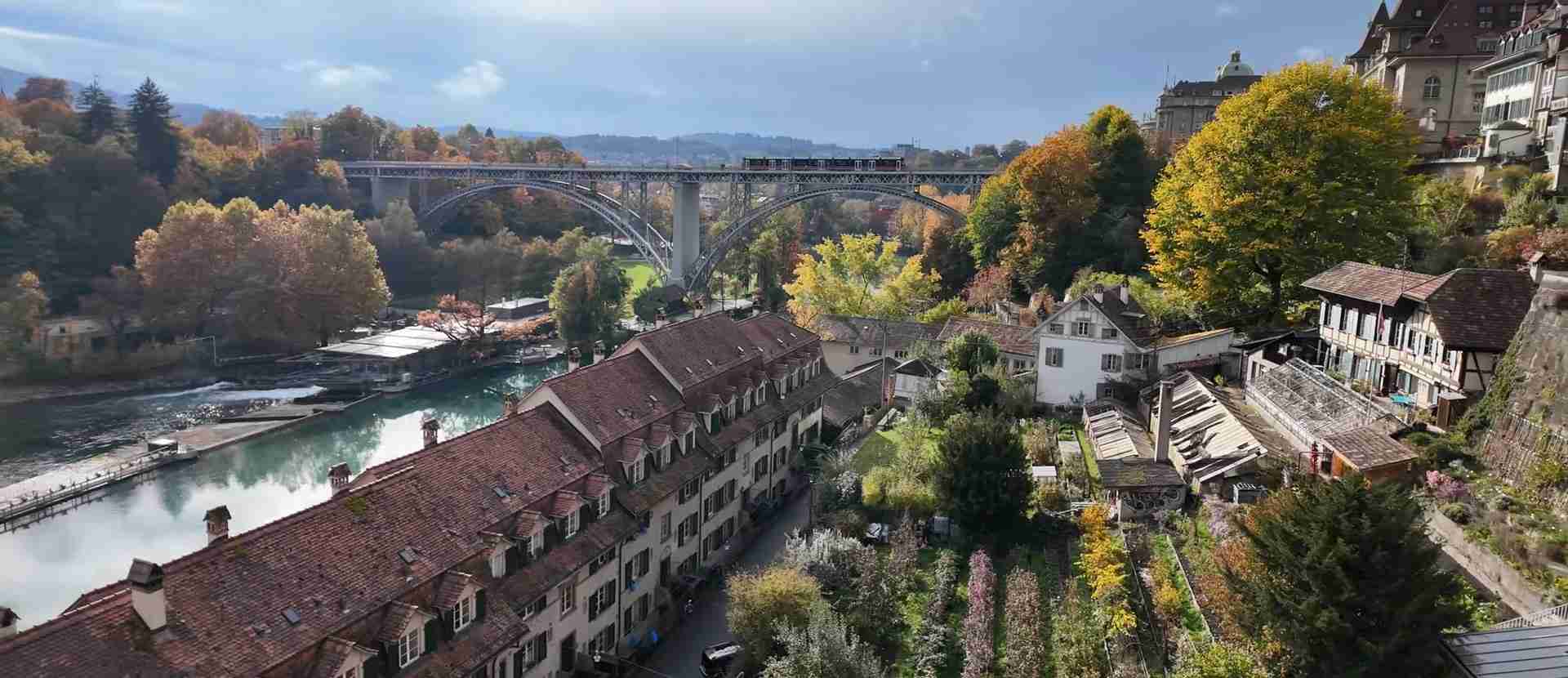
Autumn colors begin appearing in late September as deciduous trees surrounding the old town transition to yellow and orange hues, creating beautiful photographic opportunities particularly from elevated viewpoints like the Rose Garden overlooking the medieval center. The harvest season brings special menus at traditional restaurants featuring seasonal game, mushroom dishes, and new wine from Swiss vineyards, offering culinary experiences unavailable during other seasons. September’s combination of excellent weather, manageable crowds, reasonable pricing, and special seasonal character makes it the top recommendation for flexible travelers who prioritize overall experience quality over specific festival attendance.
October 2026: Autumn Beauty and Value
October transitions from early autumn to late autumn across the month, with temperatures declining from 14°C average highs early-month to 10°C by Halloween, while overnight lows drop from 8°C to 4°C requiring warmer clothing layers and evening jackets. Rainfall remains moderate at 70mm across 9 days, less than summer months and falling primarily as steady rain rather than thunderstorms, creating gray days requiring indoor backup plans but rarely disrupting outdoor activities completely. Daylight shortens rapidly to just 10 hours 30 minutes by month’s end with sunset occurring at 5:30 PM, significantly restricting afternoon sightseeing windows and creating extended evening periods suited to restaurant experiences and indoor cultural activities.
Autumn foliage reaches peak display during early-to-mid October as the forests surrounding Bern transition to brilliant reds, oranges, and yellows reflecting in the Aare River, creating spectacular scenery particularly visible from the Bear Park and Rose Garden elevated viewpoints. Many locals consider October’s autumn colors superior to Switzerland’s more famous Alpine scenery, as the deciduous forests of the Mittelland produce more varied and intense colors than the evergreen-dominated high mountain landscapes. Hotels drop to $160-200 for mid-range properties as shoulder season pricing takes full effect, offering exceptional value with 35-45% savings versus summer peaks.
Tourist numbers decline substantially during October with visitor counts reaching just 40-50% of July-August levels, creating near-private experiences at major attractions and eliminating waits for clock tower tours or museum entries. The reduced tourism pressure makes October ideal for travelers who prioritize uncrowded sightseeing over perfect weather, particularly those interested in cultural attractions and indoor activities less dependent on sunshine. Restaurants begin offering autumn specialties including pumpkin soups, venison preparations, and seasonal truffle dishes showcasing Swiss culinary traditions.
November 2026: Pre-Winter Transition and Zibelemärit
November brings genuine pre-winter conditions with average temperatures dropping to 7°C daytime highs and 2°C overnight lows, occasionally dipping below freezing particularly toward month’s end when winter weather patterns establish dominance. Precipitation totals 85mm across 10 days falling increasingly as snow rather than rain, though accumulation remains minimal until late month as temperatures hover near freezing. Relative humidity climbs to the year’s maximum at 85%, creating damp cold that feels more penetrating than equivalent temperatures in drier climates and requiring layered wool or synthetic insulation rather than cotton clothing.
Daylight shrinks to just 9 hours by month’s end with sunset occurring at 4:50 PM, severely limiting afternoon outdoor activities and creating extended evening periods suited to Christmas market preparations, restaurant experiences, and indoor cultural pursuits. Sunshine averages only 1.5-2 hours daily due to persistent cloud cover characteristic of marine late-autumn conditions. The Zibelemärit onion market transforms Bern on November 23, 2026, when 50,000 visitors descend upon the old town for Switzerland’s oldest market tradition dating to the early 1400s, creating festive chaos from 6:00 AM through evening with streets filled with onion braids, garlic ropes, traditional pottery, and specialty foods while the aroma of onion tarts fills the air.
Hotel demand surges for the November 22-24 weekend surrounding Zibelemärit with available rooms requiring booking months in advance, while rates climb 30-50% above typical November levels as this single-day event draws massive domestic Swiss crowds. Christmas markets begin opening during late November with the Berner Sternenmarkt launching November 19 and the traditional Waisenhausplatz market opening November 28, creating early holiday atmosphere with mulled wine, roasted chestnuts, and artisan crafts transforming the medieval squares. Hotel rates remain at shoulder season levels of $170-210 for mid-range properties outside Zibelemärit dates, offering exceptional value for travelers comfortable with short days and variable weather.
December 2026: Winter Wonderland and Christmas Markets
December establishes genuine winter conditions with average temperatures ranging from 1°C daytime highs to -2°C overnight lows, frequently dropping below -10°C during clear high-pressure periods while occasionally climbing above 5°C when Atlantic systems push warm maritime air across Switzerland. Snowfall accumulates to 133mm monthly creating consistent snow cover across parks and residential areas, though main streets receive salt and plowing keeping pedestrian access viable with appropriate footwear. Daylight reaches the annual minimum of 8 hours 36 minutes during the winter solstice around December 21, with sunrise not occurring until 8:10 AM and sunset arriving at 4:46 PM, forcing outdoor activities into narrow mid-day windows while extended evenings suit Christmas market visits and indoor cultural experiences.
The Christmas market season peaks during December with three major markets operating simultaneously: the traditional Waisenhausplatz market running through December 24 with 50 wooden chalets selling ornaments, gifts, and seasonal treats, the Berner Sternenmarkt on Kleine Schanze featuring 80 designer chalets including a 200-seat fondue chalet operating through December 28, and the artisan-focused Bern Minster market showcasing handcrafted items made exclusively by local artists operating through Christmas Eve. The Rendez-vous Bundesplatz light show projects spectacular animated displays onto the Parliament Building facade throughout December, creating nightly free entertainment drawing thousands of spectators to the central plaza.
Hotel demand remains strong during early-to-mid December as Christmas market visitors fill available rooms, with mid-range properties commanding $200-250 nightly despite winter season timing, though rates drop substantially during the December 26-31 period when many markets close and Swiss families retreat to mountain resorts. The festive atmosphere, authentic winter scenery with snow-covered medieval architecture, and unique cultural experiences make December appealing despite challenging weather, particularly for travelers comfortable with cold temperatures and limited daylight who prioritize Christmas market atmosphere over outdoor sightseeing flexibility.
Accommodation Pricing Patterns Throughout 2026
Hotel pricing in Bern follows clear seasonal patterns directly correlated to weather quality, major events, and European vacation schedules, with annual fluctuations ranging from winter lows around $150 nightly for average mid-range properties to summer peaks exceeding $280 for equivalent rooms. Understanding these pricing cycles enables strategic booking that can reduce accommodation costs by 40-50% simply through optimal date selection, transforming budget constraints into travel opportunities when combined with the substantial cost differences between hotel categories and neighborhoods throughout the compact capital.
Budget accommodation in Bern operates across three primary categories with distinct pricing structures. Hostel dormitory beds cost $35-45 nightly year-round with minimal seasonal variation, as these properties cater primarily to young international backpackers whose travel patterns distribute more evenly across seasons than family and business travelers driving luxury hotel demand. Budget hotels and pensions charge $106-134 nightly during peak summer season, dropping to $85-110 during shoulder periods March-May and September-November, and reaching winter lows of $75-95 during January-February outside Christmas market dates. These properties typically occupy residential neighborhoods 15-25 minutes walking distance from the old town, requiring bus or tram connections but delivering authentic local atmosphere unavailable in tourist-focused center locations.
Mid-range three-star hotels averaging $150-188 nightly across all seasons represent the sweet spot for most travelers, offering central locations within the UNESCO old town or immediate periphery, modern amenities including private bathrooms and Wi-Fi, and breakfast included in rates. Peak summer pricing June through August pushes these properties to $240-290 nightly, while shoulder seasons deliver excellent value at $170-210, and winter months outside Christmas markets drop to $140-180. Major events create dramatic temporary price spikes with Gurtenfestival mid-July driving rates to $320-380 even for basic three-star properties, while Zibelemärit weekend in late November commands $220-260 premiums despite typical shoulder season timing. Smart travelers target September and early October for optimal mid-range value, securing summer-quality rooms at winter prices during the brief window between peak season conclusion and autumn weather deterioration.
Luxury four-star and five-star hotels like the Bellevue Palace, Hotel Schweizerhof Bern, and Swissotel Kursaal Bern charge $250-350 nightly during regular periods, escalating to $380-480 during peak summer weeks and major festivals while dropping to $200-280 during winter months excluding Christmas market season. These properties deliver premium amenities including full-service spas, rooftop terraces with Alpine views, fine dining restaurants, and prime locations directly overlooking the Aare River or Federal Parliament building, justifying premiums for travelers prioritizing luxury experiences over budget efficiency. Booking luxury properties during shoulder seasons creates exceptional value opportunities, securing five-star facilities at three-star prices when $220-260 luxury rates compete favorably against $200-240 mid-range summer pricing.
Neighborhood selection impacts pricing substantially within each hotel category, with old town locations commanding 15-25% premiums over equivalent properties in residential districts like Länggasse or Breitenrain accessible via 10-15 minute tram rides. The Kirchenfeld district south of the Aare River offers peaceful embassy neighborhood character with museum proximity at prices 10-20% below old town equivalents, while properties near Bern railway station deliver business hotel efficiency and excellent public transport connections at mid-range pricing. Travelers comfortable with brief public transport commutes can leverage neighborhood pricing differentials to upgrade hotel quality substantially without increasing budgets, booking four-star comfort in residential areas for three-star old town prices.
Advance booking windows significantly impact pricing and availability, with optimal reservation timing varying by season and hotel category. Summer travel June through August requires booking 3-4 months ahead to secure preferred properties at competitive rates, as the combination of limited room inventory in the compact capital and maximum European vacation demand creates early sellouts at desirable hotels. Major festival dates like Gurtenfestival mid-July and Zibelemärit late November demand 4-6 months advance booking with flexible travelers monitoring cancellation opportunities as events approach. Shoulder season travel permits more relaxed 4-8 weeks advance booking while maintaining good selection and competitive pricing, whereas winter months outside Christmas markets allow last-minute reservations with occasional exceptional deals as hotels discount unsold inventory.
Alternative accommodation options including vacation rentals and apartment hotels provide value for longer stays or group travel, with one-bedroom apartments averaging $120-180 nightly during shoulder seasons and $180-240 during summer, offering full kitchens enabling meal preparation cost savings. The Länggasse and Breitenrain neighborhoods contain the highest concentration of vacation rental inventory, delivering authentic residential living experiences with supermarket access and local restaurant scenes distinct from tourist-focused old town dining. Families or small groups splitting two-bedroom apartment costs between four people create per-person nightly rates competitive with hostel dormitories while gaining privacy, space, and cooking facilities impossible in traditional accommodation.
Major Events and Festivals Calendar 2026
Winter and Spring Events January-May 2026
The festival calendar opens modestly during winter months before accelerating through spring toward the summer event concentration. St. Berthold Day on January 2 celebrates Bern’s founding with modest ceremonies and historical reenactments in the old town, drawing primarily local participants rather than international tourists but offering insight into Swiss civic traditions for visitors present during this period. The Bern Carnival dominates late February into early March 2026 when Switzerland’s third-largest Fasnacht celebration transforms the capital with elaborate costumes, brass band processions, and confetti battles across three days of revelry, attracting 40,000 domestic visitors and creating significant accommodation pressure requiring advance booking months ahead.
The International Jazz Festival Bern likely runs March 23 through May 29, 2026 based on historical scheduling patterns, presenting performances across multiple venues including the prestigious Marian’s Jazzroom, Bee-Flat club, and outdoor summer stages as weather permits. This extended festival brings internationally recognized jazz artists alongside Swiss talent, with individual concert tickets ranging from CHF 40-120 and festival passes offering better value for attendees planning multiple performances. The Museumsnacht Bern transforms the city’s cultural institutions on March 20, 2026, when 30+ museums open until midnight with special exhibitions, performances, and guided tours accessible via single CHF 25 pass, creating unique after-hours cultural experiences unavailable during standard operating hours.
Summer Festival Season June-August 2026
Summer inaugurates Bern’s most intensive festival period beginning with the Greenfield Festival June 11-13 in nearby Interlaken, drawing 40,000 rock and alternative music fans who utilize Bern accommodation as a base for day trips to the festival venue 45 minutes away by train. While not technically a Bern event, Greenfield creates substantial accommodation pressure across the capital region with hotel rates elevated 25-35% during this mid-June weekend. The International Trucker and Country Festival runs June 26-28 in Interlaken, attracting country music enthusiasts and vintage truck collectors for a uniquely Swiss-American cultural fusion event creating similar spillover accommodation demand in Bern.
The Gurtenfestival represents Bern’s premier cultural event July 15-18, 2026, when 80,000 attendees transform Gurten mountain just outside the city center into Switzerland’s largest open-air rock festival. Four days of performances across multiple stages feature international headliners alongside Swiss acts, with 2026 performers likely including major pop, rock, and electronic artists announced several months before the festival. Daily tickets cost approximately CHF 130-150 while four-day passes run CHF 380-420, with sold-out status reached months in advance for headline performance days. The festival creates massive impact across Bern with hotel rates surging to $300-450 nightly, public transport operating extended hours, and restaurants requiring advance reservations as attendees flood the old town between performances.
The Bern Buskers Street Music Festival arrives during mid-August 2026 when 150 international street performers stage free outdoor concerts across the old town’s plazas and pedestrian zones. This week-long celebration creates carnival atmosphere with performances ranging from traditional busking to elaborate circus acts, drawing 80,000 visitors over the festival period though spreading attendance across multiple days rather than concentrating crowds like Gurtenfestival. Switzerland’s National Day on August 1 produces fireworks displays over the Aare River, patriotic ceremonies at the Federal Parliament, and street festivals throughout the old town, creating festive atmosphere particularly appealing for visitors interested in Swiss culture.
Autumn and Winter Events September-December 2026
September and October maintain modest event calendars focused on harvest celebrations and cultural programming rather than major festivals, creating peaceful sightseeing conditions ideal for visitors prioritizing attractions over events. The Zibelemärit onion market on November 23, 2026 represents Switzerland’s oldest market tradition dating to the early 1400s when Bern granted neighboring Fribourg special trading privileges following devastating city fires. This single-day event attracts 50,000 visitors from 4:00 AM through evening as farmers sell elaborately braided onion and garlic ropes, traditional pottery, and specialty foods while the aroma of onion tarts fills the old town creating uniquely Swiss cultural experience impossible to replicate elsewhere.
The Christmas market season transforms Bern during late November through January with three major markets operating simultaneously at distinct locations. The traditional Waisenhausplatz Christmas Market runs November 28, 2026 through January 3, 2027, featuring 50 wooden chalets selling ornaments, gifts, mulled wine, and seasonal treats with extended hours Monday-Saturday 10:00 AM to 8:00 PM and Sunday 10:00 AM to 6:00 PM. The Berner Sternenmarkt on Kleine Schanze opens November 19 through December 28 with 80 designer chalets emphasizing artisan-made products alongside a 200-seat fondue chalet and children’s carousel, operating Monday-Saturday 11:00 AM to 10:00 PM and Sunday 11:00 AM to 8:00 PM in a cashless environment accepting only cards or mobile payment.
The artisan-focused Bern Minster Christmas Market showcases handcrafted items made exclusively by local artists operating November 29 through December 24 in front of Switzerland’s tallest cathedral, with more limited hours Monday-Thursday 11:00 AM to 6:30 PM, Friday 11:00 AM to 8:00 PM, and weekends 10:00 AM to 6:00 PM. The Rendez-vous Bundesplatz light show projects animated displays onto the Parliament Building facade throughout December, creating nightly free entertainment with 15-20 minute shows repeated hourly from dusk through 10:00 PM. The combined Christmas market season attracts over 200,000 visitors to Bern between late November and early January, creating festive atmosphere and substantial accommodation demand requiring advance booking for December weekends.
Daily Budget Breakdown By Travel Style 2026
Budget Travel: $105-145 Per Person Daily
Budget-conscious travelers visiting Bern in 2026 allocate $105-145 per person daily assuming two people sharing budget hotel accommodation or utilizing hostel dormitory beds, enabling multi-week Switzerland exploration without depleting savings while accessing the capital’s core cultural attractions and authentic local experiences. Accommodation represents the largest expense category at $35-45 nightly for hostel dormitory beds in properties like Bern Backpackers Hotel Glocke offering central old town locations with shared facilities, or $53-67 per person sharing budget hotels like Hotel-Pension Marthahaus in residential neighborhoods requiring 15-minute tram commutes but delivering private rooms with ensuite bathrooms at prices competitive with hostel dormitories when split between two travelers.
Food costs for budget travelers total $43-60 daily through strategic combination of supermarket meals, self-service restaurants, and occasional local specialties. Breakfast at hostel facilities or supermarket purchases of bread, cheese, and yogurt costs $8-12, while lunch at university cafeterias like Mensa Gesellschaftsstrasse or self-service restaurants like Manora delivers substantial hot meals for $15-20 including protein, vegetables, and drink. Dinner represents the primary splurge opportunity at $20-28 for traditional Swiss dishes like cheese fondue or raclette at modest restaurants in residential neighborhoods away from tourist-focused old town pricing, or alternatively picnic dinners assembled from supermarket purchases for under $15 enabling budget allocation toward occasional restaurant experiences.
Transportation costs remain minimal at $12-15 daily through purchase of 24-hour public transport passes covering unlimited tram, bus, and regional train travel throughout the Bern zone, substantially cheaper than individual ticket purchases at CHF 4-5 per ride quickly adding to $20+ daily totals. The Swiss Travel Pass offering unlimited national rail and boat travel costs approximately CHF 270 for three days or CHF 410 for eight consecutive days, creating excellent value for travelers combining Bern with other Swiss destinations like Interlaken, Luzern, or Geneva but representing poor value for those staying exclusively in the capital where local transit passes suffice.
Attraction expenses total $15-25 daily through selective paid entry combinations with extensive free activities. The old town UNESCO site requires no admission for self-guided walking exploration discovering medieval architecture, the Zytglogge clock tower exterior, and riverside paths, while the Rose Garden and Bear Park provide free access to elevated viewpoints overlooking the city. The Zentrum Paul Klee charges CHF 20 admission showcasing the world’s largest collection of works by this Bern-connected artist, while the Einstein Museum costs CHF 18 detailing the physicist’s Bern period when he developed special relativity. The Bern Historical Museum combines both institutions for CHF 28, offering better value for visitors interested in comprehensive cultural experiences. Budget travelers typically select 1-2 paid attractions daily while filling remaining time with free walking, parks, and riverside activities.
Sample budget daily breakdown: hostel dormitory bed $40, breakfast supermarket $10, university cafeteria lunch $18, supermarket picnic dinner $15, 24-hour transit pass $13, Zentrum Paul Klee admission $21. Total approximately $117 per person daily, fitting comfortably within the $105-145 range while enabling cultural experiences and adequate nutrition. Weekly costs accumulate to $735-1,015 per person for budget travelers, requiring $1,470-2,030 for couples sharing accommodation throughout. These totals exclude international transportation to Switzerland but include all ground costs once arriving in Bern.
Mid-Range Travel: $195-275 Per Person Daily
Mid-range travelers allocate $195-275 per person daily for comfortable hotel accommodation, quality restaurant meals, convenient transportation, and comprehensive cultural experiences accessing Bern’s premier attractions without budget constraints limiting activity selection. Hotel costs represent the primary expense increase over budget travel at $150-188 nightly for three-star properties divided between two people creating $75-94 per person accommodation costs, securing central old town locations within walking distance of major attractions, private bathrooms with quality amenities, breakfast buffets included in rates, and modern facilities including air conditioning and Wi-Fi throughout properties like Best Western Plus Hotel Bern or Hotel Bären am Bundesplatz.
Food expenses total $80-110 daily through restaurant meals for all three meals emphasizing quality Swiss cuisine and diverse international options. Breakfast buffets included at most mid-range hotels eliminate separate breakfast costs, though occasional specialty breakfast experiences at cafes like Adriano’s Bar & Café cost $15-20 for superior coffee and pastries. Lunch at casual restaurants in the old town arcades runs $25-35 for pasta, salad, or traditional Swiss dishes with beverages, while dinner at quality establishments like Kornhauskeller or restaurants along the Aare River costs $40-55 for multi-course traditional Swiss meals including cheese fondue, raclette, or seasonal specialties with wine or beer.
Transportation flexibility increases substantially with $12-20 daily budgets covering public transport passes supplemented by occasional taxis for convenience during poor weather, late evening returns, or luggage transport situations. The base 24-hour transit pass at CHF 13 handles most daily movement, while taxi rides averaging CHF 20-30 for cross-city trips provide weather backup options without derailing daily budgets. Day trips to nearby destinations like Interlaken, Thun, or the Emmental region via regional trains add $25-40 to daily costs for those incorporating broader area exploration.
Cultural activities and attractions receive $30-50 daily allocations enabling admission to 2-3 paid sites plus occasional guided tours or special experiences. The combined Zentrum Paul Klee and Einstein Museum ticket at CHF 28 anchors many days, supplemented by the Historical Museum, Natural History Museum, or Kunstmuseum fine arts collection each charging CHF 15-20 admission. Guided walking tours of the old town cost CHF 30-40 for two-hour experiences providing historical context and insider perspectives impossible through independent exploration, while specialized tours like the Bern brewery experience or chocolate-making workshops run CHF 55-75 creating memorable specialized activities.
Sample mid-range daily breakdown: three-star hotel $170 divided by two people equals $85 per person, hotel breakfast buffet included, casual restaurant lunch $30, quality dinner with wine $48, transit pass plus one taxi $18, two museum admissions $38. Total approximately $219 per person daily, representing typical mid-range spending within the $195-275 range. Weekly costs reach $1,365-1,925 per person or $2,730-3,850 for couples, enabling comprehensive Bern exploration with comfort and quality throughout the experience. Mid-range budgets deliver substantially enhanced experiences compared to budget travel through superior accommodation locations and quality, restaurant meal flexibility, and comprehensive attraction access without constant cost calculations.
Luxury Travel: $340-490 Per Person Daily
Luxury travelers invest $340-490 per person daily for premium accommodation, fine dining experiences, private transportation, and exclusive cultural access maximizing comfort and quality across all aspects of the Bern visit. Four-star and five-star hotels like the Bellevue Palace, Hotel Schweizerhof Bern, or Swissotel Kursaal Bern charge $250-350 nightly, creating $125-175 per person accommodation costs when divided between two travelers, delivering historic palatial properties with Aare River or Parliament views, full-service spas, rooftop terraces, concierge services handling reservations and logistics, and exceptional breakfast buffets with premium selections setting high daily standards.
Dining expenses total $140-195 daily through fine dining experiences emphasizing Swiss culinary excellence and international sophistication. Hotel breakfast buffets provide extensive premium selections eliminating separate breakfast costs, while lunch at upscale old town restaurants like Meridiano or Bellevue Terrasse costs $45-65 for seasonal Swiss specialties with wine pairings and river views. Dinner represents the primary culinary focus at $70-95 per person for multi-course tasting menus at establishments like Rosengarten restaurant or Jack’s Brasserie, showcasing modern interpretations of Swiss cuisine using regional ingredients alongside traditional favorites like fondue and raclette prepared to the highest standards.
Transportation flexibility maximizes convenience through $25-40 daily budgets covering taxis and private car services eliminating all public transport usage, enabling door-to-door movement between hotels, restaurants, and attractions without weather exposure or schedule constraints. Private guided tours with dedicated vehicles cost $180-250 per couple for half-day experiences providing personalized itineraries and exclusive access impossible through standard tourism, while airport transfers via private car service run CHF 150 each direction creating seamless arrival and departure experiences.
Premium cultural experiences receive $50-80 daily allocations for private guided tours, exclusive access programs, and specialized activities unavailable to general visitors. Private guided tours of the Federal Parliament building with access to chambers typically closed to public tours cost CHF 120-150 per couple, while after-hours private tours of the Zentrum Paul Klee provide intimate experiences with the collection guided by museum curators for CHF 200-300. Specialized experiences like private chocolate-making workshops with renowned Swiss chocolatiers or exclusive wine tastings featuring rare Swiss wines from limited-production vineyards create memorable activities justifying premium pricing for discerning travelers.
Sample luxury daily breakdown: five-star hotel $300 divided by two equals $150 per person, hotel breakfast buffet included, upscale lunch with wine $55, fine dining tasting menu with wine pairings $85, private car transportation $35, private museum tour $70. Total approximately $395 per person daily, fitting within the $340-490 range while delivering exceptional quality across all experience components. Weekly luxury travel costs reach $2,380-3,430 per person or $4,760-6,860 for couples, creating comprehensive Swiss capital experiences emphasizing comfort, quality, and exclusive access throughout the visit.
Seasonal Pricing Comparison 2026
Peak Summer Season: July-August 2026 Premium Pricing
Peak summer months July and August command maximum pricing across all travel categories as optimal weather conditions, maximum daylight hours, and European vacation schedules combine to drive unprecedented demand for Bern’s limited accommodation inventory. Mid-range three-star hotels that charge $170-210 during shoulder seasons escalate to $240-290 during regular July-August periods, with festival weeks pushing rates to $320-380 as Gurtenfestival and other events compress availability. Budget accommodation similarly increases from shoulder season $85-110 to peak summer $106-134, while luxury properties advance from $220-280 shoulder pricing to $300-380 regular summer rates and $420-480 during major festival periods.
These peak season premiums create 45-60% cost increases compared to shoulder periods for equivalent accommodation quality and location, fundamentally altering daily budget requirements across all travel styles. Budget travelers requiring $105-145 daily during shoulder seasons face increased requirements of $135-175 during peak summer as higher accommodation costs cascade through entire budgets, while mid-range travelers see daily needs climb from $195-275 shoulder costs to $255-345 summer requirements. Luxury travel expenses escalate from $340-490 shoulder season levels to $420-590 peak summer demands as premium properties command maximum rates during high-demand periods.
Restaurant pricing remains relatively stable across seasons as Swiss establishments maintain consistent menus and costs year-round, though summer brings increased competition for prime riverside terrace seating and outdoor old town dining locations requiring advance reservations and occasionally imposing minimum spending requirements during peak demand periods. Attraction admission prices similarly maintain year-round consistency, though summer crowds create longer wait times at popular sites like the Zytglogge clock tower tours, occasionally requiring online advance booking several days ahead to guarantee preferred time slots impossible to secure day-of during peak periods.
Shoulder Season: March-May and September-November Value Windows
Shoulder season periods deliver optimal value-to-experience ratios as moderate weather conditions, reduced tourist crowds, and off-peak hotel pricing create 25-45% cost savings versus peak summer while maintaining access to most attractions and activities. Mid-range accommodation pricing drops from $240-290 peak summer to $170-210 shoulder season levels, enabling comfortable three-star old town properties at prices approaching budget hotel summer costs. Budget properties similarly decline from $106-134 summer rates to $85-110 shoulder pricing, while luxury hotels offer exceptional value dropping from $300-380 summer costs to $200-280 shoulder rates, occasionally enabling five-star experiences at three-star prices during promotional periods.
Spring shoulder season March through May offers warming weather with increasing daylight and blooming gardens creating beautiful conditions for outdoor sightseeing, though increased rainfall totaling 90-119mm monthly requires flexible daily schedules and waterproof gear acceptance. Autumn shoulder season September through November delivers comfortable temperatures, spectacular fall foliage, and harvest season culinary specialties, though declining daylight and cooling temperatures create earlier evening transitions and increased indoor activity emphasis. Both shoulder periods maintain tourist-friendly conditions with attractions operating normal hours, restaurants providing full menus, and public transport running regular schedules, avoiding the reduced services and early closures characteristic of true off-season winter months.
Daily budget requirements drop substantially during shoulder periods with mid-range travelers needing just $195-275 compared to $255-345 summer costs, creating $60-70 daily savings accumulating to $420-490 weekly reductions for couples. Budget travelers similarly benefit from reduced $105-145 daily requirements versus $135-175 summer costs, while luxury travelers see expenses moderate to $340-490 from peak summer $420-590 levels. These savings enable either budget reductions of 20-30% for equivalent experiences or service level upgrades maintaining summer budgets while accessing superior hotel categories and dining experiences.
Off-Season Winter: December-February Extreme Pricing Variation
Winter months create the most complex pricing patterns as Christmas market demand from late November through early January drives rates nearly to summer levels, while the January through early-March period excluding carnival delivers the year’s absolute lowest accommodation costs alongside challenging weather conditions. Christmas market season late November through late December sees mid-range hotels charging $200-250 nightly, just 15-25% below peak summer despite cold temperatures and short days, as festive atmosphere attracts substantial visitor numbers. The Zibelemärit onion market on November 23, 2026 creates temporary premium pricing comparable to summer festivals, while the immediate pre-Christmas weeks maintain elevated rates through December 24.
Post-Christmas through early March excluding carnival represents Bern’s true off-season with mid-range accommodation dropping to $140-180, budget properties falling to $75-95, and luxury hotels offering exceptional value at $200-280 as desperate hotels discount unsold inventory during the slowest tourism period. These off-season rates create opportunities for travelers comfortable with winter conditions and limited daylight to access Bern at minimum annual costs, though many attractions operate reduced hours, some restaurants close for winter holidays, and weather conditions require significant cold-tolerance and indoor activity emphasis. Daily budget requirements drop to minimum annual levels with mid-range travelers needing just $175-255 compared to peak summer $255-345, while budget travelers get by on $95-135 versus summer $135-175.
The Bern Carnival late February through early March creates temporary demand surge with hotel rates climbing 20-30% above typical winter levels to $180-230 for mid-range properties as domestic Swiss visitors fill the capital for this major cultural event. Travelers targeting absolute minimum costs avoid festival dates entirely, focusing on January through early February when combination of post-holiday quiet, minimal daylight, and challenging weather creates rock-bottom pricing alongside minimal tourist infrastructure demands. Those accepting winter limitations access Switzerland’s capital at costs 40-55% below peak summer, enabling extended stays or budget allocation toward day trips to winter sports destinations within easy reach of Bern.
Transportation and Getting Around Bern 2026
Bern’s compact 540-meter-elevation location in the Swiss Mittelland creates highly walkable city center concentrated within the UNESCO-protected old town occupying a dramatic peninsula loop of the Aare River, enabling visitors to reach most major attractions, restaurants, and hotels on foot within 20-30 minutes maximum walking distances. The medieval street grid follows the peninsula’s natural topography with the central Kramgasse and Marktgasse forming the primary east-west axis, intersected by perpendicular side streets leading north toward the river or south toward the residential districts, while six kilometers of continuous covered arcades protect pedestrians from rain and snow making year-round walking comfortable regardless of weather conditions.
Public transportation supplements walking for longer distances, early morning or late evening travel, poor weather conditions, or luggage movement through the efficient Bernmobil tram and bus network operating frequent service from 5:30 AM through midnight weekdays with extended hours until 2:00 AM weekends. Single tickets cost CHF 4 for rides within the city zone, while 24-hour passes at CHF 13 deliver better value for travelers making 3+ trips daily, and the 7-day pass at CHF 52 creates substantial savings for week-long stays. The Libero fare system integrates Bern city transport with regional trains and buses throughout the canton, enabling day trips to destinations like Thun, Interlaken, or the Emmental region using the same transit pass covering unlimited rides throughout purchased zones.
Taxis provide convenient backup for poor weather, late evening returns, or luggage transport situations at costs averaging CHF 20-30 for cross-city trips, though Switzerland’s high labor costs make taxis expensive compared to public transport, with even short 5-minute rides costing CHF 12-15 minimum. Uber operates in Bern with pricing comparable to traditional taxis, while the Swiss ride-sharing app Uber generally offers 10-15% discounts versus street taxis for advance bookings. Budget travelers minimize taxi usage relying primarily on public transport and walking, while mid-range and luxury visitors budget $12-20 and $25-40 daily respectively for transportation flexibility including occasional taxi convenience.
Bicycle rental creates alternative transportation for active travelers comfortable cycling alongside Swiss traffic, with PubliBike stations throughout the city offering automated self-service rentals at CHF 5 daily plus CHF 1.50 per 30-minute usage period, though Bern’s hilly topography climbing from the Aare River valley to elevated neighborhoods creates challenging conditions for inexperienced cyclists. The riverside paths along both banks provide flat traffic-free cycling routes ideal for recreational rides, while the city operates dedicated bike lanes on major streets facilitating commuter cycling for confident urban riders. Many hotels provide complimentary guest bicycles eliminating rental costs for stays of several days.
Regional train connections from Bern railway station position the capital as ideal base for day trips throughout central Switzerland, with hourly InterCity services reaching Zurich in 70 minutes, Basel in 55 minutes, Geneva in 110 minutes, and Interlaken in 50 minutes using the extensive Swiss Federal Railways network. Second-class regional train tickets to popular destinations cost CHF 30-60 roundtrip, while the Swiss Travel Pass offering unlimited national rail travel for consecutive days starting at CHF 270 for three days delivers value for travelers combining Bern with multiple other Swiss cities. The Bernese Oberland mountain region including Interlaken, Grindelwald, and the Jungfrau railway lies within 90 minutes making Bern viable base for Alpine excursions without mountain resort accommodation costs.
Insider Tips for Optimal Visit Timing 2026
Avoiding Crowds While Maintaining Quality Weather
The optimal crowd-avoidance strategy targets late May, early June, or September when weather conditions rival peak summer quality while tourist numbers remain 30-40% below July-August maximums, creating near-private experiences at major attractions without the isolation and limited services of true off-season periods. Late May specifically offers exceptional conditions as temperatures climb to comfortable 18-20°C, extended daylight reaches 15 hours, and spring foliage creates beautiful settings, while European school schedules keep most family tourists away until late June. This 2-3 week window from mid-May through early June delivers premium experiences at shoulder season pricing before peak summer rates take effect.
Early September presents mirror advantages as summer weather extends into autumn with temperatures maintaining 20-22°C comfort through mid-month, while European school resumption drastically reduces family tourism creating open attractions and accessible restaurants. The two-week period from September 1-15 represents perhaps the single best timing for Bern visits across the entire calendar year 2026, combining excellent weather reliability, minimal crowds, moderate pricing still below peak summer by 15-25%, and special autumn atmosphere with early harvest season menus appearing at traditional restaurants. Hotel availability improves dramatically compared to August with same-day or next-day bookings possible for quality properties requiring week-ahead reservations during peak summer.
Weekday visits during any season reduce crowds substantially compared to weekend patterns, with Tuesday through Thursday representing optimal days for attraction visits as Monday closures at some museums and Sunday religious observations at churches create reduced access, while Friday-Sunday brings maximum visitor concentration. Long holiday weekends including Easter, Pentecost, and Swiss national holidays like August 1 create temporary crowd surges requiring festival-level advance planning despite non-peak season timing, while the shoulder season Mondays following summer weekends offer exceptional value as hotels discount unsold inventory and attractions stand nearly empty.
Leveraging Free Activities and Included Amenities
Bern provides extensive free cultural experiences enabling quality visits even on minimal budgets, with the UNESCO-protected old town requiring no admission for self-guided exploration discovering medieval architecture along the Kramgasse, Gerechtigkeitsgasse, and Junkerngasse streets where painted fountains, covered arcades, and sandstone facades create atmospheric walking experiences. The Zytglogge clock tower exterior and automated mechanical performance occurring hourly from 11:00 AM through 6:00 PM daily provides free entertainment though interior tours cost CHF 15, while the Federal Parliament building offers free guided tours during session breaks enabling access to Switzerland’s political heart without cost.
The Rose Garden elevated above the old town on the Aare River’s north bank delivers spectacular panoramic views across the medieval center toward the Bernese Alps without admission charges, while extensive gardens showcase over 200 rose varieties, iris collections, and alpine plant displays alongside children’s playgrounds and picnic areas perfect for budget-conscious afternoon activities. The Bear Park housing Bern’s symbol animals in naturalistic riverside habitat similarly requires no entry fee, with elevated walkways enabling close observation of the bears while learning about the city’s heraldic connection to these animals through interpretive displays and historical exhibitions.
The Aare River itself provides Bern’s signature free activity during summer months when thousands of locals and visitors daily float the two-kilometer stretch from Eichholz pools through the old town peninsula to Marzili baths, requiring only swimwear and waterproof bag for belongings while experiencing unique urban river culture found nowhere else in Europe. The river’s 17-18°C summer temperatures create refreshing contrast to warm air without the frigid shock of Alpine meltwater, while gentle current enables relaxed floating without swimming effort though strong skills remain essential for safety. Public access points at both ends eliminate equipment rental or entry costs creating genuinely free summer recreation for confident swimmers.
Switzerland’s universal free public WiFi access through the SwissPass network enables free internet throughout the capital including all public transport vehicles, major squares, and parks, eliminating international roaming charges for travelers with unlocked devices. Many mid-range and luxury hotels include comprehensive breakfast buffets in room rates delivering CHF 20-30 daily value through quality Swiss breakfast selections, while budget properties offering basic continental breakfast still provide CHF 10-15 value reducing overall food costs. The Bern Welcome Card provided free by participating hotels grants complimentary public transport throughout stays plus discounts at museums, restaurants, and shops, creating substantial savings for multi-day visits when leveraged strategically.
Booking Strategies for Maximum Value
Optimal booking timing varies substantially by season and travel style, with budget travelers benefiting from last-minute bookings during off-season periods when hotels discount unsold inventory 20-40% below published rates, while peak summer and festival periods demand 3-4 months advance reservations to secure preferred properties before sellouts. The general pattern shows shoulder season travel permits relaxed 4-8 weeks advance booking maintaining good selection and competitive pricing, whereas major event dates like Gurtenfestival mid-July, Zibelemärit late November, and Christmas market weekends require 4-6 months lead time with flexible travelers monitoring cancellation availability as events approach when nervous bookers release rooms creating last-minute opportunities.
Comparison shopping across booking platforms delivers 10-20% savings as hotel direct websites, global booking sites like Booking.com and Expedia, and Swiss-specific platforms like Hotelcard.ch offer different promotional rates and membership discounts creating price disparities for identical rooms on identical dates. The Swiss Hotelcard membership costing CHF 99 annually provides 50% discounts at participating properties across Switzerland including several Bern hotels, paying for itself within 2-3 nights while delivering substantial savings for travelers planning multiple Swiss city visits. Direct hotel website bookings occasionally match or beat third-party platform rates while providing better cancellation flexibility and room selection, making comparison of all sources essential for value optimization.
Package deals combining accommodation with rail passes, museum entries, or regional tours create value for specific travel patterns, with the Swiss Travel Pass bundled with Bern hotel nights occasionally offering 15-25% savings versus separate bookings. The Bern Ticket provided free by many hotels includes unlimited public transport throughout stays plus discounts at attractions, potentially saving CHF 15-30 daily for active sightseers making multiple transit trips and visiting several paid museums. Corporate rate programs through employers and professional associations deliver 10-30% discounts at major hotel chains, while senior discounts, student rates, and family packages provide targeted savings for specific demographics making inquiry about available discounts standard practice.
Sample Itineraries by Season 2026
Summer Three-Day Weekend: Peak Season Quality
A Friday through Sunday mid-range summer visit in June or early September maximizes weather quality and daylight hours while avoiding the extreme Gurtenfestival crowds of mid-July. Friday arrival via morning train from Zurich airport enables afternoon old town exploration beginning at the Zytglogge clock tower for the 3:00 PM hourly performance, followed by walking tour along Kramgasse discovering Einstein’s apartment house, medieval fountains, and covered arcade shopping before dinner at Kornhauskeller in the converted baroque grain cellar featuring traditional Swiss cuisine with summer terrace seating. Accommodation at the Best Western Plus Hotel Bern provides central old town location at $240 nightly during regular summer periods, creating $120 per person cost when divided between two travelers.
Saturday morning begins with the Federal Parliament building guided tour at 10:00 AM requiring advance online booking, followed by Zentrum Paul Klee visit showcasing the artist’s extensive collection in Renzo Piano’s wave-shaped architectural landmark. Afternoon Aare River float from Eichholz to Marzili provides quintessential Bern summer experience requiring 45-60 minutes with brief swimming in 18°C water, followed by relaxation at Marzili riverside cafe. Evening dinner at riverside restaurant Schwellenmätteli delivers upscale seasonal Swiss cuisine with Aare views and sunset dining extending past 9:00 PM during June-July summer solstice period. Daily costs include breakfast buffet at hotel, casual lunch $28, upscale dinner $52, museum admissions $21, public transport pass $13, totaling approximately $234 per person plus $120 accommodation share.
Sunday morning visit to the Rose Garden provides panoramic old town views with morning light ideal for photography, followed by Historical Museum and Einstein Museum combination ticket exploring Bern’s medieval development and the physicist’s revolutionary work during his Bern period 1902-1909. Afternoon shopping along Spitalgasse and Marktgasse luxury boutiques precedes departure via late afternoon train to next destination. Two-night accommodation totals $480, daily costs average $230-240 per person, creating weekend total approximately $585-625 per person or $1,170-1,250 for couples, delivering comprehensive summer Bern experience with quality accommodation and dining throughout.
Budget Five-Day Shoulder Season: Value and Depth
A Monday through Friday May or October budget visit leverages shoulder season pricing and weekday quiet for maximum cultural immersion at minimum cost. Monday arrival enables afternoon old town walking tour discovering major landmarks without paid admission requirements, while Tuesday focuses on Zentrum Paul Klee morning visit followed by free afternoon at Bear Park and Rose Garden with picnic lunch assembled from supermarket purchases. Wednesday combines Historical Museum and Einstein Museum exploration with evening attendance at Marian’s Jazzroom performance during the spring International Jazz Festival, while Thursday executes day trip to Thun via regional train exploring lakeside medieval town and Thun Castle before return to Bern for budget dinner at university Mensa cafeteria.
Friday morning visits the free Federal Parliament tour followed by final old town exploration and souvenir shopping before afternoon departure. Accommodation at Bern Backpackers Hotel Glocke costs $40 nightly for dormitory bed or Hotel-Pension Marthahaus at $106 nightly provides private double room creating $53 per person cost when split between two travelers, with five nights totaling $200-265 per person. Daily food costs averaging $50 through strategic supermarket breakfast and lunch combinations with occasional modest restaurant dinners total $250 for five days, while public transport 7-day pass at $52 plus regional train to Thun at $28 adds $80. Museum admissions for Zentrum Paul Klee, Historical Museum combination, and Thun Castle total approximately $60. Five-day budget total reaches $590-655 per person or $1,180-1,310 for couples, delivering comprehensive Bern exploration with central Switzerland day trip at shoulder season value pricing.
Luxury Winter Weekend: Christmas Market Experience
A Friday through Sunday early December luxury visit during Christmas market season combines festive atmosphere with premium accommodation and dining creating memorable winter experience despite challenging weather. Friday afternoon arrival via private car transfer from Zurich airport at CHF 150 enables late afternoon hotel check-in at Bellevue Palace providing river-view room with spa facilities at $280 nightly December rate, creating $140 per person accommodation cost. Evening Christmas market exploration across Waisenhausplatz, Berner Sternenmarkt, and Bern Minster markets samples mulled wine, roasted chestnuts, and artisan crafts while experiencing festive lighting and atmosphere despite 5:00 PM sunset and -2°C temperatures.
Saturday begins with hotel spa morning utilizing steam rooms and relaxation areas, followed by private guided old town tour including Zytglogge clock tower interior and Federal Parliament chambers providing exclusive access and historical context. Afternoon shopping at designer Christmas market chalets on Kleine Schanze precedes evening Rendez-vous Bundesplatz light show at 7:00 PM followed by dinner at Rosengarten restaurant featuring seasonal game dishes with panoramic illuminated old town views. Sunday morning private chocolate-making workshop with renowned Swiss chocolatier creates interactive culinary experience, while afternoon departure via private car transfer to airport concludes the visit. Two-night luxury accommodation costs $560, Saturday private tour and workshop total approximately $320 for couples, dinners at upscale restaurants average $85 per person nightly, creating weekend total approximately $850-950 per person or $1,700-1,900 for couples, delivering premium winter Bern experience with Christmas market atmosphere and exclusive access throughout.
Weather Contingency Planning 2026
Switzerland’s mountain-influenced weather creates variable conditions requiring flexible daily planning regardless of season, with afternoon thunderstorms during summer, extended gray periods during winter, and sudden temperature changes during shoulder seasons demanding backup indoor activity options for every outdoor-focused day. The reliable pattern shows mornings generally delivering better conditions than afternoons across all seasons, with thunderstorm development during summer months typically beginning between 2:00-4:00 PM after morning sunshine, making early starts advantageous for weather-dependent activities like river floating, Rose Garden photography, or extended walking tours through residential neighborhoods.
Bern’s exceptional museum collection provides comprehensive indoor backup options covering art, history, natural history, and communication themes enabling full-day cultural itineraries during poor weather without outdoor exposure. The Zentrum Paul Klee alone contains sufficient material for 3-4 hours, while the Historical Museum combining Swiss history with the Einstein Museum delivers similar duration. The Museum of Communication explores postal and telecommunications history through interactive exhibits suitable for all ages, while the Natural History Museum showcases extensive taxidermy collections and temporary exhibitions requiring 2-3 hours minimum. These institutions cluster within 15-30 minutes walking or brief tram rides, enabling easy combination into full-day indoor itineraries when weather deteriorates.
The six kilometers of continuous covered arcades protecting the old town’s primary shopping streets enable extended walking exploration during rain or snow without significant weather exposure, with shops, cafes, and restaurants providing frequent shelter opportunities. These arcades represent one of Europe’s longest continuous covered shopping promenades, creating genuinely weather-proof sightseeing enabling appreciation of medieval architecture, fountain sculptures, and historic building facades even during heavy precipitation. The arcade system connects most major old town attractions including the Zytglogge clock tower, Federal Parliament, and cathedral, enabling circuit walks covering substantial cultural ground without umbrella requirements.
Restaurant experiences provide extended indoor cultural activities suitable for poor weather days, with traditional cheese fondue lasting 90-120 minutes creating social dining experiences while multi-course fine dining at establishments like Meridiano or the Bellevue Palace extends to 2-3 hours. The Swiss appreciation for extended meals without rushing creates ideal poor-weather activities combining cultural immersion with physical comfort, while wine bars and cafes throughout the old town offer atmospheric settings for afternoon drinks spanning several hours. The covered Kornhaus plaza food hall provides casual all-weather dining with multiple cuisine options under single historic vaulted ceiling, enabling group meals accommodating diverse preferences without weather exposure.
Special Considerations for Different Traveler Types 2026
Family Travel with Children
Bern provides surprisingly family-friendly infrastructure despite compact medieval old town layout, with wide pedestrian zones free from vehicle traffic, extensive parks including playgrounds and splash fountains, and the Bear Park offering free animal encounters appealing to children of all ages. The Gurten mountain funicular ascending the forested hill overlooking the city delivers adventure appeal with playground areas, miniature railway, observation tower, and hiking trails suitable for families, while summer toboggan run creates thrill activities justifying half-day excursions. The Natural History Museum showcases dramatic taxidermy dioramas including massive African mammals and Swiss Alpine wildlife presented in realistic habitat settings capturing children’s imagination while educating about biodiversity.
Family accommodation selection prioritizes apartment rentals over hotel rooms when traveling with 2+ children, as one-bedroom apartments averaging $150-220 nightly provide substantially more space than equivalent hotel rooms while full kitchens enable breakfast and snack preparation reducing food costs and accommodating picky eaters. The Länggasse neighborhood offers highest concentration of family-friendly apartments with supermarket access, playgrounds, and local restaurants creating authentic residential living experience distinct from tourist-focused old town atmosphere. Family travel costs increase approximately 50% over couples due to additional accommodation space requirements and attraction admission for children, with mid-range family budgets reaching $350-425 daily for family of four compared to $390-550 for couples.
Solo Travelers
Solo travelers face Switzerland’s infamous high costs without ability to split accommodation, creating daily budget pressures substantially higher than per-person costs for couples sharing rooms. Hostel dormitory beds at $35-45 nightly provide most economical accommodation while offering social atmosphere and kitchen access, though private hostel rooms at $65-85 deliver privacy premium still undercutting budget hotels. Solo travelers should budget approximately 60-75% of couple per-person costs rather than 50%, as accommodation represents the primary non-sharable expense while food, transport, and attractions scale similarly. The solo budget breakdown shows approximately $135-165 daily for hostel dormitories versus couples’ $105-145 per person, while solo mid-range travel requires $255-315 daily compared to couples’ $195-275 per person.
Switzerland’s exceptional public safety and well-developed tourism infrastructure creates ideal conditions for solo travel, with solo female travelers reporting high comfort levels throughout the country including Bern’s compact old town easily navigated on foot. The extensive hostel network provides built-in social opportunities for solo travelers seeking companionship, while free walking tours and group activities enable connections with fellow visitors. Solo travelers benefit from maximum scheduling flexibility adapting daily plans to weather and personal energy without group consensus requirements, while smaller restaurant tables and cafe seating accommodate solo dining without awkwardness common in some European destinations.
Senior and Mobility-Limited Travelers
Bern’s hilly topography creates genuine challenges for mobility-limited visitors as the old town occupies elevated peninsula requiring significant elevation changes to access from the railway station or lower Aare River areas, while cobblestone medieval streets create uneven walking surfaces unsuitable for standard wheelchairs or walkers. The extensive public transport network provides elevator-equipped tram and bus access throughout the city, while many major attractions including the Zentrum Paul Klee, Historical Museum, and Federal Parliament offer full wheelchair accessibility with ramps, elevators, and accessible restrooms. Hotels increasingly provide accessible rooms with roll-in showers and grab bars, though historic properties in centuries-old buildings sometimes lack elevator access to upper floors requiring ground-floor room requests during booking.
Senior travelers over 65 qualify for reduced admission prices at most museums and attractions, typically 20-30% below standard adult rates, while Swiss Senior Cards available for CHF 180 annually provide 50% discounts on regional train travel throughout the country. The Swiss Travel Pass offers senior pricing at approximately 10% below standard adult rates, while many hotels provide senior discounts of 10-15% for guests over 65 particularly during off-peak periods. These accumulated savings enable senior travelers to access mid-range or luxury experiences at budget or mid-range price points, substantially enhancing value for retirees on fixed incomes. The generally slower senior travel pace aligns well with Bern’s compact size, enabling comprehensive exploration over 4-5 days without the rushed itineraries often necessary for working-age visitors with limited vacation time.
Frequently Asked Questions About Best Time Visit Bern 2026
Is Bern Better in Summer or Winter?
Summer unequivocally delivers superior overall conditions for most travelers through optimal weather averaging 22-25°C, maximum 15-hour daylight enabling extended daily itineraries, and comprehensive attraction access with all museums operating full schedules and outdoor activities like river swimming available exclusively during warm months. Winter appeals specifically to travelers prioritizing Christmas market atmosphere, authentic Swiss winter scenery with snow-covered medieval architecture, and access to nearby ski resorts within 90 minutes, though challenging weather with temperatures averaging -4°C to 4°C, minimal 8-9 hour daylight, and frequent precipitation limit outdoor activities substantially compared to summer flexibility. Budget-conscious travelers favor shoulder seasons September-October or April-May delivering comparable access to summer attractions at 25-40% lower costs while avoiding both summer crowds and winter weather extremes.
How Many Days Should I Spend in Bern?
Three full days provides optimal duration for most visitors to experience Bern’s core attractions including the old town UNESCO site, Zentrum Paul Klee, Historical Museum with Einstein Museum, Federal Parliament tour, and Rose Garden viewpoint while maintaining comfortable pace without daily rushing. Budget an additional 1-2 days for travelers incorporating day trips to nearby destinations like Interlaken, Thun, Emmental region, or Jungfrau mountain area, as Bern’s central location enables excellent base for broader central Switzerland exploration. First-time visitors combining Bern with other Swiss cities like Zurich, Luzern, or Geneva typically allocate 2-3 nights in the capital as part of week-long or longer itineraries, while travelers focused exclusively on Bern might extend to 4-5 nights enabling deeper cultural immersion and relaxed daily pace.
Does it Rain a Lot in Bern?
Bern receives substantial annual precipitation totaling 1,059mm distributed across 124 rainy days throughout the year, creating frequent rainfall requiring daily rain gear regardless of season, though the pattern shows relatively brief showers lasting 1-3 hours rather than extended multi-day systems characteristic of Atlantic coastal regions. May records the highest monthly rainfall at 119mm across nearly 13 days, while February delivers the minimum at just 55mm over 9 days, with summer months June-August experiencing 100-111mm monthly falling primarily as afternoon thunderstorms clearing quickly rather than extended periods. The six-kilometer covered arcade system protecting old town shopping streets enables comfortable walking exploration even during heavy rain, while comprehensive museum options provide extensive indoor alternatives when outdoor conditions deteriorate substantially.
Can You Swim in the Aare River Year-Round?
Aare River swimming occurs exclusively during summer months mid-May through mid-September when water temperatures climb to 15-21°C creating tolerable conditions for recreational floating, with peak swimming season July-August delivering warmest 19-21°C temperatures comfortable for extended water exposure. The river remains technically swimmable year-round as hardy locals occasionally brave winter waters near freezing, though this practice suits only experienced cold-water swimmers with proper safety protocols rather than casual tourists lacking acclimatization. The traditional float route from Eichholz pools to Marzili baths covering two kilometers requires strong swimming ability as the current provides gentle assistance but swimming skills remain essential for safe navigation, while public access points at both ends provide changing facilities, lockers, and supervision during summer operating season typically May through September.
What is the Cheapest Month to Visit Bern?
January and February excluding Carnival dates represent the absolute cheapest months for Bern visits with mid-range hotel rates dropping to $140-180 compared to summer peaks near $280, while attractions offer winter discounts and restaurants occasionally run promotional menus during this slowest tourism period. These savings come with significant trade-offs including temperatures averaging -4°C to 4°C requiring substantial cold-weather clothing, minimal daylight of just 8-9 hours daily limiting outdoor activities to narrow mid-day windows, and potential attraction closures or reduced hours as museums conduct annual maintenance during low-demand periods. March and November provide better overall value balancing reduced costs still 25-35% below summer against more manageable weather and longer daylight compared to deep winter months, making these shoulder periods optimal for budget-conscious travelers unwilling to accept January-February limitations.
Do I Need to Book Hotels in Advance for Bern?
Peak summer months June through August require 3-4 months advance booking to secure preferred properties at competitive rates as limited room inventory in the compact capital sells out to European vacation demand, while major festival dates like Gurtenfestival mid-July and Zibelemärit late November demand 4-6 months lead time with available rooms selling out entirely for headline performance weekends. Christmas market season late November through late December similarly requires 2-3 months advance reservation for weekend dates, though weekday availability remains accessible within 4-6 weeks. Shoulder season travel permits more relaxed 4-8 weeks advance booking maintaining good selection, whereas winter months January-March excluding Carnival allow last-minute reservations with occasional exceptional deals as hotels discount unsold inventory, though this flexibility trades advance planning certainty for potential limited selection if multiple properties remain fully booked.
Is Bern Expensive Compared to Other Swiss Cities?
Bern maintains moderate pricing within Switzerland’s expensive overall cost structure, with hotel rates averaging 10-20% below Zurich and Geneva while remaining 15-30% above less-touristy cities like Basel or Luzern, creating mid-range Swiss pricing neither the most expensive nor most affordable option. Restaurant costs align closely with other major Swiss cities as standardized Swiss labor and ingredient costs prevent dramatic regional variation, though Bern’s smaller tourism infrastructure compared to Zurich creates fewer ultra-luxury dining options alongside comprehensive mid-range and budget alternatives. Daily budget requirements of $105-145 for budget travelers, $195-275 for mid-range comfort, and $340-490 for luxury experiences position Bern as moderately expensive within Swiss context but substantially costlier than most European capitals, requiring realistic budget expectations accepting Switzerland’s high cost structure.
What Should I Pack for Bern Weather in Different Seasons?
Summer visits June through August require layered clothing combining t-shirts and shorts for warm 22-25°C afternoons with light jacket or sweater for cooler 12-14°C mornings and evenings, plus waterproof rain jacket for afternoon thunderstorms occurring 10-12 days monthly. Comfortable walking shoes with good support prove essential for extended old town cobblestone exploration, while swimsuit enables Aare River floating during the city’s signature summer activity. Spring and autumn shoulder seasons demand more substantial layering with medium-weight jacket, long pants, and versatile clothing items suitable for temperature ranges spanning 5-18°C within single days as morning chill transitions to pleasant afternoons before evening cooling.
Winter visits December through February necessitate genuine cold-weather gear including insulated jacket rated for -10°C temperatures, warm hat covering ears, gloves, scarf, and waterproof winter boots with good traction for snow and ice conditions on cobblestone streets. Layering remains critical as indoor heating creates warm environments requiring removal of outer layers, while outdoor Christmas market visits expose travelers to extended stationary periods in freezing conditions demanding maximum insulation. All seasons benefit from compact umbrella, comfortable walking shoes broken in before travel to prevent blisters, and day pack for carrying layers, water bottle, and purchases during extended daily explorations.
Are There Free Walking Tours in Bern?
Free walking tours operate daily during peak season April through October departing from the Tourist Information office near the railway station, covering the old town UNESCO site, major fountains, Zytglogge clock tower, Federal Parliament, and cathedral during 90-120 minute experiences led by English-speaking guides working for tips rather than fixed fees. These tours provide excellent introduction to Bern’s history and orientation to the compact medieval center, enabling independent follow-up exploration of areas of particular interest, though guides expect tips averaging CHF 10-15 per person creating de-facto costs despite free marketing. The Tourist Information office also offers paid guided tours at CHF 30-40 providing more specialized themes including architecture tours, culinary walks, or Einstein-focused experiences delivering enhanced detail and access compared to free alternatives.
Can I Do Day Trips from Bern to the Alps?
Bern’s central location enables excellent day trip access to the Bernese Oberland mountain region including Interlaken within 50 minutes, Grindelwald in 90 minutes, and the Jungfraujoch summit station at 3,454 meters elevation within 2.5 hours using frequent regional train connections. The complete Jungfrau region day trip requires departure by 7:00-8:00 AM to maximize mountain time before late afternoon return, with roundtrip costs approximately CHF 120-220 depending on specific route and whether Swiss Travel Pass coverage applies. The Schilthorn summit featuring the revolving Piz Gloria restaurant accessible via Mürren provides alternative Alpine experience within similar timeframes, while lake destinations like Thun or Brienz offer easier accessibility within 30-45 minutes for less demanding day trips combining medieval towns with Alpine scenery backdrop. Most Bern visitors allocate at least one day for mountain excursions given the proximity of Switzerland’s most dramatic Alpine scenery to the capital.