
Best Time to Visit Toronto 2026: Seasonal Planning Guide
Toronto transforms dramatically across its four distinct seasons, each offering unique experiences from FIFA World Cup excitement in summer to spectacular fall colors and winter festivals. Your ideal travel window depends on weather preferences, event interests, budget constraints, and crowd tolerance, with dramatic variations in hotel rates, attraction accessibility, and cultural offerings throughout 2026.
Key Takeaways
- Peak Summer 2026 (June-August): Toronto hosts six FIFA World Cup matches, Pride Toronto, and Toronto Caribbean Carnival, with hotel rates ranging CAD $250-450 ($185-335) per night and warm temperatures averaging 21-27°C (70-81°F), though crowds reach maximum levels
- Shoulder Season Excellence (May and September 2026): Pleasant weather, 40-50% lower hotel rates at CAD $150-250 ($110-185) nightly, manageable crowds, and major events including Doors Open Toronto and early fall festivals make these months optimal value windows
- Winter Festival Season (December 2026-February 2027): Winterlicious dining festival, holiday markets, and winter sports activities combine with lowest hotel rates at CAD $120-200 ($90-150) nightly, though temperatures drop to -2 to -7°C (19-28°F) with significant snowfall
- Spring Emergence (March-April 2026): Cherry blossoms bloom late April, temperatures climb from freezing to 9-15°C (48-59°F), shoulder-season pricing prevails, and unpredictable weather requires flexible planning with layers
- Major 2026 Event Windows: FIFA World Cup matches (June-July), Pride Toronto (June 25-28), Toronto Caribbean Carnival (July-early August), Canadian National Exhibition (August 21-September 7), Toronto International Film Festival (September), and Nuit Blanche (October 3) create distinct high-demand periods requiring advance bookings
- Budget Optimization Strategy 2026: Visit January-February or November for 50-60% savings versus summer peak, book shoulder months (May, September-October) for balanced weather and value, avoid FIFA World Cup weeks and major festival weekends when rates surge 100-200%
People Also Ask About Toronto 2026
What is the absolute best month to visit Toronto in 2026?
September 2026 combines the year’s best weather conditions with manageable crowds and reasonable pricing. Temperatures average 18-22°C (64-72°F) with lower humidity than summer, fall colors begin appearing in parks, the Toronto International Film Festival brings cultural energy, and hotel rates drop 30-40% below summer peaks at CAD $150-250 ($110-185) nightly. Early September particularly excels, offering lingering summer warmth before autumn chill arrives, while the Canadian National Exhibition wraps up Labor Day weekend and TIFF creates buzz without the massive crowds of FIFA World Cup summer months.
How much does Toronto cost to visit during peak summer 2026 versus winter?
Summer peak season (June-August 2026) costs significantly more than winter across all categories, with hotels approximately double winter rates. Mid-range hotels range CAD $250-450 ($185-335) nightly in summer versus CAD $120-200 ($90-150) in winter. Attraction tickets remain consistent year-round, but summer festival events add costs: Toronto Caribbean Carnival participation reaches CAD $150-300 ($110-220) with costume packages, while winter Winterlicious prix fixe dinners cost only CAD $25-75 ($18-55). Transportation costs stay stable at CAD $3.35 ($2.50) per subway ride regardless of season. Calculate winter daily budgets at CAD $125-200 ($95-150) per person excluding accommodation, while summer requires CAD $150-250 ($110-185) daily for comparable experiences given higher dining costs and paid festival events.
Should I visit Toronto during FIFA World Cup 2026 or avoid the crowds?
FIFA World Cup creates Toronto’s most extreme tourism conditions in decades, presenting trade-offs between historic atmosphere and logistical challenges. Toronto hosts six World Cup matches in June-July 2026, bringing an estimated 300,000+ visitors citywide. Hotels within 10 kilometers of BMO Field command CAD $400-800 ($295-590) nightly during match days, 100-200% above typical summer rates. Public transportation expands service hours specifically for World Cup movement, restaurants extend hours, and the entire city buzzes with international energy impossible to replicate in normal years. Visit if you secure accommodation 6-12 months advance and embrace crowds as part of the experience. Avoid if you prefer relaxed sightseeing, budget-conscious travel, or exploring Toronto’s neighborhoods without navigation challenges—September or May 2026 deliver superior traditional tourism experiences.
What weather should I expect in Toronto during different seasons of 2026?
Toronto experiences dramatic seasonal extremes requiring distinct packing strategies. Winter (December-February) brings freezing temperatures averaging -2 to -7°C (19-28°F) with frequent snowfall totaling 108-122 centimeters (43-48 inches) seasonally and occasional Arctic cold snaps dropping below -20°C (-4°F). Spring (March-May) transitions unpredictably from late-season snow in March to cherry blossoms and 15°C (59°F) warmth by May, requiring layers for daily 10-15°C temperature swings. Summer (June-August) delivers comfortable 21-27°C (70-81°F) averages with high humidity from Lake Ontario, occasional heat waves reaching 35°C (95°F), and afternoon thunderstorms particularly in July. Fall (September-November) starts with Indian Summer periods exceeding 25°C (77°F) in early September, rapidly cooling through October’s spectacular foliage to November’s first snowfall and freezing nights. Lake Ontario moderates extremes compared to inland Ontario, creating microclimates where waterfront areas stay 3-5°C warmer in winter and cooler in spring.
Extended multi-day tours – 5+ days
Featured Toronto Multi-Day Tour Packages
3 days
Toronto 3-Day Discovery Tour
- ✓ Comprehensive Toronto experience
- ✓ Expert local guides included
- ✓ All accommodation included
- ✓ Transportation provided
5 days
Toronto 5-Day Highlights Experience
- ✓ Comprehensive Toronto experience
- ✓ Expert local guides included
- ✓ All accommodation included
- ✓ Transportation provided

7 days
Toronto 7-Day Cultural Journey
- ✓ Comprehensive Toronto experience
- ✓ Expert local guides included
- ✓ All accommodation included
- ✓ Transportation provided
10 days
Toronto 10-Day Complete Adventure
- ✓ Comprehensive Toronto experience
- ✓ Expert local guides included
- ✓ All accommodation included
- ✓ Transportation provided
Multi-day tour packages powered by TourRadar. Prices and availability subject to change.
Introduction
Toronto’s position on Lake Ontario’s northwestern shore creates a humid continental climate characterized by cold, snowy winters and warm, humid summers, with spring and fall serving as brief transitional seasons of variable weather. The city experiences approximately 860 millimeters (34 inches) of precipitation distributed fairly evenly throughout the year, though summer thunderstorms and winter snowfall create distinct seasonal moisture patterns. Temperature variations span 45 degrees Celsius annually, from January lows averaging -7°C (19°F) to July highs reaching 26°C (79°F), requiring visitors to pack dramatically different wardrobes depending on travel dates.
The question of when to visit Toronto extends far beyond weather considerations in 2026. This year represents one of the most significant cultural and sporting calendars in Toronto’s modern history, anchored by six FIFA World Cup matches that will transform the city into a global destination for weeks. Pride Toronto, Canada’s largest LGBTQ+ celebration and the world’s second-largest Pride event, attracts over one million participants in late June. The Toronto Caribbean Carnival brings Caribbean culture to Lakeshore Boulevard through July and early August with elaborate costume parades and steel pan competitions. September’s Toronto International Film Festival positions the city as North America’s film capital for eleven days, while October’s Nuit Blanche converts the entire downtown into a contemporary art installation from sunset to sunrise.
These signature events layer atop Toronto’s established seasonal rhythms: spring cherry blossoms in High Park, summer waterfront festivals along Lake Ontario, fall color displays in the Don Valley, and winter skating at Nathan Phillips Square. Each season offers distinct advantages and compromises. Summer delivers the fullest event calendar and warmest weather but brings maximum crowds and premium pricing. Winter provides budget-friendly rates and festive atmosphere but challenges visitors with sub-zero temperatures and limited daylight hours. Spring and fall shoulder seasons balance moderate weather, manageable crowds, and reasonable costs, though May’s lingering chill and November’s early darkness create planning considerations.
Accommodation costs fluctuate dramatically across seasons, with downtown hotels commanding CAD $250-450 ($185-335) nightly during summer peaks versus CAD $120-200 ($90-150) in winter months. FIFA World Cup weeks push rates even higher, with properties near BMO Field reaching CAD $400-800 ($295-590) per night during match days. These price differentials multiply across multi-day stays, making seasonal selection a primary budget determinant. A five-night June visit costs CAD $1,250-2,250 ($925-1,665) for mid-range accommodation alone, while the identical hotel in February charges CAD $600-1,000 ($445-740)—a difference exceeding the cost of flights for many international visitors.
Beyond pricing, seasonal timing affects the practical experience of visiting Toronto. Summer’s 15-hour daylight windows allow museum visits followed by waterfront strolls and evening patio dining, maximizing attraction accessibility. Winter’s 9-hour daylight limits outdoor activities to compressed midday windows, though extended indoor cultural offerings compensate. Spring’s unpredictable weather requires flexible itineraries accommodating sudden rain showers or unseasonable cold snaps, while fall’s stable conditions support reliable day-to-day planning. Each season creates a different Toronto, from summer’s beach volleyball on the Islands to winter’s Distillery District Christmas Market to spring’s cyclists reclaiming city streets.
This guide analyzes each season’s characteristics in detail, examining weather patterns, major events, crowd levels, pricing trends, and optimal activities. The goal is providing sufficient information to match your visit timing with your priorities, whether those center on experiencing FIFA World Cup energy, maximizing budget efficiency, enjoying optimal weather, accessing specific festivals, or avoiding crowds while exploring neighborhoods. Toronto rewards visitors year-round, but the ideal month for your specific interests and constraints exists within the seasonal patterns detailed below.
Understanding Toronto’s Seasonal Weather Patterns in 2026
Toronto’s weather operates on a humid continental climate system (Köppen classification Dfb), characterized by four distinct seasons with significant temperature variations and precipitation occurring throughout the year. Lake Ontario’s moderating influence creates microclimates within the city, with waterfront neighborhoods experiencing temperatures 3-5 degrees Celsius warmer in winter and cooler in spring compared to areas farther inland. This lake effect also generates localized weather phenomena, including lake-effect snow in winter and cooling breezes that make summer afternoons along the harbourfront noticeably more comfortable than inland districts.
Winter spans December through February with average January temperatures ranging from -7°C (19°F) overnight lows to -1°C (30°F) afternoon highs. The season delivers 108-122 centimeters (43-48 inches) of snowfall accumulated across multiple storm systems rather than continuous snow cover. Extended periods can pass without snow when warmer air masses push northward, occasionally raising temperatures above freezing even in January and causing rain instead of snow. However, Arctic outbreaks occur virtually every winter, sending overnight temperatures below -20°C (-4°F) for several days at a time, with wind chill making conditions feel considerably colder. The coldest morning of winter typically bottoms out between -25°C and -30°C (-13°F to -22°F), usually in late January or early February.
The city averages 101 days annually with minimum temperatures at or below freezing, concentrated between November and April. Despite cold temperatures, Toronto winters feature surprising variability—some days reach 5°C (41°F) with full sun, while others remain locked below -10°C (14°F) all day. Snowstorms can deposit 20-30 centimeters (8-12 inches) overnight, paralyzing the city briefly before plows clear major routes. Ice storms occur occasionally, coating trees, power lines, and sidewalks with several centimeters of ice, creating spectacular but hazardous conditions. Winter cloud cover averages 67%, reducing sunshine to approximately 3.6 hours daily in December and January.
Spring emerges gradually from mid-March through May, though “emerge” understates the season’s erratic character. March remains fully winter in temperature—averaging -2°C to 4°C (28°F to 39°F)—with frequent snowfall and occasional blizzards dropping 15+ centimeters. The average last frost occurs April 13, but freezing temperatures can strike as late as early May during cold springs. April brings rapid warming to 4°C to 13°C (39°F to 55°F) averages, with daily temperature swings of 15 degrees common as warm and cold air masses battle across the region. Some April days feel summery at 20°C (68°F) and sunny, while others deliver freezing rain or wet snow.
May represents the transition to genuine spring, with average temperatures climbing to 11°C to 19°C (52°F to 66°F) and cherry blossoms blooming in High Park during the final week of April or first week of May depending on spring’s timing. Trees leaf out rapidly through May, transforming the city from winter’s bare branches to full green canopy within three weeks. Rainfall increases in spring, particularly in May, which averages 48 millimeters (1.9 inches) spread across 11-12 rainy days. Spring’s shoulder position between winter and summer creates unstable weather—morning frost can precede afternoon warmth, and sunny mornings often cloud over by afternoon with rain showers developing.
Summer extends June through August with the most stable weather patterns of the year. Average temperatures range from 16°C (61°F) overnight to 26-27°C (79-81°F) afternoon highs, creating comfortable conditions for outdoor activities. Lake Ontario’s 15-18°C (59-64°F) water temperature keeps waterfront areas cooler than inland neighborhoods on hot days, sometimes by 10 degrees Celsius when offshore winds blow. Humidity rises significantly in summer as warm air picks up moisture from the lake, making temperatures in the high twenties feel closer to the mid-thirties on humid days.
Heat waves strike approximately 12 days annually, pushing temperatures above 30°C (86°F), with extreme heat occasionally reaching 35-37°C (95-99°F). These hot spells rarely persist beyond three days before cold fronts restore comfortable temperatures. Summer afternoon thunderstorms develop regularly, particularly in July, when instability in the atmosphere combines with lake-driven moisture. These storms produce brief heavy downpours, lightning, and gusty winds before clearing to evening sunshine. July ranks as both the warmest month (averaging 21-22°C / 70-72°F) and the wettest (53-60 millimeters / 2.1-2.4 inches), though most rain falls in short intense bursts rather than all-day events.
Fall progresses through September, October, and November with September often delivering the year’s most pleasant weather. Early September frequently experiences “Indian Summer” periods when high pressure systems park over the Great Lakes region, producing several consecutive days of 25-28°C (77-82°F) temperatures, low humidity, and brilliant sunshine. Average September temperatures span 13°C to 22°C (55°F to 72°F), with warm days outnumbering cool ones early in the month. Humidity drops considerably from summer levels, making similar temperatures feel more comfortable.
October brings rapid cooling to 6°C to 14°C (43°F to 57°F) averages, with fall colors peaking mid-month in the city’s parks and ravines. The first frost typically occurs November 3, though some years see freezing temperatures as early as mid-October. Daylight shortens noticeably—September maintains 12.5 hours of daylight, while November drops to 9.5 hours, constraining afternoon activities. November’s average temperatures fall to 1°C to 7°C (34°F to 45°F), with the first snowfall usually arriving mid-to-late month. By late November, winter conditions establish themselves, with freezing temperatures becoming normal rather than occasional.
Precipitation distributes fairly evenly across months, ranging from 19 millimeters (0.75 inches) in February to 53 millimeters (2.1 inches) in July, though the character changes seasonally. Winter precipitation falls as snow on most days, with occasional freezing rain or rain during warmer spells. Spring sees a mix of rain and wet snow in March transitioning to mostly rain by May. Summer rain arrives primarily as afternoon and evening thunderstorms, while fall features longer periods of steady rain from passing low-pressure systems.
Weather variability represents Toronto’s most consistent climatic feature. Within any given week, temperature swings of 15-20 degrees Celsius occur regularly, particularly in spring and fall. A warm March day reaching 15°C (59°F) can be followed by a blizzard dropping 20 centimeters of snow two days later. Summer cold fronts can crash temperatures from 30°C (86°F) to 18°C (64°F) overnight. This variability means visitors should pack layers regardless of season and maintain flexible itineraries allowing weather-appropriate activity substitutions.
Spring in Toronto 2026 (March-May): Cherry Blossoms and Festivals
Spring arrives erratically in Toronto, with March remaining fully winter in character despite the calendar’s spring designation. The month averages -2°C to 4°C (28°F to 39°F), with snowfall occurring 6-8 days and total accumulation reaching 20-30 centimeters (8-12 inches). Some March days climb above 10°C (50°F) with brilliant sunshine, generating premature spring optimism, before Arctic air masses plunge the city back to -10°C (-14°F) overnight lows and daytime snow squalls. Visitors planning March trips should pack full winter gear—heavy coats, insulated boots, gloves—while leaving room for a light jacket for those surprisingly warm days.
Crowds remain minimal through March, making it an opportune month for budget-conscious visitors willing to tolerate unpredictable weather. Hotels charge winter rates of CAD $120-180 ($90-135) nightly for mid-range properties, museums operate without summer lineups, and restaurants welcome guests without the reservation pressure of peak season. The CN Tower, Ripley’s Aquarium, and Casa Loma receive steady but manageable visitor flows, allowing leisurely exploration without the shoulder-to-shoulder crowding of summer months.
March brings several cultural highlights despite challenging weather. The Toronto Light Festival (if continuing from February) illuminates the Distillery District with creative light installations through early March, transforming the historic cobblestone streets into an after-dark art experience. Lumière: The Art of Light at Trillium Park runs February 16 through March 27, 2026, showcasing Ontario artists’ light-based works nightly from 6:00 PM to 11:00 PM with free admission. The National Home Show takes over Enercare Centre March 6-15, drawing home renovation enthusiasts with expert speakers including David Rocco and Sarah Richardson.
St. Patrick’s Day celebrations on March 17 bring parades through downtown regardless of weather, with Irish pubs across the city hosting traditional music sessions and special menus. The Toronto Maple Leafs enter their final playoff push in March, creating electric atmosphere at Scotiabank Arena as fans pack 18,800-seat venue hoping for postseason success. Basketball fans catch Toronto Raptors games through March before the NBA regular season concludes in mid-April.
April represents spring’s true beginning, though the transition unfolds gradually and unevenly. Average temperatures climb to 4°C to 13°C (39°F to 55°F), with the mercury occasionally touching 20°C (68°F) on warm days while still dropping below freezing on cold nights. The average last frost date falls on April 13, after which gardeners begin planting and trees initiate leaf emergence. Snowfall becomes rare but not impossible—some Aprils see significant late-season snow dumps of 10-15 centimeters, while others pass snow-free with steady warming.
Rain replaces snow as the dominant precipitation form, with April averaging 10-11 rainy days totaling 43 millimeters (1.7 inches). These rains lack summer’s dramatic thunderstorm character, instead falling as steady drizzle or light showers that persist for hours. Visitors should pack rain jackets and waterproof footwear, as unexpected showers develop throughout the day. The upside of April’s moisture emerges in May, when newly leafed trees and blooming flowers transform the city into a green oasis.
Cherry blossom season arrives late April or early May depending on spring’s temperature progression. High Park’s ornamental cherry trees, gifted by Japan in 1959, create spectacular displays when in full bloom, drawing tens of thousands of visitors over the two-week blooming window. The exact bloom dates vary by 7-10 days year-to-year based on cumulative spring warmth, but typically fall between April 20 and May 10. High Park implements special crowd management during peak bloom weekends, closing sections to vehicles and managing pedestrian flows to protect the trees while allowing photography.
The Toronto Blue Jays’ baseball season begins in April, with home games at the Rogers Centre offering entertainment independent of outdoor weather thanks to the retractable roof. Opening Day creates citywide excitement as baseball returns after winter’s absence, with the team’s schedule running through September. Tickets range CAD $20-150 ($15-110) depending on opponent, seating location, and game importance, with cheaper options available for weekday games versus weekend matchups.
May delivers spring’s payoff—average temperatures of 11°C to 19°C (52°F to 66°F), trees in full leaf, flowers blooming across parks and gardens, and daylight extending to 14.7 hours by month’s end. The city sheds winter’s brown palette for vibrant greens, with ravine trails and waterfront paths becoming prime exploration destinations. Patios open across neighborhoods as restaurants capitalize on the first warm weather, and cyclists reclaim bike lanes after winter’s hibernation.
Doors Open Toronto, scheduled for May 23-24, 2026, ranks among the city’s most popular spring events. This free annual celebration grants public access to over 150 buildings normally closed to visitors, including architectural landmarks, heritage sites, private clubs, and municipal facilities. Participants explore Casa Loma’s towers, City Hall’s iconic architecture, historic churches, broadcasting studios, and cultural institutions without admission fees. The event requires advance online registration for popular sites to manage crowds, with slots filling rapidly when registration opens.
May’s tourism patterns shift noticeably upward from winter and early spring lows, but summer’s peak crowds remain weeks away. Hotel rates rise to CAD $160-250 ($120-185) nightly for mid-range properties, approximately 30% above March levels but still 35% below July peaks. Restaurants accept walk-ins more readily than summer months, attractions operate without extensive queues, and the city maintains a relaxed pace that evaporates once June arrives.
Weather unpredictability persists through May despite overall warming. Cool spells can hold temperatures to 10-12°C (50-54°F) for several days, requiring sweaters and light jackets, before warm fronts push readings to 25°C (77°F) and shorts weather. Morning-to-evening temperature swings of 12-15 degrees remain common, necessitating layered clothing. Rain showers develop with less warning than summer thunderstorms, appearing from partly cloudy skies and lasting 30-90 minutes before clearing.
Spring’s shoulder-season character makes May particularly appealing for budget-conscious travelers seeking pleasant weather without summer’s premium pricing or crowds. The city functions at a comfortable pace—busy enough to feel vibrant but uncrowded enough to explore freely. Outdoor activities become fully accessible as trails dry out, waterfront amenities open for the season, and festival programming begins ramping up toward summer’s full calendar.
Summer in Toronto 2026 (June-August): Peak Season and Major Events
Summer transforms Toronto into Canada’s busiest tourism destination, with warm weather, extended daylight, waterfront activities, and a relentless parade of world-class events creating conditions that overwhelm infrastructure during peak periods while delivering experiences impossible to replicate during other seasons. June through August represents the year’s most expensive, crowded, and culturally dynamic window, when hotel availability tightens, attraction queues extend, and the city pulses with an energy matching global metropolises.
The 2026 summer carries particular significance due to FIFA World Cup hosting. Toronto welcomes six World Cup matches at BMO Field, with dates concentrated in June and early July as the tournament progresses from group stages through knockout rounds. The matches themselves bring 30,000+ spectators per game, but the broader impact multiplies across the city as international visitors, media, and cultural programming transform Toronto into a global destination for weeks. FIFA Fan Festivals, international watch parties, and related events extend World Cup energy far beyond match days, creating sustained buzz impossible during typical summers.
Weather conditions peak in summer, with June-August averaging 16°C (61°F) overnight lows and 26-27°C (79-81°F) afternoon highs. These comfortable temperatures allow all-day outdoor activities without the cold-weather constraints of winter or the temperature swings of spring and fall. Humidity levels rise significantly, particularly in July and August, as warm air picks up moisture from Lake Ontario. On humid days, temperatures in the high twenties feel substantially warmer, creating conditions better suited for waterfront activities where lake breezes provide relief.
June initiates summer with average temperatures of 15°C to 24°C (59°F to 75°F), pleasant conditions that balance warmth with lower humidity than July-August. Daylight extends to 15.5 hours by the summer solstice on June 20, allowing full itineraries that begin with morning museum visits, continue through afternoon waterfront exploration, and conclude with evening patio dining as sunset approaches 9:00 PM. The extended daylight creates a vacation-like atmosphere where days feel expansive rather than rushed.
Pride Toronto dominates the final week of June, scheduled for June 25-28, 2026. As Canada’s largest festival and the world’s second-largest Pride celebration, the event attracts over one million participants to the Church-Wellesley Village and downtown core. The festival weekend features the Trans March on Friday, the Dyke March on Saturday, and the massive Pride Parade on Sunday, June 28 at 2:00 PM. The parade transforms Yonge Street into a river of color as drag queens, community organizations, political leaders, and thousands of marchers celebrate LGBTQ+ rights and visibility.
Pride programming extends beyond the parade to include street festivals, dance parties, educational panels, and cultural performances. The entire Church-Wellesley neighborhood becomes pedestrian-friendly as stages, vendor tents, and food stalls fill the streets. Bars and clubs extend hours, rooftop patios host special events, and the atmosphere maintains carnival-like energy from Thursday evening through Monday morning. Hotels within walking distance of the Village charge premium rates during Pride weekend—CAD $300-500 ($220-370) nightly—and require bookings months in advance.
July delivers the year’s warmest weather, averaging 18°C to 27°C (64°F to 81°F), with heat waves pushing temperatures to 30-35°C (86-95°F) on approximately 8-10 days. These hot spells create ideal beach weather at Toronto Islands’ Ward’s Island Beach and Hanlan’s Point, where swimmers and sunbathers escape the urban heat. The Islands themselves become major destinations in July, with ferries departing Harbourfront every 15-30 minutes carrying visitors to car-free paths, beaches, picnic areas, and stunning skyline views.
Afternoon thunderstorms develop frequently in July, particularly during heat waves when atmospheric instability peaks. These storms typically form mid-to-late afternoon, producing spectacular lightning displays, heavy rain lasting 30-60 minutes, and temperature drops of 10 degrees Celsius. Most storms clear by early evening, leaving fresh air and dramatic sunset skies. Smart planning accounts for these afternoon weather windows—schedule indoor activities or museum visits from 2:00-5:00 PM when storms most commonly strike, then venture outdoors for evening explorations as skies clear.
Toronto Caribbean Carnival, also known as Caribana, dominates late July and early August with three weeks of Caribbean culture, music, and celebration. The festival’s history traces to 1967 when Caribbean immigrants created Canada’s first Carnival celebration, now grown into North America’s largest Caribbean festival attracting over one million total attendees. Events include calypso and soca music competitions, steel pan shows, waterfront concerts, and King and Queen costume competitions showcasing elaborate feathered and jeweled designs.
The Grand Parade on Lakeshore Boulevard, scheduled for the first Saturday of August 2026, represents the festival’s centerpiece. Masqueraders in spectacular costumes follow flatbed trucks carrying DJ sound systems and live performers, transforming the lakeshore into a moving party that lasts 6-8 hours. Spectators line the route for free viewing, while participants pay CAD $150-300 ($110-220) for costume packages that include parade entry, though prices vary significantly based on costume elaborateness and band reputation.
August maintains July’s warm temperatures while crowds intensify as families maximize final vacation weeks before school resumption. The Canadian National Exhibition, scheduled for August 21 through September 7, 2026, dominates the final third of summer. This 143-year-old fair fills Exhibition Place’s 192 acres with midway rides, agricultural displays, live entertainment, artisan vendors, and food vendors offering everything from traditional carnival fare to international cuisines. The CNE attracts 1.5 million visitors over its 18-day run, with weekends drawing particularly intense crowds.
Daily admission to the CNE costs CAD $22 ($16) for adults, with ride passes adding CAD $45-60 ($33-44) depending on package selection. Strategic visitors attend weekday afternoons when crowds thin considerably, though evening concerts and fireworks create weekend-level attendance after 6:00 PM even on weekdays. The fair’s location on the waterfront combines easily with other downtown activities—many visitors tour the CNE for 3-4 hours before heading to nearby Harbourfront Centre or Liberty Village for dinner.
Summer hotel rates peak June through August, with mid-range downtown properties charging CAD $250-450 ($185-335) nightly, luxury hotels reaching CAD $400-700 ($295-520), and even budget options commanding CAD $180-280 ($135-210). FIFA World Cup match weeks push rates higher still, with properties near BMO Field or downtown fan zones charging CAD $400-800 ($295-590) during match days. These premium rates apply not just during events but throughout summer, as continuous demand from international tourists, business travelers, and domestic visitors sustains high occupancy.
Attractions experience maximum crowding in summer, with the CN Tower’s observation decks, Ripley’s Aquarium walk-through tunnels, and Casa Loma’s rooms filled to capacity during peak afternoon hours. Timed entry tickets help manage flows at major sites, but summer visitors should expect 30-90 minute waits at popular attractions even with advance bookings. Museums including the Royal Ontario Museum and Art Gallery of Ontario implement crowd management strategies, but summer Saturdays still see dense visitor concentrations particularly during afternoon hours.
Restaurant reservations become essential for popular establishments, particularly on Friday and Saturday evenings when both tourists and locals compete for prime dining times. Waterfront patios in Harbourfront, Liberty Village, and the Distillery District book solid days in advance for sunset-hour tables. The advantage of summer crowds appears in extended operating hours—many restaurants, shops, and attractions maintain longer schedules to capture tourist spending, creating accessibility that evaporates during winter’s shorter days and lower traffic.
The summer trade-off crystallizes clearly: maximum weather quality, event programming, and activity accessibility arrive packaged with maximum costs, maximum crowds, and maximum booking requirements. Spontaneity diminishes as advance planning becomes mandatory—hotels, popular restaurants, and event tickets all demand bookings weeks to months ahead. Yet for visitors prioritizing weather certainty, cultural programming, and the ability to experience Toronto at its most vibrant, summer delivers experiences justifying the premium pricing and navigation challenges.
Fall in Toronto 2026 (September-November): Indian Summer and Fall Colors
Fall emerges as Toronto’s most underrated season, combining summer’s warmth and autumn’s colors with dramatically reduced crowds and pricing that makes September particularly attractive for value-conscious travelers seeking optimal conditions. The season progresses from September’s Indian Summer days through October’s peak foliage to November’s winter preview, offering distinct experiences across its three-month span that reward strategic timing.
September stands as arguably Toronto’s single best month for visiting, balancing weather, crowds, pricing, and events more effectively than any other period. Average temperatures range from 13°C to 22°C (55°F to 72°F), approximately 4-5 degrees cooler than July-August peaks but with significantly lower humidity creating more comfortable conditions for extended outdoor activities. Early September frequently delivers “Indian Summer” periods when high-pressure systems generate consecutive days of 25-28°C (77-82°F) temperatures, full sunshine, and dry air—conditions many visitors prefer to summer’s humid heat.
The Toronto International Film Festival (TIFF), scheduled for September 2026, transforms the city into North America’s film capital for eleven days. TIFF ranks among the world’s most important film festivals, premiering major Hollywood releases alongside independent cinema, international features, and Canadian productions. The festival screens 300+ films across multiple downtown venues, with red carpet premieres attracting international stars to Roy Thomson Hall, Princess of Wales Theatre, and TIFF Bell Lightbox.
Public ticket packages allow general attendance beyond industry professionals and press, with individual screening tickets ranging CAD $20-50 ($15-37) depending on film prominence and venue size. Rush lines form for sold-out premieres, offering standby entry for persistent fans willing to queue 1-2 hours before screenings. TIFF’s cultural impact extends beyond theaters to transform King Street West, with street closures creating pedestrian zones, outdoor installations activating public spaces, and bars and restaurants hosting cast parties and industry events that generate citywide buzz.
September hotel rates drop 30-40% from summer peaks to CAD $150-250 ($110-185) nightly for mid-range properties, with availability improving considerably as family travel ends with school resumption. The combination of comfortable weather, cultural programming, reasonable pricing, and manageable crowds makes September optimal for first-time Toronto visitors seeking to experience the city comprehensively without summer’s logistical challenges.
Attractions maintain summer operating hours through September while crowds thin to comfortable levels. The CN Tower, Ripley’s Aquarium, and museums welcome steady visitor flows without the shoulder-to-shoulder density of July-August, allowing leisurely exploration and shorter queues. Harbourfront Centre continues free outdoor programming through September, including concerts, dance performances, and cultural festivals that activate the waterfront without requiring tickets or advance planning.
October brings autumn’s signature feature: spectacular fall foliage transforming Toronto’s extensive tree canopy into vibrant displays of red, orange, and gold. The city’s ravine system, High Park’s oak groves, and Toronto Islands’ quiet corners deliver peak color viewing mid-month, typically October 10-20 depending on temperature and rainfall patterns. Fall colors develop best when sunny days and cool nights trigger leaf pigment changes, with the exact timing varying by tree species—maples turn early and bright, while oaks shift later with more muted tones.
Average October temperatures cool to 6°C to 14°C (43°F to 57°F), requiring layers for morning chills and afternoon warmth. Days shorten noticeably from September’s 12.5 hours to October’s 10.5 hours of daylight, compressing afternoon activity windows but creating beautiful golden-hour light for photography. The lower sun angle of October generates long shadows and warm tones that photographers prize, particularly in late afternoon when sunlight rakes across building facades and illuminates autumn leaves.
Nuit Blanche, scheduled for October 3, 2026, converts downtown Toronto into a contemporary art installation from sunset to sunrise. This all-night arts festival activates streets, buildings, parks, and public spaces with installations, performances, projections, and interactive works, all free to the public. Hundreds of thousands of visitors wander the city overnight, moving between artworks, attending performances, and experiencing Toronto’s after-dark character in ways impossible during normal nights.
The festival operates on three geographic zones—downtown core, midtown, and Scarborough—connected by extended TTC service maintaining shorter-than-normal wait times specifically for the event. The 509 Harbourfront streetcar proves particularly useful for moving between installations, while designated “chill zones” at venues including Theatre Passe Muraille offer low-sensory breaks for visitors needing respite from overnight crowds and stimulation. October nights average 5-8°C (41-46°F), making layered clothing essential for the 12-hour outdoor art marathon.
October hotel rates hold relatively steady from September at CAD $150-250 ($110-185) nightly, with mid-week availability excellent and weekend bookings straightforward even on short notice. Thanksgiving weekend (Canadian Thanksgiving falls October 13, 2026) creates a brief demand spike as domestic travelers visit family, but the impact remains minimal compared to summer event weekends. Restaurants welcome diners without the reservation pressure of peak season, and attractions operate comfortable crowd levels that balance atmosphere with accessibility.
November initiates winter’s approach, with average temperatures dropping to 1°C to 7°C (34°F to 45°F) and the first snowfall typically arriving mid-to-late month. The first frost usually occurs November 3, ending the growing season and signaling the transition from fall to winter. Daylight shrinks to 9.5 hours by month’s end, creating short afternoons that require early starts for maximizing outdoor exploration.
Despite cooling temperatures and approaching winter, November offers significant budget advantages. Hotel rates decline to CAD $130-200 ($95-150) nightly for mid-range properties as tourism enters its annual low period. Attractions reduce crowding to minimal levels while maintaining full operating schedules through American Thanksgiving weekend in late November when cross-border visitors provide a brief uptick before winter’s deepest trough.
The Royal Agricultural Winter Fair fills the Enercare Centre for ten days in early November with livestock competitions, equestrian shows, agricultural displays, and artisan vendors celebrating rural Ontario culture in the heart of downtown Toronto. The Royal Horse Show, a prestigious equestrian competition, attracts top international riders and serves as a World Cup qualifying event. Admission costs CAD $20-30 ($15-22) for adults, with evening performances commanding premium pricing.
November’s character splits between early-month fall conditions and late-month winter preview. The first half maintains comfortable temperatures of 8-12°C (46-54°F) suitable for outdoor activities, while the latter half introduces freezing nights, occasional snow, and the need for winter coats. Visitors timing November trips should target the first two weeks for optimal conditions, though even late November delivers value as the city decorates for holiday season and Christmas markets begin preview operations ahead of December’s full launch.
Fall’s overall appeal centers on the intersection of quality weather, reasonable pricing, manageable crowds, and cultural programming. September offers summer’s warmth without summer’s costs or crowds. October delivers fall colors and cool crisp days perfect for urban exploration. November provides budget-friendly access as winter approaches. The season rewards visitors willing to pack layers, maintain flexible itineraries, and embrace conditions that change more rapidly than summer’s stable patterns.
Winter in Toronto 2026 (December-February): Festive Season and Winter Activities
Winter tests visitors’ cold-weather tolerance while offering Toronto’s most budget-friendly rates, festive atmosphere, and unique seasonal activities impossible during warmer months. The season spans December through February with distinct phases: December’s holiday celebrations, January’s deep freeze, and February’s winter festival programming. Success in winter Toronto requires appropriate clothing, realistic expectations about outdoor time, and appreciation for how the city adapts its offerings to sub-zero conditions.
December combines winter weather with holiday atmosphere, as the city transforms with lights, Christmas markets, and festive programming. Average temperatures range from -6°C to 1°C (21°F to 34°F), cold enough to require winter coats, insulated boots, gloves, and hats, but not the extreme Arctic cold of late January. Snowfall accelerates in December with 15-20 centimeters (6-8 inches) typical for the month, creating white Christmas conditions more reliably than warmer regions while rarely producing the massive storms that paralyze the city.
The Distillery District Christmas Market dominates December’s event calendar, transforming the historic cobblestone streets into a European-style holiday market from late November through December 22. Artisan vendors sell handcrafted gifts, jewelry, and decorations from wooden chalets, while food stalls offer roasted chestnuts, mulled wine, German sausages, and seasonal treats. The Trinity Street stage hosts live music performances, and the entire district sparkles with overhead lights and decorated Christmas trees. Admission remains free, though weekend crowds can feel overwhelming—weekday evening visits deliver the same atmosphere with easier movement.
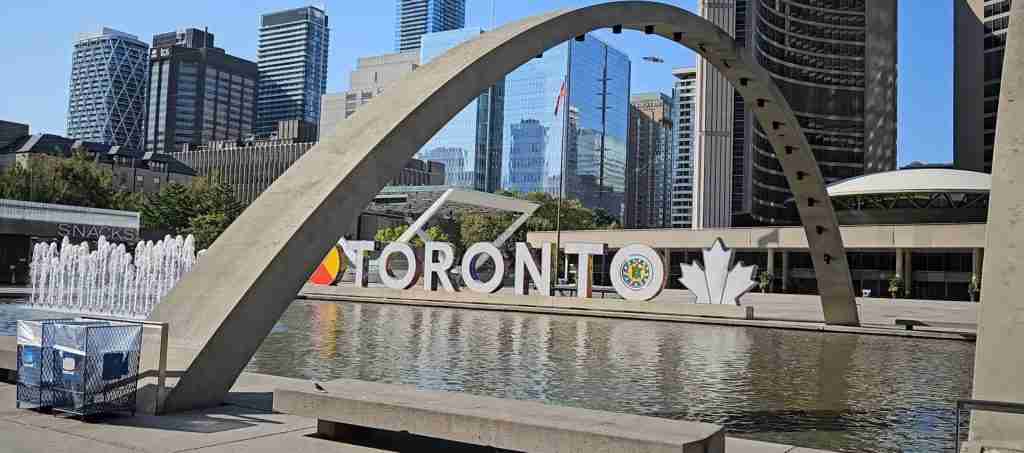
Nathan Phillips Square’s skating rink, directly in front of City Hall’s iconic curved towers, operates throughout winter as Toronto’s most picturesque outdoor skating venue. The rink offers free admission, with skate rentals available for CAD $15 ($11) for two-hour sessions. The square’s location in the heart of downtown allows skating combined with nearby attractions including the Eaton Centre shopping complex, St. Lawrence Market, and the Toronto Sign photo opportunity, making it an easy addition to winter itineraries.
December hotel rates transition from fall’s moderate pricing to winter lows, with mid-range properties charging CAD $140-220 ($105-165) nightly early in the month. However, the final week of December through New Year’s sees rates spike to CAD $250-400 ($185-295) as holiday travelers and New Year’s Eve visitors create a brief peak-season surge. The smartest December timing targets the first three weeks, avoiding both the late-December premium pricing and the extreme cold that typically arrives after New Year’s.
January delivers winter’s harshest conditions, with average temperatures plunging to -7°C to -1°C (19°F to 30°F) and overnight lows frequently dropping to -15°C to -20°C (-5°F to -4°F). Arctic outbreaks can send temperatures below -25°C (-13°F) for several consecutive days, with wind chill making outdoor conditions genuinely dangerous for extended periods. During these cold snaps, outdoor tourism becomes impractical—walking more than 10-15 minutes between destinations risks frostbite on exposed skin, and even locals limit outdoor time to essential errands.
The extreme cold redirects tourism toward indoor attractions, which fortunately Toronto provides in abundance. The Royal Ontario Museum, Art Gallery of Ontario, and Bata Shoe Museum offer world-class collections accessible entirely indoors with underground or enclosed walkway connections to nearby subway stations. The PATH network, Toronto’s underground pedestrian system, connects downtown buildings across 30 kilometers (19 miles) of climate-controlled corridors, allowing shopping, dining, and business activities without outdoor exposure.
Ripley’s Aquarium thrives in winter when families seek indoor entertainment and international tourists desire attractions unaffected by outdoor conditions. The aquarium’s walk-through tunnels, touch tanks, and daily dive shows maintain identical quality regardless of weather, with timed-entry tickets helping manage winter weekend crowds when outdoor alternatives disappear. Similarly, the CN Tower’s observation decks deliver spectacular views year-round, with winter’s clear cold air often providing visibility exceeding summer’s hazy conditions.
January hotel rates reach annual lows of CAD $120-180 ($90-135) nightly for mid-range downtown properties, with availability excellent except Martin Luther King Jr. weekend in mid-January when American visitors create brief demand. Budget travelers willing to endure cold conditions find exceptional value—a week-long January stay costs CAD $840-1,260 ($625-935) for accommodation that would require CAD $1,750-3,150 ($1,295-2,335) in summer, a difference exceeding many visitors’ total flight costs.
Winterlicious, scheduled for January 30 through February 12, 2026, represents Toronto’s premier winter cultural event. This two-week dining festival offers three-course prix fixe menus at over 200 participating restaurants for CAD $25-75 ($18-55) depending on restaurant tier, providing access to Toronto’s top dining establishments at 40-60% below regular menu pricing. Michelin-recognized restaurants participate alongside neighborhood favorites, creating opportunities to experience upscale dining without premium costs.
Reservations open approximately two weeks before the festival begins, with popular restaurants filling rapidly. Strategic diners book weekday lunches which offer identical quality at lower price points than dinners (lunch menus cost CAD $20-45 / $15-33 versus dinner at CAD $30-75 / $22-55). The festival extends beyond mere discounts to introduce prix fixe structure encouraging diners to try restaurants they might otherwise skip, while restaurants benefit from off-season traffic during the year’s slowest dining period.
February maintains January’s cold temperatures, averaging -7°C to -1°C (19°F to 30°F), while daylight begins extending noticeably from January’s 9-hour minimum toward March’s 11 hours. The psychological impact of increasing daylight exceeds the modest temperature changes, as brighter afternoons make winter feel less oppressive despite continued cold. Snow accumulation peaks in February with 25-30 centimeters (10-12 inches) typical, requiring the city’s 1,500 snowplows and salt trucks to maintain road and sidewalk accessibility.
Winter sports activities thrive in February, with cross-country skiing in High Park and snow tubing at Centennial Park attracting both locals and visitors. The city maintains groomed ski trails in larger parks when snow conditions permit, though unreliable snow cover some winters reduces skiing opportunities. Ice fishing on Toronto’s harbourfront remains prohibited for safety reasons, but nearby Lake Simcoe and other regional waters draw dedicated ice fishers willing to travel 45-60 minutes north.
February hotel rates remain at winter lows of CAD $120-200 ($90-150) nightly, with Presidents’ Day weekend (third Monday in February) creating modest demand from American visitors but nothing approaching summer peaks. Family Day (third Monday in February, a provincial holiday in Ontario) generates domestic tourism as locals use the long weekend for city breaks, but hotel availability remains strong and rates stable.
Winter’s value proposition ultimately depends on cold tolerance and travel priorities. Visitors prioritizing budget efficiency, avoiding crowds, accessing restaurants without reservations, and experiencing Toronto’s festive and cultural programming find winter rewarding despite weather challenges. Those requiring warm outdoor activities, beach access, or extensive walking tours should target other seasons. The 50-100% cost savings versus summer create opportunities to extend stays, upgrade hotels, or allocate budgets toward experiences rather than basic accommodation—meaningful advantages for budget-conscious travelers.
Crowd Levels and Tourism Patterns by Season 2026
Toronto’s tourism flows create distinct high, shoulder, and low seasons affecting attraction accessibility, hotel availability, restaurant reservations, and overall navigation ease through the city. Understanding these patterns allows strategic timing to either embrace crowds as part of the experience or deliberately avoid them through off-peak scheduling.
Summer (June-August) represents absolute peak season, with daily visitor counts reaching maximum levels particularly during major events. FIFA World Cup weeks in June-July bring estimated 300,000+ visitors beyond normal summer tourism, creating the most crowded conditions in Toronto’s modern history. World Cup attendees concentrate around BMO Field, Fan Festivals in downtown zones, and popular restaurants near stadiums, but the impact disperses citywide as these visitors also tour CN Tower, visit museums, and explore neighborhoods between matches.
Pride Toronto weekend (June 25-28) attracts over one million participants to a concentrated geographic area spanning the Church-Wellesley Village and downtown core. The Pride Parade route along Yonge Street becomes impassable during the 3-4 hour parade duration, with sidewalks packed 15-20 people deep at popular viewing points. Hotels within walking distance of the Village book solid 6-12 months in advance, while restaurants require reservations days ahead for Friday-Sunday evening dining. The intensity of Pride weekend crowds exceeds even FIFA World Cup levels within the specific neighborhoods hosting events, though the geographic concentration means visitors staying outside the core experience minimal impact.
Toronto Caribbean Carnival’s Grand Parade transforms Lakeshore Boulevard into a moving celebration with over 100,000 direct participants and 500,000+ spectators lining the route. The parade creates localized gridlock along the lakeshore for 6-8 hours, making areas near Exhibition Place and Liberty Village virtually inaccessible by vehicle while transit provides dedicated service. Hotels near the parade route charge premium rates and book quickly, though properties even 3 kilometers away maintain normal availability and pricing.
Beyond major events, summer weekend crowds at attractions follow predictable patterns. The CN Tower experiences peak congestion Saturday-Sunday 12:00-4:00 PM, with timed entry tickets sold out by mid-morning and standby lines extending 45-90 minutes. Ripley’s Aquarium faces similar patterns, with the walk-through tunnel nearly shoulder-to-shoulder during weekend afternoons while weekday mornings before 11:00 AM maintain comfortable flows. Casa Loma sees queues developing for the 1.5-hour self-guided tour, particularly when rain eliminates outdoor alternatives and visitors seek covered attractions.
Museums including the Royal Ontario Museum and Art Gallery of Ontario implement crowd management through timed ticketing, but summer Saturdays still result in gallery congestion that diminishes viewing experiences. Weekday visits, particularly Tuesday-Thursday mornings, deliver radically different experiences with spacious galleries allowing leisurely contemplation rather than navigating around tour groups and family clusters.
Restaurant reservations become mandatory during summer for quality establishments, especially waterfront locations with patio seating. Popular neighborhoods including Harbourfront, Distillery District, and Liberty Village require 3-7 day advance bookings for prime Friday-Saturday evening times, while Monday-Thursday maintains somewhat easier access. Walk-in dining remains possible at off-hours (before 6:00 PM or after 9:00 PM) or at more casual establishments, but spontaneous weekend dining at desired restaurants becomes impractical during summer.
The Canadian National Exhibition (August 21-September 7) draws 1.5 million visitors over 18 days, with Saturday-Sunday-Monday attendance reaching 100,000+ daily. Weekday afternoons see considerably lighter traffic, with families and retirees replacing the weekend crush. The CNE’s location at Exhibition Place creates localized impact rather than citywide crowding, though nearby Liberty Village and Harbourfront experience overflow dining and parking pressure.
September initiates shoulder season with a 40% reduction in overall tourism compared to July-August peaks. TIFF brings industry professionals and film enthusiasts who concentrate in specific downtown neighborhoods around theaters, creating localized congestion along King Street West while leaving most of the city at comfortable visitor levels. The festival’s demographic skews older and more culturally focused than summer’s family tourism, resulting in different patterns—brunch reservations become competitive as industry attendees conduct morning meetings, while afternoon attractions experience lighter traffic than summer norms.
Attraction crowds thin noticeably in September as school resumption ends family travel. The CN Tower, Ripley’s Aquarium, and museums operate at 50-60% of summer capacity, allowing walk-up visits without extensive waits even on weekends. Restaurant reservations become easier to secure, with popular establishments accepting bookings 1-3 days ahead rather than summer’s week-plus requirements. The city maintains vibrant energy thanks to TIFF and continued outdoor programming, but navigation becomes considerably more manageable than summer’s peak intensity.
October extends shoulder season conditions through mid-month, with fall color tourism drawing visitors to parks and ravines but overall numbers remaining well below summer. Nuit Blanche creates a single-night crowd surge from sunset October 3 through sunrise October 4, with downtown streets packed as hundreds of thousands wander between art installations. The all-night format spreads crowds across 12 hours rather than concentrating them in typical afternoon windows, though certain popular installations still develop queues.
Thanksgiving weekend (October 11-13, 2026) generates domestic tourism as Canadians visit family, creating brief demand for hotels and restaurants but nothing approaching summer event weekends. Attractions experience modest upticks over the three-day weekend before returning to quiet fall patterns the following week.
November through March represents low season, with international tourism dropping 60-70% from summer peaks. Major attractions still operate full schedules and maintain quality, but visitor densities allow leisurely exploration. Museums’ weekend crowds rarely exceed weekday levels, restaurants accept walk-ins readily, and hotels offer last-minute bookings without difficulty. The exceptions occur during brief holiday periods: late December through New Year’s, Family Day weekend in February, and Spring Break weeks in March when domestic tourism creates temporary upticks.
Winter’s low crowds create trade-offs—some restaurants and attractions reduce operating hours or close for renovations during the slowest January-February weeks, while outdoor programming obviously ceases when temperatures drop below -10°C (-14°F). However, major attractions including CN Tower, Ripley’s Aquarium, ROM, and AGO maintain full operations year-round, and winter visitors benefit from immediate access without any queuing or advance planning.
April and May constitute spring shoulder season, with tourism gradually building from winter lows toward summer peaks. May 23-24’s Doors Open Toronto creates a weekend crowd surge as 150+ buildings offer free access, but overall visitor levels remain 35-40% below July-August. Cherry blossom season in late April draws concentrated crowds to High Park for the 10-14 day bloom window, but the localized nature means visitors staying outside the park area experience no impact.
The clearest crowd pattern emerges when comparing seasonal extremes: a summer Saturday afternoon at CN Tower, Ripley’s Aquarium, or ROM involves 60-90 minute waits, advance ticket requirements, and crowded viewing areas, while an identical Tuesday morning in January provides immediate entry, empty galleries, and leisurely exploration. The difference isn’t subtle—it fundamentally changes the visitor experience from managing logistics and navigating crowds to simply enjoying attractions.
Strategic visitors seeking to avoid crowds entirely should target January-February (excluding holiday weeks), late March, early-to-mid November, or weekday visits during any month. Those willing to embrace crowds as part of Toronto’s energy should time visits during major events when the city operates at maximum intensity—the trade-off of navigation challenges for experiencing Toronto at its most vibrant and culturally active.
Pricing and Accommodation Costs Throughout 2026
Accommodation costs fluctuate more dramatically across Toronto’s seasonal calendar than any other expense category, with downtown hotel rates varying 100-150% between winter lows and summer peaks. Understanding these pricing patterns enables strategic booking that either minimizes costs through off-peak timing or accepts premium rates during optimal weather and event windows. Beyond hotels, seasonal pricing impacts attractions minimally, dining moderately, and transportation not at all, making accommodation the primary budget lever visitors control through timing decisions.
Winter months (January-March excluding holiday weeks) deliver lowest hotel rates of the year. Mid-range downtown properties charge CAD $120-200 ($90-150) per night, with budget options available from CAD $80-140 ($60-105) and luxury hotels discounting to CAD $200-350 ($150-260). These rates reflect the combination of minimal leisure tourism, reduced business travel during winter holidays, and hotels competing aggressively for the limited demand that exists.
Specific January-February deals emerge when hotels launch sales to fill otherwise empty rooms. Properties in entertainment and financial districts, which rely heavily on business travelers during normal periods, offer the steepest winter discounts as corporate travel slows. Conversely, hotels near attractions including CN Tower or Harbourfront maintain somewhat higher rates even in winter, as their proximity to year-round tourism amenities sustains baseline demand international visitors unwilling to navigate winter weather for longer distances.
Late December (Christmas through New Year’s) breaks the winter low-rate pattern, with holiday travelers pushing rates to CAD $250-400 ($185-295) for mid-range properties and CAD $400-700 ($295-520) at luxury hotels. The New Year’s Eve premium proves particularly pronounced, with downtown hotels commanding rates approaching summer peaks despite winter weather. Visitors seeking winter’s budget advantages should avoid December 20-January 5, instead targeting the first three weeks of December or the period after January 6 when rates plummet.
Spring shoulder season (April-May) sees gradual rate increases from winter lows toward summer peaks. April averages CAD $140-220 ($105-165) nightly for mid-range hotels, while May climbs to CAD $160-250 ($120-185) as weather improves and tourism accelerates. Cherry blossom season in late April creates a brief spike for hotels near High Park, but the impact remains localized rather than citywide. Doors Open weekend (May 23-24) generates modest rate increases of 15-20% for the Friday-Saturday nights, but nothing approaching summer event premiums.
Summer (June-August) establishes peak season pricing, with mid-range downtown hotels charging CAD $250-450 ($185-335) per night, budget options reaching CAD $180-280 ($135-210), and luxury properties commanding CAD $400-700 ($295-520). These rates apply throughout summer, not just during major events, as sustained tourism demand from international visitors, domestic travelers, and business conferences keeps occupancy high across all weekends and many weeknights.
FIFA World Cup weeks push rates to extreme levels, particularly for hotels within 10 kilometers of BMO Field or near downtown Fan Festival zones. Properties in Liberty Village, King West, and Entertainment District charge CAD $400-800 ($295-590) nightly during match weeks, with some boutique hotels and luxury properties exceeding CAD $1,000 ($740) for World Cup peak dates. The premium extends beyond match days themselves to include the 2-3 days before and after as visitors arrive early and depart late, creating 7-10 day windows of elevated pricing around each match week.
Visitors planning FIFA World Cup attendance should book hotels 6-12 months in advance to secure reasonable rates and desired locations. Waiting until 2-3 months before matches results in extremely limited availability and rates 150-300% above normal summer pricing. Alternative accommodation including short-term rental apartments near subway lines provides options when traditional hotels become unaffordable, though these also experience World Cup premiums of 80-120% over typical summer rates.
Pride Toronto weekend (June 25-28) generates similar pricing spikes for hotels in Church-Wellesley Village and surrounding neighborhoods. Properties within walking distance of Pride events charge CAD $300-500 ($220-370) for the Friday-Sunday nights, with advance bookings filling rooms 4-8 months ahead. Hotels outside the immediate Pride geography maintain standard summer rates, making properties along subway lines 3-5 kilometers from the Village attractive alternatives for budget-conscious Pride attendees willing to commute 15-20 minutes via transit.
Toronto Caribbean Carnival and Canadian National Exhibition periods maintain standard summer pricing rather than event premiums, as these festivals span multiple weeks and attract primarily regional visitors rather than the international influx of World Cup or TIFF. Hotels near Exhibition Place see modest rate increases of 15-25% during CNE’s 18-day run and Carnival’s Grand Parade weekend, but availability remains strong and advance booking less critical than World Cup or Pride weeks.
Fall shoulder season (September-October) brings welcome rate reductions from summer peaks. September averages CAD $150-250 ($110-185) nightly for mid-range hotels, approximately 30-40% below July-August despite maintaining pleasant weather. TIFF (September) creates a brief spike for hotels in Entertainment District and King West neighborhoods, with rates rising 20-30% over the festival’s 11 days, but properties outside the immediate TIFF zone maintain normal September pricing.
October continues fall shoulder pricing at CAD $150-250 ($110-185) nightly, with Thanksgiving weekend (October 11-13) generating minimal impact beyond a 10-15% uptick for the Saturday night as domestic travelers visit Toronto for the long weekend. Nuit Blanche (October 3 overnight) affects downtown hotel rates modestly, as the all-night format means many attendees avoid overnight stays, instead taking transit home after experiencing the installations.
November initiates the transition toward winter lows, with rates declining to CAD $130-200 ($95-150) as tourism enters its annual trough. American Thanksgiving weekend (November 27-30) creates brief cross-border visitor demand, lifting rates 15-20% for the Thursday-Sunday nights, but availability remains excellent and booking pressure minimal compared to summer events.
Beyond accommodation, other cost categories show seasonal patterns but with less dramatic swings. Attraction admission prices remain fixed year-round: CN Tower observation deck costs CAD $43 ($32) for adults regardless of visit date, Ripley’s Aquarium charges CAD $44 ($32), and Casa Loma maintains CAD $35 ($26) admission whether visiting in July or January. Timed entry requirements tighten in summer but don’t affect base pricing. The Toronto CityPASS, bundling five major attractions for CAD $98 ($72) and valid nine days, provides 40% savings over individual tickets across all seasons.
Restaurant pricing maintains consistency year-round for regular menus, though special events create premium opportunities. Winterlicious (January 30-February 12) offers three-course prix fixe menus at CAD $25-75 ($18-55), providing 40-60% savings versus standard à la carte pricing. Summerlicious (typically July) offers identical structure at identical price points, though the summer edition attracts heavier demand requiring earlier reservations. These dining festivals represent Toronto’s most significant food value windows, allowing upscale dining experiences at mid-range budgets.
Transportation costs remain absolutely fixed across seasons. TTC subway, streetcar, and bus rides cost CAD $3.35 ($2.50) per trip year-round, with day passes at CAD $13.50 ($10) and weekly passes CAD $48.25 ($36) regardless of season. UP Express airport rail service maintains CAD $12.35 ($9) adult fares in all months. Taxis and ride-sharing services implement surge pricing during major events and storms, but base fares stay consistent. The seasonal transportation advantage appears in winter’s shorter wait times and summer’s extended service hours rather than pricing variations.
The cumulative effect of seasonal pricing creates dramatic total trip cost differences. Calculate a five-night Toronto visit for two people in mid-range accommodation with moderate dining and standard attractions:
Summer Peak (July): Accommodation CAD $1,750 (CAD $350 × 5 nights), attractions CAD $380, dining CAD $700, transport CAD $100. Total approximately CAD $2,930 ($2,170) per couple.
Winter Low (February): Accommodation CAD $750 (CAD $150 × 5 nights), attractions CAD $380 (unchanged), dining CAD $400 (Winterlicious savings), transport CAD $100. Total approximately CAD $1,630 ($1,210) per couple.
The CAD $1,300 ($965) difference represents 44% savings by selecting February over July, exclusively from accommodation and dining discounts while accessing identical attractions. For international visitors, this difference often exceeds round-trip flight costs, making seasonal timing the single most impactful budget decision available.
Strategic booking approaches maximize value within chosen seasons. Book summer accommodation 3-6 months advance for best selection and moderate rates—waiting until 4-6 weeks before peak summer dates results in 30-50% premiums over early-bird pricing. Winter and shoulder seasons allow flexible booking as late as 2-4 weeks before travel without significant penalties, and last-minute deals occasionally emerge when hotels discount unsold inventory 7-14 days out. Major event periods (FIFA World Cup, Pride, TIFF) require maximum advance booking of 6-12 months to secure reasonable rates and avoid complete sell-outs.
Alternative accommodation including short-term rental apartments can provide value particularly for groups or longer stays. A two-bedroom condo in neighborhoods including Leslieville, Junction, or Danforth costs CAD $180-280 ($135-210) nightly year-round, sleeping 4-6 people and including kitchen facilities allowing meal preparation to offset dining costs. These alternatives prove most valuable during expensive summer and World Cup weeks when traditional hotels charge maximum rates.
Major Events and Festivals Calendar 2026
Toronto’s 2026 event calendar ranks among the most significant in the city’s modern history, anchored by FIFA World Cup hosting while maintaining established annual festivals that define Toronto’s cultural landscape. This comprehensive calendar details major events across all seasons, enabling strategic planning around specific interests or deliberate avoidance of high-traffic periods.
January 30-February 12: Winterlicious transforms Toronto’s dining scene with prix fixe menus at 200+ restaurants ranging from CAD $25-75 ($18-55) for three-course meals. Participating establishments span casual neighborhood favorites to Michelin-recognized fine dining, creating opportunities to sample Toronto’s diverse culinary landscape at 40-60% savings versus standard pricing. Reservations open approximately two weeks before the festival begins and fill rapidly for popular restaurants. Strategic diners book weekday lunches which offer identical quality at lower price tiers (CAD $20-45 / $15-33) than dinners. The festival activates Toronto’s food culture during the quietest tourism period, making it premier winter attraction for culinary-focused visitors.
Late April (exact dates vary annually): Cherry Blossom Season in High Park peaks when ornamental cherry trees gifted by Japan in 1959 reach full bloom. The exact timing depends on cumulative spring warmth, typically falling between April 20 and May 10, with the bloom window lasting 10-14 days. High Park implements special crowd management during peak bloom, closing sections to vehicles and managing pedestrian flows to protect trees while allowing photography. The blossoms attract tens of thousands of visitors during the short bloom window, making weekday morning visits preferable to weekend afternoon crowds. The cherry trees’ sakura blooms coincide with broader spring emergence across Toronto’s parks, creating citywide displays of flowers and fresh leaves.
May 23-24: Doors Open Toronto grants free public access to 150+ buildings normally closed to visitors, including architectural landmarks, heritage sites, government buildings, private clubs, and cultural institutions. Participants explore Casa Loma’s towers, City Hall’s iconic architecture, historic churches, broadcasting studios, and behind-the-scenes areas of major venues without admission fees. The event requires advance online registration for popular sites to manage capacity, with registration slots filling rapidly when booking opens several weeks before the event. The two-day format allows dedicated architecture enthusiasts to visit 8-12 buildings across the weekend, while casual participants typically tour 3-5 sites combined with other Toronto activities.
June-July (specific match dates TBD): FIFA World Cup 2026 brings six matches to BMO Field as Toronto joins North American host cities for the global tournament. Toronto expects 300,000+ visitors citywide during match weeks, transforming the city into an international destination with Fan Festivals, cultural programming, and viewing parties extending World Cup energy beyond stadium matches. BMO Field capacity of 30,000 means match tickets serve limited audiences, but citywide celebrations welcome all visitors to participate in the historic sporting moment. Hotels near the stadium and downtown fan zones charge premium rates of CAD $400-800 ($295-590) nightly during match weeks, requiring 6-12 months advance booking.
June 25-28: Pride Toronto celebrates LGBTQ+ rights and visibility through Canada’s largest and the world’s second-largest Pride festival. Over one million participants converge on Church-Wellesley Village and downtown core for the festival weekend featuring Trans March (Friday), Dyke March (Saturday), and the massive Pride Parade (Sunday, June 28 at 2:00 PM). The parade transforms Yonge Street into a rainbow-flag-waving celebration as drag queens, community organizations, political leaders, and thousands of marchers demonstrate for equality and visibility. Street festivals fill the Church-Wellesley neighborhood with stages, vendors, and food stalls, while bars and clubs extend hours for dance parties and performances. Hotels within walking distance of the Village require 6-12 months advance booking and charge CAD $300-500 ($220-370) nightly for the weekend.
July-early August: Toronto Caribbean Carnival (Caribana) celebrates Caribbean culture through three weeks of calypso competitions, steel pan shows, waterfront concerts, and costume displays culminating in the Grand Parade. The festival traces its history to 1967 when Caribbean immigrants created Canada’s first Carnival celebration, now grown into North America’s largest Caribbean festival attracting over one million total attendees. The Grand Parade on Lakeshore Boulevard (first Saturday of August) showcases elaborate feathered and jeweled costumes as masqueraders follow DJ sound systems and live performers in a moving celebration lasting 6-8 hours. Spectators view for free along the parade route, while participants pay CAD $150-300 ($110-220) for costume packages depending on elaborateness and band reputation.
August 21-September 7: The Canadian National Exhibition (CNE) fills Exhibition Place’s 192 acres with midway rides, agricultural displays, live entertainment, artisan vendors, and diverse food offerings. This 143-year-old fair attracts 1.5 million visitors over its 18-day run, with weekends drawing particularly intense crowds while weekday afternoons maintain comfortable attendance levels. Daily admission costs CAD $22 ($16) adults, with ride passes adding CAD $45-60 ($33-44) for unlimited access. The CNE’s waterfront location combines easily with nearby Harbourfront Centre or Liberty Village, allowing 3-4 hour fair visits integrated into broader Toronto explorations.
September (11 days, dates TBD): Toronto International Film Festival (TIFF) premieres 300+ films across multiple downtown venues, attracting international stars, industry professionals, and film enthusiasts to Canada’s largest city. TIFF ranks among the world’s most important film festivals, launching major Hollywood releases alongside independent cinema, international features, and Canadian productions. Red carpet premieres at Roy Thomson Hall and Princess of Wales Theatre create celebrity sightings, while public ticket packages allow general attendance at individual screenings for CAD $20-50 ($15-37). King Street West closes to vehicles during the festival, creating pedestrian zones with outdoor installations and industry parties generating citywide buzz.
October 3 (sunset to sunrise): Nuit Blanche transforms downtown Toronto into a contemporary art installation through this all-night festival activating streets, buildings, parks, and public spaces with free installations, performances, and projections. Hundreds of thousands of visitors wander the city overnight experiencing artworks across three geographic zones—downtown core, midtown, and Scarborough—connected by extended TTC service. The 509 Harbourfront streetcar proves particularly useful for moving between installations, while designated “chill zones” offer low-sensory breaks during the 12-hour art marathon. October overnight temperatures averaging 5-8°C (41-46°F) require layered clothing for comfortable extended outdoor time.
Early November (10 days): The Royal Agricultural Winter Fair fills Enercare Centre with livestock competitions, equestrian shows, agricultural displays, and artisan vendors celebrating rural Ontario culture. The Royal Horse Show serves as a prestigious equestrian competition attracting top international riders and qualifying for World Cup standings. Admission costs CAD $20-30 ($15-22) adults, with evening performances commanding premium pricing. The fair brings rural traditions into downtown Toronto, creating cultural intersections between the city’s urban character and Ontario’s agricultural heritage.
Late November-December 22: Distillery District Christmas Market transforms the historic cobblestone streets into a European-style holiday market with artisan vendors selling handcrafted gifts from wooden chalets. Food stalls offer roasted chestnuts, mulled wine, German sausages, and seasonal treats, while the Trinity Street stage hosts live music performances. The entire district sparkles with overhead lights and decorated Christmas trees, creating festive atmosphere with free admission. Weekday evening visits deliver full holiday ambiance with easier movement than weekend crowds when the compact district fills shoulder-to-shoulder during peak afternoon and evening hours.
Beyond these major festivals, Toronto maintains continuous cultural programming: Harbourfront Centre hosts free outdoor concerts and performances April-September, the Toronto Blue Jays baseball season runs April-September with home games at Rogers Centre, Toronto Maple Leafs and Toronto Raptors play October-April (hockey) and October-June (basketball) at Scotiabank Arena, and neighborhood festivals activate communities throughout summer including Taste of the Danforth (Greek), Salsa in Toronto Festival, and numerous cultural celebrations.
The dense event calendar creates opportunities to align visits with specific interests—World Cup for sports enthusiasts, TIFF for film lovers, Pride for LGBTQ+ celebration, Caribana for Caribbean culture, or Winterlicious for culinary experiences. Conversely, visitors seeking quiet Toronto exploration without event crowds should target November, early December, January-February (excluding Winterlicious), late March, or early-to-mid May when major festivals pause and the city operates at baseline tourism levels.
Weather-Based Activity Planning for 2026
Toronto’s seasonal weather extremes require activity planning that matches outdoor, transitional, and indoor options with temperature and daylight conditions. Each season offers distinct advantages when activities align properly with weather capabilities, while mismatches create frustration—attempting extensive outdoor exploration during -15°C (-5°F) January cold snaps proves miserable, just as spending sunny 25°C (77°F) September afternoons exclusively in museums wastes optimal conditions.
Summer (June-August) maximizes outdoor activity accessibility with warm 21-27°C (70-81°F) temperatures, 15+ hour daylight windows, and minimal precipitation beyond afternoon thunderstorms. Toronto Islands become prime destinations, accessible via 15-minute ferries from Harbourfront departing every 15-30 minutes. The Islands offer car-free paths for cycling, beaches for swimming (Lake Ontario water reaches 18-20°C / 64-68°F by July), picnic areas with skyline views, and escape from urban heat and noise. Ward’s Island Beach and Hanlan’s Point provide the city’s only significant beach access, making them invaluable summer assets during heat waves.
Harbourfront Centre activates its waterfront campus with free outdoor programming including concerts, dance performances, cultural festivals, and art installations that require no tickets or advance planning. The Martin Goodman Trail extends 56 kilometers (35 miles) along Lake Ontario’s waterfront, connecting beaches, parks, and neighborhoods through dedicated cycling and walking paths. Summer cyclists enjoy the trail without winter’s ice hazards or spring’s flooding, making bike rentals practical for exploring distant neighborhoods including Beaches, Leslieville, and Bluffs without transit dependence.
High Park’s 161 hectares (398 acres) provide hiking trails, gardens, playgrounds, and Grenadier Pond for peaceful nature immersion within city limits. Summer weekends see the park filled with families, sports leagues, and picnickers, while weekday mornings maintain quieter conditions for contemplative walks. The park’s zoo area houses bison, deer, peacocks, and other animals with free admission year-round, making it valuable family activity requiring zero budget allocation.
Patio dining defines Toronto summer culture, with restaurants across neighborhoods opening outdoor seating that often doubles or triples capacity. Waterfront patios in Harbourfront, Liberty Village, and Distillery District provide Lake Ontario breezes and sunset views, while Kensington Market and Queen West offer street-level people-watching. Summer patio reservations require advance booking for prime Friday-Saturday evening times, but weekday lunches and early dinners (before 6:00 PM) maintain walk-in accessibility.
Summer afternoon thunderstorms, most common in July, require flexible planning. Weather apps provide reasonable 2-4 hour forecasts allowing strategic scheduling—plan outdoor activities for mornings when thunderstorms rarely develop, schedule indoor museums or shopping for 2:00-5:00 PM when storms typically strike, then return outdoors for evening activities as storms clear and fresh air arrives. This pattern works reliably 70-80% of summer days, though occasional all-day rain events require backup indoor plans.
Fall (September-October) offers optimal conditions for extensive walking and neighborhood exploration. Temperatures of 13-22°C (55-72°F) in September and 6-14°C (43-57°F) in October provide comfortable conditions without summer’s humidity or winter’s cold, while fall colors transform city parks and ravines into spectacular displays mid-October. The Don Valley ravine system, spanning 11 kilometers (7 miles) north-south through Toronto’s east side, showcases peak fall foliage along hiking trails that feel remote despite downtown proximity.
Fall weather stability exceeds spring’s unpredictable patterns, allowing confident day-to-day planning. Morning temperatures requiring light jackets often warm to T-shirt comfort by afternoon, making layers essential but temperature swings predictable rather than erratic. September particularly shines for outdoor activities, combining summer’s warmth with fall’s lower humidity and stable high pressure systems generating consecutive sunny days during Indian Summer periods.
Fall suits photography enthusiasts pursuing golden-hour light and fall color palettes. Toronto’s eastern neighborhoods including Beaches and Leslieville benefit from afternoon light angles that illuminate Lake Ontario and create long shadows across residential streets. Riverdale Park East, positioned on a hill overlooking downtown, provides skyline photography opportunities with fall foliage framing the CN Tower and Financial District towers.
Spring (March-May) presents Toronto’s most challenging season for activity planning due to extreme weather variability. March remains winter in temperature and snow potential, requiring indoor-focused itineraries identical to January-February. April’s transition sees dramatic day-to-day swings from 20°C (68°F) sunny warmth to freezing rain and temperatures barely above 0°C (32°F), making multi-day advance planning unreliable.
May delivers genuine spring with 11-19°C (52-66°F) averages, blooming trees and flowers, and emerging patio season, but morning-to-afternoon temperature swings still reach 10-15 degrees requiring layers. Rain showers develop frequently in May without summer’s predictable afternoon pattern, appearing from partly cloudy skies with minimal warning and lasting 1-3 hours before clearing. Flexible May itineraries work best—plan outdoor activities for mornings when weather typically stays stable, maintain backup indoor options for afternoons if showers develop, and embrace spontaneity rather than rigid scheduling.
Cherry blossom viewing in High Park (late April-early May) represents spring’s premier outdoor activity, though the 10-14 day bloom window requires timing luck. The cherry trees bloom best when sunny days and cool nights create ideal conditions, with the exact dates unpredictable until 7-10 days before based on accumulated spring warmth. Visitors planning spring trips specifically for cherry blossoms should build flexible 7-10 day windows in late April rather than targeting single weekends, as blooms might peak early or late within the typical range.
Winter (December-February) shifts activity focus indoors while maintaining selective outdoor options during moderate cold periods. When temperatures stay above -10°C (14°F), outdoor activities remain feasible for 30-60 minutes at a time with proper clothing—skating at Nathan Phillips Square, walking through Distillery District Christmas Market, or exploring downtown architecture. Below -15°C (-5°F), outdoor time should limit to 10-15 minute intervals moving between heated destinations to prevent frostbite on exposed skin.
The PATH network enables extensive downtown exploration entirely indoors, connecting buildings across 30 kilometers (19 miles) of climate-controlled corridors. PATH links major attractions including CN Tower, Ripley’s Aquarium, and Scotiabank Arena to subway stations, hotels, and the Eaton Centre shopping complex, allowing winter visitors to access significant portions of downtown without outdoor exposure. The system proves invaluable during Arctic cold snaps when outdoor transit waits become dangerous, though the underground corridors lack street-level visual interest.
Winter cultural programming compensates for outdoor limitations: museums expand exhibition offerings, theaters present full performance schedules, and restaurants create cozy atmospheres unavailable during summer’s patio season. The Royal Ontario Museum and Art Gallery of Ontario maintain world-class collections accessible entirely indoors with underground PATH connections, making them premier winter destinations when outdoor alternatives disappear.
Skating at Nathan Phillips Square or Harbourfront’s Natrel Rink provides legitimate outdoor winter recreation during moderate cold (-5°C to -15°C / 23°F to 5°F). These refrigerated rinks maintain ice quality regardless of temperature while remaining open-air, creating authentic winter experiences without backcountry exposure. Both offer skate rentals for CAD $10-15 ($7-11) and operate daily with evening lights extending access beyond daylight hours.
Winter’s 9-hour daylight window (9:00 AM to 6:00 PM in December-January) compresses activity scheduling compared to summer’s 15+ hours. Successful winter itineraries maximize daylight for any outdoor components while reserving morning and evening periods for indoor activities, dining, and entertainment. Planning visits to the CN Tower or outdoor photography for midday 11:00 AM-3:00 PM when light quality peaks makes sense, while saving museum visits, shopping, or food tours for early morning or evening hours when outdoor conditions offer no advantage.
The seasonal activity matching formula centers on alignment: use summer’s warmth and extended daylight for Toronto Islands, waterfront trails, and patio dining; embrace fall’s comfortable temperatures and colors for neighborhood walks and ravine hikes; work within spring’s unpredictability through flexible indoor-outdoor hybrids; and accept winter’s indoor focus while capitalizing on moderate-cold windows for selective outdoor experiences. Misalignment creates frustration, while proper matching allows each season to deliver its specific strengths.
Making Your Final Decision: When to Visit Toronto in 2026
The optimal Toronto visit window depends entirely on your prioritization of competing factors: weather preferences, budget constraints, crowd tolerance, specific event interests, and activity requirements. No single month satisfies all criteria simultaneously—summer delivers peak weather but maximum costs and crowds, winter offers budget rates but challenging cold, while shoulder seasons balance compromises that may or may not align with your specific priorities.
Visit in summer (June-August) if you prioritize warm reliable weather, extended daylight enabling full-day itineraries, maximum event programming including FIFA World Cup and major festivals, waterfront activities requiring comfortable temperatures, and vibrant urban energy matching global cities. Accept that summer requires advance hotel bookings 3-6 months out, premium pricing of CAD $250-450 ($185-335) nightly for mid-range accommodation, restaurant reservations days ahead for quality establishments, and navigation of significant crowds at major attractions and events. Summer suits first-time visitors wanting comprehensive Toronto experiences, weather-sensitive travelers unwilling to risk cold or rain, and those seeking to participate in world-class events impossible to replicate during other seasons.
Visit during September if you want summer’s warmth without summer’s costs or crowds. September combines 18-22°C (64-72°F) average temperatures with 30-40% lower hotel rates than July-August, manageable attraction crowds, readily available restaurant reservations, and TIFF’s cultural programming. Indian Summer periods in early September deliver 25-28°C (77-82°F) warmth exceeding comfort levels of humid July days, while mid-September maintains pleasant conditions before fall’s serious cooling begins. September represents the year’s single best month for visitors seeking balanced weather, value, and accessibility, though it lacks summer’s mega-events like FIFA World Cup or Pride.
Visit in May if you prefer spring emergence, moderate crowds, and shoulder-season pricing while accepting some weather unpredictability. May’s 11-19°C (52-66°F) temperatures allow comfortable outdoor activities, cherry blossoms bloom in High Park, Doors Open Toronto provides free architectural access, and hotel rates stay 35% below summer at CAD $160-250 ($120-185) nightly. The trade-off involves morning-to-afternoon temperature swings requiring layered clothing, occasional rain showers developing with minimal warning, and some cool days unsuitable for prolonged outdoor time. May works well for flexible travelers willing to adjust daily plans based on actual weather rather than following rigid itineraries.
Visit in October for spectacular fall colors, stable pleasant weather, and continued moderate pricing. October’s 6-14°C (43-57°F) average temperatures suit extensive walking and neighborhood exploration, while mid-month foliage displays in ravines and parks create natural beauty peak. Nuit Blanche provides a signature cultural experience, crowds remain well below summer levels, and hotel rates match September’s CAD $150-250 ($110-185) range. October suits visitors prioritizing nature appreciation, photography of fall colors and golden-hour light, and urban exploration without temperature extremes or crowd navigation. The month’s declining daylight (10.5 hours versus summer’s 15+) and cooling temperatures toward month’s end create planning considerations but rarely prove prohibitive.
Visit in winter (December-February) if budget represents your primary constraint and you possess adequate cold-weather clothing and tolerance. Winter hotel rates of CAD $120-200 ($90-150) nightly deliver 40-60% savings versus summer, attractions operate without queues allowing leisurely exploration, Winterlicious provides premium dining at budget prices, and festive programming including Christmas markets and skating creates unique seasonal atmosphere. The essential requirement involves accepting -2 to -7°C (19-28°F) average temperatures with periodic Arctic plunges to -20°C (-4°F) or below, 9-hour daylight windows compressing afternoon activities, and winter storms occasionally paralyzing the city briefly. Winter suits budget travelers willing to invest savings into extended stays or upgraded experiences, visitors from similarly cold climates accustomed to winter conditions, and those interested in seasonal programming unavailable during warmer months.
Avoid summer’s peak July-August weeks if you cannot tolerate crowds, require budget-conscious travel, or prefer exploring neighborhoods and attractions without navigation challenges. These months deliver Toronto at maximum intensity—vibrant and culturally rich but expensive and crowded. Avoid FIFA World Cup weeks specifically if you lack advance hotel bookings, as properties near stadium or fan zones sell out 6-12 months ahead at premium rates of CAD $400-800 ($295-590) nightly.
Avoid late November and March if you want neither winter weather nor winter pricing advantages. These transitional months combine winter’s cold temperatures and short daylight with spring or fall’s higher hotel rates, creating the worst of both seasons without offsetting benefits. November’s 1-7°C (34-45°F) averages and March’s -2 to 4°C (28-39°F) ranges feel unpleasantly cold for extended outdoor time while lacking December-February’s truly wintry atmosphere and festival programming.
Avoid January-February if you require warm outdoor activities, extensive walking tours, or beach access. These months lock outdoor recreation to skating and brief architectural photography sessions, with most tourism necessarily indoor-focused. While museums, theaters, and restaurants deliver quality winter experiences, visitors expecting summer-style daily schedules with 8+ hours of outdoor exploration will face fundamental disappointment.
The strategic approach involves identifying your non-negotiable requirements first, then selecting the season that satisfies those while minimizing compromises on secondary preferences. If warm weather represents a non-negotiable, summer and September are your only realistic options—attempting spring or fall trips hoping for summer-like temperatures courts disappointment. If budget cannot exceed specific thresholds, winter and shoulder seasons become mandatory regardless of weather compromises. If experiencing FIFA World Cup represents the trip’s core purpose, June-July timing is predetermined despite premium costs.
For first-time visitors without strong weather preferences or budget constraints, September offers the most balanced introduction to Toronto—warm enough for outdoor exploration, cool enough to avoid summer humidity, affordable enough to extend stays or upgrade hotels, and uncrowded enough to explore freely without advance planning stress. For budget-focused travelers willing to embrace indoor activities, January-February delivers extraordinary value enabling week-long stays at summer weekend pricing. For weather-obsessed visitors demanding reliable warmth, July-August provides 21-27°C (70-81°F) temperatures and extended daylight despite premium costs and crowds.
The months to genuinely consider avoiding include late November (too cold for fall shoulder-season justification), late March (too unpredictable for reliable spring planning), and mid-December through New Year’s (winter holiday premiums without winter low-season value). Every other month offers legitimate advantages for properly aligned visitor profiles, making Toronto a viable year-round destination when expectations match seasonal realities.
Frequently Asked Questions
What is the cheapest month to visit Toronto in 2026?
January and February represent the cheapest months to visit Toronto in 2026, with mid-range downtown hotel rates averaging CAD $120-180 ($90-135) per night compared to summer peaks of CAD $250-450 ($185-335). Avoid the late December holiday weeks (December 20-January 5) when rates spike to CAD $250-400 ($185-295) for New Year’s celebrations. The absolute cheapest windows fall in the first three weeks of January and throughout February excluding Presidents’ Day weekend (February 14-16). Winterlicious dining festival (January 30-February 12) provides additional value with prix fixe restaurant menus at CAD $25-75 ($18-55), saving 40-60% versus regular pricing. Winter’s budget advantages extend beyond accommodation to include minimal attraction crowding, readily available restaurant walk-ins, and the ability to experience Toronto at 40-60% below summer costs while accessing identical museums, theaters, and cultural institutions.
How bad is Toronto weather in winter 2026?
Toronto winter weather (December-February) brings genuinely cold conditions averaging -2 to -7°C (19-28°F), with periodic Arctic outbreaks dropping overnight temperatures to -20°C (-4°F) or below and wind chill creating dangerous conditions for exposed skin. However, winter experiences significant variability—some days reach 5°C (41°F) with sunshine feeling almost springlike, while others remain locked below -10°C (14°F) all day. Snowfall totals 108-122 centimeters (43-48 inches) seasonally but falls in multiple smaller storms rather than continuous cover, with the city’s extensive plow and salt operations maintaining road and sidewalk accessibility. Indoor activities dominate winter tourism as the PATH underground pedestrian network connects 30 kilometers (19 miles) of climate-controlled corridors linking major attractions, hotels, and transit. Outdoor time limits to 10-15 minute intervals during extreme cold spells but extends to 30-60 minutes when temperatures moderate above -10°C (14°F). Winter suits visitors with quality cold-weather gear including insulated boots, heavy coats, gloves, and hats, while those lacking proper clothing or coming from warm climates should target spring, summer, or fall instead.
Will FIFA World Cup 2026 make Toronto too crowded to visit?
FIFA World Cup creates Toronto’s most crowded conditions in modern history during match weeks (June-July 2026), but the impact concentrates geographically and temporally rather than affecting the entire city for the full summer. Toronto hosts six World Cup matches at BMO Field, with each match bringing 30,000+ stadium attendees plus an estimated 300,000+ total visitors citywide during match weeks when international tourism, media presence, and cultural programming peak simultaneously. Hotels within 10 kilometers of BMO Field or near downtown Fan Festival zones charge CAD $400-800 ($295-590) nightly during match weeks and require 6-12 months advance booking, making spontaneous visits impractical. However, neighborhoods beyond the immediate World Cup geography—including Distillery District, Leslieville, Beaches, and areas north of Bloor Street—maintain relatively normal operations with standard summer crowds and pricing. Strategic visitors can experience World Cup energy by attending Fan Festivals and cultural programming while staying in properties 5-8 kilometers from epicenters, commuting 20-30 minutes via transit and saving 50-70% on accommodation. Alternatively, visitors prioritizing traditional sightseeing and relaxed exploration should avoid June-July entirely, instead targeting September or May when Toronto operates at comfortable crowd levels without World Cup’s logistical challenges.
What should I pack for Toronto in spring 2026?
Spring packing (March-May 2026) requires maximum versatility due to extreme weather variability spanning from late-winter snow to early-summer warmth within the same trip. Essential items include: layering system with T-shirts, long-sleeve shirts, sweaters, and light jacket allowing adaptation to 10-15 degree temperature swings within single days; waterproof rain jacket for May’s frequent showers developing from partly cloudy skies with minimal warning; comfortable waterproof walking shoes as spring rain and melting snow create wet sidewalks and trails; umbrella compact enough for daily carry; sunglasses and sunscreen for increasingly strong spring sun at Toronto’s 43°N latitude; light scarf or buff providing neck warmth during cool mornings without bulk. March specifically requires full winter gear including heavy coat, insulated boots, gloves, and hat as temperatures average -2 to 4°C (28-39°F) with frequent snowfall. April transitions to spring jacket, lighter boots, and eliminating heavy winter items, while May allows summer-weight clothing supplemented with sweaters for cool evenings. The strategic approach involves packing for the coldest possible conditions (March snow if traveling that month, April rain if visiting later) while leaving room for warm-weather options since spring often delivers surprising warmth. Checking detailed 10-day forecasts one week before departure helps refine packing to actual expected conditions rather than seasonal averages.
Is September better than July for visiting Toronto in 2026?
September objectively surpasses July for most visitor profiles when comparing weather quality, pricing, crowds, and overall accessibility, with July maintaining advantages only for those specifically targeting summer mega-events or requiring absolute warmest temperatures. September delivers average temperatures of 13-22°C (55-72°F) versus July’s 18-27°C (64-81°F)—a modest 4-5 degree difference that many visitors actually prefer as September’s lower humidity makes similar temperatures feel more comfortable than July’s Lake Ontario moisture. September hotel rates average CAD $150-250 ($110-185) nightly compared to July’s CAD $250-450 ($185-335), providing 30-40% savings that multiply across multi-night stays. Attraction crowds thin significantly in September as family travel ends with school resumption, delivering 30-60 minute wait reductions at major sites like CN Tower and Ripley’s Aquarium. Restaurant reservations become easier to secure with 1-3 day advance booking versus July’s week-plus requirements for quality establishments. September maintains TIFF’s cultural programming rivaling summer festivals while avoiding July’s peak congestion from Toronto Caribbean Carnival and approaching Canadian National Exhibition. The primary July advantage centers on specific major events—if experiencing summer festivals represents your core motivation, July becomes mandatory despite trade-offs. Otherwise, September’s combination of pleasant weather, reasonable costs, manageable crowds, and cultural offerings makes it superior for general Toronto exploration and first-time visitor experiences.
Can you swim in Lake Ontario during summer 2026?
Lake Ontario swimming becomes feasible at Toronto Islands beaches during July-August when water temperatures reach 18-20°C (64-68°F), though the experience differs significantly from tropical beach destinations. Ward’s Island Beach and Hanlan’s Point provide Toronto’s only significant beach access, with sandy shores, designated swimming areas supervised by lifeguards during summer months, and stunning downtown skyline views across the harbor. Water quality varies based on recent rainfall and wind patterns, with Toronto Public Health conducting daily testing and posting swimming advisories when bacteria levels exceed safe thresholds—typically after heavy storms when stormwater runoff affects nearshore water. Beach season officially runs late June through early September, with peak swimming conditions in July-August when both air and water temperatures maximize. Early June and late September see air temperatures suitable for beach visits (20-25°C / 68-77°F) but water remains uncomfortably cold at 12-16°C (54-61°F), limiting swimming to brief dips rather than extended recreation. The Islands beaches attract significant crowds on summer weekends and holidays, with ferries from Harbourfront departing every 15-30 minutes but occasionally reaching capacity during peak afternoon hours. Strategic beach visitors target weekday visits or early weekend mornings before 11:00 AM when sand space and water access remain comfortable rather than crowded shoulder-to-shoulder conditions of weekend afternoons.
How much does a week in Toronto cost in different seasons 2026?
A week-long Toronto visit for two people in mid-range accommodation with moderate dining and standard attractions demonstrates dramatic seasonal cost variations. Summer peak (July) totals approximately CAD $4,335-5,735 ($3,210-4,245) per couple: accommodation CAD $1,750-3,150 (CAD $250-450 × 7 nights), attractions CAD $760, dining CAD $1,400 (CAD $200 per day), local transportation CAD $195, entertainment CAD $230. Winter low (February) costs approximately CAD $3,115-3,535 ($2,305-2,615) per couple: accommodation CAD $840-1,260 (CAD $120-180 × 7 nights), attractions CAD $760 (unchanged), dining CAD $1,000 (Winterlicious savings), local transportation CAD $195, entertainment CAD $320. Shoulder seasons (May or September) average approximately CAD $3,610-4,240 ($2,670-3,140) per couple: accommodation CAD $1,120-1,750 (CAD $160-250 × 7 nights), attractions CAD $760, dining CAD $1,260, local transportation CAD $195, entertainment CAD $275. These calculations exclude international flights but include all in-destination expenses. The seasonal difference between summer peak and winter low reaches CAD $800-2,620 ($590-1,940) per couple for identical trip length, representing savings of approximately 19-46% by selecting February over July. Budget travelers can reduce costs further through hostel accommodation (CAD $40-80 / $30-60 per person nightly), grocery shopping for some meals, free attractions including beaches and parks, and walking rather than transit for nearby destinations. Luxury travelers spending CAD $500-800 ($370-590) nightly on hotels and CAD $300+ ($220+) daily on fine dining can expect summer week totals approaching CAD $15,000-20,000 ($11,000-14,800) per couple versus winter at CAD $8,000-12,000 ($5,920-8,880).
What are the best neighborhoods to stay in Toronto for first-time visitors 2026?
Entertainment District and Harbourfront provide optimal locations for first-time Toronto visitors prioritizing walkable access to major attractions, though each offers distinct advantages. Entertainment District centers around King Street West between Spadina Avenue and University Avenue, positioning guests within 10-15 minute walks of CN Tower, Ripley’s Aquarium, Scotiabank Arena, Rogers Centre, TIFF Bell Lightbox, St. Lawrence Market, and Distillery District. The neighborhood delivers urban energy with theaters, restaurants, and nightlife creating 24-hour activity, though weekend nights can feel loud for sleep-sensitive travelers. Mid-range hotels charge CAD $180-300 ($135-220) nightly in shoulder seasons and CAD $280-500 ($210-370) in summer, with proximity justifying premiums over outer neighborhoods. Harbourfront positions along Lake Ontario’s waterfront south of Queen’s Quay, offering Toronto Islands ferry access, waterfront trails, Queens Quay Terminal shopping, and spectacular lake views. The area feels more relaxed than Entertainment District with less nightlife but superior outdoor recreation access, making it preferable for families and active travelers. Alternative neighborhoods worth considering: Downtown Yonge-Dundas provides maximum transit connectivity and Eaton Centre shopping but lacks distinct character; Yorkville delivers luxury shopping and upscale dining in a refined neighborhood commanding premium hotel rates; Church-Wellesley offers LGBTQ+ cultural focus and central location perfect for Pride weekend visitors; King West/Liberty Village provides trendy restaurants and bars appealing to younger visitors willing to commute 10-15 minutes to major attractions. Avoid staying near airports or in distant suburbs—Toronto’s sprawl means properties 15+ kilometers from downtown require 45-60 minute transit commutes that waste vacation time better spent exploring the city.
Does Toronto require advance booking for attractions in 2026?
Summer (June-August) and major event weekends require advance booking for Toronto’s most popular attractions, while winter and shoulder seasons allow spontaneous walk-up visits with minimal queuing. CN Tower observation decks implement timed entry during summer, with peak afternoon slots (12:00-4:00 PM) often selling out days in advance on weekends and same-day by 10:00 AM on weekdays. Booking 3-7 days ahead for summer visits guarantees desired time slots, though early morning (before 10:00 AM) and evening (after 6:00 PM) windows maintain better same-day availability. Ripley’s Aquarium similarly uses timed entry year-round but summer weekend afternoons book solid, making advance purchases recommended to avoid arriving at sold-out windows and waiting 2-4 hours for the next available slot. Casa Loma accepts walk-ins but summer Saturday-Sunday crowds create 30-60 minute entry queues versus immediate access with advance tickets. Royal Ontario Museum and Art Gallery of Ontario implement timed ticketing that reduces crowding but doesn’t prevent entry—advance booking secures preferred times while walk-ups receive next-available slots, typically within 30-60 minutes during busy periods. Hockey Hall of Fame, Bata Shoe Museum, and smaller attractions rarely require advance booking even in peak summer. Winter and shoulder seasons (September-May excluding holiday weeks) eliminate most booking pressure, with same-day walk-up access normal at all attractions except busiest weekend afternoons. The strategic approach involves purchasing advance tickets for summer top-tier attractions (CN Tower, Ripley’s Aquarium) while remaining flexible for mid-tier sites and winter visits. Toronto CityPASS bundling five major attractions for CAD $98 ($72) provides timed-entry benefits while saving 40% versus individual admission, making it valuable for first-time visitors planning to hit multiple top sites during a 3-5 day stay.
How does Toronto weather in 2026 compare to other Canadian cities?
Toronto ranks among Canada’s warmest major cities due to its southerly latitude (43.7°N) and Lake Ontario’s moderating influence, creating milder conditions than Montreal, Ottawa, Calgary, or Edmonton while remaining significantly colder than Vancouver. Winter temperatures in Toronto average -2 to -7°C (19-28°F) compared to Montreal’s -5 to -13°C (23 to 9°F) and Ottawa’s -6 to -15°C (21 to 5°F), making Toronto 3-8 degrees warmer than other Eastern Canadian cities at similar latitudes. Vancouver delivers far milder winters averaging 3-8°C (37-46°F) but experiences persistent rain totaling 168 millimeters (6.6 inches) monthly December-January versus Toronto’s 50-60 millimeters (2.0-2.4 inches), creating trade-offs between temperature and precipitation. Summer heat proves comparable across Canadian cities, with Toronto’s 21-27°C (70-81°F) matching Montreal (21-26°C / 70-79°F), exceeding Vancouver’s cool 13-22°C (55-72°F), and falling below Calgary’s surprising 11-24°C (52-75°F) when Chinook winds warm the prairies. Toronto’s humidity distinguishes it from drier Prairie cities, with Lake Ontario moisture creating muggy conditions during heat waves that Calgary and Edmonton avoid despite similar peak temperatures. The lake effect works both directions seasonally—warming Toronto’s winters compared to inland Ontario while cooling spring afternoons when offshore winds blow, sometimes creating 10°C (18°F) temperature differences between waterfront neighborhoods and areas 15 kilometers inland. Quebec City delivers harsher winters than Toronto with January averaging -8 to -18°C (18 to 0°F), while Halifax matches Toronto’s winter temperatures but adds Atlantic moisture generating more freezing rain and ice storms. Overall, Toronto provides middle-ground Canadian weather—warmer and less snowy than most Eastern and Prairie cities, colder and less rainy than Vancouver, creating four distinct seasons without the extremes of northern or mountain locations.