Peru has so much more to offer than just Machu Picchu. Travelers can find a wide range of activities after visiting the famous Incan citadel. These experiences highlight Peru’s rich culture and stunning landscapes.
Our guide will show you the amazing sights and experiences Peru has to offer. You can explore ancient ruins, lush rainforests, and towering mountains. Each place offers a unique way to discover Peru’s heritage and natural beauty.
Key Takeaways
- Peru offers diverse experiences beyond Machu Picchu
- Multiple regions provide unique cultural and natural attractions
- Travelers can explore archaeological sites, rainforests, and mountain landscapes
- Adventure and cultural immersion are central to Peru travel experiences
- Each region offers distinctive activities for different traveler interests
- Contact us by filling out the trip planner form, our expert travel advisors will work closely with you to create your tailor-made itinerary (Free Service)
Exploring Lima’s Cultural Scene
After visiting Machu Picchu, travelers find themselves in Lima. This city is full of culture and amazing food. It’s a place where visitors can enjoy Lima’s attractions and try the best Peruvian dishes.
Miraflores Coastal District
Miraflores is Lima’s modern side, right by the Pacific Ocean. It has beautiful views and a 7-kilometer walkway called the Malecon. Here, you can see:
- Parque del Amor (Love Park) with its romantic sculpture gardens
- Huaca Pucllana, an ancient pre-Inca archaeological site
- Vibrant shopping centers and contemporary art galleries
Barranco Art District
Barranco is Lima’s bohemian heart, full of art and creativity. It’s a place where you can see:
- Colorful street art and murals
- Contemporary art museums
- Trendy cafes and local craft galleries
World-Class Culinary Experiences
Lima is known worldwide for its food. The city has many top restaurants. Here are a few:
| Restaurant | Ranking | Specialty |
|---|---|---|
| Maido | Top 10 World’s Best | Nikkei Cuisine |
| Centrale | Top 20 Global | Innovative Peruvian |
| Astrid y Gastón | World Renowned | Classic Peruvian Fusion |
Try dishes like ceviche to taste Peru’s flavors. Lima’s food scene is a journey into its culture.
Sacred Valley Adventures
The Sacred Valley in Peru is a journey through Inca history and stunning landscapes. It shows the engineering and culture of the Inca civilization. This region offers an experience as rich as Machu Picchu.
The Sacred Valley is home to many Inca ruins, rivaling famous sites worldwide. Visitors can see the amazing architecture and farming skills of the Incas.
- Ollantaytambo: A living Inca town since the 13th century
- Moray: An experimental farm with unique terraces
- Pisac: An ancient military post with great ruins
- Chinchero: A high-altitude site covering over 100 acres
For those who love archaeology, the Sacred Valley is a goldmine. The terraces at Moray show the Incas’ advanced farming. They prove the Incas knew a lot about farming.
Outdoor lovers can try biking, hiking, and tours. These activities let you see the area’s beauty and history. You can also meet local people and learn about their traditions.
“The Sacred Valley is not just a destination, but a journey through time and culture.” – Andean Travel Experts
The Sacred Valley’s high elevations offer a unique challenge and reward. Its culture and beauty make it a must-see for anyone wanting to learn about Peru’s history.
What to do in Peru after Machu Picchu?
After visiting Machu Picchu, Peru has much more to offer. You can explore diverse landscapes and learn about the Andean culture. There are many ways to discover Peru’s natural beauty and cultural heritage.
Rainbow Mountain Treks: A Colorful Andean Challenge
For those who love hiking, the Rainbow Mountain (Vinicunca) trek is a must. It’s at 5,000 meters high and is full of colors. The trek is challenging but very rewarding.
- 4 hours to reach the summit
- 2 hours for the return trek
- Breathtaking views of multicolored mountain ranges
Exploring Alternative Archaeological Sites
Peru has many archaeological sites beyond Machu Picchu. The Moray site is one of them. It’s an ancient place for growing crops, with unique terraces.
“Each stone tells a story of innovation and agricultural mastery.” – Peruvian Archaeological Researchers
Cultural Immersion Activities
Getting to know local communities is a great way to learn about Peru. You can try:
- Participating in traditional textile workshops
- Learning about indigenous farming techniques
- Experiencing local cooking classes
- Visiting small Andean villages
These activities give you a real look into Peruvian life and traditions.
Discover the Nazca Lines Mystery
The Nazca Lines are a mystery in the desert of southern Peru. They are ancient geoglyphs made by the pre-Inca Nazca culture between 200 B.C. and 500 A.C. They still fascinate researchers and travelers today.
These lines cover 170 square miles and have over 700 figures. They range from simple shapes to detailed animal designs. The desert’s dry climate helps keep them well-preserved, with only about 20 minutes of rain a year.
Exploring Nazca Lines Tours
There are two main ways to see these amazing geoglyphs:
- Scenic Aerial Tours: 75-minute flights offer wide views
- Ground-Level Exploration: Guided walks near certain figures
Archaeological Significance
Many theories exist about the lines’ purpose, including:
- Astronomical calendar
- Agricultural ritual site
- Religious ceremonial ground
| Discovery Detail | Information |
|---|---|
| UNESCO Recognition | World Heritage Site since 1994 |
| Largest Figure | Up to 1,200 feet long |
| Excavation Depth | Approximately 15 inches |
Nazca Lines tours take you on a unique journey. They let you see these incredible ancient geoglyphs that have lasted for centuries.


Experience Lake Titicaca’s Floating Islands
Lake Titicaca is a unique spot for those looking for cultural adventures. It sits high in the Andes, at 3,812 meters above sea level. Here, you can explore indigenous traditions and see floating communities.
Visiting Lake Titicaca gives you a peek into a fascinating cultural world. It’s the highest navigable lake and home to the Uros floating islands. These islands show human creativity and the ability to adapt.
Uros Islands Culture
The Uros floating islands have a history going back to 1500 BC. They are made from totora reeds, creating a special place for the Uros people. This way of life has lasted for centuries.
- Constructed from multiple reed layers
- Home to approximately 120 floating islands
- Traditional lifestyle based on fishing and agriculture
Taquile Island Traditions
Taquile Island is a UNESCO site known for its Andean traditions. It’s 25 kilometers from Puno. Here, you can see amazing textiles and learn about community life.
“On Taquile, every textile tells a story of our ancestors and our connection to the land.” – Local Taquile Artisan
Local Homestay Options
For a real experience, Lake Titicaca tours offer homestays. You can live with locals and learn about their culture and how they live sustainably.
| Island | Key Characteristics | Best Visit Season |
|---|---|---|
| Uros Islands | Reed-based floating community | May-October (Dry Season) |
| Taquile Island | UNESCO Cultural Heritage Site | Year-round |
| Amantani Island | Largest island with traditional temples | May-October |
Our Lake Titicaca tours are guided by experts. They make sure tourism is done right, supporting local communities. You’ll get to see the highest navigable lake and its rich culture.
Adventures in Huacachina Oasis
Huacachina is a hidden gem in Peru’s desert. It’s a small oasis, just 5 km from Ica city. It covers about 2 acres.

Huacachina sandboarding is thrilling for those who love adventure. The sand dunes around the oasis are stunning. Visitors can try:
- Sandboarding down massive dunes
- Dune buggy rides across the desert landscape
- Sunset and sunrise hiking experiences
- Photography opportunities in a unique desert setting
Planning a desert adventure? Here are some tips:
| Activity | Cost | Duration |
|---|---|---|
| Sandboarding | $35-$50 | 1 hour |
| Dune Buggy Tour | 25 soles | 1 hour |
| Sandboarding Lessons | 120 soles | 1-2 hours |
Pro tip: Visit Huacachina from January to March. The heat is perfect for exploring the desert.
Getting to Huacachina from Lima is easy. Buses take 4-5 hours. Tuk-tuks from Ica to Huacachina cost about 5-6 soles.
Exploring Cusco’s Ancient Sites
Cusco sits high in the Peruvian Andes, at 11,200 feet above sea level. It’s a living museum of Inca architecture and culture. This ancient capital of the Inca Empire invites travelers to explore its remarkable archaeological wonders.
Our journey through Cusco’s attractions shows the incredible legacy of the Inca civilization. The city’s historical landscape offers a unique look into South America’s most sophisticated ancient culture.
Sacsayhuaman Fortress: A Stone Marvel
The Sacsayhuaman Fortress overlooks Cusco, showcasing Inca architecture at its best. This massive complex has incredible stonework, with blocks that fit together without mortar. Visitors can marvel at:
- Massive stone walls weighing up to 125 tons
- Zigzag defensive design representing lightning
- Stunning panoramic views of Cusco
Qorikancha Temple: The Golden Sanctuary
Qorikancha (Temple of the Sun) was once the most important temple in the Inca Empire. Spanish conquistadors built the Santo Domingo Church on top of it. This creates a remarkable architectural fusion.
San Blas Neighborhood: Artisan’s Haven
The San Blas neighborhood offers a glimpse into contemporary Cusco culture. Narrow cobblestone streets wind past colonial-era buildings. Local artisan workshops continue centuries-old craft traditions.
“Cusco is not just a destination, but a living connection to an extraordinary civilization.” – Peruvian Cultural Historian
Paracas National Reserve and Ballestas Islands
The Paracas National Reserve is a gem along Peru’s coast. It was set up in 1975 to protect a vast 3,350 km² area. This place is where desert meets ocean in a stunning way.
The Ballestas Islands, nearby, are a treasure trove of wildlife. They are known as the “Poor Man’s Galapagos” for their rich biodiversity. These islands are home to many marine animals, making Paracas a wildlife paradise.
- Home to over 150 marine bird species
- Sanctuary for thousands of seabirds
- Shelter for hundreds of sea lions
- Habitat for Humboldt penguins
Exploring this ecosystem is easy with guided boat tours. These tours last about 2 hours and cost between $10-$15. You’ll see amazing wildlife, including:
| Wildlife Species | Population/Characteristics |
|---|---|
| South American Fur Seal | 250,000 individuals |
| Humboldt Penguin | Vulnerable conservation status |
| Andean Flamingo | Rare species |
Don’t miss the Candelabro geoglyph, a huge ground drawing you can see from the boat. It’s located just 240 km south of Lima. Paracas offers a unique adventure that connects you with nature.
Colca Canyon Trek and Condor Spotting
Colca Canyon is in the heart of Peru’s Arequipa region. It’s a deep canyon, almost twice as deep as the Grand Canyon. This makes it perfect for hiking and seeing wildlife.
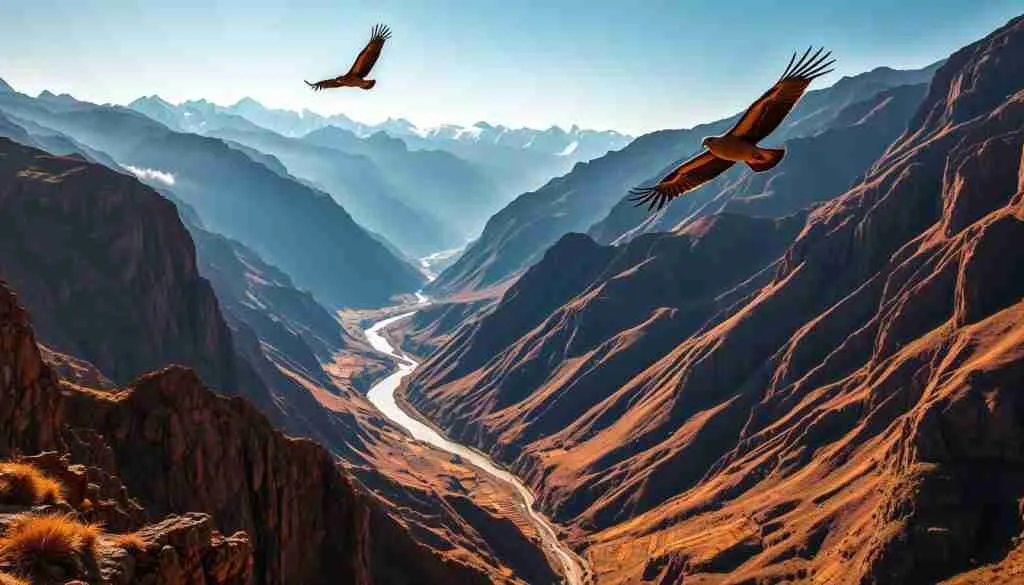
For those who love nature, Colca Canyon is a top choice. It’s known for its stunning views and the chance to see Andean condors flying high.
Best Hiking Routes
Colca Canyon has hikes for everyone:
- Sangalle Route: 8km easy trek (2-3 hours descent)
- Western Loop Trail: 25km challenging route for experienced hikers
- Cabanaconde to Llahuar: Challenging 28km round trip
Wildlife Viewing Spots
The canyon is great for seeing Andean condors with their huge wings. The Cruz del Condor viewpoint is the best place to see them.
Local Village Visits
Visiting local villages like Cabanaconde lets you see real Andean life. You can learn about their culture and traditions.
The best time for hiking in Colca Canyon is from May to October. The weather is clear, and you can see wildlife better.
Northern Peru’s Hidden Treasures
Northern Peru is a hidden gem for those looking for unique travel experiences. It’s a place where ancient ruins, diverse landscapes, and rich culture await. It’s more than just Machu Picchu.
The archaeological sites in Northern Peru are truly amazing. Visitors can see incredible ruins that show the history of ancient civilizations:
- Chan Chan: The world’s largest mud-brick citadel
- Kuelap Fortress: Often called the “Machu Picchu of the north”
- Huacas de Moche: Impressive temple complexes
- Caral Pyramids: One of the oldest civilizations in the Southern Hemisphere
Travelers can find unique experiences that highlight the region’s rich history. The Tumbas Reales Museum in Lambayeque is a must-see. It showcases the golden treasures of the Lord of Sipán, a major archaeological find in Latin America.
| Archaeological Site | Historical Significance | Age |
|---|---|---|
| Caral | Oldest civilization in Southern Hemisphere | 5,000 years old |
| Chankillo | Oldest solar observatory in South America | 2,300 years old |
| Chan Chan | Largest pre-Columbian city in America | 900-1400 AD |
Northern Peru is also home to stunning natural landscapes. The Chaparri Ecological Reserve protects rare animals like spectacled bears and condors. Don’t miss the Gocta Waterfall, one of the world’s tallest at 771 meters.
“Northern Peru is a treasure trove of hidden gems waiting to be discovered by adventurous travelers.” – Peruvian Tourism Board
Our expert guides lead you on an unforgettable journey. They connect you with the local culture and breathtaking landscapes. These places are off the beaten path, waiting for you to explore.
Amazon Rainforest Expeditions
Peru’s Amazon rainforest is a stunning wilderness full of life. Our Peru Amazon tours take you deep into this incredible world. It’s one of the most diverse places on Earth.
For those looking for unique adventures, the Amazon is perfect. With over 5 days to explore, you’ll see amazing wildlife and learn about different cultures.
Manu National Park: A Biodiversity Hotspot
Manu National Park is a true gem of the rainforest. It’s a UNESCO World Heritage site with:
- Over 1,000 bird species
- 15 different primate species
- Rare mammals like jaguar and giant otter
- Thousands of plant varieties
Wildlife Watching Opportunities
Our expert guides offer amazing wildlife viewing. You can see animals in:
- River safaris
- Canopy walkways
- Night jungle treks
- Photography-focused excursions
“The Amazon is not just a destination, it’s a living, breathing ecosystem waiting to be discovered.” – Renowned Naturalist
Indigenous Community Engagement
Our tours let you meet indigenous communities. You’ll learn about their traditions, conservation, and sustainable living.
Details include comfy accommodations, starting at $9,698 per person. The 9-day journey promises a deep dive into the rainforest.
Conclusion
Peru is a treasure trove of adventures, beyond the famous Machu Picchu. It’s a place filled with culture, natural beauty, and unforgettable experiences. From the sandy coasts to the high mountains and the Amazon rainforest, Peru has it all.
Planning your trip well is crucial to enjoy all Peru has to offer. A two-week journey is perfect to explore its varied landscapes and rich culture. Companies like Voyagers Travel help plan luxury trips, showing you the best of Peru.
Traveling responsibly is important in Peru. Visitors should respect local people, ancient sites, and nature. Exploring the Sacred Valley, trying new foods at Central Restaurant, or seeing the Nazca Lines are all ways to experience Peru’s beauty and culture.
With the right preparation and a sense of adventure, you can make memories that go beyond the usual tourist spots. Peru’s landscapes and culture are waiting to be discovered.
