
Best Luxembourg City Tours 2026: Walking Routes, Casemates & Day Trips
Luxembourg City’s UNESCO-listed fortifications, underground casemates, and dramatic river valleys create one of Europe’s most distinctive urban landscapes for exploration. Tours range from €3 walking experiences through the Old Quarter to full-day countryside excursions visiting medieval castles and hiking Luxembourg’s “Little Switzerland” region, with the city’s completely free public transport network making every corner accessible.
Key Takeaways: Luxembourg City Tours 2026
- Free Walking Tours Start at €3: Budget-friendly guided walking tours depart daily at 11:00 AM from Place d’Armes, covering the Old Quarter, Chemin de la Corniche, and Grund valley with tip-based pricing starting at €3 per person.
- Casemates Underground Access €11-13: The Bock Casemates cost €11 for adults in 2026, while Pétrusse Casemates charge €13, offering 45-minute self-guided explorations through 23 kilometers of UNESCO-protected underground fortress tunnels with panoramic valley viewpoints.
- Luxembourg Card Covers 60+ Attractions: The 1-day (€13), 2-day (€20), or 3-day (€28) Luxembourg Card includes free admission to both casemates, all national museums, nationwide public transport, and entrance to attractions like Vianden Castle, breaking even after three paid sites in a single day.
- Day Trips Reach Vianden and Mullerthal: Full-day countryside tours visit medieval Vianden Castle, Mullerthal’s sandstone rock formations, Beaufort Castle ruins, and Echternach abbey town, departing Luxembourg City at 9:00 AM and returning by 6:00 PM with organized transportation and entrance fees included.
- Official Guided Tours €18-29: Certified Luxembourg City Tourist Office walking tours last 2-3 hours and cost €18-24 for adults, providing professional commentary on fortress history, architecture, and the Old Quarter’s UNESCO designation with group sizes limited to 25 participants.
- Private Tours From €217 Per Group: Customized private walking tours accommodate up to 10 people for €217 total, offering flexible departure times, personalized itineraries focusing on specific interests like photography or history, and exclusive access to local insights unavailable on group tours.
People Also Ask About Luxembourg City Tours 2026
How Much Do Luxembourg City Walking Tours Cost in 2026?
Luxembourg City walking tours cost €3-4 for tip-based community tours, €18-24 for official 2-hour Luxembourg City Tourist Office certified guides, and €29 for specialized 2.5-hour wine tasting tours that include crémant sparkling wine samples. Free self-guided tours using mobile apps cost nothing but lack professional commentary. The most economical option involves the €3 community walking tours departing daily at 11:00 AM from Place d’Armes, where guides work for tips and you pay only what you feel the experience was worth. Official tours provide guaranteed quality with certified local guides, deeper historical context, and structured routes covering all major landmarks within the UNESCO World Heritage site. Private tours start at €217 per group of up to 10 people, working out to approximately €22 per person for five travelers but offering customized schedules and personalized attention.
What’s Included in Bock Casemates Admission in 2026?
Bock Casemates admission at €11 includes 45 minutes of self-guided underground exploration through multilevel fortress galleries, access to embrasures offering views over Grund and Pfaffenthal valleys, an archaeological crypt showing Luxembourg’s 963 foundation, and printed guide materials in four languages. The ticket does not include guided tours, which require separate booking through the Luxembourg City Tourist Office for an additional €13-18. Entry times operate every 15 minutes from 9:45 AM to 5:00 PM final admission, seven days weekly except December 25 and January 1. Visitors with the Luxembourg Card enter free. The underground temperature remains 12°C year-round regardless of surface weather, making light jackets advisable even during summer. Photography is permitted throughout the tunnels. The site is not wheelchair accessible due to steep staircases and uneven historic stonework, though virtual tours are available for visitors with mobility limitations.
Which Day Trip From Luxembourg City Is Best in 2026?
The Vianden Castle and Mullerthal combination day tour represents the best value and diversity, departing Luxembourg City at 9:00 AM and visiting Luxembourg’s most photogenic medieval fortress, the dramatic sandstone rock formations of “Little Switzerland,” Beaufort Castle ruins, and the ancient abbey town of Echternach before returning at 6:00 PM. This 8-hour tour costs approximately €65-85 per person including round-trip transportation in air-conditioned coaches, all entrance fees to castles, a local guide providing historical context, and organized hiking through Mullerthal’s waterfall trails. Alternative day trips focus on specific interests: the Moselle Valley wine tour visits vineyard estates and includes tastings for €70-90, the Battle of the Bulge World War II tour follows General Patton’s route through Luxembourg for €95-120, and the Trier, Germany excursion explores Roman UNESCO sites 45 minutes across the border for €60-75. Solo travelers or couples seeking flexibility can reach Vianden independently using Luxembourg’s free national train and bus network, with the journey taking approximately one hour and castle admission at €13.
Is the Luxembourg Card Worth It for Tours in 2026?
The Luxembourg Card becomes worthwhile when visiting three or more paid attractions in a single day, breaking even at approximately €25-30 in combined admission fees plus public transport value. A typical intensive one-day itinerary using the card might include Bock Casemates (€11), MUDAM modern art museum (€7), National Museum of History and Art (€7), and a day trip to Vianden Castle (€13), totaling €38 in admissions alone before accounting for unlimited train and bus access nationwide. The 1-day card at €13 saves €25 on this itinerary. The 2-day card (€20) suits visitors staying a full weekend and exploring both city attractions and countryside castles, while the 3-day card (€28) works best for travelers using Luxembourg City as a base for multiple day trips to Echternach, Mullerthal, and the Moselle Valley. The card does not cover paid guided tours, restaurant meals, or private tour operators, though it does include free admission to guided visits of certain museums. Travelers focusing primarily on walking the free Old Quarter, enjoying valley views, and dining at restaurants without entering paid museums will find individual ticket purchases more economical than card investment.
Extended multi-day tours – 5+ days
Featured Western Europe Multi-Day Tour Packages
3 days
Western Europe 3-Day Discovery Tour
- ✓ Comprehensive Western Europe experience
- ✓ Expert local guides included
- ✓ All accommodation included
- ✓ Transportation provided
5 days
Western Europe 5-Day Highlights Experience
- ✓ Comprehensive Western Europe experience
- ✓ Expert local guides included
- ✓ All accommodation included
- ✓ Transportation provided
7 days
Western Europe 7-Day Cultural Journey
- ✓ Comprehensive Western Europe experience
- ✓ Expert local guides included
- ✓ All accommodation included
- ✓ Transportation provided
10 days
Western Europe 10-Day Complete Adventure
- ✓ Comprehensive Western Europe experience
- ✓ Expert local guides included
- ✓ All accommodation included
- ✓ Transportation provided
Multi-day tour packages powered by TourRadar. Prices and availability subject to change.
Introduction: Exploring Luxembourg City Through Organized Tours 2026
Luxembourg City’s dramatic three-level topography presents one of Europe’s most challenging urban landscapes for independent navigation, with the UNESCO World Heritage Old Quarter perched 70 meters above the Alzette and Pétrusse river valleys, connected by ancient stone staircases, elevator systems, and winding medieval paths. Organized tours eliminate navigation stress while providing historical context that transforms fortress walls, casemate tunnels, and bridge viaducts from impressive architecture into comprehensible military engineering spanning 11 centuries. The compact 2-square-kilometer UNESCO zone concentrates extraordinary density of fortification history, making guided walking tours the most efficient way to understand how Luxembourg evolved from Siegfried’s 963 cliff-top castle into the “Gibraltar of the North” that withstood 18 sieges before its 1867 dismantlement.
Tours in 2026 operate across four distinct categories serving different budgets and interests. Free and budget walking tours (€3-4) provide essential orientation for first-time visitors arriving with limited time, covering major landmarks in 2 hours without deep historical detail but offering practical geography understanding. Official certified tours (€18-29) deliver professional commentary from Luxembourg City Tourist Office guides trained in fortress architecture, military history, and UNESCO designation significance, with group sizes capped at 25 ensuring question opportunities. Specialized tours (€29-45) focus on themes like wine tasting, photography, Christmas markets, or World War II history, combining walking with specific cultural experiences. Private tours (€217+) customize itineraries for families, photography enthusiasts, or travelers with mobility needs requiring flexible pacing.
The underground casemate systems represent Luxembourg’s most unique tour experience unavailable anywhere else in this configuration. The Bock Casemates tunnel 17 kilometers beneath the Old Quarter at multiple levels, while the Pétrusse Casemates add another 6 kilometers under Constitution Square. These aren’t merely cellar spaces but sophisticated 17th-18th century military galleries carved directly into solid rock, featuring gun emplacements, troop housing chambers, supply storage vaults, and strategic embrasures positioned to defend river valley approaches. Self-guided casemate visits take 45 minutes minimum, though specialized guided tours extend to 90 minutes with detailed military strategy explanations and access to restricted sections not available on general admission tickets.
Day trips from Luxembourg City exploit the nation’s small size and free public transport network to reach countryside destinations within 45-90 minutes. Vianden Castle, perched dramatically above the Our River valley 40 kilometers north, represents Luxembourg’s most Instagram-worthy medieval fortress and makes an ideal half-day excursion. The Mullerthal region’s sandstone rock formations, waterfalls, and forest hiking trails earned its “Little Switzerland” nickname and attracts nature enthusiasts seeking contrast to urban fortifications. Echternach’s Benedictine abbey complex and Moselle Valley wine villages offer cultural depth. Organized day tours bundle these destinations with transportation, entrance fees, and professional guides, while independent travelers using Luxembourg’s free trains and buses can design custom itineraries at lower cost with greater flexibility.
Luxembourg’s official tourism infrastructure maintains exceptionally high standards compared to other European capitals. The Luxembourg City Tourist Office on Place Guillaume II operates seven days weekly, providing maps, booking assistance, and real-time tour availability information. All official tours include rain contingencies, with indoor alternatives prepared for weather disruptions. Guide certification requires passing rigorous examinations covering Luxembourg history, architecture, and multilingual communication. The city’s small size means most walking tours cover 3-5 kilometers maximum, manageable for moderate fitness levels, though the Old Quarter’s steep elevation changes and staircases do require basic mobility. Accessibility-adapted tours exist for wheelchair users and visitors with other mobility limitations, using the Pfaffenthal Panorama Elevator and other barrier-free routes to experience the fortifications without stair climbing.
Tour booking patterns in 2026 show strong demand during May-September peak season, with Saturdays and Sundays requiring advance reservations 3-7 days ahead for popular official tours. Weekday tours typically have same-day availability except during July-August. The Luxembourg Card’s online purchase system allows pre-arrival planning, eliminating tourist office queues on arrival day. Most tour operators accept credit cards, though community walking tours requesting tips prefer cash euros. English dominates tour language offerings, with French, German, and Luxembourgish also common. Specialized language tours in other languages require advance private tour arrangement.
Free and Budget Walking Tours Luxembourg City 2026
Luxembourg City’s budget tour landscape centers on community-run tip-based walking experiences departing daily at 11:00 AM from Place d’Armes, where certified local guides lead 2-hour explorations through the Old Quarter for a suggested €3-5 contribution per person paid at tour conclusion based on satisfaction level. These tours intentionally maintain low barriers to entry, encouraging budget travelers, backpackers, and spontaneous visitors to access professional guidance without financial commitment pressure. The guides sustain themselves through gratuity accumulation rather than fixed fees, creating incentive alignment where tour quality directly determines income.
The standard route begins at Place d’Armes’ bandstand, proceeding through Guillaume II Square past the City Hall and Grand Ducal Palace exterior, then ascending to Chemin de la Corniche for panoramic views over the Alzette valley. Guides explain the “Gibraltar of the North” fortress designation, the 1867 Treaty of London dismantlement, and the UNESCO World Heritage inscription process. The tour descends via ancient staircases into the Grund valley, visiting Neumünster Abbey and explaining the valley’s transformation from military vulnerability to modern residential charm. Participants typically ask questions throughout rather than waiting for designated Q&A periods, creating conversational atmosphere distinguishing these tours from more formal commercial alternatives.
Alternative free tour options include self-guided mobile app experiences using GPS-triggered audio commentary at 25 designated points throughout the Old Quarter. The official Visit Luxembourg City app provides this service at no cost, though users supply their own smartphones and headphones. Audio content totals approximately 90 minutes if visiting all 25 points, though most users sample 8-12 locations matching their interests. The app lacks the real-time question answering and local insight that live guides provide, but offers unlimited time flexibility and the ability to pause, replay, or skip content at will. Families with young children particularly appreciate the self-paced structure allowing ice cream breaks, playground stops, and restroom visits without group pressure.
Budget-conscious travelers can combine free walking with targeted paid admission to select highlights rather than purchasing comprehensive passes. A strategic itinerary might include the free Chemin de la Corniche walk (Luxembourg’s “most beautiful balcony in Europe”), free exploration of the Grund valley streets and cafés, free exterior viewing of the Grand Ducal Palace and Notre-Dame Cathedral, paired with paid €11 admission only to the Bock Casemates as the one attraction impossible to experience externally. This approach totals €11 per person compared to €28 for a 3-day Luxembourg Card, sacrificing interior museum access but capturing the city’s essential character for visitors with limited time or budgets.
College students, solo travelers, and those visiting Luxembourg as a day trip from Brussels or Trier frequently opt for these budget tour formats. The 11:00 AM departure time accommodates travelers arriving on morning trains from neighboring cities, allowing afternoon casemate visits and evening return travel. Groups of friends can request custom departure times with 24-hour advance notice, though morning slots remain standard due to guide availability patterns. The tours operate year-round including winter, with guides adjusting commentary to seasonal contexts—Christmas market history in December, fortress garden blooms in May, summer evening concerts in August.
Official Luxembourg City Tourist Office Guided Tours 2026
The Luxembourg City Tourist Office operates professionally certified guided walking tours at €18 for 2-hour experiences and €24 for 3-hour comprehensive versions, with guides holding official certification requiring examination passage in Luxembourg history, fortress architecture, UNESCO World Heritage site management, and multilingual communication. These tours maintain maximum group sizes of 25 participants, ensuring all attendees hear commentary clearly even in crowded tourist areas and have opportunity for question engagement. Advance booking through the tourist office website or in-person at Place Guillaume II guarantees participation, with online confirmation emails containing meeting point details and guide contact information.
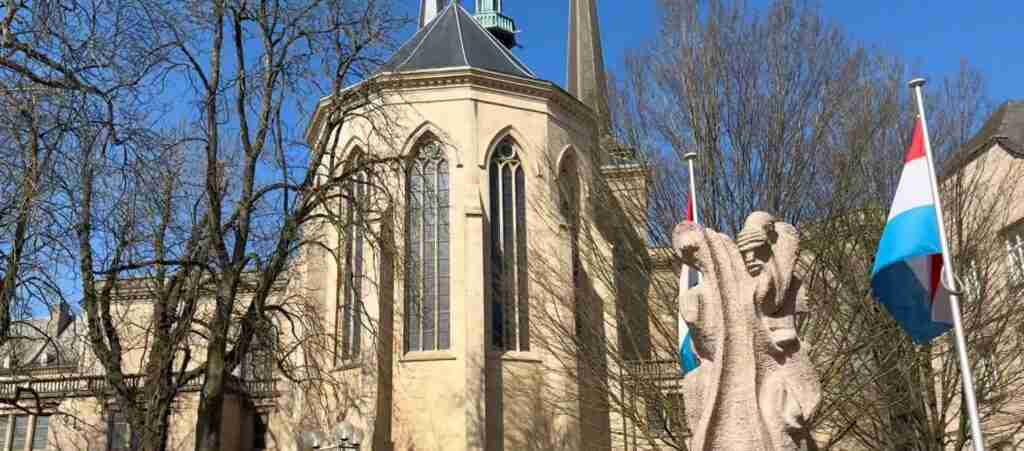
The 2-hour standard tour focuses on the Upper Town UNESCO core, beginning at the tourist office itself on Place Guillaume II before visiting the Grand Ducal Palace exterior (no interior access except during limited August public tours), Notre-Dame Cathedral’s crypt and royal tombs, Place d’Armes’ historical role as medieval arms marketplace, the Gëlle Fra war memorial, Constitution Square’s panoramic viewpoints, and Chemin de la Corniche valley overlook. Guides provide architectural analysis explaining the transition from Romanesque to Gothic to Renaissance styles visible in Old Quarter buildings, discuss Luxembourg’s unique trilingual heritage (Luxembourgish, French, German), and contextualize the fortress’s strategic importance controlling trade routes between France and Germany.
The 3-hour extended tour adds descent into the valleys via the Pfaffenthal Panorama Elevator, exploration of the Grund’s narrow medieval streets and restored Neumünster Abbey cultural center, explanation of the Alzette River’s role in fortress defense, and detailed examination of the remaining fortress walls and towers that survived the 1867-1883 dismantlement period. This version provides more relaxed pacing with photograph opportunities at scenic viewpoints, allowing guides to develop deeper historical narratives rather than rushing through highlight checklists. The extended format suits travelers staying multiple days who want comprehensive city understanding versus rushed day-trippers prioritizing efficiency.
Official tours operate in English at 10:00 AM and 2:00 PM daily March through October, with French tours at 11:00 AM and German tours at 3:00 PM serving continental European visitors. Winter schedules (November-February) reduce to weekends only due to decreased demand, though private group tours remain bookable any day with 48-hour advance notice. The tourist office recommends booking 3-7 days ahead during May-September peak season when Saturday and Sunday tours frequently reach the 25-person capacity limit. Same-day availability exists for most weekday departures except during major European holiday periods (Easter week, summer school vacations in July-August).
Specialized official tours include the “Rocks Coming to Life” underground theatrical experience at €24 for one hour, where actors in period costume perform historical vignettes within the Pétrusse Casemates explaining fortress life, siege conditions, and military engineering through dramatic presentation rather than lecture format. The “Sustainability Walk” explores Luxembourg City’s path to carbon neutrality through green architecture, public transport innovation, and urban reforestation, appealing to environmentally conscious travelers interested in contemporary urban planning alongside historical content. Wine tasting tours combine 2-hour city walks with three crémant sparkling wine samples at €29, introducing Luxembourg’s lesser-known but high-quality wine production from Moselle Valley estates.
Guide expertise varies by individual, though all pass standardized competency examinations. Visitors rate guides on knowledge depth, engagement style, pacing appropriateness, and question responsiveness through post-tour digital surveys, with the tourist office using feedback for quality assurance and guide training refinement. The most experienced guides operate during peak season, while newer certified guides receive assignments during quieter periods to develop skills under lower pressure conditions. Travelers seeking exceptional guide quality can request specific individuals who have earned reputations through review platforms, though tourist office policy maintains that all certified guides meet professional standards regardless of experience levels.
Official tour pricing includes all guide fees and organization but excludes any attraction admissions, meals, or optional add-ons. Participants entering museums, casemates, or churches during tours pay individual entrance fees unless holding Luxembourg Cards. The tours don’t rush through sites requiring admission tickets but rather pause at entrances for participants to decide whether to enter independently after tour conclusion. This unbundled pricing structure keeps tour costs accessible while allowing participants to control their total expenditure based on personal attraction interest levels.
Bock Casemates Tours and Admission 2026
The Bock Casemates represent Luxembourg City’s most unique underground attraction, with 17 kilometers of fortress galleries carved directly into the Bock promontory’s sandstone cliff beginning in 1644 under Spanish occupation and expanded by French and Austrian rulers through 1746. Adult admission costs €11 in 2026, granting self-guided access to the main tunnel network including gun emplacements, soldier barracks chambers, the archaeological crypt showing remains of Count Siegfried’s original 963 castle, and embrasure openings providing dramatic views over the Grund valley 40 meters below. Check the official Luxembourg City Tourist Office website for current rates as seasonal variations may apply.
Standard admission operates on timed-entry slots departing every 15 minutes from 9:45 AM to 5:00 PM final entry seven days weekly, with doors closing December 25 and January 1. The 45-minute visit follows color-coded routes through three distinct gallery levels, with explanatory panels in Luxembourgish, French, German, and English describing each chamber’s military function and construction techniques. The underground temperature remains constant at 12°C year-round regardless of surface conditions, making light jackets advisable even during July-August summer visits. Lighting throughout the tunnels uses atmospheric amber LEDs preserving the historical ambiance while ensuring safe passage through sections with low ceiling heights and uneven 17th-century stonework.
Guided casemate tours cost €24 for adults in specialized 90-minute versions departing select days at 11:30 AM and 3:00 PM, offering access to restricted sections not included in general admission. These tours limited to 15 participants explore deeper tunnel branches housing former ammunition stores, examine original wooden beam ceiling supports installed in 1680s, and visit the “Horn of the Bock” promontory where Siegfried constructed his 963 castle foundation. Guides provide military engineering analysis explaining how casemate design evolved from simple storage cellars into sophisticated three-dimensional fortress elements enabling defenders to fire upon attackers from multiple underground angles simultaneously. The specialized tours require advance booking through the tourist office due to limited weekly availability.
The archaeological crypt represents the casemates’ most historically significant chamber, preserving foundations of Luxembourg’s original castle construction and displaying excavated artifacts documenting the site’s transformation from rocky promontory to fortified strongpoint over 1,100 years. Medieval stonework contrasts with baroque tunnel expansions, creating visible archaeological stratification showing construction evolution. Information panels explain the 1995-2005 restoration project that stabilized threatened tunnel sections, removed accumulated debris, installed modern safety features, and prepared the casemates for UNESCO World Heritage recognition as part of Luxembourg City’s 1994 designation.
Embrasure viewing chambers positioned along the main gallery route provide photography opportunities overlooking the Grund valley’s colorful townhouses, the Alzette River, and Neumünster Abbey’s spire. These former gun positions now serve as panoramic viewpoints, with information boards identifying visible landmarks and explaining the strategic sight lines that made these positions valuable for fortress defense. Early morning visitors (9:45-11:00 AM) benefit from optimal natural light entering the embrasures, while late afternoon visitors find fewer crowds but more challenging photography conditions as shadows fill the valley.
Accessibility limitations prevent wheelchair users from touring the casemates due to steep staircases connecting gallery levels and narrow passages designed for 17th-century military efficiency rather than modern accessibility standards. The tourist office offers virtual reality casemate experiences for visitors unable to navigate the physical site, using 360-degree photography and historical reconstructions to provide immersive underground exploration from wheelchair-accessible locations. Visitors with moderate mobility using canes or requiring handrail support can manage the main route with caution, though the specialized guided tours accessing restricted areas include sections with lower ceilings and more challenging footing unsuitable for anyone with balance concerns.
Combined tickets pairing Bock Casemates admission with other attractions don’t exist as standalone purchases, though the Luxembourg Card at €13 for one day includes both Bock and Pétrusse Casemates along with 60+ additional museums and sites nationwide. Travelers visiting only the casemates without other museum interests save money purchasing individual €11 admission rather than the €13 card. Those planning to visit the casemates plus MUDAM modern art museum (€7), National History Museum (€7), or taking day trips to Vianden Castle (€13) immediately benefit from the card’s unlimited admission structure.
Photography is permitted throughout the casemates using available light, with tripods prohibited due to passage width restrictions and visitor flow management. Flash photography works in darker chambers but risks disturbing other visitors’ atmospheric experience. Video recording is also allowed, though the ambient noise from other tour groups and echoing footsteps often creates challenging audio conditions. Professional photographers seeking optimal conditions should visit during quieter weekday mornings when gallery lighting and minimal crowds allow careful composition without time pressure from groups behind.
Pétrusse Casemates Exploration 2026
The Pétrusse Casemates beneath Constitution Square represent the fortress system’s second major underground network, tunneling 6 kilometers through the rock at multiple levels beneath the Pétrusse River valley. Adult admission costs €12.60 in 2026, with access operating on the same timed-entry system as Bock Casemates with slots every 15 minutes from 9:45 AM to 5:00 PM final admission. These casemates date primarily to Austrian occupation period (1714-1795) and served distinct strategic functions compared to the Bock system, focusing on valley control rather than promontory defense.
The Pétrusse galleries emphasize ammunition storage and supply chain logistics over troop housing, with larger chamber spaces designed for powder magazine isolation and blast containment. Visitors navigate wider passages compared to Bock’s military efficiency tunnels, creating easier walking conditions suitable for visitors with mild mobility limitations who found Bock’s tight corridors challenging. The main route requires 45 minutes minimum for thorough exploration, though casual visitors often complete the circuit in 30 minutes focusing only on major chambers without reading all information panels.
Views from Pétrusse embrasures overlook different valley perspectives than Bock positions, focusing on the Pétrusse River gorge, Constitution Square’s Gëlle Fra monument visible above, and the Adolphe Bridge spanning 85 meters above the valley floor. These embrasures feature wider openings than Bock’s gun slits, as their primary purpose involved observation and supply delivery rather than direct combat firing positions. Photography benefits from these larger openings, allowing better natural light penetration and easier camera positioning compared to Bock’s narrow defensive slits.
The “Rocks Coming to Life” theatrical tour operates exclusively in Pétrusse Casemates rather than Bock, using these larger chamber spaces for costumed performances recreating fortress life. Actors portray soldiers, engineers, and civilians who lived and worked in the underground fortress, explaining through dramatic monologues and dialogue scenes how the casemates functioned during peacetime preparations versus active siege conditions. These performances run select weekends at €24 per person for one-hour experiences, combining entertainment with education in formats particularly engaging for families with children ages 8-16 who might find standard guided tours overly lecture-based.
Visitor flow patterns show Pétrusse receiving fewer tourists than Bock despite comparable historical significance, creating more relaxed exploration atmospheres especially during weekday visits. This lower traffic results partially from Bock’s position as the original fortress foundation attracting historical priority, and partially from tourist routing patterns that visit Bock during morning Old Quarter exploration without continuing to Pétrusse’s Constitution Square entrance. Strategic planners can exploit this imbalance by visiting Bock early morning when crowds concentrate, then returning for Pétrusse late afternoon after most tour groups depart.
Combined visits to both casemate systems within a single day create comprehensive fortress understanding, showing how Luxembourg’s defenders developed integrated three-dimensional underground networks rather than isolated tunnel clusters. The two systems never physically connected due to promontory geology, but strategic planning coordinated their functions into unified defensive architecture. Visitors exploring both locations notice design evolution between Spanish-era Bock construction techniques and later Austrian engineering refinements visible in Pétrusse’s more sophisticated ventilation systems and structural support methods.
Luxembourg Card holders access both casemate systems without paying separate admissions, immediately recovering a significant portion of the €13 1-day card investment. Independent travelers purchasing individual tickets to both locations spend €11 (Bock) plus €13 (Pétrusse) totaling €24, making the card worthwhile even before adding any museum visits or countryside day trips using the included unlimited public transport. Strategic tour planning places both casemate visits into a single comprehensive underground fortress day, maximizing card value while maintaining thematic coherence.
Chemin de la Corniche Walking Route 2026
The Chemin de la Corniche represents Luxembourg’s most famous walking promenade, earning designation as “Europe’s most beautiful balcony” through its dramatic position along the fortification walls 70 meters above the Alzette valley floor. This 1-kilometer pedestrian path connects the Bock promontory to the Pétrusse valley overlooks, following the remaining fortress ramparts past medieval watchtowers, gun positions, and valley viewpoints. The walk costs nothing, requires no tickets or reservations, and remains accessible 24 hours daily year-round, making it an essential component of any Luxembourg City visit regardless of budget.
The standard route begins at the Bock Casemates entrance on Montée de Clausen, proceeding westward along the former fortress walls past the Spanish Turret and multiple panoramic viewpoints identifying visible landmarks in the Grund valley below. Information panels explain fortress architecture, the 1867 dismantlement that preserved these sections as historical monuments while destroying military utility, and the UNESCO World Heritage designation recognizing the fortifications’ unique preservation state. The path features benches every 50 meters providing rest stops for less mobile visitors, though the route’s level paving makes walking comfortable for anyone able to handle 1-kilometer distances without significant elevation changes.
Photography opportunities abound throughout the Chemin de la Corniche, with morning visits (7:00-10:00 AM) providing optimal eastern light illuminating the Grund valley’s pastel townhouses and Neumünster Abbey. Late afternoon (4:00-6:00 PM) creates dramatic shadowing on fortress walls suitable for architectural detail photography, while sunset (times vary seasonally) produces warm light bathing the valley in golden tones particularly attractive during May-September when sun angles remain optimal. Professional photographers often visit multiple times capturing different lighting conditions rather than attempting comprehensive coverage in a single session.
The Chemin de la Corniche connects logically with other self-guided walking routes, including descent staircases into the Grund valley at the path’s western terminus, extension walks to Constitution Square and the Pétrusse overlooks, and return routes through the Old Quarter’s shopping streets. A complete circuit incorporating the Corniche, valley descent, Grund neighborhood exploration, and Pfaffenthal Panorama Elevator ascent back to the Upper Town totals approximately 4 kilometers requiring 2-3 hours at relaxed tourist pace with photograph stops and café breaks.
Tour groups frequently include Chemin de la Corniche segments in their walking routes, creating crowded conditions during 10:00 AM-2:00 PM peak touring hours especially on summer weekends. Independent visitors seeking solitary atmospheric experience should walk the Corniche before 9:00 AM or after 4:00 PM when most tour groups have dispersed. Early morning visits particularly reward photographers with clear light and minimal tourist interference in viewpoint compositions, while evening strolls provide romantic valley views as lights illuminate Grund’s restaurants and residential windows.
Accessibility on the Chemin de la Corniche accommodates wheelchairs and mobility devices throughout the main paved section, though several viewpoints require short stair ascents to elevated positions not accessible to wheelchair users. Alternative valley viewpoints exist at Constitution Square and other locations for visitors unable to navigate stairs, ensuring panoramic experiences remain available regardless of mobility status. The Corniche’s gentle gradient and smooth modern paving make it Luxembourg’s most accessible fortress walking route, contrasting with steeper staircase paths connecting valley levels.
Grund Valley District Walking Tours 2026
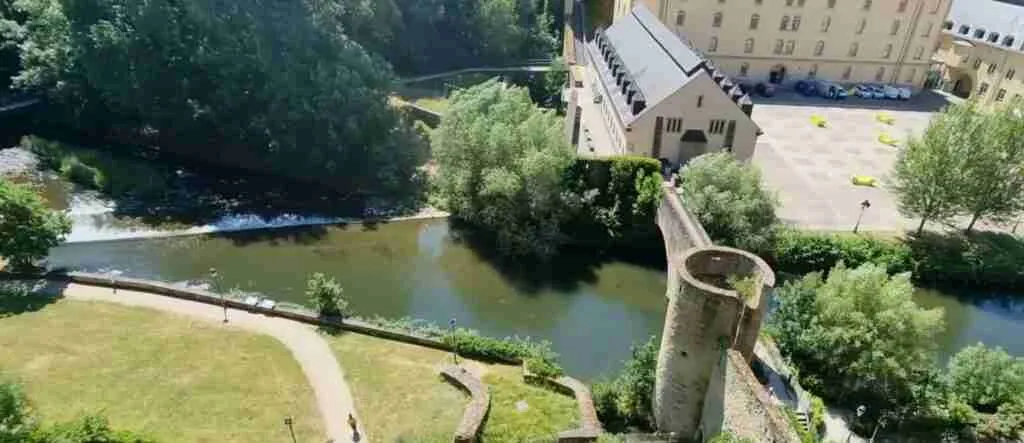
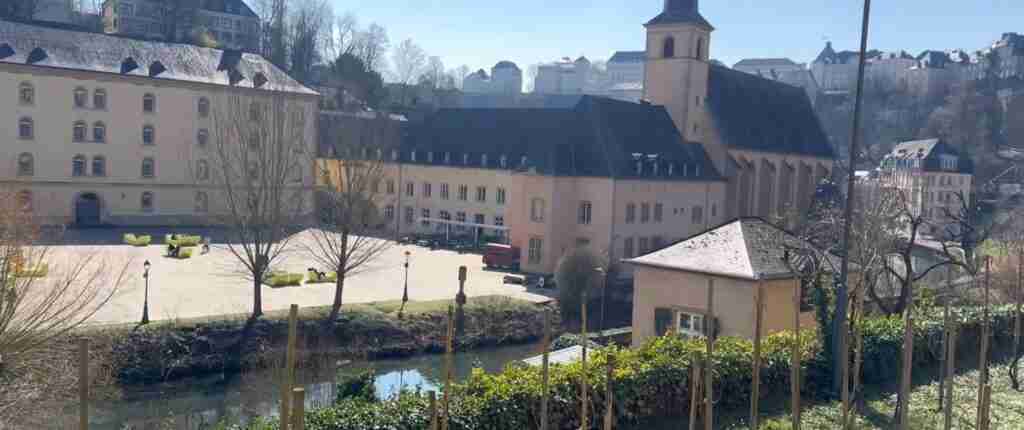
The Grund valley district nestled 70 meters below the Old Quarter represents Luxembourg City’s most picturesque neighborhood, with medieval townhouses, cobblestone streets, and the Alzette River creating atmospheric settings popular with photographers, restaurant seekers, and visitors interested in residential Luxembourg beyond the tourist-focused Upper Town. Walking tours focusing specifically on Grund depart from Neumünster Abbey at 2:00 PM daily during summer season (May-September) for €18 per person, exploring the valley’s transformation from military vulnerability to modern cultural quarter over 90-minute routes.
The valley’s historical role as fortress Achilles heel explains its sparsely populated medieval character, as military planners recognized that enemy forces controlling Grund could fire upward at fortress defenses. This vulnerability led authorities to restrict valley construction, creating the open meadow landscape that persisted until the 1867 fortress dismantlement removed military constraints. Modern development has transformed Grund into Luxembourg’s artistic neighborhood, with galleries, music venues, and creative businesses occupying restored medieval structures.
Neumünster Abbey represents Grund’s cultural anchor, housing the European Meeting Centre (Centre de Rencontre Européen) which organizes exhibitions, concerts, and cultural programs year-round. The abbey’s history spans Benedictine origins in 1606, conversion to prison use during Napoleon’s occupation, and eventual restoration as cultural venue beginning in 1980s. Abbey admission costs nothing, with visitors free to explore the courtyard, cloister, and ground-floor exhibition spaces, while special exhibitions and concerts require separate tickets. The abbey café operates daily serving lunch and coffee, providing atmospheric rest stops during Grund exploration.
The Alzette River walk follows the waterway through Grund’s heart, with pedestrian paths on both banks creating 2-kilometer loops suitable for casual strolling without tour guide requirements. Information panels along the route explain the river’s role in medieval cloth dyeing industry, water mill operations, and modern flood management systems protecting Grund from water damage during heavy rainfall periods. The river walk connects multiple neighborhoods—Grund, Clausen, and Pfaffenthal—allowing extended exploration for visitors with time and energy to continue beyond Grund proper.
Restaurant concentration in Grund exceeds the Upper Town, with local establishments focusing on traditional Luxembourgish cuisine, French fine dining, and international options serving the residential population living in valley neighborhoods. Visitors combining Grund tours with lunch or dinner plans find numerous options within short walking distances, from casual cafés serving quiche and salad to upscale venues requiring advance reservations. Evening ambiance particularly appeals to romantic diners, with outdoor terrace seating beside the river and illuminated fortress walls creating atmospheric settings unavailable in the Upper Town’s more commercial restaurant zones.
Access to Grund from the Old Quarter requires either staircase descent via ancient stone steps (free but physically demanding), the Pfaffenthal Panorama Elevator (free, wheelchair accessible, operating 6:00 AM-1:00 AM daily), or a circuitous walking route following vehicle roads (longer distance but gentler gradients). Most tours incorporate elevator ascent or descent into their routes, though some purist walking experiences use the historic staircases to provide authentic fortress-era passage experiences. Independent visitors can choose access methods matching their fitness levels and time availability.
Private Walking Tours Luxembourg City 2026
Private walking tours customized for individual travelers, families, or small groups start at €217 for up to 10 people in 1.5-2 hour formats, working out to approximately €22 per person for 10 participants or €54 per person for four travelers. These tours offer complete flexibility in departure times, route customization focusing on specific interests, and personalized pacing accommodating photography needs, children’s attention spans, or elderly participants requiring frequent rest stops unavailable on fixed-schedule group tours.
Customization options include photography-focused tours stopping at optimal viewpoints with guidance on best angles and lighting conditions, history deep-dives emphasizing specific periods like medieval origins or World War II occupation, architecture analysis examining construction techniques and style evolution, and family-friendly versions incorporating storytelling, treasure hunt elements, and interactive activities maintaining children’s engagement throughout 2-hour durations. Tour operators work with clients to design itineraries matching stated interests rather than following standardized routes.
Booking requires 48-hour minimum advance notice, with one week recommended during peak summer season when private guide availability becomes constrained by high demand. Operators request basic information about group size, mobility limitations, primary interests, and any specific sites participants want to prioritize, using this input to create provisional itineraries submitted for client approval before tour date. Changes on tour day remain possible within reason, allowing guides to skip locations not meeting expectations or extend time at sites generating particular interest.
Private tour guides typically hold the same certifications as official tourist office guides but operate as independent contractors or through specialized tour companies rather than the municipal tourist office structure. This independence allows greater flexibility in tour content and approach, though also means quality varies more than standardized official tours. Travelers should verify guide credentials, read recent reviews, and confirm cancellation policies before booking, as private operators lack the tourist office’s quality assurance oversight and standardized refund procedures.
Language options expand on private tours, with guides offering tours in languages less common on group tours like Spanish, Italian, Portuguese, Russian, or Chinese depending on guide linguistic capabilities. Luxembourg’s multilingual population provides diverse guide language pools, though advance booking becomes particularly important for less common languages requiring match with specific individuals’ skill sets. English, French, and German remain readily available with short notice.
Private tours can combine walking with vehicle transportation for extended itineraries covering both city center and countryside destinations in single-day experiences. A full-day private tour might include morning Luxembourg City walking, lunch break, afternoon Vianden Castle visit with round-trip vehicle transport, and return to city by 6:00 PM, priced at approximately €500-650 for groups of 4-8 people. These comprehensive private experiences suit travelers with limited Luxembourg time who want efficient maximum coverage without the constraints of fixed-schedule public tours.
Specialized Theme Tours Luxembourg City 2026
Wine tasting walking tours combine 2-hour city exploration with three Luxembourg wine samples for €29 per person, introducing participants to the country’s lesser-known but increasingly respected wine industry centered in the Moselle Valley 30 kilometers east of Luxembourg City. These tours visit wine bars in the Old Quarter serving crémant sparkling wine (Luxembourg’s specialty), Riesling, and Auxerrois white wines while guides explain Luxembourg’s viticultural history, climate advantages for white wine cultivation, and the relationship between wine trade and fortress prosperity in medieval periods.
Christmas market tours operate December only, focusing on Luxembourg City’s Christmas market installations in Place d’Armes, Place Guillaume II, and the fish market area. Evening departures at 6:00 PM allow participants to experience the markets with illuminations active, sampling mulled wine (glühwein), artisan chocolates, and traditional holiday foods while guides explain Luxembourg’s Christmas traditions including the Krëppelche sweet fritters and Boxemännchen gingerbread figures. These tours cost €24 per person for 90-minute formats running daily throughout December except December 25.
Photography tours designed for serious amateur and professional photographers depart at photographer-requested times determined by optimal light conditions for specific subjects. These €35-45 private experiences with maximum 4 participants focus on composition, architectural photography techniques, and accessing the best viewpoints for Luxembourg City’s iconic views including the Chemin de la Corniche, Constitution Square panoramas, and Grund valley overlooks. Guides with photography expertise provide technical advice on camera settings, equipment recommendations, and post-processing approaches while maintaining enough flexibility for participants to work methodically without group pressure.
World War II history tours examine Luxembourg’s occupation experience from 1940-1944, visiting sites connected to the Battle of the Bulge, resistance activities, and American liberation forces under General Patton. These specialized tours cost €35 for 2.5-hour city walks or €95-120 for full-day experiences combining city sites with Battle of the Bulge locations in Luxembourg’s northern Ardennes region including Bastogne connections. Guides focus on civilian experience during occupation, Luxembourg’s forced conscription into German military, and the December 1944-January 1945 combat that liberated the country, providing context often missing from broader European World War II narratives.
Family tours designed for children ages 6-12 incorporate treasure hunt elements, storytelling about fortress history using age-appropriate narratives, and activity breaks maintaining young participants’ engagement levels. These €25 per adult (children under 12 free) 90-minute experiences use props, costume elements, and interactive challenges rewarding children for fortress fact learning and observation skills. Guides trained in educational techniques balance entertainment with historical accuracy, introducing complex fortress concepts through accessible explanations and hands-on demonstrations showing how casemate echoes work or fortress walls resist cannon fire.
Sustainable tourism tours examine Luxembourg City’s environmental initiatives including free public transport, the Pfaffenthal Panorama Elevator reducing car dependency, green building standards in new construction, and urban forest preservation within the Pétrusse valley park system. These €18 tours appeal to environmentally conscious travelers interested in how historic cities adapt to climate challenges while preserving heritage character. Content includes interviews with city planners, architects implementing sustainable renovation techniques, and examples of specific buildings achieving energy efficiency within UNESCO World Heritage restrictions preventing external alterations.
Day Trip Tours: Vianden Castle 2026
Vianden Castle represents Luxembourg’s most dramatically positioned medieval fortress, perched atop a rocky promontory above the Our River valley 40 kilometers north of Luxembourg City. Organized day tours departing at 9:00 AM from Luxembourg City include round-trip bus transportation, Vianden Castle entrance fee (€13 saved versus independent visit), guided castle tour, and return arrival by 4:00 PM for €55-65 per person. These half-day excursions suit travelers without rental cars who want efficient castle access without navigating public transport connections.
The castle tour explores the fortress’s 11th-century origins, its role as seat of the Counts of Vianden, Victor Hugo’s 1871 exile residence period, and the comprehensive 1977-2017 restoration transforming near-ruinous condition into Luxembourg’s most-visited heritage site. Guides explain the castle’s architectural evolution through Romanesque, Gothic, and Renaissance periods, with each construction phase visible in different wings and towers. The great hall, chapel, armor collection, and rampart walkways receive detailed attention during 90-minute guided tours, with free time afterward for independent photography and café visits.
The town of Vianden below the castle warrants exploration time, with its medieval street plan, pastel townhouses, and riverside restaurants creating picturesque settings popular with photographers. The chairlift ascending from town to hilltop above the castle operates May-September only (weather dependent) at €8 round-trip, providing panoramic Our valley views and alternative descent routes creating circular hiking loops. Most organized tours include 30-45 minutes of Vianden town free time allowing lunch purchases, souvenir shopping, or extended photography before bus departure back to Luxembourg City.
Independent travelers can reach Vianden using Luxembourg’s free national train and bus network, departing Luxembourg City’s central station for Ettelbruck (30 minutes by train), then transferring to bus 570 reaching Vianden in another 25 minutes. This free transport option reduces costs to only the €13 castle admission, though requires coordinating schedules and managing connections versus the convenience of organized tour bus service. The full independent journey takes approximately 60-75 minutes each direction depending on connection timing.
Private Vianden tours cost €350-400 for groups of up to 8 people including round-trip vehicle transport, professional guide, and castle entrance fees, working out to approximately €44-50 per person for eight travelers. These private options allow flexible departure times, customized pacing within the castle, and the ability to combine Vianden with other northern Luxembourg destinations like the Ardennes region, Echternach abbey town, or Moselle Valley wine villages into full-day comprehensive countryside experiences.
Photography enthusiasts particularly appreciate Vianden’s dramatic setting, with the castle’s cliff-top position creating iconic compositions enhanced by seasonal variations—spring’s green valley forests, summer’s blue skies, autumn’s golden foliage, and winter’s occasional snow cover. Professional photographers often visit multiple times throughout the year capturing these seasonal variations rather than attempting to represent Vianden comprehensively in a single visit.
Day Trip Tours: Mullerthal Region 2026
The Mullerthal region 30 kilometers northeast of Luxembourg City earned its “Little Switzerland” nickname through unique sandstone rock formations, moss-covered boulder fields, waterfalls, and dense beech forests creating landscapes unlike Luxembourg’s rolling agricultural countryside. Full-day Mullerthal tours departing Luxembourg City at 9:00 AM cost €65-85 per person including round-trip bus transport, professional guide, organized hiking (moderate difficulty, proper footwear required), and visits to Beaufort Castle ruins and Echternach abbey town before 6:00 PM return arrival.
The hiking component follows sections of the famous Mullerthal Trail, a 112-kilometer network of marked paths traversing the region’s most scenic formations. Tour groups tackle the most accessible and photogenic segments rather than attempting serious multi-day hikes, covering approximately 5-8 kilometers over 2-3 hours at leisurely pace with frequent photograph stops, explanations of geological formations, and rest breaks. The sandstone formations create natural grottos, narrow passageways between towering rocks, and viewpoints overlooking forested valleys, with information panels explaining the geological processes creating these unusual landscapes.
Schiessentümpel waterfall represents Mullerthal’s most photographed location, with water cascading over moss-covered rocks beneath a picturesque stone bridge. The waterfall requires minimal walking (300 meters from bus parking), making it accessible even for visitors who skip the longer hiking segments due to fitness limitations or inappropriate footwear. Morning visits find optimal light conditions illuminating the waterfall and minimal photographer crowds competing for classic composition angles.
Beaufort Castle combines medieval fortress ruins with Renaissance château sections, offering contrasting architectural styles within a single complex. The ruins date from the 11th century, while the adjacent inhabited château represents 19th-century restoration work. Tours include both sections with explanations of fortress defensive features, noble family residential accommodations, and the site’s role in Luxembourg’s medieval power structure. The castle grounds also house a blackcurrant liqueur distillery offering tastings for interested participants, though alcohol sampling remains optional rather than tour-mandatory.
Echternach represents Luxembourg’s oldest town, founded in 698 when Anglo-Saxon missionary Willibrord established a Benedictine abbey that evolved into northern Europe’s important medieval cultural and religious center. The abbey church, medieval marketplace, and town walls warrant exploration time, with tours allocating 45 minutes for lunch breaks and independent wandering before bus departure back to Luxembourg City. Echternach’s Tuesday market (operating year-round) adds local color for tours scheduled on that day, with farmers selling regional produce, cheeses, and crafts.
Weather contingencies become particularly important for Mullerthal tours due to outdoor hiking emphasis. Rain transforms trail conditions into slippery, muddy challenges requiring appropriate footwear and rain gear. Tour operators provide waterproof ponchos for participants caught in unexpected showers, but participants should bring their own rain jackets and wear hiking boots or sturdy sneakers rather than casual sandals. Tours operate year-round, though winter months (December-February) reduce daylight hiking time and increase weather cancellation likelihood.
Independent Mullerthal exploration requires personal vehicle access, as public transport serves the region less comprehensively than routes to Vianden or Moselle Valley destinations. Rental cars from Luxembourg City cost approximately €40-60 daily, making organized tours economically competitive even before accounting for navigation challenges, parking logistics, and the value of professional guide commentary explaining geological and historical context invisible to unguided visitors.
Day Trip Tours: Moselle Valley Wine Region 2026
Luxembourg’s Moselle Valley wine region stretches 42 kilometers along the river forming the border with Germany, producing exceptional white wines including Riesling, Auxerrois, Pinot Blanc, and Luxembourg’s specialty crémant sparkling wines. Wine-focused day tours departing Luxembourg City at 9:30 AM visit 2-3 estate wineries for tastings, explore riverside villages like Remich and Grevenmacher, and return by 5:30 PM for €70-90 per person including transportation, professional sommelier guide, all wine tastings, and vineyard tours.
Estate visits typically include cellar tours explaining Luxembourg’s winemaking techniques, terroir characteristics differentiating Moselle Valley wines from German neighbors across the river, and the recent quality improvements elevating Luxembourg from obscure producer to respected European wine region. Tastings feature 4-6 wines per estate, with guides providing proper tasting technique instruction, food pairing suggestions, and explanations of wine labeling systems helping participants navigate Luxembourg’s wine terminology. Estate visits last 60-90 minutes each, creating relaxed pacing suitable for serious wine enthusiasts rather than rushed superficial samplings.
Remich represents the Moselle Valley’s tourism center, with its riverside promenade lined with winery tasting rooms, restaurants, and excursion boat departure docks. Tours allocate 45 minutes of free time allowing lunch purchases at waterfront cafés, souvenir shopping for Luxembourg wine bottles, or optional boat cruises (not included in tour price, typically €12-15 for 45-minute segments). The town’s Belle Epoque architecture and relaxed atmosphere contrast with Luxembourg City’s fortress grandeur, providing visual and cultural variety within compact national borders.
The cooperative wineries (Caves Bernard-Massard, Domaine Henri Ruppert) offer different experiences than family estates, showing industrial-scale crémant production using traditional bottle fermentation methods. Tours include sparkling wine riddling demonstrations, explanation of the labor-intensive processes creating crémant’s fine bubbles, and comparative tastings distinguishing Luxembourg crémant from French champagne. These larger facilities accommodate tour groups more easily than boutique estates, making them standard inclusions on organized wine tours.
Vineyard landscape photography benefits from the valley’s hillside terracing, riverside village positions, and seasonal variations—spring’s fresh vine growth, summer’s full canopy, autumn’s harvest activity and golden foliage, winter’s bare vines and architectural focus. Tours emphasize wine education over photography, but guides accommodate photograph stops at scenic viewpoints recognizing visual documentation importance for participants’ trip memories.
Combined wine and castle tours exist pairing morning Moselle Valley visits with afternoon stops at nearby castles, though these extended itineraries running 8-9 hours cost €110-140 reflecting the comprehensive coverage. Travelers with limited Luxembourg time appreciate these efficiency-focused combinations, while those staying multiple days often prefer single-focus tours allowing deeper engagement with either wine or castle themes without fatigue from overly packed schedules.
Luxembourg Card: Maximizing Tour Value 2026
The Luxembourg Card provides free admission to 60+ museums and attractions nationwide plus unlimited public transport for 1-day (€13), 2-day (€20), or 3-day (€28) periods, breaking even when visiting three paid attractions plus using transport in a single day. Strategic tour planning around the card maximizes value through comprehensive daily itineraries combining multiple included sites rather than casual single-attraction days.
A maximized 1-day card use might include morning Bock Casemates visit (€11 value), MUDAM modern art museum (€7), National Museum of History and Art (€7), afternoon Pétrusse Casemates (€13), plus train day trip to Vianden Castle (€13 admission plus free train transport replacing €8-12 in normal public transport fares). This itinerary delivers approximately €60 in admission and transport value from the €13 card investment, saving €47 while actually visiting more attractions than most travelers manage without the card’s unlimited access removing price-sensitivity barriers.
The 2-day card suits weekend visitors spreading intensive sightseeing across Saturday and Sunday, with day one focusing on Luxembourg City museums and underground attractions, day two dedicated to countryside castle and valley excursions using the unlimited train access. This pacing reduces single-day fatigue while building comprehensive Luxembourg understanding across complementary urban and rural experiences.
The 3-day card appeals to travelers using Luxembourg City as a base for exploring the entire Grand Duchy, with day trips to Echternach, Mullerthal hiking, Moselle wine villages, northern Ardennes region, and multiple castle visits all accessible via free trains and buses included in card coverage. Independent travelers with time flexibility often find the 3-day card enables spontaneous exploration patterns impossible when each attraction requires separate ticket purchase decisions.
Card limitations include non-coverage of guided tours (only attraction admissions), meals, and private tour operators. The card grants museum entrance but doesn’t include specialized guided experiences within those museums requiring separate fees. Audio guides typically remain excluded from card coverage, though some museums include them in general admission. Understanding these boundaries prevents disappointment expectations when arriving at attractions expecting comprehensive tour coverage.
Purchase locations include the Luxembourg City Tourist Office at Place Guillaume II (open daily 9:00 AM-6:00 PM), online through the official Visit Luxembourg website with email delivery of digital cards, and at train stations throughout Luxembourg. Online purchase suits advance planners activating cards on arrival day, while same-day tourist office purchase works for spontaneous visitors deciding to intensify sightseeing upon experiencing Luxembourg City’s attraction density.
Card activation occurs at first use by showing the card QR code or physical card at any included attraction or boarding any public transport vehicle, with the time period beginning from that moment and running 24/48/72 hours rather than calendar days. A card activated at 2:00 PM Tuesday expires 2:00 PM Wednesday (1-day), Thursday (2-day), or Friday (3-day), allowing strategic timing to maximize usable hours by activating mid-morning rather than upon midnight arrival.
Hop-On Hop-Off Bus Tours Luxembourg City 2026
Luxembourg City operates seasonal hop-on hop-off bus services May-September with convertible open-top buses following fixed routes connecting major attractions at 45-minute intervals. Single-day tickets cost €24 for adults with unlimited boarding privileges throughout the day, while 48-hour tickets extend to €30 allowing multi-day flexible use. The buses provide recorded commentary in 8 languages through individual headphones, covering Luxembourg history, fortress architecture, UNESCO World Heritage significance, and landmark identifications.
The main route includes 10 stops: Central Station, Old Town/Place d’Armes, European Quarter/Kirchberg, MUDAM modern art museum, European Court of Justice, Luxembourg City History Museum, Constitution Square, Fish Market, Grund valley, and Pfaffenthal. The complete circuit without disembarking takes 60 minutes, with most passengers using the service as flexible point-to-point transport combined with attraction visits rather than riding the full loop.
The hop-on hop-off format suits visitors with limited walking ability, those traveling with young children needing frequent rest breaks, and tourists wanting overview orientation on arrival day before deeper exploration. The service doesn’t replace walking tours for historical depth or local perspective, but provides efficient attraction connections and weather-protected transport during rainy periods. The convertible top opens during fair weather, closes during rain, creating all-weather reliability absent from exclusively walking-based tours.
Competition from Luxembourg’s completely free public transport system (buses, trams, trains) limits hop-on hop-off appeal for budget-focused travelers, as regular city buses reach identical destinations at no cost with only slightly less frequency. The hop-on hop-off buses justify their €24 premium through tourist-friendly route design visiting attractions in logical sequences, commentary providing context, and driver assistance with navigation questions. Visitors planning intensive multi-attraction days often find regular buses more economical, while those preferring guided structure and convenience accept the pricing as orientation service rather than pure transport.
Combination tickets pairing hop-on hop-off access with attraction admissions don’t exist, though the Luxembourg Card’s unlimited public transport coverage makes the hop-on hop-off buses redundant for card holders who receive commentary-free but completely free transport on regular routes serving the same destinations. Strategic planning chooses either the Luxembourg Card for comprehensive attraction and transport coverage or hop-on hop-off buses for commentary-enhanced overview without museum entrance commitments.
Photography Tours and Optimal Shooting Locations 2026
Luxembourg City’s dramatic topography, fortress architecture, and valley views create exceptional photography opportunities spanning landscape, architectural, and urban genres. Specialized photography tours cost €35-45 per person for 2-3 hour experiences with maximum 4 participants, providing technical guidance on camera settings, composition strategies, and optimal lighting timing while visiting the city’s most photogenic locations in sequences maximizing light quality.
The Chemin de la Corniche delivers Luxembourg’s iconic viewpoints, with morning eastern light (7:00-10:00 AM) illuminating the Grund valley’s colorful townhouses and Neumünster Abbey creating postcard-quality conditions. Wide-angle lenses (16-35mm full-frame equivalent) capture the valley sweep, while telephoto compression (70-200mm) isolates architectural details and creates layered depth effects showing multiple fortress levels. Tripods are permitted though rarely necessary given modern cameras’ image stabilization and the bright morning light’s fast shutter speed enablement.
Constitution Square’s Gëlle Fra war memorial and valley overlooks work best during golden hour (60-90 minutes before sunset, times varying seasonally) when warm light bathes the Pétrusse valley in amber tones and creates dramatic sky colors behind the Adolphe Bridge. Photography tours timed around sunset provide group instruction on long exposure techniques, graduated neutral density filter use (if participants bring them), and twilight blue hour shooting as artificial lights illuminate the valley below.
The Grund valley from below offers perspectives complementing the elevated Corniche viewpoints, with narrow streets, riverside paths, and Alzette riverbank positions creating foreground interest for compositions including fortress walls rising above. Midday harsh light creates challenges in the valley, making early morning or late afternoon optimal for soft directional lighting avoiding extreme shadows. Reflections in the river work best during calm morning conditions before afternoon breezes ripple the water surface.
Bock Casemates embrasure openings frame views of the Grund valley through stone fortress windows, creating unique compositions combining architectural framing elements with landscape subjects. These positions require manual exposure compensation preventing the dark tunnel interiors from causing valley over-exposure, making experienced photography guides valuable for participants less familiar with challenging mixed-lighting situations. Morning visits find better natural light entering the embrasures than afternoon when sun angles create less favorable illumination.
Night photography opportunities concentrate around the illuminated fortress walls, Grand Ducal Palace, Notre-Dame Cathedral, and valley lighting creating cityscape compositions impossible during daylight. Specialized night photography tours departing at twilight cover tripod techniques, long exposure settings managing moving clouds and light trails, and composition strategies using artificial lighting as creative elements rather than photographic problems. These tours run April-September when evening temperatures remain comfortable for outdoor waiting during long exposures.
Equipment recommendations include wide-angle lenses for architectural interiors and valley panoramas, telephoto zooms for detail isolation and compression effects, and optional circular polarizing filters reducing sky glare and enhancing color saturation during midday shooting when schedule constraints prevent optimal light timing. Full-frame cameras provide dynamic range advantages in mixed-lighting casemate situations, though modern crop-sensor cameras perform adequately with careful exposure technique.
Seasonal Tour Variations Luxembourg City 2026
Luxembourg City’s tour landscape transforms seasonally, with summer (May-September) offering maximum tour variety, frequent departures, extended daylight hours, and optimal weather reliability, while winter (November-February) reduces schedules to weekend-only for many tours, shorter daylight limits photography timing, and weather variability creates cancellation risks. Spring and autumn represent transition periods with moderate tour availability and weather conditions requiring flexible planning.
May through September peak season sees all tour categories operating at full capacity, with daily departures for official walking tours, casemate operations running 9:45 AM-6:00 PM (extended from 5:00 PM off-season closure), hop-on hop-off buses circulating every 45 minutes, and day trip tours to countryside destinations departing multiple times daily. Advance booking becomes essential for weekend tours and popular day trips, with 3-7 day lead times recommended for guaranteed participation during July-August maximum demand periods.
October transitions to shoulder season as daylight shortens and autumn weather becomes unpredictable, though the season’s golden foliage creates exceptional photography conditions particularly for Mullerthal forest tours and valley viewpoints. Tour frequencies reduce but remain daily for core offerings like official walking tours and casemate access, while specialized tours like wine tastings and Christmas market experiences begin seasonal operations.
November-February winter season sees dramatic tour schedule contractions, with many tours operating weekends only or suspending entirely. The casemates maintain daily operations but close at 5:00 PM rather than summer’s 6:00 PM, compressing available visit windows. Day trips to Mullerthal and outdoor destinations face weather cancellation risks from snow, ice, and trail closures, making these tours unreliable during winter months. Luxembourg City’s Christmas market season (December) creates specialized tour demand, with evening market tours, mulled wine tastings, and holiday-themed walking experiences partially offsetting the general winter tourism decline.
March-April spring shoulder season brings tour schedule expansion though weather remains variable with frequent rain requiring waterproof clothing. Advance booking pressure eases compared to summer, with same-day or next-day availability common for most tours except Easter holiday week when European vacation patterns create temporary demand spikes. Spring flowers in the Pétrusse valley park and emerging foliage create fresh green landscapes contrasting with winter’s bare branches, appealing to nature photographers seeking seasonal variety.
Weather contingency planning matters year-round but particularly during spring and autumn transition seasons. Tour operators provide covered alternatives or postponement options for extreme weather, though light rain typically doesn’t trigger cancellations. Participants should bring layered clothing, waterproof jackets, and comfortable walking shoes regardless of season, as Luxembourg’s climate variability can produce unexpected conditions even during generally favorable periods.
Accessibility and Mobility-Adapted Tours 2026
Luxembourg City’s dramatic topography and historic fortress architecture create accessibility challenges for wheelchair users and visitors with mobility limitations, though specialized tours and alternative routes provide adapted experiences capturing the city’s essence without requiring stair navigation or steep path traversal. The Luxembourg City Tourist Office maintains a registry of accessibility-adapted tours and mobility-friendly routes available through advance request.
The Pfaffenthal Panorama Elevator represents Luxembourg’s primary accessibility solution, ascending 71 meters from the Pfaffenthal valley to Constitution Square in wheelchair-accessible glass elevators operating 6:00 AM-1:00 AM daily. This free public elevator eliminates staircase barriers between valley and plateau levels, enabling wheelchair users to experience both altitude zones and the dramatic elevation change defining Luxembourg’s geography. The elevator includes valley viewpoints at its base and panoramic upper-level observation deck accessible without any stairs.
Wheelchair-adapted walking tours follow modified routes avoiding staircases while visiting the Grand Ducal Palace exterior, Place d’Armes, Guillaume II Square, Constitution Square, and accessible sections of the Chemin de la Corniche. These 2-hour tours cost the standard €18 and operate by advance reservation (48-hour minimum notice) with specialized guides trained in accessibility needs and modified pacing. Group sizes limit to 8 participants ensuring wheelchair users receive adequate attention without creating unwieldy groups difficult to manage on narrow historic sidewalks.
The Bock and Pétrusse Casemates remain inaccessible to wheelchair users due to steep staircases and narrow passages designed for 17th-century military efficiency rather than modern accessibility standards. Alternative experiences include virtual reality casemate tours using 360-degree photography and historical reconstructions to provide immersive underground exploration from wheelchair-accessible locations at the tourist office. These VR experiences cost €5 and last 20 minutes, offering partial compensation for the inability to physically tour the underground fortress though obviously lacking the authentic atmosphere of actual casemate visits.
Audio guide options exist for visually impaired visitors, with detailed verbal descriptions of fortress architecture, valley landscapes, and historical contexts replacing visual observation. These specialized audio guides cost €5 rental at the tourist office and provide 90 minutes of content covering major Old Quarter landmarks in accessible narrative format. Sign language interpreted tours operate monthly by advance arrangement for deaf visitors, with certified interpreters accompanying standard official tours for no additional fee beyond the standard €18 tour price.
Accessible rest facilities exist at major tourist concentration points including Place d’Armes, Constitution Square, and the Pfaffenthal elevator base, though historic Old Quarter buildings often lack modern accessibility adaptations. Tour routes incorporate strategic rest stops at locations with accessible facilities, reducing concern about finding appropriate restrooms during 2-hour tour durations.
Family-Friendly Tours with Children 2026
Family tours designed for children ages 6-12 adapt standard historical walking tours into engaging experiences combining storytelling, treasure hunt elements, and interactive activities maintaining young participants’ attention throughout 90-minute durations. These specialized tours cost €25 per adult with children under 12 free, departing weekends at 10:00 AM from Place d’Armes with maximum 20 participants ensuring guides can manage group dynamics effectively.
The treasure hunt format provides children with illustrated maps marking 8 stops throughout the Old Quarter, with each location offering a question or challenge requiring observation skills to complete. Correct answers earn stamp marks on their treasure maps, with full completion rewarding small prizes at tour conclusion. This gamification maintains engagement while still covering legitimate historical content about fortress life, medieval daily routines, and Luxembourg’s unique cultural identity.
Storytelling segments feature age-appropriate narratives about Count Siegfried and the Melusine mermaid legend, the casemates’ role hiding thousands of people during World War II, and the 1867 fortress dismantlement when workers labored for 16 years demolishing walls. Guides use simplified language avoiding complex military terminology while maintaining historical accuracy in engaging narrative formats children actually absorb versus lecture-style presentations that lose young audiences.
Interactive demonstrations include casemate echo tests showing how underground galleries amplify sound, fortress wall thickness measurements using outstretched child arm lengths as informal measurement units, and valley depth perception exercises dropping pebbles from viewpoints with delayed sound return demonstrating distance. These hands-on activities create memorable learning moments making history tangible rather than abstract for young minds.
Pacing accommodations build in playground stops, ice cream breaks, and photo opportunities recognizing children’s shorter attention spans and higher need for movement compared to adult-only tours. The 90-minute duration represents a compromise between covering meaningful content and preventing fatigue that leads to meltdowns. Parents appreciate this realistic acknowledgment of children’s capabilities rather than forcing young participants through adult-length 2-hour experiences.
The family tour route avoids casemate interior visits due to the underground tunnels’ dark, enclosed nature potentially frightening younger children, instead emphasizing exterior fortress features, valley viewpoints, and Old Quarter street scenes creating variety without claustrophobic situations. Families specifically wanting casemate experiences should book standard tours understanding that individual children’s reactions to underground environments vary widely.
Group Tour Bookings and Corporate Team Building 2026
Group tour bookings for 10+ participants qualify for reduced per-person rates ranging from €15-22 depending on tour type and group size, with 20+ person groups receiving maximum discounts. Corporate team building tours adapt standard historical walking routes into collaborative challenge formats emphasizing teamwork, problem-solving, and communication skills through fortress-themed activities aligned with business training objectives.
Standard group rates require 7-day minimum advance booking, with final participant counts confirmed 48 hours before tour date allowing operators to assign appropriate guide numbers and plan logistics. Payment typically requires 50% deposit at booking with balance due 72 hours pre-tour, with cancellation policies varying by operator but generally allowing full refunds for cancellations 14+ days before tour date, 50% refunds for 7-14 day cancellations, and no refunds within 7 days of tour unless operator can resell the slots.
Corporate team building programs cost €35-45 per person for 2.5-hour experiences combining historical walking with collaborative challenges like fortress defense strategy simulations, communication exercises requiring team coordination to solve historical puzzles, and leadership rotation where different participants take turns guiding group segments. These programs work best for groups of 15-40 people, large enough for meaningful team subdivision but small enough for manageable logistics and coherent group identity.
Multilingual guide capabilities become particularly important for international corporate groups with participants speaking different native languages. Operators can provide bilingual or multilingual guides conducting tours in multiple languages simultaneously, though this approach works better for smaller groups where language switching doesn’t disrupt flow excessively. Larger multilingual groups often split into language-specific subgroups each with dedicated guides, reconvening for group activities and final debriefs.
Evening corporate tours operate outside standard tourism hours, with departures at 6:00 PM or 7:00 PM allowing participation after business day conclusions. These evening experiences can incorporate dinner reservations at Grund valley restaurants, wine tasting components, or networking time at atmospheric venues enhancing team bonding objectives beyond pure sightseeing. Evening tours cost premiums of approximately €10-15 per person above daytime rates reflecting guides’ non-standard working hours and venue coordination complexity.
Tour Booking Platforms and Reservation Strategies 2026
Tour booking channels include direct reservation through the Luxembourg City Tourist Office website and physical office at Place Guillaume II, third-party platforms like GetYourGuide and Viator offering Luxembourg tour aggregation, and individual tour operator websites for specialized experiences unavailable through official tourism channels. Each platform offers distinct advantages balancing pricing, variety, and booking flexibility.
The Luxembourg City Tourist Office provides authoritative information and guaranteed quality for official tours, with pricing matching or slightly undercutting third-party platforms once booking fees and markups are considered. Direct booking supports local tourism infrastructure and ensures accurate current information about schedule changes, weather contingencies, and operational updates. The tourist office also handles accessibility requests, group bookings, and specialized arrangements more effectively than automated third-party platforms.
GetYourGuide and Viator aggregate multiple Luxembourg tour operators onto single platforms, providing convenient comparison shopping across different tour types, reading verified customer reviews, and booking diverse activities through unified reservation systems. These platforms charge service fees (typically 10-20% markups above operator direct pricing) but offer advantages including familiar booking interfaces for international travelers, integrated payment processing accepting multiple currencies, and customer service handling cancellations and issues in travelers’ native languages.
Individual operator websites provide the most detailed tour descriptions and operator-specific information, though require researching multiple sites rather than the convenience of aggregated platforms. Operators sometimes offer direct booking discounts unavailable through third-party platforms, making price comparison worthwhile for budget-conscious travelers. Direct operator contact also allows customization discussions impossible through automated platform booking forms.
Advance booking timeframes vary by tour type and season. Popular day trips to Vianden and Mullerthal during July-August weekend periods should book 7-14 days ahead ensuring availability, while weekday walking tours in May, June, or September typically offer same-day or next-day slots. Winter season tours often book within 24-48 hours reflecting reduced demand and less constrained capacity. The Luxembourg Card requires no advance booking except during Christmas market period when tourist office queues can create 30-60 minute wait times.
Cancellation and refund policies generally allow free cancellation 24-48 hours before tour departure for most operators, with full refunds processed within 5-7 business days. Cancellations within 24 hours of departure typically forfeit deposits or charge 50% fees, while no-shows receive no refunds. Weather cancellations initiated by operators due to unsafe conditions provide automatic full refunds or alternative date rescheduling at traveler choice. Travelers should verify specific policies before booking as operator practices vary.
Money-Saving Tour Strategies Luxembourg City 2026
Strategic tour planning can reduce costs substantially while maintaining comprehensive Luxembourg City exploration through combinations of free resources, selective paid admission, optimal timing, and public transport exploitation. A budget-conscious complete Luxembourg experience might total €50-75 per person compared to €150-200 for less strategic approaches covering identical content.
The foundation involves Luxembourg’s completely free public transport system (buses, trams, trains) serving the entire country without any tickets required. Travelers can reach Vianden Castle, Mullerthal trailheads, Moselle wine villages, and Echternach using only free trains and buses, eliminating €55-85 organized day tour costs in exchange for independent schedule management and self-guided exploration. Regional trains depart Luxembourg central station hourly to major destinations, with comprehensive route maps available at the tourist office and via the free Mobilitéit mobile app.
The €3 community walking tour provides professional guided Old Quarter orientation at fraction of official €18 tour cost, though relies on tip-based guide compensation creating ethical obligations to contribute appropriately if the tour delivers quality experience. These tours cover identical routes and comparable historical content versus official tours, with the primary distinction being certified guide professional training versus community guide passionate enthusiasm.
Selective paid attraction admission focuses budget on truly unique experiences impossible to replicate through free alternatives. The Bock Casemates at €11 represent must-pay admission for underground fortress tunnels unavailable anywhere else, while many museums with €5-10 entrance fees display content broadly similar to free online resources or other museums. A strategic approach might allocate €25-30 total toward the single most compelling paid attraction rather than spreading €25-30 across three marginal museum experiences.
Free viewpoints including Chemin de la Corniche, Constitution Square, Pfaffenthal Panorama Elevator observation deck, and various valley overlooks provide Luxembourg’s iconic views without any admission fees. Photography enthusiasts can capture comprehensive city portfolios using exclusively free vantage points, making the €35-45 photography tour expense optional enhancement rather than necessary investment.
Self-catering food strategies using grocery stores and bakeries for breakfast and lunch reduce daily food costs to €15-25 versus €40-60 for three restaurant meals. Auchan supermarket near the central station, Cactus discount supermarket in Kirchberg, and traditional bakeries throughout the Old Quarter provide affordable quality food for picnic meals enjoyed at valley parks or fortress viewpoints. Dinner splurges at traditional restaurants then become more financially feasible when breakfast and lunch expenses stay minimal.
Off-season visit timing (November-March excluding Christmas market period) finds reduced tour demand creating occasional promotional pricing and last-minute deals unavailable during May-September peak capacity. Hotels also discount substantially during winter months, making the comprehensive trip cost significantly lower despite identical activity content. Weather risks increase but create opportunities for budget-conscious travelers willing to accept variable conditions.
Practical Tour Preparation and What to Bring 2026
Successful Luxembourg City tour experiences depend on appropriate preparation spanning footwear, weather protection, navigation resources, and physical readiness for the city’s challenging topography. First-time visitors frequently underestimate Luxembourg’s hills, staircases, and cobblestone surfaces, arriving in inappropriate casual footwear causing discomfort or blisters during multi-hour walking tours.
Footwear requirements center on supportive closed-toe shoes with good traction, making sneakers or lightweight hiking shoes ideal while ruling out sandals, flip-flops, and dress shoes with smooth leather soles slippery on wet cobblestones. The Old Quarter’s medieval streets feature irregular stone paving that turns treacherous when wet, with surprise ankle-twisting uneven surfaces punishing inattentive walkers. Tour operators specifically warn against inappropriate footwear in booking confirmations, though tourists consistently ignore these warnings then struggle during tours.
Weather protection includes layered clothing accommodating Luxembourg’s variable conditions even during summer months, when morning sun can transition to afternoon thunderstorms requiring jacket coverage. Light rain jackets pack easily and provide essential protection during the frequent brief showers that characterize Luxembourg’s oceanic climate. Tour operators rarely cancel for light rain, expecting participants to continue touring in drizzle conditions that may last 20-30 minutes before clearing.
Water bottles and snacks maintain energy during 2-3 hour tours that may not include official breaks at cafés or restaurants. Dehydration and blood sugar crashes create common problems for tourists underestimating the physical demands of sustained walking over hilly terrain, particularly during warm summer days. Tour guides generally don’t pause for food breaks unless emergencies arise, making self-sufficient preparation important for comfort.
Camera equipment preparation matters for photography-focused visitors, with backup batteries and memory cards preventing the disappointment of dead batteries or full storage preventing shots at Luxembourg’s most photogenic viewpoints. The casemates’ underground darkness challenges cameras, making high ISO capability valuable for visitors wanting interior tunnel documentation rather than exclusively shooting the embrasure valley views.
Cash euros remain important despite Luxembourg’s widespread credit card acceptance, particularly for tip-based community walking tours requesting gratuities, small café purchases, and public restroom access fees (€0.50-1 common at tourist sites). While major attractions and restaurants accept cards, carrying €20-40 in small denomination notes prevents payment difficulties at smaller establishments.
Navigation resources include printed tourist office maps available free at Place Guillaume II, the free Visit Luxembourg mobile app providing GPS-enabled walking routes and attraction information, and Google Maps offline download capabilities allowing navigation without mobile data consumption for international visitors avoiding roaming charges. Tour participants generally don’t need navigation resources during guided experiences but benefit from maps for pre-tour orientation and post-tour independent exploration.
Physical readiness assessment matters for tour selection, with some walking tours covering 4-5 kilometers over 2-3 hours including sustained uphill sections and numerous staircases. Visitors with cardiac conditions, knee problems, or low fitness levels should select adapted routes using elevators and limiting distance, or opt for hop-on hop-off bus tours reducing walking demands. Tour operators generally don’t accommodate significantly slower participants in group settings, making realistic self-assessment important for selecting appropriate tour types.
Frequently Asked Questions: Luxembourg City Tours 2026
Do I Need to Book Luxembourg City Walking Tours in Advance?
Advance booking is recommended but not always required depending on season and tour type. Official Luxembourg City Tourist Office walking tours during May-September weekends fill 3-7 days ahead and require advance reservation, while weekday tours typically have same-day availability except during July-August peak season. Winter season (November-February) tours rarely sell out, with next-day booking sufficient. Specialized tours like wine tastings, photography experiences, and family treasure hunts always require advance booking due to limited weekly departures and small group size caps. The €3 community walking tours departing daily at 11:00 AM from Place d’Armes accept walk-up participants without advance reservation, though arriving 15 minutes early ensures participation if the guide enforces maximum group sizes. Day trips to Vianden, Mullerthal, and Moselle Valley should book 5-14 days ahead during summer weekends when bus capacity limits create sell-out risk. Independent travelers using free public transport to reach these destinations need no booking for transportation but may want advance Vianden Castle tickets during busiest summer periods, though same-day castle admission usually remains available.
Are Luxembourg City Tours Conducted in English in 2026?
English-language tours operate extensively throughout Luxembourg City in 2026, with all major tour operators providing English-speaking guides as standard service reflecting Luxembourg’s multilingual environment where English functions as business language for the 47% foreign resident population. Official Luxembourg City Tourist Office tours depart in English at 10:00 AM and 2:00 PM daily during peak season (May-September), with French tours at 11:00 AM and German tours at 3:00 PM serving continental European visitors. The €3 community walking tours conduct most departures in English, occasionally offering French or German versions depending on guide availability and participant language composition. Private tours can arrange guides speaking less common languages including Spanish, Italian, Portuguese, Russian, Mandarin, or Japanese with 5-7 days advance notice allowing operator matching with appropriate multilingual guides. Audio guides and mobile apps provide content in 6-10 languages including Asian options unavailable in live guided formats. Casemate information panels appear in Luxembourgish, French, German, and English, covering the Grand Duchy’s four official languages. Tour operators request language preferences during booking to assign appropriate guides, with English representing default assumption for international bookings unless otherwise specified.
Can I Visit Luxembourg City’s Casemates Without a Tour Guide?
Both Bock and Pétrusse Casemates allow self-guided visits on standard admission tickets costing €11 and €13 respectively, with guided tours operating as separate premium experiences requiring additional booking and fees. The self-guided route through each casemate system follows color-coded pathways with numbered information panels in four languages explaining chamber functions, construction history, and military significance. Most visitors complete satisfactory casemate exploration without guides, using the 45-minute self-guided routes to experience the underground galleries, view the valleys from embrasures, and understand the fortress’s three-dimensional defensive architecture. The archaeological crypt in Bock Casemates and the specialized galleries in both systems provide adequate historical context through signage for general tourist understanding. Guided casemate tours costing €24 add value for history enthusiasts seeking deeper military engineering analysis, access to restricted sections beyond standard routes, and professional commentary explaining strategic decisions invisible to casual observers. Families with children ages 6-12 often prefer self-guided visits allowing flexible pacing and freedom to let children explore at their own speed without group constraints. Photography enthusiasts benefit from self-guided visits permitting unlimited time at preferred embrasure viewpoints versus guided tours maintaining schedule momentum. Accessibility-restricted visitors cannot tour either casemate system due to steep staircases and narrow passages, making virtual reality alternatives at the tourist office the only viewing option regardless of guided versus self-guided preference.
What’s the Best Time of Day for Luxembourg City Tours in 2026?
Morning tours departing 9:00-10:00 AM provide optimal conditions combining uncrowded attractions, favorable photography light, and comfortable temperatures before midday heat during summer months, making this the recommended timeframe for first-time visitors prioritizing maximum quality experience. The Chemin de la Corniche and valley viewpoints receive beautiful eastern light illuminating the Grund neighborhood during morning hours, while afternoon visits create less favorable backlighting conditions. Casemate visits work equally well any time during operating hours (9:45 AM-5:00 PM) as underground tunnels experience no natural light variations, though morning slots find fewer crowds and shorter entry queues. Late afternoon tours departing 3:00-4:00 PM suit travelers arriving on midday trains from Brussels or Trier, allowing same-day Luxembourg exploration despite later start times, though summer daylight extends until 9:00 PM enabling full tour completion before darkness. Evening tours beginning 6:00-7:00 PM capture sunset lighting at valley viewpoints and illuminate fortress architecture, appealing to photographers seeking golden hour conditions and romantic couples wanting atmospheric experiences. Seasonal variations affect optimal timing significantly, with summer’s extended daylight supporting late tours impossible during winter’s 4:30 PM sunset periods. Midday tours (12:00-2:00 PM) concentrate maximum crowds at major viewpoints, create harsh overhead lighting challenging photography, and subject participants to peak heat during July-August. Budget tour seekers find the 11:00 AM community walking tour departure non-negotiable as the single daily time slot, while private tour flexibility allows custom scheduling matching individual preferences and jet lag recovery needs.
How Much Walking Is Required on Luxembourg City Tours?
Standard 2-hour walking tours cover 3-5 kilometers depending on route variations and optional extensions, involving sustained uphill sections, numerous staircases connecting plateau and valley levels, and periods of standing during guide commentary at viewpoint stops. Participants should expect moderate fitness requirements equivalent to walking 30-40 minutes uphill at casual tourist pace with photo breaks, managing 100-150 stairs total across multiple flights throughout the tour, and standing 15-20 minutes during information stops. The 3-hour extended tours increase distance to approximately 6-7 kilometers including valley descent and Grund neighborhood exploration, adding physical demands suitable for regular walkers but potentially challenging for sedentary travelers or those with joint problems. Terrain complications include cobblestone surfaces causing ankle fatigue, uneven medieval paving creating trip hazards, and steep gradient sections in the Old Quarter ascending from valley to plateau elevations. Tours rarely accommodate significantly slower walkers, as maintaining group cohesion requires reasonable pace matching among all participants. Alternative low-walking options include hop-on hop-off buses reducing walking to short distances between bus stops and attraction entrances (typically 100-300 meters per stop), accessibility-adapted tours using the Pfaffenthal Panorama Elevator to eliminate stair requirements, and private tours customizing pacing for families with young children or elderly participants requiring frequent rest breaks. Casemate visits add 500-800 meters of underground walking on relatively level passages though with staircases connecting gallery levels, creating additional physical demands on days combining surface and underground exploration. Travelers with mobility concerns should honestly assess capabilities when selecting tours, as operators rarely refund participants who start tours then discover inability to maintain pace or manage physical requirements.
Does the Luxembourg Card Save Money Compared to Individual Tour Tickets?
The Luxembourg Card at €13 (1-day), €20 (2-day), or €28 (3-day) breaks even when visiting three or more paid attractions plus using public transport in a single day, creating guaranteed savings for intensive sightseeing itineraries while costing more than selective single-attraction approaches. A strategic cost analysis shows Bock Casemates (€11), Pétrusse Casemates (€13), and MUDAM museum (€7) totaling €31 in standard admissions, immediately justifying the €13 card purchase before accounting for unlimited free train and bus access normally costing €8-15 in day passes. Adding a Vianden Castle day trip (€13 admission plus €8-12 saved in transport) pushes total standard-cost equivalent above €50 versus the €13 card investment, creating €37 in savings on this single intensive day. The card does not cover guided tour fees, only attraction admissions, meaning the official €18-24 walking tours require separate payment whether or not card holders visit included museums. Travelers focusing on free experiences like Chemin de la Corniche walks, Old Quarter exploration, valley strolling, and restaurant dining without museum visits receive no card benefit and waste the €13 expenditure. The 2-day and 3-day cards suit travelers planning countryside exploration across multiple days, with each day trip to different regions (Vianden one day, Mullerthal another, Moselle Valley third) using unlimited free transport justifying progressive card levels. Break-even calculation should account for actual planned activities rather than optimistic intentions, as purchasing cards then failing to visit sufficient attractions wastes money. Strategic purchasers complete their Luxembourg itinerary planning before arrival, calculate specific attraction admission totals, compare against card pricing, and make evidence-based decisions rather than assuming cards always save money.
Are Luxembourg City Tours Suitable for Young Children?
Luxembourg City offers family-friendly tour options designed specifically for children ages 6-12 incorporating treasure hunts, storytelling, and interactive activities maintaining engagement during 90-minute durations, while standard adult-focused 2-3 hour historical tours generally bore young children leading to restlessness, complaints, and family tension. The specialized family tours cost €25 per adult with children under 12 free, using simplified historical narratives about Count Siegfried, the Melusine mermaid legend, and fortress life presented through age-appropriate stories rather than dry historical lectures. Treasure hunt formats provide children illustrated maps with 8 challenge stops rewarding observation skills with stamp marks and small prizes, gamifying education in engaging formats children actually enjoy. Standard tours prohibit this interactive approach due to adult participants expecting serious historical content, making family tour selection critical for positive experiences with children under 12. Children ages 13+ generally manage adult tour formats if interested in history and capable of sustained attention, though teenage preferences vary widely. Casemate visits create mixed child reactions, with adventurous children finding underground tunnels exciting exploration while cautious children may find dark enclosed spaces frightening, making parental judgment essential before committing to casemate tickets. The Grund valley walks, Chemin de la Corniche viewpoints, and Pfaffenthal Panorama Elevator rides appeal broadly to children as varied visual experiences requiring minimal historical interest. Day trips to Vianden Castle work well for children ages 8+ drawn to medieval fortress architecture, though Mullerthal hiking tours require fitness and patience uncommon in younger children. Parents should realistically assess individual children’s capabilities and interests rather than forcing inappropriate tour experiences creating negative memories for entire families.
Can I Take a Day Trip From Brussels to Luxembourg City in 2026?
Brussels to Luxembourg City trains operate hourly covering the 213-kilometer journey in 2 hours 45 minutes to 3 hours 15 minutes depending on connection routing, enabling convenient day trip execution departing Brussels 8:00-9:00 AM and returning 6:00-7:00 PM for approximately €40-60 round-trip standard class or using budget advance-purchase tickets as low as €25-35 round-trip when booked weeks ahead. The journey uses high-speed rail infrastructure providing comfortable modern trains with WiFi, power outlets, and cafe service, making travel time productive for work or relaxation. A realistic Luxembourg City day trip from Brussels allows approximately 6-7 hours in Luxembourg after accounting for 5-6 hours total travel time, sufficient for morning arrival walking tour, midday casemate visit, lunch in Grund valley, afternoon Old Quarter exploration, and early evening departure. Organized day tour packages from Brussels combine train tickets with guided Luxembourg City walking tours for €75-95 per person, providing convenience but limiting independent exploration flexibility. The primary challenge involves Luxembourg’s compact UNESCO site concentration creating quick saturation, where serious visitors often feel day trip time constraints prevent adequate appreciation and vow to return for overnight stays allowing deeper engagement. Travelers splitting time between Brussels and Luxembourg generally allocate 2-3 nights Luxembourg versus single day trips to properly experience both the city fortifications and worthwhile countryside destinations like Vianden Castle or Mullerthal hiking. The free public transport throughout Luxembourg amplifies day trip value by enabling Vianden additions (train continuing from Luxembourg City to Ettelbruck then bus to Vianden in 60 minutes total) within the same Brussels departure framework, creating comprehensive Luxembourg experiences impossible in cities requiring paid transport for equivalent coverage.
What Should I Wear on Luxembourg City Walking Tours?
Comfortable supportive walking shoes with good traction represent the single most important clothing consideration, making sneakers, lightweight hiking shoes, or supportive walking sandals essential while ruling out fashion footwear prioritizing appearance over function. Luxembourg’s medieval Old Quarter features extensive cobblestone paving, uneven stone surfaces, and frequent staircases that punish inappropriate footwear through blisters, twisted ankles, and general discomfort diminishing tour enjoyment. The cobblestones turn particularly treacherous when wet from rain or morning dew, requiring shoes with grippy rubber soles preventing dangerous slips. Layered clothing accommodates Luxembourg’s variable weather patterns even during summer months, when morning cool (12-15°C) transitions to midday warmth (22-25°C) before afternoon thunderstorms drop temperatures again, making light jacket removal and re-wearing necessary multiple times during 3-hour tours. Rain jackets or compact umbrellas provide essential weather protection as brief showers occur frequently April through October, with tour operators rarely canceling for light rain expecting participants to continue touring through drizzle. Summer tours require sun protection including hats and sunscreen as extended time at exposed valley viewpoints and the Chemin de la Corniche creates significant UV exposure, particularly for fair-skinned visitors prone to sunburn. Winter tours demand warm layers, gloves, and weatherproof outerwear as strong winds at elevated viewpoints create wind chill making standing temperatures feel 5-10°C colder than actual air temperature. Modest clothing covering shoulders and knees suits visits to Notre-Dame Cathedral and other religious sites included in some walking routes, though Luxembourg maintains relatively relaxed dress codes compared to Mediterranean Catholic countries. Comfortable backpacks or crossbody bags distribute weight better than shoulder bags during multi-hour walking, though large backpacks may receive requests for removal inside crowded casemate tunnels where space constraints create collision risks. Photography enthusiasts should wear clothing with secure zippered pockets for lens caps, batteries, and memory cards that might fall from open pockets when bending for low-angle shots.
Are Luxembourg City Tours Cancelled in Bad Weather?
Luxembourg City tours rarely cancel for weather except during extreme conditions like heavy thunderstorms with lightning, severe winter snowstorms making walking hazardous, or strong winds creating safety risks at exposed viewpoints and valley overlooks. Light to moderate rain, temperatures below freezing, overcast conditions, and light snow do not trigger cancellations as operators expect participants to dress appropriately and continue tours in typical Luxembourg weather. Tour operators contact participants 2-12 hours before departure when weather forecasts predict conditions warranting cancellation, offering full refunds or alternative date rescheduling at participant choice. The underground casemate visits prove particularly weather-resistant as tunnel environments remain unaffected by surface conditions, making these attractions viable alternatives when rain prevents enjoyable outdoor walking tours. Indoor museum routes can substitute for outdoor viewpoint walks during persistent rain, with guides adapting itineraries to emphasize covered Luxembourg City History Museum, National Museum of History and Art, and covered shopping arcades versus exposed Chemin de la Corniche and Constitution Square stops. Countryside day trips to Mullerthal face higher cancellation likelihood during heavy rain as hiking trails become dangerously slippery and waterfall viewing loses appeal in driving rain, though Vianden Castle tours continue as the fortress interior provides weather protection. Participants should bring appropriate weather gear rather than expecting tour cancellations for uncomfortable but not dangerous conditions, as Luxembourg’s oceanic climate produces frequent drizzle that locals consider normal rather than severe. Tour operator cancellation policies generally provide full refunds for operator-initiated weather cancellations while participant-initiated cancellations due to personal weather preferences receive no refunds within 24 hours of departure, creating financial incentive to dress appropriately and proceed with booked tours unless conditions become genuinely dangerous.