Best Day Trips from Washington DC 2026: Complete Guide
Washington DC’s central Mid-Atlantic location provides exceptional access to historic estates, coastal cities, mountain parks, and cultural destinations within a two-hour radius. From Thomas Jefferson’s Monticello to the Civil War battlefields of Gettysburg, the capital’s surrounding region offers travelers rich historical depth, natural beauty, and diverse experiences accessible as single-day excursions.
Key Takeaways
- Historical Estate Access 2026: Mount Vernon ($30 admission) lies 16 miles south via Metro and bike, while Monticello ($42 admission) sits 120 miles southwest near Charlottesville, both offering guided mansion tours and interpretive exhibits about founding fathers and enslaved communities.
- Transportation Options 2026: Amtrak Northeast Regional connects DC to Philadelphia, Baltimore, and intermediate cities with standard fares $35-65 roundtrip and Night Owl discount fares as low as $10-20 for off-peak travel between 7 PM and 5 AM.
- Budget Planning 2026: Independent day trips using public transportation range $50-115 per person including admission, meals, and transit, while guided tour packages cost $75-180 per person with transportation, guide services, and pre-reserved entry.
- Coastal Destinations 2026: Annapolis offers 50-minute drives to Maryland’s waterfront capital with colonial architecture and Chesapeake Bay seafood, while Ocean City provides 3-hour beach access with free sandy shores and boardwalk amusements.
- National Park Access 2026: Harpers Ferry National Historical Park ($20 per vehicle, 3-day validity) combines Civil War history with Potomac River hiking trails 65 miles northwest, while Shenandoah National Park ($30 per vehicle, 7-day validity) features Skyline Drive mountain scenery 75 miles west.
- Wine Country Experiences 2026: Loudoun County’s 40+ wineries in Leesburg and Middleburg provide tasting room experiences $15-30 per person with panoramic vineyard views 45-60 minutes west of DC via Route 7.
People Also Ask About Washington DC Day Trips 2026
What is the closest major day trip destination from Washington DC in 2026?
Alexandria and Mount Vernon represent the closest major destinations at just 8-16 miles south of central DC. Alexandria’s Old Town historic district connects directly via Metro Yellow and Blue lines to King Street station, with the journey taking 25-30 minutes from downtown. Mount Vernon sits another 8 miles south along the Mount Vernon Trail, accessible by combining Metro transit with bicycle rental or rideshare services. The estate opens daily with grounds admission at $30 for adults and offers George Washington’s mansion, riverside gardens, museum exhibits, and the distillery and gristmill site 2.7 miles from the main entrance.
How much does a typical day trip from Washington DC cost in 2026?
Independent day trip costs range $50-95 per person depending on destination distance and admission fees. A Baltimore excursion via MARC commuter train costs $16 roundtrip plus $20-30 for meals and free museum admission, totaling approximately $50-65 per person. Philadelphia trips on Amtrak cost $50-80 roundtrip plus $25-35 for Independence Hall area lunch and Liberty Bell viewing, reaching $75-115 per person. Guided day tour packages including transportation, admission, and guide services cost $75-180 per person, with Mount Vernon and Alexandria tours at $75-110, Monticello tours at $145-165, and Gettysburg battlefield tours at $120-160.
Can you visit multiple destinations from Washington DC in one day trip in 2026?
Alexandria and Mount Vernon pair naturally as a single-day combination given their proximity along the Potomac River corridor. Travelers can explore Old Town Alexandria’s colonial streets and waterfront restaurants during morning hours, then proceed 8 miles south to Mount Vernon for afternoon mansion tours and garden walks, completing the circuit in 7-8 hours total. Annapolis and Maryland’s Eastern Shore also combine effectively, with morning Naval Academy visits transitioning to afternoon Chesapeake Bay town exploration. Shenandoah National Park’s Skyline Drive allows multiple overlook stops within a single day, though limiting hiking to 1-2 shorter trails. Most other destinations merit full-day focus to experience exhibits, trails, or historic districts thoroughly without rushing.
What are the best day trips from Washington DC for families with children in 2026?
Mount Vernon excels for family visits with interactive museum exhibits, rare animal breeds at the working farm, hands-on archaeology programs, and spacious riverside grounds where children can explore freely while learning presidential history. The estate’s family-oriented programming includes treasure hunts, period craft demonstrations, and age-appropriate tour narratives. Ocean City delivers classic family beach experiences with free sandy shores, boardwalk games, amusement parks at Jolly Roger complexes, and calm bay-side swimming areas safer for younger children than Atlantic surf zones. Harpers Ferry National Historical Park combines educational Civil War exhibits with outdoor adventure through riverside trails, Potomac River tubing, and historic town exploration that engages children through tactile history rather than museum-only experiences.
Extended multi-day tours – 5+ days
Featured Eastern Usa Multi-Day Tour Packages
3 days
Eastern Usa 3-Day Discovery Tour
- ✓ Comprehensive Eastern Usa experience
- ✓ Expert local guides included
- ✓ All accommodation included
- ✓ Transportation provided
5 days
Eastern Usa 5-Day Highlights Experience
- ✓ Comprehensive Eastern Usa experience
- ✓ Expert local guides included
- ✓ All accommodation included
- ✓ Transportation provided

7 days
Eastern Usa 7-Day Cultural Journey
- ✓ Comprehensive Eastern Usa experience
- ✓ Expert local guides included
- ✓ All accommodation included
- ✓ Transportation provided

10 days
Eastern Usa 10-Day Complete Adventure
- ✓ Comprehensive Eastern Usa experience
- ✓ Expert local guides included
- ✓ All accommodation included
- ✓ Transportation provided
Multi-day tour packages powered by TourRadar. Prices and availability subject to change.
Introduction: Exploring the Capital Region’s Rich Heritage and Natural Landscapes in 2026
Washington DC’s position at the geographic heart of the American founding provides travelers unparalleled access to the nation’s formative historic sites. Within 120 miles of the capital stand the estates of three presidents, five major Civil War battlefields, the halls where American independence was debated and declared, and the waterways that powered colonial commerce. This concentration of historically significant destinations reflects the Mid-Atlantic region’s central role in American political development, military conflict, and cultural formation.
The surrounding geography offers equal diversity in natural settings. Chesapeake Bay and its tributaries shape Maryland’s Eastern Shore with maritime culture and seafood traditions. The Blue Ridge Mountains rise westward through Shenandoah National Park with forested peaks and cascading waterfalls. Virginia’s Piedmont region rolls through horse country and vineyard-covered hillsides between the coastal plain and mountain foothills. This topographic variety creates distinct landscape experiences within short distances, from tidal wetlands to summit overlooks above 3,000 feet elevation.
Modern transportation infrastructure facilitates day trip accessibility from the capital. Amtrak’s Northeast Corridor connects DC to Philadelphia, Baltimore, Wilmington, and intermediate stations with trains departing hourly throughout daytime periods. MARC commuter rail serves Maryland suburbs and cities on weekday schedules with weekend service to select destinations. Metro rail extends into Virginia and Maryland suburbs, reaching Alexandria, Arlington, and suburban Maryland counties. Interstate highways radiate in all directions with I-95 northeast toward Philadelphia, I-270 northwest toward Frederick, I-66 west toward the Shenandoah Valley, and Route 50 east toward Annapolis and the Eastern Shore.
Day trip planning in 2026 balances several practical considerations. Admission reservations have become standard practice at popular historic sites, with Mount Vernon, Monticello, and Colonial Williamsburg all implementing timed entry systems to manage visitor flow and preserve fragile historic structures. National Park entrance fees apply at Harpers Ferry, Shenandoah, and Gettysburg, though annual America the Beautiful passes ($80) provide unlimited access across the national park system and prove cost-effective for visitors planning multiple park destinations. Weekend travel increases crowds at popular sites but also activates seasonal programming, farmers markets, and cultural events that operate primarily on Saturdays and Sundays.
Seasonal timing significantly affects day trip experiences. Spring brings cherry blossoms to the capital region and wildflowers to mountain meadows, with April and May offering temperate weather ideal for outdoor exploration before summer heat arrives. Fall foliage transforms Shenandoah’s forests from mid-October through early November, creating the year’s most visually dramatic period for Blue Ridge Mountain visits. Summer enables beach access at Ocean City and water activities along Chesapeake Bay and Potomac River corridors. Winter reduces crowds at indoor-focused destinations like museums and historic estates while providing occasional snow-enhanced scenery in mountainous areas.
This guide examines the region’s premier day trip destinations by category, providing verified 2026 pricing, transportation logistics, site-specific recommendations, and practical planning guidance. Each destination section addresses access methods, admission costs, optimal visit duration, and strategic timing to help travelers select experiences matching their interests, mobility levels, and available time. The guide emphasizes independent travel options using public transportation and personal vehicles while also noting guided tour alternatives for travelers preferring structured itineraries with expert narration.
Mount Vernon and Alexandria Virginia 2026: Presidential Estate and Colonial Waterfront
George Washington’s Mount Vernon estate and neighboring Alexandria form the capital region’s most accessible and historically significant day trip combination. The paired destinations sit just 8-16 miles south of central DC along the Potomac River corridor, connected by Metro rail, bike trails, and vehicle routes that make them reachable within 30-45 minutes from downtown. This proximity allowed Washington himself to maintain close connections with the nation’s capital while residing at his beloved riverside plantation.
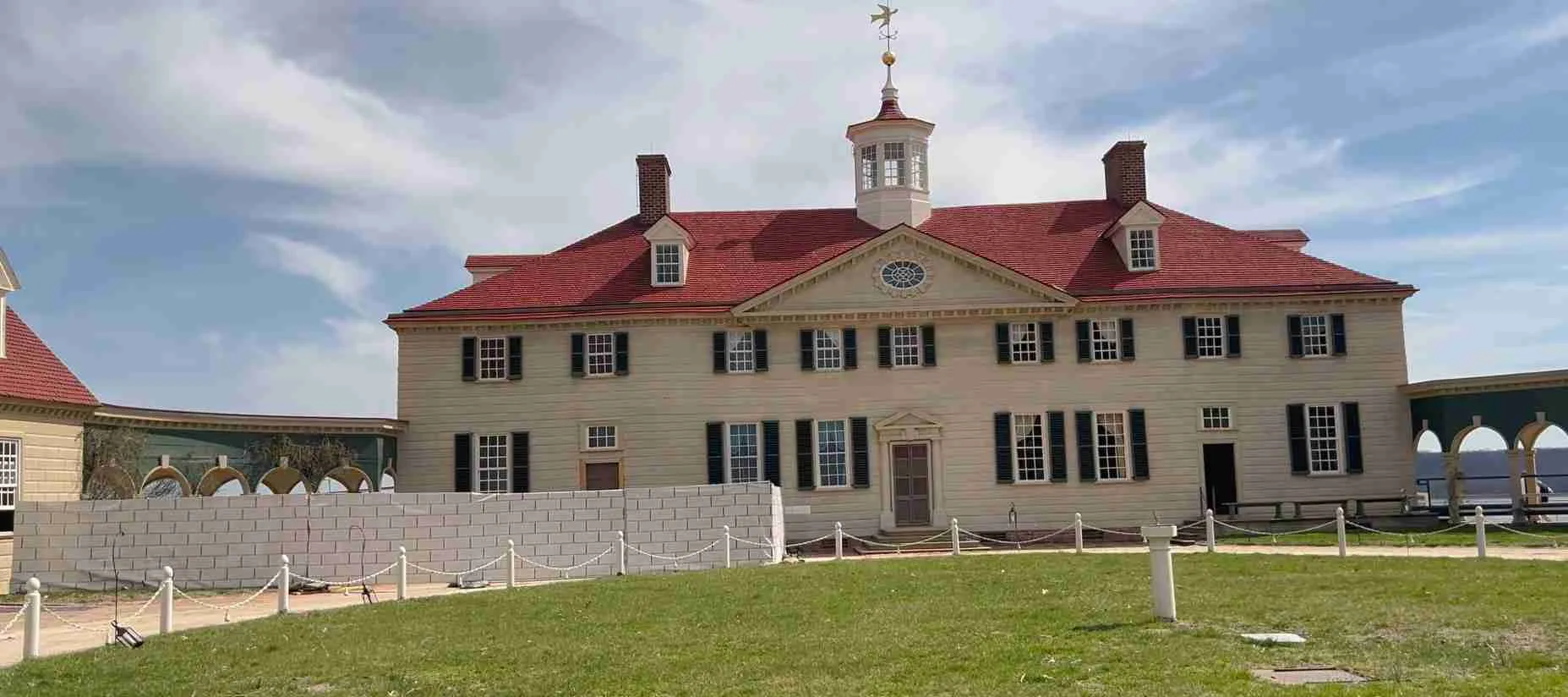
Mount Vernon opens daily year-round except Christmas with admission at $30 for adults, $16 for youth ages 6-11, and free entry for children under 6. The grounds pass includes access to the mansion’s first-floor guided tours (departing every 15-20 minutes), the Donald W. Reynolds Museum and Education Center, Ford Orientation Center, pioneer farming demonstration area, slave memorial and burial ground, distillery and gristmill site (weekends April-October), and four period gardens Washington personally designed. Behind-the-Scenes tours ($60 additional, 75 minutes) provide access to mansion rooms typically closed to the public including the iconic dome room visible from the Potomac River.
The estate’s museum exhibits contextualize Washington’s life through interactive displays, rare artifacts including his dentures and field telescope, life-size recreations of Revolutionary War scenes, and comprehensive examination of the 317 enslaved individuals who labored on Washington’s five farms. The orientation center’s 15-minute film narrated by dramatic historians provides essential background before mansion touring. Outdoor spaces include the working blacksmith shop, spinning and weaving demonstrations in reconstructed dependencies, rare-breed livestock at the experimental farm, and riverside walking paths with Potomac vistas identical to views Washington enjoyed during his retirement years.
Transportation to Mount Vernon offers multiple approaches suited to different travel styles. Metro Yellow or Blue lines reach King Street-Old Town Alexandria station in 25-30 minutes from downtown DC, where travelers can rent bikes for the scenic 8-mile Mount Vernon Trail ride along the Potomac River or take Bus Route 11Y operated by Fairfax Connector. The dedicated bike trail features paved surfaces suitable for recreational riders, frequent river overlooks, and minimal elevation change, though the route requires 1-1.5 hours riding time each direction for average cyclists. Rideshare services from King Street Metro to Mount Vernon cost $15-25 one-way. Personal vehicles reach the estate via George Washington Memorial Parkway with free parking in large lots near the visitor entrance.
Alexandria’s Old Town historic district merits 3-4 hours exploration before or after Mount Vernon visits. The waterfront neighborhood preserves 18th and 19th century brick architecture along cobblestone streets that Washington himself walked regularly during Alexandria’s days as a major tobacco port. King Street forms the main commercial corridor with 200+ independent shops, galleries, and restaurants operating from restored colonial and Federal-period buildings. The Torpedo Factory Art Center houses 80+ working artist studios in a converted munitions facility where visitors watch ceramicists, painters, printmakers, and sculptors creating works in real-time.
Historic sites within Old Town include Gadsby’s Tavern Museum where Washington attended social gatherings and political meetings, Carlyle House documenting colonial merchant life, and the Freedom House Museum examining Alexandria’s role in the domestic slave trade as a major Mid-Atlantic auction center. The waterfront promenade provides Potomac River views, outdoor dining, seasonal boat tours, and access to the seawall Washington helped plan during Alexandria’s port development. Christ Church dating to 1773 maintains Washington’s pew and offers architectural tours of this important early American religious structure.
Dining options span casual waterfront cafes to upscale restaurants specializing in Chesapeake Bay seafood. Chart House offers riverside dining with crab cakes, rockfish, and regional preparations in a restored torpedo factory building. Virtue Feed & Grain operates from a renovated 1920s feed warehouse with gastropub fare and regional craft beers. The Warehouse serves oysters and Southern-influenced cuisine in a historic brick space near the waterfront. Reservations prove essential for popular restaurants during peak weekend periods.
Combined Mount Vernon and Alexandria day trips typically span 7-9 hours allowing 3-4 hours at the estate and 3-4 hours in Old Town. Morning starts at Mount Vernon (opening 9-9:30 AM seasonally) beat afternoon crowds and provide better lighting for mansion photography. Afternoon transitions to Alexandria align with lunch timing and gallery openings. Reverse sequencing works equally well with morning Old Town exploration and afternoon Mount Vernon touring. The combination represents the region’s most time-efficient high-value day trip given minimal travel time between destinations and compact walkable districts at both sites.
Baltimore Maryland 2026: Harbor Revitalization and Maritime Heritage
Baltimore stands 40 miles northeast of Washington DC as the Mid-Atlantic’s largest city and premier maritime destination. The Chesapeake Bay port city underwent extensive Inner Harbor redevelopment transforming abandoned industrial waterfront into museums, restaurants, shopping complexes, and public promenades that attract millions of annual visitors. Historic neighborhoods surrounding the harbor preserve 19th century rowhouse architecture, ethnic communities, and cultural institutions that reflect Baltimore’s industrial heritage and immigrant history.
MARC commuter rail Penn Line provides the most economical DC to Baltimore connection at $8 one-way ($16 roundtrip) with trains departing Union Station hourly during weekday periods and select weekend service. The 40-minute journey terminates at Baltimore Penn Station in the Mount Vernon cultural district 1.5 miles north of Inner Harbor attractions. Amtrak Northeast Regional trains offer additional departures at $35-65 roundtrip depending on booking timing and travel period, reaching Baltimore Penn Station in 30-40 minutes. Both rail options arrive near free Charm City Circulator buses serving Inner Harbor, Fells Point, and Federal Hill neighborhoods.
Inner Harbor concentrations include the National Aquarium showcasing 20,000 animals across Atlantic Coral Reef, Amazon River Forest, and Australian Wild Extremes exhibits. Admission costs $40 for adults with advance online booking recommended during peak periods. Historic Ships in Baltimore ($18 adults) provides access to USS Constellation, the last Civil War-era vessel afloat, submarine USS Torsk, lightship Chesapeake, and Coast Guard Cutter Taney. Fort McHenry National Monument ($15 per person, free for children under 16) marks the site of the 1814 British bombardment that inspired “The Star-Spangled Banner,” with ranger programs, fort tours, and waterfront walking paths.
Free museum options include the Walters Art Museum displaying comprehensive collections from ancient Egypt through 20th century European and American works, plus the American Visionary Art Museum ($16 adults) celebrating self-taught artists and outsider creativity. The Baltimore Museum of Art maintains free general admission with notable collections of Matisse works and contemporary pieces.
Neighborhood exploration reveals Baltimore’s authentic character beyond Inner Harbor tourist zones. Fells Point preserves the city’s oldest waterfront district with cobblestone streets, 18th century taverns including The Horse You Came In On Saloon (America’s oldest continuously operated bar), live music venues, and Thames Street restaurant row serving Chesapeake seafood specialties. Federal Hill offers harbor panoramas from a hilltop park and Cross Street Market’s food stalls featuring crab cakes, pit beef sandwiches, and regional specialties. Hampden showcases eclectic vintage shops, murals, and The Avenue’s independent boutiques and cafes north of downtown.
Food represents a Baltimore day trip highlight with regional specialties unavailable in DC’s more cosmopolitan dining scene. Steamed blue crabs arrive at seafood houses throughout warm months with classic preparations using Old Bay seasoning. Crab cakes appear on virtually every menu with purists favoring minimal filler and maximum lump crabmeat. Pit beef sandwiches unique to Baltimore feature charcoal-grilled top round beef sliced thin and served on Kaiser rolls with horseradish sauce. Berger cookies (soft cookies with thick fudge frosting) represent the city’s signature dessert available at DiBartolo’s Bakery and other traditional sources.
Day trip timing affects neighborhood accessibility and activity patterns. Weekend visits activate farmers markets including Waverly (Saturdays) and cross-neighborhood events but increase crowds at major attractions. Weekday travel provides quieter museum experiences and easier restaurant access though some cultural venues observe Monday closures. Summer enables waterfront dining and harbor boat tours while winter concentrates activity at indoor museums and historic sites. Evening departures capture sunset harbor views but require attention to return train schedules with last MARC departures around 7-8 PM weekdays and earlier weekend timing.
Baltimore day trips typically span 8-10 hours with 10 AM departure from DC and 6-8 PM return timing. This schedule allows 6-7 hours in Baltimore supporting two major attractions plus neighborhood exploration and dining. Focused itineraries might emphasize Inner Harbor museums and Fort McHenry, alternatively prioritizing neighborhood walks through Fells Point and Federal Hill with food-focused experiences. The city’s compact core and free Circulator bus service enable efficient movement between districts without vehicle requirements.
Philadelphia Pennsylvania 2026: Independence Hall and Revolutionary History
Philadelphia sits 140 miles northeast of Washington DC as the birthplace of American independence and constitutional government. The city’s Independence National Historical Park preserves the meeting halls where delegates debated separation from Britain and drafted the Constitution, while surrounding neighborhoods showcase 18th century architecture, world-class museums, and vibrant Italian Market and Reading Terminal food scenes. Day trip accessibility via Amtrak Northeast Corridor makes Philadelphia feasible for travelers prioritizing Revolutionary history and urban cultural experiences.
Amtrak Northeast Regional trains depart Washington DC’s Union Station hourly throughout daytime with Philadelphia 30th Street Station arrivals in 1 hour 45 minutes to 2 hours depending on intermediate stops. Standard roundtrip fares range $50-80 with advance booking and off-peak travel yielding lower prices. Night Owl discount fares between 7 PM and 5 AM reduce costs to $20 roundtrip though these late schedules limit daytime Philadelphia hours. Acela express service reaches Philadelphia in 90 minutes but costs $120-160 roundtrip without clear time advantages justifying premium pricing for day trip purposes. Megabus and other intercity buses offer $20-40 roundtrip alternatives with 2.5-3 hour travel times.
Independence Hall free timed-entry tickets (required March through December) release online at recreation.gov at 10 AM two weeks before visit dates and typically exhaust within hours for weekend slots. Same-day tickets distribute at Independence Visitor Center starting 8:30 AM first-come first-served, requiring early arrival during peak periods. The 35-minute ranger-guided tours explore the Assembly Room where the Declaration of Independence and Constitution were debated, signed, and adopted. Adjacent Liberty Bell Center provides free access to the iconic cracked bell with exhibits examining its symbolism in abolitionist and civil rights movements.
Independence National Historical Park encompasses 55 acres of preserved 18th century Philadelphia with additional free sites including Congress Hall where the first U.S. Congress met, Carpenters’ Hall hosting the First Continental Congress, and Franklin Court marking Benjamin Franklin’s home location with underground museum displays. The National Constitution Center ($15 adults, $11 children) offers interactive exhibits, theatrical programs, and Signers’ Hall featuring life-size bronze statues of all 42 Constitutional Convention delegates and three dissenters who refused to sign.
Museum district attractions cluster along Benjamin Franklin Parkway with the Philadelphia Museum of Art ($25 adults) showcasing comprehensive collections from medieval armor through contemporary works, plus the famous “Rocky Steps” entrance providing city skyline views. The Barnes Foundation ($30 adults, advance tickets required) displays one of the world’s premier Impressionist and Post-Impressionist collections with 181 Renoirs, 69 Cézannes, and significant Matisse holdings. The Franklin Institute ($25 adults) emphasizes hands-on science exhibits, planetarium shows, and interactive demonstrations popular with families.
Reading Terminal Market operating since 1893 concentrates food vendors, farmers, Amish merchants, and specialty shops under a historic train shed one block from Independence Hall. Market highlights include Bassetts Ice Cream (America’s oldest ice cream company), DiNic’s roast pork sandwiches, Beiler’s donuts from Lancaster County Amish bakers, and dozens of ethnic food stalls representing Philadelphia’s diverse immigrant communities. The adjacent Chinatown district offers dim sum restaurants, Asian markets, and the ornate Friendship Gate marking the neighborhood’s ceremonial entrance.
South Philadelphia’s Italian Market stretches along 9th Street with cheese shops, butchers, produce vendors, and restaurants serving authentic regional Italian specialties. The neighborhood gained fame through “Rocky” film scenes and maintains old-world atmosphere with sidewalk displays, family-run businesses, and minimal chain store presence. Pat’s and Geno’s cheesesteak stands face each other at 9th and Passyunk with perpetual debate over superior sandwiches, though local insiders often favor Jim’s Steaks on South Street or other less-touristy alternatives.
Philadelphia day trips demand selective itinerary planning given the city’s vast cultural offerings and 4-hour roundtrip travel commitment. Focus options might emphasize Independence Hall and historic district exploration (4-5 hours), alternatively prioritizing museum concentration with Art Museum and Barnes Foundation visits (5-6 hours), or food-focused itineraries combining Reading Terminal Market and Italian Market exploration with neighborhood walks. Attempting comprehensive coverage proves unrealistic in single-day timing.
Successful Philadelphia day trips typically depart DC by 7-8 AM to maximize on-ground hours and allow 6-7 hours in the city before 5-7 PM returns. This schedule supports two major attractions or one museum plus Independence Hall and food market exploration. Spring and fall provide optimal weather for outdoor walking between sites while summer heat can make lengthy pedestrian circuits uncomfortable. Winter concentrates activity at indoor venues with shorter daylight limiting late afternoon options.
Annapolis Maryland 2026: Naval Academy and Chesapeake Bay Capital
Annapolis sits 30 miles east of Washington DC on Maryland’s Western Shore as the state capital and home to the United States Naval Academy. The waterfront city preserves intact 18th century architecture throughout its historic district, offers Chesapeake Bay maritime culture, operates a thriving restaurant scene emphasizing regional seafood, and maintains active sailing community atmosphere distinct from inland capital characteristics. The compact downtown area and reasonable driving distance make Annapolis ideal for travelers seeking authentic Chesapeake experience without extensive travel time.
Personal vehicle access via Route 50 East provides the most practical Annapolis approach with 45-60 minute drive time depending on traffic conditions and departure point within the DC metro area. Public parking concentrates in garages near the waterfront with hourly rates $2-4 and daily maximums $12-20. Street parking exists but requires meter feeding and close attention to time restrictions during business hours. Limited public transportation options include FlixBus departures from DC with afternoon return service, though schedules restrict flexibility for travelers preferring customized visit timing.
The United States Naval Academy occupies 338 acres along Severn River and Chesapeake Bay with campus access via visitor center entry process requiring photo ID and security screening. Walking tours departing from Armel-Leftwich Visitor Center ($14 adults, $12 seniors/students) explore the academy’s historic buildings, monuments, and waterfront areas including Bancroft Hall (world’s largest dormitory housing 4,400 midshipmen), chapel with John Paul Jones crypt, and Tecumseh statue. Self-guided visits allow chapel access and limited campus areas without tour participation. Noon formation ceremonies occur weekdays when midshipmen assemble in ceremonial dress outside Bancroft Hall, providing dramatic spectacle of 4,000+ uniformed students marching in precision.
Maryland State House dating to 1772 offers free guided tours of America’s oldest state capitol in continuous legislative use, featuring the Old Senate Chamber where the Continental Congress ratified the Treaty of Paris ending the Revolutionary War and accepted George Washington’s resignation as Continental Army commander. The building’s distinctive wooden dome topped with carved tobacco plant highlights Maryland’s colonial agricultural economy.
Historic district walking encompasses narrow colonial-era streets with 18th century architecture including Hammond-Harwood House (1774), William Paca House and Garden (1765), and dozens of brick townhomes predating the Revolutionary War. City Dock forms Annapolis’s waterfront center with sailboat moorings, waterfront restaurants, Market House food vendors, and departure points for harbor cruises and sailing charters. The dock area transitions into Main Street’s retail corridor featuring maritime outfitters, galleries, clothing boutiques, and specialty shops catering to sailing community and heritage tourists.
Dining emphasizes Chesapeake Bay seafood with dozens of restaurants serving Maryland blue crab, oysters, rockfish, and regional preparations. Carrol’s Creek Cafe overlooking Spa Creek offers waterfront dining with crab imperial, stuffed rockfish, and seasonal preparations. Chick & Ruth’s Delly operates a classic American diner famous for 6-pound milkshakes and daily Pledge of Allegiance recitations. O’Learys Seafood represents traditional approach with steamed crabs, crab cakes, and Old Bay-seasoned preparations. Waterfront locations command premium pricing while inland establishments offer comparable quality at moderate costs.
Saturday farmers markets at Reynolds Tavern and Sunday markets at Eastport neighborhood provide local produce, prepared foods, artisan products, and community gathering spaces. Spring and summer Saturday evening concerts at City Dock activate the waterfront with free performances drawing residents and visitors. First Sunday Art Walk (monthly) opens galleries throughout the historic district with receptions, demonstrations, and artist conversations. The annual October Sailboat Show and October Powerboat Show represent major yachting industry events transforming the waterfront into floating exhibitions.
Annapolis day trips typically span 6-8 hours allowing morning Naval Academy touring, afternoon historic district exploration, and waterfront dining before return. Wednesday through Sunday visits provide fullest activity options while Monday and Tuesday limit some historic house access. Spring through fall offers optimal weather for outdoor walking and waterfront enjoyment while winter concentrates activity at indoor attractions and restaurant dining. The city’s walkable scale eliminates transportation needs once parked with all major sites within 15-minute walks from City Dock.
Charlottesville and Monticello Virginia 2026: Jefferson’s Mountain Estate
Thomas Jefferson’s Monticello stands atop a modest mountain 5 miles southeast of Charlottesville as the only American private residence designated UNESCO World Heritage status. The neoclassical plantation house Jefferson designed and continuously modified across 40 years represents architectural innovation, intellectual ambition, and the profound contradictions of a slaveholding philosopher championing human equality. Charlottesville’s vibrant downtown pedestrian mall and University of Virginia complement the estate visit, though the 120-mile distance from Washington DC requires early departure for productive day trip timing.
Personal vehicle access via I-66 West to Route 29 South requires 2-2.5 hours depending on traffic with Route 29 corridor congestion extending travel during peak periods. Charlottesville’s compact size and Monticello’s suburban location 5 miles from downtown center make vehicle travel substantially more practical than public transportation alternatives. Amtrak Cardinal and Crescent routes serve Charlottesville station three times weekly with irregular schedules unsuitable for reliable day trip planning. Several guided tour operators provide DC to Monticello full-day excursions ($145-165 per person) including roundtrip coach transportation, admission, guided estate tour, and sometimes wine tasting stops.
Monticello admission requires advance online booking through timed entry system with Highlights Tour ($42 adults, $13 teens 12-18, $4 children 5-11, free under 5) providing guided first-floor mansion access, grounds exploration, museum exhibits, and included specialty tours of gardens and slavery interpretation sites. Behind-the-Scenes Day Pass ($105 all ages) offers exclusive 90-minute mansion tour accessing the iconic dome room and upper-level spaces typically restricted, plus full grounds access and all included programming. Family-oriented tours and From Slavery to Freedom specialized interpretations operate on select schedules with standard Highlights Tour pricing.
The David M. Rubenstein Visitor Center located at parking areas 0.5 miles from the mountaintop house provides orientation exhibits, dining facilities, gift shop, and security screening before shuttle bus transport to the summit. Exhibitions examine Jefferson’s design process, scientific interests, political career, and relationship with Sally Hemings and the enslaved community who built and maintained Monticello across generations. The mountaintop experience encompasses the mansion’s innovative architectural features including skylights, alcove beds, triple-sash windows, and underground service passages enabling enslaved workers to move unseen.
Grounds interpretation explores four gardens Jefferson meticulously documented including the thousand-foot terraced vegetable garden with heirloom varieties matching Jefferson’s planting records. Mulberry Row preserves foundations of slave dwelling sites and workshops where specialized craftspeople produced goods for plantation operations and commercial sale. The slave burial ground memorial honors the 600+ enslaved individuals documented at Monticello across Jefferson’s lifetime with only 6 marked graves surviving. Seasonal programming includes heritage crop demonstrations, archaeology updates, and specialized tours examining lesser-known aspects of plantation life.
Charlottesville’s pedestrian Downtown Mall stretches eight blocks along Main Street with 120+ shops, 30 restaurants, art galleries, pavilion venues hosting free concerts, and Saturday farmers market concentrating regional produce and prepared foods. The University of Virginia campus designed by Jefferson offers free walking access to the iconic Rotunda, Academical Village with student rooms in historic pavilions, and Serpentine Walls Jefferson devised for efficient garden heating. Campus tours departing from visitor center examine Jefferson’s educational philosophy, architectural vision, and UNESCO World Heritage designation shared with Monticello as rare recognition of an American university’s cultural significance.
Dining options emphasize farm-to-table approaches with Charlottesville’s surrounding agricultural economy supplying restaurants directly. The Local operates from sourcing principles limiting ingredients to regional producers within defined geographic radius. Hamiltons’ at First & Main serves regional American cuisine in restored industrial space. Revolutionary Soup focuses on soup, salad, and sandwich combinations using local ingredients. Reservations prove essential for popular restaurants during University events and peak visitor periods.
Charlottesville day trips require realistic assessment of travel time commitments with 4-5 hours roundtrip driving leaving 4-5 hours maximum for Monticello touring and downtown exploration. This compressed timeline pressures meal timing and limits University campus visits unless Monticello receives exclusive focus. Overnight stays better serve travelers wanting thorough engagement with multiple sites. Successful day trip execution typically emphasizes morning Monticello touring (first tours start 8:30-9 AM seasonally) and afternoon downtown lunch before 3-4 PM departure for return to DC. Reverse timing works less effectively given afternoon estate crowds and optimal morning lighting for architectural photography.
Harpers Ferry West Virginia 2026: Civil War History and River Confluence
Harpers Ferry National Historical Park preserves the mountain town at the confluence of the Potomac and Shenandoah rivers where John Brown’s 1859 raid accelerated the nation toward Civil War. The 3,500-acre park encompasses the historic Lower Town district with restored 19th century buildings, extensive hiking trail systems climbing Maryland and Loudoun Heights, riverside recreation areas popular with tubers and kayakers, and interpretive programs examining industrial development, military conflict, and African American history across the site’s multi-layered past.
Vehicle access via I-270 North to Route 340 West requires 65 miles and 75-90 minutes from central DC with park entrance fee at $20 per vehicle valid for three consecutive days (November through April free admission). Annual America the Beautiful pass ($80) covers entrance across the national park system and proves economical for travelers planning multiple park visits. The park operates year-round except major holidays with visitor center hours 9 AM to 5 PM providing orientation exhibits, bookstore, and ranger assistance.
Parking concentrates at Cavalier Heights Visitor Center 1.5 miles from Lower Town historic district with free shuttle buses transporting visitors to the riverfront area every 10-15 minutes during operating hours. Alternative parking exists at Train Station lot (limited spaces) and River Access lot closer to Lower Town but subject to capacity restrictions during peak periods. Arriving before 10 AM during summer weekends typically ensures shuttle parking availability while late morning and afternoon arrivals may encounter full lots requiring waits for departing vehicles.
Lower Town walking explores restored 19th century commercial district with museums examining armory history, Civil War battles, John Brown’s raid planning and capture site, African American community development, and Storer College’s role educating formerly enslaved people after the Civil War. Master Armorer’s House, John Brown Museum, and Wetland Museum operate within historic structures authentically furnished and interpreted. Information Center occupies the former Stagecoach Inn with orientation assistance and bookstore services. Period buildings house artisan shops, galleries, and cafes complementing historical interpretation with contemporary commercial activity.
Trail systems offer varying difficulty levels from flat riverside paths to strenuous mountain climbs gaining 1,000+ feet elevation. Maryland Heights Trail climbs 4 miles roundtrip to stone fortification ruins and cliff-edge overlooks providing dramatic views across the river confluence and Lower Town below. The challenging grade and rocky footing require fitness and proper footwear but reward effort with the park’s finest panoramas. Loudoun Heights Trail on the Virginia side offers similar views with equally demanding climbs. Riverside trails along C&O Canal Towpath provide level walking through wooded corridors paralleling the Potomac River for those preferring gentle grades and riparian environments.
Appalachian Trail crosses through Harpers Ferry with the Appalachian Trail Conservancy headquarters located in town serving as psychological midpoint for through-hikers walking from Georgia to Maine. Meeting northbound and southbound hikers along Lower Town streets provides insight into long-distance hiking culture and determination required for 2,000+ mile journeys. The trail itself climbs steeply from town through forested slopes toward Jefferson Rock overlook (0.25 miles from Lower Town) where Thomas Jefferson described the river view as “worth a voyage across the Atlantic.”
River recreation peaks during warm months with commercial outfitters offering tubing, kayaking, and rafting trips down the Shenandoah River’s gentle class I-II rapids suitable for families and inexperienced paddlers. River Riders and other operators provide equipment rental and shuttle services from takeout points back to Harpers Ferry. Fishing concentrates along both rivers with smallmouth bass, catfish, and sunfish populations supporting recreational angling. Swimming occurs in designated areas though river currents require caution and supervision of children.
Dining options within Lower Town remain limited with outdoor cafes and seasonal vendors operating during peak periods but minimal year-round restaurants. The Anvil Restaurant serves casual American fare and regional specialties in historic building space. Bringing picnic provisions enables riverside or overlook dining at scenic locations throughout the park. Nearby Charles Town 8 miles west offers more substantial restaurant options for travelers requiring full meal service.
Harpers Ferry day trips typically span 6-8 hours allowing 4-5 hours on-site for Lower Town exploration, one moderate trail hike, and museum visits before return. Morning arrivals beat shuttle parking capacity issues and provide cooler temperatures for uphill hiking during summer months. Spring and fall offer optimal weather for outdoor activity while winter reduces crowds and provides snow-enhanced scenery though some trails become icy and treacherous. The park’s combination of history, hiking, and river scenery creates diverse experience appealing to visitors with varied interests from Civil War enthusiasts to outdoor recreation seekers.
Shenandoah National Park Virginia 2026: Skyline Drive and Blue Ridge Mountains
Shenandoah National Park protects 200,000 acres of Blue Ridge Mountain wilderness 75 miles west of Washington DC with Skyline Drive’s 105-mile scenic roadway providing access to 75 overlooks, 500+ miles of hiking trails including 101 miles of Appalachian Trail, waterfalls, wildlife viewing areas, and panoramic vistas extending across Virginia’s Shenandoah Valley and Piedmont regions. The park’s proximity to the capital and scenic mountain terrain make it the region’s premier natural destination though realistic day trip planning acknowledges travel time limitations restricting comprehensive park exploration.
Vehicle access via I-66 West to Front Royal northern entrance requires 75 miles and 90 minutes from central DC with park entrance fee at $30 per vehicle valid seven consecutive days (free admission December through February). Annual America the Beautiful pass ($80) covers unlimited national park access. Swift Run Gap entrance near Charlottesville provides southern access 120 miles from DC but adds substantial travel time less suitable for day trip purposes. Most day trip visitors enter at Front Royal and drive south along Skyline Drive before reversing to exit via the same entrance.
Skyline Drive’s 35 MPH maximum speed limit intentionally slows travel encouraging overlook stops and scenic appreciation but means covering the full 105-mile route requires 3+ hours driving time alone without any hiking or extended stops. Day trip reality typically limits coverage to Front Royal entrance through milepost 40-50 representing 40-50 miles of total driving (80-100 miles roundtrip) and allowing time for several overlook stops and 1-2 shorter trail hikes. Attempting the complete drive sacrifices hiking opportunities and requires 10+ hour day trips heavily weighted toward driving rather than trail exploration.
Notable overlooks in the northern third of Skyline Drive include Range View (milepost 17) with westward vistas across Massanutten Mountain and Shenandoah Valley agricultural patchwork, Hogback Overlook (milepost 21) showing multiple ridge lines fading into hazy distance, and Stony Man Overlook (milepost 39) near the park’s highest developed area. Each overlook provides parking areas, interpretive signage explaining visible geographic features, and photographic opportunities requiring 10-15 minute stops for appreciation.
Hiking trails range from easy 0.5-mile nature walks to strenuous 10+ mile ridge climbs with varied elevation gains. Stony Man Trail (1.6 miles roundtrip, 340 feet elevation gain) reaches the park’s second-highest peak via moderate grades through forest transitioning to rock outcrop summit panoramas. Dark Hollow Falls (1.4 miles roundtrip, 440 feet descent/ascent) descends to a 70-foot waterfall via steep rocky trail requiring careful footing. Old Rag Mountain (9.4 miles loop, 2,348 feet elevation gain) represents the park’s most popular strenuous hike with rock scrambles, 360-degree summit views, and challenging technical sections unsuitable for day trip time constraints but worth overnight planning for serious hikers.
Wildlife viewing opportunities concentrate during dawn and dusk hours when white-tailed deer, black bears, and smaller mammals venture into open areas. Black bears inhabit the park year-round with approximately 300-500 individuals in the protected area. Visitors should maintain 75-yard minimum distance, never feed wildlife, and secure all food items in vehicles when leaving cars at trailheads. Deer commonly appear at overlooks and meadow edges throughout daylight hours providing photographic subjects though habituation to human presence creates safety concerns requiring visitor caution and appropriate distance maintenance.
Seasonal timing dramatically affects Shenandoah experiences. Fall foliage peaks mid-October through early November drawing massive weekend crowds that fill overlook parking areas and create traffic congestion along Skyline Drive. Midweek October visits avoid worst crowding while still capturing color displays. Spring wildflowers bloom April through May with less dramatic visual impact than fall but pleasant temperatures and thinner crowds. Summer heat and humidity make hiking uncomfortable during midday hours though higher elevation areas remain 5-10 degrees cooler than DC temperatures. Winter closures affect Skyline Drive sections during snow and ice events with reopening dependent on clearing operations.
Dining within the park concentrates at limited concession facilities at Big Meadows (milepost 51) and Skyland (milepost 42) offering cafeteria-style meals, grab-and-go options, and table service restaurants. Prices reflect captive market premium with quality generally mediocre compared to outside options. Most day trip visitors pack picnic provisions utilizing designated picnic areas at various mileposts for scenic outdoor dining. Water fountains and restroom facilities exist at major developed areas though trail access points often lack amenities requiring advance preparation.
Successful Shenandoah day trips require selective focus given time constraints. Covering Front Royal entrance through milepost 40-50 with 4-5 overlook stops and 1-2 short hikes occupies 5-6 hours plus 3 hours roundtrip driving, totaling 8-9 hour commitments. This schedule allows 7-8 AM departure from DC with 5-6 PM return timing. Attempting excessive coverage sacrifices quality engagement with specific sites. Spring and fall provide optimal weather while summer enables waterfall hikes though trails can be crowded. Winter offers solitude but requires attention to road conditions and reduced services.
Gettysburg Pennsylvania 2026: Civil War Battlefield and National Cemetery
Gettysburg National Military Park preserves the site of the Civil War’s largest and most consequential battle where 165,000 soldiers clashed July 1-3, 1863, resulting in 51,000 casualties and marking the war’s turning point. The 6,000-acre park maintains historic battlefield terrain, 1,328 monuments and markers, extensive trail systems, and interpretive programs explaining the three-day engagement’s tactical progression and strategic significance. Adjacent Gettysburg town provides dining, lodging, additional museums, and commercial tours complementing the national park experience.
Vehicle access via Route 15 North through Frederick Maryland requires 80 miles and 90-100 minutes from central DC to Gettysburg National Military Park Museum and Visitor Center. No entrance fee applies for driving battlefield roads or visiting most park areas, though the museum film and cyclorama charge $15 adults with combination tickets including film, cyclorama, and museum exhibits. Licensed battlefield guides available at visitor center provide detailed 2-hour vehicle tours ($75 for 1-6 passengers) navigating the complex battlefield terrain while explaining troop movements, tactical decisions, and individual action sites across the three-day battle.
Museum exhibits present comprehensive battle narrative through artifacts, interactive displays, weaponry collections, and multimedia presentations explaining both strategic context and individual soldier experiences. The 1884 cyclorama painting stretches 377 feet in circumference and 42 feet tall depicting Pickett’s Charge in dramatic panoramic detail with rotating platform presentation and accompanying narration. The 22-minute film “A New Birth of Freedom” narrated by Morgan Freeman provides essential orientation before battlefield touring emphasizing the battle’s significance in American history and Lincoln’s Gettysburg Address delivered at the National Cemetery dedication four months after the fighting.
Self-guided auto tour routes follow numbered stops corresponding to museum-provided maps explaining Day One, Day Two, and Day Three battle progression. The complete circuit spans 24 miles visiting key engagement sites including McPherson’s Ridge where fighting initiated July 1, Devil’s Den and Little Round Top from Day Two’s southern flank assaults, and Cemetery Ridge marking Day Three’s climactic Confederate assault. Each stop provides wayside exhibits, monument collections honoring participating regiments, and walking trails to specific tactical positions. The complete auto tour requires 3-4 hours with adequate stops for reading interpretive materials and short trail walks.
Gettysburg National Cemetery adjacent to the battlefield visitor center contains 3,512 interments including 979 unknowns among the Union dead from the battle. The Soldiers’ National Monument marks the site where Abraham Lincoln delivered the Gettysburg Address November 19, 1863. The 272-word speech redefined the war’s purpose from preserving the Union to creating a “new birth of freedom” and abolishing slavery, transforming American constitutional understanding. The cemetery’s semicircular design organized by state with identical headstones emphasizing democratic equality contrasts with battlefield monuments celebrating individual units and commanders.
Eisenhower National Historic Site preserves President Dwight Eisenhower’s retirement farm adjacent to the battlefield where he hosted world leaders during the 1960s. Shuttle transportation from battlefield visitor center ($9 adults) accesses the property with guided mansion tours explaining Eisenhower’s life, presidential career, and Cold War diplomacy conducted from the rural retreat. The farm’s preservation as working agricultural property demonstrates mid-20th century American farm practices.
Downtown Gettysburg businesses include numerous commercial battlefield tour operators, museums examining aspects of the battle from medical treatment to civilian experiences, ghost tour operations capitalizing on paranormal reputation, restaurants serving American fare, and specialty shops selling Civil War books, reproductions, and memorabilia. Dobbin House Tavern operates in a 1776 structure with period dining rooms serving colonial-era recipes and underground railroad exhibit. General Pickett’s Buffet provides all-you-can-eat American selections popular with tour groups. The Farnsworth House Inn serves Civil War-era inspired meals in candlelit dining rooms within a building bearing battle damage from sharpshooter activity.
Seasonal timing affects battlefield experiences with summer heat making lengthy walking uncomfortable and July anniversary weekends drawing large reenactment events and ceremonial programs. Spring and fall provide moderate temperatures ideal for outdoor exploration while winter offers solitude but limited programming and shorter daylight hours. Weekday visits encounter fewer crowds than weekends when tour buses and family groups concentrate at popular sites. Early morning starts before 10 AM provide parking advantages at high-visitation stops like Little Round Top.
Gettysburg day trips typically span 8-10 hours with 8-9 AM departure from DC allowing 5-6 hours on-site before 5-6 PM return. This schedule supports museum film and cyclorama viewing plus abbreviated auto tour hitting major sites or alternatively licensed guide tour covering comprehensive battlefield interpretation. Attempting full 24-mile auto circuit plus museum experiences exceeds realistic day trip timing and better suits overnight visits. Focused itineraries might emphasize Day Two southern flank actions or Day Three climax at Cemetery Ridge rather than attempting complete coverage of the vast battlefield complex.
Colonial Williamsburg Virginia 2026: Living History Museum and Revolutionary Capital
Colonial Williamsburg preserves and interprets Virginia’s colonial capital through 301 acres of restored 18th century buildings, historic trades demonstrations, costumed interpretation, and immersive programming recreating daily life in Revolutionary-era America. The nonprofit foundation operates the world’s largest living history museum with 88 original period structures, hundreds of reconstructed buildings, and interpretive experiences ranging from cabinetmaker demonstrations to political debates examining slavery, revolution, and governance in the founding period.
Colonial Williamsburg’s 150-mile distance from Washington DC and comprehensive site programming make overnight visits substantially more rewarding than compressed day trip attempts, though determined travelers departing by 6-7 AM can achieve meaningful single-day experiences. Vehicle access via I-95 South to Route 64 East requires 2.5-3 hours depending on traffic. No public transportation options exist making personal vehicle or guided tour package the only practical approaches.
Admission pricing operates on tiered system with single-day tickets at $50 adults ($30 youth 6-12, free under 6) providing access to historic buildings, tradeshops, museums, and most programming. Multi-day tickets ($60 adults) extend access across consecutive days encouraging thorough engagement with the vast site. Annual passes ($95 adults) prove economical for repeat visitors and Virginia residents. Premium experiences including Governor’s Palace candlelight tours, specialty dinners, and exclusive programs carry additional charges beyond basic admission.
Historic Area exploration spans Duke of Gloucester Street’s mile-long corridor connecting Capitol building at eastern terminus with College of William & Mary at western end. Original 18th century structures include Bruton Parish Church (1715) with active Episcopal congregation, Peyton Randolph House demonstrating wealthy planter lifestyle, James Geddy House showing middle-class silversmith operation, and dozens of residential, commercial, and governmental buildings interpreted through period furnishings and costumed staff. Reconstructed buildings including the Capitol, Governor’s Palace, and Courthouse occupy original foundations with architectural reconstructions based on archaeological evidence and historical documentation.
Trades demonstrations throughout the Historic Area present skilled craftspeople practicing colonial-era techniques producing period-accurate goods sold in museum shops. The Bindery creates hand-bound books using 18th century methods and tools. The Gunsmith forges firearms following Revolutionary-era patterns. The Silversmith demonstrates metalworking techniques creating reproduction colonial pieces. The Apothecary compounds medicines using period recipes and botanical ingredients. The Blacksmith shapes iron implements and hardware still required for building maintenance across the restored area. Each trade shop offers visitor interaction with craftspeople explaining techniques, historical context, and contemporary applications of traditional skills.
Character interpretation programs present first-person portrayals of historical figures from Thomas Jefferson and Patrick Henry to enslaved individuals and middle-class merchants. These performances blend theatrical presentation with historical accuracy examining complex issues including slavery’s moral contradictions, revolutionary ideology’s selective application, and daily life realities across social classes. Evening programs often feature political debates, court proceedings, and dramatized historical events providing entertainment while educating about founding-era controversies and decision-making processes.
Art Museums of Colonial Williamsburg include the DeWitt Wallace Decorative Arts Museum showcasing exceptional collections of English and American furniture, ceramics, textiles, and paintings from 1600-1830. The Abby Aldrich Rockefeller Folk Art Museum displays American folk art traditions through paintings, sculptures, and utilitarian objects created by self-taught artists. Both museums require separate timed-entry tickets beyond basic Historic Area admission and merit 1-2 hours exploration each for visitors interested in material culture and artistic heritage.
Dining options range from colonial tavern experiences to contemporary restaurants with King’s Arms Tavern serving 18th century-inspired dishes in period setting with costumed servers and strolling musicians. Shields Tavern offers similar historical atmosphere with heartier fare and less formal service. Christiana Campbell’s Tavern specializes in seafood preparations favored by George Washington during assembly sessions. Contemporary options at Williamsburg Lodge and other properties provide familiar American cuisine for visitors preferring modern presentation.
Adjacent Jamestown Settlement and Yorktown Battlefield extend Virginia’s colonial narrative to America’s first permanent English settlement (1607) and Revolutionary War’s concluding battle (1781). Jamestown features recreated fort, Powhatan village, and replica ships with living history interpretation. Yorktown preserves siege lines, battlefield terrain, and victory monument marking British surrender. Each site merits 2-3 hours minimum exploration and combines with Colonial Williamsburg for comprehensive Tidewater historical experience better suited to multi-day visits than day trip compression.
Colonial Williamsburg day trips require ruthless prioritization given 5-6 hour roundtrip travel commitment leaving just 4-5 hours maximum on-site. This compressed schedule allows abbreviated Historic Area walking, 2-3 building tours, selected trades demonstrations, and quick dining before departure. Overnight visits enable evening programming, comprehensive building tours, museum exploration, and relaxed engagement with the site’s extensive offerings. Travelers committed to day trip approach should depart DC by 6-7 AM, arrive at Colonial Williamsburg by 9-9:30 AM, and depart by 2-3 PM for return to DC by 5-6 PM.
Leesburg and Middleburg Virginia 2026: Wine Country and Hunt Country
Loudoun County’s wine region and adjacent Middleburg hunt country west of Washington DC offer agricultural landscapes, vineyard tasting rooms, equestrian estates, and village shopping distinct from urban capital character. The rolling Piedmont terrain between Blue Ridge foothills and coastal plain supports 40+ wineries producing Viognier, Cabernet Franc, and other varietals in scenic countryside settings. Historic villages preserve colonial and Federal architecture while modern amenities serve weekending urbanites and destination tourists.
Leesburg sits 35 miles northwest of DC via Route 7 West with 45-60 minute drive time depending on traffic conditions. The county seat functions as wine region gateway with historic downtown, farmers market, restaurants, and proximity to vineyard concentrations along Routes 15 and 690. Middleburg lies 50 miles west via Route 50 maintaining exclusive hunt country atmosphere with designer boutiques, art galleries, luxury lodging, and limited commercial development preserving rural character.
Vineyard visits operate primarily through scheduled tastings requiring advance reservations at popular properties during peak weekend periods. Tasting fees range $15-30 per person typically providing 4-6 wine samples with light snacks, outdoor seating on vineyard terraces, and purchase options for bottles and cases. Notable wineries include Breaux Vineyards emphasizing Bordeaux-style blends in scenic mountain-view setting, Stone Tower Winery producing estate-grown varieties with event space and food truck partnerships, RdV Vineyards offering ultra-premium limited-production wines requiring membership or special access, and Tarara Winery combining tastings with cave tours and event facilities.
Wine touring strategies affect costs and experiences. Self-guided vineyard visits using personal vehicles provide flexibility and cost control though require designated drivers abstaining from tastings. Commercial wine tour operators ($90-150 per person) provide roundtrip coach transportation from DC-area pickup points, multiple winery stops, lunch inclusions, and guide services eliminating driving concerns and enhancing safety. Small group tours in luxury vehicles ($150-220 per person) offer personalized experiences with flexible itineraries and premium winery access. Most day trip visitors target 2-3 wineries allowing adequate time for tastings, grounds exploration, and dining without excessive rushing between properties.
Leesburg’s historic district features late 18th and early 19th century architecture along Market Street and surrounding blocks with Loudoun Museum providing county history interpretation, courthouse square anchoring the town center, and King Street’s commercial corridor offering restaurants, shops, and galleries. Saturday farmers markets operate spring through fall with local produce, prepared foods, artisan products, and community gathering atmosphere. Outlets at Leesburg provide extensive brand-name discount shopping though outlet mall atmosphere contrasts sharply with wine country aesthetic most visitors seek.
Middleburg maintains exclusive small-town character with designer boutiques, antiques shops, art galleries, and equestrian outfitters serving the hunt country estate community. The Red Fox Inn dating to 1728 operates as the region’s signature property with tavern dining, upscale accommodations, and long history hosting travelers on the thoroughfare between Alexandria and Winchester. Middleburg’s compact two-block downtown enables easy walking with National Sporting Library & Museum examining equestrian and field sports heritage through rare books, art, and artifacts.
Dining emphasizes farm-to-table approaches with numerous restaurants sourcing ingredients from Loudoun County’s agricultural producers. The Wine Kitchen in Leesburg features regional ingredients paired with Virginia wine selections. Harrimans Virginia Piedmont Grill serves upscale American cuisine in Middleburg. Market Salamander at Salamander Resort offers casual dining with local produce emphasis. Most vineyards prohibit outside food but some allow picnic provisions on grounds when purchasing wine, check individual policies before planning vineyard picnics.
Seasonal timing affects wine country experiences with spring and fall providing optimal weather for outdoor tastings and scenic drives through blooming or colored landscapes. Summer heat makes midday tasting room visits uncomfortable though properties with covered terraces or climate-controlled spaces remain pleasant. Harvest activities September through October create additional vineyard activity and some properties offer grape stomping or harvest participation programs. Winter reduces crowds and some vineyards close seasonally or operate limited hours requiring advance confirmation of tasting room availability.
Wine country day trips typically span 6-8 hours allowing morning departure from DC, 2-3 winery visits across afternoon hours, village shopping or dining, and early evening return. This schedule provides relaxed pacing without excessive rushing between sites. Weekday visits encounter lighter crowds than peak summer and fall weekends when advance reservations become essential at popular properties. The region’s proximity to DC makes it accessible for shorter afternoon excursions though half-day visits limit vineyard coverage to 1-2 stops.
Ocean City Maryland 2026: Atlantic Beach and Boardwalk Resort
Ocean City stretches 10 miles along Maryland’s Atlantic coast as the Mid-Atlantic’s premier beach resort with free sandy shores, 2.5-mile boardwalk entertainment district, amusement parks, fishing opportunities, and summer beach town atmosphere. The barrier island destination draws millions of annual visitors to Delmarva Peninsula coastal recreation requiring 3-hour drives from Washington DC but rewarding effort with classic American beach resort experiences unavailable at closer inland destinations.
Vehicle access via Route 50 East crosses Chesapeake Bay Bridge and traverses Eastern Shore agricultural landscapes before reaching the coast. The 125-mile journey requires 2.5-3 hours depending on Bay Bridge traffic which experiences severe weekend congestion during summer months with backups extending 1-2 hours at peak periods. Friday afternoon and Sunday evening bridge crossings should be avoided by flexible travelers willing to adjust timing. Early morning Saturday departures or midweek travel encounter substantially lighter traffic enabling closer to 2.5-hour drive times.
Beach access remains free along Ocean City’s entire 10-mile length with public beach areas requiring no admission fees. Parking operates through metered street spaces ($2-3 per hour) and municipal lots ($15-25 daily) with prime oceanfront locations filling early during summer weekends. Arriving before 9 AM typically ensures parking availability while late morning and afternoon arrivals may require parking several blocks from beach access points. Boardwalk district at the southern end concentrates most commercial development with amusement parks, arcades, restaurants, and shops clustered near Inlet parking areas.
Boardwalk attractions include Trimper’s Rides operating since 1902 with vintage carousel and modern amusement rides charging individual ride tickets or unlimited-ride wristbands ($30-40). Jolly Roger amusement park franchises operate at Pier and 30th Street locations featuring roller coasters, go-karts, mini golf, water parks, and family attractions with similar wristband pricing structures. Ripley’s Believe It or Not Museum ($18 adults) presents oddities and interactive exhibits in boardwalk location. Amusement pricing accumulates quickly for families with unlimited ride wristbands proving economical for extended visits while individual ride tickets suit selective participation.
Fishing opportunities span surf fishing from beach access, pier fishing from several oceanfront piers ($10-12 daily access), and charter boat deep-sea fishing departing from marinas along the bayside. Surf fishing targets bluefish, striped bass, and other species migrating along the coast seasonally. No license required for saltwater recreational fishing in Maryland. Tackle shops near fishing piers rent equipment and provide local knowledge about current conditions and productive techniques. Charter boats ($600-1,200 full-day for groups up to 6) pursue tuna, marlin, mahi-mahi, and bottom species offshore requiring advance booking during peak summer season.
Dining emphasizes seafood though boardwalk stands and casual restaurants offer typical beach town American fare. Fractured Prune serves creative donut flavors in multiple locations. Thrasher’s French Fries represents boardwalk tradition since 1929 serving fries exclusively without ketchup as a policy. Belly Busters serves breakfast and lunch with generous portions and reasonable pricing. Fish Tales serves waterfront seafood with outdoor seating overlooking harbor. Reservations prove difficult at popular dinner hours with casual walk-up restaurants and takeout alternatives often providing practical solutions.
Assateague Island National Seashore adjacent to Ocean City’s southern end protects barrier island wilderness with wild horse populations, pristine beaches, maritime forest, and minimal development contrasting sharply with Ocean City’s commercial density. Day-use fees ($25 per vehicle) provide beach access, hiking trails, and wildlife viewing with wild horses frequently visible along roadways and beach areas. The island’s natural character and reduced crowds appeal to visitors seeking quieter beach experiences though swimming areas lack lifeguard coverage requiring swimmer caution.
Seasonal timing dramatically affects Ocean City experiences. Summer weekends pack the resort with family vacationers, young adults, and day trippers creating maximum crowds, premium pricing, and energetic atmosphere. Shoulder seasons in May and September provide moderate weather, reduced crowds, and lower lodging rates though water temperatures remain cold in spring and some businesses reduce hours or close after Labor Day. Weekday summer visits encounter lighter crowds than weekends while maintaining full business operations and warmer ocean temperatures. Winter essentially shuts down Ocean City with most businesses closing and the resort town becoming largely dormant.
Ocean City day trips require early departure and realistic expectations about travel time commitments. Leaving DC by 6-7 AM enables 9-10 AM beach arrival providing 6-7 hours for swimming, boardwalk activities, and dining before 4-5 PM departure for return reaching DC by 7-8 PM assuming moderate traffic. Attempting late afternoon or evening returns on summer Sundays risks severe Bay Bridge congestion potentially extending returns past 10 PM. The 6-hour roundtrip driving commitment for 6-7 hours beach time represents borderline day trip feasibility with many travelers opting for overnight stays enabling relaxed beach enjoyment without extensive same-day driving.
Practical Planning Tips for Washington DC Day Trips 2026
Successful day trip execution from Washington DC requires strategic planning addressing transportation modes, budget allocation, seasonal timing, and realistic itinerary development. These practical considerations affect destination selection, cost management, and overall experience quality whether traveling independently or joining organized tours.
Transportation Mode Selection for DC Day Trips 2026
Transportation choices fundamentally shape day trip experiences and costs. Personal vehicles provide maximum flexibility for rural destinations like Shenandoah National Park, wine country, and beach areas lacking public transit access. Parking costs at urban destinations like Philadelphia and Baltimore add $15-25 daily though fuel expenses typically remain modest for distances under 150 miles roundtrip. Rental cars suit visitors without personal vehicles though daily rental fees $50-80 plus insurance and fuel increase total costs substantially.
Amtrak and MARC commuter rail excel for Philadelphia, Baltimore, and Wilmington corridor destinations providing comfortable seating, reliable schedules, and downtown station arrivals eliminating parking concerns and traffic navigation. Advanced booking secures lowest Amtrak fares while MARC trains offer fixed pricing without advance purchase requirements. Rail service eliminates driving fatigue allowing travelers to read, work, or rest during transit though schedule rigidity restricts flexibility compared to personal vehicle timing control.
Guided tour packages bundle transportation, admission, and guide services typically costing $75-180 per person for full-day excursions. These comprehensive options suit travelers preferring structured experiences, lacking vehicles, or wanting expert narration though they sacrifice independent timing and destination choice. Tour schedules typically depart DC early morning around 7-8 AM and return late afternoon 5-7 PM with predetermined itineraries covering major highlights without customization options.
Budget Management Strategies for Day Trips 2026
Day trip costs vary widely based on destination selection, transportation mode, dining choices, and admission fees. Baltimore represents the most economical option with $16 roundtrip MARC fare plus free museum admission and moderate meal costs totaling $50-65 per person. Mount Vernon and Alexandria cost $55-75 per person including $30 admission, Metro fare, and lunch. Philadelphia reaches $75-115 per person for Amtrak fare and Independence Hall area dining, with optional paid museum admission adding $15-30. Shenandoah and Harpers Ferry national parks cost $65-85 per person including vehicle entrance fee ($30 and $20 respectively), fuel, and packed lunch provisions.
America the Beautiful annual national park pass ($80) eliminates per-visit entrance fees across the park system and proves economical for travelers visiting 3+ parks annually including Shenandoah, Harpers Ferry, and Gettysburg from this guide plus other national park destinations nationwide. The pass admits all passengers in a single vehicle at per-vehicle fee sites and covers passholder plus 3 adults at per-person fee locations.
Dining choices significantly impact daily costs with restaurant meals adding $25-40 per person while packed lunches reduce food expenses to $10-15 for provisions purchased before departure. Many destinations including national parks, historic estates, and wine country feature picnic areas suitable for outdoor dining in scenic settings. Advance meal planning and grocery purchases enable substantial savings compared to on-site restaurant pricing.
Optimal Seasonal Timing for Regional Day Trips 2026
Spring months March through May provide moderate temperatures ideal for outdoor walking, blooming landscapes at gardens and parks, and pre-summer crowd levels at popular destinations. Cherry blossoms around DC typically peak late March to early April with similar timing affecting ornamental trees throughout the region. Shenandoah’s waterfalls flow strongest during spring months following winter precipitation. Mount Vernon’s gardens reach peak display April through May with tulips, flowering trees, and perennial borders at maximum color.
Summer June through August enables beach access at Ocean City and water activities along Chesapeake Bay and Potomac River while creating uncomfortable heat for extensive outdoor walking at battlefield sites and historic districts. Indoor-focused destinations like museums benefit from summer visits when air conditioning provides relief from temperatures frequently exceeding 90°F with high humidity. Thunderstorms occur frequently during summer afternoons requiring rain gear and flexible scheduling around weather patterns.
Fall September through November delivers the year’s finest weather conditions with comfortable temperatures, lower humidity, and dramatic foliage color transforming Blue Ridge Mountain landscapes mid-October through early November. Fall weekends at Shenandoah National Park draw massive crowds requiring weekday visits or very early arrivals to secure parking at popular trailheads. Harvest season activates vineyard programming with grape stomping events, harvest tours, and seasonal releases at Loudoun County wineries.
Winter December through February reduces crowds substantially at most destinations though weather variability creates unpredictable conditions for outdoor activities. Many national park facilities reduce hours or close seasonally while some historic sites maintain normal operations with indoor-focused programming. Shenandoah portions of Skyline Drive close during snow and ice events with reopening dependent on clearing operations. Winter provides opportunities for solitude at popular summer destinations though shorter daylight hours limit activity windows.
Realistic Itinerary Development for Day Trip Success 2026
Overambitious itinerary planning represents the most common day trip failure mode with travelers attempting excessive coverage resulting in rushed experiences, skipped attractions, and travel fatigue. Realistic planning acknowledges travel time realities, adequate duration for meaningful site engagement, meal requirements, and energy limitations affecting late-day activities.
Destinations within 60 minutes of DC including Mount Vernon, Alexandria, Annapolis, and Baltimore support 7-8 hour on-site time allowing comprehensive exploration of 3-4 major attractions plus dining and relaxed pacing. Mid-range destinations 90-120 minutes distant like Philadelphia, Harpers Ferry, and Shenandoah provide 5-6 hours on-ground time supporting 2-3 attractions or abbreviated versions of comprehensive site coverage. Distant destinations exceeding 120 minutes like Colonial Williamsburg, Ocean City, and Monticello sacrifice on-site time to travel commitments making overnight stays substantially more rewarding than compressed day trip attempts.
Quality engagement with individual sites requires adequate time allocation. Historic house tours at Mount Vernon and Monticello span 30-45 minutes with grounds exploration adding 2-3 hours for thorough experiences. Museum visits at Baltimore’s Walters Art Museum or Philadelphia Museum of Art merit 2-3 hours for meaningful collection appreciation. Shenandoah hiking trails require 1-3 hours depending on distance and difficulty with additional time for overlook stops along Skyline Drive. Battlefield touring at Gettysburg occupies 3-4 hours for comprehensive auto tour coverage plus museum exhibits.
Meal timing integration prevents schedule disruption and ensures adequate nutrition during active days. Early lunch around 11:30 AM-12 PM beats restaurant crowds at popular destinations while late lunch 1:30-2 PM provides schedule flexibility for morning-heavy itineraries. Some travelers prefer light breakfast provisions and substantial lunch as the day’s main meal enabling dinner flexibility on return to DC. Advance restaurant reservations at popular dining destinations eliminate waits though many day trip locations favor casual walk-up establishments requiring no reservations.
Weather Contingency Planning for Outdoor Destinations 2026
Weather significantly affects outdoor-focused destinations like national parks, beaches, and vineyard visits requiring contingency planning for precipitation, extreme temperatures, and seasonal storms. Checking detailed weather forecasts three days before travel enables realistic assessment of conditions and potential itinerary adjustments if severe weather threatens planned activities.
Rain backup plans prove essential for destinations emphasizing outdoor experiences. Shenandoah’s short trails remain accessible during light rain with proper footwear though overlook visibility diminishes substantially in fog and heavy precipitation. Philadelphia and Baltimore museum concentrations provide comprehensive indoor alternatives when weather prohibits outdoor walking. Annapolis and Alexandria historic house museums offer indoor experiences supplementing outdoor street walking during inclement weather.
Heat management becomes critical during summer months at destinations involving extensive walking. Carrying adequate water prevents dehydration while sun protection including hats, sunscreen, and sunglasses reduces heat exposure during midday hours. Scheduling outdoor activities for morning hours before peak afternoon temperatures and shifting indoor museum visits to afternoon periods provides relief from extreme heat. Many experienced regional travelers avoid strenuous outdoor activities during July and August’s most oppressive heat and humidity.
Winter weather creates variable conditions requiring flexible planning. Sunny winter days provide excellent opportunities for uncrowded national park visits though temperatures require layered clothing and warm gear. Snow and ice events close Skyline Drive sections, create hazardous trail conditions, and complicate vehicle travel to rural destinations. Real-time weather monitoring and willingness to postpone trips during severe conditions prevents dangerous situations and disappointing experiences in unsuitable weather.
Frequently Asked Questions About Washington DC Day Trips 2026
What day trip destination from Washington DC offers the best value in 2026?
Baltimore provides exceptional value combining $16 roundtrip MARC commuter rail fare with free admission to the Walters Art Museum, American Visionary Art Museum (free first Thursdays), and Baltimore Museum of Art. Fort McHenry National Monument costs just $15 per person while Inner Harbor exploration, Fells Point historic district walking, and Federal Hill park views require no admission fees. Total day trip costs reach $50-65 per person including transportation, moderate dining, and free or low-cost attractions making Baltimore the region’s most economical quality day trip destination.
Which Washington DC day trip requires the least travel time in 2026?
Mount Vernon and Alexandria represent the closest substantial destinations at 16 miles south of central DC. Metro Yellow or Blue lines reach King Street-Old Town Alexandria station in 25-30 minutes from downtown, with Mount Vernon another 8 miles south via bike trail, bus, or rideshare requiring additional 20-40 minutes depending on transportation mode selected. Total travel time from central DC to Mount Vernon spans 50-75 minutes one-way making the combined Alexandria and Mount Vernon circuit the most time-efficient major day trip option for travelers prioritizing minimal transit hours.
Can you visit Mount Vernon and Monticello in the same day trip from Washington DC in 2026?
No, visiting both presidential estates in a single day proves impossible given geographic separation and site scale. Mount Vernon sits 16 miles south of DC requiring 30-45 minutes travel while Monticello stands 120 miles southwest of the capital requiring 2-2.5 hours driving. The combined 4.5-5 hour roundtrip travel time to both destinations leaves insufficient hours for meaningful estate touring at either property. Each mansion merits 3-4 hours minimum for guided tours, museum exhibits, and grounds exploration. Travelers interested in both estates should plan separate day trips or overnight visits allowing adequate engagement with each site’s comprehensive offerings.
What are the best day trips from Washington DC for avoiding crowds in 2026?
Weekday visits to Harpers Ferry National Historical Park eliminate weekend concentration and provide solitude on hiking trails ascending Maryland and Loudoun Heights. The park’s 20+ mile trail system disperses visitors across extensive terrain with many paths seeing minimal traffic outside peak foliage weekends. Annapolis weekday visits encounter local business activity rather than weekend tourist crowds, enabling relaxed waterfront dining and historic district exploration. Shenandoah National Park weekday timing during non-foliage periods provides Skyline Drive access without traffic congestion and parking challenges common during October weekends. Winter visits across all destinations dramatically reduce crowds though weather variability and limited services require flexible planning and appropriate preparation.
Which day trips from Washington DC work best for families with young children in 2026?
Mount Vernon excels for families through interactive museum exhibits including the Revolutionary War immersive theater, rare animal breeds at the working farm, riverside walking paths suitable for strollers, and spacious grounds where children can move freely without constant restraint. The estate offers family-oriented tours, treasure hunts, and hands-on archaeology programs engaging children beyond passive museum viewing. Ocean City provides classic family beach experiences with free sandy shores, gentle bay-side swimming safer than Atlantic surf for young children, boardwalk amusement parks at Trimper’s and Jolly Roger, and casual dining suited to family needs. Harpers Ferry combines educational Civil War history through Lower Town museums with outdoor adventure including gentle riverside trails, Potomac River tubing, and historic town exploration engaging children through active participation rather than static exhibits.
Do Washington DC day trip destinations require advance reservations in 2026?
Mount Vernon and Monticello both implement timed-entry systems requiring advance online booking through their respective websites, with same-day tickets subject to availability and potentially unavailable during peak periods. Independence Hall in Philadelphia distributes free timed-entry tickets online two weeks before visit dates or same-day at Independence Visitor Center starting 8:30 AM first-come first-served. Popular vineyard tasting rooms in Loudoun County require reservations during peak weekend periods though weekday visits often accept walk-in guests. National parks including Shenandoah, Harpers Ferry, and Gettysburg require no advance reservations for general admission though some specialized programs may have limited capacity requiring booking. Baltimore and Annapolis attractions generally operate on walk-in basis without reservation requirements.
What is the best day trip from Washington DC for wine tasting in 2026?
Loudoun County’s Virginia wine region centered on Leesburg and Middleburg provides the premier wine tasting destination within 60 minutes of Washington DC. The county’s 40+ wineries offer varied experiences from intimate boutique properties to large estates with event facilities and food service. Breaux Vineyards showcases mountain views with Bordeaux-style blends, Stone Tower Winery emphasizes estate-grown varieties with extensive grounds, and numerous smaller producers provide specialized varietals and personalized tasting experiences. Tasting fees $15-30 per person include 4-6 wine samples with many properties offering outdoor seating overlooking vineyard landscapes. The concentration of quality wineries within compact geographic area enables 2-3 winery visits in single afternoon without excessive driving between properties.
Which Washington DC day trips offer the best hiking opportunities in 2026?
Shenandoah National Park provides the region’s premier hiking destination with 500+ miles of trails ranging from easy nature walks to strenuous mountain climbs. Popular options include Stony Man Trail (1.6 miles roundtrip) reaching panoramic overlooks, Dark Hollow Falls (1.4 miles roundtrip) descending to 70-foot waterfall, and Old Rag Mountain (9.4 miles loop) offering challenging rock scrambles and summit views for experienced hikers. Harpers Ferry National Historical Park features Maryland Heights Trail (4 miles roundtrip) climbing to Civil War fortification ruins with dramatic river confluence views plus gentler C&O Canal Towpath riverside walking. Great Falls Park Virginia (just outside DC boundaries) combines cascading Potomac River waterfalls with rocky gorge trails and challenging billy goat trail rock scrambling routes popular with DC-area outdoor enthusiasts.
Are guided day tour packages from Washington DC worth the cost in 2026?
Guided tour packages ($75-180 per person) prove worthwhile for travelers lacking personal vehicles, preferring expert narration, or wanting simplified logistics without independent planning requirements. Tours eliminate driving responsibilities, provide comprehensive historical context through professional guides, include pre-reserved admission avoiding ticket lines, and bundle transportation costs into single price. Independent travelers using personal vehicles or public transit spend $50-115 per person for comparable destinations but sacrifice expert commentary and handle all planning, navigation, and ticket procurement. The value proposition depends on individual preferences weighing convenience and narration against flexibility and potential cost savings through independent travel.
What day trips from Washington DC combine history and natural scenery in 2026?
Harpers Ferry National Historical Park uniquely combines significant Civil War history with dramatic river confluence scenery and extensive hiking trail systems. The site examines John Brown’s raid, Civil War battles, and industrial development while providing Maryland Heights overlooks, Potomac River access, and Appalachian Trail integration. Shenandoah National Park features Civil War history through Skyline Drive’s construction during the Depression era and scattered historic structures while delivering premier Blue Ridge Mountain scenery across 105-mile scenic roadway. Mount Vernon blends George Washington’s presidential legacy with exceptional Potomac River vistas, period gardens, and riverside walking paths combining historical interpretation with natural landscape appreciation in single destination.