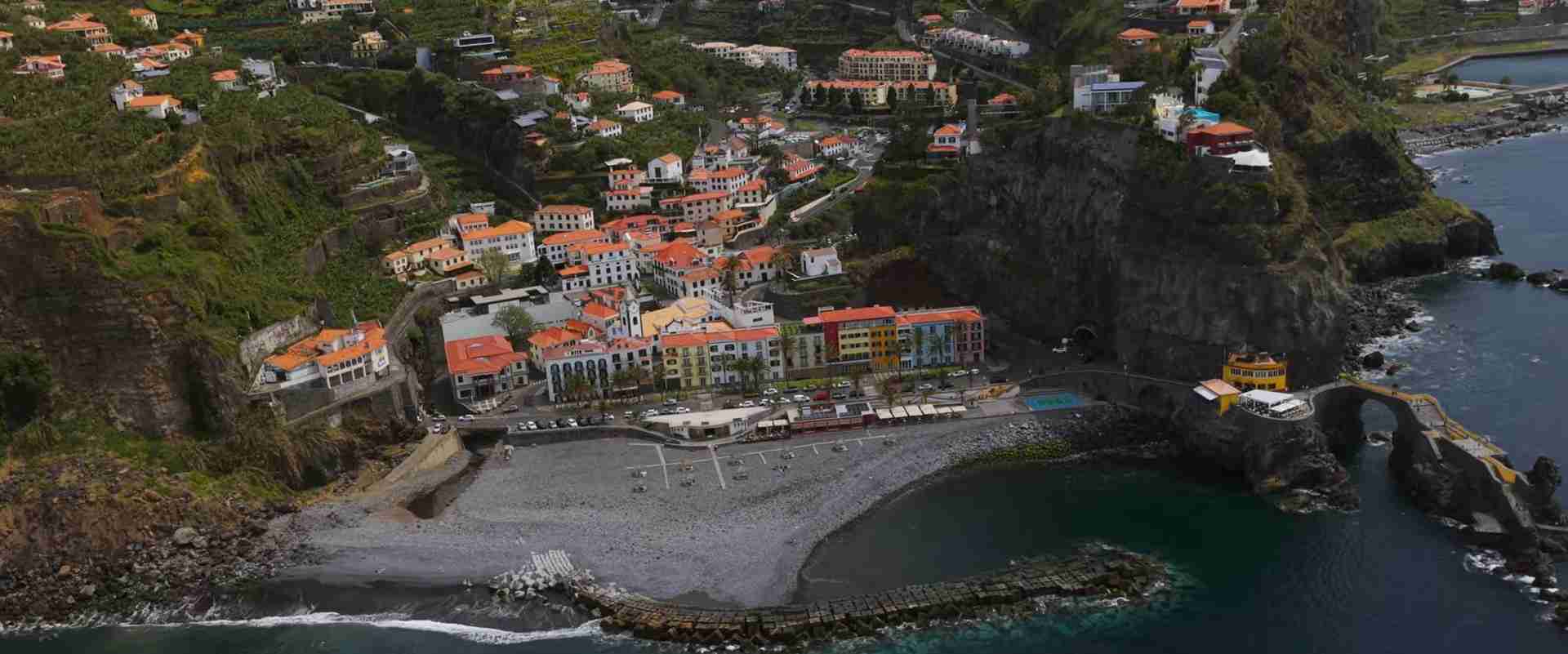
Best Day Trips from Funchal 2026: Porto Moniz, Santana & Peaks
Madeira’s compact geography transforms the island into a day-tripper’s paradise, where volcanic pools carved by Atlantic waves, triangular thatched houses rooted in 16th-century tradition, and mountain peaks piercing cloud layers all lie within an hour’s drive of Funchal. Porto Moniz’s natural swimming pools fill with crystalline seawater at Europe’s northwestern edge, Santana’s iconic A-frame houses preserve rural Madeiran heritage against emerald mountain slopes, and Pico do Arieiro’s 1,818-meter summit delivers sunrise views above shifting cloud seas while connecting to Portugal’s highest peak via trails reopened in 2026 after wildfire restoration.
Key Takeaways
- Transportation Strategy 2026: Guided full-day tours cost €45-75 per person including hotel pickup, rental cars range €25-50 daily with fuel and parking adding €15-25, while independent public bus travel (€6 one way, 3+ hours) offers budget access with limited schedule flexibility
- Porto Moniz Natural Pools: Two pool complexes — maintained pools charge €3 entry with facilities and lifeguards opening 9 AM to 7 PM summer (5 PM winter), while adjacent free Cachalote pools offer raw volcanic formations without supervision or amenities
- Santana Traditional Houses: Free viewing of reconstructed A-frame triangular houses in town center (now functioning as souvenir shops), with optional Madeira Theme Park visit at €9 adults costing an additional 90 minutes for deeper cultural immersion
- Pico do Arieiro Access 2026: Trail to Pico Ruivo reopened April 2026 requiring advance €3-5 permits booked via SIMplifica portal, with parking €3-5 and 3.5-4 hour hiking time for the moderately difficult 7-kilometer route
- Daily Budget Ranges 2026: Budget explorers spend €35-55 per person (public bus, packed lunch, free attractions), mid-range travelers invest €75-110 (guided tour or rental car, restaurant meals, paid pools), luxury visitors allocate €140-200+ (private jeep tour, premium dining, extended experiences)
- Seasonal Timing: May through September delivers warmest pool temperatures and clearest mountain views with peak crowds, October-April offers 30-40% lower tour prices and solitary trail experiences offset by frequent cloud cover at elevation and rougher Atlantic conditions at Porto Moniz
People Also Ask About Funchal Day Trips 2026
Can you visit Porto Moniz, Santana, and Pico do Arieiro in one day in 2026?
Combining all three destinations in a single day requires either a guided tour specifically designed for multiple stops or an independent rental car with a 5:30 AM departure. Porto Moniz lies 90 minutes northwest of Funchal via coastal roads, Santana sits 60 minutes northeast through mountain terrain, and Pico do Arieiro stands 45 minutes north at high elevation — creating a triangular route spanning 180+ kilometers with 4+ hours of driving time before accounting for stops. Most travelers choose two destinations for a comfortable day trip, dedicating 2-3 hours at each location for swimming, dining, photography, and exploration without constant rushing. Several tour operators offer West Tour combinations (Porto Moniz, Fanal Forest, Cabo Girão) or East Tour packages (Santana, Pico do Arieiro, Ribeiro Frio) running 7-8 hours with hotel pickup. Independent drivers attempting all three typically allocate 30-45 minutes at Santana houses (quick photo stop), 1.5-2 hours at Porto Moniz pools (swim and lunch), and 1-1.5 hours at Pico do Arieiro (sunrise or sunset viewing), arriving back in Funchal after 7 PM with limited time for meaningful engagement at any single destination.
How much does a day trip from Funchal cost in 2026?
Budget-conscious travelers complete independent day trips for €35-55 per person using public buses at €6 one way, packing supermarket lunches costing €8-12, and visiting free attractions like Santana houses and Cachalote pools while skipping paid entries. Mid-range visitors investing €75-110 per person typically book guided small-group tours at €45-65 including transportation and expert commentary, or rent cars at €30-40 daily plus €20-30 fuel, then enjoy sit-down restaurant meals at €15-25 and pay €3-5 for Porto Moniz maintained pools or Pico do Arieiro parking. Luxury experiences reaching €140-200+ per person feature private 4×4 jeep tours with flexible itineraries at €90-150 per person (minimum 2-4 passengers), gourmet seafood lunches at €35-50, and premium add-ons like levada forest walks with guides or extended photography sessions at multiple viewpoints. The cost differential primarily reflects transportation choice — guided tours eliminate driving stress and provide local knowledge, rental cars offer complete schedule freedom and multi-stop flexibility, while buses deliver budget access with 3-4 hour travel times each direction limiting same-day combinations to single destinations only.
What’s the best time of year for these day trips in 2026?
May through September represents peak season for Porto Moniz pool swimming with ocean temperatures reaching 20-22°C (68-72°F) and Pico do Arieiro delivering above-cloud sunrise views on 65-70% of mornings, though expect Porto Moniz to fill with 300+ daily visitors between 11 AM-3 PM and mountain parking lots reaching capacity by 6:30 AM during July-August weekends. October through April brings 30-40% lower tour prices, near-empty trails at Pico do Arieiro after 8 AM, and solitary experiences at Santana houses, but ocean swells frequently close Porto Moniz pools November-March with water temperatures dropping to 17-19°C (63-66°F), while persistent cloud cover at mountain elevations reduces clear-view probability to 40-50% during winter months. Shoulder seasons of April-May and September-October deliver optimal conditions — manageable crowds, moderate pricing, 19-21°C pool temperatures, and 55-60% probability of clear mountain views — making them preferred windows for photography-focused visitors and those seeking balance between weather reliability and tourist density. Pico do Arieiro proves accessible year-round for sunrise viewing, though November-February requires warmer layers as summit temperatures drop to 4-8°C (39-46°F) with wind chill, while Porto Moniz pool accessibility varies daily based on Atlantic swell conditions rather than strictly seasonal patterns.
Do I need to book Porto Moniz pools or Santana houses in advance for 2026?
Neither Porto Moniz natural pools nor Santana traditional houses require advance reservations — both operate on walk-up entry with payment at the gate (Porto Moniz paid pools) or completely free access (Santana houses). Porto Moniz maintained pools with €3 admission charge lifeguard supervision, changing facilities, and family-friendly infrastructure but never reach capacity limits requiring turnaway except during rare festival weekends, making spontaneous visits practical throughout 2026. Santana houses function as outdoor exhibits and souvenir shops open during business hours without ticketing systems or visitor caps, allowing immediate exploration upon arrival. However, Pico do Arieiro trail access changed significantly in 2026 — the PR1 route from Arieiro to Pico Ruivo now requires mandatory advance permits booked through the SIMplifica government portal at €3-5 per person with timed entry slots limiting daily hikers and reducing overcrowding that plagued the trail pre-closure. Guided tours to any destination should be booked 2-7 days ahead during summer months as popular operators sell out, particularly for small-group jeep tours capped at 8 passengers, while spring-fall shoulder seasons typically allow next-day or same-day tour availability. Rental car reservations become essential June-September when Madeira’s limited vehicle fleet experiences high demand, with booking 1-2 weeks ahead securing better rates and automatic transmission availability.
Extended multi-day tours – 5+ days
Featured Madeira Multi-Day Tour Packages
3 days
Madeira 3-Day Discovery Tour
- ✓ Comprehensive Madeira experience
- ✓ Expert local guides included
- ✓ All accommodation included
- ✓ Transportation provided
5 days
Madeira 5-Day Highlights Experience
- ✓ Comprehensive Madeira experience
- ✓ Expert local guides included
- ✓ All accommodation included
- ✓ Transportation provided
7 days
Madeira 7-Day Cultural Journey
- ✓ Comprehensive Madeira experience
- ✓ Expert local guides included
- ✓ All accommodation included
- ✓ Transportation provided
10 days
Madeira 10-Day Complete Adventure
- ✓ Comprehensive Madeira experience
- ✓ Expert local guides included
- ✓ All accommodation included
- ✓ Transportation provided
Multi-day tour packages powered by TourRadar. Prices and availability subject to change.
Introduction: Planning Your Funchal Day Trip Strategy 2026
Funchal’s central position along Madeira’s southern coast establishes the capital as the natural launching point for exploring the island’s diverse landscapes compressed into 740 square kilometers of volcanic terrain. From the city center, Porto Moniz’s lava-formed swimming pools lie 90 minutes northwest where the Atlantic carves natural bathing complexes into basalt cliffs, Santana’s iconic triangular houses cluster 60 minutes northeast in the green mountains of the UNESCO Biosphere Reserve, and Pico do Arieiro’s summit viewpoint stands 45 minutes north at 1,818 meters elevation where sunrise illuminates cloud layers drifting below granite peaks. These three destinations anchor Madeira’s day-trip circuit not simply for proximity but for their representation of the island’s geological drama, cultural heritage, and vertical topography — each location delivering experiences impossible to replicate elsewhere while remaining accessible for same-day returns to Funchal accommodations.
The 2026 travel landscape presents both new opportunities and updated logistics. April 2026 marked the reopening of the PR1 Vereda do Areeiro trail connecting Pico do Arieiro to Pico Ruivo after nearly two years of wildfire recovery and infrastructure restoration, introducing a mandatory permit system that limits daily hikers and guarantees less-crowded conditions than the pre-closure era when 800+ walkers squeezed onto narrow mountain paths each summer day. Porto Moniz maintains its dual-pool system of paid maintained pools with facilities at €3 and free Cachalote pools offering raw volcanic formations, while Santana has expanded interpretive signage around traditional houses to better explain the 16th-century construction techniques and rural farming lifestyle these structures represented. Transportation infrastructure remains stable with reliable bus service on Routes 80, 103, and 138 connecting major destinations, though frequency varies seasonally and rental car availability tightens June-September as Madeira’s popularity continues rising among European travelers seeking Atlantic alternatives to Mediterranean crowds.
Successful day trip execution requires matching destination combinations to available time and transportation method. Porto Moniz and Santana lie on opposite compass points from Funchal — northwest versus northeast — making same-day combination challenging without sacrificing 4+ hours to circular driving through mountain passes that, while scenic, reduce actual destination time to rushed photo stops rather than meaningful engagement. Most visitors select either West Tour itineraries pairing Porto Moniz with Fanal Forest, Cabo Girão skywalk, and Ribeira Brava coastal village, or East Tour routes combining Santana with Pico do Arieiro sunrise, Ribeiro Frio laurel forest, and Porto da Cruz viewpoints. Independent travelers with rental cars gain flexibility to customize stops and timing but assume responsibility for navigating steep mountain roads with hairpin turns, identifying parking areas (often limited at popular spots), and managing driving fatigue that guided tour passengers avoid entirely.
Budget considerations shape transportation choices more than any other planning factor. Public buses offer cheapest access at €6 one way but Route 80 to Porto Moniz departs Funchal only once daily at 10 AM with 3+ hour travel time and 2 PM return departure, effectively eliminating afternoon exploration or multi-destination combinations. Guided small-group tours at €45-65 per person deliver best value for single-day visitors who prioritize stress-free logistics, local expertise, and hotel pickup over schedule flexibility, while rental cars at €30-40 daily plus fuel create cost-effectiveness for groups of 3-4 sharing expenses and travelers planning multi-day island exploration beyond single excursions. Luxury private jeep tours at €90-150 per person cater to photography enthusiasts requiring golden-hour timing, families with young children needing flexible pacing, and visitors prioritizing off-road access to locations like Fanal Forest’s mystical laurel trees reached only via unpaved tracks.
The following sections detail each destination’s specific logistics, costs, and timing considerations for 2026, followed by complete sample itineraries demonstrating practical day-trip combinations, transportation comparisons analyzing all access methods, and seasonal planning guidance addressing weather patterns, crowd levels, and price fluctuations throughout the year.
Porto Moniz Natural Pools Experience 2026
Porto Moniz village clings to Madeira’s northwestern tip where volcanic lava flows met the Atlantic Ocean millions of years ago, cooling into basalt formations that natural erosion carved into seawater-filled swimming pools refreshed by every tide cycle. Two distinct pool complexes serve different visitor priorities at this coastal settlement of 1,800 residents now welcoming 150,000+ annual day-trippers. The municipally maintained Piscinas Naturais do Porto Moniz occupies the western promenade behind protective seawalls, charging €3 admission for access to 3,800 square meters of swimming area with lifeguard supervision, changing facilities, freshwater showers, accessible ramps, children’s wading zone, and adjacent café serving grilled limpets and espresso between swims. These pools open 9 AM to 7 PM during May-September and 9 AM to 5 PM October-April, with actual daily accessibility depending on Atlantic swell conditions that occasionally force closure during winter storms when waves breach protective barriers.
Free Cachalote pools sit 400 meters east near São João Baptista Fort and the Madeira Aquarium, offering completely natural volcanic rock formations without infrastructure modification, lifeguard presence, or entry fees — appealing to visitors preferring authentic geological features over maintained comfort. These pools fill with each high tide and empty partially during ebb, creating variable depth and temperature conditions throughout the day. Sharp lava edges demand water shoes or protective footwear, and the absence of ladders or railings requires confident scrambling over rocks to enter deeper sections. Families with young children universally choose the paid pools for safety and convenience, while adventurous swimmers and photographers favor Cachalote formations for dramatic basalt textures and waves crashing against outer rocks during medium swells that would close the maintained facility.
Water temperature averages 20-22°C (68-72°F) June-September with peak warmth in late August and early September, dropping to 17-19°C (63-66°F) December-March when only cold-adapted swimmers or wetsuit users attempt extended sessions. The pools maintain warmer temperatures than open ocean swimming due to shallow depth and solar heating of dark volcanic rock, creating comfortable conditions even on partly cloudy days when air temperature reaches only 21-23°C. Morning visits before 11 AM encounter calm water and available sunbeds in the paid complex, while 12 PM-3 PM represents peak congestion when tour buses deposit 200+ visitors simultaneously and every changing room stall sees queues. Late afternoon sessions from 4 PM onward recapture tranquility as day-trippers depart, though reduced lifeguard presence after 5 PM in shoulder seasons means less supervision during these quieter windows.
The village surrounds the pools with seafood restaurants specializing in espada (black scabbard fish), lapas (grilled limpets), and caldeirada (fish stew), alongside cafés serving bolo do caco (garlic bread) and poncha (sugar cane rum cocktail). Restaurant Vila do Porto Moniz occupies the oceanfront promenade with tables overlooking the pools, charging €18-28 for fish mains and €12-16 for grilled meat, while Orca serves similar cuisine at €15-22 mains in a more casual setting. Budget travelers find Mini Mercado Porto Moniz supermarket 200 meters inland selling sandwich fixings, fresh fruit, and drinks for €6-10 picnic assemblies consumed at tables near the free pools or on benches along the coastal walkway.
Beyond swimming, Porto Moniz offers the Madeira Aquarium in São João Baptista Fort (€7 adults, €4.50 children, 30-45 minutes viewing time) showcasing regional Atlantic species including groupers, moray eels, and sea turtles in small but well-maintained tanks. The fort itself dates to 1730 and provides historic context about coastal defense against pirate raids that threatened Madeira’s isolated northwestern settlements. Walking the coastal promenade extends 800 meters from Cachalote pools westward past the maintained pools to residential neighborhoods, passing viewpoints of offshore Ilhéu Mole islet topped by a lighthouse marking the village’s seaward boundary.
Parking availability determines arrival timing for independent drivers. The main paid lot adjacent to the maintained pools charges €3-4 for full-day parking with 80+ spaces filling by 11:30 AM on summer weekends and remaining manageable on weekdays or off-season. Free street parking lines residential roads 300-500 meters from the pools, requiring uphill walking return to vehicles but offering unlimited duration. Blue-lined spaces require paid tickets from machines accepting coins or cards, while white-lined areas remain free with no time restrictions. Arriving before 10 AM guarantees parking choice and calm pool conditions, while post-3 PM arrival finds departing day-trippers freeing spaces but shorter swimming windows before facilities close at 5 PM (winter) or 7 PM (summer).
Travel time from Funchal spans 90-120 minutes depending on route selection. The faster ER101 expressway runs north through tunnels to Ribeira Brava, then follows the western coast via São Vicente through continuous curves and single-lane sections, covering 70 kilometers with consistent ocean views to the right and vertical cliffs to the left. The scenic alternative via Encumeada Pass climbs into the central mountains through Laurissilva forest before descending the northern slope — adding 20-30 minutes but delivering mountain vistas and potential stops at Boca da Encumeada viewpoint where both north and south coasts appear simultaneously on clear days. Most day-trippers combine Porto Moniz with Seixal beach (15 minutes southeast, black volcanic sand and Bridal Veil waterfall), Fanal Forest (30 minutes south, ancient laurel trees in mystical fog), or São Vicente Caves (20 minutes southeast, volcanic tube tours at €8 adults).
Santana Traditional Houses and Mountain Villages 2026
Santana municipality sprawls across Madeira’s northeastern mountains within a UNESCO Biosphere Reserve recognized for preserving traditional agricultural landscapes, endemic Laurissilva forest, and cultural heritage including the island’s iconic triangular thatched houses. The village center displays five reconstructed palheiros — A-frame structures with steep thatched roofs extending nearly to ground level, built from wood, stone, and wheat straw according to 16th-century techniques when Portuguese settlers first cleared mountain slopes for subsistence farming. These colorful houses now function as tourist information office and souvenir shops selling Madeira wine, embroidered linens, and locally produced honey, offering free viewing daily without admission charges or timed entry restrictions.
The traditional house design solved specific problems faced by early settlers in this wet, mountainous terrain. Steep 60-degree roof slopes shed heavy rainfall that drenches northern Madeira 180+ days annually, preventing water penetration into living spaces below. Thatch construction using wheat and rye straw provided excellent insulation against cold mountain nights while remaining affordable for subsistence farmers who lacked resources for imported materials like tiles or slate. Triangular geometry created tall attic storage for agricultural products — potatoes, grain, dried vegetables — keeping them elevated away from ground moisture and rodents. The main floor contained minimal living space with kitchen hearth, simple furniture, and sleeping areas, reflecting the harsh economic reality that most residents spent daylight hours farming terraced plots rather than lounging indoors.
Today’s reconstruction houses measure approximately 5 meters wide by 6 meters deep with 4-meter ridge heights, painted in bright red, blue, white, and green rather than the natural wood tones historical examples displayed. Interior access allows visitors to photograph the cramped lower level with stone floor, small windows, and simple furnishings, though modern conversion to retail spaces means shelves of souvenirs replace authentic domestic items. The tourist information office stocks hiking maps, trail brochures, and accommodation listings for visitors planning extended northern coast exploration, while surrounding gardens feature indigenous plants labeled with botanical names and traditional uses.
Parking occupies two lots flanking the houses along Avenida 25 de Maio — one paved area directly opposite the tourist office with 30+ spaces filling by midday during summer, and a larger unpaved overflow lot 100 meters south accommodating tour buses and additional cars. Most visitors allocate 20-40 minutes for house viewing and photography unless shopping extends the stop, with early morning or late afternoon light creating best conditions for capturing the structures’ colorful facades against green mountain backdrops. Crowds peak 11 AM-2 PM when organized tours pause here during West-East circuit itineraries, making 9-10:30 AM or post-3 PM windows preferable for solitary photography and souvenir browsing without competing with 40+ simultaneous visitors.
The Madeira Theme Park (Parque Temático da Madeira) operates 3 kilometers south of the village center, charging €9 adults and €5 children ages 5-14 for admission to indoor museums covering Madeira’s discovery, settlement history, traditional industries (sugar cane, wine, wicker weaving), and outdoor gardens with demonstration windmills, ox-driven sugarcane mills, and children’s playgrounds. The park requires 90 minutes to 2 hours for comprehensive exploration including multimedia exhibits in Portuguese and English, making it worthwhile addition for families with children or history-focused visitors but often skipped by day-trippers prioritizing natural attractions over cultural exhibits. Combination tickets pairing theme park entry with nearby Quinta do Furão restaurant lunch offer €22 per person (park admission plus soup, main course, dessert, drink), representing slight savings versus separate purchases.
Santana’s coastal vistas unfold from multiple miradouros (viewpoints) accessible within 10 minutes’ drive of the town center. Miradouro do Guindaste surveys terraced agricultural slopes descending toward the Atlantic with São Jorge village visible on the coastal shelf below, while Cabanas viewpoint provides telephoto perspectives of waves breaking against black lava cliffs and vineyards clinging to impossibly steep hillsides. These stops add 15-20 minutes to journeys for photography but require no hiking or admission fees — simply pull into marked parking areas, walk 20-30 meters to railinged platforms, capture images, and continue driving.
Restaurant options concentrate along the main road (ER101) passing through Santana, with Quinta do Furão earning reputation as the region’s premier dining destination for its clifftop location, panoramic ocean views, and menu emphasizing local ingredients — espada with banana at €22, grilled octopus at €24, beef kebabs at €18-20, and vegetarian options featuring sweet potato and tropical fruits. Restaurante O Coral serves traditional Madeiran dishes in more modest setting at €15-18 mains, while Cantinho da Serra caters to tour groups with buffet-style service at €12-15 per person. Budget travelers pack lunches from Funchal supermarkets as Santana’s village center lacks convenient grocery stores, or grab quick bolo do caco sandwiches from cafés near the traditional houses at €4-6.
Travel time from Funchal requires 60-75 minutes covering 40 kilometers through Madeira’s mountainous interior. The route climbs from sea level via steep switchbacks through Camacha and Poiso Pass, reaching 1,400-meter elevation before descending the northern slope through Laurissilva forest into Santana. Narrow roads with blind corners and occasional tour buses traveling opposite directions demand defensive driving and comfort with mountain routes, though pavement quality remains excellent and guardrails line exposed cliff sections. Most day-trip combinations pair Santana houses with Pico do Arieiro sunrise (30 minutes west via mountain roads), Ribeiro Frio levada walks (20 minutes west along ER103), or Faial coastal viewpoints (15 minutes east descending to sea level) rather than attempting westward connections to Porto Moniz that would add 2+ hours circuitous mountain driving.
Pico do Arieiro Sunrise and Mountain Hiking 2026
Pico do Arieiro crowns Madeira’s central mountain range at 1,818 meters elevation as the island’s third-highest peak and highest point accessible by paved road, delivering panoramic views across volcanic ridges, deep valleys, and the Atlantic Ocean far below when atmospheric conditions cooperate. The summit parking area and viewpoint terrace sit just 2 minutes’ walk from car park, making this Madeira’s most accessible high-elevation experience for visitors unable or unwilling to hike mountain trails but seeking dramatic landscape photography and above-cloud perspectives. Sunrise represents the premium viewing window when golden light illuminates cloud layers drifting through valleys 500-800 meters below, though the spectacle requires pre-dawn arrival and tolerance for 4-8°C temperatures with wind chill dropping perceived warmth to near-freezing even during summer months.
Access logistics changed substantially in 2026 following the April reopening of the PR1 Vereda do Areeiro trail connecting this peak to Pico Ruivo (1,862 meters, Madeira’s highest point) and continuing to Achada do Teixeira trailhead. The route now requires mandatory advance permits booked through the SIMplifica government portal at €3-5 per person, with daily hiker quotas limiting overcrowding that previously saw 800+ walkers squeezing onto narrow cliffside paths each summer day. Permits specify entry time windows (typically 6 AM, 8 AM, 10 AM, 12 PM slots) matched to parking availability, theoretically preventing the pre-closure chaos when sunrise seekers arrived at 5 AM to find lots filled and cars triple-parked along access roads. Parking itself costs €3-5 depending on duration selected at automated machines accepting cards only — no cash payment option exists, requiring international credit/debit cards with chip technology.
The PR1 trail spans approximately 7 kilometers one-way from Pico do Arieiro to Achada do Teixeira via Pico Ruivo summit, gaining 790 meters of cumulative elevation through steep climbs, tunnel passages carved through volcanic rock, and exposed ridgeline sections with protective railings overlooking 500+ meter vertical drops. Moderately fit hikers complete the route in 3.5-4 hours one-way moving at steady pace with brief photography stops, while less-experienced walkers or those pausing frequently for landscape appreciation require 4.5-5 hours reaching Achada do Teixeira where shuttle vans return hikers to Arieiro starting point (€10 per person, pre-booked through tour operators). The trail demands proper footwear with ankle support and tread — running shoes or hiking boots rather than casual sneakers — plus layered clothing accommodating temperature swings from 4°C at exposed summits to 14-16°C in sheltered valley sections.
Sunrise timing varies throughout 2026 from 6:30 AM in mid-winter to 5:30 AM at summer solstice, with photographers and serious viewers arriving 60-90 minutes before sunrise to secure optimal viewpoint positions and watch the slow transformation from pre-dawn darkness to golden illumination. The parking lot accommodates 100+ vehicles but fills to capacity during summer weekends by 5:45 AM, necessitating 5 AM or earlier arrival to guarantee spaces. Weekday mornings see lighter crowds with 6-6:30 AM arrival usually sufficient even in July-August. Shoulder seasons of April-May and September-October offer best compromise between manageable crowds, reasonable sunrise hours (6-6:30 AM arrival), and acceptable probability of clear conditions allowing actual views rather than complete cloud immersion at summit level.
Weather unpredictability defines the Pico do Arieiro experience. The mountain pierces cloud base elevation approximately 1,200-1,500 meters above sea level, meaning visitors frequently stand above cloud layers enjoying crystalline blue sky while valleys below disappear under white mist — visually spectacular but preventing views of coastal towns or ocean horizon. Conversely, complete summit cloud immersion reduces visibility to 10-20 meters, obscuring all views except immediate rocks and railings. The probability of clear morning conditions varies seasonally: May-September sees 65-70% of mornings with either clear skies or above-cloud viewing, dropping to 40-50% October-April when persistent weather systems blanket the entire mountain in fog. Checking weather forecasts for Arieiro specifically (not Funchal, which experiences different patterns) provides some indication, though summit conditions can shift dramatically within 30-60 minutes as clouds rise or dissipate.
Temperature management requires preparation. Even in August, summit temperatures average 12-14°C (54-57°F) at sunrise with wind frequently reducing perceived warmth by additional 5-8 degrees. December-February mornings regularly register 4-6°C (39-43°F) with occasional light frost on rocks and wind chill approaching freezing. Visitors arriving in shorts and t-shirts — standard beach attire in 23°C Funchal — suffer genuine discomfort at the cold, windy summit, often retreating to cars after minimal viewing time. Layering proves essential: base thermal layer or long-sleeve shirt, fleece or light jacket, windproof outer shell, long pants, and gloves/hat during winter months. Conditions warm 4-6 degrees by mid-morning as sun rises higher and wind calms, allowing layer removal for descent or trail hiking.
Facilities at the summit consist of Pico Alto restaurant/café (€3-4 espresso, €5-7 sandwiches, €8-12 breakfast plates) opening at 6 AM during summer sunrise hours and 8 AM off-season, plus basic public restrooms that may close overnight during winter months. The building provides heated indoor space for warming between outdoor viewing sessions. A paved observation platform with protective railings extends 50 meters from parking toward the peak’s rocky summit, offering wheelchair accessibility to viewpoints though uneven terrain beyond limits mobility-impaired access. The actual highest point requires scrambling 5-10 minutes up rocky path — trivial for able-bodied visitors but impossible for wheelchairs or anyone with balance difficulties.
Photography opportunities peak during the 20-30 minute window surrounding actual sunrise when light transitions from purple-pink pre-dawn glow to golden illumination of cloud tops, mountain ridges, and the PR1 trail visible snaking across distant peaks toward Pico Ruivo. Wide-angle lenses capture sweeping landscapes showing cloud layers, while telephoto shots isolate hikers as silhouettes against sunrise sky or compress volcanic peak sequences into dramatic compositions. Midday visits lose the dramatic lighting but may offer clearer distant visibility on stable high-pressure days, while sunset sessions replicate sunrise appeal with warmer golden hour light from opposite horizon and smaller crowds since most visitors prefer morning timing.
Travel time from Funchal spans 45-60 minutes covering 35 kilometers via ER103 mountain road climbing from sea level through continuous switchbacks and hairpin turns. The route passes Poiso Pass at 1,400 meters where right turn leads to Pico do Arieiro while straight continuation descends toward Ribeiro Frio and Santana. Road quality remains excellent with smooth pavement, clear centerline marking, and adequate guardrails, but narrow width (two lanes with minimal shoulder) and blind corners require cautious driving and readiness to yield to tour buses occupying full road width on tight curves. Most sunrise viewers complete the drive in darkness using headlights to follow reflective edge markers, while daytime ascents allow stops at multiple viewpoints overlooking terraced agricultural valleys and mountain forests.
Transportation Options Comparison 2026
Selecting appropriate transportation method determines day trip cost, flexibility, and stress levels more than any other planning decision, with five distinct approaches offering different combinations of economy, convenience, and schedule control. Public buses deliver cheapest access at €6 per one-way trip but restrict destination combinations and impose rigid departure/return times. Small-group guided tours at €45-65 per person eliminate navigation concerns while providing cultural commentary and predetermined itineraries visiting 3-4 locations in 7-8 hours. Rental cars at €25-50 daily plus fuel create flexibility for self-directed exploration and multi-stop combinations but require comfort driving mountain roads. Private jeep tours at €90-150 per person (2-4 passenger minimum) offer customized routes with off-road access but carry premium pricing. Taxi services provide point-to-point transport at €40-60 one-way but become cost-prohibitive for full-day hire reaching €200-300.
Public Bus Access and Limitations
Madeira’s public bus network operated by Rodoeste, SAM, and other regional companies connects Funchal to major villages including Porto Moniz and Santana, charging fixed fares based on distance zones rather than per-trip pricing. Route 80 serves Funchal-Porto Moniz running once daily Monday-Saturday with 10 AM departure from Funchal’s main terminal and 2 PM return from Porto Moniz, requiring 3 hours 15 minutes each direction through São Vicente, Seixal, and coastal villages — effectively consuming 6.5 hours of the day in transit alone. The €6 single fare or €12 return ticket represents exceptional value, but the rigid schedule allows only 4 hours in Porto Moniz (arriving 1:15 PM, departing 2 PM return) making pool swimming, lunch, and meaningful exploration rushed. No Sunday service eliminates weekend access for travelers confined to bus transport.
Route 103 connects Funchal to Santana via Camacha and Monte with multiple daily departures starting 7:30 AM through late afternoon, charging €4.50 single and requiring 90 minutes travel time. More frequent service (6-8 daily buses) provides flexibility missing from Porto Moniz route, allowing visitors to take morning bus, spend 3-5 hours in Santana area, and return on later afternoon departure. Route 138 serves Pico do Arieiro once daily at 8:30 AM from Funchal with 11 AM return, charging €5 single and covering the route in 75-90 minutes — workable for sunrise viewing if willing to wait 2.5 hours at cold, windy summit before return bus arrives, or for midday visits accepting less dramatic lighting conditions.
Bus transport proves most practical for budget travelers spending multiple days based in Funchal and willing to dedicate full days to single destinations rather than attempting multi-stop combinations. A visitor might take Route 103 to Santana one day, Route 80 to Porto Moniz another day, and Route 138 to Pico do Arieiro for sunrise on a third morning — experiencing all three destinations across three separate excursions at €27 total transport cost but lacking any ability to combine locations or adjust timing based on weather or personal preference. Schedules, routes, and fares remain current through the Madeira public transport website and printed timetables available at Funchal terminal, though English information varies in quality and purchasing tickets requires basic Portuguese numbers for communicating destinations to drivers.
Small-Group Guided Tour Value
Small-group tours represent the most popular choice for first-time Madeira visitors and those prioritizing convenience over schedule control, with operators like Feeling Madeira, Discovery Island Tours, and Madeira Explorers running daily departures covering either West routes (Porto Moniz, Fanal, Cabo Girão, Ribeira Brava) or East itineraries (Santana, Pico do Arieiro, Ribeiro Frio, Porto da Cruz). Tours typically run 7-8 hours departing 8:30-9 AM from Funchal hotels with return by 5-5:30 PM, charging €45-65 per person including transportation in minibus or jeep, English/multilingual guide commentary, hotel pickup/drop-off, and sometimes basic insurance. Group sizes cap at 8-16 participants depending on vehicle type, with smaller jeep tours commanding slight premium pricing but delivering more intimate experiences and potential off-road access to locations like Fanal Forest’s ancient laurel trees.
The West Tour emphasizing Porto Moniz allocates approximately 90 minutes for pool swimming and lunch (meal cost not included, expect €15-25 restaurant tab) after stops at Câmara de Lobos fishing village, Cabo Girão glass skywalk (€2 entry), and Ribeira Brava church. The route then continues through Seixal with photo stops at Bridal Veil waterfall and black sand beach before reaching Porto Moniz around 12:30 PM-1 PM. Return journey climbs through Paúl da Serra plateau and may include brief Fanal Forest detour weather permitting, arriving Funchal by 5:30 PM. East Tour variants stop at Pico do Arieiro for 30-45 minutes (insufficient for serious hiking but adequate for viewpoint photography), continue to Ribeiro Frio’s trout pools and levada trails with optional 20-minute walk, proceed to Santana houses for 30-40 minutes, and often conclude at Porto da Cruz rum distillery or Machico beach before returning to Funchal.
Tour advantages extend beyond simple cost savings — guides provide historical context, geological explanations, and cultural insights that independent travelers miss, navigate challenging roads allowing passengers to enjoy scenery rather than concentrate on driving, and adjust routes based on real-time weather moving to clearer areas when clouds obscure scheduled viewpoints. The social element appeals to solo travelers meeting others in small groups, while families appreciate professional drivers ensuring safe mountain passage. Disadvantages include fixed timing preventing extended stays at personally compelling locations, mandatory stops at sites holding minimal interest for individual travelers, and complete elimination of spontaneity to explore unexpected discoveries or change plans based on developing preferences.
Booking windows vary seasonally with summer months (June-September) often requiring 3-7 days advance reservation as tour operators sell out, particularly for popular West routes and small-jeep premium options. Shoulder seasons (April-May, October) typically allow next-day or 2-day-ahead booking, while winter months see last-minute same-day availability common. Cancellation policies generally permit full refunds for cancellations 24-48 hours prior, with some operators charging 20-30% fees for same-day cancellations except in documented medical emergencies. Reviews on GetYourGuide, TripAdvisor, and Google provide recent traveler feedback highlighting guide quality, vehicle comfort, and whether tours actually visit all advertised locations or skip stops when running behind schedule.
Rental Car Independence
Renting a car delivers maximum schedule flexibility and becomes cost-effective for couples or groups of 3-4 sharing expenses, though requires comfort driving narrow mountain roads with hairpin turns and occasional blind corners where mirrors nearly scrape opposing cliffs. Daily rental rates range €25-50 depending on vehicle size (compact €25-35, mid-size €35-45, SUV €40-50) with automatic transmissions commanding €10-15 premium over manual gearbox models that dominate Madeira’s rental fleet. Additional costs include fuel at €1.70-1.85 per liter with day trips consuming €15-25 depending on route length, parking fees of €3-8 per day at destinations, and comprehensive insurance at €8-12 daily (highly recommended given tight roads and potential for minor scrapes).
The rental process begins at Funchal Airport where 20+ companies operate desks including international brands (Europcar, Hertz, Budget) and local operators (Madeira Rent, Rent Me Madeira, Rodavante) often offering better rates for identical vehicles. Advance booking through comparison platforms like Discover Cars or Rental Cars secures lowest prices and confirms automatic transmission availability (manual transmissions otherwise account for 80% of fleet). Minimum age requirements vary from 21-25 depending on company with drivers under 25 paying supplemental youth fees of €5-10 daily. An International Driving Permit supplements non-EU licenses but isn’t legally required for EU, UK, US, Canadian, Australian, or New Zealand licenses valid for visits under 90 days.
Driving conditions demand attention but shouldn’t intimidate moderately experienced drivers comfortable with mountain roads. Madeira’s extensive tunnel network now bypasses the most extreme coastal cliff sections, creating relatively stress-free travel on primary routes like ER101 and ER103. Secondary mountain roads climbing to Pico do Arieiro or crossing interior passes involve tighter curves, steeper gradients, and occasional single-lane sections requiring backing up to wider spots for yielding to opposite-direction vehicles — manageable with patience but potentially stressful for nervous drivers. Road quality remains universally excellent with smooth pavement and clear lane markings, though shoulders essentially don’t exist and pulling fully off roadway to stop proves impossible on many mountain stretches. Speed limits range from 50 km/h in villages to 80-100 km/h on expressways, with radar enforcement common on faster sections.
Parking availability varies dramatically by destination and timing. Porto Moniz provides ample paid parking at €3-4 daily near the pools with overflow free street parking 300-500 meters away. Santana offers free spaces adjacent to traditional houses with weekend capacity constraints. Pico do Arieiro’s parking lot charges €3-5 and fills completely by 6 AM for summer sunrise viewing but remains manageable after 9 AM or during shoulder seasons. Smaller villages and viewpoints along routes generally provide roadside pullouts marked with “Miradouro” signs allowing brief stops for photography without parking fees.
Fuel availability clusters along major routes with filling stations every 15-25 kilometers on coastal roads but absent in remote mountain areas. Filling up in Funchal before departure proves wise for day trips, though fuel warning lights with 50-kilometer remaining range provide adequate margin even for circular Porto Moniz routes consuming 150 kilometers total distance. Credit cards work at automated pumps for after-hours filling, though daytime attendant service (7 AM-8 PM typically) remains standard at most stations.
Navigation relies on GPS smartphone apps rather than dedicated devices — Google Maps, Waze, and Apple Maps all function reliably across Madeira with accurate routing and real-time traffic updates about tunnel closures or construction delays. Cell signal coverage reaches 95% of the island including most mountain roads, though occasional dead zones in deep valleys interrupt connectivity briefly before restoring on next ridgeline. Downloading offline map data before departures creates backup navigation if data connection fails.
Private Jeep Tour Customization
Private 4×4 jeep tours cater to specific niches — photographers requiring golden hour timing at multiple locations, families with young children needing flexible pacing and frequent stops, luxury travelers prioritizing exclusivity over group dynamics, and adventure seekers wanting off-road access to locations unreachable in standard vehicles. Operators like Madeira Green and Blue, Levo Jeep Tours, and X Adventures charge €90-150 per person with 2-4 passenger minimums creating effective tour costs of €180-600 depending on group size. This premium buys customized itineraries discussed with guides beforehand, elimination of unwanted stops, extended time at personally compelling locations, and off-pavement driving through Fanal Forest, along levada maintenance tracks, and to viewpoints missed by conventional tours.
Open-top jeep configurations prove popular for photography and immersive landscape engagement, though expose passengers to cold wind at mountain elevations and potential rain showers requiring weatherproof layers and camera protection. Enclosed 4x4s offer comfort and climate control while sacrificing the dramatic sensation of driving through Laurissilva forest tunnels with tree canopy overhead and levada channels alongside. Most operators equip vehicles with photo-friendly features like removable roof panels, side-opening rear doors for wide-angle shots, and guide willingness to stop anywhere for optimal lighting rather than maintaining tight schedules.
Itinerary flexibility allows combining destinations across island geography that group tours can’t efficiently reach — sunrise at Pico do Arieiro, mid-morning visit to Santana houses, lunch in Porto Moniz, afternoon Fanal Forest exploration, and sunset at Cabo Girão all become possible in single 10-hour charter where group tours would require two separate full-day excursions. The value proposition depends entirely on group size and specific goals: a couple paying €300 for private jeep versus €130 for two small-group tour seats (€170 premium) might justify the extra cost for photography-focused customization, while a family of four faces €600 jeep tour versus €240 small-group tickets (€360 premium) making group tours far more economical unless off-road access or schedule control proves essential.
Taxi Point-to-Point Transport
Standard taxis provide point-to-point transportation between Funchal and day-trip destinations but lack cost-effectiveness for full-day hire compared to other options. Typical one-way fares run €40-50 Funchal to Porto Moniz, €35-40 Funchal to Santana, and €25-30 Funchal to Pico do Arieiro, based on meter rates starting at €3.25 flagfall plus €0.55-0.70 per kilometer depending on time of day and number of passengers. Hiring taxis for full-day service including waiting time while tourists visit attractions costs €200-300 for 8 hours — dramatically more expensive than €45-65 guided tour or €40-50 rental car providing equivalent mobility.
The taxi approach occasionally makes sense for specific scenarios: early morning Pico do Arieiro sunrise trips where traveler lacks confidence driving dark mountain roads, or combination with one-way hiking where car rental wouldn’t work (taxi to Pico do Arieiro, hike PR1 to Achada do Teixeira, prearranged taxi pickup for return to Funchal). Advance booking through hotel concierge or phone apps ensures availability and fixes pricing before departure, preventing meter manipulation or route extension scams occasionally affecting tourist passengers. Reputable operators include Funchal Taxi and licensed vehicles displaying illuminated roof signs and visible meter displays inside passenger compartments.
Sample Day Trip Itineraries 2026
The following itineraries demonstrate practical timing, transportation, and cost management for different travel styles and destination priorities, with detailed hour-by-hour breakdowns showing realistic allocation of time, money, and energy across full-day excursions. All itineraries assume Funchal accommodation starting points and factor actual driving times, parking logistics, meal breaks, and recommended duration at each attraction rather than optimistic compressed schedules requiring rushed progression and zero flexibility.
Budget Independent: Porto Moniz by Public Bus
This ultra-economical approach uses public transportation to reach Porto Moniz for pool swimming and coastal exploration, accepting rigid schedule constraints in exchange for €30 total daily spending including transport, meals, and attractions.
Timeline:
- 9:30 AM: Arrive Funchal bus terminal (Estação Rodoviária do Funchal) at Avenida do Mar. Purchase Route 80 ticket to Porto Moniz from counter — €6 single, €12 return recommended for guaranteed seat on 2 PM return departure (€12 transport)
- 10:00 AM: Route 80 bus departs Funchal terminal heading northwest through Ribeira Brava, Ponta do Sol, and São Vicente coastal villages. Sit right side for ocean views during 3-hour 15-minute journey
- 1:15 PM: Arrive Porto Moniz bus stop near main intersection. Walk 5 minutes downhill to natural pools area. Choose between paid maintained pools (€3 entry) or free Cachalote pools based on budget (€3 pools entry optional)
- 1:30-3:00 PM: Swimming session in natural pools with 90 minutes adequate for multiple swims interspersed with sunbathing breaks. Eat packed lunch brought from Funchal supermarket (€6-8 sandwich fixings, fruit, drinks purchased previous evening from Continente or Pingo Doce) at tables near free pools or benches along coastal promenade (€7 food)
- 3:00-3:45 PM: Walk Porto Moniz promenade extending westward from pools, visit São João Baptista Fort exterior (Madeira Aquarium closed to save €7 admission), photograph Ilhéu Mole islet and coastal cliffs. Browse village shops if time permits
- 4:00 PM: Return to bus stop for 2 PM departure back to Funchal (actual departure times vary 1:55-2:05 PM depending on driver arrival from previous route segment)
- 7:15 PM: Arrive Funchal terminal concluding day trip
Total Budget Breakdown:
- Transportation: €12 (return bus ticket)
- Pool Entry: €3 (paid pools) or €0 (free Cachalote pools)
- Food: €7 (packed lunch from supermarket)
- Optional Extras: €0 (skipping aquarium and paid attractions)
- Daily Total: €22 (free pools) to €25 (paid pools)
Advantages: Lowest possible cost for reaching Porto Moniz, no driving stress, scenic bus journey through coastal villages providing sightseeing value during transit.
Disadvantages: Rigid 4-hour window at destination prevents leisurely lunch timing or extended exploration, inability to combine Porto Moniz with other locations like Fanal Forest or Seixal beach, bus schedule eliminates weekend access (no Sunday service), weather dependency without flexibility to postpone if clouds or rain diminish pool appeal.
Mid-Range Guided Tour: West Madeira Complete Circuit
This popular small-group tour option visits Porto Moniz pools, Cabo Girão skywalk, Ribeira Brava village, and Paúl da Serra plateau in single comprehensive day, eliminating navigation and driving while providing expert commentary at €55 per person plus meal costs.
Timeline:
- 8:45 AM: Hotel pickup in Funchal by tour company minibus (8-passenger Mercedes Sprinter). Guide collects all participants from central Funchal hotels over 15-minute collection route
- 9:00-9:30 AM: Drive west through Câmara de Lobos fishing village with 10-minute photo stop overlooking the harbor painted by Winston Churchill in 1950
- 9:30-10:00 AM: Cabo Girão glass skywalk stop (€2 entry) at Europe’s highest sea cliff viewing platform suspended 580 meters above Atlantic. Guide explains terrace farming (fajãs) visible far below at cliff base. Thirty minutes for photos and skywalk experience (€2 entry fee)
- 10:00-10:30 AM: Drive through Ribeira Brava with brief stop at 16th-century church facade and waterfront promenade. Light refreshment break (espresso €1-2 optional, not included in tour price)
- 10:30-12:30 PM: Scenic drive ascending to Paúl da Serra plateau at 1,500 meters elevation then descending northern slope through São Vicente and Seixal. Photo stops at Bridal Veil waterfall (Véu da Noiva) cascading beside road and Seixal black sand beach viewpoint
- 12:30-2:30 PM: Porto Moniz arrival with 2-hour allocation for pool swimming and lunch. Guide recommends restaurants and confirms 2:30 PM departure time. Eat at Vila do Porto Moniz (€18-25 mains, espresso €1.50) or Orca restaurant (€15-20 mains). Swim in paid maintained pools (€3 entry) for lifeguard supervision and facilities (€20 lunch, €3 pool entry)
- 2:30-4:00 PM: Return drive through interior mountains via Fanal Forest (weather permitting — clouds often obscure route requiring alternate return). Brief stop among ancient laurel trees if visibility allows
- 4:00-5:00 PM: Final descent to Funchal via mountain roads with potential stop at Encumeada Pass viewpoint (1,007 meters) overlooking both north and south coasts when clear
- 5:00-5:30 PM: Hotel drop-off in Funchal concluding tour
Total Budget Breakdown:
- Tour Price: €55 (includes transport, guide, hotel pickup/drop-off, basic insurance)
- Cabo Girão Entry: €2
- Porto Moniz Pool Entry: €3
- Lunch: €20 (mid-range restaurant main course plus espresso)
- Optional: Espresso at Ribeira Brava €2
- Daily Total: €80-85 per person
Advantages: Comprehensive coverage of western Madeira highlights in single day, professional guide providing historical context and geological explanations, stress-free navigation with driver handling narrow mountain roads, social interaction with other travelers in small group setting.
Disadvantages: Fixed 2-hour Porto Moniz window prevents extended swimming or leisurely lunch timing, mandatory stops at all scheduled locations regardless of personal interest, weather-dependent Fanal Forest access often skipped when clouds obscure route, group timing dictated by slowest participants causing wait periods for faster travelers.
Mid-Range Rental Car: East Circuit Flexibility
Self-drive rental car enables combining Pico do Arieiro sunrise, Santana houses, and Ribeiro Frio levada walk in personalized itinerary with complete control over timing, stops, and duration at each location for couples or small groups sharing costs.
Timeline:
- 4:45 AM: Depart Funchal accommodation in rental car (pre-picked up previous evening from airport or downtown location to avoid early morning collection delays). Drive north via ER103 through dark mountain roads following GPS navigation to Pico do Arieiro. Sunrise occurs 6:20 AM requiring 1.5-hour advance arrival for parking and viewpoint positioning
- 6:15 AM: Arrive Pico do Arieiro parking area (€4 daily parking paid at automated machine). Walk 2 minutes to observation platform securing position for sunrise viewing (€4 parking fee)
- 6:20-7:15 AM: Sunrise viewing session as golden light illuminates cloud layers and mountain ridges. Photograph from main platform then explore rocky summit area requiring 5-minute scramble. Temperature around 6-8°C demanding fleece jacket and windproof layer
- 7:15-8:00 AM: Warm up inside Pico Alto café with espresso (€3) and toasted ham-cheese sandwich (€5). Use restroom before departing summit (€8 breakfast)
- 8:00-8:40 AM: Drive east via ER103 mountain road toward Santana descending through Laurissilva forest. Stop at Poiso Pass junction viewpoint (5 minutes) and Ribeiro Frio village
- 8:45-10:15 AM: Ribeiro Frio levada walk to Balcões viewpoint. Park at village trout farm (free parking), walk 20-minute easy levada trail through forest to panoramic viewpoint overlooking Faial valley. Return same route taking 40 minutes total. Browse trout farm tanks and souvenir shop if interested (10 minutes)
- 10:30-11:15 AM: Continue east to Santana arriving mid-morning before tour bus crowds. Park free at traditional houses lot, photograph A-frame structures, browse tourist information office, visit interior souvenir shops. Allocate 45 minutes for comprehensive exploration without rush
- 11:30 AM-12:45 PM: Lunch at Quinta do Furão cliff-top restaurant featuring ocean views. Espada with banana €22, grilled octopus €24, share dessert €6, two espressos €3. Quality meal justifying 75-minute total allocation for leisurely service and dramatic setting (€30 per person lunch assuming couple sharing)
- 1:00-2:30 PM: Drive coastal route east through Faial to Porto da Cruz viewpoint overlooking north coast, then return west via Cruzinhas mountain road providing interior forest perspectives. Multiple photo stops at miradouros en route (30-45 minutes total) with remaining time covering scenic driving
- 2:30-3:30 PM: Return to Funchal via ER103 retracing morning mountain route. Stop at any viewpoints missed during dark predawn drive up to Arieiro if desired. Arrive Funchal accommodations mid-afternoon with evening free
Total Budget Breakdown (per person, couple sharing costs):
- Rental Car: €35 daily rate ÷ 2 people = €18 per person
- Fuel: €20 for 120 kilometers ÷ 2 people = €10 per person
- Pico do Arieiro Parking: €4 ÷ 2 people = €2 per person
- Pico Alto Breakfast: €8 per person
- Quinta do Furão Lunch: €30 per person
- Ribeiro Frio/Santana Parking: Free
- Daily Total: €68 per person (two sharing rental car costs)
Advantages: Complete schedule flexibility to extend or shorten stops based on personal interest and energy levels, private experience without group dynamics or waiting for other travelers, ability to chase optimal lighting for photography, freedom to add spontaneous stops at viewpoints or locations discovered during drive.
Disadvantages: Driver bears navigation and concentration responsibilities throughout day missing some scenery focus, early departure (pre-5 AM) requires driving in darkness on unfamiliar mountain roads, no cultural context or guide explanations at locations, potential stress managing narrow roads and tight parking if uncomfortable with mountain driving.
Luxury Private Jeep: Customized Photography Focus
Premium private open-top 4×4 tour designed for serious photography enthusiasts prioritizing golden hour lighting, off-road access to Fanal Forest, and flexible timing allowing cloud-wait strategies at mountain viewpoints.
Timeline:
- 5:00 AM: Private jeep pickup at Funchal hotel with professional guide/driver experienced in photography stops and lighting conditions. Depart for Pico do Arieiro sunrise mission via fastest route
- 6:15-7:45 AM: Sunrise at Pico do Arieiro with extended 90-minute allocation allowing setup before dawn, capture sunrise sequence, then explore summit area and PR1 trail head for foreground composition opportunities guide suggests based on conditions
- 8:00-9:15 AM: Breakfast at Pico Alto café then drive northeast through mountain roads to Santana. Guide adjusts route based on cloud development — if low clouds obscure valleys, prioritize above-cloud viewpoints; if clear conditions prevail, maximize valley overlooks and coastal perspectives
- 9:30-10:30 AM: Santana traditional houses photography session during optimal morning sidelight. Guide parks jeep for composition angles framing houses against mountain backdrop. Visit tourist information office briefly then continue to coastal viewpoints
- 10:45 AM-12:00 PM: Drive west along coastal road through Faial with multiple miradouro stops at Guindaste, Cabanas, and Ponta Delgada viewpoints. Allocate 10-15 minutes each location for tripod setup and foreground searching
- 12:00-1:30 PM: Lunch at Quinta do Furão with ocean-view terrace seating (reserve specific table through guide). Premium seafood mains €28-35, local wine bottle €18-25, shared dessert €8, two espressos €3 (€45 per person upscale lunch)
- 1:45-3:30 PM: Drive to Fanal Forest via off-road tracks inaccessible to standard vehicles. Guide navigates unpaved forest roads to reach ancient laurel tree groves where mystical fog frequently creates ethereal atmosphere. Allocate 90 minutes for walking among trees, photographing gnarled trunks and moss-covered branches, potentially capturing fog drifting through forest canopy
- 3:45-5:00 PM: Descend from Fanal toward Porto Moniz arriving late afternoon. Brief pool area visit for coastal landscape shots (skipping swimming to maximize photography time) then position at western viewpoint for late-day Atlantic light
- 5:00-6:30 PM: Return to Funchal via Ribeira Brava and coastal expressway, stopping at Cabo Girão for sunset if timing aligns with golden hour or proceeding directly to hotel if light has faded
Total Budget Breakdown (per person, 2-person group):
- Private Jeep Tour: €300 total ÷ 2 people = €150 per person
- Pico Alto Breakfast: €8 per person
- Quinta do Furão Lunch: €45 per person (premium seafood selections and wine)
- Pico do Arieiro Parking: Included in tour price
- Guide Tips: €10-20 per person customary for exceptional service
- Daily Total: €215-225 per person (two sharing private tour)
Advantages: Photographer-focused timing prioritizing optimal light at each location, off-road access to Fanal Forest creating unique image opportunities, guide’s local knowledge identifying best viewpoints and composition spots, complete flexibility to wait for clouds to clear or dramatic conditions to develop, small group ensuring no time lost waiting for others.
Disadvantages: Premium pricing double or triple that of standard guided tours, weather dependency means expensive tour potentially yields limited photography if persistent clouds obscure views, requires coordinating compatible travel partners willing to invest in photography-first itinerary prioritizing images over swimming or relaxation.
Seasonal Considerations and Weather Patterns 2026
Madeira’s subtropical Atlantic position creates year-round mild temperatures averaging 17-25°C at coastal elevations, but microclimates vary dramatically between southern Funchal sunshine, northern Porto Moniz exposure to Atlantic swells, and mountain summit conditions at Pico do Arieiro where elevation, orientation, and cloud dynamics generate distinct weather patterns requiring season-specific planning strategies.
Summer Season Planning (June-September)
Summer delivers peak conditions for Porto Moniz pool swimming with ocean temperatures reaching 20-22°C (68-72°F) and consistent sunshine warming air to 23-26°C creating comfortable swimming environment without wetsuits. Pico do Arieiro enjoys above-cloud sunrise views on 65-70% of mornings during June-August with stable high-pressure systems positioning cloud base at 1,200-1,500 meters — below summit elevation but obscuring valley views toward Funchal. Northern coast experiences slightly cooler temperatures than southern Funchal (2-3°C differential) but remains pleasant for outdoor exploration with rain probability dropping to 15-20% during July-August, Madeira’s driest months.
Crowd management becomes essential challenge during summer peak when Porto Moniz welcomes 300-400 daily visitors between 11 AM-3 PM, Pico do Arieiro parking fills by 6 AM on weekends requiring 5:30 AM or earlier arrival for sunrise viewing, and guided tours sell out 5-7 days ahead for popular operators. Accommodation costs peak June-August with Funchal hotels reaching €120-200 nightly for mid-range properties and rental cars commanding €40-50 daily versus €25-35 in shoulder seasons. Tour prices remain stable year-round at €45-65 but availability tightens requiring advance booking rather than spontaneous next-day arrangements possible during quieter months.
Heat management proves minimal concern given Madeira’s oceanic moderation — rarely exceeding 28°C even during August heat waves — though summit temperatures at Pico do Arieiro require layers despite warm Funchal conditions. Morning departures at 6-7 AM find cool 18-20°C temperatures in the capital warming to 24-26°C by midday, while mountain elevations remain 8-12 degrees cooler demanding fleece or light jacket layers. Hydration requirements increase during summer hiking with 1-1.5 liters water per person recommended for Pico do Arieiro summit visits and PR1 trail attempts.
Shoulder Season Opportunities (April-May, September-October)
Shoulder seasons deliver optimal balance between weather reliability, manageable crowds, and reasonable pricing for travelers flexible with exact travel dates. April-May offers blooming wildflowers across mountain slopes, 19-21°C ocean temperatures suitable for pool swimming with brief acclimatization, and 55-60% probability of clear mountain views at Pico do Arieiro — reduced from summer peak but far superior to winter’s 40% clear-day frequency. September-October maintains warmest ocean temperatures of the year (21-22°C carried over from summer heating) while crowds thin as European school terms resume, creating near-empty weekday experiences at Santana houses and manageable 100-150 daily visitors at Porto Moniz versus summer’s 300-400.
Pricing advantages emerge with Funchal accommodation dropping 20-30% from summer peaks (€80-140 mid-range hotels versus €120-200 summer) and rental cars returning to €25-35 daily rates with automatic transmission availability improving. Guided tours maintain year-round pricing at €45-65 but accept same-day or next-day bookings rather than requiring week-ahead reservations, while spontaneous itinerary changes become practical when morning weather check reveals clear conditions prompting immediate Pico do Arieiro trip or cloudy forecasts suggesting Porto Moniz pool focus instead.
Weather variability increases during shoulder transitions with April experiencing 8-10 rain days monthly and October recording 9-11 wet days as Atlantic frontal systems pass the island more frequently than summer’s stable high pressure. Rain typically arrives as brief showers clearing within 2-3 hours rather than all-day downpours, making morning departures practical with afternoon clearing common. Wind speeds pick up during spring and autumn transitions averaging 15-25 km/h at coastal Porto Moniz versus summer’s 10-15 km/h calm, creating rougher ocean conditions that occasionally close natural pools when swells breach protective barriers — check Porto Moniz municipal website or call ahead (+351 291 850 000) for current pool status before departing Funchal.
Winter Season Realities (November-March)
Winter transforms day trip planning with persistent cloud cover, reduced ocean temperatures, frequent rain showers, and dramatic cost savings for budget-conscious travelers accepting weather uncertainty. Ocean temperatures drop to 17-19°C (63-66°F) deterring casual swimmers though cold-adapted locals and wetsuit users continue year-round pool sessions. Atlantic swells intensify November-March frequently closing Porto Moniz maintained pools when waves exceed protective seawall capacity — pool accessibility runs 60-70% during winter months versus 95%+ summer reliability, making backup plans essential for travelers specifically visiting for pool swimming.
Pico do Arieiro summit experiences complete cloud immersion on 50-60% of winter mornings when cloud base drops to 800-1,000 meters covering peaks in thick fog that reduces visibility to 10-20 meters. Successful sunrise viewing requires monitoring multi-day weather forecasts and maintaining flexibility to shift mountain visits based on improving conditions rather than fixed schedules. When clear windows open during winter high-pressure systems, Pico do Arieiro delivers exceptional visibility exceeding summer clarity with crisp air revealing Porto Santo island 40 kilometers northeast and even Gran Canaria visible 450 kilometers southeast on extraordinarily transparent days following rainfall clearing atmospheric particulates.
Temperature management becomes critical for summit visits with 4-6°C (39-43°F) readings common at sunrise and wind chill dropping perceived warmth to near-freezing. Thermal base layers, fleece mid-layers, windproof shells, gloves, and beanies prove essential for comfortable viewing sessions lasting 30+ minutes at exposed platforms. Valley-level destinations like Santana houses and Porto Moniz village maintain mild 15-18°C daytime temperatures requiring only light jacket layers for outdoor walking.
Cost advantages offset weather challenges with accommodation pricing dropping 40-50% from summer peaks (Funchal mid-range hotels €60-100 versus €120-200 June-August) and rental cars available for €20-30 daily with automatic transmissions plentiful. Guided tours accept last-minute bookings often with same-day availability and occasional 10-15% winter discounts advertised on operator websites. Attraction crowds virtually disappear with Santana houses hosting 10-20 daily visitors versus 100+ summer peak, Pico do Arieiro parking lots rarely filling beyond 30% capacity even for sunrise viewing, and Porto Moniz restaurants serving lunch to 2-3 tables versus summer’s full-capacity rush.
Weather Forecasting and Real-Time Adjustments
Reliable weather forecasting for Madeira’s microclimates requires consulting multiple sources rather than single generic island forecast. IPMA (Instituto Português do Mar e da Atmosfera) provides official government predictions with mountain-specific forecasts separating coastal zones from highlands. Windguru offers detailed wind speed and direction predictions essential for Porto Moniz pool conditions where onshore winds create wave action closing pools. Windy.com visualizes cloud base altitude predictions helping determine whether Pico do Arieiro will stand above or below clouds at specific morning times.
Webcam monitoring provides real-time conditions verification before departing Funchal. Pico do Arieiro summit maintains live webcam at www.madeira-live.com showing current visibility, cloud coverage, and sunrise conditions — checking at 5:30 AM before driving reveals whether clouds obscure summit or clear skies justify the drive. Porto Moniz municipality operates webcam showing pool area and Atlantic conditions, while Santana lacks official cameras but social media posts tagged #Santana or #SantanaMadeira often show current conditions posted within hours by other travelers.
Flexible booking strategies maximize good-weather opportunities during winter and shoulder seasons. Travelers spending 5-7 days in Madeira should maintain loose day-trip schedules rather than pre-booking tours 3-4 days ahead, allowing weather-based decisions each morning. When clear mountain forecasts appear, prioritize Pico do Arieiro that day even if originally planned for different date. When Porto Moniz pool webcam shows rough seas, redirect to Santana houses or Funchal city exploration saving pool visit for calmer conditions later in stay. Guided tour operators generally accommodate free rebooking if weather forces cancellation 24 hours ahead, though confirm specific policies when booking.
Practical Logistics and Money-Saving Strategies 2026
Successful day trip execution depends on managing numerous practical details beyond basic transportation and routing — from optimal departure timing and parking strategies to food procurement, mobile connectivity, and unexpected contingencies. The following guidance addresses frequently overlooked logistics that distinguish smooth, enjoyable excursions from frustrated experiences plagued by preventable complications.
Departure Timing and Traffic Patterns
Funchal morning rush hour peaks 8-9 AM when commuters crowd the coastal expressway and mountain access roads, adding 15-25 minutes to normal travel times for routes departing the capital. Early departures at 6-7 AM avoid congestion entirely while securing optimal timing for Pico do Arieiro sunrise viewing, morning-calm swimming at Porto Moniz pools, and arrival at Santana before tour bus crowds. Late-morning 10-11 AM departures encounter lighter traffic but sacrifice best lighting for photography, prime pool conditions, and first-to-arrive parking advantages at popular destinations.
Return traffic into Funchal concentrates 5-7 PM as workers complete shifts and tour groups simultaneously return, creating bottlenecks at tunnel entrances and roundabouts approaching the city center. Planning return arrivals before 4:30 PM or after 7:30 PM bypasses peak congestion, though early returns sacrifice late-afternoon destination time while delayed returns cut into evening meal planning or rest before next day’s activities. Most guided tours target 5-5:30 PM Funchal arrivals accepting traffic delays as inevitable, while independent rental car drivers gain flexibility to extend stays until 6 PM then return by 7:30-8 PM after rush dissipates.
Parking Strategies by Destination
Porto Moniz offers three parking zones with different cost-convenience trade-offs. The main paid lot immediately adjacent to maintained pools charges €3-4 daily with credit card payment at automated machines (no cash accepted) providing 80+ spaces that fill 11:30 AM-12 PM summer weekends but remain manageable weekdays and off-season. Free residential street parking extends 300-500 meters inland from the pools with unlimited duration but requiring uphill return walk to vehicles. Blue-lined curb spaces within 200 meters of pools require paid tickets from machines at €1-2 hourly, practical for quick 1-2 hour visits but less economical than all-day lot rates for extended swimming sessions. Arriving before 10 AM guarantees parking choice while post-2 PM arrivals find departing day-trippers freeing spaces even during busy periods.
Santana provides free parking in two lots flanking the traditional houses area — paved lot directly opposite tourist information office with 30+ spaces and unpaved overflow lot 100 meters south handling additional vehicles plus tour buses. No time limits or payment requirements apply, though overflow lot surfaces turn muddy during rain requiring careful foot placement when exiting vehicles. Parking fills completely only during rare summer weekends when multiple large tour groups arrive simultaneously 11 AM-1 PM, otherwise remaining readily available throughout days. Disabled parking spaces occupy paved lot closest to houses.
Pico do Arieiro operates single large lot charging €3-5 daily paid at automated machines accepting cards only (international credit/debit cards with chip technology required — magnetic-stripe-only cards often rejected). Sunrise crowds fill 100+ capacity by 6 AM on summer weekends necessitating 5:30 AM or earlier arrival, though weekday mornings see availability through 6:30 AM even in July-August. Midday visits 10 AM-3 PM find ample available spaces year-round except holiday weekends. Parking regulations permit overnight camping-style sleeping in vehicles for sunrise seekers unwilling to drive dark mountain roads at 4:30 AM — many photographers arrive previous evening, sleep reclined in cars, then wake for sunrise without additional driving.
Food and Water Planning
Supermarket picnic assembly saves €15-25 per person daily versus restaurant meals while providing schedule flexibility to eat when convenient rather than conform to Portuguese lunch timing (1-3 PM service). Large Continente and Pingo Doce supermarkets in Funchal operate 8 AM-9 PM daily stocking fresh bread, sliced meats and cheeses, fruit, pastries, bottled water, and packaged snacks for €8-12 complete lunch assemblies. Portuguese-style sandwiches use pão (crusty rolls) rather than soft bread, accepting requests for presunto (ham), queijo (cheese), fiambre (processed turkey-style meat), and tomate (tomato slices). Pack coolers or insulated bags for perishables during summer heat.
Restaurant meal timing follows Portuguese conventions with lunch service 12:30-3 PM and dinner 7-10 PM — arriving 11:30 AM or after 3 PM finds limited options as kitchens close between services. Expect slower-paced dining than Northern European or North American standards with 60-90 minutes reasonable for sit-down lunch including appetizer, main course, espresso sequence. Servers deliver bills only when requested (waving and saying “a conta, por favor”) rather than automatically after dessert, requiring active payment initiation to conclude meals.
Water requirements increase at mountain elevations and during pool swimming despite cooler temperatures than tropical destinations. Carrying 1 liter per person proves adequate for 2-3 hour excursions while 1.5-2 liters serves full-day hiking or extended Porto Moniz swimming sessions. Refill stations appear at Porto Moniz pools (drinking fountain near changing rooms), Santana tourist information office (interior restroom sink), and Pico Alto café at Arieiro summit (request tap water when ordering food). Bottled water costs €0.50-1 at supermarkets versus €1.50-2.50 at destination cafés and restaurants.
Mobile Connectivity and Navigation
Portuguese cellular networks MEO, NOS, and Vodafone provide 4G coverage across 95% of Madeira including major roads to Porto Moniz, Santana, and Pico do Arieiro with brief dead zones in deep mountain valleys and tunnel sections. EU visitors with roaming agreements access data without surcharges, while international travelers should verify roaming rates or purchase local SIM cards at airport kiosks (€15-20 for 5GB data packages valid 30 days) avoiding expensive per-megabyte roaming fees.
GPS navigation apps Google Maps, Waze, and Apple Maps all function reliably with accurate routing, though occasional rural road updates lag by weeks when new routes open or construction forces detours. Downloading offline map tiles before departure creates backup navigation if cellular coverage drops temporarily in mountain valleys. Most Madeira routes involve single primary roads with limited turn options making wrong-turn errors rare — ER101 coastal route and ER103 mountain highway serve as main arteries with clear signage at major junctions.
Uploading photos and posting social media during day trips consumes significant data given high-resolution images from modern phones. Budget 200-500MB daily for normal posting frequency or switch to Wi-Fi-only modes at destination cafés and restaurants offering free connectivity. Porto Moniz pools area provides municipal Wi-Fi (network “CM-PortoMoniz” with no password required), while most restaurants enable guest Wi-Fi after requesting password from servers.
Emergency Preparedness and Contingencies
Medical facilities cluster in Funchal with comprehensive hospital services (Hospital Dr. Nélio Mendonça) and numerous private clinics, though remote areas like Porto Moniz, Santana, and Pico do Arieiro lack immediate access to advanced care. Porto Moniz maintains basic health center (Centro de Saúde) handling minor injuries and illnesses 9 AM-5 PM weekdays with on-call emergency service overnight and weekends. Pico do Arieiro pools employ lifeguards during operating hours trained in first aid and water rescue. Pico do Arieiro summit lacks any medical facilities requiring self-sufficiency or emergency helicopter evacuation for serious incidents.
European Health Insurance Cards (EHIC) provide EU citizens access to Portuguese public healthcare at reduced rates or free depending on service type, while non-EU travelers should verify travel insurance coverage for Portugal and carry policy documentation. Pharmacies (farmácias) operate in Porto Moniz village and Santana center stocking over-the-counter medications for common issues like headaches, stomach upset, minor scrapes, though specialized prescriptions require Funchal pharmacies with larger inventories.
Vehicle breakdown assistance comes standard with most rental agreements including 24-hour roadside service phone numbers printed on rental contracts. Portuguese highway authority operates SOS phones every 2-3 kilometers on major expressways connecting to emergency dispatch, while remote mountain roads require cellular calls to rental company assistance lines. Common issues include flat tires from rough road edges and overheated engines on steep mountain climbs — both covered under standard rental policies with replacement vehicles or roadside repair deployed within 60-90 minutes in accessible areas.
Weather emergencies typically involve sudden rainstorms reducing visibility or Atlantic swells closing Porto Moniz pools unexpectedly. Monitor pool status via webcam or call ahead (+351 291 850 000) before driving 90 minutes only to find closed facilities. Pico do Arieiro summit conditions can deteriorate rapidly when clouds descend reducing visibility to 10-20 meters and temperatures drop with rain and wind — if conditions worsen during visit, retreat to Pico Alto café for shelter or descend to lower elevations where clouds dissipate and temperatures moderate.
Hidden Costs and Budget Optimization 2026
Comprehensive day trip budgeting extends beyond obvious costs like transportation and meals to include parking fees, attraction entries, tips, and incidental expenses that collectively add €10-30 to stated tour prices or rental car rates. Identifying these hidden costs and implementing strategic savings allows travelers to maintain budget control while accessing full range of experiences without compromising quality.
Transportation Hidden Costs
Rental car advertised rates of €25-50 daily exclude fuel (€15-25 for typical day trip distances), parking fees (€0-8 depending on destinations), highway tolls (none exist on Madeira making this a non-cost unlike mainland Portugal), and comprehensive insurance (€8-12 daily beyond basic coverage included in base rates). Insurance decisions balance risk tolerance against potential expense — basic collision damage waiver covers major accidents but imposes €800-1,500 excess amounts paid from renter’s credit card for any damage, while full coverage reduces or eliminates excess to €0-200 justifying the premium for travelers concerned about narrow roads and unfamiliar driving conditions. Fuel estimates depend on vehicle efficiency and route length: Porto Moniz round trip from Funchal consumes approximately 0.15 liters per kilometer over 140 kilometers = 21 liters at €1.75 per liter = €37 divided by vehicle occupants, while compact cars average better economy (0.12 liters/km) than SUVs (0.18 liters/km).
Guided tour stated prices of €45-65 genuinely include all transportation, guide services, and hotel pickup without surprise fees, though exclude meals (€12-25 lunch), attraction entries (€2-5 for Cabo Girão, pools, museums), and customary guide tips (€5-10 per person for satisfactory service, €10-15 for exceptional guides providing above-standard commentary and assistance). Tour pricing proves most transparent of all transportation options with minimal hidden costs beyond expected lunch and entry fees travelers budget instinctively.
Public bus travel at €6-12 round trip carries zero hidden costs making it genuinely the stated price, though time value of 6+ hours spent in transit versus 3-4 hours in rental cars or tours creates opportunity cost for travelers with limited Madeira visit duration. A 7-day vacation allocating 6 hours to bus transit for Porto Moniz access sacrifices nearly 10% of total trip time to transportation versus alternative methods reaching the destination in 3 hours round trip total — worth considering whether budget savings justify time cost for individual circumstances.
Meal and Food Expense Management
Restaurant meals range €12-35 per person depending on establishment type and menu choices, with Portuguese portions generous enough that appetizers prove unnecessary for most diners — proceeding directly to main courses reduces per-person costs by €6-10 versus full three-course meals. Tourist-oriented restaurants along Porto Moniz waterfront and Santana main road charge 20-30% premiums over equivalent inland establishments 200-500 meters from primary attractions, making short walks worthwhile for budget-conscious diners. Daily meal special menus (prato do dia) offered by many restaurants provide soup, main course, dessert, drink, and espresso for fixed €10-12 pricing versus €18-25 à la carte equivalent — ask servers about “menu do dia” for these unlisted deals.
Supermarket assembly costs €8-12 per person for complete lunch including sandwich components, fruit, pastries, and drinks, saving €10-20 versus sit-down restaurant meals. The savings accumulate quickly across multi-day visits: four days with picnic lunches saves €40-80 per person funding entire guided tour or two days’ rental car costs. Quality remains acceptable with fresh Portuguese bread, local cheeses, and Madeira-grown fruit providing satisfying meals without resort to packaged convenience foods.
Water purchasing strategy significantly impacts beverage costs. Supermarket bottled water runs €0.40-0.80 per 1.5-liter bottle versus €1.50-2.50 at destination cafés and €2-3 at restaurants, making advance purchase and carrying water worthwhile. Refilling reusable bottles at public drinking fountains (Porto Moniz pools, Santana tourist office, Pico Alto café) eliminates all beverage costs beyond initial bottle investment.
Attraction Entry Fee Strategies
Porto Moniz pools charge €3 for maintained facility with lifeguards, changing rooms, and safety infrastructure, while adjacent Cachalote pools provide free access to natural formations without amenities — evaluate personal priorities between €3 savings and facility convenience. Families with young children universally choose paid pools for safety supervision justifying the minimal cost, while solo travelers and couples sometimes prefer free pools for authentic volcanic character and solitary swimming experiences.
Cabo Girão skywalk charges €2 entry to access glass platform suspended over 580-meter cliff, though spectacular views exist from free public viewpoint 50 meters away providing 90% of visual experience without payment. Photography-focused visitors typically pay €2 for skywalk access allowing unique compositions through glass floor, while casual sightseers often skip paid platform after satisfactory viewing from free areas. The distinction represents classic value-versus-experience trade-off: €2 proves negligible for premium travelers but accumulates across multiple attractions for budget backpackers visiting 10+ paid sites weekly.
Madeira Theme Park near Santana asks €9 adults for cultural exhibits and outdoor displays — worthwhile for families with children or history enthusiasts but often skipped by nature-focused travelers prioritizing trails and coastal features over indoor museums. The Madeira Aquarium in Porto Moniz costs €7 adults for regional fish displays appealing to marine biology interests but offering limited value for travelers seeing aquariums in home countries. Strategic entry fee management involves identifying must-see paid attractions matching personal interests while bypassing tangential options saving cumulative €10-25 daily.
Group Size Economics
Rental car costs divide by passenger count creating dramatic per-person savings as group size increases. Two people sharing €40 daily rental and €25 fuel pay €33 each for transportation, while four people sharing identical costs invest only €16 each — nearly 50% savings enabling budget travelers to access car flexibility previously restricted to higher spending brackets. The same economics apply to private jeep tours where €300 total cost reaches €150 per person for couples but only €75 per person for groups of four, suddenly making premium experiences competitive with mid-range guided tours at €55 per person.
Solo travelers face challenging economics with rental cars and private tours, often finding guided small-group options more economical than independent car rental when factoring all costs. However, solo drivers gain intangible benefits of complete schedule control and ability to spontaneously extend or abbreviate stops matching personal energy and interest levels — worth evaluating whether €20-30 premium over group tour pricing justifies the flexibility and solitude some travelers prioritize.
Couples represent optimal group size for most transportation methods — small enough for intimate experiences without group dynamics complications, large enough to halve rental car costs making that option competitive with tours, yet too small for private jeep tour cost-sharing unless willing to pay premium pricing. Families of four achieve best overall economics accessing private tours at reasonable per-person rates while maintaining family unity throughout day.
Family Travel with Children Considerations 2026
Family dynamics transform day trip planning with safety, pacing, entertainment, and sanitary concerns requiring modified approaches compared to adult-only travel. Porto Moniz pools naturally appeal to children with warm shallow water and lifeguard supervision, while Pico do Arieiro’s cold temperatures and early sunrise timing challenge young travelers. Successful family excursions demand realistic expectations about activity duration, strategic meal and restroom planning, and backup options when children’s energy or patience exhausts before completing ambitious itineraries.
Porto Moniz Family Suitability
Porto Moniz ranks as Madeira’s most family-friendly day trip destination with paid maintained pools specifically designed for children including dedicated shallow wading area (0.5-1 meter depth), smooth concrete entry ramps eliminating sharp rock scrambling, lifeguard supervision throughout operating hours, changing facilities with family rooms, and adjacent playground providing land-based entertainment when kids tire of swimming. Ocean temperatures of 20-22°C summer and 17-19°C winter remain comfortable for active children who tolerate cooler water better than adults, particularly when swimming sessions limit to 30-45 minutes with warm-up breaks on sunny terraces.
The free Cachalote pools appeal more to older children and teenagers seeking authentic volcanic formations and adventure, though sharp lava edges, lack of ladders, and absence of lifeguards make them inappropriate for young kids or non-confident swimmers. Families with children under 10 universally choose paid pools where €3 entry per person (children free under age 5 at most times) proves excellent value for safety infrastructure and peace of mind allowing parents to relax rather than constantly supervising for hazards.
Porto Moniz village offers child-appropriate dining with several restaurants serving plain grilled chicken, french fries, and tomato pasta for picky eaters resistant to adventurous espada or octopus dishes adults order. Orca Restaurant maintains kids menu at €8-10 including main course, drink, and simple dessert, while most establishments provide high chairs and outdoor terrace seating where active children disturb other diners minimally. The Madeira Aquarium provides 30-45 minute entertainment option for families needing break from swimming, though €7 adult and €4.50 child entry adds notably to per-person costs for larger families.
Santana Engagement Strategies
Santana traditional houses generate initial excitement among children with colorful triangular structures resembling storybook cottages, though the novelty exhausts within 15-20 minutes once interior souvenir shops prove identical to generic tourist stores. Families should plan Santana as brief photo stop rather than extended destination unless combining with Madeira Theme Park (€9 adults, €5 children ages 5-14) where outdoor playgrounds, ox-cart rides, and interactive exhibits maintain interest for 90-120 minutes. The theme park’s traditional windmills, working sugarcane press, and children’s playground areas provide hands-on engagement missing from static house viewing.
Short levada walks near Santana appeal to energetic children comfortable hiking maintained trails. Queimadas to Caldeirão Verde levada requires 5.6 kilometers each direction (11.2 km total) with 4-5 hour duration unsuitable for young kids, but families can walk the first 1-2 kilometers enjoying forest scenery and tunnels then return to starting point in 60-90 minutes total. Ribeiro Frio to Balcões viewpoint covers easy 1.4 kilometers each way on flat levada path perfect for children ages 6+ who walk confidently, requiring 40-50 minutes total with photo stops at panoramic viewpoint.
Restaurant options around Santana prove limited for finicky eaters with most establishments specializing in traditional Madeiran cuisine rather than international children’s menus. Packing sandwiches, crackers, and familiar snacks from Funchal supermarkets provides backup when kids refuse restaurant offerings, avoiding mealtime battles and ensuring adequate nutrition during full-day excursions.
Pico do Arieiro Age Appropriateness
Pico do Arieiro presents multiple challenges for young families including pre-dawn departure timing (4:30-5 AM from Funchal for 6-6:30 AM sunrise), summit temperatures of 4-8°C requiring warm layers often absent from beach-vacation packing, strong winds creating discomfort for children, and minimal entertainment beyond landscape viewing holding limited appeal for kids under age 10-12. Families with teenagers passionate about photography or mountain scenery find sunrise visits worthwhile, while parents with children under 10 generally skip Arieiro favoring more child-appropriate destinations.
Alternative timing strategies reduce cold and early-wake challenges: midday visits (10 AM-2 PM) encounter warmer 12-16°C temperatures and calm winds making summit viewing comfortable for children, though sacrifice dramatic sunrise lighting and above-cloud conditions. The Pico Alto café provides indoor heated space where kids warm up with hot chocolate (€3) and pastries between outdoor viewing sessions, while the 2-minute walk from parking to viewpoint accommodates even toddlers in strollers though rocky summit scrambling proves impossible for wheeled equipment.
Short PR1 trail segments allow families to experience mountain hiking without committing to 7-kilometer full route requiring 3.5-4 hours one-way. Walking the first 500 meters from Arieiro parking toward Pico Ruivo encounters spectacular cliffside views and tunnel passage, then returning same route consumes only 20-30 minutes total while providing adventure experience and photo opportunities. This approach proves perfect for children ages 8+ seeking mountain trail experience without multi-hour endurance demands.
Practical Family Logistics
Restroom access varies significantly by destination requiring strategic planning for young children with limited bladder capacity. Porto Moniz pools maintain clean public restrooms within paid facility, while Cachalote pools area lacks facilities necessitating walk to nearby restaurants or aquarium. Santana offers restrooms inside traditional houses tourist information office during business hours, though no facilities exist at roadside viewpoints or parking areas. Pico do Arieiro provides basic restrooms at Pico Alto café building though these may close overnight during winter months, requiring pre-departure Funchal restroom stops before driving 45 minutes to summit.
Car sickness affects some children on winding mountain roads with continuous curves ascending to Pico do Arieiro or descending to Porto Moniz’s northern coast. Preventing nausea requires seating children with forward views avoiding reading or device screens, opening windows for fresh air circulation, driving smoothly without abrupt acceleration or braking, and carrying motion sickness medication or bags as backup. Severe cases justify choosing guided tours where professional drivers handle mountain navigation allowing affected children to focus on horizon viewing through front windscreen.
Snack and entertainment backup proves essential for moments when children’s boredom or hunger strikes between planned meal stops. Crackers, granola bars, fruit, and juice boxes occupy kids during unexpected delays or early hunger pangs, while downloaded movies/games on tablets provide distraction during car travel or restaurant waiting periods. Portuguese restaurants serve meals slowly by American standards making 60-90 minute lunch service common — patient children tolerate this better when entertained by devices or small toys versus expecting immediate food delivery.
Nap timing impacts family itinerary planning with young children requiring 1-2 hour afternoon rest periods. Morning-focused excursions departing 8-9 AM, visiting single destination by 11 AM, completing lunch by 1 PM, and returning to Funchal accommodation by 2-3 PM allow afternoon naps maintaining normal sleep schedules. Full-day tours keeping children active from 9 AM through 5 PM often backfire with overtired kids melting down during return drives, making abbreviated half-day excursions more successful for families with nappers.
Accessibility and Mobility Considerations 2026
Wheelchair users, travelers with limited mobility, and elderly visitors encountering stairs or walking challenges face mixed accessibility across Madeira’s day trip destinations, with some locations offering excellent adapted infrastructure while others remain effectively inaccessible without assistance or accepting significant limitations on experience quality.
Porto Moniz Pools Accessibility
The maintained Porto Moniz pools provide Madeira’s best example of beach/pool accessibility with concrete ramps descending gradually into shallow water allowing wheelchair users to roll directly into swimming areas rather than transferring via steps or ladders. Changing facilities include adapted family rooms with space for wheelchair maneuvering and assistance from companions, while smooth paved paths connect parking areas to pool entrance eliminating uneven cobblestone or gravel surfaces common at other destinations. The coastal promenade extends 500+ meters with flat wheelchair-accessible pavement offering ocean views and connection to village center where adapted restrooms exist at several cafés and the tourism office.
The free Cachalote pools completely lack accessibility infrastructure with entry requiring scrambling over rough volcanic rocks, no railings or ramps, and sharp lava edges creating genuine hazards even for able-bodied visitors wearing water shoes. Wheelchair users gain no meaningful access to these formations, though overlook viewpoints 20 meters above pools provide visual appreciation without water entry. The distinction illustrates the importance of choosing paid maintained pools where €3 entry buys not just facilities but genuine accessibility allowing full participation versus mere viewing from distance.
Santana Traditional Houses Access
Santana’s traditional houses cluster along flat paved area directly accessible from parking lot with no steps or significant slopes between vehicles and main structures. Wheelchair users navigate freely among exterior houses for photography and facade viewing, though interior access proves limited as narrow doorways (approximately 70 cm width) and raised thresholds block standard wheelchair passage. The tourist information office maintains level entry allowing interior access, while souvenir shop interiors in other houses remain effectively inaccessible requiring companions to browse on behalf of mobility-limited travelers.
Surrounding viewpoints and mountain landscapes visible from Santana town center require no walking or climbing allowing wheelchair users to enjoy dramatic scenery from vehicle or adapted parking areas. The Madeira Theme Park 3 kilometers south maintains some accessible paths through outdoor areas though steeper sections and scattered stairs limit full property navigation, while indoor museum areas provide elevator and ramp access to most exhibits.
Pico do Arieiro Summit Challenges
Pico do Arieiro presents mixed accessibility with excellent parking-to-viewpoint access but limited ability to reach actual summit or explore beyond immediate platform. The main observation terrace sits 2 minutes’ walk from parking via paved path suitable for wheelchairs, offering panoramic views without stairs or obstacles. Protective railings line the platform edge preventing accidental approaches to cliff drops, while smooth concrete surfaces eliminate uneven footing concerns.
However, reaching the rocky summit highest point requires 5-10 minute scramble up uneven volcanic boulders completely impossible for wheelchair users or anyone with significant mobility limitations. The PR1 trail extending toward Pico Ruivo begins with steep stairs and narrow cliff-edge paths making it immediately inaccessible to wheelchairs and challenging even for ambulatory visitors with balance issues. Mobility-limited travelers gain satisfactory but not comprehensive Arieiro experience — stunning viewpoint access from wheelchair-accessible platform but inability to explore summit scramble or mountain trails without assistance.
The Pico Alto café building provides level entry and adapted restroom though interior space feels cramped for maneuvering larger wheelchairs during busy periods when tables fill with sunrise viewers. Staff willingly move furniture creating passage routes when requested.
Guided Tour Accessibility Options
Standard minibus tours prove challenging for wheelchair users as most operators employ high-floor vehicles requiring step climbing to board. However, several companies including Levo Tours and Madeira Explorers maintain adapted vehicles with wheelchair lifts or low-floor access available by advance request when booking, though typically at 10-15% premium pricing reflecting specialized equipment costs. These adapted tours follow identical itineraries to standard offerings but allow 5-10 extra minutes at stops for boarding/alighting procedures and may skip certain locations where terrain proves genuinely inaccessible.
Tour guides generally prove accommodating to mobility-limited participants adjusting walking distances, extending rest periods, and identifying wheelchair-friendly viewpoints as alternatives when primary stopping points involve stairs or rough terrain. Communication about specific needs and limitations during booking ensures appropriate expectations and prevents surprises when tours discover accessibility barriers preventing full participation at certain locations.
Photography Planning and Optimal Light Conditions 2026
Serious photographers prioritize light quality over destination quantity, often visiting single locations multiple times at different hours rather than rushing through five sites in mediocre midday sun. Madeira’s Atlantic position delivers dramatic lighting during golden hours, while elevation changes and cloud dynamics create ever-shifting conditions rewarding patience and flexible timing over rigid schedules.
Sunrise at Pico do Arieiro
Pico do Arieiro ranks among Europe’s premier sunrise photography locations when conditions cooperate, delivering cloud layers stretching to horizon, mountain ridges catching first golden light, and rapidly shifting color temperatures from purple pre-dawn to pink sunrise to golden morning illumination spanning 45-60 minutes of continuous photographic opportunity. The summit viewpoint faces southeast capturing sunrise light directly while the PR1 trail head 100 meters west provides alternative compositions framing hiking trail against sunrise sky.
Essential equipment includes wide-angle lens (16-35mm or wider) for sweeping cloud-layer landscapes, telephoto zoom (70-200mm+) for compressing distant mountain peaks, and sturdy tripod handling wind gusts reaching 30-40 km/h at exposed summit. Graduated neutral density filters help balance bright sky against darker foreground rocks when shooting into sunrise, while polarizing filters prove ineffective at dawn when sun sits near horizon lacking polarization angle.
Timing requires arriving 60-90 minutes before sunrise to secure optimal viewpoint positions and allow setup in darkness without rushing. Summer sunrise occurs 5:30-6 AM necessitating 4-4:30 AM Funchal departure, while winter 7-7:30 AM sunrise allows more civilized 5:30-6 AM departures. The 20-30 minutes surrounding actual sunrise provide peak light, though the hour following remains productive for photographing hikers on PR1 trail against morning sky and exploring different viewpoint angles as light changes.
Porto Moniz Pool Photography
Porto Moniz pools photograph best during golden hours when low-angle light illuminates volcanic rock textures and creates warm tones in pool water. Morning sessions 7-9 AM capture soft easterly light before tour crowds arrive, while late afternoon 4-6 PM delivers dramatic westerly sun and waves crashing against outer rocks creating action opportunities. Midday overhead sun flattens rock textures and creates harsh shadows unflattering for landscape work, though works adequately for family snapshots and casual photography.
High vantage points above the pools provide context shots showing pool complex relationship to village and Atlantic Ocean — walk uphill 200 meters from pools to residential streets gaining 20-30 meter elevation advantage. Long-exposure techniques using neutral density filters smooth wave action into ethereal mist around pool edges, requiring 10-30 second exposures (ND filter reducing light by 6-10 stops) and sturdy tripod resisting ocean wind and salt spray.
Pool swimming photography demands different approach than pure landscape work — capturing swimmers requires faster shutter speeds (1/250 – 1/500 second) freezing action, while wider apertures (f/2.8 – f/5.6) create background blur isolating subjects from distracting pool-side crowds. Waterproof housing or bag protection proves essential when photographing from pool edges where Atlantic spray and splashing swimmers create genuine water exposure risk.
Santana Traditional Houses Composition
Santana houses photograph optimally during morning side-light (8-10 AM) when sun angles from east illuminating colorful facades while creating dimension through shadows, or late afternoon (4-6 PM) when westerly sun provides similar angular lighting. Midday overhead sun eliminates shadows flattening the triangular structures into two-dimensional cutouts lacking depth and visual interest, though works adequately for simple documentary shots showing house colors.
Low perspectives emphasize triangular geometry and create imposing presence for the small structures — shooting from ground level or even lying prone positions the house against sky background eliminating distracting village context. Conversely, higher viewpoints from uphill residential streets show houses clustered together creating repeated triangular pattern against green mountain backdrop appealing for geometric compositions.
Including environmental context requires wide-angle lenses (16-24mm) capturing houses with surrounding mountains, gardens, and village setting, while telephoto compression (70-200mm) isolates individual structures against clean backgrounds. Polarizing filters deepen blue sky and reduce glare from white-painted facades during sunny conditions, though prove less critical during overcast days when diffused light creates even illumination without harsh shadows or highlights.
Frequently Asked Questions About Funchal Day Trips 2026
Can I do all three destinations (Porto Moniz, Santana, Pico do Arieiro) in one day?
Physically possible but exhausting and rushed, combining all three requires 5:30 AM departure for Pico do Arieiro sunrise, 30-minute Santana house visit mid-morning, quick Porto Moniz lunch and 60-minute pool session, then return to Funchal by 6-7 PM after 180+ kilometers driving and 4+ hours behind wheel. This sprint-tour approach sacrifices meaningful engagement at each location for superficial photo stops and creates driver fatigue risking safety on mountain roads. Better strategy splits destinations across two days: Pico do Arieiro sunrise combined with Santana and Ribeiro Frio on Day 1, then Porto Moniz with Fanal Forest and Cabo Girão on Day 2, allowing 2-3 hours per location and reducing daily driving to 120-150 kilometers manageable without constant rushing.
Do I need a 4×4 vehicle for these day trips?
No, standard compact cars handle all paved routes to Porto Moniz, Santana, and Pico do Arieiro perfectly well as these destinations connect via excellent-quality asphalt roads maintained by regional government. 4×4 vehicles prove necessary only for off-road excursions into Fanal Forest via unpaved forest tracks, high-plateau dirt roads across Paúl da Serra interior, or remote levada access points reached through rough mountain paths. Rental compact cars cost €25-35 daily versus 4×4 SUVs at €40-50, making standard vehicles better value for travelers sticking to paved primary routes. However, 4x4s provide psychological comfort for drivers nervous about mountain grades or narrow roads, and offer higher seating position improving visibility around blind corners — worthwhile considerations beyond pure necessity.
Is it safe to swim in Porto Moniz pools year-round?
Yes when pools remain open, though winter months (November-March) see frequent temporary closures when Atlantic swells exceed protective seawall capacity. The maintained paid pools close proactively during rough conditions protecting swimmers from dangerous waves breaching barriers, while free Cachalote pools remain technically accessible during moderate swells though only experienced ocean swimmers should attempt entry when waves create turbulent conditions. Pool water temperatures drop to 17-19°C (63-66°F) in winter versus 20-22°C (68-72°F) summer, remaining tolerable for cold-adapted swimmers or wetsuit users but deterring casual bathers. Check real-time pool status via Porto Moniz municipal website webcam or phone (+351 291 850 000) before departing Funchal to avoid 90-minute drive discovering closed facilities upon arrival.
Are there restaurants at all three destinations?
Yes, though quantity and quality vary significantly by location. Porto Moniz offers 8+ restaurants along the waterfront promenade specializing in seafood with mains at €15-28, plus cafés serving sandwiches and light meals at €6-12. Santana features 4-5 sit-down restaurants near traditional houses with traditional Madeiran cuisine at €15-22 mains, though more limited options than Porto Moniz and less convenient for quick meals. Pico do Arieiro provides single option — Pico Alto café at summit serving breakfast plates (€8-12), sandwiches (€5-7), espresso (€3), and simple hot meals during lunch hours, adequate for refueling but not destination dining. Budget travelers should pack supermarket lunches for Pico do Arieiro and consider doing same for Santana where restaurant choices feel limited, while Porto Moniz merits budget allocation for sit-down seafood lunch as part of the overall experience.
Do I need hiking boots for Pico do Arieiro?
Not for simple viewpoint visiting from parking lot — the 2-minute paved walk to main observation platform works fine in any closed-toe shoes including casual sneakers or running shoes. However, attempting the PR1 trail toward Pico Ruivo demands proper hiking footwear with ankle support and aggressive tread as the route includes steep rocky sections, uneven stone stairs, and potential loose gravel. Trail running shoes work adequately for experienced hikers comfortable in minimal footwear, while hiking boots provide better ankle protection and stability for most visitors. Sandals, flip-flops, or fashion sneakers with smooth soles prove dangerously inadequate for mountain trails and will result in slips, turned ankles, or inability to complete routes safely. For summit-only viewing without trail hiking, any comfortable walking shoe suffices.
Can I see dolphins or whales during Porto Moniz visit?
Possibly but unlikely from shore viewing. Madeira waters host resident dolphin populations and seasonal whale species, though sightings from Porto Moniz cliffs or pools occur infrequently as marine mammals typically travel 1-3 kilometers offshore rather than near coastal rocks. Dedicated boat-based whale watching tours departing Funchal marina offer 50-70% dolphin encounter probability and 30-40% whale sighting success April-October when conditions favor offshore excursions, but these require separate half-day commitment (€40-60 per person, 2.5-3 hours) incompatible with same-day Porto Moniz combination. Travelers prioritizing marine life viewing should allocate dedicated day for professional whale watching tour rather than hoping for spontaneous coastal sightings during pool visits.
What’s the best single day trip for first-time Madeira visitors?
The West Tour combining Porto Moniz pools with Cabo Girão skywalk delivers Madeira’s signature experiences — volcanic swimming pools and Europe’s highest sea cliff — in single comprehensive excursion offering excellent introduction to the island’s geological drama and coastal beauty. Guided small-group tours at €45-65 per person eliminate navigation stress allowing first-timers to focus on experiencing rather than driving unfamiliar roads, while providing cultural context through guide commentary unavailable to independent travelers. The Porto Moniz-Cabo Girão combination checks essential Madeira boxes (dramatic cliffs, volcanic formations, Atlantic coast, mountain scenery) in 7-8 hours without overwhelming newcomers with excessive destinations or exhausting schedules. Pico do Arieiro sunrise appeals specifically to photography enthusiasts and mountain lovers but proves less universally satisfying for general travelers, while Santana houses interest cultural/architectural fans but offer limited engagement for others making West Tour the safest universal recommendation for first-day orientation.
Are there ATMs and currency exchange at day trip destinations?
Porto Moniz maintains ATM at Millennium BCP bank branch in village center 300 meters from pools dispensing euros with standard international card fees (typically €3-5 withdrawal charge plus 1-3% foreign transaction fee depending on home bank). Santana offers ATM at Novo Banco branch along main road ER101 near traditional houses. Pico do Arieiro provides no banking services requiring cash carried from Funchal for café purchases or emergencies. All three destinations accept credit/debit cards at major restaurants and paid attractions (Porto Moniz pools, Cabo Girão entry), though some smaller cafés and souvenir shops prefer cash. Withdraw sufficient euros in Funchal before departure avoiding ATM fees at destinations, or use cards accepting 1-2% foreign transaction fees as cost-effective alternative to cash for most purchases. Currency exchange offices essentially don’t exist outside Funchal airport and city center making ATM withdrawal the only practical method for obtaining euros during day trips.
Is it worth hiring a private guide versus joining group tour?
Private guides justify premium pricing (€200-300 daily for 2-4 people versus €45-65 per person small-group tours) primarily for photographers requiring specific golden-hour timing impossible on fixed group schedules, families with young children needing flexible pacing and frequent stops, and travelers with unique special interests (botanical focus, geological expertise, birdwatching) better served by specialized guides than generalist tour commentary. The per-person cost difference proves substantial: couple pays €100-150 each private versus €45-65 each group tour (€55-85 premium), while family of four invests €50-75 per person private versus €45-65 group (€5-10 premium or even savings). Groups of 4+ often find private guides cost-competitive with small-group tours while gaining complete itinerary control. Solo travelers and couples prioritizing cost over customization should choose group tours unless specific requirements (e.g., sunrise photography portfolio building) justify private guide expense.
Can vegetarians and vegans find suitable meal options?
Yes with some advance planning and Portuguese language assistance. Traditional Madeiran cuisine emphasizes seafood and meat making vegetarian options less prominent on menus, though most restaurants accommodate requests for vegetable plates, salads, pasta with tomato sauce, or grilled vegetables when asked directly. Porto Moniz seafood restaurants typically offer vegetable soup, mixed salad, french fries, and bread as vegetarian staples, occasionally listing vegetarian pasta or risotto. Santana establishments prove similar with limited but available meat-free choices. Vegan travelers face greater challenges as Portuguese cooking extensively uses butter, cheese, and eggs even in seemingly plant-based dishes — confirm preparation methods and request modifications when ordering. Self-catering via supermarket picnics proves most reliable for strict dietary requirements, with Funchal supermarkets stocking hummus, vegetable spreads, fresh produce, bread, and plant-based items easily assembled into satisfying lunches carried to destinations eliminating restaurant menu navigation entirely.