
Best Day Trips from Calgary 2026: Complete Planning Guide
Calgary sits at the eastern threshold of the Canadian Rockies, positioning the city as an exceptional base for exploring world-class mountain landscapes, dramatic badlands, pristine alpine lakes, and historic mountain towns within a two-hour drive. From turquoise glacial waters to dinosaur fossil beds, these day excursions offer extraordinary diversity without requiring overnight stays.
Key Takeaways for Calgary Day Trips 2026
- Distance Reality: Most premier destinations sit 90-180 minutes from Calgary downtown, with Banff National Park (90 minutes), Lake Louise (130 minutes), and Drumheller’s badlands (90 minutes) forming the three cornerstone day trips accessible year-round with varying seasonal experiences.
- Transportation Economics 2026: Rental cars provide maximum flexibility at $85-120 daily plus fuel, while organized tours eliminate driving for $65-145 depending on destination and season, and public shuttles like Brewster Express offer middle-ground options at $80-110 one way to mountain destinations.
- Parks Canada Pass Strategy: Daily national park entry costs $11 per adult or $23 per family, making the $84 annual Discovery Pass worthwhile for multiple visits, though admission becomes FREE for all visitors June 19-September 7, 2026 under the Canada Strong Pass program.
- Budget Planning 2026: Self-drive Banff day trips cost $42-126 per person including fuel share, park entry, basic meals and one paid activity depending on season and activity choice, while guided tours range $65-145 per person all-inclusive, and Drumheller excursions run $58-68 self-drive or $140-160 guided.
- Seasonal Timing Advantages: Shoulder seasons (May, September-October) deliver 30-50% fewer crowds at mountain destinations while maintaining excellent weather, winter transforms the Rockies into frozen wonderlands with ice walks and skiing, and summer provides longest daylight hours but requires advance shuttle reservations for Lake Louise and Moraine Lake.
- Practical Distance Framework: Plan 90 minutes minimum driving time to reach Banff, add 40 minutes beyond Banff to reach Lake Louise, budget 90 minutes northeast to Drumheller, allow 30 minutes west to Kananaskis, and anticipate 2.5-3 hours for scenic parkway drives like Icefields Parkway segments.
People Also Ask About Calgary Day Trips 2026
What is the best day trip from Calgary in 2026?
Banff National Park represents Calgary’s premier day trip, combining 90-minute accessibility with extraordinary mountain scenery, abundant wildlife viewing, the iconic Banff Gondola, hot springs, historic hotels like Fairmont Banff Springs, and a charming mountain town offering restaurants and shopping. The Banff townsite provides infrastructure supporting comfortable day visits while surrounding wilderness delivers genuine Rocky Mountain experiences including Johnston Canyon’s waterfalls, Tunnel Mountain’s accessible summit hike, and Vermilion Lakes’ reflection photography.
How much does a Calgary to Banff day trip cost in 2026?
Self-drive Banff day trips from Calgary cost $42-130 per person when sharing vehicle expenses, with the range reflecting different activity choices and admission periods. Core expenses include fuel share $15-20, park entry $11 (or free June 19-September 7, 2026), and restaurant lunch $18-25. Adding Banff Gondola at $74 brings totals to $107-119 during free admission or $118-130 with park entry. The hot springs option at $9 creates more accessible costs of $42-54 during free admission or $53-65 with park entry. Organized tours range $65-145 per person all-inclusive depending on season and itinerary, while luxury private tours reach $300+ per person. Budget-conscious visitors can explore Banff for under $45 daily using free hiking, scenic drives, and wildlife viewing while bringing packed meals during the free admission period.
Can you visit Lake Louise as a day trip from Calgary in 2026?
Lake Louise functions excellently as a Calgary day trip despite the 180-kilometer distance and 2.5-3 hour drive when accounting for Trans-Canada Highway traffic and parking. Day trips allow 4-6 hours at Lake Louise for lakeshore walks, photography, the Lake Agnes Tea House hike, and seasonal visits to nearby Moraine Lake via the Lake Connector shuttle. Summer 2026 visitors must reserve Parks Canada shuttle tickets in advance as Moraine Lake Road remains closed to private vehicles year-round and Lake Louise parking fills early. Winter visits offer easier parking access and the Lake Louise Ski Resort delivers world-class skiing 10 minutes from the village.
Is Drumheller worth visiting from Calgary in 2026?
Drumheller’s Canadian Badlands and Royal Tyrrell Museum justify the 90-minute drive, offering a complete contrast to mountain day trips with dramatic erosional landscapes, world-class dinosaur fossil displays, and unique geological formations. The Royal Tyrrell Museum houses over 160,000 specimens including 40 complete dinosaur skeletons, making it one of the world’s premier paleontology museums. Day trips combine the museum visit with Horseshoe Canyon’s viewpoints, the photogenic Hoodoos stone pillars, and the World’s Largest Dinosaur sculpture, creating a full-day itinerary distinct from the mountain experiences dominating other Calgary day trips.
Extended multi-day tours – 5+ days
Featured Calgary Multi-Day Tour Packages
3 days
Calgary 3-Day Discovery Tour
- ✓ Comprehensive Calgary experience
- ✓ Expert local guides included
- ✓ All accommodation included
- ✓ Transportation provided

5 days
Calgary 5-Day Highlights Experience
- ✓ Comprehensive Calgary experience
- ✓ Expert local guides included
- ✓ All accommodation included
- ✓ Transportation provided

7 days
Calgary 7-Day Cultural Journey
- ✓ Comprehensive Calgary experience
- ✓ Expert local guides included
- ✓ All accommodation included
- ✓ Transportation provided

10 days
Calgary 10-Day Complete Adventure
- ✓ Comprehensive Calgary experience
- ✓ Expert local guides included
- ✓ All accommodation included
- ✓ Transportation provided
Multi-day tour packages powered by TourRadar. Prices and availability subject to change.
Introduction to Calgary Day Trip Planning 2026
Calgary occupies a geographically privileged position where the prairies meet the mountains, creating unparalleled day trip diversity within a compact radius. To the west, the Canadian Rockies rise abruptly from the foothills, delivering Banff National Park at 128 kilometers and Lake Louise at 180 kilometers along the Trans-Canada Highway. Northeast, the Red Deer River has carved spectacular badlands exposing 75 million years of geological history around Drumheller just 135 kilometers distant. South, the Kananaskis Valley offers mountain wilderness without national park crowds, while north, the cowboy town of Cochrane provides Alberta ranch culture just 40 kilometers from downtown.
This geographic concentration means visitors based in Calgary can experience glacier-fed turquoise lakes, dinosaur fossil beds, mountain ski resorts, badlands hiking, hot springs, and historic railway hotels without requiring multi-destination accommodation bookings. The city’s position at 1,048 meters elevation eases altitude adjustment before venturing higher into the Rockies, and Calgary International Airport’s major hub status makes the city an efficient entry point for exploring Southern Alberta’s attractions.
Calgary day trips fall into three categories: mountain destinations (Banff, Lake Louise, Kananaskis, Canmore), badlands experiences (Drumheller, Royal Tyrrell Museum, Horseshoe Canyon), and foothills excursions (Cochrane, Turner Valley, historic ranches). Mountain trips deliver the iconic Canadian Rockies scenery travelers worldwide recognize, badlands trips provide unexpected desert-like landscapes and paleontological discoveries, while foothills trips explore Alberta’s ranching heritage and craft beverage industries. Each category offers distinct scenery, activities, and cultural experiences, enabling visitors to customize day trips matching their interests while returning to Calgary accommodations nightly.
The 2026 season introduces significant changes affecting day trip planning. Parks Canada’s Canada Strong Pass provides free national park admission from June 19 to September 7, eliminating entry fees during peak summer months and representing substantial savings for visitors planning multiple park visits. Lake Louise and Moraine Lake continue requiring advance shuttle reservations throughout summer, with the Parks Canada reservation system opening April 15, 2026, and 60% of shuttle seats releasing two days before each departure date. Winter 2025-2026 also offered free admission from December 12, 2025 to January 15, 2026, demonstrating Parks Canada’s commitment to increasing accessibility.
Transportation choices fundamentally shape day trip experiences and costs. Rental cars provide maximum flexibility for multi-stop itineraries, spontaneous photo stops, and early morning or evening golden hour photography, but require navigation, parking management, and winter driving capability during snowy months. Organized tours eliminate driving stress while providing expert interpretation, though they follow fixed schedules and limit personal exploration time. Public shuttles like Brewster Express offer middle-ground solutions with scheduled departures, professional drivers, and scenic route commentary at lower costs than private tours, suitable for visitors comfortable with structured schedules who don’t require vehicle flexibility.
Seasonal timing dramatically affects day trip experiences beyond simple weather considerations. Summer delivers longest daylight hours enabling 6 AM departures and 9 PM returns, but crowds at Banff and Lake Louise require advance planning and early arrivals. Shoulder seasons in May and September-October provide 30-50% fewer visitors while maintaining generally excellent weather, though higher elevation destinations may see early or late season snow. Winter transforms mountain destinations into frozen wonderlands with unique experiences like Johnston Canyon ice walks, Banff Gondola above snow-covered peaks, and Lake Louise’s ice castle, but requires appropriate vehicle equipment and earlier returns due to shorter daylight. Spring offers wildlife viewing advantages as animals frequent lower elevations and roadside salt licks, while fall delivers golden larch trees and elk rutting season.
This comprehensive guide examines Calgary’s most compelling day trips with detailed 2026 information on costs, transportation logistics, seasonal timing, activity options, and practical planning advice. Each destination section provides specific route information, current pricing, and strategic recommendations for maximizing day trip value. Whether prioritizing mountain scenery, paleontological discoveries, cultural experiences, or photographic opportunities, Calgary’s day trip options deliver world-class experiences within easy reach of the city’s accommodations, restaurants, and urban amenities.
Banff National Park Day Trips 2026
Banff National Park stands as Calgary’s most popular day trip destination, combining exceptional accessibility with UNESCO World Heritage mountain scenery, abundant infrastructure, and activity diversity supporting comfortable single-day visits. The 128-kilometer drive from Calgary takes 90 minutes via Trans-Canada Highway 1, following a scenic route where prairie grasslands gradually transition to foothills and culminate in dramatic mountain vistas as you enter the park. Banff townsite sits at 1,383 meters elevation in the Bow River valley, surrounded by peaks reaching 2,500-3,000 meters and offering restaurants, shops, hotels, and visitor services supporting tourism while maintaining mountain village character.
The Banff Gondola provides the park’s signature viewpoint experience, carrying visitors 2,281 meters up Sulphur Mountain in eight-minute gondola rides delivering 360-degree summit panoramas encompassing six mountain ranges. The summit complex includes interpretive displays, a restaurant, boardwalk trails connecting multiple viewpoints, and the restored 1903 Cosmic Ray Station. Gondola tickets cost $74 for adults in 2026 (check the official Banff Gondola website for current rates as pricing may vary), $37 for children aged 6-15, with online advance purchase recommended during peak summer months when same-day tickets may sell out. The gondola operates year-round with varying hours by season, typically 9 AM-9 PM summer and 10 AM-5 PM winter. Hikers can ascend the 5.5-kilometer Sulphur Mountain trail for free, though the steep switchbacking path requires good fitness and 2-3 hours upward, with gondola descent tickets available separately.
Johnston Canyon ranks among Banff’s most-visited natural attractions, featuring a paved riverside walkway threading through a narrow limestone canyon to reach Lower Falls at 1.1 kilometers and Upper Falls at 2.7 kilometers from the trailhead. The walkway clings to canyon walls via steel catwalks installed in the 1920s, creating an accessible yet dramatic approach to powerful waterfalls where Bow River tributaries have carved deep channels through rock. Lower Falls delivers impressive cascade views after 20-30 minutes easy walking, while Upper Falls requires 45-60 minutes and rewards with a 30-meter waterfall viewable from both base and top perspectives. Summer crowds can overwhelm this popular trail, making sunrise visits before 7 AM or evening visits after 5 PM strategically advantageous for photography and peaceful experiences. Winter transforms Johnston Canyon into an ice walk destination where frozen waterfalls create blue-green ice columns, though winter access requires ice cleats and caution on slippery surfaces.
Banff Upper Hot Springs offers relaxation after hiking or scenic driving, with naturally heated mineral water pools maintaining 37-40°C temperatures year-round while providing mountain views. The facility operates daily with historic bathhouse architecture, modern changing rooms, towel and swimsuit rentals, and poolside relaxation areas. Admission costs $9 for adults, $8 for seniors and youth, representing exceptional value for a 1-2 hour soak. The hot springs sit on Sulphur Mountain’s lower slopes 5 kilometers from Banff townsite via Mountain Avenue, easily combined with gondola visits or accessed independently. Summer evenings offer particularly appealing experiences when cooler air temperatures contrast with hot pool water while daylight extends until 10 PM.
Vermilion Lakes provides Banff’s premier reflection photography location just 5 kilometers west of downtown via Vermilion Lakes Drive, a scenic gravel road accessing three connected lakes offering Mount Rundle reflections, wildlife viewing, and accessible shoreline access. Early morning and evening golden hours deliver optimal lighting for the iconic Mount Rundle pyramid reflected in still waters, while wildlife including elk, deer, beavers, and occasionally bears frequent the wetland margins. The drive-through format requires no hiking, making Vermilion Lakes suitable for all mobility levels, though photographers should arrive well before sunrise to secure prime positions during peak seasons. Winter often freezes the lakes, creating opportunities for ice skating and different photographic perspectives of snow-covered mountains.
Tunnel Mountain delivers Banff’s most accessible summit hike, climbing 300 vertical meters over 2.3 kilometers to a 1,690-meter peak directly above Banff townsite. The trail switchbacks through forest before emerging onto open summit with panoramic views encompassing Banff Avenue, Bow River valley, surrounding mountain ranges, and distant glaciers. The moderate hike requires 1.5-2 hours return and suits most fitness levels, making it ideal for day trip visitors seeking genuine summit experience without technical difficulty or extended time commitment. Sunrise and sunset summit visits offer particularly dramatic lighting, though trail exposure can create hot conditions during summer midday.
Banff Avenue’s downtown core provides shopping, dining, and cultural experiences centered around the mountain town atmosphere. Restaurants range from casual cafes at $15-25 per meal to fine dining establishments at $40-70 per person, with multiple cuisines represented including Alberta beef steakhouses, Japanese ramen shops, Italian trattorias, and craft breweries. Cascade Shops and other complexes house outdoor equipment retailers, art galleries, souvenir stores, and specialty shops. The visitor-friendly downtown stretches just 4-5 blocks, easily explored on foot with free public parking at the Banff Train Station followed by 10-minute walks downtown, avoiding paid parking in the core during busy seasons.
Bow Falls sits immediately below Fairmont Banff Springs Hotel, accessible via a short paved path delivering viewpoints of the Bow River’s powerful cascade over limestone ledges. This quick stop requires just 10-15 minutes but provides impressive waterfall views and photographic opportunities framed by the castle-like hotel backdrop. Surprise Corner viewpoint 500 meters upstream offers the classic Fairmont Banff Springs angle where the 1888 hotel rises like a Scottish castle against mountain backdrops, representing one of the Canadian Rockies’ most photographed scenes. Both locations require minimal time investment while delivering iconic Banff imagery.
Lake Minnewanka, 15 kilometers northeast of Banff townsite, offers the park’s largest lake experience with boat cruises, hiking trails, and less crowded mountain scenery compared to destinations along the Bow Valley corridor. The Lake Minnewanka Cruise operates seasonally from May to October, providing 1-hour narrated boat tours at $72 adults, $36 children. The reservoir extends 28 kilometers with depths reaching 142 meters, backed by mountain ranges and supporting viable lake trout fishing populations. Shoreline hiking trails provide free alternatives to boat tours, while summer weekends often see fewer visitors than Johnston Canyon or Banff townsite destinations. Winter access remains open for ice fishing and winter hiking.
Lake Louise and Moraine Lake Day Trips 2026
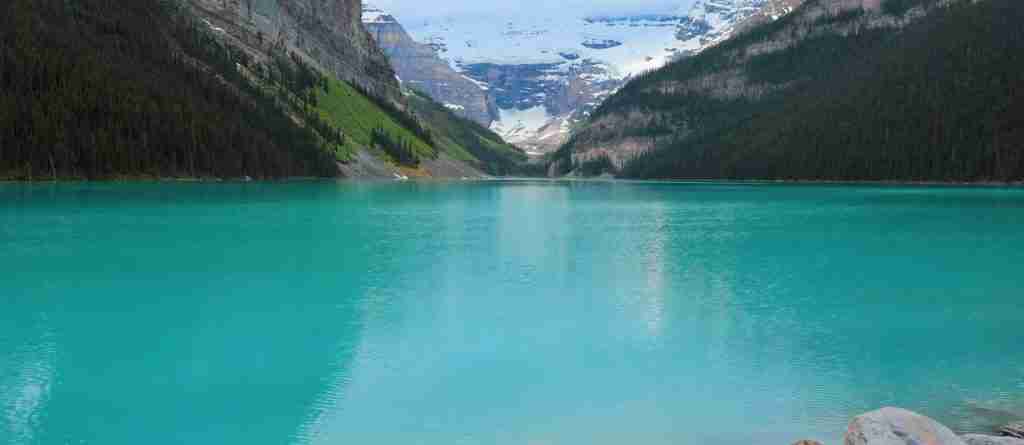
Lake Louise represents the Canadian Rockies’ most iconic image, with turquoise glacial waters backed by Victoria Glacier creating a scene recognized worldwide from photographs, postcards, and travel promotions. The lake sits 180 kilometers from Calgary via Trans-Canada Highway 1, requiring 2-2.5 hours driving time when accounting for traffic through Banff National Park and the steady elevation gain to 1,731 meters at Lake Louise village. Day trips from Calgary allow 4-6 hours at Lake Louise for lakeshore walks, viewpoint photography, hiking to Lake Agnes Tea House or the Plain of Six Glaciers, and potential connections to nearby Moraine Lake, though advance planning proves essential during peak summer months.
The Fairmont Chateau Lake Louise anchors the lakeshore experience, providing the famous foreground for Victoria Glacier photographs while housing restaurants, shops, and a grand lobby open to non-guests for exploration and refreshments. The paved Lakeshore Trail extends 2 kilometers along the lake’s north shore to its far end, offering easy walking suitable for all abilities while delivering constantly changing perspectives of the glacier-backed waters. Photographers should arrive for sunrise when still morning air creates perfect reflections and fewer visitors crowd the shoreline, though this requires 4:30-5 AM departures from Calgary during summer months. Mid-morning typically delivers the strongest turquoise color as sunlight penetrates deeper into glacial silt-laden water, while cloudy days can actually enhance color saturation compared to harsh sunny conditions.
Lake Agnes Tea House hike climbs 400 vertical meters over 3.6 kilometers from the Chateau, reaching a historic 1901 teahouse perched beside a small alpine lake at 2,135 meters elevation. The moderately steep trail switchbacks through forest before emerging at Mirror Lake, continues with more climbing to Lake Agnes, and rewards with genuine mountain tea service, homemade soup, sandwiches, and spectacular alpine scenery. The teahouse operates June through early October weather permitting, serving visitors from 8 AM-6 PM with cash-only payment required. Hiking time requires 2.5-3 hours return, making Lake Agnes feasible for Calgary day trippers who arrive early and hike immediately rather than lingering at the lakeshore. The trail sees heavy traffic making weekday visits or very early starts advantageous for less crowded experiences.
Plain of Six Glaciers trail extends 5.4 kilometers from the Chateau to a second teahouse and glacier viewpoints, following the lake’s south shore before climbing into the glacial valley beyond. This slightly more challenging hike requires 3-4 hours return and delivers closer glacier perspectives, though the full distance may challenge Calgary day trip time budgets unless combined with skipping other activities. Many visitors hike partway, perhaps to the 3-kilometer mark where glacier views open dramatically, before returning to allow time for Lake Louise lakeshore appreciation and potential Moraine Lake visits.
Moraine Lake rivals Lake Louise in photographic fame, with the Valley of the Ten Peaks creating a dramatic mountain amphitheater backdrop for vivid blue-green waters. This smaller but arguably more spectacular lake sits 15 kilometers from Lake Louise village via Moraine Lake Road, which remains closed to private vehicles year-round beginning in 2023 as a permanent traffic management measure. Summer 2026 access requires advance shuttle reservations through Parks Canada or commercial operators, though the restriction significantly reduces the frustration that previously characterized Moraine Lake parking attempts.
Parks Canada shuttle service connects Lake Louise Park and Ride to both lakes via frequent departures throughout the day from early June through mid-October. Reservations open April 15, 2026 at 8 AM Mountain Time, with 60% of seats releasing then and remaining 40% releasing at 8 AM two days before each departure date. Single shuttle tickets cost $9 per adult and include access to both lakes via the Lake Connector route running every 15-30 minutes between Lake Louise and Moraine Lake, plus return to the Park and Ride. This system ensures access while eliminating parking stress, making Calgary day trips more predictable than previous years when parking uncertainty complicated planning.
Roam Transit’s Route 8X provides an alternative public transit option from Banff townsite to Lake Louise with connections to the Parks Canada shuttle system, suitable for visitors who prefer using public transportation from Calgary to Banff via Brewster Express or other shuttle services rather than driving. The integrated transit system enables car-free Calgary-Banff-Lake Louise day trips, though multiple connections add travel time compared to direct driving.
Winter transforms Lake Louise access, eliminating shuttle requirements as summer crowds disappear and Moraine Lake Road closes entirely. Lake Louise village and the Chateau remain accessible by car year-round, though the lakeshore offers dramatically different frozen scenery. The Lake Louise Ski Resort, ranked among North America’s best ski destinations, operates just 10 minutes from the village and provides realistic day trip skiing from Calgary with the first gondola typically running at 9 AM and last chair around 4 PM, allowing full ski days with reasonable drive times. Non-skiers can ride the gondola for sightseeing, access mountaintop restaurants, and enjoy winter mountain scenery without skiing.
Drumheller and Royal Tyrrell Museum Day Trips 2026
Drumheller’s Canadian Badlands deliver extraordinary contrast to mountain day trips, with dramatically eroded landscapes exposing 75 million years of geological history in rust-red, tan, and grey-striped formations. The town sits 135 kilometers northeast of Calgary via Highway 2 and Highway 9, requiring 90 minutes driving time through prairie landscapes that abruptly transition to the Red Deer River valley’s sudden 200-meter-deep canyon. This otherworldly terrain earned UNESCO World Heritage designation as part of the Dinosaur Provincial Park complex, with Drumheller serving as gateway to Canada’s richest dinosaur fossil beds and the world-renowned Royal Tyrrell Museum.
The Royal Tyrrell Museum of Palaeontology anchors any Drumheller day trip, housing over 160,000 fossil specimens with 40 complete dinosaur skeletons displayed in cutting-edge exhibits explaining prehistoric life, evolution, and paleontological research. The museum sits 6 kilometers northwest of Drumheller along the scenic Dinosaur Trail road, operating year-round with extended summer hours from May 15 to August 31 when the facility opens 9 AM-9 PM daily, and reduced hours during other seasons. Admission costs $21 for adults, with prices including GST (check the official Royal Tyrrell Museum website for current rates as pricing may vary). The museum warrants 2-3 hours minimum to properly appreciate the exhibits, though dinosaur enthusiasts can easily spend 4-5 hours exploring collections ranging from Tyrannosaurus rex and Albertosaurus skeletons to feathered dinosaur displays and hands-on fossil preparation labs.
The Galleries of Alberta chronologically walk visitors through 3.5 billion years of provincial geological and biological history, starting with ancient seas and progressing through the Age of Dinosaurs, Ice Ages, and modern fauna. The Dinosaur Hall showcases dramatic mounted skeletons in active poses suggesting prehistoric behaviors, while the Cretaceous Garden recreates Late Cretaceous plant communities with living equivalents of species that dinosaurs consumed. The Discovery Room offers hands-on experiences particularly engaging for families, where visitors touch real fossils, examine dinosaur skin impressions under microscopes, and learn fossil identification techniques from museum interpreters.
Horseshoe Canyon provides the badlands’ most accessible and photographically dramatic landscape, with viewpoints overlooking a massive U-shaped canyon carved by thousands of years of erosion. The canyon sits 18 kilometers west of Drumheller on Highway 9, with a large parking area leading to rim trails and a steep path descending to the canyon floor. The multi-colored sediment layers create striped patterns in rust, grey, and tan tones, with distinctive hoodoo formations—tall pillars topped with harder capstone rocks—scattered throughout. Photographers favor sunset when low-angle light intensifies color saturation and creates dramatic shadows across erosion patterns. The canyon floor trail allows close examination of geological layers and fossil fragments occasionally visible in exposed sediments, though removing fossils is strictly prohibited under Alberta law.
The Hoodoos viewpoint east of Drumheller showcases the region’s famous mushroom-shaped rock formations where harder caprock protects softer sediments beneath from erosion, creating otherworldly stone pillars ranging 5-7 meters tall. A short boardwalk trail provides accessible viewing and photography platforms, with interpretive signs explaining geological processes creating these formations over millennia. The site requires just 20-30 minutes but delivers quintessential badlands imagery and geological education, easily combined with other Drumheller stops in comprehensive day trip itineraries.
The World’s Largest Dinosaur sculpture dominates downtown Drumheller, with a 26-meter-tall Tyrannosaurus rex statue allowing visitors to climb internal stairs to a viewing platform in the dinosaur’s mouth. The free attraction operates daily with photo opportunities at ground level or from the elevated mouth perspective 12 meters above town. While admittedly kitschy, the sculpture has become Drumheller’s signature landmark and provides genuinely impressive valley views justifying the brief detour. The sculpture sits adjacent to Drumheller Visitor Information Centre where detailed regional maps, fossil site information, and touring advice are available.
The Dinosaur Trail scenic drive forms a 48-kilometer loop from Drumheller northwest to the Royal Tyrrell Museum, across the Bleriot Ferry cable ferry over the Red Deer River, through badlands viewpoints, and returning to town via different routes. The complete loop requires 1.5-2 hours including stops, passing multiple roadside interpretive displays, geological viewpoints, and photo opportunities. The Bleriot Ferry operates seasonally from April through November, weather permitting, as one of Alberta’s last cable ferries—a unique experience where a cable pulled by onboard mechanisms hauls the small vehicle ferry across the river. The ferry runs continuously during operating hours at no charge, accommodating roughly 4-5 vehicles per crossing.
The Little Church seats just six people, claiming the title of world’s smallest active church at 3.7 meters by 5.2 meters. This roadside curiosity along Highway 10 south of town provides quick photo opportunities and reinforces Drumheller’s quirky character mixing serious paleontological science with tourist attractions. Like the World’s Largest Dinosaur, the Little Church requires minimal time but contributes to comprehensive day trip experiences incorporating both educational and novelty elements.
Drumheller day trips work particularly well during inclement mountain weather when rain or snow compromise Banff experiences, as badlands terrain offers different scenery less dependent on clear skies for appeal. Summer heat can be intense with temperatures regularly exceeding 30°C, making morning Royal Tyrrell Museum visits followed by late afternoon outdoor exploration comfortable. Winter remains viable with the museum operating year-round and badlands scenery often enhanced by snow cover creating dramatic color contrasts, though ice and snow can make canyon trails treacherous requiring appropriate footwear.
Kananaskis Country Day Trips 2026
Kananaskis Country encompasses over 4,000 square kilometers of provincial parkland, recreation areas, and ecological reserves immediately east of the Rockies’ Continental Divide, delivering mountain wilderness experiences without Banff National Park’s crowds or access restrictions. The region sits just 80 kilometers west of Calgary via Trans-Canada Highway 1 and Highway 40, requiring 60-90 minutes driving time to reach Kananaskis Village, Canmore, or northern K-Country destinations, making it Calgary’s closest significant mountain terrain. Unlike Banff, Kananaskis permits vehicle access to virtually all destinations without shuttle reservations, camping and accommodation remain more affordable and available, and visitor densities stay markedly lower despite comparable scenery quality.
Kananaskis Village serves as the region’s commercial hub, featuring hotels, restaurants, a golf course, and visitor services concentrated in a purpose-built mountain resort community. The village provides a convenient base for hiking, mountain biking, winter skiing at Nakiska ski resort, and access to nearby trails and viewpoints. Nakiska hosted alpine skiing events during Calgary’s 1988 Winter Olympics and continues operating as a modern ski area with well-groomed runs, though it attracts fewer destination skiers than Banff’s Lake Louise resort, resulting in shorter lift lines and more relaxed mountain experiences.
Barrier Lake offers accessible waterfront recreation 10 kilometers north of Kananaskis Village, with a dam-formed reservoir backed by mountain ridges providing paddling, fishing, picnicking, and beginner-friendly hiking trails. The Barrier Lake Visitor Information Centre sits at the lake’s north end, staffed seasonally with maps, trail conditions, wildlife activity updates, and expert advice for exploring the region. Multiple campgrounds surrounding the lake provide overnight options for visitors extending single-day trips into weekend camping experiences, with sites generally more available and affordable than equivalent Banff campgrounds.
The Kananaskis Trail (Highway 40 south from Trans-Canada Highway 1) threads through classic Rocky Mountain scenery for 60 kilometers to Highwood Pass at 2,206 meters, the highest paved road in Canada. The southern section between Kananaskis Village and Highwood Pass closes annually December through mid-June for wildlife protection, but when open provides spectacular driving with frequent pullouts, trailheads, and viewpoints. Upper Kananaskis Lake and Rawson Lake hikes access alpine scenery, while Ptarmigan Cirque trail at Highwood Pass delivers genuine alpine tundra experiences above treeline with minimal vertical gain. The entire region emphasizes outdoor recreation over commercial development, appealing to visitors seeking nature-focused experiences rather than resort amenities.
Canmore technically sits outside Kananaskis provincial lands but serves as an alternative mountain town just 106 kilometers from Calgary and 26 kilometers from Banff National Park. The town provides urban services, restaurant diversity, and accommodation options often more affordable than Banff while maintaining mountain town atmosphere along the Bow River valley. Canmore makes an excellent lunch stop combining mountain scenery with dining variety, or a hiking destination via numerous trails accessing surrounding peaks. The Canmore Nordic Centre, another 1988 Olympics legacy facility, offers year-round trail access for hiking, mountain biking, and cross-country skiing on world-class competition courses.
Transportation Options for Calgary Day Trips 2026
Transportation choices fundamentally determine day trip flexibility, cost structure, and logistical complexity, with options ranging from personal rental vehicles to fully guided tours and public shuttle services. Each approach delivers distinct advantages and limitations affecting the overall day trip experience and budget. Calgary’s position as a major western Canadian city provides comprehensive transportation infrastructure including an international airport with numerous rental car companies, multiple tour operators specializing in Rockies day trips, and public shuttle services connecting Calgary to mountain destinations.
Rental cars provide maximum flexibility enabling multi-stop itineraries, spontaneous photography detours, departure time control, and independence from group schedules. Major rental companies including Enterprise, Budget, Hertz, Avis, and National operate from Calgary International Airport and downtown locations, with daily rental rates ranging $85-120 for economy to mid-size vehicles during 2026, plus fuel costs of $30-50 per day depending on distances traveled. Weekly rentals often provide better value for visitors planning multiple day trips across several days. Drivers must be comfortable with winter conditions during snowy months as Trans-Canada Highway 1 to the mountains can experience challenging weather requiring snow tires (mandatory in Alberta December-March), reduced speeds, and confidence handling icy conditions. Navigation proves straightforward as Highway 1 west from Calgary leads directly to Banff and Lake Louise with clear signage, while Highway 2 north then Highway 9 east reaches Drumheller.
The Parks Canada Discovery Pass costs $84 per adult or $168 for family-group coverage for 12 months, providing unlimited entry to Banff and other Canadian national parks. Daily passes cost $11 per adult or $23 per family-group, making the Discovery Pass worthwhile for three or more Banff day trips. However, the Canada Strong Pass provides FREE admission to all Parks Canada sites from June 19 to September 7, 2026, eliminating entry fees during peak summer season. Visitors planning day trips outside the free admission period should purchase Discovery Passes for multi-visit savings, while summer 2026 visitors benefit from zero park entry costs. Youth under 18 enter free year-round.
Organized day tours eliminate driving concerns while providing expert interpretation, efficient itinerary planning, and often insider knowledge about wildlife viewing locations, photography angles, and seasonal timing. Calgary tour operators including Discover Banff Tours, Banff Travel, Mountain Park Transportation, and numerous others offer full-day and half-day programs to Banff, Lake Louise, and Drumheller with pickup from Calgary hotels. Banff day tours typically run $65-145 per person depending on season, inclusions, and group size, with winter tours generally less expensive than peak summer departures. Most tours include transportation, park entry fees, and professional driver-guide, though meals and optional activities like gondola tickets require additional payment. Lake Louise tours range $120-180 per person reflecting longer distances and transportation time, while Drumheller tours cost $140-160 per person typically including Royal Tyrrell Museum admission. Small-group tours with 10-15 participants generally cost more than large coach tours accommodating 40-50 people but allow more flexible scheduling, photo stops, and personalized experiences.
Brewster Express operates scheduled shuttle service between Calgary and Banff, Lake Louise, Canmore, and Jasper with modern coaches, onboard WiFi (currently unavailable as of early 2026 while upgrades are underway), and frequent daily departures. Calgary departures originate from both Calgary International Airport and downtown Calgary hotels, with Banff-bound shuttles running every 4 hours year-round. One-way tickets cost $80-110 depending on exact destination and booking timing, with return tickets offering 25% savings (promotional pricing valid through May 18, 2026). Brewster Express provides middle-ground transportation for visitors wanting independence from group tours while avoiding rental car costs and driving responsibilities. The service works particularly well for visitors planning to stay in Banff or Lake Louise for several days and explore using local transit, but also accommodates day trippers who coordinate outbound and return shuttles. Travel time runs approximately 2 hours from Calgary Airport to Banff, 2.5 hours to Canmore, and 4-4.5 hours to Lake Louise reflecting multiple hotel stops.
Alternative shuttle services including Mountain Park Transportation, Rider Express, and FlixBus provide competition to Brewster Express with similar routes and pricing, offering additional departure time options and sometimes lower fares. Rider Express runs Vancouver-Calgary routes stopping in Lake Louise, while FlixBus operates daily Calgary-Banff-Lake Louise service with tickets sometimes available for under $50 one-way depending on booking timing and demand. Comparing multiple providers before travel dates can identify best pricing and most convenient schedules for specific day trip plans.
Private transfers offer luxury and convenience for groups or families traveling together, with services like Banff Transportation Group and Banff Sedan providing door-to-door service in cars, vans, or buses accommodating 4-24 passengers. Calgary Airport to Lake Louise private transfers cost $360-480 one-way for standard vehicles, making this option economical when split among 4-6 people compared to individual shuttle tickets or rental cars. Private transfers eliminate all driving stress, allow customized stop requests, and provide personalized attention from experienced driver-guides familiar with routes and attractions.
The transportation decision fundamentally affects day trip character: rental cars maximize flexibility and cost-effectiveness for 2-4 people making multiple stops or visiting less accessible destinations, organized tours provide stress-free experiences with expert commentary suitable for first-time visitors or those uncomfortable driving mountain roads, shuttles offer middle-ground independence at moderate cost ideal for single-destination days, and private transfers deliver luxury convenience justified for groups or special occasions. Budget, group size, comfort with mountain driving, desired flexibility, and specific destination priorities should guide the transportation choice for each Calgary day trip.
Seasonal Planning for Calgary Day Trips 2026
Calgary day trip experiences transform dramatically across seasons, with each period delivering distinct advantages, challenges, weather patterns, wildlife activity, and visitor density affecting optimal destination choices and activity planning. The city’s position on the prairie-mountain interface creates variable weather where Chinook winds can raise winter temperatures 20°C in hours, while summer mountain thunderstorms develop rapidly despite morning sunshine. Understanding seasonal patterns enables strategic trip planning maximizing enjoyment while avoiding the worst crowds, weather risks, and access limitations.
Summer (June-August) delivers the most reliable weather, longest daylight hours enabling early morning and late evening activities, warmest temperatures for comfortable hiking and outdoor exploration, and fullest access to mountain services including teahouses, gondola operations, boat cruises, and visitor facilities. However, summer also brings peak visitor crowds requiring advance planning for Lake Louise shuttle reservations, early arrivals for parking at popular Banff destinations, and acceptance of shared experiences at iconic viewpoints. The Canada Strong Pass provides FREE Parks Canada admission from June 19 to September 7, 2026, representing major savings during this peak period. Summer afternoon thunderstorms develop frequently in mountains, making early-day starts advantageous for avoiding weather disruptions. Wildlife viewing becomes more challenging as animals retreat to higher elevations and dawn-dusk timings to avoid midday heat and crowds, though roadside sightings remain common.
Shoulder seasons in May and September-October offer compelling advantages for Calgary day trips, delivering 30-50% fewer visitors compared to July-August while maintaining generally excellent weather, particularly during extended Indian Summer periods in September when warm, stable high-pressure systems can persist for weeks. Late May provides spring wildflower displays at lower elevations while higher trails may remain snow-covered, creating interesting mixed-season conditions. September brings golden larch trees transforming specific high-elevation trails into spectacular amber corridors, while elk rutting season peaks, dramatically increasing wildlife activity and vocalization around Banff townsite and Vermilion Lakes. October offers brilliant aspen gold on lower elevation trails before first significant snowfalls typically arrive, though weather becomes more variable with potential for early winter storms. Services and facilities reduce operations in shoulder seasons with some restaurants, tours, and attractions closing after Thanksgiving (second Monday in October), while Lake Louise boat cruises and high-elevation teahouses cease operations by early October.
Winter (November-March) transforms mountain day trips into frozen wonderlands with unique experiences impossible during other seasons, though requiring appropriate preparation, equipment, and realistic expectations about weather and road conditions. Johnston Canyon ice walk showcases frozen blue-green waterfall columns, Banff Gondola provides winter summit views over snow-covered peaks, Lake Louise’s famous ice castle and winter sports, and significantly reduced crowds at typically mobbed summer destinations. Winter day trips from Calgary remain entirely feasible, though drivers must understand winter mountain driving including mandatory winter tires in Alberta (December 1-March 31), reduced speeds, increased stopping distances on icy roads, and realistic assessment of personal comfort with winter conditions. Highway 1 between Calgary and Banff receives excellent maintenance with regular plowing and sanding, generally keeping the route passable except during active blizzards when travel becomes inadvisable for all vehicles. The Trans-Canada Highway rarely closes completely, though poor visibility and ice can create hazardous conditions. Shorter winter daylight limits day trip hours with December’s 4:30 PM sunset requiring earlier returns to Calgary, while January and February provide marginally longer days. The Lake Louise Ski Resort transforms into a winter destination rivaling the summer lake experience, offering world-class skiing just 2.5 hours from Calgary.
Spring (April-May) offers transitional conditions where lower elevations green while higher terrain retains snow, creating mixed-season opportunities. Wildlife viewing excels as animals frequent roadways and lower valleys, including roadside salt licks where bighorn sheep, elk, and deer congregate. Bears emerge from hibernation and become increasingly active, making spring an excellent period for wildlife enthusiasts though requiring proper bear awareness and distance maintenance. Weather variability peaks in spring when warm Chinook winds alternate with late-season snow systems, necessitating flexible planning and readiness to adjust itineraries based on conditions. Many mountain facilities remain closed until Victoria Day weekend in late May, limiting dining and activity options compared to peak season.
Fall (September-November) begins with excellent conditions during September’s shoulder season before transitioning to variable late fall weather by November when winter conditions increasingly dominate. Early fall provides arguably optimal day trip conditions combining summer warmth, fall colors, reduced crowds, active wildlife, and longer daylight compared to winter while avoiding summer’s peak traffic and pricing. Late September through mid-October delivers spectacular larch golden displays in high-elevation areas including Larch Valley near Moraine Lake and various Kananaskis locations, creating pilgrimage destinations for photographers and nature enthusiasts. November weather turns increasingly wintry with first significant snowfalls typically occurring, though actual winter establishment varies considerably between mild and harsh years. By November most summer services close, visitor numbers drop dramatically, and day trip planning increasingly resembles winter approaches.
Day Trip Cost Breakdown Calgary 2026
Calgary day trip costs vary dramatically based on transportation choice, destination, activity selection, and dining preferences, with budget-conscious self-drive days achievable for $40-60 per person while comprehensive guided tours with premium activities reach $200-300 per person. Understanding specific cost components enables strategic planning maximizing experience value while controlling expenditure within personal budget parameters. The 2026 Canada Strong Pass providing free Parks Canada admission June 19-September 7 significantly reduces costs for summer visitors, eliminating the $11 daily park entry fees that typically apply per person for national park access.
Transportation represents the most variable cost component, with self-drive expenses including fuel, parking, and potential vehicle rental fees, while tour packages bundle transportation with other services at fixed per-person rates. Rental car fuel for Calgary-Banff round trips costs approximately $30-40 depending on vehicle efficiency and current fuel prices, divided among all passengers. Calgary-Lake Louise round trips run $40-55 for fuel, while Calgary-Drumheller costs $25-35 for fuel. Parking in Banff townsite remains free at the Banff Train Station with short walk to downtown, though paid parking applies in the core area at $3-5 per hour. Lake Louise parking proves more challenging during summer with the Park and Ride system now standard for accessing Lake Louise and Moraine Lake via required shuttles costing $9 per adult including both lakes. Drumheller parking stays free at all major attractions including Royal Tyrrell Museum, Horseshoe Canyon, and Hoodoos viewpoint.
Parks Canada fees apply to Banff and Lake Louise day trips unless visiting during the June 19-September 7, 2026 free admission period. Outside free admission dates, daily adult passes cost $11 per person or $23 per family-group up to 7 people in one vehicle, making family passes economical for couples or groups. The annual Discovery Pass at $84 per adult or $168 family-group breaks even after 8 daily visits, justifying purchase for visitors planning multiple Calgary mountain day trips across the year. Kananaskis Country and Drumheller require no entry fees, making these destinations economically attractive for budget-conscious travelers.
Activity costs vary from free hiking and viewpoint photography to paid attractions including Banff Gondola at $74 adults, Royal Tyrrell Museum at $21 adults, Lake Minnewanka boat cruise at $72 adults, and Johnston Canyon ice walk guided tours at $75-95 per person for winter experiences. Many of Banff and Kananaskis’ most spectacular experiences—hiking to mountain lakes, viewing Bow Falls, driving scenic parkways, photographing Mount Rundle reflections at Vermilion Lakes, exploring badlands viewpoints—cost nothing beyond park entry and transportation, enabling genuinely budget-friendly day trips emphasizing free natural attractions over commercial experiences.
Dining expenses range from packed picnic lunches costing $10-15 per person when groceries are purchased in Calgary to casual restaurant meals at $18-30 per person in Banff or Canmore, and sit-down dining at $40-70 per person at nicer establishments. Banff townsite restaurants generally charge 20-40% premiums over equivalent Calgary dining reflecting resort town economics and captive tourist market, making packed lunches strategically valuable for budget management. Coffee shops charge $5-7 for specialty drinks, while bakeries and cafes offer sandwiches and soups for $12-18. Many day trippers combine packed breakfasts and lunches with early evening Calgary dinners, minimizing resort dining expenses while allowing more budget allocation toward activities and experiences.
Self-drive Banff day trips combining free hiking with one paid activity cost approximately $42-126 per person when sharing vehicle expenses, with costs varying by season and activity choice. During the free admission period (June 19-September 7, 2026), costs include fuel share $15-20, packed lunch $12-15, coffee $6, and either gondola $74 or hot springs $9. Outside free admission dates, add park entry $11. The hot springs option runs $42-50 during free admission or $53-61 with park entry. The gondola option runs $107-115 during free admission or $118-126 with park entry. Budget versions emphasizing only free activities cost $33-41 during free admission (fuel share, lunch, coffee only) or $44-52 with park entry. Lake Louise self-drive days include fuel share $20-25, shuttle $9, and packed lunch $15. During free admission this totals $44-49, or $55-60 with park entry. Adding optional teahouse meals or boat cruises at $30-40 raises totals to $74-89 during free admission or $85-100 with park entry. Drumheller self-drive trips cost $58-68 per person including fuel share $12-17, Royal Tyrrell admission $21, lunch in Drumheller $15-20, and gas station snacks $10.
Organized tours bundle transportation, park entry, and guide services at fixed rates, typically running $65-145 per person for Banff day tours, $120-180 for Lake Louise tours, and $140-160 for Drumheller tours. These packages eliminate driving stress and parking challenges while providing expert commentary, though meals and optional activities typically require additional payment. Small-group tours often include more flexibility and personalized attention at $20-40 premium over large coach tours, worthwhile for visitors valuing intimate group dynamics and customized photo stops.
Premium day experiences combining multiple paid activities, restaurant dining, and private transportation can reach $250-350 per person for comprehensive Lake Louise tours including gondola tickets, boat cruises, teahouse lunch, and interpretive guide services, or $300-400 for multi-day packages visiting several destinations with overnight accommodation. These represent top-tier experiences emphasizing convenience, premium activities, and expert interpretation over budget consciousness.
Wildlife Viewing on Calgary Day Trips 2026
Wildlife viewing ranks among the most compelling reasons for Calgary mountain day trips, with Banff National Park supporting healthy populations of elk, bighorn sheep, deer, black bears, grizzly bears, wolves, coyotes, and numerous smaller mammals visible year-round to observant visitors. The Canadian Rockies’ dramatic topography concentrates animals along valley bottoms where roads and trails also run, creating frequent wildlife encounter opportunities that distinguish mountain day trips from most North American destinations. However, these encounters require responsible behavior ensuring both human safety and animal welfare, with Parks Canada regulations and common sense guidelines protecting this precious wildlife resource.
Elk represent Banff’s most commonly observed large mammal, with herds frequently visible throughout the Bow Valley including Banff townsite where animals browse on lawns, golf courses, and parks. Adult bull elk reach 450 kilograms with imposing antlers, while cow elk and calves form maternal groups. September-October elk rutting season creates particularly dramatic wildlife viewing as bulls bugle haunting vocalizations advertising dominance, clash antlers in territorial disputes, and gather harems of females. Vermilion Lakes, Bow River shores around Banff, and Two Jack Lake provide reliable elk viewing areas during dawn and dusk hours when animals are most active. Elk can be aggressive, particularly bulls during rut and cows protecting calves, requiring minimum 30-meter observation distances and immediate retreat if animals display agitation through ear positioning, stomping, or direct approaches.
Bighorn sheep frequent Highway 1 corridor and Bow Valley Parkway, often at roadside salt licks where winter road salt creates mineral supplementation opportunities. The Goat Creek parking area, Lake Minnewanka area, and various roadside pullouts between Banff and Lake Louise see regular sheep activity. Adult rams with massive curved horns create spectacular photographs, though all bighorn sheep regardless of age or sex deserve respectful distance. Never feed any wildlife, approach closely, or attempt to lure animals nearer with food, whistles, or other attractants. These behaviors habituate wildlife to humans, alter natural behaviors, and ultimately endanger both animals and future visitors.
Black bears and grizzly bears inhabit Banff National Park with populations of approximately 60 grizzlies and more numerous black bears, though sightings remain relatively uncommon for day visitors staying near developed areas. Bears frequent roadsides during spring when emerging from hibernation, particularly along Bow Valley Parkway where roadside closures protect important bear habitat during key seasons. Summer berry ripening brings bears to productive shrub areas, while fall hyperphagia (pre-hibernation feeding) motivates intensive foraging often bringing bears near human use areas. All bear sightings require immediate reporting to Parks Canada staff (call 403-762-1470), maintenance of minimum 100-meter distance, and avoidance of behaviors drawing bear attention or blocking bear movement corridors. Carry bear spray on all trails, make noise while hiking to avoid surprising bears, and remain in vehicles if bears appear near roadways.
Moose inhabit wetter areas including Vermilion Lakes, Bow River wetlands, and various Kananaskis locations, though populations remain lower than elk or deer. Bull moose with palmated antlers appear particularly impressive, while cow moose with calves display intense protectiveness making them potentially dangerous despite their seemingly calm demeanor. Winter increases moose visibility as animals frequent valley bottoms and roadside willows providing browse opportunities.
Mountain goats occupy higher elevations on rocky terrain and cliffs, less frequently visible from valley-bottom roads but sometimes appearing at roadside mineral licks. Lake Louise area, particularly around Lake Agnes and surrounding mountains, supports goat populations occasionally visible to hikers reaching higher elevations. Their pure white coats and black horns create striking contrast against grey cliffs and scree slopes where they move with improbable agility.
Wolves, coyotes, and other predators remain present throughout the region though sightings prove rare for most day visitors. Coyotes appear more frequently than wolves, often visible hunting rodents in meadows or traveling along valley bottoms. Wolves range widely across large territories making chance encounters unusual, though their presence significantly affects prey species behavior and ecosystem dynamics even when unseen.
Smaller wildlife including golden-mantled ground squirrels, Columbia ground squirrels, least chipmunks, red squirrels, pikas, hoary marmots, and various bird species from gray jays to Clark’s nutcrackers to ravens provide constant activity around trails, campgrounds, and viewpoints. These animals tolerate closer human proximity but still deserve respect including zero-feeding policies that prevent habituation and maintain natural foraging behaviors.
Optimal wildlife viewing timing concentrates at dawn and dusk when most mammals are most active, avoiding midday heat and human activity peaks. Early morning Banff visits starting 6-7 AM significantly increase wildlife encounter probability compared to midday arrivals, while evening visits after 5 PM as crowds diminish also boost sighting success. Spring (April-May) brings animals to lower elevations and roadsides including mineral licks where sheep and other ungulates concentrate. Fall (September-October) delivers elk rut activity and pre-hibernation bear foraging creating elevated wildlife activity levels. Winter reduces wildlife visibility somewhat as deep snow pushes some species to lower elevations while making them easier to spot against white backgrounds, though severely cold periods may keep animals bedded down reducing movement.
Photography Guide for Calgary Day Trips 2026
Calgary day trip destinations provide extraordinary photography opportunities ranging from iconic scenes recognized worldwide—Lake Louise with Victoria Glacier, Moraine Lake’s Valley of Ten Peaks, Mount Rundle reflections at Vermilion Lakes—to lesser-known compositions throughout Banff, Kananaskis, and Drumheller’s badlands. Successful mountain and badlands photography requires understanding optimal timing, weather influences, equipment needs, and strategic location selection maximizing limited day trip timeframes while capturing compelling images.
Golden hours define mountain photography, with the hour after sunrise and hour before sunset delivering warm, low-angle light that transforms landscapes through enhanced colors, dramatic shadows, and three-dimensional depth impossible during harsh midday sun. Summer sunrise at Banff occurs approximately 5:30 AM, requiring 4 AM Calgary departures to reach locations like Vermilion Lakes before optimal light, though the extraordinary results justify early alarms. Sunset provides more accessible golden hour opportunities with 9 PM summer light allowing leisurely day trips culminating in evening photography sessions. Shoulder seasons shift sunrise to 6:30-7:30 AM and sunset to 6-8 PM, creating more manageable timing for day trippers, while winter’s late 8 AM sunrise and 4:30 PM sunset compress photography windows but can be worked into standard day trip schedules.
Cloudy and overcast conditions paradoxically improve certain mountain photography by eliminating harsh shadows, preventing blown-out skies in high-contrast scenes, and intensifying the turquoise color saturation in glacial lakes like Lake Louise. While blue-sky conditions appeal intuitively, partially cloudy skies often create more dramatic images through broken light, passing shadows on mountains, and textured cloud formations adding visual interest to otherwise empty skies. Light rain clearing to partial clouds as weather systems pass delivers exceptional post-storm lighting as sun breaks through gaps creating spotlighting effects on specific peaks while surrounding areas remain shadowed. Weather variability that frustrates some visitors creates dynamic photography opportunities for those who embrace changing conditions and adapt shooting to prevailing light.
Mount Rundle reflections at Vermilion Lakes represent Banff’s signature composition, with the distinctive pyramid peak mirroring in still morning waters when wind hasn’t yet rippled surfaces. Three connected lakes provide multiple composition options, though the first and second lakes generally deliver strongest reflections. Arrive 45 minutes before sunrise to secure prime shoreline positions during peak season, with compositions balancing mountain reflections, foreground wetland grasses or shoreline elements, and sky capturing sunrise color. Focus stacking techniques combining focused foreground and background elements create entirely sharp images impossible with single exposures. Summer brings mosquitoes and wetland insects, making bug spray and long sleeves advisable for comfortable dawn sessions.
Johnston Canyon offers multiple photography opportunities beyond the obvious waterfall compositions, including the steel catwalks threading through narrow canyon walls creating strong leading lines, intimate water flow details showcasing motion through long exposures, and forest scenes along the approach trail. The canyon’s shaded position allows midday photography without harsh sun that plagues other destinations, making Johnston Canyon strategically valuable for flexible timing. Summer crowds compromise photography from standard viewpoints, making very early mornings essential for clean compositions without tourists, or consider winter ice walk seasons when visitor numbers drop dramatically and frozen formations create entirely different but equally compelling subjects.
Lake Louise and Moraine Lake require careful timing strategy balancing advancing summer shuttle reservation systems with optimal light timing. Early morning provides calmest conditions for reflections, though the lakes sit in mountain shadows until approximately 7-8 AM when direct sun reaches lakeshores. Mid-morning (9-11 AM) delivers strongest turquoise color as sun penetrates deeper into glacial silt particles suspended in the water, creating the vivid blue-green tones these lakes are famous for. Afternoon backlighting creates exposure challenges with bright skies and shadowed foreground elements requiring careful exposure management through HDR techniques, graduated neutral density filters, or exposure bracketing. Telephoto lenses compress glaciers and surrounding peaks creating impactful compositions, while wide-angle lenses emphasize grand landscape scale incorporating foreground boulders, shoreline, and full mountain backdrops.
Badlands photography around Drumheller rewards different techniques emphasizing geological layers, erosion patterns, and color-striped sediments. Side lighting from low-angle morning or evening sun reveals texture and three-dimensional form in hoodoos and canyon walls, while midday top-down sun flattens these features into less compelling images. Horseshoe Canyon benefits from sunset light intensifying red and orange tones in sediment layers, with viewpoint positions along rim trails allowing varied perspectives. Polarizing filters manage sky reflections and enhance color saturation in rock formations, though use cautiously as over-polarization creates unnaturally dark skies. Wide-angle lenses capture sweeping badlands vistas, while telephoto lenses compress layered sediments and isolate specific geological details or hoodoo formations.
Equipment recommendations for Calgary day trip photography include versatile zoom lenses covering wide to moderate telephoto ranges (24-105mm or similar), polarizing filters for managing reflections and enhancing skies, neutral density filters enabling long exposures smoothing water and clouds during daylight, sturdy tripods supporting stable compositions especially at golden hours and in shaded canyons requiring longer exposures, remote releases preventing camera shake during exposures, and backup batteries as cold mountain temperatures drain power rapidly. Full-frame cameras excel in low-light dawn and dusk conditions, though modern cropped-sensor cameras perform admirably. Smartphone cameras capture compelling images with proper light and composition, making expensive equipment optional rather than mandatory for successful day trip photography.
Practical Tips for Calgary Day Trips 2026
Successful Calgary day trips require planning beyond destination selection and basic logistics, with numerous practical considerations affecting comfort, safety, and overall experience quality. These strategic tips derived from extensive regional experience help visitors maximize day trip value while avoiding common pitfalls that compromise enjoyment or create unnecessary challenges.
Early departures prove crucial for popular destinations like Banff and Lake Louise, with 6-7 AM Calgary starts enabling parking access before lots fill, wildlife viewing at active dawn hours, photography during optimal golden hour light, and trail access before crowds arrive. Summer sunrise occurs 5:30 AM enabling legitimate dawn starts, while winter’s 8 AM sunrise still justifies 6 AM departures reaching destinations as facilities open. Most day trippers depart Calgary 9-11 AM creating midday arrival rushes at Banff and Lake Louise exactly when parking becomes impossible and trailheads overflow. Strategic early timing transforms the same destinations from frustrating crowded experiences to peaceful mountain enjoyment.
Layered clothing addresses mountain weather variability where morning temperatures may start near freezing while afternoon peaks reach 25°C, with sudden weather changes common across all seasons. Pack base layers, insulating mid-layers, waterproof outer shells, warm hats, gloves, and sun protection regardless of morning forecasts, as mountain weather changes rapidly and high-elevation locations like Sulphur Mountain summit or Lake Agnes remain significantly colder than valley bottoms. Boots with good traction prove essential for any hiking beyond paved paths, while comfortable walking shoes suffice for downtown Banff exploration and paved trail systems.
Bring adequate food and water as mountain destination options stay limited and expensive compared to Calgary. A full cooler with breakfast items, lunch components, snacks, and beverages enables flexible eating without restaurant dependencies or inflated resort pricing. Many parking areas and trailheads provide picnic tables, while numerous scenic viewpoints create memorable dining settings. Water bottles or hydration bladders carry sufficient liquids for full-day activities, with refilling possible at some visitor centers and facilities though bottled water purchases provide backup. Budget $40-60 per person daily for restaurant dining in Banff or Lake Louise versus $10-15 for packed meals prepared from Calgary grocery purchases.
Bear spray should accompany all hiking anywhere in the mountain national parks, available for purchase at Calgary outdoor retailers (MEC, Sport Chek, Atmosphere) or Banff shops for $40-60 per canister. Practice deployment before trail use, carry spray in quick-access holsters not buried in backpacks, and understand that spray effectiveness requires close range (within 10 meters) when bears charge or show aggression. Make noise while hiking to avoid surprising bears—conversation, periodic shouts, and clapping especially approaching blind corners and in dense vegetation alert bears to human presence allowing them to move away before encounters occur. Hiking groups prove safer than solo hiking as bears generally avoid larger groups.
Fuel vehicles fully in Calgary as gas prices in mountain towns run 15-25% higher than Calgary stations reflecting transportation costs and limited competition. The 90-minute Banff drive and 2.5-hour Lake Louise drive consume significant fuel, making full Calgary tanks strategically valuable before mountain departures. Return trips may require refueling in Canmore or Banff if starting with partial tanks, accepting premium pricing as necessary cost.
Park passes display properly on vehicle dashboards when entering Banff National Park, with ranger checkpoints occasionally verifying compliance. The Discovery Pass folded to show validation dates sits prominently visible through windshields, while digital passes require phone display. Free admission periods during Canada Strong Pass (June 19-September 7, 2026) eliminate pass requirements, though rangers may still conduct checks confirming visitors understand admission is free rather than requiring purchases.
Cellular service remains excellent throughout Calgary and along Trans-Canada Highway 1 to Banff and Lake Louise, with reliable coverage in Banff townsite, Lake Louise village, and Canmore. Service drops in some mountain valleys and becomes unreliable at locations like Moraine Lake, though improving network infrastructure gradually extends coverage. Drumheller maintains good service in town with some gaps in badlands canyons. Download offline maps before departures ensuring navigation capability if service drops unexpectedly.
Parking strategies vary by destination with some locations filling extremely early while others maintain availability throughout the day. Banff Train Station provides free parking with 10-minute walks to downtown, avoiding paid parking in core areas charging $3-5 per hour. Lake Louise requires shuttle reservations from Park and Ride during summer season with parking at the Park and Ride facility, while winter allows direct drive-in access to the Chateau area. Johnston Canyon parking fills by 8-9 AM summer weekends, making very early arrivals essential for direct access versus parking 1-2 kilometers away with roadside walks. Drumheller attractions maintain ample free parking year-round. Understanding parking realities prevents frustration and time waste circling full lots.
Reservation systems dominate summer 2026 mountain access with Parks Canada shuttles to Lake Louise and Moraine Lake requiring advance booking through the reservation system opening April 15, 2026. Create Parks Canada accounts before reservation dates ensuring smooth booking when seats release. The system allocates 60% of seats initially with remaining 40% releasing two days before each date, providing backup opportunities if initial booking dates show sold out. Restaurant reservations at popular establishments including Lake Agnes Tea House and Fairmont properties prove advisable for guaranteed seating, though walk-in opportunities exist at less busy times.
Emergency preparedness remains important despite day trip proximity to Calgary, as mountain weather, wildlife encounters, or vehicle issues can create challenging situations. Carry first aid kits, emergency blankets, flashlights, extra batteries, phone charging cables and backup power banks, vehicle emergency equipment including jumper cables and basic tools, and contact information for Parks Canada (403-762-1470) and roadside assistance. Most mountain locations maintain cellular coverage enabling emergency communication, though some canyons and valleys lose signal requiring self-sufficiency until returning to coverage areas.
Frequently Asked Questions About Calgary Day Trips 2026
How far is Banff from Calgary for a day trip?
Banff National Park lies 128 kilometers west of Calgary via Trans-Canada Highway 1, requiring 90 minutes driving time under normal traffic conditions, though weekend summer departures and holiday periods can extend travel to 2 hours with heavier traffic through the Bow Valley corridor. The route remains straightforward following Highway 1 west from Calgary city limits through Cochrane and Canmore before entering Banff National Park at the east gate, with clear highway signage and excellent road conditions year-round aside from winter weather events requiring reduced speeds. Public shuttles like Brewster Express take approximately 2 hours from Calgary International Airport to Banff making multiple hotel stops, while organized day tours typically depart Calgary downtown 7-8 AM and return 6-7 PM allowing 6-7 hours in Banff for sightseeing, hiking, dining, and activities. The distance proves entirely manageable for comfortable day trips with early starts enabling full-day mountain experiences without overnight stays.
Do I need a Parks Canada pass for Calgary day trips in 2026?
Parks Canada entry passes are required for Banff and Lake Louise day trips outside the free admission periods, with daily adult passes costing $11, daily family-group passes $23 (up to 7 people in one vehicle), and annual Discovery Passes at $84 adult or $168 family-group providing unlimited 12-month access to all Canadian national parks, historic sites, and marine conservation areas. However, the 2026 Canada Strong Pass provides FREE admission to all Parks Canada locations from June 19 to September 7, 2026, eliminating entry fees during peak summer season for all visitors regardless of pass ownership. Visitors traveling during the free admission period do not need to purchase passes, stop at entry gates for payment, or display passes on dashboards, though Parks Canada staff may still welcome visitors and provide information at entry points. Existing Discovery Pass holders receive automatic extensions covering the free admission period. Youth under 18 enter free year-round. Kananaskis Country and Drumheller require no entry fees at any time, making these destinations economically attractive for budget-conscious travelers. Calculate break-even for Discovery Passes outside free periods: three Banff day trips at $11 per adult equals $33 versus the $84 annual pass, making the pass worthwhile for visitors planning frequent mountain day trips across the year.
What is the best season for Calgary mountain day trips?
Each season delivers distinct advantages with no definitively “best” period, as optimal timing depends on visitor priorities weighting weather reliability, crowd levels, specific activities, costs, and personal preferences. Summer (June-August) provides most reliable weather, warmest temperatures, longest daylight hours, and fullest facility operations including teahouses, boat cruises, gondolas, and visitor services, but also brings peak crowds requiring advance shuttle reservations, early parking arrivals, and acceptance of shared experiences at iconic viewpoints, though the 2026 Canada Strong Pass free admission provides significant value offsetting higher accommodation and activity costs. Shoulder seasons (May and September-October) offer compelling middle ground combining generally excellent weather with 30-50% fewer visitors, fall colors including golden larches and aspens, active wildlife during elk rutting season, and lower accommodation costs, though some services close after Thanksgiving and weather variability increases particularly in late October as winter approaches. Winter (November-March) transforms mountains into frozen wonderlands with unique ice walks, winter sports, snow-covered scenery, minimal crowds, and lowest accommodation rates, but requires winter driving capability, acceptance of shorter daylight hours, and some facility closures, while cold temperatures demand appropriate clothing and realistic activity limitations. Spring (April-May) delivers excellent wildlife viewing as animals frequent lower elevations and roadside mineral licks, increasing wildflower displays particularly in late May, transitional weather mixing winter snow events with emerging warm spells, and building daylight hours, though services remain limited until Victoria Day weekend and trail conditions stay variable with lingering snow. Most visitors find shoulder seasons optimal balancing weather, crowds, costs, and experience quality, though summer suits those prioritizing weather certainty despite crowds, while winter appeals to visitors embracing cold-weather activities and peaceful mountain solitude.
Can you visit both Banff and Lake Louise in one day from Calgary?
Combining Banff and Lake Louise in a single Calgary day trip proves logistically possible but rushed, sacrificing depth for breadth by attempting too many destinations within limited timeframes. Lake Louise sits 52 kilometers west of Banff townsite requiring 40-50 minutes driving, making round trip Calgary-Banff-Lake Louise-Calgary total approximately 360 kilometers and 4-4.5 hours minimum driving time excluding stops. Realistic timeline: 6 AM Calgary departure, 7:30 AM Lake Louise arrival allowing 2 hours for lakeshore walks and photography, 9:30 AM departure toward Banff, 10:30 AM Banff arrival allowing 3-4 hours for gondola or hiking, lunch, and downtown exploration, 2:30 PM Banff departure, 4 PM Calgary return. This compressed schedule eliminates spontaneity, requires perfect execution without delays, skips numerous worthy stops along the route including Johnston Canyon and Vermilion Lakes, and creates fatigue from extended driving and rushing between locations. Superior alternative: dedicate separate days to Lake Louise and Banff enabling thorough exploration of each destination with flexible timing for weather, wildlife encounters, unplanned discoveries, and relaxed experiences matching vacation purposes rather than marathon logistics. Visitors with just one available day should choose either Banff or Lake Louise based on priorities, with Banff offering greater activity diversity, infrastructure, and dining options, while Lake Louise delivers more iconic scenery and advanced hiking to teahouses and glaciers. Tour operators attempting both destinations in single days inevitably provide rushed experiences with minimal actual exploration time at each location, functioning more as scenic drives with brief photo stops than genuine visits.
Is it safe to drive from Calgary to Banff in winter 2026?
Winter driving from Calgary to Banff remains entirely safe for experienced winter drivers with appropriate vehicles and realistic respect for conditions, as Trans-Canada Highway 1 receives continuous maintenance including plowing, sanding, and traffic monitoring making it one of Alberta’s most reliable winter routes. However, visitors unfamiliar with winter mountain driving, uncomfortable with reduced visibility and icy conditions, or driving unsuitable vehicles should consider alternative transportation including shuttles and tours eliminating driving concerns. Alberta mandates winter tires (marked with mountain snowflake symbol) from October 1 to April 30 on several mountain highways, though not technically required on Highway 1 between Calgary and Banff, but winter tires dramatically improve safety regardless of legal requirements through enhanced traction and shorter stopping distances. All-season tires prove inadequate for mountain winter conditions despite the “all season” label, as these tires harden in cold temperatures losing grip on ice and snow. Four-wheel or all-wheel drive provides starting traction and hill-climbing ability but does not improve stopping or cornering beyond what tires provide, making good winter tires the single most important vehicle feature. Reduce speeds 20-40% below summer driving particularly on curves and during active snowfall or ice conditions, increase following distances to account for longer braking requirements, and avoid sudden steering or braking inputs that can trigger skids on slippery surfaces. Check road reports before departures via Alberta 511 (dial 511 from phones or visit 511.alberta.ca) providing current conditions, accidents, closures, and recommended travel advisories. Highway 1 rarely closes completely, though blizzard conditions occasionally create “not recommended” advisories when visibility drops near zero and accumulating snow compromises traction, with Parks Canada and Alberta Transportation monitoring conditions and closing highways only during genuinely hazardous weather. Chinook winds unique to this region can raise temperatures 20°C in hours melting road ice and transforming conditions from winter to near-spring, though reverse cold snaps refreeze wet roads creating particularly dangerous ice conditions. Pack emergency supplies including warm clothing, blankets, food, water, flashlights, phone chargers, and ensure full fuel tanks before mountain departures as winter weather can create unexpected delays. Most Calgary winter day trippers complete Banff trips without incident following basic winter driving principles, making winter mountain experiences accessible to prepared visitors rather than experts exclusively.
What should I pack for a Calgary to Banff day trip?
Essential day trip packing includes layered clothing addressing mountain weather variability where morning temperatures may sit near freezing while afternoon peaks reach 25°C, with base layers, insulating mid-layers like fleece or light down, waterproof and windproof outer shells, warm hat, gloves, and sun protection including sunglasses, sunscreen, and brimmed hats regardless of morning forecasts. Footwear should include hiking boots or trail shoes with good traction for any walking beyond paved surfaces, while comfortable walking shoes suffice for downtown Banff exploration and paved trails. Food and water proves crucial as restaurant options remain limited and expensive compared to Calgary, with full coolers containing breakfast items, lunch components, snacks, and beverages enabling flexible eating without resort pricing dependencies or time spent searching for dining. Water bottles or hydration bladders carry 2-3 liters per person for full-day activities, particularly during summer heat or extended hiking. Bear spray accompanies all hiking in national parks, available for $40-60 from Calgary outdoor retailers or Banff shops, carried in quick-access holsters enabling deployment within 2-3 seconds if bear encounters occur. Camera equipment captures extraordinary scenery, with smartphones producing excellent images though dedicated cameras with zoom lenses enable better wildlife and landscape photography, supported by tripods for low-light dawn and dusk shooting. Backup batteries prove essential as cold temperatures drain power rapidly. Sunscreen and insect repellent protect against intense high-altitude sun and persistent mosquitoes in wetland areas during summer. First aid kits, emergency blankets, flashlights, phone charging cables with backup power banks, and vehicle emergency supplies including jumper cables provide preparedness for unexpected situations despite day trip proximity to Calgary. Parks Canada Discovery Pass or daily pass receipt displays on dashboard when entering Banff National Park, though free admission June 19-September 7, 2026 eliminates pass requirements during peak summer. Binoculars enhance wildlife viewing from safe distances, while field guides to Rocky Mountain wildlife, plants, and geology deepen understanding of the mountain environment. Entertainment for drive time including audiobooks, podcasts, or music playlists makes the 90-minute journey more enjoyable, particularly with children. Cash proves useful as some locations maintain limited credit card acceptance, while parking meters and small establishments may require physical currency. The comprehensive packing list appears daunting, but experienced day trippers develop systems efficiently organizing essentials streamlining repeated mountain visits throughout the season.
How much does a Calgary to Lake Louise day trip cost in 2026?
Calgary to Lake Louise day trip costs range from $44-230 per person depending on transportation choice, activity selection, and dining preferences, with budget self-drive options at the lower end and comprehensive guided tours reaching the upper range. Self-drive expenses include fuel costs of approximately $40-55 round trip for 360-kilometer Calgary-Lake Louise-Calgary route divided among all passengers, Parks Canada daily entry $11 per adult or $23 per family-group (free June 19-September 7, 2026), Lake Louise-Moraine Lake shuttle reservation $9 per adult, and optional activities including Lake Agnes Tea House hike with lunch at the teahouse $15-25, Lake Minnewanka boat cruise $72, or Fairmont Chateau Lake Louise dining $25-75 per person. Packed meal budgets run $10-15 per person versus restaurant dining at $25-45 for casual meals or $60-100 for sit-down establishments. Budget self-drive Lake Louise day trips cost $44-67 per person when sharing vehicle expenses and emphasizing free activities, with the minimum representing free admission period costs and maximum including park entry. Core expenses include fuel share $20-25, shuttle $9, packed lunch $15, and coffee $6. During the free admission period (June 19-September 7) the total runs $50-55, while outside free dates add park entry $11 for a total of $61-67. The absolute minimum of $44 applies during free admission when omitting coffee. Adding paid activities like teahouse lunch or boat cruise raises costs to $74-139 per person. Organized Lake Louise tours from Calgary operators run $120-180 per person typically including transportation, park entry, shuttle reservations, and professional guide, though meals and some activities require additional payment. These tours eliminate driving logistics and parking concerns while providing expert interpretation, though limit flexibility compared to self-drive options. Private tours with customized itineraries, smaller groups, and premium services reach $250-350 per person reflecting personalized attention and luxury transportation. Groups of 4-6 people find self-drive most economical when splitting fuel and parking costs, while solo travelers or couples may find tour packages competitively priced when accounting for full vehicle rental costs. The most budget-conscious approach combines self-drive with packed meals and emphasis on free activities including lakeshore walks, photography, and hiking to viewpoints, enabling comprehensive Lake Louise experiences under $50 per person during free admission periods when sharing vehicle expenses.
Are Calgary day trips suitable for families with young children?
Calgary mountain day trips accommodate families with young children excellently through numerous easy activities, paved trails, short walks, and attractions designed for all ages, though realistic planning adjusting expectations and itineraries for children’s needs, attention spans, and physical capabilities proves essential for successful family experiences. Banff Gondola delivers effortless summit access via 8-minute rides appealing to all ages, with mountaintop boardwalks, interpretive displays, and restaurant creating engaging 1-2 hour experiences requiring minimal physical exertion beyond walking. Banff Upper Hot Springs provides relaxation children enjoy while parents appreciate mountain views, with shallow areas suitable for young swimmers and changing facilities supporting family comfort. Johnston Canyon’s paved walkway clinging to canyon walls creates accessible adventure reaching Lower Falls in 20-30 minutes suitable for most children aged 4-5 and older, though crowds and drop-offs require close supervision. Vermilion Lakes offers drive-through wildlife viewing from vehicles, eliminating hiking requirements while providing genuine mountain scenery and potential elk, deer, or waterfowl sightings exciting children. Lake Louise lakeshore walks follow paved trails manageable for strollers and young walkers, though the 180-kilometer Calgary distance and 2.5-hour drive creates challenges for families with very young children requiring frequent stops and shorter attention spans. Royal Tyrrell Museum in Drumheller specifically targets family audiences with hands-on Discovery Room, dramatic dinosaur displays, and interactive exhibits maintaining children’s attention across 2-3 hour visits, combined with the World’s Largest Dinosaur sculpture children enjoy climbing for viewpoint access. Shorter day trip distances to Drumheller (90 minutes) versus Lake Louise (2.5 hours) prove more manageable for families with young children, while Banff’s 90-minute distance provides middle ground. Pack extensive snacks, entertainment for drive times, extra clothing for temperature changes, and build frequent stops into itineraries preventing fatigue and maintaining enthusiasm. Accept that family day trips move at slower paces covering less ground than adult groups, with realistic expectations about hiking distances, activity durations, and flexibility for unplanned breaks or route adjustments as children’s needs dictate. Many families find tremendous value in mountain day trips exposing children to wilderness, wildlife, geological wonders, and outdoor experiences impossible in urban environments, building appreciation for nature and creating lasting memories justifying the additional planning and logistics family travel requires.
When should I book Lake Louise shuttle reservations for 2026?
Lake Louise and Moraine Lake shuttle reservations through Parks Canada open April 15, 2026 at 8 AM Mountain Time, with 60% of available seats releasing at this initial opening and remaining 40% releasing at 8 AM two days before each specific departure date. This two-tier release system rewards advance planners while providing backup opportunities for visitors whose travel dates weren’t finalized when initial reservations opened or who missed initial booking windows. Create Parks Canada accounts before April 15 ensuring smooth reservation processes when seats release, as account creation during high-demand booking periods can experience system delays frustrating last-minute registration attempts. The reservation system accepts bookings for the entire summer season from early June through mid-October during the initial April 15 opening, enabling visitors to secure shuttle access for June, July, August, September, and October dates simultaneously. Peak summer weekends (July-August) and Canadian holiday weekends including July 1 Canada Day and August Civic Holiday typically see fastest sellouts within hours or days of the April 15 opening, while midweek dates and shoulder season periods (early June, September-October) maintain availability longer. Visitors certain of their Lake Louise day trip dates should book immediately when the system opens April 15 guaranteeing access rather than risking sellouts, though flexibility remains possible if initial date choices prove unavailable. The two-days-before release provides genuine backup opportunities as some percentage of reservation holders cancel, change plans, or fail to use reserved seats, creating recurring availability throughout the season. Determined visitors monitoring the system at 8 AM two days before desired dates frequently secure seats initially showing sold out, though this approach involves uncertainty and potential backup plans if seats remain unavailable. Commercial shuttle operators including Moraine Lake Bus Company and other licensed services provide alternative access if Parks Canada shuttles sell out, typically at higher costs but offering similar transportation between parking areas and lake destinations. Self-drive access to Lake Louise village and Chateau Lake Louise remains possible without shuttle reservations, as only Moraine Lake Road stays permanently closed to private vehicles, while Lake Louise Lakeshore parking requires either very early arrival securing spaces before they fill (typically by 7-8 AM summer mornings) or shuttle access from the Park and Ride facility. Understanding the reservation timing and having backup plans prevents disappointment and enables Lake Louise access throughout the 2026 summer season.
What is the best Calgary day trip for first-time visitors?
Banff National Park represents the optimal first-time Calgary day trip combining iconic Rocky Mountain scenery, diverse activity options, excellent infrastructure, manageable 90-minute distance, and balanced mix of natural wonders with mountain town amenities. First-time visitors gain comprehensive mountain introduction through Banff’s combination of wilderness hiking at Johnston Canyon, effortless summit access via Banff Gondola, wildlife viewing at Vermilion Lakes, historic landmarks including Fairmont Banff Springs Hotel and Bow Falls, downtown dining and shopping in Banff townsite, and optional soaking at Upper Hot Springs. This diversity ensures all travel companions find appealing activities whether prioritizing hiking, photography, relaxation, dining, or cultural experiences, while the compact geography concentrates attractions within 10-15 kilometers enabling multiple stops across single days without extensive driving between locations. The 128-kilometer Calgary-Banff distance proves manageable for comfortable day trips with early 6-7 AM starts enabling parking access before lots fill and full days of exploration before returning to Calgary accommodations. Banff’s developed infrastructure including paved trails, visitor centers, restaurants ranging from casual to upscale, shops, cellular coverage, and services reduces wilderness intimidation factor for visitors unaccustomed to mountain environments, providing comfort and convenience rarely available in genuine wilderness. The town simultaneously delivers authentic mountain experiences through surrounding peaks, abundant wildlife, pristine forests, and dramatic landscapes while maintaining accessibility via paved roads, marked trails, and developed viewpoints. Lake Louise offers more spectacular scenery but requires longer 180-kilometer drives, time-consuming shuttle systems, and greater commitment to specific locations, making it better suited as second or third mountain visits after Banff establishes foundational understanding and comfort with Rocky Mountain environments. Drumheller provides fascinating badlands contrast but lacks the iconic mountain scenery most visitors associate with Alberta and Canadian travel, functioning better as complementary day trips after mountain experiences. Kananaskis offers exceptional hiking and wilderness but minimal infrastructure and services compared to Banff, appealing more to outdoor enthusiasts than broad audiences. First-time Calgary visitors should dedicate their initial mountain day trip to Banff National Park, saving Lake Louise, Drumheller, and Kananaskis for subsequent visits once Banff establishes mountain experience foundations and demonstrates personal interest levels justifying additional day trip investments.