
Best Day Trips from Anchorage 2026: Complete Excursion Guide
Anchorage’s strategic position creates unparalleled access to Alaska’s most spectacular landscapes, with glaciers, wildlife sanctuaries, coastal fjords, and mountain wilderness reachable within hours. From the tidewater glaciers of Kenai Fjords to the Denali flightseeing hub of Talkeetna, day trips from Alaska’s largest city deliver authentic wilderness experiences without requiring overnight stays. This comprehensive 2026 guide details nine exceptional excursions spanning 40-237 miles, complete with verified costs, timing strategies, and practical logistics.
Key Takeaways for Anchorage Day Trips 2026
- Seward and Kenai Fjords National Park (126 miles): Alaska’s premier glacier cruise destination combines Alaska Railroad scenic travel (4 hours each way, $180-200 roundtrip adults in 2026) with 6-8.5 hour wildlife and glacier cruises ($180-220 per person). Same-day roundtrip trips total 14-16 hours including 7 hours in Seward, demanding early departure (6:45 AM train) and late return (8 PM arrival Anchorage). Check official Alaska Railroad and tour operator websites for current rates.
- Portage Glacier and Wildlife Center Combination (55-79 miles): The most accessible full-day excursion combines Alaska Wildlife Conservation Center ($16 adults in 2026) with Portage Glacier boat tours ($50 adults for 1-hour MV Ptarmigan cruise, check official site for current rates). Total driving time 2 hours roundtrip plus 3-4 hours activities creates relaxed 6-7 hour trips perfect for first-time Alaska visitors requiring no advance booking except boat tours.
- Matanuska Glacier Ice Adventures (100 miles each way): Alaska’s largest road-accessible glacier permits direct ice walking ($30-35 glacier access fee) or guided ice climbing tours ($150-200 for 3-4 hours with equipment and instruction). Roundtrip driving requires 4 hours with 3-4 hours on-glacier creating 8-9 hour total excursions. Verify current access fees and tour pricing with operators before departure.
- Talkeetna Denali Viewing (112 miles): The premier Denali flightseeing hub lies 2.5 hours driving or 3 hours by Alaska Railroad from Anchorage. Glacier landing flights cost $275-375 per person for 90-120 minute experiences in 2026 (check tour operator websites for current pricing). Same-day roundtrips combining train travel one direction and motorcoach return maximize Talkeetna time while varying scenery.
- Cost Planning for Multiple Day Trips 2026: Budget $95-295 per person for single-attraction day trips (Portage/Wildlife combination, Girdwood tram), $300-450 for train-based excursions (Seward roundtrip), and $460-570 for premium experiences (Talkeetna with glacier landing flight). Week-long Anchorage visits incorporating 3-4 day trips should allocate $800-1,500 per person for excursion costs excluding Anchorage accommodation and meals.
- Booking Timeline and Seasonal Operation 2026: Book Alaska Railroad Seward roundtrips and Kenai Fjords cruises 4-8 weeks ahead for peak summer (June-August) as capacity sells out. Talkeetna flightseeing operates weather-dependent same-day bookings acceptable though advance reservations recommended July-August. Portage Glacier boat tours (late May-mid September operation) and ground transportation require 1-2 weeks advance booking in peak season.
People Also Ask About Anchorage Day Trips 2026
Can you do a day trip to Denali from Anchorage in 2026?
Denali National Park sits 237 miles north of Anchorage requiring 4.5-5 hours driving each direction via Parks Highway, making same-day roundtrips technically possible but extremely rushed and unsatisfying. The Alaska Railroad’s Denali Star train departs Anchorage 8:15 AM reaching Denali 3:40 PM (7.25 hours one-way), with return service the following day only, physically preventing train-based day trips. Visitors attempting Denali day trips by rental car face 9-10 hours total driving leaving just 2-3 hours in the park—insufficient for meaningful wildlife bus tours requiring 4-6 hours minimum. Talkeetna (112 miles, 2.5 hours driving) provides the practical Denali day trip alternative from Anchorage, offering spectacular mountain views and Denali flightseeing tours without the exhausting 474-mile roundtrip drive to the national park entrance. First-time Alaska visitors should allocate 2-3 dedicated overnight stays for proper Denali National Park exploration rather than attempting the rushed and disappointing same-day approach.
What is the best day trip from Anchorage in 2026?
Seward with Kenai Fjords National Park cruise represents Anchorage’s most spectacular day trip combining Alaska Railroad scenic travel through mountains and coastal fjords with world-class tidewater glacier viewing and marine wildlife encounters. The 14-16 hour roundtrip journey (departing Anchorage 6:45 AM, returning 8 PM) dedicates 7 hours in Seward for 6-hour glacier cruises viewing calving glaciers, orcas, humpback whales, sea otters, puffins, and sea lions in protected fjords. Total costs reach $360-420 per person including Alaska Railroad roundtrip ($180-200) and 6-hour Kenai Fjords cruise ($180-220), though the comprehensive Alaska experience justifies premium pricing for visitors prioritizing single standout excursions. Budget-conscious travelers or those seeking relaxed pacing prefer the Portage Glacier and Alaska Wildlife Conservation Center combination (6-7 hours total, $95-110 per person) delivering guaranteed glacier and wildlife viewing without marathon schedules or advance train bookings. Outdoor enthusiasts select Matanuska Glacier ($180-235 including access fee plus guided ice climbing) for hands-on glacier experiences walking directly on ancient ice.
How much does a Seward day trip from Anchorage cost in 2026?
A complete Seward day trip from Anchorage in 2026 costs $360-500 per person depending on transportation and cruise selections. Alaska Railroad Coastal Classic roundtrip fares cost $180-200 for adults and $90-100 for children ages 2-11 in standard Adventure Class seating (check official Alaska Railroad website for current rates). GoldStar dome service with upper-level seating, meals, and beverages adds $100-150 per person. Kenai Fjords National Park glacier cruises range $140-170 for 4-hour tours staying in Resurrection Bay, $180-220 for standard 6-hour cruises reaching tidewater glaciers, and $220-280 for extended 8.5-hour tours penetrating deeper into the national park. Lunch in Seward adds $15-25, while Alaska SeaLife Center admission ($30 adults, $20 children if visiting between cruises) and Exit Glacier hiking remain free. Budget travelers driving personal vehicles reduce transportation to $30-40 gas roundtrip (252 miles total at $5.50/gallon, 25 mpg) but sacrifice the scenic Alaska Railroad experience and face 5 hours total driving versus 8 hours relaxing train travel.
Are Anchorage day trips worth it in 2026?
Anchorage day trips deliver exceptional value by accessing Alaska’s premier glaciers, wildlife, and wilderness without requiring expensive multi-day guided tours or remote lodge stays. The Portage Glacier and Wildlife Conservation Center combination ($95-110 per person, 6-7 hours) provides guaranteed close-range viewing of brown bears, moose, caribou, wood bison, and glacial icebergs impossible to experience within Anchorage city limits. Seward’s Kenai Fjords cruises ($360-420 total with train) showcase tidewater glacier calving and abundant marine wildlife (orcas, humpbacks, sea otters, puffins) rivaling expensive multi-day Alaska cruises at fraction of costs while returning to Anchorage accommodation nightly. Matanuska Glacier ice climbing experiences ($180-235) enable walking on ancient glacial ice with professional instruction impossible at roadside viewpoints. These excursions prove particularly valuable for visitors with limited Alaska time (5-7 days total) maximizing wilderness exposure without committing to 10-14 day itineraries. The primary limitation involves long hours—Seward trips require 14-16 hours start to finish—though the spectacular scenery and wildlife encounters justify the demanding schedules for most travelers.
Extended multi-day tours – 5+ days
Featured Anchorage Multi-Day Tour Packages

3 days
Anchorage 3-Day Discovery Tour
- ✓ Comprehensive Anchorage experience
- ✓ Expert local guides included
- ✓ All accommodation included
- ✓ Transportation provided
5 days
Anchorage 5-Day Highlights Experience
- ✓ Comprehensive Anchorage experience
- ✓ Expert local guides included
- ✓ All accommodation included
- ✓ Transportation provided

7 days
Anchorage 7-Day Cultural Journey
- ✓ Comprehensive Anchorage experience
- ✓ Expert local guides included
- ✓ All accommodation included
- ✓ Transportation provided

10 days
Anchorage 10-Day Complete Adventure
- ✓ Comprehensive Anchorage experience
- ✓ Expert local guides included
- ✓ All accommodation included
- ✓ Transportation provided
Multi-day tour packages powered by TourRadar. Prices and availability subject to change.
Introduction: Maximizing Your Anchorage Base 2026
Anchorage occupies Alaska’s geographic and transportation hub, positioning visitors within striking distance of the state’s most celebrated natural wonders. Unlike remote wilderness lodges requiring expensive flights or cruise-only destinations, Anchorage provides the rare combination of urban amenities (hotels, restaurants, car rentals, airport access) with same-day reach of glaciers, national parks, and wildlife sanctuaries. This accessibility creates strategic advantages for Alaska vacations balancing wilderness immersion with logistical simplicity.
The surrounding geography delivers remarkable diversity within 200 miles. South along the Seward Highway, the Kenai Peninsula offers coastal fjords, tidewater glaciers, and Kenai Fjords National Park. East via Glenn Highway, the Matanuska-Susitna Valley presents massive ice rivers and alpine wilderness. North up Parks Highway, Talkeetna provides Denali viewing platforms 130 miles closer than the national park entrance. Each direction unveils distinct ecosystems, wildlife populations, and recreational opportunities accessible as day trips.
The 2026 season brings enhanced options with Alaska Airlines expanding Anchorage service from Boston, Boise, and Spokane, while Southwest Airlines adds Denver and Las Vegas routes. Alaska Railroad maintains daily Coastal Classic service to Seward (May 29-September 12, 2026) and Denali Star service to Talkeetna and Denali National Park. Major Marine Tours confirms 2026 Kenai Fjords cruise season March 7-October 11, the longest operating window in company history accommodating shoulder season travelers.
Day trip planning for 2026 requires understanding Alaska’s compressed peak season. Most tours, trains, and attractions operate full schedules mid-May through mid-September, then reduce dramatically or close entirely. Weather patterns shift rapidly—summer brings 18-20 hours of daylight enabling activities until 10 PM, though afternoon rain showers develop frequently. Wildlife viewing peaks June-August when bears feed intensively, whales migrate through coastal waters, and salmon runs attract predators.
This comprehensive guide provides verified 2026 pricing, operational schedules, and strategic timing for nine premier day trips. From the 40-mile journey to Girdwood’s mountain tram to the 237-mile trek toward Denali, each excursion includes cost breakdowns, time requirements, booking advice, and alternatives accommodating various budgets and interests. Whether prioritizing dramatic glacier encounters, guaranteed wildlife viewing, or authentic wilderness experiences, Anchorage’s day trip options deliver Alaska’s essence without the complexity of multi-destination itineraries.
Seward and Kenai Fjords National Park Day Trip 2026
Seward represents Anchorage’s most ambitious and rewarding same-day excursion, combining Alaska Railroad’s scenic Coastal Classic route with Kenai Fjords National Park glacier cruises. The 126-mile journey south traverses Chugach National Forest, skirts Turnagain Arm’s tidal waters, and penetrates the Kenai Mountains before reaching this coastal fishing town positioned as the “Gateway to Kenai Fjords National Park.” Same-day roundtrips demand 14-16 hours start to finish but deliver Alaska’s quintessential glacier and marine wildlife experiences.
Alaska Railroad’s Coastal Classic departs Anchorage depot (411 West 1st Avenue) at 6:45 AM arriving Seward at 11:05 AM after 4 hours 20 minutes. Roundtrip fares for 2026 cost $180-200 for adults and $90-100 for children ages 2-11 in Adventure Class seating. Check the official Alaska Railroad website for current rates. GoldStar dome service ($280-350 adults roundtrip) provides upper-level dome seating, included meals, two adult beverages per leg, and priority boarding justifying premium pricing for enhanced comfort during 8+ hours total train time.
The scenic route delivers continuous mountain, glacier, and coastal views impossible from the parallel Seward Highway. Highlights include Spencer Glacier viewpoint (Mile 53), Bartlett Glacier (Mile 79), Portage Valley panoramas, and the dramatic descent through Kenai Mountains to tidewater. Onboard narration identifies wildlife, explains glacial geology, and details Alaska Railroad history. All cars feature large windows, though GoldStar’s upper-level dome positioning and outdoor platforms provide superior photography angles.
Seven hours in Seward (11:05 AM arrival to 6 PM departure) accommodate 6-hour Kenai Fjords cruises perfectly. Major Marine Tours and Kenai Fjords Tours operate multiple daily departures with 6-hour cruises ($180-220 adults) reaching Aialik Glacier and Northwestern Glacier, both active tidewater glaciers calving house-sized ice chunks into the fjords. Extended 8.5-hour cruises ($220-280) penetrate deeper into the national park visiting additional glaciers and wildlife areas but cut Seward town time to 30 minutes between train and boat.
Kenai Fjords cruises showcase Alaska’s premier marine wildlife concentration. Humpback whales appear regularly May-September feeding on herring and krill, while orca pods patrol fjords hunting seals and salmon. Steller sea lions haul out on rocky islands, sea otters float in kelp beds, Dall’s porpoises race alongside boats, and puffins, murres, and kittiwakes nest on cliff faces. Harbor seals rest on icebergs calved from glaciers. The protected fjord waters remain relatively calm compared to open ocean, reducing seasickness concerns.
The southbound Coastal Classic departs Seward at 6 PM arriving Anchorage at 8 PM, limiting dinner options to train dining car service or packed meals. GoldStar passengers receive included dinner service, while Adventure Class passengers access café car offerings ($12-18 entrées). The evening journey provides spectacular lighting conditions with alpenglow on mountain peaks and potential sunset viewing over Cook Inlet during June-July when sun sets after 11 PM.
Alternative Seward access via personal vehicle or bus transfers reduces transportation costs but eliminates the Alaska Railroad experience. Driving the 126-mile Seward Highway requires 2.5-3 hours each direction with numerous scenic pullouts tempting stops, bringing total road time to 6+ hours versus 8.5 hours relaxing train travel. The highway itself ranks among America’s most scenic drives, designated an All-American Road and National Scenic Byway, passing Beluga Point (Dall sheep viewing), Bird Point, Portage Valley, and Summit Lake. Gas costs for the 252-mile roundtrip total approximately $55 (252 miles ÷ 25 mpg × $5.50/gallon).
Seward town exploration fits shortened schedules between train arrival and cruise departure. The Alaska SeaLife Center (301 Railway Avenue, $30 adults, $20 children ages 4-12) houses Alaska marine species including puffins, sea lions, harbor seals, and fish in educational exhibits. Exit Glacier Road (9 miles from Seward, free access) reaches the only road-accessible glacier in Kenai Fjords National Park with paved trails approaching the ice. The Glacier Overlook Trail (2.2 miles roundtrip, moderate) provides panoramic views, while the strenuous Harding Icefield Trail (8.2 miles roundtrip, 3,000 feet elevation gain) challenges fit hikers with time and energy.
Downtown Seward offers waterfront dining at Ray’s Waterfront (1316 4th Avenue, seafood entrées $28-45) and Chinooks Waterfront Restaurant (1404 4th Avenue, fresh fish $26-38), though limited time between 11 AM train arrival and noon-1 PM cruise departures restricts sit-down meals. Harbor 360 Hotel’s Harbor View Bar & Grill provides quickest service near the cruise terminal. Alternatively, pack lunch in Anchorage or purchase grab-and-go options at Safeway (1907 Seward Highway) before boarding morning trains.
Portage Glacier and Alaska Wildlife Conservation Center 2026
The Portage Glacier and Alaska Wildlife Conservation Center combination creates Anchorage’s most accessible and family-friendly day trip, requiring just 6-7 hours total with guaranteed glacier and wildlife viewing. The 55-mile drive to Portage Valley and 79-mile total roundtrip to the wildlife center delivers dramatic mountain scenery along the Seward Highway while avoiding the marathon schedules and advance bookings required for Seward or Talkeetna excursions.
Alaska Wildlife Conservation Center occupies Mile 79 Seward Highway (45 miles south of Anchorage), providing the trip’s first major stop after 65-75 minutes driving through Chugach National Forest. The 200-acre sanctuary rehabilitates orphaned and injured Alaska wildlife in spacious natural habitats viewable from elevated boardwalks. Admission costs $16 for adults and $12 for children ages 4-12 in 2026. Check the official website for current rates. The center opens daily 8 AM to 8 PM in summer (May-September) and 10 AM to 5 PM in winter.
Brown bears, black bears, wood bison, moose, caribou, Sitka black-tailed deer, elk, musk oxen, lynx, wolves, and bald eagles inhabit large enclosures replicating natural environments. The 1.5-mile elevated wooden boardwalk enables close viewing (often within 20-30 feet) impossible and unsafe in wilderness settings, making this ideal for families with young children, photographers seeking quality shots, and visitors with limited mobility. Animals display most active behaviors during morning feeding times (9-11 AM), though afternoon visits still provide excellent viewing. Allocate 1.5-2 hours for complete tours including interpretive signage explaining each species’ ecology, Alaska population status, and conservation challenges.
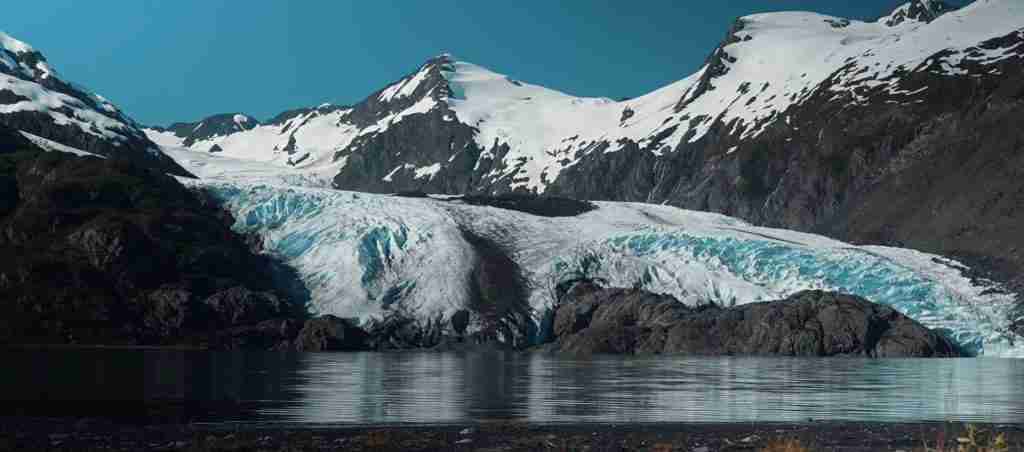
Continue 5 miles beyond the wildlife center to Portage Glacier Road (turnoff at Mile 79). The 5.5-mile access road terminates at Begich, Boggs Visitor Center (free admission, open daily 9 AM to 6 PM late May through early September). The U.S. Forest Service facility presents Chugach National Forest exhibits, glacial geology displays, and a documentary film about Alaska’s ice fields. While Portage Glacier has receded from direct roadside visibility since the 1980s, Portage Lake showcases massive icebergs calved from the glacier floating in turquoise glacial melt water with surrounding peaks.
MV Ptarmigan boat tours operate from the dock adjacent to the visitor center providing the only water-level glacier access. One-hour cruises cost $50 adults and $30-35 children in 2026. Check the official operator website for current rates. The heated 200-passenger vessel approaches within 300 yards of Portage Glacier’s face for spectacular views of the blue ice, crevasses, and occasional calving events when ice chunks crash into the lake. Multiple daily departures run late May through mid-September, with increased frequency during peak June-August. Reserve cruises 1-2 weeks ahead for peak summer weekends, though weekday availability often permits walk-up bookings.
Byron Glacier Trail provides free hiking access to glacier viewing. The easy 1.4-mile roundtrip trail begins from a parking area 1 mile before the visitor center, following a glacial valley through alders and cottonwoods to the Byron Glacier terminus. The relatively flat path suits families with young children and requires 45-60 minutes roundtrip. Late-season visitors (late July-September) sometimes walk onto the glacier’s lower reaches, though crevasses and ice instability demand extreme caution. Proper hiking boots, trekking poles, and bear awareness apply as black bears frequent the valley.
The complete Portage/Wildlife combination requires 6-7 hours: 2 hours roundtrip driving (75 minutes each direction), 1.5-2 hours at wildlife center, and 1.5-2 hours at Portage (visitor center, boat tour, or Byron Glacier hike). Flexible scheduling accommodates various interests—wildlife enthusiasts extend conservation center time, glacier aficionados add both boat tour and Byron Glacier hike, families with young children adjust pacing to avoid rushed transitions. No advance bookings beyond glacier boat tours permit spontaneous departures accommodating weather and personal schedules.
Pack lunch from Anchorage grocery stores or stop at Indian Valley Meats & Deli (Mile 104 Seward Highway, sandwiches $12-15) for takeout. No restaurants operate at Portage Glacier, and wildlife center offerings limit to vending machines. Picnic areas with tables appear at several Seward Highway pullouts including Bird Creek (Mile 101) and Beluga Point (Mile 110.5) where Dall sheep often graze cliffsides visible from the parking area.
Weather impacts vary by season. Summer (June-August) brings frequent afternoon rain showers requiring waterproof layers, though temperatures remain mild at 55-65°F. Spring (May) and fall (September) deliver cooler temperatures (45-55°F) with increased precipitation and potential snow at higher elevations. Winter access (October-April) faces ice and snow on Portage Glacier Road potentially requiring four-wheel drive, while Byron Glacier Trail becomes impassable. The wildlife center operates year-round though winter visitors see fewer active animals and face challenging photography conditions with limited daylight.
Matanuska Glacier Ice Climbing and Hiking 2026
Matanuska Glacier delivers Alaska’s most accessible hands-on glacier experience, permitting visitors to walk directly onto ancient ice without helicopter flights or technical mountaineering skills. The 27-mile-long valley glacier—Alaska’s largest road-accessible ice river—terminates at privately-owned property 100 miles northeast of Anchorage where self-guided ice walking and professional guided ice climbing tours operate May through September.
Glenn Highway provides the 100-mile route from Anchorage northeast through Chugach State Park and the Matanuska-Susitna Valley. Driving time requires 2-2.5 hours each direction through increasingly dramatic mountain scenery. The highway passes Eagle River (13 miles), Eklutna (26 miles), and Palmer (42 miles, last substantial town for services) before climbing into alpine terrain. Matanuska Glacier State Recreation Site (Mile 101 Glenn Highway) offers distant roadside viewing, while the actual glacier access lies at Mile 102 via Long Rifle Lodge and Glacier Park private property.
Long Rifle Lodge (Mile 102 Glenn Highway) controls the most popular glacier access charging $30-35 per person entrance fee for 2026. Verify current rates at the lodge before departure. The fee includes parking, restroom access, and permission to walk onto the glacier’s lower reaches exploring ice formations, moulins (vertical shafts), and crevasses. No guided services or equipment rentals accompany the basic access—visitors bring their own footwear and explore independently at personal risk. Proper hiking boots with aggressive tread provide essential traction on the ice, while trekking poles increase stability navigating uneven glacial terrain.
Self-guided exploration enables 1-3 hours on the ice depending on fitness, confidence, and interest. The accessible lower glacier sections feature relatively gentle slopes, though the constantly shifting ice creates unpredictable crevasses and surface conditions. Stay on visible foot paths established by previous visitors and avoid approaching large crevasses or unstable ice formations. The glacier’s gray appearance results from rock debris embedded during its slow journey down-valley, contrasting with the brilliant blue ice visible in crevasses and fresh calving faces. Summer temperatures (June-August) bring increased melt water creating flowing streams across the glacier surface.
Professional guided ice climbing tours through MICA Guides, NOVA Alaska Guides, and Alaska Mountaineering School provide safer, more comprehensive glacier experiences. Three to four-hour tours cost $150-200 per person in 2026 including all equipment (crampons, ice axes, helmets, harnesses), professional instruction, and guided glacier navigation. Check tour operator websites for current pricing. Groups limited to 6-12 participants receive crampon and ice axe technique training before venturing onto steeper glacier sections where guides establish top-rope anchors for vertical ice climbing.
Ice climbing tours accommodate beginners with no prior experience, though reasonable fitness levels help as activities involve hiking across uneven ice, climbing steep pitches, and maintaining balance on slippery surfaces. Minimum age requirements typically specify 12-14 years for safety and physical capability reasons. Tours operate rain or shine as Alaska summer weather shifts rapidly, with waterproof layers and warm clothing essential even during sunny periods when ice reflects intense sunlight.
The complete Matanuska day trip requires 8-9 hours total: 4-5 hours roundtrip driving, 30 minutes at Long Rifle Lodge for fee payment and preparation, and 3-4 hours on the glacier whether self-guided or taking professional tours. Early departures (7-8 AM from Anchorage) enable arrival before midday crowds and provide maximum time for glacier exploration. Afternoon temperatures warm the ice surface creating slicker conditions and increased melt water, making morning visits preferable for safer footing.
Palmer (Mile 42 Glenn Highway) provides the last convenient meal options before the glacier. Turkey Red (550 South Alaska Street, breakfast and lunch $12-18) serves locally-sourced fare, while Vagabond Blues (642 South Alaska Street) offers coffee, pastries, and sandwiches ($8-14). Alternatively, pack lunch and snacks from Anchorage as no food services exist at the glacier access. Sheep Mountain Lodge (Mile 113.5 Glenn Highway, 11 miles beyond the glacier) serves meals if extending the trip, though this adds 22 miles and 45 minutes roundtrip to total driving.
Combine Matanuska Glacier with nearby attractions for full-day itineraries. Musk Ox Farm (Mile 50.1 Glenn Highway in Palmer, $12 adults, $9 children) houses domesticated musk oxen producing qiviut, the world’s warmest natural fiber. Independence Mine State Historical Park (via Hatcher Pass Road from Palmer, $5 parking) preserves a 1940s gold mining camp at 3,000 feet elevation with walking tours of historic buildings and alpine hiking trails. These additions extend total excursion time to 10-12 hours requiring early morning departures.
Talkeetna and Denali Flightseeing Day Trip 2026
Talkeetna serves as Alaska’s premier Denali flightseeing hub, positioned 112 miles north of Anchorage where the Susitna, Talkeetna, and Chulitna Rivers converge. This historic village at Denali’s base provides the closest accessible location for glacier landing flights and spectacular mountain photography impossible from the national park entrance 135 miles farther north. Same-day roundtrips from Anchorage combine scenic transportation with world-class aviation experiences.
Three transportation options connect Anchorage to Talkeetna. Alaska Railroad’s Denali Star train departs Anchorage at 8:15 AM arriving Talkeetna at 11:05 AM (2 hours 50 minutes), with return service at 5 PM reaching Anchorage at 8 PM. One-way fares cost approximately $80-130 adults and $40-65 children ages 2-11 in Adventure Class. Verify current rates at the Alaska Railroad website. Park Connection motorcoach offers 6:30 AM departure (arriving 9 AM) and 5:30 PM return (arriving 8:30 PM) at $80 adults and $40 children roundtrip. Personal vehicles complete the 112-mile drive in 2-2.5 hours via Glenn Highway and Parks Highway.
Combining different transportation modes maximizes Talkeetna time while varying scenery. Morning motorcoach (arriving 9 AM) provides 2 additional hours in town versus the train, while evening return by rail delivers dinner service and alpenglow mountain views. Driving enables flexible timing and Hatcher Pass scenic detours though sacrifices the relaxing guided transportation allowing Alaska landscape focus without navigation concerns.
Denali flightseeing represents Talkeetna’s signature attraction with multiple operators flying ski-equipped aircraft from Talkeetna State Airport. K2 Aviation, Talkeetna Air Taxi, and Sheldon Air Service operate glacier landing tours ranging from basic 70-minute flights ($275-295 per person) to extended 2-hour expeditions ($350-375) landing at 7,000+ feet elevation on Kahiltna Glacier or Ruth Glacier. Check tour operator websites for current 2026 pricing. All tours include glacier landings where passengers exit aircraft to walk on ancient ice, photograph crevasses and seracs, and experience the Alaska Range’s scale impossible from ground level.
Weather dependency affects all flightseeing—low clouds, precipitation, or high winds cancel flights immediately. Clear morning conditions (60-70% probability June-August) provide best success odds, though afternoon clearing sometimes permits late-day departures. Operators make go/no-go decisions day-of, making advance Talkeetna arrival essential for maximizing flight opportunities. Book tours upon reaching town rather than pre-purchasing, as operators honestly assess weather viability and refund for conditions preventing safe flying.
Non-flying Talkeetna attractions fill weather backup time or satisfy visitors preferring ground-based activities. Mahay’s Jetboat Adventures ($95-165 adults, 2-5 hour tours) navigates the Susitna River viewing wildlife, fishing spots, and mountain panoramas. Denali View Southside Lookout at Mile 13 Talkeetna Spur Road delivers spectacular mountain photography on clear days. Downtown Talkeetna Historic District encompasses Nagley’s Store (established 1921), Fairview Inn (1923), and Talkeetna Roadhouse, all original buildings on the National Historic Register.
The complete Talkeetna day trip requires 12-14 hours by train or motorcoach (6-8 hours transportation, 6 hours in town) or 9-11 hours driving (4-5 hours total driving, 5-6 hours in Talkeetna). Factor flight waiting time if booking day-of rather than pre-arranging, as weather delays or full manifests sometimes postpone departures 1-3 hours. Early motorcoach departure (6:30 AM) optimizes morning flight conditions and provides maximum town time, while evening train return delivers comfortable transportation during peak fatigue hours.
Dining options include Denali Brewing Company (13605 East Main Street, burgers and sandwiches $14-18, craft beers $7-9), Talkeetna Roadhouse (13550 East Main Street, breakfast and lunch $10-16), and Mountain High Pizza Pie (22165 South Talkeetna Spur Road, pizzas $18-28). Limited restaurant count means 20-40 minute waits during peak lunch hours (noon-1:30 PM) when tour groups converge. Talkeetna Alaskan Lodge (23601 Talkeetna Spur Road) offers upscale dining with panoramic Denali views from its hilltop perch, though requires vehicle access or lodge shuttle from downtown.
Talkeetna day trip costs total $460-570 per person combining transportation and glacier landing flights. Budget breakdown: roundtrip motorcoach $160 ($80 each way), glacier landing flight $275-375, and meals $25-35. Train substitution increases transportation to $160-260 roundtrip but adds scenic value and included services. Extended flight options and helicopter upgrades push totals toward $700-800 per person, positioning this as Anchorage’s premium day excursion.
Girdwood and Alyeska Resort Half-Day Trip 2026
Girdwood occupies a scenic mountain valley 40 miles south of Anchorage at the base of 3,939-foot Mount Alyeska, functioning as Alaska’s premier ski resort in winter and adventure tourism hub in summer. The compact community accessed via a 10-mile spur from Seward Highway creates Anchorage’s quickest escape to dramatic alpine terrain, accomplishing meaningful excursions in 4-5 hours versus full-day commitments required for distant destinations.
Seward Highway Mile 90 marks the Alyeska Highway junction where the 3-mile access road climbs through temperate rainforest to Girdwood proper. Total driving from downtown Anchorage requires 45-55 minutes depending on traffic and weather, with summer construction sometimes adding 10-15 minutes. The scenic highway hugs Turnagain Arm’s tidal waters providing continuous mountain and ocean views plus frequent wildlife sightings—Dall sheep on cliffsides, beluga whales in the inlet (May-September), and moose near roadside marshes.
Alyeska Aerial Tramway represents Girdwood’s main attraction, operating year-round (weather permitting) from the Hotel Alyeska base area. The 60-passenger tram ascends from 250 feet elevation to 2,300 feet at the Roundhouse in 7 minutes traversing Mount Alyeska’s face. Roundtrip tickets cost $35-40 adults and $25-30 children in summer 2026. Verify current pricing at the official Alyeska Resort website. The summit station delivers spectacular 360-degree views encompassing seven hanging glaciers, Turnagain Arm, surrounding peaks, and Girdwood far below.
Seven Glaciers Restaurant occupies the Roundhouse providing upscale dining ($32-58 entrées) in a rotating dining room maximizing window views. Lunch service operates 11:30 AM to 2:30 PM, while dinner runs 5:30 PM to 9 PM. Reservations strongly recommended for dinner, particularly Friday-Saturday evenings, though walk-in lunch seating often available weekdays. Budget alternatives include bringing packed lunches to enjoy on the outdoor deck, or returning to base area for casual dining at Bore Tide Deli or The Bake Shop in Girdwood proper.
Multiple hiking trails depart from the summit tram station. North Face Trail (moderate, 2 miles one-way) descends through alpine meadows to the resort base, eliminating need for downhill tram tickets and providing wildflower viewing July-August. Mount Alyeska summit trail (strenuous, 2 miles one-way from Roundhouse, 1,600 feet elevation gain) challenges fit hikers with scrambling over rock and scree to the 3,939-foot peak. Allocate 4-5 hours for this summit option including tram ascent, hiking, and descent. Berry picking becomes popular late July through August when blueberries and crowberries ripen on alpine slopes.
Winner Creek Trail provides Girdwood’s premier valley-floor hiking, accessible from the trailhead near Hotel Alyeska. The moderate 3.5-mile one-way trail through temperate rainforest reaches a hand-tram river crossing at Winner Creek Gorge—a metal basket suspended on cables requiring passengers to pull themselves across the rushing creek. The unique crossing thrills families and photographers alike, though maximum weight limits (typically 500 pounds total) and physical effort requirements (pulling the loaded basket via ropes) exclude some visitors. Allocate 2-3 hours roundtrip including hand-tram time and stream photography.
Girdwood dining exceeds expectations for a town of 2,000 residents. The Bake Shop (194 Olympic Mountain Loop, breakfast and pastries $8-14) serves oversized cinnamon rolls, fresh bread, and morning fare drawing locals and tourists. Jack Sprat (165 Olympic Mountain Loop, dinner $28-48) presents upscale seafood and steaks in a renovated house. Chair 5 Restaurant (5 Lindblad Avenue, lunch and dinner $16-32) offers pizza, burgers, and Alaska craft beers in casual sports-bar atmosphere. All restaurants fill quickly during summer dinner hours (6-8 PM); arrive by 5:30 PM or make reservations where accepted.
Girdwood accommodates half-day (4-5 hours) or full-day (7-8 hours) visits depending on selected activities. Quick trips combining tram ride, summit viewing, and casual lunch require 4 hours total including 90 minutes roundtrip driving. Extended versions adding Winner Creek hand-tram hike or North Face Trail descent push totals to 7-8 hours. The flexible timing enables easy combination with other Seward Highway attractions—stop at Girdwood during morning Portage Glacier trips or use as afternoon extension after returning from Seward day trips.
Weather in Girdwood differs dramatically from Anchorage despite 40-mile proximity. The coastal mountain location receives 150+ inches annual precipitation versus Anchorage’s 16 inches, with rain or fog common even during Anchorage’s clear periods. Tram operations halt during high winds or electrical storms, typically 2-5 days monthly in summer. Call ahead or check Alyeska Resort’s website for current tram status before departing Anchorage during marginal weather. Pack rain gear and warm layers as summit temperatures run 10-20°F cooler than base area.
Additional Day Trip Options from Anchorage 2026
Beyond the premier excursions to Seward, Portage, Matanuska, Talkeetna, and Girdwood, several shorter and specialized day trips expand Anchorage visitors’ wilderness options. These alternative destinations suit specific interests including fishing, hiking, flightseeing, or cultural experiences while requiring less time commitment than full-day marathons.
Whittier and Prince William Sound access via Anton Anderson Memorial Tunnel (60 miles from Anchorage) delivers coastal scenery and glacier cruising in Alaska’s second-largest sound. The 2.5-mile tunnel—North America’s longest highway tunnel—operates on timed schedule alternating vehicle direction, requiring adherence to published portal times. Prince William Sound glacier cruises from Whittier ($150-190 adults, 4-5 hours) visit Columbia Glacier, Blackstone Bay glaciers, and wildlife areas with whale, sea otter, and sea lion sightings. The complete trip requires 8-9 hours including 2.5 hours roundtrip driving, tunnel wait times, and 4-5 hour cruises. Whittier’s remote location and weather exposure create challenging conditions with frequent rain and limited services beyond cruise operations and one restaurant.
Eklutna Lake (30 miles north via Glenn Highway) provides Anchorage’s nearest overnight backpacking access and paddling opportunities. The 7-mile glacial lake surrounded by Chugach Mountains rents kayaks and stand-up paddleboards ($40-60 half-day) through Lifetime Adventures (operating from the lakehead). The Eklutna Lakeside Trail (13 miles one-way, easy grade) accommodates mountain biking, hiking, and fat-tire winter biking along the lake’s south shore accessing Bold Peak Valley and Eklutna Glacier views. The unpaved access road (Eklutna Lake Road) requires 45 minutes driving from Anchorage plus 15-minute walk from parking to lake facilities. Half-day trips require 4-5 hours total while full-day paddling and hiking extend to 8-10 hours.
Hatcher Pass Independence Mine (via Palmer, 65 miles total) explores Alaska’s gold mining heritage at 3,000 feet elevation in the Talkeetna Mountains. Independence Mine State Historical Park ($5 parking fee) preserves 1940s mining structures including bunkhouses, mill buildings, and mine offices accessible via self-guided walking tours (free) or ranger-led tours ($5 adults, summer weekends). The alpine location delivers wildflower meadows July-August and excellent day hiking on Archangel Valley trails. Winter access (typically October-May) requires four-wheel drive as Hatcher Pass Road closes to through traffic though lower areas remain accessible for skiing and snowshoeing. Roundtrip excursions require 5-6 hours including 2 hours driving and 2-3 hours at the mine site.
Chugach State Park via Flattop Mountain Trail (Glen Alps trailhead, 15 miles from downtown Anchorage) ranks as Alaska’s most-climbed peak providing spectacular 360-degree summit views. The 3.5-mile roundtrip trail gains 1,350 feet climbing to 3,510 feet where panoramas encompass Anchorage, Cook Inlet, Denali (on clear days), and endless mountain ranges. Half-day trips require 3-4 hours including 30 minutes driving, 2-2.5 hours hiking, and summit time. The $5 daily parking fee or $60 annual Alaska State Parks Pass applies. This convenient proximity enables morning departures returning for afternoon Anchorage activities, or afternoon departures timing summit arrival with evening light. The steep rocky final section requires scrambling and good fitness though no technical climbing skills.
Alaska Aviation Museum (4721 Aircraft Drive near Lake Hood Seaplane Base, $15 adults) explores Alaska’s aviation history through vintage aircraft displays, bush flying exhibits, and active seaplane viewing. Lake Hood ranks as the world’s busiest seaplane base with 190 daily summer takeoffs and landings visible from museum grounds and adjacent viewing areas. Half-day visits require 2-3 hours including travel from downtown Anchorage (15 minutes), museum tour (1-1.5 hours), and seaplane watching. This indoor option suits rainy days or serves as afternoon activity after morning outdoor excursions.
Practical Planning for Multiple Day Trips 2026
Week-long Anchorage visits incorporating 3-4 day trips require strategic scheduling balancing ambitious excursions with recovery time and weather contingencies. The demanding physical nature of long trips (14-16 hours for Seward, 12-14 hours for Talkeetna) makes consecutive full-day marathons exhausting, particularly when coupled with jet lag for travelers arriving from distant time zones. Optimal pacing alternates intensive excursions with shorter trips or rest days.
Sample 7-day schedule: Day 1 (arrival day) explores downtown Anchorage and Tony Knowles Coastal Trail as easy introduction accommodating flight fatigue. Day 2 tackles the Seward/Kenai Fjords full-day trip while fresh and energetic. Day 3 serves as recovery day with half-day Girdwood excursion or museum visits leaving afternoons free. Day 4 attempts Talkeetna flightseeing (weather dependent). Day 5 provides backup Talkeetna day if Day 4 weather prevented flights, or substitutes Portage/Wildlife combination. Days 6-7 combine Matanuska Glacier with final Anchorage shopping and departure preparations.
Weather contingencies prove essential for flightseeing-dependent itineraries. Talkeetna glacier flights and helicopter tours require clear conditions sometimes available only 50-60% of summer days. Building 2-3 potential weather-dependent days into schedules enables flexibility when low clouds or precipitation cancel aviation operations. Ground-based excursions to Portage, Matanuska, and Girdwood operate rain-or-shine, though hiking quality diminishes during heavy precipitation.
Cost planning for multiple day trips totals $800-1,500 per person for 3-4 excursions during a week-long visit. Budget breakdown: one premium trip to Seward ($360-420), one flightseeing excursion to Talkeetna ($460-570), and two moderate trips to Portage/Wildlife and Girdwood ($230-270 combined). These costs exclude Anchorage accommodation, meals not included in specific excursions, and incidental expenses. Budget-conscious travelers substituting train trips with personal vehicle driving reduce total costs to $500-900 through transportation savings, while premium travelers selecting helicopter flights and GoldStar rail service push totals toward $2,000-2,500.
Advance booking requirements vary by excursion and season. Alaska Railroad Seward roundtrips and Kenai Fjords cruises require 4-8 weeks advance reservations during peak June-August as capacity sells out. Talkeetna flightseeing accepts day-of bookings though July-August advance reservations (1-2 weeks) ensure preferred departure times. Portage Glacier boat tours benefit from 1-2 weeks advance booking for weekend travel though weekday walk-ups often succeed. Ground transportation, Girdwood tram, and wildlife center access need no advance arrangements.
Packing essentials span all day trips: waterproof rain jacket and pants, layered clothing for temperature fluctuations, sturdy hiking boots or shoes with good tread, sun protection (sunglasses, hat, SPF 30+ sunscreen for extended daylight), day pack for carrying layers and snacks, reusable water bottle, camera with extra batteries and storage, and bear spray for hiking-focused trips. Specific excursions demand additional items—motion sickness medication for boat cruises, warm gloves and hat for glacier boat tours even in summer, and trekking poles for challenging hikes.
Transportation logistics favor personal vehicles for maximum flexibility despite higher costs ($100-200 daily rental plus $30-40 fuel per excursion). Vehicle access enables spontaneous timing, multiple stops, and overnight gear storage impossible with trains or buses. However, Alaska Railroad and motorcoach services eliminate driving fatigue, provide narrated education about passing landscapes, and free passengers for uninterrupted scenery viewing and photography. Many visitors combine both approaches—driving to Portage, Matanuska, and Girdwood for control and convenience while taking trains to Seward for the comprehensive Alaska Railroad experience.
Seasonal Considerations for Anchorage Day Trips 2026
Summer season (June-August 2026) delivers optimal day trip conditions with all tours operating full schedules, maximum daylight hours (18-20 hours) permitting late returns, and peak wildlife activity. However, premium pricing applies across all categories with Alaska Railroad fares highest, cruise costs maximal, and accommodation rates inflated. Crowds fill popular destinations particularly during cruise ship port days when thousands of additional visitors overwhelm Seward and Whittier facilities.
Shoulder seasons (May and September 2026) offer substantial value with 15-25% reduced tour pricing, less crowded attractions, and excellent wildlife viewing during animal activity peaks. May brings spring emergence with bears feeding intensively after hibernation and migrating birds returning to coastal areas. September delivers fall colors transforming birch forests golden yellow and bears feeding maximally before winter. However, some tour operations begin reduced schedules by mid-September, weather turns increasingly variable with more precipitation, and daylight decreases to 13-14 hours by late September limiting late-day activities.
Early season (May) faces specific challenges including snow remaining on high-elevation trails, glacial melt water at minimum creating less-dramatic calving displays, and some attractions just opening with limited services. Late season (September) brings opposite issues with cooler temperatures (40-55°F versus 55-70°F in July), increased rain frequency, and seasonal business closures beginning. Tour operators maintain summer schedules through mid-September (typically until September 12-15 for Alaska Railroad and major cruise companies), then cease operations entirely until the following May.
Winter day trips (October-April) transform completely with most summer destinations closed or inaccessible. Exceptions include Girdwood which operates as ski resort December-April, Eklutna Lake for ice fishing and fat-tire biking, and Hatcher Pass for Nordic skiing and winter hiking. Portage Glacier Road requires four-wheel drive and winter skills, while Matanuska Glacier access closes entirely. Seward’s Alaska SeaLife Center remains open year-round though Kenai Fjords cruises cease operations. Reduced daylight (5-7 hours in December-January) limits practical excursion timing, though Northern Lights viewing becomes possible during dark hours.
Weather patterns shift dramatically between seasons affecting day trip planning. Summer (June-August) brings mild temperatures (55-70°F) but frequent afternoon rain showers requiring waterproof layers despite morning sunshine. Spring (May) delivers highly variable conditions swinging from 35°F with snow to 60°F and sun within single weeks. Fall (September) increases precipitation with temperatures dropping to 40-55°F and potential snow by month’s end. All seasons face rapid weather changes—Anchorage sun with Girdwood rain, clear morning deteriorating to afternoon clouds, or vice versa—demanding flexible planning and appropriate gear regardless of departure conditions.
Wildlife viewing quality varies seasonally. Peak marine mammal sightings occur June-August when humpback whales feed in Kenai Fjords, belugas hunt Cook Inlet salmon, and sea otters proliferate. Bear viewing optimizes May-June (spring emergence, coastal grazing) and August-September (salmon feeding). Dall sheep remain visible year-round on cliffsides but show most active summer behaviors. Moose appear throughout year though summer offers better roadside viewing during peak activity periods. Bird populations surge May-August with breeding puffins, murres, and kittiwakes nesting on coastal cliffs, while winter brings primarily resident species.
Frequently Asked Questions About Anchorage Day Trips 2026
Can you see glaciers on a day trip from Anchorage in 2026?
Multiple day trips from Anchorage provide excellent glacier viewing ranging from distant roadside perspectives to walking directly on ice. Portage Glacier boat tours ($50 adults for 1-hour cruise) approach within 300 yards of the glacier’s face for close-up viewing of blue ice and calving events. Matanuska Glacier ($30-35 access fee plus optional $150-200 guided ice climbing tours) permits walking onto the glacier surface exploring crevasses, ice formations, and moulins. Seward’s Kenai Fjords cruises ($180-220 for 6-hour tours) reach multiple tidewater glaciers including Aialik Glacier and Northwestern Glacier where house-sized ice chunks crash into the ocean. Girdwood’s Alyeska Aerial Tramway ($35-40 roundtrip) reveals seven hanging glaciers visible from the 2,300-foot summit station. Each option delivers distinct glacier experiences—Portage provides accessible boat-based viewing perfect for families, Matanuska enables hands-on ice walking for adventure seekers, Kenai Fjords showcases dramatic tidewater calving for photography enthusiasts, and Girdwood offers convenient aerial perspectives during half-day excursions. All operate reliably May through September with varying access difficulty, physical requirements, and cost levels accommodating diverse visitor capabilities and interests.
Which Anchorage day trip is best for families with young children in 2026?
The Portage Glacier and Alaska Wildlife Conservation Center combination creates the optimal family-friendly day trip from Anchorage providing guaranteed wildlife viewing, minimal hiking requirements, and flexible scheduling accommodating children’s needs. Alaska Wildlife Conservation Center ($16 adults, $12 children ages 4-12) delivers close-range viewing of brown bears, moose, caribou, and wood bison from elevated boardwalks eliminating dangerous wilderness hiking with young children. The 1.5-mile boardwalk suits strollers and small legs, while animals’ active morning behaviors (9-11 AM feeding times) maintain children’s interest better than distant wildlife spotting. Portage Glacier boat tours ($50 adults, $30-35 children) provide 1-hour comfortable heated vessel cruising viewing icebergs and glaciers without extended hiking or challenging trails. The complete 6-7 hour trip includes 2 hours driving enabling napping en route, flexible scheduling permits departures aligned with children’s routines, and no advance bookings (except boat tours) reduce pressure of fixed schedules. Alternative family options include Girdwood’s aerial tram ($25-30 children) delivering dramatic scenery via effortless mechanical ascent and Winner Creek hand-tram crossing thrilling older children (ages 8+) without demanding multi-hour hikes. Seward trips work for older children (ages 10+) capable of handling 14-16 hour days though marathon schedules and extended boat tours tax younger children’s patience and parents’ sanity.
Do I need a car for Anchorage day trips in 2026?
Personal vehicles provide maximum day trip flexibility enabling spontaneous timing, multiple stops, and independent exploration, though Alaska Railroad trains and motorcoach services successfully access Seward and Talkeetna without rental cars. Portage Glacier, Matanuska Glacier, and Girdwood require personal vehicles as no public transportation serves these destinations—rental cars ($100-200 daily in summer) become essential for accessing these locations. Seward trips work excellently via Alaska Railroad ($180-200 adults roundtrip) combining scenic train travel with convenient downtown Seward access eliminating driving fatigue during 8+ hours transportation. Talkeetna similarly functions well using trains ($160-260 roundtrip) or Park Connection motorcoaches ($160 roundtrip) delivering narrated travel and stress-free navigation. Budget-conscious visitors renting vehicles for Portage and Matanuska trips while taking trains to Seward optimize costs ($30-40 fuel for Portage/Matanuska versus $100-200 daily rental if renting car continuously). Groups of 3-4 travelers find rental vehicles more economical than individual train tickets even for Seward trips ($30 gas roundtrip versus $540-800 total train fares for 3-4 people). Solo travelers and couples preferring relaxation over driving favor trains and buses despite higher per-person costs. The optimal approach combines both—drive to nearby destinations (Portage, Girdwood, Eklutna) while taking trains for distant excursions (Seward) balancing cost control, convenience, and experience quality.
What is the best month for Anchorage day trips in 2026?
July 2026 represents the optimal month for Anchorage day trips combining warmest temperatures (60-70°F), most reliable weather patterns, peak wildlife activity, and full tour operations across all destinations. All attractions operate maximum schedules with frequent departures—Kenai Fjords cruises run multiple daily sailings, flightseeing companies maximize flight frequency, and Alaska Railroad provides most comprehensive service. Wildlife viewing peaks with whales feeding actively in Kenai Fjords, bears visible along salmon streams, and marine bird colonies at maximum populations. Extended daylight (18+ hours) permits late activity timing and evening photography without darkness concerns. However, July brings peak pricing (20-30% above shoulder seasons), maximum crowds especially during cruise ship port days, and highest advance booking requirements (6-8 weeks for popular tours). September offers compelling alternatives with 15-25% reduced costs, far fewer crowds, spectacular fall colors, and intensive bear feeding before hibernation, though weather variability increases and some tours reduce schedules by mid-month. June provides middle ground with good weather, increasing daylight, reasonable pricing (10-15% below July), and moderate crowds, though early June sometimes faces lingering snow on high trails and cooler temperatures (50-60°F). First-time visitors prioritizing reliability and comprehensive options should select July despite higher costs and crowds, while experienced travelers and budget-conscious visitors benefit significantly from June or September timing accepting modest weather risks for substantial savings and solitude.
Can you do multiple day trips from Anchorage in one day in 2026?
Combining multiple destinations into single-day excursions works for nearby locations sharing route sections though attempting distant combinations creates exhausting marathons delivering rushed superficial experiences. Portage Glacier and Girdwood combine naturally lying 11 miles apart on Seward Highway—visit Girdwood’s aerial tram (4-5 hours including 90 minutes roundtrip driving from Anchorage), then continue to Portage for wildlife center and glacier viewing (adding 3-4 hours), creating 8-9 hour comprehensive trips. Alaska Wildlife Conservation Center and Portage Glacier similarly share routing requiring just 5 additional miles between destinations enabling comfortable single-day visits. Eklutna Lake (30 miles north) and Matanuska Glacier (100 miles northeast) occupy different compass directions from Anchorage requiring separate excursions despite both involving Glenn Highway segments. Seward (126 miles south), Talkeetna (112 miles north), and Matanuska (100 miles northeast) demand dedicated full days individually—attempting combinations creates 16+ hour marathons with 8+ hours driving leaving insufficient quality time at either destination. The geographic distances and point-to-point routing patterns mean most day trips function best as standalone excursions. Exceptions exist for compact destinations (Portage plus Girdwood, Wildlife Center plus either Portage or Girdwood) sharing highways and requiring moderate total time. Visitors attempting ambitious multiple-destination days should recognize the trade-offs—extended driving, rushed site visits, late returns, and exhaustion—often delivering less satisfaction than single-focus trips with proper time allocations.
Do Anchorage day trips operate year-round in 2026?
Most Anchorage day trip destinations operate seasonally May through September with limited or zero winter access. Alaska Railroad Coastal Classic to Seward runs May 29-September 12, 2026, providing daily summer service then ceasing entirely until the following May. Kenai Fjords glacier cruises operate March 7-October 11, 2026 (Major Marine Tours schedule), the longest season among cruise operators though peak service concentrates June-August. Talkeetna flightseeing companies fly weather-permitting year-round though winter operations face extreme limitations from low clouds, storms, and minimal daylight. Portage Glacier boat tours run late May through mid-September only. Alaska Wildlife Conservation Center operates year-round daily though winter hours reduce to 10 AM-5 PM versus 8 AM-8 PM summer. Alyeska Resort aerial tram runs continuously (weather permitting) serving summer sightseers and winter skiers. Matanuska Glacier access closes or becomes extremely challenging October-April with snow and ice making the access road impassable without four-wheel drive and winter experience. Chugach State Park trails remain accessible year-round though winter conditions (deep snow, avalanche danger, extreme cold) demand appropriate gear, skills, and judgment. October through April dramatically limits day trip options to Girdwood skiing, Eklutna Lake winter activities, select Chugach trails, and wildlife center visits. Summer visitors (May-September) access full destination menus while winter travelers (October-April) require specialized winter interests and equipment for limited available excursions. Shoulder season transitions (late September, early May) bring reduced but still-functional operations at major sites though weather variability increases substantially.
How do I choose between Seward and Talkeetna for an Anchorage day trip in 2026?
Seward and Talkeetna serve different priorities—Seward delivers marine wildlife and tidewater glacier encounters via boat cruises while Talkeetna provides Denali mountain views and glacier landing flights. Select Seward for guaranteed wildlife viewing including humpback whales, orcas, sea otters, puffins, and sea lions plus dramatic tidewater glacier calving displays during 6-8.5 hour Kenai Fjords cruises. The Alaska Railroad Coastal Classic provides America’s most scenic train route along Turnagain Arm and through Kenai Mountains creating comprehensive Alaska experiences combining rail travel, ocean cruising, and glacier viewing. Seward suits first-time Alaska visitors prioritizing classic postcard scenery and marine ecosystems, photographers seeking dramatic calving shots and whale photography, and travelers comfortable with 14-16 hour days including 8+ hours transportation. Choose Talkeetna for Denali mountain experiences including close-up views of North America’s tallest peak and glacier landing flights touching down on 7,000+ foot elevation ice fields. Flightseeing delivers unmatched perspectives of massive ice rivers, hanging glaciers, and Alaska Range peaks impossible from ground-based viewpoints. Talkeetna works for aviation enthusiasts, travelers prioritizing Denali over marine environments, visitors seeking shorter total trip times (9-14 hours versus Seward’s 14-16), and those with weather-contingency flexibility as flights cancel during poor conditions. Cost differences favor Seward slightly ($360-420 total including train and cruise versus $450-650 for Talkeetna train and glacier landing flight), though both represent premium Anchorage excursions. Visitors with sufficient time (7+ days in Anchorage) should experience both destinations as they showcase completely different Alaska ecosystems and experiences with minimal overlap. Those forced to choose one should prioritize marine wildlife and guaranteed boat-based viewing (Seward) versus mountain aviation and weather-dependent flights (Talkeetna).
What should I pack for Anchorage day trips in 2026?
Essential day trip packing spans all destinations: waterproof rain jacket and pants as Alaska summer brings frequent showers even during morning sunshine, warm fleece or wool mid-layer for temperature fluctuations (mountain summits run 10-20°F cooler than valleys, boat cruises encounter wind chill, glacier areas generate cold air), sturdy hiking boots or trail shoes with aggressive tread for uneven terrain and ice surfaces, day pack (20-30 liter capacity) carrying layers and supplies, reusable water bottle (1 liter minimum) as dehydration occurs rapidly in dry air, sun protection including sunglasses, wide-brimmed hat, and SPF 30+ sunscreen reflecting off water and ice, camera with extra batteries and memory cards for extended shooting during 18-hour summer daylight, and snacks (protein bars, trail mix, fruit) as meal timing sometimes shifts during excursions. Specific trips demand additional gear: Kenai Fjords cruises require warm gloves, winter hat, and motion sickness medication as ocean swells affect sensitive passengers; Matanuska Glacier ice walking benefits from trekking poles increasing stability on slippery ice (though guided tours provide these); Seward Alaska Railroad trips need neck pillows and eye masks for comfort during 8+ hours train time; and Chugach hiking excursions require bear spray, first-aid kit, and emergency whistle for wilderness safety. Weather in Girdwood differs dramatically from Anchorage despite 40-mile separation—pack extra rain gear and warm layers for the coastal mountain climate receiving 150+ inches annual precipitation. Avoid cotton clothing retaining moisture and providing zero insulation when wet; synthetic or wool materials maintain warmth in Alaska’s damp conditions. Layers prove more valuable than single heavy jackets enabling temperature regulation as conditions shift between sunny valleys and shaded forests. Binoculars (8×42 or 10×42) dramatically enhance wildlife viewing on boat cruises and roadside stops though add weight and bulk to day packs.
How far in advance should I book Anchorage day trips for 2026?
Alaska Railroad Seward roundtrips and Kenai Fjords cruises require 4-8 weeks advance reservations during peak June-August when capacity sells out regularly. Popular dates including July weekends, cruise ship port days, and holiday periods (4th of July week, Labor Day weekend) book fastest—reserve 8-12 weeks ahead for these high-demand windows. Combination packages bundling train and cruise together often sell out before individual component availability exhausts. Talkeetna flightseeing accommodates day-of bookings though advance reservations (1-2 weeks) ensure preferred morning departure times during July-August peak season. Weather dependencies make rigid advance booking less critical as poor conditions cancel flights regardless of reservation timing. Portage Glacier MV Ptarmigan boat tours benefit from 1-2 weeks advance booking for weekend travel though weekday walk-up availability often succeeds. Shoulder seasons (May, September) reduce advance booking pressures across all categories with 1-2 weeks typically sufficient even for popular Seward trips. Last-minute travelers (within 1 week of desired dates) should call tour operators directly as online systems sometimes show sold out while phone agents access additional inventory or cancellation spaces. Alaska Railroad particularly maintains phone-only inventory unavailable through website booking. Budget flexibility enables superior pricing—watching for special offers, last-minute discounts, and shoulder season promotions saves 15-25% versus peak pricing though sacrifices date/time control. Visitors with fixed schedules should book maximum advance (6-8 weeks) accepting higher costs for guaranteed availability, while flexible travelers booking closer (2-4 weeks) often secure spaces at reduced rates while maintaining reasonable backup options if primary choices fill.
Are Anchorage day trips suitable for seniors or people with mobility limitations in 2026?
Several Anchorage day trips accommodate seniors and mobility-limited visitors providing excellent Alaska experiences without strenuous hiking or challenging terrain. Alaska Wildlife Conservation Center features entirely paved or boardwalk pathways (1.5-mile total, mostly flat, wheelchair accessible) enabling close wildlife viewing without trail difficulty. Motorized scooter rentals may be available (call ahead to confirm). Alyeska aerial tram delivers dramatic mountain scenery via effortless mechanical ascent—the 7-minute ride eliminates hiking while the summit Roundhouse features level viewing decks and wheelchair-accessible restaurant. Alaska Railroad Coastal Classic to Seward provides comfortable seating, accessible restrooms, and level train car movement though boarding requires climbing 2-3 steps (staff assistance available). Kenai Fjords cruises accommodate wheelchairs and walkers on vessels though boarding involves gangplanks with moderate inclines varying with tides—check specific vessel accessibility with operators. Major Marine Tours and Kenai Fjords Tours both maintain accessible vessels with adapted restrooms. Portage Glacier boat tours similarly welcome mobility aids though the MV Ptarmigan’s smaller size creates tighter interior spaces. Challenging day trips for mobility-limited visitors include Matanuska Glacier requiring walking on uneven ice surfaces, Chugach State Park trails involving steep rocky terrain, and Winner Creek hand-tram demanding physical strength pulling the cable basket. Talkeetna flightseeing works if passengers can manage aircraft entry/exit—most bush planes require climbing into elevated cabins and sitting on floor or low benches rather than standard seats (discuss specific limitations with operators during booking). Overall, Anchorage’s day trip menu accommodates wide ability ranges though advance communication with operators ensures appropriate activity selection and enables necessary assistance arrangements. Slower pacing, scheduled rest breaks, and selecting viewing-focused over hiking-intensive options creates rewarding Alaska experiences for visitors across mobility spectrums.