
Best Belgrade Tours 2026: Walking Routes, Yugoslavia History & Day Trips
Belgrade rewards those who dig beneath the surface, and the city’s guided tour scene is one of the most compelling in the Balkans — sharp, politically candid, and extraordinarily affordable by European standards. Whether you want to trace the footprint of a vanished federation, walk the medieval ramparts of Kalemegdan, or follow the Danube east to the Iron Gates, the tour operators active in 2026 deliver genuine depth rather than glossy sightseeing. This guide covers every major tour category, maps the best walking routes through the city’s historic core, and lays out the most rewarding day trip options radiating from the Serbian capital.
Key Takeaways: Belgrade Tours 2026
- Walking tours from €0: Belgrade’s free tip-based walking tours (tip typically €5-10) are among the most praised in southeastern Europe, covering the old city, Yugoslavia history, and the communist legacy in dedicated themed routes.
- Yugoslavia history is the signature experience: No other European capital offers such direct, living engagement with the socialist federalist experiment — Museum of Yugoslavia admission costs approximately €4, and specialist guided tours run €20-35 per person for a half-day.
- Day trips are the real revelation: Golubac Fortress and the Iron Gate Gorge, Novi Sad with the wine villages of Sremski Karlovci, and western Serbia’s Drvengrad and Šargan 8 railway all operate as full-day guided tours from €35-70 per person in 2026, making Belgrade an exceptional base for regional exploration.
- Small group tours dominate quality: The best-reviewed Belgrade operators keep group sizes at 8-12 people, giving guides the space to deliver the nuanced political and historical context that defines the city’s tour culture.
- Book Golubac and Tara in advance: The most popular day trips to the Iron Gate Gorge and Tara National Park regularly sell out 3-5 days ahead in the April-October high season — last-minute availability is unreliable.
- Self-guided walking is entirely viable: Knez Mihailova to Kalemegdan, the Dorćol quarter, and the Skadarlija bohemian district are all navigable without a guide; the value of paid tours lies in the historical storytelling, not route logistics.
People Also Ask About Belgrade Tours 2026
What are the best walking tours in Belgrade in 2026?
The top-rated Belgrade walking tours in 2026 fall into three categories: free tip-based tours (tipping €5-10 is standard), paid small-group tours covering the historic centre for €18-25 per person, and specialist tours focused on the communist and Yugoslavia era for €20-35 per person. Belgrade Free Walking Tours and the GuruWalk platform both list consistently well-reviewed guides in 2026. The standard Old Town walking route runs 2-3 hours, covering Republic Square, Knez Mihailova Street, St. Michael’s Cathedral, the Question Mark tavern, and Kalemegdan Fortress. The Yugoslavia/communist-themed walking tours add the Museum of Yugoslavia, the House of Flowers (Tito’s mausoleum), and the NATO-bombed Ministry of Defence building — a route that takes 3-4 hours and is unique to Belgrade among European capitals.
How much do Belgrade tours cost in 2026?
Belgrade tours span a wide range in 2026. Free tip-based walking tours cost nothing upfront — a €5-10 tip is the norm. Paid small-group walking tours run €18-30 per person for 2.5-3 hour city centre routes. Half-day specialist tours (Yugoslavia history, underground bunkers, food tours) cost €20-40 per person. Full-day day trips by minivan to destinations like Novi Sad and Sremski Karlovci range €35-60 per person, while the Golubac Fortress and Iron Gate Gorge runs €40-70 per person including transport and a guide. Private tours command a premium: €80-150 per person for full-day private vehicle and guide arrangements. Museum of Yugoslavia admission is approximately €4, and the Nikola Tesla Museum charges around €7 for foreign visitors.
What are the best day trips from Belgrade in 2026?
The four standout day trips from Belgrade in 2026 are: the Golubac Fortress and Iron Gate Gorge along the Danube east of the city (10-12 hours, €40-70 per person); Novi Sad with the wine village of Sremski Karlovci in northern Serbia (8 hours, €35-60 per person); the western Serbia circuit combining the Drina River House, Drvengrad village, and the Šargan 8 narrow-gauge railway (12 hours, €45-70 per person); and the Eastern Serbia gems route taking in Manasija Monastery, Resavska Cave, and the Veliki Buk waterfall (10 hours, €40-65 per person). All operate as guided minivan tours with hotel pickup included. Tara National Park and the Drina River Valley is a longer-distance option running 11 hours and €45-70 per person.
Is Belgrade good for history tours in 2026?
Belgrade is exceptional for history tours in 2026, particularly for travellers interested in the 20th century. As the capital of three successive Yugoslav states and the site of NATO’s 1999 bombing campaign, it carries a layered modern history that few European cities can match. The Museum of Yugoslavia houses over 200,000 artefacts relating to the socialist federation and Tito’s presidency. Walking tours regularly cover the architecture of socialist-era New Belgrade, the bombed-out Generalštab (Ministry of Defence) ruins left deliberately intact, and Kalemegdan Fortress — which has been fought over in more than 115 recorded battles across Celtic, Roman, Byzantine, Ottoman, and Habsburg periods. The combination of ancient fortifications and recent political rupture makes Belgrade’s history tour offer genuinely unmatched in the region.
Extended multi-day tours – 5+ days
Featured Belgrade Multi-Day Tour Packages
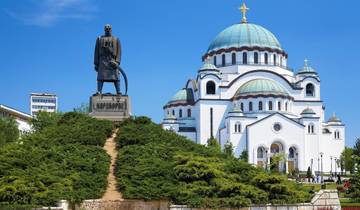
4 days
Belgrade City Break – 4 Days
- ✓ Comprehensive Belgrade tour
- ✓ Expert local guides included
- ✓ All accommodation arranged
- ✓ Transportation provided
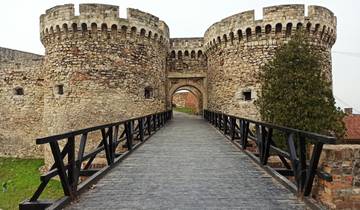
3 days
Belgrade 3-days tour
- ✓ Comprehensive Belgrade tour
- ✓ Expert local guides included
- ✓ All accommodation arranged
- ✓ Transportation provided
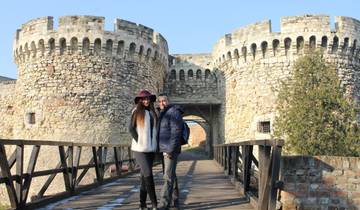
4 days
Serbia 4 Day Private Tour
- ✓ Comprehensive Belgrade tour
- ✓ Expert local guides included
- ✓ All accommodation arranged
- ✓ Transportation provided
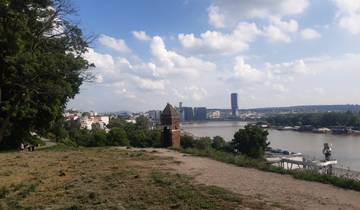
4 days
Discover Serbia's Capital: A Cultural Journey Through Belgrade
- ✓ Booking needs min. 2 travelers
Multi-day tour packages powered by TourRadar. Prices and availability subject to change.
Introduction: Belgrade as a Tour Destination in 2026
Belgrade occupies a singular position among European city-break destinations in 2026. It is the only capital on the continent that served as the seat of a multinational socialist federation — Yugoslavia — and then watched that state dissolve into war, sanctions, and NATO bombardment within a single decade. That compressed, traumatic modern history sits alongside 2,000 years of strategic geography at the confluence of the Sava and Danube rivers, producing a city of extraordinary narrative density. Every street in the old core holds layers: Celtic settlements beneath Roman foundations beneath Byzantine fortifications beneath Ottoman mosques beneath Austro-Hungarian facades. Postwar brutalism and the grand socialist boulevards of New Belgrade wrap around it all.
What makes Belgrade’s tour industry exceptional is candour. Unlike cities where official narratives smooth over inconvenient history, Belgrade’s best guides lean into complexity. Tours discuss the Tito cult and its genuine popular appeal, the chaotic violence of the 1990s, the surreal normality of the NATO bombing, and the complicated pride and grief of being Serbian today. This political frankness, combined with the city’s low price point relative to Western Europe, has driven a rapid growth in tour quality and variety through the early 2020s — a trend that continues into 2026.
For the practical traveller, Belgrade’s compact old city means that most walking tour content is within 30 minutes on foot, while the Danube and Sava corridors open an extraordinary radius for day trips. This guide is organised by tour type: walking tours of the city core, specialist and themed tours, river and Danube experiences, the full catalogue of day trips, private and custom arrangements, and self-guided route suggestions for independent walkers. Practical logistics — booking platforms, tipping culture, seasonal considerations, and group size guidance — follow in dedicated sections.
Walking Tours of Belgrade’s Historic Core 2026
The spine of any Belgrade walking tour is the axis running from Republic Square south and west to Kalemegdan Fortress — a distance of roughly 800 metres that packs the city’s most photogenic and historically significant sites into a single navigable corridor. All mainstream walking tours in 2026 use this route as a framework, with variations depending on group size, duration, and thematic emphasis.
Free Walking Tours Belgrade 2026: What to Expect
Belgrade’s free walking tour scene is well-established and genuinely high quality in 2026. The model is tip-based: guides are not paid by a tour company but by the group’s appreciation at the end. Standard tipping practice is €5-10 per person for a solid tour, and a well-reviewed guide leading a group of 15 will earn an appropriate professional income from this structure.
The two main providers operating in 2026 are Belgrade Free Walking Tours (through their own website and via TripAdvisor) and the GuruWalk platform, which lists multiple individual guide-operators offering themed routes. Strawberry Tours also operates in Belgrade in the free-tour format. Tours typically depart from Republic Square, run 2-2.5 hours, and cover the following stops in sequence or variation: Republic Square and the National Theatre, the Question Mark kafana (one of Belgrade’s oldest taverns), St. Michael’s Cathedral, Knez Mihailova pedestrian street, Studentski Trg, the bohemian streets of Dorćol, and the entry sequence into Kalemegdan Park and Fortress. The best guides end at the fortress ramparts with views of the river confluence — a genuinely striking geographical moment.
Free tour schedules in 2026 typically run once or twice daily during high season (April-October), with reduced frequency in winter. No pre-booking is required for most free tours, though registering through GuruWalk allows guides to plan for group size. The format rewards engagement: the best Belgrade free tour guides actively field questions about contemporary Serbia, the 1990s, and the complexity of national identity — subject matter that brings these walks alive beyond standard sightseeing narration.
Paid Small-Group Walking Tours 2026
For travellers who prefer a guaranteed guide, a confirmed time slot, and the structure of a booked experience, paid small-group walking tours cost €18-30 per person in 2026 for 2.5-3 hour routes. These are bookable through GetYourGuide, Viator, and directly through operators’ own sites. The format typically caps groups at 10-15 people, and the best operators on both booking platforms are consistently rated 4.8-5.0 from several hundred reviews.
The standard paid city walking tour covers the same Old Town route as the free alternative but adds structured narrative depth, professional bilingual materials, and in some cases small-group access to sites that independent visitors miss — the hidden courtyard of the Patriarchate of Serbia, the interior of the Question Mark kafana with a complimentary rakija tasting, or the gun positions inside Kalemegdan’s walls. Some operators offer the same route in a night walking variant (departing around 17:30), which transforms the fortress, river views, and lit-up Knez Mihailova into a distinctly different atmospheric experience.
Booking at least 48 hours in advance is recommended in peak season (June-September). Most operators offer free cancellation up to 24 hours before departure. When comparing options on booking platforms in 2026, filter by “small group” and prioritise guides with a substantial review count over high ratings alone — a 4.9 from 15 reviews is less reliable than a 4.7 from 350.
The Classic Kalemegdan Fortress Walking Route 2026
Kalemegdan Fortress and the park surrounding it are entirely free to enter — Belgrade’s single greatest gift to budget travellers. The fortress grounds cover the Upper Town and Lower Town of the ancient citadel, and a thorough self-guided walk takes 60-90 minutes. Key waypoints on the standard walking route through Kalemegdan:
- Stambol Gate: The 18th-century main entry, rebuilt by the Austrians after the Habsburg recapture of Belgrade in 1717. The name derives from Istanbul — this gate faced the Ottoman empire.
- Victor Monument (Pobednik): Ivan Meštrović’s 1928 bronze figure stands 14 metres above the ramparts at the point where the Sava meets the Danube. The view from this position — flat Pannonian plains north, forested Fruška Gora hills beyond — is one of the defining images of Belgrade.
- Roman Well (Rimski Bunar): A 60-metre shaft sunk in the 18th century, descending to the water table. Access costs approximately 150 RSD (around €1). The cylindrical stone interior is architecturally striking.
- Zindan Gate and the medieval walls: The 15th-century fortifications built under Serbian Despot Stefan Lazarević and subsequently reinforced by the Ottomans. The towers and crenellations offer the most photogenic views of the fortress.
- Military Museum: Housed inside the fortress, admission approximately 350 RSD (€3). The outdoor exhibition of tanks, artillery, and aircraft on the fortress grounds is free. The indoor collection covers Serbian military history from medieval to modern, including a significant section on the First World War — in which Serbia suffered one of the highest per-capita casualty rates of any nation involved.
- Ružica Church: A small Orthodox church built into the fortress walls, containing chandeliers made from spent cartridges and swords — one of the more visually arresting interiors in the city.
Guides who lead Kalemegdan-focused walking tours add layers unavailable to solo visitors: the Ottoman period when the fortress was the northernmost stronghold of the empire, the nine successive changes of sovereignty between Austria and the Ottomans during the 18th century, and the role of the Sava-Danube confluence in shaping every strategic decision the city has ever faced.
Dorćol and the Old Jewish Quarter Walking Route 2026
The neighbourhood of Dorćol, lying between Knez Mihailova and the Danube waterfront, represents one of Belgrade’s most historically layered urban areas and rewards a 90-minute walking exploration. The name derives from a Turkish phrase meaning “four roads” — the Ottoman grid is still legible in the street pattern.
Key sites on the Dorćol walking route include the Bajrakli Mosque (the only surviving mosque in Belgrade from the Ottoman period, built in the 17th century and still in active use), the Church of the Dormition of the Mother of God at Jevrejska Street, and the site of the former Jewish quarter — Belgrade had a significant Sephardic Jewish community from the 16th century, decimated by the Nazi occupation during which Belgrade became one of the first cities in occupied Europe declared judenrein (free of Jews) in 1942. The Dorćol walking route contextualises this history against the neighbourhood’s current character as a gentrifying area of independent cafés, art studios, and the Cetinjska Street creative cluster.
Several GuruWalk guides in 2026 offer Dorćol-specific walking tours departing from the Belgrade Waterfront development — a useful bookend that juxtaposes the ancient quarter against the gleaming riverfront towers that have transformed the north Sava bank since 2016.
Yugoslavia and Communist History Tours Belgrade 2026
If one category of tour defines Belgrade in the international travel conversation, it is the Yugoslavia and communist history tour. The Socialist Federal Republic of Yugoslavia (SFRY) existed from 1945 to 1992, with Belgrade as its capital throughout. No other European city offers direct, physical engagement with socialist federalism at this scale — not Bucharest, not Warsaw, not Prague — because Belgrade’s socialist-era infrastructure, monuments, institutions, and contested memories remain largely intact, deliberately or otherwise.
The Communist Walking Tour: Sites and Itinerary 2026
The communist history walking tour runs 3-4 hours and is offered by multiple operators in 2026, including Belgrade Walking Tours (via their dedicated website belgradewalkingtours.com), GuruWalk-listed individual guides, and private operators on GetYourGuide. Prices range €20-35 per person for a guided group experience. The standard itinerary covers:
- Republic Square and post-war urban planning: The guide contextualises the square’s redesign under socialist planning, including the National Theatre and the equestrian statue of Prince Mihailo Obrenović surrounded by institutions repurposed under the new order.
- Terazije and socialist architecture: Belgrade’s central boulevard received significant investment in the socialist period. The Hotel Moskva (1908, actually pre-socialist but nationalised and redesigned as a symbol) and the surrounding post-1945 civic buildings illustrate how socialist urbanism was grafted onto a pre-existing European city.
- The Generalštab ruins: The former Yugoslav Army Ministry of Defence — twin brutalist towers on Nemanjina Street designed by Nikola Dobrović — was struck by NATO missiles on 7 April 1999 and has remained an intact ruin ever since. Serbian authorities have left the bombed-out structure standing as a deliberate reminder. No other NATO-bombed building remains publicly visible in Europe at this scale. The guide explores both the architectural significance (the Generalštab is considered a masterpiece of late modernism) and the political decision to preserve rather than demolish it.
- Museum of Yugoslavia and House of Flowers: The tour concludes at this complex in the Dedinje neighbourhood, 3 km south of the old centre (usually reached by taxi or the guide’s minivan rather than on foot). The Museum of Yugoslavia, admission approximately 500 RSD (€4), houses 200,000 artefacts covering the Kingdom of Yugoslavia and the socialist federation. The House of Flowers — Kuća cveća — is Tito’s mausoleum, a modernist glasshouse-like structure that remains a site of genuine pilgrimage for former Yugoslav citizens and an object of fascination for outsiders.
Free English and Serbian guided tours of the Museum of Yugoslavia run on weekends at no additional charge beyond the entry ticket. The Communist Tour offered by Belgrade Walking Tours departs Thursday at 3pm from Republic Square, behind the monument, and runs approximately four hours including the Museum of Yugoslavia complex.
Museum of Yugoslavia: Planning Your 2026 Visit
The Museum of Yugoslavia is independent of the walking tours and fully navigable alone, but the context delivered by a knowledgeable guide transforms it from an impressive collection into a genuinely moving experience. The museum complex comprises three buildings: the May 25 Museum (covering Yugoslavia’s postwar reconstruction and the Non-Aligned Movement), the House of Flowers (Tito’s mausoleum with his white marble sarcophagus and the relay baton collection), and the Old Museum (personal artefacts, gifts from world leaders, documentary photography).
Admission approximately 500 RSD (€4) for adults, with discounts for students and seniors. The museum opens Tuesday-Sunday; check the official website for current hours before visiting (hours have varied seasonally). Weekend visitors receive free guided tours in English at no additional cost. Photography of most exhibits is permitted. Plan 2-3 hours for a thorough visit to all three buildings — rushed visitors who allocate only 45 minutes come away with a partial picture.
The museum attracts approximately 120,000 visitors annually, many of them former Yugoslav citizens making what amounts to a pilgrimage to Tito’s tomb. The emotional register of the House of Flowers — Yugoslav citizens of six ethnic backgrounds laid flowers at this tomb for decades — is unlike any other museum space in the region. It is, simultaneously, a monument to a dictator and a memorial to a genuinely multicultural state that no longer exists.
The NATO Bombing Tour 2026
A dedicated NATO bombing tour has emerged as one of Belgrade’s most requested specialist offerings in 2026. The 1999 NATO campaign (Operation Allied Force) ran for 78 days and struck military and infrastructure targets across Serbia, including civilian facilities in Belgrade. Several sites from the bombing remain visible in the city.
The tour typically covers: the Generalštab ruins on Nemanjina Street, the partially rebuilt Chinese Embassy (struck by mistake in a well-documented intelligence failure, killing three Chinese journalists), the former Ministry of Internal Affairs building in Savamala, the Army Club on Vasina Street, and the Television of Serbia building on Aberdareva Street where 16 staff were killed in an April 1999 strike that remains deeply controversial. Several GuruWalk-listed guides offer this as a 3-hour walking tour for a tip-based or small fee of €15-25. The guides who deliver it tend to be Belgraders who lived through the bombing — firsthand accounts are part of what makes this experience unlike any similar history tour in Europe.
Food, Drink, and Cultural Tours Belgrade 2026
Belgrade’s food and nightlife tour scene has expanded substantially in 2026, reflecting the city’s growing reputation as a culinary and cultural destination. These tours operate differently from history walks — they are experience-led, with stops at specific establishments, and advance booking is more critical since venues hold capacity for tour groups.
Belgrade Street Food and Market Tours 2026
A guided street food tour in Belgrade runs 3-4 hours and costs €25-45 per person in 2026, with food and drink included in the price. The standard route covers Belgrade’s central markets — Zeleni Venac and Kalenić Pijaca — along with established street food stops on and around Skadarlija, and typically ends at the Rakija Bar strip on Strahinjića Bana or a craft beer stop in the Savamala arts district.
Key Serbian foods encountered on the food tour circuit:
- Burek: Flaky phyllo pastry filled with meat (sa mesom) or cheese (sa sirom), baked in large round trays at pekara (bakeries) across the city. A serving costs 150-200 RSD (€1-2). Genuine burek is eaten standing at the counter.
- Ćevapi: Grilled minced meat rolls, typically served with flatbread, raw onion, and kajmak (a clotted dairy spread unique to the Balkans). A full portion at a good traditional ćevapdžinica costs 600-900 RSD (€5-8).
- Gibanica: A layered cheese-and-egg pie eaten as breakfast or a snack. The pekara version is a reliable cheap fuel stop throughout any walking day.
- Rakija: Serbian fruit brandy, produced from plums (šljivovica), grapes, quinces, or pears. Free tours frequently include a small rakija tasting at the Question Mark kafana. Dedicated rakija-tasting experiences are bookable separately for €15-25 per person.
- Kajmak and ajvar: The two essential Serbian condiments — kajmak is a salted, fermented cream; ajvar is a roasted red pepper spread. Both are encountered at every traditional restaurant and feature prominently on food tours.
Skadarlija Bohemian Quarter Tour 2026
Skadarlija, Belgrade’s cobblestoned 19th-century bohemian quarter, is a three-block-long pedestrian street in the old city that was the traditional haunt of Serbian artists, poets, and musicians from the late 1800s through the mid-20th century. The traditional kafanas (taverns) lining the street — Tri Šešira (Three Hats), Dva Jelena (Two Deer), and Ima Dana (There Are Days) are the most historically significant — serve traditional Serbian food alongside live tamburica music in the evenings.
Several tour operators in 2026 combine a brief Skadarlija walking tour (30-45 minutes of historical context about the bohemian tradition and individual kafana histories) with a dinner reservation at one of the traditional restaurants, typically including a set menu and live music. These combined dinner-and-tour experiences run €35-65 per person depending on the meal included. Standalone walking context about Skadarlija is covered as part of most Old Town walking tours at no additional charge.
Underground Belgrade Tour 2026
A specialist underground walking tour has been one of Belgrade’s most distinctive offerings for several years and continues to draw strong bookings in 2026. The 2.5-hour tour descends below Kalemegdan’s surface to explore the Roman well, Ottoman-era gunpowder warehouses, Austrian fortification tunnels, and Cold War-era military bunkers — all preserved within the fortress hill. The guide provides continuous historical context linking each underground layer to the surface history above it.
Booking this tour through GetYourGuide or Viator in 2026 costs approximately €20-30 per person. Group sizes are typically kept small (8-12) by the physical constraints of the tunnel system. This tour is physically undemanding but involves low ceilings and confined spaces in certain passages — relevant for those with claustrophobia. No strenuous climbing is required. It is one of the most consistently five-star-reviewed tours in the city.
Danube River Tours and Boat Experiences Belgrade 2026
The Danube and Sava rivers define Belgrade’s geography, and river-based tour experiences add a dimension unavailable from the fortress ramparts or the city streets. River tours in 2026 range from short sunset cruises departing from the Belgrade Quay to full-day speedboat excursions reaching the Iron Gate Gorge.
Belgrade River Sightseeing Cruises 2026
Short sightseeing cruises on the Sava and Danube operate from the Belgrade Quay (Savski Kej) and typically run 1-2 hours. These panoramic boat tours cost €10-20 per person in 2026 and provide river-level perspectives of Kalemegdan Fortress, the New Belgrade skyline, and the Zemun waterfront — all landmarks that read very differently from the water than from land. Evening sunset cruises departing around 18:00-19:00 are the most atmospheric option, combining the golden light on the fortress walls with live music on some boats. Booking through GetYourGuide or directly at the quay is both practical; walk-up availability is usually possible outside peak summer weekends.
Multi-level dinner cruise vessels operate on the Danube in summer 2026, typically running 3 hours with a set Serbian meal and live folk or jazz music. Prices for dinner cruises run €40-65 per person including food. These are higher-capacity experiences (80-120 passengers) and lack the intimacy of smaller tour formats, but they deliver a genuinely festive evening and are popular with both international visitors and local celebrations.
Kayaking Tour from New Belgrade to Kalemegdan 2026
A 6.8-kilometre kayaking tour paddling under Belgrade’s bridges from New Belgrade to Kalemegdan and back has become one of the city’s most-reviewed active experiences in 2026. The tour covers the Sava river and takes approximately 3 hours including briefing and equipment fitting. No prior kayaking experience is required — the river is calm in this stretch, and the tour is marketed as suitable for families. Group sizes reach up to 20 participants. Booking through Viator costs approximately €25-35 per person, with waterproof storage for belongings provided.
The unique value of this tour is perspective: paddling at water level beneath the Branko’s Bridge and past the Ada Ciganlija riverbank gives the city’s geography a physical reality that looking at maps cannot replicate. The final approach to Kalemegdan from the river, looking up at the fortress walls rising from the bluff, is the view Serbian defenders and Ottoman attackers shared for centuries.
Best Day Trips from Belgrade 2026
Belgrade’s position on the Pannonian Plain, where the Danube bends south between the Carpathian and Dinaric mountain systems, places it within range of some of the most dramatic landscape and historical sites in the Balkans. The day trip circuit accessible from the capital in 2026 is genuinely exceptional — covering medieval fortresses, river gorges, monastery complexes, mountain railways, and UNESCO-recognised architecture — and the guided minivan tour format makes all of it accessible without a rental car.
Novi Sad and Sremski Karlovci Day Trip 2026
The most popular and consistently well-reviewed day trip from Belgrade in 2026 combines the city of Novi Sad — Serbia’s second city, 90 km north on the Danube — with the wine village of Sremski Karlovci and often a stop at the Fruška Gora monastery ridge.
Novi Sad’s Petrovaradin Fortress, built by the Habsburgs between 1692 and 1780 on a bluff above the Danube, is one of the largest baroque fortresses in Europe. Described by locals as the “Gibraltar of the Danube,” its 16 km of underground tunnels and walls occupy a position directly above the river that commands views across the flat Vojvodina province. Guided tours of the fortress complex include the underground tunnels, the clock tower (where the hour and minute hands are reversed — a deliberate quirk), and the contemporary art galleries installed in the former barracks. The fortress also hosts the EXIT music festival each July.
Sremski Karlovci, 8 km from Novi Sad, is a small town of extraordinary historical importance: it was the site of the 1699 Treaty of Karlowitz that ended the Great Turkish War and established Habsburg dominance over the Pannonian Basin. Its baroque townscape — the Four Lions Fountain, the Grammar School building, the Cathedral of St. Nicholas — is immaculately preserved and deeply peaceful. Wine tasting at one of the local producers (the area produces notable Bermet, a traditional Serbian wine infused with herbs) is a standard component of day tour itineraries.
Guided full-day tours to Novi Sad and Sremski Karlovci depart Belgrade hotels by minivan, run approximately 8 hours, and cost €35-60 per person in 2026, with hotel pickup included. Some operators combine this route with Fruška Gora’s Krusedol Monastery. Book through GetYourGuide or Viator; both platforms list multiple well-reviewed operators with free cancellation policies.
Golubac Fortress and Iron Gate Gorge Day Trip 2026
The Golubac Fortress and Iron Gate day trip is Belgrade’s most dramatic full-day excursion in 2026 — a 10-12 hour route east along the Danube to the Đerdap (Iron Gate) Gorge, one of the longest and deepest river gorges in Europe. The tour consistently sells out 3-5 days in advance during high season; book early.
Golubac Fortress stands at the entrance to the gorge where the Danube narrows to squeeze between the Carpathian and Balkan mountain ranges. The fortress dates to the 14th century, passing between Serbian, Hungarian, and Ottoman control across two centuries before falling into disuse. It underwent a major restoration completed in 2020 and now presents as one of the best-preserved medieval Danube fortresses in the region — nine towers in varying states of completion reflected in the river below. The interior exhibition covers the fortress’s history and the broader Djerdap gorge archaeology.
Beyond Golubac, the standard tour continues into the Đerdap National Park to the Lepenski Vir Museum, a remarkable archaeological site preserving the remains of a Mesolithic river culture dating to 9,500-6,000 BC — among the oldest known planned settlements in Europe, with trapezoidal houses and sophisticated stone sculpture found nowhere else at this date. From the viewpoint above the Kazán Gorge, the Danube narrows to 150 metres with vertical cliffs rising 300 metres on both banks — a physical spectacle that photographs cannot fully capture.
Day trip prices to Golubac and the Iron Gate run €40-70 per person in 2026, with hotel pickup from Belgrade, a professional guide, and transport included. Entrance fees to Golubac Fortress are typically not included in the listed price — budget an additional 400-600 RSD (€3-5) for admission. Private vehicle arrangements for groups of two cost significantly more: approximately €120-180 per vehicle per day. The shared minivan format delivers better value and a better social experience.
Western Serbia: Drina House, Drvengrad, and Šargan 8 Railway 2026
The western Serbia day trip is Belgrade’s longest and most varied full-day excursion — 12 hours covering three entirely different experiences linked by the dramatic Drina River valley scenery.
The House on the Drina (Kuća na steni) is a tiny wooden structure perched on a rock in the middle of the Drina River near Bajina Bašta, visible from the riverbank above the water. The image of this house — isolated, defiant, improbably placed — has become one of the most-reproduced photographs of Serbia and draws visitors who have seen the image for years before arriving. The stop at the Drina viewpoint is brief (15-20 minutes) but reliably delivers the photograph everyone came for.
Drvengrad (Wooden Town), also known as Küstendorf, is the village built by film director Emir Kusturica for the filming of the 2004 film Life is a Miracle and maintained since as an arts venue and working settlement. Streets named after Kusturica’s heroes (Diego Maradona Street, Bruce Lee Street, Che Guevara Street) wind between hand-built wooden buildings housing a cinema, restaurants, gallery spaces, and accommodation. The village sits at 1,000 metres above sea level in the Mokra Gora highlands, and its combination of genuine artistic eccentricity and mountain beauty makes it the most memorable stop on the western Serbia circuit.
The Šargan 8 narrow-gauge railway, departing from Mokra Gora station adjacent to Drvengrad, climbs 300 metres in altitude by making a figure-eight loop through tunnels and spirals over 15 km — a feat of early 20th-century mountain railway engineering with no equivalent in the region. The 1.5-hour round trip through beech forest, past stone viaducts, and around horseshoe bends on a restored 1930s train is one of the most purely enjoyable experiences on the Belgrade day trip circuit.
Full-day guided tours to the western Serbia circuit run approximately €45-70 per person in 2026, departing Belgrade by minivan at 7:00-8:00 AM and returning by 20:00. This is a long day with considerable driving (the route covers 350+ km round trip) but the variety — river, mountain, village, railway — makes the time pass without fatigue. Book through GetYourGuide, Viator, or directly through operators listed on TripAdvisor.
Eastern Serbia: Manasija Monastery, Resavska Cave, and Veliki Buk Waterfall 2026
The gems of eastern Serbia day trip covers a tightly curated route through the Resava valley, 150 km southeast of Belgrade, combining the finest monastery fortress in Serbia with geological spectacle and raw waterfall scenery. The tour runs 9-10 hours and costs €40-65 per person in 2026.
Manasija Monastery, built between 1406 and 1418 by Despot Stefan Lazarević, is considered the crown of medieval Serbian Orthodox architecture. Its 11-towered fortified wall makes it unique among monastery complexes — a religious house built as a military fortress during the period of maximal Ottoman pressure on the Serbian medieval state. The frescoes inside the Resurrection Church represent some of the finest late Byzantine painting in the Balkans, notable for the psychological intensity of individual figures that anticipates the Renaissance portraiture of contemporary Italy.
Resavska Cave, 20 km from Manasija, is a limestone cave system with 4 km of passageways open to the public, notable for its varied speleothem formations including stalactites, stalagmites, flowstone curtains, and the rare cave pearls formed in underground pools. Guided cave tours run approximately 45 minutes. The cave maintains a constant temperature of 7°C year-round — a welcome coolness in summer heat.
Veliki Buk (Great Beech) waterfall, a cascade in the Lisine area near Despotovac, provides the natural culmination of the eastern Serbia route. The combined tour delivers a stronger cross-section of Serbia’s cultural and natural landscape than any other single-day itinerary from Belgrade.
Tara National Park and Drina River Valley Day Trip 2026
The longest Belgrade day trip — running 11 hours for approximately 500 km of round-trip driving — takes travellers to Tara National Park in western Serbia, one of the last significant temperate forest reserves in Europe and habitat for wolves, lynx, bears, and the endemic Serbian spruce. The Drina River Valley section of this tour provides the context for the House on the Drina viewpoint (shared with the western Serbia circuit) and the Banjska stena viewpoint, which delivers a panorama across the river valley to the mountains of Bosnia.
This is the most physically demanding of the Belgrade day trips due to driving time, and it suits travellers with a genuine interest in mountain wilderness rather than those primarily seeking historical sites. Prices run €45-70 per person in 2026 for a guided shared minivan tour with hotel pickup. Private arrangements for couples run €150-200 for the vehicle and guide.
Studenica Monastery Day Trip 2026
Studenica Monastery, 210 km south of Belgrade in the Ibar River valley, is a UNESCO World Heritage Site — the foremost example of the Raška school of Serbian medieval architecture and the most important monastery in the Serbian Orthodox tradition. Built by Stefan Nemanja in the late 12th century and expanded by his son St. Sava, Studenica houses two extraordinary churches: the Church of the Virgin and the King’s Church, both with Byzantine frescoes of exceptional quality.
Day trips to Studenica from Belgrade run approximately 9-10 hours round trip. Some operators combine it with Žiča Monastery (the earliest royal monastery of the Nemanjić dynasty, located near Kraljevo on the return route) for a full medieval ecclesiastical itinerary. Tour prices run €40-65 per person in 2026. The monastery is still an active religious community — modest dress (covered shoulders and knees) is required for entry to the churches, and visitors are expected to observe the quiet decorum of a working monastic site.
Private and Custom Tours Belgrade 2026
Private tours in Belgrade deliver a qualitatively different experience from group tours — the guide adapts content, pacing, and depth to the specific interests of the group, and the absence of 12 strangers creates a more intimate conversational atmosphere. In 2026, private tour pricing is reasonable by European standards.
Private Walking Tours Belgrade 2026: Prices and What to Expect
A private walking tour of Belgrade’s old city runs €80-150 per person for groups of two (the per-person price drops significantly for groups of four or more, typically reaching €40-60 per person). Most private city walking tours last 3-4 hours and include a licensed guide who holds deep local knowledge, has often lived through the political periods under discussion, and can take the tour wherever interest dictates — including off-route into less-visited streets, private courtyard spaces, or sitting down for a coffee and extended discussion at a kafana mid-tour.
Private tours are particularly valuable for Belgrade’s Yugoslavia and communist history content. The complexity of the material — the Non-Aligned Movement, Tito’s particular form of market socialism, the 1970s consumer boom, the collapse into ethnic nationalism after 1987, and the NATO bombing — benefits from a guide who can read the group’s prior knowledge and pitch the narrative accordingly. A group arriving with substantial background in Cold War history gets a different tour from a group arriving with little context, and the private format makes that adaptation possible in real time.
Booking private Belgrade tours: GetYourGuide and Viator both list private tour options, with prices displayed per group rather than per person. Direct booking through operators’ own websites (such as Experience Belgrade, Belgrade Walking Tours) sometimes offers lower rates than booking platforms. Confirm the guide’s language, duration, and route before booking.
Private Day Trip Arrangements 2026
Private vehicle-and-guide arrangements for day trips outside Belgrade cost approximately €120-180 per vehicle per day for most routes within 200 km of the city (Golubac, Novi Sad, eastern Serbia). For the western Serbia circuit (Drvengrad, Šargan 8), which covers greater distances, pricing rises to €150-220 per vehicle. These prices are for groups of two — a private arrangement becomes notably more cost-effective per person from four travellers upward.
Airport transfer services in Belgrade frequently also operate as informal private tour vehicles, and several operators who receive high reviews on TripAdvisor for airport transfers also offer day trip driving services. This is a flexible option for travellers who want transport without a formal guide, or who have done enough background research to need orientation rather than narration.
Self-Guided Walking Routes Belgrade 2026
Belgrade is an excellent city for independent walking — compact, safe, visually varied, and with enough English signage in the central areas that navigation is not a barrier. The three routes below represent the best frameworks for self-guided exploration.
Route 1: Republic Square to Kalemegdan (90 minutes, 2 km)
Start at Republic Square (Trg Republike), the social and geographic heart of Belgrade, with the National Theatre (1869) and National Museum (reopened 2018 after a decade-long renovation — admission approximately 300 RSD / €3, covering a remarkable collection of medieval Serbian artefacts, Roman finds, and European painting). Walk north along Knez Mihailova Street, the pedestrianised main artery, lined with late 19th-century Baroque and Neoclassical facades housing the city’s major bookshops and established café institutions. The street terminates at Kalemegdan Park, where you enter through the Stambol Gate and begin the fortress circuit described in detail in the Kalemegdan walking route section above. The Victor Monument and river confluence views are the destination. Allow an additional 60-90 minutes inside the fortress for an unhurried visit.
Route 2: Savamala and the Belgrade Waterfront (2 hours, 2.5 km)
Savamala, Belgrade’s former 19th-century warehouse district between the Sava riverbank and the old city, has undergone the most significant urban transformation in Serbia over the past decade. The Belgrade Waterfront (Beograd na Vodi) development — a controversial 4-billion-euro redevelopment of the north Sava bank by a UAE-led consortium — has transformed the western waterfront with glass towers, a luxury hotel, and a continuous riverside promenade.
Self-guided walking route: Start at the Branko’s Bridge pedestrian approach and walk south along the Sava riverside into Savamala. The Mikser House complex at Karadjordjeva 46 anchors the creative quarter’s gallery and bar scene. Cetinjska Street runs parallel to the river with the highest density of galleries, street art studios, and design shops. Continue to the Dom Omladine (Youth Centre) on Makedonska Street for the city’s contemporary cultural programme. This route rewards visitors interested in understanding how Belgrade’s creative class is navigating the tension between rapid development capital and established neighbourhood identity.
Route 3: Zemun Village Walk (2 hours, 3 km)
Zemun, the former Habsburg town that was a separate municipality from Belgrade until 1934, occupies a riverfront hill 5 km northwest of Kalemegdan and rewards a half-day excursion by tram or taxi. Its street pattern, architectural character (tiled roofscapes, pastel stucco façades, narrow lanes), and ambience are distinctly different from the Ottoman-inflected old city — Zemun was part of the Austrian empire while Belgrade was Ottoman, and the imperial boundary between these two powers ran precisely where Zemun ends and the Danube begins.
Key stops on the Zemun self-guided walk: the waterfront fisherman’s quarter (Zemunski Kej) with its carp and catfish restaurants, the Gardoš Tower (a Habsburg watchtower on the hill above the river with panoramic Danube views), the Nikolajevska Church, and the open market of Zemunska Pijaca. The walk from the waterfront up through the old lanes to the Gardoš Tower takes 30-40 minutes; the views from the top stretch north to the Pannonian plain and east to Kalemegdan across the river.
Booking Strategy and Practical Tips for Belgrade Tours 2026
Best Booking Platforms for Belgrade Tours 2026
Three platforms dominate Belgrade tour bookings in 2026:
- GetYourGuide: The strongest selection of Belgrade city tours, with good filter functionality for group size and duration. Customer service for cancellations and rebooking is reliable. Check availability to see starting times before booking — not all listed tours run daily.
- Viator: Broader selection of day trips and excursions, including several operators exclusive to the platform. The review system is rigorous. Starting prices from $18 for walking tours are verified for 2026. Use the “small group” filter to find tours capped at under 12 participants.
- GuruWalk: The specialist platform for free walking tours. Lists multiple individual guide-operators in Belgrade with verified reviews. Useful for finding the Yugoslavia/communist-themed routes and neighbourhood walks not available through mainstream OTAs.
Booking directly through operator websites (belgradewalkingtours.com, experience-belgrade.com, strawberrytours.com) is viable and sometimes slightly cheaper than OTA pricing, though OTA booking provides stronger consumer protection if a tour is cancelled or the operator fails to show.
When to Book Belgrade Tours 2026
Walking tours within the city: book 24-48 hours in advance during high season (June-September). Walk-up availability is often possible for free tours and some paid city walks, but confirming a slot ensures you get your preferred guide and departure time.
Day trips — especially Golubac and Iron Gate, Novi Sad, and western Serbia: book 3-7 days in advance from June through September. These tours sell out. The GetYourGuide “Likely to sell out” flag on the Golubac and Iron Gate tour reflects real booking pressure — this is not marketing language. October through May allows shorter lead times.
Tipping Culture on Belgrade Tours 2026
On free walking tours, a tip of €5-10 per person is the acknowledged norm for a good 2-hour tour. A particularly excellent guide leading a small group warrants €10-15. Tipping in Serbian dinars is perfectly acceptable — the equivalent of €5-10 in RSD (600-1,200 RSD) is appropriate. Tipping is done in cash directly to the guide at the tour’s end.
On paid tours, tipping is not mandatory but is welcomed for exceptional service. A tip of €3-5 per person for a half-day group tour is appreciated; €5-10 for a full day. Private tour guides who deliver genuinely outstanding experiences customised to your group typically receive tips of €10-20 per person from satisfied clients.
Group Size Considerations 2026
Belgrade’s best tours run in groups of 8-12. When browsing tour listings, filter for “small group” or check the description for maximum participant numbers. Tours marketed as “small group” on Viator cap at 15; the best operators cap at 10-12. Avoid selecting tours with no stated maximum — these can run to 25-30 people, which fundamentally changes the dynamic with guides who rely on proximity and conversation.
If privacy is a priority and budget is flexible, the private tour format (€80-150 per person for groups of two, dropping significantly per person for groups of four) is the obvious alternative. For solo travellers, the free tour format and the paid small-group format both provide natural social interaction with fellow visitors — a practical benefit as well as a tour logistics one.
Language and Accessibility 2026
All mainstream walking tours and day trips listed on international booking platforms in 2026 operate in English. Spanish-language tours are also available through some GuruWalk-listed operators. French and German-language options exist but the selection is narrower — check availability carefully when booking for non-English groups.
Belgrade’s walking tour routes are generally accessible to walkers of moderate fitness. The Kalemegdan circuit involves some uneven cobblestones and a moderate ascent to the Victor Monument viewpoint. The underground bunker tour involves low headroom in some sections. Day trips are minivan-based and require no physical exertion beyond site walking. The Šargan 8 railway involves boarding a period train with standard steps. The kayaking tour is suitable for beginners of reasonable fitness. Tour listings on booking platforms note accessibility limitations where relevant.
Seasonal Guide to Belgrade Tours 2026
Spring Tours Belgrade 2026 (March-May)
Spring is the ideal season for walking tours and day trips in Belgrade. Temperatures in April and May range 15-22°C — comfortable for multi-hour walking without heat stress. The city’s parks and the Kalemegdan gardens are in bloom, and the river level is high (making the boat tour perspective of the fortress particularly dramatic). Crowds are present but manageable; the Golubac Fortress and Novi Sad day trips see strong bookings from Easter onwards, so advance booking of 5-7 days is advisable from late April.
Summer Tours Belgrade 2026 (June-August)
Summer is Belgrade’s high season for tourism. Walking tours run in heat that reaches 35-38°C in July and August — book morning departures (9:00-11:00) for walking tours and avoid afternoon city walks in July and August. Day trips to Tara National Park and eastern Serbia benefit from full summer access and green landscape. River cruises and the kayaking tour are at peak demand. Golubac sells out a week or more in advance from late June through August. The EXIT festival in Novi Sad (typically July) dramatically affects accommodation and day trip availability in the Novi Sad window — check festival dates before planning the Novi Sad day trip in summer 2026.
Autumn Tours Belgrade 2026 (September-November)
September and October represent Belgrade’s sweet spot — warm temperatures (18-25°C in September), lower crowd density than peak summer, and the wine harvest in Sremski Karlovci active during the Novi Sad day trip window. The autumn colours on the Golubac Gorge route and in Tara National Park make October arguably the most visually rewarding month for day trips. November sees a significant drop in temperature and outdoor tour frequency; the Museum of Yugoslavia, underground tour, and indoor cultural experiences become the core offering.
Winter Tours Belgrade 2026 (December-February)
Winter walking tours in Belgrade operate at reduced frequency and depend heavily on weather. The city receives cold but rarely severe winters — temperatures between -5°C and 5°C are typical — and occasional snowfall transforms Kalemegdan into a different visual experience. The Museum of Yugoslavia, Nikola Tesla Museum, and National Museum operate year-round and provide rich indoor content for winter visits. Day trips to Golubac and Tara operate infrequently or on private-only arrangements in January-February. Book any winter tour with flexible cancellation terms given weather dependency.
Frequently Asked Questions About Belgrade Tours 2026
Are Belgrade walking tours worth it in 2026?
Belgrade walking tours are among the best-value city tour experiences in Europe in 2026. The free walking tour format delivers 2-2.5 hours of expert historical and cultural context for a €5-10 tip. Paid small-group tours at €18-30 per person match the quality of equivalent tours in Prague or Budapest at roughly half the price. The Yugoslavia and communist history specialisation is unique — no other European city offers this content with this level of local expertise and candour. The investment of 2-3 hours in a walking tour repays itself many times over in the depth it adds to independent exploration of the city.
How do I get from Belgrade to Golubac Fortress for a day trip in 2026?
The most practical way to reach Golubac Fortress from Belgrade on a day trip is a guided shared minivan tour booked through GetYourGuide or Viator, costing €40-70 per person with hotel pickup included. The drive is approximately 2 hours each way (130 km east via the Danube road). Independent travellers can reach Golubac by public bus from Belgrade’s Lasta bus station (2-3 daily departures, journey approximately 2.5-3 hours, approximately 800-1,000 RSD / €7-9 one way), though the bus stops in Golubac town, 3 km from the fortress — a taxi from town costs approximately 300-400 RSD (€3). Renting a car from Belgrade and self-driving is straightforward on the Danube highway (Magistralni put M24). Entrance to Golubac Fortress costs approximately 400-600 RSD (€3-5).
What is the Museum of Yugoslavia and how much does it cost in 2026?
The Museum of Yugoslavia is Serbia’s most visited museum — a three-building complex in the Dedinje neighbourhood of Belgrade dedicated to the history of socialist Yugoslavia and its president Josip Broz Tito. The complex includes the May 25 Museum (covering Yugoslavia’s postwar history), the House of Flowers (Tito’s mausoleum), and the Old Museum (personal artefacts and gifts from world leaders). Adult admission costs approximately 500 RSD (€4), with student and senior discounts available. Free guided tours in English and Serbian operate on weekends at no additional cost beyond the entry ticket. The museum opens Tuesday-Sunday; it is closed on Mondays. Plan 2-3 hours for a thorough visit to all three buildings.
What is the best day trip from Belgrade for history lovers in 2026?
For pure historical depth, the eastern Serbia route covering Manasija Monastery, Resavska Cave, and Veliki Buk Waterfall delivers the strongest single-day historical experience from Belgrade. Manasija (1406-1418) represents the apex of medieval Serbian Orthodox architecture, with 11-towered fortified walls and frescoes of exceptional quality inside the Resurrection Church. For travellers whose primary interest is the Yugoslav period, the communist tour within Belgrade itself — covering the Generalštab ruins, Museum of Yugoslavia, and House of Flowers — is more focused and delivers that content more efficiently than any excursion. The Novi Sad day trip (Petrovaradin Fortress and the Habsburg baroque town of Sremski Karlovci) suits those whose historical interests extend to the Austro-Ottoman frontier period.
Is the Šargan 8 railway worth visiting from Belgrade in 2026?
The Šargan 8 narrow-gauge mountain railway is worth visiting from Belgrade in 2026 for travellers interested in mountain scenery, railway heritage, or the unique cultural landscape of western Serbia. It is not a standalone excursion — the railway is combined with the Drina River House viewpoint and Drvengrad (Kusturica’s village) in the western Serbia day trip, which runs approximately 12 hours and costs €45-70 per person. The train journey itself (1.5 hours round trip, climbing 300 metres via a figure-eight loop through forest and stone viaducts) operates from Mokra Gora station adjacent to Drvengrad. The experience is genuinely unusual — a working 1930s-era narrow-gauge mountain train in a setting of remarkable mountain forest beauty. It suits travellers willing to accept a long driving day for a diverse western Serbia itinerary.
Can I visit Novi Sad independently from Belgrade in 2026?
Novi Sad is easily reached from Belgrade independently in 2026. Direct trains run from Belgrade Prokop station to Novi Sad Kolodvor in approximately 1.5 hours, with multiple departures daily; tickets cost approximately 600-800 RSD (€5-7) one way. Intercity buses from the Lasta bus station run even more frequently, covering the 90 km in about 1.5 hours for a similar fare. The advantage of the guided day trip (€35-60 per person) over independent travel is the inclusion of Sremski Karlovci (not easily reached by public transport) and a guide who contextualises both sites. Independent travellers happy to focus on Novi Sad alone — Petrovaradin Fortress, the old town, the Dunavski Park, the pedestrian zone — will find the train or bus entirely practical. Book Petrovaradin Fortress guided tunnel tours directly on arrival at the fortress ticket office.
Are there tours of Belgrade’s nightlife districts in 2026?
Guided nightlife tours of Belgrade operate in 2026, though the format differs from standard sightseeing. Several operators offer evening orientation walks (typically 18:00-21:00) covering the Savamala arts district, the floating river clubs (splavovi) on the Sava bank in New Belgrade, Skadarlija’s kafana strip, and the bar concentration on Strahinjića Bana Street. These run 2-3 hours and cost €20-35 per person, typically including one or two drink stops but not a full evening’s entertainment — they are introductory tours rather than escorted night-out packages. The GuruWalk platform lists evening walking tours with this character. For travellers who want to navigate Belgrade’s renowned nightclub scene (which operates primarily in the floating clubs from midnight to dawn), no guide is genuinely necessary — the concentration of venues and the well-worn path from Savamala to the river clubs is the route.
What should I wear and bring on a Belgrade walking tour in 2026?
For city walking tours in Belgrade in 2026: comfortable walking shoes are the single most important consideration — the cobblestones of Dorćol and the Kalemegdan fortress grounds are uneven. In summer (June-August), carry water, apply sunscreen, and book morning departures (before 11:00) to avoid peak midday heat. A light layer is advisable for the underground bunker tour, which maintains cool temperatures year-round in the tunnel sections. For visits to Orthodox churches within tour itineraries (Ružica Church at Kalemegdan, churches at Manasija), bring a scarf or light wrap to cover shoulders; some sites also require covered knees. No formal documentation is needed for city walking tours. For day trips by minivan, pack a small day bag with water, snacks, sun protection, and a phone charger — 10-12 hour days in the Serbian countryside benefit from self-sufficiency.
How do Belgrade tour prices compare to other Balkan capitals in 2026?
Belgrade is the most affordable major Balkan capital for guided tours in 2026. Small-group walking tours that would cost €30-50 per person in Zagreb or Ljubljana run €18-30 per person in Belgrade. Full-day regional day trips that command €80-100+ per person from Dubrovnik or Budapest run €40-70 from Belgrade. The museum entry fee structure is similarly compressed: Museum of Yugoslavia at approximately €4 compares favourably with equivalent museums in Prague (€10-20) or Budapest (€8-15). Guides across the board are as qualified and as well-reviewed as their Western European equivalents. The price differential reflects Serbia’s cost of living, not a quality gap — and it makes Belgrade one of the most rewarding destinations in Europe for travellers who prioritise guided historical depth.
Is it better to book Belgrade tours in advance or on arrival in 2026?
The practical answer depends on the season and tour type. Free walking tours in Belgrade need no advance booking — arrive at Republic Square at the listed departure time, find the guide holding a sign, and join. Paid city walking tours can often be booked on the day or the day before from October through May. From June through September, advance booking of 48-72 hours is advisable to secure a slot with the specific guide and departure time you want. Day trips — particularly Golubac and Iron Gate, Drvengrad and Šargan 8, and eastern Serbia — sell out consistently in summer. Booking these 5-7 days ahead from late May through September eliminates the risk of missing the experience that brought you to Belgrade. The GetYourGuide and Viator apps both display real-time availability, making last-minute checking straightforward if your plans remain flexible.