Bern Hidden Gems Guide: Secret Spots & Lesser-Known Treasures
Beyond the UNESCO-listed Old Town arcades and the famous bear park, Bern conceals layers of hidden courtyards, secret viewpoints, underground passages, and neighborhood corners that most visitors never discover. This guide reveals the city’s lesser-known treasures where local life unfolds away from the main tourist circuits, from forgotten medieval cellars to rooftop gardens accessible only through unmarked doorways.
Key Takeaways: Bern’s Hidden Treasures
- Underground Medieval Network: Bern’s cellar system connects hundreds of vaulted spaces beneath the Old Town, with select wine cellars, restaurants, and historical spaces open for exploration beyond the standard tourist cellars.
- Secret Viewpoints: The Rose Garden overlooks provide the iconic panorama, but hidden stairs, rooftop terraces, and riverside paths offer equally spectacular views without the crowds.
- Matte District Authenticity: The riverside Matte neighborhood preserves Bern’s working-class heritage with artisan workshops, family-run restaurants, and medieval architecture largely ignored by tour groups.
- Artistic Underground: Former industrial spaces in Bern’s outer districts now house artist collectives, alternative galleries, and cultural venues operating outside the established museum circuit.
- Seasonal River Culture: The Aare River hosts swimming culture from May through September, with locals accessing the water through hidden staircases and unofficial entry points known primarily to residents.
- Courtyard Architecture: Behind the arcaded streets, over 100 interior courtyards contain Renaissance fountains, sculptures, and gardens accessible through archways that appear to lead nowhere.
People Also Ask About Bern Hidden Gems
What Are the Most Underrated Places in Bern?
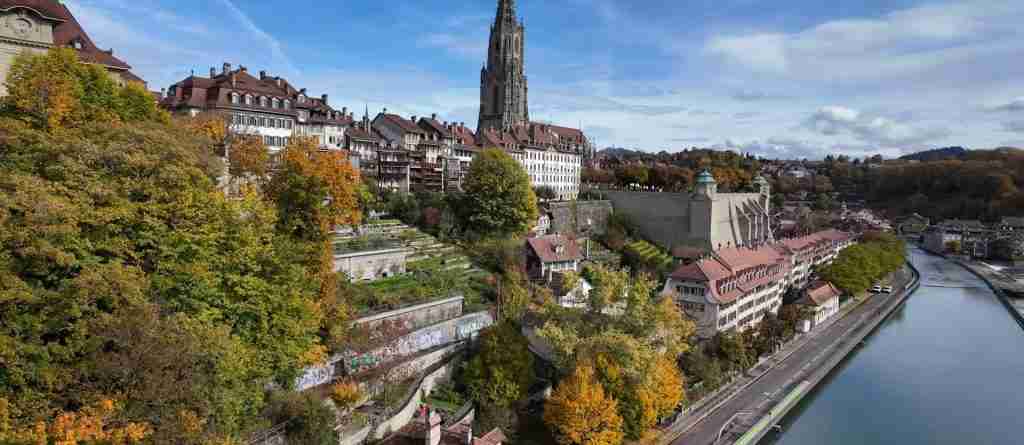
The Matte district along the Aare River represents Bern’s most underrated quarter, preserving medieval working-class architecture and artisan culture while most visitors remain in the upper Old Town. The neighborhood’s riverside position below the main city created a distinct community of tanners, fishermen, and craftspeople whose legacy continues in contemporary workshops and family businesses. The Untertorbrücke bridge connects Matte to the Old Town through dramatic elevation changes that reveal Bern’s topography, with stairs descending past medieval fortifications into a riverside world of narrow lanes and half-timbered houses.
The Kunsthalle Bern contemporary art museum receives fraction of the attention directed toward the Zentrum Paul Klee, despite hosting cutting-edge international exhibitions in a modest building near the train station. The institution focuses on experimental and conceptual art that challenges conventional museum experiences, with exhibitions changing every six to eight weeks to maintain freshness. The lack of a permanent collection allows curatorial freedom to explore emerging artists and provocative themes that larger institutions avoid.
The Elfenau Park in the eastern suburbs provides expansive green space with neoclassical architecture, formal gardens, and Aare River access without the tourist concentration of the Rose Garden. The Elfenau mansion hosts occasional exhibitions and events, while the surrounding parkland offers walking paths through meadows and along the riverbank where locals picnic and swim. The Dählhölzli Zoo adjacent to Elfenau focuses on native Swiss and European species in naturalistic environments, creating an alternative to the standard tourist program.
Where Do Locals Go in Bern That Tourists Don’t Know About?
The Lorraine district north of the main train station functions as Bern’s creative quarter, with street art, independent boutiques, multicultural restaurants, and nightlife venues operating in converted industrial buildings. The neighborhood’s working-class origins created affordable spaces that attracted artists, activists, and alternative culture beginning in the 1980s, establishing a bohemian character that persists despite gentrification pressures. The Brockenhaus secondhand stores, the Warmbächli outdoor swimming pool, and the Lorraine Bridge viewpoint represent local favorites rarely mentioned in guidebooks.
The Aare River swimming culture dominates summer social life for Bernese residents but remains largely unknown to visitors who stick to hotel pools. Locals access the river through staircases at Marzili, Lorraine, and Eichholz, floating downstream for 20 to 30 minutes before exiting at designated points. The Marzili baths provide changing facilities and river access in a park setting below the Parliament building, while the Lorraine baths serve the northern neighborhoods with a more alternative atmosphere. The current moves at approximately 8-10 kilometers per hour, requiring swimmers to understand entry and exit points to avoid dangerous weir areas.
The Saturday morning market at Bärenplatz and Bundesplatz expands far beyond the Tuesday and Saturday produce sections most tourists encounter, with local farmers, cheese producers, bread bakers, and specialty food vendors creating a genuine provisioning experience rather than a tourist attraction. The market begins at 7 AM with professional chefs and restaurant buyers selecting the finest products, followed by local families shopping for weekly supplies. The flower section, the olive vendor, the organic vegetable stands, and the regional wine producers operate year-round regardless of weather, reflecting the market’s role in daily Bernese life rather than seasonal entertainment.
What Hidden Courtyards Can You Find in Bern’s Old Town?
The Gerechtigkeitsgasse (Justice Lane) contains multiple interior courtyards accessible through archways between buildings, including the Brunngasshalde courtyard with a covered wooden staircase leading to upper levels and the Gerechtigkeitsbrunnen fountain courtyard with Renaissance sculptures. These spaces functioned as semi-private areas for residents of the surrounding buildings, combining utilitarian purposes like water access and goods storage with decorative elements reflecting the wealth of medieval merchant families. The courtyards remain accessible during daylight hours, though finding the correct archway requires attention to subtle architectural clues rather than signage.
The Münsterplattform behind the cathedral provides the famous terrace viewpoint, but the small gardens and passage areas on the eastern and western sides offer quieter contemplation spaces with equally impressive views. The western gardens near the Moses Fountain create intimate seating areas among flowering plants and historic gravestones, while the eastern passage provides sheltered walkways with views toward the Aare River meander. The cathedral’s north side conceals a small courtyard with the entrance to the tower climb, typically empty while crowds gather at the main southern portal.
The Casino courtyard near the Kornhausbrücke bridge hosts outdoor dining for the casino restaurant, but the architectural space itself—a Renaissance courtyard with arched galleries and a central fountain—deserves attention independent of the commercial function. The building served as a concert hall and social gathering place for Bern’s upper classes in the 19th century, with the courtyard designed for summer concerts and receptions. The current restaurant arrangement preserves public access to the space while maintaining the architectural character that makes it architecturally significant.
Are There Secret Passages or Underground Spaces in Bern?
The Kornhauskeller beneath the former granary building operates as a restaurant and bar occupying a spectacular barrel-vaulted cellar with painted decorations and massive stone columns, but the space represents only the most accessible example of Bern’s underground network. The cellar system beneath the Old Town connects hundreds of medieval storage spaces, wine cellars, and passages that once served defensive and commercial purposes. Most remain private or inaccessible, though select wine bars, restaurants, and specialty shops occupy converted cellars that visitors can enter during business hours.
The Christoffelturm cellar beneath the vanished city gate tower (demolished in 1865) now forms part of the Zytglogge tower museum tour, revealing medieval prison cells and foundation walls from Bern’s earliest fortifications. The space demonstrates how the city’s defensive walls incorporated underground detention facilities and storage vaults that survived the demolition of above-ground structures. The tour includes access to tower mechanisms and clock workings typically hidden from public view, though advance reservation is essential during peak months.
The SBB railway tunnels beneath the main train station connect platforms through passages lined with shops, services, and artwork that create an underground commercial district serving commuters and travelers. While not secret, the extent and complexity of the tunnel system surprises first-time visitors who expect a simple railway station. The passages extend west toward the Welle 7 entertainment complex and south toward the Länggasse district, creating weatherproof pedestrian connections that function as an alternative city layer during winter months.
Extended multi-day tours – 5+ days
Featured Bern Multi-Day Tour Packages
3 days
Bern 3-Day Discovery Tour
- ✓ Comprehensive Bern experience
- ✓ Expert local guides included
- ✓ All accommodation included
- ✓ Transportation provided
5 days
Bern 5-Day Highlights Experience
- ✓ Comprehensive Bern experience
- ✓ Expert local guides included
- ✓ All accommodation included
- ✓ Transportation provided
7 days
Bern 7-Day Cultural Journey
- ✓ Comprehensive Bern experience
- ✓ Expert local guides included
- ✓ All accommodation included
- ✓ Transportation provided
10 days
Bern 10-Day Complete Adventure
- ✓ Comprehensive Bern experience
- ✓ Expert local guides included
- ✓ All accommodation included
- ✓ Transportation provided
Multi-day tour packages powered by TourRadar. Prices and availability subject to change.
Introduction: Discovering Bern Beyond the Obvious
Bern’s UNESCO World Heritage status derives from its exceptionally preserved medieval city core, with six kilometers of arcaded walkways, 15th-century fountains, and sandstone facades creating the postcard image that defines the Swiss capital. Yet this recognition simultaneously obscures the layers of lesser-known spaces, neighborhoods, and experiences that reveal the city’s living culture beyond the museum-quality historic district. While tour groups congregate at the Zytglogge clock tower and the bear park, Bernese residents navigate a parallel city of riverside swimming spots, underground wine cellars, artist squats in converted factories, and neighborhood markets where dialect conversations dominate and tourist presence remains minimal.
The city’s compact geography—a peninsula formed by a dramatic meander in the Aare River—creates natural exploration boundaries that most visitors respect without questioning. The main tourist circuit follows the central spine from the railway station through the Old Town arcades to the bear park, rarely deviating into the vertical dimensions above and below street level or the horizontal extensions into residential neighborhoods. This pattern leaves entire districts unexplored: the Matte quarter clinging to the riverbank below the Old Town, the Lorraine district north of the station with its street art and alternative culture, the eastern suburbs where parks and swimming facilities serve local populations, and the western industrial zones transitioning into creative spaces.
Understanding Bern’s hidden treasures requires grasping the city’s topographical drama—the 40-meter elevation difference between the Aare River and the Old Town plateau creates stairs, terraces, and multilevel neighborhoods that resist casual discovery. The riverside Matte district remains literally beneath most visitors’ sightlines, accessible only through steep stairways that descend past medieval fortifications. The Lorraine Bridge viewpoint requires crossing to the opposite bank and climbing to an elevation that reveals the Old Town’s peninsula formation. The swimming culture along the Aare necessitates understanding current speeds, entry points, and exit locations that function as local knowledge rather than marked infrastructure.
The seasonal dimension further stratifies Bern’s hidden experiences—summer reveals the river swimming culture when locals flood the Aare from May through September, while winter drives activity underground into the cellar restaurants, heated arcades, and cultural venues that provide shelter from Alpine weather. The Saturday market transforms from a produce-focused provisioning event in summer to a covered market emphasizing preserved foods, cheeses, and winter specialties when temperatures drop. The outdoor beer gardens of Marzili and Lorraine close for the cold months, while the Kornhauskeller and other underground spaces gain prominence as social gathering points.
This guide organizes Bern’s hidden gems through thematic and geographic lenses that respect the city’s natural divisions while highlighting cross-neighborhood patterns. The underground spaces—cellars, passages, and tunnels—form one exploration layer independent of specific districts. The riverfront culture—swimming spots, walking paths, and waterside neighborhoods—creates another thematic category spanning the entire Aare meander. The artistic and alternative venues concentrate in specific neighborhoods but share cultural characteristics that distinguish them from the established museum circuit. The architectural secrets—courtyards, viewpoints, and hidden corners—pepper the entire Old Town but require specific knowledge to access.
The guide prioritizes authenticity over convenience, highlighting spaces where local culture predominates and tourist infrastructure remains minimal or absent. This approach necessarily excludes some visitor-friendly attractions in favor of experiences that demand more effort, flexibility, or cultural adaptation. The reward for this investment comes in encounters with Bern’s living culture rather than its preserved heritage, with conversations in Swiss German rather than English, and with discoveries that feel personally earned rather than guidebook-prescribed.
Underground Bern: Cellars, Tunnels, and Subterranean Spaces
The medieval requirement for cool, secure storage created an extensive cellar network beneath Bern’s Old Town, with vaulted stone chambers extending under nearly every historic building. These spaces served wine merchants, grain traders, and wealthy families storing provisions and valuables in temperature-stable environments protected from fire and theft. The cellars connected through passages that facilitated goods movement and provided emergency escape routes during conflicts, creating an underground city parallel to the street-level commercial district. Modern preservation efforts converted select cellars into restaurants, wine bars, and cultural venues while maintaining their architectural character, offering visitors access to spaces that most Bernese residents never enter despite living above them.
The Kornhauskeller Restaurant and Historic Granary Cellar
The Kornhauskeller occupies the vaulted cellar beneath the 18th-century granary building, featuring barrel-vaulted ceilings supported by massive sandstone columns and decorated with painted medallions depicting historical scenes and allegorical figures. The space functioned as grain storage for the city-state of Bern, with the vaulted construction preventing fire spread while maintaining consistent temperature and humidity for long-term preservation. The conversion to a restaurant in the 1890s preserved the architectural elements while adding Art Nouveau decorative details and modern kitchen facilities concealed behind the historic fabric.
The cellar extends far beyond the visible restaurant area, with additional vaulted chambers used for wine storage, event spaces, and building services. The main dining hall features a central row of columns creating two parallel barrel vaults, with side alcoves providing semi-private seating areas. The painted decorations include medallions showing Bernese history, mythological scenes, and agricultural allegories appropriate to the building’s original grain storage function. The lighting design emphasizes the architecture through indirect illumination that highlights the vaulting geometry and stone textures while maintaining the atmospheric quality expected in a cellar setting.
Access to the Kornhauskeller requires descending a monumental staircase from street level, with the dramatic descent preparing visitors for the architectural grandeur below. The restaurant operates for lunch and dinner service, with the bar area remaining open between meal times for drinks and light food. The wine list emphasizes Swiss wines stored in the adjacent cellar chambers, with the sommelier offering tastings and recommendations. The menu ranges from traditional Bernese dishes like Zibelechueche (onion tart) and Berner Platte (meat platter) to contemporary Swiss cuisine, with prices reflecting the prime location and historic setting.
Underground Wine Cellars and Tasting Rooms
Multiple wine merchants and specialty shops occupy converted cellars throughout the Old Town, offering tasting experiences and bottle sales in atmospheric medieval spaces. The Gnussregal on Kramgasse operates a wine shop and tasting room in a vaulted cellar with exposed sandstone walls and temperature control systems maintaining optimal storage conditions. The selection emphasizes smaller Swiss producers from regions like Valais, Vaud, and Geneva, with regular tastings introducing customers to vintages and grape varieties rarely exported beyond Switzerland. The staff provides detailed information about terroir, winemaking techniques, and regional characteristics that distinguish Swiss wines from better-known European producers.
The Weinrebgasse (Wine Lane) near the cathedral contains multiple buildings with historic wine cellars, some converted to restaurants while others remain in private use. The public cellars accessible during business hours demonstrate the typical medieval construction—barrel-vaulted ceilings, sandstone walls, packed earth or stone floors, and minimal natural light creating ideal storage conditions for wine and preserved foods. The temperature remains constant year-round at approximately 12-14 degrees Celsius, with high humidity preventing cork desiccation while the darkness protects bottles from light damage.
The Klötzlikeller cellar restaurant on Gerechtigkeitsgasse occupies a 13th-century space with original vaulted ceilings and a menu emphasizing cheese fondue, raclette, and other traditional Swiss dishes best suited to the underground atmosphere. The rough stone walls, dim lighting, and wooden furniture create the authentic cellar ambiance that modern restaurant designers attempt to replicate elsewhere. The wine list focuses on Swiss vintages appropriate to the cheese-heavy menu, with servers knowledgeable about pairing recommendations and regional specialties.
The Zytglogge Clock Tower Underground: Medieval Prison and Foundations
The Zytglogge clock tower tour includes access to the underground spaces beneath the medieval gate tower, revealing prison cells, foundation walls from Bern’s earliest fortifications, and construction techniques spanning seven centuries of repairs and modifications. The cellar spaces functioned as detention facilities for minor offenders and debtors, with small cells carved into the tower’s foundation walls and minimal ventilation creating harsh conditions by modern standards. The walls preserve graffiti from historical prisoners, providing rare direct evidence of the experiences of people confined in medieval justice systems.
The foundation level demonstrates how the tower’s base was strengthened as the structure grew taller, with each building phase adding new layers of stonework and structural support. The original 13th-century foundations sit on bedrock, with later additions creating a complex layered construction visible in the exposed wall sections. The tour guide explains how medieval builders compensated for the tower’s increasing weight and height without modern engineering calculations, relying on empirical knowledge and traditional construction methods refined over generations.
The underground tour continues upward through the tower mechanism chambers, showing the clock works, bell mechanisms, and astronomical complications that made the Zytglogge one of Switzerland’s most sophisticated medieval timepieces. The combination of underground foundations and above-ground mechanisms in a single tour reveals the tower’s complete vertical structure, from bedrock to roof level. The tour requires advance booking during peak tourist months and includes steep stairs unsuitable for visitors with mobility limitations, but the access to normally closed spaces rewards the physical effort.
Railway Station Tunnels and Underground Commercial District
The Bern Hauptbahnhof (main railway station) sits above an extensive tunnel network connecting platforms, exits, and commercial spaces in a multilevel underground complex serving commuters and travelers. The main tunnel axis runs east-west beneath the platforms, with side passages leading to the Welle 7 entertainment and shopping complex, the RailCity retail area, and pedestrian connections to the Länggasse district. The shops, restaurants, and service businesses operating in the tunnels create an underground commercial district particularly valuable during winter months when weatherproof connections between destinations become essential.
The tunnel system extends beyond the immediate station area through pedestrian passages connecting to parking garages, office buildings, and residential developments. These connections function as a parallel transportation network for walking and cycling, with the underground routes providing direct paths that avoid street-level traffic and weather. The system includes bike parking, luggage storage, postal services, currency exchange, and food vendors creating a self-contained service ecosystem beneath the city surface.
The artwork installations throughout the tunnels attempt to mitigate the utilitarian atmosphere, with murals, sculptures, and lighting designs transforming circulation spaces into gallery-like environments. The Passage project commissioned contemporary artists to create site-specific works responding to the tunnel architecture and human flow patterns, resulting in interventions that range from subtle lighting changes to large-scale sculptural installations. The rotating exhibition program ensures regular changes that give frequent users new discoveries rather than static decoration.
Historic Beer Cellars and Brewery Spaces
Bern’s brewing tradition created cellars and underground spaces dedicated to beer production and storage, with several historic brewery sites preserved in the Lorraine and Länggasse districts. The Altenberg brewery complex north of the Old Town operated from the 19th century until the 1990s, with the massive cellars and production facilities now converted to artist studios, event spaces, and alternative cultural venues. The Sous le Pont performance space occupies part of the former brewery cellars, hosting concerts, theater, and exhibitions in vaulted chambers originally designed for beer fermentation and storage.
The Rosengarten area contains remnants of the city’s cemetery brewery that supplied local taverns with beer brewed on-site using cemetery well water. The practice—common in 18th and 19th-century Switzerland—created revenue for cemetery maintenance while utilizing the pure groundwater available in elevated locations. The brewery ceased operations in the early 20th century, but the cellars and well structures remain beneath the Rose Garden park, occasionally visible through grates and access points marked with historical plaques.
The modern craft brewing revival created new cellar taprooms and tasting spaces in the Lorraine and Matte districts, with small breweries operating in converted industrial spaces and basements. The Lörrachmätteli brewery in Lorraine offers cellar tours and tastings in a former warehouse, while the Altes Tramdepot brewery near the bear park brews on-site in a converted tram depot with cellar storage and a restaurant overlooking the Aare River. These contemporary operations continue the tradition of using Bern’s underground spaces for beer-related activities while adapting to modern craft brewing techniques and tourist expectations.
Secret Viewpoints and Elevated Perspectives
Bern’s topography—a peninsula plateau surrounded by the Aare River flowing 40 meters below—creates dramatic viewpoints where the city’s geography becomes visually comprehensible. The Rose Garden provides the canonical panorama with the Old Town peninsula spreading below and the Alps visible on clear days, but this popularity creates crowds and predictability that diminish the discovery experience. Alternative viewpoints scattered across the city offer equally spectacular perspectives without the tourist concentration, from rooftop terraces accessible through unmarked doorways to riverside paths revealing the city from water level rather than above.
The Lorraine Bridge Northern Viewpoint
The Lorraine Bridge crosses the Aare River in the northern neighborhoods, providing an elevated platform that frames the Old Town peninsula from an angle rarely photographed in guidebooks. The bridge sits downstream from the main tourist area, requiring a 15-20 minute walk from the train station through the Lorraine district to reach the viewing position. The perspective emphasizes the river’s meander around the city center, with the cathedral tower rising above the sandstone buildings and the Gurten hill forming the backdrop. The viewpoint works best during golden hour when late afternoon sunlight illuminates the Old Town’s western facades while the eastern side falls into shadow, creating dramatic contrast.
The bridge itself features pedestrian walkways on both sides separated from vehicle traffic, with several widened viewing platforms allowing photographers to set up tripods without blocking foot traffic. The northern end provides the best angle for classic city panoramas, while the southern end emphasizes the river valley and the Matte district’s position below the Old Town walls. The location attracts local photographers and residents walking dogs or commuting by bike, creating an authentically Bernese atmosphere distinct from the tourist-dominated Rose Garden.
The Lorraine Bridge area includes the Lorraine baths river access point and the Altenberg brewery complex, allowing visitors to combine the viewpoint with swimming (summer), brewery visits, or exploration of the Lorraine district’s street art and alternative culture. The walk from the Old Town follows the river through the Matte district before climbing to the bridge level, creating a complete vertical and horizontal transect of Bern’s geography. The return route can follow different streets through the Lorraine neighborhood, discovering cafes, shops, and cultural venues that rarely appear in tourist itineraries.
Cathedral Tower Climb and Münsterplattform Hidden Corners
The cathedral tower climb provides 360-degree views from Switzerland’s tallest church spire at 100 meters above street level, but the experience requires climbing 254 steps through narrow spiral staircases with minimal rest platforms. The climb reveals the tower’s construction through exposed stonework, timber framing, and bell chambers, with information panels explaining the medieval building techniques and subsequent modifications. The viewing platform at the top offers unobstructed panoramas across the Old Town, the Aare valley, and the distant Alps, with the height providing perspective on Bern’s urban structure and relationship to surrounding geography.
The cathedral’s Münsterplattform terrace draws crowds for its accessible viewpoint, but the terrace’s eastern and western gardens offer quieter contemplation spaces with selective views through planted screens and architectural framing. The western garden near the Moses Fountain contains seating areas among flowering perennials and historic gravestones relocated from the former cemetery, creating an intimate space for reading or conversation. The eastern side provides covered walkways with views toward the Aare meander and the bear park, with fewer visitors than the main southern terrace.
The cathedral’s north side conceals a small courtyard providing access to the tower climb entrance and a side portal with elaborate Gothic sculptures less famous than the main entrance tympanum. This courtyard remains empty even when tourist groups gather at the main portal, offering an alternative perspective on the cathedral’s architecture and a quiet space for appreciating the stonework details without distraction. The courtyard’s orientation blocks direct sunlight most of the day, creating cool conditions appreciated during summer heat.
Rosengarten Alternative Viewing Areas
The Rose Garden’s main terrace provides the standard Old Town panorama featured in countless photographs, but the park contains alternative viewing positions that offer different perspectives and reduced visitor density. The eastern section of the park near the restaurant building provides elevated views emphasizing the Aare River’s downstream meander and the Altenberg area, with the cathedral tower visible but not central to the composition. The western paths along the park’s upper edge frame views through rose plantings and ornamental trees, creating foreground interest that transforms standard cityscape photography into more complex compositions.
The former cemetery section below the main terrace contains paths descending toward the Bärenpark (bear park) with views filtered through mature trees and cemetery vegetation. These lower paths provide cool shade during summer and create intimate viewing positions distinct from the exposed main terrace. The descent continues through the bear park toward the Aare River, with each elevation change revealing new perspectives on the Old Town’s vertical relationship to the river valley.
The park’s opening hours extend from early morning until late evening, allowing sunrise and sunset photography without the midday tourist crowds. Early morning visits reveal the Old Town illuminated by eastern light while the Aare valley remains in shadow, creating atmospheric conditions that change rapidly as the sun rises. Evening visits after dinner provide the opposite effect, with western light creating long shadows across the city and the cathedral tower becoming a silhouette against the sky.
Elfenau Park Riverside Perspectives
The Elfenau Park in Bern’s eastern suburbs provides Aare River views from the opposite direction compared to the Rose Garden, with the Old Town visible upstream and the river flowing toward the viewing position rather than away. The park’s position on the river’s eastern bank creates afternoon and evening light conditions that illuminate the city center from a different angle than standard viewpoints. The parkland extends along the riverbank for over a kilometer, with multiple paths and clearings offering varied perspectives on the Aare valley and surrounding hills.
The Elfenau mansion sits on elevated ground within the park, providing a neoclassical architectural element that frames views toward the river and the distant city center. The formal gardens surrounding the mansion include terraces and paths designed to showcase specific views, with the 19th-century landscape architecture creating compositional relationships between buildings, plantings, and distant horizons. The mansion hosts occasional exhibitions and events, with the interior spaces offering views from elevated windows that transform the landscape into framed paintings.
The riverside paths descending from the mansion level to the Aare’s edge provide access to swimming spots, picnic areas, and fishing locations used primarily by residents of the eastern neighborhoods. These paths reveal the river’s natural character beyond the engineered swimming facilities at Marzili and Lorraine, with trees extending over the water and current variations creating pools and rapids. The park’s distance from the Old Town—approximately 3 kilometers east along the river—ensures that tourists rarely reach this far, leaving the space to local families, runners, and dog walkers.
Bundeshaus Terrace and Parliamentary Quarter Overlooks
The Bundeshaus (Parliament building) terrace provides elevated views across the Aare valley toward the Kirchenfeld district, with the bridge connecting the governmental quarter to the museum campus creating a foreground architectural element. The terrace remains open to the public when Parliament is not in session, offering formal gardens and viewing platforms that emphasize Bern’s role as national capital through monumentality and symmetry. The perspective differs from the Rose Garden by focusing on the Aare’s southern bank and the museum district rather than the Old Town peninsula.
The Bundeshaus plaza connects to the Kornhausbrücke bridge, with the bridge’s midpoint providing views upstream and downstream along the Aare River gorge. The bridge height creates vertiginous perspectives straight down to the river 40 meters below, with the Matte district visible clinging to the valley sides. The upstream view frames the Old Town peninsula and cathedral tower, while the downstream view emphasizes the river’s natural valley cutting through the Bernese landscape. The bridge’s pedestrian walkways separate from vehicle traffic, allowing safe viewing without traffic noise or safety concerns.
The area surrounding the Bundeshaus includes several streets and small parks offering views toward the Old Town from the southern elevated plateau. The Kirchenfeld bridge plaza provides a different angle on the city center, while the area near the Natural History Museum includes paths descending toward the Aare with views through vegetation toward the Old Town. These perspectives remain largely undiscovered by tourists who concentrate in the Old Town itself rather than exploring the parliamentary and museum district’s relationship to the city geography.
The Matte District: Bern’s Riverside Working Quarter
The Matte district occupies the riverside flats below the Old Town’s eastern edge, a neighborhood that developed as the working-class counterpart to the merchant city above. The vertical separation—approximately 40 meters elevation difference—created social stratification reinforced by occupation, with tanners, fishermen, millers, and other trades requiring river access clustering in Matte while merchants and administrators remained on the plateau. This historical division persists in the neighborhood’s contemporary character, with artisan workshops, family restaurants, and residential buildings maintaining a scale and atmosphere distinct from the UNESCO-protected Old Town above.
Accessing Matte: The Dramatic Descent
Reaching Matte from the Old Town requires navigating steep staircases and ramps that descend past medieval fortifications and through the gap created by the demolished Nydegg gate. The Nydegg bridge provides vehicle access, but pedestrians typically use the Nydeggstalden stairs beginning near the Nydegg Church and descending through switchbacks to the riverside level. The descent reveals Bern’s topography dramatically, with the stairs clinging to the valley side and the Old Town walls rising above. The physical effort required to reach and leave Matte contributes to the neighborhood’s isolation from tourist traffic, as most visitors avoid the stair climb in favor of remaining on the plateau.
The Untertorbrücke bridge connects the western end of Matte to the lower Old Town near the Untertorturm tower, providing an alternative access route that continues the riverside path toward Marzili and the Parliament district. This route passes through tunnels cut through the valley slope and along narrow paths between buildings and the river, revealing infrastructure and architectural details invisible from street level above. The path serves local residents commuting between neighborhoods and cyclists following the Aare River route, with minimal tourist presence despite the proximity to major attractions.
The Läuferbrunnen stairs provide a third access route from the cathedral area down to the Aare River level near Matte’s eastern end, with the staircase designed as a formal procession route creating a grand descent through multiple terraces and viewing platforms. The stairs see less traffic than the Nydegg route but offer superior views and more generous proportions suitable for photography. The name derives from the medieval messengers (Läufer) who used the stairs to carry communications between the river port and the city above, with the route designed to accommodate rapid up and down movement.
Historic Trades and Contemporary Artisans
Matte’s historical economy centered on river-dependent trades—tanning required water for leather processing, milling used water power for grinding grain, fishing provided protein for the city population, and transportation moved goods along the river and across the bridges. The district’s layout reflects these functions, with narrow streets running parallel to the river and buildings constructed with ground-floor workshops opening to the water. While modern regulations ended polluting industries like tanning, the neighborhood’s artisan tradition continues in contemporary workshops producing furniture, metalwork, pottery, and textiles.
The carpenter workshops along the Matte’s main street demonstrate traditional Swiss woodworking techniques adapted to contemporary custom furniture and restoration projects. The shops typically include street-facing display windows showing finished pieces while the work areas extend into the buildings’ depths, with sawdust and wood shavings spilling onto sidewalks during business hours. The craftspeople maintain the neighborhood’s making tradition while serving clients throughout Bern and beyond, with the riverside location providing convenient access to the railway station for shipping finished work.
The pottery studios in converted riverside buildings fire ceramics using gas or electric kilns replacing the historic wood-fired methods, creating functional pottery, decorative pieces, and custom architectural elements like tiles and sinks. The workshops offer classes and open studio days allowing visitors to observe production processes and purchase work directly from makers. The riverside position provides clay storage areas, drying spaces, and shipping access while the natural light from large windows facilitates detailed work requiring color accuracy.
Restaurants and Local Dining Culture
Matte’s restaurants emphasize traditional Bernese cooking and casual neighborhood dining rather than the formal service typical in Old Town establishments. The Altes Tramdepot brewery and restaurant occupies a converted tram depot at Matte’s western end, brewing beer on-site and serving a menu combining Swiss classics with brewery pub fare. The building’s industrial architecture contrasts with the medieval surroundings while the terrace provides views across the Aare toward the cathedral and Old Town walls. The brewery produces several regular beers and rotating seasonal offerings, with the brewhouse visible from the dining area creating theater around the production process.
The Schwellenmätteli restaurant sits on a platform extending over the Aare River just beyond Matte’s western edge, creating the sensation of dining on the water with the current flowing directly below. The location between the Kornhaus and Kirchenfeld bridges provides views upstream and downstream, with the dramatic valley walls rising on both sides. The menu features fish preparations using local species like perch and pike-perch alongside international dishes and Swiss standards, with the riverside terrace operating from May through September and indoor dining available year-round.
The neighborhood’s smaller restaurants and cafes serve local workers, residents, and visitors who discover the area beyond the standard tourist circuit. The Mattenhof restaurant provides traditional Swiss-German cooking in a historic building with multiple dining rooms and a terrace overlooking the river, while simpler establishments offer kebabs, pizza, and Asian food reflecting Bern’s immigrant communities. The pricing remains moderate compared to Old Town restaurants, with the neighborhood’s working-class origins continuing to influence commercial expectations and customer demographics.
Architecture and Building Character
Matte’s building stock combines medieval structures predating Bern’s major fire of 1405 with 19th and 20th-century replacements and modifications reflecting the neighborhood’s working-class economy. The surviving medieval buildings demonstrate the timber-frame construction typical of riverside areas, with upper floors projecting over lower levels to maximize living space while maintaining narrow street frontages. The stucco facades painted in traditional Swiss colors create the picturesque character that attracts photographers, while the working infrastructure—loading docks, storage areas, workshop openings—reveals the neighborhood’s continued functional use rather than museum preservation.
The flood history visible in high-water marks on building facades demonstrates the Aare’s periodic overflow before modern river management, with several buildings showing measurement plaques indicating historic flood levels from the 19th and early 20th centuries. These markers provide evidence of the environmental challenges that shaped Matte’s development and explain why the neighborhood remained working-class rather than attracting wealthy residents who preferred the safer plateau above. The contemporary flood defenses—walls, barriers, and drainage systems—protect the neighborhood from all but the most extreme river events while preserving the architectural relationship between buildings and water.
The street pattern follows the river’s curve, creating gently arcing lanes rather than the rigid grid typical of planned developments. The narrowness reflects medieval property divisions and the need to maximize buildable land within the constrained valley floor, while the building heights create shaded passages during much of the day. The architecture rewards detailed observation—carved door frames, painted shutters, ornamental iron work, fountain spouts—with the decorative elements revealing the craftsmanship valued by the working-class residents despite their limited economic means.
Lorraine District: Street Art and Alternative Culture
The Lorraine district north of the main railway station developed as working-class housing for factory workers, railway employees, and immigrant families, creating a neighborhood character distinct from both the Old Town’s historic preservation and the suburban residential developments. The district’s industrial origins provided large buildings and affordable rents that attracted artists, activists, and alternative culture beginning in the 1980s, establishing Lorraine as Bern’s creative quarter. The neighborhood maintains this bohemian identity despite gentrification pressures, with street art, independent businesses, and cultural venues coexisting with chain stores and luxury residential developments.
Street Art and Urban Murals
The Lorraine district contains Bern’s highest concentration of street art and large-scale murals, with building facades, railway infrastructure, and public spaces serving as canvases for local and international artists. The permission-based murals created through organized programs coexist with unsanctioned graffiti and tags, creating layered visual complexity that evolves as artists paint over previous work and new pieces appear overnight. The art ranges from political messages and social commentary to abstract patterns and character-based work, reflecting the diverse motivations and styles within urban art culture.
The Reitschule cultural center hosts regular street art exhibitions and provides legal wall space for artists to practice and display work, creating a curated outdoor gallery alongside the venue’s concert halls and political spaces. The building’s exterior changes constantly as artists create new murals and installations, with the graffiti-covered surfaces communicating the center’s alternative political stance and rejection of conventional cultural hierarchies. The surrounding streets contain additional murals and pieces that extend Lorraine’s reputation as Bern’s street art hub.
The railway embankments and bridge structures running through Lorraine provide large vertical surfaces ideal for murals visible from trains and streets, with several commissioned pieces creating landmarks within the neighborhood. The Wankdorf railway yard area contains extensive graffiti on train cars, warehouses, and retaining walls, functioning as an informal gallery where artists work without permission but generally avoid removal as long as pieces remain within the industrial zone. The tension between legal commissioned work and illegal graffiti creates debates about artistic freedom, property rights, and urban aesthetics that characterize street art culture globally.
Independent Shops and Boutiques
Lorraine’s commercial district along Viktoriastrasse and surrounding streets emphasizes independent boutiques, vintage stores, bookshops, and specialty food vendors operating in converted storefronts and ground-floor apartments. The neighborhood’s reputation attracts shoppers seeking alternatives to the chain stores dominating other city districts, with stores offering carefully curated selections of clothing, home goods, records, and artisanal products. The shopping experience emphasizes discovery and personal service rather than the efficiency and predictability of larger retail operations.
The vintage and secondhand clothing stores reflect both economic necessity and fashion trends favoring sustainability and unique pieces over fast fashion. The Brockenhaus secondhand shops operated by social service organizations provide affordable clothing, furniture, and household goods while employing people facing barriers to conventional employment, combining commercial function with social mission. The higher-end vintage boutiques curate selections of designer and period pieces appealing to fashion-conscious customers willing to pay premium prices for rare items.
The independent bookshops offer literary fiction, political theory, art books, and zines rarely stocked in mainstream bookstores, with the selection reflecting Lorraine’s left-leaning political culture and artistic community. The shops host readings, book launches, and discussion events that function as cultural programming beyond simple retail, creating gathering spaces for the neighborhood’s intellectual scene. The cafes adjacent to or combined with bookshops provide seating areas where customers browse and read, blurring the distinction between commercial and public space.
Multicultural Restaurants and Food Culture
Lorraine’s immigrant population creates a multicultural food scene offering cuisines from Turkey, the Balkans, Asia, Africa, and Latin America alongside traditional Swiss establishments. The restaurants range from family-run businesses serving regional specialties to fusion concepts combining influences from multiple culinary traditions, with pricing generally lower than Old Town equivalents and atmosphere emphasizing casual neighborhood dining rather than tourist experiences. The diversity reflects successive waves of migration that brought Turkish workers in the 1960s-70s, refugees from Balkan conflicts in the 1990s, and more recent arrivals from Syria, Eritrea, and Afghanistan.
The Turkish kebab shops and bakeries provide fast-casual meals and traditional pastries like börek and baklava, with most businesses operating for decades and serving second-generation immigrant families alongside newer arrivals and Swiss customers. The döner kebab stands represent the most visible element of Lorraine’s Turkish food culture, but the sit-down restaurants offer more extensive menus including grilled meats, vegetable dishes, and regional specialties from different parts of Turkey. The bakeries produce bread for the Turkish community while also supplying local restaurants and selling to Swiss customers attracted by quality and price.
The Asian restaurants include Thai, Vietnamese, Chinese, and Indian establishments reflecting different migration patterns and culinary traditions, with several businesses operated by families who moved to Bern as refugees or economic migrants in recent decades. The restaurants serve both their ethnic communities and Swiss customers, sometimes maintaining separate menus with authentic preparations for immigrant clientele and adapted versions for local tastes. The grocery stores selling Asian ingredients, spices, and specialty products support home cooking while providing supplies for the restaurants, creating an interconnected food ecosystem.
The Reitschule: Political and Cultural Autonomous Space
The Reitschule cultural center occupies a former cavalry school building near the Lorraine Bridge, operating as a self-managed autonomous space hosting concerts, political events, exhibitions, and social gatherings since the 1980s. The center emerged from Bern’s squatter movement and maintains alternative political orientations emphasizing anti-capitalism, anti-fascism, feminism, and environmental activism. The building’s interior contains multiple performance spaces, bars, restaurants, a cinema, a bicycle workshop, a library, and studios, functioning as a small city within the larger neighborhood.
The concert program emphasizes punk, hardcore, electronic music, and other genres aligned with the center’s political and cultural stance, booking international touring bands alongside local acts and providing all-ages shows in a non-commercial setting. The ticket prices remain deliberately affordable to ensure accessibility regardless of economic circumstances, with the venues operated collectively by volunteers rather than professional staff. The sound quality and technical capabilities rival commercial clubs despite the DIY ethos, with the community investing in professional equipment maintained by volunteers with specialized knowledge.
The political events include lectures, discussions, film screenings, and organizing meetings for various activist groups using the Reitschule as a base for campaigns and movement building. The building’s autonomous status—negotiated with city authorities through decades of conflict and compromise—provides space for activities that might face restrictions in conventional venues, including confrontational political speech and direct action planning. The vegetarian and vegan restaurants operating within the building serve inexpensive meals while generating revenue for the collective operations, creating a model that combines political principles with economic sustainability.
Warmbächli Swimming Pool and River Access
The Warmbächli swimming pool in northern Lorraine provides outdoor swimming facilities in a park setting, with pools, changing areas, and lawn spaces serving the neighborhood during summer months. The facility remains less developed and more authentically local than the Marzili baths closer to the Old Town, with simpler infrastructure and pricing that emphasizes accessibility over luxury amenities. The adjacent Aare River access allows swimmers to enter the current directly from the Lorraine bank, with stairs and platforms facilitating water entry and exit.
The river swimming culture at Lorraine attracts a different demographic than Marzili, with the alternative political scene and immigrant families using the water alongside conventional swimmers. The beach volleyball courts, picnic areas, and open green spaces create a summer gathering point for the neighborhood, with people bringing food, drinks, and portable speakers for afternoon and evening socializing. The atmosphere remains relaxed and unpretentious, with tolerance for noise, music, and behavior that might draw complaints in more regulated park settings.
The cycling and walking paths along the Aare connect Warmbächli to the broader riverside route network, allowing swimmers to arrive by bike and continue exploring rather than treating the pool as a single destination. The paths extend north toward the countryside and south toward the Old Town, with the Lorraine position midway along the urban river section providing access to multiple neighborhoods and districts. The riverside trees provide shade during hot weather while the park’s elevation above the river ensures flood protection and good drainage even during high water events.
Hidden Courtyards and Passages in the Old Town
The Old Town’s arcaded streets create the UNESCO World Heritage Site’s most recognizable feature, but behind these public facades lie interior courtyards, passages, and gardens that most visitors never discover. These semi-private spaces developed as integral elements of medieval urban planning, providing light and air to interior rooms, access to wells and cisterns, storage for goods and vehicles, and social gathering areas for residents of surrounding buildings. The courtyards range from grand Renaissance spaces with fountains and sculptures to modest utilitarian yards serving a handful of apartments, with access typically remaining open during daylight hours despite the private ownership.
Gerechtigkeitsgasse Courtyards and Passages
The Gerechtigkeitsgasse (Justice Lane) running parallel to the main Kramgasse contains multiple interior courtyards accessible through archways that appear as simple doorways from street level. The Gerechtigkeitsbrunnen fountain courtyard features a Renaissance well with sculptural decorations depicting Justice, creating a formal architectural space that served as a gathering point for residents and businesses drawing water before modern plumbing. The courtyard’s cobblestone paving, surrounding buildings rising four stories, and central fountain create enclosed proportions that block street noise while amplifying water sounds and bird calls.
The Brunngasshalde passage connects Gerechtigkeitsgasse to the parallel Herrengasse through a covered stairway ascending through a narrow gap between buildings. The wooden staircase with carved railings and painted ceilings demonstrates the craftsmanship applied to functional infrastructure in wealthy merchant neighborhoods, with the passage simultaneously serving as circulation route and architectural showcase. The passage remains open during daylight hours, allowing visitors to discover the vertical circulation methods required by Bern’s topography even within the supposedly flat Old Town plateau.
The smaller courtyards along Gerechtigkeitsgasse provide access to apartment buildings and offices without the Renaissance grandeur of the fountain court, revealing the utilitarian origins of most courtyard spaces. The typical configuration includes a paved central area surrounded by building facades with doorways, windows, and balconies opening onto the courtyard. The spaces function as light wells and circulation zones rather than decorative gardens, with minimal plantings and furniture prioritizing drainage and access over aesthetic concerns. The authentic working nature of these courtyards contrasts with the preserved historic character of street-facing facades, demonstrating how the Old Town remains a living city rather than an open-air museum.
Münsterplattform Gardens and Terraces
The Münsterplattform cathedral terrace draws crowds for its panoramic views, but the terrace’s eastern and western extensions contain gardens and seating areas that most visitors bypass in favor of the central viewing platform. The western garden near the Moses Fountain includes planted beds with perennials, roses, and ornamental grasses creating seasonal color and texture, while historic gravestones relocated from the former cathedral cemetery provide sculptural elements and historical context. The benches positioned among the plantings offer shaded seating removed from the main terrace crowds, creating contemplative spaces for reading or conversation.
The eastern terrace area follows covered walkways along the cathedral’s north side, with views filtered through columns and arches framing selective perspectives toward the Aare River valley and the bear park below. The covered sections provide shelter during rain while maintaining connection to the outdoors through the open arches, creating transitional spaces between interior and exterior. The architectural framing transforms the continuous Aare valley view into a series of composed prospects, with each arch creating a distinct picture that emphasizes different elements of the landscape.
The cathedral’s north courtyard accessed through a side entrance provides a third alternative space, with the tower climb entrance and a Gothic portal creating focal points in a quiet yard separated from the main tourist flows. The courtyard’s orientation blocks direct sunlight most of the day, creating cool conditions appreciated during summer heat and dramatic lighting when sun does penetrate the narrow openings. The space functions primarily as circulation—people buying tower tickets or entering the cathedral through the side door—but the architectural quality and quiet atmosphere reward visitors who pause rather than simply passing through.
Kramgasse and Zytglogge Area Hidden Spaces
The Kramgasse main shopping street includes courtyards and passages accessible through archways between buildings, though the commercial intensity and tourist traffic make discovery more challenging than on quieter streets. The Apothekergasse passage connects Kramgasse to the parallel Postgasse through a narrow lane flanked by tall buildings, creating a canyon-like space that channels wind and amplifies sound. The passage served as a service route for deliveries and waste removal, allowing goods movement without disrupting the main street’s commercial activity. The modern function remains similar, with residents using the passage to access buildings from rear entrances and cyclists cutting through to avoid Kramgasse’s pedestrian crowds.
The Zytglogge clock tower’s eastern side includes a small plaza that functions as a courtyard space despite the open connection to the street, with the tower, surrounding buildings, and fountain creating an enclosed feeling. The plaza provides viewing space for the clock’s hourly performance without blocking Kramgasse traffic, while the fountain offers seating and water access. The space fills completely during the clock performance at four minutes before each hour, but empties between shows when most tourists continue toward the bear park or return toward the station.
The basement-level shops and restaurants accessible through stairs descending from Kramgasse reveal another hidden layer, with converted cellars providing retail and dining space while maintaining the vaulted medieval architecture. These spaces feel separate from the street-level commercial district despite the minimal physical distance, with the descent creating psychological and environmental separation. The cellars maintain cooler temperatures year-round, providing relief during summer heat and creating atmospheric dining environments that contrast with the modern shop interiors above.
Kornhauskeller and Casino Courtyards
The Casino building near the Kornhausbrücke bridge contains a Renaissance courtyard with arched galleries surrounding a central fountain, creating one of Bern’s most architecturally significant semi-public spaces. The courtyard serves the casino restaurant’s outdoor dining area, but the architectural space deserves attention independent of the commercial function. The three-story arcaded galleries surrounding the courtyard demonstrate Renaissance proportions and detailing, with the regular rhythm of arches creating visual harmony and the central fountain providing focal point and sound.
The courtyard’s restaurant function means it remains accessible during business hours with table service filling the central area, but the galleries and ground-level arcade provide circulation space that visitors can traverse without dining obligation. The covered arcade offers weatherproof passage during rain while maintaining visual connection to the courtyard, creating flexible space usable regardless of conditions. The architectural quality—carved stone details, painted ceilings, sculptural fountains—reflects the building’s original function as a social gathering place for Bern’s upper classes, with the current restaurant use maintaining the tradition of elegant entertaining.
The adjacent Kornhaus building contains the famous cellar restaurant, but the ground-floor arcade and plaza create public space connecting the street to the Kornhausplatz. The arcade’s barrel-vaulted ceiling and regular column rhythm demonstrate the architectural consistency applied to public buildings in Bern’s historic center, with the proportions and materials matching the surrounding arcades despite the building’s specific function as granary rather than commercial or residential structure. The plaza accommodates market stalls during weekly markets while providing circulation space and informal gathering areas during regular days.
Artist Studios and Alternative Galleries
Bern’s contemporary art scene extends beyond the established museums into artist-run spaces, alternative galleries, and cultural venues occupying converted industrial buildings, basement rooms, and temporary installations in unexpected locations. These spaces provide platforms for experimental work, emerging artists, and political content that might face constraints in conventional institutions, while creating opportunities for direct interaction between artists and audiences without curatorial mediation. The alternative art infrastructure concentrates in the Lorraine district but extends throughout Bern’s former industrial zones and peripheral neighborhoods.
Progr Cultural Center and Artist Studios
The Progr cultural center occupies a former school building in the Länggasse district, providing studios, exhibition spaces, performance venues, and workshops for artists and cultural workers. The building’s conversion from educational to cultural use preserved the classroom structure while removing pedagogical infrastructure, creating flexible white-box spaces suitable for various artistic practices. The studios house painters, sculptors, printmakers, photographers, and media artists working individually and collaboratively, with the shared facilities encouraging cross-disciplinary exchange and project collaboration.
The exhibition spaces operate on a rotating schedule with shows changing every four to eight weeks, featuring work by studio residents, guest artists, and thematic group exhibitions addressing social and political issues. The curatorial approach emphasizes experimentation and risk-taking over commercial viability, creating opportunities for artists to test ideas and develop new bodies of work. The exhibitions remain free to enter with minimal institutional barriers—no guards, tickets, or formal opening hours—encouraging casual visits and repeat attendance by local audiences.
The performance program includes theater, dance, music, and interdisciplinary events using the building’s various spaces for site-specific work responding to the architectural qualities and institutional history. The former assembly hall provides a black-box theater with flexible seating and technical capabilities, while the corridors, classrooms, and courtyard allow performances to spill beyond designated cultural spaces into circulation areas. The programming reflects contemporary performance art’s boundary-pushing tendencies, with events that might challenge or confuse audiences accustomed to conventional theater or music concerts.
Wasserwerk Independent Art Space
The Wasserwerk occupies a former industrial building in the Schönburg neighborhood, operating as an artist-run exhibition space focusing on installation art, new media, and conceptual practices. The raw industrial architecture—exposed concrete, high ceilings, minimal natural light—provides a neutral backdrop for large-scale installations and technically complex works requiring specialized infrastructure. The space operates through artist collective management rather than institutional administration, creating programming that reflects artist priorities and experimental attitudes rather than audience development or financial sustainability.
The exhibition model emphasizes extended timelines allowing artists to develop site-specific installations responding to the space’s architectural and social context, with shows remaining open for several months rather than the typical six-week exhibition period. This approach accommodates technically complex works requiring extensive installation time while allowing word-of-mouth to build audience awareness without expensive marketing. The extended periods also permit installations to evolve over time, with artists returning to modify works in response to audience interaction or environmental changes.
The location outside Bern’s cultural district means the space remains unknown to casual gallery-goers, attracting primarily artists, art students, and committed contemporary art audiences willing to travel beyond central neighborhoods. This isolation from tourist traffic creates freedom to present challenging work without concern for mainstream accessibility or commercial appeal, while the industrial setting reinforces the DIY aesthetic and political stance of artist-run culture. The programming addresses themes of labor, technology, urbanism, and social justice through artistic practices that prioritize conceptual rigor over visual appeal.
Artist Studios in Former Brewery Spaces
The Altenberg brewery complex in northern Lorraine contains artist studios in converted production and storage spaces, with the industrial architecture providing large rooms, high ceilings, and utilitarian character suited to messy creative processes. The studios operate through affordable rental agreements with artists organizing collectively to manage the spaces and negotiate with building owners. The brewery’s cellar spaces host occasional exhibitions and open studio events allowing public access to normally closed work environments.
The studio configuration ranges from individual rooms for single artists to shared spaces where multiple people work simultaneously, with the arrangements reflecting economic necessity and social preference. The shared studios create community and collaboration opportunities while reducing isolation common to solitary studio practice, with artists borrowing tools, critiquing work in progress, and sharing skills across different media. The communal workshops provide equipment too expensive for individual purchase—printing presses, welding tools, woodworking machinery—creating shared resources that expand artistic possibilities.
The open studio events occurring several times per year transform the working spaces into temporary galleries, with artists presenting finished work and in-progress pieces to visitors navigating the brewery’s industrial corridors and cellars. The informal presentation style contrasts with conventional gallery exhibitions, creating opportunities for conversation between artists and audiences without institutional mediation. The events attract local collectors, curators, and other artists scouting talent and building networks within Bern’s art community.
Temporary Exhibitions in Unusual Spaces
The project-based exhibition model creates installations in vacant storefronts, construction sites, parking garages, and other spaces temporarily available for cultural use, with artists and organizers negotiating short-term access to locations normally closed to public. These interventions transform overlooked urban spaces into art venues, creating surprise encounters for passersby and challenging assumptions about where art belongs. The temporary nature emphasizes process and experimentation over finished works, with documentation often becoming the primary artifact once the physical installation ends.
The vacant storefront exhibitions occur when retail spaces sit empty between tenants, with property owners sometimes permitting cultural use to maintain building activity and neighborhood presence. The artists work with the existing architecture—display windows, interior layouts, commercial fixtures—creating installations that acknowledge the space’s commercial history while temporarily repurposing it for artistic expression. The street-level location and window visibility create accessibility beyond conventional galleries, with installations visible 24 hours and requiring no admission or institutional navigation.
The construction site and infrastructure interventions require coordination with building owners, contractors, and city authorities to ensure safety and legal compliance while allowing artistic access to normally restricted zones. The installations might address construction processes, urban development, labor conditions, or architectural transformation, with the work positioned as critical engagement with urban change rather than decorative enhancement. The temporary exhibitions disappear when construction completes, existing primarily through documentation and memory rather than permanent presence.
Seasonal Hidden Experiences: Summer River Culture
The Aare River defines summer life for Bernese residents, with swimming culture transforming the waterway into the city’s primary recreational resource from May through September. The river access points, swimming facilities, and floating traditions remain largely unknown to tourists who visit monuments and museums rather than participating in the aquatic rituals that dominate local summer culture. Understanding this river culture requires knowledge of entry and exit points, current speeds, safety protocols, and social conventions that function as local knowledge rather than signed information.
Understanding Aare River Swimming Basics
The Aare flows through Bern at approximately 8-10 kilometers per hour under normal summer conditions, creating a current that carries swimmers downstream from entry to exit points without requiring active swimming except for lateral movement and safety positioning. The river temperature ranges from 15-20 degrees Celsius during summer, cold enough to require acclimatization but warm enough for extended sessions once bodies adjust. The current speed, cold temperature, and urban setting create risks that local swimmers manage through knowledge and experience that visitors lack, making the activity potentially dangerous without understanding the system.
The standard swimming route begins at entry points in the Lorraine or Marzili areas and exits at designated stairs downstream, with the float duration ranging from 20 minutes to over an hour depending on entry and exit selection. Swimmers typically carry belongings in waterproof bags strapped to their bodies, as the float requires abandoning starting points and retrieving possessions at exit locations. The logistics of returning to starting points—walking back along riverside paths or using public transport—become part of the swimming routine for locals but confuse visitors attempting to replicate the experience without preparation.
The safety considerations include avoiding weir areas where river drops create dangerous hydraulics, understanding that the current makes returning upstream impossible once committed to floating, recognizing that cold water reduces swimming ability and increases fatigue, and accepting that the river depth varies from shallow sections where standing is possible to deep channels exceeding 10 meters. The local swimming culture includes unwritten rules about river etiquette—staying right to allow faster swimmers to pass, avoiding unnecessary noise and splashing, not littering or bringing glass containers, and assisting swimmers in distress.
Marzili Baths: Traditional River Access
The Marzili baths below the Parliament building provide the most established river swimming facility, with changing cabins, lawn areas, snack bars, and direct river access through stairs and platforms. The facility operates from May through September with entry fees covering changing room use and lawn access, while the river itself remains free for anyone entering from public access points. The Marzili attracts families, students, and office workers on lunch breaks, creating a diverse social mix that reflects Bern’s demographic breadth.
The facility’s position on the Aare’s southern bank provides afternoon and evening sun exposure, making it ideal for after-work swimming and socializing. The lawn areas accommodate sunbathing, picnicking, and casual sports, with the outdoor shower facilities and food vendors creating self-contained infrastructure for multi-hour visits. The swimming access includes gentle entry stairs for cautious beginners and direct platform launches for experienced swimmers comfortable with immediate current immersion.
The Marzili also functions as an exit point for swimmers entering upstream at Lorraine or other northern entry points, with the facility’s stairs providing clear landing zones visible from the river. The current carries swimmers directly toward the Marzili exit if they maintain position in the main channel, though lateral movement becomes necessary to avoid passing the facility and continuing toward the Elfenau area downstream. The combination of entry and exit functions creates continuous traffic through the facility during peak swimming season.
Lorraine Baths: Alternative Swimming Culture
The Lorraine baths serve the northern neighborhoods with a more alternative atmosphere and simpler infrastructure than Marzili, reflecting the district’s political culture and working-class origins. The facility includes basic changing rooms, lawn areas, and river access stairs, with fewer amenities and a more relaxed attitude toward regulations and behavior. The swimmer demographic skews toward the Lorraine district’s bohemian residents, with visible tattoos, alternative fashion, and casual substance use creating an atmosphere distinct from the family-friendly Marzili.
The river entry at Lorraine sits upstream from Marzili, creating a 20-30 minute float that represents the standard Aare swimming experience for local residents. The route passes through the Matte district’s valley section with views of the Old Town walls rising above, under the Nydegg and Untertorbrücke bridges, and along the parliamentary quarter before reaching Marzili exit stairs. The float provides constantly changing urban scenery while requiring minimal physical effort beyond maintaining safe position in the current.
The Lorraine facility also includes volleyball courts, picnic areas, and bicycle parking that accommodate the neighborhood’s outdoor culture, with people arriving by bike and spending full afternoons combining swimming with socializing, sports, and food. The beer and snack vendors operate informally compared to Marzili’s established kiosks, with the atmosphere emphasizing community self-organization rather than commercial service provision. The facility’s northern position means it receives sun later in the day than southern alternatives, creating evening swimming opportunities as shadows fall on other locations.
Unofficial Entry and Exit Points
Beyond the formal swimming facilities, numerous stairs, paths, and access points along the Aare provide entry and exit locations that local swimmers use to customize their routes and avoid crowds at official facilities. These unofficial spots require local knowledge to find and navigate safely, with stairs hidden behind buildings, paths descending from unmarked locations, and river access requiring scrambling over rocks or through vegetation. The unofficial nature means no changing facilities, supervision, or safety infrastructure, placing full responsibility on swimmers to assess conditions and manage risks.
The Dalmaziquai area near the Altenberg brewery complex provides northern entry options favored by Lorraine residents avoiding the official baths, with stairs descending from the riverside walking path directly to water level. The entry points serve small groups rather than crowds, creating intimate swimming spots where people gather without the institutional atmosphere of designated facilities. The exits from these entry points vary based on individual preference—some swimmers continue all the way to Marzili or beyond, while others exit at intermediate stairs known only to locals.
The Eichholz area in the eastern suburbs provides both entry and exit points for extended downstream floats beginning at Marzili or continuing past Elfenau toward the countryside. The distance from the Old Town means tourist presence drops to zero, leaving the swimming spots to neighborhood residents and dedicated swimmers seeking longer routes. The natural character increases as urban density decreases, with trees overhanging the water and wildlife more visible than in the central city sections.
The Wasserkraft and River Bar Culture
The Wasserkraft beach bar in Marzili exemplifies the temporary summer establishments that appear along the Aare when weather allows, providing drinks, music, and socializing in informal settings accessible to swimmers leaving the water. The bar operates from early afternoon until evening during summer months, creating a party atmosphere on the lawn area with DJs, dance floors, and casual food service. The clientele includes swimmers, students, and young professionals mixing riverside recreation with nightlife culture, with the outdoor setting and affordable drinks creating an alternative to indoor clubs and bars.
The bar culture includes bring-your-own picnics, blankets, and friend groups occupying lawn areas for hours while purchasing occasional drinks from bar vendors. This casual approach to commercial space contrasts with restaurant dining or conventional bar service, creating a hybrid between public park and private business that characterizes much of Bern’s summer outdoor culture. The tolerance for noise, music, and late hours varies by location and year based on resident complaints and city enforcement, creating uncertainty about which establishments will return each summer.
The evening swimming continues past sunset during summer months when daylight extends until 21:30 or later, with swimmers entering the Aare during twilight and floating through darkness illuminated by streetlights and building lights reflecting on the water. The night swimming creates a different experience than daytime sessions, with reduced visibility, cooler temperatures, and the city’s nocturnal character replacing the afternoon sun and social atmosphere. The practice remains controversial due to safety concerns, with city authorities discouraging night swimming while acknowledging limited ability to prevent access to a public river.
Food Culture Beyond Tourist Restaurants
Bern’s restaurant scene divides sharply between tourist-oriented establishments in the Old Town arcades and neighborhood places serving local populations with regional cuisine, immigrant specialties, and contemporary Swiss cooking. The tourist restaurants cluster along Kramgasse and near major attractions, offering fondue, raclette, and rösti at prices reflecting prime locations and captive audiences. The neighborhood restaurants scattered through Lorraine, Länggasse, Matte, and the suburbs provide better value and more authentic experiences for visitors willing to travel beyond the immediate Old Town circuit.
Traditional Bernese Cooking in Neighborhood Settings
The traditional Bernese dishes—Berner Platte (mixed meat platter with sauerkraut and potatoes), Zibelechueche (onion tart), and various pork and sausage preparations—appear on neighborhood restaurant menus throughout the city, but the quality and authenticity vary significantly from tourist-focused to local-oriented establishments. The neighborhood restaurants source ingredients locally, prepare dishes according to traditional methods, and price meals for regular customers rather than one-time tourists. The atmosphere emphasizes comfortable dining rather than folkloric performance, with the traditional food served as everyday cuisine rather than cultural exhibition.
The Kornhauskeller represents the tourist end of the traditional dining spectrum, offering Bernese specialties in the spectacular vaulted cellar with formal service and premium pricing. The Altes Tramdepot near the bear park provides a middle position combining tourist access with genuine local patronage, brewing beer on-site and serving traditional dishes alongside contemporary pub fare. The neighborhood restaurants in Matte and Lorraine serve traditional cooking without the architectural spectacle or tourist infrastructure, creating authentic experiences for visitors comfortable navigating menus and service in German.
The seasonal variations in traditional Bernese cooking reflect agricultural cycles and preservation methods, with specific dishes tied to harvest periods and festive occasions. The Zibelechueche appears in markets and bakeries during onion harvest in autumn, while the various sausages and preserved meats reflect the historical necessity of preserving protein without refrigeration. The contemporary menus maintain these seasonal patterns despite year-round ingredient availability, preserving cultural traditions through voluntary adherence rather than practical necessity.
Markets and Local Food Provisioning
The Saturday morning market at Bärenplatz and Bundesplatz provides the primary food provisioning venue for Bernese residents committed to fresh, local, and specialty products unavailable in supermarkets. The market begins at 7 AM with farmers, cheese makers, bread bakers, and specialty food vendors setting up stalls selling directly to customers without retail intermediaries. The early hours attract professional chefs and restaurant buyers selecting the finest products before general public arrives, with the market atmosphere shifting from professional provisioning to social event as morning progresses.
The cheese vendors offer regional specialties from Bern’s surrounding agricultural areas—Emmentaler from the Emmental valley, Gruyère from the pre-Alps, mountain cheese from the Bernese Oberland—alongside lesser-known local varieties made by small-scale producers. The vendors provide tasting samples and detailed information about production methods, aging periods, and flavor characteristics, creating educational experiences beyond simple transactions. The prices often match or exceed supermarket rates, with customers accepting premium costs for superior quality and direct producer relationships.
The bread and pastry stalls sell traditional Swiss breads like Zopf (braided bread), Bürli (crusty rolls), and specialty items like Berner Haselnusslebkuchen (hazelnut gingerbread), with most products baked that morning or the evening before. The bread culture in German-speaking Switzerland emphasizes crusty sourdoughs and dense whole-grain loaves requiring strong teeth and appreciation for intense flavors, contrasting with the soft white breads preferred in other regions. The bakery vendors represent small operations that avoid supermarket distribution, maintaining traditional methods and limited production scales.
Immigrant Food Businesses and Ethnic Groceries
The immigrant communities throughout Bern operate food businesses serving their ethnic populations while attracting Swiss customers seeking culinary diversity and good value. The Turkish, Balkan, Asian, and Middle Eastern restaurants provide alternatives to Swiss cuisine with familiar comfort food for immigrant communities and exotic experiences for local Swiss customers. The businesses typically occupy converted storefronts in working-class neighborhoods, operating on tight margins with family labor and minimal decoration prioritizing food quality over atmosphere.
The ethnic grocery stores stock ingredients essential for immigrant home cooking—specific spice blends, preserved foods, frozen items, and fresh produce difficult to find in Swiss supermarkets. The stores function as community gathering points where people speak home languages, encounter familiar products, and maintain cultural connections through food. The customer base includes the ethnic communities the stores primarily serve alongside adventurous Swiss cooks seeking authentic ingredients for international recipes. The prices often undercut supermarket rates for identical products, with the stores operating on volume sales to community members rather than premium pricing for specialty items.
The take-away food stands offering kebabs, falafel, Asian noodles, and other quick meals represent the most visible element of immigrant food culture, providing fast, inexpensive meals to workers, students, and budget-conscious eaters throughout the city. The stands concentrate near the train station, university buildings, and business districts where lunch traffic supports high-volume operations. The quality varies from perfunctory fast food to carefully prepared meals using fresh ingredients and traditional techniques, with the best operations earning local reputations and loyal customer bases despite humble premises and minimal seating.
Wine Culture and Local Wine Merchants
Bern’s wine culture emphasizes Swiss wines from neighboring regions—Valais, Vaud, Geneva, and the smaller Three Lakes area north of the city—alongside international selections from traditional European wine regions. The local wine merchants operate shops combining retail sales with tasting events, wine education, and consulting services for customers building home cellars or selecting bottles for specific occasions. The expertise level exceeds typical retail wine shops, with staff including trained sommeliers and wine professionals providing detailed guidance on varieties, producers, and appropriate serving conditions.
The natural wine movement influences several Bern wine merchants, with shops specializing in minimally-processed wines from small producers practicing organic or biodynamic viticulture. These wines emphasize terroir expression and vintage variation over consistency and predictability, creating products that challenge conventional wine expectations. The customer base includes younger wine drinkers attracted to the natural wine philosophy and environmental values alongside experienced collectors seeking alternatives to mainstream commercial wines. The shops host tastings featuring natural wine producers, creating educational opportunities and direct connections between makers and consumers.
The Swiss wine focus reflects both regional pride and practical economics—Swiss wines rarely export due to high domestic demand and premium pricing, making discovery within Switzerland essential for international visitors. The grape varieties include international types like Pinot Noir and Chardonnay alongside Swiss specialties like Chasselas, Petite Arvine, and Humagne, with the latter varieties virtually unknown outside Switzerland. The merchants educate customers about these unfamiliar wines while challenging assumptions that Swiss wine culture lacks sophistication or quality compared to famous wine regions.
Practical Information for Discovering Hidden Bern
Accessing Bern’s hidden gems requires different skills and attitudes than visiting conventional tourist attractions—willingness to get lost, comfort with uncertainty, ability to recognize opportunities without signs directing attention, and flexibility to adapt plans based on discoveries. The lack of tourist infrastructure in many hidden locations means visitors must navigate using maps, local knowledge, and observation rather than following marked routes and institutional guidance. The reward for this independence comes in authentic experiences and personal discoveries that feel earned rather than packaged.
Transportation and Getting Around Beyond the Old Town
Bern’s public transportation system extends throughout the city with trams, buses, and suburban trains connecting neighborhoods and surrounding communities through frequent service from early morning until midnight. The system operates on an honor basis without turnstiles or ticket checks at entry points, with mobile inspectors conducting random checks and issuing substantial fines for fare evasion. The tickets cover zones based on distance traveled, with the city center constituting Zone 100 and surrounding areas organized in concentric rings. The day passes and zone tickets provide unlimited travel within validity periods, making them economical for visitors planning multiple trips beyond the Old Town.
The bicycle infrastructure includes dedicated lanes, bike parking facilities, and the PubliBike sharing system providing short-term rentals throughout the city. Cycling represents the most efficient method for reaching locations not served by direct public transport, with the compact urban geography keeping most destinations within 20 minutes of the Old Town. The PubliBike stations require registration and credit card payment, with the first 30 minutes free and charges applying for longer rentals. The system works well for point-to-point trips but less effectively for all-day exploration due to the rental fee structure encouraging short borrows.
Walking remains practical for reaching most hidden locations within or near the Old Town, with the riverside paths, neighborhood streets, and elevated viewpoints all accessible on foot from central starting points. The topography creates substantial elevation changes that surprise visitors expecting flat urban walking, with stairs and steep streets requiring reasonable fitness and appropriate footwear. The walking routes reveal architectural details, street life, and spatial relationships invisible from vehicles or public transport, creating discovery opportunities that justify the physical effort.
Language Considerations and Cultural Adaptation
Bern’s dominant language is Swiss German, a collection of dialects distinct from standard German and mutually unintelligible to German speakers from Germany or Austria. Most Bernese residents speak standard German and varying levels of English, French, and Italian, but the default assumption remains German or Swiss German in neighborhood contexts outside the tourist circuit. Visitors comfortable with basic German phrases and cultural openness will navigate more effectively than those expecting English to function universally, particularly in working-class neighborhoods and immigrant communities.
The cultural norms emphasize politeness, formality in initial interactions, and respect for rules and regulations that might seem excessive to visitors from more relaxed cultures. The greetings rituals—saying “Grüezi” when entering shops and “Auf Wiedersehen” when leaving—represent mandatory politeness that business owners expect from all customers regardless of origin. The queuing discipline, punctuality expectations, and adherence to pedestrian signals reflect Swiss cultural values that visitors should respect even when disagreeing with specific applications.
The immigrant communities in Lorraine, Länggasse, and other neighborhoods create multilingual environments where Turkish, Arabic, Portuguese, and other languages mix with Swiss German and standard German in daily interactions. These neighborhoods provide cultural diversity that contrasts with the Germanic homogeneity of tourist areas, offering visitors opportunities to engage with global Bern beyond the Swiss stereotype. The ethnic businesses welcome customers regardless of background, with food and commerce transcending language barriers when verbal communication fails.
Safety and Practical Precautions
Bern ranks among Europe’s safest cities with low violent crime rates and minimal risk of serious incidents affecting tourists or residents. The standard urban precautions apply—awareness of surroundings, securing valuables, avoiding isolated areas at night—but the overall environment remains safe for solo travelers, families, and all demographic groups. The greatest risks involve bicycle accidents, alcohol-related incidents, and the Aare River swimming dangers discussed earlier, with these hazards requiring specific knowledge and appropriate caution.
The drug scene concentrated around the train station and certain Lorraine areas creates visible social problems without generally threatening public safety, though the environment might disturb visitors uncomfortable with open drug use and related behaviors. The city operates harm reduction programs including supervised consumption facilities that contain the worst effects while accepting that complete elimination remains impossible. The areas experiencing these problems remain safe for transit and casual visits, though lingering or photography might attract unwanted attention or create ethical concerns.
The Swiss health insurance system requires that visitors carry adequate travel insurance covering medical treatment and emergency services, as Switzerland remains outside the European Union and its health insurance agreements. The medical facilities provide excellent care at extremely high costs that will financially devastate uninsured visitors requiring treatment. The travel insurance verification should confirm Switzerland coverage specifically, as some policies exclude high-cost destinations or require supplemental premiums for Swiss medical care.
Seasonal Considerations and Best Times
Summer from June through August provides the warmest weather and longest days, activating the river swimming culture and outdoor events that define Bernese summer life. The shoulder seasons of May and September offer pleasant weather with fewer tourists and lower accommodation costs, making them ideal for visitors prioritizing exploration over swimming and outdoor activities. Winter from November through February brings cold, gray weather with occasional snow creating atmospheric conditions that reveal Bern’s Northern European character, while spring’s variable weather creates unpredictability requiring flexible planning.
The seasonal events calendar includes the Zibelemärit (Onion Market) on the fourth Monday of November, a traditional market and street festival drawing huge crowds to the Old Town for onion-focused commerce, street food, and cultural celebration. The Christmas markets in December transform public squares into festive retail and food venues, while summer brings open-air concerts, neighborhood festivals, and riverside gatherings. The calendar’s density means some event usually occurs regardless of visit timing, though specific interest in particular festivals requires date coordination.
The indoor cultural venues—museums, galleries, theaters, concert halls—operate year-round with reduced summer programming when audiences prefer outdoor activities over indoor events. The winter months activate indoor culture while the summer shifts emphasis to outdoor spaces, creating seasonal rhythm that influences what’s available and where energy concentrates. The hidden gems described in this guide mostly remain accessible year-round, though winter conditions close the river swimming and some outdoor viewpoints become less appealing in cold, dark conditions.
Frequently Asked Questions About Bern Hidden Gems
What’s the Best Way to Discover Bern Beyond the Tourist Areas?
Discovering Bern’s hidden treasures requires deliberate strategies beyond aimless wandering, though serendipity plays a role in memorable encounters. Start by selecting a specific neighborhood or theme from this guide—Matte’s riverside culture, Lorraine’s alternative scene, the underground cellar network—and dedicating several hours to focused exploration rather than attempting comprehensive coverage. Use the neighborhood restaurants and cafes as anchor points, ordering coffee or meals that justify lingering while observing local life and potentially engaging staff or other customers for recommendations. The combination of prepared knowledge from this guide and spontaneous discoveries creates balanced experiences mixing planning and improvisation.
The walking and cycling routes connecting hidden locations often reveal additional discoveries along the way, with the transitions between destinations potentially more rewarding than the destinations themselves. The Aare riverside paths demonstrate this principle perfectly—the official swimming facilities provide known attractions, but the walk between them reveals courtyards, staircases, gardens, and viewpoints that appear nowhere in guidebooks. The willingness to deviate from planned routes when something interesting appears creates the openness required for genuine discovery rather than merely checking boxes on predetermined lists.
The timing strategies include early mornings when neighborhoods show their working character rather than social entertainment mode, late afternoons when shops and markets wind down operations, and weekday evenings when locals gather in bars and restaurants without weekend tourist crowds. The Saturday morning market provides concentrated local culture in a single location and time period, making it an essential experience for understanding Bernese provisioning rituals and social patterns. The combination of strategic timing and geographic focus maximizes authentic encounters while respecting time constraints affecting most visitors.
Are Bern’s Hidden Courtyards and Passages Open to Visitors?
The courtyard access rules vary by specific location and property ownership, with most semi-public courtyards in the Old Town remaining open during daylight hours despite technically constituting private property. The accessibility reflects Swiss cultural norms around shared space and public access to architectural heritage, creating tolerance for respectful visitors entering courtyards and passages as long as behavior remains appropriate. The exceptions include clearly marked private entrances, residential courtyards with security systems, and spaces undergoing construction or renovation, with basic observation usually making access permissions obvious.
The respectful behavior expectations include speaking quietly, not disturbing residents, avoiding intrusive photography of private windows and balconies, not littering or touching architectural elements, and leaving if asked by residents or property managers. The courtyards function as extensions of residential spaces rather than public parks, requiring visitors to behave as invited guests rather than entitled consumers. The cultural adaptation required might feel uncomfortable for visitors from societies with stronger private property protection or clearer public/private boundaries, but accepting local norms enables access that would otherwise face restrictions.
The underground spaces like wine cellars and restaurants operate as commercial businesses with normal opening hours and entry expectations, requiring purchases or reservations to access. The Kornhauskeller and similar establishments welcome walk-in visitors during service hours, while smaller wine cellars might expect advance contact or operate on appointment-only bases. The cultural venues like the Reitschule and Progr maintain open-door policies during events and exhibitions but lock facilities when activities aren’t scheduled, with websites and social media providing current programming information.
How Dangerous Is Swimming in the Aare River?
The Aare River swimming carries real risks that result in several drownings annually, typically involving tourists unfamiliar with the current, intoxicated swimmers, or people attempting night swimming in darkness. The primary dangers include underestimating the current’s strength and inability to return upstream once committed to floating, cold water causing muscle cramps and reduced swimming ability, weir areas creating dangerous hydraulics, and disorientation leading swimmers to miss exit points and continue into more remote sections. The local swimming culture incorporates knowledge and experience that mitigate these risks, but visitors attempting to replicate local behavior without understanding the system face significantly higher danger levels.
The safety protocols include never swimming alone, understanding the complete route including specific exit points before entering the water, avoiding alcohol consumption before or during swimming, wearing appropriate swimwear that won’t create drag or entanglement, using waterproof bags for belongings that won’t separate during swimming, and accepting that cold water will feel shocking initially and require gradual acclimatization. The weir areas require special attention, with swimmers needing to recognize danger zones from visual cues and exit well before reaching problematic sections. The official swimming facilities provide marked entry and exit points that reduce navigation uncertainties compared to unofficial access locations.
The visitors without local knowledge or strong swimming ability should consider alternative water activities like the official swimming pools (Marzili, Lorraine) that provide Aare access with lifeguards and controlled environments, or the observation of swimming culture from riverside paths and bridges rather than participation. The cultural experience of watching hundreds of swimmers float past during summer afternoons provides insight into local life without personal risk, while conversations with experienced local swimmers can provide education that guides more informed future participation decisions. The river swimming culture represents a defining element of Bernese summer life worth understanding even if direct participation seems inappropriate given individual circumstances and abilities.
What Alternative Art Spaces Should Contemporary Art Fans Visit?
The contemporary art enthusiasts seeking alternatives to the established museum circuit should prioritize the Kunsthalle Bern near the train station, despite its inclusion in conventional guidebooks, as the institution’s experimental programming and rotating exhibitions provide the most sophisticated contemporary art experiences in Bern. The Kunsthalle operates without a permanent collection, creating complete curatorial freedom to present challenging international work that larger institutions avoid. The exhibitions change every six to eight weeks, requiring timing coordination but ensuring fresh content that rewards repeated visits by local audiences and attracts international art tourists seeking cutting-edge programming.
The artist-run spaces like Progr, Wasserwerk, and the studios in the Altenberg brewery complex provide raw experimental environments where emerging practices develop before institutional recognition, creating opportunities to encounter work at formative stages rather than after critical validation. The exhibition quality varies dramatically compared to professional museums, with some shows demonstrating exceptional conceptual rigor while others might feel underdeveloped or overly insular. The inconsistency itself provides valuable experiences in evaluating contemporary art without curatorial mediation telling viewers what to think, developing critical judgment through direct engagement rather than accepting institutional authority.
The temporary interventions in vacant storefronts, construction sites, and unusual spaces require detective work to discover, with social media, art blogs, and word-of-mouth providing information that formal cultural calendars omit. The Progr and Kunsthalle websites maintain current exhibition listings while occasionally mentioning related off-site projects, creating entry points for research. The artist studio open house events occurring several times annually provide concentrated opportunities to visit multiple spaces and meet artists directly, creating efficient introduction to Bern’s alternative art infrastructure during short visits.
How Can I Experience Authentic Local Culture Rather Than Tourist Performances?
Experiencing authentic local culture requires accepting that Bern doesn’t perform Swiss identity for tourist consumption the way some Alpine villages stage folkloric shows and costume parades. The city functions primarily as Switzerland’s federal capital and a regional center for approximately 400,000 metropolitan residents, with tourism representing a secondary economic activity rather than the dominant industry. This functional orientation means authentic culture appears in daily life patterns—Saturday market shopping, Aare swimming, neighborhood restaurant dining, public transport commuting—rather than designated cultural performances designed for visitor entertainment.
The language commitment provides the most effective key to authentic engagement, with even basic Swiss German phrases and greetings signaling cultural respect and openness beyond English-speaking tourist bubble. The effort to order meals, ask directions, and conduct transactions in German rather than defaulting to English creates different interaction dynamics with service workers and residents, though the linguistic barrier might create frustration and misunderstanding requiring patience and humor. The immigrant communities add another linguistic layer, with Turkish, Arabic, Portuguese, and other languages creating multilingual environments where communication might succeed through gesture, translation apps, or multilingual neighbors bridging language gaps.
The participation in local activities rather than observation from tourist distance creates the most meaningful cultural engagement—swimming in the Aare rather than watching from bridges, shopping at the Saturday market rather than photographing vendors, eating in Matte restaurants rather than Old Town tourist establishments, attending concerts at Progr or Reitschule rather than folkloric shows. The participation requires higher effort, cultural adaptation, and risk tolerance than conventional tourism, but the reward comes in genuine engagement with Bernese life rather than curated tourist experiences. The cultural authenticity exists in everyday patterns rather than special attractions, requiring visitors to seek participation opportunities rather than expecting culture to present itself for consumption.
What Should I Know Before Visiting the Reitschule?
The Reitschule cultural center operates according to autonomous political principles and social norms distinct from conventional cultural venues, requiring visitors to understand the context and expectations before attending events. The space emerged from Bern’s squatter movement and maintains anti-capitalist, anti-fascist, and radical left political orientations that inform programming decisions, house rules, and acceptable behavior. The visitors should expect political messages, artwork, and conversations reflecting these positions, with the environment potentially challenging or uncomfortable for people with centrist or conservative political views.
The event programming emphasizes concerts, political gatherings, film screenings, and parties operating outside commercial entertainment industry norms, with volunteer organization creating informal atmospheres and occasional organizational chaos. The concert sound quality and technical production match professional venues despite the DIY ethos, but the ticket sales methods, entry procedures, and crowd management might feel improvised compared to conventional clubs. The all-ages policy means events include teenagers alongside adults, creating diverse audiences that conventional age-restricted venues segregate. The alcohol and substance use policies reflect harm reduction rather than prohibition, with the expectation that people manage their own consumption responsibly without institutional enforcement.
The safety considerations include the expectation that visitors respect the space’s political character and community norms, avoid photography without permission particularly of people’s faces, not bring commercial cameras or professional recording equipment without prior arrangement, and recognize that law enforcement rarely enters the space except in extreme circumstances. The self-managed security system relies on community members rather than professional security guards, creating different conflict resolution approaches that emphasize de-escalation and collective response. The visitors experiencing problems or discomfort should contact collective members identifiable through vests or other markers rather than expecting institutional customer service.
Which Neighborhoods Should I Avoid in Bern?
Bern lacks truly dangerous neighborhoods in the sense of areas where violent crime threatens casual visitors, though some districts experience higher rates of property crime, drug activity, and social problems than others. The area immediately surrounding the train station attracts drug users and homeless populations creating visible social problems without generally threatening public safety, though the environment might disturb visitors uncomfortable with open poverty and addiction. The station area remains safe for transit and short visits, though lingering late at night or displaying expensive possessions invites opportunistic theft.
The Lorraine district’s reputation as Bern’s alternative quarter creates concern among conservative visitors worried about left-wing politics, graffiti, and unconventional social norms, but the neighborhood poses no safety threats to respectful visitors. The graffiti and street art might offend people preferring pristine environments, while the political messaging and autonomous spaces like the Reitschule challenge mainstream values, but these cultural differences create discomfort rather than danger. The neighborhood’s cafes, restaurants, and shops welcome all customers regardless of political orientation, with the alternative character creating atmosphere rather than excluding visitors.
The peripheral residential neighborhoods lack tourist infrastructure and points of interest rather than presenting safety concerns, with the primary risk being wasted time exploring areas offering little discovery value. The suburban apartment complexes, shopping centers, and business parks that characterize Bern’s outer districts provide essential housing and services for residents but hold minimal appeal for visitors seeking cultural experiences and architectural interest. The efficient public transport system makes navigating to and from interesting areas straightforward, reducing the likelihood of accidentally spending time in dull suburban zones.
How Do I Find Current Events and Activities in Bern’s Alternative Culture Scene?
Discovering current events in Bern’s alternative culture scene requires monitoring multiple information sources rather than relying on a single comprehensive calendar, as the decentralized nature of underground culture prevents institutional consolidation. The websites for venues like Progr, Reitschule, Wasserwerk, and Kunsthalle Bern provide official programming information with varying levels of detail and advance notice, creating starting points for research. The social media accounts for these venues and individual artists provide additional information, though the decentralized nature means following multiple accounts becomes necessary for comprehensive awareness.
The physical posters and flyers distributed throughout Lorraine, Länggasse, and the Old Town provide information about upcoming events, with the poster density in specific locations indicating neighborhood cultural hubs. The bulletin boards at cafes, record shops, bookstores, and cultural venues function as informal communication networks where organizers post announcements reaching targeted audiences interested in specific cultural spheres. The poster and flyer culture reflects pre-digital organizing methods that persist despite internet availability, maintaining traditions and aesthetics valued by alternative communities skeptical of corporate social media platforms.
The word-of-mouth information sharing through personal networks and casual conversations provides the most reliable and timely information about events, particularly for underground parties, temporary exhibitions, and spontaneous gatherings that avoid formal announcement. The visitors lacking local social networks can compensate through conversation with hostel staff, bartenders, record shop employees, and cafe workers who typically know about upcoming events and can provide recommendations based on visitor interests. The cultural gatekeeping that might exclude newcomers in some underground scenes remains relatively minimal in Bern, with the small city size and accessible alternative community creating welcoming rather than exclusionary attitudes toward interested visitors.
What’s the Best Strategy for Photography in Bern’s Hidden Locations?
Photographing Bern’s hidden gems requires balancing documentation desires with respect for private spaces, local culture, and the experiences of others sharing locations. The courtyard photography raises questions about property rights and residential privacy, with the technical legality of photographing from public spaces conflicting with cultural expectations around respectful behavior. The strategy should prioritize architectural details and spatial qualities over intrusive documentation of residents and private interiors, with wide angles and selective framing capturing the character without violating privacy. The professional equipment and tripods in residential courtyards will attract attention and potential objections, while discrete photography using small cameras or phones typically passes without comment.
The underground spaces like the Kornhauskeller and wine cellars operate as commercial businesses where photography policies vary by establishment, with some venues welcoming documentation while others restrict photography to protect ambiance or commercial interests. The courteous approach involves asking permission before photographing, complying with any restrictions, and avoiding flash photography that disturbs other patrons. The architectural photography succeeds best during off-peak hours when fewer diners occupy spaces, allowing compositional freedom without photographing strangers or disrupting meals.
The street photography in neighborhoods like Lorraine and Matte should respect the same ethical standards applied anywhere—avoiding exploitative or demeaning images of vulnerable populations, obtaining permission before photographing identifiable individuals, and refusing to photograph people who object or seem uncomfortable. The alternative culture scene maintains particular sensitivity around photography due to political concerns, surveillance awareness, and rejection of image commodification, with the expectation that photographers request consent rather than assuming public space photography rights override individual preferences. The documentary approach prioritizing context and environment over individual portraits typically creates fewer ethical problems while producing images that communicate neighborhood character effectively.
Can I Access Bern’s Hidden Gems During a Short Visit?
The short visit duration—ranging from half-day layovers to two-night stays—limits comprehensive exploration but allows selective experiences of specific hidden locations chosen based on personal interests and proximity to conventional tourist circuits. The Matte district provides the most accessible hidden neighborhood, reachable via 10-15 minute walk from the Old Town with the dramatic stair descent creating memorable transition between tourist and local zones. The Matte visit combines easily with Old Town sightseeing, requiring only slight itinerary modification to incorporate a neighborhood that most tourists overlook despite minimal additional travel time.
The underground spaces like the Kornhauskeller provide concentrated hidden experiences accessible during meal times, combining traditional Swiss dining with spectacular architecture in a single location requiring no special planning beyond restaurant reservation. The wine cellar visits work similarly, offering atmospheric spaces and Swiss wine education during normal business hours without complex logistics. The cathedral tower climb provides hidden perspectives and interior spaces alongside the tourist-standard exterior views, maximizing value from a location visitors would likely visit regardless.
The seasonal considerations particularly affect short visits, with summer enabling Aare swimming experiences that define local culture but remain impossible during winter, while winter activates underground cellar culture and Christmas market traditions unavailable in warm months. The short-visit strategy should identify the current season’s defining local activities and prioritize those experiences rather than attempting comprehensive coverage. The single Aare swim during a summer afternoon, the Saturday morning market visit, or the underground cellar dinner creates more meaningful engagement with local culture than superficial coverage of multiple locations delivering limited experiences.