Bern Best Tours & Walking Routes 2026: Complete Travel Guide
Bern’s UNESCO-listed Old Town unfolds across a peninsula carved by the turquoise Aare River, creating one of Europe’s most walkable capitals where medieval arcades, bear parks, and panoramic viewpoints connect through centuries-old cobblestone lanes. Switzerland’s federal capital rewards exploration on foot through its 6 kilometers of covered shopping arcades, 11 historic fountains, and riverside paths that loop around the compact city center within an easy afternoon stroll, while guided tours add cultural depth and day excursions access nearby alpine destinations including Jungfraujoch and the Bernese Oberland region.
Key Takeaways:
- Free and Low-Cost Options 2026: Free walking tours operate daily from Rosengarten meeting point with tip-based compensation, while self-guided apps start at CHF 4-10 ($4-10) per person for interactive scavenger hunt experiences through the Old Town
- Guided Tour Pricing 2026: Standard 2-hour small-group walking tours range CHF 80-120 ($83-124) per person, private half-day tours cost CHF 300-450 ($311-467), and full-day Jungfraujoch excursions from Bern reach CHF 230-280 ($238-290) including transportation and guide
- Classic Walking Circuit: The essential Old Town loop covers 3-4 kilometers in 2-3 hours connecting Bahnhofplatz through Zytglogge clock tower, Einstein House, Bear Park, and Rosengarten with 250 rose varieties plus panoramic city views
- Aare River Routes 2026: The Green Aare Walk stretches 5 kilometers from Botanical Garden through Bear Park to Elfenau park along riverside paths where locals swim in summer, accessible via barrier-free funicular lifts at BearPark
- Day Trip Economics 2026: Independent Jungfraujoch visits from Bern require CHF 230 ($238) return train tickets plus CHF 10 ($10) mandatory seat reservations May-October, while guided tours add CHF 50-80 ($52-83) for multilingual commentary and coordination
- Peak Season Planning: UNESCO Stroll public tours operate Monday, Wednesday, Thursday, Friday, and Saturday at 11 AM requiring advance telephone or email booking through Bern Tourism, while summer months June-August bring crowds to Zytglogge tower tours limited to small groups
People Also Ask About Bern Tours & Walking Routes 2026
Are guided walking tours in Bern worth the cost in 2026?
Guided walking tours provide significant value in Bern through expert interpretation of architectural details, fountain symbolism, and medieval urban planning that self-guided exploration often misses. Standard 2-hour tours priced CHF 80-120 ($83-124) per person reveal hidden courtyards, explain UNESCO World Heritage significance, and decode the allegorical meanings of the city’s 11 Renaissance fountains including the enigmatic Child Eater fountain, contextual knowledge rarely captured in guidebooks or apps. Free walking tours operating tip-based compensation offer budget alternatives covering major landmarks including Zytglogge, Federal Palace, and Bear Park with local guides, though these typically accommodate larger groups and provide less personalized attention than paid small-group options limited to 8-15 participants.
What’s the best self-guided walking route through Bern Old Town in 2026?
The optimal self-guided circuit begins at Bahnhofplatz train station, proceeds through Heiliggeistkirche church and Spitalgasse shopping arcade to Zytglogge clock tower (awaiting the hourly mechanical show), continues along Kramgasse past Einstein House to Nydeggbrücke bridge and Bear Park, ascends to Rosengarten for panoramic views, then returns via Münster cathedral and Bundesplatz square to complete a 3-4 kilometer loop requiring 2-3 hours at leisurely pace. This route encompasses Bern’s primary UNESCO World Heritage elements including medieval arcades, sandstone fountains, and the distinctive Aare peninsula geography while offering numerous café stops, covered walkways for weather protection, and minimal elevation changes suitable for all fitness levels, though the final ascent to Rosengarten involves moderate uphill climbing rewarded by sweeping vistas across red-tiled rooftops toward the Bernese Alps.
How much do day trips from Bern to Jungfraujoch cost in 2026?
Independent travelers visiting Jungfraujoch from Bern face minimum CHF 240 ($248) per person including CHF 230 ($238) return railway tickets from Interlaken Ost via Grindelwald Terminal and Eigergletscher station plus CHF 10 ($10) mandatory timed seat reservations required May 1-October 31, 2026 on the Jungfrau Railway. Guided full-day excursions from Bern range CHF 280-350 ($290-363) including comfortable coach transportation, multilingual guide commentary, coordination of mountain railway transfers, and guaranteed seating during peak seasons when walk-up tickets risk availability issues, representing CHF 40-110 ($41-114) premium over independent travel that eliminates logistical complexity navigating three separate train connections and potential language barriers at ticket counters. The Swiss Travel Pass provides 25% discount on Jungfraujoch tickets from Kleine Scheidegg while covering all transportation between Bern and Interlaken, benefiting multi-day Switzerland itineraries beyond single-destination visits.
Can you walk along the Aare River in Bern and is it safe in 2026?
The Aare River features extensive well-maintained walking and cycling paths encircling central Bern through riverside parks, botanical gardens, and forested sections totally separated from vehicle traffic, making it exceptionally safe and popular with local families year-round. The signature Green Aare Walk begins at Botanical Garden and follows 5 kilometers downstream past Bear Park, Matte district, Marzili swimming area, and Dählhölzli zoo to Elfenau park via paved pathways, gravel trails, and wooden boardwalks entirely suitable for strollers and wheelchairs, with barrier-free panorama funicular (BäreBähnli) providing free access between upper Bear Park viewing area and riverside level. Summer months bring heavy local usage as Bernese residents swim in the swift-flowing river current using designated entry and exit points, with water temperature averaging 18-20°C (64-68°F) July through August, though visitors should exercise caution as current speeds reach 8-12 kilometers per hour making the Aare unsuitable for non-confident swimmers despite its popularity with experienced locals.
Extended multi-day tours – 5+ days
Featured Bern Multi-Day Tour Packages
3 days
Bern 3-Day Discovery Tour
- ✓ Comprehensive Bern experience
- ✓ Expert local guides included
- ✓ All accommodation included
- ✓ Transportation provided
5 days
Bern 5-Day Highlights Experience
- ✓ Comprehensive Bern experience
- ✓ Expert local guides included
- ✓ All accommodation included
- ✓ Transportation provided
7 days
Bern 7-Day Cultural Journey
- ✓ Comprehensive Bern experience
- ✓ Expert local guides included
- ✓ All accommodation included
- ✓ Transportation provided
10 days
Bern 10-Day Complete Adventure
- ✓ Comprehensive Bern experience
- ✓ Expert local guides included
- ✓ All accommodation included
- ✓ Transportation provided
Multi-day tour packages powered by TourRadar. Prices and availability subject to change.
Introduction: Exploring Switzerland’s Capital Through Tours and Walking Routes 2026
Bern occupies a distinctive position among European capitals through its remarkably preserved medieval core, compact walkable scale, and dramatic natural setting on a promontory nearly encircled by the meandering Aare River. Founded in 1191 by Duke Berchtold V of Zähringen, the city expanded along a ridge stretching from the original fortress hill eastward through systematic medieval urban planning that produced the longest continuous shopping arcades in Europe, a network of decorated public fountains serving as community gathering points, and the distinctive sandstone architecture that earned UNESCO World Heritage designation in 1983. Unlike sprawling modern capitals, central Bern compresses its political, cultural, and historic significance into approximately 2 square kilometers of pedestrianized streets and riverside paths where federal parliament buildings stand minutes from 13th-century clock towers and contemporary bear parks preserve the city’s heraldic symbol along river banks.
The 2026 travel season presents enhanced accessibility for exploring Bern through expanded guided tour options, improved digital navigation apps, and restored access to key monuments including Zytglogge tower interior following conservation work. The city’s geography naturally encourages walking exploration through level arcade-covered streets protecting pedestrians from weather, compact distances between major attractions averaging 5-10 minute intervals, and the dramatic Aare loop creating natural circuit routes returning to central points without backtracking. This inherent walkability combines with Switzerland’s exceptional public transportation infrastructure including trams and buses that supplement foot travel for reaching outlying viewpoints like Gurten mountain or accessing day trip departure points for Bernese Oberland alpine destinations reachable within 90 minutes.
Tour and route selection in Bern divides between Old Town historic circuits focusing on UNESCO World Heritage medieval architecture and fountain symbolism, riverside recreational paths popular with locals for swimming and cycling, specialized thematic tours examining Einstein’s residence period or Swiss chocolate culture, and full-day alpine excursions accessing Jungfraujoch or Interlaken region from the capital’s transportation hub position. Understanding this diversity enables targeted planning matching individual interests, fitness levels, time constraints, and budget allocations across options ranging from complimentary self-guided exploration using official tourism office route maps to premium private tours providing customized itineraries and expert interpretation of Bernese history spanning eight centuries.
First-time visitors benefit significantly from guided introduction establishing orientation and cultural context before independent exploration, as Bern’s understated character and lack of obvious tourist spectacle beyond the Bear Park requires deeper engagement with architectural details, urban planning history, and local customs to fully appreciate the city’s significance beyond surface-level sightseeing. The following sections examine specific tour types, optimal walking routes, day trip logistics, and practical planning considerations for maximizing Bern exploration during the 2026 travel season while avoiding common pitfalls including summer crowds at popular attractions and weekend closures affecting some specialized tours and monument access.
Types of Tours Available in Bern 2026
Bern’s tour landscape encompasses five primary categories serving different traveler preferences and budget constraints. Guided walking tours led by professional local guides operate in small groups of 8-20 participants covering Old Town highlights in 2-3 hours, typically departing fixed meeting points near Bahnhofplatz or Bundesplatz at scheduled morning and afternoon times. These tours emphasize architectural history, fountain interpretation, and UNESCO World Heritage significance while maintaining conversational pace allowing questions and photography stops, priced CHF 80-120 ($83-124) per adult with advance reservation recommended during peak summer months when capacity fills days ahead.
Private customized tours accommodate 1-8 participants with flexible itineraries tailored to specific interests including photography focus, Einstein historical sites, Art Nouveau architecture, or extended coverage incorporating multiple neighborhoods beyond the compact Old Town core. Private tour pricing operates on per-group basis rather than per-person calculation, ranging CHF 300-450 ($311-467) for half-day 3-4 hour experiences and CHF 600-850 ($622-881) for full-day comprehensive explorations including public transportation costs, admission fees, and meal breaks at local restaurants recommended by guides drawing on insider knowledge of current dining scene. Private format particularly benefits families with young children requiring flexible pacing and customized content avoiding excessive historical detail, couples seeking romantic atmosphere without group dynamics, and photographers prioritizing optimal lighting conditions and less-crowded vantage points.
Free walking tours operate daily from Rosengarten meeting point or Bahnhofplatz following tip-based compensation model where participants pay voluntary gratuity at conclusion based on satisfaction and financial means. These tours typically run 2-2.5 hours covering major landmarks including Zytglogge, Einstein House, Bear Park, and Federal Palace with energetic guides often younger local residents or international staff sharing personal Bern experiences alongside factual historical information. Free tour groups frequently number 20-40 participants creating less intimate atmosphere and reducing individual guide interaction compared to paid small-group alternatives, though quality varies significantly based on individual guide knowledge and presentation skills making these options suitable for budget travelers willing to accept variable experience quality in exchange for no-commitment sampling of guided content.
Self-guided digital tours delivered through smartphone apps provide maximum flexibility for independent travelers preferring self-paced exploration without guide dependence or scheduled departure times. Apps like GPSmyCity offer CHF 4-10 ($4-10) one-time purchase downloading detailed walking routes with turn-by-turn GPS navigation, audio commentary at each landmark, and offline functionality eliminating data roaming charges for international visitors. Scavenger hunt style apps transform sightseeing into interactive games solving riddles and puzzles leading to next destination while learning city history, particularly engaging for families with teenagers or friend groups seeking entertainment beyond passive monument viewing, though these digital experiences sacrifice the contextual depth and spontaneous insights professional guides provide through live commentary responding to visible details and participant questions.
Specialized thematic tours focus narrow subject expertise including chocolate tasting tours combining Old Town walking with visits to artisan chocolate shops sampling local pralines, Einstein tours examining the physicist’s 1903-1905 Bern residence period when developing special relativity theory while employed at the Swiss patent office, and UNESCO architectural tours emphasizing medieval urban planning, fountain iconography, and sandstone building techniques characterizing Bern’s World Heritage designation. These specialty options typically cost CHF 100-180 ($104-186) per person for 2-3 hour experiences including tastings, admission fees, or specialized guide credentials in art history, architecture, or cultural heritage fields beyond general tour guide qualifications.
Guided Walking Tours in Bern 2026: Options and Pricing
The official UNESCO Stroll through the Old City represents Bern Tourism’s flagship guided walking experience operating public group departures Monday, Wednesday, Thursday, Friday, and Saturday at 11 AM from late March through October 2026. This 90-minute tour priced CHF 28 ($29) per adult covers Federal Palace exterior, Zytglogge clock tower, Münster cathedral, and major fountain locations while explaining UNESCO World Heritage significance and medieval city planning concepts, conducted in English and German with bilingual commentary when both language groups present. Private UNESCO Stroll bookings accommodate custom schedules and exclusive group access priced from CHF 310 ($321) for groups up to 25 participants, representing cost-effective option for organized travel groups, corporate team building, or extended families touring together.
Small-group walking tours operated by private tour companies including Bern Welcome, Best of Switzerland Tours, and local independent guides maintain maximum 12-15 participant limits ensuring superior guide interaction and easier group navigation through crowded Old Town lanes during summer peak season. These enhanced experiences typically run 2-2.5 hours covering extended territory including Bear Park, Rosengarten panoramic viewpoint, and less-visited neighborhoods like Matte artisan quarter beyond standard tourist circuits, priced CHF 95-135 ($98-140) per adult. The higher cost relative to public UNESCO tours reflects smaller group size enabling personalized attention, flexibility to adjust pacing based on participant interest and energy levels, and often more experienced senior guides with deeper historical knowledge and refined presentation skills developed through years of daily tour leadership.
Chocolate walking tours blend Old Town sightseeing with Swiss chocolate culture education through visits to 3-4 artisan chocolate shops and cafés sampling pralines, truffles, and drinking chocolate while learning production techniques and Swiss chocolate industry history. These 2-2.5 hour experiences priced CHF 100-145 ($104-150) per person including tastings appeal to food enthusiasts and families seeking interactive sensory elements beyond pure architectural sightseeing, with guides often possessing culinary backgrounds or specialized chocolate knowledge beyond general city tour training. Summer heat affects chocolate tasting quality and shop visit timing, making spring and fall shoulder seasons optimal for these tours when moderate temperatures preserve chocolate integrity during outdoor walking segments between tasting locations.
Einstein-focused tours examine the physicist’s 1903-1905 Bern residence when developing special relativity theory while working at the Swiss patent office, visiting the restored apartment at Kramgasse 49 now operating as Einstein House museum, the patent office building location, cafés frequented during his free time, and discussing the intellectual environment of early 20th century Bern that influenced his revolutionary physics concepts. These specialized 2-hour tours priced CHF 110-160 ($114-166) per person including museum admission attract science enthusiasts and academic groups seeking deeper engagement with Einstein’s Bern period beyond the brief self-guided Einstein House museum visit, with guides typically possessing physics or history of science backgrounds enabling detailed discussion of relativity concepts in accessible language for general audiences.
Evening and night tours capitalize on Bern’s atmospheric illuminated arcades and fountains after dark, offering different perspective on familiar landmarks while incorporating legend and folklore elements emphasizing the mysterious and supernatural aspects of medieval city history. These 1.5-2 hour experiences departing 8-9 PM during summer months with earlier times as days shorten into autumn cost CHF 85-115 ($88-119) per person, attracting couples seeking romantic atmosphere, photography enthusiasts capturing night scenes, and travelers wanting to experience Old Town ambiance when day crowds dissipate and residents reclaim public spaces for evening socializing. Limited availability outside May-September period reflects shorter daylight hours and reduced tourist demand during winter months.
Combined tours pairing Old Town walking with additional elements like Zytglogge tower interior ascent, boat cruise on Aare River, or Gurten mountain funicular and viewpoint visit extend beyond pure pedestrian exploration while maintaining cohesive experience under single guide leadership. Half-day combined packages priced CHF 140-220 ($145-228) per person including transportation, admissions, and guide fees provide comprehensive Bern introduction condensing multiple standalone activities into efficient afternoon or morning itinerary, particularly valuable for travelers with limited time wanting maximum city exposure without independent planning and coordination of separate components.
Self-Guided Walking Routes and Apps 2026
The official Bern Tourism walking route published on bern.com website and available as printed brochure at tourist information office provides detailed 3-4 kilometer circuit beginning Bahnhofplatz and connecting major Old Town landmarks through turn-by-turn directions, landmark descriptions, and estimated walking times between stops. This complimentary resource requires no app download or digital device, functioning as traditional paper map suitable for travelers preferring tangible navigation tools or avoiding smartphone dependency during vacation, though lacking the audio commentary, GPS positioning, and interactive elements characterizing digital alternatives. The route design prioritizes efficient landmark sequencing minimizing backtracking while maintaining relatively level terrain suitable for varied fitness levels and mobility constraints.
GPSmyCity app offers three expert-designed self-guided audio walking tours for Bern downloadable for CHF 8-12 ($8-12) one-time purchase with lifetime access and offline functionality eliminating cellular data consumption. The “Bern Old Town Highlights” tour covers 2.5 kilometers in 75 minutes visiting 10 major sites including Zytglogge, Einstein House, and Münster cathedral with audio narration providing historical context, architectural details, and local anecdotes at each stop. GPS turn-by-turn navigation displays current position on detailed city map ensuring route adherence without constant reference to paper materials, while photo galleries and text descriptions supplement audio content for visual learners or situations where audio playback proves impractical in noisy environments or group settings where individual earphone use isolates participants.
Interactive scavenger hunt apps transform sightseeing into game-based exploration through riddles, puzzles, and challenges revealing next destination while teaching city history through entertaining format appealing to families with children, friend groups, or competitive personalities seeking playful alternative to traditional monument viewing. Applications like “Bern Scavenger Hunt & Self-Guided Tour” priced CHF 4-8 ($4-8) per person allow teams of 2-6 participants to progress at own pace, pause for meals or breaks without pressure, and restart whenever convenient across multiple days if desired. The gamification approach particularly engages younger travelers or digital natives expecting interactive technology-enhanced experiences beyond static audio narration, though educational content depth typically remains superficial relative to professionally researched audio tours or live guide commentary.
Komoot hiking and walking app provides user-generated route recommendations for Bern area with detailed topographic maps, elevation profiles, and community reviews from previous walkers sharing tips on route conditions, photo opportunities, and timing estimates. While not specifically designed for urban cultural tourism, Komoot excels for Aare River recreational paths, Rosengarten park trails, and longer suburban walking routes extending beyond compact Old Town boundaries into surrounding neighborhoods and natural areas where commercial tour offerings thin considerably. Free basic account access proves sufficient for most users, though premium subscription unlocking offline map downloads and detailed topographic layers costs CHF 30 ($31) annually providing value for travelers planning extensive Switzerland hiking beyond Bern city limits.
Sherlock Holmes City Game app creates fictional mystery narrative set in Bern requiring players to solve riddles and complete challenges at real city locations while following an invented detective story, priced CHF 18-25 ($19-26) per group of 2-5 participants. This entertainment-focused option prioritizes fun over educational rigor, appealing to families with elementary-age children, groups seeking lighthearted afternoon activity, or Holmes enthusiasts enjoying the themed narrative framework, though historical accuracy and cultural depth remain minimal compared to dedicated heritage interpretation apps or professional guide tours.
Traditional paper guidebooks from publishers like Lonely Planet, Rick Steves, or Fodor’s provide comprehensive walking route descriptions integrated within broader Switzerland or Bern destination coverage, purchased CHF 25-40 ($26-41) at bookstores or downloaded as e-books at reduced pricing. While lacking real-time GPS navigation and audio enhancement, quality guidebooks offer superior contextual information, historical background, and practical tips on restaurant recommendations, accommodation options, and transportation logistics surrounding individual walking routes, serving as complete destination reference beyond purely navigational function. Updated editions published annually or biennially maintain relative currency on pricing, hours, and temporary closures affecting route planning, though digital apps typically update more frequently as real-time data becomes available.
Classic Old Town Walking Route 2026: Step-by-Step Guide
The essential Bern Old Town circuit begins at Bahnhofplatz train station where visitors encounter Heiliggeistkirche, the distinctive Protestant-Reformed church with elegant spire visible across the square serving as Bern’s spiritual and architectural landmark since 1729 reconstruction following original 1726 completion. The church interior opens for visits during limited daytime hours when not hosting religious services or cultural events, featuring baroque architecture and serving as concert venue for classical music performances throughout the year. Immediately opposite Heiliggeistkirche stands the “Loebegge” corner, a traditional Bernese dating meetup location where local youth have gathered for casual encounters across generations, representing authentic cultural tradition beyond tourist-oriented landmarks.
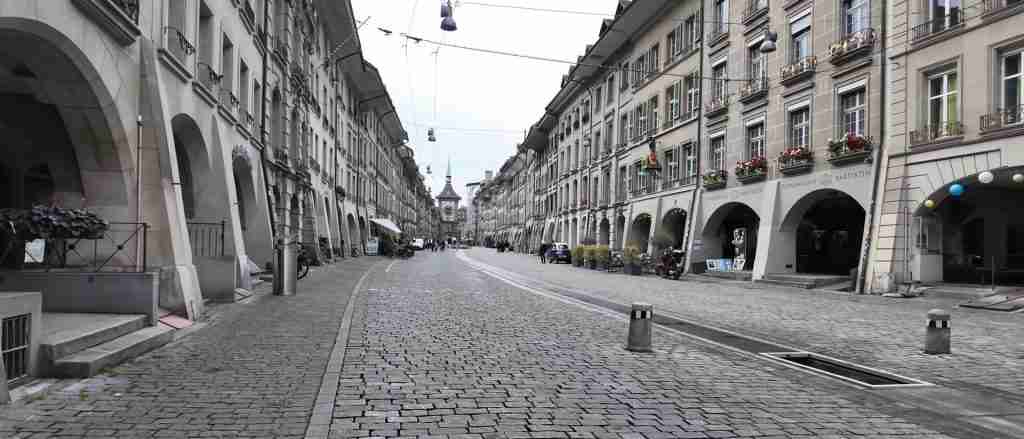
From Heiliggeistkirche, turn into Spitalgasse initiating Bern’s signature 6-kilometer continuous arcade shopping street extending eastward through the Old Town peninsula. These covered walkways built during medieval expansion protect pedestrians and merchants from rain and snow while creating distinctive architectural character, with ground floor retail spaces occupying former merchant workshops beneath residential upper floors following traditional European mixed-use urban pattern. Spitalgasse transitions into Marktgasse after approximately 200 meters, both streets featuring fountains, outdoor café seating during warm months, and diverse retail including Swiss watch boutiques, chocolate shops, international fashion chains, and local specialty stores offering Bernese handicrafts and souvenirs.
Käfigturm tower appears mid-street along the Marktgasse section, originally constructed 1256-1344 as western city gate before Bern’s 1344 expansion rendered it internal monument. The tower now hosts temporary exhibitions and serves as exhibition venue for political debate forum operated by Swiss federal government, with irregular opening hours dependent on current exhibition programming. Beyond pure architectural merit, Käfigturm represents Bern’s medieval expansion phases when successive city walls pushed westward and eastward along the peninsula, visible through tower placement now situated blocks inside the Old Town rather than at defensive perimeter position as originally intended.
Continuing eastward along Marktgasse brings walkers to Zytglogge clock tower, Bern’s most photographed landmark originally built 1218-1220 as western city gate, converted to clock tower in 1530, and restored multiple times including recent conservation ensuring mechanism reliability. The astronomical clock displays time, day, month, zodiac sign, and moon phase through intricate dials, while mechanical figurines perform 4-minute show beginning 4 minutes before each hour including knight figures, jester, rooster, and procession of bears. Interior tower tours priced CHF 20 ($21) per adult operate select days with limited capacity requiring advance reservation, ascending narrow spiral stairs to mechanism room where guides explain clockwork operation and historical context while panoramic windows provide elevated Old Town views across red-tiled rooftops.
Immediately past Zytglogge, Marktgasse becomes Kramgasse, the Old Town’s most historically significant street featuring Einstein House at Kramgasse 49 where physicist Albert Einstein resided 1903-1905 while developing special relativity theory during employment at Swiss patent office. The restored second and third floor apartment operates as museum priced CHF 5 ($5) adult admission displaying period furnishings recreating Einstein’s domestic environment alongside photographs and information panels examining his scientific work and personal life during the transformative Bern residence period. Museum hours operate Tuesday-Friday 10 AM-5 PM, Saturday 10 AM-4 PM, closed Sunday-Monday, with modest size requiring approximately 30-45 minutes for thorough visit making it suitable brief stop rather than major time commitment.
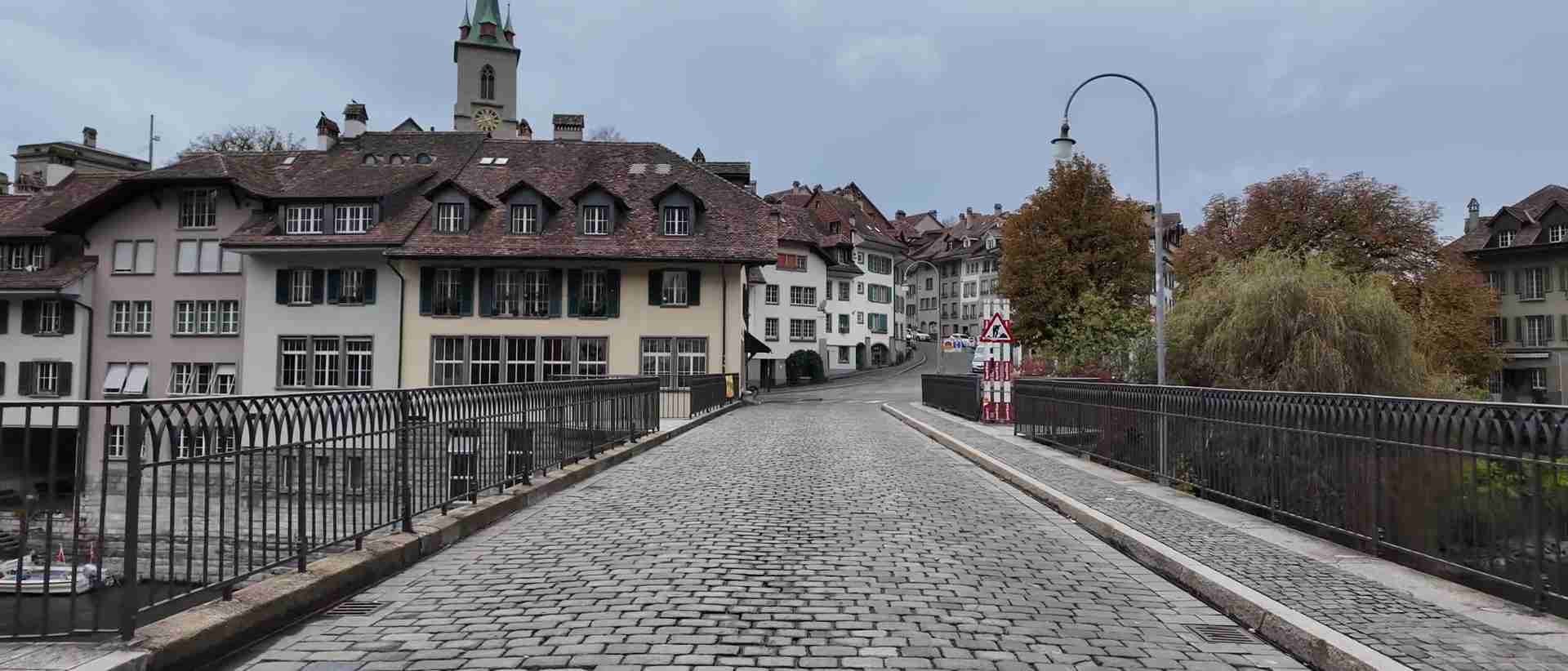
Kramgasse terminates at Nydeggbrücke bridge spanning the Aare River with panoramic views upstream and downstream along the turquoise glacial water characterizing Swiss alpine rivers. Cross the bridge and immediately turn right descending to Bear Park (BärenPark), the 6,000 square meter hillside park housing brown bears Finn, Björk, and Ursina in naturalistic environment replacing the cramped medieval bear pit formerly occupying adjacent site. Bear Park admission remains free year-round with barrier-free access via panorama funicular lift operating continuously during daylight hours, while viewing platforms, information panels, and walking paths allow observation of bears foraging, swimming in Aare-fed pools, and climbing across terraced landscapes designed simulating natural habitat. The adjacent Altes Tramdepot restaurant offers outdoor terrace seating overlooking both Bear Park and Old Town panorama, serving traditional Swiss cuisine and house-brewed beers at moderate pricing suitable for lunch or refreshment stop.
From Bear Park, signposted pathways lead uphill toward Rosengarten, Bern’s premier panoramic viewpoint located on former cemetery grounds now containing over 250 rose varieties blooming mid-May through September alongside rhododendrons, azaleas, and specimen trees. The 10-15 minute uphill walk from riverside to garden entrance follows moderately steep grades rewarded by sweeping 180-degree vistas across Old Town’s UNESCO World Heritage architecture, Aare River loop, Federal Palace green dome, and distant Bernese Alps forming dramatic backdrop on clear weather days. Rosengarten restaurant operates lunch and dinner service on terrace with arguably Bern’s finest view pairing, while adjacent playground and lawn areas attract local families making this authentic residential neighborhood amenity beyond tourist-exclusive destination. Bus route 10 serves Rosengarten stop for those preferring to avoid uphill climb, running every 7-12 minutes connecting to Bahnhofplatz train station.
Return to Old Town via same downhill path or alternative route through residential Schlosshalde neighborhood, crossing back over Nydeggbrücke bridge and continuing west along Kramgasse retracing earlier path. At Kramgasse intersection with Rathausgasse, turn right to visit Bern City Hall (Rathaus), the late Gothic building constructed 1406-1416 serving as cantonal government meeting location and city administration center. The building interior generally remains closed to casual visitors except during occasional open house events or guided tour programs, though exterior architecture featuring ornate portal, heraldic shields, and corner turret represents fine example of late medieval civic architecture worth brief examination during Old Town circuit.
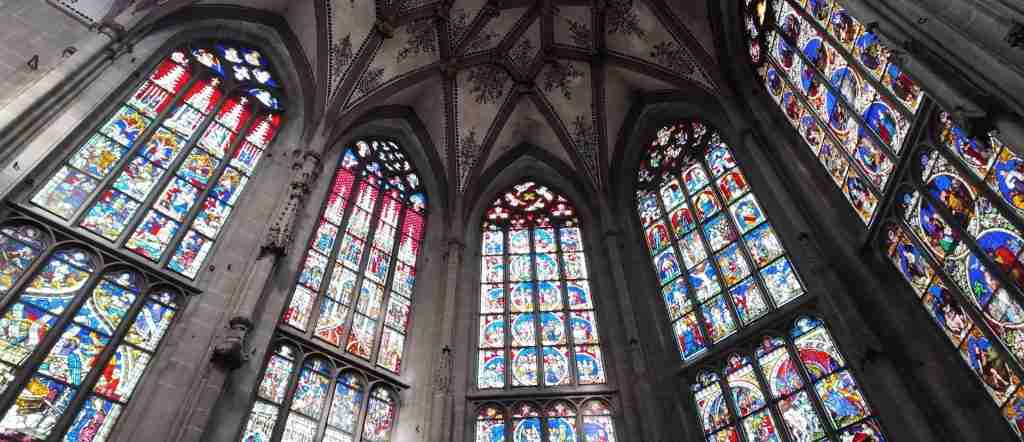
Continue west from Rathaus returning to Kramgasse main axis and proceeding to Münster cathedral, Switzerland’s tallest church tower reaching 100 meters skyline dominance visible across Bern and surrounding countryside. The late Gothic cathedral constructed 1421-1893 (centuries-long building campaign typical of major European cathedrals) features spectacular stained glass windows, elaborately carved portal depicting Last Judgment with over 200 figures, and organ with 5,404 pipes installed 1999. Cathedral interior admission remains free with suggested donation, while tower climb costs CHF 5 ($5) ascending 254 steps through narrow spiral staircase to observation platform at 64 meters offering superior vantage over Rosengarten panorama due to greater elevation and central Old Town position, though claustrophobic passages and continuous traffic in both directions on single staircase challenges visitors with mobility limitations or discomfort in confined spaces.
Behind Münster cathedral, Münsterplattform terrace provides riverside overlook above vertical cliff face dropping to Aare River flowing 40 meters below. This grassy terrace popular with picnickers during warm weather features chess tables, mature trees providing shade, and unobstructed views upstream toward Kirchenfeldbrücke bridge and Gurten mountain, while steps descend through terraced gardens to Matte neighborhood at river level where artisan workshops and cafés occupy former working-class district along water’s edge. Münsterplattform represents quieter escape from commercial Old Town bustle while remaining steps from major monuments, suitable for rest stop, meal break, or photography session capturing river context often invisible from arcade-enclosed street level perspectives.
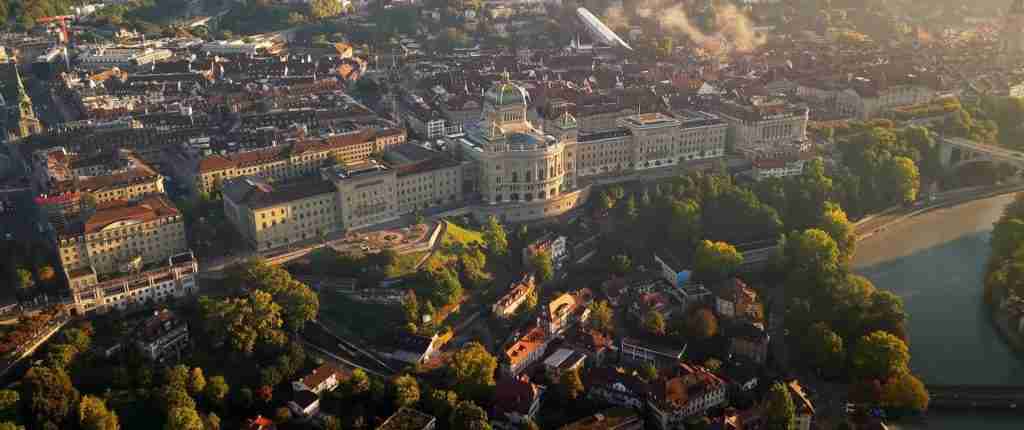
From Münsterplattform, walk west along Münstergasse toward Bundesplatz square, the political heart of Switzerland where twin-towered Federal Palace houses Swiss parliament, Federal Council meeting chambers, and federal administration offices. The palace exterior in French Renaissance revival style features allegorical sculptures, cantonal coats of arms, and distinctive green copper dome, while interior chambers accessible through free guided tours (advance reservation required) display elaborate wood paneling, painted ceilings, and stained glass representing cantonal symbols throughout Swiss confederation. Bundesplatz square fronts the palace with Wednesday and Saturday morning markets selling produce, flowers, cheese, and artisan products, transforming political epicenter into lively marketplace twice weekly. Behind Federal Palace, Bundesterrasse terrace parallels building length offering riverside overlook with benches, viewing platform, and direct sightlines to Gurten mountain, Marzili swimming area, and Aare River landscape defining Bern’s natural setting.
Complete the circuit by continuing west along Amthausgasse returning to Bahnhofplatz origin point, total walking distance approximately 3.5 kilometers requiring 2-2.5 hours at leisurely pace including brief monument stops, fountain examinations, and shopping arcade browsing. This route encompasses primary UNESCO World Heritage elements while maintaining relatively level terrain except Rosengarten ascent, suitable for general fitness levels and adaptable through shortcut options bypassing Bear Park or Rosengarten segments to condense total time commitment for travelers with limited schedules or reduced mobility constraints.
Aare River Walking Paths 2026: Green Routes and Swimming Culture
The Green Aare Walk represents Bern’s signature riverside recreational route stretching 5 kilometers from Botanical Garden through Bear Park, Matte district, Marzili swimming area, Schwellenmätteli restaurant terrace, and Dählhölzli zoo to Elfenau park following mostly level paved and gravel paths suitable for walking, jogging, cycling, and stroller navigation. The route begins at Botanical Garden entrance on Altenbergrain, a hillside 5,500-species collection containing tropical greenhouse, alpine rock garden, medicinal plant section, and riparian vegetation zones descending toward Aare riverbank. Garden admission remains free year-round with opening hours 8 AM-5:30 PM (extended to 7 PM during summer months), making it suitable morning departure point for riverside walk combining botanical interest with riverside nature appreciation.
From Botanical Garden, follow signposted Aare path eastward descending to river level and Bear Park lower access point where panorama funicular (BäreBähnli) operates free continuous service connecting upper viewing platforms to riverside elevation, eliminating stair climbing for visitors with strollers, wheelchairs, or mobility limitations. The riverside path beneath Bear Park follows cliff base with native forest canopy overhead and Aare current flowing several meters below designated pathway, creating microclimate several degrees cooler than exposed Old Town streets during summer heat while maintaining pleasant shaded walking environment year-round. Brown bears occasionally visible in riverside section of enclosure when accessing swimming pool fed by Aare water, though sightings depend on bear activity patterns and cannot be guaranteed during any particular walk timing.
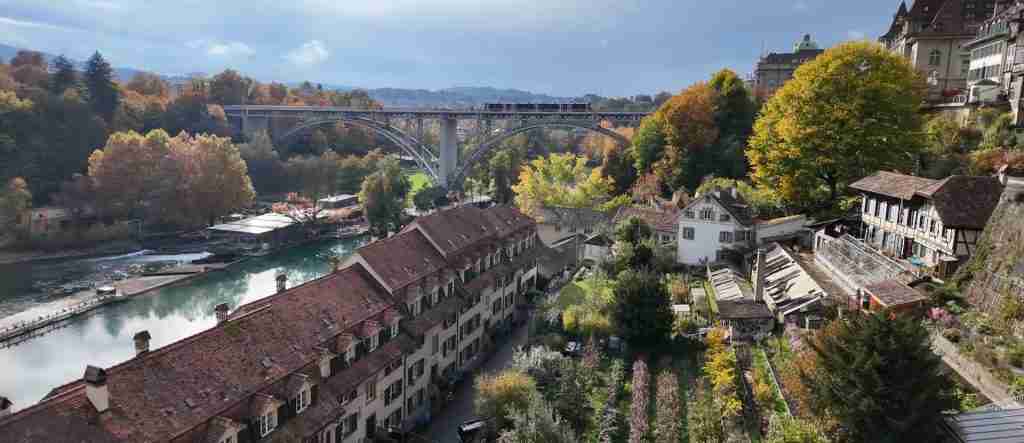
Continue downstream past Bear Park entering Matte neighborhood, Bern’s historic artisan quarter occupying river level beneath Old Town cliff face where craftsmen established workshops utilizing water power from Aare current during medieval and early modern periods. Contemporary Matte retains authentic working-class character through narrow lanes, modest buildings, and local businesses including cafés, galleries, and craft studios popular with Bernese residents while remaining relatively undiscovered by mainstream tourism. Mattebrücke footbridge crosses Aare providing alternative return route to Old Town center, while continuing riverside path leads to Untertorbrücke bridge and Marzili swimming complex.
Marzili represents Bern’s largest public swimming facility operating free admission year-round with outdoor pools, extensive lawn areas, and direct Aare River access points where experienced swimmers enter swift current for downstream float to designated exit locations 500-1000 meters downriver. Summer months June-August bring heavy local usage as Bernese residents treat Aare swimming as daily ritual commuting from work in swimwear, entering river at Marzili, Eichholz, or other upstream points, and allowing 8-12 kilometer per hour current to transport them downstream to Marzili exit point where stairs and ropes facilitate climbing from water against powerful flow. Visitors should exercise extreme caution if attempting Aare swimming, as cold alpine water temperature (15-20°C/59-68°F even in summer), strong current velocity, and underwater obstacles including bridge pilings create genuine drowning hazard for inexperienced or non-confident swimmers despite the practice’s popularity among skilled locals intimately familiar with river conditions and safe entry-exit protocols.
Beyond Marzili, the riverside path continues past Schwellenmätteli restaurant, a terrace dining venue built above Aare rapids offering lunch and dinner service with riverside views of Old Town cliff face and baroque terraced gardens visible across river. This midpoint location suits lunch stop for walkers departing morning from Botanical Garden, with menu featuring Swiss specialties, international options, and outdoor seating during favorable weather taking advantage of prime riverside setting popular with both tourists and local residents seeking scenic dining atmosphere. Restaurant hours operate 11 AM-11 PM daily during April-October season with reduced winter schedule and periodic closures during off-peak months.
Crossing Schönausteg footbridge over Aare brings walkers to south bank and Dählhölzli zoo, Bern’s municipal zoological garden specializing in European, Asian, and American species with particular emphasis on endangered wildlife conservation breeding programs. Zoo admission costs CHF 21 ($22) adults, CHF 10 ($10) children ages 6-16, with facility operating year-round 8 AM-6:30 PM summer, 8 AM-5 PM winter. The riverside path continues through zoo grounds allowing free passage for walkers not entering paid exhibition areas, passing outdoor enclosures visible from pathway including ibex mountain goats, wild boar, European brown bears distinct from Bear Park population, and waterfowl along Aare-fed ponds. Zoo restaurant operates adjacent to main entrance providing refreshment options with outdoor seating overlooking animal enclosures and river landscape.
The final riverside walk segment extends from Dählhölzli to Elfenau park, protected floodplain landscape featuring meadows, reed beds, mature tree stands, and small ponds representing rare remaining natural wetland habitat within urban environment. Elfenau’s 18th-century English landscape garden design incorporates naturalistic planting schemes, winding paths, and views balancing cultivated and wild elements across 30 hectares, with Federal Palace yellow mansion at park center housing cultural exhibitions and events during summer months. Park benches positioned throughout grounds provide rest stops for walkers completing 5-kilometer riverside circuit from Botanical Garden, with bus route 19 serving Elfenau stop enabling return to city center via 15-minute ride to Bahnhofplatz rather than retracing full walking path.
Alternative Aare circuits begin at different points creating customized distance options: Bear Park to Marzili represents 1.5-kilometer riverside walk requiring 20-30 minutes suitable for brief escape from Old Town sightseeing, while Rosengarten to Elfenau via riverside path extends 7 kilometers requiring 2-3 hours combining hilltop panoramas with riverside nature appreciation. Summer weekends and sunny days bring heavy local usage with joggers, cyclists, families, and swimmers sharing paths requiring awareness and courtesy, while winter months provide quieter contemplative walking environment though reduced daylight hours limit afternoon walk timing during December-January period when sunset occurs before 5 PM.
Bear Park and Rosengarten Route 2026: Icons and Views
A focused 2-3 hour walking loop combining Bern’s two most distinctive attractions begins at Nydeggbrücke bridge crossing Aare River where panoramic views upstream and downstream establish dramatic river geography context rarely appreciated from Old Town street level perspectives. The bridge itself, rebuilt 1840-1844 in Classical style after medieval predecessor collapse, features ornate stone balustrades, lampposts, and elevated walkway providing unobstructed 360-degree vistas encompassing red-tiled Old Town rooftops to west, Bear Park terraces descending east toward river, and Rosengarten hilltop rose garden visible north across Aare loop creating Bern’s signature peninsula geography.
Descend east from bridge to Bear Park main entrance where information panels explain bear significance to Bern’s city identity, heraldic symbolism, and historical tradition maintaining bears in captivity since 1513 originally in cramped medieval pit replaced by current 6,000 square meter hillside park in 2009. The contemporary facility allows brown bears Finn, Björk, and Ursina to exhibit natural behaviors including foraging, climbing, swimming, and denning in caves invisible to visitors through infrared cameras enabling 24/7 observation via screens and webcams accessible online. Bear activity peaks morning hours after feeding and late afternoon before evening rest period, though sightings remain unpredictable depending on weather, season, and individual bear preferences, making patience and return visits necessary strategies for visitors seeking optimal bear observation rather than brief glimpse.
Multiple viewing levels connected by stairs, ramps, and barrier-free funicular enable varied perspectives on bear enclosure from elevated platforms overlooking entire facility down to riverside level where swimming pool and feeding areas concentrate activity during warmer months when bears spend extended time in water escaping summer heat. Information panels positioned throughout facility provide bear biology education, Swiss conservation efforts, and Bern historical tradition connecting city identity to bear symbolism spanning 500 years of captive bear maintenance through evolving animal welfare standards. Free admission makes Bear Park accessible to all visitor budgets while eliminating time pressure to justify entry cost, allowing prolonged observation periods waiting for bear activity rather than rushed viewing typical of paid attractions where perceived value demands seeing everything quickly.
Altes Tramdepot brewery restaurant occupies former tram depot building at upper Bear Park level, converted to microbrewery producing house beer varieties and restaurant serving traditional Swiss cuisine alongside German-influenced dishes including bratwurst, schnitzel, and spätzle. The restaurant terrace provides dual perspective overlooking Bear Park enclosure to one side and Old Town UNESCO World Heritage architecture across river to other, creating arguably Bern’s most distinctive dining setting combining urban heritage vista with wildlife viewing. Menu pricing operates at moderate levels (main courses CHF 22-38 / $23-39) reflecting prime location without excessive tourist markup, attracting both visitors and local residents seeking quality casual dining with superior views. Operating hours run 11 AM-12:30 AM daily year-round with outdoor terrace service weather permitting, while indoor seating maintains comfortable environment during cool or rainy conditions common throughout shoulder seasons.
From Bear Park upper level, signposted pathways lead uphill toward Rosengarten following moderately steep residential streets through Schönburg neighborhood, alternatively accessible via more gradual grade paths adding 5-10 minutes walking time. The 10-15 minute ascent from riverside to garden entrance rises approximately 40 meters elevation, rewarding cardiovascular effort with Switzerland’s most photographed urban panorama encompassing complete Old Town peninsula, Aare River loop, Federal Palace green dome, Münster cathedral tower, and Bernese Alps backdrop visible 60 kilometers south on clear weather days. Bench seating throughout Rosengarten allows extended contemplation of view while resting from uphill climb, while ornamental rose plantings in 250+ varieties bloom mid-May through September with peak display June-July coinciding with European summer travel season.
Rosengarten restaurant operates lunch and dinner service on terrace maximizing panorama exposure, with menu featuring Swiss traditional dishes, seasonal specialties, and afternoon coffee-and-cake service popular with local residents treating garden as neighborhood amenity rather than tourist destination exclusively. Restaurant pricing reflects prime viewpoint position (main courses CHF 28-48 / $29-50, afternoon cake and coffee CHF 12-18 / $12-19) while maintaining accessible levels relative to expensive Old Town establishments, though reservations recommended during summer weekends when terrace seating fills early with both tourists and Bernese families celebrating special occasions. Adjacent playground and open lawn areas attract families with young children, creating lively atmosphere distinct from contemplative rose garden ambiance during spring-summer-fall seasons when weather permits outdoor activity.
The historical context of Rosengarten as former cemetery serving lower Old Town from 1765-1877 remains visible through weathered gravestones relocated to garden periphery, providing unexpected memento mori contrast to celebratory rose displays and romantic viewing panorama. This layered history represents characteristic Bernese approach to urban space where practical function, aesthetic beauty, historical preservation, and contemporary recreation coexist through adaptive reuse rather than segregated single-purpose designation, creating richer experiential environment than purely designed tourist viewpoint could achieve. Interpretive panels positioned throughout garden explain cemetery history, rose variety cultivation, and park landscape design evolution from burial ground through public garden transformation spanning 140 years.
Return to Old Town center via downhill walk through Schönburg neighborhood streets descending directly to Münster cathedral and Münsterplattform terrace, creating circuit loop eliminating backtracking while providing different perspective on residential architecture and neighborhood character beyond main tourist thoroughfares. Total circuit distance spans approximately 4 kilometers with 60-90 minutes walking time excluding Bear Park observation periods and Rosengarten contemplation stops, suitable for moderate fitness levels comfortable with uphill sections totaling 50-60 meters cumulative elevation gain. Bus route 10 serves both Bear Park (Bärengraben stop) and Rosengarten (Rosengarten stop) for visitors preferring to minimize uphill walking or create one-way walk descending from Rosengarten to Bear Park to Old Town following natural downhill grade.
Specialty Tours 2026: Chocolate, Einstein, and UNESCO
Chocolate walking tours combine Bern Old Town historic architecture with Swiss chocolate culture through structured 2-2.5 hour itineraries visiting 3-4 artisan chocolate shops and cafés for guided tastings accompanied by expert commentary on Swiss chocolate industry history, production techniques, and quality standards distinguishing premium Swiss chocolate from mass-market international brands. Tour operators including Bern Welcome and private guides price these experiences CHF 100-145 ($104-150) per person with chocolate samples included in cost, targeting food enthusiasts, couples seeking romantic activity, and families with teenagers interested in interactive sensory elements beyond passive monument viewing. Routes typically begin at Zytglogge or Bundesplatz, proceed through Old Town arcades stopping at established chocolate boutiques including local favorites unknown to independent tourists, and conclude at specialty shop offering retail purchases at participant discount reflecting tour operator business relationships.
Sample itineraries include visits to Läderach chocolate shop for praline tasting, traditional café for drinking chocolate demonstration explaining proper preparation and serving customs, artisan boutique for single-origin chocolate comparison illustrating terroir influence on flavor profiles, and historic confectionery discussing Bernese chocolate traditions spanning centuries. Guides typically possess culinary backgrounds, professional chocolate tasting credentials, or extensive personal knowledge developed through years of specialized tour leadership, enabling sophisticated discussion of chocolate chemistry, Swiss manufacturing history, and contemporary craft chocolate movement beyond superficial tourist information. Small group limits of 8-12 participants maintain intimacy enabling conversation and questions while practical constraints prevent excessive group size that would overwhelm small chocolate shop capacities.
Einstein-focused tours examine physicist Albert Einstein’s 1903-1905 Bern residence when developing special relativity theory while employed at Swiss patent office, visiting the restored apartment at Kramgasse 49 operating as Einstein House museum, the patent office building where Einstein worked (exterior only as building houses active federal offices), University of Bern where Einstein lectured, cafés frequented during leisure time, and discussing the intellectual environment and personal relationships influencing his revolutionary physics concepts during this transformative period. These specialized 2-hour tours priced CHF 110-160 ($114-166) per person including Einstein House museum admission attract science enthusiasts, academic groups, and visitors with particular interest in Einstein biography beyond casual tourist awareness, with guides often possessing physics, mathematics, or history of science backgrounds enabling detailed yet accessible explanation of relativity concepts and Bern’s role in Einstein’s intellectual development.
Tour content examines both personal and professional dimensions of Einstein’s Bern years including his marriage to Mileva Marić, birth of two sons, social circle within Bern scientific community, and the famous 1905 “miracle year” when Einstein published four groundbreaking papers including special relativity and photoelectric effect work that earned his eventual Nobel Prize. Guides address common misconceptions about Einstein’s patent office work, explain how Bern’s provincial character paradoxically enabled focused concentration away from established physics research centers like Berlin or Vienna, and connect specific Bern locations including Kramgasse apartment, Aarbergergasse patent office, and cafés along Bundesgasse to documented Einstein activities and routines. The tours avoid excessive mathematical complexity while maintaining scientific rigor appropriate for educated general audiences, balancing biographical narrative with sufficient physics content to illustrate Einstein’s revolutionary contributions during this productive Swiss residence period.
UNESCO architecture tours focus specifically on Bern’s World Heritage designation awarded 1983 recognizing the exceptionally preserved medieval town planning, coherent architectural ensemble, and distinctive fountain tradition spanning six centuries without major destructive interventions. These 2-hour specialized tours priced CHF 95-135 ($98-140) per person appeal to architecture students, urban planning professionals, heritage conservation enthusiasts, and travelers with particular interest in medieval city development beyond casual sightseeing. Guide profiles typically emphasize art history, architecture, or urban planning credentials enabling sophisticated discussion of Bernese sandstone building techniques, arcade construction principles, fountain iconography programs, and municipal planning regulations maintaining architectural coherence across centuries of organic growth and deliberate expansion phases.
Tour itineraries examine multiple elements contributing to UNESCO recognition including the 6-kilometer continuous arcade system protecting commercial and residential functions, 11 Renaissance fountains commissioned 1542-1549 featuring allegorical figures and civic symbols, sandstone building material creating visual unity across diverse architectural styles, and systematic street grid expansion visible through successive tower positions marking medieval defensive walls later rendered obsolete by urban growth. Guides interpret fountain symbolism explaining Justice Fountain’s blindfolded allegory, Zähringer Fountain’s founder commemoration, and Child Eater Fountain’s controversial cannibal depiction subject to multiple contested interpretations spanning centuries. Discussion addresses practical urban planning innovations including fire prevention regulations mandated after 1405 citywide conflagration, building height restrictions maintaining human scale, and arcade construction standards ensuring weather protection consistency across privately owned properties serving public pedestrian function.
Photography tours cater to amateur and enthusiast photographers seeking optimal vantage points, lighting conditions, and compositional guidance for capturing Bern’s architectural and natural beauty through 2.5-3 hour structured itineraries led by professional photographer guides. These specialized experiences priced CHF 140-200 ($145-207) per person accommodate small groups maximum 6 participants enabling individualized instruction while maintaining efficient group movement between locations, departing early morning or late afternoon to capitalize on directional light enhancing architectural details and minimizing harsh midday contrast. Routes incorporate classic viewpoints including Rosengarten panorama, Münsterplattform river overlook, Nydeggbrücke bridge perspectives, and lesser-known locations known primarily to local photographers including specific arcade angles, fountain compositions, and Aare riverbank vantages.
Guide expertise covers technical camera settings appropriate to challenging lighting conditions including shaded arcades, backlit riverside scenes, and high-contrast architectural details, compositional strategies for incorporating human elements without snapshot tourist aesthetic, and post-processing workflows transforming raw captures into finished images reflecting Bern’s atmospheric character. Tours typically operate April-October when weather reliability and extended daylight hours support outdoor photography activity, with winter departures limited to clear weather forecasts given reduced light quality and tourist season contraction affecting group tour commercial viability. Participants should possess basic camera operation competency and own DSLR, mirrorless, or advanced compact camera with manual controls, as smartphone photography focus differs substantially requiring separate instructional approach incompatible with interchangeable lens camera instruction.
Day Trips from Bern 2026: Jungfraujoch and Bernese Oberland
Jungfraujoch represents Switzerland’s premier alpine excursion accessible from Bern through 90-minute public transportation connection via Interlaken Ost station, reaching 3,454 meters elevation at Europe’s highest railway station positioned between Jungfrau and Mönch peaks with panoramic viewing terraces overlooking Aletsch Glacier, the Alps’ longest ice river extending 23 kilometers southward. Independent travelers departing Bern Hauptbahnhof take hourly direct trains to Interlaken Ost (journey time 55 minutes, CHF 26 / $27 one-way second class), then transfer to Bernese Oberland Railway for Grindelwald Terminal (15 minutes, CHF 12 / $12), followed by Eiger Express gondola to Eigergletscher station (15 minutes), and final Jungfrau Railway cogwheel train ascent to summit station (35 minutes). Total one-way journey requires approximately 2 hours door-to-door with seamless connections operating half-hourly during peak season, return tickets costing CHF 230 ($238) from Interlaken Ost plus mandatory CHF 10 ($10) seat reservations required May 1-October 31, 2026 ensuring guaranteed capacity during peak tourist season when walk-up availability risks sold-out conditions.
Guided Jungfraujoch day tours from Bern eliminate independent navigation complexity while adding expert commentary explaining alpine geology, railway engineering history, and regional cultural significance throughout journey, priced CHF 280-350 ($290-363) including comfortable coach transportation from central Bern hotels, multilingual guide services, coordination of mountain railway transfers, and guaranteed seating during peak periods when individual travelers face potential capacity constraints. Tours typically depart 7:30-8:00 AM returning 6:00-7:00 PM, allowing approximately 2 hours summit time for Sphinx observation terrace panoramas, Ice Palace glacier grotto exploration, Alpine Sensation historical exhibition, and Snow Fun Park activities weather permitting. The CHF 50-120 ($52-124) premium over independent travel costs purchases logistical convenience, group camaraderie for solo travelers, and guide expertise providing contextual information unavailable through self-directed visits, though independent travelers gain schedule flexibility, extended summit time for unhurried exploration, and ability to create customized itineraries incorporating Grindelwald village stops or alternative descent routes.
Weather significantly impacts Jungfraujoch experience quality, as summit fog, clouds, or precipitation obscure the spectacular mountain and glacier panoramas motivating the expensive journey while creating potentially disappointing experience when visibility drops below 50-100 meters during adverse conditions. Prudent visitors monitor weather forecasts during Bern stay, maintaining scheduling flexibility to attempt Jungfraujoch on clearest predicted day rather than rigid advance commitment risking cloud-obscured disappointment. The summit microclimate differs dramatically from Bern valley conditions 2,900 meters lower elevation, with temperatures typically 15-20°C (27-36°F) colder requiring warm jacket, gloves, and sturdy footwear even during summer months when Bern enjoys 25°C (77°F) warmth. Summit facilities include multiple restaurants from self-service cafeteria to sit-down dining, though pricing reflects extreme elevation logistics (lunch entrees CHF 22-35 / $23-36) making packed lunch economical alternative for budget-conscious travelers.
Interlaken serves as alternative Bern day trip destination requiring 55-minute direct train connection from Bern Hauptbahnhof (CHF 26 / $27 one-way) accessing the resort town positioned between Lake Thun and Lake Brienz beneath the Jungfrau region mountain amphitheater. While Interlaken itself functions primarily as transportation hub rather than destination containing significant attractions beyond the Höheweg promenade connecting twin lakes and paragliding landing area, the town enables easy access to surrounding Bernese Oberland highlights including Harder Kulm viewpoint accessed via funicular (CHF 34 / $35 return), St. Beatus Caves geological formations (CHF 25 / $26 admission), and boat cruises on Lake Thun or Lake Brienz (CHF 32-68 / $33-70 depending on route length). Day trip visitors typically combine 2-3 activities creating customized itinerary balanced between mountain viewpoints, water activities, and village exploration rather than attempting comprehensive coverage impossible within single-day timeframe.
Grindelwald and Lauterbrunnen valleys represent classic Bernese Oberland destinations accessible from Bern via Interlaken transfer, offering dramatic alpine scenery, hiking trails, cable car excursions, and traditional Swiss village atmosphere within 2-hour public transportation reach. Grindelwald First aerial cable car and cliff walk create adventure tourism draw with suspended walkways, zip lines, and mountain cart activities priced CHF 80-120 ($83-124) for combined cable car and activity packages, while Lauterbrunnen’s 72 waterfalls including 300-meter Staubbach Falls provide natural spectacle visible from village streets without admission fees. Independent day trips allow flexible exploration customized to individual interests and fitness levels, while guided tours priced CHF 180-250 ($187-259) from Bern provide transportation, guide commentary, and structured itineraries visiting multiple locations during single day eliminates independent planning coordination.
Lucerne represents non-alpine day trip alternative from Bern accessible via 75-minute direct train (CHF 30 / $31 one-way) offering preserved medieval old town, Chapel Bridge covered wooden structure spanning Reuss River, Lion Monument carved cliff memorial, and Lake Lucerne steamer cruises creating comprehensive destination suitable for full-day exploration without mountain railway logistics. The city’s compact walkable center surrounding lake shores enables efficient sightseeing covering major landmarks within 4-5 hours, while optional Mount Pilatus or Mount Rigi cable car excursions extend itinerary to full day encompassing both urban cultural attractions and alpine viewpoint perspectives. Lucerne’s accessibility makes it suitable rainy-day alternative to weather-dependent mountain excursions, as indoor attractions including Swiss Transport Museum, Rosengart Collection modern art museum, and covered bridge sightseeing remain viable regardless of conditions eliminating the wasted-day risk inherent in cloud-obscured Jungfraujoch visits.
Private vs Group Tours 2026: Choosing the Right Option
Group tour economics favor budget-conscious travelers willing to accept fixed schedules, larger participant numbers, and standardized itineraries in exchange for significantly reduced per-person costs compared to private alternatives. Standard 2-hour Old Town walking tours priced CHF 80-120 ($83-124) per adult accommodate groups of 12-20 participants, creating per-person costs roughly one-quarter to one-fifth of equivalent private tour fees while maintaining professional guide quality, comprehensive landmark coverage, and multilingual commentary options. Group dynamics introduce both benefits and limitations: participants gain social interaction opportunities, hear questions and perspectives from fellow travelers enriching discussion, and benefit from guide’s practiced delivery refined through hundreds of identical tours, while sacrificing schedule flexibility, personalized pacing accommodating individual interests or energy levels, and intimate guide access enabling detailed conversations or spontaneous route modifications.
Private tour pricing operates on per-group basis rather than per-person calculation, with half-day 3-4 hour experiences costing CHF 300-450 ($311-467) for groups up to 6-8 participants, full-day comprehensive tours reaching CHF 600-850 ($622-881) depending on included elements like transportation, admission fees, and meal arrangements. This pricing structure means private tours become increasingly cost-effective as group size approaches maximum capacity: a family of four paying CHF 400 total for private half-day tour spends CHF 100 per person, only slightly above standard group tour rates while gaining complete schedule control, customized content, and family-exclusive guide attention. Solo travelers or couples face steep per-person costs making private tours luxury splurge rather than practical choice, though some operators offer reduced pricing for single or two-person bookings (CHF 250-350 / $259-363 for couples) recognizing market reality that full eight-person pricing proves prohibitive for most small parties.
Private tour advantages extend beyond mere scheduling flexibility to include substantive content customization addressing specific interests impossible in standardized group format. Architecture enthusiasts can request extended time examining building facades, construction techniques, and historical restoration projects bypassing general tourist attractions, while photography-focused tours prioritize optimal vantage points and lighting conditions over comprehensive landmark coverage. Families with young children benefit from flexible pacing allowing restroom breaks, playground stops, and snack pauses without group schedule constraints, while guide content adapts to children’s age and attention span using storytelling, interactive elements, and simplified historical explanations replacing dense factual narration appropriate for adult audiences. Senior travelers or visitors with mobility limitations customize routes avoiding excessive stairs, steep grades, or extended walking distances while maintaining satisfying experience through alternative monuments, transportation supplements, and strategic rest breaks impossible within rigid group tour structure.
Language considerations influence tour selection, as group tours typically operate in English, German, or bilingual format serving international participants, while private tours accommodate specific language requests including French, Italian, Spanish, Portuguese, or even less common languages through guide networks maintained by larger tour operators. Non-English speakers particularly benefit from private format enabling complete native-language commentary without mixed-language group compromises where guide divides attention between linguistic sub-groups or defaults to English as lowest-common-denominator. Language barriers also affect question comfort, as participants hesitant speaking English publicly in group settings gain confidence through private format’s judgment-free environment encouraging active engagement rather than passive listening.
Timing flexibility represents critical private tour advantage, as group departures operate fixed morning or afternoon schedules conflicting with other commitments including hotel check-out times, restaurant reservations, or connecting transportation departures. Private bookings accommodate 8 AM early starts capturing empty Old Town ambiance and optimal morning light before tourist crowds arrive, late afternoon departures maximizing mid-day museum visits or shopping before evening walking tour, or split schedules pairing morning walking with afternoon rest break before resuming exploration during cooler evening hours. This temporal control proves particularly valuable during summer heat when midday temperatures exceed comfort levels for extended outdoor activity, enabling siesta-style breaks impossible within non-stop group tour pacing.
Children’s interest and behavior patterns strongly favor private tour format for families, as young participants’ unpredictable attention spans, energy fluctuations, and entertainment requirements challenge group tour discipline expectations. Private guides accustomed to family bookings carry backup engagement strategies including scavenger hunt elements, age-appropriate stories, and interactive games maintaining children’s participation throughout tour duration, while parents enjoy relaxed atmosphere free from concerns about disrupting other participants through normal childhood behaviors. Group tour policies typically set minimum age requirements (often 8-10 years) or recommend adult-only participation for complex historical content unsuitable for elementary-age comprehension, effectively excluding families with younger children from guided tour options unless booking private alternatives.
Money-Saving Strategies for Bern Tours 2026
Free walking tours represent the most accessible budget strategy, operating daily tip-based compensation model where participants pay voluntary gratuity at tour conclusion based on satisfaction and financial means rather than mandatory fixed fees. Tours departing from Rosengarten or Bahnhofplatz meeting points run 2-2.5 hours covering major Old Town landmarks including Zytglogge, Einstein House, Bear Park, and Federal Palace through knowledgeable local guides often younger residents or international staff sharing personal Bern experiences alongside historical facts. While tour quality varies based on individual guide expertise and group dynamics affecting intimacy and interaction levels, the no-commitment trial format enables budget travelers to sample professional guided content without upfront financial risk, with typical gratuities ranging CHF 10-20 ($10-21) per participant reflecting European tipping norms lower than American 15-20% percentage expectations.
Self-guided exploration using official Bern Tourism route maps available free from tourist information office or downloaded from bern.com website eliminates all tour costs while maintaining comprehensive landmark coverage through detailed turn-by-turn directions, monument descriptions, and historical context panels. Smartphone apps priced CHF 4-12 ($4-12) one-time purchase provide audio commentary, GPS navigation, and photo galleries enhancing self-directed tours beyond basic paper maps, representing fraction of guided tour costs (CHF 80-120 / $83-124) while offering unlimited usage and replay capability across multiple visits or extended stays. Quality guidebooks like Lonely Planet or Rick Steves cost CHF 25-40 ($26-41) providing superior contextual information, practical tips, and integrated planning resources beyond pure route navigation, serving as comprehensive reference throughout Switzerland trip rather than Bern-exclusive investment when itinerary includes multiple destinations.
Museum and attraction combination tickets reduce admission costs through bundled pricing, though Bern’s modest museum admission fees (CHF 5-21 / $5-22 individual museums) and concentration of free attractions including Bear Park, Federal Palace exterior, Old Town arcades, Rosengarten park, and riverside paths limit combination ticket savings relative to destinations with expensive museum portfolios. The Bernese Oberland Pass provides greater value for travelers combining Bern city sightseeing with regional mountain excursions, offering unlimited regional train travel, bus connections, and boat services throughout Interlaken-Grindelwald-Lauterbrunnen area for 3-10 consecutive days from CHF 255 ($264), plus 25% discount on Jungfraujoch tickets and 50% reduction on various mountain cable cars. Pass economics favor visitors planning four or more regional journeys within pass validity period, as individual ticket costs accumulate rapidly given Switzerland’s distance-based pricing structure charging premium rates for mountain railway segments.
Group booking discounts apply to private tours when participant numbers approach maximum capacity, as per-group pricing structure means eight-person parties pay identical CHF 400-600 ($414-622) total regardless whether representing single family, multiple couples, or assembled friend group. Solo travelers or couples can pursue cost-sharing arrangements through online travel forums, hostel bulletin boards, or tour operator matching services connecting independent travelers willing to split private tour costs, though coordination complexity and compatible interest requirements limit practical success rates for spontaneous partnerships. Some tour operators offer reduced solo or couple private tour pricing (CHF 250-350 / $259-363) recognizing that full eight-person rates prove prohibitive for small parties, while others maintain inflexible pricing forcing solo travelers toward group tour formats or self-guided alternatives.
Off-season travel during November-March period reduces accommodation, restaurant, and transportation costs throughout Switzerland while maintaining Bern attraction accessibility, as indoor museums, covered Old Town arcades, and winter-operational cable cars continue functioning unlike seasonal alpine hiking trails or outdoor swimming facilities closed during cold months. Shoulder season April-May and September-October particularly balance reduced pricing with favorable weather probabilities, avoiding both summer peak rates and winter precipitation frequency while offering comfortable walking temperatures, reduced tourist crowds at popular viewpoints, and greater tour availability without advance reservation requirements characterizing June-August high season when capacity constraints affect spontaneous booking options.
Public transportation day passes purchased through Bern public transport authority (Bernmobil) cost CHF 13 ($13) providing unlimited bus and tram usage within city zones, representing economic value for visitors making 3+ journeys daily between accommodation, attractions, and dining locations spread across residential neighborhoods beyond compact Old Town walkable core. The Swiss Museum Pass priced CHF 227 ($235) for one year enables unlimited free admission to 500+ Swiss museums including Bern’s Einstein House, Historical Museum, Art Museum, and Communication Museum, delivering value for culture-focused travelers visiting multiple museums across Switzerland during extended trips, though single-destination Bern visits with limited museum interest gain minimal benefit from pass investment given Bern’s modest individual museum fees.
Lunch specials and set menus offered by restaurants throughout Bern provide 30-40% savings relative to à la carte dinner ordering, with midday Tagesmenu or Mittagsmenu options priced CHF 18-28 ($19-29) including soup or salad plus main course representing excellent value for budget-conscious travelers willing to schedule primary meal during lunch hours. Supermarket self-catering using apartment accommodation kitchen facilities or picnic provisions consumed at Rosengarten, Münsterplattform, or riverside parks dramatically reduces food costs compared to restaurant reliance, with Coop and Migros supermarket chains offering extensive prepared food sections including sandwiches, salads, hot meals, and bakery items priced CHF 4-12 ($4-12) per serving versus restaurant lunch costs CHF 18-35 ($19-36).
Practical Planning Tips for Bern Tours 2026
Advance booking becomes essential for popular tours during peak summer months June-August when capacity fills days or weeks ahead, particularly for Zytglogge tower interior tours limited to small groups by narrow spiral staircase constraints and UNESCO Stroll public walking tours capping participation at 25 persons per departure. Online reservation through tour operator websites or Bern Tourism booking portal enables guaranteed participation at preferred dates and times versus walk-up availability risking sold-out disappointment, while email or telephone booking provides personal interaction for clarifying questions about tour content, physical requirements, or language options before committing payment. Shoulder season April-May and September-October maintain greater spontaneous booking flexibility as reduced visitor volumes create surplus capacity allowing same-day or next-day reservations for most standard tours except Zytglogge tower climbs consistently booking full regardless of season.
Physical fitness requirements merit honest self-assessment before selecting walking tours, as Bern’s hilly topography creates elevation changes totaling 60-100 meters on routes incorporating Rosengarten viewpoint or riverside paths ascending from Aare level to Old Town plateau. Standard 2-3 hour Old Town circuits maintain mostly level terrain within arcade-protected streets, suitable for average fitness levels and seniors with normal mobility, while extended routes reaching Bear Park, Rosengarten, or Aare riverside paths involve moderate uphill sections requiring confidence climbing 100-200 steps and tolerance for continuous walking without frequent rest breaks. Tour descriptions typically specify difficulty levels using scale systems (easy/moderate/challenging) or explicit fitness warnings, enabling informed selection matching individual capabilities rather than discovering mid-tour that physical demands exceed comfortable capacity creating stressful experience for both participants and accompanying group members.
Weather contingency planning proves essential given Switzerland’s variable mountain-influenced climate producing rapid condition changes including sudden rain showers, temperature drops, or wind increases affecting outdoor comfort during multi-hour walking tours. Layered clothing strategy combining breathable base layer, insulating mid-layer, and waterproof outer shell enables adaptation to changing conditions throughout day as morning cool yields to midday heat then evening chill, while packable rain jacket occupies minimal luggage space providing insurance against precipitation disrupting outdoor plans. Most walking tours operate rain-or-shine policies continuing regardless of weather, making waterproof footwear and umbrellas essential accessories rather than optional equipment, though extreme conditions including thunderstorms or heavy snow trigger cancellations with full refunds or rescheduling options protecting participant safety and experience quality.
Photography policies vary by tour type and monument access, with outdoor Old Town walking tours generally permitting unlimited personal photography while interior museum visits or specialized monument tours may restrict flash photography, tripod usage, or commercial-purpose image capture requiring special permissions. Private tours typically accommodate photography interests through flexible pacing allowing extended stops at photogenic locations, guide positioning advice for optimal composition, and willingness to revisit particularly attractive spots when lighting conditions improve, while group tours maintain schedule discipline prioritizing comprehensive coverage over photographic perfection. Serious photographers benefit from early morning private tours capturing empty streets and directional sunlight before tourist crowds and harsh midday light compromise image quality, though premium pricing reflects customized service catering to enthusiast requirements.
Children’s participation depends on age, temperament, and tour content complexity, with general Old Town walking tours suitable for ages 8-10+ demonstrating adequate attention span and interest in historical content, while younger children often struggle with extended walking, dense factual information, and limited interactive elements characterizing traditional adult-oriented tours. Family-specific tours designed explicitly for children incorporate scavenger hunt elements, simplified stories, interactive activities, and flexible pacing accommodating bathroom breaks and energy fluctuations, though limited operator offerings and higher pricing reflecting specialized guide skills make these options scarce relative to standard adult tours. Private family tours enable complete content customization transforming historical walking tour into adventure game where children solve puzzles, find hidden symbols, and collect virtual treasures at each landmark, maintaining engagement through entertainment rather than educational lecture formats.
Language options extend beyond standard English and German to include French, Italian, Spanish, and occasionally Portuguese or Asian languages through specialized guides or advance arrangement with tour operators maintaining multilingual staff networks. Standard group tours typically operate single-language or bilingual English-German format, while private bookings enable native-language commentary eliminating comprehension barriers and enabling deeper content engagement impossible when operating in second or third language. Tour descriptions specify language availability, and prudent non-English speakers confirm linguistic arrangements during booking process rather than assuming English-only default, as miscommunication about language expectations creates disappointing experience when guide lacks fluency in participant’s preferred tongue.
Gratuity expectations for paid guided tours follow European norms ranging CHF 5-15 ($5-16) per participant for 2-3 hour group tours and CHF 20-40 ($21-41) for full-day private experiences, representing 5-10% of base tour cost rather than American 15-20% percentages, though exceptional service or extended duration justifies increased amounts reflecting participant satisfaction and guide effort. Free walking tours operate entirely on gratuity compensation, with CHF 10-20 ($10-21) typical range acknowledging guide expertise while maintaining budget tour economics making these options accessible to cost-conscious travelers. Private tour gratuities often consolidate single larger tip replacing multiple small amounts to different service providers, simplifying participant budgeting and avoiding awkward mid-tour payment moments disrupting experience flow.
Accessibility accommodations for visitors with mobility limitations vary significantly between tour types and routes, with flat Old Town arcade walks theoretically wheelchair-compatible though cobblestone surfaces create vibration and navigation challenges, while routes incorporating stairs, steep grades, or uneven riverside paths prove effectively impossible for wheelchair users or travelers with significant mobility restrictions. Bear Park provides barrier-free access via panorama funicular lift operating continuously during daylight hours, and Rosengarten reaches via bus route 10 eliminating uphill climb, enabling independent mobility-limited travelers to access Bern’s premier viewpoints without private vehicle dependence or tour participation. Private tours accommodate mobility limitations through customized routes avoiding problematic terrain, transportation supplements using accessible vehicles or public transport, and flexible pacing allowing frequent rest breaks, though advance disclosure of specific requirements during booking enables operators to assess feasibility and propose appropriate modifications rather than discovering limitations day-of-tour when solutions prove difficult improvising spontaneously.
Frequently Asked Questions About Bern Tours & Walking Routes 2026
How long should I allocate for walking the main Bern Old Town circuit?
The essential Old Town walking circuit covering Bahnhofplatz, Zytglogge, Einstein House, Bear Park, Rosengarten, Münster cathedral, and Bundesplatz requires 2.5-3.5 hours at moderate pace including brief monument stops, fountain examinations, and photography opportunities, though extended time up to 5-6 hours accommodates museum visits at Einstein House (45 minutes), Zytglogge tower climb (60 minutes including wait time for hourly mechanical show), Münster cathedral tower ascent (45 minutes), and leisurely refreshment breaks at cafés or restaurants along the route. Visitors with limited schedules can condense the core circuit to 90 minutes by eliminating Bear Park detour and Rosengarten hilltop ascent, focusing exclusively on arcade-level landmarks accessible within compact Old Town boundaries, while those seeking comprehensive exploration should budget full half-day minimum allowing unhurried appreciation of architectural details, fountain symbolism, and atmospheric arcades beyond rushed checklist monument viewing.
What’s the best time of day to walk around Bern Old Town in 2026?
Early morning hours between 7:00-9:00 AM provide optimal Old Town walking conditions with empty streets enabling unobstructed photography, cool temperatures during summer months, and atmospheric dawn light illuminating sandstone facades before harsh midday sun creates excessive contrast, though shops and museums remain closed limiting retail browsing or cultural attractions to pure architectural appreciation during these quiet hours. Late afternoon 4:00-6:00 PM offers alternative timing combining favorable directional light enhancing building details, reduced but still present commercial activity enabling shopping arcade browsing, and comfortable temperatures after midday heat dissipates during summer season. Midday hours 11:00 AM-2:00 PM bring maximum tourist crowds, intense summer heat reflecting off sandstone surfaces, and harsh overhead light reducing architectural photograph quality, making this period suitable for indoor museum visits, arcade shopping, or restaurant lunch breaks rather than intensive outdoor walking when conditions prove less than ideal.
Can I visit both Bern and Jungfraujoch in one day from Zurich or other Swiss cities?
Attempting Bern and Jungfraujoch combination visits within single day from Zurich, Geneva, or other Swiss departure points proves logistically possible but extremely rushed, sacrificing meaningful engagement with either destination in favor of superficial transit-dominated experience unlikely to deliver satisfying return on time and financial investment. Zurich to Bern requires 75-minute direct train (CHF 48 / $50 one-way), Bern to Interlaken Ost 55 minutes (CHF 26 / $27), Interlaken to Jungfraujoch summit 2.5 hours including transfers (CHF 115 / $119 one-way), creating 4.5-5 hour minimum one-way transit time before accounting for actual sightseeing, meals, or weather delays, effectively consuming 9-10 hours transportation within theoretical 12-14 hour day leaving minimal quality time at either location. Superior strategy divides destinations across multiple days enabling 4-6 hours actual Bern exploration plus overnight accommodation before morning Jungfraujoch day trip from Bern base, or alternatively spending 2-3 nights Interlaken region focused entirely on Bernese Oberland alpine attractions while visiting Bern separately during other Switzerland itinerary segment rather than attempting forced combination producing exhaustion without satisfaction.
Are there guided tours in Bern that include Swiss chocolate or cheese tasting?
Chocolate walking tours combining Old Town historic architecture with artisan chocolate shop visits and guided tastings operate regularly during peak season April-October, priced CHF 100-145 ($104-150) per person for 2-2.5 hour experiences visiting 3-4 chocolate boutiques and cafés with samples included in tour cost, while cheese-focused tours remain less common though some operators offer private bookings incorporating cheese shop visits, fondue lunch reservations, or day trips to nearby Emmental cheese production region approximately 30 kilometers from Bern. Chocolate tours typically examine Swiss chocolate industry history, quality production techniques distinguishing premium Swiss chocolate from mass-market alternatives, and local Bernese chocolate traditions spanning centuries, with tastings including pralines, truffles, drinking chocolate preparations, and single-origin comparison demonstrating terroir influence on flavor profiles. Advanced booking recommended during summer months June-August when popular time slots fill days ahead, while shoulder season April-May and September-October offer greater spontaneous availability reflecting reduced tourist volumes and surplus tour capacity.
Is it worth taking the Zytglogge clock tower tour in Bern?
The Zytglogge interior tour provides unique behind-scenes access to the 1530 clockwork mechanism, astronomical clock components, and medieval tower architecture impossible to appreciate from exterior viewing alone, justifying CHF 20 ($21) adult admission for visitors interested in mechanical engineering, medieval timekeeping technology, or gaining elevated Old Town perspective from tower windows opening at various levels during ascent. The 60-minute guided tour limited to small groups by narrow spiral staircase constraints requires moderate fitness for climbing multiple flights, explains clock function displaying time, date, month, zodiac sign, and moon phase simultaneously, demonstrates moving figurine mechanisms performing hourly show, and concludes at upper observation level overlooking red-tiled rooftops toward Bernese Alps. Tours operate select days with limited daily capacity necessitating advance reservation through Bern Tourism website or office, as walk-up availability risks sold-out disappointment during peak summer season when slots fill weeks ahead. Visitors lacking mechanical interest, experiencing claustrophobia in confined stairwells, or unable to climb extended stairs can appreciate Zytglogge adequately through exterior hourly show viewing and plaza-level examination, saving admission fee and time for alternative activities better matching individual interests.
What are the best free things to do in Bern?
Bear Park offers free year-round admission providing opportunity to observe brown bears Finn, Björk, and Ursina in 6,000 square meter hillside enclosure featuring forest areas, swimming pools, and terraced landscapes with viewing platforms and barrier-free funicular access, while Rosengarten park delivers Switzerland’s premier urban panorama encompassing complete Old Town UNESCO World Heritage architecture, Aare River loop, and distant Bernese Alps backdrop without admission charges making it accessible to all visitor budgets. Federal Palace exterior and Bundesplatz square enable architectural appreciation of Swiss political epicenter, Wednesday and Saturday morning markets offering local produce and artisan products, while free 45-minute guided parliament tours (advance reservation required) provide interior chamber access when sessions not in progress. Walking the continuous 6-kilometer arcade shopping street from Bahnhofplatz through Spitalgasse, Marktgasse, and Kramgasse reveals covered medieval walkways, decorated public fountains, and sandstone architecture earning UNESCO recognition, while Aare riverside paths from Botanical Garden through Matte district to Marzili swimming area and Elfenau park create scenic recreational circuits popular with local joggers, cyclists, and summer swimmers accessing turquoise river waters at designated entry points.
How physically demanding are the walking tours in Bern?
Standard Old Town walking tours following level arcade-protected streets require minimal fitness beyond ability to walk 2-3 hours at leisurely pace with brief standing stops at monuments and fountains, suitable for most ages and mobility levels excluding those requiring wheelchairs or experiencing significant walking limitations, though cobblestone surfaces create uneven footing demanding sturdy footwear rather than fashion sandals or heels inappropriate for extended urban walking. Routes incorporating Rosengarten viewpoint involve moderate uphill sections totaling 40-50 meters elevation gain over 10-15 minute continuous climb on residential streets with occasional steps, representing cardiovascular challenge for sedentary visitors or those with respiratory limitations while remaining comfortable for individuals maintaining regular walking exercise or moderate overall fitness. Bear Park and Aare riverside routes fluctuate between level paved paths and shorter stair flights descending to river level or ascending to viewing platforms, creating mixed terrain requiring attention to footing and willingness to navigate uneven surfaces without continuous handrails or accessibility accommodations. Tour descriptions typically specify difficulty levels and physical requirements enabling informed self-assessment, while private tours accommodate mobility limitations through customized routes avoiding problematic terrain, transportation supplements using buses or trams for difficult segments, and flexible pacing allowing frequent rest breaks impossible within group tour schedule discipline.
Can I do a walking tour of Bern on my own without a guide?
Self-guided walking tours using official Bern Tourism route maps downloadable from bern.com website or obtained free at tourist information office provide comprehensive independent exploration framework with turn-by-turn directions, landmark descriptions, historical context, and estimated walking times between stops, enabling complete Old Town circuit without guide dependence or scheduled tour commitment. Smartphone apps priced CHF 4-12 ($4-12) including GPSmyCity, scavenger hunt games, and audio tour applications enhance self-directed experiences through GPS navigation eliminating wrong-turn risks, audio commentary at each landmark providing educational content comparable to live guides, and offline functionality avoiding international data roaming charges during Switzerland visit. Quality guidebooks from publishers like Lonely Planet or Rick Steves cost CHF 25-40 ($26-41) offering superior contextual information, practical recommendations, and integrated planning resources beyond pure route navigation, serving as complete reference throughout trip rather than tour-specific investment. The trade-off between guided and self-guided approaches involves surrendering expert interpretation, spontaneous insights responding to visible details, conversational interaction enabling questions, and social dynamics of group exploration in exchange for complete schedule control, flexible pacing accommodating individual interests and energy levels, cost savings ranging 75-90% versus paid tours, and ability to pause, restart, or modify routes based on changing circumstances including weather deterioration, unexpected discoveries, or fatigue requiring abbreviated itineraries.
What should I wear for a walking tour in Bern?
Comfortable walking shoes with substantial sole cushioning and ankle support prove essential for navigating cobblestone Old Town streets and uneven riverside paths during multi-hour walking tours, as fashion footwear including sandals, heels, or minimalist sneakers create discomfort, blisters, or twisted ankle risks on irregular medieval paving requiring stable supportive footwear designed for extended urban walking. Layered clothing combining breathable base layer, insulating mid-layer, and waterproof outer shell enables adaptation to variable Swiss weather producing rapid temperature changes, sudden rain showers, or wind increases affecting comfort throughout day, particularly during shoulder season April-May and September-October when conditions fluctuate more dramatically than stable summer or winter patterns. Packable rain jacket occupies minimal daypack space providing insurance against precipitation disrupting outdoor plans, essential given Bern’s 1,050mm annual rainfall distributed relatively evenly across all months rather than concentrated seasonal wet periods making some precipitation risk constant regardless of travel timing. Sun protection including wide-brimmed hat, sunglasses, and SPF 30+ sunscreen becomes critical during summer months June-August when alpine elevation and latitude create intense ultraviolet exposure capable of producing severe sunburn during all-day outdoor activity, while winter months November-March require warm gloves, scarf, and insulated jacket protecting against temperatures frequently dropping below freezing combined with wind chill from Aare valley creating harsh conditions for extended outdoor walking tours.
Are Bern walking tours suitable for families with young children?
Standard adult-oriented Old Town walking tours maintain 2-3 hour duration and historical content complexity typically exceeding young children’s attention spans and comprehension levels, making family participation challenging unless children demonstrate exceptional interest in architecture, history, or cultural heritage beyond typical elementary-age engagement, though some tour operators offer family-specific experiences incorporating scavenger hunt elements, simplified storytelling, interactive activities, and flexible pacing accommodating bathroom breaks and energy fluctuations characterizing children’s needs. Private family tours provide superior option enabling complete content customization transforming traditional historical lecture into adventure game where children solve puzzles, find hidden fountain symbols, collect virtual treasures at each landmark, and participate actively rather than passively listening to dense factual narration, though premium pricing CHF 350-500 ($363-518) for half-day experiences reflects specialized guide skills and customized programming beyond standard tour offerings. Self-guided exploration using scavenger hunt apps priced CHF 4-8 ($4-8) per person creates budget-friendly family alternative combining educational content with gaming mechanics appealing to digital-native children, enabling teams to progress at own pace, pause for playground stops or ice cream breaks without guide schedule pressure, and restart whenever convenient across multiple days if attention spans require dividing complete circuit into shorter manageable segments rather than forcing marathon single-session completion.