
Berlin Travel Guide 2026: Capital of History & Culture
Key Takeaways
- Berlin offers exceptional value compared to other European capitals, with daily budgets ranging €80-180 per person (excluding accommodation) depending on travel style
- The comprehensive public transport system operates 24/7 on weekends and costs just €3.50 per single journey, with day passes at €9.90 providing unlimited access across all zones
- Major museums and attractions require advance booking 2-4 weeks ahead during peak summer months (June-August), while shoulder seasons (April-May, September-October) offer better availability and lower accommodation rates
- Berlin’s divided history creates unique neighborhoods with distinct characters: former East Berlin offers raw authenticity and street art culture, while West Berlin provides polished shopping districts and elegant boulevards
- The city’s museum landscape centers on Museum Island, home to five world-class institutions requiring a full day minimum for comprehensive exploration, with combined tickets at €19 providing significant savings
- Berlin’s food scene ranges from €4-8 döner kebabs and currywurst to €50-120 fine dining experiences, with the city’s multicultural heritage creating exceptional Middle Eastern, Turkish, and Vietnamese cuisine options
Introduction: Planning Your Berlin Adventure in 2026
Berlin stands as Europe’s most dynamic capital, a city where Cold War history meets cutting-edge contemporary culture, where Turkish döner shops neighbor Michelin-starred restaurants, and where street art transforms entire neighborhoods into open-air galleries. The city’s unique position as a divided metropolis for nearly three decades created distinct urban landscapes that persist today, offering travelers an unparalleled journey through 20th-century European history while simultaneously experiencing one of the continent’s most vibrant modern cultural scenes.
Planning a Berlin visit for 2026 requires understanding the city’s geographic scope and neighborhood diversity. Berlin covers 892 square kilometers, making it nine times larger than Paris, yet the efficient public transport system connects major attractions within 15-30 minutes. The city’s layout follows the former division: Mitte, Prenzlauer Berg, and Friedrichshain represent former East Berlin with their raw aesthetic and alternative culture, while Charlottenburg, Schöneberg, and Tiergarten embody West Berlin’s more polished character. This geographic and cultural division creates distinct experiences within a single city, allowing travelers to explore multiple urban identities during one visit.
The 2026 travel season brings new museum exhibitions, restored historical sites, and enhanced digital services that streamline the visitor experience. The Berlin WelcomeCard now integrates directly with contactless payment systems, eliminating physical ticket requirements, while major museums have expanded their English-language audio guide offerings and implemented timed-entry systems that reduce waiting times during peak periods. These developments, combined with Berlin’s famously affordable prices compared to London, Paris, or Amsterdam, position the city as an exceptional value destination for travelers seeking world-class cultural experiences without premium pricing.
This comprehensive guide provides the essential planning information needed for a successful Berlin visit in 2026, covering transportation logistics, accommodation strategies across different budget levels, seasonal timing considerations, and neighborhood-by-neighborhood breakdowns of attractions, dining, and cultural experiences. Whether planning a focused three-day historical tour or an extended week-long cultural immersion, understanding Berlin’s unique urban structure and planning logistics ensures travelers maximize their time in this endlessly fascinating capital.
People Also Ask About Berlin 2026
How much does it cost to visit Berlin in 2026?
Berlin remains one of Europe’s most affordable capital cities for travelers in 2026. Daily costs range €80-120 per person for budget-conscious travelers, €120-180 for mid-range experiences, and €200-350 for luxury visits, excluding accommodation. Museum Island combined tickets cost €19 for adults, providing access to five world-class museums. Major historical sites like the Reichstag offer free admission with advance reservation, while the East Side Gallery and Holocaust Memorial require no tickets at all. Public transport costs €9.90 for an all-day AB zone pass covering central attractions, or €36.50 for a 7-day ticket providing substantial savings for longer stays.
Accommodation prices vary significantly by neighborhood and season. Budget hostels in Friedrichshain or Kreuzberg range €25-40 per night for dormitory beds, €80-120 for private rooms. Mid-range hotels in Mitte or Prenzlauer Berg cost €120-180 per night during shoulder seasons (April-May, September-October), rising to €180-240 during peak summer months. Luxury hotels in Charlottenburg or near Potsdamer Platz command €250-450 per night. Dining costs remain remarkably affordable, with excellent döner kebabs at €4-8, traditional German restaurants at €15-25 per main course, and fine dining experiences at €50-120 per person with wine pairings.
What is the best time to visit Berlin in 2026?
April through June and September through October offer optimal conditions for Berlin visits in 2026, combining pleasant weather, manageable crowds, and lower accommodation rates compared to peak summer. Spring brings average temperatures of 10-18°C with cherry blossoms in Tiergarten and outdoor beer garden season beginning in earnest. Late spring features extended daylight hours (sunset around 9 PM in June) perfect for evening neighborhood exploration and rooftop bar sessions. Shoulder season accommodation rates run 20-30% below peak summer prices, with excellent availability even booking just 2-3 weeks ahead.
September and October provide ideal urban exploration conditions with comfortable 15-22°C temperatures, autumn colors transforming Grunewald forest and Tiergarten park, and the peak summer tourist crowds departing while cultural institutions maintain full operating schedules. The shoulder season coincides with Berlin Art Week in September and the Festival of Lights in October, adding special programming without the July-August crush. Winter (December-February) brings cold temperatures averaging 0-5°C but creates a unique atmosphere with Christmas markets, reduced accommodation rates (often 40-50% below summer), and shorter museum queues. Summer (July-August) offers warm weather (20-25°C), open-air cinema season, and numerous festivals, but accommodation costs peak and major attractions require advance booking 3-4 weeks ahead.
Do you need to book Berlin attractions in advance for 2026?
Advance booking requirements vary significantly by attraction and season in Berlin. The Reichstag dome requires mandatory advance registration through the official Bundestag website, with summer slots (June-August) filling 4-6 weeks ahead and shoulder season availability extending to 2-3 weeks before visit dates. Museum Island institutions accept walk-up visitors but implementing timed-entry slots during peak hours (10 AM-2 PM) in summer, making advance booking advisable to guarantee preferred time slots and avoid 30-60 minute queues. The Berlin WelcomeCard and museum passes can be purchased online up to 90 days in advance or at tourist information centers on arrival without advance commitment.
Popular walking tours and specialized historical tours (Third Reich, Cold War) fill quickly during summer months, particularly English-language departures. Free walking tours accept unlimited participants but quality guides on prime morning slots (9-10 AM starts) book solid 2-3 weeks ahead during July-August. Paid specialist tours capping at 12-15 participants sell out 3-4 weeks in advance for peak season. Memorial sites like Sachsenhausen concentration camp and Stasi Museum accept walk-up visitors year-round, though guided tours in English operate on fixed schedules requiring 1-2 week advance booking during busy periods. Theater, opera, and classical concerts at Berliner Philharmonie or Staatsoper benefit from advance booking, though same-day standing room tickets remain available at the box office for most performances.
Is Berlin easy to get around without speaking German in 2026?
Berlin ranks among Europe’s most English-friendly cities, with the vast majority of tourism industry workers, restaurant staff, and younger residents fluent in English. Museum audio guides, attraction signage, and public transport announcements operate in English as standard. The BVG public transport app provides complete English-language functionality, including route planning, real-time updates, and digital ticket purchasing. Major museums offer comprehensive English audio guides, detailed English wall texts, and English-language guided tours on regular schedules. Restaurant menus in tourist-oriented areas appear in English or feature English translations, while ordering in German remains appreciated but unnecessary for successful transactions.
Public transport signage maintains English alongside German, with destination announcements on U-Bahn and S-Bahn in both languages. Digital information displays at major stations show English text, and the BVG website provides complete English navigation. Neighborhoods like Mitte, Prenzlauer Berg, and Friedrichshain function seamlessly for English-only speakers, while more residential areas in former West Berlin (Charlottenburg, Wilmersdorf) expect basic German pleasantries but accommodate English speakers readily. Learning basic German phrases (Guten Tag, Danke, Entschuldigung) demonstrates cultural respect and receives warm responses, but linguistic barriers pose minimal challenges for English-speaking travelers navigating Berlin in 2026.
Extended multi-day tours – 5+ days
Featured Berlin Multi-Day Tour Packages
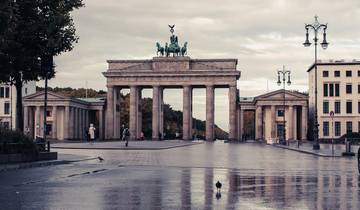
6 days
6 Days of Discovery: Berlin’s Stories Through Time
- ✓ Comprehensive Berlin tour
- ✓ Expert local guides included
- ✓ All accommodation arranged
- ✓ Transportation provided

5 days
5 Days in Berlin: Discover Potsdam and Sachsenhausen with Expert Guides
- ✓ Comprehensive Berlin tour
- ✓ Expert local guides included
- ✓ All accommodation arranged
- ✓ Transportation provided
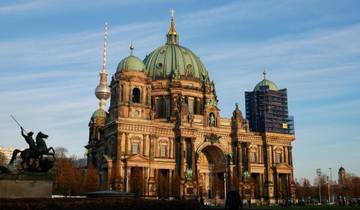
5 days
Berlin in 5 Days: From Sachsenhausen to Potsdam & Beyond
- ✓ Comprehensive Berlin tour
- ✓ Expert local guides included
- ✓ All accommodation arranged
- ✓ Transportation provided
7 days
Amsterdam, Berlin and Prague (9 destinations)
- ✓ Comprehensive Berlin tour
- ✓ Expert local guides included
- ✓ All accommodation arranged
- ✓ Transportation provided
Multi-day tour packages powered by TourRadar. Prices and availability subject to change.
Essential Planning Information 2026
Understanding Berlin’s Geography and Neighborhoods
Berlin’s massive geographic footprint creates distinct neighborhood clusters serving different traveler interests and accommodation budgets. Mitte (“Middle”) occupies the historical center, encompassing Museum Island, Unter den Linden boulevard, Brandenburg Gate, and the Reichstag. This zone concentrates the highest density of major historical attractions but carries premium hotel rates (€180-450 per night in 2026) and touristy restaurant prices. Mitte provides unbeatable convenience for first-time visitors planning intensive sightseeing schedules, with most major sites within 15-minute walking distance.
Prenzlauer Berg, immediately north of Mitte, offers charming residential streets, excellent cafés, Sunday flea markets at Mauerpark, and authentic neighborhood atmosphere. Former East Berlin working-class housing transformed into Berlin’s most gentrified district, with tree-lined streets, organic bakeries, and young families creating a relaxed vibe distinct from tourist-heavy Mitte. Accommodation costs €120-200 per night for mid-range hotels, with excellent public transport connections (U2 line) reaching Alexanderplatz in 10 minutes. Friedrichshain, east of Mitte, embodies Berlin’s famous alternative culture with the East Side Gallery, RAW-Gelände cultural complex, vibrant nightlife along Simon-Dach-Strasse, and affordable accommodation (€80-150 per night). This neighborhood appeals to younger travelers seeking authentic Berlin energy and budget-friendly options.
Kreuzberg maintains its historical reputation as Berlin’s multicultural heart, featuring exceptional Turkish restaurants, alternative bars, street art, and the Turkish Market along Maybachufer canal on Tuesdays and Fridays. The SO36 postal code area concentrates punk and alternative culture, while northern Kreuzberg near Checkpoint Charlie transitions into more mainstream tourism. Accommodation ranges €90-160 per night, with excellent food value. Charlottenburg represents classic West Berlin elegance with Kurfürstendamm shopping boulevard, Kaiser Wilhelm Memorial Church, refined restaurants, and established hotels. This area suits travelers preferring polished European city atmosphere over raw alternative culture, with accommodation at €150-280 per night for quality properties.
Current Costs and Pricing Breakdown
Museum admission in Berlin offers exceptional value compared to other European capitals. The Berlin Museum Pass costs €35 for 3 consecutive days in 2026, providing unlimited access to over 30 institutions including all Museum Island collections, Pergamon Museum, Neues Museum, Gemäldegalerie, and Jewish Museum. Check the official museum website for current rates as pricing may vary. Individual Museum Island tickets cost €14 per museum (€19 for Pergamon), while the Museum Island combination ticket at €19 grants same-day entry to all five institutions, representing significant savings for comprehensive exploration. The Berlin WelcomeCard (€39 for 72 hours, €56 for 5 days) bundles unlimited public transport with discounts on attractions and tours.
Major historical sites maintain free or minimal-cost admission. The Reichstag dome, Holocaust Memorial, Topography of Terror, and East Side Gallery charge no entry fees, requiring only advance registration for the Reichstag. Memorial museums like the Berlin Wall Memorial on Bernauer Strasse offer free access with excellent English documentation and audio guides. The DDR Museum charges €13.50 admission for interactive East German history exhibits, while the Stasi Museum costs €8 for authentic headquarters tours. These modest fees reflect Berlin’s commitment to accessible cultural education regarding its complex 20th-century history.
Food and dining costs span enormous ranges based on restaurant type and neighborhood. Authentic döner kebabs from Turkish-run shops cost €4-8 for generous portions satisfying lunch hunger. Traditional German restaurants (Brauhaus style) charge €12-18 for mains like schnitzel or bratwurst with sauerkraut, €4-6 for 0.5L beers. Vietnamese restaurants in Friedrichshain offer exceptional €8-12 pho bowls and €6-10 banh mi sandwiches. Mid-range international restaurants in Prenzlauer Berg run €15-28 per main course, while fine dining experiences at Michelin-starred or innovative modern German restaurants range €50-120 per person with wine pairings. Supermarket groceries remain affordable, with bread at €2-4, cheese at €3-8, quality beer at €1-2 per 0.5L bottle, enabling budget-conscious travelers to prepare simple meals.
Transportation Systems and Costs
Berlin’s BVG (Berliner Verkehrsbetriebe) operates one of Europe’s most comprehensive public transport networks, integrating U-Bahn (underground), S-Bahn (suburban rail), trams, and buses under unified ticketing. The AB zone ticket covers central Berlin including all major tourist attractions, costing €3.50 per single journey valid for 2 hours with unlimited transfers. The day pass (Tageskarte AB) costs €9.90, providing unlimited travel from validation until 3 AM the following morning. The 7-day ticket (Wochenkarte AB) at €36.50 offers substantial savings for extended stays, requiring just 4 travel days to exceed single-ticket costs.
The S-Bahn and U-Bahn systems operate every 3-5 minutes during peak hours (7-9 AM, 4-7 PM), every 10 minutes during standard daytime hours, and every 20 minutes during late evening. Weekend service runs 24 hours on Friday and Saturday nights, with trains every 15 minutes throughout the night. This continuous operation eliminates taxi expenses after late dinners or cultural events. Trams serve areas without U-Bahn coverage, particularly in former East Berlin neighborhoods, operating on the same ticket system with similar frequency.
Taxis cost €3.90 base fare plus €2.30 per kilometer for first 7 kilometers, then €1.65 per kilometer beyond. A Mitte to Friedrichshain journey runs €12-18, while airport transfers cost €45-60 to central locations. Uber and Bolt operate throughout Berlin with similar pricing to licensed taxis. Bicycle rental offers excellent value at €12-18 per day for standard city bikes, with Berlin’s flat terrain and extensive bike lane network making cycling an efficient exploration method. E-scooters cost €1 unlock fee plus €0.25 per minute, practical for short hops but expensive for extended journeys compared to public transport day passes.
Best Time to Visit Berlin in 2026
Spring Season Analysis (March-May 2026)
Spring brings Berlin back to life after the cold winter months, with temperatures climbing from 5-10°C in March to 15-20°C by May. Cherry blossoms bloom in Tiergarten and along the Landwehrkanal in late March and early April, creating spectacular photo opportunities and signaling the beginning of outdoor season. Beer gardens reopen in late March with the arrival of warmer weather, though outdoor seating remains dependent on daily temperatures through early May. The extended daylight hours stretch from 13 hours in March to over 15 hours by late May, providing ample evening exploration time and beautiful golden hour light for photography enthusiasts.
March represents the shoulder season transition, with accommodation rates still 30-40% below summer peaks and excellent availability booking just 1-2 weeks ahead. Museum queues remain manageable, and popular restaurants accept walk-in diners on weeknights without advance reservations. April and May bring increasing visitor numbers as European school holidays begin, but crowds stay well below summer peaks. The May Day celebrations on May 1st transform Kreuzberg into a massive street festival with political demonstrations, cultural events, and occasional confrontations, creating an authentic Berlin experience though requiring some neighborhood navigation awareness.
Spring weather variability requires flexible packing strategies, with cool mornings (5-12°C) demanding light jackets while afternoons reach comfortable 15-20°C temperatures suitable for outdoor activities. Rain showers occur frequently in April and May, averaging 8-10 rainy days per month, though precipitation typically arrives in short bursts rather than all-day downpours. The spring shoulder season provides excellent value for budget-conscious travelers, with accommodation costs 25-35% below summer rates and fewer advance booking requirements for tours and attractions.
Summer Season Planning (June-August 2026)
Summer represents Berlin’s peak tourist season, combining warm weather (20-28°C), maximum daylight hours (16+ hours in June), and extensive festival programming. June brings ideal conditions with comfortable temperatures, relatively manageable crowds early in the month, and the opening of outdoor cultural venues like the Waldbühne amphitheater and open-air cinemas throughout the city. The Fête de la Musique on June 21st creates free concerts across every neighborhood, while the Christopher Street Day parade in late July draws over 500,000 participants for Europe’s largest LGBTQ+ celebration.
July and August deliver peak tourist volumes, with major museums experiencing 60-90 minute entrance queues for walk-up visitors during midday hours (11 AM-3 PM). Advance booking becomes essential for Museum Island, Reichstag tours, and popular walking tours, with prime time slots filling 3-4 weeks ahead. Accommodation costs peak in July-August, with Mitte hotels commanding €200-450 per night and even budget hostels charging €35-55 for dormitory beds. Restaurant reservations become necessary for popular establishments, particularly on Friday and Saturday evenings.
The summer cultural calendar features extensive open-air programming, including the Classic Open Air concerts at Gendarmenmarkt, free outdoor film screenings at venues like Kreuzberg’s Freiluftkino, and the Long Night of Museums in August with extended hours and special programming across 70+ institutions. Beer gardens reach full capacity during sunny weekend afternoons, with Prater Garten in Prenzlauer Berg and Café am Neuen See in Tiergarten requiring early arrival (before 3 PM) for table seating. Despite higher costs and larger crowds, summer provides the most comprehensive cultural programming and warmest weather for extended outdoor exploration.
Autumn Opportunities (September-October 2026)
September and October offer ideal Berlin visit conditions, combining comfortable temperatures (15-20°C in September, 10-15°C in October), dramatic autumn colors in parks and forests, and reduced tourist volumes compared to summer peaks. Early September maintains summer-like weather while European school terms resume, creating a sweet spot of pleasant conditions with 20-30% fewer visitors than August. Accommodation rates drop 25-35% from summer peaks, with excellent availability and negotiating leverage for multi-night stays booked 2-3 weeks ahead.
Berlin Art Week in mid-September transforms the city into a contemporary art showcase, with gallery openings, museum exhibitions, and special events across major institutions and independent spaces. The Festival of Lights in October illuminates major landmarks including Brandenburg Gate, Berliner Dom, and television tower with spectacular projection mapping displays, creating exceptional evening photography opportunities. The autumn shoulder season coincides with the new theater and opera season launches, with major productions premiering at Berliner Ensemble, Schaubühne, and Staatsoper unter den Linden.
October weather grows increasingly variable, with early month temperatures around 15-18°C declining toward 8-12°C by late October. Rain becomes more frequent, averaging 10-12 rainy days per month, though precipitation remains generally light. The shorter daylight hours (12 hours in September, 10 hours in October) require earlier starts for photography enthusiasts seeking golden hour light, but the autumn conditions create atmospheric urban landscapes with fog, mist, and dramatic cloud formations. The combination of lower costs, reduced crowds, and special programming makes autumn an excellent value season for Berlin exploration.
Winter Travel Considerations (November-February 2027)
Winter transforms Berlin into a different city, with cold temperatures (0-5°C average), short daylight hours (8 hours in December-January), and dramatic reductions in tourist volumes and accommodation costs. November through February represents the deepest off-season, with hotel rates often 40-50% below summer peaks and excellent last-minute availability. Budget travelers find exceptional value during winter months, with quality Mitte hotels at €80-140 per night and mid-range properties at €100-180, rates unimaginable during summer.
The Christmas market season from late November through December 31st creates magical winter atmosphere, with markets at Gendarmenmarkt, Alexanderplatz, and Schloss Charlottenburg featuring traditional crafts, mulled wine (Glühwein), roasted chestnuts, and holiday decorations. New Year’s Eve in Berlin ranks among Europe’s largest celebrations, with an estimated 1 million people gathering around Brandenburg Gate for fireworks displays and street parties. The winter cultural calendar maintains full programming despite cold weather, with museums, theaters, and concert halls operating regular schedules and offering heated comfort during outdoor exploration breaks.
Winter weather requires appropriate clothing preparation, with temperatures frequently dropping below freezing overnight and wind chill making exposed conditions feel 5-7°C colder. Snow occurs intermittently, averaging 6-8 snow days per month in January-February, though accumulation rarely exceeds 5-10 cm and melts quickly. The short daylight hours (sunrise 8 AM, sunset 4 PM in December-January) create atmospheric early evening exploration with illuminated streets and holiday decorations, though limiting the effective sightseeing window for outdoor attractions. Winter travel appeals most to cultural enthusiasts prioritizing museums, concerts, and theater over outdoor activities, and budget travelers willing to accept cold weather for significant cost savings.
Accommodation Strategies for 2026
Budget Accommodation Options (€25-80 per night)
Berlin’s hostel scene offers exceptional quality at affordable prices, with numerous properties providing private rooms alongside traditional dormitory beds. Generator Berlin Mitte occupies a former bank building near Friedrichstrasse station, offering 6-bed dorms at €28-38 per bed, private doubles at €75-95 per night, and a rooftop bar with city views. The property includes free WiFi, luggage storage, 24-hour reception, and a social atmosphere attracting international travelers. Plus Berlin Hostel in Friedrichshain provides similar pricing (€25-35 dorms, €70-85 privates) with excellent U-Bahn connections to Museum Island via the U5 line, reaching Alexanderplatz in 8 minutes.
The Circus Hostel maintains two locations (Mitte and Kreuzberg), both emphasizing design, cleanliness, and social programming. The Mitte property sits walking distance from Museum Island and Hackescher Markt, charging €32-42 for dormitory beds and €80-110 for private rooms with ensuite bathrooms. The property features an excellent on-site microbrewery, organized pub crawls, and walking tour partnerships. Wombat’s City Hostel Berlin at Alexanderplatz offers unbeatable location for sightseeing-focused budgets, with 4-8 bed dorms at €30-40 and simple private rooms at €75-90, plus rooftop terrace providing television tower views.
Budget hotel chains provide reliable quality at modest prices in neighborhoods beyond central Mitte. Motel One locations in Alexanderplatz, Potsdamer Platz, and Charlottenburg offer sleek designer rooms at €65-95 per night, including breakfast buffets, modern bathrooms, and strong WiFi. Ibis Budget Berlin maintains numerous properties across the city, charging €45-65 for basic but clean rooms with minimal services but excellent value for travelers prioritizing sleep over amenities. These budget hotel options suit couples or solo travelers preferring private bathrooms over hostel dorms while maintaining cost discipline.
Mid-Range Hotel Selection (€120-220 per night)
Mitte boutique hotels balance location convenience with reasonable pricing for mid-range budgets. Hotel Amano at Rosenthaler Platz offers contemporary design rooms at €140-180 per night in shoulder seasons, €180-220 during summer peaks. The property sits in the heart of Mitte’s restaurant and bar scene, with Museum Island reachable via 15-minute walk or quick U8 subway connection. Rooms feature comfortable beds, strong showers, and functional workspaces, while the rooftop bar provides sunset views across the city. The included breakfast buffet (€15 if added separately) features German breads, cheeses, meats, and hot options.
Hotel Oderberger in Prenzlauer Berg occupies a restored 1902 swimming bath building, combining historical architecture with modern amenities at €160-200 per night. The property includes a stunning swimming pool (the original bath restored), sauna facilities, and a restaurant serving regional German cuisine. The residential neighborhood location provides authentic Berlin atmosphere, with numerous cafés, restaurants, and the Mauerpark flea market within walking distance. The M10 tram reaches Mitte in 15 minutes, while the quiet streets ensure restful sleep away from tourist crowds.
NH Collection Berlin Mitte Friedrichstrasse delivers reliable international chain quality at €130-180 per night, with excellent Friedrichstrasse station location enabling easy access across the city. Rooms offer desk spaces, rain showers, and blackout curtains, while the breakfast buffet (€18 if not included) provides comprehensive options. The property appeals to business travelers and tourists seeking dependable accommodation without boutique pricing. Charlottenburg’s 25hours Hotel Bikini Berlin overlooks the Berlin Zoo and offers design-forward rooms at €150-210, with jungle-themed interiors, a rooftop sauna, and vibrant social spaces attracting younger travelers seeking style and location balance.
Luxury and Premium Properties (€250-450+ per night)
Hotel Adlon Kempinski stands as Berlin’s most prestigious address, located directly beside Brandenburg Gate with rooms commanding €350-550 per night for standard categories, rising to €800-1,200 for suites with gate views. The property hosted visiting heads of state, celebrities, and discerning travelers since 1997 (rebuilding the 1907 original destroyed during WWII). Rooms feature marble bathrooms, Nespresso machines, and thick carpeting, while services include concierge assistance, a world-class spa, and multiple dining options including the two-Michelin-starred Lorenz Adlon Esszimmer. The location enables walking to Reichstag, Holocaust Memorial, and Museum Island within 5-15 minutes.
The Ritz-Carlton Berlin at Potsdamer Platz offers modern luxury at €300-480 per night, with sophisticated rooms, tea salon, and exceptional service standards. The property occupies a prime position for cultural attractions, with the Gemäldegalerie, Philharmonie concert hall, and Sony Center within 5-minute walks. Rooms feature floor-to-ceiling windows, deep soaking tubs, and rain showers, while the 40th-floor lounge provides panoramic city views. The spa includes an indoor pool, saunas, and treatment rooms for relaxation after intensive sightseeing.
Soho House Berlin in Prenzlauer Berg provides members-club atmosphere for public guests at €280-400 per night, featuring vintage industrial design, a rooftop pool, and hip restaurant attracting creative professionals. Orania Berlin in Kreuzberg combines boutique design with local neighborhood integration at €250-380, featuring a cultural programming space, riverside location, and commitment to supporting local artists and businesses. These properties appeal to travelers seeking authentic Berlin neighborhood experiences with luxury amenities, prioritizing local character over international chain uniformity.
Transportation Guide for 2026
Public Transport Mastery
The BVG network operates across three fare zones: AB (central Berlin including Schönefeld Airport), BC (outer Berlin and Potsdam), and ABC (entire network including Tegel area). The AB zone ticket suffices for 95% of tourist activities, covering all major attractions, neighborhoods, and accommodations. The €3.50 single ticket (Einzelfahrschein) validates for 2 hours from first use, permitting unlimited transfers between U-Bahn, S-Bahn, trams, and buses in one direction. The short-trip ticket (Kurzstrecke) at €2.20 covers 3 U-Bahn or S-Bahn stops or 6 bus/tram stops, useful for quick neighborhood hops.
The day pass (Tageskarte AB) at €9.90 activates upon validation and remains valid until 3 AM the following morning, providing excellent value for travelers making 3+ journeys daily. The 7-day ticket (7-Tage-Karte AB) costs €36.50, requiring just 3.7 travel days to break even against single tickets. The Berlin WelcomeCard (€39 for 72 hours, €56 for 5 days) bundles unlimited AB zone travel with discounts on attractions, though the discount value rarely justifies the premium over standard transport passes unless visiting numerous paid attractions daily.
U-Bahn lines operate every 3-5 minutes during peak hours (Monday-Friday 7-9 AM, 4-7 PM), every 10 minutes during standard hours, and every 10-20 minutes during late evening. Weekend service runs 24 hours Friday-Sunday mornings, with trains every 15 minutes through the night. S-Bahn lines follow similar frequencies, with some routes running express segments bypassing intermediate stations for faster connections. The real-time BVG app shows exact arrival times, service disruptions, and alternative routing suggestions in English, making navigation straightforward for non-German speakers. All stations feature clear signage with destination information and line maps, while platform displays show arriving trains and wait times.
Airport Transfers and Connections
Berlin Brandenburg Airport (BER) opened in 2020 as the city’s sole commercial airport, located 25 kilometers southeast of central Mitte. The Airport Express trains (FEX, RE7, RB14) connect airport terminals to Berlin Hauptbahnhof (main station) in 30 minutes, departing every 10-20 minutes throughout the day. These regional trains use standard ABC zone tickets costing €4.40, making them Berlin’s most economical airport transfer option. The trains continue to Friedrichstrasse, Alexanderplatz, and Ostbahnhof, providing direct access to most accommodation neighborhoods without transfers.
The U-Bahn U5 line reaches the airport terminal directly, though requiring 55-60 minutes for the journey to Alexanderplatz with approximately 20 intermediate stops. This option costs the standard €3.50 ABC single ticket but takes substantially longer than the Airport Express, making it practical only for travelers with excess time and minimal luggage. The express bus X7 connects the airport to Rudow U-Bahn station in 18 minutes, where transfers to the U7 line enable connections across the city, though the two-transfer process complicates luggage handling.
Taxis from BER to central Mitte cost €45-60 depending on exact destination and traffic conditions, taking 35-50 minutes outside rush hours. Ride-sharing services like Uber operate at similar pricing, sometimes offering slight savings during off-peak hours. Airport transfer services charging €50-70 provide advance booking certainty and door-to-door service, appealing to travelers arriving late evening or departing early morning when public transport frequencies reduce. The public transport option delivers unbeatable value for solo travelers or couples comfortable navigating the system, while taxis make sense for groups of 3-4 splitting costs or travelers with excessive luggage.
Cycling and Alternative Transport
Berlin’s extensive bike lane network (1,000+ kilometers) and flat terrain create ideal cycling conditions. Rental shops throughout Mitte, Prenzlauer Berg, and Friedrichshain charge €12-18 per day for standard city bikes, €18-28 for electric bikes, with multi-day rentals receiving discounted rates (€10-15 per day for 5+ day periods). Nextbike and Call a Bike operate dockless bike-sharing systems, charging €1 per 30 minutes after €1 unlocking fees, though daily rates (€15) exceed traditional rental shop pricing for extended use.
Cycling from Prenzlauer Berg to Museum Island takes 15-20 minutes via protected bike lanes, while Friedrichshain to Charlottenburg requires 30-35 minutes. The Berlin Wall Trail (Berliner Mauerweg) provides 160 kilometers of designated cycling path following the former wall route, with the downtown 20-kilometer section passing major sites like East Side Gallery, Checkpoint Charlie, and Brandenburg Gate within a 2-3 hour ride. Bike theft remains common in Berlin, requiring proper U-locks (provided by rental shops) and securing bikes at designated bike parking areas rather than isolated locations.
E-scooters from Lime, Tier, and Bolt saturate central neighborhoods, charging €1 unlocking fees plus €0.25-0.30 per minute. A 15-minute ride costs €4.75-5.50, making scooters expensive compared to public transport day passes for extended exploration but convenient for point-to-point trips under 2 kilometers. Scooter regulations require riding in bike lanes where available, prohibit sidewalk riding, and ban parking in pedestrian zones. The novelty factor appeals to some travelers, though budget-conscious visitors realize public transport or cycling provides superior value for frequent daily travel.
Budget Planning for 2026 Visits
Budget Traveler Strategy (€80-120 daily)
Budget-conscious travelers maintain €80-120 daily costs through strategic accommodation selection, self-catering breakfast and lunch, public transport day passes, and free or low-cost attractions. Hostel dormitory beds (€28-38) or budget hotels (€65-95 split between couples) provide overnight accommodation within budget constraints. The breakfast strategy combines supermarket purchases (€3-5 for bread, cheese, fruit) eaten at accommodation or in parks, while lunch relies on döner kebabs (€4-8), Vietnamese sandwiches (€6-8), or supermarket meal deals (€5-8). Dinner becomes the splurge meal at traditional German restaurants (€15-25 with one beer) or budget-friendly ethnic restaurants (€10-18).
The Berlin WelcomeCard 72-hour pass (€39) bundles transport with attraction discounts, though budget travelers often find better value in the standard 7-day transport ticket (€36.50) plus selective free attraction focus. The itinerary emphasizes no-cost sites: Reichstag dome (free with reservation), Holocaust Memorial, East Side Gallery, Berlin Wall Memorial, Topography of Terror, and extensive neighborhood walks through Kreuzberg, Friedrichshain, and Prenzlauer Berg. One or two paid museum days enable Museum Island access (€19 combination ticket) or the DDR Museum (€13.50), while remaining days explore free cultural attractions.
Supermarket groceries from Lidl, Aldi, or Netto enable picnic lunches and simple dinners, with bread (€2), cheese (€3-5), meats (€3-6), vegetables (€4-8), and beer (€6-10 per 6-pack) creating full-day food budgets under €20. Street food markets like Markthalle Neun on Thursdays (Street Food Thursday) or Mauerpark on Sundays provide diverse international options at €5-12 per meal. The budget approach accepts trade-offs: hostel dormitory settings over private rooms, self-prepared meals over restaurant dining, walking over taxis, and selective paid attractions over comprehensive museum passes. This strategy delivers authentic Berlin experiences emphasizing cultural exploration over luxury comfort.
Mid-Range Comfort Planning (€150-220 daily)
Mid-range budgets enable private hotel rooms (€120-180 per night split between couples, €150-220 for solo travelers), restaurant meals for most dining occasions, comprehensive public transport access, and paid attractions without constant cost calculations. The accommodation upgrade from hostels to mid-range hotels provides private bathrooms, comfortable beds, breakfast buffets (€12-18 if not included), and quiet spaces for evening relaxation. The central locations of mid-range Mitte or Prenzlauer Berg properties reduce transport time and enable walking to many attractions.
The food budget expands to €40-60 daily, permitting breakfast at neighborhood cafés (€8-15 for coffee, pastry, eggs), casual lunch at restaurants (€12-20 with drinks), and proper sit-down dinners (€25-40 per person with wine or beer). This budget accommodates traditional German restaurants, quality Italian trattorias, excellent Asian restaurants, and occasional fine dining experiences. The flexibility eliminates constant price checking and enables spontaneous restaurant discoveries while maintaining cost discipline through lunch/dinner balance rather than strict deprivation.
The attraction budget permits the Berlin Museum Pass (€35 for 3 days) covering 30+ institutions, paid walking tours (€15-25 per tour), and occasional special experiences like rooftop bars (€8-15 for drinks with views) or concert tickets (€20-50 for quality performances). Public transport day passes (€9.90) or 7-day tickets (€36.50) eliminate per-trip cost calculations while taxis become viable for late-night returns or occasional convenience (€12-20 for central routes). This mid-range approach balances comfort and experiences with reasonable budgeting, avoiding both extreme frugality and luxury excess while enabling comprehensive Berlin exploration.
Premium and Luxury Travel (€300-500+ daily)
Premium budgets unlock luxury hotels (€250-450 per night), fine dining experiences, private guides, taxis over public transport, and comprehensive cultural programming without cost constraints. Luxury hotel locations in Mitte or Charlottenburg provide concierge services for restaurant reservations, theater ticket procurement, and customized itinerary planning. The accommodation quality upgrades extend to spa facilities, rooftop bars, breakfast buffets with champagne options, and evening turndown services creating resort-like experiences within urban settings.
The premium food budget (€100-200 daily) enables Michelin-starred dining (€80-150 per person), quality wine pairings (€40-80), refined breakfast settings (€20-35), and afternoon coffee breaks at historic cafés (€12-20 for coffee and cake). This budget level permits spontaneous fine dining discoveries, tasting menus at innovative restaurants, and multi-course experiences at destinations like Nobelhart & Schmutzig or Tim Raue without financial stress. The flexibility enables food as central travel experience rather than functional necessity.
Private guide services (€300-500 per day) provide customized historical tours, insider access, flexible scheduling, and expert interpretation far exceeding standard group tours. Premium travelers book private museum tours (€200-400) offering after-hours access or specialized curator-led experiences. Theater and opera tickets at premium categories (€80-200) guarantee optimal seating for Berlin Philharmonic performances or Staatsoper productions. Taxi and private car services (€50-150 daily) eliminate public transport navigation while enabling efficient multi-site itineraries. This luxury approach prioritizes comfort, convenience, and exclusive access over budget constraints, creating thoroughly customized Berlin experiences.
Sample 2026 Itineraries
Three-Day Historical Focus
Day 1 concentrates on central Mitte historical sites and WWII memory culture. Begin at the Reichstag building (free advance reservation required) for 9 AM dome access, allowing 90 minutes exploring the architectural symbolism, rooftop terraces, and Norman Foster glass dome with audio guide. Walk 5 minutes south to Brandenburg Gate, then continue 3 minutes to the Holocaust Memorial for contemplative exploration. The underground Information Center (free admission) provides essential historical context through survivor testimonies, family histories, and deportation documentation.
Lunch at Augustiner am Gendarmenmarkt (€15-22 for traditional Bavarian cuisine) precedes afternoon exploration of Museum Island. Purchase the €19 combination ticket and spend 3-4 hours in the Pergamon Museum (ancient architecture) and Neues Museum (Egyptian collections including Nefertiti bust). Cross back to central Mitte for evening walking tour of the Third Reich sites (€20-25, 3 hours) covering Hitler’s bunker location, Gestapo headquarters, and Ministries Quarter. Dinner in Kreuzberg at Mustafa’s Gemüse Kebap (€6-8) or elevated Turkish at Hasir Mitte (€18-28).
Day 1 costs: Döner or café breakfast €5-10, Reichstag dome free, lunch €18-25, Museum Island ticket €19, walking tour €20-25, dinner €15-30, snacks €5-8, public transport day pass €9.90. Total day cost: €92-128 per person (excluding accommodation).
Day 2 explores Cold War and divided city history. Start at the Berlin Wall Memorial on Bernauer Strasse (free, open 9 AM), spending 2 hours with the excellent visitor center, preserved wall sections, and memorial chapel. Take the U-Bahn to Warschauer Strasse (10 minutes) for the East Side Gallery, the longest preserved wall section featuring political murals along a 1.3-kilometer stretch. Continue to Checkpoint Charlie Museum (€17.50) for 90 minutes exploring escape attempts, spy stories, and border control apparatus.
Lunch in Kreuzberg at Markthalle Neun (€8-15 for diverse options) provides energy for afternoon Stasi Museum visit at former headquarters (€8 admission). The preserved offices show surveillance equipment, filing systems, and interrogation methods. Evening includes rooftop drinks at Klunkerkranich (€8-12) overlooking Neukölln, then traditional German dinner at Zur Letzten Instanz (€18-28), Berlin’s oldest restaurant dating to 1621.
Day 2 costs: Breakfast €6-12, Wall Memorial free, Checkpoint Charlie €17.50, lunch €10-18, Stasi Museum €8, rooftop drinks €10-15, dinner €22-35, snacks €5-8, transport €9.90. Total day cost: €89-114 per person (excluding accommodation).
Day 3 combines remaining major sites with neighborhood exploration. Morning at Charlottenburg Palace (€15 main palace, €17 combined ticket with gardens, 2-3 hours) reveals Prussian royal history through baroque and rococo state rooms, porcelain collections, and formal gardens. Return to Mitte via S-Bahn for lunch at Curry 36 (€4-7 currywurst) or Vietnamese District Mot (€12-18). Afternoon walking tour through Prenzlauer Berg and Friedrichshain neighborhoods, including Mauerpark on Sundays for flea market and outdoor karaoke.
Final evening includes sunset at the Television Tower (€28 for observation deck) providing 360-degree city views from 203 meters, or the more budget-friendly Park Inn Hotel rooftop terrace (no admission but drink purchase €10-15). Farewell dinner at Prater Garten beer garden (€15-25) or elevated modern German at Weinbar Rutz (€35-60).
Day 3 costs: Breakfast €6-12, Charlottenburg Palace €15-17, lunch €8-20, Television Tower or rooftop bar €10-28, dinner €18-40, snacks €5-8, transport €9.90. Total day cost: €72-126 per person (excluding accommodation).
Five-Day Comprehensive Exploration
A five-day itinerary builds on the three-day framework while adding museum depth, day trip options, and neighborhood immersion. Days 1-3 follow the historical focus outlined above, with Day 4 dedicated to extended Museum Island exploration or Potsdam day trip. The Museum Island deep dive allocates full day for Pergamon Museum (4 hours), Bode Museum (2 hours, Byzantine art and sculpture), and Alte Nationalgalerie (2 hours, 19th-century painting). This museum-intensive day costs €19 for the combination ticket plus €15-30 meals and public transport.
The Potsdam alternative takes the S-Bahn S7 to Potsdam Hauptbahnhof (45 minutes, €4.40 ABC ticket), then explores Sanssouci Palace (€19 palace tour, €14 park pass), the Prussian summer residence with elaborate gardens, Chinese House, and New Palace. Allow 5-6 hours for comprehensive exploration. Lunch in Potsdam’s historic center (€15-25), return to Berlin for evening in Kreuzberg’s restaurant scene. Day trip costs: breakfast €6-12, transport €8.80 round trip, palace admission €19-33, lunch €18-28, dinner €20-35, snacks €8. Total: €80-117 per person (excluding accommodation).
Day 5 focuses on specialized interests: contemporary art at Hamburger Bahnhof (€16), Jewish history at the Jewish Museum (€10), or shopping along Kurfürstendamm and KaDeWe department store. The day proceeds at a relaxed pace after intensive previous days, with extended café breaks, final souvenir shopping, and farewell dinner at a destination restaurant like Tim Raue for modern Asian fusion (€120-180 tasting menu) or budget-friendly Burgermeister unter der U-Bahn for famous burgers under the elevated train (€8-15). This flexible final day costs €50-200 depending on dining and shopping choices.
Money-Saving Strategies for 2026
Advance Booking Benefits
Advance planning delivers substantial savings across Berlin accommodation and attractions. Hotels and hostels typically release inventory 12 months ahead, with early booking rates 15-25% below average pricing. Booking 3-4 months ahead for summer travel (June-August) captures moderate advance discounts while maintaining flexibility, as most properties permit free cancellation up to 24-48 hours before arrival. The 4-6 week advance window often provides limited selection and minimal savings, making the 2-3 month sweet spot optimal for balancing price and flexibility.
Flight booking patterns show optimal pricing 3-4 months ahead for summer European travel, with Tuesday-Wednesday departures and returns averaging €30-60 lower than Friday-Sunday options. The flexible date search functions on Skyscanner or Google Flights identify cheapest travel days within weekly windows, often revealing significant savings for one-day schedule adjustments. Shoulder season travel (April-May, September-October) delivers 30-40% lower flight costs compared to July-August peaks while maintaining excellent weather and manageable tourist volumes.
Museum passes and transport tickets purchased online avoid on-site processing fees while guaranteeing availability during peak periods. The Berlin Museum Pass bought through the official website provides the same pricing as on-site but eliminates queue time at the first museum visit. Some attractions offer modest early booking discounts (5-10%) for online purchase 2+ weeks ahead, though the primary benefit comes from guaranteed entry during busy periods rather than significant cost savings. The advance strategy emphasizes securing preferred options and avoiding sold-out scenarios rather than dramatic price reductions.
Free and Low-Cost Attractions
Berlin offers exceptional free cultural experiences eliminating admission costs from budget calculations. The Reichstag dome visit provides one of Europe’s finest free attractions, combining architectural significance, historical context, city views, and political symbolism in a comprehensive experience requiring only advance online reservation. The Holocaust Memorial and underground Information Center deliver powerful, essential education about Holocaust history without admission charges, while the Topography of Terror provides comprehensive Nazi documentation through indoor and outdoor exhibitions on the former Gestapo headquarters site.
The East Side Gallery stretches 1.3 kilometers along the Spree River with preserved Berlin Wall sections painted by international artists after reunification, creating the world’s longest open-air gallery. The Berlin Wall Memorial on Bernauer Strasse combines preserved wall segments, watchtower, death strip, visitor center, and documentation center into comprehensive border fortification education, all free of charge. Walking through Brandenburg Gate, Unter den Linden boulevard, and Gendarmenmarkt costs nothing while providing essential Berlin landmark experiences.
Neighborhood exploration through Kreuzberg’s street art, Prenzlauer Berg’s architecture, Friedrichshain’s alternative culture, and Charlottenburg’s elegant boulevards creates rich cultural immersion without admission fees. The Sunday flea markets at Mauerpark (entrance free) and Straße des 17 Juni provide entertainment, people-watching, and occasional bargains. Parks like Tiergarten, Tempelhofer Feld (former airport converted to public park), and Volkspark Friedrichshain offer extensive green spaces for picnics, relaxation, and beer garden atmosphere. This free attraction base allows travelers to allocate paid admission budgets to 2-3 premium experiences (Museum Island, Charlottenburg Palace, specialty museums) while maintaining comprehensive cultural engagement.
Food and Dining Cost Management
Strategic meal planning reduces daily food costs by 40-60% compared to constant restaurant dining. The breakfast strategy combines supermarket purchases eaten at accommodation or in parks, with quality German bread (€2-4), cheese (€3-6), cold cuts (€3-5), yogurt (€2-4), and fruit (€3-6) creating substantial breakfasts under €10. Discount supermarkets like Lidl, Aldi, Netto, and Penny offer exceptional value, while premium chains like Rewe or Edeka provide greater selection at modestly higher prices.
Lunch becomes the restaurant meal through daily specials (Tageskarte) at traditional German restaurants offering main courses at €8-14 compared to €15-25 evening prices. Vietnamese restaurants in Friedrichshain serve excellent pho bowls (€8-12) and banh mi sandwiches (€6-9), while Turkish and Middle Eastern restaurants provide mixed grills (€10-16) and mezze platters (€12-18) with generous portions. Döner kebabs from proper Turkish shops (€4-8) deliver satisfying lunches at minimal cost, though quality varies significantly – establishments with grills visible from the street and Turkish-speaking proprietors generally indicate authentic preparation.
Dinner strategies balance cost discipline with enjoyment through cooking at hostels/Airbnbs several nights weekly (reducing restaurant frequency to 4-5 times per week from 14), focusing budget on 2-3 memorable dining experiences rather than constant mediocre restaurants, and exploring ethnic neighborhoods (Kreuzberg for Turkish, Friedrichshain for Vietnamese, Schöneberg for Middle Eastern) where authentic restaurants charge 30-50% less than tourist-oriented establishments in Mitte. Street food markets like Markthalle Neun on Thursdays or weekend markets provide international variety at €8-15 per meal with social atmosphere. The disciplined approach maintains €30-50 daily food budgets while preserving quality experiences and avoiding constant deprivation.
Booking and Reservations for 2026
Official Booking Channels and Resources
The Reichstag dome requires mandatory advance registration through the official Bundestag website at bundestag.de, accepting bookings 3 months ahead. The free reservation system operates on a first-come basis, with summer slots (June-August) filling within days of opening while shoulder season availability extends weeks. Visitors receive email confirmation with specific entry time, requiring passport or ID presentation matching the registration name. Last-minute cancellations occasionally create same-day availability, checkable through the website morning-of, though relying on cancellations risks missing this essential Berlin experience.
Museum Island tickets sell through the official Staatliche Museen zu Berlin website at smb.museum, offering individual museum entries (€12-19) or combination tickets (€19 for all five museums). Timed entry slots during summer require selection of specific 2-hour entry windows, particularly for the Pergamon Museum which enforces capacity limits. The website provides English navigation, accepts international credit cards, and delivers mobile tickets eliminating physical pickup requirements. Purchase 2-3 weeks ahead for summer visits, 1 week for shoulder seasons.
Hotel bookings through property websites occasionally offer direct booking discounts (5-10%) compared to third-party platforms, plus greater flexibility for special requests (early check-in, specific room placement, dietary requirements). Booking.com and Hotels.com provide comprehensive selection with user reviews aiding quality assessment, while loyalty programs deliver free night credits after 10-15 stays. Hostelworld specializes in budget accommodation with detailed reviews from similar-demographic travelers. Airbnb offers apartment options for groups or families seeking self-catering, though Berlin’s short-term rental regulations require hosts to register properties officially, with legitimate listings displaying registration numbers.
Tour Operator Recommendations
Free walking tours operate through Sandemans New Europe, Strawberry Tours, and Original Berlin Walks, departing daily from fixed meeting points near Brandenburg Gate or TV Tower. These tip-based tours (€10-20 suggested contribution) provide 3-hour introductory orientations covering major landmarks, basic history, and neighborhood layouts. The quality depends heavily on individual guide expertise, with morning departures (9-10 AM) typically drawing the most experienced guides. Book online 2-3 days ahead during summer to secure English-language tours, though walk-up acceptance remains common for shoulder season.
Specialized history tours from companies like Insider Tour and Berlin Walks charge €15-30 for focused 3-4 hour explorations of specific topics: Third Reich sites, Cold War locations, Jewish history, or street art tours. These paid tours limit group sizes (12-20 participants maximum) and employ historian-trained guides providing deeper context than free overview tours. The Third Reich walking tours prove particularly valuable given the complexity of Nazi-era Berlin and the limited physical remains requiring expert interpretation. Book 2-3 weeks ahead for July-August, 1 week for other months.
Bike tours through companies like Fat Tire Bike Tours or Berlin on Bike cost €28-38 for 4-6 hour guided rides covering 12-20 kilometers. These tours efficiently connect dispersed sites like Reichstag, Brandenburg Gate, Holocaust Memorial, Museum Island, East Side Gallery, and Charlottenburg Palace through protected bike lanes and park paths. The physical activity breaks up sedentary museum days while covering substantial ground impossible to walk efficiently. Day trip tours to Sachsenhausen concentration camp memorial (€22-35 including transport and guided tour) or Potsdam (€35-50) provide structured excursions eliminating independent navigation logistics.
Planning Your 2026 Berlin Visit
Pre-Departure Preparation
Passport validity requirements demand documentation valid for the full duration of stay (no 3-month or 6-month rule for EU destinations, though Brexit complications require UK passport holders to ensure 6-month validity). US, Canadian, Australian, and most Western passport holders enter Germany visa-free for tourism stays under 90 days. Travel insurance covering medical emergencies, trip cancellation, and luggage loss costs €30-60 for week-long European coverage, providing essential protection against unexpected medical costs (EU healthcare not free for non-citizens) and trip disruptions.
Mobile connectivity requires European roaming planning. US carriers charge €10-12 daily for international roaming, accumulating to €70-84 for week-long trips. European SIM cards from carriers like Vodafone or O2 cost €15-25 for 5GB-10GB data plans sufficient for mapping, translation, restaurant research, and social media during week-long visits. The SIM card purchase requires unlocked phones and passport presentation, with airport locations or central city mobile shops providing immediate service. Download offline maps through Google Maps before departure, ensuring navigation capability during cellular service gaps or data exhaustion.
Essential app downloads include BVG Fahrinfo for public transport (English-language route planning and real-time updates), Google Maps for general navigation, Duolingo for basic German phrases (Guten Tag, Danke, Entschuldigung, Sprechen Sie Englisch?), and translation apps for menu reading. Museum apps from individual institutions provide audioguide functionality without renting physical devices. Restaurant reservation apps like TheFork or OpenTable operate in Berlin for popular establishments requiring advance booking. The digital preparation minimizes on-arrival stress while enabling immediate independent navigation.
Packing and Logistics
Berlin’s variable weather across seasons demands strategic packing. Summer (June-August) requires light layers for 20-28°C days, sunscreen, sunglasses, and light rain jacket for occasional afternoon showers. Spring and autumn (April-May, September-October) need versatile layering for 10-20°C temperatures, waterproof jacket for frequent rain, comfortable walking shoes for extensive pavement navigation, and light scarf for cool mornings. Winter (November-March) demands warm coat rated for 0-5°C, hat covering ears, gloves, warm socks, and waterproof boots for wet conditions and occasional snow.
Comfortable walking shoes prove essential given the extensive pavement pounding required for comprehensive Berlin exploration. Quality sneakers or walking shoes with arch support prevent foot pain during 15,000-20,000+ daily step counts common during intensive sightseeing days. Blister prevention through proper sock selection (moisture-wicking, no cotton) and gradual shoe breaking-in before departure saves considerable misery. A small daypack carries water bottles (refillable at fountains and restaurants), snacks, extra layers, camera equipment, and souvenir purchases during full-day exploration.
Electrical adapters for European outlets (Type C, F two-pin) enable phone charging, camera battery charging, and laptop use. Power banks provide backup phone charging during intensive mapping days when battery drains quickly. Cash requirements remain minimal given widespread card acceptance, though carrying €50-100 enables döner purchases, tipping on free walking tours, and occasional cash-only establishments in residential neighborhoods. Credit cards with no foreign transaction fees (Chase Sapphire, Capital One) eliminate the 3% surcharge levied by standard US cards, saving €15-30 on typical week-long spending of €500-1,000.
2026 Updates & Current Information
Infrastructure and Service Developments
Berlin continues expanding its digital services infrastructure for 2026 visitors. The BVG public transport system now accepts contactless credit card payment directly at validation machines, eliminating physical ticket purchases for travelers comfortable with per-journey charges at standard rates. The Berlin WelcomeCard has integrated smartphone functionality, delivering digital cards through app download rather than physical pickup, streamlining arrival processes. Major museums have implemented reserve-ahead time slots more comprehensively, reducing summer peak-hour crowding while ensuring predictable entry for visitors with scheduled itineraries.
Sustainability initiatives affect certain attractions, with Charlottenburg Palace now requiring timed entry even in shoulder seasons to manage conservation concerns, and some Museum Island institutions limiting daily visitor caps. These changes rarely impact well-planned travelers booking 2-3 weeks ahead but create challenges for spontaneous visitors expecting walk-up admission during busy periods. The broader trend emphasizes advance planning and reduced spontaneity for major paid attractions while free sites maintain unrestricted access.
Current Regulations and Visitor Guidelines
Security procedures at major attractions follow enhanced protocols established post-2016. The Reichstag requires passport or ID presentation matching reservation names, with security screening taking 10-15 minutes during busy morning hours. Bags larger than standard backpacks face restrictions, with lockers unavailable (leave large bags at accommodation). Museum Island enforces standard museum security (bag checks, metal detectors) taking 5-10 minutes during summer peaks, with large backpacks requiring coat check deposit (free but time-consuming).
Photography permissions vary by institution. The Reichstag permits photography inside the dome but prohibits commercial equipment (tripods, professional cameras requiring permits). Museum Island generally allows non-flash photography in permanent collections but restricts or prohibits photography in special exhibitions (signage indicates specific policies). The Pergamon Museum prohibits photography of certain ancient artifacts due to cultural sensitivity concerns. The practical approach photographs when permitted but respects signage to avoid security confrontations or confiscation.
Frequently Asked Questions
Is Berlin safe for tourists in 2026?
Berlin maintains excellent overall safety for tourists, ranking among Europe’s safest major capitals with low violent crime rates. Petty crime including pickpocketing concentrates in crowded tourist zones (Alexanderplatz, Museum Island, Checkpoint Charlie) and on public transport, requiring standard urban awareness: front-pocket wallet placement, zipped bags, vigilance in crowds. Organized pickpocket teams operate on the U-Bahn during rush hours, targeting distracted phone users and tourists with visible valuables. The practical approach secures valuables, maintains awareness in crowds, and avoids displaying expensive cameras or jewelry.
Certain neighborhoods require increased awareness during late evening hours. The area around Kottbusser Tor in Kreuzberg concentrates drug dealing activity, creating uncomfortable atmosphere after dark though rarely affecting tourists passing through. Alexanderplatz and its immediate surroundings attract aggressive panhandlers and occasional confrontations in late evening, making alternative routes advisable after 11 PM. Görlitzer Park in Kreuzberg functions as open drug market creating sketchy vibes though physical danger remains minimal. The simple solution avoids these specific locations late evening or maintains group travel and confident demeanor when passing through.
Emergency services respond efficiently to incidents requiring assistance. The European emergency number 112 connects to German-speaking operators with English support available. Police visibility remains high in tourist zones, with officers approachable for directions or assistance. Hospitals and medical clinics provide excellent care, though non-EU visitors pay market rates (€150-300 for emergency room visits) making travel insurance essential. The overall assessment places Berlin firmly in the safe category for European cities, requiring standard urban awareness rather than special precautions.
How many days do you need in Berlin?
Five to seven days provides comprehensive Berlin exploration covering major historical sites, several museums, neighborhood immersion, and day trip options without overwhelming pace. Three days enables surface coverage of essential attractions (Reichstag, Brandenburg Gate, Museum Island, Holocaust Memorial, East Side Gallery, major neighborhoods) but forces choices between museums and creates rushed atmosphere. The three-day visitor leaves with introductory understanding but misses depth in museums, secondary historical sites, and authentic neighborhood experiences.
The five-day framework allows Museum Island deep dive (full day), comprehensive WWII and Cold War site exploration (2 days), Charlottenburg Palace or Potsdam day trip (1 day), and relaxed neighborhood wandering (1 day). This pacing accommodates museum fatigue management, spontaneous discoveries, extended café breaks, and evening cultural programming without constant time pressure. Seven days permits all the above plus specialized interests (contemporary art at Hamburger Bahnhof, Jewish Museum, Sachsenhausen concentration camp, Potsdam extended exploration, multiple neighborhoods thoroughly covered).
Weekend visits (2-3 days) concentrate on essential sites with aggressive pacing, suitable for repeat visitors or travelers prioritizing specific interests (pure WWII history, museum focus, food scene exploration) over comprehensive coverage. Extended stays (10+ days) allow exhaustive museum coverage, multiple day trips, language classes, and living like a local rather than tourist, though most visitors find diminishing returns beyond 7 days as Berlin’s primary attractions cluster within that timeframe. The recommendation settles on 5-6 days for optimal first-visit balance.
What is Berlin most famous for?
Berlin’s fame centers on its role as the focal point of 20th-century European history, particularly its division during the Cold War and subsequent reunification. The Berlin Wall symbolizes both the Iron Curtain’s physical manifestation and the eventual collapse of Communist Eastern Europe, making the city the most tangible location for understanding Cold War geopolitics. The preserved wall sections, museums, and border landmarks create the world’s most comprehensive Cold War education environment, drawing history enthusiasts globally.
The city’s Nazi-era significance positions Berlin as essential Holocaust and WWII education destination. Hitler’s rise to power, the Holocaust’s planning and execution from Berlin ministries, the city’s near-total destruction during 1945, and Germany’s ongoing memory culture create unparalleled learning opportunities. The Holocaust Memorial, Topography of Terror, and numerous smaller memorial sites demonstrate Germany’s commitment to historical reckoning, offering profound lessons in democratic fragility and the importance of vigilant defense against authoritarianism.
Contemporary Berlin has earned fame for its vibrant cultural scene, legendary nightlife, thriving art galleries, and affordable living compared to other Western European capitals. The city attracts artists, musicians, tech workers, and creative professionals from across Europe and beyond, creating dynamic multicultural atmosphere unusual for a major capital. The combination of heavy historical significance with cutting-edge contemporary culture creates Berlin’s unique identity as simultaneously memorial site and Europe’s most exciting modern urban experiment.
Is English widely spoken in Berlin?
English enjoys widespread usage in Berlin’s tourism industry, hospitality sector, and among younger residents. Hotel staff, museum employees, tour guides, and restaurant servers in tourist-oriented areas speak functional to fluent English as standard job requirement. Major museums provide comprehensive English audio guides, detailed English wall texts, and English-language guided tours on regular schedules. The BVG public transport system operates entirely in English through its app, announcements, and station signage, eliminating language barriers for navigation.
Younger Berliners (under 40) generally possess strong English skills from mandatory school instruction and media exposure, making casual interactions in cafés, bars, and shops manageable in English. Older residents, particularly in former East Berlin neighborhoods, show more variable English proficiency depending on educational background and professional experience. Attempting basic German phrases (Guten Tag, Danke, Entschuldigung, Sprechen Sie Englisch?) demonstrates cultural respect and receives warm responses, though English fallback remains readily available.
Certain situations require more navigation creativity. Budget supermarkets employ staff with minimal English, making self-service and Google Translate helpful for specific product questions. Residential neighborhood restaurants outside tourist zones may offer German-only menus and limited English-speaking staff, though pointing and basic communication generally succeeds. Medical situations benefit from translation apps or English-speaking doctor services (widely available). The overall assessment places Berlin firmly in the English-friendly category for European cities, requiring virtually no German language skills for successful tourism while rewarding basic phrase learning with enhanced local interactions.
What should I pack for Berlin in different seasons?
Summer packing (June-August) emphasizes light layers for warm days averaging 20-28°C but variable conditions. T-shirts, shorts, light pants, and sundresses form the base wardrobe, supplemented by a light jacket or cardigan for cool mornings and air-conditioned museums. Sunscreen proves essential for extended outdoor exploration, while sunglasses protect against bright reflections off historical buildings’ limestone and glass surfaces. A compact rain jacket or umbrella handles occasional afternoon thunderstorms, though summer rain typically clears quickly. Comfortable walking shoes with breathable materials prevent overheating during intensive pavement walking.
Spring and autumn require versatile layering for temperatures ranging 10-20°C with significant day-night variation. Long pants, jeans, long-sleeve shirts, and sweaters create the foundation, with waterproof jacket essential for frequent rain showers. Light scarf provides morning warmth while fitting easily in daypacks when afternoon temperatures rise. Closed-toe walking shoes with good traction handle wet pavement safely while providing arch support for extensive walking. The layering approach allows temperature adaptation as weather fluctuates throughout single days.
Winter demands serious cold-weather preparation for 0-5°C averages with occasional -5 to -10°C cold snaps. Warm winter coat rated for freezing temperatures, thick scarf covering neck and lower face, warm hat covering ears, insulated gloves, thermal underlayers, and waterproof winter boots with traction form essential equipment. Multiple thin layers (base layer, sweater, coat) provide better insulation than single thick layer while allowing indoor temperature adjustment. Museums maintain 18-22°C comfortable temperatures, requiring coat check use and layers removal for extended viewing comfort. The winter wardrobe emphasizes warmth without bulk, as significant indoor time makes overpacking uncomfortable in heated spaces.
Can you visit Berlin on a budget?
Berlin ranks among Europe’s most budget-friendly capital cities, with strategic planning enabling comprehensive visits at €80-120 daily excluding accommodation. The abundance of free major attractions (Reichstag dome, Holocaust Memorial, East Side Gallery, Berlin Wall Memorial, Brandenburg Gate, Topography of Terror) eliminates admission costs from budget equations while providing essential Berlin experiences. Budget hostels charging €25-40 for dormitory beds or €70-95 for private rooms offer clean accommodation in well-connected neighborhoods, while supermarket meals cost €15-25 daily for those willing to self-cater breakfast and simple dinners.
Public transport day passes at €9.90 provide unlimited access to the entire central network, enabling efficient attraction connections without per-journey cost calculations. Budget dining focuses on authentic döner kebabs (€4-8), Vietnamese restaurants (€8-15), Turkish grills (€10-16), and supermarket picnics in parks and along canal banks. The Museum Island combination ticket (€19) represents the primary paid attraction splurge, though even this cost remains modest compared to London or Paris museum pricing. Free walking tours (€10-15 suggested tips) provide historical context and orientation without formal tour costs.
The budget approach requires trade-offs: hostel dormitories over private hotel rooms, self-prepared meals over constant restaurant dining, free attractions over paid museums, public transport over taxis. However, these compromises feel minimal in Berlin where the best historical sites charge no admission, street food culture provides excellent cheap dining, and the compact central area enables extensive walking. Budget travelers experience authentic Berlin culture through neighborhood exploration, beer gardens, flea markets, and multicultural food scenes, often gaining richer experiences than luxury travelers confined to hotel restaurants and organized tours.
What are the best neighborhoods to stay in Berlin?
Mitte provides unbeatable convenience for first-time visitors prioritizing sightseeing efficiency over neighborhood authenticity. The district encompasses Museum Island, Brandenburg Gate, Unter den Linden, and the Reichstag within walking distance, minimizing transport time and maximizing attraction access. Hotels range from budget chains (€70-110) to luxury properties (€250-450), with excellent public transport connections to all other neighborhoods. The trade-off accepts tourist-heavy atmosphere, premium pricing, and limited authentic local culture for maximum convenience during short visits focused on major historical sites.
Prenzlauer Berg offers charming residential character with excellent café culture, Sunday flea markets, tree-lined streets, and young family atmosphere. The neighborhood appeals to travelers seeking local Berlin life while maintaining quick Museum Island access via 10-minute U-Bahn rides. Accommodation costs €120-200 for mid-range hotels, less touristy than Mitte but more polished than Friedrichshain or Kreuzberg. The area provides safe evening strolls, quality restaurants, organic bakeries, and authentic neighborhood vibe without sacrificing central attraction accessibility.
Friedrichshain embodies Berlin’s famous alternative culture with street art, the East Side Gallery, vibrant nightlife, and budget-friendly accommodation (€80-150). The neighborhood attracts younger travelers, digital nomads, and culture seekers valuing authentic Berlin energy over tourist convenience. Excellent public transport (U5 line, S-Bahn) reaches central Mitte in 10-15 minutes, while the local scene includes RAW-Gelände cultural complex, Simon-Dach-Strasse bars and restaurants, and multicultural dining options. The atmosphere skews younger and edgier than Prenzlauer Berg, with some streets showing graffiti-covered buildings and alternative aesthetic that either enchants or disconcerts depending on traveler preferences.
Do I need cash in Berlin or can I use credit cards everywhere?
Berlin accepts credit cards widely but not universally, requiring modest cash reserves for certain transaction types. Major hotels, museums, restaurants, and shops accept credit cards without minimum purchase requirements. The public transport system takes contactless cards directly at validators, eliminating ticket machines for travelers comfortable with per-journey charges. Supermarkets like Rewe, Edeka, and discount chains (Aldi, Lidl) all process card payments, though some impose €10-20 minimum purchases for card transactions.
Cash remains necessary for several common situations. Döner kebab shops and street food vendors typically operate cash-only, as do many traditional German restaurants in residential neighborhoods. Free walking tours collect tips in cash (€10-15 suggested). Small cafés and bakeries sometimes refuse cards for purchases under €5-10. Market vendors at flea markets (Mauerpark, Straße des 17 Juni) and food markets accept cash exclusively. The practical approach maintains €50-100 cash for these scenarios while using cards for major purchases.
ATM withdrawal strategy minimizes fees by using bank-affiliated ATMs (Deutsche Bank, Commerzbank) charging lower fees than independent machines. Withdrawing €100-200 at once reduces per-transaction fees compared to multiple small withdrawals. Cards charging foreign transaction fees (typical 3% on standard US credit cards) make ATM withdrawals expensive, while fee-free cards like Charles Schwab debit or Chase Sapphire credit eliminate these costs. The optimal approach combines primarily card usage for major expenses with modest cash reserves for small purchases, tips, and cash-only establishments, avoiding both excessive ATM fees and card rejection frustration.
What is the best way to get around Berlin?
The BVG public transport network provides the most efficient and economical Berlin navigation method, integrating U-Bahn underground, S-Bahn suburban rail, trams, and buses under unified ticketing. The U-Bahn reaches most tourist attractions within 5-15 minutes from any central starting point, with trains running every 3-10 minutes depending on time of day. The €9.90 AB zone day pass enables unlimited travel from validation until 3 AM the following morning, making it ideal for active exploration days with 3+ journeys. Multi-day passes (7-day ticket at €36.50) provide substantial savings for longer stays, requiring just 3.7 travel days to exceed single-ticket costs.
Walking serves as the primary neighborhood exploration method, with central Mitte compact enough to cover major sites (Brandenburg Gate to Museum Island to Alexanderplatz) on foot within 45-60 minutes. The walk from Brandenburg Gate to the East Side Gallery spans 5 kilometers requiring 60-75 minutes, manageable for fit travelers but excessive for multiple-times-daily transit. The practical approach combines walking for nearby attractions (under 1.5 km) with U-Bahn for longer distances or when carrying shopping bags and camera equipment.
Bicycles offer excellent value and efficiency for Berlin’s flat terrain and extensive bike lane network. Rental shops charge €12-18 daily for standard bikes, enabling 15-20 kilometer riding days covering Museum Island to East Side Gallery to Charlottenburg Palace with minimal physical strain. The bike infrastructure provides protected lanes on major streets, dedicated traffic signals, and designated parking areas at attractions. Taxis and ride-sharing make sense only for late-night returns (after midnight when train frequencies reduce), airport transfers with heavy luggage, or journeys to peripheral attractions like Sachsenhausen memorial where public transport requires multiple transfers. The overall recommendation prioritizes public transport day passes supplemented by walking for nearby attractions and occasional taxis for specific situations.