
Berat Castle Albania: UNESCO Old Town Complete Visitor Guide
Berat Castle stands as one of Albania’s most remarkable living fortresses, where medieval stone walls embrace a vibrant community of residents, Byzantine churches, and sweeping valley views. Perched high above the “City of a Thousand Windows,” this 13th-century citadel preserves centuries of Albanian history while remaining an active neighborhood where families still make their homes within ancient ramparts. This guide explores the castle’s layered heritage, practical visitor information, and the unique experience of walking through a UNESCO World Heritage Site that functions simultaneously as historical monument and living village.
Key Takeaways About Berat Castle
- Living Historical Monument: Berat Castle remains one of Europe’s few continuously inhabited fortresses, where modern residents live within 13th-century walls alongside Byzantine churches and Ottoman mosques, creating a unique blend of archaeology and daily village life.
- UNESCO World Heritage Recognition: Added to the UNESCO World Heritage List in 2008 as an extension to the Historic Centres of Berat and Gjirokastër (inscribed 2005), the castle exemplifies rare architectural character from the Ottoman period while preserving earlier Byzantine and medieval heritage.
- Exceptional Religious Architecture: The castle grounds contain more than 20 Byzantine-era churches dating from the 13th-14th centuries, including the Cathedral of the Dormition of St. Mary which houses the renowned Onufri Iconographic Museum displaying Albania’s finest collection of religious art.
- Ancient Origins with Medieval Structures: While the site’s fortifications trace back to the 4th century BC during the Illyrian period, the existing castle walls and towers were primarily constructed in the 13th century under Byzantine rule, with later Ottoman additions creating the complex that stands today.
- Panoramic Viewpoint Excellence: The castle’s elevated position provides unobstructed views across Berat’s Ottoman quarter, the Osum River valley, and the surrounding peaks including Mount Tomorr, making it the premier photography location in central Albania.
- Accessible Year-Round: The castle remains open daily with official entrance hours from 9 AM to 6 PM, though the site is technically accessible around the clock since no complete perimeter wall restricts access, allowing visitors flexibility in timing their exploration.
People Also Ask About Berat Castle
Why Is Berat Castle Considered a UNESCO World Heritage Site?
Berat Castle earned UNESCO World Heritage designation in 2008 as part of the Historic Centres of Berat and Gjirokastër property, recognized under cultural criteria (iii) and (iv) for representing an outstanding architectural ensemble typical of the Ottoman period. The castle demonstrates exceptional preservation of vernacular buildings that reflect centuries of coexistence between Orthodox Christian and Islamic communities. The fortification exemplifies a rare continuity of habitation from ancient times through the present day, with its Byzantine churches, Ottoman mosques, and traditional stone houses forming a cohesive historical landscape. UNESCO specifically valued Berat’s illustration of a way of life influenced by Islamic traditions during Ottoman rule while simultaneously preserving Orthodox Christian spiritual and cultural development. The castle’s religious architecture includes over 20 Byzantine churches from the 13th-14th centuries and multiple Ottoman-era mosques, showcasing the architectural and cultural synthesis that defines Albania’s Balkan heritage.
How Much Time Should I Allow to Explore Berat Castle Thoroughly?
Allocate a minimum of three to four hours for comprehensive exploration of Berat Castle’s main attractions, churches, museums, and viewpoints. This timeframe allows adequate time to walk the castle walls, visit the Onufri Museum, explore several of the notable Byzantine churches, photograph the panoramic viewpoints, and experience the living village atmosphere within the fortification walls. Visitors with particular interest in Byzantine art, photography, or historical architecture often spend five to six hours thoroughly examining the religious sites, documenting the Ottoman neighborhood houses, and enjoying the cafés scattered throughout the castle quarter. The 15-20 minute uphill walk from the lower town to the main entrance should be factored into your schedule, along with potential rest breaks given the steep cobblestone paths. Photography enthusiasts particularly benefit from extended visits that span different lighting conditions, as the views transform dramatically from morning through golden hour. If you plan to include a meal at one of the traditional restaurants within the castle walls, or participate in a cooking class offered by local families, add an additional one to two hours to your visit.
Can I Stay Overnight Inside Berat Castle?
Yes, several guesthouses and small hotels operate within Berat Castle’s walls, offering overnight accommodation inside the historic fortification. These family-run properties occupy traditional Ottoman-era stone houses that have been converted into visitor lodgings while maintaining their original architectural character. Staying inside the castle provides a unique opportunity to experience the site after day visitors depart, when the narrow stone lanes become quiet and the resident community’s evening routines unfold. Overnight guests witness spectacular sunrise and sunset views from the ramparts without crowds, and can explore the castle grounds during early morning hours when soft light illuminates the Byzantine churches and valley below. The guesthouses typically feature authentic period details such as stone walls, wooden ceilings, and traditional furnishings, combined with modern amenities. Booking accommodation inside the castle requires advance planning, particularly during peak tourism months from May through September, as the limited number of rooms fills quickly. Guests should note that vehicle access within the castle is restricted to residents and accommodation owners, so you may need to carry luggage up cobblestone paths from parking areas near the main entrance.
Is Berat Castle Suitable for Visitors with Mobility Limitations?
Berat Castle presents significant accessibility challenges for visitors with mobility limitations due to its medieval construction on steep hillside terrain. The approach from the lower town involves a continuous uphill walk of 15-20 minutes on uneven cobblestone roads with gradients that can be demanding even for able-bodied visitors. While vehicles can drive to the main entrance for those unable to walk the approach, the castle interior consists entirely of ancient stone paths, stairs, uneven surfaces, and narrow passages that were never designed for modern accessibility standards. The rampart walls require climbing stone steps to reach viewpoints, churches feature threshold steps and uneven floors, and many areas lack handrails or smooth surfaces. Visitors using wheelchairs or walkers will find most of the castle effectively inaccessible, though the main plaza area near the entrance offers some relatively level ground with views. Those with limited mobility who can manage short distances might arrange vehicle transport to the entrance and explore the immediate area around the gate, including some shops and cafés, though this represents only a small fraction of the castle’s offerings. The Onufri Museum involves climbing stairs to reach the icon gallery. Families with strollers face similar challenges and typically find it more practical to carry young children rather than attempt to navigate the terrain with wheeled equipment.
Extended multi-day tours – 5+ days
Featured Berat Multi-Day Tour Packages
3 days
Berat 3-Day Discovery Tour
- ✓ Comprehensive Berat experience
- ✓ Expert local guides included
- ✓ All accommodation included
- ✓ Transportation provided
5 days
Berat 5-Day Highlights Experience
- ✓ Comprehensive Berat experience
- ✓ Expert local guides included
- ✓ All accommodation included
- ✓ Transportation provided

7 days
Berat 7-Day Cultural Journey
- ✓ Comprehensive Berat experience
- ✓ Expert local guides included
- ✓ All accommodation included
- ✓ Transportation provided
10 days
Berat 10-Day Complete Adventure
- ✓ Comprehensive Berat experience
- ✓ Expert local guides included
- ✓ All accommodation included
- ✓ Transportation provided
Multi-day tour packages powered by TourRadar. Prices and availability subject to change.
Introduction: Albania’s Living Medieval Fortress
Berat Castle—known locally as Kalaja e Beratit or simply Kala—occupies a commanding hilltop position above one of Albania’s most picturesque historic cities. Unlike many European fortifications that function solely as archaeological sites or museums, Berat Castle maintains its original purpose as a living community where approximately 200 families reside within medieval walls that have sheltered inhabitants for more than two millennia. This extraordinary continuity of occupation distinguishes Berat from conventional castle sites and creates an experience where visitors navigate not just ruins and monuments but an active neighborhood where children play in Byzantine courtyards, residents tend gardens beside 13th-century church foundations, and traditional crafts are sold from doorways in Ottoman-era stone houses.
The fortress complex encompasses 58.9 hectares within its fortification walls, containing a dense concentration of historical architecture that spans Illyrian, Roman, Byzantine, and Ottoman periods. While archaeological evidence confirms settlement from the 4th century BC, the visible castle structures primarily date from the 13th century when Byzantine rulers reconstructed the fortifications following earlier destructions. Ottoman conquerors who captured Berat in 1417 subsequently added mosques, expanded residential quarters, and modified defenses while largely preserving the Byzantine Christian religious sites, creating the unique architectural layering that characterizes the complex today.
The castle’s designation as part of a UNESCO World Heritage property in 2008 recognized its outstanding universal value as an exceptionally well-preserved example of Balkan fortified town architecture. This international recognition brought both opportunities for conservation funding and challenges in balancing heritage preservation with the needs of the resident community who call these ancient buildings home. The ongoing tension between maintaining authenticity, accommodating modern living standards, and managing increasing tourism pressure defines the contemporary reality of Berat Castle.
For visitors, Berat Castle offers a rare opportunity to experience medieval fortress architecture not as a frozen historical exhibit but as a living cultural landscape. Walking the narrow stone lanes between houses that have sheltered families for centuries, encountering Byzantine frescoes in churches still used for Orthodox services, and witnessing traditional crafts practiced using methods unchanged for generations creates connections to the past that purely archaeological sites cannot replicate. The castle simultaneously functions as Albania’s most significant Byzantine art repository through its Onufri Museum, a viewpoint offering the country’s most photographed urban panoramas, and a neighborhood where residents maintain gardens, operate family businesses, and preserve cultural traditions within structures that witnessed the rise and fall of empires.
Historical Evolution: From Illyrian Stronghold to Ottoman Quarter
The strategic hilltop occupied by Berat Castle attracted fortification builders from the earliest periods of Balkan settlement. Archaeological investigations confirm that Illyrian tribes established defensive works on the site during the 4th century BC, recognizing the elevated position’s natural advantages for controlling the Osum River valley and the ancient trade routes connecting the Adriatic coast with interior Macedonia. The Illyrians constructed primitive stone fortifications that exploited the steep terrain, creating a stronghold known in ancient sources as the settlement of the Dassaretae tribe.
Roman conquest of the region in the 2nd century BC brought the site under the authority of the expanding empire. Romans recognized the location’s strategic value and likely strengthened existing fortifications while establishing the town of Antipatreia on the hilltop and surrounding slopes. The Roman period saw the settlement develop as a regional administrative center within the province of Epirus Nova, with the fortified acropolis serving military functions while civilian buildings spread down the hillside toward the river. Limited Roman-period remains survive within the castle today, as subsequent builders quarried earlier structures for materials.
The Byzantine era, particularly from the 6th century onward, fundamentally shaped the castle’s character. As the Western Roman Empire collapsed and the Byzantine Empire became the dominant power in the Balkans, Berat emerged as an important Byzantine fortified town. The name “Pulcheriopolis” (City of Pulcheria) appears in Byzantine chronicles, honoring the empress Pulcheria. The fortress served as a bulwark against Slavic migrations and later as a defensive position during conflicts with the First Bulgarian Empire. Byzantine builders expanded the fortification system, constructing substantial stone walls that defined the basic outline of the castle that exists today.
The castle’s most significant architectural period occurred during the 13th century under the Despotate of Epirus and subsequent Byzantine control. Following destructions in earlier conflicts, Byzantine authorities undertook comprehensive reconstruction of the fortifications around 1210-1270. The massive walls visible today, with their characteristic stone coursing and fortified towers, date primarily from this reconstruction. More importantly, the 13th century saw the construction of the numerous Byzantine churches that define the castle’s religious architecture. Over a remarkably short period, builders erected more than 20 churches within the castle walls, creating an extraordinary concentration of Byzantine ecclesiastical architecture.
These Byzantine churches reflected the Orthodox Christian character of the population and the castle’s role as a religious center. Wealthy families and guilds sponsored church construction, competing to create the most beautiful structures adorned with frescoes by master painters. The Church of St. Mary of Blachernae, Church of the Holy Trinity, Church of St. Michael, and the Cathedral of the Dormition of St. Mary represent the most significant surviving examples from this flowering of Byzantine religious art. The concentration of churches in such a compact area suggests a population deeply invested in Orthodox Christian identity and possessed of sufficient wealth to support extensive ecclesiastical construction.
The medieval period saw Berat Castle change hands repeatedly among competing Balkan powers. Serbian rulers under the Nemanjić dynasty briefly controlled the fortress in the 14th century, giving the settlement the Slavic name “Beligrad” (White City), from which the modern name Berat derives. The castle functioned as a prize in the complex political struggles among Serbian, Byzantine, Albanian, and emerging Ottoman forces during the fragmentation that characterized the late medieval Balkans.
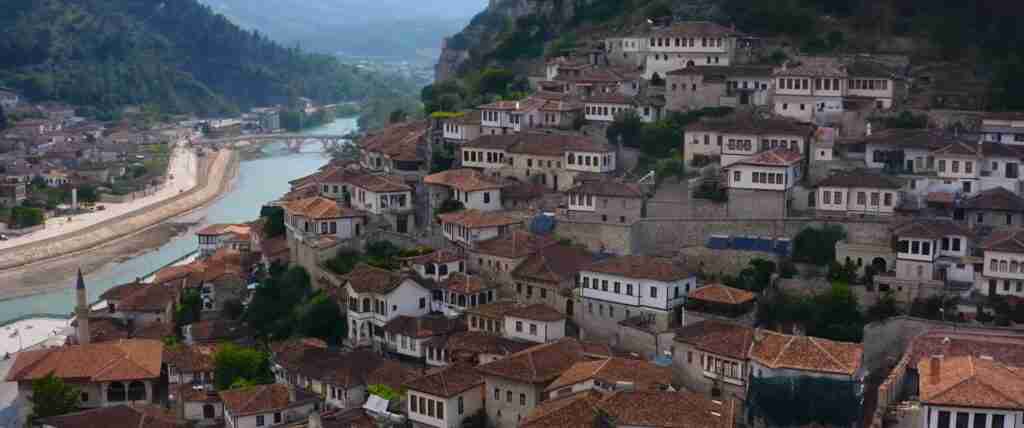
Ottoman conquest in 1417 initiated the era that most profoundly shaped Berat’s present appearance. Sultan Murad II’s forces captured the castle after a brief siege, incorporating it into the expanding Ottoman Empire. The Ottomans maintained the fortress as a military installation while transforming the residential quarters to reflect Islamic architectural traditions. Ottoman administrators converted some Byzantine churches into mosques, built new mosques including the Red Mosque near the entrance, and encouraged the development of the characteristic stone houses with overhanging second floors and numerous windows that give Berat its famous nickname “City of a Thousand Windows.”
Remarkably, the Ottoman authorities did not suppress the Orthodox Christian community or destroy the Byzantine churches. The coexistence of mosques and churches within the castle walls illustrates the Ottoman millet system that allowed religious communities to maintain their institutions under Islamic rule. This tolerance enabled the preservation of the Byzantine religious art that makes Berat Castle architecturally exceptional. Throughout four centuries of Ottoman control, the castle remained a provincial administrative center and garrison town while the civilian population continued occupying the ancient buildings.
The 18th and 19th centuries brought decline to the castle as a military installation as Ottoman power weakened and newer defensive technologies made medieval fortifications obsolete. The resident population persisted, however, maintaining homes within walls that had protected inhabitants for two millennia. During Albania’s late 19th-century national awakening, Berat served as an important center for the Albanian cultural and political movement, with intellectuals and patriots gathering in the castle’s traditional quarters to advance the cause of Albanian independence.
Albania achieved independence from Ottoman rule in 1912, but the 20th century brought new challenges. The communist regime that controlled Albania from 1944 to 1991 implemented policies that severely damaged religious heritage throughout the country. Many churches and mosques were closed, converted to secular uses, or deliberately destroyed as the government pursued an official atheist ideology. Berat Castle’s religious buildings survived better than most due to local resistance and the practical difficulty of demolishing structures so integral to the inhabited fortress. Some of the Byzantine churches were converted into warehouses or cultural centers, preserving the buildings even as their religious functions ceased.
The fall of communism in 1991 enabled restoration of religious practices and recognition of Berat Castle’s heritage value. Albanian authorities and international organizations began conservation efforts, and the Orthodox Church reclaimed many of the Byzantine religious buildings. The UNESCO inscription in 2008 capped a process of rediscovery and restoration, positioning Berat Castle as one of Albania’s premier cultural heritage sites while raising awareness of the conservation challenges facing this living historical monument.
Castle Architecture and Fortifications
The fortification system enclosing Berat Castle represents a synthesis of Byzantine military architecture adapted to dramatic hillside terrain. The castle walls follow the natural contours of the hilltop, creating an irregular oval perimeter approximately 1,400 meters in circumference that encloses the residential quarter, religious buildings, and defensive structures. The walls rise directly from steep slopes on all sides, eliminating dead ground where attackers could assemble while maximizing the defensive advantages of the elevated position.
The main walls, dating from the 13th-century Byzantine reconstruction, were constructed using carefully dressed limestone blocks arranged in regular courses. Byzantine builders employed a technique of alternating rows of stone with horizontal brick courses in some sections, a characteristic feature of middle Byzantine fortification architecture. The walls vary in thickness from 3 to 5 meters depending on the terrain and exposure, thickest on the more accessible southern and western approaches where enemy siege engines would most likely be deployed. In well-preserved sections, the walls still reach heights of 8-10 meters, though many portions have been reduced by stone quarrying and earthquake damage over centuries.
The castle’s defensive system incorporated approximately 24 towers at strategic intervals along the walls. These towers projected outward from the wall line, allowing defenders to deliver flanking fire along the wall faces and eliminate blind spots where attackers might shelter. The towers were built using the same limestone masonry as the walls, typically square or rectangular in plan with internal chambers accessible from the wall walk. Several towers remain substantially intact and can be explored by visitors, offering elevated viewpoints and insight into medieval defensive architecture. The spacing between towers reflects Byzantine military engineering principles, with intervals of 40-60 meters ensuring that archers in adjacent towers could cover all approaches with crossfire.
The main entrance, positioned on the southern side where the slope is least steep, features a fortified gateway that controlled access to the castle interior. The gate complex, rebuilt and modified multiple times across centuries, consists of a vaulted passage through the wall protected by a tower positioned to allow defenders to rain projectiles on anyone attempting to force entry. Ottoman modifications added a bent entrance, forcing attackers to make a right-angle turn under fire before reaching the inner gate, a common Islamic military architecture feature designed to prevent direct cavalry charges at gates. Visitors today enter through this historic gateway, walking beneath stones that channeled attackers into deadly killing zones.
Beyond the main entrance, a secondary gate called the Water Gate provided access to springs and the river below. This gate, positioned on the steeper northern slope, allowed residents to fetch water during sieges while remaining protected by the fortifications. The Water Gate features a covered stairway descending through the wall, with multiple defending positions and the capability to seal the passage with gates at different levels. This elaborate water access system reflects the Byzantine understanding that maintaining water supply during prolonged sieges often determined a fortress’s ability to withstand attack.
The castle’s interior organization reflects its dual function as military installation and civilian settlement. A central street, now cobblestoned, runs roughly east-west through the heart of the residential area, with narrow lanes branching off to reach houses built against the inner faces of the fortification walls. This dense urban layout maximized the use of limited space within the defensive perimeter while maintaining clear routes for defenders to reach threatened wall sections. The street network retains its medieval configuration, with some passages so narrow that only pedestrians can navigate them.
Ottoman-era residential architecture dominates the current appearance of the castle’s civilian quarters. The characteristic Berat house consists of a stone first floor used for storage, workshops, or animal shelter, with a projecting second floor of whitewashed stone or plaster that overhangs the street. The overhanging upper floors create covered walkways at street level while maximizing interior space in the upper rooms where families lived. The numerous closely-spaced windows that give Berat its nickname create light-filled interiors while allowing air circulation in Albania’s hot summers.
Earthquake damage, particularly from significant seismic events in 1851, 1920, and 2019, affected portions of the fortifications and residential buildings. The magnitude 6.4 earthquake that struck Albania in November 2019 caused cracks in some wall sections and damaged several houses within the castle. Repairs remain incomplete in some areas, with visible damage to rampart sections awaiting conservation funding. Despite these impacts, the majority of the fortification circuit and residential structures remain sound, testament to the skill of medieval builders and the quality of local limestone used in construction.
The castle’s elevated position, approximately 200 meters above the Osum River valley, amplifies its visual dominance of the surrounding landscape. From the ramparts and viewing platforms, visitors can appreciate how medieval military engineers exploited the terrain to create a fortress that appears to grow organically from the hilltop. The integration of natural topography with human-built defenses exemplifies Byzantine military architecture at its most sophisticated, creating a fortification system that remained formidable despite technological changes in warfare over nearly a millennium.
Byzantine Churches and Religious Heritage
Berat Castle contains one of the Balkans’ most remarkable concentrations of Byzantine ecclesiastical architecture, with over 20 churches dating primarily from the 13th-14th centuries preserved within the fortification walls. This extraordinary assemblage reflects the Orthodox Christian character of medieval Berat and provides insight into Byzantine religious art, architectural development, and the patronage networks that funded church construction during the late middle ages. The churches vary in size from small single-nave chapels sponsored by individual families to substantial basilicas that served as the religious centers for the castle community.
The Cathedral of the Dormition of St. Mary dominates the castle’s religious architecture both physically and spiritually. This three-aisled basilica, constructed in the 13th century, served as the seat of the Orthodox bishopric of Berat and represents the most important ecclesiastical building in the fortress. The cathedral’s exterior, built from the same limestone as the fortification walls, appears austere compared to Western European Gothic cathedrals of the same period, reflecting the more restrained aesthetic of Byzantine religious architecture. The single central dome rises above the crossing, supported on pendentives that distribute its weight to the piers below—a characteristic Byzantine engineering solution for covering large interior spaces.
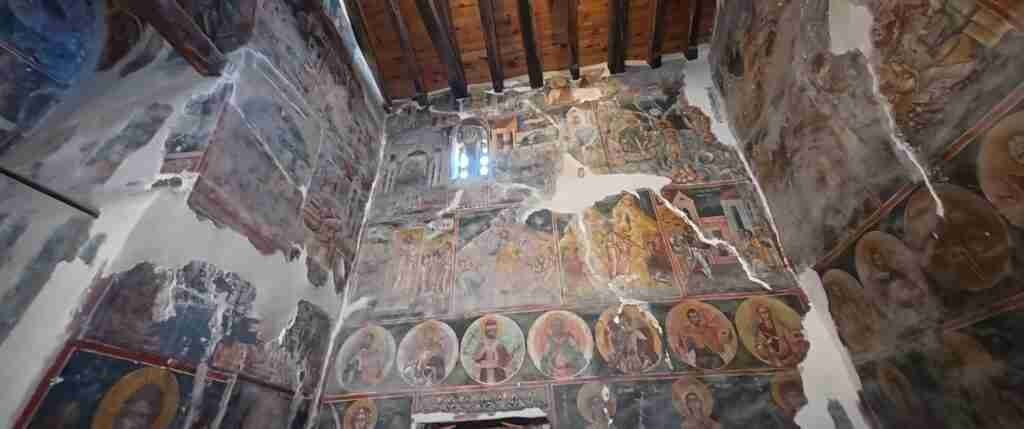
The cathedral’s interior preserves one of Albania’s finest ensembles of Byzantine frescoes. Master painters covered the walls, vaults, and dome with religious imagery following the standard Byzantine iconographic program that positioned Christ Pantocrator in the dome, the Virgin Mary in the apse, and ranks of saints, prophets, and biblical scenes on the walls below. Many of these frescoes survive in remarkably good condition, protected by the building’s continuous use and the dry microclimate within the thick stone walls. The paintings demonstrate the high level of artistic achievement in 13th-century Balkan Orthodox art, with subtle modeling of faces, rich color palettes dominated by reds, blues, and gold, and sophisticated compositions that reflect influence from both Constantinople and local Albanian traditions.
The cathedral today houses the Onufri National Iconographic Museum, named after Albania’s most celebrated icon painter. Onufri, active in the 16th century, developed a distinctive style characterized by particularly vivid red pigments—so distinctive that art historians refer to “Onufri red”—and emotionally expressive religious figures that departed from the more static Byzantine convention. The museum collection includes numerous icons attributed to Onufri and his workshop, providing visitors with the opportunity to study this master’s unique contribution to Orthodox religious art. Beyond Onufri’s works, the museum displays icons from the 14th through 19th centuries collected from churches throughout Albania, creating a comprehensive survey of Albanian Orthodox ecclesiastical art.
The Church of St. Mary of Blachernae stands out for its exceptionally well-preserved frescoes and its picturesque setting within a flower meadow near the castle’s northern edge. This single-nave church, dating from the 14th century, was dedicated to the Virgin Mary under her title associated with the famous Blachernae church in Constantinople. The church’s compact size and intimate scale create an intense spiritual atmosphere, with every interior surface covered in frescoes depicting scenes from Christ’s life, the Virgin Mary’s biography, and portraits of saints. The church sits in an open meadow that provides expansive views across the Osum River valley toward Mount Tomorr, creating one of the castle’s most photographed locations. Unfortunately, the church remains locked most of the time, with interior access only available during occasional special openings, protecting the vulnerable frescoes from environmental damage and vandalism.
The Church of the Holy Trinity, another 13th-century structure, exemplifies the smaller family-sponsored chapels that proliferated within the castle walls. Byzantine families of means funded these private churches both as expressions of piety and as status symbols demonstrating their wealth and Orthodox devotion. The Church of the Holy Trinity served a specific neighborhood within the castle, functioning as the spiritual center for the families residing in surrounding houses. The building’s modest exterior belies a richly decorated interior, with frescoes covering the walls and a carved wooden iconostasis separating the nave from the sanctuary. Like many of the smaller churches, the Holy Trinity remains deconsecrated and is not regularly open to visitors, though its exterior and setting can be appreciated from the surrounding lanes.
The Church of St. Michael, positioned near the main entrance gate, represents yet another variant of Byzantine ecclesiastical architecture in the castle. This structure combines religious and defensive functions, with its walls built substantially thicker than purely liturgical requirements would dictate and its position integrated into the fortification system near the vulnerable main gate. This church exemplifies how Byzantine builders integrated religious buildings into defensive architecture, creating structures that could serve as refuges or strongpoints during attacks while maintaining their primary liturgical purposes during peacetime.
Beyond these major churches, the castle contains numerous smaller chapels and church ruins scattered throughout the residential quarters. Some retain sufficient architectural integrity to be identified and appreciated, while others survive only as foundations or incorporated fragments within later buildings. This dense concentration of religious architecture reflects the intense Byzantine Orthodox piety of medieval Berat’s population and the competitive patronage through which wealthy families sponsored church construction to demonstrate their faith and social standing.
The churches collectively demonstrate the evolution of Byzantine church architecture across several centuries. The earlier 13th-century structures show purer Byzantine influence, with plans and decorative programs that closely follow models from Constantinople and Thessaloniki. Later 14th-15th century churches incorporate more local Balkan characteristics, including specific proportions, decorative stone carving techniques, and fresco styles that reflect increasing regional distinctiveness as the Byzantine Empire weakened and local artistic traditions gained prominence.
Conservation of these religious buildings faces significant challenges. Many of the churches suffered neglect during the communist period when religious practice was suppressed. Some were converted to warehouses or workshops, with modifications that damaged original fabric. Others simply fell into disrepair as maintenance ceased. Post-communist restoration efforts have focused on the most significant structures, particularly the Cathedral housing the Onufri Museum, but limited funding means many of the smaller churches await conservation. The 2019 earthquake caused additional damage to several churches, creating new structural concerns that require expert assessment and repair.
The Orthodox Church has reclaimed many of the religious buildings since Albania’s transition to democracy, and some churches have resumed religious services. This return to active liturgical use raises complex questions about balancing authentic religious function with heritage preservation, visitor access, and the scholarly study of the frescoes and architecture. The ongoing negotiation among religious authorities, heritage conservationists, and tourism interests defines the current management of Berat Castle’s Byzantine ecclesiastical heritage.
The Onufri Iconographic Museum Experience
The Onufri National Iconographic Museum, housed within the Cathedral of the Dormition of St. Mary, preserves and displays Albania’s most important collection of Orthodox religious art. The museum honors Onufri, the 16th-century master icon painter whose distinctive work represents the pinnacle of Albanian Orthodox ecclesiastical art. Visiting the museum provides essential context for understanding Byzantine religious art traditions, the specific Albanian contributions to Orthodox visual culture, and the technical achievements of master icon painters working in the Balkans during the Ottoman period.
The museum’s collection encompasses over 170 icons spanning the 14th through 19th centuries, along with ecclesiastical objects, manuscripts, and religious vestments. These works were gathered from churches throughout Albania, particularly from the Berat region, creating a concentration of religious art that would be impossible to experience by visiting individual churches. The collection includes unsigned works by anonymous masters alongside attributed pieces by known painters, allowing visitors to trace the evolution of icon painting styles and techniques across five centuries of Albanian Orthodox tradition.
Onufri’s works dominate the museum’s featured displays. This 16th-century painter, whose biography remains frustratingly obscure, developed a distinctive artistic style that earned him recognition as Albania’s greatest religious painter. Onufri’s icons demonstrate exceptional technical skill in the handling of tempera paint on wood panels, with particular mastery in rendering facial features, hands, and drapery folds. His compositions follow standard Byzantine iconographic conventions—depicting Christ, the Virgin Mary, saints, and biblical scenes in established poses with symbolic attributes—but infuse these traditional subjects with unusual emotional intensity and individuality.
The “Onufri red” that characterizes his palette remains his most celebrated technical achievement. Art historians have analyzed the vivid crimson pigment that appears throughout his works, determining that Onufri developed a unique formulation combining natural minerals with binding media to produce a red of unusual brilliance and longevity. This distinctive color, applied in Christ’s garments, architectural backgrounds, and decorative details, creates visual unity across his body of work and allows art historians to identify unsigned pieces potentially from his workshop. The red’s intensity, which appears almost luminous in proper lighting, demonstrates the sophisticated material knowledge Byzantine painters possessed regarding pigment chemistry and preparation.
Beyond color, Onufri’s icons reveal sophisticated composition and expressive characterization that distinguish his work from more conventional Byzantine religious painting. His figures possess psychological depth unusual in Orthodox iconography, with facial expressions suggesting inner spiritual states rather than merely presenting standardized holy images. His Virgin Mary icons, in particular, communicate maternal tenderness and sorrow through subtle modeling of features and the relationship between Mary and the Christ child. This emotional quality, while never departing from Orthodox theological correctness, made Onufri’s works particularly beloved and explains why churches throughout Albania commissioned his icons.
The museum displays several of Onufri’s most significant works, including his Christ Pantocrator icon that exemplifies his mature style. This icon, depicting Christ as universal ruler and judge, follows the standard Byzantine formula with Christ holding a gospel book in his left hand while raising his right hand in blessing. Onufri’s interpretation, however, infuses the conventional pose with dignity and presence through masterful handling of facial features, particularly the penetrating gaze and subtle modeling that creates dimensionality within the flat gold-ground background. The drapery folds of Christ’s robes demonstrate Onufri’s understanding of how fabric drapes over the human form, knowledge that Byzantine painters acquired through careful observation despite the abstracted, symbolic nature of icon painting conventions.
The collection extends beyond Onufri to encompass works by other Albanian icon painters and regional schools. Icons from the 14th and 15th centuries show the development of Albanian Orthodox art before Onufri, revealing the artistic context in which he worked. Post-Byzantine icons from the 17th-19th centuries demonstrate how Albanian religious art evolved under Ottoman rule, with some works showing influence from Western European Renaissance and Baroque painting that filtered into Orthodox art through Venice and other Adriatic trade connections.
The museum’s ecclesiastical objects section displays silver chalices, gilded gospel covers, embroidered vestments, and liturgical implements used in Orthodox services. These objects, often adorned with precious materials and fine craftsmanship, reveal the material culture of Albanian Orthodox Christianity and the wealth that major churches commanded. Gospel covers embellished with silver repoussé work, set with semi-precious stones, and featuring elaborate religious imagery demonstrate the high level of metalworking skill present in Albanian Christian communities. Embroidered vestments for priests and bishops, created by nuns in monasteries using silk threads and gold wire, exemplify textile arts traditions that paralleled icon painting in technical sophistication.
The museum also preserves important manuscripts, including illuminated gospels and liturgical texts. Two particularly significant codices—the Purple Codex from the 6th century and the Golden Codex from the 9th century—are preserved in Berat and have been recognized by UNESCO’s Memory of the World program for their exceptional historical and artistic value. While these specific codices may not always be on display due to conservation concerns, the museum’s manuscript collection demonstrates the scribal and illumination traditions that maintained Orthodox religious texts in Albanian churches.
Visiting the museum requires purchasing a separate ticket beyond the castle entrance fee. The entrance fee stands at 400 lek (approximately $4.50), with an optional guided tour available for an additional 100 lek. The relatively modest admission price makes this one of Albania’s most accessible major museum experiences. The museum typically operates during the same hours as the castle’s official opening times, though visitors should confirm current schedules as hours can vary seasonally.
The museum’s presentation reflects both its historical setting and limited conservation resources. The icons are displayed in the cathedral’s interior, arranged on walls within the Byzantine architectural space. This setting creates an authentic context for viewing the works, as icons were meant to be experienced within church architecture rather than in neutral museum galleries. However, the lighting conditions can be challenging, particularly on cloudy days, as the cathedral’s small windows admit limited natural light. Visitors interested in photography should note that the dim conditions and gold-ground icons require either high ISO settings or tripods to achieve sharp images.
Conservation challenges face the museum’s collection. Many icons show damage from improper storage, exposure to humidity, insect infestation, and physical degradation of paint layers and wooden supports. Communist-era neglect of religious artifacts meant that proper conservation measures were not implemented for decades, allowing preventable damage to occur. Post-communist restoration efforts have prioritized the most significant works, with some icons receiving professional conservation treatment. However, the full collection requires comprehensive conservation assessment and treatment that exceeds available funding, meaning some important works remain in precarious condition.
The museum functions not just as a tourist attraction but as a scholarly resource for researchers studying Byzantine and post-Byzantine art. Art historians, theologians, and conservators consult the collection to advance understanding of icon painting techniques, Albanian Orthodox religious culture, and the broader development of Balkan Christian art. This dual role—serving both general visitors and specialists—reflects the collection’s genuine art historical importance beyond its tourist appeal.
Living Community and Cultural Heritage
Berat Castle’s status as a continuously inhabited fortress distinguishes it from the vast majority of European medieval fortifications, which function exclusively as archaeological sites, museums, or tourist attractions. Approximately 200 families currently live within the castle walls, occupying traditional Ottoman-era stone houses that have sheltered residents for centuries. This living community creates a unique dynamic where daily life unfolds amid internationally recognized cultural heritage, raising complex questions about preservation, modernization, and the rights of residents versus the demands of heritage conservation and tourism.
The resident families are the inheritors of a settlement tradition extending back over two millennia. While individual families have not occupied the same houses across this entire span—property changed hands through inheritance, sale, and the disruptions of various historical upheavals—the continuity of habitation links current residents to the Byzantine Christians, Ottoman Muslims, and pre-communist Albanians who lived within these same walls. This continuity manifests in maintained cultural practices, traditional crafts, and local knowledge about the castle’s architecture and history that residents pass down through generations.
Contemporary life within the castle follows patterns established long ago while incorporating modern necessities. Residents maintain vegetable gardens in small plots between buildings, continuing an agricultural tradition that helped castle inhabitants sustain themselves during sieges and periods of scarcity. Chickens, goats, and occasionally sheep occupy small enclosures, providing families with eggs, milk, and meat in an urban farming practice that would have been universal in the medieval fortress. These agricultural elements, visible throughout the residential quarters, contribute to the castle’s village atmosphere and provide photogenic details that delight visitors even as they represent practical food production for families.
Traditional crafts persist within several castle households, where residents practice skills passed down through family lines. Lace making, weaving, and textile production occupy women in some families, who create handmade items both for household use and for sale to tourists. The delicate white lace that appears in many castle shop displays follows patterns developed over centuries, with techniques that require years to master. Some families produce traditional Albanian felt products, using wool from local sheep processed through methods unchanged for generations. Woodworking craftsmen create small carved items, utensils, and decorative objects using tools and techniques that their grandfathers employed.
These craft traditions intersect directly with the castle’s tourism economy. Many resident families operate small shops or workshops that front onto the main street and lanes, selling handmade items, traditional foods, and souvenirs to visitors. These enterprises represent important income sources for families, supplementing other employment and providing economic justification for maintaining traditional skills. The shops typically occupy the ground floors of houses, with the family’s living quarters on the upper floor, perpetuating the mixed residential-commercial use that characterized the Ottoman-era castle quarters.
Traditional food production represents another maintained heritage practice. Several families produce homemade jams, preserves, honey, and raki (traditional Albanian fruit brandy) for sale to visitors. These products, made from local fruits following traditional recipes, offer tourists authentic tastes of Albanian food culture while generating income for castle residents. The prominence of food products in castle shops reflects Albania’s culinary traditions and the importance of home food preservation in a culture where industrial processed foods have only recently become widespread.
Cafés and restaurants within the castle create gathering places that serve both residents and tourists. Several traditional restaurants occupy historic buildings, offering Albanian cuisine in atmospheric settings with views across the valley. These establishments range from simple cafés serving coffee and light snacks to full-service restaurants presenting multi-course traditional meals. The restaurants provide employment for castle residents, venues for social interaction, and opportunities for visitors to experience authentic Albanian food culture. Dining within the castle walls, surrounded by medieval architecture and overlooking the illuminated town below, creates memorable experiences that prompt many tourists to extend their visits beyond simple sightseeing.
Modern life requirements create tensions with the castle’s UNESCO World Heritage status. Residents need electricity, running water, internet connectivity, and vehicle access—amenities that require infrastructure installations potentially incompatible with heritage preservation principles. Utility lines, satellite dishes, water pipes, and drainage systems must be integrated into medieval buildings in ways that meet contemporary standards while minimizing visual and structural impact on historic fabric. Conservation authorities struggle to balance residents’ legitimate needs for modern comfort against imperatives to preserve authentic historical character.
The question of vehicle access particularly illustrates these tensions. The castle’s narrow cobblestone lanes were designed for pedestrians and pack animals, not automobiles. While vehicles can navigate the main street with difficulty, parking within the castle is severely constrained and the presence of parked cars detracts from the historical atmosphere that attracts tourists. Residents understandably desire convenient vehicle access to their homes, particularly for elderly family members or when transporting goods. Finding compromises that respect both residents’ needs and heritage preservation goals requires ongoing negotiation and creative problem-solving.
Housing maintenance and renovation present additional challenges. When residents need to repair roofs, replace windows, update plumbing, or make other necessary improvements to centuries-old houses, they confront regulations designed to preserve historical architectural character. Albanian heritage law and the UNESCO World Heritage designation impose requirements for how renovations can be conducted, what materials must be used, and how changes must be documented and approved. These regulations, while essential for heritage protection, can increase costs and complexity for residents who simply want to maintain habitable homes.
Generational succession raises questions about the castle’s future as a living community. Some younger residents, educated in Berat’s schools and exposed to modern urban lifestyles, choose to move to the lower town or other cities where employment opportunities and contemporary amenities are more readily available. This out-migration, typical of rural and historical communities throughout Europe, threatens the continuity of castle habitation and the transmission of traditional knowledge and practices. Simultaneously, some houses are purchased by outsiders who convert them into guesthouses or vacation properties, changing the community’s character from primarily resident families to a more tourism-oriented economy.
Tourism’s impact on the resident community is double-edged. The steady flow of visitors provides economic opportunities through shops, restaurants, and accommodation services, creating employment and income that helps sustain castle households. However, the daily influx of hundreds or thousands of tourists during peak season creates noise, congestion, and privacy concerns for families living in what they consider their neighborhood. Tourists photograph residents’ homes, peer into windows, and sometimes treat the castle as an open-air museum where all spaces are public, failing to recognize that people live in the buildings beyond the obvious shops and restaurants.
Heritage management authorities face the challenge of balancing conservation, tourism development, and residents’ quality of life. The incomplete site management plan mentioned in UNESCO reports reflects the difficulty of reconciling competing interests and developing governance structures that give voice to residents while maintaining international heritage preservation standards. Recent institutional instability, including the departure of heritage professionals, compounds these challenges and creates uncertainty about how the castle will be managed as tourism continues to grow.
Despite these tensions, the living community remains the castle’s defining characteristic and greatest asset. The presence of residents transforms what could be merely an archaeological site into a vibrant cultural landscape where historical architecture houses contemporary life. Visitors who interact respectfully with residents, purchase handicrafts from family shops, and dine in traditional restaurants contribute to the economic sustainability that makes continued habitation viable. The castle’s future depends on finding equitable models that preserve both built heritage and the living cultural traditions that residents maintain within these ancient walls.
Photography and Viewpoint Guide
Berat Castle offers Albania’s premier photography opportunities, combining medieval architecture, Byzantine religious art, traditional residential quarters, and panoramic valley views into concentrated visual experiences. The castle’s elevated position, comprehensive historical architecture, and authentic village atmosphere create photographic possibilities spanning multiple genres from landscape and architectural photography to cultural documentation and sunset imagery. Understanding optimal locations, timing, and approaches maximizes photographic results.
The main viewpoint platform, positioned along the castle’s northern ramparts, provides the most expansive panorama of Berat’s lower town and surrounding landscape. From this elevated vantage approximately 200 meters above the valley floor, photographers can frame compositions encompassing the Osum River, the Ottoman quarter neighborhoods on both banks, the modern town spreading beyond, and the peaks of Mount Tomorr rising in the distance. The viewpoint’s orientation facing northwest makes it particularly valuable for sunset photography, when golden light illuminates the white-walled houses below and casts long shadows that emphasize the urban topography.
Sunset at this viewpoint creates the castle’s most photographed moment. As the sun descends toward the western ridges, warm light bathes the Ottoman houses creating the “City of a Thousand Windows” effect, with each window capturing reflected light and the whitewashed walls glowing orange-gold. The quality of light transforms continuously during the hour before sunset, offering photographers multiple opportunities to capture different moods and color palettes. Blue hour, the period after sunset when the sky retains color but the sun has disappeared, produces deep blue-purple skies that contrast beautifully with the illuminated buildings below where residents switch on house lights creating a twinkling effect.
The Church of St. Mary of Blachernae and its surrounding flower meadow constitute the castle’s second premier photographic location. The Byzantine church’s stone walls and simple architecture create compelling subjects against the meadow grasses and wildflowers that bloom profusely in spring and early summer. The location’s northern edge position provides alternative views across the valley, with different angular perspectives on the river and mountains than the main viewpoint offers. The church’s iconic status—it appears in virtually every Berat Castle photo collection—reflects its photogenic combination of architecture, landscape, and atmosphere.
For architectural photography emphasizing the castle’s military heritage, the fortification walls and towers offer numerous compositions. The main entrance gate, with its vaulted passage, provides strong geometric forms and the interplay of light and shadow that defines successful architectural photography. The juxtaposition of rough stone walls with the worn cobblestone road creates textural interest, while the defensive towers projecting from the walls offer examples of Byzantine military architecture. Photographers should explore the rampart walls’ entire circuit, as each section presents distinct architectural details, masonry techniques, and viewing angles.
The residential quarters’ narrow lanes create intimate urban photography opportunities. The characteristic Ottoman houses, with their whitewashed walls, overhanging upper floors, and numerous windows, line streets barely wide enough for two people to pass. The compressed perspective created by narrow lanes, combined with the geometric patterns of cobblestones, house facades, and wooden architectural details, produces compositions emphasizing texture, pattern, and the human scale of medieval urbanism. Laundry hanging from windows, potted flowers on doorsteps, and cats lounging on stone walls add life and color to these architectural studies.
Cultural documentation photography finds rich subject matter in the castle’s living community. Residents tending gardens, craftspeople working at traditional skills, shopkeepers arranging displays, and children playing in courtyards provide opportunities to photograph authentic Albanian life within historical settings. Photographers must approach these subjects respectfully, always requesting permission before photographing people and being sensitive to privacy concerns. Many residents welcome being photographed, particularly when visitors express genuine interest in their crafts and traditions, but the assumption that everything within the castle is fair game for cameras represents inappropriate tourist behavior.
The Onufri Museum’s icon collection presents specialized photography challenges. The museum’s dim lighting, gold-ground icons that can create exposure difficulties, and restrictions on flash photography require careful technical approaches. High ISO settings, wide aperture lenses, and steady hands or tripods become necessary. Photographers should verify current museum policies regarding photography, as rules vary among museums and may change. When photography is permitted, capturing the icons’ details and the distinctive Onufri red requires attention to white balance, exposure, and the avoidance of reflections from the icons’ varnished surfaces.
Dawn light offers alternative photographic opportunities often overlooked by tourists who visit during standard daylight hours. Sunrise illuminates the castle from the east, creating the opposite lighting pattern from the celebrated sunset views. The early morning light’s cool color temperature, the mist that often fills the valley at dawn, and the absence of other tourists create atmospheric conditions distinct from the warm golden-hour glow of evening. Photographers staying overnight within the castle can access these opportunities while the site remains quiet and intimate.
Seasonal variations significantly affect photographic results. Spring brings wildflowers blooming throughout the castle, adding color to architectural compositions and creating opportunities for foreground interest in landscape shots. Summer’s strong sunlight can create harsh shadows and blown highlights, challenging exposure latitude, though the extended daylight hours provide more time for photography. Autumn’s changing foliage in the surrounding mountains adds warm colors to distant backgrounds, while winter’s occasional snow transforms the castle into a white-topped fortress rising above the valley, creating dramatic high-contrast imagery.
Weather variations create distinct photographic opportunities. Overcast conditions produce even, soft lighting that reduces shadows and allows detailed architectural documentation without harsh contrast. Dramatic weather—storm clouds, shafts of sunlight breaking through clouds, or fog filling the valley—creates moody atmospheric imagery that conveys the castle’s medieval character. Even rain can produce compelling photographs through wet cobblestones reflecting light, intensified colors in stone walls, and the dramatic weather effects that Albania’s mountain-valley topography generates.
For photographers seeking iconic shots that capture Berat Castle’s essence, several specific compositions consistently produce strong results. The sunset panorama from the main viewpoint, framed to include foreground stone walls or church elements with the Ottoman quarter below, represents the quintessential Berat image. The Church of St. Mary of Blachernae positioned in its meadow with valley views behind creates the postcard-perfect Byzantine architecture in landscape composition. The view up narrow residential lanes toward castle buildings creates compressed perspective images emphasizing the historic urban fabric. Close-up details of weathered stone, wooden doors, ironwork, and architectural elements provide abstract patterns and textures that communicate the castle’s age and authenticity.
Photographers should allocate multiple hours for comprehensive coverage, ideally visiting at different times of day to capture varying light conditions. A single rushed visit cannot adequately document the castle’s photographic richness. Serious photographers benefit from overnight stays within the castle, allowing dawn and dusk sessions when light quality peaks and tourist crowds minimal. The investment in extended time and multiple visits yields photographic results that capture not just the castle’s appearance but its atmosphere and cultural significance as Albania’s premier historical landscape.
Practical Visitor Information
Berat Castle accommodates visitors daily throughout the year with official entrance hours from 9 AM to 6 PM. However, the castle’s configuration—lacking a complete perimeter barrier that fully encloses the site—means that access is technically possible beyond these official hours. The main entrance gate operates with staff present during the official hours to collect admission fees, but alternative access points exist where determined visitors can enter outside these times. This unusual accessibility reflects the castle’s status as a living community rather than a purely managed tourist site, though visitors entering outside official hours bypass the admission system that funds heritage preservation.
The entrance fee stands at 300 lek (approximately €3 or $3.50), collected at the main gate during official operating hours. This modest admission provides access to the castle grounds, fortification walls, residential quarters, churches (where open), and viewpoints. The Onufri Iconographic Museum requires a separate ticket of 400 lek (approximately $4.50), with an optional guided tour available for an additional 100 lek. Payment is accepted in cash only, with Albanian lek preferred though euros may be accepted at some points. Visitors should carry small denomination notes as change availability can be limited, particularly early in the day.
The approach to the castle entrance from Berat’s lower town involves a 15-20 minute uphill walk on cobblestone roads. The route, clearly signed from the old town center, begins near the roundabout at the base of the hill and ascends via switchback roads that zigzag up the steep slope. The cobblestone surface, while historically authentic and picturesque, can be slippery when wet and uneven throughout, making sturdy walking shoes essential. The gradient remains steady rather than extremely steep, creating a moderate cardiovascular workout rather than a challenging climb, though visitors with limited fitness may need to pause for rest breaks during the ascent.
Alternative access routes provide options for those arriving by vehicle or seeking different approaches. A drivable road reaches near the main entrance, allowing visitors to drive most of the way and reduce the walking portion to just a few minutes. Parking availability near the entrance varies with time of day and season, with spaces filling quickly during peak tourism hours. Early morning arrival increases parking success likelihood. Some visitors arrange taxi service from the lower town directly to the castle entrance, eliminating the walk entirely, though this option reduces the experience of approaching the fortress through the terraced neighborhoods below.
Comfortable, sturdy footwear represents the single most important clothing consideration for castle visits. The entire site consists of cobblestone streets, uneven stone paths, and stairs without handrails, making ankle support and good traction essential. Sandals, flip-flops, or fashion shoes with smooth soles create safety hazards on the medieval surfaces. Visitors planning to walk rampart walls or explore all castle areas should wear hiking shoes or trail runners. Beyond footwear, weather-appropriate clothing matters given the castle’s exposed hilltop position where wind and sun exposure exceed conditions in the sheltered valley below.
Summer visits require sun protection given Albania’s Mediterranean climate and the castle’s minimal shade. Sunscreen, hats, and sunglasses become necessary for extended exploration during hot months when temperatures regularly exceed 30°C (86°F). The white stone walls and light-colored buildings reflect intense sunlight, increasing exposure. Water bottles are essential, as dehydration occurs quickly during summer exploration. Several cafés and shops within the castle sell refreshments, but carrying personal water supplies ensures hydration during extended walks along ramparts or visits to remote church sites.
Allocate a minimum of three to four hours for comprehensive castle exploration. This timeframe accommodates the uphill approach, touring the main viewpoints and churches, visiting the Onufri Museum, walking sections of the fortification walls, and experiencing the residential quarters. Photography enthusiasts and visitors with particular interest in Byzantine architecture often spend five to six hours fully documenting the site. Visitors can comfortably combine castle exploration with touring Berat’s lower Ottoman quarters in a single day, though this full-day itinerary leaves limited time for other regional attractions.
The castle contains several restaurants and cafés offering traditional Albanian cuisine and standard refreshments. These establishments range from simple cafés serving coffee, tea, and light snacks to full restaurants presenting multi-course traditional meals. Dining within the castle provides atmospheric experiences with many venues offering terrace seating and valley views. Prices reflect the tourist location but remain affordable by European standards, with traditional meal costs ranging from moderate to mid-range. Reservations are advisable for restaurant dining during peak tourism seasons, particularly if seeking sunset dinner reservations at venues with premium views.
Accommodation within the castle walls creates unique opportunities for visitors seeking immersive heritage experiences. Several guesthouses operate in converted traditional houses, offering rooms that blend historic architecture with modern amenities. Staying inside the castle allows access to the site during dawn and dusk when day visitors have departed, providing quiet exploration and optimal photography light. Guesthouses typically include breakfast and may arrange dinner by advance request. Booking ahead is essential, particularly for summer weekends and September-October when Albanian tourism peaks. Guests should recognize that traditional houses feature thick stone walls, small windows, and stairs that may challenge those with mobility limitations or expecting standard hotel layouts.
Guided tours are available through Berat-based tour companies and some hotels arrange castle tours as part of multi-day Albania itineraries. Professional guides provide historical context, architectural details, and access to churches that remain locked outside arranged visits. The Onufri Museum offers optional guided interpretation for visitors wanting detailed explanation of icon painting techniques and Albanian Orthodox art history. Self-guided exploration works well for the castle’s open areas, viewpoints, and wandering residential quarters, while guided tours add value for understanding religious architecture, historical development, and cultural significance not readily apparent to casual visitors.
Tourist season peaks from May through September, with July and August bringing maximum visitor numbers. These summer months see the castle receive thousands of daily visitors, creating congestion on narrow lanes, queues at the museum, and crowded viewpoints during sunset hours. Shoulder seasons—April-May and September-October—offer more comfortable temperatures, fewer crowds, and equivalent accessibility to all sites. Winter visits (November-March) encounter minimal tourists and atmospheric weather but face potential rain, cold temperatures, and reduced daylight hours for photography. Some castle cafés and shops reduce hours or close during winter low season.
Visitors should respect the castle’s status as a living residential community. The houses beyond obvious shops and restaurants remain private homes where families live, not museum exhibits open for inspection. Refraining from peering into windows, photographing residents without permission, or treating residential areas as completely public spaces demonstrates basic courtesy. The narrow lanes create situations where tourists may inadvertently block residents needing to access their homes—remaining aware and yielding space shows respect for the community whose presence makes the castle unique.
Security within the castle presents minimal concerns, as Albania generally offers safe tourism experiences. The resident community maintains informal surveillance, and theft incidents are rare. However, standard urban precautions apply: secure valuables, don’t leave bags unattended, and maintain awareness in crowded areas. The medieval streets’ uneven surfaces present greater hazards than crime, with trips and falls representing the most common visitor incidents. Evening exploration requires flashlights or phone lights, as street lighting remains limited and the cobblestone surfaces become hazardous after dark.
Transportation and Getting to Berat Castle
Berat occupies a central position in southern Albania, approximately 122 kilometers south of the capital Tirana and 71 kilometers north of the Greek border. The city’s location along the Osum River in the valley between Mount Tomorr and the Shpirag mountains places it on major north-south transportation routes connecting Albania’s coast with interior regions. Multiple transportation options serve visitors approaching Berat from various origins, with the castle itself accessible via straightforward routes from the city center.
International travelers typically arrive via Tirana International Airport (officially Nënë Tereza International Airport), Albania’s sole international aviation gateway located in Rinas, 28 kilometers northwest of Tirana. The airport receives flights from major European cities operated by Albanian Airlines, Lufthansa, Austrian Airlines, Turkish Airlines, Wizz Air, and other carriers connecting Albania with Western and Eastern Europe. From the airport, travelers face a two-stage journey to reach Berat: first covering the 28 kilometers to Tirana, then the 122 kilometers from Tirana to Berat.
Rental car represents the most flexible transportation option for independent travelers. The drive from Tirana to Berat via the SH75 and SH72 highways takes approximately 2 to 2.5 hours under normal traffic conditions, passing through varied Albanian landscapes including agricultural plains, mountain foothills, and the Osum River valley. The roads are paved and generally well-maintained by Albanian standards, though driving requires attention to local traffic customs, occasional road surface issues, and sharing routes with slow-moving agricultural vehicles in rural sections. Rental companies operate from Tirana airport and city locations, offering vehicles from budget to premium categories. International driving permits are technically required though major rental companies may accept standard licenses from EU and North American countries.
Intercity bus service connects Tirana with Berat multiple times daily, providing the most economical transportation option. Buses depart from Tirana’s main bus station (Stacioni i Autobusave të Tiranës) located south of the city center, with scheduled services typically running every one to two hours throughout the day. Journey time ranges from 2 to 3 hours depending on the specific service and traffic conditions. Fares remain very affordable, typically 400-600 lek ($4-6) for the full journey. The buses vary from modern coaches operated by larger companies to older vehicles run by independent operators, with comfort levels and reliability varying accordingly. Advance booking is not required for standard services, though arriving early to secure seats during peak travel times (weekends, holidays) is advisable.
Private transfer services offer middle-ground options between rental cars and public buses. Companies and individual drivers in Tirana provide door-to-door transportation to Berat at negotiated prices typically ranging from €60-100 for the vehicle (not per person), making this economical for groups of three to four travelers. Hotels in both Tirana and Berat can arrange these transfers, which provide convenience and flexibility without requiring visitors to navigate Albanian roads themselves. Some transfer services offer the option to stop at intermediate attractions such as Apollonia archaeological site or Ardenica Monastery, converting what would be simple transportation into a guided tour.
Within Berat, the castle’s hilltop position approximately 200 meters above the river valley creates transportation considerations for the final approach. The most common option involves walking from accommodations in the old town, a journey that takes 15-20 minutes via the cobblestone road ascending from the roundabout near the old bridge. This walk, while moderate in exertion, provides atmospheric immersion in Berat’s terraced neighborhoods and allows appreciation of the castle’s commanding position. The route follows clearly marked streets, though some navigation awareness helps as the maze of old town lanes can confuse first-time visitors.
Taxis operating in Berat offer service to the castle entrance for those preferring to minimize walking. Fares from the old town center to the castle gate typically range 300-500 lek ($3-5), with negotiation possible and recommended as taxis may quote inflated prices to tourists. The taxi route follows the same road that walkers use, navigating the switchback ascent to drop passengers near the entrance gate. Return taxi service from the castle requires either arranging with the driver to wait or calling a taxi when ready to leave, as taxis do not wait at the castle entrance given limited parking and sporadic demand.
Visitors arriving in Berat by private vehicle can drive directly to the castle, following signed routes from the main highway through the town center and up the hill road. Parking availability near the castle entrance varies significantly with time and season. Small parking areas exist near the entrance gate, but spaces fill quickly during peak visitor hours (late morning through early afternoon) and summer high season. Arriving early in the morning or later in the afternoon increases parking success. When spaces near the entrance are full, visitors must park further down the hillside and walk the remaining distance, potentially eliminating much of the driving advantage. Overnight guests at castle guesthouses may have parking arrangements through their accommodations, as some houses include small private parking spaces.
For travelers approaching Berat from other Albanian cities, direct bus connections exist from Vlorë, Sarandë, Gjirokastër, Korçë, and other regional centers. These services connect with Berat’s bus station located in the new town near the main market area. From the bus station, local taxis or a 10-15 minute walk reaches the old town and castle approach routes. Bus schedules for these regional routes vary seasonally and may be limited during winter months, requiring advance research and scheduling flexibility.
Organized tours from Tirana and other Albanian tourist centers frequently include Berat as a day trip destination, with the castle representing a primary attraction on these itineraries. These tours typically combine transportation, guided interpretation, and sometimes meals into package prices. Day tours from Tirana generally cost €35-60 per person, providing economical options for travelers without vehicles and those preferring structured visits with guide interpretation. Multi-day tours through southern Albania commonly include Berat overnight stops, allowing more comprehensive exploration than rushed day trips permit.
Planning transportation to the castle should account for the time of day intended for exploration. Visitors hoping to photograph sunset views from the castle ramparts need to arrange transportation that accommodates remaining until after dark, either by driving themselves, arranging for taxis to return later, or staying overnight within the castle. The last scheduled buses from Berat to Tirana and other cities depart by early evening, creating logistical constraints for day visitors using public transportation who wish to experience the castle at sunset.
Surrounding Berat Attractions and Day Trip Options
Berat Castle’s position as the centerpiece of UNESCO-designated Historic Centres of Berat and Gjirokastër means that the castle exists within a broader cultural landscape of exceptional heritage significance. Visitors to the castle can easily combine their fortress exploration with other Berat attractions and regional sites, creating comprehensive cultural experiences that contextualize the castle within Albanian history, architecture, and landscape.
The Mangalem and Gorica quarters, Berat’s Ottoman-era residential neighborhoods below the castle, constitute essential complements to the fortress visit. These quarters, which gave Berat its “City of a Thousand Windows” nickname, demonstrate Ottoman urban planning and domestic architecture across several hillside levels. The Mangalem quarter, positioned on the castle’s southern slopes, contains hundreds of characteristic Ottoman houses with their whitewashed facades and multiple closely-spaced windows. Walking Mangalem’s cobblestone streets provides ground-level experience of the architectural ensemble visible from the castle viewpoints above, with opportunities to appreciate construction details, doorway ornamentation, and the relationship between buildings and terrain that the elevated castle perspective cannot fully convey.
The Gorica quarter occupies the opposite bank of the Osum River, connected to Mangalem by the historic Gorica Bridge. This quarter presents similar Ottoman residential architecture adapted to different hillside exposures and slopes. The Gorica Bridge itself, a seven-arched stone structure, dates from the 18th century and represents significant civil engineering from the Ottoman period. The bridge provides the classic viewpoint for photographing Berat’s castle and Ottoman quarters together, with the river reflecting the hillside architecture and Mount Tomorr rising behind—the quintessential Berat landscape image.
The Lead Mosque (Xhamia e Plumbit) in Mangalem represents Ottoman religious architecture in Berat’s lower town. This 16th-century mosque, named for the lead covering its dome, continues to function as an active place of worship while welcoming respectful visitors during non-prayer times. The mosque’s interior, decorated in traditional Ottoman style with geometric patterns and Arabic calligraphy, contrasts with the Byzantine religious art of the castle churches, demonstrating the architectural and artistic expressions of the two religious traditions that coexisted in Ottoman Berat.
The Ethnographic Museum, housed in a traditional Ottoman house in Mangalem, preserves and displays Albanian material culture from the 18th-20th centuries. The museum’s collection includes traditional costumes, household implements, agricultural tools, and craft objects that illustrate daily life in Berat and the surrounding region during the Ottoman period and early Albanian independence. The building itself, a well-preserved example of Ottoman residential architecture, demonstrates how wealthy Berat families lived, with its characteristic room arrangements, wooden ceilings, and decorative details providing context for understanding the residential buildings throughout the old quarters.
Mount Tomorr, rising to 2,416 meters southeast of Berat, represents Albania’s most sacred mountain in both Bektashi Islamic and ancient pre-Christian traditions. The mountain hosts an important Bektashi shrine and attracts pilgrims during annual festivals, particularly in August. Hiking trails ascend the mountain, though summit attempts require proper mountain equipment and guidance. Day hikes to lower elevations provide accessible outdoor experiences with spectacular views across the Osum valley and opportunities to appreciate the landscape context that made Berat’s fortified position strategically valuable.
The Osum Canyon, located 25 kilometers south of Berat, offers dramatic natural scenery where the Osum River has carved a deep gorge through limestone mountains. The canyon reaches depths of 80-100 meters with vertical walls that create spectacular geology and support diverse flora. Adventure tourism operators based in Berat organize rafting, kayaking, and canyoning excursions through the Osum gorge, providing active outdoor experiences that complement cultural heritage tourism. These activities require half to full day commitments and are weather-dependent, with summer offering optimal conditions.
The ancient site of Apollonia, located approximately 50 kilometers southwest of Berat, represents one of Albania’s most significant archaeological sites from the Greco-Roman period. This classical city, founded by Greek colonists from Corinth and Corcyra in 588 BC, developed as an important Adriatic port and cultural center. The extensive ruins include a theater, colonnaded streets, temples, a nymphaeum, and a monastery built among the ancient remains. The on-site museum displays sculpture, pottery, and architectural fragments recovered from excavations. Apollonia provides important context for understanding the classical heritage that preceded the medieval periods represented at Berat Castle, demonstrating Albania’s position as a crossroads of ancient Mediterranean civilizations.
Byllis, another significant archaeological site 30 kilometers south of Berat, preserves remains of an ancient Illyrian and Roman city positioned on a hilltop commanding views across the Vjosë River valley. The site includes substantial walls, a theater, basilicas, and residential areas spread across hillside terraces. Byllis receives fewer visitors than Apollonia but offers equally impressive archaeological remains in a more remote mountain setting. The site demonstrates how Illyrian populations adopted Roman urban planning and architecture following conquest, showing cultural adaptation and continuity across political changes.
Ardenica Monastery, 35 kilometers northwest of Berat along the route toward Tirana, represents important Albanian Orthodox monastic architecture. The monastery, founded in the 13th century, occupies a hillside position with views toward the Adriatic coast. The complex includes a church with notable frescoes, monastic buildings, and surrounding walls, all set in peaceful agricultural landscape. The monastery maintains active religious functions while welcoming visitors, providing opportunities to experience living Albanian Orthodox tradition in settings that parallel the castle’s Byzantine churches.
Gjirokastër, the other city included in the UNESCO World Heritage designation with Berat, lies approximately 100 kilometers south. While too distant for casual day trips, overnight excursions combining both UNESCO cities create comprehensive experiences of Ottoman-era Albanian architecture and history. Gjirokastër’s castle, Ottoman quarter, and distinctive stone-roofed houses present architectural character distinct from Berat while sharing the UNESCO recognition for representing exceptional Ottoman-period urban heritage. Tour operators and travel companies offer multi-day itineraries connecting the two cities.
Regional wineries in the Berat area produce wines from local and international grape varieties, with some operations welcoming visitors for tastings and tours. The Osum valley’s climate and soils support viticulture, continuing wine production traditions dating to ancient times. Winery visits provide opportunities to taste Albanian wines, learn about local grape varieties, and experience agricultural landscapes surrounding the historic urban centers.
Traditional villages in mountains surrounding Berat preserve rural Albanian architecture and ways of life distinct from the urban heritage exemplified by the castle. Villages such as Bogova (known for its thermal waters), Roshnik, and mountain settlements accessible by rough roads or hiking trails maintain stone houses, traditional agriculture, and community practices that provide anthropological context for understanding Albanian cultural evolution. These villages appeal to travelers seeking authentic cultural encounters beyond major tourist sites, though access requires vehicles capable of rough roads and acceptance of basic facilities.
Cultural Significance and Heritage Conservation
Berat Castle’s cultural significance extends beyond its architectural and historical values to encompass its role in Albanian national identity, religious heritage, and contemporary heritage conservation challenges facing Southeast European societies. The castle represents a tangible link to pre-Ottoman Albanian history, demonstrates the coexistence of Christian and Islamic traditions that characterized Ottoman Balkans, and embodies ongoing debates about how societies balance heritage preservation with development pressures and quality of life improvements for populations living within protected sites.
The castle occupies important symbolic space in Albanian national consciousness. Albania’s history of successive foreign rule—Byzantine, Serbian, Ottoman, and during the 20th century, Italian Fascist and then domestic communist dictatorship—meant that Albanians possessed limited sovereignty over their territory and culture for much of the past millennium. Historic sites like Berat Castle that preserve pre-Ottoman architectural heritage and Albanian Orthodox religious tradition represent continuity with periods when Albanian cultural identity faced fewer external impositions. The Byzantine churches with their Albanian-produced frescoes and icons demonstrate that Albanians created sophisticated religious art within Orthodox Christian traditions before Ottoman conquest, countering narratives that positioned Albanian culture as derivative or lacking authentic heritage.
The castle’s religious architecture represents critical heritage for Albanian Orthodox Christianity, one of Albania’s traditional religious communities. The concentration of Byzantine churches and the Onufri icon collection preserved in the museum constitute the most significant ensemble of Orthodox religious art and architecture surviving in Albania. During the communist period (1944-1991), when Albania officially became the world’s first atheist state and systematically persecuted all religious communities, the survival of Berat’s churches—even when repurposed for secular uses—maintained physical connections to Orthodox Christian tradition that enabled its revival after communism’s collapse. The return of church buildings to religious authorities and the restoration of liturgical functions represents both the reversal of communist religious suppression and the reassertion of Orthodox Christianity as a living Albanian tradition.
The coexistence of Byzantine churches and Ottoman mosques within the castle walls illustrates the religious pluralism that characterized Ottoman Albania, a pluralism that distinguished the Ottoman system from the exclusive religious establishments in contemporary Western European states. While Ottoman rule imposed Islamic political authority and granted Muslims social and economic advantages, the millet system allowed Christian communities to maintain churches, ecclesiastical hierarchies, and religious practices. The physical preservation of numerous Byzantine churches alongside mosques within the confined castle space provides tangible evidence of this coexistence, demonstrating that Ottoman governance did not require complete religious homogenization of subject populations.
This heritage of religious coexistence resonates in contemporary Albania, where Orthodox Christians, Muslims (both Sunni and Bektashi), and Catholics coexist with generally harmonious interfaith relations distinct from the religious tensions that characterize other Balkan societies. Albanian national identity, forged through centuries of outside rule and only achieved through cooperation across religious lines, emphasizes shared Albanian ethnicity and language over religious divisions. Berat Castle’s architecture materially demonstrates this tradition, making the site significant not just for Orthodox Albanians but for national narratives emphasizing multi-religious tolerance as a core Albanian value.
UNESCO World Heritage designation in 2008 recognized Berat’s “outstanding universal value” while imposing obligations for protection and management. The inscription criteria—(iii) and (iv)—specifically identified the castle as bearing exceptional testimony to cultural traditions and as an outstanding example of architectural ensemble. These designations carry both prestige and responsibilities, as Albanian authorities must demonstrate effective management protecting the site’s heritage values while enabling appropriate public access and sustainable use.
Heritage conservation at Berat Castle faces numerous challenges characteristic of living historical sites in developing countries. The incomplete site management plan, repeatedly noted in UNESCO monitoring reports, reflects the difficulty Albanian authorities face developing comprehensive frameworks that coordinate stakeholders, establish clear governance, and provide sustained funding for conservation. The recent institutional instability, including departures of heritage professionals from responsible agencies, compounds these management challenges and raises concerns about capacity to respond to conservation needs and tourism pressures.
Physical conservation of the castle’s fabric requires substantial ongoing investment that exceeds available resources. The fortification walls show damage from earthquakes, particularly the 2019 event, and from gradual deterioration caused by vegetation growth, water infiltration, and centuries of weathering. The Byzantine churches need systematic conservation of frescoes, structural repairs to roofs and walls, and measures to control moisture and biological growth threatening painted surfaces. The Ottoman residential buildings require maintenance respecting traditional construction techniques and materials, work that costs more than modern construction methods but is necessary to preserve authentic architectural character.
Balancing heritage preservation with residents’ quality of life remains an ongoing negotiation. The UNESCO designation and Albanian heritage law restrict what modifications residents can make to historic buildings, potentially limiting their ability to improve living conditions or adapt buildings to contemporary needs. While these restrictions serve legitimate heritage protection goals, they impose costs on castle residents who did not choose to live in a UNESCO World Heritage Site but find their property rights constrained by international heritage designations. Finding equitable solutions that respect both heritage values and residents’ needs requires ongoing dialogue, adequate compensation or incentives for residents accepting restrictions, and creative approaches to introducing modern amenities without compromising historical integrity.
Tourism growth presents another double-edged phenomenon. The increased visitor numbers following UNESCO inscription and Albania’s emergence as a tourism destination bring economic benefits through spending in castle shops, restaurants, and accommodations. Tourism creates employment, provides incentives for building maintenance (as tourism revenue can fund repairs), and raises awareness of Berat’s significance. However, excessive tourism pressure threatens the castle’s fragile fabric, intrudes on residents’ privacy and quality of life, and potentially transforms the living community into a theme park where authentic cultural practices give way to performances for tourists. Managing tourism to maximize benefits while minimizing negative impacts requires visitor number monitoring, infrastructure investments to handle crowds without damaging historic fabric, and regulations ensuring tourism serves rather than undermines heritage conservation goals.
Climate change introduces additional long-term concerns. Increased frequency of intense rainfall events accelerates stone deterioration and threatens buildings with water infiltration. Rising temperatures and changing precipitation patterns affect the vegetation surrounding the castle and may increase fire risk during dry periods. More frequent extreme weather events like the storms that damaged portions of the fortifications pose ongoing threats to structures that survived centuries of normal weathering. Effective heritage management increasingly requires climate adaptation strategies and resilient conservation approaches that anticipate environmental changes.
Despite these challenges, Berat Castle represents a heritage conservation success story in many respects. The site survived the 20th century’s political upheavals with its essential architectural heritage intact, avoided the wholesale destruction that befell many Albanian religious buildings during communist persecution, and received international recognition validating its significance. The living community maintains cultural continuity, traditional practices persist alongside tourism, and the castle remains accessible rather than becoming an exclusive archaeological reservation divorced from contemporary life. The castle demonstrates that heritage conservation and living communities can coexist when stakeholders engage constructively and accept that neither preservation nor development can claim absolute priority.
Frequently Asked Questions About Berat Castle
What Is the Best Time of Day to Visit Berat Castle for Photography?
Sunset represents the optimal time for photography at Berat Castle, particularly for capturing the iconic panoramic views of the “City of a Thousand Windows” from the northern ramparts. The golden hour beginning approximately one hour before sunset bathes the whitewashed Ottoman houses below in warm light, creates dramatic shadows that emphasize the urban topography, and produces the glowing effect that makes Berat one of Albania’s most photogenic destinations. The castle’s northwest-facing viewpoints perfectly capture this evening light, with Mount Tomorr and the valley landscapes receiving warm illumination. Blue hour, the period after sunset when the sky retains color but direct sunlight has disappeared, provides alternative opportunities as house lights illuminate below and the sky transitions through deep blues and purples. Early morning visits offer different possibilities, with cool dawn light, potential valley mist, and absence of other tourists creating atmospheric conditions ideal for architectural detail photography and intimate street scenes within the castle quarters. Staying overnight within the castle enables access to both dawn and dusk optimal lighting while avoiding the midday harsh sun that creates challenging exposure conditions with blown highlights and deep shadows.
Are There Restaurants Inside Berat Castle Where I Can Eat Traditional Albanian Food?
Yes, several restaurants and traditional eateries operate within Berat Castle’s walls, offering authentic Albanian cuisine in atmospheric settings that combine historic architecture with valley views. These establishments range from simple cafés serving coffee, snacks, and light meals to full-service restaurants presenting multi-course traditional Albanian dinners. The restaurants typically occupy converted Ottoman-era houses or purpose-built structures designed to harmonize with the castle’s architectural character, often featuring terrace seating that allows dining while overlooking the Osum River valley and town below. Traditional Albanian dishes available include tavë kosi (baked lamb with yogurt), byrek (savory filled pastries), qofte (grilled meatballs), and various grilled meat and vegetable preparations reflecting Albania’s Balkan and Mediterranean culinary heritage. Prices remain moderate by European standards, with full meals at mid-range restaurants costing approximately 1,500-2,500 lek ($15-25) per person including appetizer, main course, and beverages. Sunset dining reservations are advisable during peak tourism season (May-September) as terrace tables with views fill quickly. The combination of authentic Albanian cuisine, historic ambiance, and spectacular views creates memorable dining experiences that many visitors rank among their Albanian travel highlights. Some restaurants also offer cooking classes where visitors can learn to prepare traditional Albanian dishes using family recipes, providing cultural experiences beyond simple dining.
Can I Visit the Byzantine Churches Inside Berat Castle?
Access to Berat Castle’s Byzantine churches varies by specific building, with some regularly open to visitors while others remain locked except during occasional special openings or arranged visits. The Cathedral of the Dormition of St. Mary, housing the Onufri Iconographic Museum, maintains regular public access during museum hours and represents the most accessible opportunity to experience Byzantine ecclesiastical architecture and view religious frescoes in situ. Visitors purchase museum admission tickets separately from the castle entrance fee, with the cathedral’s interior and icon collection forming the core museum experience. Several other churches within the castle grounds can be viewed from the exterior at any time, allowing appreciation of Byzantine architectural forms, construction techniques, and building positions within the fortress layout even when interior access is unavailable. The Church of St. Mary of Blachernae, despite being one of the castle’s most photogenic and well-preserved churches, typically remains locked with interior viewing only possible during infrequent special openings or through arranged private visits negotiated with Orthodox Church authorities. Some smaller churches and chapels scattered throughout the castle remain deconsecrated and locked, awaiting conservation funding and decisions about future use. Visitors particularly interested in Byzantine religious architecture and frescoes should prioritize the Onufri Museum while accepting that comprehensive interior access to all churches is not currently possible. Tour guides with relationships to church authorities may be able to arrange access to locked churches for groups, providing motivation for hiring professional interpretation services. The situation may change as conservation progresses and management practices evolve, so visitors can inquire locally about current access policies.
How Difficult Is the Walk to Berat Castle from the Town Center?
The 15-20 minute walk from Berat’s old town center to the castle entrance involves steady uphill climbing on cobblestone roads but remains manageable for most visitors with reasonable fitness levels. The route gains approximately 200 meters of elevation via switchback roads that zigzag up the hillside, distributing the climb across the distance and creating moderate rather than extreme gradients. The cobblestone surface, authentic to the historic approach road but uneven and potentially slippery when wet, requires attention to footing and makes sturdy walking shoes essential—sandals, flip-flops, or dress shoes prove inadequate and create safety hazards. Most able-bodied visitors complete the ascent without significant difficulty beyond elevated heart rate and mild exertion, though fitness levels naturally affect individual experience. The climb does require pauses for many visitors to catch breath and rest legs, particularly on hot summer days when Albania’s Mediterranean climate produces temperatures exceeding 30°C (86°F). Elderly visitors, those with respiratory or cardiac conditions, and people unaccustomed to physical activity may find the climb challenging and should assess their capabilities honestly before attempting the walk. Alternative options exist for those unable or unwilling to walk: taxis can transport visitors directly to the castle entrance, private vehicles can drive the route and park near the gate, and some tour operators arrange vehicle transfers as part of guided castle visits. The walk itself provides atmospheric introduction to the castle, passing through Berat’s terraced neighborhoods and allowing appreciation of the fortress’s commanding hillside position, so walking is recommended for those physically capable of the moderate exertion required.
Is Berat Castle Worth Visiting Compared to Other Albanian Attractions?
Berat Castle ranks among Albania’s premier cultural heritage sites and merits prioritization on any comprehensive Albanian itinerary, offering experiences that combine medieval fortress architecture, Byzantine religious art, panoramic photography opportunities, and living cultural heritage in ways that few other Albanian attractions match. The castle’s UNESCO World Heritage designation reflects internationally recognized outstanding universal value, positioning it alongside Butrint archaeological site and Gjirokastër as Albania’s three most significant heritage properties. For visitors interested in medieval history, Byzantine civilization, Ottoman architecture, religious art, or photography, Berat Castle provides essential Albanian experiences unavailable elsewhere in the country. The combination of accessible location (only 2 hours from Tirana), intact historical architecture, the unique aspect of a living community within fortress walls, and spectacular views creates a visitor experience that consistently receives enthusiastic reviews from travelers. The castle’s relatively modest admission cost (300 lek or approximately $3) and the high quality of preserved architecture and art create exceptional value compared to overpriced or disappointing attractions in other European destinations. Visitors should recognize that Albania overall remains less developed for tourism than Western European countries, meaning infrastructure, interpretation, and visitor services may not meet expectations set by museums and heritage sites in France, Italy, or UK, but the authentic character and genuine historical significance compensate for any limitations in modern tourist amenities. Berat Castle appeals most to travelers valuing authentic cultural heritage over manufactured entertainment, those interested in historical architecture and religious art, and photographers seeking distinctive visual opportunities—visitors primarily seeking beaches, nightlife, or contemporary entertainment should prioritize other Albanian destinations instead.
What Should I Know About the Earthquake Damage at Berat Castle?
The magnitude 6.4 earthquake that struck Albania on November 26, 2019—the country’s strongest in four decades—caused damage to portions of Berat Castle’s fortification walls and some residential buildings within the complex. The earthquake’s epicenter near Durrës and Tirana placed Berat outside the worst affected zones, but the castle experienced significant shaking that stressed the ancient stone structures. Visible damage includes cracks in wall sections, displacement of stones in towers, structural damage to some houses, and concerns about the stability of earthquake-weakened buildings that may not show obvious external damage. Repair and reinforcement work has proceeded slowly due to funding constraints and the specialized conservation expertise required for medieval stone architecture, meaning some damaged sections remain untreated. Despite this damage, the castle remains open to visitors and the majority of the fortification circuit, churches, and residential areas show no significant earthquake impacts. The most substantial structures including the main walls, towers, and the Cathedral housing the Onufri Museum remain structurally sound, and visitors face no unusual risks exploring the site. Some sections of the rampart walls may be cordoned off if structural concerns exist, and visitors should respect any barriers or warning signs indicating unsafe areas. The 2019 earthquake served as a reminder that Albania occupies a seismically active zone where significant earthquakes occur periodically, raising long-term conservation challenges about maintaining centuries-old structures in earthquake-prone terrain. Heritage conservation authorities face the difficult balance between authentic preservation using traditional materials and techniques versus introducing modern reinforcements that would improve earthquake resistance but compromise historical authenticity. The earthquake’s impacts and ongoing repairs represent honest realities of heritage conservation in developing countries with limited budgets, and visitors should understand that the castle—like many historic sites worldwide—faces ongoing maintenance challenges that affect portions of the complex while the site continues welcoming visitors.
How Does Berat Castle Compare to Gjirokastër Castle?
Berat Castle and Gjirokastër Castle, both included in the UNESCO Historic Centres of Berat and Gjirokastër World Heritage property, offer complementary but distinct experiences that reflect their different geographical contexts, historical developments, and current functions. Berat Castle retains its character as a living residential community where families occupy traditional Ottoman houses within the fortress walls, creating intimate encounters with daily life continuing within medieval architecture—a quality that Gjirokastër Castle largely lacks since its residential function declined more severely. Gjirokastër Castle underwent more extensive modern alterations including military use during the communist period, creating a site that feels more like a conventional museum-fortress with military exhibits, weapons displays, and a captured American reconnaissance aircraft dominating visitor experience. Berat’s concentration of Byzantine churches with preserved frescoes and the Onufri Museum create religious art and ecclesiastical architecture focus points absent from Gjirokastër, where the castle’s appeal centers more on military architecture, Ottoman administrative buildings, and its dramatic position overlooking the distinctive stone-roofed houses of Gjirokastër town below. Photography opportunities differ between the sites: Berat excels for panoramic city views, sunset lighting on white-walled Ottoman houses, and intimate medieval lane scenes, while Gjirokastër offers dramatic hilltop fortress profiles, the striking silver-roofed Ottoman houses creating different aesthetic than Berat’s white architecture, and mountain-valley landscapes distinct from Berat’s riverine setting. Both castles merit visits for comprehensive appreciation of Albanian Ottoman-period heritage, and travelers with time should experience both rather than choosing one—they complement rather than compete, illustrating different aspects of Albania’s fortified town heritage. Visitors with limited time might prioritize Berat for its living community quality, Byzantine art, and more accessible location from Tirana, while Gjirokastër appeals particularly to visitors interested in 20th-century Albanian history (including connections to dictator Enver Hoxha, born there) and dramatic mountain fortress settings.
Are There Guided Tours of Berat Castle in English?
Yes, professional guided tours in English are readily available through tour companies based in Berat, travel agencies in Tirana that organize Berat day trips, and through online booking platforms connecting travelers with local guides. These tours range from basic castle walks focusing primarily on main viewpoints and general history to comprehensive explorations that include detailed architectural interpretation, access to locked churches arranged through guide connections, in-depth discussion of Byzantine frescoes and icon painting techniques, and contextualization within Albanian and Balkan history. Prices vary with tour scope and group size, typically ranging from €15-25 per person for group tours joining other travelers to €50-100+ for private tours providing personalized attention and flexible itineraries. Many Berat hotels and guesthouses can arrange guide services for guests, sometimes offering half-day castle tours combined with old town exploration as package experiences. The Onufri Museum within the castle offers optional guided interpretation for an additional 100 lek beyond the standard museum admission, providing expert explanation of icon painting techniques, Onufri’s distinctive style, and the broader collection’s art historical significance—valuable addition for visitors wanting deeper understanding than self-guided browsing provides. Tour quality varies with individual guide knowledge, language proficiency, and presentation skills, so reviews on platforms like TripAdvisor and Google provide useful guide quality assessment for travelers wanting to ensure satisfactory experiences. Guides with specialized knowledge—art historians, archaeologists, or individuals with particular expertise in Byzantine architecture or Orthodox Christian traditions—command premium prices but deliver substantially enhanced interpretation compared to general guides offering basic historical overviews. For independent travelers comfortable exploring alone, the castle’s open layout, clear main attractions, and relatively straightforward historical narrative make self-guided visits perfectly viable, though hiring guides for at least the Onufri Museum portion adds valuable context that enhances appreciation of the religious art collection.
What Are the Rules About Drone Photography at Berat Castle?
Drone operation at Berat Castle and throughout the UNESCO World Heritage designated areas faces Albanian aviation regulations, heritage protection rules, and privacy considerations affecting residents living within the fortress. Albanian civil aviation authority regulations require registration for drones over 250 grams and prohibit flights over populated areas, near people not involved in the flight, and above 120 meters altitude without special permissions. The castle’s status as a living residential community with families inhabiting the historic buildings creates privacy concerns, as low-altitude drone flights over houses would intrude on residents’ private spaces and violate their reasonable expectations of privacy within their homes and courtyards. Heritage protection authorities also express concerns about drone crashes potentially damaging historic buildings, churches with vulnerable frescoes, and architectural features that aerial photography might put at risk. Despite these regulatory and ethical concerns, enforcement remains inconsistent, and visitors do occasionally fly drones around and above the castle—behavior that may be technically illegal even if not actively prevented. Responsible drone operators should obtain proper permissions from Albanian civil aviation authorities before conducting any flights, respect residents’ privacy by maintaining altitude and distance from houses, avoid flights over the most sensitive heritage areas including church interiors visible from above, and recognize that regulatory frameworks, even if imperfectly enforced, exist for legitimate reasons protecting safety, privacy, and heritage. Many professional photographers working on commercial assignments obtain formal permissions covering their drone operations, demonstrating the proper approach. Casual tourist drone photography, even if technically prohibited, occurs widely in Albania as throughout the world, but operators assume liability for any accidents, damages, or legal consequences. Alternative elevated photography opportunities exist without drones: the castle ramparts and towers provide high viewpoints, the Gorica Bridge and opposite hillside offer elevated perspectives on the castle and town, and the surrounding mountains accessible by hiking create aerial-view-style photographs without drone regulatory complications. For most visitors, these traditional elevated viewpoints provide sufficient photography opportunities without the regulatory uncertainty and equipment complications of drone operations.
Can I See Berat Castle Illuminated at Night from the Town Below?
Yes, Berat Castle is illuminated after dark, with lighting installed on portions of the fortification walls, towers, and prominent buildings creating a dramatic nighttime visual presence visible throughout the lower town and surrounding valley. The castle illumination typically begins around sunset and continues through evening hours, transforming the hillside fortress into a glowing landmark that dominates Berat’s nocturnal landscape. The lighting emphasizes the castle’s architectural forms and elevated position, with the illuminated walls and towers standing out dramatically against the dark hillside behind. Viewing the illuminated castle from locations in the lower town provides photographers with compelling night photography opportunities, particularly from the Gorica Bridge or from terraces and viewpoints in the Mangalem quarter. Long exposure photography captures the lit castle with the darkened valley and river creating dramatic contrasts, while including foreground elements such as the historic bridge, Ottoman houses, or river reflections creates layered compositions. The specific areas illuminated and lighting intensity may vary with time, season, and technical conditions, as Albanian infrastructure sometimes faces power supply inconsistencies and maintenance issues affecting lighting systems. The illumination serves both practical functions—improving visibility and security—and tourism promotion purposes, as the glowing hilltop fortress creates memorable imagery that reinforces Berat’s historic character and enhances the town’s evening ambiance. Visitors staying in Berat overnight rather than visiting only during daylight hours can experience both the daytime castle exploration and the nighttime illuminated views, creating more comprehensive impressions of how this landmark shapes Berat’s identity. Restaurants and cafés in the lower town with terrace seating often position themselves to offer illuminated castle views during dinner service, combining Albanian cuisine with visual drama for evening entertainment. The contrast between visiting the castle’s interior by day—walking its stone lanes, exploring churches, and experiencing the resident community—and viewing it as an illuminated architectural monument from distance by night demonstrates the castle’s multiple visual and experiential dimensions.