Belfast Day Trips 2026: Giants Causeway, Antrim Coast & Game of Thrones
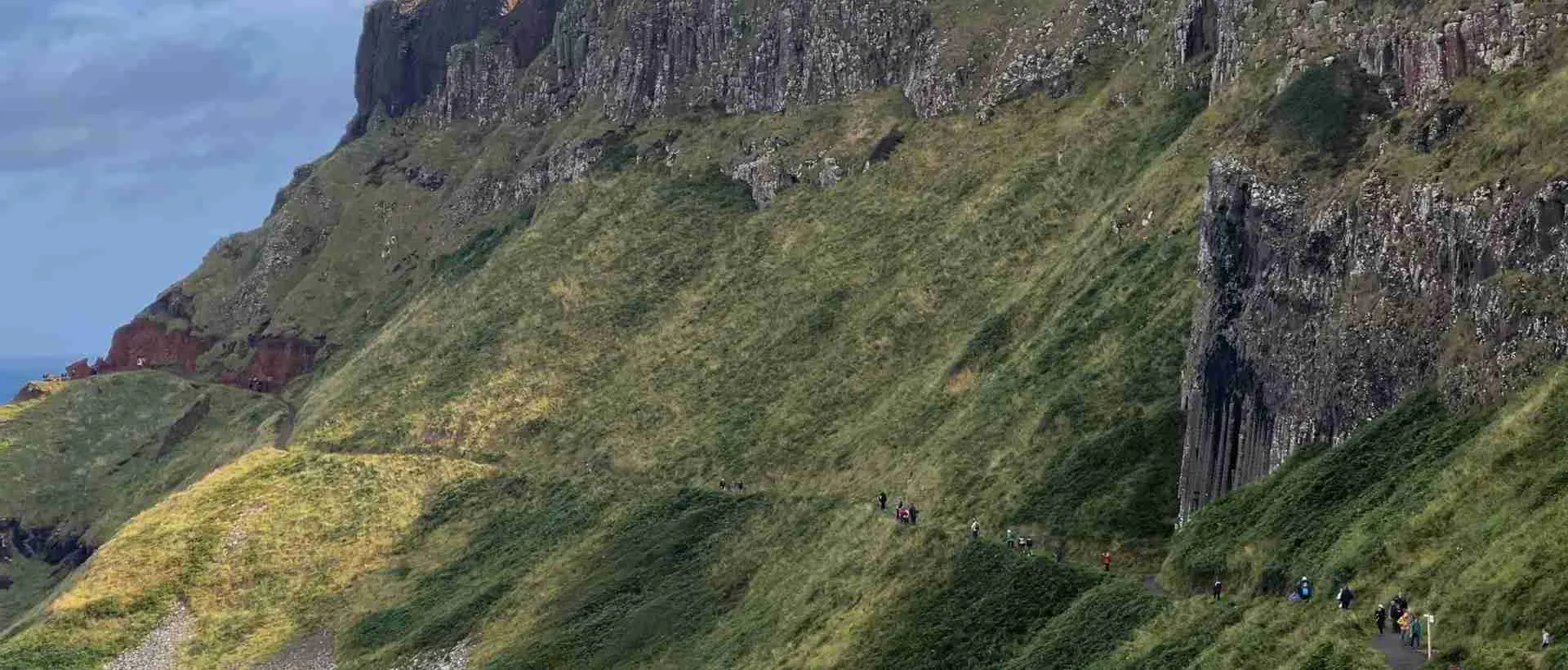
Northern Ireland’s dramatic Causeway Coast lies just 60 miles from Belfast, placing the UNESCO World Heritage-listed Giant’s Causeway, medieval castle ruins, and iconic Game of Thrones filming locations within easy reach for day-trippers. Whether traveling by organized coach tour, public bus, or rental car, visitors discover 40,000 basalt columns, rope bridges suspended 100 feet above the Atlantic, and the atmospheric landscapes that brought Westeros to life.
Key Takeaways About Belfast Day Trips 2026
- Budget Day Trips 2026: Public transport day trips cost £30-35 per person using the £10 Bus Rambler ticket plus £9 Giant’s Causeway admission. Self-drive options run £55-75 per person (two sharing car rental and fuel) including admissions to major attractions.
- Mid-Range Tours 2026: Organized coach tours from Belfast range £50-80 ($55-88) per person, with Game of Thrones specialty tours at £65-105 ($70-115) including transport, guide, and multiple filming location stops along the Causeway Coast.
- Luxury Private Tours 2026: Private vehicle tours cost £850-1,300 ($935-1,430) per vehicle for groups of 4-7, working out to £215-325 ($235-360) per person with door-to-door service and customizable itineraries.
- Giant’s Causeway Access 2026: The basalt columns themselves are free to walk on. The £9 adult Visitor Experience ticket includes parking, audio guide, guided tours, and center facilities. Pre-booking online saves £1.50 per adult ticket.
- Time Planning 2026: Standard day trips depart Belfast 8:30-9:30am and return 5:00-6:30pm. The 70-mile journey takes 75-90 minutes each way via direct route, longer via the scenic Causeway Coastal Route.
- Game of Thrones Locations 2026: Key filming sites accessible on day trips include the Dark Hedges (King’s Road), Dunluce Castle (House Greyjoy), Cushendun Caves (shadow baby scene), Carnlough Harbour (Braavos), and Carrick-a-Rede area (Stormlands).
People Also Ask About Belfast Day Trips 2026
Can you do Giant’s Causeway as a day trip from Belfast in 2026?
Yes, Giant’s Causeway makes an excellent day trip from Belfast in 2026, located just 60 miles north with journey times of 75-90 minutes via the direct A26 route or 2-3 hours along the scenic Causeway Coastal Route. Public transport options include the Goldline 221 direct bus (£20 return), organized coach tours (£50-80), or self-drive rental cars starting around £40-60 daily. Most visitors allocate 6-8 hours total for the day trip, spending 2-3 hours at Giant’s Causeway itself plus travel time and additional stops at attractions like Dunluce Castle, Carrick-a-Rede Rope Bridge, or Game of Thrones filming locations along the route. Tours typically depart Belfast 8:30-9:30am and return by 5:00-6:30pm, providing ample time to explore the 40,000 hexagonal basalt columns, walk the coastal trails, and visit the National Trust visitor center. The attraction operates year-round with extended hours during summer months, making it accessible for day-trippers regardless of season, though weather conditions are more favorable April through September.
How much does a Belfast to Giant’s Causeway day trip cost in 2026?
Belfast to Giant’s Causeway day trip costs range £30-390 ($33-430) per person depending on transportation method and tour inclusions in 2026. Budget travelers using public transport spend £30-35 per person total: £10 Bus Rambler unlimited day ticket plus £9 Giant’s Causeway Visitor Experience admission. Self-drive costs run £55-75 per person for two sharing: £20-30 per person car rental share, £8-13 fuel share, £9 Causeway admission, and £6-12 for additional castle admissions. Organized coach tours cost £50-80 per person for standard departures, £65-105 for Game of Thrones specialty tours including multiple filming locations, or £190-235 for premium rail-based tours combining train and coach segments. Luxury private tours run £850-1,300 per vehicle for groups of 4-7 passengers, working out to £215-325 per person with door-to-door Belfast hotel pickup, fully customizable itinerary, and dedicated driver-guide. All prices exclude meals, which typically add £15-45 per person depending on dining choices along the coast. The Giant’s Causeway admission itself is £9 adult (£4.50 child, £22 family), though the basalt columns are free to access for visitors arriving on foot without using the visitor center facilities.
What’s the best way to get from Belfast to Giant’s Causeway in 2026?
The best way to get from Belfast to Giant’s Causeway in 2026 depends on budget, flexibility needs, and desired level of independence. Organized coach tours (£50-80) offer the most hassle-free experience with driver-guide commentary, multiple attraction stops, and no parking concerns, ideal for first-time visitors wanting comprehensive coastal coverage without rental car logistics. Self-drive rental cars provide maximum flexibility to explore at your own pace, stop at hidden viewpoints, and extend or shorten visits as desired, working well for small groups who can share the £40-60 daily rental plus £15-25 fuel costs. Public transport via the Goldline 221 direct bus (£20 return) or £10 Bus Rambler unlimited ticket offers the most economical option at £30-35 total per person including admission, though schedules are limited to 2-3 daily departures and require careful timing. The train-plus-bus combination via Coleraine station adds scenic rail travel through Antrim countryside but extends journey time to 2+ hours each way. Private tours (£850-1,300 per vehicle) suit travelers prioritizing comfort, customization, and door-to-door convenience, particularly worthwhile for groups of 4+ splitting the cost. Summer visitors should pre-book any option in advance as tours and rental cars sell out during peak July-August season, while winter travelers benefit from more availability but should verify attraction opening hours before traveling.
Is the Giant’s Causeway worth visiting in 2026?
Giant’s Causeway remains absolutely worth visiting in 2026 as Northern Ireland’s only UNESCO World Heritage Site, offering a geological phenomenon found in only a handful of locations worldwide where 40,000 interlocking hexagonal basalt columns meet the Atlantic Ocean in dramatic formations. The site combines natural wonder with cultural significance, featuring ancient legends of giant Finn MacCool alongside 60-million-year-old volcanic rock formations that continue to captivate geologists and casual visitors alike. Beyond the famous columns, the surrounding Causeway Coast provides 5+ miles of dramatic clifftop walking trails, secluded coves, panoramic ocean vistas, and opportunities to spot seabirds, dolphins, and basking sharks from elevated viewpoints. The National Trust manages the site excellently with award-winning storytelling guides, multilingual audio guides, accessible pathways, and well-maintained facilities that enhance rather than detract from the natural landscape. Strategic timing maximizes the experience: arrive early morning (before 10am) or late afternoon (after 4pm) to avoid cruise ship crowds, visit October-March for dramatic storm-watching and solitude, or come April-September for extended daylight and calmer conditions ideal for coastal walking. The £9 Visitor Experience ticket provides exceptional value considering parking, guided tours, and facility access, while pedestrian access to the columns themselves remains free for those willing to park elsewhere and walk. Combined with nearby attractions like Carrick-a-Rede Rope Bridge, Dunluce Castle, Dark Hedges, and multiple Game of Thrones filming locations all within 15-minute drives, the Causeway anchors what many consider Ireland’s most spectacular coastal day trip.
Extended multi-day tours – 5+ days
Featured Belfast Multi-Day Tour Packages
5 days
From Dublin: 5 Day Northern Ireland & Atlantic Coast
- ✓ Comprehensive Belfast tour
- ✓ Expert local guides included
- ✓ All accommodation arranged
- ✓ Transportation provided

7 days
Evergreen Ireland North – 7 Days/6 Nights (12 destinations)
- ✓ Comprehensive Belfast tour
- ✓ Expert local guides included
- ✓ All accommodation arranged
- ✓ Transportation provided
5 days
Belfast, Galway, Northern Ireland & Atlantic Coast Small-Group Tour – 5 Days
- ✓ Comprehensive Belfast tour
- ✓ Expert local guides included
- ✓ All accommodation arranged
- ✓ Transportation provided
7 days
North of Ireland Escape
- ✓ Comprehensive Belfast tour
- ✓ Expert local guides included
- ✓ All accommodation arranged
- ✓ Transportation provided
Multi-day tour packages powered by TourRadar. Prices and availability subject to change.
Introduction: Planning Your Belfast to Causeway Coast Day Trip 2026
The Causeway Coast beckons from Belfast with a concentration of natural wonders, medieval history, and pop culture landmarks packed into a 60-mile stretch of Northern Ireland’s most dramatic coastline. What makes this particular day trip exceptional is the diversity: within a single outing, travelers experience geological formations 60 million years in the making, walk through locations that brought Game of Thrones’ Seven Kingdoms to life, cross rope bridges suspended above churning Atlantic waters, and explore castle ruins perched on cliff edges where Spanish Armada cannons still point seaward.
Belfast’s position as Northern Ireland’s capital and largest city makes it the natural launch point for Causeway Coast exploration. The city sits just 70-90 minutes by road from Giant’s Causeway depending on route choice, with the direct A26 providing fast access while the Causeway Coastal Route delivers uninterrupted ocean views and hidden cove discoveries. This proximity means day-trippers can leave Belfast after breakfast, spend 6-7 hours exploring coastal attractions, and return for dinner without rushing or overnight accommodations.
The 2026 travel landscape offers more options than ever for accessing these northern shores. Public transport has improved with enhanced Goldline Express services running three daily returns between Belfast Europa Buscentre and Giant’s Causeway during peak season, supplemented by the Causeway Rambler hop-on-hop-off service connecting coastal attractions from Coleraine to Ballycastle. Tour operators have expanded offerings beyond standard coach trips to include Game of Thrones-focused itineraries, luxury small-group experiences, and rail-based tours combining train travel with coastal coach segments.
Understanding your priorities shapes the optimal approach. First-time visitors benefit from organized tours that handle logistics while providing expert commentary on geology, history, and filming locations. Photography enthusiasts and outdoor enthusiasts prefer self-drive flexibility to linger at golden hour viewpoints or tackle extended coastal hiking trails. Budget travelers find excellent value in public transport options that reduce costs to £30-35 per person total. Families appreciate private tours that accommodate varying ages and energy levels without group coordination challenges.
Weather considerations matter significantly for 2026 planning. Northern Ireland’s maritime climate brings frequent rain year-round, though summer months (June-August) offer the longest daylight hours and warmest temperatures averaging 15-18°C (59-64°F). Spring (April-May) and autumn (September-October) deliver fewer crowds with acceptable weather conditions, while winter (November-March) showcases the coast’s raw power during Atlantic storms but requires flexibility for attraction closures due to high winds affecting rope bridge access and cliff path safety.
This comprehensive guide details every transportation option from Belfast to Causeway Coast attractions in 2026, breaks down actual costs for budget through luxury travel styles, provides specific timing guidance for efficient itinerary construction, maps all major Game of Thrones filming locations along the route, and shares insider strategies for avoiding crowds at Northern Ireland’s most-visited natural attraction. Whether you’re allocating one day or considering multiple excursions to different coastal sections, the information ahead ensures maximum value from your Causeway Coast exploration.
Understanding Giant’s Causeway: Northern Ireland’s UNESCO World Heritage Site 2026
Giant’s Causeway stands as Northern Ireland’s only UNESCO World Heritage Site, inscribed in 1986 for representing a geological phenomenon of global significance. The site encompasses approximately 40,000 interlocking basalt columns resulting from ancient volcanic fissure eruptions 50-60 million years ago during the Paleogene Period. As molten basalt cooled rapidly upon contact with sea and air, it contracted and fractured in predominantly hexagonal patterns, creating columns ranging from 15 to 20 inches diameter and reaching heights up to 39 feet above sea level.
The formation’s geological importance extends beyond visual impact. Giant’s Causeway provides one of the clearest examples worldwide of flood basalt formation, where extensive lava flows spread across landscapes during prolonged volcanic episodes. The site reveals three distinct lava flow periods through its layered structure: the Lower Basalts formed approximately 60 million years ago, the Middle Basalts containing the famous columnar formations about 58 million years ago, and the Upper Basalts representing the final volcanic activity around 55 million years ago. This stratification allows geologists to study volcanic activity patterns and environmental conditions during the Paleogene Period when Earth’s climate transitioned from tropical conditions toward cooler temperatures.
The columns display primarily hexagonal cross-sections, though some exhibit four, five, seven, or eight sides depending on cooling rates and mineral composition variations. This natural tendency toward hexagonal formation results from physical principles governing how materials crack under tension – hexagons provide the most efficient packing arrangement requiring minimum energy expenditure during the fracturing process. Walking across the causeway reveals these geometric variations up close, with each column representing a unique crystallization event frozen in time.
Beyond the main causeway area, the site extends along 2 kilometers of coastline incorporating formations with evocative names earned through centuries of observation. The Giant’s Boot resembles a massive stone footwear impression, the Organ consists of vertical columns rising like musical pipes, the Chimney Tops create distinctive stacks offshore, and the Harp formation features curved columns suggesting stringed instrument resonance. Each formation showcases different cooling patterns and erosion effects that have shaped the coastline over millions of years.
The National Trust, which manages the site since 1961, has implemented careful conservation measures balancing public access with geological preservation. The visitor center, rebuilt in 2012 to achieve environmental sustainability standards, uses interpretive exhibits explaining both scientific formation processes and cultural legends surrounding the causeway. Rangers conduct hourly guided walks providing geological context while addressing common questions about column formation, mineral content, and ongoing erosion patterns affecting the coastline.
Access to the basalt columns themselves remains free as part of Northern Ireland’s coastline public access rights. Visitors can approach from multiple directions: the main path descends 1 kilometer from the visitor center through a gentle grade suitable for most mobility levels, the clifftop trail offers elevated perspectives across the formation, and the coastal path from Dunseverick Castle provides a challenging 5-mile cliff-edge approach rewarding hikers with isolation and dramatic viewpoints. The optional £1 shuttle bus operates between the visitor center and column area for those preferring to conserve energy or experiencing mobility limitations.
The £9 Visitor Experience ticket, while not required for column access, includes several valuable inclusions that enhance understanding and comfort. Pre-booked online tickets save £1.50 per adult while guaranteeing entry during busy periods when walk-up availability becomes limited. The ticket covers on-site parking (saving separate search for alternative parking), award-winning guided tours departing hourly from the center, multilingual audio guides available in 11 languages providing 45-minute narrated walks, access to exhibition spaces detailing volcanic geology and local wildlife, use of all facilities including cafes and gift shops, and loan of mobility equipment for visitors requiring assistance. National Trust members enter free but should still pre-book time slots to guarantee access during peak summer months.
Optimal visiting strategy varies by season and personal priorities. Summer visitors (June-August) face largest crowds but enjoy longest daylight hours and warmest conditions, making early morning arrival before 10am or late afternoon after 4pm essential for manageable visitor density. Spring and autumn shoulder seasons (April-May, September-October) provide the best balance of acceptable weather, reduced crowds, and accessible facilities before winter closures. Winter visitors (November-March) experience the coast at its most dramatic with powerful Atlantic swells crashing against columns, though strong winds occasionally force temporary access restrictions and reduced visitor center hours must be verified before traveling.
Photography opportunities abound throughout the site. The main causeway area photographs best during golden hour periods when low-angle sunlight illuminates hexagonal patterns while creating dramatic shadows emphasizing geometric forms. Elevated viewpoints along the clifftop trail provide wide-angle perspectives capturing the full extent of the formation against ocean backdrop. Close-up detail shots work particularly well with slight overcast conditions that eliminate harsh shadows and reveal subtle color variations in the basalt ranging from charcoal gray to russet brown depending on iron content and weathering exposure.
Wildlife observations complement geological interests at Giant’s Causeway. Seabird colonies nest along surrounding cliffs including fulmars, razorbills, and cormorants, while puffins visit offshore rocks during April-July breeding season. Marine mammals occasionally appear in coastal waters with bottlenose dolphins, minke whales, and basking sharks spotted from elevated viewpoints during summer months. Tidal pools between columns harbor marine invertebrates including anemones, sea stars, and various crab species adapted to the intertidal zone’s challenging conditions.
The site’s legendary backstory adds cultural depth to geological wonder. Irish mythology recounts how giant Finn MacCool built the causeway as a bridge to Scotland to fight rival giant Benandonner. When Finn saw Benandonner’s massive size, he fled home where his wife Oonagh dressed him as a baby. Benandonner, seeing the “infant’s” enormous size, feared the father’s dimensions and fled back to Scotland, destroying the causeway behind him. A similar basalt formation exists on Scotland’s Staffa island, lending credence to the bridge legend while actually representing the same ancient lava flow extending across what is now the North Channel.
Educational programs operate throughout peak season for visitors seeking deeper understanding. Rangers lead specialized themed walks focusing on geology, ecology, or cultural history. Family-focused activities help children engage with site concepts through hands-on geology demonstrations and legend storytelling. The visitor center’s exhibition space features original artifacts from the Girona shipwreck, interactive volcanic formation displays, and touchscreen maps showing the causeway’s relationship to other global basalt formations including Devil’s Postpile in California and Devil’s Tower in Wyoming.
Site accessibility has improved significantly with the 2012 visitor center rebuild. The main pathway features gentle gradients throughout its 1-kilometer length with rest benches every 100 meters. All-terrain wheelchairs and mobility scooters are available for free loan to Visitor Experience ticket holders. The Changing Places facility accommodates visitors with complex accessibility needs. Sensory bags containing noise-cancelling headphones, fidget tools, and visual support cards assist neurodivergent visitors in managing sensory input. Service dogs are welcome throughout the site including on guided walks and shuttle buses.
Giant’s Causeway functions as the anchor attraction for most Belfast day trips, with visitors typically allocating 2-3 hours for thorough exploration. This duration allows time for the descent to the columns, 30-45 minutes examining the formations up close, a guided tour or audio guide circuit, and either the clifftop trail or shuttle return. Extended visits incorporating the 5-mile coastal trail to Dunseverick Castle or the Clifftop Experience guided hike from Hamilton’s Seat require 4-5 hours and are better suited to dedicated coastal walking trips rather than standard day trip itineraries attempting to cover multiple attractions.
Transportation Options from Belfast to Giant’s Causeway 2026
Five distinct transportation approaches connect Belfast to Giant’s Causeway in 2026, each offering different balances of cost, convenience, flexibility, and experience quality. Understanding the practical realities of each option helps match transportation choice to trip priorities and travel style.
Organized Coach Tours from Belfast 2026
Organized coach tours represent the most straightforward approach for first-time visitors, eliminating rental car logistics, parking challenges, and route planning uncertainty while adding driver-guide commentary and multiple attraction stops beyond Giant’s Causeway itself. Tours depart daily from central Belfast locations including Europa Buscentre, City Hall, and major hotels, operating year-round with increased frequency during April-October peak season.
Standard Giant’s Causeway day tours cost £50-80 ($55-88) per adult in 2026, typically departing 8:30-9:00am and returning to Belfast by 5:30-6:00pm. These full-day itineraries include 2-2.5 hours at Giant’s Causeway plus photo stops at Carrickfergus Castle, Dark Hedges, Dunluce Castle, and scenic viewpoints along the Causeway Coastal Route. Most operators use comfortable modern coaches with reclining seats, air conditioning, WiFi, and USB charging ports, though specific amenities vary by company and should be verified during booking.
Game of Thrones specialty tours have proliferated since the series finale, ranging £65-105 ($70-115) per person for comprehensive full-day experiences visiting 6-8 filming locations. These tours prioritize Dark Hedges (King’s Road), Cushendun Caves (shadow baby birth), Dunluce Castle (House Greyjoy), Carnlough Harbour (Braavos), and Larrybane Quarry (Renly’s camp) while still allocating 1.5-2 hours for Giant’s Causeway exploration. Driver-guides on these specialized tours possess extensive series knowledge, sharing behind-the-scenes production stories and pointing out subtle location details casual visitors miss. The £25 budget option from some operators provides basic transportation and minimal commentary, suitable for independent travelers wanting affordable group transport rather than comprehensive guided experience.
Premium tour options elevate the experience through smaller group sizes, enhanced inclusions, or luxury transportation. Rail-based tours combining train travel from Belfast to Coleraine with coach segments along the coast cost £190-235 ($210-260) per person, appealing to travelers who prioritize scenic train journeys through Antrim countryside alongside coastal exploration. These tours typically limit groups to 20-25 passengers maximum and include visits to Bushmills Distillery or Carrick-a-Rede Rope Bridge beyond standard itinerary stops.
Private tours provide maximum flexibility and personalization at £850-1,300 ($935-1,430) per vehicle accommodating 4-7 passengers depending on vehicle type. This works out to £215-325 ($235-360) per person for a group of four sharing, making private options surprisingly competitive with premium group tours when traveling as a family or small group. Private tours offer door-to-door Belfast hotel pickup, fully customizable itineraries with extended time at preferred attractions, ability to deviate for spontaneous photo opportunities, and departure/return times adjusted to client preferences. Operators provide luxury SUVs or executive vans with leather seating, generous luggage space, and knowledgeable driver-guides who adjust commentary depth to group interests.
Tour booking strategy matters for securing best availability and pricing. Popular summer departure dates (July-August) sell out weeks in advance, particularly for Game of Thrones tours and small-group experiences with capped capacity. Booking 3-4 weeks ahead guarantees seat selection and allows time for any itinerary clarifications with operators. Last-minute bookings within 48 hours sometimes secure discounted rates for unsold seats, though this gamble only works for flexible travelers with multiple date options. Most operators offer free cancellation up to 24-48 hours before departure, providing reasonable flexibility for uncertain Northern Ireland weather.
Tour inclusions and exclusions require careful review before booking. The tour price covers transportation, driver-guide services, and sometimes Giant’s Causeway admission (verify this during booking as policies vary). Meals are universally excluded with lunch stops scheduled at coastal villages where travelers purchase food at own expense, typically £12-25 for pub meals or £8-15 for cafe options. Additional attraction admissions beyond Giant’s Causeway – such as Dunluce Castle (£6), Carrick-a-Rede Rope Bridge (£9-13), or Bushmills Distillery tours (£10-45) – operate as optional add-ons at visitor’s expense. Some tours include these admissions while others provide photo stop opportunities without entry time, affecting total day cost significantly.
Group dynamics significantly impact tour experience quality. Summer tours often fill to maximum coach capacity (45-53 passengers) leading to extended loading/unloading times at each stop and reduced driver-guide interaction with individual passengers. Spring and autumn tours typically carry 20-30 passengers providing more personalized atmosphere and easier access to driver-guide for questions. Winter tours may combine multiple departure times when booking numbers are low, meaning your purchased departure time could consolidate with another tour creating uncertainty about final group size.
Self-Drive Car Rental from Belfast 2026
Self-drive rental cars deliver maximum flexibility for Belfast to Causeway Coast day trips, allowing travelers to set their own pace, extend or shorten attraction visits spontaneously, access hidden viewpoints inaccessible to large coaches, and explore beyond standard tourist routes. This option works particularly well for small groups who can split rental and fuel costs, photography enthusiasts requiring extended time at specific locations, and families needing flexibility for varying ages and energy levels.
Car rental costs in Belfast range £40-95 per day in 2026 depending on vehicle size, transmission type, and booking timing. Compact manual transmission vehicles (Volkswagen Polo, Ford Fiesta equivalent) represent the most economical choice at £40-50 daily, sufficient for 2-3 passengers with limited luggage. Mid-size automatics cost £60-75 daily, preferred by North American visitors unfamiliar with manual transmissions or those wanting additional comfort for the 140-mile round trip. Larger vehicles like SUVs or minivans cost £75-95 daily, necessary for families of 4+ or groups requiring luggage space for multiple carry-on bags.
Rental car pickup from Belfast City Airport or Belfast International Airport includes mandatory insurance running £15-25 daily (collision damage waiver and theft protection), bringing total daily costs to £55-120 before fuel. Some credit cards provide rental car insurance as a benefit, potentially eliminating the extra insurance charge if cardholders decline rental company coverage and accept responsibility for damages. However, Northern Ireland’s narrow rural roads, blind corners, and high stone walls create genuine damage risk making insurance advisable for most travelers regardless of credit card coverage.
Fuel costs add £15-25 for the Belfast to Giant’s Causeway round trip depending on vehicle efficiency and route choice. The direct 140-mile round trip via A26 motorway consumes approximately 6-7 liters (1.6-1.8 gallons) in fuel-efficient compact cars, costing £10-13 at 2026 fuel prices around £1.50-1.70 per liter. The extended 180-mile scenic route via Causeway Coastal Route increases fuel consumption to 8-10 liters (2.1-2.6 gallons) costing £15-18. Larger vehicles and less efficient models can double these fuel costs, while hybrid or electric rental options reduce fuel expenses significantly though rental premiums often offset savings.
Navigation along the route presents no significant challenges for comfortable drivers. The direct route follows clearly marked motorways and A-roads with excellent signage directing traffic toward “Giant’s Causeway” and “Causeway Coast” from Belfast city limits. The M2 motorway extends north from Belfast for 17 miles before joining the A26 dual carriageway toward Ballymoney, where the B17 road leads directly to Bushmills and Giant’s Causeway. Journey time runs 75-90 minutes in normal traffic conditions, extending to 2 hours during Friday evening exodus from Belfast or Monday morning return commutes.
The Causeway Coastal Route adds 40 miles and 1-2 hours but rewards drivers with continuous ocean views, secluded cove discoveries, and numerous photo opportunity stops impossible on tours. This route departs Belfast via the A2 coastal road through Carrickfergus, continuing north through Larne, Glenarm, Cushendall, and Cushendun before reaching Ballycastle and the western approach to Giant’s Causeway. The A2 features single-lane sections with passing places, particularly through the Glens of Antrim, requiring confident driving skills and patience when meeting oncoming traffic on narrow stretches. Allowing 2.5-3 hours for this route including viewpoint stops provides reasonable pacing without feeling rushed.
Driving considerations specific to Northern Ireland include left-side driving (challenging for North American visitors), roundabout navigation (frequent throughout the route), and extremely narrow roads in rural sections where stone walls sit mere inches from vehicle edges. Speed cameras operate on major routes with automatic ticketing for violations. Parking throughout the Causeway Coast generally costs £5-12 per attraction with Giant’s Causeway visitor center charging £12 parking included in the Visitor Experience ticket. Pre-booking Giant’s Causeway admission online guarantees parking availability during busy summer periods when walk-up parking fills by mid-morning.
Self-drive flexibility enables extended Causeway Coast exploration beyond standard day trip itineraries. With an early 7:00am Belfast departure, drivers can visit Carrickfergus Castle opening at 9:00am, reach Giant’s Causeway by 11:00am for 2-3 hours before afternoon cruise ship crowds, continue to Carrick-a-Rede Rope Bridge for late afternoon crossing when tour buses depart, photograph Dark Hedges during golden hour, and return to Belfast by 8:00-9:00pm having covered eight attractions versus the 3-4 possible on organized tours. This packed schedule suits energetic travelers maximizing single-day value but requires realistic assessment of group energy levels and appetite for extended driving days.
Public Transport: Bus Services from Belfast 2026
Public bus services provide the most economical transportation from Belfast to Giant’s Causeway at £20-35 per person total including admission, though limited schedules require careful timing and reduce flexibility compared to tours or rental cars. Translink operates Northern Ireland’s public transport network with several route options connecting Belfast to the Causeway Coast.
The Goldline 221 service runs direct from Belfast Europa Buscentre to Giant’s Causeway with stops at Ballymena, Ballymoney, and Bushmills along the route. This service departs Belfast three times daily during peak season (typically April-October) at approximately 9:00am, 12:00pm, and 3:00pm with return services at 11:30am, 2:30pm, and 5:30pm, though exact times change seasonally and should be verified on Translink’s website before travel. Journey time runs 90-110 minutes depending on stops and traffic conditions. Standard single tickets cost approximately £18-20 with return fares slightly discounted, bringing round-trip public transport costs to £35-40 per person before attraction admissions.
The Bus Rambler ticket offers superior value for day-trippers at £10 per adult for unlimited travel on all Ulsterbus, Goldliner, and Metro services throughout Northern Ireland after 9:15am. This ticket effectively reduces transportation costs to £10 while providing flexibility to make multiple stops along the coast using local bus services between attractions. The Causeway Rambler service (route 402) operates between Coleraine and Ballycastle via Giant’s Causeway running every 30-45 minutes during summer season, allowing Bus Rambler ticket holders to easily visit Giant’s Causeway, Carrick-a-Rede, Dunluce Castle, and Bushmills in a single day by hopping between buses.
Combined train and bus travel provides scenic variety through Antrim countryside though extends journey time significantly. Trains depart Belfast Lanyon Place or Great Victoria Street stations hourly for Coleraine (70-minute journey, £15-20 single fare). From Coleraine station, the Causeway Rambler bus 402 or Ulsterbus 172 connects to Giant’s Causeway in 30-40 minutes. This combined rail-bus approach costs £25-30 one way or can utilize the Bus Rambler ticket for the bus segment after purchasing train tickets separately.
Public transport limitations include fixed schedules that constrain time at attractions, limited departure frequency requiring precise timing, and longer overall journey times compared to direct car or tour approaches. The 9:00am Belfast departure on Goldline 221 arrives Giant’s Causeway around 10:30am, requiring departure on the 2:30pm or 5:30pm return bus. This allows either a brief 3-hour visit departing at 2:30pm or an extended 6-hour stay waiting until 5:30pm departure, with no intermediate options. Travelers missing the 5:30pm return face no alternative public transport back to Belfast that evening, necessitating expensive taxi service (£120-160) or overnight accommodation.
The Green Ticket offers a value bundle combining Translink bus fare and Giant’s Causeway admission for £11 adult (£5.50 child), available from Bushmills Visitor Information Centre or via the Park and Ride facility at Dundarave Car Park in Bushmills. This ticket saves approximately £6-8 versus purchasing transportation and admission separately, though requires collecting the physical ticket in Bushmills rather than direct Belfast-to-Causeway service.
Family and Friends tickets provide excellent value for groups at £24 covering two adults and up to four children for unlimited day travel on all Translink services. This reduces per-person costs dramatically for families, bringing six-person family transportation to £4 per person versus £10 per person for individual Bus Rambler tickets. The Family and Friends ticket must be purchased before 9:15am for all-day validity, while after 9:15am it functions identically to the Bus Rambler with the same unlimited travel privileges.
Bus service reliability varies seasonally with summer schedules generally running on time while winter services occasionally face delays or cancellations during severe weather events. Storm-force winds affecting the Causeway Coast 15-20 days annually can close Giant’s Causeway cliff paths and Carrick-a-Rede Rope Bridge, though the visitor center remains accessible. Checking Translink’s service updates and Giant’s Causeway weather conditions via National Trust website before departure prevents wasted trips during winter months when morning departures may encounter afternoon closures.
Private Driver Services and Taxi Options 2026
Private driver services and taxi options fill the gap between organized tours and self-drive rental, providing personalized itineraries with professional drivers while eliminating rental car booking and driving responsibilities. Belfast-based driver services operate throughout 2026 offering full-day Causeway Coast excursions at rates comparable to or slightly above premium tour prices when traveling as a small group.
Standard private driver rates run £350-450 for full-day (8-10 hour) Causeway Coast trips in comfortable saloon cars accommodating up to 4 passengers with moderate luggage. Larger vehicles including MPVs and executive vans holding 5-7 passengers cost £450-600 for equivalent full-day service. Luxury options with premium vehicles and particularly experienced driver-guides range £650-800 for full-day service. These rates cover driver time, fuel, vehicle costs, and basic driver commentary but exclude attraction admission fees, meals, and optional gratuities typically 10-15% for excellent service.
Splitting private driver costs among group members makes this option financially competitive with premium organized tours while offering substantially greater flexibility. A family of four paying £400 for private full-day service spends £100 per person for dedicated vehicle and driver versus £65-105 per person for premium small-group tours, with the private option providing departure time flexibility, customizable routing, extended time at preferred attractions, and no coordination with other passengers’ schedules or interests.
Booking private drivers requires more advance planning than joining organized tours. Reputable Belfast driver services maintain online booking systems with confirmed availability typically 5-7 days advance, though peak summer weekends (July-August) may require 2-3 weeks notice for guaranteed availability. Many services offer free quote systems where travelers submit preferred itinerary, group size, and date for customized pricing rather than fixed published rates. This personalization allows optimization for specific interests like extensive Game of Thrones location coverage, photography-focused routing with golden hour timing, or accessibility considerations requiring vehicles with mobility equipment.
Communication with drivers before trip day helps align expectations and maximize value. Sharing specific interests (geology, history, photography, TV filming locations) allows drivers to emphasize relevant sites and commentary. Discussing any mobility limitations, child car seat requirements, or luggage constraints ensures appropriate vehicle assignment. Confirming desired departure time and approximate return window helps drivers optimize routing for traffic conditions and attraction opening hours.
Driver knowledge quality varies significantly across Belfast’s private driver market. Experienced drivers possess extensive knowledge of Causeway Coast geology, local history, and practical routing including lesser-known viewpoints and photo opportunities. They maintain relationships with attraction staff allowing slight routing adjustments for crowd avoidance or optimal timing. Less experienced drivers essentially provide vehicle and navigation without substantive commentary, functioning more as taxi service than guided experience. Reviews on platforms like TripAdvisor or Google provide reasonable indication of driver knowledge depth, with specific mentions of historical detail, local stories, or hidden gem discoveries suggesting higher-value service.
Combining private drivers with attraction guide services provides another option. Some visitors arrange Belfast-to-Causeway transportation with basic driver service then join National Trust guided walks at Giant’s Causeway, hire local guides for specialized Game of Thrones tours, or book Bushmills Distillery tours separately. This approach reduces private driver costs while still eliminating rental car logistics and allowing flexible timing compared to group tour schedules.
Standard Belfast taxi services generally decline full-day Causeway Coast trips or quote rates substantially above specialized driver services (£500-700+ for equivalent full-day service). Traditional Belfast black cabs and taxi companies focus on urban transportation and airport transfers rather than full-day excursions. The few willing to accept such bookings charge premium rates reflecting their preference for shorter, higher-turnover urban fares. Specialized driver services focusing on tourist excursions offer better value and more appropriate vehicle standards for full-day coastal touring.
Giant’s Causeway Visitor Experience 2026: Costs, Facilities, and Optimal Visit Timing
Understanding Giant’s Causeway admission structure, facility offerings, and strategic timing helps visitors maximize value while avoiding common frustrations affecting less-prepared travelers. The National Trust manages the site with careful balance between conservation requirements and public access needs, implementing systems designed to spread visitor loads across operating hours while maintaining the geological formations for future generations.
Admission Costs and Ticket Options 2026
Giant’s Causeway operates on a dual admission structure where the geological formations themselves remain freely accessible as part of Northern Ireland’s coastline while the National Trust Visitor Experience charges admission for parking, facilities, and interpretive services. This structure creates confusion among first-time visitors who arrive uncertain whether payment is required to see the famous basalt columns.
The Visitor Experience ticket costs £9 adult, £4.50 child (5-16 years), and £22 family (two adults plus up to three children under 17) in 2026, with children under 5 entering free. Pre-booking tickets online via the National Trust website or giantscausewaytickets.com saves £1.50 per adult, £1 per child, and £3.50 per family ticket, bringing pre-booked rates to £7.50 adult, £3.50 child, and £18.50 family. These savings make online booking financially worthwhile even for solo travelers while additionally guaranteeing parking availability during busy summer periods when walk-up parking fills by 10:00-11:00am.
National Trust members and National Trust for Scotland Neighbour Pass holders enter free with membership cards but must still pre-book time slots online during peak season to guarantee parking access. The member benefit saves £9-22 per visit depending on group composition, with annual National Trust membership costing £74 individual or £128.50 family. Visitors planning to see multiple Northern Ireland National Trust properties during their trip – including Giant’s Causeway, Carrick-a-Rede Rope Bridge, and Mussenden Temple – quickly recover membership costs versus individual admission purchases while gaining free parking at all properties.
The Visitor Experience ticket includes substantial value beyond simple admission. Included services are on-site parking in the dedicated visitor center car park (otherwise unavailable to non-ticket holders), hourly guided tours with award-winning National Trust storytelling guides providing 45-minute walks with geological and cultural context, multilingual audio guides available in 11 languages (English, Irish, German, French, Spanish, Italian, Portuguese, Dutch, Polish, Simplified Chinese, and Japanese) for self-paced 45-minute tours, access to the visitor center exhibition space featuring interactive volcanic formation displays and artifacts from the Spanish Armada Girona shipwreck, use of all facilities including indoor and outdoor seating areas, clean restrooms, baby changing stations, and luggage storage, Changing Places accessible toilet facility for visitors with complex needs, and free loan of mobility equipment including wheelchairs, all-terrain wheelchairs, and mobility scooters for visitors requiring assistance.
The optional shuttle bus between the visitor center and column area operates independently at £1 per person per trip, not included in Visitor Experience tickets. This minibus runs continuously during operating hours covering the 1-kilometer distance in approximately 5 minutes, useful for visitors with limited mobility, families with young children, or travelers preferring to conserve energy for exploring the columns rather than the access walk. Most able-bodied visitors walk down to the columns and ride the shuttle uphill on return, paying £1 for one-way service.
Alternative free access exists for visitors willing to bypass the visitor center entirely. Pedestrians approaching from the Causeway Coastal Path or Dunseverick Castle cliff walk (5 miles east) access the columns without encountering admission points. Travelers parking at alternative locations including nearby Causeway Hotel car park (£8-10, subject to availability), the Nook Cafe (free with cafe purchase, though cafe ownership discourages this usage), or Ballintoy village (2 miles east, free street parking with 30-minute walk to columns via coastal path) can walk to the formations without paying National Trust fees. These approaches suit budget-conscious travelers comfortable with longer walks and basic travelers accepting absence of facilities, guided tours, and interpretive materials in exchange for zero admission costs.
The Green Ticket package, available from Bushmills Visitor Information Centre or via Park and Ride at Dundarave Car Park in Bushmills village, combines Translink bus fare and Visitor Experience admission for £11 adult (£5.50 child). This represents approximately £6-8 savings versus purchasing transportation and admission separately, working particularly well for public transport users arriving via train to Coleraine then connecting to the Causeway Rambler bus through Bushmills.
Visitor Center Facilities and Services 2026
The award-winning visitor center, opened in 2012 after extensive architectural design to minimize environmental impact, integrates into the coastal landscape with grass-covered roof and recessed positioning below ridgeline visibility from most angles. The building achieved BREEAM Excellent environmental rating through passive heating/cooling systems, renewable energy use, and sustainable material sourcing. Inside, the facility provides comprehensive services supporting comfortable multi-hour visits regardless of weather conditions.
The exhibition space occupies the center’s lower level with interactive displays explaining volcanic formation processes, the Paleogene Period environment during column creation, and ongoing geological processes shaping the coastline. Touchscreen stations allow visitors to explore worldwide basalt formations, compare Giant’s Causeway to similar sites in Scotland, Iceland, and North America, and access detailed geological information adjusted for various knowledge levels from elementary concepts to university-level geology. Original artifacts from the 1588 Spanish Armada shipwreck of the Girona include coins, jewelry, and ship fittings recovered during archaeological excavations, displayed with historical context about the Armada’s attempted invasion and subsequent wrecks along Ireland’s coast.
Food service operates through the Giant’s Causeway Cafe offering hot meals, sandwiches, soups, salads, hot beverages, and baked goods. Meal prices range £8-16 for mains including traditional Ulster fry breakfast, fish and chips, soups with wheaten bread, and vegetarian options. Coffee and tea cost £3-4, with specialty drinks £4-5. While prices reflect captive audience dynamics typical of major tourist attractions, food quality receives generally positive reviews and portions satisfy hungry visitors returning from cliff walks. Outdoor terrace seating provides ocean views during fair weather, with ample indoor seating accommodating groups during Northern Ireland’s frequent rain showers.
The gift shop stocks extensive Giant’s Causeway and Northern Ireland merchandise including books about local geology and history, apparel featuring site imagery, jewelry inspired by basalt columns, children’s educational toys, gourmet food products from Northern Ireland producers, and standard tourist souvenirs. Prices span budget postcards and magnets (£1-3) through premium jewelry and artwork (£50-200). Proceeds support National Trust conservation work at Giant’s Causeway and other Northern Ireland properties, making purchases directly contribute to site preservation.
Accessibility provisions extend throughout the facility. The Changing Places toilet provides ceiling track hoist, height-adjustable changing bench, centrally placed toilet, and ample assistant space accommodating visitors with complex accessibility needs beyond standard accessible restroom capabilities. Manual wheelchairs, all-terrain wheelchairs designed for coastal path navigation, and mobility scooters are available for free loan to Visitor Experience ticket holders and National Trust members on first-come, first-served basis throughout operating hours. Sensory bags containing noise-cancelling headphones, fidget tools, and visual support cards assist neurodivergent visitors in managing sensory input from crowds and unfamiliar environments. Service dogs are welcome throughout all indoor and outdoor areas including on guided tours and shuttle buses.
Luggage storage lockers accommodate day packs and small suitcases for cruise ship passengers or travelers with Belfast hotel checkout before visiting the coast. These secure lockers operate via coin deposit (£1-2 depending on size) refunded upon retrieval. Large tour coach luggage holds prove unnecessary as most visitors carry only day packs with cameras, water bottles, and weather gear appropriate for coastal walking.
Free WiFi operates throughout the visitor center interior, allowing travelers to share photos to social media, verify return transportation schedules, or access supplementary information about coastal attractions. Mobile phone signal strength varies along the coastal paths with reliable 4G coverage at the visitor center and main column area but spotty service along remote cliff sections between Giant’s Causeway and Dunseverick Castle.
Rangers and visitor information staff provide exceptional service answering questions about site geology, optimal photography locations, coastal walk difficulty levels, current weather conditions affecting cliff path access, and broader Causeway Coast attraction recommendations. Staff enthusiasm and knowledge contribute significantly to overall visitor experience, with rangers often spending extended time with curious visitors explaining column formation details or discussing ongoing research into site geology and ecology.
Optimal Visit Timing and Crowd Avoidance Strategies 2026
Strategic timing dramatically affects Giant’s Causeway experience quality, with visitor density varying by season, day of week, and time of day by factors of 10x or more between quietest winter weekday mornings and peak summer weekend middays. Understanding these patterns allows savvy travelers to encounter the formations in relative solitude while less-informed visitors battle dense crowds for photo opportunities.
Summer season (late June through August) brings both optimal weather conditions and overwhelming crowds, with 5,000-7,000 daily visitors common during July-August peak weeks. Cruise ships docking at Belfast generate particularly intense midday surges, with 400-800 passengers from a single ship arriving Giant’s Causeway 10:30am-2:30pm via organized shore excursions. Multiple cruise ships on the same day (occurring 2-3 times weekly during July-August) can bring total midday visitor counts above 1,000 simultaneously on site, creating congestion at popular column formations, photo competition for prime viewpoint positions, and queues for shuttle buses and restrooms.
Early morning arrival strategy (before 9:30am) avoids cruise ship groups and most tour buses, with first 90 minutes after opening offering the quietest conditions of entire day. Sunrise photography enthusiasts arriving at dawn (5:00-6:00am May-July) find complete solitude on the columns though visitor center facilities remain closed and no ranger assistance is available for emergencies. The 8:00-9:30am window provides the practical sweet spot balancing reasonable arrival hour with low crowds while accessing full facilities and staff support.
Late afternoon arrival (after 4:00pm) capitalizes on departing tour bus schedules and cruise passenger return deadlines, with visitor counts dropping dramatically from 3:00pm onwards. Summer’s extended daylight (sunset 9:30-10:00pm June-July) provides hours of exploration time after crowds disperse, though limited visitor center hours (typically closing 6:00-7:00pm seasonally) mean reduced facility access. Late arrivals still access the columns freely via the always-open coastal path but forfeit guided tours, exhibition access, and cafe service.
Shoulder seasons (April-May and September-October) offer the optimal balance of manageable crowds, acceptable weather conditions, and full facility operations. Visitor counts drop 40-60% from July-August peaks while temperatures remain mild enough for comfortable coastal walking and rain frequency, though elevated, doesn’t preclude outdoor activities. These months provide the best opportunity for quality photographs without photo-bombing by large tour groups while still benefiting from guided tours, full opening hours, and operational shuttle service.
Winter season (November-March) showcases Giant’s Causeway at its most dramatic with powerful Atlantic storms generating massive swells crashing against the basalt columns, creating spectacular photography opportunities for visitors prepared with weather-sealed cameras and waterproof gear. Visitor counts plummet to 200-500 daily, with some winter weekdays seeing fewer than 100 visitors total. This solitude comes with tradeoffs: reduced visitor center hours (often 10:00am-4:00pm), limited or no guided tour schedules, frequent cliff path closures during high wind events (50+ mph gusts common November-February), and cold, wet conditions (5-8°C temperatures with persistent rain/wind) requiring proper outdoor gear. Winter visitors should verify current opening status via National Trust website before traveling as occasional severe weather events force temporary site closures.
Day-of-week patterns matter less than seasonal timing, though subtle differences exist. Weekend crowds (Saturday-Sunday) slightly exceed weekday levels during summer but the difference proves marginal compared to seasonal variation. School holiday periods (Easter week, all of July-August, and Christmas week) generate elevated weekday crowds matching or exceeding typical weekend levels. Irish and UK bank holidays concentrate domestic visitors but the effect pales compared to cruise ship arrival impacts.
Weather monitoring helps optimize visit conditions. The Causeway Coast experiences four-season weather on any given day, with sunshine, showers, wind, and calm periods cycling throughout afternoons regardless of morning forecasts. Checking live webcams available on Giant’s Causeway official website provides real-time conditions for departure decision-making. The met.ie and metoffice.gov.uk weather services provide detailed local forecasts including wind speed predictions crucial for assessing Carrick-a-Rede Rope Bridge closure risk and cliff path safety.
Combining strategic timing with route planning maximizes day trip efficiency. Visitors arriving Giant’s Causeway 9:00-10:00am during peak season should immediately proceed to the columns before cruise ship groups arrive 10:30am onwards, then return to visitor center for exhibition, cafe, and gift shop during 11:00am-1:00pm peak congestion period when columns are most crowded. This pattern reverses the typical visitor flow (visitor center first, then columns) to exploit brief morning window of column solitude.
Game of Thrones Filming Locations: Belfast Day Trip Itinerary 2026
Game of Thrones transformed Northern Ireland’s Causeway Coast into one of the world’s most sought-after filming location destinations, with HBO production utilizing dramatic coastal landscapes, medieval ruins, and atmospheric forests to create Westeros’ most memorable settings. The concentration of accessible filming sites along the Belfast-to-Giant’s Causeway corridor makes comprehensive Game of Thrones location touring feasible within a single day trip, though selective prioritization yields better results than attempting every site in one rushed itinerary.
The Dark Hedges: King’s Road and Arya’s Escape 2026
The Dark Hedges stand as Northern Ireland’s most photographed tree tunnel, where 150 eighteenth-century beech trees planted by the Stuart family create an otherworldly avenue serving as the King’s Road in Season 2 Episode 1 during Arya Stark’s disguised escape from King’s Landing. The atmospheric tunnel location at Bregagh Road near Ballymoney sits 20 minutes inland from the Causeway Coast, positioned perfectly between Belfast and Giant’s Causeway as natural stopping point on day trip itineraries.
Access to Dark Hedges is completely free as the trees line a public road open to vehicle and pedestrian traffic. No admission fees, parking charges, or tickets exist, making this the most budget-friendly major Game of Thrones location. The site attracts 20,000+ weekly visitors during summer peak season creating traffic congestion and parking challenges along the narrow country road. Early morning visits (before 9:00am) or late afternoon (after 5:00pm) find far fewer visitors enabling clear photographs of the tree tunnel without crowds, while midday arrivals encounter tour bus groups and difficult parking.
Photography thrives at Dark Hedges due to the interlocking canopy creating dramatic light filtering through ancient branches. The tunnel extends approximately 500 feet with the most photogenic section concentrated in the middle 200 feet where tree branch intertwining proves densest. Overcast conditions with soft diffused light actually benefit photography here by eliminating harsh shadows and preventing blown-out sky in frame compositions. Golden hour lighting (first and last hour of daylight) backlights the tunnel dramatically though requires careful exposure management to prevent silhouetted trees with lost detail.
Walking through the tunnel takes 5-10 minutes for the full length, with most visitors spending 20-30 minutes total including photography from multiple angles and positions. The trees show significant age-related decline with several major specimens lost to storm damage in recent years, lending urgency to visiting while this iconic formation survives. Environmental pressures from massive visitor footfall and vehicle traffic have accelerated tree health decline, with conservation groups working to limit access or reroute traffic to preserve remaining trees for future decades.
Nearby filming locations cluster within short drives of Dark Hedges. Ballymoney town (5 miles) served as various King’s Landing street scenes. Gracehill village (8 miles) features eighteenth-century Moravian architecture used for background shots. Glenarm Castle (15 miles east) hosted multiple battle scenes on its grounds though the estate remains private property with no public access except during rare open days. These secondary sites interest die-hard fans completing comprehensive location tours but offer less visual impact than primary locations like Dark Hedges or Dunluce Castle.
Dunluce Castle: House Greyjoy and the Iron Islands 2026
Dunluce Castle’s clifftop ruins provided CGI-enhanced exteriors for House Greyjoy’s fortress seat Pyke in the Iron Islands, appearing in multiple seasons as the Greyjoy family stronghold where Theon returns after years as Ned Stark’s ward. The medieval castle perched on basalt outcrops overhanging the Atlantic creates one of Northern Ireland’s most dramatic architectural-natural landscape combinations, appealing to Game of Thrones fans and history enthusiasts equally.
Admission to Dunluce Castle costs £6 adult, £4 child (5-17 years), £4.50 concessions (seniors 65+, students, disabled, unemployed), with children under 5 free and family tickets £18 (up to 5 people including maximum 3 adults). Tickets purchase from the small visitor building at the castle entrance with no advance booking available or necessary. Opening hours vary seasonally, typically 9:00am-6:00pm April-September and 10:00am-4:00pm October-March, with last entry 30 minutes before closing. Winter closures occur during severe weather when high winds create safety hazards on the exposed clifftop site.
Exploring Dunluce thoroughly requires 45-60 minutes including time to read interpretive panels, photograph the ruins from multiple angles, and walk through the various castle rooms and defensive structures. The site features Norman tower remains, Scottish Renaissance manor additions, distinctive twin drum towers, and evidence of the kitchen section that collapsed into the sea during a 1639 storm (though recent research suggests this dramatic collapse may be exaggerated legend). Crossing the narrow bridge connecting mainland to the main castle promontory provides the highlight of any visit, with sheer drops to churning Atlantic waters below emphasizing the fortress’s defensive advantages.
Photography opportunities abound at Dunluce with the ruined castle silhouetted against ocean and sky creating postcard-perfect compositions. The viewpoint from Magheracross car park 5 minutes walk west offers the classic full-castle perspective featuring the entire fortress perched on its rocky outcrop, accessible free without castle admission for travelers seeking photographs without interior exploration. Golden hour lighting brings out the warm tones in the weathered limestone and basalt construction, while dramatic storm conditions showcase the castle’s exposure to Atlantic fury.
Historical significance extends well beyond Game of Thrones associations. Dunluce’s construction began in the thirteenth century with major expansions during the sixteenth century when the MacDonnell clan established it as their power base. The fortress witnessed sieges, clan warfare between MacDonnells and MacQuillans, involvement in the Tudor conquest of Ireland, and connections to the 1588 Spanish Armada when salvaged cannons from the wrecked Girona were mounted in the castle gatehouses. Interpretive displays inside the visitor building detail this rich history supplementing the obvious Game of Thrones tourism draw.
Dunluce’s position 4 miles east of Giant’s Causeway makes it a natural pairing, with most day trip itineraries visiting both sites within the same outing. The 8-minute drive between locations allows easy combination whether self-driving or on organized tours. Tour operators typically schedule 30-45 minute photo stops at Dunluce without interior entry time, with passengers photographing the castle from roadside viewpoints. Travelers desiring full castle exploration should communicate this priority during private tour booking or allocate dedicated time within self-drive itineraries.
Ballintoy Harbour and Larrybane: Pyke and the Iron Islands 2026
Ballintoy Harbour’s rocky coves and sheltered anchorage served as additional Iron Islands locations, particularly Lordsport where Theon Greyjoy returns to Pyke. The picturesque fishing harbor 5 miles west of Carrick-a-Rede creates one of Causeway Coast’s most charming villages, with whitewashed cottages clustered around a small harbor protected by limestone cliffs. Access to the harbor and coastal areas is completely free with parking charged £5 daily in the small harbourside car park or free on village streets 5-minute walk uphill.
The harbor itself offers limited Game of Thrones visual recognition as CGI heavily modified the location for screen appearance, though fans appreciate walking the actual filming sites and photographing the natural harbor setting. Most visitors spend 20-30 minutes at Ballintoy Harbour combining brief exploration with coffee or snacks at the harbourside cafe open seasonally April-October. The real value lies in the harbor’s position as gateway to dramatic coastal walking routes connecting to Carrick-a-Rede, Kinbane Castle, and Dunseverick Castle via the Causeway Coastal Path.
Larrybane quarry and former limestone workings adjacent to Carrick-a-Rede Rope Bridge served as the Stormlands and Renly Baratheon’s military camp in Season 2. The quarry site sits directly beside Carrick-a-Rede car park with no separate admission beyond the rope bridge Visitor Experience ticket. Most visitors overlook the quarry filming location entirely, focusing attention on the rope bridge crossing and clifftop walks. Game of Thrones enthusiasts should allow extra 15-20 minutes to explore the quarry floor and surrounding limestone formations where key Renly-Margaery-Loras scenes filmed.
Cushendun Caves: Melisandre’s Shadow Birth 2026
Cushendun Caves at Cushendun village on the Glens of Antrim coast hosted one of Game of Thrones’ most shocking scenes: Melisandre giving birth to the shadow creature that murders Renly Baratheon in Season 2. These natural sea caves formed over millennia by wave action cutting through limestone and sandstone layers create atmospheric spaces that required minimal production design for filming.
Access to Cushendun Caves is completely free as they sit on public coastline reached via short walk from Cushendun village street parking (free, no time limits). The caves lie at the base of steep coastal cliffs accessed via steep but well-maintained path descending 5 minutes from the village. Some scrambling over rocks proves necessary to enter the main cave chambers, requiring reasonable mobility and sure footing particularly when wet. The caves flood during high tide, with access possible only at low tide periods verified via tide charts before attempting the descent.
Exploring the caves takes 15-30 minutes including photographs and examining the various chambers where filming occurred. Bringing a torch/flashlight helps illuminate darker recesses though isn’t strictly necessary for main chamber exploration. The caves maintain cool temperatures year-round (10-15°C) and drip with moisture from seepage through porous limestone above, making waterproof footwear advisable.
Cushendun village itself warrants 30-45 minutes exploration beyond the caves, featuring whitewashed Cornish-style cottages designed by Clough Williams-Ellis (who later created the famous Portmeirion village in Wales) clustering around small river mouth and beach. The National Trust owns many village buildings preserving the distinctive architectural character. A seasonal cafe operates providing refreshments for day-trippers.
Cushendun’s location on the Causeway Coastal Route positions it naturally between Belfast and Giant’s Causeway, sitting approximately 35 miles from Belfast and 30 miles from Giant’s Causeway. However, the caves lie 2 miles off the main A2 coast road via narrow B-road descent to the village, adding 15-20 minutes driving time versus simply passing through on the coastal route. Day trippers with limited time often skip Cushendun in favor of more accessible Game of Thrones locations like Dark Hedges and Dunluce Castle closer to the main route.
Carnlough Harbour: Braavos and Arya’s Escape 2026
Carnlough Harbour’s stone steps and waterfront featured prominently in Season 6 as Braavos, where wounded Arya Stark drags herself from the water after the Waif’s attack. The working fishing village 25 miles north of Belfast on the Causeway Coastal Route maintains authentic character with colorful fishing boats, limestone harbor buildings, and the distinctive stone steps directly from the harbor to the village above.
Access to Carnlough Harbour and filming location areas is completely free with parking available in the harbourside car park (£3-5 daily) or on village streets slightly uphill. The harbor itself functions as working fishing port with active boat operations, lending authenticity that purpose-built tourist attractions lack. Visitors can walk the famous steps where Arya emerged from the water, photograph the harbor from multiple angles, and explore the compact village in 20-30 minutes.
Carnlough positions well as lunch stop on day trip itineraries, with several cafes and pubs around the harbor serving traditional Ulster fare, fresh seafood, and hearty pub lunches £10-18. The village suffers less tourist density than Giant’s Causeway or Carrick-a-Rede, maintaining more local character and authentic atmosphere. Its position on the main A2 coast road between Belfast and Ballycastle means every coastal route traveler passes through, making quick stops easy without significant time investment.
Comprehensive Game of Thrones Day Trip Itinerary 2026
Combining major Game of Thrones filming locations with Giant’s Causeway into a single efficient day trip requires selective prioritization and realistic time allocation. A comprehensive but achievable itinerary follows:
7:00am – Depart Belfast via M2/A26 direct route toward Ballymoney (skip coastal route southbound to maximize morning time at key locations).
8:10am – Arrive Dark Hedges for 30-minute early morning photography session before tour buses arrive. The morning light filters beautifully through the beech canopy and parking proves far easier than midday chaos.
8:50am – Depart Dark Hedges continuing north toward Giant’s Causeway via B17 through Bushmills.
9:15am – Arrive Giant’s Causeway. Allocate 2.5-3 hours for thorough exploration including walk to the columns, guided tour or audio guide circuit, visitor center exhibition, and cliff path section. Early arrival means encountering the formations before major tour bus groups arrive 10:30am onwards.
12:00pm – Depart Giant’s Causeway heading east on coastal road toward Dunluce Castle (5-minute drive).
12:10pm – Arrive Dunluce Castle for 45-60 minute visit including full castle exploration, interpretive displays, and photography from multiple viewpoints. This Game of Thrones location combines well with its intrinsic historical interest regardless of series knowledge.
1:15pm – Continue east along coast to Ballintoy village or Ballycastle for lunch at harbourside cafes or village pubs, spending 45-60 minutes for leisurely meal and brief harbor walk.
2:30pm – Depart lunch location heading to Carrick-a-Rede Rope Bridge (10-minute drive from Ballintoy, 15 minutes from Ballycastle) for 60-90 minute visit including rope bridge crossing and coastal walks. The adjacent Larrybane quarry served as Renly’s camp.
4:00pm – Depart Carrick-a-Rede heading south via A2 Causeway Coastal Route through Cushendall and Cushendun villages. Stop at Cushendun Caves if tide is low and energy levels support the descent.
5:00pm – Carnlough Harbour brief photo stop (15 minutes) capturing the steps where Arya emerged from water in Season 6 Braavos scenes.
5:30pm – Continue south on A2 through Glenarm, Larne, and Carrickfergus back toward Belfast.
7:00pm – Arrive Belfast completing comprehensive 12-hour Game of Thrones and Giant’s Causeway day trip covering 6 major filming locations plus the primary coastal natural attraction.
This itinerary proves achievable for fit, motivated travelers with efficient time management and reliable transportation. Less ambitious variations eliminate either Cushendun Caves or Carrick-a-Rede to reduce rushing, allowing 3-hour Giant’s Causeway visit and more relaxed lunch period. Tour operators attempting this many locations in one day inevitably reduce time at each stop to maintain schedule, typically providing 30-45 minute photo stops versus the 45-90 minutes suggested for thorough independent exploration.
Carrick-a-Rede Rope Bridge: Coastal Thrill Experience 2026
Carrick-a-Rede Rope Bridge ranks among Northern Ireland’s most exhilarating experiences, suspending visitors 100 feet above churning Atlantic waters on a swaying rope and slat bridge connecting the mainland to tiny Carrick-a-Rede Island. Originally erected by salmon fishermen in 1755 to access productive fishing grounds around the small island, the bridge has evolved into one of Causeway Coast’s most popular attractions drawing visitors seeking adrenaline-inducing coastal adventure.
The National Trust manages Carrick-a-Rede implementing mandatory pre-booking for bridge crossing to control visitor numbers and ensure safety. Tickets must be reserved in advance via the National Trust website with walk-up access rarely available during peak season. Visitor Experience tickets include bridge crossing, access to all coastal paths and viewpoints, on-site parking, use of facilities including the recently renovated Weighbridge Tearoom, and participation in ranger-led walks and talks when scheduled. National Trust members and Neighbour Pass holders cross free but still require advance time slot booking.
Pricing varies seasonally with peak season (April-October) tickets costing approximately £9-13 adult while off-season rates (November-March) drop to £7-10 adult. Children, seniors, and concession rates apply with family tickets available. Pre-booking proves essential as the bridge’s narrow width permits only single-file crossing with controlled numbers crossing simultaneously to prevent excessive movement. Popular summer weekends sell out days in advance requiring travelers to book as soon as day trip dates firm.
The experience begins with 1-kilometer coastal path walk from the car park to the bridge approaches, descending gradually through meadows with panoramic ocean views before the path drops via stairs toward sea level where the bridge anchors. This approach walk takes 20-25 minutes at moderate pace, with the National Trust maintaining excellent path conditions suitable for most fitness levels though sustained descent and corresponding ascent on return challenges less-active visitors.
Crossing the 20-meter span takes 30-60 seconds depending on crossing confidence and whether stopping mid-bridge for photographs. The modern wire rope and plank construction provides solid footing despite swaying from wind and walker movement, with high rope handrails offering secure grip throughout. The bridge’s relative stability surprises first-time visitors expecting terrifying instability based on its reputation, though windy conditions create more pronounced movement reminding crossers of their suspended position above the waves.
Carrick-a-Rede Island itself rewards the crossing with dramatic clifftop viewpoints, a preserved nineteenth-century fisherman’s cottage, and prime seabird observation positions during April-July breeding season. Visitors typically spend 20-30 minutes on the island photographing basalt cliffs, watching waves funnel through narrow channels between offshore rocks, and observing seabird colonies on surrounding cliff faces. The island’s small size prevents lengthy exploration but provides satisfying payoff for the bridge crossing challenge.
Weather conditions critically affect the Carrick-a-Rede experience and determine whether crossing occurs at all. Wind speeds exceeding 40 mph force bridge closure for safety reasons, happening 20-30 days annually typically during November-March when Atlantic storms batter the coast. Real-time closure status posts on the National Trust website and social media channels, though rapid weather changes can close the bridge with little warning after visitors have already completed the approach walk. Closed bridge tickets receive full refunds if purchased through official channels, though the wasted travel time and disappointment remain.
Summer conditions (June-August) generally provide the most reliable crossing availability with wind speeds typically manageable except during occasional storm systems. However, peak season also brings the largest crowds with 30-45 minute waits common during July-August middays as visitor flows regulate to prevent excessive numbers on the narrow bridge simultaneously. Morning arrivals (before 11:00am) or late afternoon (after 3:00pm) encounter shorter queues while still operating within pre-booked time slot windows.
Photography proves challenging at Carrick-a-Rede due to bridge movement and the desire to clear the bridge promptly for following visitors rather than blocking foot traffic. Most visitors photograph the bridge from approach viewpoints rather than attempting photos during the crossing itself. The clifftop vantage points both before and after the bridge provide excellent perspectives for capturing the full scene including bridge span, coastal cliffs, and offshore rocks where fishing operations once thrived.
Combining Carrick-a-Rede with Giant’s Causeway creates the classic Causeway Coast day trip pairing. The sites lie just 7 miles apart along the coast road with 15-20 minute drive time between locations allowing easy combination in half-day itineraries. Most Belfast day-trippers visit Giant’s Causeway morning or midday, then continue to Carrick-a-Rede for afternoon crossing before returning south. This sequencing works well as afternoon light angles favorably for rope bridge photography and crowds typically thin by 3:00-4:00pm as tour groups depart for Belfast returns.
The adjacent Larrybane area beyond the rope bridge features disused limestone quarry and dramatic coastal rock formations. Game of Thrones filming occurred here representing the Stormlands and Renly Baratheon’s military encampment. Film location enthusiasts should allocate extra 15-20 minutes exploring the quarry floor and surrounding cliffs where key Renly-Margaery scenes filmed in Season 2, though most rope bridge visitors focus entirely on the bridge experience without exploring this adjacent filming location.
Antrim Coast Attractions Beyond Giant’s Causeway 2026
The Causeway Coast extends far beyond Giant’s Causeway with numerous natural wonders, historical sites, and cultural attractions clustered along the 40-mile stretch between Larne and Portrush. Day-trippers often fixate on Giant’s Causeway while overlooking equally impressive neighboring attractions that add depth and variety to coastal exploration.
Bushmills Distillery: World’s Oldest Licensed Whiskey Operation 2026
Old Bushmills Distillery holds the distinction as world’s oldest licensed whiskey distillery, receiving its license from King James I in 1608 though distilling operations likely preceded official licensing by decades. The distillery sits in Bushmills village just 2 miles from Giant’s Causeway, positioning it perfectly for combination visits during Causeway Coast day trips.
Distillery tours operate daily year-round with multiple departures throughout the day accommodating varying schedules. Standard tours cost approximately £10-12 adult including 45-minute guided distillery walk-through explaining whiskey production processes, barrel aging, and blending techniques, concluding with tasting of Bushmills signature expressions. Premium tours £25-45 provide extended experiences including additional whiskey tastings, access to bond stores where aged whiskey matures, and masterclass sessions explaining flavor profiles and proper whiskey appreciation techniques.
Tours must be pre-booked via the Bushmills website particularly during summer peak season when slots fill weeks in advance. Walk-up availability exists during winter months though advance booking guarantees preferred departure times. Tours depart every 30-60 minutes during operating hours with first tours typically 10:00am and final tours 3:00-4:00pm depending on season.
The experience begins in the visitor center where guides provide historical context before leading groups through active production areas including malting floors, mash tuns, copper pot stills, and warehouses storing maturing casks. The aromatic environment thick with whiskey vapors appeals to spirits enthusiasts, while production machinery and traditional techniques interest those appreciating artisan manufacturing processes regardless of whiskey consumption habits.
Tasting sessions conclude tours with participants sampling 2-3 Bushmills expressions depending on tour level. Standard tours taste the classic Bushmills Original alongside one premium single malt, while enhanced tours add rare aged expressions and cask strength varieties. Designated drivers and non-drinkers receive soft drink alternatives though miss the core experience appeal.
The distillery gift shop stocks extensive Bushmills range including distillery-exclusive bottles unavailable in retail stores, whiskey accessories, glassware, and Northern Ireland gourmet products. Prices reflect tourist location mark-ups though distillery exclusives justify premium for whiskey collectors. The on-site restaurant serves lunch and afternoon tea featuring Northern Irish ingredients and whiskey-infused dishes, though most day-trippers prefer to allocate lunch time to harbourside villages like Ballintoy or Ballycastle offering more atmospheric coastal dining.
Combining Bushmills Distillery with Giant’s Causeway proves straightforward given their 2-mile proximity. Most efficiently, visit the distillery either before arriving Giant’s Causeway (works well for 11:00am or noon Causeway arrivals after morning distillery tour) or afterward when departing (catches 2:00-3:00pm distillery tours after morning Causeway visit). The distillery adds 1.5-2 hours to day trip duration when factoring tour time and gift shop browsing.
Dunservick Castle and Coastal Walking Routes 2026
Dunseverick Castle ruins perch on dramatic basalt headland 5 miles east of Giant’s Causeway, representing one of Ireland’s earliest fortified sites with occupation dating to 500 CE when it served as capital of the ancient kingdom of Dál Riata. Little remains today beyond foundations and partial wall sections, but the clifftop location provides spectacular ocean vistas and marks the eastern terminus for the most scenic section of the Causeway Coastal Path.
Access to Dunseverick Castle is completely free as the ruins sit on publicly accessible coastline reached via short walk from small parking area (free, limited spaces) on the B17 road 1 mile south of the hamlet of Dunseverick. The castle itself requires just 10-15 minutes exploration as limited structure survives, but the site functions primarily as scenic viewpoint and trailhead rather than substantial historical attraction.
The 5-mile coastal path from Dunseverick Castle to Giant’s Causeway ranks among Europe’s finest cliff walks, featuring continuous ocean views, elevated perspectives across basalt formations, seabird colonies, wildflower meadows in spring, and relative solitude compared to the crowds at Giant’s Causeway terminus. The path follows well-maintained trails along cliff tops 150-200 feet above sea level, with dramatic drops to wave-cut platforms below.
Walking the full Dunseverick-to-Causeway coastal route requires 2.5-3 hours at moderate pace, making it poorly suited to standard day trip itineraries already allocating 2-3 hours for Giant’s Causeway exploration. However, partial walks of the first or last mile offer taste of the coastal trail experience within more constrained timeframes. The coastal path section between Giant’s Causeway visitor center and the Chimney Tops formations (1 mile, 30-40 minutes return) provides accessible sampling of this dramatic coastline suitable for day-trippers wanting short cliff walk without committing to the full five-mile traverse.
Dedicated hikers can arrange one-way transportation to complete the full Dunseverick-to-Causeway walk without backtracking. Taxi services between the two points cost approximately £15-20 for the short distance, allowing hikers to leave vehicles at Giant’s Causeway visitor center car park, taxi to Dunseverick, then walk the coastal path arriving back at their vehicle at Giant’s Causeway. This approach works particularly well for early-starting hikers who can complete the walk by 10:00-11:00am before afternoon crowds arrive at Giant’s Causeway, though requires coordinating taxi pickup at rural Dunseverick where casual taxi availability proves unreliable.
Ballintoy Harbour and White Park Bay 2026
Ballintoy Harbour has achieved fame through Game of Thrones filming (Iron Islands scenes) but merits attention independently as one of Northern Ireland’s most photogenic small harbors. The sheltered natural harbor nestles between limestone cliffs with whitewashed cottages clustering around the harbor head and stone jetties projecting into protected waters. Working fishing boats and lobster pots maintain the harbor’s authentic character beyond tourist appeal.
The harbourside cafe operates seasonally (April-October) serving coffee, tea, snacks, and light meals at outdoor tables overlooking the boats and cliffs. This provides ideal rest stop between Giant’s Causeway and Carrick-a-Rede, positioned almost exactly midway between the two major attractions just 3 miles from each. The small free car park fills quickly during summer requiring alternative parking on village streets 5-minute uphill walk from the harbor.
White Park Bay sweeps in a graceful arc just west of Ballintoy Harbour, offering one of Causeway Coast’s finest beaches with white sand, dunes backed by limestone headlands, and generally uncrowded conditions even during peak summer weeks. Access to the beach requires descent via steep path from cliff top parking area (free), with the effort deterring casual visitors and preserving peaceful atmosphere. The beach extends approximately 1 mile providing ample space for walking, beachcombing, or simply sitting appreciating dramatic coastal scenery far from commercial tourist development.
Combining Ballintoy Harbour and White Park Bay with major Causeway Coast attractions works well as these sites lie directly on the coastal route between Giant’s Causeway and Carrick-a-Rede. Quick photo stops require just 10-15 minutes, while extended exploration with beach walk or harbourside cafe break can absorb 45-60 minutes for travelers not rushed by rigid itinerary timing.
Carrickfergus Castle: Norman Fortress on Belfast Approach 2026
Carrickfergus Castle stands as one of Ireland’s best-preserved medieval structures, occupying dramatic harbor-front position 10 miles north of Belfast city center. The massive Norman stone fortress dates to 1177, making it one of the oldest stone castles in Ireland with continuous military function through eight centuries until British Army decommission in 1928.
The castle lies slightly off the direct Belfast-to-Giant’s Causeway route but fits naturally into day trip itineraries following the Causeway Coastal Route. Positioned 15 minutes north of Belfast, the castle works well as first stop departing the city morning or last stop before returning to Belfast evening. Admission costs approximately £6-8 adult with children, seniors, and family tickets available at reduced rates.
Exploring Carrickfergus thoroughly requires 45-60 minutes including time to walk the battlements, examine the great hall and various towers, visit museum exhibits explaining the castle’s military history, and photograph the harbor-front setting. Interpretive displays cover medieval warfare, the castle’s role in various conflicts including the 1690 Williamite War, and garrison life over eight centuries. The well-preserved walls, towers, and defensive structures provide tangible sense of medieval military architecture versus more ruined structures where substantial imagination is required to visualize original form.
The castle’s position directly on Belfast’s northern approach route makes inclusion in day trip itineraries essentially time-neutral versus bypassing straight toward Giant’s Causeway, adding historical interest and variety to predominantly natural landscape-focused Causeway Coast trips. Game of Thrones tours often include photo stops at Carrickfergus though the castle never served as filming location, with tour operators apparently including it for general historical atmosphere and convenient location rather than series-specific connections.
Belfast Day Trip Costs: Budget Breakdown by Travel Style 2026
Understanding realistic day trip costs for Belfast-to-Causeway Coast excursions helps travelers select approaches matching their budgets while avoiding unexpected expenses diminishing available funds for Belfast accommodation, dining, or other Northern Ireland exploration. Costs vary dramatically based on transportation choice, admission selections, dining preferences, and group composition, ranging from £30 per person for minimal public transport day trips through £350+ per person for luxury private experiences.
Budget Day Trip Costs 2026: Public Transport and Self-Sufficient Approach
Budget-conscious travelers minimize Belfast day trip costs through public transportation, selective attraction entry, and self-sufficient food strategies. The most economical approach achievable while still experiencing major Causeway Coast highlights costs £30-35 per person total.
Transportation forms the foundation of budget strategy. The Bus Rambler ticket (£10 adult) provides unlimited day travel on all Translink buses throughout Northern Ireland after 9:15am, covering both Belfast-to-coast transport and local connections between Causeway Coast attractions. This single £10 ticket eliminates per-ride bus fares that would otherwise add £4-8 per segment. The Goldline 221 direct service from Belfast Europa Buscentre to Giant’s Causeway operates 2-3 daily departures during peak season, with the Causeway Rambler service (route 402) connecting coastal attractions once reaching the Bushmills-Ballycastle area.
Giant’s Causeway admission represents the single necessary paid entry for budget day-trippers, as the £9 Visitor Experience ticket provides the most cost-effective way to access parking, facilities, and interpretive services versus attempting completely free access via alternative parking and walking approaches that save £9 but add 45-60 minutes walking time each way. Pre-booking online saves additional £1.50 bringing the admission to £7.50, though requires credit card payment and email access for ticket delivery.
Food costs remain controllable through self-catering strategies. Packing lunch and snacks from Belfast accommodations before departure eliminates £12-18 cafe and pub lunch expenses, while water bottles refilled at Giant’s Causeway visitor center avoid £2-3 bottled drink purchases. Budget travelers still typically purchase coffee or hot beverages (£3-4) for warming after coastal wind exposure, bringing realistic minimum food costs to £3-5 per person for the day.
Optional additional attractions each add £4-13 depending on selection. Dunluce Castle (£6 adult), Carrick-a-Rede Rope Bridge (£9-13 depending on season), Carrickfergus Castle (£6-8), and Bushmills Distillery basic tour (£10-12) all merit consideration depending on available budget and interest areas. Extremely budget-conscious travelers skip all paid secondary attractions beyond Giant’s Causeway, instead visiting free sites including Dark Hedges, Ballintoy Harbour, and scenic viewpoints along the coastal route.
Total budget day trip costs break down as: Bus Rambler ticket £10, Giant’s Causeway admission £7.50 (pre-booked online), coffee or snacks £3-5, optional Dunluce Castle £6. Total: £26.50-28.50 per person if skipping additional paid attractions, or £32.50-34.50 including Dunluce. This represents exceptional value for full-day coastal exploration accessing Northern Ireland’s most famous natural attraction plus multiple filming locations and historic sites.
The trade-offs accepting budget approach include: fixed bus departure schedules eliminating flexibility for spontaneous timing changes, longer travel times (2+ hours each way including connections) versus 75-90 minutes direct driving, reduced attraction quantity as limited time between fixed bus schedules prevents seeing 5-6 locations possible with flexible transportation, and weather vulnerability as missed buses due to unexpected delays create cascading schedule problems with no simple recovery options.
Mid-Range Day Trip Costs 2026: Organized Tours and Comfortable Experience
Mid-range travelers prioritize convenient, comfortable experiences over absolute budget minimization, accepting higher costs in exchange for hassle-free logistics, professional guidance, and assured attraction access without advance booking complexity. Organized coach tours from Belfast represent the primary mid-range approach, costing £50-105 ($55-115) per person for full-day Causeway Coast experiences including transportation, driver-guide services, and multiple attraction stops.
Standard Giant’s Causeway day tours cost £50-65 ($55-72) per adult from most Belfast operators, departing daily at 8:30-9:00am and returning by 5:30-6:00pm. This price covers luxury coach transportation with modern comfortable seating, experienced driver-guide providing historical and geological commentary throughout, stops at Giant’s Causeway (2-2.5 hours), Dark Hedges (20-30 minutes), and photo opportunities at Carrickfergus Castle, Dunluce Castle, and Causeway Coast viewpoints. Some operators include Giant’s Causeway admission in the tour price while others treat it as optional extra at traveler’s expense, requiring careful review of inclusions during booking to avoid unexpected £9 additional charge at the gate.
Game of Thrones specialty tours command premium pricing at £65-105 ($70-115) per person reflecting specialized driver-guide knowledge, additional filming location stops, and often smaller group sizes capped at 25-35 passengers versus standard tours filling 45-53 seat coaches to capacity. These tours visit 6-8 filming locations during the day including Dark Hedges, Dunluce Castle, Cushendun Caves, Carnlough Harbour, and Larrybane Quarry while still allocating 1.5-2 hours at Giant’s Causeway. The premium pricing pays for driver-guides who are genuine series enthusiasts sharing production stories and location-specific details that generic tour guides cannot match.
Organized tour costs exclude meals and optional additional attraction admissions. Lunch stops occur in coastal villages with 45-60 minutes allocated for travelers to purchase food independently, typically spending £12-18 for pub meals or £8-12 for cafe options. Admission to attractions beyond Giant’s Causeway operates on individual choice, with tour schedules providing time for travelers who wish to enter Dunluce Castle (£6), Carrick-a-Rede (£9-13), or other sites while others remain at coach or explore free areas. Budgeting realistic additional £20-30 per person beyond tour price for meals and optional admissions prevents surprise expenses.
Total mid-range organized tour costs: standard tour £50-65, Game of Thrones tour £65-105, lunch £12-18, optional additional admissions £15-25. Total day costs: £77-143 per person depending on tour choice and optional purchases. This represents solid value delivering comprehensive day experience without rental car, parking, or navigation concerns while benefiting from driver-guide knowledge enhancing appreciation of visited sites.
The value proposition of mid-range tours varies by group size and travel priorities. Solo travelers and couples find excellent value as fixed per-person pricing eliminates the economics advantages of cost-sharing that benefit groups with rental cars. Families of 3-4 should compare tour costs against self-drive alternatives, with tours proving cost-competitive once accounting for rental car, fuel, parking, and multiple admission tickets. Groups of 5+ generally find self-drive substantially cheaper than per-person tour pricing unless the group values guided commentary and zero-responsibility logistics enough to justify premium.
Self-Drive Mid-Range Costs 2026: Independent Exploration with Comfort
Self-drive approaches at mid-range budget level provide independence and flexibility while maintaining comfortable standards through quality rental vehicles and full attraction admission rather than selective budget choices. A typical self-drive day trip for two adults sharing costs runs £110-150 total or £55-75 per person.
Car rental costs dominate self-drive budgets at £40-60 daily for mid-size vehicles with automatic transmission, preferred by most international visitors over manual compact alternatives saving £10-15 daily. Rental prices fluctuate significantly based on booking timing, with advance reservations (3-4 weeks) securing best rates while last-minute bookings or peak summer weeks command premium pricing. Adding mandatory collision damage waiver insurance (£15-25 daily) brings total rental costs to £55-85 depending on vehicle class and coverage selections.
Fuel consumption for the 140-mile Belfast-to-Giant’s-Causeway-return journey costs £15-18 in efficient mid-size vehicles at 2026 fuel prices around £1.50-1.70 per liter. The scenic Causeway Coastal Route extends mileage to approximately 180 miles increasing fuel costs to £18-22, though the dramatic coastal views and photographic opportunities justify the modest additional expense for most travelers. Splitting fuel costs between two passengers reduces per-person fuel expense to £8-11.
Attraction admissions add up quickly when visiting multiple sites independently. Giant’s Causeway (£9), Dunluce Castle (£6), Carrick-a-Rede (£9-13), Carrickfergus Castle (£6-8), and Bushmills Distillery basic tour (£10-12) total £40-48 per person for comprehensive attraction coverage. Selective travelers limiting to Giant’s Causeway plus one or two secondary sites reduce admission costs to £15-25 per person while still experiencing primary highlights.
Dining costs for self-drive travelers typically exceed budget travelers but remain below luxury spending, with lunches at coastal village pubs or harbourside cafes running £12-18 per person for substantial meals. Coffee and snack stops add £5-8 over the course of a full day exploring multiple locations.
Total self-drive costs for two sharing: car rental and insurance £55-85 total (£27.50-42.50 per person), fuel £15-22 total (£7.50-11 per person), Giant’s Causeway admission £9 per person, Dunluce Castle £6 per person, lunch £12-18 per person, coffee and snacks £5-8 per person. Total: £67-95 per person for comfortable self-drive day trip with full attraction access and quality dining.
The economics favor self-drive decisively for groups of 3-4 adults splitting costs. Three people sharing reduce per-person transportation costs (rental and fuel) to £18-28 each versus £27-42 for two sharing, bringing total day trip costs below organized tour pricing while maintaining complete flexibility. Four adults splitting costs achieve even more dramatic per-person savings, though ensure rental vehicles accommodate four passengers comfortably for 6-8 hour days including luggage space for bags, cameras, and weather gear.
Luxury Day Trip Costs 2026: Private Tours and Premium Experiences
Luxury Causeway Coast day trips prioritize personalized service, flexibility, comfort, and exclusive experiences over cost efficiency, delivering premium touring experiences for travelers willing to invest significantly above standard tour or self-drive approaches. Private tours represent the flagship luxury option, costing £850-1,300 ($935-1,430) per vehicle for full-day Belfast-based excursions accommodating 4-7 passengers depending on vehicle type.
Private tour economics work surprisingly well for small groups despite high absolute prices. A group of four splitting an £1,100 private vehicle tour pays £275 ($300) per person, while a six-person group at the same rate pays just £183 ($201) per person. These per-person costs compete reasonably with premium small-group tours (£65-105 per person) when accounting for the substantially enhanced service: door-to-door Belfast hotel pickup eliminating any local transportation, fully customizable itinerary with extended time at preferred attractions, ability to make spontaneous stops for photos or exploration, departure and return times adjusted to client preferences, and dedicated driver-guide attention versus sharing guide with 15-30 other passengers.
Premium organized tours occupying middle ground between standard group tours and private services cost £190-235 ($210-260) per person for rail-based experiences combining scenic train travel with coastal coach segments. These tours limit group sizes to 20-25 passengers maximum providing more personalized atmosphere than standard 45-passenger coaches while including enhanced route options like Bushmills Distillery guided tours or extended time at Carrick-a-Rede beyond simple photo stops. The rail component adds transportation variety and comfort versus full-day coach journey, appealing to travelers who appreciate train travel as experience rather than purely functional transportation.
Luxury dining elevates day trip costs through upscale restaurant selections versus standard pub lunches. Premier restaurants along the Causeway Coast charge £25-40 per person for three-course lunches with wine, available in towns like Portrush, Bushmills, and Ballycastle. These establishments feature locally-sourced seafood, premium Northern Irish beef and lamb, artisan cheeses, and creative preparations showcasing regional ingredients. Reservations prove advisable during summer peak season particularly for waterfront dining rooms with limited seating.
Enhanced attraction experiences add premium charges. Bushmills Distillery offers Masterclass tastings (£35-45 per person) featuring rare aged whiskeys and bond store access beyond standard tour inclusions. Private guided walks at Giant’s Causeway can be arranged through the National Trust (£100-150 for small groups) providing naturalist-led interpretation of geology, ecology, and history. Photography-focused private guides charging £200-300 half-day help position shots for optimal lighting and composition while sharing local landscape knowledge.
Total luxury day trip costs: private tour vehicle £850-1,300 total (£142-217 per person for six sharing, £213-325 for four sharing), premier restaurant lunch £25-40 per person, Bushmills Masterclass £35-45 per person, attraction admissions £20-30 per person. Total: £222-350 per person depending on group size and selections, delivering completely customized premium experience versus standard touring.
The luxury approach suits travelers valuing time efficiency and personalized service over cost savings. Business travelers on limited Ireland time, multi-generational families requiring accessibility accommodations or pace adjustments, photography enthusiasts needing flexibility for optimal light and compositions, and travelers simply preferring dedicated attention over group tour dynamics all benefit from luxury tier approaches despite significantly elevated costs.
Practical Belfast Day Trip Planning: Logistics, Timing, and Seasonal Considerations 2026
Successful Belfast to Causeway Coast day trips require attention to practical logistics beyond simply booking transportation and attraction tickets. Weather preparation, optimal seasonal timing, Belfast departure logistics, and realistic time allocation determine whether day trips deliver satisfying experiences or frustrating rushes through overcrowded attractions during suboptimal conditions.
Seasonal Timing Considerations for 2026 Belfast Day Trips
Northern Ireland’s maritime climate creates distinct seasonal patterns affecting Causeway Coast day trip quality across the year. Understanding these patterns helps travelers time visits for optimal conditions balancing weather, crowds, and daylight hours.
Summer season (June-August) delivers peak visitation with significant trade-offs. Weather proves most favorable with average temperatures 15-18°C (59-64°F), relatively low rainfall (though still 10-12 rainy days monthly), and longest daylight hours extending to 10:00pm sunset in late June. These conditions enable extended coastal exploration and comfortable outdoor activities. However, summer brings overwhelming crowds at major attractions with 5,000-7,000 daily visitors at Giant’s Causeway during July-August peak weeks. Cruise ships docking in Belfast add 400-800 passengers to midday visitor counts 2-3 times weekly. Tour buses fill car parks and create congestion at viewpoints. Accommodation and rental car prices reach annual peaks. Summer travel requires advance booking for tours (3-4 weeks), rental cars (2-3 weeks), and pre-booked attraction time slots (Giant’s Causeway, Carrick-a-Rede) to guarantee access.
Shoulder seasons (April-May and September-October) provide optimal balance for most travelers. Spring (April-May) features moderate temperatures 10-14°C (50-57°F), emerging wildflowers, and visitor counts 40-60% below summer peaks. May particularly shines with 15+ daily daylight hours and relatively dry conditions. Autumn (September-October) mirrors spring advantages with added benefit of harvest season dining showcasing local produce, seaweed foraging tours, and fall foliage in the Glens of Antrim. September retains much of summer’s weather favorability while crowds drop immediately after UK school returns in early September. October brings increased rainfall but spectacular storm watching opportunities for photographers seeking dramatic coastal conditions.
Winter season (November-March) showcases the Causeway Coast at its most raw and dramatic but requires accepting significant limitations. Powerful Atlantic storms generate massive swells crashing against Giant’s Causeway columns creating spectacular photography opportunities unavailable during calmer seasons. Visitor counts plummet to 200-500 daily ensuring solitude at normally crowded sites. However, temperatures drop to 5-8°C (41-46°F) with persistent rain and wind creating miserable conditions without proper outdoor gear. Daylight shortens dramatically with November-January sunset by 4:00-4:30pm severely constraining day trip timeframes. Carrick-a-Rede Rope Bridge closes 20-30 days annually during winter due to high winds. Reduced attraction hours and some winter closures require advance verification. Winter suits hardy travelers prioritizing dramatic conditions and solitude over comfort and convenience.
Specific month recommendations: May and September represent the two best months balancing weather, crowds, and daylight hours. June and October serve as excellent secondary choices with slightly elevated crowds (June) or increased rain probability (October). July-August work well only for travelers accepting summer crowds and advance planning requirements. April and November function as acceptable compromise months for budget travelers seeking low-season pricing despite marginal weather. December-March suit only visitors specifically seeking winter storm drama or those with extreme flexibility allowing cancellation if conditions prove unsuitable.
Belfast Departure Logistics and Pre-Trip Preparation 2026
Efficient Belfast departures set the foundation for successful day trips, with preparation and logistics handling the night before preventing morning delays and maximizing coastal exploration time. Tour operators provide specific meeting points and times requiring adherence to avoid departure without late passengers, while self-drive travelers benefit from pre-planned routes and fueling strategies avoiding morning delays.
Organized tour departure points cluster in central Belfast typically at Europa Buscentre, major hotels including Jurys Inn and Europa Hotel, or designated street corner meeting points near City Hall. Tours departing 8:30-9:00am require arriving 10-15 minutes early for check-in and seat assignment. Bring booking confirmation either printed or on mobile device for verification. Most tours operate strict departure policies refusing to delay entire coach for individual latecomers, making punctuality essential. Clarify exact meeting point with tour operator as Belfast contains multiple similarly-named hotels and street names potentially causing confusion for visitors unfamiliar with the city.
Self-drive rental car collection proves most efficient from city center locations versus airport pickup eliminating extra time driving from airports into Belfast before starting coastal journeys. Major rental companies operate offices around Belfast Europa Bus and Train Station enabling 8:00-8:30am vehicle collection for immediate coastal departure. Pre-paying fuel and accepting full-to-full policies avoids morning time spent locating petrol stations before leaving Belfast. Programming GPS or smartphone navigation apps with destinations before departure prevents fumbling with devices while navigating Belfast’s one-way street system.
Pre-booking attraction tickets whenever possible streamlines day trip execution. Giant’s Causeway advance online tickets guarantee parking access during busy periods while saving £1.50 per adult ticket versus walk-up purchases. Carrick-a-Rede requires advance booking as walk-up access rarely exists. Bushmills Distillery tours fill weeks ahead during summer making pre-booking essential for travelers prioritizing distillery visit. Having digital tickets loaded on smartphones eliminates printing requirements and ensures access remains available if physical tickets are misplaced.
Weather appropriate clothing proves essential for coastal exploration regardless of season. Northern Ireland’s maritime climate delivers four-season conditions on single days with sunshine, showers, wind, and calm periods cycling throughout afternoons. Layered clothing allows adjustment as conditions change. Waterproof jacket and footwear protect against frequent rain showers. Wind-resistant outer layers prevent chill during coastal exposure. Sturdy walking shoes with grippy soles suit the sometimes uneven basalt formations and coastal paths. Hat and sunglasses protect during sunny spells despite Northern latitudes. Packing these items the night before prevents morning delays searching for appropriate gear.
Food preparation depends on chosen approach. Budget self-catering travelers pack lunches, snacks, and water bottles from Belfast accommodation before departure saving £12-18 per person versus purchasing meals along the coast. This requires morning time for assembly or preferably evening preparation. Travelers planning restaurant or cafe dining simply ensure adequate cash and cards as some small coastal establishments operate cash-only or impose minimum charges for card payments.
Realistic Time Allocation and Itinerary Construction 2026
Successful day trip itineraries balance ambition with realistic time requirements, accounting for driving distances, parking challenges, actual exploration times, and inevitable delays. Over-ambitious itineraries attempting 8-10 locations leave travelers rushed and frustrated, while conservative planning with 3-5 well-chosen sites delivers satisfying experiences without constant time pressure.
Giant’s Causeway itself requires 2-3 hours for satisfying visit including walking to columns, exploring formations up close, completing either guided tour or audio guide circuit, viewing visitor center exhibitions, and allowing buffer time for photographs and spontaneous exploration. The 2-hour minimum accommodates brisk visit hitting key highlights, while 3-hour allocation permits thorough experience including cliff path section and leisurely visitor center time. Travelers attempting Giant’s Causeway in under 2 hours inevitably feel rushed and miss substantial site elements.
Driving times between major Causeway Coast attractions using direct routes: Belfast to Carrickfergus Castle 20 minutes, Carrickfergus to Dark Hedges 50 minutes, Dark Hedges to Giant’s Causeway 25 minutes, Giant’s Causeway to Dunluce Castle 8 minutes, Dunluce to Bushmills Distillery 7 minutes, Bushmills to Carrick-a-Rede 15 minutes, Carrick-a-Rede to Cushendun 30 minutes via coast road, Cushendun to Belfast 50 minutes via coastal route. These times assume good weather and normal traffic without accounting for parking search time (add 5-15 minutes at popular sites during peak season), photo stops at viewpoints (10-30 minutes each), or unexpected delays.
Recommended time allocations for major attractions: Giant’s Causeway 2-3 hours, Carrick-a-Rede 1-1.5 hours including bridge crossing and island exploration, Dunluce Castle 45-60 minutes, Dark Hedges 20-30 minutes, Bushmills Distillery tour 1.5-2 hours including gift shop, Carrickfergus Castle 45-60 minutes, Cushendun Caves 30-45 minutes including descent and beach time, Ballintoy Harbour 20-30 minutes for photos and brief walk. These allocations provide comfortable exploration paces without rushing, though energetic travelers can reduce times by 25-30% if necessary to fit additional sites into day trips.
Sample realistic one-day itineraries by approach style:
Public Transport Budget Itinerary: 9:00am depart Belfast on Goldline 221, 10:30am arrive Giant’s Causeway for 3-hour visit, 1:30pm lunch at visitor center cafe, 2:30pm depart on return Goldline 221, 4:00pm arrive Belfast. This conservative single-destination itinerary ensures catching the 2:30pm return bus (last reasonable departure) without rushing.
Standard Self-Drive Itinerary: 8:00am depart Belfast, 9:10am arrive Dark Hedges for 30-minute photography session, 10:15am arrive Giant’s Causeway for 2.5-hour visit, 1:00pm lunch at Bushmills or Ballycastle, 2:15pm arrive Dunluce Castle for 45-minute visit, 3:15pm arrive Carrick-a-Rede for 1.5-hour visit, 5:00pm begin return journey via Causeway Coastal Route with photo stops, 7:30pm arrive Belfast. This itinerary hits four major sites plus lunch comfortably within 11.5-hour day without extreme rushing.
Comprehensive Self-Drive Game of Thrones Itinerary: 7:30am depart Belfast, 8:40am Dark Hedges 30 minutes, 9:45am Giant’s Causeway 2.5 hours, 12:30pm lunch at Ballintoy 45 minutes, 1:45pm Dunluce Castle 45 minutes, 2:45pm Carrick-a-Rede and Larrybane quarry 1.5 hours, 4:30pm Cushendun Caves 45 minutes (tide dependent), 5:30pm Carnlough Harbour 15-minute photo stop, 6:00pm begin return to Belfast, 7:45pm arrive Belfast. This ambitious 12-hour itinerary covers six major locations and requires efficient execution to avoid falling behind schedule.
Organized Tour Standard Timing: Tours typically operate 8:30am-6:00pm (9.5 hours total) including 2 hours at Giant’s Causeway, 20-30 minutes each at Dark Hedges and Dunluce Castle photo stops, 45-60 minute lunch break, and 15-20 minute stops at 2-3 additional viewpoints or minor attractions. Total actual attraction time approximates 4-4.5 hours with remaining time in transit.
Emergency Planning and Contingency Considerations 2026
Day trip planning requires acknowledging that things occasionally go wrong despite careful preparation. Weather deterioration, missed transportation, attraction closures, vehicle problems, or personal issues can derail carefully planned itineraries, making contingency thinking essential for stress-free travels.
Weather-related attraction closures affect Causeway Coast with some regularity, particularly Carrick-a-Rede Rope Bridge closing 20-30 days annually during high winds (typically November-March but possible any month). Real-time closure status posts on National Trust websites and social media, though checking morning of visit prevents wasted coastal drives to closed attractions. Giant’s Causeway cliff paths occasionally close during extreme conditions (50+ mph winds with coastal wave danger) though main column access remains open. Having backup plans for indoor activities – Bushmills Distillery tours, Ballycastle cafes and shops, Carrickfergus Castle covered areas – provides weather alternatives when outdoor coastal exploration becomes unpleasant or dangerous.
Transportation disruptions pose greatest risk to public transport users. Missing return buses due to running late at attractions, underestimating walking distances, or unexpected delays leaves travelers stranded at remote coastal locations where taxi availability proves scarce and expensive (£120-160 Belfast-to-Causeway taxi fare). Building 30-minute buffers before scheduled bus departures accounts for these risks, while maintaining emergency backup funds (£150-200) enables taxi escape if schedules fall apart completely. Tour participants risk being left behind if returning late to departure points during stops, making watch-checking and time awareness crucial throughout the day.
Vehicle problems affect self-drive travelers particularly during winter months when inclement weather increases breakdown risks. Rental car insurance and assistance coverage should be verified at pickup, with emergency roadside assistance numbers stored in phone contacts. Full fuel tanks before departing Belfast and refueling at Ballymoney or Coleraine during coastal visits prevents running low on petrol in remote coastal sections where station density drops dramatically.
Frequently Asked Questions About Belfast Day Trips to Giant’s Causeway 2026
How long does it take to drive from Belfast to Giant’s Causeway?
The direct drive from Belfast to Giant’s Causeway takes 75-90 minutes covering 60 miles via the M2 and A26 motorways through Ballymena and Ballymoney to Bushmills and Giant’s Causeway. This route follows well-maintained dual carriageways and A-roads with clear signage throughout. The scenic Causeway Coastal Route extends the journey to 2-2.5 hours covering 90 miles but rewards drivers with continuous ocean views, dramatic cliff sections, and numerous photo opportunities through Larne, the Glens of Antrim, and villages like Cushendall, Cushendun, and Ballycastle before reaching the Causeway Coast attractions from the east. Most first-time visitors prefer the direct route outbound to maximize morning time at Giant’s Causeway before crowds arrive, then return via the longer coastal route allowing afternoon photo stops and seaside village exploration without time pressure to reach specific destinations. Traffic congestion rarely affects these routes except Friday evening exodus from Belfast or Monday morning commutes, with typical free-flowing conditions enabling consistent journey times throughout the day.
Is one day enough for Giant’s Causeway from Belfast?
One day provides ample time for comprehensive Giant’s Causeway exploration from Belfast including 2-3 hours at the causeway itself plus visits to multiple surrounding Causeway Coast attractions. The 75-90 minute drive each way leaves 7-8 hours for coastal exploration within a standard 11-12 hour day trip timeframe departing Belfast 8:00-9:00am and returning 7:00-8:00pm. This timing comfortably accommodates Giant’s Causeway (2-3 hours), Dunluce Castle (45-60 minutes), Carrick-a-Rede Rope Bridge (1-1.5 hours), Dark Hedges (20-30 minutes), and lunch at a coastal village (45-60 minutes) with moderate pacing avoiding rushed feelings. More ambitious travelers extending to 12-13 hour days can add Bushmills Distillery tours, Carrickfergus Castle, Game of Thrones filming locations like Cushendun Caves and Carnlough Harbour, or extended coastal walking beyond the main causeway area. The limiting factor proves energy levels rather than available time, as comprehensive day trips covering 5-6 major sites create full active days suitable for fit travelers but potentially exhausting for those preferring relaxed pacing. Travelers seeking extremely thorough Causeway Coast exploration including extended hiking on coastal trails, multiple distillery tours, or photography-focused time at numerous locations benefit from 2-day approaches staying overnight in Portrush, Bushmills, or Ballycastle, though single-day trips absolutely suffice for experiencing primary highlights including Giant’s Causeway, major castles, rope bridge, and several Game of Thrones locations.
Can you do Giant’s Causeway and Game of Thrones sites in one day?
Yes, combining Giant’s Causeway with major Game of Thrones filming locations proves entirely feasible within one day trip from Belfast, as the primary filming sites cluster along the same Causeway Coast corridor. The Dark Hedges (King’s Road) lies 20 minutes inland from the coast between Belfast and Giant’s Causeway, Dunluce Castle (House Greyjoy) sits 5 minutes from Giant’s Causeway, Carrick-a-Rede area including Larrybane quarry (Stormlands/Renly’s camp) is 15 minutes east of Giant’s Causeway, and Ballintoy Harbour (Iron Islands) positions midway between the causeway and rope bridge. A well-planned self-drive itinerary visiting Dark Hedges (30 minutes), Giant’s Causeway (2.5 hours), Dunluce Castle (45 minutes), Carrick-a-Rede and Larrybane (1.5 hours), and Ballintoy Harbour (20 minutes) plus lunch break fits comfortably within 10-11 hour day departing Belfast 8:00am and returning by 7:00pm. More comprehensive Game of Thrones tours adding Cushendun Caves (Melisandre shadow birth), Carnlough Harbour (Braavos), and additional minor filming locations require 12-13 hour days or selective prioritization of 4-5 sites maximum. Organized Game of Thrones tours from Belfast specifically structure itineraries balancing filming locations with Giant’s Causeway, typically visiting 6-8 locations during 9.5-10 hour days though allocating reduced time at each stop (30-45 minutes) versus thorough independent exploration. The key to successful combined trips lies in realistic time allocation acknowledging that attempting too many locations creates rushed experiences where travelers spend more time in vehicles than actually exploring sites, making selective 5-6 stop itineraries far more satisfying than ambitious 10+ stop marathons racing past each location.
What should I wear for Giant’s Causeway visit in 2026?
Giant’s Causeway visits require weather-appropriate layered clothing accounting for Northern Ireland’s variable maritime climate and exposed coastal conditions. Waterproof jacket with hood represents the single most essential item as rain showers occur frequently year-round including during summer months, with coastal wind driving rain horizontally making umbrellas ineffective. Sturdy closed-toe shoes with good grip prove necessary for walking on uneven basalt columns and rocky coastal paths, with waterproof hiking boots or trail shoes optimal though quality sneakers suffice for visitors sticking to main paths. Dress in layers allowing adjustment as conditions change throughout the day – base layer thermal or moisture-wicking shirt, insulating mid-layer fleece or sweater, waterproof breathable outer shell provides flexibility for Northern Ireland’s tendency to cycle through sun, clouds, wind, rain, and back to sun within hours. Long pants rather than shorts offer protection from wind chill and rough basalt surfaces when scrambling over columns. Hat serves dual purposes providing both sun protection during clear spells and warmth retention during cool windy conditions. Sunglasses protect eyes from glare off water and rock surfaces even on partly cloudy days when UV exposure remains significant at northern latitudes. Gloves prove worthwhile during winter months (November-March) or any time when wind chill drops temperatures below comfortable hand-exposure levels. Pack extra layers in vehicle or day pack rather than attempting to predict exact conditions, as coastal weather frequently differs from Belfast urban conditions with 3-5°C temperature drops and dramatically increased wind speeds common along exposed headlands. Avoid cotton clothing that stays wet when soaked, instead choosing synthetic or wool materials that maintain warmth and dry quickly after rain exposure.
Are there toilets and facilities at Giant’s Causeway?
Yes, Giant’s Causeway provides comprehensive visitor facilities including clean modern toilets, baby changing stations, accessible Changing Places facility for visitors with complex needs, cafe serving hot meals and beverages, gift shop, luggage storage lockers, free WiFi, and comfortable indoor seating areas. These facilities concentrate in the award-winning visitor center positioned 1 kilometer uphill from the basalt column formations. Visitor Experience ticket holders (£9 adult) access all facilities included in admission price, while exterior public toilets located beside the Causeway Hotel serve non-ticket holders who access the free columnar formations via alternative routes. The visitor center operates extended hours during summer season (typically 9:00am-7:00pm April-September) with reduced winter hours (10:00am-4:00pm November-March), though the columnar formations themselves remain accessible 24/7 via coastal paths as part of public coastline access rights. Baby changing facilities exist in both men’s and women’s restrooms plus the Changing Places unit. The Changing Places accessible toilet provides ceiling track hoist, height-adjustable changing bench, centrally placed toilet with adequate assistant space, meeting needs of visitors with severe disabilities beyond standard accessible restroom capabilities. Free equipment loans include wheelchairs, all-terrain wheelchairs designed for coastal path navigation, and mobility scooters available first-come first-served throughout operating hours for Visitor Experience ticket holders and National Trust members. The cafe serves hot breakfast items, soups, sandwiches, fish and chips, salads, baked goods, hot beverages, and cold drinks at prices ranging £3-16 for various items, with both indoor and outdoor terrace seating providing ocean views during fair weather. Clean drinking water is available free for refilling water bottles, eliminating need to purchase bottled drinks. Facilities maintain high cleanliness standards with regular servicing throughout the day accommodating the thousands of daily visitors during peak season.
Can you see Giant’s Causeway for free?
Yes, the Giant’s Causeway basalt column formations themselves remain completely free to access as they form part of Northern Ireland’s public coastline, though visiting entirely free requires parking elsewhere and walking to the columns via coastal paths or roads. The National Trust charges £9 adult for the Visitor Experience ticket providing parking, facilities, guided tours, and audio guides, but pedestrian access to the geological formations carries no admission fee. Free access approaches include parking at Causeway Hotel (£8-10 subject to availability), the Nook Cafe (free with cafe purchase though ownership discourages this), roadside spots near the site (limited spaces, parking enforcement operates), or walking from Dunseverick Castle 5 miles east via the dramatic Causeway Coastal Path taking 2.5-3 hours. Budget travelers arriving by public bus can walk the 1 kilometer from the visitor center to the columns via the official path without entering the paid facility, though this requires passing the visitor center and following marked pedestrian routes rather than using the shuttle bus or building facilities. The free access trade-off involves missing National Trust guided tours providing geological and historical context, lacking access to exhibition spaces explaining volcanic formation, walking longer distances to reach the columns from alternative parking areas, and accepting absence of facilities like cafes and clean restrooms during potentially multi-hour coastal visits. Most visitors conclude the £9 Visitor Experience ticket provides excellent value for included services – particularly guaranteed parking during busy summer periods when alternative free parking fills early – while supporting National Trust conservation efforts maintaining the site for future generations. The question of paying revolves around whether travelers prioritize absolute budget minimization over convenience, educational content, and facility access, with each approach valid depending on individual priorities and circumstances. Families, seniors, or anyone requiring facilities benefit substantially from paid admission, while young budget backpackers comfortable with basic facilities and longer walks can successfully visit for free.
Is Giant’s Causeway suitable for children and families in 2026?
Giant’s Causeway works excellently for families with children, offering combination of natural wonder that captivates young imaginations, geological education opportunities, moderate physical activity, and comprehensive family facilities making visits comfortable even with very young children. The hexagonal basalt columns fascinate children who enjoy scrambling over the rocks, playing on the formations (supervised for safety), and hearing the giant Finn MacCool legend that provides memorable storytelling context for the geological site. The National Trust provides family-focused educational materials and activities during peak season including ranger-led family walks, scavenger hunt activity sheets available free at the visitor center, and child-friendly interpretation in the exhibition space explaining volcanic formation through interactive displays rather than dense text. The 1-kilometer walk from visitor center to columns follows gentle downhill grade suitable for children aged 4-5+ with reasonable fitness, though families with toddlers or babies appreciate the optional £1 shuttle bus providing easier access. All-terrain strollers can navigate the main paved path, though the rocky column area itself proves unsuitable for strollers requiring parents to use baby carriers or let mobile toddlers walk while supervised. Family tickets (£22 for two adults plus up to three children under 17) provide cost-effective admission reducing per-person costs versus individual tickets, with children under 5 entering free. Baby changing facilities exist throughout the visitor center in both standard restrooms and the Changing Places facility. The on-site cafe serves child-friendly options including fish fingers, sandwiches, soups, and ice cream alongside adult meals. Supervised children can safely explore the formations though parents should watch for uneven surfaces, gaps between columns where small feet could slip, and wave action during high tides when water surges through channels between rocks. The combination of manageable physical requirements, engaging natural features, family amenities, and legendary backstory makes Giant’s Causeway one of Northern Ireland’s most successful family attractions, with most children aged 5-12 finding the experience highlight of Causeway Coast visits when presented through storytelling lenses rather than pure geological education.
What’s the best time of day to visit Giant’s Causeway in 2026?
Early morning arrival before 9:30am provides optimal Giant’s Causeway experience combining minimal crowds, better photography light, and cooler temperatures during summer heat, with the first 90 minutes after opening (9:00am typically) offering quietest conditions of the entire day before tour buses and cruise ship groups arrive after 10:30am. Sunrise visits for photographers (5:00-6:00am during June-July) deliver complete solitude on the columns though the visitor center remains closed and no ranger support exists for emergencies, making this approach suitable only for experienced coastal walkers comfortable navigating alone. The 8:00-10:00am window represents the practical sweet spot balancing reasonable arrival hour, low crowds, and full facility access with visitor center services available. Late afternoon arrival after 4:00pm capitalizes on departing tour bus schedules as groups head back to Belfast before dinner, with summer’s extended daylight (sunset 9:30-10:00pm June-July) providing hours of exploration after crowds disperse though reduced visitor center hours (typically 6:00-7:00pm closing seasonally) limit facility access. Golden hour photography (first and last hour of daylight) brings out warm tones in the basalt columns with low-angle sunlight emphasizing geometric patterns and creating dramatic shadows, making dawn and dusk arrivals particularly worthwhile for serious photographers willing to sacrifice mid-day facility access. Midday visits (11:00am-3:00pm) encounter peak crowds especially during summer cruise ship days when 800-1,200 total visitors can concentrate on site simultaneously, creating competition for photo positions, queues for shuttle buses, and congested conditions at popular formations. Winter visits work best 10:00am-2:00pm maximizing limited daylight hours with sunset by 4:00-4:30pm November-January severely constraining timing options. Weather patterns influence optimal timing with mornings generally offering calmer conditions before afternoon winds develop, though Northern Ireland’s variable maritime climate can deliver any conditions at any time making weather prediction uncertain beyond checking morning-of-departure forecasts. The universally worst timing proves cruise ship arrival windows (10:30am-2:30pm Tuesday-Saturday during July-August) when several hundred passengers from each ship arrive via organized shore excursions creating temporary overwhelming crowds that disperse once ships depart by mid-afternoon.
How difficult is walking at Giant’s Causeway?
Walking at Giant’s Causeway ranges from easy paved paths suitable for most mobility levels through challenging rocky scrambles and extended cliff hikes depending on which routes visitors choose to explore. The main tourist route from the visitor center to the basalt columns follows a 1-kilometer paved pathway with gentle downhill gradient (approximately 100 feet elevation loss over the kilometer distance) requiring 15-20 minutes walking at comfortable pace and suitable for most fitness levels including families with young children, seniors with reasonable mobility, and wheelchair users with assistance. This paved access path features rest benches every 100 meters, smooth well-maintained surface suitable for wheelchairs and mobility scooters (available free loan from visitor center), and handrails along steeper sections providing additional stability. The return uphill journey takes 20-25 minutes and proves more strenuous but remains manageable for most visitors, with the optional £1 shuttle bus providing alternative for those preferring to conserve energy. Exploring the basalt column formations themselves requires leaving paved paths and navigating uneven rock surfaces with height changes up to 2-3 feet between adjacent columns, gaps between rocks where feet must step carefully, and wet slippery surfaces after rain or from ocean spray. Children and adults with sure footing find scrambling over columns enjoyable, while visitors with balance concerns, knee issues, or wearing inappropriate footwear should restrict exploration to the perimeter viewing areas where even surfaces continue. Extended coastal walking routes dramatically increase difficulty: the clifftop trail running east-west above the columns covers approximately 2 miles with steep stairs at both ends, uneven terrain throughout, and exposure to cliff edges 150-200 feet above sea level requiring surefootedness and reasonable fitness. The ambitious 5-mile coastal path from Dunseverick Castle to Giant’s Causeway delivers spectacular cliff-edge hiking but involves sustained ups and downs, multiple stile crossings, potentially muddy sections after rain, and the same cliff exposure requiring head for heights and quality hiking footwear. The National Trust provides clear signage indicating difficulty levels for various routes, with the main paved access path rated as “easy,” the basalt column area rated “moderate” due to uneven surfaces, clifftop trails rated “moderate-difficult,” and extended coastal paths rated “difficult” requiring full hiking preparation. Most day-trippers from Belfast stick to easy-moderate terrain spending 2-3 hours at the site, while dedicated hikers tackling difficult coastal paths should allocate 4-6 hours for comprehensive trail exploration.
Can I bring my dog to Giant’s Causeway in 2026?
Yes, dogs on leads are welcome throughout Giant’s Causeway including on the basalt column formations, all coastal paths and trails, and inside the visitor center building incorporating cafes and gift shop areas, making it one of Northern Ireland’s most dog-friendly major attractions. The National Trust explicitly welcomes dogs recognizing that many visitors wish to include their pets in outdoor coastal adventures, though requires leads at all times to protect both wildlife and the dogs themselves from hazards like cliff edges and wave action. Dog water bowls are strategically positioned at the visitor center front entrance and back doors allowing dogs to hydrate before and after column exploration. The 1-kilometer walk from visitor center to columns suits dogs of all sizes and fitness levels, with the gentle gradient and paved surface comfortable for even small dogs or seniors. The basalt formations themselves provide engaging scent-rich environment for dogs to explore while owners photograph and examine the geological features, though owners must watch for gaps between columns where small dogs could slip and rough surfaces that might irritate sensitive paw pads after extended scrambling. Coastal walking trails beyond the main column area suit dogs well with varied terrain and natural features maintaining canine interest throughout extended hikes, though the clifftop exposure and 5-mile distances to Dunseverick Castle require assessing individual dog fitness and trail experience. Waste bag dispensers positioned throughout the site enable responsible dog ownership with designated bins for disposal, and the National Trust reminds owners to clean up after pets protecting site cleanliness for other visitors. The visitor center cafe welcomes dogs in outdoor terrace seating areas, allowing owners to enjoy meals or coffee without returning dogs to vehicles during rest breaks. Some practical considerations for dog owners: summer heat reflecting off dark basalt formations creates hot surface temperatures potentially burning paw pads, making early morning or late afternoon visits preferable during warm weather; winter storms bring powerful wave action surging through channels between columns posing danger to dogs straying near water’s edge; and seabird nesting season (April-July) means dogs should remain particularly well-controlled near cliff edges where ground-nesting birds may flush unexpectedly. Overall, Giant’s Causeway ranks among the UK’s most dog-accommodating major tourist attractions, with only the rare restriction that dogs cannot ride the shuttle bus between visitor center and columns (meaning dog owners must walk rather than using the £1 bus service).