Ayutthaya Day Trip from Bangkok 2026: UNESCO Ancient Capital Guide
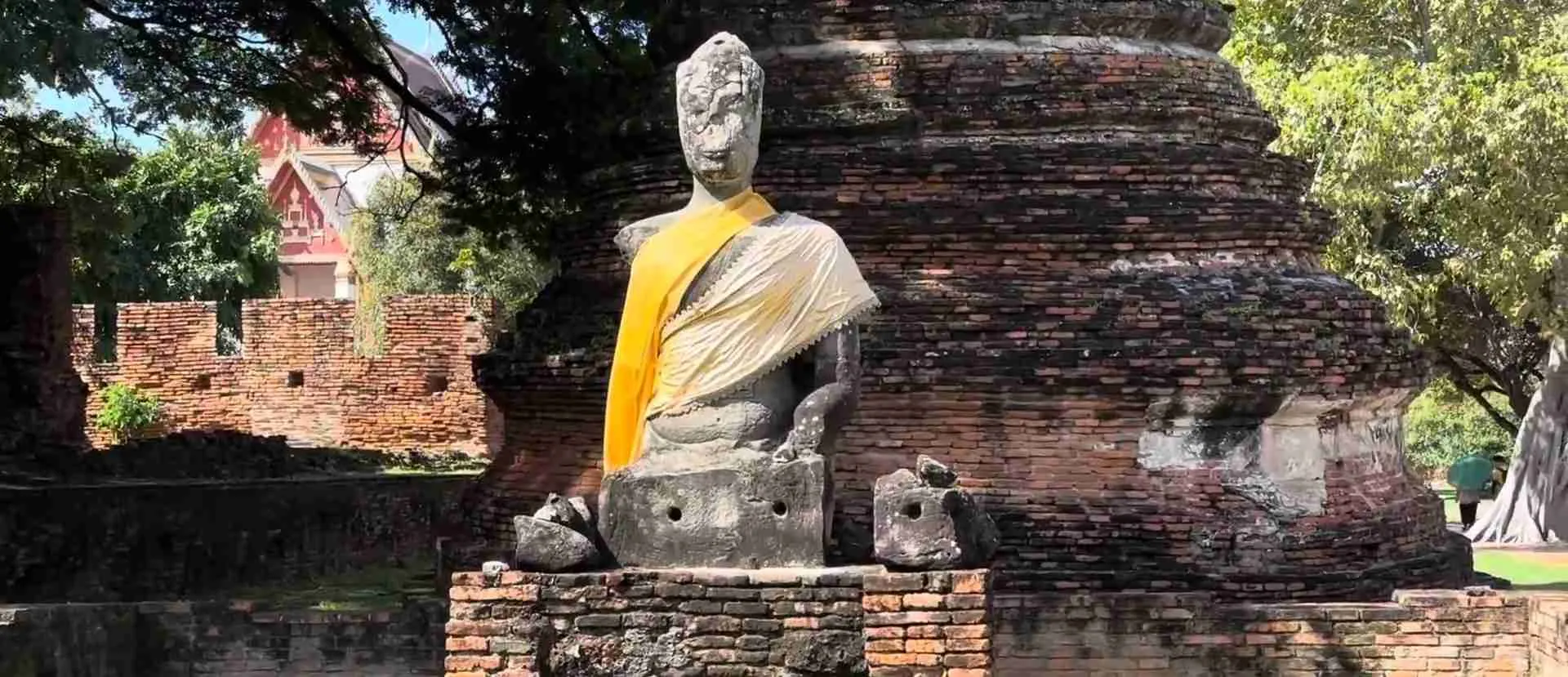
Thailand’s former capital Ayutthaya, inscribed as a UNESCO World Heritage Site in 1991, transforms into an accessible day trip from Bangkok offering travelers direct access to the Siamese Kingdom’s 400-year legacy through temple ruins, towering prangs, and the iconic Buddha head embraced by tree roots. Located just 85 kilometers north of Bangkok, this ancient city delivers comprehensive historical immersion within a single day while accommodating budgets from ฿500 to ฿5,000 depending on transportation choices and tour preferences.
Key Takeaways for Ayutthaya Day Trip 2026
- UNESCO Heritage Access: Ayutthaya Historical Park (UNESCO-inscribed 1991) features temple ruins from the Ayutthaya Kingdom (1350-1767), with the core zone covering 289 hectares of the former royal capital destroyed by Burmese forces in 1767.
- Transportation Options 2026: Train costs ฿15-35 (1.5-2 hours), minivan ฿70-300 (1-1.5 hours), or taxi ฿1,000-1,500 one-way from Bangkok, with group tours ฿1,000-1,800 including transport, guide, lunch, and entrance fees.
- Temple Entrance Strategy: Individual temple entry costs ฿50 per site, while the 6-temple pass at ฿220 covers Wat Mahathat, Wat Ratchaburana, Wat Phra Si Sanphet, Wat Phra Ram, Wat Maheyong, and Wat Chaiwatthanaram.
- Local Transportation 2026: Bicycle rental costs ฿50-100 per day for independent exploration, while tuk-tuk charters run ฿200-400 per hour or ฿1,000-1,500 for full-day service with temple-to-temple transport.
- Daily Budget Planning: Independent travel costs ฿500-800 (train ฿40 round-trip, bicycle ฿60, 6-temple pass ฿220, meals ฿200-300), while organized tours cost ฿1,000-1,800 for comprehensive guided experiences.
- Optimal Timing 2026: November-February offers coolest temperatures (20-30°C) with minimal rainfall, while March-May brings extreme heat (35-40°C) requiring early morning starts and afternoon temple avoidance during peak sun hours.
People Also Ask About Ayutthaya Day Trip 2026
How Much Does an Ayutthaya Day Trip Cost in 2026?
An independent Ayutthaya day trip costs ฿500-800 per person in 2026 for budget travelers using trains and bicycles, while mid-range organized tours cost ฿1,000-1,800 including all logistics. The budget breakdown includes train tickets ฿15-35 each direction (total ฿30-70 round-trip), bicycle rental ฿50-100 for the day, the 6-temple pass at ฿220, and meals totaling ฿200-300 for lunch and snacks. Travelers choosing taxi transport add ฿1,000-1,500 each direction, while those preferring tuk-tuk charters within Ayutthaya pay ฿1,000-1,500 for full-day service replacing bicycle rental. Group tours at ฿1,000-1,800 represent excellent value by bundling round-trip air-conditioned transport from Bangkok hotels, English-speaking guide services, entrance fees to 4-6 major temples, lunch at local restaurants, and bottled water, eliminating independent logistics while providing historical context most self-guided visitors miss.
What Is the Best Way to Get from Bangkok to Ayutthaya in 2026?
Trains from Bangkok’s Krung Thep Aphiwat Central Terminal to Ayutthaya Railway Station represent the most economical option at ฿15-35 per person with departures every hour throughout the day, taking 1.5-2 hours depending on train type. Third-class seats cost ฿15 and provide basic seating adequate for the journey, while second-class air-conditioned carriages at ฿35 offer comfortable travel particularly valuable during hot months. Minivans from Mo Chit Bus Terminal cost ฿70-300 depending on operator and service level, completing the journey in 1-1.5 hours when traffic cooperates, with air-conditioning standard across all services. Private taxis cost ฿1,000-1,500 one-way and provide door-to-door convenience in approximately 1 hour during light traffic, though Bangkok traffic congestion frequently extends journey times to 1.5-2 hours during morning and evening rush periods. Group tours departing Bangkok hotels eliminate transportation planning entirely while adding guided historical context, making them optimal for travelers prioritizing convenience over cost savings and preferring structured experiences over independent exploration.
How Many Temples Can You Visit in One Day in Ayutthaya in 2026?
Independent cyclists comfortably visit 6-8 major temples during a full day in Ayutthaya 2026, while tuk-tuk charters enable 8-10 temple visits by eliminating cycling time between distant sites. The compact Historical Park island contains Wat Mahathat, Wat Ratchaburana, Wat Phra Si Sanphet, and Wat Phra Ram within 1-2 kilometers of each other, allowing efficient morning coverage of these core UNESCO-inscribed sites. Off-island temples including Wat Chaiwatthanaram, Wat Yai Chai Mongkhon, and Wat Phanan Choeng require 3-5 kilometer journeys from the central cluster, consuming 20-30 minutes each direction by bicycle or 10-15 minutes by tuk-tuk. Realistic temple visit timing allocates 30-45 minutes per site for photography, exploration, and basic appreciation, with major complexes like Wat Mahathat requiring 60-90 minutes for comprehensive coverage including the famous Buddha head in tree roots. Early 8 AM arrivals maximize temple visits before afternoon heat reduces energy levels and temple enjoyment, while strategic lunch breaks during peak 12-2 PM sun exposure improve overall comfort and enable sustained afternoon exploration through 5-6 PM closing times.
Is the Ayutthaya 6-Temple Pass Worth Buying in 2026?
The 6-temple pass at ฿220 saves ฿80 compared to individual ฿50 entrance fees when visiting all six included temples (total individual cost ฿300), representing 27% savings for travelers planning comprehensive temple exploration in 2026. The pass covers Wat Mahathat (Buddha head in tree roots), Wat Ratchaburana (steep prang climb), Wat Phra Si Sanphet (three iconic chedis), Wat Phra Ram (lakeside setting), Wat Maheyong (off-island location), and Wat Chaiwatthanaram (riverside Khmer-style complex), encompassing the most photographed and historically significant sites visitors prioritize. Day trippers visiting 4-5 temples break even or save marginally with the pass, while those visiting fewer than 4 temples save money through individual ฿50 entries at selected sites. The 30-day validity period benefits overnight visitors spreading temple exploration across multiple days, though single-day visitors constitute the majority and must complete all six temples within their available timeframe to maximize pass value. Purchase locations include entrance gates at all six participating temples, allowing flexible buying decisions after initial temple visits help travelers gauge their energy levels and remaining daylight for additional sites.
Extended multi-day tours – 5+ days
Featured Bangkok Multi-Day Tour Packages
3 days
Bangkok 3-Day Discovery Tour
- ✓ Comprehensive Bangkok experience
- ✓ Expert local guides included
- ✓ All accommodation included
- ✓ Transportation provided
5 days
Bangkok 5-Day Highlights Experience
- ✓ Comprehensive Bangkok experience
- ✓ Expert local guides included
- ✓ All accommodation included
- ✓ Transportation provided
7 days
Bangkok 7-Day Cultural Journey
- ✓ Comprehensive Bangkok experience
- ✓ Expert local guides included
- ✓ All accommodation included
- ✓ Transportation provided

10 days
Bangkok 10-Day Complete Adventure
- ✓ Comprehensive Bangkok experience
- ✓ Expert local guides included
- ✓ All accommodation included
- ✓ Transportation provided
Multi-day tour packages powered by TourRadar. Prices and availability subject to change.
Understanding Ayutthaya’s UNESCO World Heritage Significance
Ayutthaya received UNESCO World Heritage inscription in 1991 under criterion III, recognizing the Historic City of Ayutthaya as an exceptional witness to the development of true national Thai art during the Ayutthaya Kingdom period from 1350 to 1767. Founded around 1350 by King Ramathibodi I, Ayutthaya became the second Siamese capital after Sukhothai and grew into one of the world’s largest urban centers by the 18th century, with a population exceeding one million inhabitants when European capitals remained significantly smaller. The city served as the political, economic, and cultural heart of the Siamese Kingdom for 417 years, functioning as a major international trading hub connecting Chinese, Japanese, Portuguese, Dutch, French, and Persian merchants in extensive commercial networks that brought unprecedented wealth and cultural exchange to Southeast Asia.
The 1767 Burmese invasion under King Hsinbyushin’s forces devastated Ayutthaya after a brutal 14-month siege, with invading armies systematically destroying temples, palaces, and administrative buildings while looting artistic treasures and religious artifacts. The destruction was so complete that the Siamese court abandoned the ruined capital entirely, establishing a new capital downstream at Thonburi and subsequently Bangkok, leaving Ayutthaya’s ruins untouched for two centuries. Modern conservation efforts began in 1969 when Thailand’s Fine Arts Department initiated restoration work on the most significant ruins, leading to the establishment of Ayutthaya Historical Park in 1976 and subsequent UNESCO inscription that brought international recognition and funding for ongoing preservation work.
The UNESCO-inscribed core zone encompasses 289 hectares on Ayutthaya Island, the historical city center surrounded by the Chao Phraya, Pa Sak, and Lopburi rivers. This inscribed area includes the former Royal Palace precinct and immediately surrounding temple complexes including Wat Phra Si Sanphet, Wat Mahathat, Wat Ratchaburana, and Wat Phra Ram, representing the most significant architectural and historical monuments within the broader historical park. Important temples outside the UNESCO core zone, including Wat Chaiwatthanaram, Wat Yai Chai Mongkhon, and Wat Phanan Choeng, remain protected under Thai national heritage legislation and contribute substantially to visitor experiences despite their exclusion from the official World Heritage property boundaries.
The architectural remains demonstrate the evolution of Ayutthaya-period religious architecture, characterized by towering prang (reliquary towers) influenced by Khmer architectural traditions, bell-shaped chedi housing Buddha relics or royal remains, and extensive monastery complexes with ordination halls and assembly halls. The city’s systematic urban planning featured a sophisticated grid pattern of roads, canals, and moats surrounding principal structures, with an advanced hydraulic system managing water flow and flood control that represented revolutionary civil engineering for its era. These ruins provide tangible evidence of Ayutthaya’s role in synthesizing diverse architectural influences from Sukhothai, Khmer, Sri Lankan, and Chinese traditions into a distinctive Thai architectural style that influenced subsequent Bangkok-period temple construction.
Transportation Options from Bangkok to Ayutthaya 2026
Train services from Bangkok to Ayutthaya operate throughout the day with departures every 30-60 minutes from Krung Thep Aphiwat Central Terminal (Bang Sue Grand Station), accessible via MRT subway at Bang Sue Station. Third-class tickets cost ฿15 and provide basic bench seating in non-air-conditioned carriages suitable for budget travelers tolerating heat and local atmosphere, while second-class air-conditioned seats at ฿35 offer comfortable travel particularly valuable during hot season months from March through May. Journey times range from 1.5 to 2 hours depending on train type and number of intermediate stops, with express services completing the route faster than ordinary trains making multiple station stops. Ayutthaya Railway Station sits approximately 2 kilometers east of the Historical Park island, requiring additional transport via tuk-tuk (฿50-100 for station-to-temples transfer) or 20-minute walk to reach the main temple cluster.
Minivans and buses departing Mo Chit Bus Terminal in northern Bangkok provide faster service at ฿70-300 depending on operator and service class, with journey times of 1-1.5 hours when traffic flows smoothly. Air-conditioned minivans accommodate 10-15 passengers and depart throughout the day when filled, offering more frequent service than scheduled buses while maintaining comparable comfort levels. Booking platforms including 12Go.asia enable advance reservations with guaranteed seats, eliminating waiting time at the terminal for departure vehicles to fill. Minivans typically drop passengers at Ayutthaya’s bus terminal across from the train station or at various points around the Historical Park island, with some services offering flexible drop-off locations when requested. Return journey minivans depart from the same locations throughout the afternoon and evening, though advance booking or early arrival at departure points ensures seat availability during peak afternoon return periods.
Private taxis from Bangkok to Ayutthaya cost ฿1,000-1,500 for one-way service, with round-trip rates of ฿2,000-3,000 when drivers wait during temple visits or return for afternoon pickup. Ride-hailing apps including Grab provide transparent pricing and driver tracking, eliminating negotiation concerns while ensuring reliable service standards. Journey times average 1 hour during light traffic conditions typical of mid-morning and early afternoon periods, though morning rush hour (7-9 AM) and evening rush hour (4-7 PM) frequently extend travel time to 1.5-2 hours when departing from central Bangkok locations. Taxis provide door-to-door convenience from Bangkok hotels directly to specific Ayutthaya temples, eliminating transfers and walking with luggage while accommodating groups of 3-4 passengers sharing costs for per-person rates competitive with organized tours.
Organized group tours represent the most comprehensive option at ฿1,000-1,800 per person for full-day experiences departing Bangkok hotels between 7-8 AM and returning by 6-7 PM. Tour packages include round-trip air-conditioned coach transport with hotel pickup and drop-off, English-speaking guide providing historical context and photography assistance, entrance fees to 4-6 major temples, lunch at local restaurants, and bottled water throughout the day. Major tour operators including Viator, GetYourGuide, and Klook offer various itineraries ranging from basic temple visits to enhanced experiences incorporating boat trips, bicycle components, or elephant encounters. Reviews on booking platforms provide valuable quality assessment, with highly-rated tours typically featuring knowledgeable guides, efficient time management avoiding rushed temple visits, and lunch venues serving quality Thai cuisine rather than tourist-targeted mediocre buffets.
Temple Entrance Fees and 6-Temple Pass Strategy 2026
Individual temple entrance fees cost ฿50 per site for foreign visitors at major Historical Park temples including Wat Mahathat, Wat Ratchaburana, Wat Phra Si Sanphet, Wat Phra Ram, Wat Maheyong, and Wat Chaiwatthanaram in 2026. Thai nationals pay reduced rates of ฿10-20 per temple under domestic visitor pricing. Smaller temples and some ruins within the Historical Park remain free to enter, including Wat Lokayasutharam (reclining Buddha), Wat Thammikarat, and various minor chedis and prang scattered throughout the park, though these free sites generally feature less impressive remains and limited restoration work compared to paid-entry temples.
The 6-temple combination pass costs ฿220 and grants access to Wat Mahathat, Wat Ratchaburana, Wat Phra Si Sanphet, Wat Phra Ram, Wat Maheyong, and Wat Chaiwatthanaram, representing ฿80 savings (27% discount) compared to ฿300 total cost of individual ฿50 entries at all six temples. The pass remains valid for 30 days from first use, accommodating overnight visitors planning multi-day temple exploration, though day trippers constitute the majority of pass purchasers and must complete visits to all six included temples within their single available day to maximize value. Purchase points include ticket booths at entrance gates of all six participating temples, allowing flexible acquisition after initial temple visits when travelers assess their energy levels and interest in continuing comprehensive temple exploration.
Strategic pass consideration involves calculating expected temple visits during available time. Travelers planning visits to all six pass-included temples save ฿80 and should purchase the pass at their first temple stop. Those visiting 5 temples save ฿30 (฿250 individual entries versus ฿220 pass), while 4-temple visitors save only ฿10 (฿200 individual versus ฿220 pass), making individual entries comparably priced. Visitors planning fewer than 4 temples save money through selective ฿50 individual entries at chosen high-priority sites rather than pass purchase driving unnecessary temple visits to justify the ฿220 investment.
The six pass-included temples represent the most historically significant and photographically impressive sites within Ayutthaya, ensuring pass purchasers access the essential highlights regardless of their broader temple selection strategy. Wat Mahathat houses the iconic Buddha head entwined in Banyan tree roots, Wat Phra Si Sanphet features three distinctive chedis photographed on most Ayutthaya promotional materials, Wat Chaiwatthanaram presents spectacular Khmer-style riverside architecture, and Wat Ratchaburana offers climbable prang providing elevated views across the Historical Park. The inclusion of these premier sites rather than secondary ruins means pass purchasers experience Ayutthaya’s architectural and historical highlights without compromising quality for quantity.
Pass-excluded temples requiring separate ฿50 entrance fees include some significant sites that merit consideration depending on available time and interests. Wat Yai Chai Mongkhon features a massive chedi climable via steep staircases for panoramic views, while Wat Phanan Choeng houses a 19-meter seated Buddha predating Ayutthaya’s founding. These excluded temples provide valuable diversity beyond pass-included sites for travelers with sufficient time and energy for expanded exploration, though their omission from the combination pass reflects either location outside the core Historical Park zone or lesser architectural significance compared to the six included premier temples.
Getting Around Ayutthaya: Bicycle vs Tuk-Tuk Options 2026
Bicycle rental costs ฿50-100 per day in 2026, with basic single-speed city bikes at the lower end and mountain bikes with gears commanding higher rates. Rental shops cluster around Ayutthaya Railway Station and throughout the Historical Park area, with many guesthouses providing bicycles free or at minimal cost to overnight guests. Popular rental locations include Tour With Thai and Nong Nine Bike & Restaurant directly opposite the train station, offering convenient pickup immediately upon arrival and flexible return until 7 PM closing time. Rental transactions require passport or identification card deposit for security, returned upon bicycle return, with some shops accepting cash deposits of ฿1,000-2,000 as alternative to passport retention.
Cycling advantages include complete flexibility in timing and route selection, enabling spontaneous detours to lesser-known temples or riverside viewpoints without coordination with drivers. The flat terrain throughout Ayutthaya Historical Park makes cycling accessible even for casual riders without significant fitness levels, though heat exhaustion remains a genuine concern during hot season months from March through May when midday temperatures reach 35-40°C. Well-maintained cycling lanes along major routes between temples provide safe, dedicated pathways separated from motorized traffic, though some temple-to-temple connections require riding on roads shared with cars, trucks, and motorbikes. Independent cyclists control their temple visit duration, lingering at sites of particular interest without pressure to maintain tour group schedules or tuk-tuk driver waiting concerns.
Tuk-tuk charters cost ฿200-400 per hour or ฿1,000-1,500 for full-day service in 2026, with rates negotiable based on itinerary distance, number of temples, and season. Full-day charters typically include 6-8 hours of service from 9 AM through 4-5 PM, covering major temple circuits with drivers waiting at each site while passengers explore. Tuk-tuk advantages include speed between distant temples, elimination of cycling exertion in tropical heat, and local driver knowledge optimizing efficient routing between widely-scattered sites. Drivers familiar with tourist preferences typically propose standard itineraries covering 6-10 temples at a sustainable pace, adjusting to passenger energy levels and interest intensity observed during initial temple visits.
Negotiating tuk-tuk rates requires establishing total trip cost upfront before departure, specifying temple list and approximate return time to avoid misunderstandings about hourly calculations versus flat-rate charges. Hourly rates favor shorter 3-4 hour half-day trips, while full-day flat rates of ฿1,000-1,500 provide better value for comprehensive 6-8 hour exploration covering the maximum number of temples. Some drivers quote inflated rates to foreign tourists, making comparison quotes from 2-3 drivers valuable for identifying fair market rates. Insisting on metered rates or strict hourly calculation rarely succeeds in Ayutthaya’s tourist-oriented tuk-tuk market, where flat-rate full-day charters represent standard practice accepted by experienced travelers.
The bicycle versus tuk-tuk decision hinges on physical fitness, heat tolerance, desire for independence, and budget constraints. Budget-focused travelers in good physical condition during cool season months (November-February) find bicycles optimal, saving ฿900-1,400 compared to tuk-tuk charters while enjoying exploration autonomy. Heat-sensitive visitors, those traveling during March-May hot season, older travelers, families with children, and anyone prioritizing comfort over cost savings benefit substantially from tuk-tuk charters eliminating physical exertion while maximizing temple visits through efficient inter-site transportation. Mixed approaches combining bicycle rental with strategic tuk-tuk use for distant off-island temples provide middle-ground solutions, though coordination complexity and combined costs often exceed full-day tuk-tuk charter rates.
Essential Temples: Must-See Sites for Day Trippers 2026
Wat Mahathat ranks as Ayutthaya’s most iconic temple, famous for the Buddha head mysteriously entwined in Banyan tree roots that has become the defining image of Ayutthaya in global tourism marketing. Built in the late 14th century during the early Ayutthaya period, this temple complex served as the spiritual center of the kingdom, housing important Buddhist relics and functioning as the residence of the Supreme Patriarch of Thai Buddhism. The extensive grounds feature numerous prang, chedis, and ruined viharn (assembly halls) demonstrating the original temple’s massive scale before Burmese destruction. The Buddha head in tree roots requires respectful photography etiquette, with visitors kneeling or sitting to ensure their heads remain lower than the Buddha’s head, reflecting Buddhist respect protocols Thailand enforces at sacred sites. Admission costs ฿50, with the site included in the 6-temple combination pass.
Wat Phra Si Sanphet represents the holiest temple in ancient Ayutthaya, located within the Grand Palace grounds and serving as the royal chapel where kings performed religious ceremonies without public participation. The three distinctive bell-shaped chedis standing prominently on raised platforms contain the ashes of three 15th-century Ayutthaya kings, creating the archetypal image appearing on countless Ayutthaya postcards and promotional photographs. The temple once housed a 16-meter standing Buddha covered in 250 kilograms of gold, melted by Burmese forces during the 1767 invasion, with modern replicas of this Buddha displayed at Bangkok’s Grand Palace. The adjacent Viharn Phra Mongkhon Bophit houses a large bronze Buddha image rescued from ruins and now protected within a modern building offering free entry. Wat Phra Si Sanphet entrance costs ฿50 and is included in the combination pass.
Wat Chaiwatthanaram stands on the west bank of the Chao Phraya River, presenting spectacular Khmer-style architecture reminiscent of Cambodia’s Angkor Wat with its central prang surrounded by smaller satellite towers. King Prasat Thong commissioned this temple in 1630 to commemorate his mother and establish his legitimacy as ruler, creating one of Ayutthaya’s largest and most architecturally ambitious temple complexes. The riverside location provides dramatic sunset photography opportunities when late afternoon light illuminates the weathered prangs against the river backdrop. The temple sits 2 kilometers southwest of the main Historical Park island, requiring dedicated transport by bicycle or tuk-tuk rather than walking incorporation into island temple circuits. The ฿50 entrance fee is included in the 6-temple combination pass.
Wat Ratchaburana offers unique access to climbable prang via steep interior staircases, providing elevated views across the Historical Park from the upper levels approximately 20 meters above ground. Built in 1424 by King Borom Rachathirat II as a cremation memorial for his two brothers who killed each other in elephant-back combat for succession rights, the temple gained unexpected fame in the 1950s when looters discovered a crypt containing gold artifacts, jewelry, and royal treasures hidden within the prang since the 15th century. Most stolen treasures were never recovered, though approximately 100,000 artifacts and objects weighing over 100 kilograms of gold eventually found their way to the Chao Sam Phraya National Museum in Ayutthaya. The temple’s central location within the Historical Park island enables easy inclusion in any cycling or walking itinerary. Entrance costs ฿50 and is included in the combination pass.
Wat Yai Chai Mongkhon features a massive chedi dominating the eastern skyline outside the Historical Park island, accessible via steep staircases offering panoramic views across Ayutthaya. King U Thong founded this temple in 1357 to house monks returning from Buddhist studies in Sri Lanka, with the central chedi built in 1592 to commemorate King Naresuan’s victory over Burmese forces in elephant-back single combat. The temple complex includes rows of Buddha statues in yellow robes lining the chedi base, creating popular photography compositions with the towering structure backdrop. The famous reclining Buddha at this temple stretches 7 meters long, though it pales in comparison to Wat Lokayasutharam’s 42-meter reclining Buddha elsewhere in the park. Located 2 kilometers southeast of the main island, this temple requires dedicated bicycle or tuk-tuk trip rather than casual walking incorporation. Entrance costs ฿50 separate from the combination pass.
Wat Lokayasutharam houses Ayutthaya’s largest reclining Buddha, measuring 42 meters long and 8 meters high, depicting Buddha at the moment of passing into Nirvana. Unlike most Ayutthaya monuments, this outdoor Buddha statue receives active worship from Thai devotees who drape it in orange cloth and leave offerings of lotus flowers, incense, and candles at the head and feet. The free entrance and dramatic scale make this site popular with budget travelers and photographers seeking iconic Ayutthaya images without admission fees. The location just north of the main Historical Park island enables easy bicycle access within minutes of Wat Phra Si Sanphet and other central temples. The lack of surrounding structures or shade means midday visits during hot season create uncomfortable heat exposure, making early morning or late afternoon timing preferable.
Sample Ayutthaya Day Trip Itineraries 2026
Budget Independent Itinerary by Train and Bicycle
Depart Bangkok’s Krung Thep Aphiwat Central Terminal on the 7:00 AM train (฿15 third-class or ฿35 second-class air-conditioned), arriving Ayutthaya Railway Station around 8:30-9:00 AM after the 1.5-hour journey. Rent a bicycle immediately at shops across from the station (฿50-100 per day), beginning temple exploration by 9:15 AM before peak heat and tourist crowds. Purchase the 6-temple combination pass at ฿220 at the first temple visited to maximize savings across the day’s itinerary.
Morning temple circuit (9:15 AM – 12:30 PM) focuses on the core Historical Park island temples, beginning with Wat Mahathat at 9:30 AM for the Buddha head in tree roots photograph before crowds arrive. Allocate 60 minutes at Wat Mahathat for comprehensive exploration of the extensive grounds, then cycle 5 minutes to Wat Ratchaburana for 45 minutes including prang climb and crypt viewing. Continue to Wat Phra Si Sanphet (10 minutes cycling, 45 minutes exploring the three chedis and adjacent Viharn Phra Mongkhon Bophit), completing the island temple cluster by 12:30 PM before lunch.
Lunch break (12:30 PM – 1:30 PM) at local restaurants near the Historical Park offers authentic Thai cuisine at ฿80-150 per person, avoiding midday heat while refueling for afternoon exploration. Rest during peak sun exposure optimizes comfort and energy conservation for afternoon cycling. Riverside restaurants along the Chao Phraya provide scenic lunch settings with cooling breezes, though prices increase 20-30% compared to street-side eateries serving identical quality food.
Afternoon temple circuit (1:30 PM – 5:00 PM) tackles off-island temples requiring longer cycling distances but offering fewer crowds and dramatic architecture. Cycle to Wat Chaiwatthanaram (2 kilometers, 15 minutes) for 60 minutes exploring the Khmer-style riverside complex, timing arrival around 2:00 PM for golden afternoon light on the weathered prangs. Return to the Historical Park island via the Phra Ram area, stopping at Wat Phra Ram (45 minutes) for lakeside temple ruins completing the 6-temple pass utilization. Final temple visit to Wat Lokayasutharam (free entry) provides the massive reclining Buddha photograph before 5:00 PM closing times.
Return bicycle to the rental shop by 6:30 PM for the 7:00 PM deposit refund deadline, walking to the train station for evening departure trains. The 6:30 PM or 7:30 PM trains arrive Bangkok around 8:30-9:30 PM, completing the full-day excursion. Total cost breakdown: train ฿30-70 round-trip, bicycle ฿50-100, 6-temple pass ฿220, meals ฿200-300, totaling ฿500-690 per person for comprehensive independent temple exploration.
Comfortable Mid-Range Itinerary by Minivan and Tuk-Tuk
Book minivan departure from Mo Chit Bus Terminal at 8:00 AM (฿70-150 per person) through 12Go.asia or similar platform, arriving Ayutthaya around 9:30 AM after the 1.5-hour journey. Hire a full-day tuk-tuk at ฿1,200 negotiated rate (approximately ฿300 per person when splitting among 4 passengers) immediately upon arrival, establishing the itinerary covering 8 temples with lunch break included. Purchase the 6-temple pass at ฿220 at the first temple for coverage of the majority of planned visits.
Morning exploration (9:45 AM – 12:30 PM) begins at Wat Mahathat for the iconic Buddha head photograph and complex grounds exploration (60 minutes), followed by Wat Ratchaburana (40 minutes) and Wat Phra Si Sanphet with Viharn Phra Mongkhon Bophit (60 minutes). The tuk-tuk provides shade and transportation between sites, eliminating cycling heat exposure while enabling efficient movement. The driver waits at each temple entrance, allowing flexible visit duration based on interest levels and photography time rather than rigid schedule constraints.
Lunch (12:30 PM – 1:30 PM) at a riverside restaurant recommended by the tuk-tuk driver costs ฿150-250 per person for generous portions of Thai classics in air-conditioned comfort. Driver recommendations sometimes carry commission arrangements with restaurants, making independent research via Google Maps reviews valuable for identifying quality venues rather than tourist-targeted mediocre options. Requesting specific restaurant preferences identified through advance research ensures quality lunch experiences rather than default driver selections.
Afternoon temple circuit (1:30 PM – 5:00 PM) expands beyond the core island to off-island sites, beginning with Wat Chaiwatthanaram (60 minutes) for riverside Khmer architecture and sunset-approaching photography. Continue to Wat Yai Chai Mongkhon (60 minutes) for the massive chedi and panoramic views from the summit, then Wat Phanan Choeng (40 minutes) for the 19-meter seated Buddha. Final stop at Wat Lokayasutharam (20 minutes) provides the reclining Buddha photograph before the 5:00 PM closing time. The tuk-tuk efficiently navigates between these widely-separated temples, enabling 8 total temple visits versus the 5-6 possible by bicycle.
Return to the bus terminal or train station by 5:30 PM for minivan departures throughout the late afternoon and evening, arriving Bangkok by 7:00-7:30 PM. Total cost breakdown: minivan ฿140-300 round-trip, tuk-tuk ฿300 per person (4-way split of ฿1,200), 6-temple pass ฿220, additional temple entries ฿100 (2 sites outside pass), meals ฿300-350, totaling ฿1,060-1,270 per person for comfortable mid-range temple exploration.
Premium Organized Group Tour Experience
Group tours at ฿1,000-1,800 per person provide comprehensive experiences with hotel pickup between 7:00-8:00 AM in air-conditioned coaches, English-speaking guide services, entrance fees to 4-6 major temples, lunch at quality restaurants, and bottled water. Tours eliminate all logistical planning, transportation coordination, and entrance fee payments, creating streamlined experiences particularly valuable for first-time Thailand visitors or travelers prioritizing convenience over budget optimization.
Morning temple visits (9:30 AM – 12:30 PM) typically include Wat Mahathat, Wat Phra Si Sanphet, and Wat Ratchaburana with guides providing 15-20 minute historical narratives at each site before allowing 30-40 minutes independent exploration time. Guide expertise adds substantial historical context and architectural interpretation most independent visitors lack, enhancing appreciation for the cultural significance beyond simple ruin observation. Photography assistance from guides familiar with optimal angles, lighting conditions, and composition techniques produces better quality images than self-directed photography attempts.
Lunch (12:30 PM – 1:30 PM) at tour-contracted restaurants ranges from basic Thai buffets to quality á la carte establishments depending on tour price point, with premium tours featuring superior cuisine justifying higher costs. Group lunch creates social opportunities meeting fellow travelers while providing air-conditioned rest during peak heat hours.
Afternoon exploration (1:30 PM – 4:30 PM) adds Wat Chaiwatthanaram and potentially Wat Yai Chai Mongkhon or alternative sites based on specific tour itinerary, maintaining guided narrative and supervised group movement. Some tours incorporate boat trips on the Chao Phraya River, bicycle components at selected temples, or visits to Bang Pa-In Royal Palace expanding beyond pure temple focus. Return journey departs Ayutthaya around 4:30-5:00 PM, arriving Bangkok hotels by 6:30-7:00 PM after the return drive, completing full-day experiences within standard 11-12 hour tour duration.
Tour value calculation considers bundled services beyond simple transportation and entrance fees, including guide expertise, lunch quality, bottled water provision, and elimination of planning stress and on-ground decision-making. Budget travelers comfortable with independent logistics save ฿500-1,000 through self-organized trips, while convenience-focused travelers find tours worthwhile despite premium pricing for hassle-free comprehensive experiences.
Practical Planning Tips for Ayutthaya Day Trips 2026
Best Time to Visit Ayutthaya in 2026
November through February represents optimal visiting months for Ayutthaya day trips in 2026, with temperatures ranging 20-30°C, minimal rainfall, and comfortable conditions for outdoor temple exploration. Cool season mornings from November through January sometimes require light jackets for early train journeys and initial temple visits, though midday temperatures rise to comfortable 28-30°C levels. December and January see peak domestic and international tourist numbers during Thai school holidays and Western winter vacation periods, creating larger crowds at major temples but not reaching unmanageable congestion levels that impair visitor experiences.
March through May constitutes hot season with extreme temperatures frequently reaching 35-40°C during midday hours, creating genuinely dangerous heat exhaustion risks for cyclists and outdoor exploration. Travelers visiting during these months should depart Bangkok by 7:00 AM to maximize cool morning hours for temple visits, take extended midday breaks in air-conditioned restaurants from 12:00-2:00 PM, and limit afternoon exploration to shaded temples or reduce total temple visits acknowledging reduced energy levels. Heat exhaustion symptoms including dizziness, excessive sweating, rapid heartbeat, and nausea require immediate shade rest, hydration, and potentially medical attention, making conservative activity planning during hot season mandatory rather than optional.
June through October brings rainy season with afternoon thunderstorms common but typically brief, lasting 30-60 minutes before clearing. Morning temple visits proceed normally with minimal rain interference, while afternoon exploration requires rain contingency planning including covered temple areas and rapid temple-to-temple movements during dry windows between storms. The combination of heat and humidity during rainy season creates uncomfortable conditions despite slightly lower temperatures than hot season, with 32-34°C readings feeling more oppressive than dry-heat equivalent temperatures. Fewer tourists during rainy season create peaceful temple exploration without crowds, though persistent rainfall some days limits photography opportunities and overall visit enjoyment.
What to Bring for Ayutthaya Day Trips
Sun protection essentials include high-SPF waterproof sunscreen (SPF 50+ recommended), wide-brimmed hat or cap protecting face and neck, and sunglasses with UV protection against intense tropical sun reflecting off light-colored temple stones. Reapplying sunscreen every 2-3 hours prevents burns during full-day outdoor exposure, with particular attention to often-missed areas including ears, back of neck, hands, and feet exposed in sandals. Long-sleeve lightweight breathable shirts provide sun protection while maintaining comfort through moisture-wicking technical fabrics, though cultural appropriateness at temple sites takes priority over pure sun protection when selecting clothing.
Temple dress code requirements mandate clothing covering shoulders and knees at active worship sites, though many Ayutthaya ruins receive more relaxed enforcement given their archaeological rather than active religious status. Bringing lightweight pants or long skirt plus shawl enables quick clothing adjustments when encountering stricter dress code enforcement at specific temples, avoiding entry refusal or mandatory sarong rental fees. Loose-fitting natural fabrics provide better heat management than synthetic athletic wear, though quick-dry synthetics prove valuable after sudden rainstorms during wet season visits.
Hydration supplies require carrying at least 2 liters of water per person for full-day exploration, with reusable water bottles refillable at restaurants and shops throughout Ayutthaya. Dehydration occurs rapidly during outdoor temple cycling or walking, with early symptoms including reduced energy, headache, and decreased concentration. Electrolyte supplements or coconut water from street vendors provide sodium and potassium replacement lost through sweating, improving sustained energy levels compared to water alone. Many temples lack nearby water sources, making carried water essential rather than relying on purchasing opportunities at every site.
Photography equipment for serious photographers includes backup batteries and memory cards given heavy photo usage across 8-10 hour temple exploration days. Portable chargers provide phone battery backup for navigation apps, booking platforms, and photography, preventing dead-battery emergencies when needing taxi booking or map access. Lightweight tripods or phone mounts enable better composition control and low-light photography during late afternoon golden hour temple shots, though carrying weight versus benefit calculations favor smartphone-only setups for most travelers not producing professional content.
Safety and Scam Awareness in Ayutthaya 2026
Bicycle safety in Ayutthaya requires helmet use despite most rental shops not providing helmets as standard equipment, with travelers bringing personal helmets or purchasing inexpensive versions at sports shops ensuring head protection during potential falls or traffic incidents. Cycling on roads shared with cars and trucks demands constant awareness of surroundings, staying far to the left side of lanes, and making predictable movements without sudden swerves or stops. Some travelers report bicycle accidents every year resulting in injuries requiring hospital treatment, with most incidents involving collisions with vehicles at intersections or falls on uneven surfaces around temple areas. Traffic drives on the left side in Thailand, requiring adjustment for visitors from right-side-driving countries.
Tuk-tuk fare disputes arise from inadequate upfront price agreements, with drivers attempting to charge hourly rates rather than agreed flat fees or adding unexpected charges for fuel, distant temple access, or waiting time. Establishing total cost, included temples, and approximate schedule in writing before departure prevents most disputes, though some drivers still attempt fare increases at trip conclusion. Refusing payment increases and requesting police intervention typically resolves disputes favorably for tourists, though avoiding confrontation through thorough upfront agreements proves preferable to conflict resolution after completed trips. Paying at trip conclusion rather than advance payment enables refusing excessive charges if service quality or route delivery differs from initial agreements.
Restaurant commission scams involving tuk-tuk drivers receiving payments from restaurants for delivering tourists create incentives directing travelers to inferior establishments offering poor food quality at inflated prices. Researching restaurant recommendations through Google Maps reviews, TripAdvisor, or travel blogs enables specifying preferred lunch venues independent of driver suggestions, ensuring quality meals at fair prices rather than tourist-targeted mediocre options. Some drivers respect specific restaurant requests without commission consideration, while others insist their recommended venues offer superior experiences, requiring firm insistence on preferred locations.
Souvenir and gem scams target tourists with worthless products presented as valuable antiques or precious stones, though Ayutthaya sees fewer such scams compared to Bangkok’s more aggressive tourist-targeting scam operations. Refusing all unsolicited sales approaches and limiting purchases to established shops with clear return policies eliminates scam exposure risk. Temple donation boxes accepting voluntary contributions support ongoing preservation work, though unaffiliated individuals requesting donations or presenting themselves as temple representatives typically operate scams rather than legitimate fundraising.
Food and Dining Options in Ayutthaya 2026
Local Thai restaurants throughout Ayutthaya offer authentic regional cuisine at ฿60-150 per meal, with pad thai, green curry, tom yum soup, and papaya salad representing popular choices among Thai and international visitors. Riverside restaurants along the Chao Phraya River charge premium prices of ฿150-300 per meal for similar food quality compared to street-side establishments, though scenic water views and cooling breezes provide value-added dining experiences justifying moderate price premiums. Air-conditioned restaurants become particularly appealing during midday heat peaks from 12:00-2:00 PM, offsetting higher costs through comfort value during necessary rest breaks from outdoor temple exploration.
Ayutthaya’s signature dish boat noodles (kuay teow rua) originated from vendors selling noodle soup from boats along the city’s canals, serving small portions traditionally consumed across multiple bowls rather than single large servings. Modern boat noodle shops maintain the multi-bowl tradition, with each small bowl costing ฿10-15 enabling sampling various broth types and noodle preparations across 3-5 bowls totaling ฿50-75 for satisfying meals. The small portion approach facilitates tasting multiple preparations without committing to single large orders potentially disappointing if flavor profiles miss personal preferences.
Roti sai mai represents Ayutthaya’s most famous local sweet, consisting of thin crepes wrapped around cotton candy-like sugar threads in various colors and flavors. Street vendors throughout the Historical Park area sell fresh roti sai mai for ฿20-40 per package, providing quick energy snacks during temple exploration breaks. The light, sweet character provides pleasant contrast to savory Thai main meals while offering portable, non-refrigerated sustenance for afternoon temple visits.
Night market food stalls operating after 6:00 PM around the train station and bus terminal area serve inexpensive dinner options at ฿40-80 per meal for travelers returning to Bangkok on evening trains or buses. Grilled meats, fried rice, noodle dishes, and fresh fruit smoothies provide diverse choices accommodating various preferences, though limited English and Thai-only menus create ordering challenges for non-Thai speakers. Pointing to desired items at neighboring tables or using translation apps overcomes language barriers effectively.
Water and beverages from 7-Eleven, Family Mart, and similar convenience stores cost ฿10-20 for bottles providing cheaper hydration than restaurant purchases at ฿20-40 per bottle. Fresh coconut water from street vendors at ฿20-30 per coconut provides natural electrolyte replacement superior to plain water for sustained outdoor activity in tropical heat. Avoiding tap water and ice from uncertain sources prevents waterborne illness risks, though bottled water availability throughout Ayutthaya eliminates reliance on potentially contaminated water sources.
Extending Your Visit: Overnight Stays in Ayutthaya 2026
Overnight accommodation in Ayutthaya enables two-day temple exploration at relaxed paces, early morning photography before tourist crowds arrive, and evening temple illumination viewing at sites including Wat Chaiwatthanaram offering special nighttime lighting. Budget guesthouses cost ฿300-600 per night for basic rooms with fan or air-conditioning, private bathroom, and sometimes complimentary bicycles for temple exploration. Mid-range hotels at ฿800-1,500 per night provide air-conditioned comfort, swimming pools for afternoon heat escape, and on-site restaurants eliminating meal planning concerns.
Two-day itineraries spreading 10-12 temple visits across morning and late afternoon exploration periods with extended midday rest maximizes comfort while achieving comprehensive coverage impossible during rushed day trips. Day one focuses on core Historical Park island temples during morning hours, followed by extended lunch and swimming pool rest during peak 12:00-3:00 PM heat, resuming with off-island temples during golden hour late afternoon light. Day two explores peripheral temples including Bang Pa-In Royal Palace 20 kilometers south of Ayutthaya, Wat Phutthaisawan with riverside sunset views, and lesser-known ruins offering peaceful exploration without crowds.
Night market exploration after 6:00 PM provides authentic Thai street food experiences and local shopping opportunities missing from day trip itineraries requiring return to Bangkok by evening. The relaxed evening timing enables multiple venue sampling across different night market locations, interactions with local vendors offering genuine cultural exchange, and observation of daily Thai life beyond tourist-focused temple touring.
Sunrise temple photography at major sites like Wat Mahathat or Wat Chaiwatthanaram produces dramatic images with golden light, long shadows, and zero crowds for unobstructed compositions. Overnight guests access temples at 6:00-6:30 AM when sites open, capturing optimal lighting conditions before heat haze and tourist numbers increase after 9:00 AM. The investment of ฿800-1,500 accommodation plus additional day expenses enables superior photographic results and more relaxed exploration compared to rushed day trip compromises.
Combining Ayutthaya with Other Day Trip Destinations 2026
Bang Pa-in Royal Palace sits 20 kilometers south of Ayutthaya, enabling combination visits incorporating both destinations in extended day trips or overnight itineraries. The palace complex features European-style neoclassical buildings, Chinese-influenced structures, and Thai traditional architecture across beautifully manicured gardens surrounding ornamental lakes. Entrance costs ฿100 for foreigners, with ฿200 combination tickets including both palace access and golf cart transportation around the extensive grounds eliminating walking between widely-separated structures. Palace-focused half-day trips from Ayutthaya cost ฿300-500 via tuk-tuk charter or taxi, with some organized tours bundling both Ayutthaya temples and Bang Pa-in Palace in comprehensive full-day itineraries.
Lopburi ancient city lies 70 kilometers northeast of Ayutthaya, famous for monkey populations inhabiting Phra Prang Sam Yot temple and surrounding urban areas. The 90-minute train journey from Ayutthaya to Lopburi costs ฿10-20, enabling budget-conscious travelers to visit both ancient capitals in extended day trips when starting very early from Bangkok. However, the Bangkok-Ayutthaya-Lopburi-Bangkok routing creates exhausting travel-heavy days exceeding 12 hours total duration with limited temple exploration time, making overnight stays in Ayutthaya preferable for quality multi-destination coverage.
Floating markets including Ayothaya Floating Market 5 kilometers from the Historical Park operate primarily on weekends and target domestic Thai tourists more than international visitors. Entrance fees of ฿200 provide access to canal-side shopping, food stalls, and boat rides through vendor areas selling souvenirs, snacks, and local products. The constructed tourist-market character lacks authenticity compared to genuine markets serving local populations, though photogenic scenes and cultural performances provide entertainment value for visitors accepting the tourist-oriented nature.
Frequently Asked Questions About Ayutthaya Day Trips 2026
How long should I spend in Ayutthaya?
Day trips of 8-10 hours provide sufficient time visiting 5-8 major temples when starting early from Bangkok and maintaining efficient temple-to-temple movement, though rushed pacing and limited meal breaks characterize intensive single-day itineraries. Overnight stays enable relaxed two-day temple exploration covering 10-15 sites at comfortable paces with extended photography time, midday rest periods, and evening cultural experiences including night markets and illuminated temple viewing. First-time visitors generally find single day trips adequate for experiencing Ayutthaya’s highlights and UNESCO significance, while photography enthusiasts and history buffs benefit substantially from overnight stays allowing comprehensive coverage and optimal lighting conditions.
Can I visit Ayutthaya with young children?
Families with young children successfully visit Ayutthaya through careful planning addressing heat management, activity pacing, and child-friendly transportation choices. Tuk-tuk charters eliminate cycling requirements while providing shade during temple-to-temple travel, reducing physical demands on children and parents compared to bicycle-based exploration. Limiting itineraries to 4-5 major temples rather than comprehensive 8-10 temple coverage accommodates shorter child attention spans and energy levels, with extended lunch breaks at restaurants featuring play areas or swimming pool hotels providing necessary rest periods. Cool season visits (November-February) prove far more successful than hot season attempts when midday temperatures create genuine discomfort even for heat-tolerant adults.
Is Ayutthaya wheelchair accessible?
Ayutthaya presents significant accessibility challenges for wheelchair users given uneven ground surfaces, stairs accessing elevated temple platforms, and limited paved pathways between ruins across the Historical Park. Some major temples including Wat Phra Si Sanphet provide ground-level viewing of primary structures without stair access requirements, though comprehensive temple exploration inevitably encounters stairs, raised platforms, and unpaved areas incompatible with wheelchair access. Hiring private vehicles with wheelchair accessibility and drivers familiar with accessible temple areas enables partial Ayutthaya experiences for mobility-limited travelers, though expectations should recognize limitations compared to able-bodied visitor access levels.
What’s the difference between Ayutthaya and Sukhothai?
Ayutthaya and Sukhothai represent sequential capitals of historical Thai kingdoms, with Sukhothai (1238-1438) preceding Ayutthaya (1350-1767) as seats of political power. Sukhothai temples feature more intact structures with better preservation and museum-quality presentation, while Ayutthaya emphasizes atmospheric ruins and war-damaged remains creating romantic decay aesthetics. Ayutthaya’s proximity to Bangkok (85 kilometers, 1.5 hours) enables easy day trips, whereas Sukhothai’s distance (440 kilometers, 6-7 hours) requires overnight travel or domestic flights making quick visits impractical. Both sites merit UNESCO World Heritage status and deliver significant historical value, though Ayutthaya’s accessibility advantages and dramatic ruin character typically rank it higher for limited-time Bangkok-based travelers.
Can I visit Ayutthaya during rainy season?
Rainy season visits from June through October remain viable with appropriate planning around afternoon thunderstorm patterns and rain contingency strategies. Mornings typically offer dry conditions enabling 3-4 hours of temple exploration before afternoon rainfall begins, with early 7:00 AM train departures from Bangkok maximizing dry morning hours. Bringing lightweight rain jackets, waterproof phone cases, and accepting potential late afternoon rain interruptions enables successful rainy season visits, though photography quality suffers during overcast conditions compared to dry season’s consistent sunshine and clear skies. Fewer tourists during rainy season create peaceful, uncrowded temple experiences offsetting weather unpredictability for travelers prioritizing solitude over perfect weather conditions.
Are there good vegetarian food options in Ayutthaya?
Vegetarian food availability in Ayutthaya exceeds most provincial Thai cities given the Buddhist cultural context making meat-free eating relatively common and understood. Temple areas feature vegetarian food stalls particularly during Buddhist holidays and observance days, while restaurants understand “jay” (strict vegetarian) and “mang-sa-wirat” (no meat) requests accommodating dietary restrictions through tofu-substituted versions of standard Thai dishes. However, cross-contamination from shared cooking equipment and fish sauce in otherwise vegetable-based dishes requires specific “no fish sauce” (mai sai nam pla) requests for strict vegetarians avoiding all animal products. Bringing translation cards clearly explaining dietary restrictions in Thai prevents miscommunication and ensures actual meat-free preparation rather than assumed understanding.
Should I book tours in advance or on arrival?
Advance online booking through platforms including GetYourGuide, Viator, and Klook provides price transparency, review-based quality assessment, and guaranteed availability during peak travel periods like December-January high season. Last-minute bookings on arrival at Bangkok hotels or Khao San Road travel agencies sometimes offer lower prices through aggressive discounting, though quality varies wildly and review information remains unavailable for informed selection. The modest price premiums of ฿100-300 for advance online booking compared to on-arrival purchases justify the security of established tour operators with proven track records rather than unknown agencies potentially delivering substandard experiences.
What’s the best time of day to photograph Ayutthaya temples?
Early morning golden hour from 6:00-8:00 AM provides optimal lighting conditions with warm, low-angle sunlight creating long shadows and dimensional depth across temple ruins and prangs. Late afternoon golden hour from 4:00-6:00 PM offers similar photographic advantages with the added benefit of fewer tourists at temples compared to morning hours when organized tours concentrate visits. Midday overhead sun from 11:00 AM-2:00 PM produces harsh lighting, strong shadows, and washed-out highlights unsuitable for quality photography, making this period better allocated to meals and indoor activities. Sunset photography at Wat Chaiwatthanaram on the Chao Phraya River creates spectacular silhouette compositions with the riverside temple complex backlit against colorful evening skies.
Do I need a guide or can I explore independently?
Independent exploration using bicycles or tuk-tuks without guides proves perfectly viable for travelers comfortable with self-directed learning through on-site information boards, guide books, and mobile apps providing temple histories and architectural significance. Comprehensive English-language information boards at major temples deliver basic historical context and structural explanations adequate for general visitor understanding, though depth and scholarly detail fall short of live guide narratives. Hiring guides on-site in Ayutthaya costs ฿500-1,000 for half-day temple tours, providing expert interpretation enhancing appreciation beyond what independent study achieves, though guide quality varies substantially requiring referral-based selection rather than random hiring from temple approach solicitations.
What should I do if I get heat exhaustion in Ayutthaya?
Heat exhaustion symptoms including dizziness, excessive sweating, rapid heartbeat, nausea, and weakness require immediate action moving to shaded, cool environments while drinking water or electrolyte beverages and resting until symptoms subside. Severe cases with vomiting, confusion, or loss of consciousness require emergency medical attention through temple staff assistance calling ambulances (dial 1669 for free emergency services in Thailand) or tuk-tuk transport to Ayutthaya Hospital emergency department. Prevention through adequate hydration, regular shade breaks, avoiding midday peak sun exposure from 11:00 AM-2:00 PM, and recognizing early warning signs proves far preferable to treating established heat illness requiring medical intervention and potential trip termination.
Photography Tips for Ayutthaya Temple Documentation 2026
Wide-angle lenses in the 16-35mm range capture complete temple structures and surrounding architectural context, particularly valuable for photographing the three chedis at Wat Phra Si Sanphet or the central prang with satellite towers at Wat Chaiwatthanaram. Standard 24-70mm zoom lenses provide versatile focal length ranges handling both environmental context and detail documentation across various temple photographic opportunities. Detail photography of Buddha faces, carved decorations, and weathered brick textures benefits from 70-200mm telephoto lenses compressing perspective and isolating subjects against blurred backgrounds.
Composition techniques emphasizing scale incorporate human figures or recognizable objects within frame establishing massive temple dimensions impossible to convey through structure-only photographs. The Buddha head in tree roots at Wat Mahathat requires low camera angles shooting upward emphasizing the tree trunk scale and root patterns embracing the carved stone head, with late afternoon side-lighting creating texture and dimensional depth. Leading lines using stairways, gallery perspectives, or aligned chedis guide viewer eyes through compositions toward focal points, creating dynamic images more engaging than static centered temple portraits.
Photographing Buddha images respectfully requires understanding Thai cultural sensitivities including never climbing on Buddha statues for elevated camera angles, avoiding poses appearing to mock or disrespect religious imagery, and kneeling or sitting rather than standing when photographing the tree-root Buddha head at Wat Mahathat. Thai law prohibits inappropriate Buddha image use including feet pointing at Buddha figures or playful poses treating sacred objects as entertainment props, with violations potentially resulting in arrest, fines, and legal proceedings under Thailand’s strict religious respect legislation.
Drone photography at Ayutthaya Historical Park requires permits from the Fine Arts Department, with unauthorized drone flights violating Thai aviation regulations and temple preservation policies protecting UNESCO World Heritage Site integrity. Enforcement remains inconsistent, with some drone operators flying without interference while others face confiscation and fines, making proper permit acquisition through official channels advisable for photographers planning aerial documentation. Ground-based photography using extended poles or high tripod positions provides elevated perspectives legal without drone-related regulatory complications.
Post-processing techniques enhancing Ayutthaya temple images include shadow recovery revealing detail in high-contrast lighting situations common during midday shooting, vibrant color enhancement emphasizing orange-brown brick tones and surrounding greenery, and black-and-white conversions emphasizing texture and form over color distraction. Avoiding excessive HDR processing maintains natural appearance rather than artificial over-processed aesthetics inappropriate for historical architecture documentation, with subtle enhancements proving more effective than dramatic manipulations creating unrealistic representations.