Austria Best Tours & Walking Routes 2026: Ultimate Experience Guide
Key Takeaways
- Vienna’s Ring Boulevard walking circuit covers 5.3 kilometers of imperial architecture, completed in 90 minutes at moderate pace
- Sound of Music tours from Salzburg cost €55-65 per person for half-day experiences visiting filming locations and lake scenery
- Wachau Valley wine tours range €95-140 including vineyard tastings, Danube cruise, and medieval town visits from Vienna
- Self-guided walking routes eliminate €50-85 guide fees while maintaining authentic exploration through detailed audio guide apps
- Small-group tours (8-12 participants) deliver 40-50% better guide interaction than 30-40 person bus tours at comparable pricing
- Advance booking 2-3 weeks ahead secures optimal departure times and small-group availability during peak spring-summer 2026 seasons
Introduction to Austria’s Walking and Touring Landscape in 2026
Austria’s compact geography and exceptional pedestrian infrastructure create ideal conditions for walking-based exploration, from Vienna’s Ringstrasse imperial boulevard to Salzburg’s baroque old town and Alpine valley trails. The country’s tourism sector evolved sophisticated tour operations combining cultural education, scenic beauty, and practical logistics, delivering experiences ranging from two-hour neighborhood walks to full-day mountain excursions. Understanding 2026’s tour landscape—pricing structures, quality indicators, booking strategies, and self-guided alternatives—enables informed choices matching individual preferences, fitness levels, and budget constraints.
Walking routes throughout Austria benefit from excellent infrastructure development completed over decades. Vienna’s historic center operates as extensive pedestrian zone with clear signage, accessible pathways, and comprehensive public restroom facilities every 400-500 meters. Salzburg’s old town similarly prioritizes foot traffic, with car restrictions creating safe exploration environments and cobblestone streets maintained to minimize trip hazards. Alpine trails feature standardized color-coded marking systems, distance indicators, and difficulty ratings enabling independent route selection without specialized navigation equipment.
The 2026 touring environment brings enhanced digital integration improving both guided and independent experiences. Audio guide apps now include GPS-triggered narratives activating automatically when approaching significant buildings or monuments, eliminating manual selection confusion. Tour operators implement real-time capacity tracking preventing overbooking, while mobile ticketing reduces paper waste and streamlines check-in processes. Virtual reality supplements at major attractions like Schönbrunn Palace provide historical reconstructions showing rooms in original Habsburg-era configurations, adding educational depth to physical visits.
Choosing between guided tours and self-directed walking involves evaluating multiple factors beyond simple cost comparisons. Guided experiences deliver expert commentary, skip-the-line access at crowded attractions, transportation logistics management, and social interaction opportunities with fellow travelers. Self-guided alternatives offer schedule flexibility, personal pacing control, deeper individual exploration of interesting sites, and substantial cost savings redirected toward accommodation quality or culinary experiences. This guide presents comprehensive options across the spectrum, enabling readers to construct Austria experiences matching their specific priorities and constraints.
People Also Ask About Austria Tours and Walking Routes 2026
What are the best walking tours in Vienna for 2026?
Vienna’s top walking tours in 2026 include three-hour historic center walks covering Stephansplatz, Hofburg Palace, and Ringstrasse architecture (€25-35 per person), specialized Jewish quarter tours exploring Leopoldstadt district heritage (€30-40), and evening coffeehouse culture walks combining architectural history with traditional café stops (€45-55 including pastries and coffee). Free walking tours operate on tip-based models with guides working for gratuities, delivering quality historical narratives though expecting €10-15 tips per participant. Small-group tours limited to 12-15 participants provide superior guide interaction compared to 25-30 person groups common with budget operators.
Specialty walking experiences deliver deeper cultural immersion in 2026. Art Nouveau tours explore Vienna Secession architecture through Naschmarkt, Theater an der Wien, and Otto Wagner’s masterpieces (€40-50, three hours). Third Man film location walks trace classic movie settings through sewer system visits and iconic Ferris wheel scenes (€35-45). Underground Vienna tours descend into Roman ruins, medieval cellars, and WWII bunkers beneath modern streets (€30-40). These thematic approaches suit return visitors seeking focused exploration beyond general introduction tours, while first-timers benefit most from comprehensive historic center walks establishing Vienna’s imperial legacy foundations.
Is the Sound of Music tour worth it in 2026?
Sound of Music tours from Salzburg deliver strong value for film enthusiasts and Salzburg region newcomers in 2026, combining iconic filming locations with genuine scenic beauty and local history. The tours cost €55-65 per person for 4-5 hour half-day experiences visiting Mirabell Gardens “Do-Re-Mi” staircase, Nonnberg Abbey exterior, Hellbrunn Palace gazebo, and Mondsee church wedding scene location. Check operator websites for current pricing as seasonal variations apply. Lake district routes showcase emerald waters, Alpine peaks, and traditional villages independent of film connections, delivering authentic Austrian landscape appreciation even for non-fans.
Tour quality varies significantly among dozens of operators serving this popular route in 2026. Original Sound of Music Tour company established the concept in 1970s, maintaining small-group emphasis (20-seat buses) and knowledgeable guides with historical depth beyond film trivia. Budget operators pack 40-50 passengers into large coaches, reducing narrative quality and increasing boarding time at each stop. Mid-tier options like Panorama Tours balance pricing (€60-65) with 25-30 person groups and capable multilingual guides. The tour’s value emerges from efficient countryside access—independent travel to same locations requires car rental (€50-65 daily plus fuel) and 4-5 hours driving, while tours handle all logistics in air-conditioned comfort with running commentary contextualizing passing scenery.
How difficult are Austria’s walking routes in 2026?
Urban walking routes in Vienna and Salzburg present minimal difficulty in 2026, consisting primarily of flat or gently sloping paved surfaces accessible to average fitness levels. Vienna’s Ringstrasse circuit covers 5.3 kilometers on sidewalks with wheelchair accessibility, completed comfortably in 90-120 minutes at tourist pace with photo stops. Salzburg old town involves modest elevation changes reaching fortress hilltop, with funicular railway eliminating 120-meter climb for visitors preferring mechanical ascent. Both cities provide abundant rest opportunities—benches, cafes, parks—every 200-300 meters enabling elderly travelers and families with young children to navigate without exhaustion concerns.
Alpine walking routes span difficulty spectrum from easy valley floor paths to challenging mountain trails in 2026. The standard classification system uses colored markers: blue for easy routes (wide, well-maintained, minimal elevation), red for moderate trails (narrower, some steep sections, basic mountain experience recommended), and black for difficult routes (exposed terrain, significant elevation gain, proper equipment essential). Popular tourist areas like Hallstatt and Zell am See concentrate easy-to-moderate options suitable for casual walkers, while serious Alpine hiking requires technical preparation beyond typical tourist capabilities. Guided mountain tours assess participant fitness beforehand, matching groups to appropriate difficulty levels and providing equipment recommendations.
What’s the best way to explore Wachau Valley in 2026?
Organized day tours from Vienna provide most efficient Wachau Valley exploration for 2026 first-time visitors, combining river cruises, vineyard visits, and medieval town walking into 8-10 hour comprehensive experiences priced €95-140 per person. Tours depart Vienna 8-9 AM, reaching Wachau by coach in 90 minutes, then incorporating Danube River boat segments between towns like Krems, Dürnstein, and Melk. Wine tastings at family-run vineyards include Grüner Veltliner and Riesling varieties characterizing the region, while Melk Abbey visit (€14 admission included in premium tours, separate in budget options) showcases baroque architecture and manuscript library. Check tour operator websites for current pricing and inclusions.
Independent Wachau exploration via regional train (€35-45 round-trip from Vienna to Krems) plus bicycle rental (€18-25 daily) offers adventurous alternative in 2026. The 36-kilometer Danube cycling path between Krems and Melk follows dedicated bike lanes through vineyard slopes, riverside villages, and apricot orchards, completable in 4-5 hours at leisure pace with swimming and tasting stops. This approach requires more planning and physical effort than organized tours but delivers complete schedule freedom, deeper village immersion, and 40-50% cost savings versus guided options. Drawbacks include limited wine tasting opportunities (cycling and drinking don’t combine safely), weather dependency, and train schedule constraints requiring 3-4 PM departures to reach Vienna by dinner time.
Extended multi-day tours – 5+ days
Featured Austria Multi-Day Tour Packages
7 days
Austria in a Week (Best of Vienna, Salzburg and Innsbruck)
- ✓ Comprehensive Austria tour
- ✓ Expert local guides included
- ✓ All accommodation arranged
- ✓ Transportation provided
6 days
6 Day In Vienna Including Danube Valley And Bratislava
- ✓ Comprehensive Austria tour
- ✓ Expert local guides included
- ✓ All accommodation arranged
- ✓ Transportation provided
7 days
7 Days in Vienna & Salzburg: History, Beauty & Beyond
- ✓ Comprehensive Austria tour
- ✓ Expert local guides included
- ✓ All accommodation arranged
- ✓ Transportation provided
8 days
Cycle Prague to Vienna
- ✓ Comprehensive Austria tour
- ✓ Expert local guides included
- ✓ All accommodation arranged
- ✓ Transportation provided
Multi-day tour packages powered by TourRadar. Prices and availability subject to change.
Essential Tour Information for 2026 Austria Travel
Tour Categories and Pricing Structures
Vienna walking tours operate across three primary pricing tiers in 2026, each delivering distinct value propositions. Free walking tours charge no upfront cost, operating on tip-based compensation where guides earn €10-15 per participant gratuities after 2-3 hour historic center walks. These attract large 25-35 person groups reducing individual attention but maintaining acceptable quality through competitive guide selection—poor performers fail to earn sufficient tips. Mid-range paid tours cost €25-40 per person for 2.5-3 hour experiences with professional guides, capped at 15-20 participants to ensure question opportunities and comfortable group dynamics. Premium small-group tours charge €50-75 for 3-4 hours with 8-12 maximum participants, expert historian guides holding advanced degrees, and exclusive access elements like private palace room viewings.
Specialty tours command higher rates reflecting niche expertise and specialized logistics. Vienna underground tours cost €30-45 for 90-minute sewer and bunker explorations requiring equipment (flashlights, safety vests) and restricted access permits. Art Nouveau architecture tours run €40-55 for three-hour walking explorations led by architecture historians explaining Secession movement’s cultural context. Evening culinary tours combining market visits, food tastings, and restaurant dinners charge €85-120 covering guide service plus substantial food quantities replacing full meals. These specialized experiences justify premium pricing through unique access, expert knowledge depth, and inclusive elements beyond basic tour guiding.
Salzburg tours follow similar pricing patterns with regional variations in 2026. Sound of Music half-day bus tours cost €55-65 including transportation and guide service, positioning as premium experiences relative to 2-3 hour walking tours (€25-35). Eagle’s Nest mountain tours to Hitler’s former retreat near Berchtesgaden run €60-75 for full-day excursions incorporating cross-border logistics, mountain bus access, and historical interpretation of sensitive WWII sites. Traditional brewery and beer garden tours price at €45-60 for evening experiences blending cultural education with generous beverage sampling at Augustiner Bräu monastery and other historic establishments.
Quality Indicators and Value Assessment
Group size represents most reliable quality indicator for 2026 Austria tours, with 8-15 participants optimizing the balance between economic viability and experiential quality. Small groups enable conversational guide interaction, flexible pacing for photo opportunities, easy movement through crowded attractions, and restaurant accommodation without advance notification. Tours exceeding 20 participants introduce coordination delays (group counting at each stop), reduced question opportunities, and difficulty hearing guides in noisy environments even with provided audio equipment. Free walking tours averaging 30-40 participants deliver acceptable value given zero upfront cost, though paid tours with similar group sizes warrant skepticism about pricing justification.
Guide qualifications vary dramatically across Austria’s tourism sector in 2026. Official Vienna and Salzburg tour guide licenses require comprehensive examinations covering history, architecture, art, and contemporary culture, ensuring baseline knowledge competency. Many premium tour operators employ guides with advanced academic degrees in history, art history, or architecture, bringing research-level expertise to historical narratives and architectural analysis. Budget operators hire enthusiastic but less-qualified guides working from memorized scripts, delivering entertaining but sometimes historically superficial experiences. Review platforms like TripAdvisor and GetYourGuide provide feedback filtering, with 4.5+ star ratings across 100+ reviews indicating consistent quality maintenance.
Itinerary transparency signals operator professionalism in 2026. Quality tours publish detailed route maps, specific attraction lists, duration breakdowns, and clear pricing including all fees versus misleading base rates with hidden entrance costs. Comprehensive cancellation policies (full refunds 24-48 hours ahead) demonstrate confidence in product quality, while restrictive no-refund policies suggest questionable business practices. Customer service responsiveness to pre-booking questions—detailed answers within 24 hours versus automated templates—indicates operational sophistication and genuine customer care versus volume-focused profit maximization.
Booking Strategies and Advance Planning for 2026
Advance booking 2-3 weeks ahead secures optimal tour times and small-group availability during Vienna and Salzburg peak seasons (May-September, December Christmas markets) in 2026. Popular tours like Sound of Music and Wachau Valley wine experiences reach 90% capacity during summer weekends, leaving last-minute bookers with early morning (7:30-8 AM) or late afternoon (4-5 PM) slots inconvenient for coordinated itineraries. Small-group premium tours with 8-12 participant limits sell out 3-4 weeks ahead during high season, while budget large-group options maintain availability through frequent daily departures accommodating walk-up bookings.
Direct booking through tour operator websites delivers 10-15% savings compared to third-party platforms like Viator or GetYourGuide in 2026, though aggregators provide convenient comparison shopping and centralized review access. Major operators including Vienna Explorer, Salzburg Panorama Tours, and Wachau wine specialists offer identical pricing and service whether booking direct or through aggregators, while smaller boutique operators sometimes charge platform commission surcharges (5-8% higher rates). Read cancellation policies carefully—full refunds typically require 24-72 hour advance notice, while last-minute cancellations (within 24 hours) forfeit 50-100% of fees except for medical emergencies with documentation.
Package bundling provides economies when booking multiple tours from same operator in 2026. Vienna card packages combining 2-3 day walking tours with attraction tickets save 15-20% versus separate purchases, while Salzburg tour operators offer Sound of Music plus Eagle’s Nest combinations at €110-125 (versus €120-140 separately). These bundles work well for comprehensive destination immersion across 3-5 day visits, though restrict scheduling flexibility and lock travelers into single operator’s style. À la carte booking from multiple operators enables quality optimization—selecting best-reviewed walking tour, highest-rated culinary experience, and preferred Sound of Music operator—accepting slightly higher total costs for improved individual component quality.
Vienna’s Premier Walking Routes for 2026
Ringstrasse Imperial Boulevard Circuit
Vienna’s Ringstrasse boulevard encircles the historic first district in 5.3-kilometer circuit showcasing Habsburg imperial architecture completed 1860s-1890s following medieval fortification demolition. The self-guided walk begins at Staatsoper (State Opera House), proceeding clockwise past Hofburg Palace, Parliament, Rathaus (City Hall), Burgtheater, University, Votivkirche, and concluding at Stadtpark. Allow 90-120 minutes at moderate tourist pace with photo stops, or extend to 2.5-3 hours incorporating building interior visits where public access permits. The route follows wide sidewalks with wheelchair accessibility throughout, crossing boulevards at controlled intersections every 200-300 meters.
Architectural highlights concentrate extraordinary stylistic diversity within compact distance. Staatsoper exemplifies Neo-Renaissance design with 1869 completion predating Vienna’s exposition-driven building boom. Parliament building (1883) employs Greek Revival style with Athena fountain and classical columns suggesting democratic governance ideals. Rathaus (1883) demonstrates Neo-Gothic verticality through 98-meter central tower visible across Vienna skyline. Burgtheater (1888) returns to Neo-Baroque formality with curved facade and symbolic sculptures representing dramatic arts. This architectural variety reflects Habsburg empire’s multicultural identity, with building styles drawing from Greek, Gothic, Renaissance, and Baroque traditions adapted to 19th-century imperial ambitions.
Optimal timing targets early morning (7-9 AM) or late afternoon (4-6 PM) when sidewalk crowds thin and lighting conditions enhance photography in 2026. Midday summer heat (11 AM-3 PM) makes continuous walking uncomfortable, though abundant cafe stops provide air-conditioned respite opportunities. Winter months (November-February) compress daylight hours requiring afternoon starts to complete circuit before darkness, while spring and autumn deliver ideal temperature ranges (12-20°C) for sustained outdoor activity. Tram lines 1 and 2 follow entire Ringstrasse route, enabling partial walking combined with tram segments when energy flags or rain arrives unexpectedly.
Audio guide apps including “Vienna Ringstrasse Guide” (€4.99 one-time purchase) and free government-sponsored “Vienna City Guide” app provide GPS-triggered narration activating automatically when approaching significant buildings. These eliminate guide fees while delivering professional historical context, architectural analysis, and cultural significance explanations in multiple languages. Alternatively, join free walking tours departing Stephansplatz 10:30 AM and 2:30 PM daily, covering Ringstrasse highlights within 2.5-hour tip-based format expecting €10-15 gratuities per participant.
Historic Center Medieval Core Walk
Vienna’s inner city historic center concentrates medieval foundations beneath baroque facades within 1.2-square-kilometer pedestrian zone surrounding Stephansplatz. The self-guided route begins at St. Stephen’s Cathedral, proceeding through Graben pedestrian boulevard, past Plague Column and Peterskirche, continuing to Kohlmarkt luxury shopping street, reaching Hofburg Palace complex, then returning via Kärntner Strasse to cathedral. Walking time spans 45-60 minutes covering 2.2 kilometers, extending to 2-3 hours with church visits, coffeehouse stops, and shopping diversions along Europe’s most elegant retail corridors.
Graben boulevard represents Vienna’s premier pedestrian zone, with 300-meter length connecting Stephansplatz to Kohlmarkt through continuous architectural theater. Plague Column (Pestsäule) dominates Graben’s center, baroque monument commemorating 1679 epidemic’s end through elaborate sculptural program invoking divine intervention. Graben’s building facades display 18th-century baroque refinement, with Hans Hollein’s controversial 1990 Haas House introducing modernist glass-and-steel intervention into historic context. The street functions as outdoor social space where Viennese promenade, street musicians perform, and seasonal markets occupy the corridor during Christmas weeks.
Peterskirche (St. Peter’s Church) offers free admission to baroque masterpiece rivaling larger Vienna churches in decorative intensity. The oval dome rises 56 meters above intimate interior seating 400 worshippers, with ceiling frescoes depicting St. Peter’s martyrdom in illusionistic perspective creating vertical height illusion. Daily organ concerts (12:15 PM, 30 minutes, free admission) showcase the instrument’s capabilities within exceptional acoustics, while evening classical performances (€25-35) utilize candlelit atmosphere for intimate chamber music settings. The church demonstrates baroque architects’ skill at maximizing impact within constrained urban footprints, achieving cathedral-level grandeur in parish-church dimensions.
Hofburg Palace’s exterior perimeter walk reveals imperial scale through successive building additions spanning six centuries. The Schweizerhof (Swiss Court) preserves 13th-century core, while Amalienburg wing adds Renaissance elements, Leopoldinian tract introduces baroque formality, and Neue Burg (New Palace) concludes building campaigns with 1913 Neo-Baroque monumentality. Walking the exterior circuit requires 20-25 minutes circling entire complex, providing architectural chronology lesson through building style evolution. Interior palace visits (€18 admission) access state apartments, silver collection, and Sisi Museum through separate ticketed entry, extending exploration to 90-120 minutes for comprehensive experience.
Naschmarkt to Belvedere Cultural Walk
The 3.8-kilometer route connecting Naschmarkt market to Belvedere Palace traverses Vienna’s 4th district (Wieden), linking culinary culture to baroque architecture through residential neighborhoods and Art Nouveau masterpieces. Begin at Naschmarkt’s western terminus near Kettenbrückengasse U4 metro station, walk market’s 1.6-kilometer length to Karlsplatz, continue past Karlskirche baroque church, proceed through Argentinierstrasse residential area reaching Belvedere gardens. Total walking time spans 75-90 minutes at tourist pace, extending to 2.5-3 hours with Naschmarkt food stops, Karlskirche visit (€9.50), and Belvedere palace exploration.
Naschmarkt operates Monday-Saturday 6 AM-7:30 PM (7 PM winter months) offering Vienna’s most diverse food shopping with 120+ permanent stalls selling produce, cheeses, meats, spices, and prepared foods from Mediterranean, Middle Eastern, and Asian culinary traditions. The market originated 18th century as ash market (Naschmarkt derives from “Aschemarkt”), evolving into permanent covered structure following 1916 redesign. Morning visits (7-10 AM) capture market at peak activity when vendors arrange displays and regular customers shop for daily fresh ingredients, while afternoon crowds thin but many stalls close early. Saturday flea market extends western terminus with vintage clothing, antiques, and collectibles attracting 5,000+ weekend browsers.
Karlskirche (St. Charles Church) dominates Karlsplatz with 72-meter baroque dome and flanking triumphal columns modeled on Trajan’s Column in Rome. The church’s unique architectural synthesis combines baroque dome, classical columns, and Greek temple portico in eclectic program demonstrating Emperor Charles VI’s cultural ambitions. Interior features include spectacular dome frescoes viewable via special elevator ascending to 32-meter dome base for close perspective (€9.50 admission includes elevator), creating unusual opportunity to appreciate baroque ceiling painting technique from arm’s length rather than distant nave floor. The church operates as active parish while accommodating tourist visits outside service times, with evening concerts (€25-35) scheduled regularly in exceptional acoustics.
Belvedere Palace approach through Argentinierstrasse residential streets reveals Art Nouveau building examples including Otto Wagner student designs and Secession-influenced apartment houses. The palace complex appears gradually through garden approach, with Klimt-designed gate elements introducing Upper Belvedere’s baroque facade. Gardens offer free access year-round, providing tiered baroque landscape design with fountains, sculptures, and sphinx figures flanking central axis. Upper Belvedere houses Austria’s premier art collection (€17 admission) including Klimt’s “The Kiss,” while Lower Belvedere hosts temporary exhibitions (€15-18). The walk concludes with either palace visit or garden relaxation before returning to central Vienna via D tram from Schloss Belvedere stop.
Salzburg’s Essential Walking Experiences for 2026
Old Town to Fortress Classic Route
Salzburg’s quintessential walk connects old town core to Hohensalzburg Fortress via 1.8-kilometer route requiring 45-60 minutes including moderate elevation gain. Begin at Salzach River’s Staatsbrücke (state bridge), proceed through Mozartplatz and Residenzplatz squares to Domplatz cathedral plaza, continue past St. Peter’s Cemetery to fortress funicular base station. Funicular railway eliminates 120-meter climb (€17 round-trip including fortress admission), while walking path ascends via switchback trail requiring 20-25 minutes steady uphill effort. The complete circuit including fortress visit and descent spans 2.5-3 hours, showcasing Salzburg’s essential character through compact geographic progression.
Residenzplatz represents Salzburg’s ceremonial heart, with 180-meter-long baroque square framing Archbishop’s Residence palace and Residenzbrunnen fountain (1661). The fountain’s marble figures depict water deities and horses in dynamic composition demonstrating baroque sculptural movement principles. Residenz palace guided tours (€14.50, 45 minutes) visit princely state apartments demonstrating ecclesiastical rulers’ secular power through ornate decoration and scale. Winter Christmas market transforms Residenzplatz November-December with 70+ wooden stalls, live nativity scenes, and choral performances creating atmospheric alternative to summer tourist season.
Salzburg Cathedral (Dom) provides free admission to 17th-century baroque masterpiece where Mozart was baptized 1756. The twin-tower facade dominates Domplatz, while interior accommodates 10,000 worshippers beneath spectacular dome frescoes depicting resurrection themes. The cathedral’s 4,000-pipe organ ranks among Europe’s finest baroque instruments, with regular lunchtime concerts (12 PM, €5 suggested donation) demonstrating its capabilities. Bronze baptismal font near entrance marks Mozart’s christening location, with interpretive plaque explaining 18th-century baptism ceremonies and Mozart family connections to Salzburg’s religious institutions.
St. Peter’s Cemetery (Petersfriedhof) adjoins cathedral via narrow passage, creating peaceful contemplative space within old town density. The cemetery’s catacombs date to early Christian era with rooms carved into Mönchsberg cliff face, while baroque memorial chapels demonstrate wealthy families’ eternal resting place ambitions. Free admission permits quiet walking among notable graves including Mozart’s sister Nannerl, scientist Christian Doppler, and various archbishops. The cemetery appears in Sound of Music film during von Trapp family hiding scene, though actual events differ from Hollywood adaptation. Adjacent St. Peter’s Church operates Europe’s oldest restaurant (established 803 CE) in former monastery buildings, with abbey architecture demonstrating Romanesque-to-baroque evolution across 12 centuries.
Mirabell Gardens and Neustadt Discovery
The 2.5-kilometer Neustadt (new town) walking route explores Salzburg’s north bank across Salzach River from tourist-dense old town, combining baroque gardens with residential neighborhood authenticity. Begin at Mirabell Palace gardens (free admission), proceed through Makartplatz to Linzergasse shopping street, continue to Kapuzinerberg hill base (optional 30-minute climb to viewpoint), return via Steingasse medieval lane to Platzl square and Staatsbrücke river crossing. Walking time spans 60-75 minutes excluding Kapuzinerberg ascent, extending to 2-3 hours with garden photography, shopping stops, and cafes along Linzergasse.
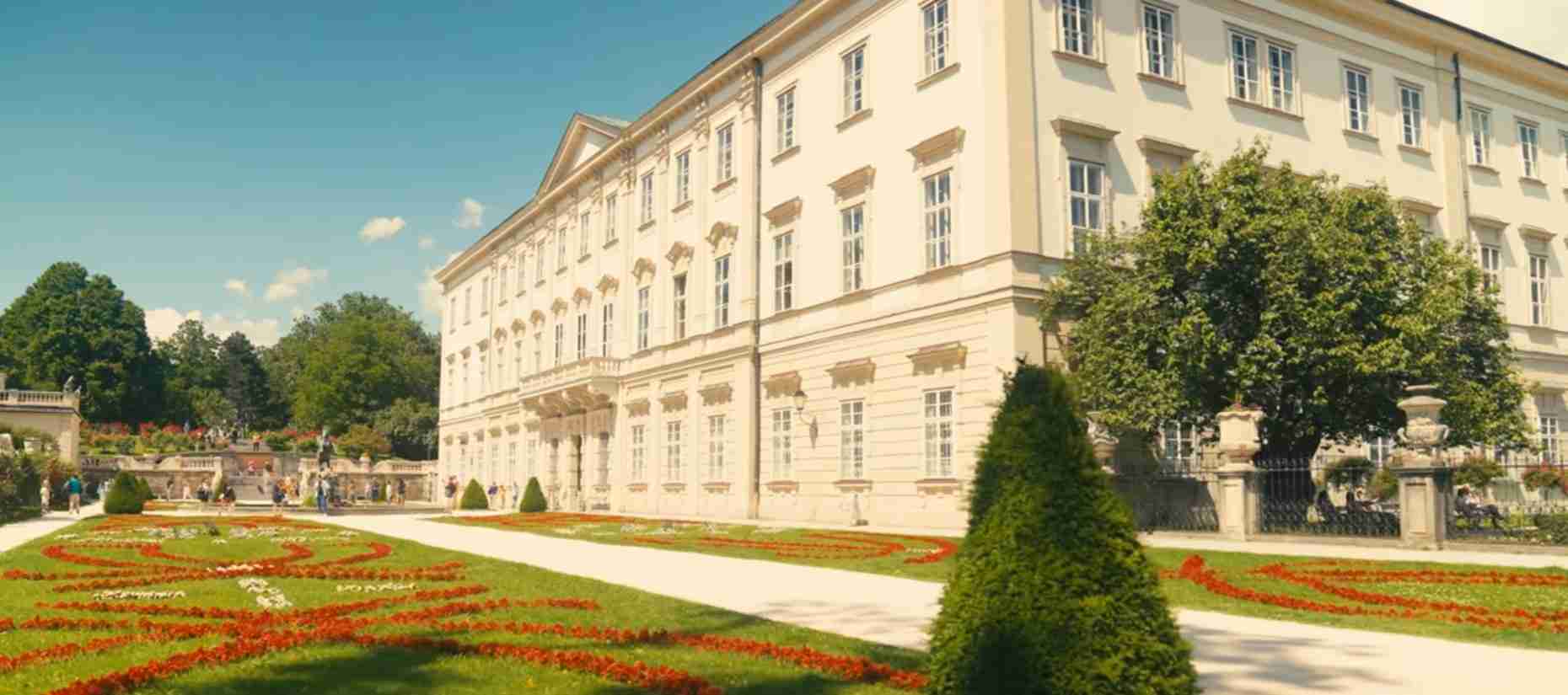
Mirabell Palace gardens exemplify baroque landscape architecture principles through geometric precision, sculpture program, and fortress views along central axis. The Pegasus Fountain centerpiece featured in Sound of Music’s “Do-Re-Mi” sequence, where von Trapp children danced around marble horses and water jets. Dwarf Garden (Zwergelgarten) contains quirky 18th-century marble statues depicting various grotesque figures reflecting baroque fascination with exotic and unusual. Free garden access operates dawn-to-dusk year-round, with optimal photography during morning hours (8-10 AM) when soft light illuminates flowerbeds and Alpine peaks appear sharp beyond fortress silhouette.
Linzergasse parallel’s old town’s Getreidegasse across river, offering equivalent shopping and dining at 15-20% lower prices due to reduced tourist concentration. Traditional shops sell dirndls, lederhosen, handcrafted goods, and Austrian delicacies, while restaurants serve authentic Salzburger Nockerl soufflé (€12-15) and schnitzel (€16-22) to predominantly local clientele. The street’s narrowness and medieval building scale create intimate atmospheric quality different from old town’s polished tourist presentation. Small galleries, bookshops, and specialty food stores reward browsing exploration at relaxed pace without constant crowds shuffling past narrow sidewalks.
Kapuzinerberg hill (640 meters elevation) offers Salzburg’s most dramatic fortress views via 30-minute climb from Linzergasse through steep forest path marked with Stations of the Cross. Summit viewpoint provides 180-degree panorama encompassing fortress, cathedral spires, Alpine peaks, and surrounding valleys. The climb suits moderately fit visitors comfortable with sustained uphill walking on dirt-and-stone paths, though recent improvements added handrails and rest benches at intervals. Descent via same route or alternative western path emerging near Steingasse requires 20-25 minutes, with total round-trip commitment spanning 75-90 minutes. Less ambitious visitors skip the climb, enjoying equivalent but lower-elevation views from Mönchsberg cliff walks accessed via elevator (€3.80 round-trip) from Anton-Neumayr-Platz.
Hellbrunn Palace and Southern Suburbs Route
The 7.2-kilometer route from Salzburg city center to Hellbrunn Palace combines urban walking with suburban park landscapes, requiring 90-110 minutes one-way at moderate pace. Salzburg city bus Route 25 provides efficient alternative (€2.70, 20 minutes), with hybrid approach walking south through Nonntal district to Hellbrunn (5 kilometers), touring palace and gardens, then returning by bus maximizing exploration efficiency. The route follows Hellbrunner Allee tree-lined avenue past Zoo Salzburg entrance, through residential areas with traditional architecture, reaching palace gates after gradual 50-meter elevation gain.
Hellbrunn Palace (Schloss Hellbrunn) operates as 17th-century summer residence featuring trick fountains and water-powered automata designed to entertain aristocratic guests with surprise sprays and mechanical theater. Guided tours (€14.50, 40 minutes, departures every 30 minutes in 2026) demonstrate fountain mechanisms including hidden sprays that soak unsuspecting visitors, water-powered bird songs, and miniature theatrical scenes animated by hydraulic pressure. The palace grounds extend across 60 hectares combining baroque formal gardens with naturalistic English landscape parks, deer enclosures, and walking trails requiring 45-60 additional minutes for comprehensive exploration beyond guided palace tour.
Sound of Music filming locations within Hellbrunn grounds include glass gazebo where Liesl and Rolf performed “Sixteen Going on Seventeen” (now relocated near pond for visitor access and preservation). The gazebo represents pilgrimage destination for film fans, with selfie queues developing during peak summer hours. Filming occurred 1964 using palace grounds as stand-in for von Trapp family estate despite actual villa’s different Salzburg location. The palace’s baroque architecture and mountain backdrop provided Hollywood-appropriate Austrian aesthetic, contributing to film’s enduring visual appeal and tourism impact on Salzburg’s economy.
Return options include bus route 25 from Hellbrunn stop (€2.70, every 20 minutes), or extended walk via alternative routing through Morzg village and Nonntal residential district adding 2 additional kilometers of suburban Austrian neighborhood exposure. The palace visit combines well with morning departure (9-10 AM opening), midday tour participation avoiding afternoon heat, and early afternoon bus return reaching city center 2-3 PM for continued sightseeing or rest before dinner. Pack water bottles and snacks as palace cafe offers limited selections at premium pricing, while shaded garden areas provide pleasant picnic locations during pleasant weather.
Regional Day Tour Experiences for 2026
Wachau Valley Wine Country Exploration
Wachau Valley wine tours from Vienna operate year-round with peak season April-October when weather favors outdoor vineyard walking and terrace dining. Full-day tours (€95-140 per person depending on operator and inclusions) depart Vienna 8:30-9 AM, reaching Krems via coach in 90 minutes along Danube River routing. Check tour operator websites including Viator and GetYourGuide for current pricing as rates vary by season and group size. Itineraries typically include Dürnstein medieval town walking (45 minutes), wine tasting at family vineyard (3-4 varieties, 30-40 minutes), Danube river cruise between towns (60-90 minutes), and Melk Abbey visit (60 minutes interior tour), returning Vienna by 6-7 PM.
Dürnstein presents quintessential Wachau village with blue-tower baroque church visible from kilometers distance, cobblestone main street lined with wine taverns (Heurigen), and ruined hilltop castle where Richard the Lionheart was imprisoned 1192-1193 during Third Crusade return journey. Walking Dürnstein’s compact center requires 30-45 minutes covering defensive walls, gate tower, riverfront promenade, and steep lanes climbing toward castle ruins (additional 45-minute hike for ambitious visitors). The town’s wine culture centers on Grüner Veltliner white variety thriving in Danube valley microclimates, with family wineries offering tastings (€8-15 for four wines) in atmospheric cellar settings carved from valley hillsides.
Melk Abbey dominates valley from hilltop position, with baroque monastery complex housing Benedictine community since 1089 and current buildings reflecting 18th-century reconstruction. Interior highlights include library hall with 100,000 volumes and ceiling frescoes, marble hall with illusionistic architecture, and baroque church with dramatic altar and side chapel decoration. Admission (€14 adults, included in premium tours or paid separately for budget options) covers abbey church, museums, and garden terrace with valley panoramas. Audio guides (included) provide 60-minute comprehensive narrative covering monastery history, baroque art program, and continuing monastic community’s educational mission operating gymnasium (secondary school) alongside tourist operations.
Alternative independent exploration via regional train from Vienna Franz-Josefs-Bahnhof to Krems (€22 round-trip, 90 minutes) plus local bus connections or bicycle rental delivers budget-conscious approach. Bicycle routes follow dedicated 36-kilometer Danube path from Krems through Dürnstein to Melk, with consistent signage and paved surfaces enabling non-expert cyclists comfortable completion. Rental shops in Krems (€18-25 daily) provide hybrid bikes with baskets and locks, with one-way rentals to Melk (€30-35) eliminating return cycling requirement. This approach suits active travelers comfortable with 4-5 hour cycling plus exploration stops, though limited wine tasting opportunities (cycling and alcohol don’t mix safely) compared to organized tour comprehensive sampling.
Sound of Music Film Locations Circuit
The classic Sound of Music tour from Salzburg visits six key filming locations across 4.5-hour half-day experience priced €55-65 per person in 2026 depending on operator selection and seasonal demand. Original Sound of Music Tour operates yellow-colored buses with 20-seat capacity maintaining small-group atmosphere, departing 9 AM and 2 PM daily year-round. Alternative operators including Panorama Tours and Bob’s Special Tours charge comparable rates with varying bus sizes and guide quality—read recent reviews carefully as personnel turnover affects experience consistency despite similar routing.
Mirabell Gardens provides tour’s first stop, with Pegasus Fountain and garden steps featured in “Do-Re-Mi” sequence where Maria and children sang while jumping stairs. The gardens offer free access, making this pre-tour self-exploration opportunity for budget-conscious travelers. Tour buses stop 15-20 minutes for photography before proceeding to Nonnberg Abbey exterior (filming prohibited inside working Benedictine convent), where Maria was portrayed as novice before becoming von Trapp governess. The abbey sits on Salzburg’s eastern hillside requiring brief uphill drive offering fortress views during approach.
Lake district routing proceeds north through Salzburg province to Fuschl am See, Mondsee, and St. Gilgen villages combining film locations with genuine Alpine scenery. Mondsee’s baroque church served as wedding scene location, with yellow-cream interior decoration and ornate altars creating memorable cinematic backdrop. The church operates as active parish welcoming visitors outside service times (€2 suggested donation), with plaques explaining 1964 filming and noting Maria and Georg’s actual 1927 wedding occurred elsewhere in Salzburg. Lake swimming opportunities and village cafes provide optional activity extensions for tours with flexible schedules, though most operators limit stops to photo opportunities maintaining schedule discipline.
Leopoldskron Palace gardens appear briefly as von Trapp mansion rear views, though actual villa interior filming occurred Hollywood soundstages. The palace operates as Salzburg Seminar conference center, restricting public access though viewable from lakeside path. Tour guides explain filming locations versus actual von Trapp family history—Maria von Trapp’s autobiography differs significantly from Hollywood adaptation regarding timeline, family dynamics, and escape circumstances. This historical context adds educational depth beyond film nostalgia, particularly for tours emphasizing Austrian history alongside movie trivia. The tour concludes with group singing of “Edelweiss” or “Do-Re-Mi” during return drive, creating participatory experience varying from charming to cheesy depending on group composition and individual tourist preferences.
Hallstatt and Salzkammergut Lake District
Hallstatt day tours from Salzburg operate year-round at €65-85 per person for 8-10 hour experiences combining UNESCO World Heritage village with lake scenery and salt mine visits. Departure times begin 8:30-9 AM reaching Hallstatt via coach in 90 minutes through mountainous routing, with stops at Wolfgangsee lake viewpoint and St. Gilgen village (Sound of Music Mozart’s mother birthplace). Tours include 2-3 hours Hallstatt free time for independent exploration, optional Skywalk viewing platform (€5), and salt mine tour (€36, 70 minutes, included in premium tours or paid separately), returning Salzburg by 6-7 PM. Check operator inclusions carefully as base pricing sometimes excludes salt mine, cable car, and lunch creating unexpected additional costs.
Hallstatt village clings to steep lakeside hillside, with 16th-century buildings, narrow lanes, and mountain backdrop creating exceptionally photogenic setting attracting 900,000+ annual visitors to 800-resident community. The village’s salt mining heritage dates to prehistoric times, with guided mine tours ascending mountain via funicular railway (€18 included in tour price) then descending into working mine featuring underground lake, salt slides, and exhibition halls explaining 7,000-year extraction history. Above-ground village exploration includes Market Square with plague column, Protestant church with lakeside cemetery, and Catholic church with ossuary (bone house) containing decorated skulls from overcrowded graveyard.
Overtourism challenges affect Hallstatt significantly in 2026, with tour buses restricted to designated parking areas requiring 10-minute walks to village center. Peak summer hours (10 AM-3 PM) bring 5,000+ simultaneous visitors overwhelming narrow streets and waterfront promenade designed for 19th-century foot traffic volumes. Morning arrivals before 10 AM or late afternoon visits after 3 PM reduce crowd density substantially, though tour group schedules typically arrive mid-morning optimizing logistics over visitor experience quality. Photography enthusiasts benefit from early morning light (7-9 AM) when sun illuminates village facades and lake reflects mountains without tour bus crowds and midday haze.
Alternative independent visit via regional train from Salzburg to Hallstatt Bahnhof (€28 round-trip, 2.5 hours with Attnang-Puchheim transfer) plus short ferry crossing (€3, 10 minutes) provides budget option requiring 6-7 hour total commitment. This approach enables overnight stay avoiding day-tripper crowds, with Hallstatt’s evening and early morning hours revealing authentic village character after tour buses depart. Budget €90-140 for overnight accommodation in village (book 6-8 weeks ahead for summer weekends), or stay in lakeside towns like Obertraun or Gosau offering lower rates with equivalent mountain scenery. The independent route suits travelers prioritizing atmospheric immersion over logistical convenience, accepting longer travel times and higher planning complexity for deeper regional appreciation.
Self-Guided Walking Resources and Audio Guide Apps for 2026
Digital Navigation and Audio Commentary Tools
The Vienna City Guide official app provides free comprehensive coverage of 200+ historic sites, museums, restaurants, and events with offline maps eliminating data usage concerns. GPS-triggered audio narratives activate automatically when approaching significant buildings, delivering 2-3 minute historical summaries in 12 languages including English, German, French, Spanish, and Mandarin. The app includes five pre-programmed walking routes (Ringstrasse circuit, historic center, Art Nouveau, Jewish quarter, Naschmarkt area) with estimated times, distance data, and difficulty ratings. Download before arrival via WiFi to avoid roaming charges, though Vienna’s extensive public WiFi coverage (free at metro stations, major squares, museums) enables in-destination downloads if needed.
Rick Steves Audio Europe app offers free podcast-style walking tours covering Vienna historic center (90 minutes), Hofburg Palace area (45 minutes), and Ringstrasse highlights (60 minutes). Steves’ accessible narrative style balances historical facts with cultural context and practical travel tips, though occasional outdated references reflect recording dates 2-3 years prior to current visits. The app requires 150-200 MB storage per city guide with offline playback after download, useful for avoiding data charges while roaming in Austria. Regular content updates maintain contemporary relevance, though user reviews note slower update cycles compared to commercial paid apps.
Commercial premium apps including GPSmyCity (€4.99 per city) and Vox City Walks (€6.99 per tour) deliver more polished production values, professional voice actors, and comprehensive coverage including smaller attractions beyond main tourist sites. These apps include turn-by-turn navigation with map integration, photo galleries showing historical building evolution, and thematic routes (Art Nouveau, Mozart locations, coffeehouse culture) beyond general overview walks. The investment proves worthwhile for visitors planning extended 4-7 day stays when multiple walking routes justify app costs, though free alternatives suffice for standard 2-3 day itineraries focusing on major highlights.
Printed Walking Tour Resources
Traditional guidebooks including DK Eyewitness Vienna & Salzburg and Lonely Planet Austria provide detailed walking tour descriptions with maps, historical context, and practical information for self-directed exploration. These resources excel in providing broader context unavailable in audio app snippets—architectural movements, Habsburg dynasty succession, 20th-century history—creating deeper understanding of observed buildings and spaces. Physical books eliminate battery dependence and screen glare in bright outdoor conditions, though carrying weight (300-500 grams) and page flipping in wind present practical disadvantages compared to smartphone-based navigation.
Free walking tour maps distributed at tourist information offices and hotels provide basic routing for self-guided exploration in 2026. Vienna Tourist Board operates information centers at Albertinaplatz (daily 9 AM-7 PM) and airport arrival hall, while Salzburg Tourismus maintains Mozartplatz office (daily 9 AM-6 PM). Staff speak excellent English, offering personalized route recommendations based on interests, fitness levels, and available time. The free maps include numbered points of interest with brief descriptions, suggested route sequences, and public transport connections for returning to starting points or extending explorations to additional neighborhoods.
Museum audio guides included with admission provide exhibition-specific commentary supplementing general city walking tours. Kunsthistorisches Museum (Vienna), Albertina, and Belvedere offer comprehensive audio programs covering 100-150 artworks with 3-5 minute scholarly explanations by curators and art historians. Schönbrunn Palace audio guide (included with €22 admission) narrates 40-room Grand Tour route with 90-minute total content covering Habsburg history, daily life rituals, and architectural evolution. These museum-specific guides deliver depth impossible in city-wide walking apps, creating complementary information layers when combined with urban exploration audio narratives.
Budget Optimization Strategies for 2026 Tours
Free Versus Paid Tour Value Calculation
Free walking tours operate on tip-based compensation where guides work for gratuity income rather than fixed salaries, creating incentive structures emphasizing entertainment and engagement over scholarly depth. These tours attract 25-35 participant groups reducing individual attention but maintaining acceptable quality through competitive guide selection—poorly performing guides fail to earn sufficient €10-15 per person tips necessitating career changes. The three-hour Vienna historic center free walk covers equivalent geographic scope to €30 paid alternatives, delivering 70-80% of content quality while saving €30-45 for couples or small groups redirecting funds toward museum admissions or upgraded dining.
Paid tour premiums justify costs through smaller groups (12-15 versus 30-35 participants), guaranteed departure regardless of participant numbers, skip-the-line access at attractions like Schönbrunn Palace, and professional guides with licensing credentials verifying historical accuracy. The €25-40 per person paid tour investment buys schedule certainty, question opportunities, and comfortable group dynamics worth considering for limited-time visitors prioritizing efficiency over budget extremes. Premium €50-75 small-group tours reduce participant counts to 8-10, enabling conversational guide interaction and flexible pacing for photography or extended discussion of interesting architectural details attracting individual curiosity.
Cost-benefit analysis shifts based on group size traveling together. Solo travelers benefit dramatically from free tour options saving €30 versus minimal quality degradation, while couples save €60 and families of four preserve €120 redirected toward other experiences. Conversely, paid tours’ per-person pricing means couples pay €50-60 total for mid-range options delivering superior experience quality compared to free alternatives requiring €20-30 combined tips. Calculate total party costs and evaluate whether quality improvements justify the incremental investment based on individual budget flexibility and experience priorities.
Combination Ticket and Pass Strategies
Vienna Pass (€94 for 72 hours) bundles 70+ attractions with unlimited public transport, potentially eliminating separate tour costs when strategic selections replace paid walking tours with independent exploration. The pass includes fast-track entry at Schönbrunn Palace, Hofburg, and Belvedere—three sites requiring combined 4-5 hours even with skip-the-line access—leaving additional capacity for 3-4 secondary museums or churches consuming remaining pass validity. This self-directed approach sacrifices guide commentary but maximizes attraction quantity, particularly valuable for return visitors familiar with Vienna basics seeking deeper museum immersion rather than introductory overviews.
Salzburg Card (€45 for 24 hours, €62 for 48 hours, €74 for 72 hours) similarly bundles transportation and attractions eliminating tour operator markups. The 24-hour version covers fortress (€17), Mozart museums (€12), DomQuartier (€14), and public transport (€8 daily pass value), reaching break-even at €51 versus card’s €45 cost. Extended versions suit multi-day Salzburg focus enabling Hellbrunn Palace, Untersberg cable car, and comprehensive museum coverage across 2-3 days. However, cards don’t include Sound of Music tour or Wachau Valley excursions—specialized tours remain separate purchases regardless of pass ownership.
DIY tour assembly combining audio guide apps (€0-6.99 per city), public transport day passes (€5.80 Vienna, €4.60 Salzburg), and selective attraction admissions potentially undercuts paid tour costs while maintaining flexibility. A self-directed Vienna day costs €5.80 transport + €22 Schönbrunn + €0-5 audio app + €15-25 meals = €42.80-52.80 versus €45-65 for equivalent paid walking tour plus separate attraction admissions. This approach suits confident navigators comfortable with smartphone maps and willing to research routing, though first-time visitors may find the advance planning burden and navigation stress outweigh €15-25 savings compared to organized tour convenience.
Specialized Thematic Tours for 2026 Enthusiasts
Culinary and Food Market Tours
Vienna food tours combine market visits, traditional restaurant stops, and local specialty tastings into 3-4 hour culinary immersion experiences priced €75-95 per person. Typical itineraries begin at Naschmarkt with vendor interactions explaining Austrian, Turkish, and international ingredient traditions, proceed to traditional beisls for Wiener Schnitzel or Tafelspitz tastings, include coffeehouse stops for Sachertorte or apple strudel, and conclude with wine or beer sampling at historic establishments. These tours provide cultural context beyond mere consumption—explaining Habsburg Empire’s multicultural heritage reflected in Viennese cuisine, coffeehouse intellectual traditions, and wine culture’s Roman origins adapted through centuries of regional refinement.
Small-group culinary tours limited to 8-12 participants enable restaurant accommodation without advance reservations and maintain conversational atmosphere during tastings. Guides with hospitality backgrounds explain cooking techniques, ingredient sourcing, and recipe variations reflecting family traditions and regional differences. The substantial food quantities—typically 6-8 tasting portions totaling full meal equivalent—justify premium pricing while eliminating separate lunch costs during tour timing. Budget-conscious alternatives include self-guided Naschmarkt exploration following free vendor maps available at information kiosks, combined with individual coffeehouse visits at €8-15 per person for coffee and pastry versus tour’s comprehensive but expensive €75-95 package.
Salzburg food tours emphasize beer culture and traditional Alpine cuisine through brewery visits, market hall exploration, and mountain hut dining experiences. Evening tours (€55-75, 3-4 hours) visit Augustiner Bräu monastery brewery for traditional beer hall atmosphere, proceed to Grünmarkt for local cheese and sausage vendors, and conclude at traditional restaurants for Salzburger Nockerl soufflé demonstrations. The tours operate year-round with winter Christmas market variations incorporating mulled wine tastings and seasonal specialties like roasted chestnuts and gingerbread. These regional culinary deep-dives suit food enthusiasts willing to dedicate half-day periods to gastronomic education, while casual diners achieve similar experiences through independent restaurant visits at fraction of guided tour costs.
Architecture and Art History Walking Tours
Vienna’s Art Nouveau architecture tours led by architecture historians or licensed guides with specialized credentials cost €45-60 per person for 3-hour walking explorations. Routes concentrate on Otto Wagner masterpieces including Karlsplatz Stadtbahn stations, Postsparkasse (postal savings bank), and Kirche am Steinhof psychiatric hospital church, plus contemporary Secession movement buildings by Joseph Maria Olbrich and Josef Hoffmann. Expert guides explain Jugendstil’s rejection of historicist revival styles, embrace of new materials (exposed steel, concrete, glass), and integration of decorative arts in Gesamtkunstwerk (total artwork) philosophy. These tours appeal to architecture students, design professionals, and culturally curious travelers seeking deeper understanding beyond visual appreciation.
Jewish heritage tours explore Vienna’s Leopoldstadt district (2nd district) concentrating on pre-WWII Jewish community centers, synagogue locations, and memorial sites. The 2.5-3 hour walks (€35-45) cover Karmelitermarkt area, Tempelgasse with modern Stadttempel synagogue, and Holocaust memorial sites while narrating Jewish Vienna’s cultural contributions to science, medicine, arts, and commerce before Nazi persecution. These emotionally challenging but historically essential tours require sensitive guide expertise balancing commemoration with educational objectives, making guide credentials and approach particularly important to evaluate through review reading before booking.
Salzburg’s baroque architecture tours emphasize 17th-18th century building programs transforming medieval town into princely archbishop showcase. Three-hour walks (€40-55) decode architectural language of power through analysis of cathedral facade hierarchy, Residenz palace spatial organization, Mirabell Palace garden symbolism, and church decoration programs conveying Counter-Reformation theology. University professors or art history PhDs leading these tours provide scholarly depth unavailable from general tourist guides, explaining patron-architect relationships, workshop organization, and regional variants of pan-European baroque style. This specialized content suits culturally sophisticated travelers with architecture or art history backgrounds seeking expert-level interpretation beyond introductory commentary.
Frequently Asked Questions About Austria Tours 2026
Are tour guides in Austria required to be licensed?
Austria requires professional tour guide licensing for paid guiding services in Vienna, Salzburg, and other major tourist destinations as of 2026. Licensing examinations cover comprehensive historical knowledge, architectural understanding, art history competency, and multiple language proficiency, ensuring baseline quality standards across the tourism sector. Guides display official identification badges during tours, with unlicensed operations subject to fines and enforcement though some gray-market operators persist particularly for free walking tours claiming tip-only compensation avoids licensing requirements. Reputable tour companies employ exclusively licensed guides, verifiable through company websites listing guide credentials and qualifications.
Can I customize private tours to my interests?
Private customized tours cost €180-280 for half-day (4 hours) and €300-450 for full-day (8 hours) experiences in 2026, with pricing covering single party regardless of participant numbers (1-8 people typically). Guides adapt itineraries based on advance consultation regarding interests—architecture focus, culinary emphasis, Jewish heritage, Art Nouveau, specific museum collections, or neighborhood exploration. This flexibility suits families with varied age ranges, special interest groups, and visitors with mobility limitations requiring pacing modifications. The per-person cost decreases substantially for groups of 4-6 sharing €300 total cost (€50-75 each) versus individual paid tours at €25-40 per person, though solo travelers pay full private rate making this option economically impractical unless seeking highly specialized content unavailable in group tour formats.
What happens if it rains during outdoor tours?
Vienna and Salzburg walking tours operate in rain except severe weather endangering participant safety in 2026. Guides provide brief shelter stops at covered locations (church entrances, arcade passages, covered markets), while participants should carry umbrellas and waterproof jackets as tour operators rarely provide rain gear. Refund policies vary—some operators offer full refunds for tour cancellation decisions, others provide rescheduling options without refunds, while budget free tours operate regardless of conditions with gratuity expectations remaining at participant discretion. Check weather forecasts before tour dates, with reschedule requests 24-48 hours ahead typically accommodated without penalties by established operators.
Are Austria tours wheelchair accessible?
Urban walking tours in Vienna and Salzburg face accessibility challenges due to historic cobblestone streets, uneven surfaces, and building entrance steps in 2026. Vienna’s Ringstrasse circuit offers complete wheelchair accessibility on modern sidewalks with curb cuts, while historic center tours involving Graben and narrow lanes present barriers. Salzburg old town’s steep slopes and stairs limit wheelchair touring without assistance, though fortress funicular provides accessibility to fortress level. Specialized accessible tours cost €200-300 for private customized experiences avoiding problematic terrain, using wheelchair-accessible vehicles for longer distances, and focusing on ground-floor museum access. Contact tour operators directly before booking to discuss specific mobility requirements and route modifications ensuring enjoyable accessible experiences.
Do I need to tip tour guides?
Paid tour guides in Austria appreciate but don’t require gratuities beyond stated tour prices in 2026, with €3-5 per person tips for exceptional service considered generous acknowledgment. Free walking tours operate entirely on tip-based compensation, with €10-15 per person representing standard gratuity for satisfactory 2.5-3 hour experiences. Private tour guides sometimes receive 10-15% tips calculated on total tour cost, though this remains optional rather than obligatory. Unlike American service industry norms where tips constitute primary income, Austrian tour guides earn reasonable base salaries making gratuities genuine appreciation gestures rather than wage supplements necessary for living income.
Can children participate in walking tours?
Family-friendly walking tours designed for ages 6-12 operate in Vienna and Salzburg at €18-25 per child rates (versus €30-40 adult pricing) in 2026. These tours shorten distances to 2-3 kilometers, incorporate interactive elements (treasure hunts, quizzes, costume props), and reduce duration to 90-120 minutes matching children’s attention spans. General adult tours technically permit children but rarely engage young participants through content designed for adult interests and 3-4 hour durations exceeding typical child patience. Families with children under 12 should specifically book family-oriented tours or consider self-guided exploration enabling flexible breaks, playground stops, and gelato rewards maintaining enthusiasm throughout sightseeing days.
What should I bring on walking tours?
Essential walking tour items include comfortable broken-in shoes with arch support, bottled water (€1.50-2 from supermarkets versus €3-4 tourist area kiosks), smartphone for photos, sunscreen and sunglasses for sunny days, and light jacket for variable weather. Tours don’t include meals, though 3-4 hour walks permit bathroom and coffee breaks at cafes where tour guides receive commission from establishments in exchange for bringing customer groups. Avoid large backpacks as crowded areas and museum visits create carrying inconvenience, while small daypacks or crossbody bags hold water, phone, wallet, and light layers without burden. Tour operators appreciate punctuality—arrive 10 minutes before stated departure times for check-in and group assembly before scheduled start.
Are there evening or night tours available?
Vienna offers specialized evening tours including illuminated architecture walks (€35-45, 2 hours) highlighting floodlit palaces and monuments, ghost tours exploring dark legends and execution sites (€25-35, 90 minutes), and pub crawls combining historic beer cellars with contemporary bar culture (€40-55 including drinks). Salzburg’s evening options emphasize dinner concerts at baroque palaces (€60-95 including meal and Mozart performance), fortress night tours with city lights panoramas (€25-35), and brewery evenings at Augustiner Bräu (€45-60 including beer and food). These evening alternatives suit visitors completing daytime sightseeing or seeking different atmospheric perspectives on familiar sites, though availability decreases during winter months when early darkness (4:30 PM sunset) compresses scheduling options.