
Asturias Best Tours & Walking Routes 2026: Complete Travel Guide
Asturias packs more touring riches per square kilometre than almost anywhere else in Spain — vertiginous gorge trails carved through limestone, UNESCO-listed pre-Romanesque churches, coastal cliffs plunging to green Atlantic water, and one of Europe’s last brown bear sanctuaries, all within reach of the regional capital Oviedo. This guide covers every guided tour option, self-guided hiking route, and day-trip circuit operating in 2026, with verified prices, transport details, and season-by-season planning advice.
Key Takeaways
- Ruta del Cares is Asturias’s signature hike: The 11 km gorge trail from Poncebos to Caín cuts through the heart of Picos de Europa National Park, costs nothing to walk, and ranks among the finest day hikes on the Iberian Peninsula. A summer shuttle from Arenas de Cabrales to Poncebos runs hourly from 8:15 and costs under €5 return.
- Guided Picos de Europa day tours from Oviedo start at €57 per person and cover the gorge, Bulnes village, Cabrales cheese caves, or the high mountain circuit — the most efficient option for travellers without a car.
- Budget travellers spend €65-95 per person daily (two sharing a budget hotel), combining free hikes with public transport. Mid-range travellers budget €125-195 per person daily; luxury visitors spending on private tours and paradors invest €265-415 per person daily.
- A full week in Asturias costs €455-665 (budget), €875-1,365 (mid-range), or €1,855-2,905 (luxury) per person, assuming two sharing accommodation throughout.
- The Camino del Norte crosses Asturias for roughly 340 km of pilgrimage walking from Irún to Santiago, with the Asturian section offering clifftop stages, fishing villages, and pilgrim albergues from €12-18 per night.
- Advance booking is essential for Tito Bustillo Cave (UNESCO Palaeolithic art, limited to 15 visitors per tour slot), and for the Covadonga Lakes shuttle in summer — both sell out weeks or months ahead.
People Also Ask About Asturias Tours and Walking Routes 2026
What are the best guided tours in Asturias in 2026?
The most popular guided tour in Asturias is the Picos de Europa day trip from Oviedo or Gijón, starting at €57 per person and covering the Cares Gorge entrance, Bulnes funicular, or Cabrales cheese cave. For urban experiences, the Oviedo historic-centre walking tour (2 hours, from €14-25 per person) is the top-rated city option. Specialist tours include the Somiedo Lakes and Senda del Oso excursion (€57, 9-10 hours), the Cathedrals Beach and Ribadeo day trip (€45-57), and food-focused Gijón cider-and-cheese tours (from €35). Private 4WD mountain tours of the Picos represent the premium end at €250-450 per vehicle for a full day, fitting 4-6 passengers.
How much does a day of touring Asturias cost per person in 2026?
Daily costs depend heavily on whether you take guided tours or self-guided hikes. Budget travellers relying on free walks and ALSA buses spend €65-95 per person daily (two sharing a budget hotel). Mid-range travellers mixing guided day trips with self-guided hiking spend €125-195 per person daily. Luxury travellers with private guides, rental cars, and high-end dining spend €265-415 per person daily. All figures assume two people sharing accommodation; solo travellers pay more for private rooms.
What is the best walking route in Asturias in 2026?
The Ruta del Cares (Cares Gorge trail) is the consensus choice — 11 km each way through a 1,000-metre-deep limestone gorge in Picos de Europa National Park, free to walk, reachable by shuttle from Arenas de Cabrales. The Senda del Oso (Bear Trail) is the top family option: a flat 25 km greenway along an old mining railway through the Bear Valleys, best cycled with rentals available on site. Coastal walkers favour the Camino del Norte stages between Gijón and Villaviciosa, where clifftop paths alternate with fishing-village centres. For day walkers based in Oviedo, the Monte Naranco circuit combining two UNESCO pre-Romanesque churches with panoramic views of the city takes under 3 hours.
How do you get around Asturias for tours in 2026?
ALSA operates the main regional bus network connecting Oviedo and Gijón with Cangas de Onís (the Picos gateway), Ribadesella, Llanes, and coastal towns. The FEVE/Renfe narrow-gauge coastal train links Oviedo, Gijón, Llanes, and Ribadesella — scenic and practical for one-way walks. For the Cares Gorge, a dedicated summer shuttle runs from Arenas de Cabrales to Poncebos trailhead. The Covadonga Lakes require the official shuttle (€9 round trip) when access regulations are in force from June 1. A rental car, available in Oviedo or Gijón from around €35-60 per day, is the most flexible option for reaching rural trailheads.
Extended multi-day tours – 5+ days
Featured Asturias Multi-Day Tour Packages
9 days
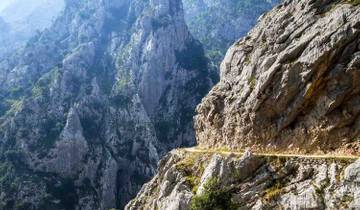
Hiking the High Trails of the Picos de Europa
- ✓ Comprehensive Asturias tour
- ✓ Expert local guides included
- ✓ All accommodation arranged
- ✓ Transportation provided
10 days
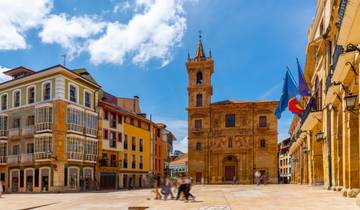
Spain – Hiking on the Camino del Norte 10 Days
- ✓ Comprehensive Asturias tour
- ✓ Expert local guides included
- ✓ All accommodation arranged
- ✓ Transportation provided
10 days
Spain – by Bike on the Camino del Nortepart 10 Days
- ✓ Comprehensive Asturias tour
- ✓ Expert local guides included
- ✓ All accommodation arranged
- ✓ Transportation provided

8 days
Spain – Picos de Europa North (8 days)
- ✓ Comprehensive Asturias tour
- ✓ Expert local guides included
- ✓ All accommodation arranged
- ✓ Transportation provided
Multi-day tour packages powered by TourRadar. Prices and availability subject to change.
Introduction: Asturias as a Touring and Walking Destination
The Principality of Asturias occupies a narrow strip of northern Spain between the Cantabrian Sea and the Cantabrian Mountains, a geography that produces landscapes of extraordinary concentration. Within a two-hour drive from Oviedo a visitor can stand at sea level on a beach fringed by cliffs, walk a mountain gorge whose walls rise 1,000 metres overhead, visit a church built in the ninth century before Romanesque architecture existed, and watch the last brown bears in western Europe grazing in a mountain valley. The region receives over five million tourists annually, yet most concentration falls on the Picos de Europa and a handful of coastal towns — large portions of interior Asturias remain genuinely off the beaten path.
Asturias holds two UNESCO World Heritage designations, both relevant to touring itineraries. The Monuments of the Kingdom of Asturias (inscribed 1985, extended 2017) encompasses pre-Romanesque churches and palaces built between the eighth and tenth centuries, scattered across the principality from Oviedo’s Monte Naranco to the village of Lena in the south. The Cave of Altamira and Palaeolithic Cave Art of Northern Spain (inscribed 1985, extended 2008) includes the Tito Bustillo cave in Ribadesella, where Magdalenian paintings of horses and reindeer from 22,000 to 10,000 BC survive in extraordinary condition. Both sites anchor touring itineraries of lasting cultural significance.
The touring infrastructure has expanded steadily in recent years. ALSA operates 33+ daily bus services between Oviedo and Cangas de Onís alone, the Covadonga Lakes shuttle system now functions with advance online booking, and the summer access regulation at Poncebos has reduced the traffic jams that previously plagued the Cares Gorge approach. GetYourGuide and Viator list over forty licensed tour operators covering Asturias in 2026, from English-language walking guides to private geological specialists with geology degrees. Travellers arriving in 2026 find a destination that has invested in sustainable access without losing the wildness that makes it worth visiting.
Top Guided City Tours in Asturias 2026
Guided city tours in Asturias provide interpretive context that bare monuments rarely supply on their own — the pre-Romanesque churches on Monte Naranco, for example, are physically small, but their architectural story reaches from the post-Roman collapse of the Visigothic kingdom to the origins of the Reconquista, a narrative that benefits enormously from expert narration. The three cities with the strongest guided-tour offering are Oviedo, Gijón, and Avilés.
Oviedo Walking Tours: Pre-Romanesque Heritage and the Historic Quarter
Oviedo’s guided walking tours divide into two broad categories: the city-centre historic quarter and the Monte Naranco UNESCO circuit. The most-reviewed option on GetYourGuide is the two-hour Oviedo Historic Centre walking tour, available as a small-group format from €14-25 per person or as a private group option (up to five people) at €163. Tours move through the Gothic cathedral of San Salvador, the Cámara Santa (which houses relics walked to by medieval pilgrims arriving from across Europe), the Plaza del Fontán, and the Escultoroute — Oviedo’s collection of outdoor sculptures by international artists installed throughout the old town. Night versions of the tour use dramatic lighting of the cathedral façade and cost a similar amount.
The Monte Naranco UNESCO circuit stands apart as Oviedo’s most historically significant walking experience. Santa María del Naranco and San Miguel de Lillo, two pre-Romanesque buildings constructed in the 840s under King Ramiro I, sit on the southern slopes of Monte Naranco 3.5 km northwest of the city centre. The combined ticket for both monuments costs €4 (free on Monday mornings). Access is by guided tour only — all conducted in Spanish — with tours running every 30 minutes or so when attendance warrants. Maximum group size is 25 people. Take city bus A2 (€1.20, stop Prerrománico) to reach the monuments from the city centre; the journey takes 15 minutes. Free Monday entry, no guide service, runs 10:00-12:30 in winter and 09:30-13:00 in summer. The full circuit on foot from Oviedo’s old town up to both churches and back through the park takes around three hours at a comfortable pace and costs nothing but the €4 ticket (or nothing at all on Monday).
San Julián de los Prados (Santullano), Oviedo’s third major pre-Romanesque monument, stands within 10 minutes’ walk of the main train station and preserves the most complete ninth-century fresco cycle in Spain. Entry to the interior is also by guided tour; check hours at the Centro Prerrománico Asturiano website (centroprerromanicoasturiano.com) as seasonal schedules vary.
Gijón City Tours and Food Experiences 2026
Gijón, Asturias’s largest city with a population around 275,000, offers a more urban touring experience focused on its Roman past, maritime heritage, and Asturian food culture. The Gijón walking tour of the historic Cimadevilla district — the old fishing quarter built on a headland with the sea on three sides — runs for two hours and costs from €17 per person, with guides covering the Roman thermal baths at Campo Valdés (one of the most important archaeological sites in Asturias), the Jovellanos birthplace, and the marina renovation. The panoramic Tuk-Tuk tour of the whole city runs for one hour and is rated among the city’s top experiences, starting at €29 per person for small groups.
For food-focused touring, the Gijón Cheese and Cider Food Tour (2 hours, from €35) provides the most direct introduction to the region’s two defining products: Cabrales blue cheese and Asturian sidra natural (natural cider). Asturian cider protocol demands that it be poured from height — the escanciado technique where a thin stream is poured from arm’s length to aerate the cider and form a light foam — so a food tour that includes a traditional sidrería adds genuine cultural value beyond the tasting. The Women of Gijón Tour, at €14 per person, takes a social-history approach, tracing women’s lives and contributions to the city through two and a half hours of walking.
Avilés Cultural Walking Tours 2026
Avilés, often overlooked in favour of its larger neighbours, preserves arguably the finest Romanesque colonnaded street ensemble in northern Spain in its Plaza de España and adjoining arcades, alongside the contemporary Oscar Niemeyer International Cultural Centre opened in 2011 — an architectural contrast of medieval and modernist that creates an immediately interesting touring frame. The Baroque Avilés tour runs for two hours at €14 per person, and the Historic Centre walking tour (also two hours, private group up to five at €163) covers the Benedictine convent, the Valdecarzana palace, and the colonnaded old town in detail. The guided tour of the La Carriona cemetery (1.5 hours, available from local operators) provides a distinctive alternative for visitors interested in funerary art and Asturian modernist sculpture.
Picos de Europa Tours and Guided Hikes 2026
Picos de Europa National Park — Spain’s first national park, established in 1918 and covering 670 square kilometres across Asturias, Cantabria, and Castile and León — provides the dominant touring destination in the region. The park’s three massifs (Occidental, Central, and Oriental) offer everything from roadside viewpoints accessible by standard vehicle to serious multi-day mountain traverses. For 2026, the main guided tour options cluster around day trips from Oviedo and Gijón, with prices and itineraries consistent across the licensed operators listing on GetYourGuide, Viator, and Civitatis.
Best Day Tours from Oviedo to the Picos 2026
The most popular guided day tour is the Picos de Europa and Potes excursion from Oviedo — approximately 11 hours, running through the Cabrales valley to Potes in Cantabria and back, priced at €57-64 per person. The itinerary visits Arenas de Cabrales (the market centre for Asturian blue cheese), the lookout points over the Cares valley, and the medieval town of Potes before returning along the scenic coast. A variant itinerary — Bulnes and Cabrales Cheese Cave — combines the funicular to Bulnes village (see below) with a guided tour of a cheese-ripening cave and a Cabrales tasting, running 8-12 hours at €57 per person. Check current funicular status before booking: the Bulnes funicular underwent maintenance closure in early 2026.
For the western Asturian highlands, the Somiedo Lakes and Senda del Oso excursion from Oviedo and Gijón offers a 9-10 hour day covering the Somiedo Natural Park (home to the densest brown bear population in Asturias), the Somiedo lakes, and a section of the Bear Trail greenway. This tour costs €57 per person and is particularly recommended for visitors interested in wildlife and the Cantabrian mountain interior rather than the more-visited eastern Picos. Tour groups travel in vehicles seating around 15 passengers; the format is semi-guided with stops at major viewpoints.
The trip to Cathedrals Beach (Playa de las Catedrales) in Ribadeo, Galicia — an Atlantic beach known for its arch-carved sea cliffs — runs as a long day trip from Oviedo (around 10 hours), sometimes combined with Tapia de Casariego, at €45-57 per person. Coastal erosion has created arches and corridors that can only be accessed at low tide; the guided format ensures correct tide timing and advance beach access permits (required in summer).
Bulnes Funicular and Village Experience 2026
The Bulnes funicular connects the hamlet of Poncebos to the car-free village of Bulnes, 650 metres higher in the mountains. The 2,227-metre underground tunnel ride takes seven minutes and has operated since 2001, making this remote village — previously a three-hour walk from the nearest road — the most accessible “untouched” village in the Picos de Europa. The round-trip funicular ticket costs €22 for adults (€17.61 one-way), €6.71 for children aged 4-12 round trip (free for children under 3). Tickets are sold at the Poncebos box office from 9:30 or online through ALSA (alsa.com). The funicular underwent an unscheduled maintenance closure on 16 February 2026; verify current operational status at alsa.com or en.asturias.com before planning a visit. In high season, the funicular runs 10:00-20:00 continuously; in low season, it operates in two blocks (10:00-12:30 and 14:00-18:00) every 30 minutes. Visitors who prefer walking can hike the Canal del Texu path from Poncebos to Bulnes in 1.5-2 hours (4 km, moderate-difficult), with views of the Naranjo de Bulnes peak (Picu Urriellu, 2,519 m) emerging as the trail climbs.
Covadonga and the Sacred Lakes 2026
Covadonga combines two complementary experiences: the Royal Site of Covadonga (the basilica and cave shrine where Pelayo’s Christian forces halted the Moorish advance in 722 AD, founding the Kingdom of Asturias) and the glacial Lagos de Covadonga — lakes Enol and Ercina — set at 1,100 metres above sea level against a backdrop of the Picos peaks.
Access to the Lagos de Covadonga follows a regulated transport plan from 1 June to 18 October 2026. Private vehicles are prohibited on the CO-4 road during this period; all visitors must use the official shuttle bus. The round-trip shuttle ticket costs €9 for adults, €3.50 for children aged 4-11 (free for children under 3). Buses depart from five designated car parks near Cangas de Onís and from the Cangas de Onís bus station, running from 8:00 (first service) to 17:45 (last service upward), with return services until 20:50. Book in advance at the ALSA website (alsa.com); tickets sell out on summer weekends and bank holidays. Parking at official lots costs €2-3 per day. The Cangas de Onís–Covadonga shuttle (separate line, one-way only) costs €1.55. For those visiting only the basilica and cave shrine at Covadonga — not the lakes above — private vehicles retain access year-round.
Guided tours to Covadonga and the Lagos from Oviedo or Gijón run for 4-8 hours at various price points depending on whether they are small-group or private. Private group tours (up to 5-6 people) cost from €57 per person for an 8-hour combination of Cangas de Onís, the Roman bridge, Covadonga shrine, and the Lagos. These tours eliminate the logistics of shuttle booking and car-park availability, and include a local guide who explains both the political-religious significance of Covadonga and the glacial geology of the high lakes circuit.
Private 4WD Mountain Tours 2026
Private off-road tours of the Picos de Europa represent the premium end of the guided-tour market in Asturias. These cover unpaved mountain tracks, ancient yew groves, remote villages, and geological formations inaccessible by standard vehicle, with guides who are trained naturalists or geologists. A full-day private 4WD tour from Oviedo (maximum 4-6 passengers) costs from around €250-450 per vehicle. Per-person costs for a couple range from €125-225; for four sharing, from €65-115. Multi-day Picos packages that include accommodation in mountain towns run approximately €695-785 per person in double occupancy for a 4-5 day guided circuit, as offered by some specialist operators including asturias.com’s guided tour programme. These packages include small-group vehicles (8-9 seats), guided walks, lunches, and evening meals at rural restaurants — a competitive price for the depth of access they provide.
Best Self-Guided Hiking Routes in Asturias 2026
Asturias has over 400 marked hiking trails (senderos) across its network of natural parks, biosphere reserves, and coastal paths. The majority involve no entry fee, and many of the finest are accessible from public transport. The following routes represent the most rewarding self-guided options across different terrain types and difficulty levels for 2026 visitors.
Coastal Clifftop Paths and Scenic Walks 2026
The Senda Costera between Ribadesella and Llanes covers approximately 30 km of coastal cliff walking across a series of day stages, passing sea arches, brackish lagoons (playas albas), and fishing villages. The path connects to the FEVE coastal train at both ends — take the train east, walk one or two stages, and return by train or bus — making it perfectly suited to day-walking without a car. Individual stages run 8-15 km and take 3-6 hours at a moderate pace. No admission, no booking required; the path is waymarked and maintained by the Asturian government.
The coastal path between Cudillero and Cabo Vidio offers some of the most dramatic cliff scenery on the Atlantic coast of Spain. Cudillero itself is one of Asturias’s most photographed villages — a fishing settlement built into a narrow gorge where colourful houses stack in tiers above a tiny harbour. The walking circuit from Cudillero to the lighthouse at Cabo Vidio and back covers approximately 20 km (round trip) with 500 metres of ascent, rated moderate difficulty. Allow a full day; the village provides lunch options at any of its harbour restaurants.
The Ruta de la Jarea in Tapia de Casariego follows the coast near the Galician border, passing prehistoric mounds and a shoreline of wave-cut platforms with fossil marine sediments. It runs about 18 km and connects to a small nature reserve. Unlike the more-visited eastern coast, this stretch remains genuinely quiet even in summer.
Pre-Romanesque Monuments Walking Circuit 2026
Oviedo contains the highest concentration of pre-Romanesque monuments in Asturias, and a dedicated walking circuit visiting the major sites requires a full day on foot (or a half-day with city bus connections). Start at San Julián de los Prados (Santullano, 9th century, 10 minutes’ walk from Oviedo’s main train station), then continue through the historic centre to the Cámara Santa inside the cathedral complex (entry approximately €3), before taking bus A2 to Monte Naranco for Santa María del Naranco and San Miguel de Lillo (€4 combined). The full circuit on foot covers approximately 8 km and 250 metres of ascent to the Naranco churches. A more ambitious extended version continues up Monte Naranco to the Monumento al Sagrado Corazón for panoramic views of the Cantabrian Mountains before descending.
Santa Cristina de Lena, one of the most architecturally refined of the Asturian pre-Romanesque monuments, stands in isolation on a hilltop near the town of Pola de Lena, 42 km south of Oviedo. The ninth-century church is reachable by Renfe Cercanías train from Oviedo (Puente Los Fierros station) followed by a 30-minute walk, or by ALSA bus to Pola de Lena. Entry is free; opening hours vary seasonally and the church is locked outside tour times — check the Centro Prerrománico Asturiano website before travelling.
Taramundi and the Inland Valleys 2026
Taramundi, in the far western corner of Asturias near the Galician border, is considered the birthplace of Asturian rural tourism — a model village where traditional craft workshops (knife-making, basketry, wooden sabots) have been preserved alongside mill circuits and rural accommodation. The walking network radiating from Taramundi covers six signed routes totalling approximately 60 km, ranging from the 3 km mill trail (an easy flat walk through ancient water mills) to the 18 km Ruta de los Molinos circuit. The area is entirely free to walk, with excellent signage in Asturian and Spanish.
The Oscos region — Los Oscos, three small municipal councils east of Taramundi — extends the walking network through oak and chestnut forest rarely visited by international tourists. The Ruta de los Molinos de San Martín de Oscos covers 14 km of river valley walking past twenty traditional mills, producing one of the most immersive inland walking experiences in Green Spain. ALSA serves Grandas de Salime (eastern Oscos) from Oviedo; for the western villages, a rental car is necessary.
Ruta del Cares: Planning Asturias’s Divine Gorge Walk in 2026
The Ruta del Cares — known locally as La Garganta Divina, the Divine Gorge — runs for 11 km from the hamlet of Poncebos in Asturias to the village of Caín in the province of León, carved 1,000 metres above the Cares River along a narrow maintenance path cut into the limestone cliffs. The trail requires no technical equipment, costs nothing to walk, and consistently ranks as one of the top ten day hikes in Spain. For 2026, access management has matured: summer shuttle buses eliminate the parking chaos that characterised the route a decade ago, and the path itself is well maintained throughout.
Route Overview and Difficulty 2026
The Cares Gorge trail is classified as medium difficulty. The path runs roughly at altitude for most of its length, with limited shade and occasional exposure on the cliff-side sections. Total ascent from Poncebos to Caín measures approximately 150 metres; the path undulates rather than climbing consistently, with the first 2 km from Poncebos involving the most sustained ascent before levelling out above the gorge. Total distance for the one-way walk is 11 km (about 3 hours at a moderate pace); round trip totals 22 km (5-6 hours). Most visitors choose a one-way strategy, arranging transport at both ends. The gorge walls in the central section rise so steeply that the sky narrows to a slit overhead — the defining visual experience of the walk. The trail passes through several short unlit tunnels; bring a torch or phone torch. Take sun protection (limited shade), 2+ litres of water per person, and sturdy footwear. Caín village at the far end has a small bar-restaurant for lunch.
Getting to Poncebos for the Cares Walk in 2026
Poncebos is the Asturian starting point, reached via Arenas de Cabrales (Las Arenas). A summer shuttle service (operative June-October) runs from dedicated car parks in and around Arenas de Cabrales to Poncebos, departing approximately hourly from 8:15 to 13:00 and again 17:00-19:00. Parking at the official Arenas lots costs €2 per day; the round-trip shuttle fare from Arenas to Poncebos is approximately €3-5. Buses also serve Arenas de Cabrales from Cangas de Onís; check the Consorcio de Transportes de Asturias schedules at asturias.com for current 2026 timetables and booking links. The journey from Oviedo to Arenas de Cabrales by ALSA bus takes approximately 2 hours; Arenas is 10 minutes by shuttle from Poncebos.
For the one-way strategy from Poncebos to Caín, travellers need either a pre-arranged vehicle at Caín, a taxi from Posada de Valdeón (the nearest village with road access south of Caín), or to walk the return journey. The logistics of returning from the León side are complex without a car; the most practical approach for most visitors is an out-and-back walk from Poncebos to the midpoint of the gorge and return, covering 12-14 km depending on how far into the gorge you walk. For the full one-way traverse, joining a guided tour that handles both-ends transport is the simplest solution.
Best Walking Strategy for the Cares Gorge in 2026
Start early: Poncebos in high summer is busy by 10:00 and crowded by noon. The first shuttle from Arenas departs at 8:15; arriving at Poncebos by 8:30 puts you well ahead of the main crowd. Walking west to east (Poncebos toward Caín) is standard; the return direction (Caín to Poncebos) involves slightly more downhill in the first third. May, June, and September represent the best months for the Cares Gorge: cooler temperatures, cleaner light for photography, and lighter crowds than July and August. Avoid Easter week, when the path becomes almost impassably crowded. The path is walkable in winter but can be icy in sections; check conditions at the Picos de Europa National Park website before a winter visit. Photography is best in morning light from the Asturian (Poncebos) end.
Senda del Oso and the Bear Valleys in 2026
The Senda del Oso (Bear Trail) follows the alignment of an old narrow-gauge mining railway for approximately 25-30 km through the Bear Valleys (Los Valles del Oso) — the municipalities of Quirós, Santo Adriano, Proaza, and Teverga in central Asturias. Converted to a greenway in the late 1990s, the path has almost zero gradient (the original railway requirement), runs through dense oak and chestnut forest, passes through more than 30 rock tunnels, and follows the Trubia River gorge through sections of dramatic cliff scenery. The combination of accessibility, wildlife, and scenery makes this the most family-friendly long-distance trail in the principality.
Route Overview and Sections 2026
The full Senda del Oso runs from Tuñón to Entrago (Teverga), covering approximately 30 km in three sections. The most popular section — and the recommended base route for first-time visitors — runs from Tuñón to Proaza/Buyera (about 15 km), passing the bear enclosure at Proaza and the dramatic Peñas Juntas and Valdecerezales gorges. The full route from Tuñón to Entrago takes 3-4 hours by bicycle or 7-9 hours on foot. Shorter options include the Tuñón to Proaza section (8 km, 2 hours cycling) or any of the three individual sections taken separately. The trail is well-marked throughout and has no entry fee.
Cycling is the dominant way to experience the Senda del Oso — the gentle gradient and smooth surface make it genuinely comfortable for all ages and fitness levels, including older children and seniors. Bike rental is available at several points along the trail (Tuñón, Entrago); rental companies provide helmets, route information, and crucially a van pick-up service at the far end so you don’t need to cycle back. Rental costs approximately €15-25 per person per day depending on the operator and bike type. Tandem bikes, children’s bikes, trailers for toddlers and dogs, and adapted tricycles for mobility-limited riders are available from the main rental operators — contact Bicisendadeloso.es or Maquila Aventura in advance for peak-season bookings. Walking any section of the trail is free and requires no equipment beyond appropriate footwear.
Wildlife: The Cantabrian Brown Bear Enclosure 2026
The Fundación Oso Pardo (Brown Bear Foundation) maintains a semi-natural enclosure at Proaza where four Cantabrian brown bears — Paca, Rola, Furaco, and Molinera — live in conditions designed to simulate their natural habitat. These bears were raised in captivity after being orphaned or injured and cannot be released into the wild. The enclosure viewing area is the most reliable point in Spain to observe brown bears at close range; sightings are virtually guaranteed unlike a wild encounter. The enclosure is integrated into the Senda del Oso route and forms part of the cycling or walking day. Entry to the public viewing area is free; a small donation supports the foundation’s wild bear conservation work. Information panels and explanatory signs cover the ecology of the Cantabrian brown bear population, which numbers approximately 400 animals across the Cantabrian Mountains.
Camino del Norte: Walking the Asturian Coast in 2026
The Camino del Norte (Northern Way to Santiago) is a UNESCO-listed pilgrimage route running along the Cantabrian coast from Irún (Basque Country) to Santiago de Compostela, covering approximately 820 km in total. The Asturian section stretches roughly 340 km from Unquera (on the Cantabrian border) to the Galician border east of Ribadeo, passing through Llanes, Ribadesella, Gijón, Avilés, Luarca, and dozens of smaller coastal towns and villages. The route is fully waymarked with yellow arrows and scallop-shell markers, and operates a network of official pilgrim albergues (hostels) at one-to-two-day walking intervals. The Camino del Norte is significantly less crowded than the better-known Camino Francés through central Spain, offering a more contemplative walking experience through landscapes of genuine wildness.
Key Stages of the Asturian Camino del Norte 2026
Most pilgrims walking the full Asturian section take 12-15 days. The coastal stages average 20-25 km per day, alternating between clifftop paths with Atlantic views, river estuaries crossed by ferry or bridge, and fishing villages where the pilgrim infrastructure is concentrated. Highlight stages include:
- Llanes to Ribadesella (22 km): clifftop walking above the limestone coast, with views west to the Picos de Europa and the opportunity to visit the Tito Bustillo cave in Ribadesella as a day’s destination
- Ribadesella to Colunga (27 km): passes through the pre-Romanesque village of Colunga where the church of Santiago de Gobiendes (eighth century) stands
- Villaviciosa to Gijón (25 km): through the capital of Asturian cider country, with the church of San Salvador de Valdediós (ninth century) a short detour from the route
- Avilés to Soto de Luiña (28 km): first westward stage, leaving the industrial coast for dramatically undeveloped headland walking
- Luarca to La Caridad (31 km): one of the route’s longest stages, through the fishing town of Luarca — the most beautiful small harbour in western Asturias — and across the Navia river estuary
The Camino del Norte also passes through Oviedo via a short inland detour — the Camino Primitivo (Original Way) begins here, making Oviedo a hub for pilgrims arriving from the east who wish to complete the UNESCO-designated Camino network.
Pilgrim Accommodation and Costs on the Camino del Norte 2026
Official pilgrim albergues (albergues de peregrinos) charge €12-18 per bed per night in Asturias. Municipal albergues at the lower end of this range; private albergues with additional amenities (private showers, breakfast option, laundry service) at the upper end. A credential (pilgrim passport) stamped at each albergue is required to use pilgrim-rate accommodation. Credentials are available at the pilgrim association office in Oviedo and from cathedral pilgrim offices throughout the region. Budget walkers completing the full Asturian section spend approximately €25-40 per person per day on accommodation and meals when using albergues (not budget hotels); this includes the nightly bed fee, breakfast at a village bar, and a menu del día for lunch or dinner at a pilgrim restaurant.
For non-pilgrim walkers doing individual stages as day walks, the Camino del Norte stages are fully accessible without a credential — the path is public and the villages along the route are served by FEVE trains and ALSA buses, making point-to-point walking and public-transport return straightforward for most stages.
Day Trips from Oviedo and Gijón 2026
Oviedo and Gijón both function as strong day-trip bases for touring circuits sufficient to keep a visitor occupied for two weeks without repetition. The day-trip geography radiates in three directions: east along the coast (Ribadesella, Llanes, and the Picos de Europa gateway at Cangas de Onís), west along the coast (Cudillero, Avilés, and the river valleys of western Asturias), and south into the Cantabrian Mountains (Picos de Europa, Somiedo, Bear Valleys). All key destinations are reachable by ALSA bus within 90-120 minutes from either city.
Cathedrals Beach (Playa de las Catedrales) and Ribadeo Day Trip 2026
Playa de las Catedrales, technically in Galicia just across the regional border from Asturias, is the most visited beach on the Atlantic coast of northwest Spain — its sea-eroded arches, caves, and rock corridors accessible only at low tide create a spectacle unlike any beach in Asturias itself. The guided day trip from Oviedo (10 hours, €45-57) includes transport, a guide, and ensures correct timing around the tide tables. Independent travellers can take an ALSA bus from Oviedo to Ribadeo (Galicia) and arrange their own visit, but must register for free beach access permits in advance at playadelascatedrales.xunta.es during the regulated summer season (June 15-September 15). Ribadeo town itself has a well-preserved historic centre and excellent seafood restaurants; combining both into a day is the standard approach.
Ribadesella and the Tito Bustillo UNESCO Cave 2026
Ribadesella, 80 km east of Oviedo, is a coastal town with a remarkable dual identity: a popular summer beach resort and the location of one of Europe’s great Palaeolithic art sites. Tito Bustillo Cave, part of the Cave of Altamira and Palaeolithic Cave Art of Northern Spain UNESCO World Heritage Site, contains panels of painted horses, reindeer, and other animals created between 22,000 and 10,000 BC. The cave is open from 4 March to 30 October 2026, Wednesday to Sunday, with tours from 10:15 (first tour) to 17:00 (last tour). The maximum capacity is 15 people per tour slot, with a maximum of 150 visitors per day — tickets sell out weeks or months ahead for summer visits. Cave admission costs €4.14 (general), €2.12 (reduced); entry is free on Wednesdays. Book online at centrotitobustillo.com or by calling +34 902 306 600; cave tickets for July visits go on sale from 1 April 2026. The Tito Bustillo Rock Art Centre (separate building, 300 metres from the cave entrance) is a free interactive museum with replicas of the cave panels and extensive educational content — highly recommended even if cave tickets are unavailable.
Ribadesella is also the finish line for the Descenso Internacional del Sella, the world-famous annual canoe race on the first Saturday of August. The river kayak descent from Arriondas to Ribadesella (13 km) draws both competitive teams and a million spectators; if timing coincides with the race weekend, book accommodation months in advance.
Cudillero and the Western Fishing Villages 2026
Cudillero, 40 km west of Gijón, is frequently ranked among the most beautiful villages in Spain: a working fishing port crammed into a steep ravine where multi-coloured houses descend in tiers to a tiny harbour, a miniature amphitheatre of colour best seen from the viewing platform at the top of the village. Reach Cudillero from Oviedo by ALSA bus (approximately 1 hour 15 minutes) or the FEVE coastal train from Gijón (1 hour 30 minutes). The village has several good fish restaurants; the local speciality is pixín (monkfish) baked or in stew, paired with Asturian sidra from a local sidrería. Combine Cudillero with a visit to nearby Cabo Vidio lighthouse (20 km coastal walk round trip) for a full day of coastline and village. The village of Luarca, further west (2 hours from Oviedo by bus), extends the fishing-village circuit and has a wider restaurant offering and better overnight options for those wanting to extend into a two-day trip.
Cangas de Onís and the Picos Gateway 2026
Cangas de Onís, 87 km east of Oviedo, is the principal base for Picos de Europa access on the Asturian side. The town’s Roman bridge over the Sella River (rebuilt in the medieval period, but occupying the original Roman alignment) is one of the iconic images of Asturias — a single Gothic arch with a cross and bell hanging from its keystone, reflected in the glacially green river below. ALSA runs more than 33 daily bus services from Oviedo to Cangas de Onís (90 minutes, fare approximately €6-8); from Cangas, connections continue to Covadonga and the Picos valleys. The town has good eating — cider houses, a weekly market, and numerous restaurants serving fabada asturiana — and makes the most practical base for multi-day Picos itineraries that don’t require a car, given its bus connectivity. Cangas de Onís is also the gateway for the Covadonga Lakes shuttle (board in the town centre or at designated car parks along the route).
Transportation for Tours and Routes in Asturias 2026
Asturias has reasonably good public transport infrastructure for a relatively rural region, but reaching the most spectacular natural sites — mountain trailheads, remote pre-Romanesque churches, western coastal villages — requires either a rental car, a guided tour with included transport, or a tolerance for carefully timed bus connections. The following covers every practical transport option for 2026 visitors.
ALSA Regional Bus Network 2026
ALSA is the dominant regional carrier, operating frequent services across all of Asturias. The key routes for touring visitors are:
- Oviedo – Gijón: The CentrobÚs service connects the city centres of Oviedo, Gijón, and Avilés directly without using the main bus station, running extremely frequently (every 15-20 minutes at peak times). Fare approximately €3-4. Journey time 30-40 minutes.
- Oviedo – Cangas de Onís: Over 33 daily services, journey time 90 minutes, fare approximately €6-8. First service 06:30.
- Oviedo/Gijón – Ribadesella: Multiple daily services, journey time approximately 75-90 minutes. Connections to Llanes continue east.
- Oviedo – Cudillero/Luarca: Western coastal services, slower with more stops; allow 1.5-2 hours for Cudillero.
- Cangas de Onís – Arenas de Cabrales: Picos access route for the Cares Gorge trailhead; multiple daily services.
Book ALSA tickets at alsa.com. The mobile app accepts digital tickets. Group discounts available for 10+ passengers. Bicycles require a reservation and can travel on some regional services; confirm at booking.
FEVE/Renfe Narrow Gauge Coastal Train 2026
The FEVE network (now branded as Renfe’s narrow-gauge service) runs along the Cantabrian coast from Ferrol (Galicia) to Bilbao (Basque Country), with Asturian stations including Oviedo, Gijón, Arriondas (Picos gateway on the Sella River), Ribadesella, Llanes, and the coastal villages in between. The train is scenic, comfortable, and significantly slower than ALSA buses — a genuine advantage for day trips where the journey itself is part of the experience. The Oviedo–Llanes service takes approximately 2.5 hours by train; the equivalent ALSA journey is faster but misses the coastal panoramas. Fares are modest: Oviedo to Ribadesella costs €5-8 depending on the service and advance purchase. Trains run 4-6 times daily on the main Asturian section. Book at renfe.com; advance booking is unnecessary except on summer weekends.
Renting a Car in Asturias 2026
A rental car transforms the touring possibilities in Asturias, particularly for western villages (Taramundi, the Oscos), remote pre-Romanesque monuments (Santa Cristina de Lena, San Pedro de Nora), and flexible hiking logistics at Picos trailheads. Rental is available at Asturias Airport (OVD, near Avilés, the main arrival point), and from desks in central Oviedo and Gijón. Prices in 2026 range from approximately €35-60 per day for a small car in the off-season, rising to €60-100 in August peak season. Petrol prices follow mainland Spanish averages. Important restrictions apply in the Picos during summer: the CO-4 road to the Covadonga Lakes is closed to private vehicles June 1-October 18; the road to Poncebos (Arenas de Cabrales shuttle zone) has access restrictions on peak summer days. Collect mountain access restriction updates from asturias.com or turismoasturias.es before planning mountain driving days in July and August.
Getting to the Cares Gorge Trailhead 2026
The most organised approach for car-free visitors to the Cares Gorge combines an ALSA bus from Oviedo to Cangas de Onís (90 minutes, approximately €7), a connecting service to Arenas de Cabrales (a further 40 minutes), and the summer shuttle from Arenas to Poncebos (10 minutes, €3-5 return). This works smoothly when bus connections align; check timetables at the Consorcio de Transportes de Asturias (consorciotransporteasturias.es) and at asturias.com for the Arenas-Poncebos shuttle schedule, which is updated annually. The alternative is to join a guided day tour from Oviedo or Gijón that includes transport directly to the trailhead — the simplest logistics, at €57-64 per person all-inclusive.
Daily Budget Breakdown for Asturias Tours 2026
The following figures apply on a per-person, per-day basis assuming two people sharing accommodation at each tier. All hotel rates are divided by two before inclusion in the per-person totals. Solo travellers pay the full room rate; those travelling in groups sharing larger apartments or rural houses pay somewhat less per head than the two-sharing rates shown.
Budget Tier: €65-95 per Person Daily 2026
Budget touring in Asturias relies on self-guided hiking (the Cares Gorge, Senda del Oso, and coastal paths are all free), ALSA buses, and strategic use of free admission days. Budget hotels in Oviedo and Gijón start from €50-80 per room, giving a per-person accommodation cost of €25-40. Meals at cafés and traditional local bars run €30-40 per day — café con leche and toast for breakfast (€3-5), a menu del día including first course, main, wine, and dessert for lunch (€12-15), and a simple evening meal at a sidrería or tapas bar (€15-20). Transport on ALSA buses costs €8-12 for a day trip to Cangas de Onís or the Picos gateway. Activities at the budget tier combine free hikes with free-entry days: Santa María del Naranco on Monday (free), Tito Bustillo Art Centre on Wednesday (free), or Camino del Norte day walks at zero cost. Total per person: accommodation €25-40, meals €30-40, transport €8-12, activities €0-5. Daily total approximately €65-95 per person (two sharing budget hotel).
A full week at budget level costs approximately €455-665 per person. Staying in pilgrim albergues (€12-18 per bed, already per person, no sharing division needed) for the Camino del Norte section reduces accommodation costs further; a pilgrim-albergue week on the Camino del Norte in Asturias costs approximately €25-40 per person per day all-in.
Mid-Range Tier: €125-195 per Person Daily 2026
Mid-range touring combines one or two organised day tours per week with self-guided hiking on the intervening days. Mid-range hotels in Oviedo and Gijón run €90-130 per room, giving a per-person accommodation cost of €45-65. Meals at good traditional restaurants and sidrerías run €45-63 per day — a proper sit-down breakfast (€6-9), a full restaurant lunch with local wine and dessert (€18-22), and an evening meal at a quality sidrería or fish restaurant (€25-35). Transport combining ALSA buses with occasional taxis or rideshare adds €12-20. A Picos de Europa day tour at €57-64 per person averages out to approximately €25-45 per day when diluted across a week’s itinerary. Total: accommodation €45-65, meals €45-63, transport €12-20, activities/tours €25-45. Daily total approximately €125-195 per person (two sharing mid-range hotel). A full week costs approximately €875-1,365 per person.
Luxury Tier: €265-415 per Person Daily 2026
Luxury touring in Asturias centres on private guided experiences, upscale accommodation, and fine seafood dining. The Paradores (state-run historic hotels) at Cangas de Onís and Corias, and luxury rural hotels in the Picos foothills, charge from €180-280 per room, giving a per-person accommodation cost of €90-140. Upscale Asturian dining — featuring spider crab, percebes (goose barnacles), merluza a la sidra (hake in cider), and Cabrales cheese courses — runs €70-100 per day across three meals. A rental car or private transfer adds €35-55. Private guided tours of the Picos (4WD, geological or naturalist-led, maximum 4-6 passengers) cost €70-120 per person per day when amortised across the tour week. Total: accommodation €90-140, meals €70-100, transport €35-55, tours €70-120. Daily total approximately €265-415 per person (two sharing luxury hotel). A full week costs approximately €1,855-2,905 per person.
Sample 5-Day Mid-Range Itinerary Costs 2026
Day 1 (Oviedo arrival and city walk): City walking tour €20/person, lunch and dinner in Oviedo approximately €40, airport taxi (shared) €10. Day variable costs per person approximately €70-75, plus mid-range hotel share (€45-65 per person).
Day 2 (Picos de Europa day tour): Tour €57/person, hotel already included in base rate above, meals outside tour approximately €30. Day cost per person approximately €85-95 (hotel rate as part of the nightly average).
Day 3 (Cares Gorge self-guided hike): Bus Oviedo–Cangas–Arenas €14, shuttle to Poncebos €5, lunch at Caín €18, dinner in Arenas €30. Day cost per person approximately €65-70.
Day 4 (Ribadesella and Tito Bustillo): FEVE train €7, cave admission €4, Art Centre free, lunch €20, dinner in Ribadesella seafood restaurant €40. Day cost per person approximately €70-75.
Day 5 (Covadonga Lakes): Bus Oviedo–Cangas €7, Lagos shuttle €9, lunch at mountain restaurant €25, gelado ice cream at Covadonga €4. Day cost per person approximately €45-50 (excluding accommodation).
Accommodation Along Asturian Walking Routes 2026
Accommodation in Asturias spans the full range from pilgrim albergues on the Camino del Norte to Paradores in converted medieval monasteries, with an especially strong offer of casas rurales (rural guesthouses) that function as the default accommodation category in the interior valleys and Picos foothills.
City Hotels in Oviedo and Gijón 2026
Oviedo’s hotel market averages approximately €122 per room per night across all categories, with budget rooms from €40-80, mid-range hotels from €80-140, and luxury properties (including the architect Santiago Calatrava-designed Hotel de la Reconquista) at €140-250+. The highest-rated area for visiting hikers and day-trippers is the historic quarter within walking distance of the bus and train stations — budget rooms in the €45-75 range are plentiful here. Gijón’s hotel market is comparable in price and quality; the beach-facing Playa de San Lorenzo neighbourhood commands slight premiums in summer. Book via booking.com or the hotels’ own websites for best rates; advance booking of 4-8 weeks is sufficient except in August and during the Semana Grande festival.
Casas Rurales and Rural Tourism 2026
Asturias pioneered the Spanish casa rural system; rural guesthouses here range from converted farmhouses in the Oscos valleys to stone-built mountain houses in the Picos foothills. Nightly rates run €60-120 per room in most of the rural interior, with breakfasts often included or available at €8-12 per person. For Picos de Europa access, rural properties in Arriondas (Sella valley base), Arenas de Cabrales, Panes, and Cangas de Onís provide overnight bases within 20-40 minutes of the main trailheads. The casas rurales in the Bear Valleys (Proaza, Teverga, Quirós) are purpose-built for Senda del Oso walkers and cyclists, with bike storage, packed lunches, and shuttle coordination as standard services. Book at casasrurales.net or the Asturias tourism portal (turismoasturias.es); summer weekends book out 2-3 months in advance in the most popular areas.
Pilgrim Albergues on the Camino del Norte 2026
The Camino del Norte in Asturias is served by a well-maintained network of official albergues at roughly 20-30 km intervals along the route — matching the standard daily walking distance. Municipal albergues (managed by local councils) charge €12-15 per bed; private albergues charge €14-18 with some including basic breakfast. The Asturian section has fewer private albergues than the more-commercialised Camino Francés but a stronger representation of municipal facilities with good basic infrastructure. Reservation is unnecessary outside summer, but July and August pilgrims should book at least 1-2 days ahead at popular stages (particularly Gijón and Llanes). Beds include a bunk, pillow, and blanket; bring a sleeping bag liner. Most albergues allow check-in from 14:00 and require departure by 08:00.
Mountain Refuges in the Picos 2026
The Picos de Europa National Park maintains a network of mountain refugios for multi-day hikers at high altitude. The Refugio de Cabaña Verónica (2,325 m, accessed via snowshoe or on foot from the Fuente Dé cable car in Cantabria) and the Refugio de Urriellu (Naranjo de Bulnes base, 1,953 m) are the most used on the Asturian side. Nightly rates at staffed refuges run approximately €20-30 per person including dinner and breakfast in peak season; unstaffed shelters are free. Reserve mountain refuges well in advance for July and August; the Refugio de Urriellu in particular books out months ahead for weekends. Contact the national park administration (parquenacionalpicoseuropa.es) for current refuge status and contact details.
Best Time for Tours and Walking in Asturias 2026
Asturias has one of the wettest climates in Spain — Green Spain is green because it rains frequently — but this same Atlantic humidity produces the lush landscapes and clear rivers that make the walking so exceptional. Season choice significantly affects what is accessible, how busy the trails are, and what prices you pay.
Spring (April-May 2026): Ideal for Hiking
April and May represent the peak months for serious hiking in Asturias. Temperatures run 12-20°C, the mountains have snow at altitude but paths are clear at valley level, the Cares Gorge is not yet crowded, and accommodation prices are at shoulder-season levels — 25-35% below August peaks. The Senda del Oso flows through green tunnels of new-growth oak and chestnut; wildflowers cover the Picos meadows. Covadonga Lakes access regulations are not yet in force in April; private vehicles can drive to the lakes (though the shuttle-bus alternative is always more relaxing). The Camino del Norte sees moderate pilgrim traffic with good albergue availability. One caution: Asturian springs are genuinely rainy; bring waterproof gear for every day on the trail regardless of the morning forecast.
Summer (June-August 2026): Peak Season
July and August bring the highest temperatures (18-26°C on the coast, 15-25°C in the mountains), the most visitors, and the most complex logistics. The Covadonga Lakes access plan activates June 1; book shuttle tickets in advance. The Cares Gorge becomes crowded from 10:00; start at 8:15 or accept company. Accommodation in coastal towns and Picos villages books out weeks or months ahead — August reservations should be made by April or May at the latest. Guided tour spaces, particularly Tito Bustillo cave tours (maximum 150/day), are fully booked in July and August; book immediately on the April 1 release date for July cave slots. Prices are at their highest; mid-range hotel rooms in Oviedo and Gijón run at the upper end of their seasonal ranges. The advantage: maximum daylight hours (sunset after 22:00 in June), all facilities open, and the highest mountain paths passable. Gijón’s Semana Grande festival in mid-August adds cultural programming including free concerts and events.
Autumn (September-October 2026): Best Overall Season
September is the consensus best month for Asturias touring. Summer crowds drop dramatically after the Spanish school return in early September; the Cares Gorge becomes manageable again, the Covadonga Lakes shuttle (in force until October 18) no longer requires weeks of advance booking, and accommodation prices retreat 20-30% from August peaks. October brings spectacular autumn colour — the chestnut and beech forests of the Bear Valleys and the inland sierras turn amber and red — making it the best month for the Senda del Oso and any forest walking. The Tito Bustillo cave season ends October 30; visit in early October before it closes. Mushroom foraging (setas) is a major local activity in autumn, and rural restaurants serve seasonal menus built around chanterelles, cèpes, and other forest fungi. Temperatures run 12-20°C with increasing rain from October onward.
Winter (November-March 2026): Off-Season Advantages
Asturian winter tourism is mainly domestic, focused on skiing at the San Isidro and Fuentes de Invierno mountain resorts and rural retreats in the interior valleys. For international visitors, winter offers dramatically lower accommodation prices (budget hotels in Oviedo from €30-50 per room, mid-range from €60-90), uncrowded museums and monuments, and a genuine experience of local life without tourist infrastructure. The Cares Gorge is walkable in winter but may have icy sections; check conditions. The Covadonga Lakes road may be closed due to snow. Pre-Romanesque monuments maintain their winter timetables. The Senda del Oso is fully open year-round but cycling through winter mud is less enjoyable than spring or autumn; walking it in sections is perfectly feasible. Tito Bustillo cave is closed November-March. For city touring, cultural activities, and cider-house dining, winter in Oviedo and Gijón is an excellent low-cost option.
Booking Strategies and Money-Saving Tips 2026
Asturias rewards careful advance planning more than most Spanish regions. The scarcity of certain experiences — Tito Bustillo cave, Covadonga Lakes shuttle, Bulnes funicular on peak days — means that last-minute planning often results in disappointment. The following strategies maximise what you see and reduce what you spend.
When and How to Book Tours 2026
Tito Bustillo cave tickets for July and August go on sale on 1 April 2026 at centrotitobustillo.com. Set a reminder and book on that date for summer visits. The maximum is 150 visitors per day, and July cave slots sell out within days of the April 1 release. For Covadonga Lakes shuttle tickets in July and August, book 2-4 weeks ahead at the ALSA Lagos de Covadonga booking platform. The shuttle operates year-round when the access plan is not in force, but the pre-booking system applies only during the regulation period (June 1-October 18). Picos de Europa guided day tours from GetYourGuide, Viator, or operator websites offer free cancellation up to 24 hours before departure on most listings — book 1-2 weeks ahead in summer to secure space, and cancel or rebook if plans change. Private 4WD tours should be booked 4-6 weeks ahead in summer; operators have limited vehicles and availability goes quickly.
Free and Low-Cost Alternatives 2026
Several of Asturias’s most rewarding experiences are either free or deeply affordable:
- The Ruta del Cares hike costs nothing except transport to the trailhead
- All marked hiking trails in Asturias are free to walk
- Santa María del Naranco and San Miguel de Lillo are free on Monday mornings
- Tito Bustillo Rock Art Centre (museum and replica, not the cave) is free on Wednesdays
- The Senda del Oso is free to walk; cycling it costs €15-25 for bike rental
- All Camino del Norte stages are public paths with no entry charge
- Gijón’s Roman Thermal Baths museum entry is low-cost (around €2-3)
- The Oviedo Escultoroute of outdoor sculptures across the city centre is entirely free
A full week of activity in Asturias using only free and low-cost options — hiking, monument free days, ALSA buses, menu del día lunches, and one mid-priced guided tour — is entirely achievable in the €65-95 per person daily budget range.
Advance Booking Essentials and Hidden Costs 2026
Beyond the headline tour and attraction prices, budget for a few consistent extras. Parking at Covadonga Lakes lots costs €2-3 per day (unavoidable if you drive to Cangas de Onís rather than bus from Oviedo). The Poncebos summer shuttle from Arenas de Cabrales costs €3-5 return. Mountain refuge meals (when not included in the nightly rate) run €12-18 for dinner and €8-12 for breakfast. Guided tours at the Pre-Romanesque churches are conducted exclusively in Spanish; if a non-Spanish-speaking visitor wants an English-language expert guide, a privately arranged cultural guide for Oviedo charges approximately €80-150 for a half day — search through turismoasturias.es licensed guide listings. Tipping is not mandatory in Asturias but rounding up at restaurants (5-10%) and tipping hiking guides (€5-10 per person per day) is standard practice among international visitors.
Petrol costs for car rental add approximately €10-20 per day for typical touring distances in Asturias (100-150 km/day on mountain roads). Toll motorways (A-8 coastal motorway) charge approximately €5-15 depending on the section; most scenic touring avoids toll roads and uses free national highways (N-634) and local roads, though the toll-free route between Oviedo and the Picos adds 20-30 minutes compared to the autopista.
Frequently Asked Questions About Asturias Tours and Walking Routes 2026
Do I need a car to tour Asturias in 2026?
Not necessarily. Oviedo and Gijón have excellent ALSA bus connections to Cangas de Onís, Ribadesella, Llanes, Cudillero, and the main Picos gateway towns. The Cares Gorge, Covadonga Lakes, and all day tours from the cities are reachable by public transport or guided tour. Western Asturias (Taramundi, the Oscos valleys, remote pre-Romanesque churches) requires a rental car or taxi. For a Picos-focused week from Oviedo without a car, ALSA plus guided day tours covers most major sites. Hire a car for any itinerary that involves three or more rural sites in a single day.
How far in advance should I book Tito Bustillo cave in 2026?
For July visits, book on 1 April 2026 when tickets are released — slots sell within days. For August, the same applies; the cave is limited to 150 visitors per day (15 per tour slot) and the season runs only to October 30. For May, June, September, and October, booking 4-6 weeks ahead is sufficient for midweek slots; weekends book faster. The free Tito Bustillo Rock Art Centre next to the cave requires no booking and is a worthwhile visit even without cave access.
Is the Ruta del Cares suitable for children in 2026?
The Ruta del Cares is suitable for children aged 8 and above who are comfortable with extended walking (10-15 km) and some exposure on cliff-edge sections. There are no technical sections, no scrambling, and no ladders, but the drop below the path in the gorge centre is significant — children and adults alike should avoid the path edges. Bring sun protection (limited shade), sufficient water (no reliable water sources on the trail), and snacks. Younger children and those uncomfortable with heights are better suited to the Senda del Oso, which is flat, shaded, and can be cycled in a short 2-3 hour family outing.
What is the Camino del Norte and how does it pass through Asturias?
The Camino del Norte is the UNESCO-recognised pilgrimage route along the Bay of Biscay coast from Irún (Basque Country) to Santiago de Compostela, covering around 820 km. The Asturian section runs approximately 340 km from the Cantabrian border to Galicia, passing through Llanes, Ribadesella, Villaviciosa, Gijón, Avilés, Luarca, and dozens of smaller coastal towns. The route is marked with yellow arrows and scallop shells, fully waymarked from end to end. Pilgrims walking the full Asturian section take 12-15 days; individual stages can be walked as day trips using FEVE trains and ALSA buses for return. Pilgrim albergues charge €12-18 per night.
What are the best tours in Asturias for a first-time visitor in 2026?
For a first visit, the ideal combination is: Day 1, Oviedo historic centre and Monte Naranco walking tour (half day each); Day 2, Picos de Europa day tour from Oviedo (€57, includes Cares Gorge area and Bulnes); Day 3, self-guided Ruta del Cares hike (free, transport by ALSA bus + shuttle); Day 4, Ribadesella and Tito Bustillo cave (book months ahead); Day 5, Covadonga Lakes and Cangas de Onís. This five-day circuit covers the region’s best cultural, natural, and hiking experiences at a mid-range cost of approximately €625-975 per person over five days including accommodation.
Can I walk the Cares Gorge without a guide in 2026?
The Ruta del Cares is completely self-guiding. The path is marked, maintained, and impossible to get seriously lost on — it follows the cliff shelf of the gorge for 11 km in essentially one direction with no significant junctions. A map is unnecessary though useful; download the route on AllTrails or maps.me before departing. Bring a torch for the tunnel sections, sufficient water (minimum 2 litres per person in summer), sun protection, sturdy footwear with ankle support, and a snack. The main risks are dehydration in summer heat and occasionally slippery rock sections after rain. There is no fee, no permit, and no requirement to book.
Are there English-speaking guides for tours in Asturias in 2026?
English-speaking guides are available through GetYourGuide, Viator, and Tripadvisor Experiences for the main Picos de Europa day tours and Oviedo city walking tours. Most guided day tours running from Oviedo and Gijón have Spanish-language guides with English summaries or bilingual capability; check the language specification on each individual listing before booking. For private custom tours, operators advertising on Tripadvisor’s Asturias section include several certified guides with geological or natural history backgrounds who conduct tours in English. The Asturias regional tourism office (turismoasturias.es) maintains a directory of licensed guides searchable by language.
What does a full week in Asturias cost in 2026?
A full week per person costs approximately €455-665 at budget level (two sharing budget hotel, self-guided hiking, ALSA buses), €875-1,365 at mid-range (two sharing mid-range hotel, one or two guided day tours, restaurant meals), or €1,855-2,905 at luxury (two sharing luxury hotel or parador, private guided tours, upscale seafood dining). All figures assume two people sharing accommodation throughout. Accommodation represents 35-45% of the total; meals 30-35%; tours and activities 15-25%; transport 10-15%.
When is the Covadonga Lakes shuttle in operation in 2026?
The Covadonga Lakes access plan is in force from 1 June to 18 October 2026 (excluding 6 June, which allows only foot access; afternoon of 24 July; 25 July; and 8 September, when other restrictions apply). During this period, the Lakes road is closed to private vehicles; the shuttle from designated car parks near Cangas de Onís is the only option. Adult round-trip ticket: €9. Children aged 4-11: €3.50. Under 3: free. Parking at official lots: €2-3 per vehicle. Outside the access plan period (November-May), private vehicles drive to the lakes freely, subject to road conditions in winter.
What food specialities should I try during tours of Asturias in 2026?
Asturias has one of the strongest regional food cultures in Spain, with several dishes inseparable from the touring experience. Fabada asturiana is the signature dish — a slow-cooked bean stew with morcilla (blood sausage), chorizo, and lacón (cured pork shoulder) — served at virtually every traditional restaurant. Cabrales blue cheese, ripened in limestone mountain caves in the Picos, is one of the world’s most pungent blue cheeses and essential to taste with Asturian sidra (natural cider poured by the escanciado technique). Seafood from the Cantabrian Sea is exceptional: pixín (monkfish), merluza (hake), nécora (velvet crab), and percebes (goose barnacles) feature on coastal restaurant menus. For dessert, arroz con leche (creamy rice pudding, sprinkled with caramelised sugar) appears everywhere and is universally good. A menu del día at a traditional Asturian restaurant costs €12-18 and includes all of the above categories across two courses plus wine and dessert.