Arctic Circle in Rovaniemi: Crossing the Line Guide
Rovaniemi offers travelers the unique opportunity to physically cross the Arctic Circle line, marked at latitude 66°33’N, where geography creates the midnight sun phenomenon and polar nights. The Santa Claus Village straddles this invisible boundary, transforming a mathematical concept into a tangible experience complete with ceremonies, certificates, and year-round Arctic experiences. Understanding the geographic, cultural, and practical dimensions of crossing this threshold enhances appreciation for one of Finland’s most visited landmarks.
Key Takeaways
- Geographic Significance: The Arctic Circle marks the southernmost latitude where the sun remains visible during summer solstice and invisible during winter solstice, creating unique astronomical phenomena.
- Official Location: Santa Claus Village in Rovaniemi marks the exact position of the Arctic Circle with a permanent white line across the central square, allowing visitors to step between hemispheric zones.
- Year-Round Experience: The Arctic Circle line and Santa Claus Village remain accessible 365 days annually, with businesses operating daily and seasonal variations in opening hours.
- Cultural Dimension: Crossing ceremonies include official certificates, photographic traditions, and symbolic significance as travelers enter the Arctic region.
- Accessibility: Located 8 kilometers north of Rovaniemi city center along Highway 4, the Arctic Circle is easily reached via local bus, taxi, or organized tours.
- Combined Experiences: Visitors typically combine crossing the line with meetings with Santa Claus, Arctic activities, cultural attractions, and Lappish dining experiences.
People Also Ask About Arctic Circle in Rovaniemi
What exactly is the Arctic Circle and why does it matter?
The Arctic Circle represents one of Earth’s five major circles of latitude, positioned at approximately 66°33’N. This invisible line marks the southernmost point where the sun remains continuously visible above the horizon for 24 hours during summer solstice (around June 21) and remains completely below the horizon for 24 hours during winter solstice (around December 21). The phenomenon occurs because Earth’s axis tilts at 23.5 degrees relative to its orbital plane around the sun.
North of this line, the number of continuous daylight hours during summer and continuous darkness during winter increases progressively toward the North Pole, where these periods extend to approximately six months each. The Arctic Circle thus defines the boundary of the Arctic region, encompassing areas experiencing polar day (midnight sun) and polar night phenomena. In Rovaniemi, positioned just below the Arctic Circle, summer brings extended daylight hours approaching 24-hour visibility, while winter creates extended periods of twilight and darkness.
The line’s position shifts slightly over time due to variations in Earth’s axial tilt, moving approximately 14.5 meters annually. Despite this gradual migration, the marked position at Santa Claus Village provides a fixed reference point for ceremonial purposes and visitor experiences.
How do you officially cross the Arctic Circle in Rovaniemi?
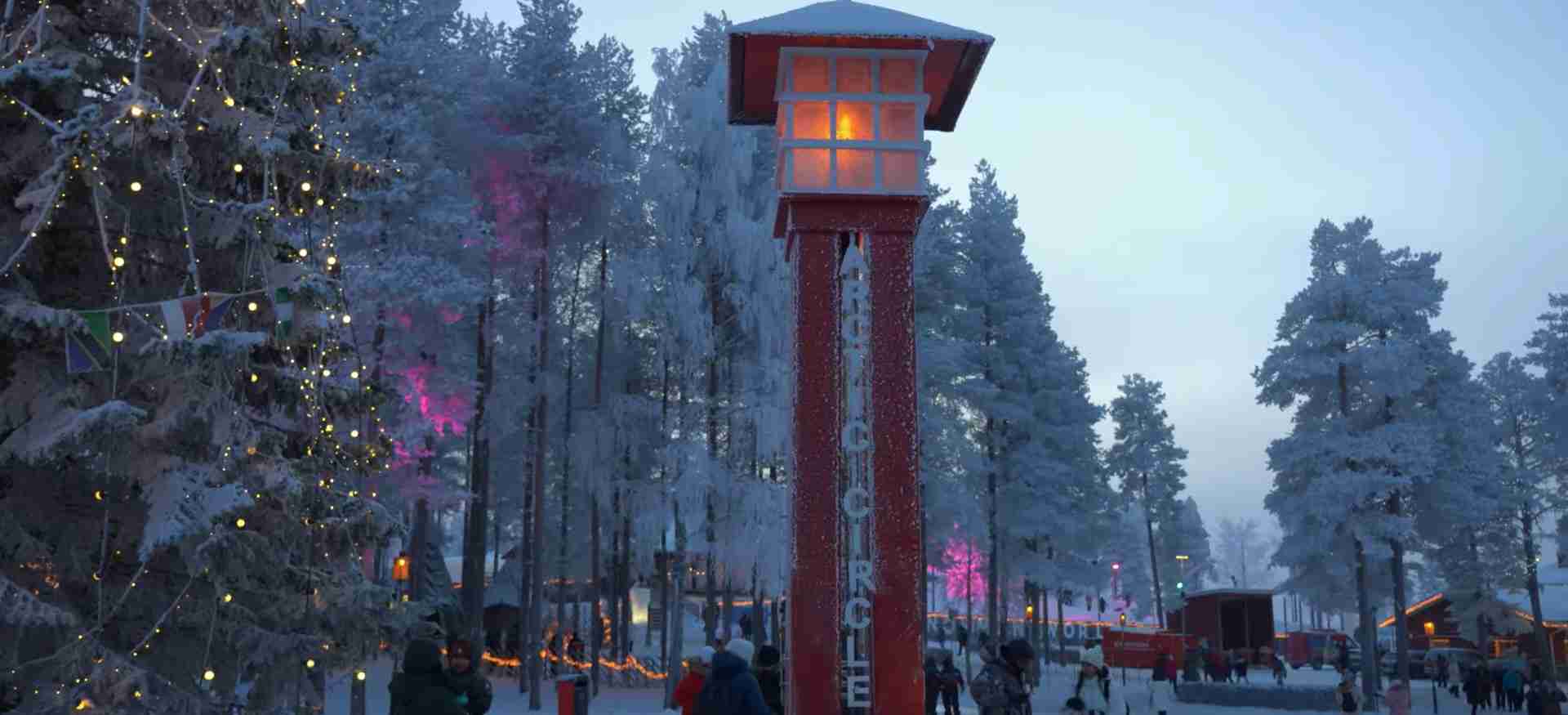
Santa Claus Village marks the Arctic Circle crossing with a prominent white line painted across the central square’s cobblestones. Visitors step across this line to symbolically move between the temperate and Arctic zones. The crossing itself requires no special preparation, fees, or reservations—the line remains accessible throughout the day and night, allowing spontaneous visits and photographs at any hour.
Many travelers participate in the ceremonial aspect by obtaining an Arctic Circle Crossing Certificate from Arctic Circle Information, located in Santa’s Gift House. These official documents include the visitor’s name, crossing date, and confirmation of their passage across latitude 66°33’N. The certificates come in various languages and serve as commemorative souvenirs of the geographic achievement.
Photographic traditions include standing with one foot on each side of the line, jumping across dramatically, or posing with the Arctic Circle monument signs positioned along the marked boundary. The central square provides ample space for group photographs, family portraits, and creative interpretations of the crossing moment. Early morning and late evening hours typically offer quieter opportunities for uninterrupted photographs, while midday brings lively crowds and social atmosphere.
What makes Rovaniemi the official Arctic Circle location?
Rovaniemi’s designation as the “Official Hometown of Santa Claus” and Arctic Circle crossing point stems from geographical positioning and deliberate development following World War II. The city sits at 66°30’N, just south of the actual Arctic Circle line, with Santa Claus Village constructed precisely at the 66°33’N latitude to mark the geographic boundary accurately.
The location’s development began in 1950 when Eleanor Roosevelt visited Rovaniemi during post-war reconstruction efforts. Local officials established a simple cabin to host her visit, planting the seeds for what would become Santa Claus Village. Recognizing tourism potential, Finnish authorities developed the site throughout the 1950s and 1960s, formally establishing the Arctic Circle marker and building structures that honored both geographic significance and Christmas traditions.
The Finnish government officially designated Rovaniemi as Santa Claus’s hometown in 1985, cementing the city’s unique status. The Santa Claus Main Post Office at the village receives hundreds of thousands of letters annually from children worldwide, further establishing Rovaniemi’s cultural importance. The combination of precise geographic positioning, official governmental support, and extensive infrastructure development distinguishes Rovaniemi from other Arctic Circle crossing points in Scandinavia.
Does crossing the Arctic Circle change the weather or environment noticeably?
The Arctic Circle line itself creates no immediate atmospheric or environmental shift—weather patterns, vegetation, and landscape characteristics change gradually over hundreds of kilometers rather than abruptly at the 66°33’N latitude. Visitors stepping across the white line at Santa Claus Village experience identical temperatures, humidity levels, and ecological conditions on both sides of the boundary.
However, the Arctic Circle’s position corresponds with broader climatic zones that become more pronounced farther north. The marked line represents the threshold where polar phenomena begin to manifest, with midnight sun and polar night periods becoming possible beyond this latitude. Rovaniemi itself experiences these phenomena approximately, with summer bringing near-24-hour daylight and winter creating extended periods of limited sunlight.
Vegetation patterns show subtle transitions in the Rovaniemi region, with boreal forests dominated by pine, spruce, and birch gradually giving way to tundra conditions in areas significantly north of the Arctic Circle. Wildlife adapted to Arctic conditions, including reindeer, arctic foxes, and various bird species, populate the region regardless of specific latitude. The crossing line serves more as a symbolic marker of entry into Arctic territories rather than a boundary where environmental conditions shift instantaneously.
Extended multi-day tours – 5+ days
Featured Rovaniemi Multi-Day Tour Packages
3 days
Rovaniemi 3-Day Discovery Tour
- ✓ Comprehensive Rovaniemi experience
- ✓ Expert local guides included
- ✓ All accommodation included
- ✓ Transportation provided
5 days
Rovaniemi 5-Day Highlights Experience
- ✓ Comprehensive Rovaniemi experience
- ✓ Expert local guides included
- ✓ All accommodation included
- ✓ Transportation provided
7 days
Rovaniemi 7-Day Cultural Journey
- ✓ Comprehensive Rovaniemi experience
- ✓ Expert local guides included
- ✓ All accommodation included
- ✓ Transportation provided
10 days
Rovaniemi 10-Day Complete Adventure
- ✓ Comprehensive Rovaniemi experience
- ✓ Expert local guides included
- ✓ All accommodation included
- ✓ Transportation provided
Multi-day tour packages powered by TourRadar. Prices and availability subject to change.
Introduction: Understanding the Arctic Circle Experience in Rovaniemi
The Arctic Circle represents far more than a geographic curiosity marked by latitude coordinates on maps. At Rovaniemi, this invisible astronomical boundary becomes a tangible destination where visitors physically step between Earth’s temperate and polar zones, experiencing a phenomenon that combines scientific precision, cultural symbolism, and practical tourism infrastructure. The white line painted across Santa Claus Village’s central square transforms abstract geography into concrete experience, allowing travelers to literally straddle two different climatic regions separated by latitude 66°33’N.
Rovaniemi’s position as the official Arctic Circle crossing point emerged through deliberate planning and favorable geographic positioning just below the actual boundary line. Following World War II’s devastation of the city, Finnish authorities recognized opportunities to develop tourism infrastructure around the Arctic Circle’s scientific significance and the cultural appeal of Christmas traditions. The result created a unique destination combining geographic education, Lappish culture, Arctic nature experiences, and year-round festive atmosphere in a single accessible location.
The crossing experience encompasses multiple dimensions beyond simply stepping over a painted line. Visitors engage with astronomical concepts explaining midnight sun and polar night phenomena, participate in ceremonial traditions including official certificates documenting their crossing, experience Arctic climate conditions firsthand, and access broader Lappish cultural activities. Understanding these interconnected elements enhances appreciation for what might otherwise seem merely a photographic opportunity at a marked boundary.
The Arctic Circle’s permanence as a fixed reference point serves important scientific and navigational purposes despite its gradual migration due to Earth’s axial tilt variations. The marked position at Santa Claus Village provides stability for ceremonial purposes while representing genuine geographic significance. This combination of accuracy and accessibility distinguishes Rovaniemi’s Arctic Circle crossing from other opportunities to experience this latitude in more remote Scandinavian locations.
The Geography and Science Behind the Arctic Circle
Understanding Latitude 66°33’N
The Arctic Circle’s position at 66°33’N derives directly from Earth’s axial tilt of approximately 23.5 degrees relative to its orbital plane around the sun. This tilt creates the conditions necessary for polar phenomena, with the Arctic Circle marking the southern limit where these effects become visible. During summer solstice around June 21, the sun’s rays strike Earth at their most direct angle for the Northern Hemisphere, causing the sun to remain visible above the horizon continuously for 24 hours at and beyond the Arctic Circle latitude.
Conversely, during winter solstice around December 21, the Northern Hemisphere tilts away from the sun at maximum angle, causing continuous darkness for 24 hours at and north of the Arctic Circle. Between these extremes, locations at this latitude experience varying degrees of extended daylight in summer and limited daylight in winter, with dramatic changes in sunrise and sunset times throughout the year.
The Arctic Circle’s position shifts gradually northward at approximately 14.5 meters annually due to long-term variations in Earth’s axial tilt, a phenomenon called nutation. Over thousands of years, this migration significantly alters the Arctic Circle’s latitude, though short-term effects remain imperceptible to visitors. The marked position at Santa Claus Village represents the line’s location at the time of establishment, serving as a fixed ceremonial reference point rather than an annually adjusted boundary.
Midnight Sun and Polar Night Phenomena
Rovaniemi’s position slightly south of the Arctic Circle creates modified versions of polar phenomena rather than the full 24-hour extremes experienced farther north. During summer, the city experiences approximately 24 hours of continuous daylight around the summer solstice, with the sun dipping to the horizon briefly but remaining visible throughout the night. This period of midnight sun extends from late May through mid-July, creating unique atmospheric conditions and extended opportunities for outdoor activities.
Winter brings the opposite effect, with the sun remaining below the horizon for extended periods during December and January. Rovaniemi doesn’t experience complete polar night—the phenomenon called kaamos in Finnish—but rather extended twilight periods where the sun rises briefly above the southern horizon before setting again. This creates dramatic lighting conditions with prolonged golden hours and opportunities to observe Northern Lights in darkness extending up to 20 hours daily.
The transitional seasons of spring and autumn bring rapid changes in daylight duration, with minutes of sunlight gained or lost daily as Earth’s orbit progresses. These dramatic shifts in light availability influence local ecosystems, wildlife behavior, and human circadian rhythms, creating distinctive seasonal characteristics in the Rovaniemi region.
Environmental Characteristics at the Arctic Threshold
The boreal forest ecosystem surrounding Rovaniemi represents the transitional zone between temperate woodlands and Arctic tundra landscapes. Pine, spruce, and birch trees dominate the landscape, adapted to short growing seasons, extended winter darkness, and cold temperatures. These forests provide habitat for specialized wildlife including reindeer, moose, bears, wolverines, and numerous bird species adapted to Arctic conditions.
Soil conditions reflect permafrost influences despite Rovaniemi’s position slightly south of continuous permafrost zones. Winter temperatures regularly reach -25°C to -35°C, creating frozen ground conditions that influence vegetation patterns and building construction requirements. Summer temperatures rising to 20°C-25°C allow brief but intense growing seasons supporting berry production, wildflower blooms, and forest regeneration.
Water systems including the Kemijoki River flowing through Rovaniemi exhibit Arctic characteristics with winter ice cover extending from November through May. Spring thaw brings dramatic increases in water volume, while summer provides opportunities for fishing, boating, and riverside activities. These seasonal transformations create distinct environmental experiences depending on visitation timing.
Santa Claus Village: The Arctic Circle Experience Center
Historical Development and Infrastructure
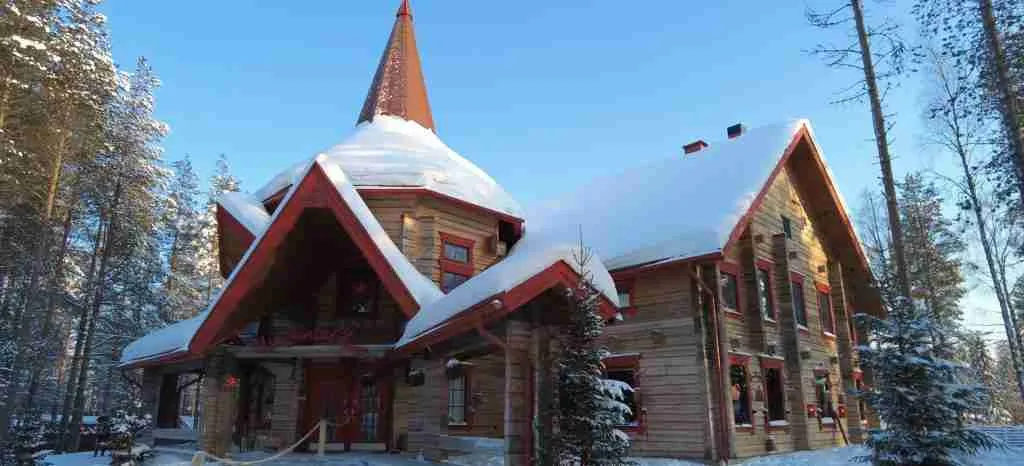
Santa Claus Village emerged from post-war reconstruction efforts beginning in 1950, developing from Eleanor Roosevelt’s visit into a permanent tourism complex spanning both sides of the Arctic Circle line. The village combines authentic Lappish architectural styles with modern tourism facilities, creating an atmospheric setting that honors regional traditions while providing comprehensive visitor services.
The central square features the prominently marked Arctic Circle line surrounded by shops, restaurants, attractions, and the Santa Claus Main Post Office. Traditional log construction using local timber creates visual consistency throughout the village, while modern heating, lighting, and sanitation systems ensure year-round comfort despite Arctic climate conditions. The layout encourages pedestrian circulation, with clearly marked pathways connecting major attractions and facilities.
Continuous development has expanded the village to include accommodation options, activity providers, cultural exhibitions, and dining venues while maintaining the core focus on Arctic Circle crossing experiences and Santa Claus traditions. The infrastructure balances commercial tourism with cultural preservation, educational programming, and environmental sustainability initiatives.
The Arctic Circle Marker and Crossing Traditions
The white line painted across the village’s cobblestone central square provides the primary visual reference for the Arctic Circle boundary. Large informational signs explain the geographic significance, astronomical phenomena, and ceremonial traditions associated with crossing. The marker’s permanence allows 24-hour access, enabling sunrise crossings, midnight sun photographs, and Northern Lights backdrops depending on season.
Arctic Circle Information, housed in Santa’s Gift House, issues official crossing certificates documenting visitors’ passage across latitude 66°33’N. These certificates include personalized details, multilingual text options, and decorative elements commemorating the achievement. The service operates daily throughout the year, with extended hours during peak tourism seasons accommodating high visitor volumes.
Photographic opportunities extend beyond the central line to include Arctic Circle gateway monuments, directional signs indicating distances to major world cities, and artistic installations celebrating Arctic culture. Professional photographers offer services capturing crossing moments, while the open square design allows independent photography from multiple angles and perspectives.
Santa Claus Office and Christmas Traditions
The Santa Claus Office operates 365 days annually, maintaining Christmas atmosphere regardless of season. Visitors meet Santa Claus in a traditional wooden chamber decorated with Christmas memorabilia, Arctic imagery, and comfortable seating areas. Meeting Santa requires no advance booking or admission fee, though professional photographs taken during visits are available for purchase.
Operating hours vary seasonally, extending from 8:00 AM to 8:00 PM during peak winter months (December-January) and shortening to 10:00 AM to 5:00 PM during quieter periods. Early morning visits typically encounter shorter queues, while late afternoon and evening hours bring increased crowds, particularly during school holiday periods and weekends.
The Santa Claus Main Post Office adjacent to the office receives approximately half a million letters annually from children worldwide. Visitors can mail postcards and letters stamped with special Arctic Circle postal markings, creating unique souvenirs. The post office employs multilingual staff assisting with international mail services, souvenir purchases, and postal history exhibitions.
Accessing the Arctic Circle in Rovaniemi
Transportation from Rovaniemi City Center
Santa Claus Village lies 8 kilometers north of Rovaniemi city center along Highway 4 toward Ivalo. Local bus line 8 provides regular service between downtown Rovaniemi, Santa Claus Village, and Rovaniemi Airport, operating multiple departures daily throughout the year. The journey takes approximately 20-30 minutes depending on traffic conditions and intermediate stops.
Taxis offer direct transportation with journey times of 15-20 minutes from central Rovaniemi. Taxi stands operate at the railway station, airport, and major hotels, providing readily available service. Ride-sharing applications function in Rovaniemi, though availability varies by season and time of day. Pre-arranged private transfers through hotels or tour operators provide guaranteed transportation particularly valuable during peak winter seasons.
Rental cars enable flexible timing and access to surrounding attractions beyond Santa Claus Village. Highway 4 maintains excellent condition year-round despite Arctic climate conditions, with regular snow clearing and ice treatment during winter months. Parking facilities at Santa Claus Village provide ample space for private vehicles, though peak periods may require patience finding convenient spaces.
Airport Connections and International Access
Rovaniemi Airport sits approximately 10 kilometers from Santa Claus Village, enabling direct access for international visitors. Regular flights connect Rovaniemi to Helsinki, with seasonal direct services from major European cities during winter months. Airport Express buses stop at Santa Claus Village en route between the airport and city center, providing convenient luggage-friendly transfers.
The proximity allows some international visitors to experience the Arctic Circle crossing during brief layovers or same-day visits without requiring overnight accommodation in Rovaniemi. However, weather conditions, daylight availability, and activity scheduling make longer stays more rewarding for comprehensive Arctic Circle experiences.
Walking from Rovaniemi Airport to Santa Claus Village covers approximately 2 kilometers along maintained pathways and roads. Winter conditions make this option challenging due to snow, ice, and darkness, while summer presents feasible walking opportunities for hardy travelers with minimal luggage.
Organized Tours and Activity Packages
Numerous Rovaniemi tour operators include Arctic Circle crossing in broader activity packages combining husky sledding, reindeer farm visits, snowmobile excursions, and Northern Lights tours. These packages provide transportation, guided experiences, and often meals, creating comprehensive introductions to Lapland culture and Arctic nature.
Half-day tours focus specifically on Santa Claus Village and Arctic Circle crossing, allowing combination with independent exploration of Rovaniemi attractions. Full-day packages extend to surrounding areas including national parks, wilderness areas, and cultural sites while maintaining the Arctic Circle crossing as a central highlight.
Private tours accommodate specific interests, photography requirements, or family scheduling needs. Multilingual guides provide cultural context, geographic explanations, and practical assistance throughout organized experiences.
Seasonal Experiences at the Arctic Circle
Winter: December Through March
Winter transforms Santa Claus Village into a snow-covered wonderland with temperatures typically ranging from -10°C to -30°C. The landscape receives substantial snow accumulation creating authentic Arctic winter conditions ideal for snow-based activities. Daylight extends only 3-6 hours daily during December and January, creating prolonged darkness perfect for Northern Lights observations and atmospheric lighting effects.
Winter activities expand beyond Arctic Circle crossing to include snowmobile safaris, husky sledding, reindeer sleigh rides, ice fishing, cross-country skiing, and snowshoeing. Santa Claus Village businesses extend operating hours during peak Christmas season (mid-November through early January), with some attractions offering evening programs and illuminated displays.
Appropriate winter clothing becomes essential for outdoor experiences, with temperatures regularly causing frostbite risk for exposed skin during extended exposure. Businesses provide heated indoor spaces for warming breaks, while traditional Lappish cuisine including reindeer stew, salmon soup, and warm berry beverages provides internal warmth and cultural immersion.
Summer: June Through August
Summer brings midnight sun conditions with 24-hour daylight around summer solstice, creating unique opportunities for late-night Arctic Circle crossings under bright sunlight. Temperatures range from 15°C to 25°C, allowing comfortable outdoor exploration without heavy winter gear. The boreal forest surrounding Santa Claus Village displays vibrant green foliage, wildflower blooms, and active wildlife.
Summer activities shift from snow-based experiences to hiking, cycling, fishing, river activities, and wildlife observation. Reindeer farms remain accessible year-round, while husky kennels offer cart rides and farm tours during months when snow sledding becomes impossible. The extended daylight enables flexible scheduling with attractions and restaurants operating extended hours.
Mosquitoes and other biting insects emerge during July and August, requiring insect repellent for comfortable outdoor activities. The midnight sun affects sleep patterns for some visitors unaccustomed to continuous daylight, though accommodation curtains provide darkness for rest periods when desired.
Autumn: September Through November
Autumn brings dramatic foliage displays as birch and other deciduous trees transform to brilliant yellow and orange hues during September’s “ruska” season. Temperatures cool rapidly from 10°C-15°C in September to near freezing by November, with first snowfalls typically arriving in October. Daylight decreases noticeably day by day, creating dramatic golden hour lighting conditions.
The shoulder season offers quieter Arctic Circle experiences with reduced crowds compared to peak summer and winter periods. Northern Lights become visible during increasingly long nights, while autumn colors provide stunning photographic backdrops for Arctic Circle crossing ceremonies. Some activity providers reduce operations during autumn, though core Santa Claus Village facilities maintain year-round schedules.
Berry picking attracts both locals and visitors to surrounding forests, with lingonberries, blueberries, and cloudberries ripening during August and September. Traditional harvest activities connect visitors with Lappish cultural practices and seasonal rhythms.
Spring: April Through May
Spring represents the transitional period as snow melts, daylight extends, and temperatures gradually rise toward summer conditions. April maintains winter-like conditions with substantial snow cover and opportunities for late-season winter activities. May brings rapid snow melt, emerging vegetation, and dramatic increases in daylight hours toward the approaching midnight sun period.
The spring thaw creates muddy conditions in unpaved areas while roads and developed facilities maintain accessibility. Wildlife becomes increasingly active as animals emerge from winter dormancy and migratory birds return to Arctic breeding grounds. Reindeer calving season during May provides opportunities to observe young animals at area farms.
Spring offers excellent value with lower accommodation rates than peak seasons while maintaining access to both winter activities (early spring) and emerging summer experiences (late spring). The combination creates diverse options for visitors willing to accept transitional weather conditions.
Cultural and Educational Dimensions
Sámi Heritage and Arctic Indigenous Culture
The Rovaniemi region lies within traditional Sámi territories, with indigenous cultural heritage visible throughout Santa Claus Village and surrounding areas. Sámi people have inhabited Arctic regions for thousands of years, developing specialized knowledge, practices, and traditions adapted to extreme environmental conditions. Understanding this heritage adds depth to Arctic Circle visits beyond geographic and Christmas-themed elements.
Reindeer herding represents a central Sámi cultural practice continuing into the present day. Visits to local reindeer farms provide opportunities to learn about traditional herding techniques, contemporary management practices, and the animals’ importance to Sámi identity and economy. Some farms maintain traditional Sámi dwellings called lavvu, offering insights into historical living conditions and architectural adaptations to Arctic climate.
Sámi handicrafts including duodji (traditional crafts) feature reindeer antler carving, leather working, silver jewelry, and textile arts. Santa Claus Village shops offer authentic Sámi crafts alongside tourist souvenirs, with knowledgeable staff explaining cultural significance and production techniques. Purchasing these items supports indigenous artisans while providing meaningful cultural souvenirs.
Environmental Education and Arctic Ecosystems
The Arctic Circle’s position as a climatic boundary makes Rovaniemi ideal for environmental education focusing on climate change impacts, ecosystem adaptations, and conservation challenges. Educational programs and interpretive materials explain how boreal forest ecosystems function, how wildlife survives extreme seasonal variations, and how human activities affect fragile Arctic environments.
Climate change discussions gain particular relevance at the Arctic Circle, where warming temperatures produce visible and dramatic effects on snow cover duration, permafrost stability, and wildlife patterns. Some tour operators and educational centers provide programs addressing these environmental topics while encouraging sustainable tourism practices and conservation awareness.
Wildlife observation opportunities around Rovaniemi showcase species adapted to Arctic conditions including various reindeer subspecies, Arctic foxes, Siberian jays, and occasional glimpses of larger predators including bears and wolverines in surrounding wilderness areas. Understanding these animals’ adaptations enhances appreciation for Arctic ecosystem complexity.
Astronomy and Celestial Phenomena
The Arctic Circle’s astronomical significance extends beyond midnight sun and polar night to include exceptional Northern Lights viewing opportunities. Rovaniemi’s northern latitude combined with relatively low light pollution in surrounding wilderness creates favorable conditions for aurora borealis observations from September through April.
The Northern Lights result from solar wind particles interacting with Earth’s magnetic field and atmosphere, creating luminous displays predominantly visible in polar regions. Educational programs explain the scientific mechanisms producing auroras while respecting traditional cultural interpretations of these phenomena. Clear winter nights with high solar activity provide the best viewing conditions, though auroras remain unpredictable and sightings are never guaranteed.
Planetarium programs and astronomy tours utilize the extended darkness periods during winter months to introduce visitors to Arctic night skies, stellar constellations, and astronomical concepts. The minimal light pollution surrounding Santa Claus Village creates exceptional stargazing conditions during clear nights.
Beyond the Line: Extended Arctic Experiences
SantaPark: The Underground Christmas Experience
Located 8 kilometers from Santa Claus Village (same distance as from Rovaniemi city center), SantaPark operates inside Syväsenvaara hill as a Christmas-themed attraction featuring Santa’s workshops, elf training activities, ice gallery, gingerbread decorating, and magical performances. The underground location maintains comfortable temperatures year-round while creating atmospheric environments independent of external weather conditions.
SantaPark operates seasonally from November through January, with admission prices ranging from €42-62 for adults depending on season (higher during peak Christmas weeks). The attraction complements Arctic Circle crossing by extending Christmas experiences beyond the brief Santa Claus Office visit, particularly appealing to families with children.
Snowman World: Ice and Snow Architecture
Snowman World operates from December through March when sufficient snow and cold temperatures enable construction of the ice and snow structures rebuilt annually. The attraction features an ice restaurant, ice bar, ice sculptures, snow play areas, and themed ice rooms. The structures showcase traditional Finnish snow construction techniques while providing unique dining and drinking experiences in sub-zero environments.
The ice restaurant serves lunch and dinner sessions, with reindeer, salmon, and other Lappish specialties presented in frozen settings illuminated by colored lights. The ice bar offers cocktails served in ice glasses, while the sculpture gallery displays artistic interpretations created by local and international ice artists.
Wilderness Activities and Nature Excursions
The forests and wilderness areas surrounding Santa Claus Village provide access to pristine Arctic nature without traveling significant distances from the Arctic Circle marker. Marked hiking trails extend through boreal forests to viewpoints, rivers, and natural features. Winter conditions transform these trails into cross-country skiing routes and snowshoe paths, while summer enables wildlife observation, berry picking, and nature photography.
Auttiköngäs waterfall, located approximately 60 kilometers from Santa Claus Village, ranks among Finland’s most spectacular waterfalls with dramatic drops and surrounding wilderness scenery. Day trips combine waterfall visits with hiking, photography opportunities, and forest experiences demonstrating Arctic ecosystem diversity.
Organized nature excursions include guided hikes focusing on ecology, geology, or wildlife observation, with knowledgeable guides explaining natural history and environmental characteristics. Photography tours target specific subjects including landscapes, wildlife, Northern Lights, or macro details of Arctic flora.
Practical Planning and Visitor Information
Timing Your Arctic Circle Visit
Visit timing significantly affects the Arctic Circle experience, with each season offering distinct advantages and limitations. Winter (December-March) provides authentic Arctic snow conditions, Northern Lights opportunities, and peak Christmas atmosphere but requires cold weather tolerance and accepts limited daylight hours. Summer (June-August) offers midnight sun experiences, comfortable temperatures, and extended daylight but lacks snow activities and Northern Lights viewing.
Shoulder seasons present compromises with autumn (September-November) combining emerging Northern Lights visibility, autumn foliage, and fewer crowds against cooling temperatures and operational changes as businesses transition between seasons. Spring (April-May) offers late winter activities transitioning toward summer experiences with unpredictable weather conditions and muddy transitional landscapes.
Daily timing matters particularly during winter when limited daylight creates scheduling constraints. Morning visits encounter smaller crowds before afternoon tour groups arrive, while evening hours during winter bring magical illuminated village atmosphere and potential Northern Lights observations during extended darkness.
What to Bring and Wear
Winter visits require comprehensive cold weather clothing including insulated jacket, thermal layers, winter boots rated for extreme cold, warm gloves or mittens, thermal socks, and face protection for temperatures below -20°C. Many accommodation providers and tour operators offer winter gear rental including thermal suits, boots, and accessories, eliminating the need to purchase expensive equipment for brief Arctic visits.
Summer clothing should include layers accommodating temperature variations between 10°C and 25°C, with rain gear for occasional showers and sun protection for extended daylight exposure. Mosquito repellent becomes essential during July and August for comfortable outdoor activities. Comfortable walking shoes suit the pedestrian-friendly village layout, while hiking boots enhance comfort for nature trail excursions.
Camera equipment requires cold weather considerations during winter, with batteries draining rapidly in sub-zero temperatures. Carrying spare batteries kept warm against your body and limiting camera exposure to cold air when not actively photographing helps maintain equipment functionality. Moisture condensation when moving between cold outdoor and warm indoor environments can damage electronics unless allowed to warm gradually in camera bags before exposure to interior heat.
Budgeting for Arctic Circle Experiences
Basic Arctic Circle crossing costs nothing—the marked line remains freely accessible, and walking or posing for photographs requires no expenditure. Obtaining official crossing certificates typically costs €5-10 from Arctic Circle Information. Santa Claus Office visits cost nothing for meeting Santa, though professional photographs taken during visits range from €30-60 depending on package selection.
Organized activities including husky sledding, reindeer safaris, snowmobile excursions, and Northern Lights tours range from €80-200 per person for standard experiences, with private tours and extended programs costing significantly more. Dining in village restaurants averages €15-25 for lunch and €30-50 for dinner, while cafes and snack options provide budget-friendly alternatives.
Transportation costs depend on chosen methods, with local bus fares costing €3-5 for one-way journeys between Rovaniemi and Santa Claus Village. Taxis charge approximately €25-35 for the same journey, while rental cars involve daily rates plus fuel expenses. Accommodation near Santa Claus Village ranges from €100-400 nightly depending on season, property type, and amenities.
Accessibility Considerations
Santa Claus Village maintains wheelchair accessibility throughout the central area, with paved paths, ramps, and accessible toilet facilities. The Arctic Circle line lies on level ground allowing easy access for visitors with mobility limitations. Santa Claus Office provides accessible entry and interior spaces accommodating wheelchairs, though some surrounding shops and attractions may have steps or narrow doorways limiting access.
Some outdoor winter activities including snowmobile tours and husky sledding may accommodate visitors with disabilities depending on specific limitations, while others require physical capabilities precluding participation. Discussing accessibility needs with tour operators before booking ensures appropriate activity selection and necessary accommodations.
Hearing and visual impairments receive accommodation through written materials, visual displays, and staff assistance. However, audio-focused experiences including some guided tours may pose challenges for hearing-impaired visitors. Advance notice allows providers to arrange interpretation services or alternative programming.
Frequently Asked Questions
Is crossing the Arctic Circle free?
Yes, walking across the Arctic Circle line at Santa Claus Village requires no admission fee, reservation, or special permission. The marked line remains accessible 24 hours daily throughout the year, allowing spontaneous visits at any time. Taking photographs, stepping across the boundary, and experiencing the geographic significance costs nothing. Optional services including official crossing certificates (€5-10) and professional photographs involve minimal charges, while Santa Claus Office visits and most attractions around the village also maintain free entry policies.
How long does it take to visit the Arctic Circle in Rovaniemi?
A basic Arctic Circle crossing experience including photographs at the marked line, obtaining a certificate, and brief exploration of the central square requires approximately 30-60 minutes. Adding a Santa Claus Office visit extends the duration to 1.5-2 hours. Comprehensive visits including shopping, dining, and multiple attractions typically occupy 4-6 hours. Full-day experiences incorporating organized activities such as reindeer farm visits, husky sledding, or Northern Lights tours extend visits to 8-12 hours depending on activity selection and scheduling.
Can you see the Northern Lights at the Arctic Circle?
Yes, the Rovaniemi area offers excellent Northern Lights viewing opportunities from September through April when darkness returns after summer’s midnight sun period. However, aurora visibility depends on solar activity levels, cloud cover, and light pollution rather than simply being north of the Arctic Circle. Santa Claus Village’s illuminated buildings create some light pollution affecting viewing conditions, while surrounding wilderness areas provide darker skies enhancing aurora visibility. Organized Northern Lights tours travel to optimal viewing locations away from village lights, maximizing observation opportunities during tours scheduled for high aurora forecast periods.
What is the best month to cross the Arctic Circle in Rovaniemi?
The optimal month depends on desired experiences and personal preferences regarding weather conditions. December through February offer peak winter conditions with deep snow, winter activities, Christmas atmosphere, and Northern Lights viewing but involve extreme cold and limited daylight. June through August provide midnight sun experiences, comfortable temperatures, and maximum daylight but lack snow activities and Northern Lights. September and March represent shoulder season compromises with moderate weather, developing Northern Lights potential (September) or late winter activities transitioning toward spring (March), and smaller crowds than peak periods.
Do you need a passport to cross the Arctic Circle?
No passport or documentation requirement exists for crossing the Arctic Circle line itself, as it represents a geographic boundary rather than a political border. Visitors already within Finland move freely across the latitude line without any border control or identity verification. International visitors require appropriate documentation for entering Finland generally (passport, visa if applicable depending on nationality), but the Arctic Circle crossing within Finnish territory involves no additional requirements beyond normal tourism access to the country.
How cold does it get at the Arctic Circle in Rovaniemi?
Winter temperatures at Santa Claus Village typically range from -10°C to -30°C during December through February, with occasional extreme cold periods reaching -35°C to -40°C. January represents the coldest month on average. Summer temperatures range from 15°C to 25°C, occasionally reaching 30°C during heat waves. Spring and autumn bring transitional conditions with temperatures between 0°C and 15°C and rapid day-to-day variations. Wind chill significantly affects perceived temperatures during winter, making -20°C feel considerably colder during windy conditions than during calm weather at the same temperature.
Are there hotels at the Arctic Circle in Rovaniemi?
Yes, several accommodation options operate directly within or immediately adjacent to Santa Claus Village at the Arctic Circle. Santa’s Igloos Arctic Circle offers 71 glass igloos with heated panoramic roofs for Northern Lights viewing. Arctic TreeHouse Hotel provides modern design accommodations in elevated tree-facing units. Additional options include traditional log cottages, family suites, and standard hotel rooms operated by various properties. Accommodation prices range from €100-500 nightly depending on property, room type, and season, with peak winter weeks commanding premium rates. Rovaniemi city center 8 kilometers south offers additional hotel choices with regular transportation connections to the Arctic Circle.
Can you cross the Arctic Circle in summer?
Yes, the Arctic Circle line at Santa Claus Village remains accessible year-round including throughout summer months from June through August. Summer visits offer the unique experience of crossing at latitude 66°33’N under midnight sun conditions with 24-hour daylight around summer solstice. The experience differs dramatically from winter visits, lacking snow, Northern Lights, and winter activities but providing comfortable temperatures, vibrant green landscapes, and opportunities for hiking, cycling, and outdoor exploration. Santa Claus Office and village facilities maintain regular operations during summer, though seasonal attractions like ice restaurants remain closed due to warm temperatures preventing ice structure construction.
What is the difference between the Arctic Circle and the North Pole?
The Arctic Circle represents a line of latitude at approximately 66°33’N marking the southernmost point where midnight sun and polar night phenomena occur, while the North Pole sits at 90°N representing Earth’s northernmost point where the axis of rotation intersects the surface. The Arctic Circle can be crossed at multiple locations across Alaska, Canada, Greenland, Iceland, Norway, Sweden, Finland, and Russia, while the North Pole exists as a single geographic point covered by shifting Arctic Ocean ice. Temperatures, accessibility, and environmental conditions differ dramatically between the Arctic Circle regions, which include inhabited areas and developed infrastructure, and the North Pole, which remains one of Earth’s most remote and extreme environments accessible only through specialized expeditions.
Is the Arctic Circle experience worth visiting in Rovaniemi?
The value assessment depends on individual interests, travel priorities, and expectations. For travelers fascinated by geography, astronomy, and achieving bucket-list experiences, crossing the Arctic Circle provides memorable and educational opportunities with clear geographic significance. Families with children often find the combination of Arctic Circle crossing, Santa Claus meetings, and winter or summer activities creates comprehensive Lapland experiences justifying the journey to northern Finland. Travelers seeking primarily wilderness experiences or extreme Arctic conditions may find Santa Claus Village somewhat commercialized, though surrounding wilderness areas provide authentic nature encounters. The infrastructure, accessibility, and year-round operations make Rovaniemi among the most convenient Arctic Circle crossing locations globally, offering experiences difficult to replicate elsewhere in Arctic regions.