
Aosta and the Aosta Valley Best Tours 2026: Secret Spots & Walking Routes
Italy’s smallest region packs a concentration of outstanding experiences that larger destinations rarely match: a Roman city intact enough to walk end to end in an afternoon, nine medieval castles open for guided exploration along a single valley road, the rotating cable car that rises to the foot of Mont Blanc, and Italy’s oldest national park teeming with ibex and chamois. The Aosta Valley in 2026 rewards every type of visitor, from food-tour enthusiasts discovering Valdostan Fontina in centuries-old cheese shops to long-distance trekkers threading beneath Monte Rosa on the Alta Via dei Giganti. This guide covers the full spectrum — guided city tours, castle circuits, Alpine cable cars, national park day hikes, secret Roman engineering marvels, and the two greatest long-distance walking routes on Italian soil.
Key Takeaways
- Aosta City Tours 2026: Licensed local guides lead 2-hour Roman and medieval walking tours for groups, charging €10–15 per person; the Do Eat Better Experience food tour runs 3.5 hours through specialty shops and historic eateries for approximately €90–100 per person. The combined archaeological circuit pass (Criptoportico, Museo Archeologico Regionale, and San Lorenzo church) costs €5–7 — check current availability of the Teatro Romano before visiting, as major restoration works have recently concluded.
- Skyway Monte Bianco 2026: The world’s most spectacular rotating cable car ascends from Courmayeur to Punta Helbronner at 3,466 metres in 30 minutes — tickets cost €59 online in low season and up to €68 at the box office in August; booking at least 10 days ahead secures a 30% early-bird discount. The family pass (2 adults + 2 children) costs approximately €165.
- Forte di Bard 2026: Italy’s most imposing 19th-century mountain fortress now houses four permanent museums and world-class temporary photography exhibitions — access from €5 (monument only) to €24 for the All Fort pass giving entry to all museums and exhibitions. Under-18 admission is free.
- Castles Circuit 2026: Nine castles open for guided tours in one compact valley, with individual tickets ranging from €6 (Verrès) to €10 (Issogne). The Culture Card Castelli at €50 per person covers all nine for six months and is the best-value option for anyone spending more than three days in the valley.
- Gran Paradiso National Park 2026: Italy’s oldest national park (established 1922) provides free access to trails from Cogne with near-guaranteed sightings of ibex, chamois, and marmots. The hiking season runs June through October, with July and August the most reliable months for open mountain huts and dry trail conditions.
- Alta Via 1 — The Giants’ Trail: The 180-kilometre, 17-stage high route from Donnas to Courmayeur travels beneath Monte Rosa, the Matterhorn, and Mont Blanc along the northern flank of the valley. Individual stages take 3–5 hours; the full route requires around 14 days and is best completed between mid-July and mid-September when mountain huts are open and high passes are snow-free.
People Also Ask About Aosta Valley Tours 2026
What are the best guided tours in Aosta and the Aosta Valley in 2026?
The strongest guided options in 2026 span four distinct categories. In Aosta city, the Do Eat Better Experience food tour covers the Roman centre over 3.5 hours for approximately €90–100, with tastings of Fontina cheese, Lardo d’Arnad, mocetta cured meat, polenta concia, and tegole dessert cookies. For heritage depth, licensed local guides lead Roman-and-medieval walking tours pairing the Arco di Augusto, Porta Praetoria, Criptoportico, and Sant’Orso cloister in a single morning. The Forte di Bard offers guided fortress tours Tuesday through Sunday at 11am (Saturday and Sunday also at 3pm) for a €10 supplement on top of admission. In Gran Paradiso National Park, Fondation Grand Paradis organises guided nature excursions from Cogne during July and August with expert naturalists, while private trekking companies offer guided multi-day Alta Via 1 packages with mountain hut accommodation from July through September.
Which walking routes in the Aosta Valley are unmissable in 2026?
Three tiers of walker are served well in 2026. Casual walkers find the Aosta city circuit — Arco di Augusto to Porta Praetoria to Criptoportico to Sant’Orso — a rewarding 4-kilometre loop through 2,000 years of history with no elevation gain. Day hikers should target the Lillaz Waterfalls to Lago Loie circuit near Cogne in Gran Paradiso National Park, where the trail climbs through larch forest to an alpine lake at 2,356 metres with ibex sightings virtually guaranteed. For seasoned mountain walkers, the Val Ferret Balcony from Courmayeur to Rifugio Bonatti on the Tour du Mont Blanc route delivers the finest views of Mont Blanc’s south face on any trail in Italy, covering 12 kilometres in approximately 5 hours. The Alta Via 1 from Donnas to Courmayeur remains the definitive multi-week Aosta Valley challenge, threading beneath all three of the Alps’ greatest massifs.
How much do tours in the Aosta Valley cost in 2026?
Costs range widely by category. Many of the valley’s most rewarding experiences are free: the Arco di Augusto, Porta Praetoria, Roman city walls, medieval village of Bard, and all national park trail access cost nothing. Paid cultural experiences in 2026 include: archaeological circuit pass at €5–7; Sant’Orso cloister at €2; Ponte-Acquedotto di Pont d’Ael at €5; individual castle entries from €6 to €10; Forte di Bard All Fort pass at €24 (free under 18); food tour approximately €90–100 per person; and the Skyway Monte Bianco cable car at €59 online (low season) to €68 at the box office in peak summer. The Culture Card Castelli covers all nine castles for €50 with six-month validity — the best value for anyone planning a castle circuit. Guided hiking days with private operators in Gran Paradiso cost €50–120 per person depending on group size and route difficulty.
What secret spots can you discover on Aosta Valley tours in 2026?
The valley’s most overlooked treasures reward visitors who venture beyond the main circuit. The Ponte-Acquedotto di Pont d’Ael — a privately funded Roman aqueduct bridge built in 3 BC, still standing 56 metres above a gorge — attracts a fraction of the visitors that Aosta’s central monuments receive, despite being just 12 kilometres from the city. The Via delle Gallie at Donnas preserves 221 metres of the actual Roman consular road complete with original cart ruts cut into the bedrock. Parco Naturale Mont Avic near Champorcher offers Gran Paradiso-quality scenery and wildlife with dramatically fewer visitors. The Walser villages of Gressoney-Saint-Jean and Gressoney-La-Trinité — settled by Germanic-speaking communities from Valais during the Middle Ages — preserve vernacular wood-and-stone architecture found nowhere else in Italy. The Castello di Aymavilles, restored and reopened in 2022, remains far less visited than Fénis or Issogne despite its exceptional quality.
Extended multi-day tours – 5+ days
Featured Alps Multi-Day Tour Packages
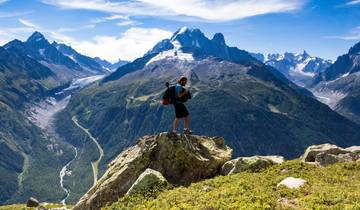
13 days
Tour du Mont Blanc TMB Circuit
- ✓ Comprehensive Alps tour
- ✓ Expert local guides included
- ✓ All accommodation arranged
- ✓ Transportation provided

8 days
Hiking in the Dolomites
- ✓ Comprehensive Alps tour
- ✓ Expert local guides included
- ✓ All accommodation arranged
- ✓ Transportation provided
10 days
Grand Tour of Switzerland
- ✓ Comprehensive Alps tour
- ✓ Expert local guides included
- ✓ All accommodation arranged
- ✓ Transportation provided
8 days
Stunning French Riviera
- ✓ Comprehensive Alps tour
- ✓ Expert local guides included
- ✓ All accommodation arranged
- ✓ Transportation provided
Multi-day tour packages powered by TourRadar. Prices and availability subject to change.
Why the Aosta Valley Leads Italy’s Alpine Tour Scene in 2026
Describing the Aosta Valley as an Alpine destination understates its range. In under two hours by car, a visitor in 2026 can move from the Arch of Augustus — a triumphal arch erected in 25 BC that still stands at the entrance to the old Roman city — to a mountain hut at 2,500 metres surrounded by ibex on a Gran Paradiso ridgeline, to the summit station of Punta Helbronner, 3,466 metres above sea level with Mont Blanc’s south wall filling the horizon. No other region of comparable size in Italy or the broader Alpine arc delivers this layered density of high-quality experiences.
The valley sits at the convergence of three countries and two of the great ancient routes across the western Alps: the Gran San Bernardo pass to Switzerland and the Mont Blanc tunnel to France. For two millennia, everything and everyone crossing between the Italian peninsula and northern Europe came through this corridor, depositing successive layers of Roman infrastructure, medieval fortification, French courtly culture, and Savoyard royal patronage. The result is a landscape studded with extraordinary monuments, each within reach of the next.
In 2026, tourism infrastructure is well matched to the destination’s quality. SAVDA buses connect Aosta city with Courmayeur, Cogne, Gressoney-La-Trinité, and the lower valley villages. Free summer shuttle buses run the length of Val Ferret from Courmayeur for hikers tackling the Tour du Mont Blanc. The Valle d’Aosta Heritage network provides online ticketing for all castles, archaeological sites, and Forte di Bard through a single MidaTicket platform. High-season booking is essential for the Skyway Monte Bianco and advised for Fénis castle, but the valley avoids the crowds that overwhelm Cinque Terre or the Dolomites’ most famous circuits.
One important 2026 context: the Teatro Romano, Aosta’s most dramatic Roman monument — a 22-metre stage façade rising out of a corner of the historic centre — recently completed a major restoration programme. Confirm current opening status before visiting. The combined archaeological pass for the remaining three city sites (Criptoportico, Museo Archeologico Regionale, and San Lorenzo church) costs €5–7 and remains excellent value for a morning’s exploration of Augusta Praetoria.
Guided Walking Tours of Aosta City 2026
Aosta is one of Italy’s least appreciated Roman cities, a fact that works entirely in the visitor’s favour. The Roman footprint here is not scattered or reconstructed but largely intact: a triumphal arch stands on the approach to the old city, a double-arched gate of the 1st century BC anchors the eastern entrance, an underground gallery from the Augustan forum survives two storeys below street level, and the 22-metre stage façade of the Roman theatre rises above the roofline of the modern city. Walking tours here genuinely deliver the sensation of a city frozen in its Roman grid.
The Roman and Medieval City Walk 2026
Licensed guides from the Valle d’Aosta Tourist Guides Association lead regular Roman-and-medieval walking tours lasting approximately two hours, covering the following route in sequence: the Arco di Augusto (built 25 BC, free to visit, located at the eastern approach to the historic centre); the Porta Praetoria (original twin-arch eastern gate of Augusta Praetoria, free to view externally); the Criptoportico Forense (subterranean horseshoe gallery supporting the forum’s twin temples, included in the €5–7 archaeological pass); the Cattedrale di Santa Maria Assunta and Collegiata di Sant’Orso (the cloister with Romanesque capitals carved with biblical scenes: €2 per person). The complete circuit covers approximately 4 kilometres at a gentle pace.
Group walking tours can be arranged directly through the Valle d’Aosta Tourist Guides Association or through visitor information offices at Piazza Chanoux in the city centre. Guide fees for private groups run €7–15 per person depending on group size and tour duration. Check with the tourist office for current scheduled public tours, which operate at various times throughout the week in the summer season.
For families and those unfamiliar with Roman history, the Museo Archeologico Regionale at Piazza Roncas — included in the archaeological pass — provides essential context before or after the walking circuit. Its collections span the Neolithic through Roman periods with particularly strong displays on Augusta Praetoria’s foundation and daily life. The Area Megalitica di Saint-Martin de Corléans, located in the western part of the city, documents 6,000 years of human presence in the valley through one of Europe’s most important prehistoric ritual sites. Check for current admission pricing directly at the site, as it operates under its own ticketing regime.
The Do Eat Better Experience Food Tour 2026
Aosta’s food tour, operated by Do Eat Better Experience, is among the most efficiently structured in northern Italy. The 3.5-hour tour departs from the wooden sculpture at Piazza Porta Pretoria, with groups limited to 12 participants to preserve the quality of each tasting stop and the intimacy of the guide’s storytelling. The tour runs in English and Italian; other languages are available on request.
Tastings proceed through a sequence of Valdostan specialities: a curated cheese flight at a historic shop in the centre introduces the valley’s dairy culture, from young Fontina DOP wheels to aged mountain toma. The main stops include a Valdostan platter with jambon seasoned in juniper and genepy, Lardo d’Arnad PDO, honey-infused chestnuts, mocetta (air-dried chamois or beef), and local cheeses paired with a glass of Aosta Valley wine. The main-course stop serves polenta concia or Seupa à la Vapelenentse (a layered bread-and-Fontina soup baked in the oven), Aosta’s most characteristic first course. The final stop covers tegole valdostane — thin almond and hazelnut wafer cookies from a local pastry shop — with an espresso in a garden setting. Prices run approximately €90–100 per person; check the official Do Eat Better Experience website or booking platforms for 2026 pricing before reserving. The tour includes all tastings and a glass of regional wine.
Castle Tours in the Aosta Valley 2026
No other region in Italy concentrates medieval fortifications with the density and quality found in the Aosta Valley. Nine castles open for guided interior tours line the valley and its lateral branches, each one representing a different chapter in the story of the powerful Challant family and their Savoyard overlords. The main road between Pont-Saint-Martin and Courmayeur passes within sight of at least twenty towers and fortified buildings; nine of them are fully accessible. Together they constitute the most varied medieval castle circuit in the Italian Alps.
Fénis: The Valley’s Most Photographed Castle 2026
Château de Fénis is everything the imagination conjures when the word “castle” is spoken: concentric rings of crenellated walls, multiple towers and turrets of varying height, drawbridge approach, and — inside the main courtyard — a painted cycle of International Gothic frescoes from the early 1400s. The attribution of these works to Giacomo Jaquerio, the greatest Piedmontese painter of the late medieval period, makes Fénis a significant art-historical destination as well as a military architecture showcase.
Visits proceed by guided tour in groups, departing every 30 minutes. Admission is €8 per adult (free for visitors aged 18 and under). Summer hours run 9am to 7pm daily; winter hours are shorter and the castle closes on Mondays from October through March. Book online through the MidaTicket platform, particularly for weekend visits in July and August when demand regularly exceeds capacity. Fénis sits approximately 12 kilometres east of Aosta on the main valley floor.
Issogne: The Valley’s Most Elegant Palace Castle 2026
If Fénis represents military power, Château d’Issogne represents refined courtly culture. Transformed into a residential palace at the end of the 15th century by Giorgio di Challant, its most celebrated feature is the wrought-iron pomegranate fountain in the central courtyard, flanked by porticoes painted with market scenes, artisan shops, and calendar cycles that document late-medieval Valdostan daily life with journalistic precision. The interior rooms retain original furniture and domestic objects from the Challant period, creating an atmosphere unmatched in the alpine castles circuit.
Admission is €10 per adult, with a reduced rate of €3 for visitors aged 19 to 25, and free entry for those aged 18 and under. Opening hours follow the same seasonal pattern as Fénis. A dedicated visitor path around the Avondo wing — added in 2018 — tells the story of 19th-century restorer Vittorio Avondo, whose passionate acquisition and conservation of the castle in 1872 saved it from ruin. Issogne is located in the far eastern end of the valley, near the Verrès exit of the A5 motorway.
Verrès: The Cubic Fortress 2026
Castello di Verrès is one of the most unusual medieval structures in the Alps: a perfect cube of stone 30 metres on each side, rising on a rocky spur above the Evançon torrent at the entrance to the Val d’Ayas. Built between 1390 and 1395 by Iblet di Challant, it was designed primarily for military dominance rather than residential comfort, its four identical facades giving no indication of interior organisation. The interior, accessible by steep stone stairs, reveals a sequence of halls rising through four floors to the roof terrace with panoramic views over the main valley. Admission is €6 per adult; the Verrès Carnevale Storico in February, with costumed medieval pageantry staged at the foot of the castle, is the most dramatic seasonal event in the valley’s cultural calendar.
Castello di Aymavilles 2026
Aymavilles reopened after nine years of restoration in 2022 and remains one of the most undervisited quality castle experiences in northern Italy. Unlike the other nine castles in the Valle d’Aosta Heritage circuit, Aymavilles operates on free-circulation principle: visitors explore at their own pace with an audio guide rather than on guided tours. This format suits the castle’s mixed character — a medieval fortified structure subsequently overlaid with 18th-century Baroque modifications by the Roncas family, creating an extraordinary architectural palimpsest. Admission is €9 (full), €7 (reduced), €25 (family, two adults and two children under 18). Located just west of Aosta on the road toward Cogne, it pairs naturally with a visit to the Pont d’Ael Roman aqueduct bridge 3 kilometres further up the valley.
Other Castles on the Circuit 2026
The Castello Reale di Sarre served as the principal hunting lodge of the Italian royal family from 1870 through to the fall of the monarchy in 1946. Its interior is arranged as a naturalist’s trophy room on an extraordinary scale, the walls and ceilings lined with ibex skulls and antlers accumulated across generations of Savoy hunting parties. Castel Savoia at Gressoney-Saint-Jean is Queen Margherita of Savoy’s fairytale summer residence, its white turrets rising from dense forest in an Alpine setting of exceptional picturesque quality. Sarriod de la Tour near Saint-Pierre preserves the most refined carved stone decorations of any Valdostan castle interior. The Castello Gamba at Châtillon — technically a 19th-century neo-Gothic confection rather than a medieval fortress — houses the region’s collection of modern and contemporary Valdostan art.
The Culture Card Castelli at €50 per person provides a single entry at all nine castles in the Heritage circuit, valid for six months from first use. This is the definitive way to see the castle circuit for anyone spending a week or more in the valley. Purchase online at the MidaTicket platform or at any castle ticket office. Note that castle interiors are unheated year-round; bring appropriate layers even in summer.
Forte di Bard: The Valley’s Premier Heritage Experience in 2026
Forte di Bard occupies a rock spur at the narrowest point of the lower valley, a position so strategically commanding that Emperor Napoleon personally delayed his army for fourteen days here in May 1800 before his engineers found a way to move his artillery around it under cover of night. After demolishing the fort in revenge, the Savoys rebuilt it between 1830 and 1838 as a more powerful structure designed for the artillery age, one that was never again challenged in battle. Decommissioned in 1975 after 145 years of military use, the structure sat empty until a major cultural restoration project reopened it as a multi-museum complex in 2006. It is now the most ambitious cultural heritage project in the western Alps.
What to See at Forte di Bard in 2026
The fort houses four permanent museums, each in its own wing of the complex. The Museo delle Alpi on the first floor of the Opera Carlo Alberto delivers a multimedia survey of Alpine civilisation across 25 interactive rooms, organised into thematic chapters on landscape formation, pastoral culture, modern transformation, and climate change. The Museo delle Fortezze e delle Frontiere in the Opera Ferdinando documents the military history of the Alpine arc from medieval defensive towers to Second World War bunkers, with reproduction cannon installations and archival film footage. The Prigioni (Prisons), opened in the lower levels, present a multimedia account of the fortress’s history from the year 1000 through the 19th-century reconstruction, using 3D reconstructions and original documents. The newest permanent addition, Museo Le Alpi dei Ragazzi, opened in October 2025 specifically addressing climate change’s impact on alpine ecosystems through immersive installations aimed at school-age visitors.
Temporary exhibitions at Forte di Bard regularly achieve national and international significance. The fortress has hosted major photography retrospectives of Sebastião Salgado and National Geographic standard work, and the Wildlife Photographer of the Year exhibition — one of the world’s most prestigious nature photography prizes — tours through the fortress spaces. Check the official Forte di Bard website for the current 2026 exhibition programme, which changes several times annually.
Tickets and Guided Tours at Forte di Bard in 2026
The new pricing structure in force from November 29, 2025 offers three access tiers: entry to the fort monument alone without museums costs €5; entry to the fort plus two or three exhibition spaces costs €15 (full price), €12 (reduced for groups of 12 or more and visitors over 65); the All Fort pass giving access to every museum and temporary exhibition costs €24, with free entry for all visitors aged 18 and under. Tickets are purchased at the centralised ticket office at the base of the panoramic lifts.
Guided tours of the monumental complex depart Tuesday through Saturday at 11am, and Saturday, Sunday, and public holidays at 11am and 3pm. The supplement is €10 per person in addition to admission. For groups of up to 8 people, exclusive guided visits can be booked at €80 plus admission. Reserve in advance through the MidaTicket platform or by emailing [email protected].
Panoramic lifts carry visitors between the three main levels of the fortress, making the entire complex accessible to those with reduced mobility and families with pushchairs. The medieval village of Bard immediately below the fortress is listed among Italy’s most beautiful borghi, its single cobbled street lined with artisan shops and restaurants serving local Valdostan cuisine. Allow a full day for the fort and village combined.
Getting to Forte di Bard in 2026
Bard sits on the A5 motorway between Turin and Aosta, approximately 30 kilometres west of Ivrea and 30 kilometres east of Aosta. By car, exit at Pont-Saint-Martin and follow signs for the fort; parking is available in a multi-storey structure at the base. By train, the closest station is Hône-Bard on the Turin–Aosta line, a short walk from the fort entrance. From Turin, the journey takes approximately 1 hour 15 minutes by train; from Aosta, 30 minutes. The Forte di Bard also operates a joint wellness package with the QC Terme spa at Pré-Saint-Didier (all fort admission plus 5 hours at the spa for €72), making it possible to combine culture and alpine relaxation in a single day trip from Aosta.
Skyway Monte Bianco and Courmayeur Alpine Tours 2026
The Skyway Monte Bianco is not simply a cable car. It is the most technologically sophisticated mountain lift system in Europe, its rotating twin cabins — each carrying 100 passengers — completing a full 360-degree rotation during the 30-minute ascent from the valley floor at 1,300 metres to Punta Helbronner at 3,466 metres, the highest point of Italian territory. Inaugurated in 2015 following a €110 million investment, the Skyway replaced a fixed conventional system and transformed the visitor experience at Courmayeur’s most famous attraction. The views from Punta Helbronner encompass the full south face of Mont Blanc, the Grandes Jorasses, the Matterhorn 40 kilometres to the northeast, and on clear days the Monte Rosa massif beyond.
The Three Skyway Stations in 2026
Pontal d’Entrèves (1,300 metres) is the departure station, located along the SS26 state road approximately 5 kilometres east of Courmayeur on the road toward the Mont Blanc Tunnel. Covered parking for 300 vehicles opens 30 minutes before the first departure. Cabins depart every 15–20 minutes in standard conditions, more frequently during the peak August season.
Pavillon du Mont Frety (2,173 metres) is the intermediate station and offers more to do than most visitors realise. The Giardino Botanico Saussurea — the highest botanical garden in Europe at 2,200 metres — is included in the cable car ticket and documents alpine flora across a remarkably compact outdoor installation. The Infinity Room offers a glass floor experience suspended over the valley. The Cave Mont Blanc wine bar introduces the region’s unusual high-altitude viticulture. The terrace restaurant serves mountain cuisine with direct views of the Brenva Glacier face. Many visitors spend 2–3 hours at Pavillon before ascending to Helbronner.
Punta Helbronner (3,466 metres) is the summit experience. The Crystal Room presents the mineralogical treasures of the Mont Blanc massif — specimens of quartz, feldspar, and alpine minerals collected from the glaciers over decades. The Sky Vertigo installation offers a vertiginous glass-floor lookout over the Italian side. The Bistrot Panoramique serves lunch and snacks. Visitors are advised to bring warm clothing regardless of valley temperatures; even in July the temperature at this elevation rarely exceeds 5°C and wind chill can be severe.
Skyway Tickets and Booking in 2026
Return tickets for the full Courmayeur–Punta Helbronner journey cost €59 online in low season (outside the August 1–30 and December 27–January 4 peak periods) and rise to €64 online or €68 at the ticket office during peak season. Booking at least 10 days in advance secures a 30% early-bird discount on online prices. The family pass for two adults and two children costs approximately €165; an additional child beyond the standard family combination costs €16. The Mont Blanc Infinity Room experience at Pavillon carries an additional supplement beyond the standard ticket — consult the official shop.montebianco.com website for current combined pricing.
For visitors wishing to extend to Chamonix, the Panoramic Mont Blanc telecabine connects Punta Helbronner to the Aiguille du Midi (3,842 metres) and thence to Chamonix on the French side. This continuation is a summer-only service operating mid-June through mid-September. The French segment costs approximately €125 per person return; the full Italy-to-Chamonix experience costs €180–200 per person including both systems. Return to Aosta via road through the Mont Blanc Tunnel takes approximately 30 minutes and is the standard way to complete the circuit. Book both segments separately and well in advance for July–August dates.
Courmayeur Town 2026
Courmayeur itself rewards an afternoon regardless of cable car conditions. The pedestrianised Via Roma, lined with boutiques, sports equipment shops, and aperitivo bars, delivers an Italian Alpine resort experience at its most refined. The Museo Alpino Duca degli Abruzzi at Piazza Henry documents the history of Mont Blanc mountaineering from the first ascent in 1786 through the golden age of alpinism with an exceptional archive of photographs, equipment, and expedition records — admission is free. The QC Terme spa at the nearby village of Pré-Saint-Didier provides a sophisticated thermal bath complex with outdoor pools facing the Mont Blanc massif; check current admission pricing at qcterme.com/pré-saint-didier.
Gran Paradiso National Park: Tours and Day Hikes 2026
Gran Paradiso National Park was established in 1922 — making it Italy’s first and oldest national park — on the former royal hunting reserve of the Savoy dynasty. The Savoys’ protection of the alpine ibex, hunted to near-extinction across the rest of the Alps by the 19th century, meant that the Gran Paradiso population survived and became the seed from which ibex were reintroduced across the Alpine arc. The park now hosts approximately 4,000 ibex alongside substantial populations of chamois, marmots, red foxes, golden eagles, and the increasingly rare lammergeier vulture. Wildlife encounters here are not incidental — they are virtually guaranteed on any trail above 2,000 metres during the summer season.
Cogne: The Main Gateway for Tours in 2026
The village of Cogne (1,534 metres) serves as the primary base for Gran Paradiso walks and tours. It sits at the head of its own valley, 27 kilometres south of Aosta, accessible by the SAVDA bus service (approximately 50 minutes from Aosta bus station) or by car. Cogne itself is worth exploring before ascending into the park: the Piazza Chanoux is framed by a church, traditional stone-and-wood houses, and the offices of the Fondation Grand Paradis, which manages the park’s visitor programme and guided excursions. The town’s lace-making tradition — Cogne is famous for its fine trine (lace) produced on wooden bobbins — is documented in a small museum near the main square.
The Valnontey Day Hike in 2026
The most popular day walk from Cogne follows the Valnontey torrent southward from the village to the hamlet of Valnontey (1,695 metres), passing the Giardino Botanico Alpino Paradisia — a botanical garden displaying the park’s exceptional alpine flora, open seasonally in summer with an entrance fee — before continuing on a clear path through larch forest to the Rifugio Vittorio Sella (2,584 metres). This hike, following in part the old royal hunting track built for King Vittorio Emanuele II, takes approximately 3.5 hours to ascend to the rifugio, where lunch is served throughout the summer season. Ibex are frequently visible on the rocky slopes above the rifugio; the probability of sightings increases through July and August as the animals descend to lower pastures in the heat of the day. The descent returns along the same path, with the total round trip covering approximately 14 kilometres over 6–7 hours.
Lillaz Waterfalls to Lago Loie 2026
The hamlet of Lillaz, 3 kilometres east of Cogne, is the starting point for the valley’s most dramatic single-day hike. The trail begins at the famous Lillaz waterfalls — three tiers of cascades descending from the glacial cirque above, reached in 10 minutes on a level path through spruce forest — before ascending steeply through alternating forest and open pasture to Lago Loie at 2,356 metres. The lake occupies a glacially carved bowl beneath the rocky ridges leading toward the Gran Paradiso summit; the combination of still water, surrounding peaks, and near-certain ibex presence makes it among the most rewarding half-day destinations in the Italian Alps. Allow 4–5 hours for the round trip; the descent after snow melts in June can require care on steep sections. The trailhead at Lillaz has parking and a small bar serving coffees and snacks.
Guided Nature Excursions and Multi-Day Tours in 2026
The Fondation Grand Paradis organises a programme of guided excursions throughout the summer season, including naturalist-led wildlife walks focused on ibex and chamois observation, archaeological walks to the park’s historic copper mines at Cogne, and themed evening events at the Gran Paradiso summit stations. Check the Fondation Grand Paradis website (fondazionegrandparadis.it) for the current 2026 summer programme and booking information.
Private trekking operators offer more ambitious itineraries. The Giro del Gran Paradiso — a multi-day circuit of the main massif touching Valgrisenche, Val di Rhêmes, Valsavarenche, and Val di Cogne — takes 5–7 days of challenging hiking at consistently high altitude. Guided versions with mountain hut accommodation and luggage transfer are available through operators including Trekking Alps and various Cogne-based mountain guides; costs run €600–1,200 per person for the full circuit depending on accommodation standard and group size. Self-guided versions with electronic GPS maps and pre-booked huts cost less; enquire with operators for current 2026 pricing. The best period for the full circuit is mid-July through early September.
The Alta Via 1: Trekking the Giants’ Trail in 2026
The Alta Via 1 della Valle d’Aosta — also known as the Alta Via dei Giganti, the Giants’ Trail — is one of the great long-distance walks of the European Alps and the definitive Aosta Valley trekking experience for serious walkers. The route traverses the northern flank of the valley from Donnas in the east to Courmayeur in the west, covering 180 kilometres over 17 stages that average 3–5 hours of walking each. The full route requires approximately 14 days to complete and maintains an average altitude of around 2,000 metres, rising to 2,925 metres at Col Malatrà — the highest point on the itinerary — and regularly touching 2,500–2,800 metres on mountain passes between valleys.
Route Character and Highlights 2026
The Alta Via 1 gains its “Giants’ Trail” name from the progression of Alpine massifs encountered along its length. The opening stages above Donnas and Pont-Saint-Martin deliver the intimate beauty of the Biella Pre-Alps before the route lifts into the high country above Gressoney-Saint-Jean, where the Monte Rosa massif — the largest glacier complex in the Alps — fills the eastern horizon. The middle section traverses the valleys above Champoluc and Valtournenche, where the Matterhorn’s pyramid progressively reveals itself across multiple stage passes. The final stages above Ollomont and toward Courmayeur bring the Walker’s Spur of the Grandes Jorasses and the south face of Mont Blanc into sustained view before the route descends into Courmayeur from the Col Malatrà.
The itinerary passes through the Walser cultural zone in the upper Gressoney and Ayas valleys, where the communities of Germanic-speaking settlers who crossed the Monta Rosa passes from Valais during the 12th and 13th centuries built distinctive wooden-and-stone architecture now found only here and in the adjacent Swiss valleys. The traditional rascard granary buildings — stone-bottomed, timber-framed, raised on mushroom-shaped staddle stones to deter rodents — line the paths in the upper Walser villages and are protected as architectural monuments.
Practical Information for Alta Via 1 in 2026
Mountain huts and rifugios along the Alta Via 1 are open from late June through mid-September; outside this window, the route passes through territory with no shelter available. For the passages above 2,500 metres in early July, residual snow may cover col approaches and basic crampons or ice axes are advisable until mid-July. The route does not require technical climbing skills or via ferrata equipment at any point.
The trail is marked throughout with a yellow upward-pointing triangle containing the numeral 1. GPX tracks are available through the official Aosta Valley tourism portal (lovevda.it) and are essential navigation aids on the less-frequented stages above the lateral valley floors. Every stage descends to the valley floor where public bus services allow walkers to exit the route or resupply without retracing steps.
Operators including Mont Trekking (monttrekking.com) offer both fully self-guided packages — with electronic maps, pre-booked hut accommodation, and luggage shuttles — and private guided options for the 6-day, 7-day, 10-day, and 12-day format versions of the route. Prices for Summer 2026 self-guided packages start at approximately €600–800 for the 6-day western half (approaching Courmayeur) and rise with route length. Solo hikers pay a supplement of approximately €170 for single room accommodation at base camp hotels. For groups of four or more, guided rates are available on request; the price listed for guided tours is based on four participants with adjustments available for larger or smaller parties. The full 12-day self-guided route is the most comprehensive way to experience the Alta Via 1 and covers the route in its entirety from Donnas.
Tour du Mont Blanc: Walking the Italian Stages from Courmayeur 2026
The Tour du Mont Blanc — the 170-kilometre circuit of the entire Mont Blanc massif through France, Italy, and Switzerland — is the most popular long-distance walk in the Alps and among the most celebrated on Earth. Its Italian section, threading through the Val Veny and Val Ferret from Courmayeur, delivers what many walkers consider the finest two days on the entire route: a high traverse above both valleys with the south face of Mont Blanc towering on the left and a progression of glaciers — the Miage, the Brouillard, the Frêney, and the Pre de Bar — visible in their retreating but still spectacular scale.
The Val Ferret Balcony Stage from Courmayeur 2026
The defining Italian stage of the Tour du Mont Blanc follows the Val Ferret Balcony — a high-altitude traverse above the main valley floor — from Courmayeur to the end of the Italian Val Ferret. The route climbs steeply from Courmayeur through pine forest to Rifugio Bertone (2,025 metres) in approximately 2 hours; the views of Courmayeur and the valley below open dramatically at this point and Mont Blanc’s south wall appears in full elevation for the first time. From Rifugio Bertone, the trail continues at relatively consistent altitude along a lofty terrace path — genuinely one of the great walking experiences of the Alps — to Rifugio Walter Bonatti (2,025 metres), the most atmospheric overnight stop on the Italian section, named for the legendary Italian alpinist who spent his later life in Val Ferret. Total distance for this stage: approximately 12 kilometres, 5 hours walking. Elevation gain from Courmayeur: 1,094 metres.
The second Italian stage descends from Rifugio Bonatti into the lower Val Ferret, continues through the valley to the hamlet of Arnuva (where a free summer shuttle bus eliminates the low-altitude approach walking), then ascends steeply to the Grand Col Ferret (2,537 metres) at the Italian-Swiss border. The col delivers one of the great Alpine panoramas: behind lies the full length of the Italian Val Ferret with the Grandes Jorasses massif and Mont Blanc beyond; ahead opens the Swiss Val Ferret, a pastoral contrast of meadows and larch forest descending toward the Rhône valley. Distance: 11 kilometres, 5 hours. Summit altitude: 2,537 metres.
Day Walk Options from Courmayeur 2026
The full Tour du Mont Blanc requires 8–12 days, but the Italian sections can be experienced as spectacular day walks without overnight equipment. The Courmayeur to Rifugio Bonatti via Rifugio Bertone and return covers approximately 24 kilometres with significant elevation gain but delivers the core Val Ferret Balcony experience in a single long day (7–8 hours). For a shorter option, the ascent from Courmayeur to Rifugio Bertone and back covers 8–10 kilometres and 3–4 hours with views proportional to the effort.
Free shuttle buses serve Val Ferret from a stop near Courmayeur’s Piazzale Monte Bianco throughout the summer season, running as far as Arnuva at the valley head; these allow day walkers to access the Grand Col Ferret approach without driving a private vehicle to the valley end. Check the Courmayeur Mont Blanc website (courmayeurmontblanc.it) for the current 2026 timetable. For the Val Veny circuit — a separate day walk looping through the other valley running south from Courmayeur — the SAVDA bus serves La Visaille at the valley head, from where the path to Col de la Seigne and the Rifugio Elisabetta provides views of the Miage and Brouillard glaciers.
Secret Spots and Hidden Gems on Aosta Valley Tours in 2026
The Aosta Valley rewards the visitor who looks slightly beyond the obvious circuit. Several of the region’s most extraordinary experiences remain genuinely undervisited, either because they require a brief detour from the main valley road or because their significance is not well communicated to international audiences. The following selection represents the valley’s most compelling secret spots in 2026.
Ponte-Acquedotto di Pont d’Ael: The Valley’s Most Surprising Secret 2026
The Ponte-Acquedotto di Pont d’Ael is the valley’s greatest archaeological secret. Built in 3 BC — four years before the birth of Augustus’s successor Tiberius — by the private entrepreneur Caius Avillius Caimus of Patavium (modern Padua) to supply water to his marble quarrying operations, this bridge-aqueduct still spans the Grand Eyvia gorge at 56 metres height, its single stone arch carrying both an upper open-air water channel and a lower covered pedestrian walkway. An inscription on the north face names the builder, dates the construction, and confirms the entirely private financing of the project — a rarity in Roman public works and a fascinating document of Roman entrepreneurship in the Alpine extractive economy.
The exterior is visible and free to walk past at any time of year. The interior — the enclosed pedestrian corridor with its remarkable glass-floor section replacing the original wooden walkway — is open for paid visits from April through September, Tuesday to Sunday, 9am to 7pm; during October, weekends only. Admission is €5 (full price), €3 (groups of 25+ or groups with a local guide), €1 for visitors aged 6–18. Specialist guided visits with the site archaeologist run during summer evenings (August Thursdays at 4pm and 5.30pm in 2025; check lovevda.it for 2026 dates and prices, previously €12 per adult). The site is located 12 kilometres from Aosta city on the road toward Cogne, in the hamlets of Pont d’Ael and Pondel in the municipality of Aymavilles, with free parking at the site entrance. Allow 1–1.5 hours for the full visit including the exterior path circuit.
The Via delle Gallie at Donnas: Walking on Roman Stone 2026
At Donnas, at the valley’s eastern entrance, a 221-metre section of the original Via delle Gallie — the Roman consular road connecting Augusta Praetoria with the Po plain and ultimately with Rome — survives in remarkably original condition. The road is carved directly from the living rock of a cliff face, with the wheel ruts of 2,000 years of cart traffic cut deep into the stone surface. An archway through the cliff, also original and roughly hewn rather than finished, still carries the old road. This is not a reconstructed archaeological feature but the actual surface on which Roman legions, merchants, and Alpine travellers walked for five centuries. The stretch is freely accessible on foot from the Donnas town centre and takes no more than 20 minutes to walk through. The Alta Via 1 departs from the Donnas area, making it possible to combine the Roman road with the start of the long-distance trail.
Parco Naturale Mont Avic 2026
While Gran Paradiso draws most of the valley’s wildlife tourism, the Parco Naturale Mont Avic between the Val d’Ayas and the Champorcher valley offers comparable scenery and wildlife in total obscurity by comparison. The park’s defining feature is its complex of glacially sculpted lakes — over 150 of them, from tiny tarns to substantial alpine sheets — set in a landscape of dark serpentine rock that gives the terrain a dramatic, almost lunar quality unlike anything else in the western Alps. Red deer, ibex, and chamois are present, and the park’s distance from major tourist centres means trails are quiet even in August. The main access point is the village of Champorcher (1,441 metres); trail information is available at the park visitors’ centre.
Gressoney’s Walser Villages 2026
Gressoney-Saint-Jean and Gressoney-La-Trinité, at the head of the Val de Lys below the Monte Rosa massif, preserve the architecture and cultural identity of the Walser community — Germanic-speaking settlers who crossed the Monte Rosa passes from Valais during the 12th and 13th centuries and established communities that maintained their distinct Titsch dialect, building traditions, and pastoral customs across eight centuries in isolation. The traditional Walser rascard — a timber granary raised on stone pillars with mushroom-shaped staddle stones to keep rodents out — is found in clusters throughout the valley. Castel Savoia’s white turrets rising from the forest above Gressoney-Saint-Jean make the village instantly recognisable; the castle’s interior is fully accessible as part of the Valle d’Aosta Heritage circuit. Gressoney-La-Trinité at the valley head is the base for summer gondola access toward the Monte Rosa glacier viewpoints.
Fontina Aging Caves of the Valpelline 2026
The Val de Bagnes and Valpelline valleys southwest of Aosta host some of the most unusual Fontina DOP aging facilities in the region: natural rock caves and former copper mine galleries where the cheese’s controlled aging takes place in conditions of constant temperature and humidity that no engineered facility fully replicates. The mineral-rich micro-environment of the old mines creates specific surface flora on the rind that experienced affineurs consider irreplaceable. Several farms in the Valpelline offer visits to their cave cellars on reservation during the summer season. Contact the Aosta Valley tourism office or the Consortium for the protection of Fontina DOP for 2026 visit arrangements.
Medieval Bard Village 2026
The village of Bard immediately below the Forte di Bard is listed among Italy’s most beautiful borghi (Il Borgo più Bello d’Italia designation) and merits a slow walk entirely separate from the fortress visit. The single cobbled main street — a remnant of the ancient Via Francigena pilgrimage route that passed through this gorge on the journey from the Great Saint Bernard Pass to Rome — is lined with medieval houses, a Romanesque church, artisan workshops selling locally produced goods, and a restaurant serving traditional Valdostan fare. Evening is the most evocative time: the castle above is lit, the village quiets dramatically after the day visitors depart, and the sense of the medieval route’s persistence through the landscape becomes palpable.
Practical Planning for Aosta Valley Tours in 2026
Getting around the Aosta Valley effectively requires understanding its geography. A single valley — the main defile of the Dora Baltea river — runs approximately 90 kilometres from Pont-Saint-Martin in the east to Courmayeur and the Mont Blanc Tunnel in the west. All the major lateral valleys — Cogne, Valgrisenche, Val di Rhêmes, Valsavarenche, Champorcher, Val d’Ayas, Val de Lys, Gressoney — branch southward and northward from this main corridor. A car is the most practical tool for exploring the lateral valleys and the castle circuit; most lateral valley attractions require at least 15–20 minutes of driving from the main road.
Getting to Aosta in 2026
Aosta city is the natural base for the entire valley. By train, Aosta is served by direct services from Turin Porta Susa (approximately 1 hour 45 minutes) and by connections from Milan (2.5 hours via Turin). From Geneva, the most practical approach is by car or coach through the Swiss Val Ferret and over the Grand Col Ferret, or via Chamonix and the Mont Blanc Tunnel (2 hours driving). By motorway from Turin, the A5 to Aosta takes approximately 1 hour 10 minutes; tolls apply. Geneva airport is approximately 2 hours by car.
Public Transport in the Valley 2026
SAVDA (savda.it) operates the regional bus network. Key connections from Aosta bus station include: Courmayeur (approximately 1 hour 10 minutes, multiple daily departures); Cogne (approximately 50 minutes, multiple daily); Châtillon and the Val d’Ayas connection (approximately 30 minutes to Châtillon, with onward local services); Pont-Saint-Martin and Bard (30–40 minutes). Bus frequency increases during summer peak season. For the Courmayeur to Val Ferret free shuttle service in summer, check the Courmayeur Mont Blanc website for current 2026 timetables.
Booking Strategies for 2026
Several experiences require advance booking to avoid disappointment. The Skyway Monte Bianco sells out on clear-sky days in July and August; book at least a week ahead for peak summer and 10+ days ahead to secure the 30% early-bird discount. The MidaTicket platform (midaticket.it) handles online bookings for all Valle d’Aosta Heritage castles, Forte di Bard, and the Ponte-Acquedotto di Pont d’Ael. The Do Eat Better food tour in Aosta requires advance booking through doeatbetterexperience.com or Viator; tours run with a minimum of 2 participants and a maximum of 12.
For mountain huts along the Alta Via 1 and Tour du Mont Blanc, advance booking is non-negotiable in July and August. Rifugio Bonatti on the Tour du Mont Blanc is particularly sought-after; contact the hut directly or book through walking holiday operators. Most rifugios open late June and close mid-September; outside these dates, no accommodation exists in the high valleys.
The Abbonamento Musei Pass 2026
The Abbonamento Musei circuit provides annual access to over 520 museums and cultural sites across Piemonte, Lombardia, and Valle d’Aosta. Aosta Valley sites included in the circuit are: all nine Heritage castles (Fénis, Issogne, Verrès, Sarre, Sarriod de la Tour, Castel Savoia, Saint-Pierre, Aymavilles, Gamba); the archaeological sites (Teatro Romano, Criptoportico, San Lorenzo, Museo Archeologico Regionale); the Area Megalitica; the Ponte-Acquedotto di Pont d’Ael; and the Forte di Bard. For visitors planning extended time in the Valley or combining it with Turin’s museums, the Abbonamento Musei represents exceptional value — consult the official abbonamentomusei.it website for current 2026 pricing and purchasing options.
Seasonal Considerations 2026
Summer (June–September) delivers optimal conditions for all walking routes, cable cars, and cultural sites. National park trails are most rewarding July–August for wildflower meadows and most reliable wildlife sightings. September is excellent for larch forests turning golden and for significantly fewer visitors than August. Autumn (October–November) offers castle circuits without crowds and harvest events in the wine villages of Donnas and Arnad, but many high-altitude experiences close; the Skyway Monte Bianco operates through November, weather permitting. Winter (December–March) focuses on skiing at Courmayeur, Cervinia, and Champoluc; Forte di Bard’s Lumières de Noël light installation transforms the fortress forecourt in December. Spring (April–May) brings wildflowers to the lower valley but snow still closes high passes; the Ponte-Acquedotto di Pont d’Ael reopens in April.
Frequently Asked Questions About Aosta Valley Tours 2026
When is the best time for tours in the Aosta Valley in 2026?
June through September covers the full range of experiences. July and August offer the most reliable conditions for high-altitude walking routes, Skyway Monte Bianco (book ahead), and Gran Paradiso wildlife watching with mountain huts fully open. June benefits from lower visitor numbers and exceptional wildflowers on lower trails. September is the best month for larch forests, harvest festivals, and the absence of August crowds. For castle circuits and Forte di Bard, spring and autumn avoid summer queues without sacrificing any quality. All sites operate full summer hours April through October; some close Mondays outside July and August.
How much should I budget for Aosta Valley tours in 2026?
A day combining Aosta city’s free monuments (Arco di Augusto, Porta Praetoria) with the archaeological pass (€5–7) and the Sant’Orso cloister (€2) costs under €10 per person in paid admissions. A Forte di Bard full-day visit costs €24 with the All Fort pass (free under 18). A full Skyway Monte Bianco experience costs €59–68 per ticket. The Culture Card Castelli for all nine castles costs €50 for six months of access. The Do Eat Better food tour costs approximately €90–100 per person. Gran Paradiso national park hiking is free. Budget an additional €5 for the Ponte-Acquedotto di Pont d’Ael interior. Car rental, accommodation, and meals are the dominant costs; dedicated tour admissions are moderate by Italian heritage site standards.
Do I need to book Aosta Valley tours in advance in 2026?
The Skyway Monte Bianco is the highest-priority booking, particularly for July and August — popular dates sell out. Book through the official shop.montebianco.com at least 10 days ahead to also secure the 30% early-bird discount. Fénis castle visits benefit from advance booking on summer weekends, as timed entry groups fill quickly. The Do Eat Better food tour requires advance booking with a 2-person minimum. Mountain hut reservations on the Alta Via 1 and Tour du Mont Blanc Italian stages are essential for July and August. Everything else in the valley — archaeological sites, Forte di Bard, other castles — is walkable on the day, though the MidaTicket platform allows convenient advance purchasing.
What is the easiest walking route in the Aosta Valley for non-expert hikers in 2026?
The Aosta city historic walking circuit (Arco di Augusto to Sant’Orso cloister via Porta Praetoria and Criptoportico) is entirely flat at approximately 4 kilometres and the best introduction to the valley’s cultural landscape. For mountain scenery without technical difficulty, the Valnontey valley floor walk from Cogne to Valnontey (4 kilometres, flat, through larch forest along the stream) delivers Gran Paradiso scenery and high wildlife-sighting probability at minimal physical effort. The free SAVDA bus to Cogne runs from Aosta; no specialist equipment is needed. For a more scenic walk with gentle elevation, the nature trail circuit at the Montseuc cable car intermediate station above Cogne (233 metres elevation gain, 1 hour, grade T/E) provides panoramic valley views with minimal technical demand.
Is a car necessary for touring the Aosta Valley in 2026?
A car greatly expands access to the lateral valleys and castle circuit, but a car-free itinerary focused on the main valley’s highlights is entirely viable. The SAVDA bus connects Aosta with Courmayeur, Cogne, and the main valley villages; the Skyway Monte Bianco is 5 kilometres from Courmayeur bus terminal (local taxi required or a short walk from the free Val Ferret shuttle). Forte di Bard is walkable from Hône-Bard train station. The Aosta archaeological circuit, Sant’Orso, and city food tour require no transport beyond the city’s walkable centre. For Fénis, Issogne, and the eastern castle circuit, a car or taxi is more practical than bus services, which require connections and longer journey times.
What are the best family tours in the Aosta Valley in 2026?
Forte di Bard stands out for families: its panoramic lifts make all four museums accessible without climbing, the newly opened Museo Le Alpi dei Ragazzi (opened October 2025) directly addresses younger visitors, and admission is free for all visitors aged 18 and under. The Skyway Monte Bianco’s rotating cabins make a strong impression on children of all ages; the intermediate station at Pavillon offers the Saussurea Botanical Garden and Infinity Room glass floor experience. Gran Paradiso National Park at Cogne provides the most reliable large-mammal wildlife viewing in Italy — ibex sightings on the Valnontey trail are almost guaranteed in July and August, which has a profound impact on children unused to encountering wild animals at close range. The castle at Fénis, with its crenellated towers and painted medieval knights and ladies in the courtyard, matches the childhood image of a castle perfectly.
How many days do I need for an Aosta Valley tour in 2026?
Three days covers the essential highlights with focused planning: one day for Aosta city (archaeological circuit, Sant’Orso, food tour evening), one day for Forte di Bard and the eastern valley castles, and one day for either the Skyway Monte Bianco or a Gran Paradiso day hike from Cogne. Five to seven days allows the complete castle circuit, both main Alpine experiences, the Pont d’Ael Roman aqueduct, and a day of walking on the Alta Via 1 or Tour du Mont Blanc Italian section. Two weeks supports a complete traversal of the Alta Via 1 from Donnas to Courmayeur with side visits to the valley’s cultural sites at each stage terminus. For the Tour du Mont Blanc full circuit, allow 10–12 days for the complete loop from Courmayeur through France and Switzerland and back.
Can I combine the Aosta Valley with a day trip to Chamonix in 2026?
A Chamonix day trip from an Aosta Valley base is straightforward in summer. The most dramatic option is the Skyway Monte Bianco to Punta Helbronner followed by the Panoramic Mont Blanc telecabine to the Aiguille du Midi (3,842 metres) and descent to Chamonix — the complete traverse costs approximately €180–200 per person for both cable car systems combined, operates mid-June through mid-September, and requires booking both segments well in advance. The return journey by bus or taxi through the Mont Blanc Tunnel takes approximately 30 minutes (tunnel toll applies). For a simpler road-based day trip, the Mont Blanc Tunnel drive from Courmayeur to Chamonix takes 30 minutes; the round-trip tunnel toll for a standard vehicle is currently around €55–65 (check current rates at tunnel-mb.com). From Chamonix, the Aiguille du Midi cable car (a separate ticket) reaches 3,842 metres with views across the Mer de Glace.
What makes the Aosta Valley different from other Italian Alpine destinations in 2026?
The distinction is density and layering. The Dolomites deliver alpine scenery of comparable drama but almost no Roman or medieval heritage. South Tyrol offers excellent castles and cycling culture but no ancient Roman city and a much smaller national park. The Aosta Valley uniquely combines: a complete Roman colonia (Augusta Praetoria) with all its principal monuments surviving above ground; a medieval castle circuit unmatched in the Italian Alps; Italy’s oldest and best-preserved national park with the densest large-mammal population in the Alps; the country’s most spectacular cable car; and direct access to two of the three greatest long-distance walking routes in the European Alps. The region’s autonomous status within Italy has also protected a distinct bilingual (Italian-French) cultural identity, a regional cuisine built on DOP-protected products (Fontina cheese, Lardo d’Arnad, Valle d’Aosta Lard DOP, Jambon de Bosses), and a territorial governance that has invested consistently in heritage infrastructure.
What is the Valle d’Aosta Heritage circuit and how does it work in 2026?
Valle d’Aosta Heritage (valledaostaheritage.com) is the regional management body overseeing 18 sites including all nine publicly accessible castles, the main archaeological sites in Aosta city, the Ponte-Acquedotto di Pont d’Ael, and several smaller monuments. All ticketing for Heritage sites runs through the MidaTicket online platform. The Culture Card Castelli (€50, six-month validity) covers one entry to each of the nine castle sites and represents the best value for anyone planning a comprehensive castle circuit. The Abbonamento Musei annual card provides access to all Heritage sites plus hundreds of museums across Piemonte and Lombardia. Heritage sites close on Mondays outside July and August; last entry falls 30–60 minutes before closing time. Most castle visits are conducted as guided tours with timed entry every 30 minutes; the Castello di Aymavilles operates as a free-circulation self-guided visit.