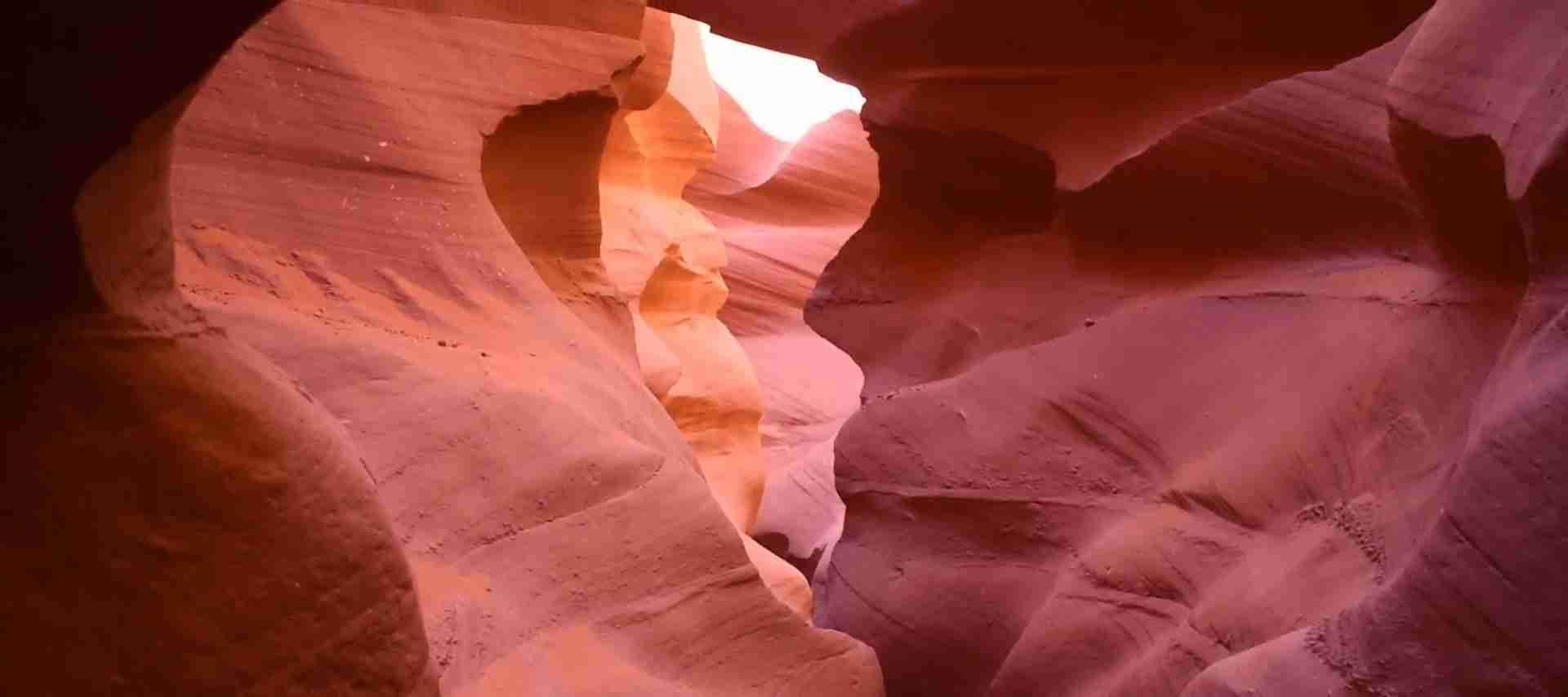
Antelope Canyon Day Trip from Las Vegas 2026: Complete Travel Planning Guide
Antelope Canyon, one of America’s most photographed natural wonders, sits 275 miles from Las Vegas in the heart of Navajo Nation territory near Page, Arizona. This spectacular slot canyon delivers dramatic sandstone formations, world-famous light beams, and an otherworldly landscape carved by millennia of wind and water—all accessible as an ambitious but rewarding day trip from the Las Vegas Strip.
Key Takeaways for Antelope Canyon Day Trips 2026
- Journey Planning 2026: Expect 275 miles and 4.5-5 hours each direction from Las Vegas to Page, making this a 14-16 hour commitment when including canyon tours and stops. Organized bus tours depart 5:30-7:00 AM and return around 9:00-10:00 PM.
- Budget Planning 2026: Organized day tours from Las Vegas cost $165-200 per person including transportation, Lower Antelope Canyon guided tour, Horseshoe Bend stop, and lunch. Independent travelers driving rental cars spend approximately $135-180 per person for gas, canyon tour, Horseshoe Bend parking, and meals (excluding $60-90 daily rental car fees split between travelers). Scenic flight options run $779 per person.
- Light Beam Season 2026: The famous sunlight beams in Upper Antelope Canyon appear only between late March and early October, with peak intensity during June, July, and August. Tours between 11:00 AM and 1:30 PM offer the best chances to witness these dramatic shafts of light piercing the canyon depths.
- Upper vs Lower Canyon Choice 2026: Upper Antelope Canyon costs $120-135 per person with easier ground-level walking and spectacular light beams. Lower Antelope Canyon costs $55-70 per person with more adventurous ladder climbing, longer passages, and vibrant wall colors but fewer dramatic beams.
- Horseshoe Bend Addition 2026: Nearly all Antelope Canyon day trips include a stop at Horseshoe Bend, the iconic Colorado River meander located 5 miles from the canyon entrance. Budget 45-60 minutes for the 1.5-mile roundtrip hike to the overlook perched 1,000 feet above the river.
- Advance Booking Essential 2026: Both organized tours from Las Vegas and direct Antelope Canyon reservations sell out weeks or months ahead during peak season (April-September). Book midday time slots 30-60 days in advance to secure preferred tour times and avoid disappointment.
People Also Ask About Antelope Canyon Day Trips from Las Vegas 2026
Can You Visit Antelope Canyon as a Day Trip from Las Vegas in 2026?
Yes, Antelope Canyon works as an ambitious day trip from Las Vegas, though the journey demands an early start and late return. The 275-mile distance between Las Vegas and Page, Arizona requires 4.5-5 hours driving each direction under normal conditions. Organized bus tours depart Strip hotels between 5:30-7:00 AM and return around 9:00-10:00 PM, creating a 14-16 hour day. Independent travelers driving rental cars follow similar schedules to maximize canyon time during optimal light conditions.
The logistics favor organized tours for most visitors. Professional operators handle the complex coordination of highway driving, canyon tour reservations at specific time slots, Navajo Nation permits, and the tight schedule required to experience both Antelope Canyon and Horseshoe Bend in a single day. Self-drivers gain flexibility but inherit the stress of navigating unfamiliar desert highways, securing advance canyon reservations, and managing precise timing to catch midday light beams.
Tours operate year-round, though summer months (June-August) coincide with peak light beam season and require booking 30-60 days ahead. Winter and early spring offer more last-minute availability but eliminate the famous light beam phenomenon. Most visitors conclude the exhausting schedule proves worthwhile for one of the Southwest’s most spectacular natural attractions without requiring overnight accommodation in Page.
How Much Does an Antelope Canyon Day Trip from Las Vegas Cost in 2026?
Organized bus tours from Las Vegas to Antelope Canyon cost $165-200 per person for standard group experiences that include roundtrip transportation, Lower Antelope Canyon guided tour with Navajo guide, Horseshoe Bend stop, bottled water throughout the day, and lunch. Small-group premium tours (14 passengers maximum) run $200-250 per person with more comfortable vans, better sight lines, and personalized service. Scenic airplane tours with aerial views of Hoover Dam and Lake Mead before landing in Page cost $779 per person including guided canyon tour and boxed lunch.
Independent travelers driving rental cars face different cost structures. A two-person group sharing expenses pays approximately $135-180 per person including gas ($45-65 each direction split between two), Lower Antelope Canyon tour ($55-70 per person), Horseshoe Bend parking ($10 per vehicle split), and meals ($30-40 per person). Solo drivers carry full fuel and parking costs without splitting, bringing their base total to $185-250 per person for gas, canyon tour, parking, and meals. Rental car fees add $60-90 daily depending on vehicle class and insurance coverage, increasing complete solo traveler costs to approximately $245-340 when including vehicle rental.
Upper Antelope Canyon tours cost significantly more than Lower Canyon options. Direct Upper Canyon bookings through Navajo-authorized operators run $105-120 per person plus $15 Navajo Nation permit fee, totaling $120-135 per person. The premium 11:20 AM time slot during light beam season commands the highest prices. Most Las Vegas tour operators include Lower Canyon rather than Upper Canyon in their packages to control costs while still delivering the authentic slot canyon experience.
What Time Should You Visit Antelope Canyon from Las Vegas to See the Light Beams in 2026?
The famous light beams in Upper Antelope Canyon appear only during midday hours between approximately 11:00 AM and 1:30 PM, and only during the seasonal window from late March through early October. Peak light beam intensity occurs during summer months (June, July, August) when the sun reaches its highest angle in the sky, allowing direct sunlight to penetrate deep into the narrow slot canyon and create those dramatic vertical shafts of light.
Las Vegas tour schedules carefully coordinate departure times to position visitors at Antelope Canyon during this crucial midday window. Tours departing Vegas at 5:30-7:00 AM arrive in the Page area around 10:00 AM-12:00 PM, perfectly timed for 11:00 AM-1:30 PM canyon entry during light beam hours. Tour operators maintain relationships with Navajo guides to secure these premium time slots months in advance, a significant advantage over independent travelers trying to book last-minute reservations.
Weather conditions critically affect light beam visibility even during peak season and optimal hours. Clear, sunny skies produce the most dramatic beams as direct sunlight streams through the narrow canyon openings. Cloudy or overcast days diminish or eliminate the light beam effect entirely, even during the March-October season and midday hours. Tour operators cannot guarantee light beam appearance but schedule tours to maximize chances during the best statistical window.
Visitors arriving outside light beam season (mid-October through mid-March) or at morning/afternoon hours miss the famous light shafts but still experience Antelope Canyon’s breathtaking sandstone formations, flowing curves, and changing colors as ambient light filters through the canyon. Many photographers prefer these non-peak conditions for capturing the canyon’s textures and forms without the crowds that descend during midday summer tours.
Should You Choose Upper or Lower Antelope Canyon for a Day Trip from Las Vegas in 2026?
Lower Antelope Canyon delivers the better value proposition for most Las Vegas day-trippers, offering dramatic slot canyon experiences at $55-70 per person versus $120-135 for Upper Canyon. The longer passages, vibrant wall colors, and adventurous ladder climbing create memorable experiences without the premium pricing. Most organized bus tours from Las Vegas include Lower Canyon in their packages, reflecting both cost efficiency and the reality that Lower Canyon’s extended walkways provide more immersive time inside the slot formations.
Upper Antelope Canyon justifies its higher cost for visitors prioritizing the iconic light beam phenomenon and easier accessibility. The ground-level entrance requires no stair climbing, making Upper Canyon suitable for visitors with limited mobility (though wheelchair accessibility remains challenging due to sand and narrow passages). The famous light beams appear more dramatically and frequently in Upper Canyon’s wider sections where direct overhead sunlight can penetrate to the canyon floor. Photography enthusiasts seeking those classic postcard shots of light shafts illuminating the sandstone typically prefer Upper Canyon despite the premium pricing.
Physical fitness considerations influence the choice. Upper Antelope Canyon involves easy flat walking on sand for approximately 100 yards through the main corridor. Lower Antelope Canyon requires descending and ascending five flights of stairs and several metal ladders totaling 150 steps, creating a moderately strenuous 1.1-mile roundtrip hike. The physical challenge adds adventure for active visitors but excludes those with mobility limitations or fear of heights.
Tour duration and crowd management also differ between canyons. Upper Canyon tours typically last 60-90 minutes with larger groups (up to 20 people) moving through the narrow passages in coordinated waves. Lower Canyon tours extend 75-90 minutes with somewhat smaller groups and more freedom to pause at favorite formations. Both canyons experience significant crowding during peak season midday tours when every visitor competes for light beam viewing, though Upper Canyon’s narrower sections intensify the crowded feeling.
Extended multi-day tours – 5+ days
Featured Las Vegas Multi-Day Tour Packages
3 days
Las Vegas 3-Day Discovery Tour
- ✓ Comprehensive Las Vegas experience
- ✓ Expert local guides included
- ✓ All accommodation included
- ✓ Transportation provided
5 days
Las Vegas 5-Day Highlights Experience
- ✓ Comprehensive Las Vegas experience
- ✓ Expert local guides included
- ✓ All accommodation included
- ✓ Transportation provided
7 days
Las Vegas 7-Day Cultural Journey
- ✓ Comprehensive Las Vegas experience
- ✓ Expert local guides included
- ✓ All accommodation included
- ✓ Transportation provided
10 days
Las Vegas 10-Day Complete Adventure
- ✓ Comprehensive Las Vegas experience
- ✓ Expert local guides included
- ✓ All accommodation included
- ✓ Transportation provided
Multi-day tour packages powered by TourRadar. Prices and availability subject to change.
Introduction to Antelope Canyon Day Trips from Las Vegas
The journey from Las Vegas to Antelope Canyon crosses 275 miles of dramatic Southwestern landscape, transitioning from Nevada’s desert basins through Arizona’s high country to the Colorado Plateau surrounding Page. This ambitious single-day excursion attracts visitors seeking one of America’s most photographed natural wonders without committing to overnight stays in the remote Page area. The experience demands early departures, long driving hours, and carefully coordinated timing to maximize the brief window inside the canyon itself, but delivers access to geological formations and light effects found nowhere else on Earth.
Antelope Canyon exists on Navajo Nation territory, requiring all visitors to hire authorized Navajo guides for entry. This mandatory guided tour system protects the fragile sandstone formations, respects tribal sovereignty, and ensures visitor safety in an environment where flash floods can occur with little warning. The Navajo Parks and Recreation Department licenses approximately a dozen tour companies, each maintaining different schedules, pricing structures, and specializations. Las Vegas-based tour operators partner with these Navajo-owned companies to provide seamless experiences from Strip pickup through canyon exploration and return.
The slot canyon system divides into several sections, with Upper Antelope Canyon and Lower Antelope Canyon forming the two primary tourist destinations. Upper Canyon earned its Navajo name “Tsé bighánílíní” (the place where water runs through rocks), while Lower Canyon’s Navajo designation “Hasdeztwazi” translates to spiral rock arches. Additional sections including Antelope Canyon X, Canyon X, and Secret Canyon operate with different tour companies and offer alternatives when the main canyons sell out, though none match the fame or dramatic light effects of Upper and Lower Antelope Canyon.
Horseshoe Bend has become an essential companion stop to Antelope Canyon visits. Located just 5 miles from the canyon entrance, this Colorado River meander creates one of the Southwest’s most recognizable landscapes—a 270-degree curve in the river carved 1,000 feet below a dramatic overlook. The proximity and complementary scenery make combined Antelope Canyon and Horseshoe Bend itineraries the standard offering from Las Vegas tour operators.
Seasonal considerations dramatically affect the Antelope Canyon day trip experience. Summer months (May-September) deliver the famous light beams but also extreme heat, with Page area temperatures regularly exceeding 100°F. The busy summer season sees tours selling out months ahead and premium midday time slots commanding highest prices. Spring (March-April) and fall (October-November) offer pleasant temperatures, fewer crowds, and lower prices, though light beams diminish or disappear as the sun angle changes. Winter (December-February) brings cold temperatures, smallest crowds, and no light beams, but reveals the canyon’s subtle color variations in soft winter light.
Day trip logistics from Las Vegas require realistic expectations about time allocation. The 4.5-5 hours driving each direction consumes 9-10 hours of a 14-16 hour day, leaving approximately 4-6 hours in the Page area. Tour operators typically allocate 75-90 minutes for Antelope Canyon (including transport from Page to the canyon entrance and back), 45-60 minutes at Horseshoe Bend, and 30-45 minutes for lunch, creating an efficient but rushed schedule that maximizes iconic stops while maintaining feasible return timing to Las Vegas.
Transportation Options from Las Vegas to Antelope Canyon 2026
The journey from Las Vegas to Antelope Canyon follows two primary route options across the high desert landscape separating Nevada from northern Arizona. The direct route via US-93 North and US-89 covers 275 miles in approximately 4 hours 30 minutes under ideal conditions, passing through Mesquite, Nevada before crossing into Arizona and continuing through Fredonia and Marble Canyon to reach Page. The scenic alternative through Zion National Park adds approximately 30-45 minutes and entrance fees but rewards travelers with spectacular canyon views along State Route 9.
Organized Bus Tours from Las Vegas 2026
Group bus tours represent the most popular transportation option, eliminating navigation stress, parking challenges, and coordination complexity while providing expert commentary throughout the journey. Standard tours operate 14-passenger Mercedes Sprinter vans or 24-passenger mini-coaches with reclining seats, air conditioning, USB charging ports, and large windows for desert scenery viewing. Departure points cluster around major Strip properties including Excalibur, Treasure Island, Paris Las Vegas, and downtown hotels, with pickup times ranging from 5:30-7:00 AM depending on the operator and season.
Tour costs for organized bus transportation range $165-200 per person including all elements: roundtrip transportation from Strip hotels, Lower Antelope Canyon guided tour with Navajo guide, Horseshoe Bend stop with hiking time, bottled water throughout the day, and lunch (typically deli sandwiches or boxed meals). Premium small-group tours limiting capacity to 14 passengers or fewer charge $200-250 per person for more comfortable vans, better sight lines, and personalized attention from guides. These tours often feature extended time at each stop and fewer participants competing for photographs.
The bus tour schedule follows predictable patterns designed to position visitors at Antelope Canyon during optimal midday light beam hours. Typical itineraries depart Las Vegas 5:30-7:00 AM, making brief rest stops in Mesquite or near the Arizona border for restrooms and snacks. Tours arrive in the Page area around 10:30 AM-12:00 PM, proceeding directly to either Horseshoe Bend or Antelope Canyon depending on reserved canyon tour times. After canyon exploration, groups continue to Horseshoe Bend (if not visited first), break for lunch, then begin the return journey to Las Vegas, arriving back on the Strip around 9:00-10:00 PM.
Major tour operators serving the Las Vegas to Antelope Canyon route include MaxTour, GC Tours, and various companies listed on Viator and GetYourGuide platforms. MaxTour specializes in small-group experiences with guaranteed Lower Antelope Canyon access through their partnership with Ken’s Tours. GC Tours operates budget-friendly large-group options with pricing starting at $165 per person. Tour quality varies significantly between operators, with online reviews providing essential guidance on guide knowledge, vehicle comfort, time allocation at each stop, and overall value delivery.
Booking windows for organized tours require advance planning, especially during peak season (April-September). Popular Saturday and Sunday departures during summer months sell out 30-60 days ahead as Las Vegas weekend visitors add Antelope Canyon to their itineraries. Midweek tours maintain better availability but still require booking 2-4 weeks ahead during peak season. Winter and early spring offer last-minute booking opportunities, though some operators reduce frequency or suspend tours entirely during slow periods.
Self-Drive Rental Car Options 2026
Driving a rental car from Las Vegas to Antelope Canyon provides maximum flexibility for schedule customization, photography stops, and side excursions, though at the cost of assuming full logistical coordination. The 275-mile journey requires 4.5-5 hours each direction under normal traffic conditions, with fuel costs running $45-65 each direction depending on vehicle fuel efficiency and current gas prices. Rental car daily rates range $60-90 for economy and mid-size vehicles including taxes and basic insurance, with premium SUVs costing $110-150 daily.
Self-drivers must secure their own Antelope Canyon tour reservations directly through Navajo-authorized operators, a process requiring advance planning and precise timing coordination. Upper Antelope Canyon tours book through companies including Antelope Canyon Navajo Tours, Antelope Canyon Tours, and Adventurous Antelope Canyon Tours. Lower Antelope Canyon reservations go through Ken’s Tours, Dixie’s Lower Antelope Canyon Tours, and other authorized operators. All tours require booking online or by phone weeks or months ahead during peak season, with specific time slots (especially midday light beam tours) selling out first.
The self-drive route from Las Vegas follows US-93 North out of the city, becoming US-93/I-11 as it parallels Lake Mead. The highway passes near Hoover Dam (visible from the Mike O’Callaghan-Pat Tillman Memorial Bridge) before continuing through Mesquite, Nevada. After crossing into Arizona, the route merges with US-89 North near Fredonia, continuing through vast open range country, past Vermilion Cliffs National Monument, and across Marble Canyon via the historic Navajo Bridge. The final 45 miles from Marble Canyon to Page climb gradually through high desert landscape with distant views of the Kaibab Plateau.
Navigation presents few challenges on this route, with cell phone coverage available through most of the journey (though spotty in remote stretches near Vermilion Cliffs). Gas stations appear regularly in Mesquite, Fredonia/Marble Canyon, and Page, making fuel planning straightforward. Food options concentrate in Mesquite (full fast food and restaurant selection) and Page (limited chain restaurants), with few services between these communities.
Time zone changes add complexity to self-drive planning. Las Vegas operates on Pacific Time (Nevada does not observe daylight saving time after switching to year-round Pacific Standard Time in recent years). Page, Arizona sits in Mountain Standard Time, creating a one-hour time difference most of the year. However, the Navajo Nation (including Antelope Canyon) observes daylight saving time while the rest of Arizona does not, creating potential confusion. Tour operators specify tour times in Arizona/Navajo time, requiring careful attention to prevent missed reservations.
Parking at Antelope Canyon tour operator locations poses no difficulty, with dedicated lots at each authorized company’s staging area. Horseshoe Bend features a large paved parking lot charging $10 per vehicle regardless of occupancy. The parking fee funds trail maintenance and restroom facilities but is not covered by National Park passes. Self-drivers should carry cash or credit cards, as the parking lot accepts both payment methods except during peak holiday periods when cash-only operations reduce transaction times.
Scenic Flight Tours from Las Vegas 2026
Airplane tours from Las Vegas to Antelope Canyon compress travel time while adding dramatic aerial perspectives of the region’s desert landscape. These premium experiences cost $779 per person including roundtrip scenic flight from Boulder City airport, ground transportation in Page, guided Antelope Canyon tour with Navajo guide, Horseshoe Bend visit, and boxed lunch. The 9-hour door-to-door experience eliminates the long bus ride while providing unique aerial views of Lake Mead, Hoover Dam, Grand Canyon’s eastern sections, and Glen Canyon.
Small fixed-wing aircraft (typically 10-19 passenger capacity) depart Boulder City Municipal Airport, located approximately 30 minutes from the Las Vegas Strip. Tour operators provide ground transportation from major Strip hotels to the airport, with departures scheduled around 7:00-8:00 AM. The scenic flight takes approximately 40-50 minutes each direction, flying over Lake Mead’s distinctive turquoise waters, past Hoover Dam’s massive concrete arch, across the Grand Canyon’s eastern regions, and along Glen Canyon before landing at Page Municipal Airport.
Ground operations in Page mirror bus tour itineraries, with vans transporting flight passengers from Page airport to Antelope Canyon for guided tours, then to Horseshoe Bend for overlook viewing, before returning to the airport for the return flight to Boulder City. The compressed travel time allows more relaxed schedules at each destination compared to rushed bus tour timelines, though total time in the Page area remains limited to 3-4 hours.
Flight tours operate year-round but may cancel or reschedule due to weather conditions including high winds, low visibility, or thunderstorms common during summer monsoon season. Small aircraft require minimum passenger counts (typically 4-6 people) to operate economically, potentially leading to tour consolidation or rescheduling during low-demand periods. Passengers face strict weight restrictions (typically 300-350 pounds maximum per person) due to aircraft balance requirements.
Antelope Canyon Tour Options and Pricing 2026
Antelope Canyon operates exclusively through Navajo Nation-authorized tour companies, each offering different canyon sections, time slots, tour durations, and experience levels. All visitors must book guided tours regardless of photography skill, physical fitness, or previous canyon experience. This mandatory guided system protects the fragile sandstone formations, ensures visitor safety from flash flood risks, and maintains tribal cultural protocols while providing Navajo community members with tourism employment opportunities.
Upper Antelope Canyon Tours 2026
Upper Antelope Canyon tours cost $105-120 per person plus $15 Navajo Nation permit fee, totaling $120-135 per person for 90-minute experiences. The premium 11:20 AM time slot during light beam season (late March through early October) commands the highest pricing at $120 plus $15 permit. Morning tours at 9:00 AM and afternoon tours at 1:40 PM cost $105 plus $15 permit, still delivering spectacular canyon formations but with diminished or absent light beam effects.
Upper Canyon tours begin at authorized operator staging areas in Page, where visitors board rugged 4×4 trucks for the 20-minute drive to the canyon entrance. The route covers 5 miles of paved road followed by 2.5 miles of bumpy dirt track across open desert, creating an adventure component before reaching the canyon itself. Trucks typically carry 15-20 passengers on bench seating, with the bouncing, dusty ride serving as transition from modern civilization to remote desert landscape.
The canyon walking tour covers approximately 300-400 yards on relatively flat sand at ground level, requiring no stair climbing or ladder navigation. Navajo guides lead groups through the narrow slot sections, stopping at key photo locations to explain rock formations, share cultural stories, and assist with camera settings. Guides often toss sand into the air during light beam periods to create visible shafts of light that photograph dramatically against the dark canyon shadows. Tour groups move in coordinated waves, with each guide bringing their group to specific spots before proceeding to allow the next group access.
Light beam visibility depends on three critical factors: season (late March through early October only), time of day (11:00 AM to 1:30 PM optimal), and weather conditions (clear sunny skies essential). Even during peak season, cloudy or overcast conditions eliminate the dramatic light shaft effect. Tour operators cannot guarantee light beam appearance but schedule midday tours during the statistical peak window. Visitors booking 9:00 AM or afternoon time slots should expect beautiful canyon formations and colors but no classic vertical light beams.
Major Upper Antelope Canyon tour operators include Antelope Canyon Navajo Tours, Adventurous Antelope Canyon Tours, and Antelope Slot Canyon Tours, each operating from their own staging areas along Highway 98 east of Page. Tour reservations require online booking or phone reservations 30-60 days ahead during peak season (April-September), with midday light beam tours selling out first. Walk-in availability exists during slower periods (November-March) but remains unreliable for visitors on tight Las Vegas day trip schedules.
Lower Antelope Canyon Tours 2026
Lower Antelope Canyon tours cost $55-70 per person including Navajo Nation permit fees for 60-75 minute guided experiences. Standard tours run approximately $55-60 per person, while extended deluxe experiences with additional cultural presentations cost $65-70 per person. The lower pricing compared to Upper Canyon reflects easier access logistics (no 4×4 truck transport required) and less dramatic light beam effects, though Lower Canyon delivers equally stunning geological formations across longer walking distances.
Lower Canyon tour operators maintain staging areas within walking distance of the canyon entrance, located approximately 5 miles east of Page off Highway 98. Visitors drive or are transported directly to operator facilities, check in, then walk approximately 300 yards to the canyon entrance. The adventure begins immediately with descending staircases into the earth, as Lower Canyon sits below ground level requiring vertical access via metal stairs and ladders.
The Lower Canyon route covers approximately 1,800 feet (1.1 miles roundtrip) through narrow slot sections requiring navigation of five flights of stairs and several metal ladders totaling 150 steps. The V-shaped canyon walls narrow to shoulder width in some sections, creating intimate experiences with the flowing sandstone formations. Natural light filters in from above, illuminating the canyon walls in shades of red, orange, purple, and gold that shift throughout the day as the sun angle changes.
Physical fitness requirements exceed Upper Canyon demands. Visitors must climb down and back up all stairs and ladders without assistance, maintain balance on sometimes uneven surfaces, and navigate tight spaces where passage requires turning sideways. Tour operators prohibit participation by visitors with mobility limitations, fear of heights, or inability to climb stairs safely. Pregnant women receive strong discouragement from attempting Lower Canyon tours due to stair climbing and potential emergency evacuation challenges.
Lower Canyon light beams appear less dramatically and less frequently than Upper Canyon’s famous shafts. The V-shaped walls and wider opening angles allow more ambient light penetration, reducing the contrast that makes Upper Canyon’s beams so spectacular. However, this additional light creates opportunities to capture the canyon’s textures, colors, and flowing curves that often get lost in Upper Canyon’s darker sections. Many photographers prefer Lower Canyon for capturing the full range of sandstone patterns and formations.
Ken’s Tours operates as the primary Lower Antelope Canyon provider, offering standard guided tours, deluxe tours with extended time and cultural presentations, and premium experiences with photography-focused guides. Dixie’s Lower Antelope Canyon Tours provides alternative scheduling options. Both companies require advance online reservations during peak season, though Lower Canyon maintains better last-minute availability than Upper Canyon due to longer tour routes that accommodate more simultaneous groups.
Alternative Canyon Options 2026
Antelope Canyon X offers a third option when Upper and Lower canyons sell out or when visitors seek less crowded experiences. Tours cost $80-90 per person including permits for 90-minute guided walks through two distinct canyon sections displaying X-shaped formations. The canyon features narrower passages than Lower Antelope but similar ladder-climbing requirements, with dramatic color variations and intimate slot experiences. Antelope Canyon X receives fewer visitors than the main canyons, creating more opportunities for unobstructed photography and personal connection with the landscape.
Secret Antelope Canyon and Canyon X represent additional alternatives operated by different Navajo families with exclusive access rights to specific sections. These canyons charge $75-95 per person and offer genuine slot canyon experiences with impressive formations, though none match the fame, scale, or light beam drama of Upper and Lower Antelope Canyon. These alternatives serve as valuable backup options when main canyon tours sell out or when visitors prioritize solitude over iconic landmarks.
Horseshoe Bend Exploration 2026
Horseshoe Bend delivers one of the American Southwest’s most photographed landscapes without requiring guided tours, entrance fees, or advance reservations. The Colorado River’s dramatic 270-degree curve sits 1,000 feet below a sandstone overlook, creating vertiginous views that have become iconic symbols of the region’s geological grandeur. The site’s accessibility and spectacular payoff make it an essential companion to Antelope Canyon visits, with the two attractions separated by just 5 miles along Highway 89.
The trailhead operates from a large paved parking lot managed by the City of Page, charging $10 per vehicle regardless of occupancy or number of passengers. This parking fee funds trail maintenance, restroom facilities, and on-site management but does not constitute a National Park entrance fee—America the Beautiful passes and other federal recreation passes provide no discount or exemption. Payment kiosks accept both cash and credit cards, though peak holiday periods (Memorial Day, Fourth of July, Labor Day, Thanksgiving, Christmas) may revert to cash-only operations to expedite transaction processing.
The parking lot operates sunrise to sunset year-round, providing 300+ paved spaces for cars, dedicated RV parking sections, and large-vehicle areas for tour buses. Restroom facilities (vault toilets) serve visitor needs, though no water fountains or food services exist on site. The lot features accessible parking near the trailhead, with the trail itself designed to meet ABA (Architectural Barriers Act) accessibility standards for its initial sections.
The trail to Horseshoe Bend overlook covers 0.75 miles each way (1.5 miles roundtrip) across relatively flat terrain, requiring 20-30 minutes walking each direction at moderate pace. The path begins as paved surface for approximately one-third of the distance, transitioning to packed dirt and sand for the remainder. Two shade structures along the route provide rest stops and sun protection, essential during summer months when afternoon temperatures regularly exceed 100°F. No shade exists at the overlook itself, where the relentless desert sun beats down on visitors gathered at the cliff edge.
The overlook features a fenced viewing platform installed for safety, though many visitors venture beyond the fence to the natural sandstone rim for unobstructed photographs. The Park Service and City of Page strongly discourage approaching the unfenced cliff edges, where sandstone can crumble unexpectedly and has contributed to several fatal falls in recent years. The fenced section provides safe viewing with only minimal obstruction, satisfying most visitors while protecting those fearful of heights or traveling with children.
Photography at Horseshoe Bend rewards late afternoon golden hour lighting (2-3 hours before sunset) when the sun illuminates the Colorado River’s green water and casts dramatic shadows across the canyon walls. Morning light produces good results but generates harsh contrast between bright sky and shadowed canyon depths. Midday sun creates flat lighting with minimal drama, though the reliable visibility makes this time period acceptable for visitors on tight Las Vegas day trip schedules. Sunset delivers spectacular color displays but requires extended return hiking in darkness, unsuitable for most organized tour schedules.
Crowds at Horseshoe Bend peak during midday hours (11:00 AM to 3:00 PM) when tour groups from Las Vegas, Sedona, and other regional destinations converge at the overlook. Summer weekends see hundreds of visitors gathering simultaneously at the rim, making photography challenging and creating safety concerns as people jostle for position near cliff edges. Early morning visits (sunrise to 9:00 AM) and late afternoon periods (4:00 PM to sunset) offer more solitude and better lighting, though Las Vegas day trip logistics rarely permit these optimal timing windows.
Safety considerations include extreme heat exposure (no shade on trail or overlook), dehydration risks, unstable cliff edges, and altitude effects (Horseshoe Bend sits at 4,200 feet elevation). Visitors should carry minimum one liter of water per person, wear sturdy closed-toe shoes, apply and reapply sunscreen, and wear wide-brimmed hats for sun protection. Dogs are permitted on leash but face heat stress risks from hot sand and lack of water sources—owners must carry adequate water for their pets and consider paw protection for hot surfaces.
Best Time to Visit Antelope Canyon from Las Vegas 2026
Light Beam Season Considerations 2026
The famous light beams that transform Upper Antelope Canyon into a photographer’s paradise appear only during a specific seasonal window from late March through early October, with peak intensity concentrated in June, July, and August. This phenomenon results from the sun’s elevation angle throughout the year—only when the sun reaches sufficient height at solar noon can direct sunlight penetrate deep into the narrow slot canyon and create those dramatic vertical shafts. The beams appear most reliably between 11:00 AM and 1:30 PM on clear sunny days during this season, with June and July offering the most consistent and spectacular displays.
Light beam visibility requires three conditions occurring simultaneously: correct season (late March-early October), optimal time window (11:00 AM-1:30 PM), and clear weather (sunny skies with no cloud cover). Even during peak season, overcast days eliminate the light beam effect as clouds diffuse and scatter the direct sunlight required to create those concentrated shafts. Tour operators cannot guarantee light beam appearance and offer no refunds for cloudy weather, making the experience somewhat weather-dependent gambling for visitors traveling from distant locations.
The trade-off for light beam season involves significant crowding and premium pricing. Every tour slot between 11:00 AM and 1:30 PM during June, July, and August sells out weeks or months ahead, with operators charging their highest rates for these peak periods. Inside the canyon, groups arrive in continuous waves, with 15-20 people per group moving through narrow passages that can feel congested and rushed. Photographers compete for positions to capture the beams, and the intimate spiritual experience some visitors seek gets overwhelmed by tour group logistics.
Seasonal Visitation Patterns 2026
Summer dominates Antelope Canyon tourism, with May through September accounting for approximately 60-70 percent of annual visitation. June, July, and August represent absolute peak periods when tours operate at maximum capacity, prices reach their highest levels, and advance booking windows extend 30-60 days. The combination of light beam season, summer vacation schedules, and excellent weather (despite extreme heat) concentrates visitor demand during these three months.
Spring shoulder season (March-April) delivers pleasant weather with daytime temperatures in the 60s-70s°F, smaller crowds, lower prices, and the beginning of light beam season in late March and April. Canyon colors display maximum vibrancy during spring as moisture from winter precipitation and snowmelt enhances the sandstone’s red and orange hues. Spring also brings increased flash flood risk as snowmelt combines with occasional rainstorms, requiring attention to weather forecasts and tour operator communications about potential closures.
Fall shoulder season (September-October) extends light beam season into September with gradually diminishing intensity through early October as the sun’s angle lowers. September maintains summer heat (90s°F regularly) but sees modest crowd reduction as families return to school schedules. October brings comfortable temperatures in the 60s-70s°F, beautiful autumn light, and significantly reduced crowds as light beam season ends. The trade-off involves diminished or absent light beams after early October, though the canyon’s formations and colors remain spectacular.
Winter months (November-February) offer the smallest crowds, lowest prices, greatest booking flexibility, and opportunities to experience Antelope Canyon in relative solitude. Temperatures drop to 30s-50s°F, creating comfortable hiking conditions and eliminating heat stress concerns. The complete absence of light beams during winter months shifts focus to the canyon’s geological features, flowing sandstone curves, and subtle color variations visible in soft winter light. Many photographers prefer winter conditions for capturing textures and formations without the harsh contrast of light beam photography.
Weather and Climate Factors 2026
Page, Arizona experiences extreme temperature variations throughout the year, with summer highs regularly exceeding 100°F (38°C) and winter lows dropping to freezing or below. The high desert climate delivers intense sun exposure year-round, minimal humidity, and dramatic day-to-night temperature swings. Summer afternoon thunderstorms occur regularly during monsoon season (July-August), creating flash flood risks that can close Antelope Canyon with little warning.
Flash flooding represents the primary safety concern for Antelope Canyon visitors. The narrow slot configuration channels water from surrounding desert areas into concentrated flows that can rise several feet within minutes during heavy rainfall. Tour operators maintain constant communication with weather services and close canyons immediately when thunderstorms threaten the drainage basin, even if skies appear clear directly overhead. Closures occur most frequently during July and August monsoon season but can happen any time from May through September.
Heat exposure affects Las Vegas day trip participants significantly. The combination of 4-5 hours driving each direction, midday desert hiking at Horseshoe Bend, and canyon tours creates extended heat exposure during summer months. Tour buses provide air conditioning during travel, but visitors spend 2-3 hours outdoors at Horseshoe Bend and Antelope Canyon where temperatures exceed 100°F regularly. Heat exhaustion, dehydration, and sunburn represent real risks requiring water consumption (minimum one liter per person per hour outdoors), frequent reapplication of sunscreen, and appropriate sun-protective clothing.
Winter weather presents different challenges. Freezing overnight temperatures can create icy conditions on the Horseshoe Bend trail during morning hours, though the trail typically thaws by midday. Snow occasionally falls in the Page area during December through February, potentially creating driving challenges for self-drive visitors unfamiliar with winter conditions. The cold inside Antelope Canyon (50s-60s°F year-round) feels more pronounced during winter visits, requiring light jackets even when outside temperatures reach comfortable levels.
Day Trip Itinerary Planning from Las Vegas 2026
Standard Organized Tour Timeline 2026
Typical organized bus tours from Las Vegas to Antelope Canyon follow tightly choreographed schedules designed to maximize time at key destinations while managing the long driving distances. Understanding this timeline helps visitors prepare appropriate expectations for this ambitious single-day journey.
5:30-6:00 AM: Hotel pickup begins at designated Strip properties. Tour operators circulate through 3-5 pickup points over 30-45 minutes, collecting passengers from major hotels including Excalibur, Treasure Island, Paris Las Vegas, and downtown locations. Passengers should arrive at pickup points 10 minutes early to ensure smooth loading.
6:00-6:45 AM: Final passenger collection completes, and the bus departs Las Vegas heading northeast on US-93. Tour guides introduce themselves, explain the day’s schedule, provide safety briefings, and begin commentary about regional history and geology. Comfortable seating, air conditioning, and large windows create pleasant environments for the long drive ahead.
7:30-8:00 AM: First rest stop occurs in Mesquite, Nevada or near the Arizona border, providing restroom access, coffee purchases, and brief leg-stretching opportunities. The stop typically lasts 15-20 minutes before continuing through increasingly scenic desert landscape.
10:00-10:30 AM: Tours arrive in the Page, Arizona area after 4-4.5 hours driving. The first destination varies by tour operator and reserved canyon tour times—some groups visit Horseshoe Bend first, while others proceed directly to Antelope Canyon depending on secured time slots.
10:30 AM-12:30 PM: Canyon tour and Horseshoe Bend visit occur during this window, with timing depending on secured reservations. Tours typically allocate 75-90 minutes for Antelope Canyon including transport to/from canyon entrance and the guided tour itself. Horseshoe Bend receives 45-60 minutes for the 1.5-mile roundtrip hike and overlook viewing.
12:30-1:30 PM: Lunch break provides 30-45 minutes for included meals (boxed lunches or deli sandwiches) or independent dining at Page restaurants for tours without included food. Some operators stop at Navajo trading posts where visitors can browse jewelry, crafts, and souvenirs while eating.
1:30-2:00 PM: Final departures from Page area begin the return journey to Las Vegas. Any stops not yet completed (Horseshoe Bend if visited after lunch) occur during this window.
6:00-7:00 PM: Second rest stop occurs for restrooms and leg stretching, typically near the Arizona-Nevada border or in Mesquite.
8:30-10:00 PM: Tours arrive back at Las Vegas Strip hotels, dropping passengers at the same locations where pickup occurred 14-16 hours earlier. The late arrival time makes evening show reservations or dinner plans inadvisable for the day of return.
Self-Drive Independent Itinerary 2026
Independent travelers driving rental cars gain flexibility to customize their itinerary while assuming full responsibility for timing, navigation, and coordination. A typical self-drive day from Las Vegas to Antelope Canyon follows this framework.
4:00-5:00 AM: Departure from Las Vegas hotels allows arrival in Page area by 9:00-10:00 AM, positioning visitors for midday canyon tours. The early departure feels brutal but proves necessary for experiencing light beams during their peak 11:00 AM-1:30 PM window.
4:30-9:00 AM: Driving from Las Vegas to Page consumes 4.5-5 hours including a brief breakfast or coffee stop in Mesquite. The route via US-93 North and US-89 offers limited services between Mesquite and Page, making fuel and restroom planning important. Sunrise occurs during this drive (approximately 6:00-7:00 AM depending on season), providing beautiful light across the desert landscape.
9:00-10:00 AM: Arrival in Page allows time for fuel, restrooms, and any needed supplies before proceeding to first destination. The decision to visit Horseshoe Bend or Antelope Canyon first depends on secured canyon tour reservation time.
10:00 AM-12:30 PM: Canyon tour and Horseshoe Bend visit occur during this window, with sequence determined by reservation timing. Visitors with 11:00 AM-12:30 PM canyon tours typically visit Antelope Canyon first, then proceed to Horseshoe Bend afterward. Those with 12:30-1:30 PM tours often visit Horseshoe Bend first (9:30-11:00 AM) before driving to canyon tour operator locations.
12:30-1:30 PM: Lunch in Page provides needed rest after morning activities. Page offers limited restaurant options including chain fast food (McDonald’s, Burger King, Subway) and several local cafes. Relaxed lunch timing proves essential before beginning the long return drive.
1:30-2:00 PM: Departure from Page begins return journey to Las Vegas. Later departures (2:30-3:00 PM) remain viable but create tight timing for Las Vegas evening plans and risk driver fatigue during the final hours.
6:00-7:00 PM: Arrival back in Las Vegas after 4-4.5 hours return driving, factoring rest stops for fuel and restrooms. The total 14-15 hour day from early morning departure to evening return mirrors organized tour schedules but allows custom timing at each destination.
Scenic Flight Itinerary 2026
Airplane tours compress travel time while adding aerial perspectives, creating a more relaxed schedule than bus tours despite covering identical destinations.
6:00-7:00 AM: Hotel pickup transports passengers from Strip properties to Boulder City Municipal Airport, located 30 minutes from Las Vegas. Check-in procedures and safety briefings occur at the terminal.
7:30-8:30 AM: Scenic flight departure provides 45-minute airborne journey over Lake Mead, Hoover Dam, eastern Grand Canyon sections, and Glen Canyon before landing at Page Municipal Airport.
9:00 AM-1:00 PM: Ground activities in Page mirror bus tour itineraries but with more relaxed timing due to compressed travel. Tours visit Antelope Canyon and Horseshoe Bend with boxed lunches provided between activities.
1:30-2:30 PM: Return flight from Page to Boulder City retraces the scenic route with different afternoon lighting.
3:00-4:00 PM: Ground transportation returns passengers from Boulder City Airport to Strip hotels, completing the 9-hour door-to-door experience.
Practical Planning Considerations for 2026
Booking Strategy and Timing 2026
Advance reservations represent the single most important planning element for successful Antelope Canyon day trips from Las Vegas. The combination of limited daily tour capacity, mandatory guided tour requirements, and concentrated demand during light beam season creates competitive booking environments requiring early action.
Organized bus tours from Las Vegas require booking 14-30 days ahead during peak season (May-September), with 30-60 days recommended for Saturday and Sunday departures. Major tour operators including MaxTour, GC Tours, and companies on Viator/GetYourGuide platforms display real-time availability through their websites, allowing instant confirmation for available dates. Off-season tours (November-February) maintain better availability, often allowing bookings within 7-14 days of desired dates.
Direct Antelope Canyon reservations for independent travelers demand even longer lead times. Upper Antelope Canyon midday tours (11:00 AM-1:30 PM) during June, July, and August sell out 60-90 days ahead, requiring booking as soon as travel dates confirm. Lower Antelope Canyon maintains slightly better availability but still sells out 30-45 days ahead during peak season midday time slots. Booking strategies include checking multiple tour operator websites, remaining flexible on exact tour times (9:00 AM and afternoon slots maintain better availability), and considering alternative canyon options (Antelope Canyon X, Secret Canyon) if main canyons sell out.
Cancellation policies vary significantly between operators. Most organized bus tours from Las Vegas offer full refunds for cancellations made 48-72 hours before tour date, with no refunds for later cancellations or no-shows. Direct Antelope Canyon bookings through Navajo tour operators typically follow similar policies, though some operators charge non-refundable deposits or booking fees even for advance cancellations. Weather-related closures due to flash flood risks generally result in full refunds or rebooking opportunities, as operators cannot fulfill the contracted tour experience.
What to Bring and Wear 2026
Appropriate preparation significantly affects comfort and enjoyment during this long, physically demanding day trip through desert environments. Essential items include minimum one liter water per person (two liters recommended during summer), sunscreen with SPF 30+ protection, wide-brimmed hat for sun protection, sunglasses, and sturdy closed-toe shoes with good traction. Flip-flops, sandals, and open-toed footwear create safety hazards on sandy Antelope Canyon floors and rocky Horseshoe Bend trails.
Clothing should prioritize light colors that reflect heat, breathable fabrics that wick moisture, and sun-protective coverage for arms and legs. Summer temperatures regularly exceed 100°F, making short sleeves and shorts tempting but increasing sunburn risk during extended outdoor exposure. Layering proves valuable as tour bus air conditioning creates cold environments contrasting sharply with extreme outdoor heat. Winter visits require light jackets as Antelope Canyon remains cool (50s-60s°F) even when outside temperatures feel comfortable.
Camera equipment faces specific restrictions and challenges. All Antelope Canyon tour operators prohibit tripods, monopods, and selfie sticks inside the canyons, restricting photography to handheld methods only. This policy protects narrow passages from equipment damage and maintains tour group flow through tight spaces. Smartphone cameras perform excellently in Antelope Canyon’s controlled lighting, with many tour guides offering assistance with camera settings to capture optimal images. DSLR and mirrorless cameras require manual exposure adjustment to handle the dramatic contrast between bright sky and shadowed canyon depths.
Bag policies at Antelope Canyon have become increasingly restrictive. Upper Antelope Canyon prohibits all bags including backpacks, purses, and fanny packs starting in recent years. Visitors must carry only essential items in pockets or small transparent containers that allow visual inspection. Lower Antelope Canyon maintains similar restrictions, requiring clear bags if anything must be carried. This policy aims to protect the canyon from accidentally dropped items and speeds security inspection at tour check-in.
Cash remains important despite widespread credit card acceptance. Some tour operators, trading posts, and food vendors prefer or require cash payment. The Horseshoe Bend parking lot accepts cards but reverts to cash-only during peak holiday periods. Carrying $40-60 per person in small bills ($20s, $10s, $5s) provides backup payment options and allows purchases at Navajo trading posts where credit card processing may be limited.
Physical Requirements and Accessibility 2026
Upper Antelope Canyon provides the most accessible option for visitors with limited mobility, requiring only flat walking on sand for approximately 100 yards through the main corridor. No stairs, ladders, or significant elevation gain challenge visitors, making Upper Canyon suitable for most fitness levels. However, the narrow passages (some sections require sideways walking), uneven sandy surface, and lack of handrails or support structures present obstacles for wheelchair users and those requiring walking assistance. Wheelchairs can reach the canyon entrance but cannot navigate the narrow interior sections effectively.
Lower Antelope Canyon demands moderate to high fitness levels with its requirement to descend and ascend five flights of stairs and several metal ladders totaling 150 steps. Visitors must possess sufficient strength, balance, and mobility to climb these obstacles safely without assistance, as the narrow passages prevent rescue personnel from easily accessing injured visitors. Tour operators strictly prohibit participation by anyone unable to complete the stair climbing independently, creating exclusionary effects for elderly visitors, those with joint problems, and people with mobility limitations.
The Horseshoe Bend trail achieves partial accessibility through its paved initial section and packed dirt main route. Wheelchairs and strollers can navigate approximately two-thirds of the trail with assistance, reaching a designated accessible viewing platform that provides good (though not optimal) views of the river bend. The final approach to the main overlook involves looser sand and steeper grades that challenge wheelchair navigation, though determined individuals with assistance have reached the rim viewpoint.
Photography Tips and Etiquette 2026
Antelope Canyon photography balances technical challenges with crowded conditions and limited time at each location. Successful photography requires understanding exposure management, working within tour group constraints, and respecting both the natural environment and fellow visitors’ experiences.
Exposure settings challenge even experienced photographers due to extreme contrast between bright sky visible through canyon openings and dark shadowed sandstone walls. Smartphone users should enable HDR mode and tap to adjust exposure on the canyon walls rather than bright sky areas. DSLR and mirrorless camera users should shoot in manual mode, exposing for midtones and using exposure compensation to brighten shadows without blowing out highlights. Many photographers bracket exposures or shoot multiple images for post-processing HDR combinations.
Light beam photography requires specific techniques to capture those dramatic shafts. Tour guides assist by tossing handfuls of sand into the air, creating visible particles that make light beams photograph more dramatically against dark backgrounds. Photographers should watch for these moments and shoot immediately, as the effect lasts only seconds before sand settles. Faster shutter speeds (1/125 to 1/500 second) freeze the floating sand particles, while slower speeds create ethereal streaking effects. ISO should remain low (100-400) to minimize noise in shadowed areas.
Composition in Antelope Canyon benefits from looking up to include the flowing sandstone curves and narrow sky openings that define the slot canyon experience. Wide-angle lenses (16-35mm on full-frame cameras) capture these compositional elements effectively, though normal focal lengths (24-70mm) work well for isolating specific formations and patterns. The limited space in narrow sections prevents extensive lens changes, making a versatile zoom lens more practical than multiple prime lenses.
Tour group dynamics require patience and courtesy. Each visitor wants photographs from the best positions, but the narrow passages and time constraints create unavoidable crowding. Successful photographers take quick shots when positioned well, then move aside to allow others access. Waiting for “empty” canyon views proves nearly impossible during peak season midday tours—learning to exclude other visitors through careful framing produces better results than hoping for solitude.
Safety Considerations and Risk Management 2026
Flash Flood Awareness 2026
Flash flooding represents the primary safety hazard at Antelope Canyon, with several fatal incidents throughout the site’s tourism history serving as stark reminders of desert flood power. The slot canyon configuration channels water from a vast drainage basin upstream, creating situations where heavy rainfall miles away generates lethal flooding in the canyon within 10-15 minutes despite clear skies overhead.
Tour operators maintain sophisticated flash flood monitoring systems coordinating with National Weather Service forecasts, radar data, and upstream weather observers. Closures occur immediately when thunderstorms threaten the drainage basin, even if conditions appear perfect at the canyon entrance. These weather closures happen most frequently during July and August monsoon season but can occur any time from May through September. Visitors receive full refunds or rebooking options for weather-related closures, as operators cannot fulfill tour experiences when canyons close for safety.
The Navajo Nation Parks and Recreation Department maintains authority over all closure decisions, prioritizing visitor safety over economic considerations. Historic fatal floods in 1997 and 2006 killed multiple visitors caught in the canyon during flash events, creating zero-tolerance policies for any flood risk. Modern safety protocols have eliminated flood-related injuries and deaths since implementing these strict closure policies and continuous monitoring systems.
Heat and Dehydration Risks 2026
Summer heat exposure creates significant health risks during Las Vegas to Antelope Canyon day trips. The combination of 100°F+ temperatures, low humidity (often below 20 percent), intense sun exposure at 4,000+ feet elevation, and extended time outdoors challenges even healthy individuals accustomed to heat. Heat exhaustion symptoms include dizziness, nausea, excessive sweating followed by cessation of sweating, confusion, and rapid heartbeat. Heat stroke represents a medical emergency requiring immediate cooling and evacuation.
Hydration requirements exceed normal daily water intake by significant margins. Active adults should consume minimum one liter of water per hour during extended outdoor exposure in summer heat. The Horseshoe Bend hike alone requires one liter minimum per person, with canyon tours and driving segments demanding additional consumption. Tour operators provide bottled water on buses, but visitors must carry their own water during hiking segments as no sources exist along trails.
Sunburn occurs rapidly at high elevation with intense desert sun. Sunscreen application before outdoor exposure provides essential protection, but sweat and time degrade effectiveness within 60-90 minutes. Reapplication every 60 minutes during extended outdoor periods prevents painful burns that can ruin the remainder of a trip. Wide-brimmed hats (3+ inch brims) protect face and neck, while sunglasses reduce eye strain and long-term UV damage.
Altitude and Physical Exertion 2026
Page, Arizona sits at 4,300 feet elevation, with Horseshoe Bend at 4,200 feet and Antelope Canyon at 3,700-3,800 feet. These moderate elevations affect some visitors, particularly those from sea-level locations like Las Vegas (2,000 feet) or coastal areas. Altitude effects include shortness of breath during exertion, faster fatigue, headaches, and occasionally nausea. Most people acclimate within a few hours, though some individuals remain affected throughout their visit.
The physical demands of hiking at altitude in heat challenge fitness assumptions. The Horseshoe Bend trail covers relatively flat terrain but the 1.5-mile roundtrip in direct sun at 4,200 feet elevation proves surprisingly demanding. Pace yourself, take breaks at shade structures, and don’t hesitate to turn back if feeling unwell. Canyon tours involve less physical exertion (except Lower Canyon’s stair climbing) but the heat exposure and constrained environments affect some visitors.
Regional Context and Additional Attractions 2026
Page, Arizona serves as the gateway community for Antelope Canyon, positioned strategically between Lake Powell, Glen Canyon Dam, and the vast Navajo Nation territory stretching across northern Arizona. The town of 7,500 residents exists primarily to support tourism and dam operations, creating a service-oriented economy focused on visitor needs. Understanding the broader regional attractions helps day-trippers from Las Vegas maximize their brief time in this spectacular corner of the Colorado Plateau.
Glen Canyon Dam rises 710 feet above the Colorado River approximately 2 miles from downtown Page, creating Lake Powell and generating hydroelectric power for the Southwest. The Carl Hayden Visitor Center (currently operating on reduced schedules) offers dam tours providing insight into this controversial but engineering marvel completed in 1966. The dam’s construction drowned Glen Canyon beneath Lake Powell’s waters, creating ongoing environmental debates about dam removal and canyon restoration that continue decades later.
Lake Powell itself stretches 186 miles behind Glen Canyon Dam, creating one of America’s largest reservoirs with 1,900 miles of shoreline and capacity for water sports, boating, and houseboat recreation. The lake’s distinctive blue-green water contrasts dramatically with surrounding red sandstone cliffs, creating scenic combinations visible from Highway 89 overlooks and the Glen Canyon Dam bridge. Significant water level decline since 2000 due to prolonged drought has exposed previously submerged rock formations while creating challenges for boat launch operations.
Horseshoe Bend represents just one spectacular viewpoint among dozens within Glen Canyon National Recreation Area. Wahweap Overlook, located 5 miles north of Page, provides elevated views across Lake Powell and the surrounding desert landscape. The overlook requires no hiking beyond parking area access, making it a quick addition to tight day trip schedules. Tower Butte, a distinctive sandstone formation visible for miles, offers helicopter landing tours for those seeking aerial perspectives and premium photography opportunities.
Navajo Nation territory surrounds Page on three sides, with the reservation boundary running through the middle of town and encompassing all the region’s premier attractions including Antelope Canyon, Horseshoe Bend, and Lake Powell’s southern sections. The Navajo Nation operates as a sovereign tribal government maintaining its own laws, regulations, and permit systems that visitors must respect. Trading posts throughout the region offer authentic Navajo jewelry, rugs, pottery, and artwork, providing cultural connection and supporting tribal artisans.
Monument Valley Navajo Tribal Park sits 125 miles east of Page, requiring a 2-2.5 hour drive through spectacular high desert landscape. The iconic sandstone buttes and mesas seen in countless Western films create one of America’s most recognizable landscapes. Day trips from Las Vegas attempting to combine Antelope Canyon and Monument Valley face brutal 18-20 hour schedules covering 500+ miles, making dual visits inadvisable without overnight accommodation.
Grand Canyon National Park’s North Rim entrance sits 125 miles southwest of Page via Highway 89A through the Kaibab Plateau. The South Rim entrance lies 135 miles via Flagstaff, Cameron, and Desert View. Both routing options require 2.5-3 hours driving each direction, exceeding practical day trip limits when combined with Antelope Canyon. Visitors attempting multi-attraction southwestern itineraries should plan overnight stops in Page, Flagstaff, or Grand Canyon Village rather than attempting all destinations from Las Vegas in single days.
Frequently Asked Questions About Antelope Canyon Day Trips from Las Vegas 2026
Can You Drive Yourself to Antelope Canyon from Las Vegas in 2026?
Yes, driving yourself from Las Vegas to Antelope Canyon provides a viable alternative to organized tours, offering maximum flexibility and schedule control. The 275-mile journey requires 4.5-5 hours each direction via US-93 North and US-89, following well-maintained highways with regular gas stations and services. Rental cars from Las Vegas McCarran Airport or Strip-area locations cost $60-90 daily for standard vehicles including taxes and basic insurance. Self-drivers must secure their own Antelope Canyon tour reservations in advance through Navajo-authorized operators, as walk-in availability remains unreliable especially during peak season. The route presents no significant navigation challenges, with cell phone coverage available through most sections except brief gaps near Vermilion Cliffs. Time zone differences between Las Vegas (Pacific Time) and Page, Arizona (Mountain Standard Time/Navajo Nation daylight saving time) require attention to prevent missed tour reservations.
Do Las Vegas Tour Companies Include Both Upper and Lower Antelope Canyon in 2026?
No, Las Vegas day tour packages typically include only Lower Antelope Canyon in their itineraries due to cost structures and time constraints. Lower Canyon tours cost approximately $55-70 per person versus $120-135 for Upper Canyon, allowing tour operators to maintain competitive pricing around $165-200 per person for complete packages. Additionally, Lower Canyon’s longer passages and extended tour duration (75-90 minutes versus 60-75 minutes for Upper) provide more substantial canyon experiences for the time invested. Visitors specifically wanting Upper Antelope Canyon with its famous light beams must either book specialized premium tours (when available) or drive independently and secure direct Upper Canyon reservations through Navajo operators. Some premium small-group tours offer Upper Canyon as an upgrade option with supplemental fees of $60-75 per person above the standard tour price, though these premium options remain less common than standard Lower Canyon tours.
What Happens if Antelope Canyon Closes Due to Weather During Your Las Vegas Tour in 2026?
Flash flood warnings or other severe weather conditions trigger immediate Antelope Canyon closures by the Navajo Nation Parks and Recreation Department, prioritizing visitor safety over economic considerations. When closures occur, organized tour operators from Las Vegas typically offer two options: full refund of the tour cost or rescheduling to an alternative date subject to availability. Some operators may substitute visits to Antelope Canyon X, Secret Canyon, or other slot canyons when the main Upper and Lower canyons close, though these alternatives operate under separate management and may not always remain open during weather events affecting the main canyons. Weather closures happen most frequently during July and August monsoon season when afternoon thunderstorms develop regularly across the drainage basin. Tour operators monitor weather continuously and communicate closure decisions to guests via phone, email, or text message, though some closures occur after tours have already departed Las Vegas, requiring real-time itinerary modifications en route. Independent travelers face similar closure scenarios, with tour operators in Page issuing full refunds when weather prevents canyon access.
Can You See Antelope Canyon Light Beams in Winter from Las Vegas in 2026?
No, the famous light beams do not appear in Antelope Canyon during winter months from mid-October through mid-March. The phenomenon depends on the sun reaching sufficient elevation angle to allow direct overhead sunlight to penetrate deep into the narrow slot canyon—a geometric configuration that occurs only when the sun tracks high in the sky during summer months. As Earth’s axial tilt changes throughout the year, the sun’s maximum elevation decreases during fall and winter, preventing the direct overhead sunlight needed to create those dramatic vertical light shafts. The beams begin appearing in late March as the sun climbs higher, reach peak intensity during June and July at summer solstice when the sun achieves its highest annual elevation, then gradually fade through September and early October as the sun’s angle lowers again. Winter visitors to Antelope Canyon experience the stunning sandstone formations, flowing curves, and rich colors without the light beam effect, creating different but still spectacular photography opportunities in softer, more diffused lighting conditions. Many photographers prefer winter visits for capturing the canyon’s textures and geological features without the harsh contrast of light beam photography.
How Early Should You Book an Antelope Canyon Day Trip from Las Vegas for 2026?
Booking timeframes for Antelope Canyon day trips from Las Vegas vary significantly by season and tour type. Peak season visits (May-September) require booking 30-60 days in advance for organized bus tours, with summer weekends (Saturday-Sunday) demanding the longest lead times. Direct Antelope Canyon reservations for independent travelers need even earlier booking—Upper Canyon midday tours during June, July, and August sell out 60-90 days ahead, while Lower Canyon maintains availability 30-45 days out during peak season. Specific high-demand dates including Memorial Day weekend, Fourth of July week, and Labor Day weekend sell out first, sometimes 90+ days ahead. Shoulder season tours (March-April and October-November) accept bookings 14-30 days in advance with reasonable availability, while winter months (December-February) often allow bookings within 7-14 days of desired dates. The booking strategy should prioritize securing Antelope Canyon tour reservations first (which sell out earliest), then booking Las Vegas day tour transportation or rental cars once canyon timing confirms. Tour operators display real-time availability through their websites, allowing prospective visitors to monitor booking status and act quickly when preferred dates open.
Is Horseshoe Bend Included in All Antelope Canyon Tours from Las Vegas in 2026?
Yes, virtually all organized Antelope Canyon day tours from Las Vegas include Horseshoe Bend as a standard itinerary component. The two attractions sit just 5 miles apart along Highway 89, making combined visits logistically efficient and providing complementary experiences—Antelope Canyon’s intimate slot formations contrasting with Horseshoe Bend’s expansive river vista. Tour operators typically allocate 45-60 minutes at Horseshoe Bend for the 1.5-mile roundtrip hike to the overlook and viewing time at the rim. The Horseshoe Bend parking fee ($10 per vehicle) is generally included in tour package pricing for organized bus tours, though independent travelers driving rental cars pay this fee separately. Some budget tour operators occasionally offer Antelope Canyon-only itineraries at reduced pricing, but these represent exceptions to the standard combined experience. The near-universal pairing reflects visitor expectations—most travelers visiting the Page area want to experience both iconic landmarks during their journey from Las Vegas, and tour operators respond to this demand by including both destinations in standard packages.
Can You Visit Upper and Lower Antelope Canyon in the Same Day from Las Vegas in 2026?
Technically yes but practically challenging and generally inadvisable for day trips from Las Vegas. Visiting both Upper and Lower Antelope Canyon in a single day requires securing two separate tour reservations at different Navajo-authorized operators (Upper and Lower operate through distinct companies), coordinating timing to allow travel between locations, and adding 2-3 hours to an already demanding 14-16 hour day. The additional canyon tour costs $120-135 per person for Upper Canyon or $55-70 for Lower, creating total canyon expenses of $175-205 per person before transportation costs. The tight logistics make the dual-canyon experience viable only for independent travelers with rental cars who can control their precise timing, and even then only when tour availability allows back-to-back reservations with adequate travel time between operators. Most visitors conclude that one canyon visit provides sufficient slot canyon experience, with the additional time and cost of visiting both canyons better invested in extending overall trip duration to include overnight stays in Page. Visitors prioritizing comprehensive canyon experiences should select Upper Antelope Canyon for its famous light beams and easier accessibility, or Lower Antelope Canyon for its longer passages, more adventurous character, and better value.
What Food Options Are Available During Antelope Canyon Day Trips from Las Vegas in 2026?
Food arrangements during Antelope Canyon day trips vary by tour type. Organized bus tours typically include lunch as part of the package, usually consisting of deli sandwiches, boxed meals, or vouchers for specified restaurants in Page. These included lunches generally feature turkey, ham, or vegetarian sandwiches with chips, fruit, and bottled water, providing adequate sustenance for the active day but not gourmet dining experiences. Some budget tour operators exclude lunch from packages, allowing participants to purchase their own meals at Page restaurants during designated lunch breaks. Independent travelers face limited but adequate dining options in Page itself. Chain restaurants including McDonald’s, Burger King, Subway, Taco Bell, and Pizza Hut cluster along Highway 89 (Lake Powell Boulevard), providing familiar fast-food options. Local restaurants including Big John’s Texas BBQ, El Tapatio Mexican Restaurant, and Ranch House Grille offer sit-down dining with regional specialties. Page also features several cafes and coffee shops serving breakfast items, sandwiches, and baked goods. For all travelers, breakfast strategy matters—eating substantial morning meals before early departures from Las Vegas sustains energy through the long morning drive, as food opportunities don’t appear until reaching Mesquite, Nevada (75 miles from Vegas) or Page itself.
Are There Age Restrictions for Antelope Canyon Tours from Las Vegas in 2026?
Antelope Canyon tours maintain different age policies depending on which canyon section visitors plan to explore. Upper Antelope Canyon welcomes all ages including infants, though families with very young children (under 3 years) must carry them rather than allowing crawling or unsteady walking on the sandy canyon floor. Car seats are required for children under 5 during the 4×4 truck transport to the canyon entrance—families must bring their own car seats or notify tour operators in advance to arrange rentals. Lower Antelope Canyon sets informal age minimums around 5-8 years due to the stair and ladder climbing requirements. Children must be tall enough to safely navigate metal ladders, possess sufficient coordination for stair climbing, and maintain focus throughout the 75-90 minute tour including the return climb up all stairs. Tour operators assess child readiness on a case-by-case basis, sometimes requiring parents to demonstrate their children’s climbing ability before permitting entry. Teenagers and adults face no upper age restrictions, though Lower Canyon’s physical demands make it inadvisable for elderly visitors with mobility limitations. Las Vegas tour operators generally note that day trip lengths (14-16 hours) challenge young children’s patience and stamina, with the early morning departures and late evening returns creating difficult schedules for families with children under 8-10 years who require regular sleep schedules.
Do You Need a Permit to Visit Antelope Canyon from Las Vegas in 2026?
All Antelope Canyon visitors require Navajo Nation permits regardless of how they arrive—via organized Las Vegas tours, independent travel, or any other method. However, visitors never obtain these permits independently or directly from the Navajo Nation. Instead, permits are automatically included in guided tour packages arranged through Navajo-authorized tour operators. The Navajo Parks and Recreation Department licenses approximately a dozen tour companies with exclusive access rights to enter Antelope Canyon, and each tour automatically includes the required $15 per person Navajo Nation permit fee in its pricing. For Upper Antelope Canyon, visitors pay $105-120 to the tour operator plus $15 Navajo permit fee, totaling $120-135. For Lower Antelope Canyon, visitors pay $40-55 to the tour operator plus the $15 permit fee (some operators include this in their stated price, others list it separately). Las Vegas day tour packages that include Antelope Canyon automatically incorporate all permit fees in their advertised prices—when a tour costs $165-200, that figure includes transportation, the Lower Antelope Canyon tour, and the required Navajo permit. No visitor can access Antelope Canyon independently without a guided tour, as the Navajo Nation requires Navajo guides for all entries to protect the site’s cultural significance, ensure visitor safety, and maintain tribal sovereignty over these lands.
Tags: