
Aniene Valley and Subiaco Off-the-Beaten-Path Travel Itinerary 2026: Monastic Sanctuaries Without Crowds
Seventy kilometres east of Rome, the Aniene Valley curves into the Simbruini Mountains and delivers one of central Italy’s most dramatically layered landscapes. The Sacro Speco — a monastery carved into the vertical rock face of Mount Taleo — stands above the cave where St. Benedict spent three years in solitude before founding the first Benedictine communities in the Aniene Valley. This guide maps the A24 motorway approach, local shuttle logistics, and the archaeological trail connecting Nero’s Villa ruins to the monastery footpath, giving independent travellers the planning detail to reach these sanctuaries ahead of the weekend crowds.
Key Takeaways
- Both Sacro Speco and Santa Scolastica charge no admission fee in 2026; guided tours in five languages are available on-site at no extra cost, with donations welcomed by the monastic communities.
- The A24 motorway — known as the Autostrada dei Parchi, or Parks Motorway — connects Rome’s eastern outskirts to the Simbruini foothills in roughly 45 minutes, exiting at Vicovaro-Mandela and joining the SR411 Sublacense Road for the mountain approach into Subiaco.
- Free parking is available at both monastery entrances, and selected COTRAL regional bus services from Rome’s Ponte Mammolo metro interchange stop directly at both monastery entrances on the cliffside road.
- A circular hiking trail of approximately 11 kilometres links Subiaco town, Santa Scolastica, Sacro Speco, Saint Benedict’s Pond, and Nero’s Villa ruins before returning via the Saint Francis Bridge — documented on Wikiloc and Komoot, accessible to all fitness levels in dry conditions.
- Weekday mornings from April through early June and mid-September through October offer the quietest visiting conditions; summer weekends at Sacro Speco can make the narrow cave corridors uncomfortable, making a 9:30 AM arrival at opening time a practical necessity rather than a courtesy in high season.
- Both monasteries close for a midday break from approximately 12:15 PM to 3:30 PM — early arrival is essential to visit both sites and still leave time for the valley trail within a single day.
People Also Ask About Aniene Valley and Subiaco 2026
How do I drive from Rome to Subiaco via the A24 in 2026?
Take the A24 motorway east from Rome’s Grande Raccordo Anulare (GRA) toward L’Aquila and exit at Vicovaro-Mandela at kilometre 40. Follow the SS5 Via Tiburtina-Valeria for 9.5 kilometres to the Arsoli junction, then turn onto the SR411 Sublacense Road for the remaining 15 kilometres into Subiaco. The motorway section from the GRA to the exit runs roughly 30 minutes at motorway speed; the subsequent provincial road adds another 25 minutes, bringing the total from central Rome to approximately 75–90 minutes depending on city traffic. Brown heritage signs reading “Monasteri” guide drivers through Subiaco and along the cliffside road to both monastery car parks.
Can I reach the Subiaco cliffside monasteries by public transport in 2026?
Yes. COTRAL regional buses depart from Ponte Mammolo (Metro Line B, Rome) to Subiaco, and selected services continue to dedicated stops at both monasteries — the “Subiaco | Monastero Sacro Speco” stop is less than two minutes’ walk from the Sacro Speco entrance. Not every departure continues to the monastery stops; check current timetables on the COTRAL website or via the Moovit app before travelling. If your bus terminates at Falcone Square (listed as Piazza Falcone in COTRAL timetables) in Subiaco town centre, the monasteries are 3 kilometres uphill on a road with no pavement and hairpin bends — a local taxi covers the ascent in under ten minutes, after which many visitors walk the downhill return through the valley on foot.
What is the best time of year to visit Sacro Speco without crowds in 2026?
April through early June and mid-September through October offer the best combination of mild weather, dry trail conditions, and thin weekday crowds. Summer weekends see sharp increases in visitor numbers from Rome, and the narrow cave corridors at Sacro Speco can feel genuinely congested by 11:00 AM. Arriving at the lower car park before 9:20 AM on a weekday in the spring or autumn shoulder season gives you the fresco galleries almost to yourself. Winter visits are quiet but the shorter daylight window combined with the firm midday closure means a visitor must move efficiently to see both monasteries and any section of the valley trail before dark.
Can I combine Nero’s Villa ruins with hiking to Sacro Speco in a single day in 2026?
Yes. A circular loop from Subiaco town — documented on Wikiloc and Komoot with downloadable GPS tracks — covers Santa Scolastica at 3.3 kilometres, Sacro Speco at 4.3 kilometres, Saint Benedict’s Pond at 7.3 kilometres, and Nero’s Villa ruins at 8.4 kilometres before returning via the Saint Francis Bridge at approximately 11 kilometres. Allow three to four hours of walking time excluding monastery visits. The ruins sit alongside the return-leg road between Saint Benedict’s Pond and the bridge, making them a natural add-on whether you complete the full loop or arrive by car and walk just the short riverside section.
Extended multi-day tours – 5+ days
Featured Lazio Marche Abruzzo Multi-Day Tour Packages
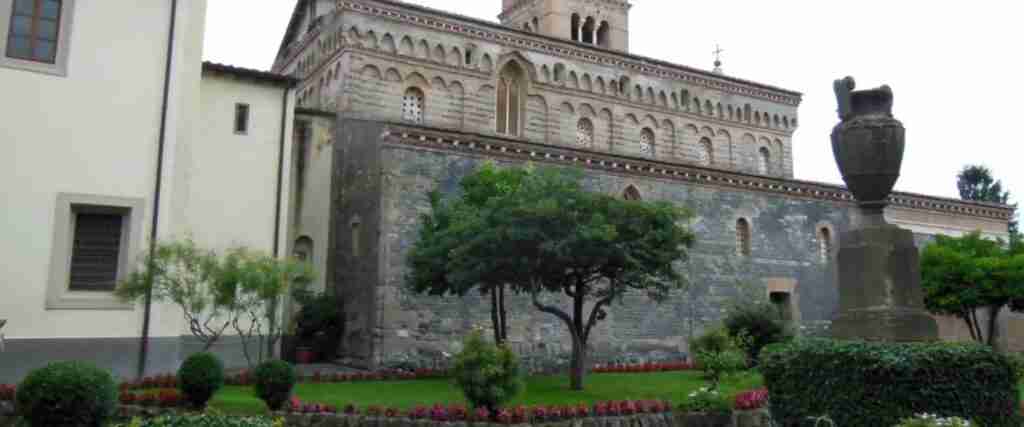
3 days
Lazio Marche Abruzzo 3-Day Discovery Tour
- ✓ Comprehensive Lazio Marche Abruzzo experience
- ✓ Expert local guides included
- ✓ All accommodation included
- ✓ Transportation provided
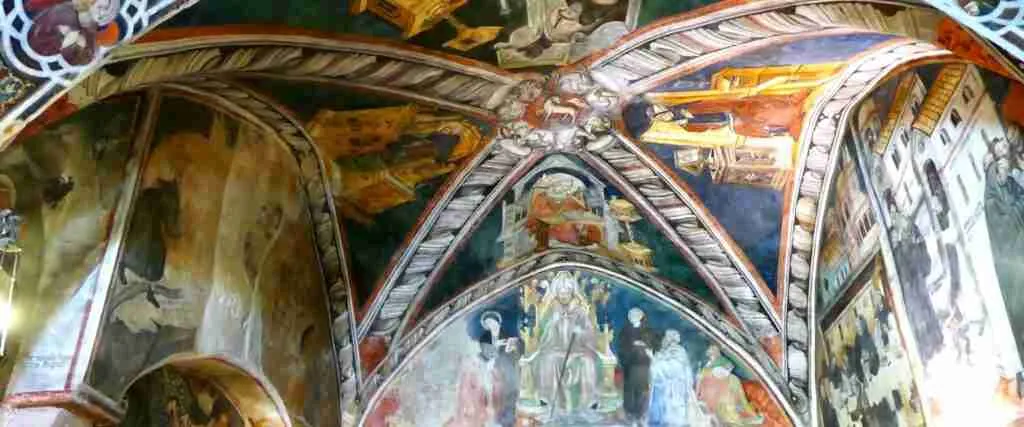
5 days
Lazio Marche Abruzzo 5-Day Highlights Experience
- ✓ Comprehensive Lazio Marche Abruzzo experience
- ✓ Expert local guides included
- ✓ All accommodation included
- ✓ Transportation provided
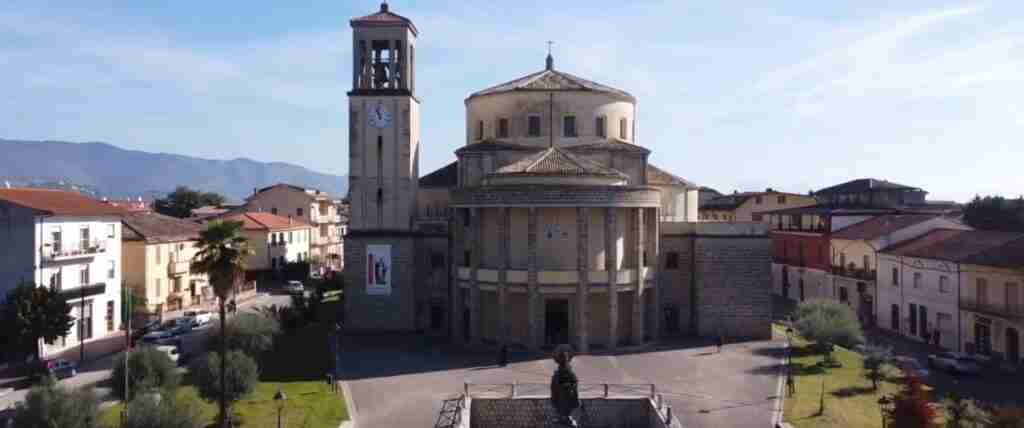
7 days
Lazio Marche Abruzzo 7-Day Cultural Journey
- ✓ Comprehensive Lazio Marche Abruzzo experience
- ✓ Expert local guides included
- ✓ All accommodation included
- ✓ Transportation provided
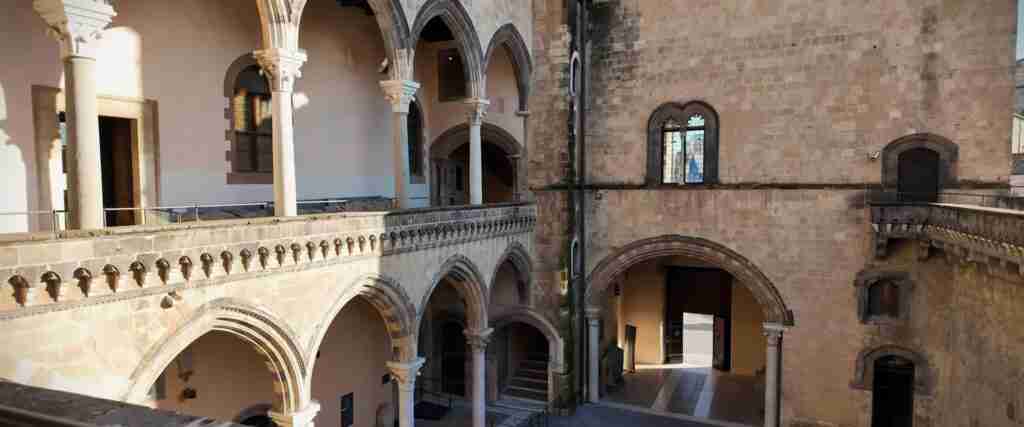
10 days
Lazio Marche Abruzzo 10-Day Complete Adventure
- ✓ Comprehensive Lazio Marche Abruzzo experience
- ✓ Expert local guides included
- ✓ All accommodation included
- ✓ Transportation provided
Multi-day tour packages powered by TourRadar. Prices and availability subject to change.
The Aniene Valley and the Making of Western Monasticism
To drive the SR411 Sublacense Road into Subiaco is to follow one of the oldest pilgrim routes in Lazio, threading through a valley that concentrates more layers of history per kilometre than almost anywhere else in central Italy. The Aniene River — a significant tributary of the Tiber — carved its gorge through the limestone of the Simbruini Mountains over millennia, and the same geology that makes the valley narrow and remote also explains why two of the most consequential figures in Western history chose it as the site of their most ambitious projects. The town that grew from the Latin Sublaceum carries this dual history in its very name.
Emperor Nero, who came to power in 54 AD, selected the point where the Aniene exits the gorge of the Simbruini to build one of the grandest private villa complexes of the Roman world. Three earthen dams across the river created three expanding artificial lakes — the Simbruina Stagna — flooding the valley floor with a series of mirror-flat reservoirs that transformed a rugged mountain retreat into an imperial pleasure ground. The Roman historian Tacitus, in his Annales, places the completed complex firmly at Subiaco by 60 AD, recording a lightning strike that fractured the imperial dining room during a dinner hosted by Nero at the villa. The hydraulic engineering required to maintain the artificial lake system was exceptional for the Apennines and gave the whole district its lasting name: the Latin phrase sub lacum, meaning “beneath the lakes,” survives in the modern town name of Subiaco.
After the collapse of imperial administration the lake dams fell into disrepair, the lakes silted and drained over centuries, and the valley returned to steep, forested wilderness. By the late fifth century it was remote enough to attract a young nobleman from Norcia named Benedict. Around 500 AD, according to Gregory the Great’s Dialogues (Book II) — the earliest biographical account, written in the late sixth century roughly forty to fifty years after Benedict’s death, and drawing on the testimony of four of his disciples — the future saint retreated to a cave above the Aniene in complete solitude for three years, sustained only by supplies lowered on a rope by a nearby hermit named Romanus. That cave, now enshrined within the Sacro Speco, became the seed from which Benedictine monasticism spread across Europe. Gregory’s account credits Benedict with subsequently founding twelve small monastic communities in the Aniene Valley — the first of them built directly on the ruins of Nero’s already-abandoned villa complex — before his eventual departure for Monte Cassino. Of those twelve, only Santa Scolastica, the monastery named for Benedict’s twin sister, survives as a functioning monastic community.
Together, Sacro Speco and Santa Scolastica represent the physical origin point of an institution that preserved classical learning through the early medieval period, established agricultural communities across northern Europe, and codified the ora et labora (“pray and work”) principle that structured medieval Western society for six centuries. That both monasteries remain freely accessible, uncrowded on weekdays, and set within a protected regional park makes the Aniene Valley one of the most genuinely rewarding day trips from Rome — not despite its distance from the established tourist circuits, but because of it.
What makes the valley compelling for the independent traveller in 2026 is the density of its layering: Nero’s imperial ruins, medieval frescoes of the highest quality, a documented hill trail, and one of the finest natural gorge landscapes in Lazio all fall within a radius of five kilometres. The key is sequencing — understanding the A24 approach, the firm midday closure window, and the trail logic that connects the archaeological and monastic sites into a coherent itinerary without wasted time.
Driving Route from Rome via A24: Reaching the Simbruini Foothills in 45 Minutes
The A24 is formally called the Autostrada dei Parchi — the Parks Motorway — a name that signals its role as the primary road connecting Rome to the protected mountain territories of central Italy. It begins at Rome’s GRA and heads northeast, and the landscape transformation it delivers is one of the most striking on any Italian motorway. Within fifteen minutes of leaving the ring road you have cleared the industrial outskirts beyond Tivoli; within thirty, the hills are genuine limestone cliffs and the valley below is densely forested. Drivers joining the A24 near Rome’s Tiburtina railway station — on the eastern side of the city — enter the motorway almost immediately and reach the Vicovaro-Mandela exit at kilometre 40 in closer to 45 minutes from that starting point, finding the Simbruini range filling the windscreen well before the toll booth.
From central Rome (the area around Roma Termini station), total journey time to Subiaco is typically 75–90 minutes: 20–30 minutes of urban driving to the A24 entry, 25–35 minutes on the motorway to the exit, and a further 25 minutes on the subsequent provincial road approach. Tolls apply from the Roma Est toll gate onward; a second, smaller toll is levied at the Vicovaro-Mandela exit barrier itself. Both toll stations accept credit cards and the Telepass electronic transponder.
At the Vicovaro-Mandela exit, bear right onto the SS5 Via Tiburtina-Valeria toward Arsoli. This is an old Roman road — a branch of the ancient Via Tiburtina — and for 9.5 kilometres it runs level through a broad valley before the SR411 junction at Arsoli. Turn left onto the SR411 Sublacense Road and the road immediately begins to climb, cutting a series of long, banked curves above the Aniene River. Fifteen kilometres of this bring you to the outskirts of Subiaco, where brown heritage signs for “Monasteri” lead along the cliffside road to both monastery entrances.
Parking Strategy and Shuttle Transfers for Cliffside Monasteries
Both monasteries maintain their own free parking areas, and this is one of the clearest logistical advantages of arriving by car. Santa Scolastica has a small car park immediately in front of its entrance gateway on the SR411 cliffside road. Sacro Speco — set 800 metres further along the road toward the upper gorge — has a lower parking terrace from which a stone staircase climbs steeply to the monastery entrance. Arriving at the Sacro Speco lower car park before 9:20 AM on a weekday virtually guarantees a space and positions you at the monastery door as it opens at 9:30 AM. Weekend mornings from late May through August can fill both areas by 10:30 AM, particularly the Sacro Speco lot, which has limited capacity given the geometry of the cliffside approach.
A practical touring sequence for drivers is to begin at Sacro Speco, visit during the morning opening session (9:30 AM to 12:15 PM), and then walk the 800 metres downhill to Santa Scolastica for the second half of the morning. This keeps the car at the higher parking point and makes the inter-monastery transit effortlessly downhill. After both visits, drivers planning to join the valley trail can return briefly to Subiaco town and walk the full circuit from there, or park at the Santa Scolastica car park and begin the trail directly — the waymarked route departs from just beyond the monastery gate.
Visitors arriving by public transport follow the COTRAL regional bus from Rome. COTRAL operates services from Ponte Mammolo — a combined bus terminus and Metro Line B station on the eastern edge of Rome — to Subiaco, and selected departures on this route continue beyond the town centre to dedicated bus stops at both monasteries. The “Subiaco | Monastero Sacro Speco” stop is approximately 80 metres from the monastery staircase; the “Subiaco | Monastero Santa Scolastica” stop is directly outside the monastery gate. Before travelling, verify the current schedule on the COTRAL website or using the Moovit journey-planning app, which shows live timetables for Lazio regional services. Not every departure continues to the monastery stops; buses that terminate at Subiaco Falcone Square leave passengers in the town centre 3 kilometres downhill from the monasteries.
From Falcone Square, the uphill road to the monasteries has no pavement and involves several hairpin bends — it is not a safe pedestrian route. Local taxis operate from the town centre and cover the 3-kilometre ascent to Sacro Speco in under ten minutes. The widely recommended combination for bus passengers is: taxi to the upper monastery, complete both visits, then walk the valley trail downhill on foot, returning to Subiaco town via the Saint Francis Bridge — a far more pleasant experience than climbing the road, and the gradient of the valley path is gentle enough for comfortable descent. Confirm the local taxi contact number with your accommodation or the Subiaco tourist information point on arrival; ride-hailing apps do not operate reliably in rural Lazio.
For those combining Subiaco with other Lazio destinations, the A24 makes efficient linking straightforward. Tivoli, with both Hadrian’s Villa and the Villa d’Este, lies at kilometre 20 from the GRA — a 20-minute motorway detour either on the outbound or return leg. The Roma Est toll gate processes payments in both directions, and the return journey to Rome from Subiaco in light evening traffic typically runs 60–75 minutes.
Seasonal Hiking Routes: Combining Nero’s Villa Ruins with Sacro Speco Trail
The circular hiking trail that links Subiaco town to both monasteries, Saint Benedict’s Pond, Nero’s Villa ruins, and the medieval Saint Francis Bridge is one of the best half-day walks in Lazio — rewarding in direct proportion to how little known it remains. The route is documented with GPS tracks on Wikiloc and Komoot, and the Simbruini Mountains Regional Park website provides additional trail cartography for the wider network.
The full loop runs approximately 11 kilometres with waypoints as follows: Santa Scolastica at 3.3 kilometres from Subiaco, Sacro Speco at 4.3 kilometres, Saint Benedict’s Pond at 7.3 kilometres, Nero’s Villa ruins at 8.4 kilometres, and the Saint Francis Bridge before re-entering Subiaco at roughly 11 kilometres total. Elevation gain is modest — the route climbs gradually from Subiaco town to Sacro Speco and then descends alongside the Aniene on the return leg. The terrain alternates between the paved cliffside road to the monasteries and a riverside path that follows the Aniene through riparian woodland, across exposed limestone outcrops, and through sections of tall broadleaf forest. Allow three to four hours for the full loop excluding monastery visiting time.
Spring (April to mid-June) is the optimal season in almost every respect. The river runs clear and fast, the hillside above Sacro Speco is intensely green and fragrant after winter rain, temperatures are comfortable for sustained walking, and the trail surface is generally firm and dry. Late April through May is the single best window: crowds are at their annual minimum on weekdays, the light quality on the monastery cliff face is excellent in the late morning, and wildflowers along the riverside path are at peak. Early autumn (mid-September through October) is the second-best window: temperatures return to comfortable walking levels after the summer heat, the broadleaf forest along the Aniene turns colour, and visitor numbers fall sharply after the Italian summer break.
Summer (July through August) requires adjustment rather than avoidance. Exposed sections of the trail above the river can reach 30–35°C by midday. Starting before 8:30 AM, carrying a minimum of two litres of water per person, and completing the exposed Sacro Speco ascent before 11:00 AM are the three practical necessities. The riverbank sections after Saint Benedict’s Pond remain shaded and considerably cooler; in summer these become the most pleasant parts of the circuit. Summer weekends concentrate visiting groups inside Sacro Speco’s narrow corridors, making a 9:30 AM arrival essential to move freely through the cave chapels before the queues build.
Winter (November through March) is quiet but carries trail risk. The Wikiloc community documentation for this circuit notes specifically that the riverside sections become slippery with leaf fall and moisture in autumn and winter, and that the exposed rock outcrops near Saint Benedict’s Pond can be frost-covered in cold spells. The combination of shortened daylight with the firm monastery midday closure limits the time available for a combined visit and trail walk; winter visitors with limited time are better served concentrating on the monasteries alone and saving the valley trail for a return visit in better conditions. Waterproof, grippy-soled footwear is essential in winter; it is useful in all other seasons.
On the return leg of the full circuit, Nero’s Villa ruins appear naturally as the trail drops back toward the Aniene from the Saint Benedict’s Pond section. The archaeological remains occupy a raised terrace above the river between the locality of Sorricella and the lower Santa Scolastica monastery road — approximately 2.8 kilometres from Sacro Speco along the valley path. The ruins are not a managed archaeological site with fencing and interpretation panels; they are instead a sequence of exposed Roman concrete vaulting and fragmentary wall fabric visible from the path, set within a canopy of riverbank oak and hornbeam that gives the site a quietly melancholy quality. Budget twenty minutes for the ruins at ground level. Next to the villa, a track descends to the Aniene’s edge, where summer water levels are low enough for swimming in shallow, rocky pools — one of the valley’s lesser-known pleasures and a practical reward for completing the longer trail variant.
Sacro Speco and Santa Scolastica in 2026: Complete Visitor Guide
The two Benedictine monasteries of the Aniene Valley stand 800 metres apart along the same cliffside road and together constitute one of the most layered sacred complexes in central Italy. They are architecturally, historically, and experientially distinct — visiting both on the same morning produces a far richer understanding of the Benedictine tradition than either would offer alone.
Sacro Speco is reached via a staircase that climbs steeply from the lower car park through a rock-cut tunnel before opening onto the monastery’s suspended entrance terrace. The complex is built on nine high arches driven into the cliff face of Mount Taleo, and the vertical relationship between the natural cave below and the medieval construction above is the first thing that strikes every visitor: this is not a building placed against a cliff but a series of chapels, corridors, and galleries worked around and into the living rock over several centuries of building campaigns. The visit moves through two main church spaces — the Upper Church and the Lower Church — a series of subsidiary chapels including the Rose Garden Chapel, and ultimately the inner sanctum of the Holy Grotto itself, the actual cave where Benedict lived as a hermit, its floor worn smooth by centuries of kneeling pilgrims.
The fresco programme is the primary artistic reason for making the journey. The Upper Church contains a pictorial cycle from the late thirteenth and early fourteenth centuries in the Umbrian-Sienese manner, with elongated figures, expressive gesturing, and a palette that ranges from earth tones to intense blues and greens. The Lower Church holds the image most frequently cited by art historians and by the monastery itself in its official communications: what is widely described as the oldest surviving portrait of St. Francis of Assisi, painted around the time of his visit to Subiaco in 1223, when Francis arrived with Cardinal Ugolino of Ostia — the future Pope Gregory IX. The portrait depicts Francis without a halo, which is generally interpreted as evidence that it was completed before his canonisation in 1228, making it an unusually direct image of the saint during his own lifetime. No flash photography is permitted anywhere in the monastery, and video recording is explicitly forbidden; still photographs without flash are generally tolerated throughout most of the interior.
Opening hours follow a split-session schedule: morning from 9:30 AM to 12:15 PM and afternoon from 3:30 PM to 5:15 PM in winter, extending to 6:15 PM in summer. The monastery is open daily. Organised groups may also arrange access outside standard hours by contacting the guided visits coordinator at +39 334.2166558 (email contact is also available on the official monastery website at monasterosanbenedettosubiaco.it). Entry is free; donations support the maintenance of the frescoes, the buildings, and the monastic community. A gift shop adjacent to the entrance sells honey and medicinal spirits produced by the monks, devotional objects, postcards, and books on Benedictine history and spirituality — the honey in particular is a distinctive and practical purchase.
Santa Scolastica offers a contrasting experience: it is larger in plan, more open to natural light, and organised around three distinct cloisters from different architectural periods. The oldest, dating from the Cosmatesque building campaigns of the twelfth and thirteenth centuries, features the geometric marble inlay work characteristic of medieval Roman craftsmanship — intricate roundels and tessellated framing produced by the Cosmati workshops of Lazio. A Baroque second cloister and a Neo-Gothic third cloister complete the sequence, effectively offering an architectural walk through eight centuries of building campaigns within a single monastic compound. The abbey’s library is one of the oldest continuously operating monastic libraries in Europe, and the church contains significant sculptural and decorative elements from multiple periods.
Santa Scolastica also holds a specific and widely documented place in Italian cultural history. In 1465, two German printers — Konrad Sweynheym and Arnold Pannartz — established the first printing press on Italian soil within the monastery, producing the earliest dated books printed in Italy. A commemorative display within the complex marks this milestone. The abbey is in this sense not only the oldest continuously inhabited monastic site at Subiaco but also the birthplace of Italian printing, a fact that tends to surprise visitors expecting exclusively spiritual heritage and no cultural history of this kind.
Opening hours at Santa Scolastica broadly mirror those of Sacro Speco; verify the current schedule on official channels or with the Subiaco tourist information office before travelling, as liturgical feast days and the rhythms of an active monastic community can affect access without advance notice. Entry is free. Both monasteries ask visitors to dress modestly (shoulders and knees covered) and to maintain the quiet appropriate to a working religious community. Guided visits in Italian, English, French, German, and Spanish can be arranged directly on arrival by speaking to the monks or the shop staff.
Nero’s Villa Ruins and the Aniene Valley Archaeological Landscape
The ruins alongside the riverside track between Subiaco and the monasteries are the remains of one of the most unusual imperial building projects of the first century AD. Emperor Nero’s Aniene Valley villa complex — referred to in Latin sources as Sublaceum — combined a private residential estate with three artificial lakes created by successive damming of the Aniene River. The Roman historian Tacitus places the completed complex at Subiaco by 60 AD in his Annales, recording a lightning strike that fractured the imperial dining room during a banquet hosted there by the emperor. The scale of the hydraulic engineering was considerable: the three dams, overflow structures, and maintenance channels required to hold the Simbruina Stagna involved earthworks driven into the gorge walls across a stretch of several kilometres.
When imperial maintenance collapsed in late antiquity the lake dams fell into disrepair, the lakes silted and drained naturally over the following centuries, and the masonry of the villa terraces — once elevated above the water surface — found itself at ground level in a valley that had returned to forested wilderness. Archaeological visibility at the site today is accordingly fragmentary rather than monumental: visitors encounter sections of Roman concrete vaulting and wall fabric along a raised bank above the Aniene, visible from the path without formal interpretation panels or perimeter fencing. The setting — ancient stonework against a limestone cliff face, framed by a canopy of riparian oak and hornbeam — has a quality that rewards those who arrive knowing what they are looking at.
The historical continuity between Nero’s Villa and Benedict’s subsequent founding activity adds a remarkable thread to the site. The Simbruini Mountains Trail organisers, drawing on local historical sources, note that Benedict established the first of his twelve Aniene Valley communities directly on the ruins of the already-abandoned Neronian complex, making the transition from imperial pleasure ground to Benedictine settlement a physically literal one: the same stone platform that had supported Nero’s dining rooms became the foundation for the first Western monastery. The ruins therefore occupy a pivot point between two of the valley’s defining narratives — the Roman imperial period and the origins of Benedictine monasticism — without the crowds or the formality of a major archaeological park.
Their position on the return leg of the Sacro Speco circular trail makes them a natural endpoint for the monastic and historical arc of the day’s itinerary. Arriving at the ruins after the monastery visits means the visual transition — from the intense, gold-grounded frescoes of Sacro Speco to the exposed concrete vaulting beside the river — carries its full chronological weight. Beyond the ruins, the valley also contains Saint Benedict’s Pond, a natural pool formed by the Aniene where the river drops over a cascade approximately 3 kilometres past Sacro Speco along the trail. The pond is small, clear, and surrounded by boulders and riparian forest; it is identified in local tradition with the Benedictine heritage of the valley and is the most photogenic natural feature on the circuit. Between the pond and the Nero’s Villa site, the path stays close to the Aniene and passes sections where summer water levels are low enough for wading — a useful detail for warm-season visitors on the longer circuit.
Planning Your Aniene Valley Visit in 2026: Crowds, Timing, and Seasonal Strategy
The Aniene Valley monasteries attract a mixed visitor population — Benedictine pilgrims walking the Way of St. Benedict, art history travellers, Roman day-trippers seeking mountain air, and hikers accessing the Simbruini Mountains Regional Park. Managing the overlap between these groups is the central planning challenge for anyone who wants the experience to feel unhurried.
The single most effective tactic is also the simplest: visit on a weekday. Saturday and Sunday bring visitor numbers to Sacro Speco that make the narrow cave corridors — some barely wide enough for two people to pass — uncomfortable in the morning session at peak season. Weekday crowds, even in July and August, are considerably lighter. Monday mornings tend to be the quietest of all: Sunday visitors from Rome have departed, and a typical Monday sees the monastery at its calmest until mid-morning.
Timing within the day is nearly as important as the choice of day. The 9:30 AM opening at Sacro Speco is the key target time in the itinerary. Arriving at the lower car park at 9:20 AM places you among the first visitors inside the cave chapels, where you can stand in front of the Francis portrait and the surrounding fresco cycles in near-silence. Groups arriving after 10:30 AM face more competition in the narrow access corridors. The midday closure at approximately 12:15 PM is firm; plan to be inside the Upper Church by 11:30 AM at the latest to allow adequate time before the closure.
Seasonal crowd profile: January and February see the fewest visitors overall but the most unpredictable road conditions on the SR411 in frost or heavy rain. March brings the first weekend walkers from Rome as temperatures recover; wildflowers appear on the south-facing slopes below the monastery in late March. April and May are the ideal months — mild, dry, uncrowded on weekdays, and photographic ally excellent (the cliff face of Mount Taleo catches soft southeast light in the morning and warm western light in the afternoon). June is an excellent month but crowding accelerates as the Italian summer season opens. July and August require the early-arrival discipline described above. September is the most underrated month in the Aniene Valley: summer visitors have departed, the air is warm and clear, and the limestone of Mount Taleo takes on a warm amber tone in autumn light that rewards photography in both morning and afternoon sessions. October adds broadleaf colour to the trail but increases the risk of slippery riverside path conditions. November through December are quiet and atmospheric; the cave interior of Sacro Speco in low winter light is particularly evocative, but the limited daylight window cuts significantly into the time available for a combined visit and walk.
Religious observances require specific attention in planning. Holy Week (the week before Easter) brings organised pilgrimage groups to Sacro Speco in significant numbers, raising visitor density while also creating an unusually powerful liturgical atmosphere — a meaningful trade-off worth considering. The feast of St. Benedict (21 March) similarly draws Benedictine pilgrims from across Italy and may affect access to specific chapels during liturgical celebrations. For groups planning visits around these dates, contacting the monastery guided visits coordinator at +39 334.2166558 in advance is advisable to confirm access arrangements.
The Simbruini Mountains Regional Park: Trails, Trailheads, and Outdoor Activities
The Simbruini Mountains Regional Park is the largest protected natural area in the Lazio region, and the municipality of Subiaco lies entirely within its boundaries. The park ranges in altitude from the valley floor at around 400 metres above sea level to the summit ridges above 2,100 metres, creating an ecological gradient from riparian broadleaf forest at lower elevations to high mountain grassland and exposed limestone ridges at the top. For day visitors arriving via the A24 to see the monasteries, the lower section of the park — the Aniene Valley corridor and the immediate slopes above Subiaco — offers the most accessible and contextually rich walking without requiring mountain experience or specialised equipment.
The park’s primary visitor infrastructure is centred near Jenne, and several trailheads serve the Subiaco area. The monastery circuit already described — Subiaco to Sacro Speco and back via the riverside loop — represents the most immediately useful entry point for visitors combining cultural and natural objectives. Slightly more demanding options include ascents through the forest above the monastery cliff, from which the topography of the former lake bed and the surrounding ridge system becomes legible from above. These higher routes are best undertaken with a downloaded GPS track from the Simbruini park website (parks.it) or a 1:25,000 topographic map of the area.
The Simbruini Mountains Trail is an annual competitive trail-running event that traverses the park, and the trail network used by competitors — which extends to cover all the major Aniene Valley villages including Subiaco, Jenne, Cervara di Roma, and Filettino — provides useful orientation for non-competitive walkers. The standard Italian trail-marking convention (red-and-white paint blazes on rocks and trees) is consistently applied on the main forest paths above the valley floor.
The Way of St. Benedict pilgrimage route passes through Subiaco on its long-distance path from Norcia to Monte Cassino. Stage 10, running from Mandela to Subiaco, covers approximately 7.4 kilometres through forested hillside along the upper Aniene River and arrives in Subiaco directly at the medieval Saint Francis Bridge. For independent travellers, this stage can be walked as a standalone linear route by leaving a car at the Mandela junction (near the A24 exit) and collecting it from Subiaco after the walk — effectively creating a point-to-point day itinerary that arrives in Subiaco ready for the monastery circuit. Detailed printed guides for the Way of St. Benedict are available from the Sacro Speco gift shop.
Beyond walking, the park supports a full range of mountain outdoor activities. Sport climbing routes are established on the limestone walls above the valley, primarily on the crags above Subiaco and Jenne. River sports — rafting, kayaking, and canoeing — operate seasonally on the Aniene when water levels are suitable; local outfitters based in Subiaco periodically offer guided sessions that provide a completely different perspective on the gorge that the monasteries overlook from above. Winter brings reliable snowfall to the higher altitudes, and the Monte Livata ski area — reached from Subiaco via the SP40a provincial road toward Cervara di Roma — maintains alpine and cross-country runs at around 1,400–1,700 metres. Monte Livata is little-known outside Lazio and represents a genuine mountain winter sports alternative to the more heavily marketed resort at Terminillo near Rieti. For visitors extending a Subiaco trip into an overnight or weekend stay, the Monte Livata area also offers chalet and agriturismo accommodation within thirty minutes of the valley floor.
Where to Eat and What to Try Near Subiaco in 2026
Subiaco is a small mountain town of around 8,000 inhabitants, and its food culture reflects the inland Lazio mountain tradition rather than the coastal or urban-Roman mainstream. Visitors expecting the seafood and pizza familiar from Rome will find instead a cuisine centred on slow-cooked meat, dried pasta with substantial mountain sauces, local cheeses, and the charcuterie tradition of the Simbruini hill farms. This is not destination gastronomy, but it is honest, generous, and well-priced against Rome equivalents.
Several small trattorie and osterie operate in and around Subiaco’s historic centre, most within walking distance of the medieval quarter and the Abbey Fortress that overlooks the town. These establishments typically serve lunch from 12:30 PM to 2:30 PM and dinner from 7:30 PM onward; midday is the key meal window for day visitors, and booking ahead on weekends is advisable given the limited number of covers at smaller family-run places. A full two-course lunch with house wine at a typical local trattoria runs approximately €15–25 per person in 2026 — check with the restaurant directly or call ahead, as prices can change seasonally. A single course (pasta plus water) is available at most places for approximately €10–15. These figures represent excellent value against Rome city equivalents for food of comparable or superior quality.
Dishes to look for include rigatoni with wild boar ragù, which draws on the game population of the Simbruini park, and hunter’s-style lamb (abbacchio alla cacciatora), a staple of the spring season across the Lazio mountains. Pecorino cheeses from local producers are the standard antipasto opening, and freshwater trout from the Aniene appears on the menus of establishments emphasising local sourcing in summer. A traditional local pasta format called frascatelle — rough, irregular fragments cooked in broth — appears on the menus of the most traditional establishments and is worth seeking out as a distinctively local preparation.
For visitors preferring a self-catered lunch on the valley trail, Subiaco’s small central market and several well-stocked local food shops provide everything for a riverside picnic: bread, local cheese, charcuterie, and fruit. Eating at Saint Benedict’s Pond — one of the most scenic spots on the circuit — combines practical economy with the finest setting available. The Sacro Speco gift shop sells honey produced by the monastic community; it makes an ideal picnic addition and a memorable memento of the visit. Availability varies with seasonal production, so purchasing on arrival rather than planning to buy on the return is advisable.
There are no commercial food or water points on the trail itself between Subiaco and the monastery road. Carry at least 1.5 litres of water per person in warm weather. Drinking-water fountains (fontanelle) are available in Subiaco town centre and near the Santa Scolastica parking area — fill bottles before beginning any section of the valley walk. The nearest cafes to the monasteries are in Subiaco town, 3 kilometres downhill; there is no bar or refreshment point on the cliffside monastery road itself.
A Complete Day Itinerary for Subiaco and the Aniene Valley in 2026
The suggested sequence below is calibrated for a weekday in the spring or early autumn shoulder season, departing Rome by car. It incorporates both monasteries, the valley walk including Nero’s Villa ruins, and a town lunch within a single day without any element feeling rushed.
7:30 AM — Depart Rome by car. Join the A24 at the GRA east interchange (or at the Tiburtina entry point). Light weekday traffic at this hour typically delivers you to the Vicovaro-Mandela exit in 30 minutes; the SR411 Sublacense Road adds 25 minutes to Subiaco. Stop for a coffee in the town centre before continuing to the monasteries — there are no cafes on the cliffside road, and a coffee before 9:30 AM sets the pace for the morning well.
9:15 AM — Arrive at Sacro Speco lower car park. The parking terrace is free and on weekday mornings in spring is typically quiet. Walk up the staircase to the monastery entrance, open at 9:30 AM. Aim to spend 60–75 minutes inside, moving through the Upper Church, the Lower Church, the Rose Garden Chapel, and the Holy Grotto. At this early hour on a weekday, the fresco galleries are largely uncrowded, and the cave interior retains its naturally cool temperature regardless of season.
11:00 AM — Walk downhill to Santa Scolastica. The 800-metre descent takes 10–12 minutes at a relaxed pace. Budget 45–60 minutes for the three cloisters, the abbey church, and a look at the printing press commemorative display. Aim to be out before 12:00 PM to leave a buffer before the midday closure.
12:15 PM — Drive back to Subiaco for lunch. Choose a trattoria in the historic centre. A two-course mountain lunch with house wine at approximately €15–25 per person, lasting around an hour, provides a natural rest before the afternoon programme.
2:00 PM — Begin the valley trail. Starting from Subiaco town, the signed path toward the monasteries follows the Aniene riverbank through woodland before climbing to Santa Scolastica (3.3 km) and Sacro Speco (4.3 km). From Sacro Speco, the trail continues past the upper gorge to Saint Benedict’s Pond (7.3 km) and descends to Nero’s Villa ruins (8.4 km) before returning to Subiaco via the Saint Francis Bridge (11 km total). Alternatively, drive to the Santa Scolastica car park and walk the shorter upper section only, reaching Saint Benedict’s Pond and the ruins as an out-and-back of roughly 8 kilometres round trip.
3:30 PM — Afternoon monastery session (optional). Both monasteries reopen at 3:30 PM. The afternoon light on the Sacro Speco cliff face is warmer and lower than the morning and rewards photography of the exterior terrace view. A second visit to the cave interior without morning queues, in the softer afternoon atmosphere, has a markedly different quality from the earlier session.
5:30 PM — Begin return to Rome. The SR411 descent and A24 homeward run are straightforward. Allow 75–90 minutes to central Rome in typical evening traffic; the A24 urban stretch approaching the GRA can slow from 5:30 PM onward. Budget approximately €30–45 per person for the day (transport toll and petrol split two ways, free monastery entry, and a two-course lunch), making this one of the most cost-effective full days out from the capital in central Italy.
Practical Tips for Visiting the Aniene Valley Monasteries in 2026
Dress code. Both monasteries are active religious communities: shoulders covered and knees covered, for all visitors of all ages. Disposable paper shawls are available at the Sacro Speco entrance for visitors who arrive underprepared in summer, but a light scarf or long shirt packed in a day bag is more comfortable and takes up negligible space. Bare feet in sandals are tolerated; bare shoulders and very short shorts are not.
Photography rules. Flash photography is explicitly prohibited throughout Sacro Speco, and video recording is forbidden inside the monastery. Still photographs without flash are generally permitted in most areas; specific chapels near the Holy Grotto may have additional restrictions indicated by on-site staff or notices. Respect for these rules is non-negotiable in a working monastery. The exterior of Sacro Speco — the view from the lower entrance terrace across the wooded Aniene Valley gorge — may be photographed freely and is among the most dramatic natural viewpoints in the Simbruini range.
Guided tours. On-site guided tours in Italian, English, French, German, and Spanish can be arranged at no charge by speaking to the monks or staff at the Sacro Speco gift shop on arrival. Groups of ten or more should book in advance at +39 334.2166558. Individual visitors may join existing guided tours informally or follow a monk accompanying another group — the narrative context provided for the fresco cycles and the cave history substantially enriches the visit beyond what a self-guided walk through the spaces delivers.
Footwear for the trail. Standard walking shoes or trainers with reasonable grip are sufficient for the lower valley circuit in dry conditions. In autumn and winter, grippy rubber soles are important; the riverside sections of the path can be genuinely slick with leaf fall and moisture. Hiking poles are useful but not essential for the full 11-kilometre loop; the ascent to Sacro Speco from the trailhead involves some steep sections on natural stone.
Connectivity and navigation. Mobile phone signal on the cliffside monastery road and sections of the valley trail is inconsistent. Download GPS tracks for the hiking circuit before leaving Subiaco town, where signal is generally reliable. The Wikiloc and Komoot apps both carry multiple community-contributed tracks for the monastery-Nero’s Villa circuit; save the track offline before beginning the walk.
Combining with nearby destinations. The medieval mountain village of Cervara di Roma, 16 kilometres above Subiaco on the SP40a provincial road toward Monte Livata, is one of the most architecturally intact medieval hill villages in Lazio and makes an excellent late-afternoon addition for visitors already on the plateau. The town of Arsoli at the A24 exit holds a small castle complex (Massimo Castle) open for guided visits on selected days; check availability locally. Tivoli, at kilometre 20 from the GRA on the A24, pairs naturally with Subiaco on an extended excursion: Hadrian’s Villa and the Villa d’Este on the outbound journey, the monasteries after, or vice versa — though the combined programme is full and requires an early departure.
Staying overnight. Subiaco has a modest range of B&Bs, agriturismo establishments, and simple hotels catering primarily to pilgrims, hikers, and weekend visitors from Rome. Sleeping locally transforms the experience: an arrival at Sacro Speco before any day-trippers from Rome is possible only for those already in the valley. The Monte Livata area above Subiaco offers chalet and agriturismo accommodation near the ski area, suited particularly to winter or autumn visits combining the monasteries with mountain walking.
Frequently Asked Questions
How long does the drive from central Rome to Subiaco take in 2026?
Allow 75 to 90 minutes from central Rome by car in typical weekday conditions: approximately 20–30 minutes of city driving to the A24 motorway entry, followed by 25–35 minutes on the A24 to the Vicovaro-Mandela exit at kilometre 40, then 25 minutes on the SS5 and SR411 provincial roads to Subiaco. Drivers starting from the eastern edge of Rome near the A24 Tiburtina entry can reach the foothills in closer to 45 minutes from that starting point. Evening traffic on the A24 urban stretch approaching the GRA can add 15–30 minutes to the return journey on busy Friday evenings and summer Sundays.
Is entry to the Subiaco monasteries free in 2026?
Yes. Both Sacro Speco and Santa Scolastica charge no admission fee. Donations to the monastic communities are welcomed at both sites — collection boxes are available throughout the visit — and directly support the upkeep of the frescoes, the historic fabric of the buildings, and monastic life. Guided tours, available in Italian, English, French, German, and Spanish, are also provided at no charge, though a donation is appropriate. The Sacro Speco gift shop sells honey, medicinal spirits, devotional objects, postcards, and books on Benedictine history and spirituality.
What are the opening hours for the Subiaco monasteries in 2026?
Sacro Speco is open daily from 9:30 AM to 12:15 PM in the morning session, and from 3:30 PM to 5:15 PM in winter or 6:15 PM in summer in the afternoon session. Santa Scolastica follows a broadly similar split schedule. Both monasteries close during the midday break without exception. Hours can be adjusted during liturgical feasts and Holy Week; verify the current schedule on the official monastery website (monasterosanbenedettosubiaco.it) or by calling +39 334.2166558 before travelling, particularly if visiting around Easter or on major Benedictine feast days.
Does COTRAL bus service reach the monastery entrances directly in 2026?
Selected COTRAL services on the Rome Ponte Mammolo–Subiaco route include stops at “Subiaco | Monastero Santa Scolastica” and “Subiaco | Monastero Sacro Speco,” placing passengers within one to two minutes’ walk of each monastery entrance. Not every scheduled departure continues to the monastery stops; timetables vary by day of week and season. Confirm the current schedule on the COTRAL website or via the Moovit app before travelling. Services terminating at Subiaco Falcone Square require a local taxi or a difficult uphill walk (3 km, no pavement, hairpin bends) to reach the monasteries from the town centre.
What is the dress code for visiting Sacro Speco in 2026?
Shoulders and knees must be covered for all visitors of all genders. Disposable shawls are available at the entrance, but bringing your own light coverup is more comfortable in warm weather. Flash photography and video recording are prohibited throughout the interior; still photography without flash is generally permitted. Inside the cave chapels, the temperature is naturally cool regardless of the season outside — a light layer is useful even in July. The monks and staff are welcoming and genuinely engaged with visitors who arrive respectfully; the dress code and photography restrictions are observed, not merely posted.
Can I visit both monasteries and complete the valley trail in one day in 2026?
Yes, comfortably on a spring or autumn weekday with an early departure from Rome. Visit Sacro Speco during the morning session (9:30–11:15 AM), walk down to Santa Scolastica (11:15 AM–12:00 PM), lunch in Subiaco town (12:30–1:30 PM), and begin the valley trail in the afternoon. The full circular loop to Saint Benedict’s Pond, Nero’s Villa ruins, and the Saint Francis Bridge takes 3–4 hours of walking time; completing it and returning to Subiaco by late afternoon is achievable. In winter, shorter daylight and the firm midday closure make the combined programme tight; concentrate on the monasteries alone and return for the trail in better conditions.
Is the hiking trail past Nero’s Villa ruins well-marked in 2026?
The monastery section (Subiaco to Sacro Speco along the cliffside road) is clearly signed with the brown “Monasteri” heritage markers. The riverside trail beyond Sacro Speco toward Saint Benedict’s Pond is documented on Wikiloc and Komoot with multiple community GPS tracks; waymarking on the ground follows the standard Italian red-and-white paint blazes on trees and rocks in the forest sections. The section between Saint Benedict’s Pond and Nero’s Villa ruins is less formally marked; downloading a GPS track in advance from one of these platforms is strongly recommended for this section. The Simbruini Mountains Regional Park website (parks.it) also publishes trail information and can be contacted for current path conditions.
When is the A24 motorway most congested for the Subiaco route in 2026?
The A24 urban stretch from the city centre to the GRA sees morning commuter congestion on weekdays between roughly 7:30 and 9:30 AM and again in the evening from 5:00 PM. The motorway itself beyond the Roma Est toll gate generally flows freely at most hours. Summer weekends see elevated volumes on the outbound A24 on Saturday mornings (9:00–11:00 AM) as Romans head toward mountain and Adriatic destinations; the return leg on Sunday evenings from 4:00 PM can be slow on the approach to the GRA. For Subiaco day trips, departing before 7:30 AM or after 9:30 AM on weekdays avoids the urban congestion; the motorway section beyond Roma Est is manageable at any time.
Are there booking requirements for visiting Sacro Speco in 2026?
Individual visitors do not need to book and may arrive freely during standard opening sessions. Organised groups of ten or more are asked to book in advance by contacting the guided visits coordinator at +39 334.2166558 or via email at the address listed on the official monastery website. Group bookings during Holy Week and major Benedictine feast days require particularly early reservation, as the cave chapels have limited capacity and other pilgrimage groups may already be scheduled. School groups and large pilgrimage parties arriving without reservation may be asked to wait or return later during busy periods.
What other attractions can I combine with a Subiaco monastery visit in 2026?
The most natural geographic pairing is with Tivoli, 20 kilometres west on the A24, where Hadrian’s Villa and the Villa d’Este terraced gardens sit within a 20-minute motorway detour from the Subiaco route. The arc from Roman emperor’s country villa (Hadrian at Tivoli, Nero at Subiaco) to Benedictine monastery works as a coherent thematic day. Closer to Subiaco, the abbey town of Arsoli at the A24 exit holds Massimo Castle, open for guided visits on selected days. The medieval mountain village of Cervara di Roma, 16 kilometres above Subiaco on the SP40a road toward Monte Livata, is one of the most architecturally intact hill villages in Lazio and is comfortably combined with a late-afternoon drive after the monasteries.