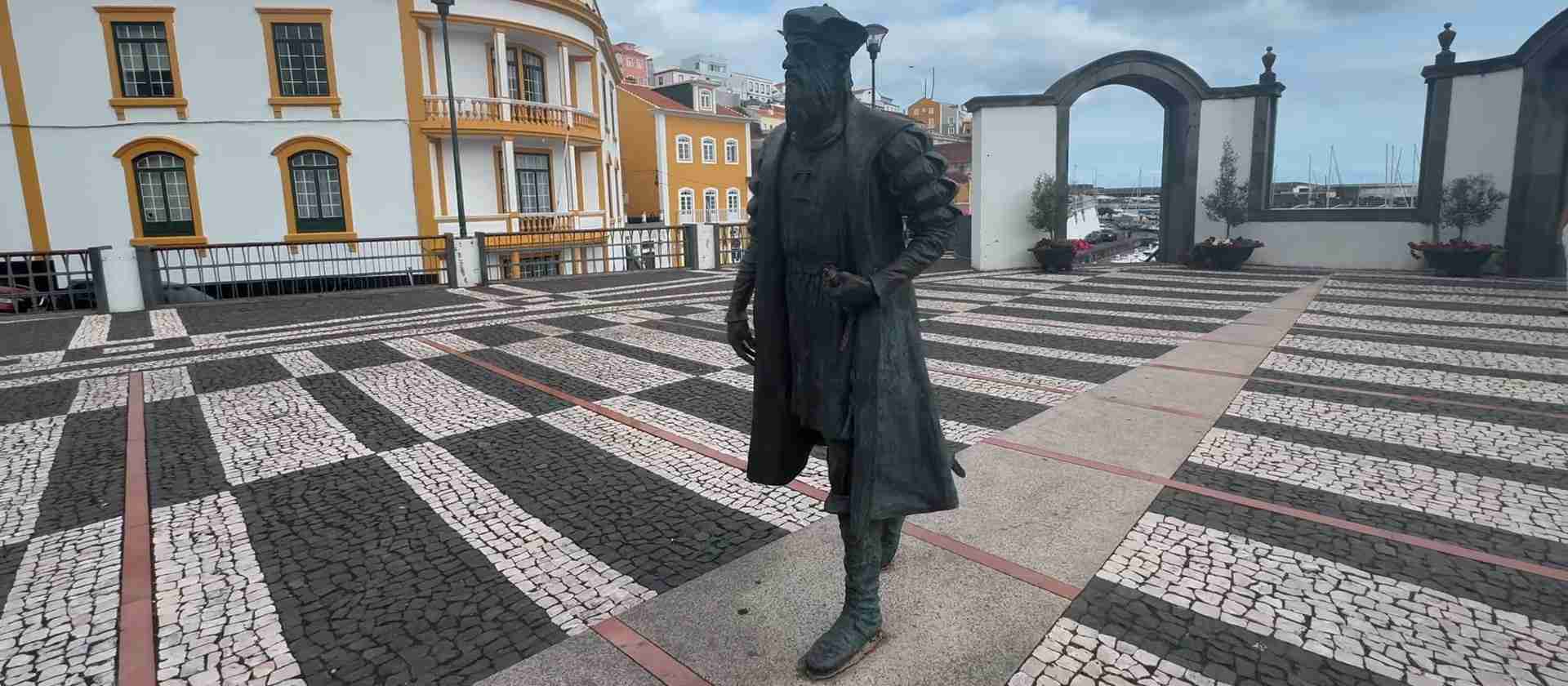
Angra do Heroísmo UNESCO Guide: Atlantic Heritage City
Angra do Heroísmo stands as Portugal’s first UNESCO World Heritage Site in the Atlantic, inscribed in 1983 for its extraordinary role as the obligatory port of call connecting Europe, Africa, and the Americas during maritime exploration. The central zone of this historic city on Terceira Island preserves Renaissance urban design, monumental fortifications, and distinctive architectural heritage that survived even a devastating earthquake, representing over four centuries of Atlantic maritime civilization in exceptional architectural and urban form.
Key Takeaways About Angra do Heroísmo UNESCO Heritage
- Maritime Crossroads Heritage: Angra served as the essential mid-Atlantic stopover for Spanish and Portuguese fleets traveling between Europe, equatorial Africa, and the Indies for four centuries, from the 15th century until steamships replaced sailing vessels in the 19th century.
- Exceptional Military Architecture: The São João Baptista fortress on Monte Brasil, begun in 1593, ranks among the largest enclosed fortifications on the planet, featuring Italian Renaissance bastioned design that protected treasure fleets and controlled Atlantic trade routes.
- Resilient Urban Fabric: Despite severe damage from the January 1980 earthquake that killed 61 people and devastated the island, Angra’s historic center was meticulously restored to preserve its Renaissance street grid, Baroque churches, manor houses, and distinctive Atlantic architectural character.
- Strategic Title of Heroism: Queen Maria II granted Angra the honorific title “do Heroísmo” (of Heroism) in 1837, recognizing the city’s role as the headquarters of liberal forces during the Portuguese Civil War and the site where Pedro IV organized the expedition that restored constitutional monarchy.
- Living Cultural Landscape: The UNESCO designation encompasses not only the historic urban center but also Monte Brasil’s entire volcanic peninsula, creating a unified landscape where military fortifications, natural park, religious monuments, and traditional neighborhoods form a continuous heritage environment.
- Accessible Heritage Experience: The central zone remains a living city where visitors walk the same cobbled streets used for five centuries, explore freely accessible fortifications, and discover exceptional museum collections in restored religious buildings, all within a compact walkable area measuring less than one square kilometer.
People Also Ask About Angra do Heroísmo UNESCO Heritage
Why Is Angra do Heroísmo a UNESCO World Heritage Site?
Angra do Heroísmo earned UNESCO World Heritage designation in 1983 as an outstanding example of a built environment created to support maritime exploration and trade. The site directly represents the maritime exchanges that connected great civilizations during the Age of Discovery, serving as the obligatory stopover for fleets crossing the Atlantic. The city’s exceptional Renaissance urban planning, military fortifications designed by Italian engineers, and architectural ensemble demonstrate how a mid-Atlantic port evolved to serve global navigation for four centuries. UNESCO recognizes both the tangible heritage—fortresses, churches, manor houses, and street patterns—and the site’s universal historic significance in enabling the connections between Europe, Africa, and the Americas that fundamentally shaped the modern world.
What Makes the Fortifications of Angra Do Heroísmo Unique?
The fortification system of Angra do Heroísmo represents exceptional military architecture spanning five centuries of defensive evolution. The São João Baptista fortress, designed by Italian military engineers Giovanni Vicenzo Casale, Tibúrcio Spannocchi, and Anton Coll, encloses the entire Monte Brasil volcanic peninsula within its three-square-kilometer perimeter, making it one of the world’s largest enclosed fortifications. The design follows Italian Renaissance bastioned principles with massive stone ramparts, strategically positioned bulwarks, and interlocking fields of fire that made the harbor virtually impregnable to attack. The São Sebastião fortress on the bay’s eastern side crosses fire with batteries on Monte Brasil, creating a comprehensive defensive network that protected both the city and treasure-laden ships anchoring in the harbor. These 400-year-old structures remain remarkably intact, with many sections open for public exploration.
How Did Angra do Heroísmo Survive the Earthquake?
The January 1, 1980 earthquake measuring 7.2 on the Moment Magnitude Scale killed 61 people across the Azores and caused catastrophic damage to Angra do Heroísmo’s historic center, collapsing buildings, destroying churches, and threatening the UNESCO-designated heritage. Portuguese authorities immediately launched an ambitious reconstruction program that prioritized authentic restoration over modern rebuilding. Craftsmen used traditional materials and construction techniques to rebuild collapsed structures, match historic façades, and preserve the original street patterns and architectural details that define Angra’s character. The restoration work extended over two decades, with skilled artisans recreating decorative elements, religious art, and distinctive features that had been lost. The 40th anniversary celebration in 2023 marked four decades since UNESCO inscription and emphasized how the reconstruction effort not only saved the heritage site but demonstrated that authentic restoration could preserve cultural identity even after catastrophic loss.
Can You Visit the Military Fortifications Freely?
The Monte Brasil nature reserve and most exterior areas of the fortifications are freely accessible to visitors throughout the year, with hiking trails, viewpoints, and ramparts open for exploration without admission fees. The interior sections of the São João Baptista fortress, which remains an active military installation, offer guided tours Wednesday through Sunday at 10:00 AM and 2:30 PM for €5 per person, departing from the Military History Branch. These tours provide access to restricted areas, historical buildings, the fortress church, and detailed explanations of the military architecture and strategic importance. The São Sebastião fortress on the eastern bay allows visitors to walk the ramparts and enjoy harbor views. Visitors should respect military signage and restricted zones while freely exploring the extensive network of trails, viewpoints, and accessible fortification walls that surround Angra’s UNESCO heritage zone.
Extended multi-day tours – 5+ days
Featured Azores Archipelago Multi-Day Tour Packages

14 days
Walking in the Azores
- ✓ Comprehensive Azores Archipelago tour
- ✓ Expert local guides included
- ✓ All accommodation arranged
- ✓ Transportation provided
7 days
Azores Whale Watching Adventure: Discover the Giants of the Atlantic
- ✓ Comprehensive Azores Archipelago tour
- ✓ Expert local guides included
- ✓ All accommodation arranged
- ✓ Transportation provided

9 days
Azores – Dolphins and the Island of São Miguel
- ✓ Booking needs min. 2 travelers
7 days
São Miguel Soft Hiking
- ✓ Comprehensive Azores Archipelago tour
- ✓ Expert local guides included
- ✓ All accommodation arranged
- ✓ Transportation provided
Multi-day tour packages powered by TourRadar. Prices and availability subject to change.
Introduction: Understanding Angra do Heroísmo’s Atlantic Heritage
Angra do Heroísmo occupies a unique position in world maritime history as the city that made transatlantic navigation viable for European powers during the Age of Discovery. Located on Terceira Island in the central Azores archipelago, approximately 1,566 kilometers from Lisbon, Angra provided the essential mid-Atlantic anchorage where sailing vessels could shelter from storms, replenish supplies, repair damage, and await favorable winds before completing the Atlantic crossing. Between the 15th and 19th centuries, every Spanish galleon returning from the Americas, every Portuguese carrack sailing from India, and every exploration voyage crossing the Atlantic either stopped at Angra or risked the voyage without resupply.
The city’s strategic importance transformed a small fishing settlement founded around 1478 into a major Atlantic port, episcopal see, and military stronghold. Álvaro Martins Homem, one of the early settlers, channeled the river flowing into the bay to power mills, creating the economic foundation for urban development. Within decades, merchants built substantial stone houses, religious orders constructed impressive convents and churches, and military engineers designed fortifications to protect the wealth accumulating in the harbor. When Pope Paul III established the Diocese of Angra in 1534 with authority over all Azorean islands, and King João III elevated the settlement to city status that same year, Angra’s position as a principal Atlantic hub was formally recognized.
The UNESCO inscription encompasses approximately one square kilometer of the historic center, extending from the bay waterfront inland to the steep hillside dominated by the Alto da Memória obelisk, and from Monte Brasil’s fortress-crowned peninsula on the west to the São Sebastião fortress on the east. This compact area contains extraordinary architectural density: more than 70 classified buildings including churches, convents, manor houses, public buildings, and military structures spanning four centuries of construction. The street grid follows Renaissance principles of orthogonal planning unusual for a Portuguese colonial city, with major streets running perpendicular from the bay inland and cross streets creating regular blocks adapted to the steep terrain.
What distinguishes Angra from other Atlantic ports is the completeness of its historic fabric. Despite catastrophic earthquake damage in 1980, the reconstruction preserved authentic materials, traditional construction methods, and architectural details that maintain the city’s 16th-century character. Visitors walking through Angra’s cobbled streets today experience the same spatial relationships, architectural proportions, and urban atmosphere that mariners encountered five centuries ago when stepping ashore after months at sea. The fortifications remain in their original positions overlooking the same anchorages, the churches display the same Baroque altarpieces and azulejo tilework, and the manor houses retain their distinctive Azorean window frames and volcanic stone construction.
The city earned its distinctive title “do Heroísmo” (of Heroism) through events that occurred more than two centuries after its golden age as an Atlantic port. During the Portuguese Liberal Wars of the 1820s and 1830s, Angra served as the headquarters of constitutionalist forces resisting absolute monarchy. The liberal government-in-exile established its seat here in 1830, and Pedro IV organized the military expedition from Angra that eventually restored constitutional government to Portugal. The Battle of Praia da Vitória in 1829, where Terceira’s defenders repelled an absolutist invasion, secured Angra’s heroic reputation and its permanent honorific title granted by Queen Maria II in 1837.
Contemporary Angra functions simultaneously as a UNESCO heritage site, the capital of Terceira Island with approximately 35,000 inhabitants, a district administrative center, and a living city where historic preservation coexists with modern island life. The population maintains traditional festivals, particularly the Sanjoaninas celebrations every June, religious processions associated with the Cult of the Holy Spirit unique to Azorean culture, and cultural practices rooted in maritime and agricultural traditions. This living heritage dimension distinguishes Angra from museum cities where historic centers exist primarily for tourism; here the UNESCO zone remains the functional heart of island society.
Historical Development: From Atlantic Anchorage to UNESCO Heritage
The Azores remained unpopulated until Portuguese navigators discovered the archipelago in the 15th century during early Atlantic exploration voyages. Terceira Island received its first settlers around 1450, with initial colonization focused on agricultural development and livestock grazing. The natural anchorage at Angra, protected by the volcanic cone that would later be fortified as Monte Brasil, offered the only secure harbor on Terceira’s south coast suitable for large sailing vessels. Settlers established a fishing village along the bay shore, channeled the river for mill power, and began exporting wheat and other agricultural products to mainland Portugal.
The city’s transformation began after Portuguese navigators established the India route around Africa in 1498 and Spanish explorers claimed the Americas starting in 1492. Returning vessels faced a critical challenge: the prevailing winds and currents that aided eastbound Atlantic crossings made the westbound return voyage extraordinarily difficult from Cape Verde or African ports. Navigators discovered that sailing north to the Azores latitude, then catching the westerly winds that blow across the mid-Atlantic, provided the optimal return route. Angra’s position at 38 degrees north latitude placed it perfectly on this route, and its protected harbor offered safe anchorage unavailable elsewhere in the central Atlantic.
Between 1500 and 1800, virtually every vessel returning to Europe from the Americas, India, or Africa stopped at Angra. Spanish treasure fleets carrying Peruvian silver and Mexican gold anchored here to wait for convoy protection. Portuguese carracks loaded with Indian spices, Chinese porcelain, and Japanese lacquerware sheltered in the bay while making repairs. Merchant vessels trading with Brazil stopped to replenish water and provisions. This constant traffic transformed Angra into a cosmopolitan entrepôt where goods, peoples, and cultures from four continents intersected. Merchants grew wealthy storing and trading exotic goods. Shipyards developed expertise in repairing ocean-going vessels. Suppliers provided everything maritime crews required for Atlantic crossings.
The concentration of wealth in Angra’s harbor attracted pirates, privateers, and enemy nations seeking to intercept treasure fleets. English corsairs attacked the bay repeatedly during the Anglo-Spanish conflicts of the late 16th century. French privateers targeted Portuguese merchantmen during European wars. Dutch raiders attempted to capture Spanish silver convoys. These threats compelled Portuguese and Spanish authorities to fortify Angra with defenses unprecedented in the Atlantic islands. Military engineers designed a comprehensive fortification system that would make the harbor virtually impregnable while allowing legitimate merchant traffic to continue safely.
The Spanish period beginning in 1580 when Philip II of Spain inherited the Portuguese crown marked the peak of Angra’s fortification. Spanish military engineers, drawing on experience gained in Italian and Low Countries wars, designed the massive São João Baptista fortress on Monte Brasil. Construction began in 1593 and continued for decades, eventually enclosing the entire volcanic peninsula within bastioned ramparts featuring the latest Renaissance military architecture. Simultaneously, engineers upgraded the São Sebastião fortress on the eastern bay and constructed supporting batteries and redoubts at strategic positions around the harbor. By 1640, when Portugal regained independence, Angra possessed fortifications rivaling any European port.
The city’s ecclesiastical role complemented its military and commercial functions. As the seat of the Diocese of Angra with jurisdiction over all Azorean islands, the city attracted religious orders who constructed substantial convents, churches, and monasteries. The Franciscans, Jesuits, and other orders built baroque complexes that dominated the urban landscape. Cathedral construction and decoration employed master craftsmen who created distinctive Azorean religious art. Wealthy merchant families commissioned private chapels and contributed to church embellishment. By the 18th century, Angra’s religious architecture represented the full flowering of Atlantic Baroque style, with gilded woodwork, azulejo tilework, and religious sculpture rivaling anything in mainland Portugal.
The decline of Angra’s golden age came gradually with changes in maritime technology and trade routes. Steam-powered vessels beginning in the mid-19th century could cross the Atlantic without depending on wind patterns or requiring mid-ocean stops for provisions. Improved navigation and ship design reduced the need for sheltered anchorages. The opening of direct steamship routes between Europe and the Americas bypassed the Azores entirely. By 1900, Angra had transformed from a bustling Atlantic hub to a provincial island capital whose economy depended on fishing, agriculture, and local administration rather than international maritime trade.
Recognition of Angra’s exceptional heritage began in the mid-20th century when Portuguese authorities classified key buildings as national monuments. The 1980 earthquake paradoxically strengthened heritage protection by demonstrating the fragility of Angra’s architectural ensemble and mobilizing resources for systematic restoration. UNESCO inscription followed quickly in 1983, making Angra one of the earliest World Heritage Sites inscribed primarily for urban heritage rather than individual monuments. The designation recognized not just specific buildings but the entire urban fabric, street patterns, fortification system, and relationship between city and natural landscape that together represent Atlantic maritime civilization’s architectural expression.
Renaissance Urban Planning and Architectural Heritage
Angra do Heroísmo displays Renaissance urban planning principles unusual in Portuguese colonial settlements, which typically grew organically along irregular medieval patterns. The city’s orthogonal street grid, with major arteries running perpendicular from the waterfront inland and cross streets creating regular rectangular blocks, reflects 16th-century ideals of rational urban design. This regularity appears most clearly in the lower town near the bay, where merchants and traders required efficient access between warehouses, docks, and commercial establishments. The grid adapts to Angra’s steep topography by following contour lines where possible and using stairways to connect different elevation levels.
The architectural vocabulary combines Portuguese mainland traditions with adaptations to Atlantic island conditions and materials. Buildings use volcanic basalt stone for foundations and structural walls, often left exposed or covered with painted lime render in the distinctive pastel colors—yellows, ochres, pinks, and blues—characteristic of Azorean architecture. Window and door frames feature white-painted volcanic stone cut in decorative patterns, creating the striking contrast with colored walls that defines Angra’s streetscape. Red terracotta roof tiles imported from mainland Portugal or locally manufactured cover the pitched roofs adapted to the Atlantic’s heavy rainfall.
Manor houses belonging to merchant families, military officers, and landowners establish the architectural scale along principal streets. These two- or three-story structures feature symmetrical façades with regularly spaced windows, ornamental stone window frames and doorways, projecting balconies with wrought-iron railings, and interior courtyards hidden behind street walls. The ground floors traditionally housed commercial spaces, workshops, or storage while upper floors contained family living quarters. Many retain 18th-century interior decorations including painted ceilings, azulejo tile panels, carved wooden doors, and period furniture that survived the earthquake or were meticulously restored afterward.
Public buildings reflect Angra’s administrative importance as a district capital and episcopal see. The Paço dos Capitães Gerais (Palace of the Captains-General), facing the bay, served as the residence and headquarters of royal governors from the 16th century and later housed regional government offices. The structure combines military defensive features with residential elegance, including thick walls, corner towers, and ceremonial chambers with period furnishings and decorative arts. The building’s strategic waterfront position allowed governors to observe ship arrivals and departures while conducting administrative functions.
The street network creates distinctive urban spaces where religious, civic, and commercial functions intersect. The Praça Velha (Old Square) formed the original civic center, surrounded by the Paço dos Capitães Gerais, commercial buildings, and access to the main harbor facilities. Rua Direita, the principal commercial street, connects the waterfront to inland neighborhoods, lined with shops, workshops, and merchant houses. The Sé (Cathedral) occupies the spiritual center, with its plaza serving as a gathering space for religious processions and civic events. These spaces maintain their original functions today, with the same buildings housing modern shops, restaurants, offices, and residences adapted to contemporary needs while preserving historic character.
Vernacular residential architecture in secondary streets and hillside neighborhoods demonstrates traditional Azorean building practices. Single-story or two-story houses feature thick volcanic stone walls, small windows to protect against Atlantic storms, interior courtyards for light and ventilation, and direct street access without setbacks. Many houses incorporate agricultural spaces, wine cellars, or workshops reflecting the mixed urban-rural economy that sustained Angra’s population. The dense arrangement of these structures creates intimate streetscapes where buildings define outdoor space and create sheltered passages protected from wind and weather.
Post-earthquake reconstruction maintained architectural authenticity while incorporating modern structural reinforcements and building systems. Engineers strengthened walls with discrete reinforcing elements, improved foundations without altering exterior appearances, and installed updated electrical, plumbing, and climate control systems within historic structures. Traditional lime renders, volcanic stone details, wooden windows and doors, and terracotta roofing were recreated using original techniques and materials. The result preserves Angra’s architectural integrity while ensuring structures meet contemporary safety standards and provide comfortable modern living conditions.
Military Fortifications: Monte Brasil and Coastal Defenses
The São João Baptista fortress on Monte Brasil represents the masterpiece of Angra’s fortification system and one of the most significant examples of Renaissance military architecture in the Portuguese world. The fortress encloses the entire Monte Brasil peninsula within a three-square-kilometer perimeter featuring Italian-style bastioned trace designed to maximize artillery coverage while minimizing exposure to enemy fire. Construction began in 1593 under Spanish rule, with Italian military engineers Giovanni Vicenzo Casale and Tibúrcio Spannocchi developing the strategic plan. Anton Coll, who supervised construction until his death in 1618, adapted the design to Monte Brasil’s volcanic topography and ensured the fortress could function as both a defensive installation and a self-contained military community.
The fortress design follows Italian Renaissance principles of bastion fortification, featuring angular projecting bastions positioned to allow flanking fire along curtain walls and eliminate dead zones where attackers could advance protected from defensive artillery. The main entrance through the Porta Magistral (Magistral Gate) displays Spanish royal arms replaced after Portuguese independence in 1640 with Portuguese symbols and a dedication to the Virgin of the Immaculate Conception. Five major bastions—Santo António, Santa Catarina, São Pedro, São Paulo, and São Carlos—project at regular intervals around the perimeter, connected by massive stone curtain walls averaging five meters thick and ten meters high.
Inside the enclosed perimeter, the fortress contained a complete military community with residential quarters, administrative buildings, churches, warehouses, armories, workshops, hospitals, and agricultural plots where soldiers and their families produced food for self-sufficiency during siege conditions. At its peak, approximately 500 soldiers and 300 civilian residents lived within the fortress walls. The Brotherhood of the Holy Spirit established one of the wealthiest religious institutions in Angra within the fortress. Soldiers maintained subsistence farming on Monte Brasil’s slopes, growing grain, vegetables, and grapes within sight of their defensive positions.
The São João Baptista Church inside the fortress exemplifies military religious architecture adapted to fortification requirements. The baroque interior contrasts with the fortress’s martial exterior, featuring gilded altarpieces, religious paintings, and decorative tilework that provided spiritual comfort to the military garrison. The chapel of Santo António da Grota, built into a natural cave within the fortress perimeter, served as a pilgrimage site and remains accessible to visitors today. These religious spaces emphasized the spiritual dimension of military service and reinforced community bonds among the garrison.
Strategic positioning gave the São João Baptista fortress complete control over western approaches to Angra Bay. Artillery batteries positioned on bastions overlooking the water could strike any vessel attempting to enter or leave the harbor. The fortress communicated through signal systems with the São Sebastião fortress on the bay’s eastern side, creating interlocking fields of fire that made hostile naval approach virtually impossible. Additional batteries and redoubts positioned along Monte Brasil’s perimeter provided defense against land attack, though the peninsula’s natural isolation made assault by ground forces extremely difficult.
The São Sebastião fortress on the eastern bay served as the primary defensive installation before Monte Brasil’s fortification, with construction beginning in the early 16th century. The fortress occupies a strategic position where a rocky promontory projects into the bay, allowing artillery to control the main anchorage and channel approaches. The triangular bastioned design follows early Renaissance principles, with a perfectly developed system of bulwarks creating overlapping fire zones. During the 1641-1642 Portuguese restoration siege, São Sebastião prevented Spanish ships from resupplying the Monte Brasil garrison, ultimately forcing the fortress’s surrender to Portuguese forces.
Supporting fortifications extended around the bay perimeter and inland approaches. The Forte de São Benedito guarded Monte Brasil’s seaward flank. The Castelo dos Moinhos, Angra’s earliest fortification built on the hill above the city, provided inland defense before more sophisticated bastioned works were constructed. These installations formed a comprehensive defensive network that evolved over five centuries as artillery technology advanced and military threats changed. Many smaller batteries and redoubts have been incorporated into later development or survive only as archaeological remains, but their strategic positions remain evident in Angra’s urban topography.
Modern preservation efforts balance heritage conservation with contemporary military requirements and public access. The Portuguese military maintains an active installation within São João Baptista, restricting certain areas while opening others for guided tours that explain the fortress’s historical significance and military architecture. The Monte Brasil nature reserve encompasses most of the peninsula, with hiking trails providing access to ramparts, viewpoints, and auxiliary fortifications. Educational programs interpret the fortification system’s role in Atlantic history while encouraging visitors to appreciate the engineering achievement these structures represent.
Religious Architecture and Baroque Heritage
The Sé Cathedral of Angra do Heroísmo dominates the city’s religious landscape as the largest church in the Azores archipelago and the seat of the Diocese that once held jurisdiction over all nine islands. Construction began after Pope Paul III elevated Angra to episcopal see in 1534, with the first architect Luís Gonçalves directing work that required over 40 years to complete. The cathedral’s architectural style represents post-Manueline transition toward Renaissance principles, featuring three naves, two bell towers, and multiple chapels dedicated to various saints and devotions.
The cathedral interior displays exceptional religious art and decorative elements accumulated over five centuries of episcopal patronage. The silver-plated main altar, imported woodwork carved from Brazilian timber, and numerous paintings by Portuguese and international artists create a sumptuous environment for liturgical celebrations. Multiple side chapels serve specific devotional purposes: the Chapel of Saint Peter in Chains, Chapel of Our Lady of the Rosary, Chapel of Saint Stephen, Chapel of the Holy Sacrament, and Chapel of Our Lady of Lourdes each contain distinctive altarpieces, religious sculpture, and decorative programs. Tombs of prominent Terceira residents, including Pero Anes do Canto who administered the island’s fortifications in the 16th century, mark the cathedral’s role as a memorial space for local elite families.
The Museu de Arte Sacra (Museum of Sacred Art) occupies an annex building adjacent to the cathedral, displaying exceptional religious treasures accumulated by the diocese over five centuries. The collection includes azulejo tile panels depicting religious scenes, ecclesiastical furniture and liturgical vessels, baroque lamps and chandeliers, religious paintings and sculptures, and vestments embroidered with gold thread. A Chinese Ming Dynasty vase demonstrates Angra’s position on trade routes connecting Europe and Asia, as wealthy merchants and ship captains donated exotic treasures to the cathedral. Visitors explore these collections during cathedral visiting hours Monday through Saturday from 10 AM to 5 PM, and Sunday from 9 AM to 1 PM except during Mass celebrations.
The Igreja da Misericórdia (Church of Mercy) presents one of Angra’s most photographed façades, painted in distinctive robin’s-egg blue with white trim that creates striking contrast against the surrounding buildings. The church belongs to the Santa Casa da Misericórdia, a charitable brotherhood established in the 16th century to provide social services, medical care, and assistance to the poor. The baroque interior features gilded altarpieces, religious paintings, and azulejo panels that survived the 1980 earthquake with relatively minor damage. The church remains an active worship space and cultural landmark easily accessible from the harbor area.
The Convento de São Francisco (Convent of Saint Francis) houses the Angra do Heroísmo Museum in a magnificently preserved 17th-century Franciscan complex. The original church of Nossa Senhora da Guia attached to the convent building exemplifies baroque religious architecture, with an ornate interior featuring carved and gilded woodwork, painted ceilings, azulejo tilework, and religious sculptures. The convent’s cloister, chapter house, and monastic cells provide architectural context for understanding religious life in Atlantic colonial society. Museum collections displayed throughout the complex include historical artifacts, maritime instruments, military equipment, agricultural implements, decorative arts, and contemporary art exhibitions that interpret Terceira’s cultural heritage.
The Church of Nossa Senhora do Monte Carmo (Our Lady of Mount Carmel) stands adjacent to the Paço dos Capitães Gerais, connected to government functions through its role as the chapel for royal governors and later regional administrators. The church interior contains exceptional baroque decoration, including carved altarpieces, religious paintings, and decorative elements that justify the modest €3 admission fee for visitors. The building’s strategic position near the waterfront made it accessible to ship crews seeking religious services before Atlantic voyages.
The Espírito Santo (Holy Spirit) chapels scattered throughout Angra’s neighborhoods represent a distinctive Azorean religious tradition unique to the archipelago. These small chapels, called “Impérios,” serve as centers for Holy Spirit celebrations that dominate Azorean religious and social life. The buildings feature bright colors—reds, yellows, blues—and simple architectural forms housing religious images, ceremonial crowns, and objects used in annual Holy Spirit festivities. Each neighborhood maintains its own império with community fundraising and volunteer work, creating a decentralized religious landscape that complements the official church hierarchy.
Religious processions remain important elements of Angra’s living heritage, with major feast days marked by elaborate street processions carrying religious images, accompanied by bands, religious brotherhoods in ceremonial dress, and community participation. The Sanjoaninas festival every June combines religious celebrations honoring Saint John the Baptist with secular festivities including bullfighting, musical performances, and community gatherings. These living traditions demonstrate how religious architecture serves not merely as historic monument but as functional space for continuing cultural practices rooted in centuries of island life.
Maritime Heritage and Atlantic Trade Networks
Angra’s maritime heritage extends beyond visible architectural monuments to encompass the intangible systems of knowledge, trade networks, and cultural exchanges that made the city essential to Atlantic navigation. Portuguese navigators accumulated practical knowledge about Atlantic winds, currents, and seasonal patterns through centuries of experience, knowledge systematically recorded in navigation manuals and transmitted through maritime communities. Angra served as a critical information exchange point where navigators shared observations about conditions encountered on different routes, warned about hazards, and advised on optimal sailing strategies for various seasons and destinations.
The city’s port facilities evolved to serve specialized maritime functions required by ocean-going vessels. Careening beaches allowed crews to beach ships at high tide, then work on hull maintenance during low water when the vessel rested on its side. Shipyards constructed and repaired vessels using timber imported from Brazil and Portugal, fasteners and fittings manufactured by local smiths, and cordage produced from imported hemp. Sail makers cut and stitched canvas for new sails or repaired damaged ones. Cooperages provided barrels for water, wine, salted meat, and ship’s stores. These supporting industries created an economic ecosystem dependent on maritime traffic.
Provisioning services supplied the enormous quantities of food, water, and materials required for Atlantic crossings. Water collection systems channeled springs from Monte Brasil and surrounding hills into cisterns near the waterfront where ships’ boats could fill barrels. Bakers produced ship’s biscuit, the hard bread that remained edible for months at sea. Salted meat, dried fish, wine, olive oil, cheese, and other provisions accumulated in warehouses awaiting ship arrivals. Fresh produce from Terceira’s agricultural interior provided vegetables and fruit to combat scurvy and improve crew health before long voyages.
Trade networks connecting Angra to ports worldwide made the city an entrepôt where goods from four continents intersected. Spanish American silver arrived on treasure fleets sailing from Havana and Cartagena. Brazilian sugar, tobacco, and gold came on Portuguese merchantmen from Bahia and Rio de Janeiro. Indian textiles, spices, and precious stones reached Angra on carracks from Goa. Chinese porcelain, Japanese lacquerware, and Asian luxuries transshipped through Lisbon arrived for European markets. African ivory, gold dust, and enslaved peoples passed through as Portuguese ships returned from Angola and Guinea. This concentration of global trade made Angra one of the most cosmopolitan cities in the Atlantic world despite its relatively small size.
Maritime insurance and financial services developed to manage the risks inherent in long-distance ocean trade. Angra merchants provided credit to ship captains requiring repairs or provisions, accepting cargo or bills of exchange as security. Investors formed partnerships to share risks and profits from trading voyages. Insurance contracts protected ship owners and cargo merchants against total loss from shipwreck, piracy, or capture. The city’s merchant community included Portuguese, Spanish, Italian, Flemish, and other European traders who brought commercial expertise and international connections.
The city’s role as a mail center facilitated communication across the Atlantic world. Ships carried official correspondence between colonial governments and European metropoles, personal letters between families separated by ocean crossings, and commercial correspondence essential to managing long-distance trade. Angra’s position meant ships stopping here could send or receive mail, creating a natural sorting point where communications accumulated awaiting vessels bound for various destinations. This information flow made Angra essential to colonial administration and commercial coordination.
Shipwreck salvage and rescue operations responded to the dangers of Atlantic navigation. The anchorage at Angra, while better protected than open ocean, remained vulnerable to violent storms that drove vessels onto rocks or caused anchor cables to part. Local pilots guided incoming ships through safe channels into the harbor. Rescue boats responded when vessels foundered near shore. Salvage operations recovered cargo from wrecks, either returning it to owners or claiming salvage rights according to maritime law. The frequency of shipwrecks in Azorean waters created specialized salvage expertise and legal frameworks for managing recovered property.
Declined maritime importance in the 19th and 20th centuries transformed but did not eliminate Angra’s relationship with the sea. The harbor continued serving fishing fleets, inter-island transport, and recreational sailing. Modern cruise ships calling at Angra bring passengers seeking Atlantic heritage rather than essential resupply. The city’s maritime museums, fortifications overlooking historic anchorages, and preserved maritime artifacts allow contemporary visitors to understand the systems that once made this Atlantic port essential to global navigation and trade.
Cultural Significance and Living Heritage
Angra do Heroísmo maintains distinctive cultural practices that developed during centuries as an Atlantic port and continue in contemporary island life. The Cult of the Holy Spirit, a religious devotion unique to the Azores, dominates social and religious life with celebrations that blend Catholic tradition with local customs possibly originating in medieval Franciscan spirituality. Each neighborhood maintains an império (Holy Spirit chapel) that serves as the focal point for annual festivities involving communal meals, ceremonial distribution of bread and soup to the poor, religious processions carrying crowns symbolizing the Holy Spirit, and community gatherings that reinforce social bonds.
The Sanjoaninas festival every June represents Terceira’s largest annual celebration, combining religious devotion to Saint John the Baptist with secular entertainment including bullfighting, musical concerts, street parties, and cultural exhibitions. The festivities last several weeks, transforming Angra’s streets into continuous celebration spaces where residents and visitors participate in traditional dances, consume regional foods, and engage in social interactions that maintain community identity. The festival demonstrates how historic city spaces continue functioning as gathering places for cultural expression rooted in centuries of tradition.
Bullfighting in the Azorean style differs significantly from Spanish or mainland Portuguese traditions, featuring bulls released into streets or enclosed plazas where participants attempt to control the animal using ropes rather than killing it. This distinctive practice reflects agricultural traditions where bulls played essential roles in farming and represented valuable property requiring preservation. The terceirense style emphasizes skill, courage, and community participation rather than spectacle, with events occurring in village squares and city streets throughout the summer months. Temporary wooden barriers convert public spaces into bullfighting arenas, then remove them afterward to restore normal urban functions.
Regional cuisine reflects Angra’s maritime heritage and agricultural traditions, featuring seafood caught in Atlantic waters, beef from Azorean cattle breeds, and vegetables grown in Terceira’s fertile volcanic soils. Traditional dishes include alcatra, a pot roast cooked slowly with wine and spices in clay pots; seafood rice and stews using fresh fish, limpets, and barnacles harvested from coastal rocks; and queijadas, sweet pastries made with local cheese and cinnamon. Restaurants throughout Angra’s historic center serve these traditional foods, maintaining culinary practices that connect contemporary residents to historical food ways.
Handicraft traditions survive in workshops producing embroidery, lace, pottery, and decorative arts using techniques passed through generations. Azorean embroidery features distinctive floral patterns and decorative motifs adapted from mainland Portuguese traditions but developed into recognizable regional styles. Lacemakers create intricate patterns using traditional bobbins and threads. Potters produce functional ceramics and decorative pieces using local clays. These crafts serve both practical functions in island life and generate income from visitors seeking authentic handmade products representing Azorean cultural heritage.
Religious brotherhoods, called irmandades, organize charitable activities, maintain churches and chapels, coordinate religious festivals, and provide social support networks that parallel official church structures. These voluntary associations, some dating to the 16th century, demonstrate continuity of community organization across centuries of social change. Brotherhood members participate in religious processions wearing traditional ceremonial dress, manage significant financial resources accumulated through donations and investments, and make decisions about religious celebrations that shape community cultural life.
Language preservation efforts maintain Azorean Portuguese dialects that developed in isolation from mainland evolution, featuring distinctive vocabulary, pronunciation, and grammatical structures reflecting the islands’ settlement history and cultural contacts. Terceirense dialect includes archaic Portuguese terms no longer used on the mainland, borrowings from maritime vocabulary, and expressions unique to island life. Education programs and cultural organizations work to document and preserve these linguistic features that represent intangible cultural heritage distinct from standardized Portuguese.
Musical traditions combine Portuguese folk music with influences from Atlantic maritime culture and African rhythms introduced through colonial contact. Traditional songs accompany festivals, religious celebrations, and social gatherings, performed with distinctive instruments and vocal styles. Contemporary musical groups reinterpret traditional forms, creating evolving cultural expressions that maintain connections to historical practices while adapting to modern tastes and influences.
The relationship between UNESCO heritage designation and living community creates ongoing negotiation between preservation requirements and contemporary needs. Residents living in classified buildings must balance maintaining historical authenticity with modern comfort and functionality. Business owners adapt historic structures to contemporary commercial uses while preserving architectural character. City administrators enforce heritage protection regulations while providing services required by 21st-century urban life. This dynamic process demonstrates that heritage preservation succeeds not by freezing cities in historical periods but by enabling continuous adaptation that respects essential character while accommodating change.
Museums and Cultural Institutions
The Museu de Angra do Heroísmo occupies the magnificently restored Convento de São Francisco, a 17th-century Franciscan monastery that survived the 1980 earthquake with enough structural integrity to support major restoration work. The museum functions as an encyclopedic institution covering Terceira’s history, natural environment, artistic production, and cultural development from initial settlement through contemporary periods. Collections span military history, maritime instruments, agricultural equipment, decorative arts, religious artifacts, natural history specimens, and contemporary art exhibitions that interpret Azorean cultural identity.
The museum’s Military History Branch, housed in separate buildings near São João Baptista fortress, focuses specifically on Terceira’s military heritage and the fortification systems that protected Angra. Exhibits include weaponry from various periods, military uniforms and equipment, fortress architectural plans and models, and documentation of military campaigns and defensive strategies. Guided tours of the São João Baptista fortress depart from this branch Wednesday through Sunday at 10:00 AM and 2:30 PM, providing the only authorized access to restricted fortress areas and detailed interpretation of the military architecture.
The attached Church of Nossa Senhora da Guia represents the museum’s architectural highlight, preserving exceptional baroque religious art within an active worship space. The church interior features carved and gilded altarpieces, painted ceilings depicting religious scenes, azulejo tilework covering lower walls, and religious sculptures that demonstrate the artistic achievement of Azorean baroque style. The combination of museum functions and religious architecture creates an integrated cultural experience where visitors understand religious art within its original architectural and devotional context.
Museum admission remains remarkably affordable at €2 for general entry, €1 for visitors aged 15-25 and over 65, and free admission for children under 14. These accessible prices reflect cultural policy prioritizing public access over revenue generation, making heritage engagement available to all economic levels. Operating hours run Tuesday through Sunday from 10:00 AM to 5:30 PM, with Monday closures standard for Portuguese museums. The museum provides English translations for major exhibits, wheelchair accessibility through ramps and elevators, and cultural programming including temporary exhibitions, lectures, and educational activities.
The Angra do Heroísmo Interpretive Center, inaugurated in December 2023 as part of the 40th anniversary celebrations of UNESCO inscription, occupies a purpose-built structure on the ruins of the Casa dos Pamplona destroyed in the 1980 earthquake. The center presents six distinct exhibitions: original photographs and historical perspectives of the city, documentation of the 1980 earthquake and reconstruction efforts, historic maps and charts of Angra, displays on Azorean flora and traditional cedar wood carving, commemorations of the 40th World Heritage anniversary, and interpretive materials about the UNESCO designation and its significance.
The center’s architecture by Álvaro Siza, one of Portugal’s most distinguished architects, demonstrates how contemporary design can complement historic environments without mimicking historical styles. The building respects the scale and materials of surrounding structures while expressing clearly modern construction and spatial concepts. The €2.8 million investment in the facility, with 62% European Union funding and regional government contribution covering the remainder, demonstrates institutional commitment to heritage interpretation and public education.
The Museu de Arte Sacra (Museum of Sacred Art) in the cathedral complex displays religious treasures accumulated by the Diocese of Angra over five centuries of episcopal authority. The collection includes exceptional examples of religious goldwork and silver, ecclesiastical vestments embroidered with precious metals, baroque wooden sculptures, religious paintings by Portuguese and international artists, and ceremonial objects used in liturgical celebrations. The museum provides context for understanding religious art’s role in colonial society and the wealth concentrated in Angra through maritime trade and church patronage.
Smaller specialized museums throughout Angra and Terceira interpret specific aspects of island culture and history. The Museu do Vinho (Wine Museum) in Biscoitos explains Terceira’s distinctive viticulture using volcanic rock enclosures to protect vines from Atlantic winds. The Bullfighting Museum in Posto Santo documents the Azorean bullfighting tradition and its evolution. Various ethnographic centers in rural parishes preserve agricultural implements, domestic tools, and documentation of traditional rural life.
Natural Environment: Monte Brasil Nature Reserve
Monte Brasil represents a distinctive volcanic landform created approximately 20,000 years ago when submarine eruptions built a tuff cone on Terceira’s southern coast. The extinct volcano rises 205 meters above sea level, with steep slopes descending to the Atlantic on three sides and a narrow isthmus connecting the peninsula to Angra’s urban center. The crater interior contains four peaks—Pico das Cruzinhas, Pico do Facho, Pico da Quebrada, and Pico do Zimbreiro—surrounding a central depression that once held a volcanic lake before drainage for military purposes.
The 1.4-square-kilometer nature reserve encompassing Monte Brasil protects exceptionally diverse ecosystems within walking distance of Angra’s city center. Laurel forest fragments represent remnants of the subtropical vegetation that once covered the Azores before human settlement and agricultural clearing. Introduced tree species including Japanese cedar, eucalyptus, and maritime pine create mixed forests that provide habitat for endemic bird species. Coastal cliffs support specialized plant communities adapted to salt spray and intense winds. These varied habitats within a compact area make Monte Brasil valuable for environmental education and ecological research.
Endemic Azorean bird species inhabit Monte Brasil’s forests and coastlines, including the Azores bullfinch, wood pigeon, and various seabirds that nest on coastal cliffs. The peninsula serves as an important stopover for migratory birds crossing the Atlantic, with birdwatchers recording numerous species passing through during spring and fall migrations. The combination of forest cover, open grasslands, and coastal habitats within a small area creates exceptional biodiversity that supports research on island biogeography and species evolution.
The hiking trail network developed by Terceira’s environmental authorities provides access to Monte Brasil’s natural and historical features while protecting sensitive ecosystems. The PRC04 TER trail, Angra’s designated pedestrian circuit, circumnavigates the peninsula covering approximately ten kilometers through varied landscapes. Trail segments pass through laurel forest, climb to summit viewpoints offering panoramic vistas of Angra and the Atlantic, descend to coastal military ruins, and traverse historical fortification zones. Interpretive signage explains natural features, identifies plant species, and describes the geological processes that created Monte Brasil’s distinctive landform.
Viewpoints positioned at strategic locations around Monte Brasil provide spectacular perspectives on Angra’s UNESCO heritage zone and surrounding landscapes. The Alto da Memória, marked by a prominent obelisk commemorating Pedro IV’s landing during the Liberal Wars, offers the classic panoramic view of Angra’s historic center spreading from the bay up the hillside. The Pico das Cruzinhas summit provides 360-degree vistas encompassing Angra, the Atlantic Ocean, Terceira’s interior, and neighboring islands visible on clear days. Coastal viewpoints reveal the defensive positions that made Monte Brasil’s fortifications so formidable, with sheer cliffs dropping directly to the Atlantic on three sides.
The military installations occupy significant portions of Monte Brasil, creating restricted zones where environmental protection intersects with active military functions. The Portuguese Army maintains barracks, training facilities, and operational areas within the São João Baptista fortress and surrounding grounds. Public access respects military requirements while allowing civilians to explore most of the nature reserve through designated trails and viewpoints. This coexistence of military functions, nature conservation, and public recreation demonstrates integrated land management balancing multiple uses within a protected landscape.
Recreational activities popular on Monte Brasil include hiking, trail running, mountain biking on designated paths, birdwatching, photography, and picnicking at designated sites. The Relvão Municipal Park adjacent to the fortress entrance provides formal recreation spaces with playgrounds, sports courts, walking paths, and picnic facilities serving both residents and visitors. The park’s strategic location makes it accessible from Angra’s city center while providing immediate access to Monte Brasil’s trail network.
Climate conditions on Monte Brasil reflect the Azores’ Atlantic maritime environment, with moderate temperatures year-round, frequent rainfall, and strong winds particularly during winter months. Summer temperatures range from 20-25°C (68-77°F), while winter temperatures typically stay between 14-18°C (57-64°F). The peninsula’s exposed position creates microclimates where windward slopes receive heavier rainfall and stronger winds than sheltered valleys and leeward areas. Visitors should prepare for changeable weather conditions and dress in layers with rain protection regardless of season.
Visiting Angra do Heroísmo: Practical Information
Terceira Island’s Lajes Airport receives direct flights from Lisbon, Porto, and other Azorean islands through SATA Air Açores, with connections available to mainland Portugal and European destinations. Seasonal charter flights from North America and Europe operate during summer months. The airport lies approximately 20 kilometers from Angra, with taxi transfers costing around €20 and taking 25-30 minutes depending on traffic. Rental car agencies operate at the airport, though visitors planning to stay primarily within Angra’s UNESCO zone may prefer not to drive given limited parking and the city’s walkable scale.
Inter-island ferry services connect Terceira with neighboring Azorean islands, though schedules vary seasonally and weather conditions can disrupt service. The ferry terminal in Praia da Vitória, Terceira’s second city approximately 20 kilometers from Angra, serves routes to São Jorge, Pico, and Graciosa. Visitors arriving by ferry typically continue to Angra by bus or taxi. Cruise ships calling at Angra anchor in the bay, with tender boats transporting passengers to the waterfront where they can walk directly into the historic center.
Accommodation options in Angra range from budget guesthouses to boutique hotels occupying historic buildings within the UNESCO zone. Hotels like Hotel Cruzeiro offer mid-range comfort with continental breakfast and modern amenities while maintaining traditional architectural character. The Hotel Zenite provides budget-friendly accommodation near the cathedral. Vacation rentals in restored manor houses and traditional residences allow visitors to experience living in historic buildings while enjoying private accommodations. Booking in advance becomes essential during the June Sanjoaninas festival when accommodation demand peaks and prices increase significantly.
Walking remains the optimal way to explore Angra’s compact historic center, with most significant sites located within 15-20 minutes’ walk of the waterfront. The city’s steep topography requires good walking shoes and reasonable fitness, though visitors can minimize uphill effort by taking taxis to elevated viewpoints like Alto da Memória, then walking downhill through the city to the harbor. The distinctive volcanic stone sidewalks, while visually striking, become slippery when wet, requiring careful footing during rain. Guided walking tours departing from the tourist office provide historical context and access to buildings normally closed to individual visitors.
Public transportation within Angra remains limited, with local bus routes serving primarily residential neighborhoods and connections to other Terceira towns. Taxis provide reasonable rates for specific destinations like Monte Brasil’s entrance or the Interpretive Center. Bicycle rental offers an alternative for exploring beyond the immediate city center, though Angra’s hills make cycling challenging for those unaccustomed to steep grades. E-bike tours provide assisted cycling that makes Monte Brasil and surrounding areas accessible without extreme physical exertion.
The official tourism office located near the harbor provides maps, brochures, information about current exhibitions and events, and assistance with booking accommodations and activities. Staff members typically speak English, Portuguese, and sometimes additional European languages. The office maintains information about guided tours, museum hours, special events, and practical details about accessing various heritage sites. Visitors should stop here early in their visit to collect materials and plan their exploration efficiently.
Dining options throughout Angra’s historic center include restaurants serving traditional Azorean cuisine, seafood specialties, international dishes, and casual cafés offering snacks and refreshments. Restaurant Boca Negra, O Chico, and Tasca das Tias represent establishments known for authentic regional cooking using local ingredients. Waterfront restaurants provide dining with harbor views, while establishments in interior streets offer atmospheric settings in historic buildings. Reservations become advisable during summer months and festival periods when visitor numbers peak.
Shopping in Angra focuses on regional products, handicrafts, and local specialties rather than international brands or luxury goods. Shops selling Azorean embroidery, ceramics, food products, and wine offer authentic items representing island cultural production. The regional craft association retail outlet near the museum displays work by multiple artisans, allowing comparison shopping and guaranteed authenticity. Bakeries throughout the city sell traditional pastries and breads, with queijadas and other regional sweets making excellent gifts or personal treats.
Mobile phone coverage throughout Angra operates reliably on Portuguese networks, with European visitors using EU roaming experiencing no additional charges. International visitors should verify roaming rates with their carriers before arriving. Free WiFi is available at many hotels, restaurants, and public spaces, though signal strength and reliability vary. Tourist facilities generally provide sufficient connectivity for basic communication and information access.
Banking services including ATMs accepting international cards operate throughout Angra’s city center, with machines typically located near major squares and commercial areas. Credit cards are widely accepted at hotels, restaurants, and shops, though smaller establishments and market vendors may prefer cash. The Euro serves as currency throughout the Azores as part of Portugal. Exchange services are available at banks during business hours, though ATM withdrawals typically provide better exchange rates than currency exchange offices.
Medical services operate through the Hospital da Ilha Terceira located in Angra, providing emergency care, general medical services, and specialist treatment. Pharmacies identified by green cross signs dispense prescription and over-the-counter medications during business hours, with at least one pharmacy maintaining evening and weekend emergency hours on a rotating schedule. Travel insurance covering medical expenses is advisable for all international visitors, as European health insurance cards may not cover all services and non-European visitors typically pay full medical costs without insurance.
Safety conditions in Angra remain excellent, with violent crime rare and property crime uncommon though not unknown. Standard urban precautions apply: secure valuables in hotel safes, maintain awareness in crowded areas, and avoid displaying expensive jewelry or electronics unnecessarily. The greatest safety concerns involve the steep, sometimes slippery sidewalks, particularly during rain when volcanic stone becomes treacherous. Visitors should also respect ocean conditions when visiting coastal areas, as Atlantic waves can be unpredictable and dangerous even on apparently calm days.
Photography and Visual Documentation
Angra do Heroísmo offers exceptional photography opportunities combining architectural heritage, dramatic landscapes, coastal scenery, and cultural documentation within a compact accessible area. The city’s distinctive pastel-colored buildings with white volcanic stone trim create visually striking compositions enhanced by the Atlantic light that changes character throughout the day. Morning light provides clear illumination ideal for architectural details, while late afternoon golden hour creates warm tones that emphasize the ochres, pinks, and yellows of traditional building colors.
Classic viewpoints for panoramic photography include the Alto da Memória above the city, providing sweeping vistas of the historic center, harbor, and Monte Brasil. The elevated position allows telephoto compression of architectural layers, creating images that show the density and scale of Angra’s urban fabric. The Pico das Cruzinhas summit on Monte Brasil offers even more dramatic perspectives including the fortifications, city, bay, and Atlantic horizon. Coastal viewpoints around Monte Brasil’s perimeter capture the intersection of military architecture and natural landscape.
Architectural photography within the city benefits from Angra’s narrow streets creating dramatic perspective lines and the contrast between colorful buildings and white stone details. The façade of Igreja da Misericórdia with its distinctive blue color provides an iconic subject. Cathedral details including carved doorways, baroque altarpieces, and azulejo panels reward close observation and careful composition. The fortress ramparts and military architecture offer geometric forms and stone textures that create strong minimalist images.
Street photography captures daily life in a working city where heritage preservation coexists with contemporary activities. Market days bring vendors and shoppers to public squares, creating human interest opportunities. Religious processions during festivals provide colorful cultural documentation with participants in traditional dress. Fishing boats at the harbor, craftspeople at work, and residents conducting daily activities in historic streetscapes demonstrate the living heritage dimension that distinguishes Angra from museum cities.
Maritime and coastal photography benefits from Angra’s dramatic coastline where volcanic cliffs meet the Atlantic. Wave action against rocks creates dynamic water movement, particularly during winter storms when seas run high. The harbor at sunrise or sunset provides classic maritime scenes with boats silhouetted against colorful skies. Long exposures smooth wave motion and create ethereal effects around coastal fortifications and rocky shores.
Natural history photography on Monte Brasil documents endemic plant species, forest environments, and bird life in accessible locations. The laurel forest fragments provide lush green backgrounds contrasting with the austere military architecture. Coastal vegetation adapted to salt spray and wind creates distinctive forms worthy of detailed study. Bird photography requires patience and appropriate equipment, but the concentration of species in a small area increases success opportunities.
Photography regulations generally permit personal non-commercial photography throughout public areas of Angra’s UNESCO zone and Monte Brasil nature reserve. Museum interiors typically restrict flash photography to protect delicate artifacts, though personal photography without flash is usually permitted. Church interiors request respectful behavior and may restrict photography during religious services. Military installations within São João Baptista have specific restrictions communicated during guided tours, with certain sensitive areas prohibited from photography.
Technical considerations for Angra photography include the Atlantic light’s high contrast requiring careful exposure management, the frequent clouds and rain necessitating weather-sealed equipment, and the wind requiring stable tripod technique for long exposures. The volcanic stone sidewalks can be slippery, so photographers should exercise caution when moving with equipment. Respect for residents and private property remains essential, with photographers avoiding intrusive behavior and seeking permission before photographing identifiable individuals.
Conservation Challenges and Heritage Management
Managing Angra do Heroísmo’s UNESCO heritage involves balancing multiple competing interests: preserving authentic architectural character, meeting contemporary living standards, accommodating tourism development, maintaining economic vitality, and adapting to climate change impacts. Portuguese national heritage law, regional Azorean legislation, municipal planning regulations, and UNESCO World Heritage requirements create overlapping frameworks that govern modifications to buildings, new construction, street improvements, and infrastructure development within the designated zone.
The 1980 earthquake paradoxically strengthened heritage protection by demonstrating Angra’s fragility and mobilizing resources for systematic restoration. Reconstruction efforts established precedents for authentic restoration using traditional materials and techniques rather than modern replacement construction. The experience created technical expertise in historic building restoration, trained craftspeople in traditional skills, and developed institutional frameworks for managing large-scale heritage conservation projects. These capabilities continue supporting ongoing maintenance and gradual improvement of the historic fabric.
Building maintenance presents ongoing challenges for property owners within the UNESCO zone who must maintain expensive historic structures while generating sufficient income or personal resources to fund necessary work. Traditional construction materials including lime render, volcanic stone, wooden windows and doors, and terracotta roofing require regular maintenance and periodic replacement at costs significantly higher than modern materials. Regulatory requirements restrict modifications that would compromise architectural authenticity, sometimes creating conflicts between preservation standards and owner desires for modern conveniences.
Infrastructure improvements necessary for contemporary urban life require careful integration with historic fabric. Underground utilities including water supply, sewerage, electrical distribution, telecommunications, and internet connectivity must be installed, maintained, and upgraded without damaging archaeological remains or disrupting historic streetscapes. Street improvements to enhance pedestrian safety, accessibility for people with disabilities, and vehicle traffic management must respect traditional paving patterns and architectural character while meeting modern standards.
Tourism development creates economic benefits through visitor spending while potentially threatening heritage values through overdevelopment, inappropriate commercial activities, and physical wear on historic structures and spaces. Managing tourism impacts requires regulating accommodation development, controlling commercial signage and activities, maintaining appropriate uses for historic buildings, and managing visitor flows to prevent overcrowding at sensitive sites. Angra has thus far avoided the mass tourism pressures affecting some World Heritage Sites, but sustainable tourism planning remains essential to prevent future problems.
Climate change impacts including sea level rise, increased storm intensity, changing rainfall patterns, and temperature shifts pose long-term threats to Angra’s heritage. Rising seas could threaten waterfront historic structures and fortifications, while more intense storms might accelerate erosion of coastal military installations. Changed precipitation patterns affect traditional building materials including lime renders and wooden elements sensitive to moisture. Adaptation strategies must protect heritage values while implementing necessary resilience measures.
Community engagement in heritage management ensures that preservation efforts serve resident needs rather than treating the UNESCO zone as an open-air museum. Residents must see tangible benefits from heritage designation through improved infrastructure, enhanced quality of life, economic opportunities, and pride in cultural identity. Educational programs in schools teach young terceirenses about their heritage and its significance. Community consultation in planning decisions gives residents voice in changes affecting their neighborhoods.
Financial mechanisms supporting heritage conservation include national and regional government funding, European Union heritage programs, municipal budgets allocated to public building maintenance, tax incentives for private property owners undertaking approved restoration work, and heritage tourism revenues reinvested in conservation activities. The 2023 Interpretive Center construction with €2.8 million investment demonstrates continued financial commitment to heritage interpretation and public engagement.
Monitoring and documentation systems track changes to Angra’s heritage over time, recording building conditions, identifying conservation needs, documenting restoration projects, and assessing the effectiveness of heritage management policies. Regular condition surveys identify buildings requiring urgent intervention. Photographic and measured documentation creates permanent records of architectural details before, during, and after conservation work. Archaeological investigations during construction projects reveal new information about Angra’s development while ensuring that subsurface remains are properly recorded or preserved.
Frequently Asked Questions About Angra do Heroísmo UNESCO Heritage
How Much Time Should I Spend Visiting Angra do Heroísmo?
A minimum of two full days allows meaningful exploration of Angra’s UNESCO heritage zone, with one day dedicated to the historic center’s churches, museums, streets, and fortifications, and a second day for Monte Brasil’s fortress, nature trails, and viewpoints. Visitors with deeper interest in military architecture, religious art, or cultural history benefit from three to four days permitting leisurely museum visits, guided tours, and time to appreciate details without rushing. The compact city center makes efficient use of time, with most major sites accessible within 15-20 minute walks. Combining Angra with other Terceira attractions including coastal scenery, volcanic caves, and rural villages typically requires five to seven days for comprehensive island exploration.
Is Angra do Heroísmo Suitable for Visitors with Mobility Limitations?
Angra’s steep topography and traditional volcanic stone sidewalks create significant accessibility challenges for visitors with mobility limitations, wheelchair users, or those using walking aids. The historic center’s narrow streets with irregular paving, stepped connections between different elevation levels, and absence of curb cuts at many intersections make wheelchair navigation difficult though not impossible in certain areas. The Angra do Heroísmo Museum provides elevator access and ramps making it fully accessible. The cathedral and some churches offer level access through main entrances. Monte Brasil’s trails include some paved paths accessible to wheelchairs near the main entrance, though most trail network involves steep grades and uneven surfaces. Visitors with mobility concerns should research specific sites in advance, consider hiring accessible taxis for transportation between sites, and focus on the most accessible attractions rather than attempting comprehensive coverage.
What Makes Angra Different from Other UNESCO Heritage Cities?
Angra do Heroísmo distinguishes itself as the only UNESCO World Heritage Site inscribed primarily for its role in Atlantic maritime history rather than a specific architectural style, artistic achievement, or political significance. The city represents the physical infrastructure—fortifications, harbor facilities, provisioning services, and urban organization—that enabled four centuries of oceanic navigation connecting Europe, Africa, and the Americas. Unlike European heritage cities preserving medieval character or colonial settlements representing transplanted cultures, Angra demonstrates adaptation to Atlantic island conditions while serving global maritime networks. The combination of Renaissance urban planning, Italian military architecture, Portuguese religious baroque, and distinctive Atlantic adaptations creates a unique architectural ensemble unlike heritage sites in any other location. The integration of urban heritage with Monte Brasil’s natural landscape within a compact UNESCO zone creates a unified heritage experience where fortifications, city streets, and volcanic nature reserve form inseparable elements of one maritime heritage landscape.
Can You Swim or Do Water Activities Near Angra?
Angra’s rocky coastline and working harbor make swimming and water activities within the UNESCO zone limited and potentially dangerous due to boat traffic, strong currents, and sharp volcanic rocks. The Prainha Beach at Monte Brasil’s base provides a small protected swimming area with dark volcanic sand popular with local residents during summer months. Better swimming beaches exist elsewhere on Terceira including Praia da Vitória’s long sandy beach approximately 20 kilometers away, and Biscoitos where natural volcanic rock pools create protected swimming areas. Diving and snorkeling opportunities around Terceira’s coast feature underwater volcanic formations, diverse marine life, and shipwreck sites accessible through dive operators based in Angra and Praia da Vitória. Boat tours departing from Angra harbor offer whale watching, dolphin encounters, and coastal exploration focusing on marine life observation rather than swimming activities. Visitors seeking water-based recreation should plan excursions to dedicated beach areas rather than expecting swimming opportunities in the UNESCO heritage zone.
How Does the Weather Affect Visiting Angra?
The Azores’ maritime climate creates changeable weather conditions year-round, with frequent cloud cover, sudden rain showers, and strong winds particularly affecting outdoor activities on exposed sites like Monte Brasil. Summer months from June through September offer the most reliable weather with average temperatures of 20-25°C (68-77°F), though rain remains possible any day. Winter temperatures stay mild at 14-18°C (57-64°F) but wind and rain increase significantly, making hiking and outdoor photography more challenging. Spring and fall provide moderate conditions with fewer visitors, though weather variability requires flexible planning and appropriate clothing layers. The historic city center’s narrow streets provide some wind protection, making urban exploration feasible even in poor weather when Monte Brasil hiking becomes unpleasant. Museums and churches offer all-weather alternatives when conditions prevent outdoor activities. Visitors should pack rain gear, wind protection, and layered clothing regardless of season, checking weather forecasts daily and remaining flexible about specific activities while maintaining overall trip plans.
Are There Guided Tours Available in English?
Guided tours in English operate through the official tourism office, private tour operators, and specific heritage sites including the São João Baptista fortress tours departing from the Military History Branch. The tourism office can arrange private English-language walking tours covering the historic center’s main attractions with qualified guides providing historical context and architectural interpretation. The fortress tours include English explanations during scheduled departures Wednesday through Sunday at 10:00 AM and 2:30 PM. Museum exhibits at the Angra do Heroísmo Museum and Interpretive Center include English translations for major displays, though guided tours may operate primarily in Portuguese. Private tour operators offer customized English-language tours focusing on specific interests including military history, religious architecture, natural history, or photography. Group sizes vary from private individual tours to small groups of 8-10 participants. Booking in advance becomes essential during peak summer season when tour spaces fill quickly, particularly for the restricted-access fortress tours with limited capacity.
What Are the Best Festivals to Experience in Angra?
The Sanjoaninas festival every June represents Terceira’s largest annual celebration, transforming Angra into continuous festivities lasting several weeks around the June 24 feast day of Saint John the Baptist. Events include traditional bullfights in the Azorean rope-control style, musical concerts featuring Portuguese and international performers, street processions with traditional costumes and decorated floats, communal meals and dancing in neighborhood squares, and fireworks displays over the harbor. The Sanjoaninas combine religious devotion with secular celebration, creating a comprehensive cultural experience showcasing terceirense identity and traditional practices. Holy Spirit festivals occur throughout spring and early summer, with each neighborhood império hosting celebrations including ceremonial meals, bread distribution to the poor, religious processions carrying decorated crowns, and community gatherings that demonstrate the Cult of the Holy Spirit unique to Azorean culture. Religious feast days throughout the liturgical calendar feature processions, special masses, and community celebrations varying in scale from neighborhood observances to city-wide events. The December anniversary commemorations of the 40th UNESCO inscription anniversary in 2023 established a tradition that may continue with annual events celebrating Angra’s World Heritage status.
How Easy Is It to Find Vegetarian or Special Diet Food?
Angra’s traditional cuisine emphasizes seafood, beef, and dairy products reflecting island agricultural production and maritime heritage, with vegetarian and special diet options more limited than in major mainland Portuguese cities. Most restaurants can prepare basic vegetarian dishes including vegetable soups, salads, grilled vegetables, rice dishes, and pasta with tomato sauce, though dedicated vegetarian entrées may not appear on standard menus. Communication with servers about dietary requirements helps kitchen staff adapt available ingredients to vegetarian, vegan, or other special needs. Portuguese pastries including queijadas contain eggs and dairy making them unsuitable for vegans. Grocery stores and markets sell fresh produce, grains, legumes, and other ingredients allowing self-catering visitors to prepare meals meeting specific dietary requirements. Visitors with serious food allergies should carry documentation in Portuguese explaining their restrictions and verify ingredient information carefully, as Portuguese cuisine uses many local products that may not be familiar to international visitors. The increasing number of international tourists has gradually improved awareness of dietary diversity, but expectations should remain realistic for a small Atlantic island city rather than a major cosmopolitan center.
Can You Visit Angra as a Day Trip from Another Azores Island?
Inter-island ferry connections and flight schedules make same-day visits to Angra from neighboring Azorean islands theoretically possible but practically challenging given travel times and limited service frequencies. Visitors based on São Miguel could fly to Terceira in the morning, spend 6-8 hours exploring Angra, and return on an evening flight, though this compressed schedule allows only superficial coverage of major sites without time for leisurely exploration or Monte Brasil hiking. Ferry services between Terceira and nearby islands including São Jorge, Pico, and Graciosa operate irregularly depending on season and weather, with schedules rarely convenient for day trips. Most visitors planning to experience Angra’s UNESCO heritage meaningfully should overnight on Terceira for at least one night, preferably two or three nights allowing proper exploration without exhausting travel schedules. Cruise ship passengers calling at Angra typically spend 6-8 hours ashore, enough time for guided tours of the historic center and brief visits to major attractions though insufficient for comprehensive coverage or independent exploration. Day trippers from cruise ships should prioritize walking the historic center streets, visiting the museum and cathedral, and reaching at least one elevated viewpoint for panoramic perspectives.
What Souvenirs Best Represent Angra’s Heritage?
Authentic souvenirs representing Angra’s cultural heritage include traditional Azorean embroidery featuring distinctive floral patterns and decorative motifs produced by local artisans, handmade lace using traditional techniques passed through generations, ceramic pieces produced by Terceira potters using local clays and traditional forms, and regional food products including queijadas (sweet pastries), regional cheeses, wines from Terceira’s volcanic soil vineyards, and preserved fish products. Books and historical publications about Angra’s UNESCO heritage, military architecture, or Azorean culture provide lasting educational value beyond decorative objects. Reproductions of historic maps and architectural drawings from museum collections represent the city’s cartographic and architectural documentation. Religious items including rosaries, holy cards, and small religious statues purchased from church shops support religious institutions while representing the city’s spiritual heritage. Visitors should verify authenticity when purchasing handicrafts by shopping at recommended outlets including the regional craft association retail location and established shops rather than generic tourist shops that may sell imported items misrepresented as locally made. Supporting legitimate artisan production and local businesses contributes to heritage preservation by maintaining traditional skills and providing economic incentives for continuing cultural production.