Ancona Museums, Galleries & Photography Guide 2026
Ancona keeps its cultural riches largely to itself — the Adriatic capital of the Marche region draws far fewer visitors than its artistic wealth deserves. Three institutions anchor its 2026 cultural offer: a national archaeological museum spanning two millennia of Picene and Roman civilization, a civic gallery housing Titian’s earliest signed altarpiece, and a state tactile museum where touching everything is the rule. A free Roman triumphal arch, a hilltop cathedral, and sea-sculpted coastal cliffs complete a museums-and-photography circuit unlike anything else in central Italy.
Key Takeaways
- The National Archaeological Museum of the Marches (Palazzo Ferretti, Via Ferretti 6) charges €5 full admission and €2 for EU citizens aged 18–25; entry is free on the first Sunday of every month and for visitors under 18. The museum closes Monday and operates morning-only hours Tuesday through Thursday (8:30 am–1:30 pm), making Friday and Saturday the best visiting days.
- The Francesco Podesti Civic Gallery (Palazzo Bosdari, entrance via Vicolo Foschi) houses Titian’s Gozzi Altarpiece — his first confirmed signed and dated work — alongside Crivelli, Lorenzo Lotto, and Guercino. Reduced admission starts from €5 for students, over-65s, and cardholder categories; the gallery closes Monday.
- The Omero State Tactile Museum (Mole Vanvitelliana, Banchina Giovanni da Chio 28) is free for its main permanent collection of approximately 200 works; the Design Collection requires a separate €5 ticket. It is one of the world’s only fully tactile state art museums.
- The Arch of Trajan (115 AD) and the Cathedral of San Ciriaco are free outdoor photography landmarks; both reward the hour before sunset and the early morning for the most directional light on marble and stone.
- Daily budget ranges per person (two sharing accommodation): budget travelers €70–100; mid-range visitors €125–195; higher-end visitors €225–350. All three major museums close Monday; avoid that day for a cultural itinerary.
- The historic center museums cluster within a 15-minute walk of one another; the Omero State Tactile Museum at the Mole Vanvitelliana is the only outlier, reachable by bus lines 1 or 1/4 from the center, or a 20-minute walk from Plebiscite Square.
People Also Ask About Ancona Museums & Photography 2026
Which museums in Ancona are worth visiting in 2026?
Three institutions stand out. The National Archaeological Museum of the Marches in Palazzo Ferretti is one of central Italy’s most comprehensive archaeological collections, tracing the Marche region from Paleolithic times through the Roman period; its Picene civilization section, which documents a pre-Roman Italic people who inhabited the Adriatic coast before the Roman conquest, is particularly strong and receives far less attention than it deserves. The Francesco Podesti Civic Gallery in Palazzo Bosdari anchors its collection around a genuine masterpiece — Titian’s Gozzi Altarpiece, his first confirmed signed and dated altarpiece — joined by Lorenzo Lotto’s Sacred Conversation, Carlo Crivelli’s Madonna and Child, and a significant 20th-century section tied to the Premio Marche. The Omero State Tactile Museum, housed in the 18th-century Mole Vanvitelliana on the harbor, allows every visitor to touch full-scale reproductions of Greek masterpieces and works by Michelangelo and Canova alongside original contemporary sculptures by De Chirico, Marini, and Pistoletto. For visitors with additional time, the City Museum on Plebiscite Square and the Diocesan Museum near the Cathedral of San Ciriaco both reward a half-day visit at little or no cost.
How much do Ancona museum tickets cost in 2026?
The National Archaeological Museum of the Marches charges €5 for full admission and €2 for EU citizens aged 18–25. Entry is free for visitors under 18, on the first Sunday of each month, and on designated national holidays; tickets are purchasable via CoopCulture online or at the door (verify current rates at the official site before your visit, as pricing may be updated). The Francesco Podesti Civic Gallery offers reduced entry from €5 for eligible visitors — university students, those under 25, those over 65, and holders of FAI, Touring Club, ICOM, ACI, and COOP cards, among others; check the current full price at comune.ancona.it. The Omero State Tactile Museum is free for the main collection; its Design Collection, in a separate gallery within the Mole Vanvitelliana, costs €5. The Arch of Trajan and all outdoor public monuments are free to visit.
What are the best photography spots in Ancona in 2026?
The Arch of Trajan at the harbor is the city’s most photogenic Roman structure — a single marble arch rising 18.5 metres against the Adriatic, best photographed from the harbor side at sunrise or in the golden hour before sunset. The Cathedral of San Ciriaco on Guasco Hill pairs a Romanesque-Gothic façade with panoramic views over the sea and city, ideal in morning light. The Passetto clifftop district offers coastal drama: from the esplanade above, sea caves carved into the sandstone are visible below, and a lift (€1 each way) descends to beach level for cliff-face close-up compositions. The Mole Vanvitelliana reads beautifully from the quayside at dusk when harbor reflections gather in still water. For architectural detail, the Merchants’ Loggia on Via della Loggia and the Via Pizzecolli corridor provide concentrated medieval and Renaissance stonework. For street photography, Plebiscite Square is most active from 9–11 am and again from 6 pm during the evening passeggiata.
Is there a combined museum ticket for Ancona in 2026?
Ancona does not currently offer a single city-wide museum pass covering all three major institutions. The National Archaeological Museum accepts the standard Italian MIC Card for holders; Ancona residents can access the Francesco Podesti Civic Gallery at a special reduced rate under a municipal scheme running through 31 December 2026. For most visitors, the most effective cost strategy is to plan one visit on the first Sunday of the month (free at the National Archaeological Museum) and to take advantage of the Omero State Tactile Museum’s permanent free admission, reducing total museum spend considerably. Individual tickets across the three main institutions total approximately €10 for most visitors using available reductions, making a city-wide pass less decisive here than in larger Italian cities with higher per-site admission costs.
Extended multi-day tours – 5+ days
Featured Lazio Marche Abruzzo Multi-Day Tour Packages

3 days
Lazio Marche Abruzzo 3-Day Discovery Tour
- ✓ Comprehensive Lazio Marche Abruzzo experience
- ✓ Expert local guides included
- ✓ All accommodation included
- ✓ Transportation provided
5 days
Lazio Marche Abruzzo 5-Day Highlights Experience
- ✓ Comprehensive Lazio Marche Abruzzo experience
- ✓ Expert local guides included
- ✓ All accommodation included
- ✓ Transportation provided

7 days
Lazio Marche Abruzzo 7-Day Cultural Journey
- ✓ Comprehensive Lazio Marche Abruzzo experience
- ✓ Expert local guides included
- ✓ All accommodation included
- ✓ Transportation provided

10 days
Lazio Marche Abruzzo 10-Day Complete Adventure
- ✓ Comprehensive Lazio Marche Abruzzo experience
- ✓ Expert local guides included
- ✓ All accommodation included
- ✓ Transportation provided
Multi-day tour packages powered by TourRadar. Prices and availability subject to change.
Ancona’s Cultural Scene in 2026: What to Expect
Ancona stands on a natural promontory shaped like an elbow — the city’s name comes directly from the Greek word ankon — and its geography mirrors its history in a way few Italian port cities can match. Greek settlers founded a colony here in the 4th century BC; the Romans deepened and fortified the harbor, leaving behind the Arch of Trajan as a permanent civic statement; medieval merchants from Venice and the Dalmatian coast introduced their Gothic-Venetian aesthetic to the streets; and the Renaissance left a concentrated legacy in the collections now held by the Civic Gallery. All of this concentrates within a compact historic center that a purposeful walker can cover thoroughly in two hours.
In 2026, Ancona’s cultural offer clusters into three overlapping zones. The harbor and lower historic center hold the Arch of Trajan, the Mole Vanvitelliana and the Omero State Tactile Museum within it, and access to the port district’s working-waterfront character. The hillside streets climbing toward Guasco host the National Archaeological Museum of the Marches, the Francesco Podesti Civic Gallery, the Diocesan Museum, and the Cathedral of San Ciriaco — all within fifteen minutes on foot of one another. A third zone, the Passetto district, extends along the clifftop south of the center and provides the city’s most dramatic natural photography setting, distinct from anything in the historic center.
What distinguishes Ancona from comparable Adriatic and Marche destinations is the genuine quality of its museum collections alongside the low visitor numbers that accompany them. The Francesco Podesti Civic Gallery contains works that would headline exhibitions at larger institutions; the Omero State Tactile Museum has no peer in Italy and very few equivalents elsewhere in the world; and the National Archaeological Museum’s Picene holdings document a pre-Roman civilization that fascinates specialists and general visitors alike once they encounter it. Queues are essentially absent. The experience is intimate in a way that Florence or Rome cannot offer, and the outdoor photography subjects — the Arch of Trajan, the cathedral façade, the Passetto cliffs — are free and uncrowded even at the height of summer.
Spring and autumn are the most comfortable seasons for Ancona’s combined cultural and photography itinerary. Temperatures in April–June and September–October hover between 15°C and 25°C, crowds are lighter than in July and August, and the angled light that falls in those months flatters both Roman marble and Adriatic water in a way that harsh summer midday sun does not. Summer brings longer golden-hour windows and peak energy in the streets and port, but also higher accommodation prices and the ferry transit crowds that concentrate near the harbor. Winter is almost entirely visitor-free — useful for atmospheric photography but requiring careful planning around the reduced museum hours that some institutions operate in November and December.
National Archaeological Museum of the Marches: Complete Visitor Guide 2026
Location and the Palazzo Ferretti Setting
The National Archaeological Museum of the Marches has occupied the 16th-century Palazzo Ferretti at Via Ferretti 6 since 1958. The palace itself is an attraction before a single artifact is encountered. The Salone delle Feste retains Renaissance-period fresco decoration, and a frieze attributed to Pellegrino Tibaldi — the Lombard painter and architect who worked extensively for major patrons across 16th-century Italy — runs through one of the principal rooms. A terrace at the upper level opens views over the port and the curve of the Adriatic that provide immediate geographic context for the collections within: this was the sea that all of these civilizations lived beside, traded across, and fought to control.
The museum’s founding history is itself a story of regional cultural ambition. A plan to establish a comprehensive regional archaeological collection was set in motion by a royal decree issued in 1860, immediately after the unification of the Marche with the Kingdom of Italy. The scholars who drove the project — driven partly by genuine antiquarian passion and partly by a desire to rescue the region’s archaeological treasures from an active antique market — built a collection so complete that it was elevated to national status in 1906. Inaugurated in 1927, damaged by World War II, and reopened progressively from 1958 through 2015 as successive sections were restored and reinstalled, the museum today presents a continuous arc from the Paleolithic to the early medieval period within one of Ancona’s most distinguished Renaissance buildings.
Collections: Floor by Floor
The museum’s itinerary begins on the upper floors with the prehistoric section, where finds from the Marche region trace human presence from the Paleolithic forward. Among the early prehistoric holdings, the Frasassi Venus — a small figurine recovered from the Frasassi cave system in the Marche interior — represents one of the region’s oldest documented artistic objects. Neolithic and Bronze Age material provides the foundation for what most visitors find most arresting: the Picene civilization galleries.
The Picenes were an Italic people who inhabited the Adriatic central Italy before the Roman conquest, and the museum’s Picene section is among the most complete assembled anywhere. The collection documents Picene material culture through weapons, elaborate bronze ornaments, ivory objects, and funerary goods drawn from excavations across the Marche. Adjacent cases hold material from the Senones, a Gallic tribe that settled the northern Marche in the 4th century BC and left a distinct artifact tradition alongside the Picene population — weapons, bronze objects, and tools that sit in telling contrast with Picene decorative traditions. The juxtaposition of these two cultures within the same galleries gives the collection an ethnographic depth unusual in regional archaeological museums.
Later sections address Hellenistic and Roman Ancona. The Roman galleries incorporate the frieze and pediment fragments from the temple of Civitalba, which illustrate the spread of Roman monumental expression into the Picene hinterland, alongside finds from the Ancona necropolis spanning the 4th century BC through the later Roman period. Imported pottery, coins, glass, and sculptural fragments document Ancona’s role as one of the Adriatic’s most important trading ports — objects from across the Mediterranean arrived here, and the museum’s holdings reflect that commercial reach. The final sections carry the narrative into the early medieval period.
Practical Information 2026
Address: Via G. Ferretti 6, Ancona.
Hours: Tuesday to Thursday 8:30 am–1:30 pm; Friday and Saturday 8:30 am–7:30 pm; Sunday 2:00 pm–7:30 pm; closed Monday. Friday and Saturday offer the most generous visiting window and are the recommended days for a thorough visit; Tuesday–Thursday hours are limited to the morning and make it difficult to combine the museum with other afternoon sites in the same zone.
Tickets: Full admission €5; reduced €2 for EU citizens aged 18–25; free for visitors under 18, on the first Sunday of each month, and on designated national holidays. Verify current rates at coopculture.it or at the museum entrance before visiting, as pricing may be updated. Tickets are bookable online via CoopCulture or purchased at the door.
Visiting time: Allow 2–3 hours for a thorough visit. The prehistoric and Picene sections reward unhurried attention; the Roman galleries can be covered more quickly if time is limited.
Photography: Italian state museums generally permit personal photography without flash for visitors’ own non-commercial use at no additional charge; confirm the current policy at the entrance on the day of your visit, as institutional photography rules can be updated. Professional photography with lighting equipment or for commercial use requires advance authorization from museum administration.
Francesco Podesti Civic Gallery: Collections & Visiting Tips 2026
The Gallery and Its Buildings
The Francesco Podesti Civic Gallery was founded in 1884, driven largely by the efforts and donations of the Ancona-born painter Francesco Podesti (1800–1895), who donated a substantial body of his own works — primarily cartoons and preparatory sketches — to form its initial core. Since 1973 the gallery has occupied Palazzo Bosdari on Via Pizzecolli, a structure whose underground levels still contain a portion of the ancient city walls and the base of a medieval tower embedded in the foundations. In recent years, an adjacent 18th-century building, Palazzo Bonomini, has been incorporated into the exhibition circuit, expanding the permanent galleries and housing new contemporary sections. The entrance is now positioned at Vicolo Foschi, a narrow lane beside the Church of Santa Maria della Piazza — a small Romanesque church whose carved stone façade is worth a few minutes’ close inspection before entering the gallery. The gallery returned to its public in December 2025 with a new permanent arrangement presenting 133 works across the two-building complex.
The Collection: Renaissance and Baroque Masterworks
The gallery’s most celebrated work is the Gozzi Altarpiece by Titian (Tiziano Vecellio), documented as the Venetian master’s first signed and dated altarpiece. Commissioned for the Ancona church of San Francesco ad Alto by the merchant Alvise Gozzi, the painting depicts the Madonna appearing in glory — identified in Italian sources as “L’Apparizione della Vergine” — above saints and the kneeling donor. That this early signed work has remained in Ancona rather than migrating to a more prominent collection is an accident of local patronage history the city has been able to sustain; it deserves careful, unhurried viewing.
Three additional works anchor the Renaissance reputation of the collection. Carlo Crivelli’s Madonna and Child brings the distinctive sharp, jewelled decorative style of that Venetian-trained painter into the gallery; Crivelli spent most of his working life in the Marche region, and his works appear across the region’s churches and collections. Lorenzo Lotto’s Sacred Conversation — also known as the Pala dell’Alabarda after a halberd-wielding saint depicted within it — represents one of the most psychologically concentrated works in the gallery and demonstrates Lotto’s characteristic intensification of the standard altarpiece formula. Works by Sebastiano del Piombo, Andrea Lilli, Guercino, and Carlo Maratta complete the Renaissance and Baroque holdings, providing a continuous survey of Italian painting from the 14th through the 18th century.
Francesco Podesti’s Works and the Contemporary Collection
A dedicated section presents Francesco Podesti’s own output — primarily large historical and religious canvases in the neoclassical and Romantic tradition of 19th-century Italian academic painting. Podesti worked extensively in Rome, including fresco commissions in the Vatican; the Ancona gallery holds cartoons, preparatory studies, and completed canvases that document his mature style. For visitors unfamiliar with 19th-century Italian academic painting, this section provides useful context for understanding the generation immediately preceding the modernist shift in Italian art.
The museum also holds a significant 20th-century collection assembled in part through the Premio Marche, a regional contemporary art prize that attracted major figures of post-war Italian art. Works by Bartolini, Bucci, Cagli, Trubbiani, and Enzo Cucchi are among those represented, giving the gallery an unusually complete arc from medieval altarpieces to contemporary work within two adjoining buildings. A rotating temporary exhibition section hosts contemporary artists; check the gallery’s official Facebook page (PinacotecaAncona) or comune.ancona.it for current programming before visiting.
Practical Information 2026
Address: Main entrance at Vicolo Foschi (adjacent to the Church of Santa Maria della Piazza), Ancona; secondary entrance on Via Pizzecolli (open on special occasions).
Hours: Monday closed; Tuesday, Wednesday, Thursday 3:00 pm–6:00 pm; Friday, Saturday, Sunday, and holidays 10:00 am–1:00 pm and 3:00 pm–6:00 pm. Verify at anconatourism.it or comune.ancona.it before your visit, as seasonal adjustments may apply.
Tickets: Reduced entry from €5 for eligible visitors including university students, those under 25, those over 65, and holders of FAI, Touring Club, ICOM, ACI, COOP, and Marche Teatro membership cards, among others. Full price: check comune.ancona.it or confirm at the door. Guided tours cost €6 per person for groups of 6–15; duration approximately one hour. Municipality of Ancona residents qualify for a special reduced ticket scheme valid through 31 December 2026.
Visiting time: 1–2 hours for the permanent collection; allow additional time if a temporary exhibition is running.
Photography: Inquire about the current policy at the entrance ticket desk. Many Italian municipal galleries permit personal photography without flash; professional setups and commercial photography require prior authorization.
Omero State Tactile Museum: A Sensory Art Experience 2026
A Museum Unlike Any Other
The Omero State Tactile Museum does what every other museum in the world forbids: it tells visitors to touch the works. Founded with the mission of making art accessible to people with visual disabilities, the institution has grown into one of Italy’s most genuinely innovative cultural spaces and one of a small number of state-funded tactile museums anywhere in the world. Housed in the 18th-century rooms of the Mole Vanvitelliana — a large harbor structure commissioned from Luigi Vanvitelli in 1733 as a quarantine station for ships approaching Ancona’s port — the museum pairs a historically significant setting with an irreplaceable collection philosophy.
Sighted visitors consistently describe the experience as unexpectedly transformative. Closing one’s eyes and reading a sculptural composition through touch introduces volumes, spatial relationships, and formal decisions that optical viewing alone does not convey. The museum actively encourages all visitors to engage with the works this way, and staff are present to guide and explain. For families with children, the Omero State Tactile Museum is among the most engaging institutions in the Marche region precisely because the foundational museum rule — look but never touch — is entirely reversed.
The Permanent Collection
The permanent collection of approximately 200 works is organized chronologically and presents the history of sculpture and plastic art across cultures and periods. Casts taken from classical Greek originals occupy the earliest galleries, alongside reproductions referencing the styles of Michelangelo and Canova. The contemporary section holds original works by sculptors including Giorgio de Chirico, Marino Marini, Arturo Martini, Francesco Messina, and Michelangelo Pistoletto — 20th-century figures for whom sculptural form was a primary language and for whom tactile engagement was often central to artistic intention.
Architectural models constitute a distinct strand of the collection: the museum holds detailed scale models of the Parthenon, St. Peter’s Basilica, and the Piazza dei Miracoli in Pisa, among others, specifically designed for tactile exploration. These allow visitors to understand the spatial proportions and structural logic of buildings usually encountered only through photographs — a dimension of architectural understanding difficult to acquire through any other means. In 2021, the museum added the Design Collection, presented in a separate gallery within the Mole Vanvitelliana complex with its own entrance and a €5 admission charge, presenting 32 iconic objects from the history of Italian design since 1960. The sensory approach extends here to applied objects as well as fine art.
The Mole Vanvitelliana Setting
The building housing the museum is itself historically significant. Commissioned from Luigi Vanvitelli in 1733 and built on an artificial island in Ancona’s inner harbor, the Mole Vanvitelliana originally functioned as a lazzaretto — a quarantine facility where goods and passengers from incoming ships were held during disease surveillance periods before being admitted to the city. The structure’s harbor position makes the approach along Banchina Giovanni da Chio one of Ancona’s best harbor compositions for photography. The Mole Vanvitelliana also hosts the Contemporary Art Biennial and other large-scale exhibitions on a rotating basis; check museoomero.it for current programming alongside the permanent collection.
Practical Information 2026
Address: Mole Vanvitelliana, Banchina Giovanni da Chio 28, Ancona.
Hours: September to June: Tuesday–Saturday 4:00 pm–7:00 pm; Sundays and public holidays 10:00 am–1:00 pm and 4:00 pm–7:00 pm. July and August: Tuesday–Saturday 5:00 pm–8:00 pm; Sundays and 15 August 10:00 am–1:00 pm and 5:00 pm–8:00 pm. Open for groups and schools by reservation Monday–Friday 9:00 am–1:00 pm. Closed Monday outside group reservations, and 24, 25, and 31 December. The ticket desk closes 30 minutes before museum closing. Verify current hours at museoomero.it before visiting.
Tickets: Free for the main permanent collection. Design Collection: €5, separate entrance. Check the Ministry of Culture website for any applicable reductions and gratuities.
Transport: Bus lines 1 and 1/4 from Ancona train station; stop near the Archi area or Porta Pia from the city center. Free parking approximately 200 metres from the museum entrance at Largo Fiera Pesca. FLIXBUS stop approximately 500 metres from the entrance.
Photography: Actively encouraged throughout the main museum. Document your experience freely; staff welcome visitors photographing the tactile collection. Professional setups and commercial photography should be cleared with museum administration in advance.
Additional Museums & Cultural Venues Worth Visiting in Ancona 2026
City Museum at Plebiscite Square
Located on Plebiscite Square at the heart of the historic center, the City Museum focuses on Ancona’s urban history from its Greek foundation through the modern period. The collection brings together archaeological finds from within the city, historical photographs, original prints and maps, painted views, and scale models that allow visitors to visualize how Ancona has changed across twenty-five centuries. The museum provides a useful orientation stop before visiting the archaeological or art collections, since it frames the city’s physical development in immediately comprehensible terms. Admission is generally free or very low; confirm current details at anconatourism.it before visiting.
Diocesan Museum
Adjacent to the Cathedral of San Ciriaco on Guasco Hill, the Diocesan Museum holds a collection of religious art assembled from the archdiocese of Ancona-Osimo. The collection encompasses paintings, sculptures, vestments, liturgical objects, and architectural fragments from parish churches and monasteries across the diocesan territory. For visitors already planning to visit the Cathedral of San Ciriaco, the Diocesan Museum is a natural complement that opens a window onto the broader visual culture of sacred art in the region. Hours are limited and seasonal; contact the archdiocese directly or check local tourism boards for current opening schedules before visiting.
Cathedral of San Ciriaco and Guasco Hill
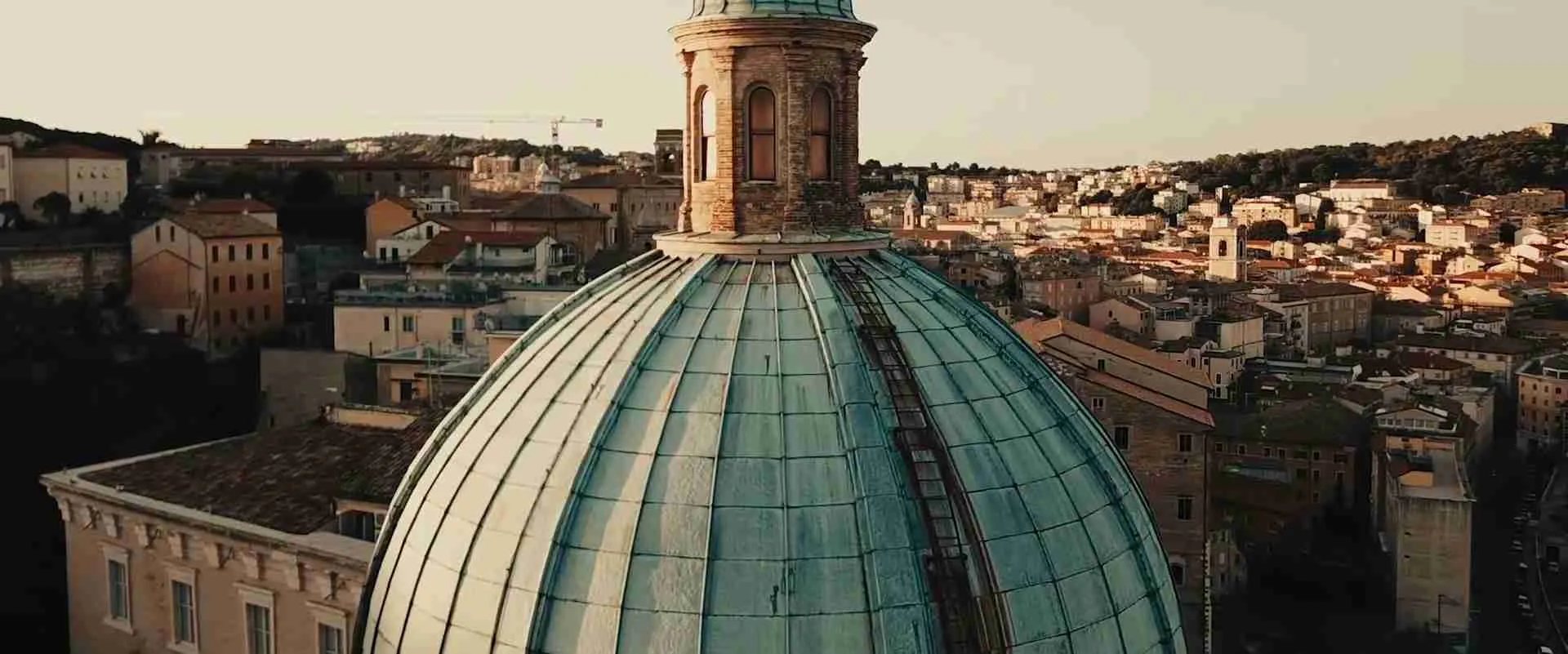
While not a museum in the conventional sense, the Cathedral of San Ciriaco is one of the most accomplished Romanesque-Gothic buildings in the Marche region and merits extended time as much for its architectural significance as for its panoramic position. The cathedral occupies the highest point of Guasco Hill, the site of pre-Roman and Roman occupation; archaeological evidence has established that significant earlier structures stood here, and the crypt incorporates ancient stonework from the site’s previous phases. The building reflects centuries of construction and modification, presenting a synthesis of architectural influences from Byzantine and Lombard Romanesque through Gothic additions — a layered architectural record that rewards attentive observation. Entry is free, though donations are customary.
Church of Santa Maria della Piazza
Immediately beside the entrance of the Francesco Podesti Civic Gallery on Vicolo Foschi, this small Romanesque church is a detail photographer’s subject and an architectural footnote in its own right. The carved stone façade is often overlooked by visitors heading directly into the gallery, but the Romanesque stonework — including arcading and carved ornament on the portal — repays close inspection. The church is generally free to enter; hours vary with liturgical activity.
Theatre of the Muses
Ancona’s principal performance venue is a 19th-century neoclassical theater of considerable architectural elegance, hosting opera, orchestral concerts, and stage productions throughout the year. Guided tours of the auditorium and backstage areas are available on specific days; check teatrodellemuse.org for the current season program and visit schedule. Combining an evening performance with a day of museum visiting provides a natural cultural arc through the city’s offering.
Ancona’s Top Photography Locations: Where to Point Your Camera
Ancona offers three photographic environments within the same compact city. The harbor and lower historic center provide Roman heritage and maritime industrial character; the Guasco Hill zone offers hilltop architecture, panoramic sea views, and medieval street perspectives; and the Passetto district delivers coastal drama with sea-carved sandstone caves and the meeting of cliff and Adriatic. All three are accessible on foot from the historic center, though the Mole Vanvitelliana sits at the harbor edge and the Passetto esplanade requires a 25-minute walk or a short bus ride from Plebiscite Square.
What unites these zones for photographers is the quality of Ancona’s Adriatic coastal light — particularly luminous in spring and autumn, when lower sun angles produce longer shadows on the Roman marble of the arch and the stone of the cathedral, and when the sea holds a deep blue-green that reads well against the warm tones of the sandstone buildings. Summer light is harsher at midday but produces exceptional golden-hour conditions. Winter brings fewer crowds and potentially dramatic cloud formations over the Adriatic on stormy days; the trade-off is shorter daylight and the risk of flat overcast that removes the directional quality outdoor subjects need.
Architectural & Roman Heritage Photography in Ancona 2026
The Arch of Trajan: Ancona’s Roman Icon
The Arch of Trajan stands at the edge of Ancona’s working port — a solitary marble structure erected in 115 AD by the Senate and people of Rome to honor Emperor Trajan after he personally funded improvements to the city’s harbor. The arch is the work of Apollodorus of Damascus, the architect also responsible for Trajan’s Forum in Rome. Constructed from marble quarried on Marmara Island, it rises 18.5 metres on a high podium approached by a wide flight of steps; the archway itself, only three metres wide, is flanked by pairs of fluted Corinthian columns on pedestals. An attic carries the original Latin inscription, which remains legible. Bronze statues that once crowned the arch — depicting Trajan on horseback, his wife Plotina, and his sister Marciana, positioned so they would be visible to ships approaching the harbor — were taken in 848 AD and are no longer present.
For photographers, the arch presents several distinct compositions. The harbor-side view, with the Adriatic as backdrop, is the most dramatic full-arch frame; early morning light from the east strikes the main face directly and picks out the column fluting and carved capitals. By late afternoon, southwesterly reflected light warms the marble in tones that work well in both color and monochrome. Standing at the base of the steps and pointing upward isolates the arch against the sky and emphasizes its height. The surrounding industrial port context — cranes, ferry terminals, working dock infrastructure — creates a juxtaposition that many photographers find more interesting than a purely archaeological framing. Admission is free; no permit is required for personal photography of this outdoor monument.
Cathedral of San Ciriaco: Hilltop Architecture and Panoramic Views
The Cathedral of San Ciriaco commands Guasco Hill and offers two photographic registers: the building itself, with its Romanesque-Gothic façade and the Adriatic visible to the east and south, and the panoramic views from the churchyard over Ancona’s roofscape, the harbor, and the sea. The façade integrates Romanesque arcading with later Gothic additions and faces roughly north; it photographs best in overcast light or late afternoon when reflected light from the city below softens harsh shadow. The interior, with its vaulted nave and later Gothic modifications, benefits from the soft directional light that enters through its windows in the morning hours. The ascending approach from the lower city provides a sequence of framing opportunities that build toward the classic view of the cathedral against sky and sea.
Merchants’ Loggia: Gothic-Venetian Stonework
The Merchants’ Loggia on Via della Loggia is a 15th-century arcaded structure whose Gothic-Venetian decorative vocabulary reflects the close mercantile ties between Ancona and the Adriatic trading world of the late medieval period. The carved stonework of the arches and the proportions of the arcade make it one of the most architecturally distinctive buildings in the historic center. Late-afternoon light from the southwest catches the carved surfaces and creates relief contrast that reads well in both wide shots and close-up detail frames. The loggia photographs most cleanly on weekday mornings when street traffic is lower.
Via Pizzecolli and the Historic Center
The street corridor connecting Plebiscite Square to the Francesco Podesti Civic Gallery — primarily Via Pizzecolli and Vicolo Foschi — passes through a concentration of Renaissance and Baroque palaces and ecclesiastical buildings. The Church of Santa Maria della Piazza at the northern end of the corridor is a compact Romanesque subject; its carved portal is a strong detail frame. The Calamo Fountain, a multi-spouted Renaissance fountain located in the center, functions as a focal point for street photography around Ancona’s historic water supply. The irregular lane widths of the surrounding medieval street network create incidental perspectives between buildings that reward unhurried exploration with a camera.
Cardeto Park and the Jewish Cemetery
Cardeto Park occupies a hillside above the port between Guasco Hill and the Passetto area, providing panoramic views over Ancona’s harbor and the Adriatic that work as effective wide-angle establishing frames. Within the park, the historic Jewish Cemetery is among the largest and best-preserved in Europe, with 178 tombstones carrying Hebrew inscriptions dating from the 15th to the 19th centuries; the site is photographically atmospheric and historically significant, and warrants appropriately respectful handling. An 1860 lighthouse within the park — closed to visitors but visible from the paths — anchors the harbor viewpoint. The park is free and accessible daily.
Panoramic & Coastal Photography in Ancona 2026
Passetto: Sea Caves and Cliff Composition
The Passetto district south of the city center is Ancona’s most distinctive natural photography location. A clifftop esplanade runs along the lip of the sandstone promontory, looking southeast across the Adriatic; below, a series of sea caves — grotte — carved horizontally into the base of the cliff were historically used by fishermen to store boats and equipment and are now maintained as individual beach storage units, each painted and fitted out individually. The result is a uniquely Italian coastal scene: part geological formation, part vernacular improvised architecture, it reads differently at every light condition and in every season.
Access to beach level is via a grand stone staircase (free) or a small lift (€1 each way). The descent reveals the caves at close range and opens the cliff face for upward-looking compositions with cave mouths framing sections of sky. Late afternoon light — roughly two hours before sunset — catches the warm honey color of the sandstone and provides the most saturated palette for coastal shots; midday is harsh and should be avoided for close cliff photography. The esplanade level is better suited to wide shots across the Adriatic in early morning when the sea surface picks up the low eastern light. The Passetto Promenade also holds the World War I memorial monument, which marks the top of the main staircase and functions as a useful foreground element in telephoto shots across the city.
Mole Vanvitelliana from the Harbor
The Mole Vanvitelliana photographs most effectively from the quaysides along Banchina Giovanni da Chio in the approach to it. Evening conditions, when the harbor water is relatively still and the 18th-century stone façades are lit by low westerly sun, produce strong reflection compositions. From the breakwater south of the harbor mouth, the Red Lighthouse — Ancona’s working harbor entrance light — appears in the middle distance and can be incorporated into panoramic compositions that include the Mole Vanvitelliana and the curve of the inner harbor. The lighthouse itself photographs most dramatically at or just after sunset when its colored light becomes visible against the darkening sky and water.
Guasco Hill Panoramas
The terraces and paths around the Cathedral of San Ciriaco provide the most comprehensive elevated city panoramas in Ancona. Looking north from the cathedral precinct, the port opens below with the Adriatic extending to the horizon; the Arch of Trajan is visible in telephoto frames from this height, creating a compositional connection between Ancona’s two most iconic structures. Looking west and south, the city spreads toward the Passetto promontory. Morning is generally preferable for these panoramic shots: the sun rises over the sea directly in front of the northern-facing viewpoint, producing front-lit conditions on the harbor and Arch of Trajan below.
Street Photography & Urban Life in Ancona 2026
Plebiscite Square
Plebiscite Square functions as Ancona’s civic living room — a large arcaded space surrounded by historic institutional buildings and lined with cafés and bars. The square is busiest in the early morning (9–11 am) when residents pass through on their way to work and market errands, and again in the early evening from around 6 pm when the passeggiata begins. The 18th-century arcades create strong directional light and shadow patterns in morning sun that work well for street photography. Local events and markets concentrate here regularly, providing the kind of concentrated street life that photographers seek in Italian towns.
Fish Market and the Port District
Ancona’s fish market is one of the Adriatic coast’s most active, reflecting the city’s ongoing role as a major fishing port. Early morning — typically 5:30–8:00 am — is when the catch from overnight fishing boats is sorted, auctioned, and sold. The activity, the harbor light at that hour, and the authentic working character of the surrounding dock district make this one of the best documentary photography windows in the city. The fish market area connects naturally to a wider harbor walk that takes in working port infrastructure — cranes, ferry terminals, fishing vessels — alongside older storage buildings from the early 20th century. The raw working character of the port provides an effective counterpoint to the refined cultural subjects in the historic center above.
Via Pizzecolli Corridor and Church of Santa Maria della Piazza
The street and its surrounding lanes between Plebiscite Square and the Civic Gallery entrance on Vicolo Foschi concentrate Ancona’s densest surviving medieval and Renaissance street fabric. Palazzo Bosdari and Palazzo Bonomini present their stone façades at close range; Vicolo Foschi itself, with the Church of Santa Maria della Piazza at one end and the gallery entrance at the other, reads as a compressed medieval street perspective. Morning light down these north–south oriented lanes is limited, making mid-morning or overcast conditions more productive than harsh midday sun for architectural street shots.
Neighborhood Character Beyond the Center
Ancona’s residential neighborhoods immediately surrounding the historic center — particularly the streets climbing toward Cardeto Park — provide a less-touristic urban character that rewards longer photography stays. Colorful laundry lines between buildings, neighborhood bars frequented entirely by residents, and the incidental visual poetry of everyday Italian port-city life are accessible here in ways that are more difficult to find in the more visited historic zone. These areas require no entry fee and benefit from the same early-morning low-light conditions that produce the best street results in the center.
Photography Practical Guide for Ancona 2026
Best Times of Year
April through June and September through October are the most consistently rewarding months for Ancona photography. Temperatures are mild (roughly 15–22°C in spring, 18–25°C in autumn), crowds are lower than in July and August, and the light is more varied and angled than in summer. Spring brings particularly good conditions for coastal work: the Adriatic deepens in color after winter, the wildflowers on the Passetto cliffs add seasonal foreground interest, and harbor fishing activity is at full operation. Autumn light on the marble of the Arch of Trajan holds a warm amber quality that many photographers prefer to the harsher summer tone. Winter visits are almost entirely crowd-free, with potentially dramatic cloud formations over the Adriatic; the trade-off is shorter daylight and reduced museum hours in some institutions.
Daily Light Windows
Sunrise over the Adriatic means the harbor, the Arch of Trajan, and all east-facing subjects are front-lit from early morning. For the arch specifically, arriving 20–30 minutes before sunrise allows time to set up before the first direct light hits the marble. Golden hour in the evening falls roughly 45–90 minutes before sunset and is the best window for the Cathedral of San Ciriaco — which faces north and receives warm reflected light from the city and sky in late afternoon — the Passetto cliffs (sandstone takes on maximum warmth at this time), and the Mole Vanvitelliana harbor reflections. Midday is the least useful window for Ancona’s stone and marble subjects. The Omero State Tactile Museum’s afternoon opening time (4 pm from September to June) coincides neatly with the beginning of the golden-hour window for post-visit outdoor photography, making a combined museum-and-arch evening a natural pairing.
Equipment Recommendations
A standard zoom (approximately 24–70mm equivalent) covers the majority of Ancona’s subjects: street scenes, museum interiors, wide architectural shots, and medium-range harbor compositions. A wider option (16–35mm equivalent) adds value at the Passetto for capturing the full cliff face and beach, inside the cathedral for interior-to-window exposure balance, and at the Mole Vanvitelliana for harbor panoramics. A short telephoto (70–200mm equivalent) allows detail extraction from the Arch of Trajan’s carved capitals and inscriptions, the decorative stonework of the Merchants’ Loggia, and compression shots linking the arch and the cathedral in a single frame. For museum photography, a lens with good low-light performance at wide apertures reduces the need for high ISO in the dimly lit galleries of the Civic Gallery and the Omero tactile collection. A compact tripod is useful for Mole Vanvitelliana harbor reflections in calm evening conditions; confirm with each museum whether tripods are permitted indoors before bringing one in.
Museum Photography Policies
Italian state museums, including the National Archaeological Museum of the Marches, generally permit visitors to photograph the collections for personal non-commercial use without flash, at no additional charge; this is the standard Italian state museum policy, though individual institutions can modify it. Confirm with staff at the entrance on the day of your visit. The Omero State Tactile Museum actively encourages photography of the collection and places no restrictions on personal shooting. For the Francesco Podesti Civic Gallery, a municipal institution, photography policies are set locally; inquire at the ticket desk on arrival. Commercial photography — for commissioned content, editorial use with lighting equipment, or publication — requires advance written authorization from museum administration at all three institutions, regardless of the personal photography policy in place.
Drone Photography
Drone flights over Ancona’s port, historic center, and the areas surrounding the Mole Vanvitelliana are subject to Italian aviation regulations administered by ENAC (the Italian civil aviation authority). The port and its immediate surroundings fall within controlled or restricted airspace configurations; flying without clearance in these areas carries significant legal risk. Drone operators should consult the current ENAC D-Flight platform and seek municipal authorization before any flight in or around Ancona. Neither the historic center streets nor the Passetto beach area are automatically approved for drone operation.
Photography Tours and Guided Walks
Dedicated photography tours in Ancona are limited compared to larger Italian cities; the city’s tourism infrastructure caters primarily to general cultural visitors and ferry transit passengers. Guided walking tours of the historic center cover most of the primary photography locations and provide historical commentary that enriches understanding of the subjects being photographed. Local photography associations based in Ancona occasionally organize workshops and group walks; inquire at the city’s tourist information office (IAT) at Piazza Risorgimento for current programming. Self-guided photography routes are the most practical option for most visitors, and the compact nature of the historic center means that a pre-planned walk can cover all the primary architectural and street subjects within a morning or afternoon session.
Planning Your Visit: Tickets & Hours in 2026
Opening Hours Summary 2026
- National Archaeological Museum of the Marches: Tuesday–Thursday 8:30 am–1:30 pm; Friday–Saturday 8:30 am–7:30 pm; Sunday 2:00 pm–7:30 pm; Monday closed. Best days: Friday or Saturday for the widest access window.
- Francesco Podesti Civic Gallery: Tuesday–Thursday 3:00 pm–6:00 pm; Friday, Saturday, Sunday, and holidays 10:00 am–1:00 pm and 3:00 pm–6:00 pm; Monday closed. Best days: Friday, Saturday, or Sunday for the morning session.
- Omero State Tactile Museum: September–June: Tuesday–Saturday 4:00 pm–7:00 pm; Sundays and holidays 10:00 am–1:00 pm and 4:00 pm–7:00 pm. July–August: Tuesday–Saturday 5:00 pm–8:00 pm; Sundays 10:00 am–1:00 pm and 5:00 pm–8:00 pm. Monday closed (outside group reservations).
- Arch of Trajan: Always accessible; free.
- Cathedral of San Ciriaco: Generally open daily; check locally around liturgical service times.
All three major museums close Monday — the single most important planning fact for any Ancona cultural itinerary. A Friday or Saturday visit allows the widest simultaneous access. The National Archaeological Museum’s Tuesday–Thursday schedule is limited to the morning half-day, making those days better suited to pairing the museum with afternoon outdoor photography than with further gallery visits. Always verify current hours at official websites before traveling; conservation closures, extraordinary events, and public holidays can create short-notice schedule changes.
Getting to Ancona in 2026
Ancona Centrale railway station connects to Rome in approximately three hours, Bologna in 1.5–2 hours, and Milan in 3.5–4 hours with frequent direct services. From the train station to the historic center, bus lines 1 and 1/4 serve the center and the Mole Vanvitelliana; single tickets cost approximately €1.50 and are purchased from machines at the station or from tabacchi shops. The center is also reachable on foot in 20–25 minutes from the station along a straightforward urban route. For those arriving by ferry from Croatia, Greece, or Albania, the ferry terminal is within walking distance of both the Arch of Trajan and the Mole Vanvitelliana — making a same-day visit to the Omero State Tactile Museum (which opens at 4 pm) practical even on late-arriving ferries.
Parking and Local Transport
Parking within the historic center of Ancona is restricted by ZTL (limited traffic zone) regulations during daytime hours for non-residents. Visitors arriving by car are best directed to parking at the edges of the ZTL and continuing on foot or by bus into the center. Free parking is available approximately 200 metres from the Omero State Tactile Museum at Largo Fiera Pesca, making this a practical base for combined harbor and historic center visits. Bus lines serving the Mole Vanvitelliana also pass through the center and connect all three museums efficiently.
Budget Planning for Ancona Museums & Culture 2026
Daily Cost Breakdown by Budget Tier
All figures below are per person per day, assuming two people sharing a hotel room. Hotel costs are calculated per person (room rate divided by two) before being added to individual expenses.
Budget travelers (two sharing a budget hotel or B&B): accommodation €25–35 per person (based on a €50–70 double room); breakfast at a café €3–5; lunch at a trattoria or street food €10–15; dinner at a budget restaurant €18–25; coffee and snacks €4–6; local bus rides €3–6; museum entries for two institutions (National Archaeological Museum at full price plus the Omero State Tactile Museum free, or two reduced-price tickets) €5–10. Daily total: approximately €70–100 per person. Budget accommodation in Ancona runs €50–70 for a double room; book in advance for summer and ferry-season weekends when the city fills with transit passengers.
Mid-range travelers (two sharing a mid-range hotel): accommodation €50–75 per person (based on a €100–150 double room); breakfast at a hotel café €6–10; lunch at a restaurant €15–25; dinner at a good restaurant €30–42; coffee, snacks, and drinks €5–8; local transport combining bus with an occasional taxi €6–12; museum entries for all three institutions including an optional guided tour at the Civic Gallery €15–25. Daily total: approximately €125–195 per person. Mid-range hotels in Ancona run €100–150 per double room; options are concentrated in the center and near the train station.
Higher-end travelers (two sharing an upscale hotel): accommodation €80–125 per person (based on a €160–250 double room); breakfast €12–18; lunch at a quality restaurant €28–40; dinner at an upscale restaurant €50–70; drinks €8–12; transport by taxi or private transfer €15–30; museum entries plus private guided experiences or premium photography programming €30–50. Daily total: approximately €225–350 per person. Higher-end hotels in Ancona are limited in number relative to larger Italian cities; properties in this tier run €160–250 per double room and should be booked well in advance for summer.
Individual Museum Costs 2026
- National Archaeological Museum of the Marches: €5 full; €2 reduced (EU citizens 18–25); free under 18; free first Sunday of the month and national holidays. Verify current rates at coopculture.it before visiting.
- Francesco Podesti Civic Gallery: from €5 reduced for eligible categories; full price at comune.ancona.it. Guided tour supplement: €6 per person for groups of 6–15.
- Omero State Tactile Museum: free (main permanent collection); €5 for the Design Collection (separate entrance).
- Cathedral of San Ciriaco: free (donations appreciated).
- Arch of Trajan: free.
- Cardeto Park: free.
- Passetto lift to beach level: €1 each way.
- City Museum at Plebiscite Square: free or nominal; confirm at anconatourism.it.
Money-Saving Strategies
Timing one museum visit to the first Sunday of the month eliminates the National Archaeological Museum admission entirely. The Omero State Tactile Museum is permanently free for the main collection, removing what in many Italian cities would be a significant budget line. The Arch of Trajan, Cathedral of San Ciriaco, Cardeto Park, and the Passetto esplanade are all free outdoor sites, so a full day of architectural and coastal photography costs nothing beyond local transport. Picnicking in Cardeto Park — with provisions from the market or a delicatessen on Corso Mazzini — replaces a restaurant lunch with panoramic harbor views at no added cost. Traveling in shoulder season (April–May or September–October) reduces accommodation costs by 25–40% compared to peak July–August rates, and the same outdoor photography subjects are easier to work with lower temperatures and smaller crowds present.
Hidden Costs to Anticipate
The guided tour supplement at the Francesco Podesti Civic Gallery (€6 per person) is worth considering for first-time visitors but represents an added cost beyond standard admission. The Omero State Tactile Museum’s Design Collection requires a separate €5 ticket even though the main museum is free. Taxi rides from the center to the Mole Vanvitelliana, if preferred over the bus, typically run €8–12. Coffee and water at harbor-area bars near the Mole Vanvitelliana and the Passetto tend to carry a small premium over historic center prices. Parking in Ancona’s paid zones runs €1–2 per hour; drivers planning multiple stops should budget accordingly or use the free parking at Largo Fiera Pesca near the Mole Vanvitelliana and walk or bus into the center.
Sample Itineraries: 1-Day and 2-Day Museum & Photography Programs 2026
1-Day Itinerary: Core Museums and Heritage Photography
This itinerary works best on a Friday or Saturday, when the National Archaeological Museum opens at 8:30 am and the Civic Gallery opens at 10:00 am, allowing both to be visited in a single day without the compressed schedule of a Tuesday–Thursday visit.
- 8:00 am: Arrive at the port area for sunrise photography of the Arch of Trajan. Light is warm and directional on the harbor-facing arch at this hour. Allow 45 minutes.
- 8:30 am: Walk to Via Ferretti 6 and enter the National Archaeological Museum of the Marches at opening. Focus on the Picene civilization section and the Palazzo Ferretti interior. Allow 2.5–3 hours.
- 11:30 am: Walk to the Francesco Podesti Civic Gallery, which opens at 10:00 am on Fridays and Saturdays; begin with the Titian Gozzi Altarpiece and Lotto’s Sacred Conversation. Allow 1.5–2 hours.
- 1:30 pm: Lunch near Plebiscite Square (€10–25 depending on budget choice); street photography of the square and via Pizzecolli corridor during the post-lunch hour.
- 3:30 pm: Explore the Merchants’ Loggia on Via della Loggia and the Church of Santa Maria della Piazza for architectural detail photography.
- 5:00 pm: Golden hour at the Passetto (25-minute walk southwest from Plebiscite Square, or taxi; €1 lift to beach level). Late afternoon light on the sandstone caves and cliffs.
- 7:30 pm: Return to the center for dinner in the port area or near Plebiscite Square.
2-Day Itinerary: Full Museums and Coastal Photography Circuit
Day 1 — Roman, Renaissance, and the Historic Center:
- Morning: National Archaeological Museum of the Marches from 8:30 am; allow 2.5 hours, then photograph from the Palazzo Ferretti terrace looking over the port.
- Midday: Lunch near the historic center; photograph Via Pizzecolli street life and the Calamo Fountain area.
- Afternoon: Francesco Podesti Civic Gallery from 3:00 pm on weekdays (10:00 am on Fridays and Saturdays); allow 2 hours for the Titian, the Lotto, the Crivelli, and the Premio Marche section. Visit the adjacent Church of Santa Maria della Piazza.
- Evening: Arch of Trajan golden hour from the harbor side; dinner in the port area.
Day 2 — Tactile Museum and Coastal Circuit:
- Morning: Cathedral of San Ciriaco on Guasco Hill for panoramic photography and interior architecture; Cardeto Park overlook and Jewish Cemetery photography. Allow 2 hours.
- Midday: Lunch in the center; City Museum on Plebiscite Square for urban history context.
- Early afternoon: Walk or bus to the Passetto for cliff and sea cave photography; use the lift to descend to beach level (€1 each way). Allow 1.5 hours.
- 4:00 pm: Bus to the Mole Vanvitelliana (lines 1 or 1/4 from center) for the Omero State Tactile Museum’s opening time. Allow 1.5–2 hours for the permanent collection and, if interest warrants, the Design Collection (€5 separate ticket).
- Evening: Photograph the Mole Vanvitelliana from the quayside as light fades; harbor approach to the Red Lighthouse at and just after sunset.
Budget for a two-day trip (excluding travel to Ancona): approximately €140–200 per person at budget level; €250–390 per person at mid-range; €450–700 per person at higher-end. These figures are calculated using the daily cost ranges outlined in the Budget Planning section above, multiplied by two days.
Frequently Asked Questions About Ancona Museums & Photography 2026
Are Ancona’s museums open year-round in 2026?
The National Archaeological Museum of the Marches, the Francesco Podesti Civic Gallery, and the Omero State Tactile Museum all operate year-round with modified seasonal hours. The most significant seasonal shift affects the Omero State Tactile Museum, which moves its weekday opening from 4:00 pm (September–June) to 5:00 pm (July–August). The Francesco Podesti Civic Gallery maintains consistent hours across the year with the limited Tuesday–Thursday afternoon-only window. Verify current schedules at official websites before traveling; conservation closures, extraordinary events, and public holidays can create short-notice changes that online booking systems may not immediately reflect.
Can I take photos inside Ancona’s museums in 2026?
Personal photography without flash is generally permitted at Italian state museums, including the National Archaeological Museum of the Marches, for visitors’ own non-commercial use; confirm the current policy at the entrance on arrival, as institutional policies can change. The Omero State Tactile Museum actively welcomes photography throughout the permanent collection and places no restrictions on personal shooting — documenting the tactile experience is treated as a natural part of the visit. For the Francesco Podesti Civic Gallery, a municipal institution, photography policies are determined locally; ask at the ticket desk when you arrive. Professional photography — commercial, editorial with lighting equipment, or for commissioned content — requires advance written authorization from museum administration at all three institutions, regardless of the personal photography policy in place.
What is the best time of day for photography at the Arch of Trajan?
Sunrise is the optimal window for the Arch of Trajan. The arch faces roughly east toward the harbor and sea, so the first directional light of the day hits the main face at a low angle that picks out the carved column capitals, the Corinthian fluting, and the Latin inscription in the attic in a way that midday overhead light cannot achieve. Arriving 20–30 minutes before sunrise allows time to find compositions; the full-arch view from the harbor side with the Adriatic as backdrop is the most widely photographed angle. An alternative evening window occurs when low westerly reflected light from the city and water creates soft warm illumination on the harbor face of the arch. The arch is freely accessible at any hour, with no fencing or access restriction.
Is the Omero State Tactile Museum accessible for visitors with mobility challenges in 2026?
The Omero State Tactile Museum is designed around principles of full accessibility, making it one of the most inclusive cultural institutions in Italy. The museum’s founding philosophy centers on removing barriers to cultural participation, and this extends to the physical environment as well as the collection concept. The Mole Vanvitelliana is an 18th-century structure with traditional sanpietrino stone paving, which can present challenges for some mobility devices; contact the museum by telephone (+39 071 2811935) before your visit if you have specific mobility requirements, as staff can advise on the most practicable entry and circulation route. Free parking is available 200 metres from the entrance, and bus lines serving the Mole stop nearby.
How long should I allow for the National Archaeological Museum of the Marches?
The minimum meaningful visit is approximately 90 minutes, covering the Picene and Roman sections at a moderate pace. A thorough visit — including the prehistoric and Bronze Age levels, the complete Picene and Senones galleries, the Hellenistic and Roman sections, and time with the Palazzo Ferretti interior — takes 2.5 to 3 hours. History specialists and archaeology enthusiasts may find 3–4 hours insufficient. The most rewarding approach for first-time visitors is to prioritize the Picene civilization section, which documents a pre-Roman Adriatic culture that is unfamiliar to most visitors and is represented in depth here in a way that few other institutions can match. The Roman section, while compelling, covers material that visitors with Italian travel experience will have encountered at other museums; the Picene holdings are unique to this institution in scale and quality.
Are guided tours of Ancona’s museums available in 2026?
The Francesco Podesti Civic Gallery offers guided tours for groups of 6 to 15 people at €6 per person; tours last approximately one hour and should be arranged in advance or confirmed at the door. The Omero State Tactile Museum’s staff routinely accompany visitors through the permanent collection, providing explanations appropriate for both sighted and visually impaired visitors; the tactile experience is significantly enriched by this guidance, and it is worth requesting staff assistance at the entrance even on individual visits. For the National Archaeological Museum of the Marches, private licensed guides can be arranged through local tour operators, though the museum itself does not currently offer a standard guided tour as a regularly ticketed option. Walking tours of the historic center incorporating the Arch of Trajan, the Cathedral of San Ciriaco, and the civic architecture are available through local tourist offices and the IAT; these typically run 2–3 hours and serve as useful photography orientation sessions.
What hidden cultural gems in Ancona are worth visiting beyond the three main museums?
The City Museum on Plebiscite Square is genuinely undervisited despite its engaging presentation of Ancona’s urban history through maps, models, historical imagery, and archaeological finds — it provides context that makes every other site in the city more legible, and is often free to enter. The Church of Santa Maria della Piazza adjacent to the Civic Gallery has a Romanesque façade that rewards close inspection and is overlooked by most visitors heading directly into the gallery from Vicolo Foschi. Cardeto Park, above the center, holds the ancient Jewish Cemetery — one of the largest and best-preserved in Europe, with 178 tombstones from the 15th to the 19th centuries — alongside harbor panoramas that are entirely free of charge and almost entirely free of visitors. The fish market at the working port, active very early in the morning, offers a slice of Adriatic port life with nothing to do with tourism and provides some of the most vivid documentary photography in the city.
How do I move efficiently between Ancona’s museums in 2026?
The National Archaeological Museum of the Marches, the Francesco Podesti Civic Gallery, and the Cathedral of San Ciriaco are all within the historic center and reachable from one another in 10–20 minutes on foot. The Civic Gallery on Via Pizzecolli and the Archaeological Museum on Via Ferretti are approximately 15 minutes apart through the center. The Omero State Tactile Museum at the Mole Vanvitelliana is the outlier: it sits at the harbor edge, a 20–25 minute walk from Plebiscite Square or a 5–10 minute bus ride on lines 1 or 1/4. A practical day-plan strategy is to complete historic center museum visits in the morning and early afternoon, then travel to the Mole Vanvitelliana in time for the Omero State Tactile Museum’s 4:00 pm opening, combining the museum visit with harbor and arch photography in the remaining daylight before dinner.
What local seafood should I try when visiting Ancona’s museums and galleries?
Ancona’s signature dish is brodetto anconetano — a local fish stew traditionally made from at least thirteen varieties of Adriatic catch with white wine, tomato, and white vinegar, the last ingredient giving it a more acidic character than southern Italian variants. Ancona also produces excellent raw and simply cooked Adriatic seafood: farmed and wild mussels, sea urchin in season, and the small Adriatic clams that appear across the coastal Marche kitchen. For a museum itinerary, a midday stop at one of the trattorie around Plebiscite Square or along Via della Loggia fits naturally between a morning at the National Archaeological Museum and an afternoon at the Civic Gallery. Budget €15–25 per person for a trattoria lunch with a fish first course, a second course, and wine.
What should I know about the Passetto before visiting in 2026?
The Passetto is both an esplanade and a residential neighborhood in the southern part of Ancona’s waterfront. The main viewing area is reached via Viale della Vittoria from Plebiscite Square — approximately a 25-minute walk along a straight avenue lined with shops. At the Passetto War Memorial, a grand staircase and a lift (€1 each way) descend to the beach level where the sea caves are located. The beach is a mix of free public sections and areas associated with the cave storage units maintained by individual families and local residents. Swimming is possible in summer; the water is clear and the depth shelves gradually. Bring water and sun protection in summer as shade is limited at beach level. For photographers, the best window is the two hours before sunset for cliff and cave compositions; the esplanade level is best for wide Adriatic shots in early morning. The esplanade itself is always free to access; only the lift charges a fee.