
Amalfi Coast Travel Guide 2026: Complete Planning Resource
The Amalfi Coast stretches 50 kilometers along Italy’s Sorrentine Peninsula, where vertical cliffs plunge into turquoise Mediterranean waters beneath pastel villages, terraced lemon groves, and UNESCO-protected cultural landscapes. Planning your 2026 visit means navigating one of Europe’s most expensive destinations, where a single bus ticket costs €2-6.80, mid-range hotels demand €150-450 nightly, and restaurant meals average €30-60 per person. This comprehensive guide provides verified transportation schedules, accommodation strategies, town-specific insights, and budget breakdowns to help you experience this 1997 UNESCO World Heritage Site’s dramatic beauty without financial surprises.
Key Takeaways
- The Amalfi Coast achieved UNESCO World Heritage status in 1997, protecting 11,231 hectares across 15 municipalities as an outstanding example of Mediterranean cultural landscape
- Daily costs range €115-950 per person excluding accommodation, making the Amalfi Coast Italy’s most expensive region — significantly pricier than Rome, Florence, or Venice
- SITA bus single tickets cost €2-6.80 depending on distance, with 24-hour unlimited passes at €12 offering value for multiple daily journeys between coastal towns
- Ferry season runs April-October only, with routes connecting Positano, Amalfi, Maiori, and Salerno at €9-25 per journey — more expensive than buses but avoiding notorious summer traffic
- Positano ranks as the most expensive town followed by Ravello and Amalfi, while Praiano, Maiori, Minori, and Cetara offer 30-50% lower costs for equivalent quality
- The coastal road (SS163 Amalfi Drive) represents Italy’s most challenging drive — narrow, winding, crowded, with limited parking making public transport or ferries preferable for visitors
People Also Ask About Amalfi Coast 2026
How much does a week on the Amalfi Coast cost in 2026?
A week-long Amalfi Coast trip in 2026 costs €1,400-1,600 per person for budget travelers staying in cheaper towns like Maiori, using SITA buses exclusively, self-catering some meals, and limiting paid activities. Mid-range travelers selecting 3-star hotels in Amalfi or Praiano, eating restaurant meals twice daily, and taking occasional ferries spend €2,100-2,800 per person weekly. Luxury visitors choosing Positano or Ravello hotels, fine dining, private boat transfers, and premium experiences easily spend €4,500-6,650 weekly. These estimates exclude international flights but include accommodation, food, local transportation, and activities.
Is the Amalfi Coast worth visiting in 2026 despite high costs?
The Amalfi Coast justifies its premium pricing for travelers valuing dramatic coastal scenery, authentic Italian culture, exceptional cuisine, and unique vertical geography creating unforgettable visual experiences. The region offers experiences unavailable elsewhere — 13th-century maritime republic history, cliffside hiking trails with Tyrrhenian Sea panoramas, limoncello production in terraced lemon groves, and villages where colorful houses cascade down precipitous slopes. However, travelers prioritizing budget travel, uncrowded beaches, or extensive sandy shores find better value in southern Italy’s Puglia region or Sicily’s coasts, which offer Mediterranean beauty at 40-60% lower costs with fewer tourists.
What’s the best base town on the Amalfi Coast in 2026?
Amalfi town serves as the optimal Amalfi Coast base in 2026, balancing central location, transportation connections, accommodation options, and authentic character without Positano’s extreme prices or crowds. Amalfi provides ferry and bus access to all coastal towns, walking-distance restaurants from budget to fine dining, the region’s most significant historical attractions including the 9th-century cathedral, and proximity to Atrani (5-minute walk) plus Ravello (20-minute bus ride). Budget-conscious travelers gain better value in Maiori or Minori with larger beaches and 30% lower prices. Luxury seekers preferring glamour choose Positano despite its highest regional costs and tourist crowds.
When is the best time to visit the Amalfi Coast in 2026?
Late April through June and September through October offer optimal Amalfi Coast visits in 2026, combining warm weather (20-27°C), operational ferries, and manageable crowds with 20-30% lower accommodation costs than July-August peak season. May showcases spring flowers and comfortable 22-25°C temperatures perfect for hiking the Path of the Gods. September delivers warm 24-27°C weather, calmer seas for boat trips, and harvest season celebrations featuring local wines and lemon liqueurs. July-August brings intense heat (28-32°C), peak prices, fully booked hotels, and overwhelming crowds making spontaneous travel impossible. November-March sees 50% of businesses close, limited transportation, and cool 12-16°C temperatures unsuitable for beach activities.
Extended multi-day tours – 5+ days
Featured Amalfi Multi-Day Tour Packages
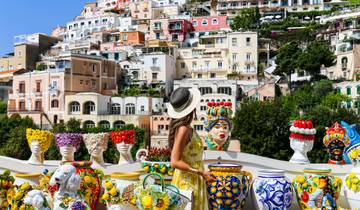
3 days
Discover Sorrento, Amalfi Coast & Pompeii in 3 Days
- ✓ Comprehensive Amalfi tour
- ✓ Expert local guides included
- ✓ All accommodation arranged
- ✓ Transportation provided

6 days
6 Days from Naples: Pompeii, Mount Vesuvius, Amalfi Coast, Sorrento, Positano & Capri Island
- ✓ Comprehensive Amalfi tour
- ✓ Expert local guides included
- ✓ All accommodation arranged
- ✓ Transportation provided
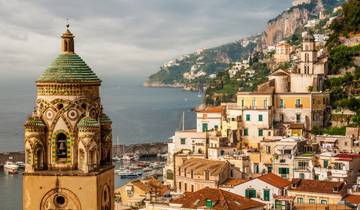
7 days
Sorrento Escape, Private Tour
- ✓ Comprehensive Amalfi tour
- ✓ Expert local guides included
- ✓ All accommodation arranged
- ✓ Transportation provided
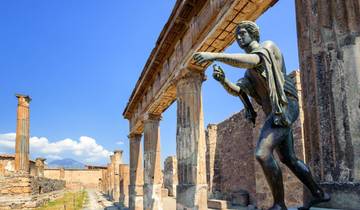
4 days
Discovering Amalfi Coast
- ✓ Comprehensive Amalfi tour
- ✓ Expert local guides included
- ✓ All accommodation arranged
- ✓ Transportation provided
Multi-day tour packages powered by TourRadar. Prices and availability subject to change.
Introduction: Understanding the Amalfi Coast as Italy’s Premium UNESCO Cultural Landscape in 2026
The Amalfi Coast achieved UNESCO World Heritage status in 1997, recognized as “an outstanding example of a Mediterranean landscape with exceptional cultural and natural scenic values resulting from its dramatic topography and historical evolution.” The designation protects 11,231 hectares encompassing 15 municipalities across the Sorrentine Peninsula’s southern flank, where the Lattari Mountains plunge directly into the Tyrrhenian Sea creating the vertical geography that defines the region’s character. This cultural landscape designation acknowledges not pristine nature but rather centuries of human adaptation — terraced agriculture carved into impossible slopes, villages built where cliffs meet water, and maritime trade traditions dating to the medieval Duchy of Amalfi’s dominance across Mediterranean commerce.
The protected area includes four main coastal stretches (Amalfi, Atrani, Reginna Maior, Reginna Minor) plus secondary areas (Positano, Praiano, Cetara, Erchie) and mountain villages (Scala, Tramonti, Ravello) with hamlets (Conca, Furore) scattered across dramatic topography. This geographic complexity creates distinct microclimates and cultural variations — Ravello perched 350 meters above sea level experiences cooler temperatures and different vegetation than beachfront Maiori, while inland Tramonti produces wines impossible in salt-spray exposed coastal vineyards. Understanding these variations helps travelers match town characteristics to personal preferences rather than assuming uniform Amalfi Coast experiences.
The region’s history traces to Paleolithic settlements evidenced at Positano, followed by Roman colonization in the 4th century when patrician villas dotted the coastline. The medieval period defined the Amalfi Coast’s golden age, when the Maritime Republic of Amalfi (839-1131 AD) dominated Mediterranean trade routes, developing navigation instruments including early compasses, establishing maritime law codes (Tavole Amalfitane) that governed Mediterranean shipping for centuries, and accumulating wealth visible in the region’s extraordinary architectural heritage. Amalfi Cathedral’s Arab-Norman fusion, Byzantine mosaics, and soaring bell towers reflect this multicultural maritime power that traded simultaneously with Constantinople, Cairo, and Córdoba.
The republic’s decline following conquest by Pisa in 1137 initiated centuries of relative isolation, during which terraced agriculture sustained local populations while preserving medieval urban fabric from modernization. The region’s “rediscovery” occurred during the early 20th century when wealthy European and American travelers seeking Mediterranean beauty transformed fishing villages into luxury destinations. This tourism evolution accelerated post-World War II, creating today’s economy where 5+ million annual visitors support communities once dependent on fishing, farming, and artisan crafts.
Planning Amalfi Coast travel in 2026 requires accepting that this represents Italy’s most expensive destination, where costs exceed Rome, Florence, and Venice by 30-60% across accommodation, dining, and transportation. The vertical geography limiting buildable land creates perpetual supply-demand imbalances — Positano contains perhaps 25 hotels and 100 restaurants serving millions of annual visitors, driving prices to levels sustaining property values where clifftop land sells for €5,000-15,000 per square meter. However, strategic planning permits quality experiences at manageable costs by choosing less-famous towns, traveling shoulder seasons, using public transportation, and balancing splurge experiences with economical choices.
The single coastal road (SS163 Amalfi Drive) connects all towns across the 50-kilometer coastline but represents one of Italy’s most challenging drives. The narrow, winding two-lane route carved into cliffs features hairpin turns, limited passing zones, summer traffic jams lasting hours, and parking shortages making driving more stressful than practical. SITA buses and summer ferries provide reliable alternatives, though both require schedule coordination and advance planning. Understanding transportation limitations proves essential — attempting spontaneous exploration via rental car during July-August high season creates frustration rather than romantic Mediterranean road trip experiences.
Cultural expectations differ from more tourist-accommodating Italian destinations. Restaurants maintain strict Italian dining schedules (12:30-2:30 PM lunch, 7:30-10:00 PM dinner), many family-run establishments close entire weeks for vacation during shoulder seasons, and service prioritizes locals over tourists creating sometimes abrupt interactions. English proficiency varies dramatically — upscale hotels employ fluent speakers while family-run trattorias rely on gestures and basic vocabulary. Travelers expecting extensive English accommodation or flexible scheduling face frustrations, while those adapting to local rhythms access authentic coastal culture.
The 2026 season shows continued post-pandemic tourism recovery, with hotel bookings already strong for summer months and ferry companies adding routes to accommodate demand. However, climate change impacts emerge increasingly — summer heat waves reaching 35-38°C make midday activities uncomfortable, intense autumn storms occasionally disrupt ferry service and trigger landslides closing coastal roads, and sea temperature increases affect marine ecosystems supporting fishing industries. These environmental pressures add urgency to sustainable tourism practices, though mass tourism’s economic benefits create tensions between preservation and development.
Understanding Amalfi Coast’s UNESCO World Heritage Designation and Cultural Significance in 2026
The Amalfi Coast’s 1997 UNESCO inscription recognized the region as a “Cultural Landscape” rather than purely natural or architectural heritage, acknowledging centuries of human adaptation to dramatic topography creating exceptional Mediterranean cultural values. The designation spans 11,231 hectares across 15 municipalities, protecting not just coastal villages but entire watersheds including mountain settlements, agricultural terraces, ancient pathways, and natural reserves that together demonstrate sustainable human-environment relationships across millennia.
The terraced landscape represents the Amalfi Coast’s most significant cultural achievement, where generations carved mountainsides into horizontal agricultural platforms supported by dry-stone retaining walls extending hundreds of kilometers. These terraces permitted cultivation of lemons (the famous sfusato amalfitano variety), grapes for wine production, olives, chestnuts, and vegetables on slopes too steep for conventional farming. The terracing system required extraordinary engineering — maintaining precise gradients for irrigation, constructing walls that flex with earthquakes without collapsing, and creating microclimates where lemon trees flourish despite winter frosts affecting surrounding areas.
Lemon cultivation defines Amalfi Coast identity beyond mere agriculture. The protected sfusato amalfitano lemons grow exclusively in this microclimate, producing football-sized fruits with thick aromatic rinds perfect for limoncello liqueur production. Traditional cultivation requires hand-harvesting from terraces accessible only by foot, winter frost protection using reed mats (pagliarelle) covering entire groves, and pruning techniques passed through generations. This labor-intensive production justifies premium pricing — authentic Amalfi lemons cost 3-4 times standard supermarket lemons, while artisanal limoncello commands €25-40 per bottle versus mass-market €8-12 alternatives.
The Path of the Gods (Sentiero degli Dei) exemplifies ancient pathways connecting coastal and mountain communities before road construction. This 7.8-kilometer trail from Bomerano (Agerola) to Nocelle (Positano) traverses 500-600 meters above sea level, offering Tyrrhenian Sea panoramas extending to Capri on clear days. Medieval shepherds and traders used these routes daily, while modern hikers complete the moderately difficult trek in 3-4 hours. The path remains unpaved, following original stone-paved sections and demonstrating traditional mountain engineering that withstands centuries of weather without modern maintenance.
Architectural heritage reveals multicultural Mediterranean influences absorbed during Amalfi’s maritime dominance. The Amalfi Cathedral (Duomo di Sant’Andrea) combines Romanesque structure with Arab-Norman elements including pointed arches, Byzantine mosaics, and baroque additions creating architectural palimpsest reflecting successive cultural encounters. The Cloister of Paradise (Chiostro del Paradiso) attached to the cathedral demonstrates Arab-Sicilian influence with its interlaced arches and palm-shaded courtyard, while the cathedral’s bronze doors cast in Constantinople (1066) represent artistic exchanges spanning the medieval Mediterranean.
The medieval paper industry established Amalfi’s reputation for handmade paper (bambagina) using techniques imported from Arab Sicily in the 13th century. Water-powered paper mills (cartiere) operating in the Valle dei Ferriere produced thick, durable paper used for legal documents, diplomatic correspondence, and artistic works across Europe. The Museum of Paper (Museo della Carta) in Amalfi preserves functioning historical equipment demonstrating traditional production methods still practiced by artisan workshops supplying luxury stationery and artistic papers.
Ceramic production centered in Vietri sul Mare represents another UNESCO-recognized craft tradition, where Moorish-influenced majolica techniques produce distinctive glazed tiles and pottery featuring bright yellows, blues, and greens. Vietri ceramics decorated churches, palaces, and homes across the coast since medieval times, with 20th-century artistic movements revitalizing traditions through contemporary designs. Workshops along Vietri’s streets permit visitors to observe artisans hand-painting traditional patterns on plates, tiles, and decorative pieces.
The Valle delle Ferriere (Valley of the Iron Mills) protected natural reserve above Amalfi preserves rare botanical species including Woodwardia radicans ferns surviving ice age climates in the humid microclimate created by waterfalls and springs. The valley once powered iron foundries and paper mills using hydroelectric energy, with ruins scattered among subtropical vegetation. Hiking trails penetrate the reserve, requiring moderate fitness for the 600-meter elevation gain but rewarding visitors with unique ecosystems found nowhere else on the Mediterranean.
Conservation challenges intensify as tourism growth threatens the delicate balance UNESCO designation seeks to protect. Uncontrolled development pressure in less-protected municipalities, agricultural terrace abandonment as younger generations pursue tourism careers, coastal erosion from increased boat traffic, and infrastructure strain from mass tourism all risk degrading the cultural landscape that justified World Heritage status. The Ente Parco Regionale dei Monti Lattari (Regional Park Authority) coordinates conservation efforts, though limited budgets and conflicting economic interests complicate enforcement.
Transportation and Getting Around the Amalfi Coast in 2026
Amalfi Coast transportation in 2026 relies primarily on SITA buses operating along the single coastal road (SS163), with seasonal ferries (April-October) providing scenic alternatives and reducing travel time between major towns. Understanding transportation options, costs, and limitations proves essential for successful trip planning, as the region’s vertical geography and narrow roads create unique logistical challenges absent in flatter Italian destinations.
SITA bus single-ride tickets (Corsa Singola) cost €2-6.80 depending on distance traveled. Salerno to Amalfi costs €3.40 for the 75-minute journey, Sorrento to Amalfi costs €6.80 requiring 90 minutes, and shorter hops like Amalfi to Positano cost €2.50 for 45 minutes. Tickets must be purchased before boarding from tobacco shops (tabacchi), newsstands, bars displaying SITA logos, or vending machines at major bus stations. Onboard purchases cost an additional €0.50 surcharge and require exact change, with some drivers unable to sell tickets on crowded buses.
The 24-hour COSTIERASITA unlimited pass costs €12 and provides exceptional value for travelers making 3+ bus journeys daily. The pass covers all SITA buses between Agerola, Amalfi, Atrani, Cetara, Conca dei Marini, Furore, Maiori, Minori, Positano, Praiano, Ravello, Salerno, Scala, Sorrento, and Vietri sul Mare, plus local Positano municipal buses (Mobility Amalfi Coast). Purchasing the pass makes economic sense for day trips from Salerno or Sorrento visiting multiple coastal towns, eliminating per-ride ticket purchases and permitting spontaneous exploration.
Summer bus challenges require strategic planning. Buses departing Sorrento or Salerno fill quickly, with passengers boarding at intermediate stops like Positano often finding standing room only or unable to board entirely during July-August peak hours (10 AM-1 PM, 4 PM-7 PM). Arriving at route start points (Sorrento for westbound, Salerno for eastbound) 15-30 minutes before departure secures seats. Buses announce major stops, though requesting the driver announce your destination when boarding prevents missing stops. Luggage storage underneath buses accommodates suitcases, but strollers must be folded.
Ferry services operate April through October connecting Positano, Amalfi, Maiori, Minori, Cetara, Salerno, Sorrento, and Capri. Major routes include Amalfi-Positano (15-25 minutes, €9-10), Positano-Capri (30 minutes, €23 including €2.50 Capri landing tax), Amalfi-Capri (60 minutes, €23.50-25.50 including Capri tax), Salerno-Amalfi (35 minutes, €14), and Sorrento-Positano (30 minutes, €18-20). Companies including Travelmar, NLG, Positano Jet, and Alicost operate overlapping routes with varying schedules — checking specific company timetables prevents missed connections.
Ferry advantages over buses include avoiding summer traffic jams (coastal road congestion can triple journey times July-August), providing spectacular cliff views from sea level impossible via road, reducing motion sickness for passengers prone to car sickness on winding roads, and offering refreshment bars onboard. Disadvantages include weather dependency (rough seas cancel service without notice), seasonal operation only (no winter ferry access), higher costs than buses (2-3 times bus fares), and limited departure frequencies requiring schedule coordination. Ferry passengers should board left side for coastal views traveling Sorrento-Positano-Amalfi-Salerno, right side for return journeys.
Reaching the Amalfi Coast from Naples offers several options. The SITA bus operates limited direct Naples-Amalfi service (€10, 2.5 hours) on weekdays only. Most travelers take Circumvesuviana trains from Naples to Sorrento (€3.60, 60-70 minutes), then SITA buses from Sorrento to coastal destinations. Alternatively, trains from Naples to Salerno (€8-12, 35-50 minutes depending on train type) connect to SITA buses serving the coast’s eastern section. Private transfers from Naples Airport to Amalfi cost €180 for sedan accommodating 2-3 passengers, justifiable when traveling groups splitting costs or arriving late night when public transport ceases.
The coastal road (Strada Statale 163 Amalfi Drive) can be driven but requires advanced skills, nerves, and realistic expectations. The narrow two-lane route features blind curves, sheer cliff drops, aggressive local drivers, tourist coaches monopolizing road width, and limited passing opportunities. Summer traffic creates hours-long jams, parking shortages force illegal roadside stops risking fines or towing, and navigation challenges distract drivers from enjoying scenery. Travelers insisting on driving should rent smallest vehicles possible, avoid July-August entirely, depart accommodations before 8 AM to beat traffic, and accept that scenic coastal drives work better in theory than reality.
Parking costs €2-3 per hour in metered public lots where available (Amalfi, Maiori, Salerno), though spaces fill by 9 AM summer mornings. Positano offers extremely limited parking at €5+ hourly in private garages, with some hotels providing parking €25-35 daily (confirm availability when booking). Ravello’s parking areas sit below town requiring steep walks or local shuttle buses. Street parking along coastal roads receives vigorous enforcement — traffic police patrol constantly issuing €40-80 fines for illegal stops endangering narrow roadway flow.
Taxis operate from designated stands in major towns, charging €20-40 for short inter-town trips (Amalfi-Ravello, Amalfi-Atrani) and €80-150 for longer distances (Positano-Amalfi, Sorrento-Positano). Fixed-rate agreements prevent surprises, though confirming prices before departure remains essential. Private transfer services offer luxury alternatives with advance booking, professional drivers, and door-to-door service at €150-250 for routes public transport covers at €2-12 — justifiable for groups, travelers with mobility limitations, or those valuing convenience over economy.
Walking connects nearby towns along coastal pathways and mountain trails. Amalfi to Atrani requires just 10 minutes via pedestrian tunnel and seaside path. Ravello sits 350 meters above Amalfi, accessible by SITA bus (20 minutes, €1.30) or walking the medieval mule path (45-60 minutes, challenging gradient). The Sentiero dei Limoni (Path of the Lemons) connects Maiori and Minori through terraced lemon groves in 30-40 minutes, offering authentic agricultural landscape views without crowds. However, vertical geography makes inter-town walking impractical except for specific scenic routes — Positano to Amalfi spans 18 kilometers with 600-meter elevation changes unsuitable for casual strolling.
Accommodation Options and Strategies for Amalfi Coast 2026
Amalfi Coast accommodation in 2026 ranges from budget hostels at €45-85 nightly through mid-range hotels at €150-450 to luxury properties exceeding €600, with dramatic price variations between towns, seasons, and booking timing making strategic planning essential for budget management. The region ranks as Italy’s most expensive accommodation market, where equivalent quality costs 50-100% more than Rome or Florence, driven by limited supply, overwhelming demand, and spectacular cliff-side locations.
Budget accommodation (€45-120 per night) concentrates in less-famous towns like Maiori, Minori, Cetara, and Salerno, where family-run B&Bs, guesthouses, and small hotels serve travelers prioritizing economy over glamour. Properties in this category typically offer basic private rooms with ensuite bathrooms, breakfast, WiFi, and convenient bus stop proximity, though expect simple furnishings, limited English, no elevators (challenging with luggage on multiple floors), and minimal amenities. Maiori and Minori provide the best budget value — beachfront locations, authentic local atmosphere, and full restaurant/market infrastructure at 40-50% below Positano prices for equivalent comfort levels.
Mid-range hotels (€150-450 per night) dominate Amalfi town, Praiano, and less-central Positano locations, offering 3-4 star properties balancing comfort, service, and Mediterranean character. This category includes renovated historic buildings with period architectural details, terraces overlooking the sea, breakfast featuring local products, air conditioning, professional concierge service arranging restaurant reservations and transportation, and superior English proficiency among staff. Amalfi town provides optimal mid-range value, combining central location, transportation access, and authentic character at €180-320 nightly versus Positano’s €300-450 for comparable quality.
Luxury properties (€450-1,500+ per night) concentrate in Positano and Ravello, offering 5-star hotels and boutique properties featuring infinity pools overlooking the Tyrrhenian Sea, Michelin-level dining, spa facilities, private beach access, historic palazzo settings, and impeccable service. Iconic properties like Le Sirenuse Positano (€900-2,000+), Hotel Santa Caterina Amalfi (€550-1,200), and Palazzo Avino Ravello (€650-1,800) justify premium pricing through exceptional locations, design, dining, and exclusivity. These properties book 6-12 months advance for summer peak season, requiring early commitment from travelers unwilling to compromise on luxury experiences.
Seasonal pricing patterns show dramatic variations. Peak season (July-August) rates reach 60-100% above shoulder season (April-June, September-October) baseline, with mid-range Amalfi hotels costing €350-450 in August versus €180-250 in May. Shoulder seasons offer ideal value, combining 20-30°C temperatures suitable for swimming and hiking, operational ferry services, and significantly lower accommodation costs without sacrificing weather quality. Easter week and August 15 (Ferragosto holiday) command peak-season surcharges even outside July-August, requiring advance booking or accepting limited availability.
Winter season (November-March) sees 50-60% of coastal properties close entirely, as Italian tourists avoid cold-weather beach destinations and international visitors prefer summer Mediterranean experiences. Properties remaining open offer 40-50% discounts from peak rates, though limited restaurant options, suspended ferry service, reduced bus schedules, and cool 12-16°C temperatures make winter visits suitable only for travelers prioritizing solitude and off-season tranquility over beach activities and full coastal infrastructure.
Town selection fundamentally shapes Amalfi Coast experiences. Positano delivers postcard-perfect vertical village aesthetics, glamorous atmosphere, designer boutiques, and celebrity cachet at Italy’s highest accommodation prices (€300-1,500 nightly). Its steep staircases challenge mobility-limited visitors, beaches consist of pebbly stretches rather than sandy expanses, and summer crowds create oppressive density. Amalfi balances central location, historical significance, transportation connections, and authentic character at moderate prices (€180-450), making it the preferred base for travelers prioritizing practicality over Instagram aesthetics.
Ravello perched 350 meters above sea level offers refined atmosphere, classical music festivals (June-September), spectacular gardens at Villa Cimbrone and Villa Rufolo, and sunset views worth the premium pricing (€200-600+ nightly). However, its mountain location requires bus transfers for beach access and creates isolation for travelers without vehicles. Praiano provides quieter alternative to Positano with similar vertical architecture and sea views at 30% lower costs (€150-350), appealing to travelers seeking peaceful atmosphere over Positano’s scene.
Maiori and Minori offer the coast’s largest beaches, authentic local culture, comprehensive services (supermarkets, pharmacies, banks), and best budget accommodation (€85-200 nightly) but lack dramatic clifftop aesthetics defining iconic Amalfi Coast imagery. These towns suit families with children needing sandy beaches, budget-conscious travelers prioritizing value, and visitors seeking authentic Italian atmosphere over international tourism scene. Cetara, Atrani, and Furore provide smaller-scale alternatives emphasizing fishing village character, though limited accommodation options require advance booking.
Salerno serves as budget-oriented base offering urban amenities, year-round hotel/restaurant operations, convenient train connections, and 40-60% lower costs than coastal towns (€80-180 nightly). Located at the Amalfi Coast’s eastern terminus, Salerno requires SITA bus commutes to Positano or Amalfi (60-90 minutes each way) making it suitable for travelers using the coast as day-trip destination rather than immersive multi-day experience. However, Salerno’s urban character, limited beach appeal, and tourist-light atmosphere provide authentic Campania experience impossible in heavily touristed coastal villages.
Booking strategies significantly impact costs. Reservations made 90-180 days advance for summer travel secure lowest rates and best property selection, as popular hotels fill completely by April for July-August dates. Last-minute deals (1-2 weeks before arrival) occasionally appear May-June and September when hotels face unexpected cancellations, though gambling on availability risks paying premium walk-in rates or settling for undesirable properties. Flexible date travelers can save 20-40% by arriving Tuesday-Thursday rather than Friday-Saturday, or visiting early June instead of mid-July for equivalent weather at reduced costs.
Apartment rentals via Airbnb, Vrbo, and local agencies provide alternatives to traditional hotels, particularly valuable for families, groups, or week-long stays benefiting from kitchen access and multiple bedrooms. One-bedroom apartments in Amalfi or Positano cost €120-250 nightly, while two-bedroom units range €180-400 depending on views, location, and amenities. Apartments sacrifice daily housekeeping, reception services, and hotel amenities for space, privacy, and self-catering economy. Location proves critical — verify proximity to bus stops, markets, and restaurants, as clifftop apartments requiring steep stair access become exhausting with daily groceries and limited mobility.
Exploring Amalfi Coast Towns: Where to Visit in 2026
The Amalfi Coast’s 15 UNESCO-designated municipalities span 50 kilometers between Positano in the west and Vietri sul Mare in the east, each offering distinct character, attractions, and atmosphere beyond the homogeneous “Amalfi Coast” marketing. Understanding town-specific qualities helps travelers allocate time effectively, matching locations to personal interests rather than attempting comprehensive coverage producing rushed, superficial experiences.
Positano cascades down nearly vertical slopes in photogenic tiers of pastel houses connected by staircases numbered in thousands, creating the quintessential Amalfi Coast aesthetic. The town’s beaches — Spiaggia Grande (main beach) and Fornillo (10-minute walk west) — consist of dark pebbles rather than sand, with most space occupied by stabilimenti balneari (private beach clubs) charging €20-40 daily for umbrellas and loungers. Free beach sections exist but fill by 9 AM summer mornings. The Church of Santa Maria Assunta dominates Spiaggia Grande with its majolica-tiled dome and Byzantine Black Madonna icon, while narrow lanes climbing hillsides host designer boutiques selling €400 linen dresses and €180 handmade sandals alongside artisan ceramics and limoncello shops.
Positano dining concentrates along Viale Pasitea and beach-adjacent restaurants, where seafood pasta costs €18-28, grilled fish mains €35-50, and romantic terrace dining with sunset views commands €80-120 per person. Budget options exist in upper town areas away from beach — pizza margherita €8-12, simple pasta €14-18 — though Positano offers the coast’s poorest value-to-quality ratio. The town suits travelers prioritizing aesthetics and atmosphere over budget considerations, romantic couples seeking Instagram-worthy settings, and fashionable crowds enjoying see-and-be-seen beach club culture.
Amalfi town provides the Amalfi Coast’s historical and administrative center, where the 9th-century Duomo di Sant’Andrea dominates Piazza del Duomo with its striped facade, bronze doors cast in Constantinople, and dramatic staircase ascending to the entrance. The cathedral complex includes the Cloister of Paradise with Arab-Norman arches framing a palm courtyard, medieval crypt containing St. Andrew’s relics, and Diocesan Museum displaying medieval religious art. Cathedral entry costs €3 (complex) or free (main church only), making it the region’s most accessible major monument.
The Paper Museum (Museo della Carta) occupies a restored 15th-century paper mill in the Valle delle Ferriere, demonstrating traditional bambagina paper production using water-powered equipment still producing artisan papers. Entry costs €4 for self-guided tours, €6 including demonstrations. The Arsenale della Repubblica (Arsenal of the Republic) preserves stone-vaulted medieval shipbuilding halls where Amalfi’s maritime fleet was constructed, now hosting exhibitions on the republic’s commercial dominance and navigation innovations.
Amalfi’s beach (Spiaggia di Amalfi) stretches wider than Positano’s but consists of imported sand mixed with pebbles, with stabilimenti dominating prime sections at €15-30 daily umbrella rates. Free beach areas exist at far ends, though quality doesn’t match dedicated beach towns. Dining options span budget pizzerias (€10-15 meals) through mid-range trattorias (€25-40 per person) to upscale restaurants (€60-90+), offering better value than Positano at slightly lower quality. Amalfi’s working-town character — banks, pharmacies, supermarkets, local residents pursuing non-tourism careers — provides authentic atmosphere absent in pure resort towns.
Ravello crowns a ridge 350 meters above the coastline, accessible by SITA bus from Amalfi (20 minutes, €1.30) winding through hairpin turns. The town’s two major attractions — Villa Cimbrone Gardens and Villa Rufolo — justify visits despite mountain location limiting beach access. Villa Cimbrone’s Terrace of Infinity overlooks the Tyrrhenian Sea from 300 meters elevation, creating the Amalfi Coast’s most photographed viewpoint where marble busts line balustrades above sheer drops to the sea. Gardens entry costs €8, open 9 AM-sunset daily.
Villa Rufolo, constructed in the 13th century for Amalfi’s merchant aristocracy, features Moorish-influenced architecture, terraced gardens where Richard Wagner composed Parsifal, and summer concert venues for the Ravello Festival (June-September). Entry costs €7, with concert tickets €25-150 depending on performance and seating. Ravello’s Duomo (cathedral) displays medieval bronze doors (1179) and a Byzantine ambo (pulpit) decorated with mosaics and carved reliefs. The town maintains refined, quieter atmosphere than beachfront destinations, attracting classical music enthusiasts, garden lovers, and travelers seeking respite from coastal crowds.
Maiori offers the Amalfi Coast’s longest beach (1 kilometer), predominantly free public access rather than privatized stabilimenti, and authentic small-town character where locals outnumber tourists even in summer. The town’s flat topography permits easy walking without Positano’s staircases, while comprehensive services (supermarkets, pharmacies, hardware stores, banks) support genuine residential community. Accommodation costs 30-40% below Positano at €100-250 nightly for mid-range hotels, with several seafront properties offering direct beach access. Dining emphasizes traditional trattorias and pizzerias (€15-35 per person) over upscale restaurants, though several excellent seafood establishments operate near the harbor.
The Santa Maria de Olearia monastery complex, carved into cliffs 2 kilometers west of Maiori, preserves 10th-11th century frescoes in three cave chapels accessible via coastal path. Maiori suits families with children needing sandy beach space, budget travelers prioritizing value and authenticity, and visitors seeking relaxed atmosphere without tourist intensity. However, the town lacks iconic vertical architecture and designer boutiques defining popular Amalfi Coast imagery.
Minori shares Maiori’s beach-oriented character on smaller scale (300-meter beach), offering exceptional food reputation where locals from across the coast dine at family-run trattorias serving traditional Amalfi cuisine. The town produced pasta and limoncello at commercial scale, with several artisan producers offering factory tours and tastings. The Roman Villa Maritime Antiquarium preserves 1st-century aristocratic villa ruins with mosaics and frescoes demonstrating ancient Amalfi Coast wealth. Entry costs €2.50, open mornings Tuesday-Sunday. Minori’s central location permits easy bus access to all coastal towns, making it practical base for budget-conscious travelers exploring the entire region.
Praiano occupies slopes between Positano and Amalfi, offering quieter atmosphere, moderate pricing (€150-350 nightly hotels), and sunset views facing west across the Tyrrhenian Sea. The town splits between upper section along the coastal road and lower marina area accessed by staircases and elevators. Praiano’s Chiesa di San Gennaro features majolica-tiled floor depicting sea scenes, while the Grotta dell’Africana beach requires descent of 300+ steps to secluded cove popular with locals knowing the secret. Dining emphasizes seafood and traditional Campania cuisine at mid-range prices (€30-50 per person), without Positano’s premium terrace surcharges.
Atrani nestles in a tiny valley between Amalfi and Ravello, claiming status as Italy’s smallest municipality by area (0.12 square kilometers). The whitewashed medieval village centers on Piazza Umberto I, a charming square opening to the sea where locals gather evenings and the Chiesa di San Salvatore de’ Bireto hosted doge coronations during Amalfi’s republic period. Atrani’s authentic character — residents hanging laundry across narrow lanes, children playing in piazza, fishermen mending nets — feels remarkably uncommercialized despite proximity to tourist-heavy Amalfi. Limited accommodation (several B&Bs, small hotels) requires advance booking, though Amalfi’s 10-minute walk permits easy access.
Cetara maintains fishing village identity where tuna and anchovy traditions sustain local economy alongside tourism. The town specializes in colatura di alici (anchovy extract), an umami-rich fish sauce tracing to ancient Roman garum used in traditional pasta dishes. Several restaurants serve ultra-fresh seafood at moderate prices (€25-40 per person), while the annual Sagra del Tonno (Tuna Festival) in July celebrates fishing heritage. Cetara’s working harbor and residential character provide authentic coastal atmosphere at 30% below tourist-town prices, though limited attractions beyond fishing culture may disappoint travelers expecting landmark monuments.
Furore earns designation as the “paese che non c’è” (town that doesn’t exist) for its dispersed settlement pattern — homes scattered across hillsides rather than concentrated in traditional village center. The town’s main attraction, the Fiordo di Furore (Furore Fjord), features a dramatic coastal gorge where a narrow inlet cuts between towering cliffs, spanned by an arched bridge 30 meters above water. Steep stairs descend to tiny pebble beach in the gorge, popular with locals escaping crowded tourist beaches. Furore hosts annual High Diving World Championship each July, when professional divers plunge from the bridge into the gorge.
Vietri sul Mare marks the Amalfi Coast’s eastern terminus, famous for ceramic production where workshops line streets displaying hand-painted majolica tiles, plates, and decorative pieces. The town’s Ceramics Museum (Museo della Ceramica) traces local production from medieval origins through contemporary artistic movements, housed in Villa Guariglia overlooking the sea. Entry costs €2.50, open mornings Tuesday-Sunday. Vietri’s working-town character, proximity to Salerno, and moderate prices (€100-200 nightly hotels) make it practical base for eastern Amalfi Coast exploration, though ceramic shopping represents primary tourist draw.
Food, Dining, and Culinary Experiences on the Amalfi Coast 2026
Amalfi Coast dining costs in 2026 range from budget pizzerias at €15-25 per person through mid-range trattorias at €30-60 to fine dining at €80-150+, with restaurants charging 50-100% premiums over equivalent quality elsewhere in Italy, driven by captive tourist audiences, premium locations, and exceptional seafood quality. Strategic dining choices balancing splurge experiences with economical meals prevent budget overruns while accessing the region’s celebrated cuisine.
Budget dining (€15-30 per person) requires seeking family-run trattorias, pizzerias, and casual restaurants in side streets away from premium terrace locations. Pizza margherita costs €8-12, simple pasta dishes €12-18, and complete meals including pizza or pasta, drink, and coperto (€2-4 cover charge) total €18-25. Towns like Maiori, Minori, and Cetara offer superior budget value compared to Positano where equivalent meals cost €22-35. Bakeries sell fresh focaccia, panini, and pastries for €3-8, permitting beach picnics or quick lunches between sightseeing at fraction of restaurant costs.
Mid-range restaurants (€30-60 per person) dominate the Amalfi Coast dining landscape, serving traditional Campania cuisine emphasizing seafood, pasta, lemon-based dishes, and local wines. A typical mid-range meal includes antipasto seafood platter (€12-18), primo pasta course like scialatielli ai frutti di mare (fresh pasta with mixed seafood, €16-22), grilled fish secondo (€22-35 depending on market prices and fish type), side vegetable (€6-8), house wine (€12-18 per bottle), and coperto, totaling €40-60 per person before additional beverages or desserts.
Seafood pricing requires vigilance — many restaurants list fish “per etto” (per 100 grams) creating surprise bills when whole fish weighs 400-600 grams at €3-5 per etto, resulting in €60-120 charges for single entrées. Always request total weight and price estimate before ordering whole fish preparations. Coperto (cover charge) adds €2-4 per person regardless of consumption — mandatory fee covering bread, table setup, and service overhead rather than discretionary tipping. Service charges (servizio) sometimes appear as separate 10-12% line items, confusing tourists unfamiliar with Italian restaurant billing practices.
Regional specialties define authentic Amalfi Coast cuisine beyond generic Italian restaurant offerings. Scialatielli, thick hand-rolled pasta ribbons, originated in Amalfi served with seafood, lemon cream, or simple tomato sauces. Colatura di alici (anchovy extract) from Cetara provides umami depth to spaghetti alla colatura, traditional Christmas Eve dish combining pasta, garlic, olive oil, and this pungent fish sauce. Delizia al limone, dome-shaped sponge cake filled with lemon cream and covered in lemon glaze, represents the coast’s signature dessert celebrating sfusato amalfitano lemons.
Limoncello production and tasting represent quintessential Amalfi Coast experiences, where sfusato amalfitano lemons grow exclusively in terraced groves creating distinctive thick-rind fruit perfect for liqueur. Artisan producers offer tastings and tours explaining traditional production — steeping lemon zests in pure alcohol, adding simple syrup, aging to mellow harsh alcohol notes — with bottles costing €18-35 for 500ml compared to supermarket mass-production at €8-12. Quality limoncello shows bright yellow color, intense lemon aroma without artificial sweetness, and smooth finish without harsh alcohol burn. Refrigerate and serve ice-cold in frozen glasses for optimal appreciation.
Fine dining (€80-150+ per person) concentrates in Positano, Ravello, and upscale Amalfi hotels, where Michelin-level cuisine, sommelier wine service, and spectacular terrace settings justify premium pricing. Restaurants like La Sponda at Le Sirenuse (€120-180 per person), Rossellinis at Palazzo Avino (€150-200+), and Don Alfonso 1890 near Sorrento (€180-250+) offer tasting menus showcasing contemporary interpretations of Campania traditions using premium local ingredients. These experiences reward food enthusiasts willing to allocate significant budget for exceptional meals, though quality-to-price ratios favor mid-range restaurants for travelers prioritizing value.
Coffee culture follows strict Italian protocols. Espresso consumed standing at bar costs €1.10-1.50, while seated terrace service charges €3-5 for identical beverage reflecting location premium. Cappuccino remains strictly morning beverage (before 11 AM) — ordering afternoon cappuccino marks tourists unfamiliar with Italian customs, though cafés serve regardless. Macchiato (espresso with milk foam) provides acceptable afternoon coffee option for those wanting milk-coffee combinations.
Breakfast on the Amalfi Coast typically means hotel buffets (€8-18 per person if not included), bars serving cornetto and cappuccino (€3-5), or bakeries offering fresh pastries (€1.50-3 each). Italian breakfast emphasizes sweet items (pastries, biscotti) over savory American/British expectations, though larger hotels accommodate international preferences with eggs, cold cuts, and cheese. Budget travelers skip hotel breakfast surcharges in favor of bar breakfast costing €4-6 for cappuccino, cornetto, and fresh orange juice.
Wine accompanies most lunch and dinner meals, with house wines (vino della casa) at €12-18 per bottle offering honest quality from Campania producers. Costa d’Amalfi DOC wines include Furore Bianco (white wine from indigenous Falanghina and Biancolella grapes) and Ravello Rosso (red from Piedirosso and Aglianico), though production remains limited with distribution rarely extending beyond local restaurants. Requesting local wine rather than generic Pinot Grigio or Chianti supports regional viticulture and provides authentic taste of place.
Markets and food shops permit self-catering economy for apartment renters or picnic planners. Amalfi’s morning market (7 AM-1 PM daily except Sunday) sells fresh produce, cheese, salumi, bread, and seafood at prices 30-50% below restaurant equivalents. Supermarkets in Maiori, Minori, and Amalfi stock basics (pasta, sauces, wine, snacks) though selection and quality lag dedicated food shops. Planning picnics for beach days or trail hikes reduces meal costs significantly — fresh mozzarella, tomatoes, basil, bread, and wine create classic Caprese lunch for €12-15 feeding two people versus €35-50 restaurant equivalent.
Cooking classes and food experiences range from €80-200 per person for half-day sessions including market visits, hands-on pasta making, and shared meals of prepared dishes. Quality programs source ingredients from local markets, teach traditional techniques (hand-rolling scialatielli, preparing authentic ragù, making tiramisù), and provide recipes enabling home recreation. These experiences justify costs through memorable cultural immersion and practical skills acquisition, though numerous operators vary dramatically in quality — researching reviews and selecting small-group classes with professional instructors prevents disappointment.
Sample Daily Budget Breakdowns for Amalfi Coast 2026
Daily costs on the Amalfi Coast in 2026 vary dramatically based on town selection, accommodation type, dining preferences, and transportation choices. These sample budgets illustrate realistic spending across budget, mid-range, and luxury categories, excluding accommodation costs detailed separately in the Accommodation section. All figures represent per-person expenses; couples sharing rooms and some meals reduce per-person costs 15-25%.
Budget daily costs (€80-115 per person excluding accommodation): Bar breakfast cornetto and cappuccino €4, SITA bus day pass for multiple journeys €12, lunch at pizzeria or bakery sandwich €12-15, afternoon gelato and coffee €5, budget trattoria dinner with pizza or pasta, house wine, water €25-30, beach access at free public section €0, supermarket water and snacks €5. This budget requires staying in budget-friendly towns (Maiori, Minori, Cetara, Salerno), using only SITA buses and walking, eating one restaurant meal daily with other meals from bakeries/markets, avoiding paid attractions beyond free churches and coastal walks, and accepting limited flexibility for spontaneous experiences. Budget travelers willing to self-cater some meals from supermarkets reduce costs further to €60-80 daily.
Mid-range daily costs (€180-250 per person excluding accommodation): Hotel breakfast buffet or quality café breakfast €12-18, SITA bus and occasional ferry journeys €15-25, quality trattoria lunch with antipasto, pasta, wine €35-45, afternoon coffee and gelato at terrace café €8-12, mid-range restaurant dinner with antipasto, secondo, wine €50-70, beach club umbrella and lounger €20-30, museum entries and minor paid attractions €10-15, miscellaneous drinks and snacks €10-15. This budget permits comfortable Amalfi Coast experiences including excellent dining twice daily, mix of bus and ferry transportation, beach club access, flexibility for cooking classes or boat trips, and staying in mid-range towns (Amalfi, Praiano, Maiori) without constant price vigilance.
Luxury daily costs (€450-950 per person excluding accommodation): Premium hotel breakfast €25-40, private boat transfers or tours €150-300 (shared cost), refined lunch at terrace restaurant with wine €60-90, afternoon refreshments at exclusive beach club or hotel bar €20-30, fine dining dinner with wine pairing €120-200, premium beach club with full service €40-60, private guide or exclusive experiences €200-400, miscellaneous luxury shopping and incidentals €50-100. Luxury budgets grant access to Michelin-level dining, private transportation eliminating schedule constraints, exclusive beach clubs with superior service, premium wine selections, and personalized experiences (private boat tours, helicopter transfers, personal shopping guides) defining high-end Amalfi Coast travel.
Sample one-day budget breakdown — Mid-range Amalfi-based traveler: Hotel breakfast included with room, morning SITA bus to Positano €2.50, mid-morning cappuccino and pastry at Positano terrace café €8, return ferry Positano to Amalfi €10, lunch at Amalfi trattoria with seafood pasta, wine, coperto €38, afternoon gelato €4, SITA bus to Ravello €1.30, Villa Cimbrone gardens entry €8, return bus to Amalfi €1.30, evening aperitivo and light dinner substituting full meal €25, total daily spend €98.10 excluding accommodation. This sample demonstrates how strategic choices (breakfast included in hotel, one ferry for experience, aperitivo substituting for expensive dinner) create quality experiences within mid-range budgets.
Sample one-day budget breakdown — Food-focused luxury traveler: Boutique hotel breakfast €30, private boat tour Amalfi to Capri with swimming stops €600 (split among 4 passengers = €150 per person), lunch at Capri beach club €75, return ferry to Positano €25, afternoon break at hotel terrace with prosecco €18, cooking class including market visit and dinner €180, gelato at artisan gelateria €5, total daily spend €483 excluding accommodation. This budget illustrates how experience-focused luxury travel concentrates spending on memorable activities (private boat, cooking class) while minimizing daily commodity expenses.
Three-day Amalfi Coast total cost estimate (mid-range traveler): Mid-range hotel in Amalfi 2 nights €400-700, six restaurant meals averaging €40 per meal €240, breakfasts/coffee/gelato/snacks €60, SITA bus travel and one ferry trip €35, Villa Cimbrone and Cathedral entries €15, cooking class €150, beach club one day €25, miscellaneous €50, total €975-1,275 per person for 2.5 days. This breakdown demonstrates that quality three-day Amalfi Coast experiences cost €1,000-1,300 per person when balancing splurge activities (cooking class, beach club) with economical choices (buses over taxis, mid-range dining).
Hiking and Outdoor Activities on the Amalfi Coast 2026
The Amalfi Coast offers exceptional hiking across ancient pathways, mountain trails, and coastal routes showcasing Mediterranean landscapes from perspectives impossible via road, combining moderate physical challenge with spectacular scenery rewards. Understanding trail difficulties, logistics, and seasonal conditions ensures safe, enjoyable outdoor experiences beyond beach and town touring.
The Path of the Gods (Sentiero degli Dei) represents the Amalfi Coast’s most famous hike, traversing 7.8 kilometers from Bomerano (Agerola municipality) to Nocelle (Positano) at 400-600 meters elevation above the coastline. The moderately difficult trail requires 3-4 hours hiking time, descending gradually from Bomerano (650 meters) to Nocelle (450 meters) with panoramic Tyrrhenian Sea views, Capri vistas on clear days, and changing perspectives on coastal villages appearing far below. The unpaved path follows ancient routes connecting mountain communities to coastal towns, with some sections on original stone paving.
Accessing the Path of the Gods requires SITA bus from Amalfi to Agerola-Bomerano (route 5080, €2.50, 45 minutes, limited departures) or taxi (€40-50). Most hikers complete the trail Bomerano-to-Nocelle direction, enjoying gentle descent rather than steep climb and finishing in Positano for celebratory meals and beach access. From Nocelle trailhead, steep stair descent (1,700+ steps, 45-60 minutes) reaches Positano town center, testing knees and requiring good footwear. Alternative involves taking local bus from Nocelle to Positano (sporadic schedule) or arranging taxi pickup (€15-20).
Trail conditions vary seasonally — spring (April-May) features wildflowers and moderate temperatures (18-22°C), summer (June-September) brings intense heat making early morning starts essential (depart by 7-8 AM), autumn (October-November) offers comfortable temperatures and reduced crowds, while winter (December-March) sees occasional trail closures from weather with limited bus service accessing trailheads. Carry 2+ liters water per person (no water sources along trail), wear sturdy hiking shoes with ankle support and good tread, bring sun protection (hat, sunscreen, sunglasses), and pack light lunch or snacks as the 3-4 hour trail offers no facilities.
The Valle delle Ferriere (Valley of the Iron Mills) above Amalfi penetrates protected natural reserve featuring waterfalls, rare ferns, and ruins of medieval iron foundries and paper mills powered by mountain springs. The moderate 8-kilometer out-and-back trail (4-5 hours total) begins in Pontone village (accessible by local bus from Amalfi or 20-minute uphill walk) and ascends through humid subtropical microclimate supporting Woodwardia radicans ferns extinct elsewhere in Mediterranean. The trail passes multiple waterfalls, crosses streams via stepping stones (impassable after heavy rain), and reveals industrial archaeology demonstrating medieval water-powered manufacturing.
Sentiero dei Limoni (Path of the Lemons) connects Maiori and Minori through terraced lemon groves in 30-40 minute moderate walk, offering authentic agricultural landscape views without crowds or difficulty. The paved/stone path passes working lemon terraces where cultivators may offer informal tastings, traditional stone farmhouses, and views across both towns’ beaches. Access from either town center following signs marked “Sentiero dei Limoni,” requiring no special equipment beyond comfortable walking shoes. This represents ideal introduction to Amalfi Coast hiking for families with children or limited-mobility travelers unable to attempt more challenging routes.
The Monte Faito cable car (funivia) from Castellammare di Stabia ascends 1,100 meters to the Lattari Mountains ridge, providing hiking access without strenuous climbing. The cableway operates March-October (€10 round-trip), with summit trails ranging from easy forest walks to challenging ridge hikes offering Sorrento, Naples, Vesuvius, and Capri panoramas from elevation. Several summit restaurants serve traditional mountain cuisine at moderate prices (€25-40 per person). This option suits travelers wanting mountain hiking without coastal trail challenges or families seeking cooler summit temperatures during summer heat.
Swimming and beach access varies dramatically by location and season. Positano’s Spiaggia Grande and Fornillo consist of dark pebbles with private stabilimenti dominating prime sections at €20-40 daily umbrella/lounger rates. Free sections fill by 9 AM summer mornings with limited space. Maiori offers the coast’s best beach value — 1-kilometer sandy stretch predominantly free public access, though quality lacks refined resort beach standards. Many coastal hiking trails pass secluded coves accessible only by foot or boat, offering swimming opportunities away from crowded town beaches.
Boat tours and water activities include group boat tours to Capri (€65-90 per person, full day including stops at Blue Grotto, lunch, swimming), private boat charters (€600-1,200 for 4-8 passengers, half/full day), kayaking along coastal cliffs (€50-80 per person, half day), and scuba diving (€70-120 per person, single dive). These activities provide unique coastal perspectives and access to sea caves, hidden beaches, and swimming spots impossible via land. However, rough seas may cancel services without refund notice, requiring schedule flexibility and backup plans.
Safety considerations for Amalfi Coast outdoor activities include summer heat (temperatures reaching 32-35°C making midday hiking dangerous), trail exposure (limited shade on coastal paths requiring sun protection and substantial water), steep drop-offs (some trails feature precipitous edges without railings unsuitable for acrophobics or children), and limited emergency services (mountain rescue available but response times longer than urban areas). Hikers should inform hotel staff of plans, carry charged mobile phones (coverage spotty in valleys), avoid solo hiking on remote trails, and turn back if weather deteriorates or personal condition warrants.
Frequently Asked Questions About Amalfi Coast 2026
How many days do you need on the Amalfi Coast in 2026?
Three full days permit comprehensive Amalfi Coast experiences covering major towns (Positano, Amalfi, Ravello), one hiking trail (Path of the Gods or Valle delle Ferriere), beach time, and authentic dining without exhausting rushing. Day one explores Amalfi town including cathedral and surrounding areas, day two visits Positano and Ravello via bus or ferry combinations, day three hikes a coastal trail or takes boat excursion. Five days allow deeper exploration including lesser-known towns (Praiano, Atrani, Cetara), multiple hikes, cooking classes, and relaxed beach days without schedule pressure. Two-day weekend visitors experience highlights but miss the coast’s relaxed rhythm and authentic character emerging through extended stays.
Is renting a car on the Amalfi Coast recommended in 2026?
Renting a car creates more problems than solutions for most Amalfi Coast visitors in 2026. The narrow, winding SS163 coastal road features blind curves, aggressive local drivers, tourist coaches monopolizing width, summer traffic jams lasting hours, and virtually no parking in Positano, Amalfi, or Ravello. Visitors expecting romantic coastal drives find themselves white-knuckling through stressful navigation while passengers cannot enjoy scenery. SITA buses (€2-12 for most journeys) and summer ferries (€9-25) provide reliable, economical alternatives eliminating driving stress. Cars justify costs only for travelers visiting multiple regions (combining Amalfi Coast with Puglia or Sicily), staying rural agriturismi requiring vehicle access, or traveling with mobility-limited family members unable to use public transport.
What should I absolutely not miss on the Amalfi Coast in 2026?
Essential Amalfi Coast experiences include hiking the Path of the Gods for spectacular coastal panoramas impossible via road, visiting Amalfi Cathedral to appreciate 9th-century maritime republic heritage and Arab-Norman architectural fusion, taking at least one ferry journey experiencing vertical cliffs from sea level, dining at authentic trattoria serving fresh seafood and regional specialties like scialatielli pasta, exploring Ravello’s Villa Cimbrone gardens for the Terrace of Infinity viewpoint, and walking through lesser-known towns like Atrani or Cetara revealing authentic fishing village character beyond tourist marketing. Travelers prioritizing experiences over landmark checkboxes should add limoncello tasting at artisan producer, cooking class learning traditional pasta techniques, and sunset from hotel terrace overlooking the Tyrrhenian Sea — these collectively capture the Amalfi Coast’s essence as Mediterranean cultural landscape rather than mere scenic backdrop.
Is the Amalfi Coast safe for solo female travelers in 2026?
The Amalfi Coast ranks among Italy’s safest destinations for solo female travelers, with low violent crime rates, well-populated tourist areas providing safety through numbers, and strong local police presence during summer season. Women traveling alone report feeling comfortable walking towns including evening hours, using public transportation, dining alone at restaurants, and exploring hiking trails during daytime. Standard precautions remain sensible: securing valuables in hotel safes, maintaining awareness in crowded ferry terminals and bus stops, declining persistent vendor attention politely but firmly, avoiding isolated trails or beaches when alone, and trusting instincts if situations feel uncomfortable. Solo dining creates no awkwardness as Italian restaurants regularly serve individual diners without social stigma. The region’s tourism orientation and cosmopolitan summer population create welcoming environment for independent travelers regardless of gender.
Can you visit the Amalfi Coast on a budget in 2026?
Budget Amalfi Coast travel proves challenging but achievable through strategic choices. Stay in budget-friendly towns (Maiori, Minori, Salerno) where hotels cost €80-150 versus Positano’s €300-600. Use SITA buses exclusively (€12 daily pass) avoiding expensive ferries and taxis. Eat breakfast at bars (€4-6), lunch at pizzerias or bakeries (€10-15), and dinner at local trattorias away from premium locations (€20-30). Visit free attractions (churches, coastal walks, public beaches) rather than paid museums and beach clubs. Self-cater occasional meals from supermarkets and markets. This approach permits €80-115 daily spending excluding accommodation, making week-long trips feasible at €800-1,000 total per person. However, extreme budget travel sacrifices experiences defining the Amalfi Coast — accepting this trade-off prevents disappointment when economizing eliminates ferry rides, terrace dining, and clifftop hotel views justifying the region’s fame.
How do Amalfi Coast hotels compare to other Italian destinations in 2026?
Amalfi Coast hotels cost 50-100% more than equivalent quality in Rome, Florence, or Venice, driven by limited supply (vertical geography restricts construction), overwhelming demand (5+ million annual visitors), and spectacular locations (clifftop positions commanding premium pricing). A mid-range 3-star hotel in Amalfi costs €200-350 nightly versus €120-200 in Rome for comparable comfort, while Positano’s luxury properties at €600-1,500 exceed Florence’s €400-800 for similar 5-star amenities. Only Venice’s premium properties (Gritti Palace, Cipriani) match Amalfi Coast luxury pricing. However, Amalfi Coast hotels justify premiums through unique settings impossible elsewhere — terraces overlooking vertical villages cascading to turquoise seas, infinity pools cantilevered above coastal cliffs, and exclusive access to private beaches via cliff elevators represent experiences unavailable in urban destinations.
What’s included in typical Amalfi Coast restaurant bills in 2026?
Italian restaurant bills include several components potentially confusing international visitors. Food and beverage charges list each item ordered with individual prices. Coperto (cover charge) adds €2-4 per person regardless of consumption, covering bread, table setup, and overhead rather than discretionary tipping — mandatory fee appearing as separate line item. Some restaurants add servizio (service charge) at 10-12% of food total, though this remains less common on the Amalfi Coast than northern Italy. Water (acqua) appears as charged item whether bottled still (naturale) or sparkling (frizzante) — free tap water rarely offered in Italian restaurants. Wine by bottle or glass lists separately. The total (totale) combines all items, with VAT/sales tax (IVA) already included in prices rather than added at payment. Credit card payments accepted at most restaurants for bills exceeding €20, though cash remains preferred at budget establishments. Additional tipping beyond coperto/servizio remains optional — rounding up €5-10 for exceptional service demonstrates appreciation though Italian custom doesn’t mandate percentage-based gratuities.
When do most Amalfi Coast hotels and restaurants close for winter 2026?
Approximately 50-60% of Amalfi Coast hotels, restaurants, and tourist services close from early November through Easter (late March/early April), as Italian tourism focuses on summer beach seasons and international visitors avoid cool Mediterranean winters. Positano experiences the most dramatic closures — perhaps 70% of establishments shut November-March, creating near-ghost-town atmosphere. Amalfi town and Salerno maintain better year-round services given resident populations and business travelers, though restaurant options and hotel availability drop significantly. Ravello’s mountain location sees earlier closures (mid-October) as cool weather discourages visitors. Ferry services suspend entirely November-March, while SITA bus schedules reduce frequency with some routes operating limited weekday-only service. Planning winter visits (November-March) requires advance research confirming specific hotel and restaurant operations, accepting limited choices, and prioritizing larger towns (Amalfi, Salerno) where year-round infrastructure supports off-season tourism.
Are Amalfi Coast beaches good for families with children in 2026?
Amalfi Coast beaches present mixed suitability for families with children. Maiori offers the best family beach — 1-kilometer sandy stretch with gradual depth increase, predominantly free public access, lifeguard supervision summer months, and nearby playgrounds plus gelaterias. Minori provides similar family-friendly attributes on smaller scale. However, most coastal towns feature pebble beaches (Positano, Amalfi, Atrani) uncomfortable for barefoot children and limited free sections dominated by paid stabilimenti charging €30-60 daily for family umbrella setups. The vertical geography creates challenges — limited stroller access in towns like Positano where staircases dominate, parking difficulties with child gear, and hiking trails unsuitable for young children. Family-oriented visitors should select Maiori or Minori as base, accept higher beach club costs in other towns (though these provide changing facilities and showers justifying premiums), and plan itineraries balancing children’s beach needs with adult touring interests rather than attempting comprehensive coastal exploration exhausting everyone.
Should I book Amalfi Coast hotels and restaurants in advance for summer 2026?
Summer advance booking (April-September, especially July-August) proves essential for quality Amalfi Coast experiences in 2026. Popular hotels in Positano, Ravello, and Amalfi book 6-12 months ahead for July-August dates, with premium properties and sea-view rooms selling out even earlier. Travelers arriving without reservations face limited availability, inferior room categories (interior rooms without views, top-floor walk-ups without elevators), or premium walk-in rates 40-60% above advance-booking prices. Restaurants require reservations 2-7 days ahead for dinner in popular establishments, particularly Positano, Ravello, and upscale Amalfi venues. Budget trattorias operate first-come basis but fill completely by 8 PM summer evenings. Ferry tickets book online days ahead to guarantee specific departure times and prevent sold-out disappointments. However, shoulder season (April-May, September-October) permits more spontaneous travel, with 1-2 weeks advance hotel booking usually sufficient and restaurant walk-ins often successful. Winter (November-March) rarely requires advance planning given limited operations and minimal tourist presence.