Amalfi Coast 3-Day Itinerary 2026: First-Time Visitor Guide
Three days on the Amalfi Coast in 2026 permits comprehensive first-visit experiences covering the essential trilogy of Positano, Amalfi town, and Ravello, plus one major hiking trail or island excursion, delivered through strategic transportation timing that maximizes daylight hours while avoiding peak-crowd congestion. This itinerary balances iconic attractions that justify the destination’s global reputation—9th-century Amalfi Cathedral, Ravello’s clifftop gardens, Positano’s vertical cascade of pastel architecture—with authentic experiences including coastal hiking, local trattoria meals, and ferry journeys that reveal the UNESCO-protected landscape’s dramatic geography from sea level.
Key Takeaways for Your 2026 Amalfi Coast Visit
- Base yourself in Amalfi town for all three nights in 2026, providing central ferry and bus connections to all destinations while offering mid-range accommodation at €150-300 nightly compared to Positano’s €300-600+ rates for equivalent quality
- Ferry transportation between April-October 2026 provides faster, more scenic, and more comfortable travel than SITA buses—expect €9-10 for Amalfi-Positano, €18-24 for Amalfi-Sorrento, with advance booking essential for July-August departures
- Start each day by 8:00-8:30 AM to reach attractions before 10:00 AM cruise ship crowds and secure restaurant tables without reservations at lunch, particularly critical for Positano and Ravello during May-September 2026
- The Path of the Gods hike requires no entrance fee but demands proper footwear, water supply, and fitness for 3-hour moderate-difficulty traverse with 600-meter elevation changes—download trail maps as mobile service proves unreliable
- Budget €120-180 daily per person in 2026 excluding accommodation, covering mid-range restaurant meals (€30-60 each), transportation (€20-30), attraction entries (€7-15), and incidental costs, with Positano dining adding 30-50% premium over Amalfi prices
- Book accommodation 3-6 months ahead for May-September 2026 visits as quality properties sell out entirely, leaving only inferior rooms or premium walk-in rates 40-60% above advance-booking prices
People Also Ask About Amalfi Coast 3-Day Trips 2026
Is 3 days enough for the Amalfi Coast in 2026?
Three days permits first-time visitors to experience the Amalfi Coast’s essential highlights in 2026 including the major towns (Positano, Amalfi, Ravello), one significant hiking trail or island excursion, beach time, and authentic dining without exhausting schedule pressure. Day one explores Amalfi town as your base including the 9th-century cathedral, Valle delle Ferriere nature reserve option, and evening waterfront dining. Day two visits Positano via morning ferry and Ravello via afternoon bus, experiencing both the coast’s most photogenic village and its most elevated gardens with panoramic views. Day three tackles the Path of the Gods hike from Bomerano to Positano, or alternatively a full-day Capri island excursion via ferry. This pace allows savoring rather than rushing, with time for leisurely meals, spontaneous exploration, and the relaxed rhythm that defines Mediterranean travel. However, three days reveals only surface-level introduction—the coast contains thirteen municipalities, multiple hiking trails, hidden beaches, artisan workshops, and local food producers that reward extended exploration. Five to seven days permit deeper immersion including lesser-known towns like Praiano, Atrani, and Cetara, multiple hikes, cooking classes, and the authentic character emerging beyond first impressions.
Where should I base myself for 3 days on the Amalfi Coast in 2026?
Amalfi town serves as optimal base for three-day first visits in 2026, balancing central ferry and SITA bus connections to all coastal destinations, mid-range accommodation pricing (€150-300 nightly versus Positano’s €300-600+), walking-distance restaurants from budget trattorias to upscale establishments, significant historical attractions including the 9th-century cathedral, and authentic character mixing tourism with working-town vitality. The port and Piazza Flavio Gioia bus terminal position Amalfi as transportation hub where all routes converge—ferries depart for Positano, Salerno, Sorrento, and Capri, while SITA buses connect to Ravello, Maiori, and other coastal towns. Staying put for all three nights eliminates daily packing, hotel changes, and luggage transport complications while maximizing exploration time. Budget-conscious travelers gain better value in Maiori or Minori with 30% lower accommodation costs but less convenient transportation requiring buses to reach Amalfi for ferry connections. Luxury seekers preferring glamorous atmosphere choose Positano despite premium pricing and crowds, accepting limited direct connections that necessitate ferries or buses through Amalfi for most destinations. Salerno outside the UNESCO-protected coastline offers cheapest accommodation but requires 60-90 minute commutes to reach coastal attractions, consuming 2-3 hours daily in transit.
What’s the best time of year to visit the Amalfi Coast for 3 days in 2026?
Late April through June and September through mid-October represent optimal windows for three-day Amalfi Coast visits in 2026, combining operational ferry service (April-October season), warm weather (20-27°C), manageable crowds permitting spontaneous restaurant dining and attraction access, and accommodation costs 20-30% below July-August peak rates. May showcases spring wildflowers along hiking trails, comfortable 22-25°C temperatures perfect for the Path of the Gods trek, and ferry schedule approaching full summer frequency without overwhelming passenger loads. September delivers warm 24-27°C weather ideal for beach time and boat excursions, calmer seas after summer wind patterns, harvest season celebrations featuring local wines and produce, and diminishing tourist numbers as school terms resume across Europe. June and early October offer similar advantages though June edges toward peak-season crowding while October sees occasional autumn storms and some establishments beginning winter closures. July-August brings intense heat (28-32°C) uncomfortable for midday hiking, peak pricing across accommodation and restaurants, fully booked hotels requiring 6-12 month advance reservations, overwhelming crowds at all attractions creating long queues and stressed atmosphere, and packed ferries and buses necessitating advance ticket purchase. November-March sees 50% of coastal businesses closed for winter, ferry service suspended except Sorrento-Naples route, cool 12-16°C temperatures unsuitable for beach activities, and substantially reduced public transportation limiting mobility.
How much does a 3-day Amalfi Coast trip cost in 2026?
A three-day Amalfi Coast trip in 2026 costs €840-1,320 per person for mid-range travel excluding international flights, covering accommodation in Amalfi town (€450-900 for three nights), daily expenses (€360-540 total for meals, transportation, attractions), and inevitable incidentals. Accommodation represents largest expense—budget €150-300 nightly for comfortable Amalfi town hotels with private bathroom, breakfast, WiFi, and sea or town views, totaling €450-900 for the three-night stay. Daily costs average €120-180 per person including restaurant meals €70-90 (€20-30 lunch, €50-60 dinner at mid-range trattorias), transportation €20-30 (ferry and bus tickets), attraction entries €7-15 (Villa Rufolo, Villa Cimbrone, museums), plus coffee, gelato, and incidentals €15-25. The Path of the Gods hike costs nothing beyond bus transport to trailhead. Budget travelers reducing costs to €600-900 total stay in Maiori/Minori guesthouses (€45-85 nightly), eat pizza and simple pasta (€15-25 meals), use SITA buses exclusively rather than ferries, skip paid attractions, and limit restaurant dining to once daily. Luxury travelers spending €2,000-4,000+ book Positano hotels (€600-1,200+ nightly), dine at upscale restaurants (€80-150 per person), hire private boat excursions (€400-800 for Capri day trip), and add spa treatments and premium experiences. The Amalfi Coast ranks as Italy’s most expensive destination—equivalent quality costs 30-60% more than Rome, Florence, or Venice across all categories.
Extended multi-day tours – 5+ days
Featured Amalfi Multi-Day Tour Packages
3 days
Discover Sorrento, Amalfi Coast & Pompeii in 3 Days
- ✓ Comprehensive Amalfi tour
- ✓ Expert local guides included
- ✓ All accommodation arranged
- ✓ Transportation provided

6 days
6 Days from Naples: Pompeii, Mount Vesuvius, Amalfi Coast, Sorrento, Positano & Capri Island
- ✓ Comprehensive Amalfi tour
- ✓ Expert local guides included
- ✓ All accommodation arranged
- ✓ Transportation provided
7 days
Sorrento Escape, Private Tour
- ✓ Comprehensive Amalfi tour
- ✓ Expert local guides included
- ✓ All accommodation arranged
- ✓ Transportation provided
4 days
Discovering Amalfi Coast
- ✓ Comprehensive Amalfi tour
- ✓ Expert local guides included
- ✓ All accommodation arranged
- ✓ Transportation provided
Multi-day tour packages powered by TourRadar. Prices and availability subject to change.
Introduction: Planning Your First Amalfi Coast Visit in 2026
The Amalfi Coast stretches 50 kilometers along Italy’s Sorrentine Peninsula where vertical cliffs plunge into turquoise Mediterranean waters beneath UNESCO-protected terraced landscapes cultivating lemons and grapes through methods unchanged for centuries. Planning an effective three-day 2026 visit requires understanding that this represents Italy’s most expensive and logistically complex destination, where a single bus ticket costs €2-6.80, mid-range hotels demand €150-450 nightly, strategic timing determines whether you dine at empty trattorias or wait two hours for tables, and transportation choices between ferries and buses affect both budget and experience quality substantially. This itinerary provides the strategic framework first-time visitors need to experience the coast’s essential highlights—Positano’s photogenic vertical architecture, Amalfi’s 9th-century cathedral and maritime heritage, Ravello’s clifftop gardens with panoramic views extending to Salerno Gulf, and either the Path of the Gods hiking trail or Capri island excursion—without the common mistakes that plague unprepared travelers.
The 1997 UNESCO World Heritage designation protecting 11,231 hectares across fifteen municipalities recognized this landscape as outstanding example of Mediterranean cultural territory where human settlement has shaped dramatic natural geography through terraced agriculture, historic urban centers, and architectural achievement spanning medieval maritime republics through contemporary preservation. However, UNESCO status combined with global tourism growth has transformed the Amalfi Coast into overwhelmed destination where July-August sees millions of visitors converging on infrastructure designed for small fishing villages, creating traffic gridlock on the single coastal road SS163, ferry queues extending hours, and restaurant quality declining as establishments prioritize volume over excellence. Strategic three-day visits in 2026 require accepting these realities while planning around constraints—visiting during shoulder seasons (May-June, September-October) when possible, starting days early to beat crowds, choosing Amalfi rather than Positano as base for better value and transportation access, and balancing iconic must-see attractions with authentic local experiences.
This itinerary assumes arrival via Naples (Napoli) as most international visitors’ entry point, though modifications accommodate arrivals through Rome or direct to Salerno. Transportation from Naples to Amalfi requires either Circumvesuviana train to Sorrento followed by SITA bus or ferry (total 2.5-3.5 hours), or private transfer (90 minutes, €140-180), or combination of train to Salerno followed by ferry to Amalfi (2-2.5 hours total). The itinerary’s daily structure—early starts capturing attractions before crowds, strategic ferry versus bus decisions, late afternoon returns avoiding peak congestion—reflects practical experience rather than theoretical planning. Meal timing follows Italian customs with lunch 12:30-2:30 PM and dinner 8:00-9:30 PM, though restaurants serving tourists maintain more flexible hours. The budget assumes mid-range preferences balancing quality and value, with specific strategies for cost reduction or luxury upgrades noted throughout.
Day 1 in 2026: Settling Into Amalfi & Cathedral Exploration
Day one focuses on Amalfi town itself, your base for all three nights, permitting leisurely exploration without transportation logistics while recovering from travel and orienting to the coast’s vertical geography and Mediterranean rhythm. This foundational day establishes patterns for subsequent explorations—early starts, strategic meal timing, late afternoon relaxation avoiding peak heat and crowds—while experiencing the region’s most historically significant town beyond its current role as transportation hub.
Arrive in Amalfi by early afternoon at latest, allowing time for hotel check-in (typically 2:00-3:00 PM), initial orientation walk, and evening activities. If arriving via Naples, the Circumvesuviana train from Napoli Centrale to Sorrento operates hourly 6:00 AM-9:00 PM with 70-minute journey time, followed by SITA bus from Sorrento to Amalfi (75 minutes) or ferry connection April-October (40-70 minutes depending on stops). Budget 3-4 hours total travel time from Naples arrival to Amalfi hotel. Alternatively, ferry from Salerno to Amalfi (operating April-October) takes 35-60 minutes depending on stops, making this faster route if arriving via Rome to Salerno by train. Private transfers from Naples airport directly to Amalfi cost €140-180 and complete the journey in 90 minutes, worthwhile for groups of 3-4 people splitting costs.
After hotel check-in and brief rest, begin exploration at Piazza Flavio Gioia, Amalfi’s main square near the waterfront where the fountain honors the town’s claimed inventor of the magnetic compass (historically disputed but celebrated locally). The square serves as SITA bus terminal and orientation point with tourist information office, ferry ticket offices, and surrounding cafes. From the piazza, the dramatic staircase ascending to Amalfi Cathedral dominates the view upward—62 steps climbing to the entrance, manageable for most visitors though challenging for those with mobility limitations. Save the cathedral visit for late afternoon when softer light illuminates the facade and tourist groups disperse.
Explore the historic center’s narrow lanes radiating from Piazza Duomo, where medieval urban fabric survives despite reconstruction following the 1343 tsunami and subsequent centuries of modification. Via Lorenzo d’Amalfi, the main pedestrian street, contains shops selling ceramics from Vietri sul Mare, limoncello from local producers, lemon-themed products, and tourist merchandise alongside cafes and restaurants. Authentic shopping focuses on artisanal limoncello from established producers like Fratelli Cobalto (Via Duomo 39) and Valle dei Mulini, quality ceramics from Vietri rather than Chinese imports, and regional food products including colatura di alici if visiting Cetara or specialty shops. Avoid purchasing “handmade” limoncello from tourist shops with inflated prices and questionable quality—authentic artisanal production costs €15-25 per bottle, not €8-12 commercial versions.
For lunch between 12:30-2:00 PM, choose from numerous restaurants in the historic center. Budget options include pizzerias offering pizza margherita or marinara for €8-12, tavola calda establishments serving pasta and simple secondi for €15-25 total, and panini shops with filled sandwiches €6-10. Mid-range trattorias charge €30-50 per person for two courses including appetizer or primo piatto plus secondo piatto with side dishes. L’Abside (Via Supportico Sant’Andrea) serves traditional Amalfi cuisine including scialatielli pasta in family-run setting, while Trattoria da Maria (Via Lorenzo d’Amalfi 14) offers reliable pasta and seafood dishes without tourist-trap pricing. Order the local specialty scialatielli ai frutti di mare (thick ribbon pasta with mixed seafood) at least once during your visit—Amalfi represents its birthplace and authentic preparation.
Late afternoon (4:00-5:00 PM) provides optimal time for Amalfi Cathedral (Duomo di Sant’Andrea) visit when cruise ship groups have departed and light angles improve for photography. The cathedral complex, constructed beginning 9th century when Amalfi functioned as independent maritime republic, demonstrates Arab-Norman architectural fusion through striped facade, bronze doors cast in Constantinople (1066), Romanesque bell tower with majolica-tiled dome, and baroque interior modifications. Entry to the cathedral itself costs nothing, but the fuller experience requires paid access to three connected spaces forming the cathedral complex. The Cloister of Paradise (Chiostro del Paradiso) constructed 1266-1268 as cemetery for Amalfi’s nobility features white Moorish-influenced arches, frescoed walls, and ancient sarcophagi—entry costs €3. The Crypt of Saint Andrew houses relics of the apostle Andrew (San Andrea) brought to Amalfi in 1208, displayed in baroque chapel beneath the main altar—included in cloister ticket. The Basilica of the Crucifix occupies the original 9th-century cathedral before later expansion, containing the Diocesan Museum with religious art and vestments—also included in cloister ticket. Budget 45-60 minutes for complete cathedral complex exploration with time to appreciate architectural details and photographic opportunities from the top of the entrance staircase.
Evening activities center on the waterfront promenade and dinner at 8:00-9:00 PM following Italian customs. The lungomare (waterfront walk) extends from the port westward toward Atrani, offering sunset views across the Gulf of Salerno and people-watching as locals and tourists alike enjoy the passeggiata tradition. Marina Grande beach, Amalfi’s public beach directly accessible from the waterfront, provides free access though expect dark volcanic sand rather than white Mediterranean beaches—the dramatic mountain backdrop and clear water compensate for beach quality. Beach clubs rent loungers and umbrellas for €20-40 daily if desired, but free public beach sections permit towel placement without charge.
Dinner selections in Amalfi range across budgets and styles. Budget-conscious travelers can repeat lunchtime pizza strategy or try cuoppo (fried seafood in paper cone) from waterfront vendors for €12-18. Mid-range recommendations include Ristorante Marina Grande (waterfront location with €40-60 per person pricing for seafood-focused menu), Trattoria dei Cartari (Via Pietro Capuano, slightly inland with €35-50 pricing and traditional preparations), and La Caravella (upscale option at €70-100 per person in converted 17th-century boathouse). Reserve tables for upscale restaurants 2-3 days advance during May-September; budget and mid-range establishments accept walk-ins but arrive by 8:00 PM for best availability. Italian dinner pacing runs slower than American expectations—expect 2-3 hours for full meal with multiple courses, wine, and digestivo. Embrace the relaxed timing rather than rushing.
Return to your hotel by 10:30-11:00 PM for adequate rest before early Day 2 departure. Amalfi’s evening atmosphere quiets substantially compared to Positano’s late-night scene—this represents authentic small-town Italy rather than resort nightlife. Purchase water and snacks for tomorrow’s excursions if needed, as convenience stores near Piazza Flavio Gioia remain open until 10:00-11:00 PM.
Day 2 in 2026: Positano Morning & Ravello Afternoon
Day two combines the Amalfi Coast’s most photogenic village (Positano) with its most elevated cultural attraction (Ravello), delivering the essential coastal experience of vertical seaside architecture plus panoramic clifftop gardens through strategic morning ferry followed by afternoon bus connection. This represents the coast’s signature day for first-time visitors, requiring early start to maximize time in both locations while avoiding peak crowds that make Positano particularly challenging after 11:00 AM.
Depart Amalfi on the 8:30-9:00 AM ferry to Positano, arriving 8:50-9:20 AM depending on route (direct versus stops at other towns). Ferries operate April-October only with multiple daily departures—check current schedules at ravello.com/ferry-schedule as times adjust seasonally. The journey takes 15-25 minutes covering 16 kilometers of dramatic coastline impossible to appreciate fully from the winding SS163 road. Purchase ferry tickets at the port ticket office (€9-10 one-way adults, €5-6 children 2-12 years) or book online in advance through company websites to guarantee specific departure times, essential during July-August when ferries sell out. Sit on the left side heading west from Amalfi to Positano for optimal coastal views and photography—the vertical cliffs, terraced lemon groves, isolated beaches, and clifftop villages create UNESCO-worthy scenery justifying the destination’s reputation.
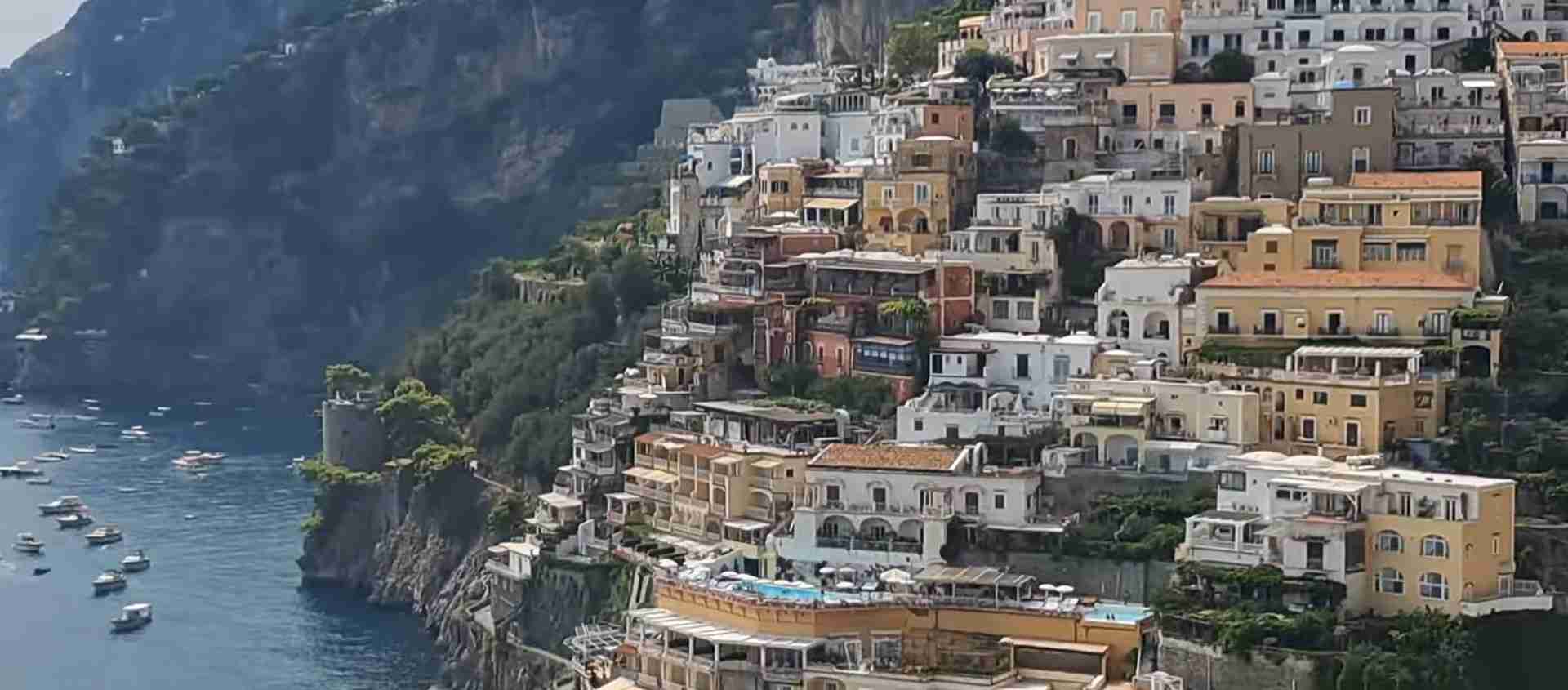
Arrive Positano at its small pier (Spiaggia Grande area) and immediately begin ascending through the town’s vertical labyrinth before heat and crowds intensify. Positano cascades down the mountainside in multicolored layers—pastel buildings stacked atop each other connected by staircases, pedestrian lanes, and occasional vehicle roads navigable only by compact cars and scooters. The town contains no flat areas, making comfortable walking shoes essential and mobility considerations critical for visitors with knee issues or limited stamina. The Church of Santa Maria Assunta with its iconic majolica-tiled dome sits near the beach level, offering photographic focal point visible from surrounding hills. The interior contains a 13th-century Byzantine Black Madonna icon, though most visitors appreciate the church primarily for exterior architecture.
Positano’s appeal centers on visual aesthetics and atmosphere rather than specific attractions—the pleasure comes from wandering narrow lanes discovering hidden corners, admiring architectural details and bougainvillea cascades, shopping fashion boutiques that established “Positano style” in 1960s, and experiencing the town’s cultivated glamour. Via dei Mulini and Via Cristoforo Colombo form principal shopping streets with boutiques selling linen clothing, handmade sandals, ceramics, and beach accessories at premium prices reflecting Positano’s luxury positioning. Budget travelers window shop rather than purchase, saving funds for better-value Amalfi or Ravello shopping.
Spiaggia Grande beach provides the coast’s most photogenic beach setting with Positano’s colorful buildings providing dramatic backdrop, though the beach itself consists of dark volcanic sand and pebbles rather than soft white sand. The public beach sections flanking central stabilimenti (beach clubs) permit free towel placement, while beach clubs rent loungers and umbrellas for €35-80 daily depending on position and season. Swimming in clear Mediterranean water offers refreshing break from climbing stairs, though be prepared for pebbly beach entry requiring water shoes for comfort. Budget 30-60 minutes for beach time if weather permits.
Lunch in Positano requires careful selection to avoid tourist-trap restaurants charging inflated prices for mediocre food based purely on premium locations. Da Vincenzo (Via Pasitea 172-178) serves authentic Amalfi Coast cuisine at €45-65 per person in family-run establishment earning local reputation. C’era una Volta (Via Marconi 127) offers good-value pasta and pizza €30-45 per person without waterfront premium. Chez Black (Spiaggia Grande beachfront) provides the iconic Positano beach dining experience at €50-70 per person—expensive but includes the setting and people-watching. Budget travelers purchase pizza slices or panini from takeaway shops for €8-15, eating on beach or benches while enjoying the view free. Positano restaurants charge 30-50% premium over equivalent quality in Amalfi for identical dishes—the location and glamour drive pricing rather than superior ingredients or preparation.
Depart Positano by 2:00-2:30 PM via SITA bus to Amalfi, then change buses for Ravello (total journey 90-120 minutes including wait time). Buses from Positano to Amalfi run approximately hourly April-October with more frequent summer service—purchase tickets at tabacchi shops or from drivers (€2.60 single Positano-Amalfi). The 45-60 minute journey follows the famous SS163 coastal road with hairpin turns, vertical drops, and spectacular views, though prone to motion sickness for susceptible travelers. Sit on the right side heading east from Positano to Amalfi for ocean views. At Amalfi Piazza Flavio Gioia bus terminal, immediately transfer to Ravello bus without exiting the terminal (€1.50 single Amalfi-Ravello, 25-minute journey). Ravello buses depart approximately hourly, so check schedules and time your arrival to minimize wait. Alternatively, purchase the €10 COSTIERASITA 24-hour pass covering unlimited SITA bus travel across the entire coast, worthwhile when making multiple journeys in one day.
Ravello sits 365 meters above sea level, accessed only via the winding mountain road from Amalfi—no coastal position means Ravello escaped mass tourism’s full impact while maintaining refined cultural atmosphere attracting classical music enthusiasts, garden lovers, and travelers seeking respite from beachfront crowds. The compact historic center clusters around Piazza Vescovado, entirely walkable within 10-15 minutes from any point to any other point. Unlike Positano’s overwhelming verticality, Ravello’s hillside setting creates more manageable topography for extended exploration.
Villa Rufolo, constructed 13th century for Amalfi’s merchant aristocracy, features Moorish-influenced architecture, terraced gardens where Richard Wagner composed scenes from Parsifal opera, and primary venue for summer Ravello Festival (late June through September). Entry costs €7 adults, €5 students and seniors over 65, with gardens open daily 9:00 AM-sunset (approximately 8:00 PM summer, 6:00 PM spring/fall). The gardens cascade down the hillside with Mediterranean plantings, shaded walkways, and the main terrace providing panoramic views across Amalfi town far below, the coastline extending to Maiori, and Salerno Gulf stretching to the horizon. Wagner Tower contains small museum about the composer’s Ravello visit. Budget 45-60 minutes for unhurried Villa Rufolo exploration and photography—the views alone justify the entry fee.
Villa Cimbrone Gardens, reached via 10-minute walk from Piazza Duomo through Ravello’s historic lanes, contains the Amalfi Coast’s single most famous viewpoint—the Terrazza dell’Infinito (Terrace of Infinity) lined with classical statues where the clifftop belvedere provides unobstructed panorama extending from Salerno to Capri. Entry costs €7 adults, €5 reduced rate for students/seniors, with gardens open daily 9:00 AM-sunset. The romantic English-style gardens, created early 20th century by English Lord Grimthorpe, feature tree-shaded paths, rose gardens, temples, grottoes, and statuary creating atmospheric setting beyond the famous terrace viewpoint. Villa Cimbrone functions as luxury hotel, but gardens remain publicly accessible for day visitors. Budget 60-90 minutes for complete garden exploration including extended time at the Terrace of Infinity for photography and contemplation—arrive late afternoon (4:00-5:00 PM) when light angles optimize the view and day-tour groups have departed.
Ravello Cathedral (Duomo) on Piazza Vescovado displays medieval bronze doors (1179), Byzantine ambo (pulpit) decorated with mosaics and carved reliefs, and atmospheric interior free to enter. The cathedral museum contains religious art and vestments, though most visitors focus on the main church rather than museum collections. Late afternoon (5:30-6:30 PM) provides optimal visiting time when tourist groups have dispersed and locals gather in Piazza Vescovado for evening passeggiata.
Dinner options in Ravello center on Piazza Vescovado and surrounding streets. Cumpa’ Cosimo (Via Roma 44-46) serves traditional Campanian cuisine in family-run trattoria at €35-50 per person with local wine. Ristorante Pizzeria Vittoria (Via dei Rufolo 3) offers pizza and pasta €25-40 per person in more casual setting. For upscale dining, Rossellini’s at Palazzo Avino features Michelin-starred cuisine at €120-180 per person. Ravello’s dining prices fall between Amalfi’s moderate rates and Positano’s premiums, with quality generally exceeding both due to the town’s refined cultural positioning attracting food-conscious visitors.
Return to Amalfi via SITA bus (last departures typically 8:00-9:00 PM depending on season—verify schedules in advance to avoid being stranded). The 25-minute descent provides twilight views over Amalfi’s illuminated waterfront. Arrive back at your Amalfi hotel by 9:30-10:00 PM, completing Day 2’s comprehensive coastal exploration covering the essential towns that most define the Amalfi Coast’s identity.
Day 3 in 2026: Path of the Gods Hike or Capri Island Excursion
Day three offers choice between the Amalfi Coast’s most spectacular hiking trail (Path of the Gods from Bomerano to Positano) or full-day island excursion to Capri, both requiring full-day commitment and early start. Choose based on weather conditions (hiking requires clear skies and dry trails), physical fitness (Path of the Gods demands moderate fitness and proper footwear), and personal interests (active outdoor experience versus island exploration and Blue Grotto visit).
Option A: Path of the Gods Hiking Experience in 2026
The Sentiero degli Dei (Path of the Gods) ranks among Italy’s most celebrated coastal hiking trails, traversing the ridgeline of the Lattari Mountains high above the Amalfi Coast with panoramic views extending from Positano to Capri across the Tyrrhenian Sea 500-600 meters below. The trail’s ancient origins as footpath connecting mountain villages predates modern road construction, preserving the route’s authentic character and spectacular positioning impossible to replicate via vehicle travel. The standard route from Bomerano (fraction of Agerola) to Nocelle (fraction of Positano) covers 7.8 kilometers requiring 2.5-3.5 hours hiking time depending on pace, physical fitness, and photo stops, with total journey time including transportation and breaks extending to full day.
Begin with early SITA bus from Amalfi Piazza Flavio Gioia to Agerola Bomerano (approximately 7:30-8:00 AM departure, verify current schedules). The bus climbs the mountain road to Agerola (45-60 minutes), depositing hikers at Bomerano where the trailhead begins clearly marked with signs. No entrance fee or advance booking required—the path remains public right-of-way accessible to all. Purchase the €10 COSTIERASITA 24-hour pass for this day’s extensive bus travel covering Amalfi-Agerola-Positano-Amalfi circuit.
Essential hiking requirements include proper footwear (hiking boots or trail running shoes with ankle support and grip—not sandals or casual sneakers), sun protection (hat, sunglasses, strong sunscreen), minimum 2 liters water per person (no reliable water sources along trail), snacks or packed lunch, fully charged mobile phone with downloaded offline trail map as mobile service proves unreliable, and light rain jacket if weather appears unsettled. The trail features uneven terrain, rocky sections requiring careful foot placement, moderate elevation changes with some steep segments, and complete exposure to sun without significant shade—attempting the hike unprepared leads to injury, dehydration, or exhaustion requiring emergency assistance.
The trail proper begins at Bomerano’s outskirts, immediately delivering the panoramic views that justify the route’s reputation. The path traverses high above the coastline through Mediterranean scrubland, terraced agricultural land still cultivated with grapes and vegetables, and rocky outcroppings providing natural viewpoints. Key landmarks along the route include the Grotta del Biscotto cave formation approximately 2 kilometers from Bomerano, Colle Serra high point offering 360-degree views at trail midpoint, and the final descent into Nocelle where the trail officially terminates. Fitness level determines pace—moderately fit hikers complete the route comfortably in 2.5-3 hours, while slower walkers or those stopping frequently for photography may require 4+ hours.
The trail presents moderate difficulty rather than easy or strenuous—expect some challenging segments requiring care, particularly the final descent into Nocelle with steep stairs, but overall manageable for anyone maintaining regular physical activity. The greatest danger comes from attempting the hike in inappropriate footwear, insufficient water, or during wet conditions when the rocky path becomes slippery. Multiple accidents occur annually from inadequate preparation rather than trail difficulty.
Upon reaching Nocelle (small fraction of Positano perched on the hillside), two descent options connect to Positano proper. The staircase route descends approximately 1,500 steps (roughly 450 vertical meters) directly into Positano’s upper town, taking 45-60 minutes and providing dramatic views but punishing on knees and requiring extreme caution on steep, uneven stairs. Alternatively, local shuttle bus operates between Nocelle and Positano centro during daylight hours (summer season April-October), costing €1-2 and completing the descent in 10-15 minutes—the sensible choice after 3+ hours hiking.
Arrive in Positano by early afternoon (1:00-2:00 PM if maintaining steady morning pace), allowing time for celebratory lunch at one of the town’s restaurants before returning to Amalfi via ferry or bus. Lunch in Positano post-hike feels earned rather than tourist indulgence—choose from Day 2 recommendations or try beachfront options. The ferry from Positano to Amalfi (€9-10, 15-25 minutes) provides relaxing return avoiding bus travel after full day’s physical activity. Return to Amalfi by 3:00-4:00 PM, leaving afternoon for beach relaxation, shopping, or resting before farewell dinner.
Option B: Capri Island Full-Day Excursion in 2026
Capri island offers alternative to hiking through full-day excursion combining ferry travel, island exploration including Anacapri’s elevated quarter, and optional Blue Grotto sea cave visit. This option suits travelers preferring island scenery, shopping, and boat-based experiences over hiking, or when weather conditions make Path of the Gods inadvisable due to rain, high winds, or extreme heat.
Depart Amalfi on early morning ferry to Capri (typically 8:30-9:00 AM departure, arriving Marina Grande 9:30-10:00 AM after approximately 60 minutes transit). Ferry companies including NLG and others operate April-October with multiple daily departures—book tickets one day in advance during summer or online to guarantee space. Cost €23 adults one-way including mandatory €2.50 Capri landing tax (total €46 round-trip), €14 children 2-12 years. Check schedules at official sources as departure times adjust seasonally and rough seas occasionally cancel service.
Upon arrival at Marina Grande port, multiple activity options present themselves. The Blue Grotto (Grotta Azzurra) represents Capri’s most famous natural attraction—sea cave accessible only by small rowboat through low entrance where sunlight filtering through underwater opening creates ethereal blue illumination of the interior. Access requires boat transfer from Marina Grande to grotto entrance (€17 round-trip), plus separate €15 entry fee and rowboat transfer (total approximately €32 per person), with visits possible only when seas permit safe entry through the low opening. Expect long queues July-August (45-90 minute waits common), rough seas frequently preventing access entirely, and brief time inside the cave (5-10 minutes) making the experience expensive relative to duration. However, the blue illumination effect remains genuinely extraordinary when conditions permit access.
Alternative to Blue Grotto queue, take the funicular from Marina Grande to Capri town (€2 each way, 5-minute journey) or bus to Anacapri (€2.10, 15 minutes). Capri town features the famous Piazzetta (Piazza Umberto I) functioning as island’s social center, designer boutiques along Via Camerelle, and Gardens of Augustus providing panoramic viewpoint over Faraglioni rock formations. Anacapri at 275 meters elevation offers Villa San Michele with beautiful gardens (€10 entry), chairlift to Monte Solaro summit at 589 meters for island’s highest viewpoint (€12 one-way, €16 round-trip), and more authentic atmosphere compared to Capri town’s tourist concentration.
Budget minimum 6-7 hours on island (depart Amalfi 8:30 AM, return 4:00-5:00 PM) for meaningful exploration beyond rushed highlight-checking. Lunch on Capri costs significantly more than Amalfi Coast equivalent—expect €50-80 per person for sit-down restaurant meal, €20-30 for casual panini and pizza. The island’s restaurant quality varies dramatically with many establishments serving mediocre food at premium prices to captive tourist market. Research specific recommendations rather than choosing randomly.
Return ferries from Capri to Amalfi depart approximately 3:00-6:00 PM depending on season (verify schedules), with last departure typically 5:00-5:30 PM. Missing the last ferry necessitates overnight stay on Capri or expensive water taxi to mainland (€200-400). Arrive at Amalfi by 5:00-6:00 PM, concluding the island excursion day.
Transportation Guide for Amalfi Coast 2026
Ferry service operates along the Amalfi Coast April-October exclusively, connecting Amalfi with Positano (15-25 minutes, €9-10 one-way), Salerno (35-60 minutes, €8-12), Capri (60 minutes, €23 including landing tax), Sorrento (40-70 minutes, €18-24), and other coastal towns. Multiple companies including NLG, Travelmar, Alilauro, and others operate overlapping routes with varying departure times and ticket prices. Ferry advantages include faster transit than buses for most routes, spectacular coastal views from sea level, comfortable seating avoiding motion sickness from winding roads, and direct point-to-point service bypassing traffic congestion affecting road transport. Disadvantages include seasonal operation only (suspended November-March except Sorrento-Naples route), weather-dependent service canceled during rough seas, limited daily departures requiring schedule planning, and higher cost than bus alternatives.
Purchase ferry tickets at port ticket offices (Amalfi’s located at the main port near Piazza Flavio Gioia), from company websites for advance booking, or occasionally from authorized travel agencies. Advance booking guarantees specific departure times and prevents sold-out disappointments during July-August peak season when ferries fill entirely—book minimum 2-3 days ahead for summer weekends and holidays. Arrive at departure port 15-20 minutes before scheduled departure for boarding procedures. Luggage restrictions permit one carry-on bag per person included in ticket price, with larger bags charged €2-3.50 supplement depending on company. Present booking voucher at ticket office to exchange for boarding pass, then proceed to designated pier for departure.
SITA bus service operates year-round connecting all Amalfi Coast towns via the SS163 coastal road, providing essential public transportation when ferries aren’t running and budget alternative when they are. Single journey tickets cost €1.50-6.80 depending on distance (Ravello-Amalfi €1.50, Amalfi-Positano €2.60, Sorrento-Amalfi €5.10), purchased at tabacchi shops displaying SITA sign, authorized vendors, or from bus drivers with €0.50 surcharge. The €10 COSTIERASITA 24-hour pass permits unlimited bus travel across the entire coastal network for 24 hours from first validation, worthwhile when making 3+ journeys in one day—validate the pass in the yellow machine aboard first bus, then simply board subsequent buses showing the validated pass.
SITA buses operate approximately every 30-60 minutes during summer season on main routes (Amalfi-Positano, Amalfi-Salerno, Sorrento-Amalfi), with reduced frequency spring/fall and minimal winter service. Buses fill entirely during July-August, particularly 9:00 AM-6:00 PM, creating situations where 2-3 buses pass full without accepting additional passengers before space becomes available. Board at major terminals (Amalfi Piazza Flavio Gioia, Positano Sponda, Sorrento Circumvesuviana station) rather than roadside stops to guarantee boarding. The winding coastal road creates significant motion sickness risk for susceptible travelers—sit near front of bus, focus on horizon through windscreen, avoid reading or mobile phone use, and consider anti-nausea medication. Journey times vary dramatically based on traffic—Amalfi to Positano requires 45-75 minutes depending on congestion, summer weekends adding 30-50% to standard transit times.
Private transfers via car service or taxi provide most comfortable transportation option at premium cost. Rates operate fixed or metered depending on route and negotiation—Amalfi to Positano approximately €60-80, Amalfi to Ravello €30-40, Naples airport to Amalfi €140-180. Arrange through hotel concierge, established car services, or pre-book via email before arrival. Verify exact pricing including all charges before departure to prevent surprise surcharges. Benefits include door-to-door service, luggage assistance, air conditioning, scheduling flexibility, and route selection avoiding worst traffic when knowledgeable drivers use alternatives. The high cost makes private transfer most practical for groups of 3-4 people splitting charges or travelers with mobility limitations preventing ferry/bus use.
Walking represents essential Amalfi Coast transportation within towns and between closely-spaced settlements. Amalfi to Atrani takes 5-10 minutes via waterfront promenade and connecting path—this lovely walk allows experiencing two towns without transportation. Ravello to Scala descends via scenic pathway through 45-60 minutes. Positano requires extensive stair climbing regardless of starting point due to extreme vertical topography. Comfortable walking shoes prove non-negotiable—fashion sneakers, sandals, or casual footwear lead to blisters, twisted ankles, and exhaustion from inadequate support on uneven cobblestones and staircases.
Accommodation Strategies for 2026 Amalfi Coast Visits
Amalfi Coast accommodation in 2026 ranges from budget hostels and guesthouses (€45-120 nightly) through mid-range hotels (€150-450) to luxury properties (€600+), with dramatic price variations between towns, seasons, and booking timing making strategic planning essential for budget management. The region ranks as Italy’s most expensive accommodation market where equivalent quality costs 50-100% more than Rome, Florence, or Venice, driven by limited supply from challenging vertical geography restricting buildable land, overwhelming tourist demand, and premium locations commanding extraordinary real estate values.
Budget accommodation (€45-120 per night) concentrates in less-famous towns including Maiori, Minori, Cetara, and Salerno on the coast’s periphery, where family-run B&Bs, guesthouses, and small hotels serve economy-conscious travelers. Properties in this category typically offer basic private rooms with ensuite bathrooms, simple breakfast (coffee, pastries, sometimes eggs), WiFi connectivity, and proximity to bus stops for onward transportation. Expect simple furnishings without luxury amenities, limited English proficiency among older proprietors, buildings without elevators requiring luggage carries up multiple flights, and basic housekeeping rather than full hotel service. However, cleanliness, safety, and authentic local character often exceed higher-priced tourist hotels, with proprietors providing genuine hospitality and local recommendations. Book budget properties 1-2 months in advance for summer travel as limited inventory fills despite lower prices. Salerno outside the UNESCO-protected coastline offers cheapest options from €45-85 nightly but requires 60-90 minute commutes to coastal attractions via ferry or bus.
Mid-range accommodation (€150-300 per night) in Amalfi town provides optimal balance of quality, location, and value for three-day first visits. Properties in this tier offer comfortable rooms with modern bathrooms, satellite TV, air conditioning, minibars, breakfast buffets or room service, WiFi, often sea or town views, and professional service including concierge assistance with restaurant reservations and transportation arrangements. Many occupy renovated historic buildings with original architectural details balanced by contemporary comfort standards. Location within Amalfi’s compact center permits walking to restaurants, shops, ferry port, and bus terminal without taxis. Examples include Hotel Aurora (Piazzale dei Protontini), Hotel Floridiana (Via Brancia), and Residenza del Duca (Via Mastalo II) offering reliable quality at €150-280 nightly depending on room category and season. Book 3-6 months in advance for May-September visits as desirable properties sell out entirely, leaving only inferior rooms or walk-in rates 40-60% above advance-booking prices.
Luxury accommodation (€300-1,200+ per night) concentrates in Positano, Ravello, and select Amalfi properties, providing exceptional locations (clifftop positions, private beaches, infinity pools), superior service (butler service, private transfers, Michelin-dining), and exclusive atmospheres attracting honeymoon couples and affluent travelers. Positano’s luxury tier includes Hotel Le Sirenuse (€600-1,200+ nightly), Il San Pietro di Positano (€800-1,500+), and Villa Tre Ville (€1,000-2,000+), while Ravello features Belmond Hotel Caruso (€600-1,000+) and Palazzo Avino (€500-900+). These properties justify extreme pricing through impeccable service, exclusive positioning, Michelin-starred or acclaimed dining, extensive amenities (spas, fitness facilities, private beaches accessed via hotel funiculars), and the intangible glamour attracting celebrity guests. Book luxury properties 6-12 months in advance for peak season as limited inventory creates intense competition.
Seasonal pricing follows predictable patterns with July-August commanding peak rates, May-June and September-October charging 20-30% less for equivalent quality, and November-March (when properties remain open) offering 40-50% discounts offset by reduced services and many closures. Minimum stay requirements of 2-3 nights apply at many properties during summer weekends and holidays. Payment typically requires full prepayment or substantial deposits at booking with cancellation policies varying from flexible to strictly non-refundable. City tax (tassa di soggiorno) adds €1-5 per person per night depending on property category, collected in cash at checkout rather than included in prepaid rates.
For this three-day itinerary, mid-range Amalfi town hotel totaling €450-900 for three nights (€150-300 nightly) provides recommended accommodation strategy, avoiding the logistical complications of changing hotels while maximizing transportation access and maintaining comfortable standards without Positano’s extreme costs.
Dining and Food Budget for 2026
Daily food costs in 2026 average €70-90 per person for mid-range dining preferences including restaurant lunch (€20-30), restaurant dinner (€50-60), plus coffee, gelato, and snacks (€10-15). This assumes one proper sit-down restaurant meal for lunch and one for dinner, typical Italian pacing for travelers experiencing local cuisine. Budget strategies reducing costs to €40-60 daily include pizza or panini lunches (€10-18), single restaurant dinner (€50-60), and limited coffee/gelato purchases. Luxury dining increasing costs to €120-180+ daily involves upscale restaurants for both lunch and dinner (€70-100 each meal) plus cocktails and premium café experiences.
Breakfast included at most hotels eliminates this expense—continental buffets provide coffee, pastries, breads, jams, cereals, yogurt, fruit, and sometimes eggs. Hotels charging separately for breakfast typically request €10-18 per person. Alternatively, Italian breakfast at cafes costs €3-6 for espresso/cappuccino plus cornetto (croissant), consumed standing at bar following local custom rather than sitting (seated service doubles prices).
Lunch costs €20-30 per person at mid-range trattorias for two courses including primo piatto (pasta) or secondo piatto (fish/meat) plus side dishes, water, and possibly wine or beer. Pizzerias charge €10-18 for individual pizza plus drink. Panini shops sell filled sandwiches €6-10. Cuoppo (fried seafood cone) from vendors costs €12-18. Budget picnic lunches assembled from alimentari shops total €8-15 per person—fresh mozzarella, prosciutto, tomatoes, bread, fruit, and water consumed at scenic viewpoint or beach.
Dinner costs €50-60 per person at mid-range restaurants for complete meal including appetizer, primo piatto, secondo piatto, contorno (vegetable side), dessert or fruit, house wine by the carafe, water, and coffee. Ordering only two courses rather than full four-course progression reduces costs to €35-45. Upscale restaurants charge €70-100+ for equivalent meal progression with superior ingredients, more refined preparations, premium wine selections, and elegant settings. Positano restaurant meals cost 30-50% more than identical quality in Amalfi for all categories—the location premium affects prices without corresponding quality improvement.
Beverages add significantly to meal costs beyond house wine. Bottled water costs €2-4 (still or sparkling), espresso €1.30-1.80, cappuccino €1.50-1.80, beer €4-7, wine by glass €5-10, cocktails €12-18. Limoncello often arrives complimentary after dinner as digestivo (traditional hospitality gesture), though tourist-focused restaurants sometimes charge. Regional wines from Costa d’Amalfi DOC producers cost €18-45 per bottle at restaurants, offering superior quality-value ratio compared to national labels marked up excessively.
Coperto (cover charge) of €2-4 per person appears on most restaurant bills, covering bread, table setting, and service overhead. Service charge (servizio) varies—some restaurants include 10-15% in total, others leave tipping discretionary. When service isn’t included, leaving 5-10% represents appropriate tip. Excessive American-style 20% tipping proves unnecessary and culturally incongruous.
Daily Budget Breakdown for 2026
Three-day Amalfi Coast budget for mid-range traveler totals €840-1,320 per person excluding international flights, broken down across accommodation, daily expenses, and transportation as follows.
Accommodation represents largest single expense category. Mid-range Amalfi town hotel costs €150-300 per night for double room, totaling €450-900 for three nights. Budget travelers reducing accommodation to Maiori/Minori guesthouses (€45-85 nightly) or Salerno hotels (€50-100) save €180-420 total but accept less convenient locations. Luxury Positano hotels (€600-1,200 nightly) increase accommodation costs to €1,800-3,600 for three nights—only justified for special occasions or travelers prioritizing glamour over value.
Daily expenses covering meals, local transportation, attractions, and incidentals average €120-180 per person, totaling €360-540 across three days. Day 1 in Amalfi includes lunch €25-35, Amalfi Cathedral cloister entry €3, dinner €50-60, coffee/gelato/snacks €10-15, for daily total approximately €90-115. Day 2 to Positano and Ravello includes ferry Amalfi-Positano €9, Positano lunch €30-45, bus tickets Positano-Amalfi-Ravello-Amalfi €5, Villa Rufolo entry €7, Villa Cimbrone entry €7, Ravello dinner €40-55, snacks €10-15, for daily total €110-140. Day 3 Path of the Gods or Capri includes either bus pass €10 and packed lunch €15 plus Positano post-hike meal €40-55 (hiking option, total €65-80), or Capri ferry round-trip €46, Blue Grotto €32, Capri lunch €50-70, island transport €10-15 (Capri option, total €140-165). The three-day expense total averages €360-540 per person depending on choices and dining preferences.
Budget reduction strategies decrease total three-day costs to €600-900 per person through Salerno accommodation (€50-100 nightly, total €150-300 for three nights), pizza and simple pasta meals reducing food costs to €40-60 daily (€120-180 total), exclusive SITA bus use avoiding ferry expenses (€30-40 total for all journeys), skipping paid attractions (€14 saved), and limiting restaurants to dinners only with picnic lunches. This minimum viable budget permits experiencing the destination without luxury or excessive comfort but requires accepting inconvenient Salerno location, basic accommodation standards, limited dining quality, and budget-conscious decision-making throughout.
Luxury spending increases three-day total to €2,000-4,000+ per person through Positano hotels (€600-1,200 nightly, €1,800-3,600 for three nights), upscale restaurant meals three times daily (€80-100 lunch, €100-150 dinner, €300-750 daily food costs totaling €900-2,250), private boat Capri excursion (€400-800), private car transfers replacing public transport (€200-300 total), and premium experiences including spa treatments and exclusive tours.
Practical Planning Tips for 2026
Advance booking timelines significantly impact Amalfi Coast trip quality and costs. Book accommodation 3-6 months in advance for May-September visits as quality properties sell out entirely by March-April, leaving only inferior locations or premium walk-in rates. Ferry tickets require 2-7 days advance booking for July-August to guarantee specific departures and prevent sold-out disappointments—book immediately upon finalizing daily schedule. Restaurant reservations in Positano and upscale Ravello/Amalfi establishments need 3-7 days notice for summer dinner, though mid-range trattorias and pizzerias accept walk-ins if arriving by 8:00 PM. The SITA bus pass and individual tickets require no advance purchase—buy from tabacchi shops or drivers as needed.
Weather planning recognizes that late April through June and September through October provide optimal conditions (20-27°C, operational ferries, manageable crowds), while July-August brings intense heat (28-32°C uncomfortable for hiking), and November-March sees business closures and suspended ferry service. Check 10-day weather forecasts before finalizing daily schedule, particularly for Path of the Gods hike requiring dry conditions and clear skies for safety and view quality. Rough seas cancel ferry service unpredictably—always maintain bus backup plan when ferries represent critical schedule component.
Packing essentials include comfortable walking shoes with ankle support for cobblestone streets and hiking trails (not fashion sneakers or sandals), sun protection (strong SPF 50 sunscreen, wide-brimmed hat, quality sunglasses), modest clothing for cathedral visits covering shoulders and knees, light layers accommodating temperature variations from sea level to mountain villages, and refillable water bottle reducing plastic waste and costs. Beach items if swimming include swimsuit, quick-dry towel, and water shoes for rocky beach entries. Photography equipment should include fully-charged phone or camera, portable charging bank, and protective cases against sun, salt, and accidental drops.
Money matters require carrying adequate cash as smaller trattorias, SITA bus drivers, market vendors, and some shops accept only euros in bills and coins. ATMs exist in all towns but charge €3-5 withdrawal fees plus home bank foreign transaction charges. Credit cards gain increasing acceptance at hotels, established restaurants, and larger shops, though American Express receives limited acceptance compared to Visa and Mastercard. Budget €50-100 daily cash per person for meals, transport tickets, gelato, coffee, and incidental purchases. Notify credit card companies about Italy travel dates preventing fraud blocks that disable cards when international charges appear.
Mobile phone and internet access proves essential for navigation, schedule checking, restaurant research, and accommodation communication. European SIM cards (€10-20 for 2-8GB data) purchased at Naples airport or in Amalfi provide cheapest data access compared to international roaming charges (verify home carrier costs). Download offline Google Maps covering the entire Amalfi Coast before arrival as mobile signals prove unreliable in tunnels, on ferries, and along hiking trails. Key apps include Google Maps, Google Translate, ferry schedule websites, SITA bus schedules, and restaurant review platforms. WhatsApp provides free messaging to hotels, restaurants, and tour operators via WiFi connections.
Safety considerations remain minimal as the Amalfi Coast sees low violent crime. Petty theft including pickpocketing and bag snatching occurs in crowded ferry terminals, buses, and tourist attractions—keep valuables secured in internal pockets or money belts rather than easily accessible purses and backpack exterior pockets. Leave unnecessary valuables and backup credit cards in hotel safe. The primary safety risk comes from traffic accidents involving pedestrians—the narrow SS163 road features blind curves, fast-moving vehicles, and minimal pedestrian infrastructure making roadside walking extremely dangerous. Use designated walkways and crossings, exercise extreme caution when sidewalks don’t exist, and never assume drivers see pedestrians or yield right-of-way. Hiking risks include dehydration, sunstroke, twisted ankles, and getting lost—adequate water, sun protection, proper footwear, and downloaded trail maps prevent most incidents.
Cultural etiquette requires basic Italian courtesies improving local interactions. Learn essential phrases: buongiorno (good morning), buonasera (good evening, after 2:00 PM), grazie (thank you), per favore (please), mi scusi (excuse me), parla inglese? (do you speak English?). Greet shopkeepers and restaurant staff upon entering establishments rather than immediately requesting service. Dress modestly for cathedral visits avoiding shorts, tank tops, and revealing clothing. Don’t consume food or beverages inside churches. Avoid loud conversations and disruptive behavior in quiet towns like Ravello where residents prize tranquil atmosphere. Photograph local residents only after requesting permission. Support authentic businesses over tourist-trap establishments by seeking local recommendations.
Alternative Day 3 Options Beyond Path of the Gods and Capri
If the Path of the Gods hike or Capri excursion doesn’t appeal, several alternative Day 3 options deliver worthwhile Amalfi Coast experiences through different activities and destinations. The Valle delle Ferriere Nature Reserve offers moderate hiking through lush canyon environment with waterfalls, rare ferns, and abandoned iron mills, accessed via trailhead near Amalfi Duomo climbing into the mountains behind town. The 12-kilometer round-trip hike requires 4-5 hours total with moderate elevation gain, showcasing the coast’s mountain ecology rather than coastal panoramas. Entry costs nothing though guided tours (€40-60 per person) provide natural history interpretation and ensure route-finding through sometimes-unclear trail junctions.
Praiano and small coastal towns offer authentic village atmosphere without Positano’s overwhelming tourism or Amalfi’s commercial focus. Reach Praiano via SITA bus from Amalfi (€2.60, 30 minutes), exploring the quiet fishing village’s vertical lanes, Chiesa di San Gennaro with beautiful majolica-tiled facade, and beaches including Marina di Praia accessed via long staircase. Continue to Furore’s fiordo (fjord)—dramatic gorge where the coastal road crosses via arched bridge high above tiny pebble beach wedged between sheer rock walls. Atrani, Amalfi’s immediate neighbor accessible via 5-minute waterfront walk, preserves medieval urban fabric and local character in what ranks among Italy’s smallest municipalities. These explorations combine easily on single day via SITA buses, revealing the coast beyond its famous highlights.
Cooking class experiences teach traditional Amalfi Coast preparations including scialatielli pasta from scratch, seafood dishes using morning market purchases, and limoncello production. Multiple providers in Amalfi, Ravello, and surrounding areas offer half-day or full-day programs (€80-150 per person) including market visits, hands-on cooking instruction, and shared meals featuring prepared dishes. Mamma Agata in Ravello represents the most famous option given her history cooking for Hollywood celebrities, though numerous quality alternatives exist at lower prices with less advance booking required. Classes provide cultural immersion and practical skills transferable to home cooking while avoiding the physical demands of all-day hiking.
Cetara specializes in alici (anchovies) and colatura di alici production, the fermented anchovy condiment descended from ancient Roman garum. The working fishing village 10 kilometers east of Amalfi via SITA bus (€2, 20 minutes) maintains authentic character with morning fish markets, anchovy-focused restaurants, and producers selling colatura directly including Delfino Battista’s harbor-front shop. Visit Cetara’s small beaches less crowded than Amalfi or Positano, dine at seafood restaurants specializing in fresh anchovy preparations (marinated, fried, or in pasta with colatura), and purchase artisanal colatura (€12-20 for quality bottles) directly from producers. Combine Cetara with Vietri sul Mare, the coast’s eastern terminus famous for ceramic production, visiting workshops and the Ceramics Museum (€2.50 entry) displaying local majolica traditions.
Boat excursions along the coastline provide perspective impossible from land, revealing hidden coves, grottos accessible only by water, and the dramatic vertical geography from sea level. Private boat rentals (€200-400 for half-day depending on boat size and season) permit customized itineraries, while small-group tours (€70-130 per person) follow established routes with swimming stops, snorkeling equipment, and prosecco service. Destinations include Emerald Grotto (Grotta dello Smeraldo) near Conca dei Marini featuring green light effects similar to Capri’s Blue Grotto but accessible without extreme queues, isolated beaches reachable only by boat, and coastal perspectives making clear why the Amalfi Coast earned UNESCO protection.
Frequently Asked Questions About Amalfi Coast 3-Day Trips in 2026
What’s the best base town for a first visit to the Amalfi Coast in 2026?
Amalfi town provides optimal base for first-time three-day visits in 2026 through central positioning on the coast permitting ferry and bus access to all destinations, mid-range accommodation pricing (€150-300 nightly) substantially below Positano’s rates (€300-600+) for equivalent quality, significant historical attractions including the 9th-century cathedral reducing dependence on daily excursions, and authentic working-town character balancing tourism with local vitality. The port and Piazza Flavio Gioia bus terminal function as transportation hub where all ferry routes and SITA bus lines converge, eliminating the connection complications affecting other towns. Staying three consecutive nights in Amalfi avoids daily hotel changes, luggage transport hassles, and checkout/check-in time waste while maximizing exploration hours. Budget-conscious travelers achieve better value in Maiori or Minori (30% lower costs) but accept less convenient transportation requiring bus connections through Amalfi for most destinations. Luxury seekers prioritizing glamorous atmosphere choose Positano despite premium pricing, limited direct connections necessitating travel through Amalfi, and extreme crowds, accepting these drawbacks for the town’s celebrated aesthetic appeal and upscale restaurant/shopping scene.
Should I rent a car for the Amalfi Coast in 2026?
Renting a car creates more problems than solutions for most Amalfi Coast visitors in 2026 due to the narrow, winding SS163 coastal road featuring hairpin turns and blind curves challenging even experienced drivers, aggressive local driving habits including buses and delivery trucks monopolizing road width, summer traffic jams lasting 2-3 hours on 10-kilometer stretches, parking scarcity with most towns offering minimal paid lots charging €25-40 daily when space exists, and ZTL (limited traffic zones) restricting vehicle access to historic centers. The combination of ferry service (April-October) and SITA buses provides comprehensive public transportation coverage reaching all destinations more comfortably and affordably than private vehicle travel. However, car rental makes sense for specific circumstances including visiting inland mountain towns like Tramonti inaccessible via public transport, creating customized itineraries combining Amalfi Coast with Cilento region to the south or Pompeii/Vesuvius to the north, traveling with mobility-impaired companions unable to navigate stairs and ferries, or visiting during November-March when public transportation operates minimal schedules. Rent smallest available vehicle for maneuverability on narrow roads, add comprehensive insurance coverage including collision damage waiver, and book hotel with guaranteed parking to avoid daily garage searches. First-time visitors relying exclusively on coastal town visits should skip car rental and use public ferries and buses.
Can I do the Path of the Gods hike without a guide in 2026?
Independent hiking of the Path of the Gods requires no guide or permit as the trail remains public right-of-way accessible to all without entry fees or advance reservations, though success demands adequate preparation including proper footwear (hiking boots or trail running shoes with ankle support), minimum 2 liters water per person, sun protection (hat, sunscreen, sunglasses), downloaded offline trail maps as mobile signals prove unreliable, and realistic fitness assessment recognizing the 7.8-kilometer route with moderate elevation changes requires 2.5-3.5 hours hiking time. The trail features clear markings and straightforward route-finding for most sections, though several junctions present navigation challenges where wrong turns extend distance or create dead ends—offline maps from hiking apps like Maps.me or AllTrails prevent getting lost. Guided tours (€40-80 per person) provide natural history interpretation, guarantee correct route navigation, offer emergency support if injuries or exhaustion occur, and include round-trip transportation from Amalfi to Bomerano trailhead plus descent shuttle from Nocelle to Positano, worthwhile for inexperienced hikers uncertain about independent navigation or preferring group safety and educational component. The greater risk comes from attempting the hike in inappropriate footwear leading to twisted ankles, insufficient water causing dehydration particularly during hot summer months, or wet conditions making rocky sections dangerously slippery—proper preparation prevents 95% of problems requiring rescue assistance.
How early should I book hotels and ferries for June 2026?
June 2026 Amalfi Coast travel requires hotel booking 3-6 months in advance (December 2025-March 2026) as quality properties in desirable locations sell out entirely by April, leaving only inferior rooms without views, properties requiring steep uphill walks from town centers, or premium walk-in rates 40-60% above advance-booking prices. Popular hotels in Amalfi, Positano, and Ravello fill first with June representing peak shoulder-season demand combining excellent weather, operational ferries, and manageable crowds before July-August overwhelming influx. Ferry tickets need 3-7 days advance booking for June weekends and holidays to guarantee specific departure times and prevent sold-out disappointments, particularly for Capri routes filling fastest. Weekday ferries maintain better availability permitting 1-2 day advance booking sufficiency. Purchase ferry tickets online through company websites or at port ticket offices upon arrival in Amalfi if traveling weekdays, but book weekends immediately upon finalizing daily schedule. Restaurant reservations at upscale Positano establishments and celebrity chef restaurants require 5-7 days notice for June dinner, while mid-range trattorias and pizzerias accept walk-ins if arriving by 8:00 PM. SITA bus tickets and day-tour bookings require no advance purchase except for specialized activities like cooking classes or private boat excursions booking 1-2 weeks ahead.
What should I pack for three days on the Amalfi Coast in 2026?
Essential packing for three-day Amalfi Coast visit includes comfortable walking shoes with ankle support and grip for cobblestone streets, staircases, and hiking trails (absolutely non-negotiable—fashion sneakers or sandals lead to blisters and ankle injuries), sun protection including SPF 50+ sunscreen applied generously and reapplied every 2 hours, wide-brimmed hat, and quality polarized sunglasses, modest clothing for cathedral visits covering shoulders and knees (lightweight scarf or shawl works for women), light layers including long-sleeve shirt and light jacket for temperature variations between sea level and mountain villages or air-conditioned ferries, swimsuit and quick-dry towel if planning beach time, refillable water bottle reducing plastic waste and costs (1-liter capacity minimum), small daypack for carrying water, sunscreen, camera, and purchases, and portable phone charging bank as photo-taking depletes batteries quickly. Medications should remain in original packaging with prescriptions if questioned at customs, including any motion sickness preventatives for ferry and bus travel. Photography equipment should include phone or camera with adequate storage capacity plus protective case against sun, salt spray, and accidental drops. If hiking the Path of the Gods, add hiking boots or trail running shoes with ankle support, 2-liter water capacity, energy snacks or packed lunch, first aid kit with bandages and pain relievers, rain jacket if weather appears unsettled, and downloaded offline trail maps as backup navigation. Avoid overpacking—three days permits carrying everything in standard carry-on luggage without checked bag complications.
Is the Amalfi Coast suitable for families with children in 2026?
The Amalfi Coast accommodates families with children though several factors require consideration including extreme vertical topography featuring countless staircases challenging for strollers and tiring for young children, limited sandy beaches with most coastal access via pebbles or rocks uncomfortable for barefoot play, heat intensity during summer months (July-August reaching 28-32°C) exhausting for children, packed ferries and buses uncomfortable with strollers and creating safety concerns, and expensive family dining as children’s menus remain uncommon and portions run adult-sized. Families with children under 5 years face particular challenges from stroller inaccessibility on stairs, frequent carrying needs up vertical towns, and limited age-appropriate activities beyond beach time. However, children 8+ with reasonable fitness enjoy the dramatic scenery, ferry journeys, gelato consumption, beach swimming, and novelty of vertical towns, particularly during shoulder seasons (May-June, September-October) when heat and crowds diminish. Family-friendly strategies include basing in Maiori offering the coast’s longest beach with playground areas and flat waterfront promenade, avoiding the Path of the Gods hike in favor of shorter Valle delle Ferriere walk or boat excursions appealing to children, choosing accommodation with pools providing alternatives to beach outings, dining at pizzerias and simple trattorias rather than upscale restaurants where fidgeting children disturb other diners, and maintaining flexible schedules permitting afternoon rests avoiding peak heat and over-scheduling fatigue. Teenagers generally enjoy the Amalfi Coast without special accommodations beyond standard family travel considerations.
What’s the weather like on the Amalfi Coast in different months of 2026?
Amalfi Coast weather patterns follow Mediterranean climate with hot dry summers, mild wet winters, and optimal conditions during spring and autumn shoulder seasons. April sees average temperatures 14-20°C with increasing sunshine, occasional rain showers, and ferry service beginning late month creating good value with fewer tourists though some establishments remain closed from winter. May delivers ideal conditions at 17-24°C with comfortable warmth, minimal rain, spring wildflowers along hiking trails, and operational ferries without peak-season crowds. June temperatures rise to 21-28°C with hot sun requiring substantial sun protection, rare rainfall, full ferry schedules, and increasing tourist numbers though still manageable compared to peak summer. July-August brings intense heat at 24-32°C uncomfortable for midday activity, overwhelming crowds, highest prices, and virtually guaranteed sunshine though occasional afternoon thunderstorms provide brief relief. September maintains warm 22-28°C with diminishing crowds after European school terms resume, calmer seas after summer wind patterns, harvest season celebrations, and excellent overall conditions. October cools to 17-23°C with increasing rain probability but still predominantly sunny, fewer tourists, and some establishments beginning winter closures by month’s end. November-March sees 10-16°C temperatures, frequent rain, rough seas canceling ferry service, and 50% of businesses closed making these months suitable only for travelers prioritizing solitude and low costs over optimal conditions. Swimming season runs June-September when water temperatures reach 22-26°C, though hardy swimmers enter May and October when water stays around 18-20°C.
How much Italian language do I need for the Amalfi Coast in 2026?
English proficiency varies dramatically across the Amalfi Coast with Positano, Amalfi town, and Ravello offering widespread English among hotel staff, restaurant servers in tourist-focused establishments, and shop employees catering to international visitors, making language barriers minimal for standard tourist transactions. However, authentic local restaurants in smaller towns, SITA bus drivers, market vendors, and older residents often speak limited or no English, making basic Italian vocabulary useful for smoother interactions. Essential phrases include buongiorno (good morning), buonasera (good evening, used after 2:00 PM), grazie (thank you), per favore (please), mi scusi (excuse me), parla inglese? (do you speak English?), il conto per favore (the check please), and quanto costa? (how much does it cost?). Numbers 1-20 permit understanding prices when told verbally. Food vocabulary for restaurant ordering—acqua (water), vino (wine), carne (meat), pesce (fish), pasta, pizza, gelato, caffè (espresso)—covers basic needs. Most restaurant menus include English translations of varying quality from accurate to incomprehensible machine translation, making pointing at desired dishes effective backup communication. Google Translate app with downloaded Italian language pack permits offline translation via camera function for reading signs and menus, plus simple conversation. Learning basic courtesies demonstrates respect for local culture and improves reception from residents tired of tourists making no linguistic effort, though functional English skills among service industry workers prevent language from becoming significant obstacle to enjoyable visit.
Can I visit the Amalfi Coast as a day trip from Rome or Naples in 2026?
Day trips from Naples to the Amalfi Coast prove feasible though rushed, covering 3-4 hours round-trip transportation leaving only 5-6 hours for coastal exploration insufficient to experience the destination properly. Depart Naples by 7:00-7:30 AM via Circumvesuviana train to Sorrento (70 minutes) followed by SITA bus or ferry to Amalfi (additional 60-75 minutes), arriving approximately 9:30-10:00 AM. Explore Amalfi town 2-3 hours including cathedral and lunch, then return via same route departing by 3:00-4:00 PM to reach Naples by 6:00-7:00 PM. This compressed schedule permits only Amalfi town itself without visiting Positano, Ravello, or hiking the Path of the Gods, making the significant transportation effort yield minimal coastal experience. Day trips from Rome prove completely impractical given 5-6 hours round-trip transportation (Rome to Naples 70 minutes by high-speed train, Naples to Amalfi 2-2.5 hours each direction) leaving virtually no time for actual coastal exploration. Organized bus tours from Rome or Naples to the Amalfi Coast operate daily, typically visiting Positano and Amalfi with 1-2 hours in each town, costing €70-130 per person and providing surface-level introduction without meaningful exploration depth. These day trips suit travelers with extremely limited time accepting superficial exposure over proper visits, but anyone with scheduling flexibility should allocate minimum two nights (three days) on the coast itself rather than day-tripping from distant bases sacrificing valuable exploration time to repetitive transportation.
What’s the best way to get to the Amalfi Coast from Naples in 2026?
Multiple transportation options connect Naples to the Amalfi Coast with optimal choice depending on budget, luggage quantity, arrival timing, and destination town. The most economical route combines Circumvesuviana train from Naples Centrale or Garibaldi station to Sorrento (€5, 70 minutes, departures every 30 minutes 6:00 AM-9:00 PM) followed by SITA bus from Sorrento to Amalfi (€5.10, 75 minutes) or ferry April-October (€18-24, 40-70 minutes), totaling €10-29 per person and 2.5-3.5 hours depending on connections. This option works well for solo travelers or couples with minimal luggage willing to navigate train/bus transfers. Private transfer via car service completes the journey in 90 minutes door-to-door for €140-180 total, worthwhile for groups of 3-4 people splitting costs (€35-60 per person) or travelers with substantial luggage, tight schedules, or mobility limitations preventing train/bus navigation. The driver meets at Naples airport arrivals or train station, assists with luggage, provides air-conditioned comfort, and delivers directly to Amalfi hotel. Alternatively, train from Naples to Salerno (€10-18, 40-70 minutes depending on train type) followed by ferry to Amalfi April-October (€8-12, 35-60 minutes) totals €18-30 per person and 2-2.5 hours, faster than the Sorrento route when ferry schedules align. No direct public transportation connects Naples and Amalfi—all routes require at minimum one transfer. Rental car from Naples airport permits flexible itinerary but subjects drivers to challenging SS163 coastal road traffic and parking scarcity, making this option practical only for travelers planning extensive exploration beyond standard coastal town visits.