
Alpujarras Villages Guide 2026: Granada’s Mountain Hideaways
Key Takeaways:
- The Alpujarras villages offer authentic mountain experiences 45-90 minutes from Granada with accommodation ranging €50-120 per night in 2026
- Pampaneira, Bubión, and Capileira form the essential three-village route with free access to historic white-washed streets and mountain viewpoints
- Spring (April-May) and autumn (September-October) provide optimal hiking conditions in 2026 with temperatures of 15-22°C and minimal crowds
- Public bus service connects Granada to major Alpujarras villages for €6-12 per journey, with rental cars offering greater flexibility for village-hopping
- Traditional mountain cuisine features local jamón, goat cheese, and Alpujarreño platter meals for €12-25 per person
- Multi-day hiking routes including sections of the GR-7 European trail traverse valleys between traditional Berber-influenced settlements
Introduction: Discovering Granada’s Mountain Heritage in 2026
The Alpujarras region stretches across the southern slopes of Sierra Nevada, preserving centuries-old Berber architecture and agricultural traditions in villages that cascade down mountain valleys between Granada and the Mediterranean coast. These white-washed settlements retain their medieval Islamic street patterns, with flat-roofed houses, narrow cobbled lanes, and tinaos (covered passages) creating distinctive mountain townscapes unchanged since Moorish refugees settled here after the Reconquista.
In 2026, the Alpujarras villages provide accessible mountain escapes from Granada’s summer heat and tourist crowds, offering hiking trails through terraced farmland, authentic rural gastronomy, and accommodation in restored traditional houses. The region’s seventeen villages each maintain distinct character while sharing common architectural heritage, with the western Alpujarras (Órgiva, Pampaneira, Bubión, Capileira) providing easiest access from Granada and the eastern valleys (Trevélez, Juviles, Bérchules) offering more remote mountain experiences.
Current preservation efforts maintain traditional construction methods while adapting houses for modern tourism, creating rural accommodation options that balance authentic atmosphere with contemporary comfort. The region’s agricultural economy continues producing jamón, chestnuts, wine, and honey alongside tourism, maintaining working landscapes that define the mountain character visitors experience throughout 2026.
People Also Ask About Alpujarras Villages 2026
How much does it cost to visit the Alpujarras in 2026?
A day trip from Granada to the Alpujarras costs €35-65 per person in 2026, including round-trip bus transportation for €12, lunch at a traditional restaurant for €15-25, and local purchases of jamón or crafts for €8-28. Guided day tours range €45-75 per person with transportation and guide included (check tour operator websites for current rates as pricing may vary by season). Multi-day visits require accommodation of €50-90 per night for rural guesthouses or €90-150 for boutique hotels in restored village houses.
Hiking the GR-7 trail across the Alpujarras over 4-5 days costs €280-450 per person total, including accommodation €50-90 per night, meals €25-40 daily, and local transport between trail sections €15-30. Self-guided hiking requires no entrance fees as all villages and mountain trails provide free access, with costs limited to food, accommodation, and occasional taxi transfers between villages.
What is the best village to visit in the Alpujarras in 2026?
Pampaneira serves as the optimal starting village for first-time Alpujarras visitors in 2026, offering the most developed tourism infrastructure with multiple restaurants, craft shops, and accommodations while maintaining authentic mountain architecture and atmosphere. The village sits at 1,060 meters elevation in the Poqueira Gorge, providing dramatic valley views and direct walking access to Bubión (30 minutes uphill) and Capileira (90 minutes).
Trevélez attracts visitors seeking Spain’s highest village experience at 1,476 meters elevation, famous for its jamón production and serving as basecamp for Sierra Nevada summit attempts. The village spreads across three distinct barrios (neighborhoods) connected by steep streets, with most tourist services concentrated in the Barrio Medio. Capileira offers the highest road-accessible village position in the western Alpujarras at 1,436 meters, combining mountain views with hiking trail access and fewer tourists than Pampaneira.
How do you get to the Alpujarras from Granada in 2026?
Public buses operated by Alsa connect Granada’s bus station to major Alpujarras villages with 2-3 daily departures year-round in 2026. The Granada-Órgiva-Pampaneira route departs Granada at 9:00 AM, 2:00 PM, and 5:00 PM, reaching Pampaneira in 90 minutes for €6.45 per journey. The Granada-Lanjarón-Trevélez service runs twice daily, covering the 2-hour route for €8.75. Return buses to Granada depart the villages in early morning and late afternoon, requiring advance schedule verification.
Rental cars provide flexibility for visiting multiple villages in one day, with the 65-kilometer drive from Granada to Pampaneira taking 75-90 minutes via the A-44 and A-348 highways. The mountain roads feature hairpin turns and steep grades, manageable for standard vehicles but requiring cautious driving, especially in winter conditions. Parking availability varies by village, with Pampaneira and Capileira offering designated lots while smaller villages require street parking on narrow lanes.
When is the best time to visit the Alpujarras in 2026?
Late April through May delivers optimal Alpujarras conditions in 2026, with wildflower blooms covering terraced slopes, daytime temperatures of 18-22°C perfect for hiking, and minimal tourist crowds before summer peak season. The spring weather provides clear mountain views after winter rains, with snowmelt filling irrigation channels and agricultural terraces showing vibrant green growth. Accommodation rates remain in shoulder-season ranges of €50-75 per night before June price increases.
September through mid-October offers excellent autumn visiting conditions with harvest activities visible in chestnut groves and vineyards, stable weather patterns averaging 15-20°C, and reduced crowds compared to summer months. The autumn light creates exceptional photography conditions with golden-hour illumination of white village walls against mountain backdrops. Winter months (December-February) see reduced bus services and some accommodations closed, though villages maintain authentic local life with fewer tourists and occasional snow transforming the landscape.
Extended multi-day tours – 5+ days
Featured Andalucia Multi-Day Tour Packages
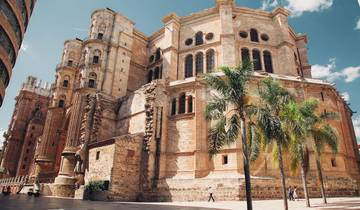
6 days
6 Day Malaga including visit to Gibraltar, Granada, Alhambra and Caminito del Rey
- ✓ Comprehensive Andalucia tour
- ✓ Expert local guides included
- ✓ All accommodation arranged
- ✓ Transportation provided

11 days
Flavors of Spain: A 11 Day Journey Through Madrid, Seville, Granada & Barcelona
- ✓ Comprehensive Andalucia tour
- ✓ Expert local guides included
- ✓ All accommodation arranged
- ✓ Transportation provided
11 days
A Taste of Spain: : 11 Days Across Madrid, Seville, Granada & Barcelona
- ✓ Comprehensive Andalucia tour
- ✓ Expert local guides included
- ✓ All accommodation arranged
- ✓ Transportation provided
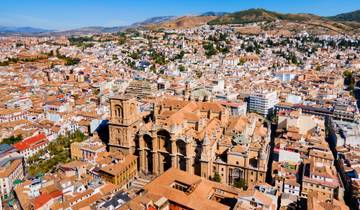
5 days
Granada: Crossroads of Arab and Christian Cultures
- ✓ Booking needs min. 2 travelers
Multi-day tour packages powered by TourRadar. Prices and availability subject to change.
Essential Planning Information 2026
Understanding Alpujarras Geography and Village Distribution
The Alpujarras region divides into western valleys (Alta Alpujarra) centered on the Poqueira Gorge containing Pampaneira, Bubión, and Capileira, and eastern valleys (Alpujarra Media and Baja) including Trevélez, Juviles, and Bérchules. The western villages sit 45-75 minutes from Granada via well-maintained highways, while eastern settlements require 90-120 minute drives on narrower mountain roads. Órgiva functions as the regional capital and transportation hub at the valley entrance, with services including supermarkets, ATMs, and the Thursday market.
Village elevations range from Órgiva at 450 meters to Trevélez at 1,476 meters, creating distinct climate zones affecting vegetation, agriculture, and visitor comfort. Higher villages experience cooler temperatures year-round, with Capileira and Trevélez remaining 5-8°C cooler than Granada in summer months. The terrain features steep valleys carved by snowmelt rivers, with villages built on south-facing slopes to maximize sun exposure and agricultural productivity.
The GR-7 European long-distance footpath crosses the entire Alpujarras from west to east, connecting villages through ancient mule paths and irrigation channels. Shorter local trails link nearby villages within 1-3 hours of walking, while mountain routes ascend to Sierra Nevada peaks above 3,000 meters. Trail marking quality varies, with major routes showing clear waymarkers while lesser paths require navigation skills and detailed maps.
Current Costs and Pricing Breakdown for 2026
Transportation costs in 2026 include Granada-Pampaneira buses at €6.45 one-way, Granada-Trevélez at €8.75, and local buses between villages for €2.50-4.00 per journey. Guided day tours from Granada range €45-75 per person with transportation, guide, and sometimes lunch included (check tour operator websites for current official rates as pricing may vary). Rental cars cost €35-55 daily from Granada airport or city locations, with fuel adding €15-25 for round-trip village exploration.
Restaurant meals in Alpujarras villages cost €12-18 for traditional platos combinados (combination plates), €15-25 for full menú del día lunches with three courses, and €25-40 for dinner at better restaurants featuring local specialties. The famous Alpujarreño platter combining jamón, morcilla, chorizo, fried egg, and potatoes costs €14-20 per person. Village bars serve coffee for €1.50-2.00, beer for €2.50-3.50, and local wine by the glass for €3-5.
Accommodation pricing reflects property type and location, with basic pensiones in smaller villages charging €40-60 per night for double rooms, mid-range rural guesthouses €60-90, and boutique hotels in restored village houses €90-150. Multi-night stays often receive 10-15% discounts when booking directly. Camping facilities near Órgiva and Trevélez cost €8-15 per person nightly. Vacation rental apartments in villages range €70-120 per night for 2-4 person units with kitchens.
Best Time to Visit the Alpujarras in 2026
Seasonal Weather Patterns and Hiking Conditions
Spring conditions from mid-March through May provide the Alpujarras’ most dramatic natural displays, with wildflowers blooming across terraced slopes and snowmelt feeding irrigation channels that create the distinctive sound landscape of mountain villages. Daytime temperatures range 15-22°C at mid-elevations (Pampaneira, Bubión) and 10-18°C in higher villages (Capileira, Trevélez), with cool mornings requiring light jackets that become unnecessary by midday. Rainfall decreases through spring, with April averaging 4-5 rainy days and May dropping to 2-3 days monthly.
Summer months (June-August) deliver hot conditions in lower villages with Órgiva reaching 30-35°C, while higher elevations maintain comfortable 22-28°C temperatures that attract Spanish visitors escaping coastal heat. The dry conditions create dusty trails and brown hillsides by late summer, though irrigation keeps village gardens and nearby terraces green. Tourist numbers peak in July-August with Spanish families on summer holidays, filling accommodations and creating weekend crowds in popular villages like Pampaneira and Capileira.
Autumn (September-October) combines stable weather, comfortable temperatures of 15-22°C, and agricultural activity including chestnut harvests and wine production visible throughout villages. The clear air following summer heat creates exceptional long-distance views to Sierra Nevada peaks and Mediterranean coast. Early autumn maintains full tourism services while reducing crowds compared to summer peak, with accommodation rates dropping to shoulder-season levels after mid-September.
Festival Calendar and Cultural Events 2026
Village festivals concentrate in summer months, with each settlement celebrating its patron saint through multi-day fiestas featuring processions, traditional music, and communal meals. Pampaneira’s San Antonio festival in June includes decorated mules and horses blessed at the church before parading through village streets. Bubión celebrates Virgen del Rosario in early October with three days of activities including the traditional dance of Los Viejos performed by locals in costume.
Trevélez hosts its famous Jamón Festival on the last weekend of August, featuring jamón tastings, cutting demonstrations, local product markets, and live music that draws thousands of visitors. The festival requires advance accommodation booking months ahead as village capacity fills completely. Capileira’s Moors and Christians festival in mid-September reenacts historical conflicts through costumed battles and processions commemorating the region’s complex religious history.
The region-wide Alpujarras en Flor (Alpujarras in Bloom) initiative in May coordinates flower displays and garden tours across multiple villages, with special routes highlighting traditional courtyard gardens and public spaces. Local craft markets operate weekends throughout summer in major villages, selling ceramics, textiles, and food products made by regional artisans. Órgiva’s Thursday market runs year-round, offering the largest selection of local produce, crafts, and hippie culture remnants from the area’s alternative community.
Transportation Guide 2026: Getting to and Around the Alpujarras
Public Transportation Options and Schedules
Alsa bus company operates the primary Granada-Alpujarras routes with year-round service to major villages. The westbound route serves Lanjarón, Órgiva, Pampaneira, Bubión, and Capileira with three daily departures from Granada bus station at 9:00 AM, 2:00 PM, and 5:00 PM weekdays, reduced to two departures on weekends. The journey to Pampaneira takes 90 minutes with stops in Lanjarón (45 minutes) and Órgiva (60 minutes) before climbing the mountain road to the Poqueira villages. Single fares cost €6.45 to Pampaneira, €6.95 to Bubión, and €7.15 to Capileira.
The eastbound Granada-Trevélez route operates twice daily at 10:00 AM and 5:30 PM, serving Lanjarón, Órgiva, Cáñar, Soportújar, and Trevélez over a 2-hour journey costing €8.75 one-way. Return buses to Granada depart the western villages at 7:00 AM, 2:00 PM, and 6:00 PM, while Trevélez returns run at 6:30 AM and 4:00 PM. The early morning departure times require overnight stays in the villages for day visitors using public transport.
Local buses connect villages within the Alpujarras on limited schedules, with a Pampaneira-Pitres-Pórtugos-Busquístar route running twice daily Monday-Friday for village-to-village access. The sporadic service makes bus-based village-hopping impractical without significant waiting times or overnight stays. Taxi services operate from Órgiva to mountain villages, costing €25-35 to Pampaneira, €30-40 to Capileira, and €40-55 to Trevélez, providing transport when bus schedules prove inconvenient.
Driving Routes and Road Conditions
The primary Granada-Alpujarras driving route follows the A-44 autovía southeast from Granada toward the coast, exiting at Lanjarón after 45 minutes onto the A-348 mountain highway. The well-maintained A-348 climbs through Órgiva before splitting at the Poqueira junction, with one branch ascending the valley to Pampaneira, Bubión, and Capileira (15 minutes from junction), while the main road continues east to Pórtugos, Pitres, and eventually Trevélez (45 minutes from junction).
Road conditions on the A-348 and village access roads feature numerous hairpin turns, steep gradients up to 12%, and narrow sections with minimal shoulders. The mountain roads prove manageable for standard vehicles with normal driving skills, though winter conditions (December-February) can bring ice and snow requiring chains above 1,200 meters elevation. Signage clearly marks villages though distances prove deceptive on winding mountain roads where 10 kilometers requires 20-25 minutes driving time.
Parking in villages varies significantly by settlement size and infrastructure. Pampaneira maintains a designated parking lot at the village entrance with space for 40-50 vehicles, filling completely on summer weekends and requiring arrival before 11:00 AM for guaranteed spaces. Capileira offers roadside parking along the entry road and a small lot near the church. Smaller villages like Bubión and Pitres require street parking on narrow lanes where finding spaces demands patience and compact maneuvering. Most villages prohibit vehicle access to historic centers, requiring 5-15 minute walks from parking areas to main squares and attractions.
Accommodation Strategies for the Alpujarras 2026
Village Accommodation Options and Pricing
Rural guesthouses (casas rurales) dominate Alpujarras accommodation, offering rooms in restored traditional houses with original architectural features including exposed beam ceilings, stone walls, and ceramic tile floors. These properties range €60-90 per night for double rooms with private bathrooms in 2026, typically including breakfast with local products. The guesthouses occupy renovated village houses, often featuring small courtyards or terraces with mountain views and common areas decorated with traditional crafts and furnishings.
Boutique hotels in villages like Pampaneira, Bubión, and Capileira cost €90-150 per night for double rooms, providing higher-end amenities including restaurants, spas, and professionally designed interiors that blend traditional and contemporary styles. Properties like La Fragua in Trevélez and Alcazaba de Busquístar offer full-service hotel experiences with multi-course dining, organized activities, and concierge services for hiking and cultural excursions. These hotels serve as comfortable basecamps for multi-day mountain exploration.
Budget pensiones and hostales in smaller villages charge €40-60 per night for basic double rooms with shared or private bathrooms, providing simple accommodation focused on sleeping rather than leisure time. The simpler properties often occupy traditional houses with minimal renovation, offering authentic village atmosphere but fewer modern comforts. Vacation rental apartments through booking platforms cost €70-120 nightly for 2-4 person units with kitchens, useful for families or longer stays wanting self-catering options and separate living spaces.
Location Selection and Booking Strategies
Pampaneira provides the optimal base village for first-time Alpujarras visitors, offering the most accommodation choices, restaurants, and services while maintaining authentic mountain character. The village’s mid-elevation position (1,060 meters) provides comfortable temperatures year-round and easy walking access to higher villages. Bubión and Capileira deliver quieter alternatives with fewer tourists but reduced dining and shopping options requiring drives or walks to Pampaneira for variety.
Trevélez suits visitors prioritizing mountain atmosphere and hiking access over convenience, with its high elevation (1,476 meters) creating alpine conditions and serving as starting point for Sierra Nevada summit attempts. The village’s dispersed layout across three separate barrios requires walking or driving between accommodation and restaurants. Órgiva offers the most services and lower prices (€45-75 per night) as a valley-floor town, though lacking the traditional mountain village atmosphere of higher settlements.
Booking timings in 2026 require advance reservations for peak summer months (July-August) when Spanish family holidays fill available rooms 2-3 months ahead. Spring and autumn shoulder seasons (April-May, September-October) show moderate demand where booking 2-4 weeks ahead secures preferred properties. Winter months (November-March) see many small accommodations closed, though larger hotels and guesthouses remain open with last-minute availability common. Village festival dates, particularly Trevélez’s Jamón Festival in August, require booking 4-6 months ahead as local capacity fills completely.
Sample 2026 Itineraries: Mountain Village Experiences
One-Day Poqueira Valley Circuit from Granada
Depart Granada on the 9:00 AM Alsa bus reaching Pampaneira at 10:30 AM (€6.45). Explore Pampaneira’s white-washed streets, visiting the Museo de Artes y Costumbres Populares showcasing traditional Alpujarras life and the textile workshops selling hand-woven rugs and blankets. Walk the 30-minute uphill trail to Bubión through terraced landscapes and irrigation channels, arriving at the higher village by 12:00 PM.
Lunch at Bubión restaurant featuring local specialties costs €15-25 for menú del día with Alpujarreño platter, salad, and dessert. After lunch, continue the 60-minute walk to Capileira at 1,436 meters elevation, or return to Bubión for the 2:00 PM bus to Capileira (€2.50). Explore Capileira’s highest barrio with panoramic views across the valley to Sierra Nevada peaks, visiting craft shops and the village church before catching the 6:00 PM return bus to Granada.
Bus €6.45, lunch €15-25, village purchases €10-20 for local products. Total day cost: €31.45-51.45 per person. The circuit covers three traditional villages with progressive elevation gains providing dramatic viewpoint changes and architectural variations while relying entirely on public transportation and walking.
Three-Day Western Alpujarras Exploration with Rental Car
Day 1: Collect rental car in Granada (€40 daily) and drive to Pampaneira (90 minutes). Check into rural guesthouse €65-90 per night. Afternoon exploration of Pampaneira including museum visit €2, textile workshop browsing, and sunset from village viewpoints. Dinner at local restaurant €25-35. Day 1 costs: rental car €40, fuel €8, museum €2, dinner €25-35. Total: €75-85 per person (excluding accommodation €65-90).
Day 2: Morning drive to Trevélez (45 minutes) exploring Spain’s highest village and visiting jamón production facilities with tastings €8-12. Lunch in Trevélez featuring local jamón €18-28. Afternoon return via Pitres and Pórtugos, stopping at the traditional tinaos (covered passages) and mountain viewpoints. Return to Pampaneira for evening. Fuel €12, jamón tasting €8-12, lunch €18-28, jamón purchases €20-40. Total day cost: €58-92 per person (excluding accommodation).
Day 3: Morning hike the Pampaneira-Bubión-Capileira trail (3 hours round trip) or drive to explore eastern villages including Mecina Fondales and Ferreirola. Lunch in Capileira €15-25. Afternoon return to Granada (90 minutes), returning rental car. Fuel €8, lunch €15-25, village purchases €10-20. Total day cost: €33-53 per person.
Three-day total: rental car €120 (split by passengers), fuel €28, meals €95-160, activities and purchases €40-74. Total: €283-382 per person for three days (excluding accommodation €130-180 for two nights). The driving route provides flexibility visiting multiple villages and experiencing varied mountain landscapes while maintaining a comfortable Pampaneira base.
Five-Day GR-7 Hiking Route Across the Alpujarras
This multi-day trek follows sections of the GR-7 European long-distance footpath, connecting villages through mountain trails and requiring moderate fitness for 12-18 kilometer daily distances with 400-800 meter elevation changes. Hikers carry daypacks while accommodations transport luggage between villages when arranged in advance through guesthouse coordination.
Day 1: Lanjarón to Órgiva (14 km, 5 hours) through lower altitude terrain and agricultural valleys. Accommodation in Órgiva €50-70, dinner €20-30. Day costs: accommodation €50-70, meals €30-40. Total: €80-110 per person.
Day 2: Órgiva to Pampaneira (16 km, 6 hours) with significant elevation gain climbing to Poqueira valley. Accommodation Pampaneira €60-85, meals €35-45. Total: €95-130 per person.
Day 3: Pampaneira to Pitres via Capileira (18 km, 6-7 hours) crossing high valley with Sierra Nevada views. Accommodation Pitres €55-75, meals €30-40. Total: €85-115 per person.
Day 4: Pitres to Trevélez (12 km, 5 hours) ascending to Spain’s highest village. Accommodation Trevélez €60-80, meals €35-50 including jamón specialties. Total: €95-130 per person.
Day 5: Trevélez to Juviles (15 km, 5-6 hours) crossing eastern valleys. Bus or taxi from Juviles to Granada (€35-45 per person). Meals €25-35. Total: €60-80 per person.
Five-day total: accommodation €275-380, meals €155-205, transportation €35-45. Total: €465-630 per person for complete GR-7 trek across western and central Alpujarras with village-to-village hiking experiencing traditional mountain culture and dramatic Sierra Nevada landscapes.
Money-Saving Strategies for Alpujarras Travel 2026
Budget Optimization Through Transportation and Accommodation
Public bus transportation saves €30-45 daily compared to rental cars when visiting a single village or the three-village Poqueira circuit accessible by one bus route. The €6.45 Granada-Pampaneira bus eliminates parking concerns and fuel costs while providing scenic journey views without driving concentration requirements. Multi-village exploration by bus proves impractical due to limited schedules, making rental cars cost-effective only when visiting 3+ villages in one day or basing in one village for 3+ nights where daily rental costs amortize.
Accommodation costs drop 20-35% in shoulder seasons (April-May, September-October) compared to summer peak, with rural guesthouses charging €50-70 versus €75-100 for identical rooms. Winter rates (November-March, excluding Christmas period) fall further to €40-60 for properties remaining open, though reduced village activity and possible facility closures offset savings. Booking directly with guesthouses by phone or email often yields 10-15% discounts versus booking platforms, plus flexibility for extended stay negotiations.
Self-catering apartments with kitchens reduce meal costs when staying 3+ nights, allowing breakfast preparation for €3-5 per person versus €8-12 at cafés, and simple dinners for €8-15 versus €20-35 at restaurants. Village shops and Órgiva’s Thursday market stock local produce, cheese, jamón, and bread for home meal preparation. The strategy suits families and small groups where apartment costs (€70-100 nightly) split across multiple people prove cheaper than individual guesthouse rooms.
Free Activities and Natural Experiences
All Alpujarras villages provide free access to historic streets, architecture, viewpoints, and cultural atmosphere without entrance fees or charges. Walking between Pampaneira-Bubión-Capileira requires only appropriate footwear and water, delivering 3-4 hours of mountain trail experience through terraced landscapes and traditional irrigation channels. Village churches open for free visits outside mass times, showing baroque altarpieces and religious art in atmospheric stone interiors.
Hiking trails throughout the Alpujarras require no permits or fees, with the GR-7 long-distance path and numerous local routes marked with painted waymarks or cairns. Trailheads begin directly from village edges, eliminating transportation costs to reach nature experiences. Spring wildflower displays across hillsides and autumn chestnut harvests provide seasonal natural attractions accessible through roadside walks and village paths.
The Órgiva Thursday market offers free entertainment through people-watching, live music performances, and browsing handmade crafts and local products without purchase obligations. Village festivals throughout summer provide free access to processions, traditional music, and community celebrations, though accommodation during festival dates requires advance booking at premium rates. Photography opportunities throughout villages and surrounding landscapes deliver unlimited free activity for interested visitors.
Booking and Reservations for 2026 Alpujarras Visits
Accommodation Reservation Strategies
Small rural guesthouses in the Alpujarras often operate without real-time booking systems, requiring email or phone reservations confirmed through bank transfers or agreements to pay on arrival. This traditional system continues in family-run properties where owners manage bookings personally rather than through automated platforms. Contact guesthouses 2-3 weeks ahead for shoulder seasons (April-May, September-October) to secure rooms while maintaining flexibility for alternative properties if first choices fill.
Booking platforms including Booking.com and Airbnb list many Alpujarras accommodations with real-time availability and instant confirmation, though platform fees sometimes inflate prices 10-15% above direct booking rates. The platforms prove useful for comparing options across villages and reading recent guest reviews, but checking property websites for direct contact information often reveals better rates. Properties popular with international tourists maintain English-language communication, while smaller village guesthouses may require Spanish or translation apps for reservation coordination.
Peak summer months (July-August) and major festival dates require 2-3 month advance booking to secure preferred accommodations, with properties in Pampaneira and Trevélez filling first due to higher visitor concentrations. The Trevélez Jamón Festival in late August demands 4-6 months advance reservations as the entire village capacity books solid. Shoulder season and winter months show good last-minute availability, with same-week or even same-day bookings possible for spontaneous travel, though choices narrow in villages where multiple properties close November-March.
Bus Transportation Reservations and Schedules
Alsa buses serving Granada-Alpujarras routes require no advance reservations for most travel periods, with tickets purchased from the bus station ticket office or directly from drivers when boarding. The buses operate standard coaches with 50+ seat capacity, rarely filling completely except during Spanish holiday periods (Semana Santa in March/April, August summer holidays). Arriving 15-20 minutes before departure secures seats without advance purchase concerns.
Spanish holiday periods and long weekends see increased demand where advance online booking through the Alsa website (alsa.es) or mobile app guarantees seats and specific departure times. The €0.50-1.00 online booking fee adds minimal cost while eliminating uncertainty during peak travel dates. Return journey times require attention as afternoon/evening departures from villages to Granada fill with local commuters and school children, making early arrival advisable.
Bus schedule changes occur seasonally with reduced frequencies in winter months (October-March) and potential extra services during summer peak. Verify current schedules on the Alsa website or at Granada bus station information desk before travel, as printed schedules and online sources sometimes show outdated information. Village departure points typically locate at main squares or designated bus stops marked with Alsa signage, requiring arrival 5-10 minutes early as buses depart precisely on schedule.
Planning Your 2026 Alpujarras Visit: Practical Essentials
What to Pack for Mountain Village Travel
Temperature variations between lower and upper villages require layered clothing even in summer, with Capileira and Trevélez remaining 5-8°C cooler than Órgiva or Granada. Lightweight jackets prove essential for morning and evening comfort at higher elevations, with fleece or insulated layers recommended for spring and autumn visits when temperatures drop significantly after sunset. Summer clothing should include sun protection as mountain UV intensity increases with elevation, requiring high-SPF sunscreen, hats, and sunglasses.
Hiking footwear with ankle support and grippy soles handles cobblestone village streets and mountain trails, with the irregular stone paving proving slippery when wet and tiring for extended walking in flat shoes. Many village accommodations occupy historic buildings with stairs and uneven floors where sturdy footwear prevents twisted ankles. Athletic shoes or hiking boots prove more practical than sandals or dress shoes for authentic Alpujarras exploration.
Village shops stock basic supplies but limited selection, making pharmacy items, specialty toiletries, and preferred snack foods worth packing from Granada. Órgiva maintains the best shopping infrastructure with supermarkets and pharmacies, while smaller villages have only basic stores with limited hours. Cash proves necessary as many village restaurants and shops accept only efectivo (cash), with ATMs available in Órgiva, Lanjarón, and sometimes Pampaneira but absent from smaller settlements.
Language and Communication Considerations
Spanish functions as the exclusive language in Alpujarras villages, with minimal English spoken outside tourist-focused hotels and tour operations. Basic Spanish phrases for greetings, ordering food, and asking directions prove essential for authentic interactions and practical necessities. Restaurant menus rarely include English translations, though patient servers often explain dishes using gestures and simple descriptions. Translation apps help navigate menus and communicate specific requests when Spanish skills prove insufficient.
Village locals show patience with tourists attempting Spanish, appreciating efforts at their language even when communication proves imperfect. The rural mountain context creates different hospitality expectations than coastal tourist zones, with genuine interest in visitor origins and reasons for choosing their villages over mainstream destinations. Learning food vocabulary and local specialties (jamón, queso de cabra, migas, Alpujarreño) enables better restaurant experiences and market shopping.
Mobile phone coverage proves reliable in major villages but spotty in remote locations and hiking trails between settlements. The villages themselves provide WiFi at most accommodations and some restaurants, though connection speeds reflect rural infrastructure rather than urban broadband. Downloading offline maps and trail information before leaving Granada prevents navigation difficulties when cellular data becomes unavailable in mountain areas.
Cultural Etiquette and Local Customs
Village life maintains traditional Spanish daily rhythms with afternoon siesta periods when shops and some restaurants close 2:00-5:00 PM, limiting midday activity options beyond hiking or private accommodation time. Dinner service begins 8:30-9:00 PM or later, with village restaurants sometimes refusing early diners or only offering limited menus before proper dinner hours. Planning around these schedules prevents frustration when arriving for 6:00 PM dinner to find restaurants closed.
Photography of village streets, architecture, and landscapes meets no restrictions, but photographing local residents requires discretion and preferably permission through gestures or requests. The Alpujarras maintain working agricultural communities where tourism supplements rather than dominates the economy, creating different attitudes than beach resort populations accustomed to constant tourist presence. Respectful behavior including quiet voices in residential areas and proper disposal of waste maintains positive visitor-local relationships.
Church visits require modest clothing covering shoulders and avoiding very short shorts or skirts, following religious site protocols throughout Spain. The small village churches often contain valuable religious art and serve active parish communities where visitors should maintain quiet reverence during any services or local worship activities. Sunday morning masses attract local attendance where tourists should observe from rear pews or visit outside service times to avoid disrupting community religious practice.
Frequently Asked Questions About Alpujarras Villages 2026
Is one day enough to visit the Alpujarras?
A single day visit from Granada covers the three Poqueira villages (Pampaneira, Bubión, Capileira) using the morning bus and evening return, providing 6-7 hours for village exploration and walking between settlements. This timeline allows visiting all three villages with lunch and basic sightseeing but eliminates deeper cultural immersion or extensive hiking. Day trips work best for initial Alpujarras introduction or when Granada-based visitors lack time for overnight mountain stays.
Can you visit the Alpujarras without a car?
Public buses connect Granada to major Alpujarras villages including Pampaneira, Bubión, Capileira, and Trevélez with 2-3 daily departures, making car-free visits completely feasible when staying in one village or limiting exploration to the Poqueira valley. Walking trails between nearby villages eliminate vehicle needs for active visitors comfortable with 30-90 minute hikes. The limited bus schedules between villages make multi-village touring by public transport impractical, though hiking the GR-7 trail village-to-village creates car-free multi-day itineraries.
What is special about Alpujarras villages?
The Alpujarras preserve Berber architectural traditions brought by North African refugees after the Christian Reconquista, creating unique Spanish mountain villages with flat-roofed white houses, narrow maze-like streets, and covered passages (tinaos) unknown in other Spanish regions. The distinctive construction methods adapted to steep mountain terrain produce terraced village layouts integrated with irrigation channels and agricultural terraces, while the Islamic street patterns survived centuries with minimal alteration. This combination of North African architecture, mountain agriculture, and preserved medieval layouts creates cultural landscapes found nowhere else in Europe.
How difficult are hiking trails in the Alpujarras?
Village-to-village trails range from easy walks like Pampaneira-Bubión (30 minutes, 100m elevation gain) to moderate hikes like the full Pampaneira-Capileira circuit (3 hours, 400m total elevation). The trails follow old mule paths and irrigation channels (acequias) with generally good footing on stone paths, though steep sections and uneven surfaces require proper footwear and moderate fitness. Higher mountain routes accessing Sierra Nevada peaks demand mountain hiking experience with significant elevation gains above 1,500 meters, proper equipment, and navigation skills for unmarked or poorly marked sections.
What should you eat in the Alpujarras?
Traditional Alpujarras cuisine centers on the Alpujarreño platter combining jamón serrano, blood sausage (morcilla), chorizo, fried egg, and fried potatoes, reflecting mountain farm traditions and hearty portions for agricultural workers. Trevélez produces Spain’s finest jamón at high elevation (1,476m) where cold dry air creates ideal curing conditions for 14-18 month aging processes. Other regional specialties include goat cheese from mountain herds, migas (fried breadcrumbs with chorizo and peppers), and local honey. The Thursday market in Órgiva stocks these products from local producers for self-catering visitors.
Are the Alpujarras villages crowded with tourists?
Pampaneira and Capileira experience moderate tourist traffic in summer months (June-August) and spring weekends, with day-trippers from Granada and Spanish domestic tourists creating busy village centers midday and early afternoon. The crowds never approach Costa del Sol levels, with villages returning to quiet mountain atmosphere by evening when day visitors depart. Smaller villages like Bubión, Pitres, Ferreirola, and eastern settlements maintain very limited tourism year-round, preserving authentic local life barely affected by visitor presence. Winter months (November-March) see minimal tourists even in popular villages, creating near-empty streets and local-only atmospheres.
Can you see Sierra Nevada from the Alpujarras villages?
The western Alpujarras villages including Pampaneira, Bubión, and Capileira offer dramatic views across the Poqueira Gorge to Sierra Nevada peaks including Mulhacén (3,479m) and Veleta (3,398m), with the highest mountains visible throughout clear days. Upper village viewpoints and hiking trails provide panoramic perspectives across the massif, with winter and spring snow cover creating spectacular mountain scenery. Cloud cover and summer haze sometimes obscure distant peaks, with early morning and late afternoon offering best visibility conditions. Eastern villages face different valley directions with varied Sierra Nevada perspectives.
What makes Trevélez special among Alpujarras villages?
Trevélez sits at 1,476 meters elevation as mainland Spain’s highest village, creating alpine conditions with cool temperatures year-round and serving as basecamp for Sierra Nevada hiking including Mulhacén summit attempts. The village’s fame comes from jamón production where high-altitude dry air cures hams to exceptional quality, with numerous producers offering factory tours and tastings. The village spreads across three distinct barrios (Alto, Medio, Bajo) connected by steep streets, creating unique vertical layout compared to other Alpujarras settlements built on single slopes.
When do chestnut trees bloom in the Alpujarras?
Chestnut trees bloom in late May through June with distinctive cream-colored catkins creating dramatic displays across valley slopes, though the blooms prove less visually spectacular than spring wildflowers. The true chestnut season arrives in October when the harvest begins, with local families gathering nuts from traditional groves and villages celebrating with chestnut festivals featuring roasted nuts, sweets, and liqueurs. The autumn chestnut forests turn golden-yellow creating excellent photography conditions before leaf drop in November.
Do Alpujarras villages have good internet and mobile coverage?
Major villages including Pampaneira, Bubión, Capileira, and Trevélez maintain reliable mobile phone coverage with 4G service from major Spanish carriers, while smaller settlements show spotty coverage with weak signals or no service depending on location within village and carrier network. Most accommodations provide WiFi for guests with speeds sufficient for email and web browsing but sometimes inadequate for video streaming or large file transfers. Hiking trails between villages often lack any mobile coverage, requiring offline maps and self-reliance for navigation and safety. Remote working proves feasible in village accommodations with dedicated internet connections but challenging when depending on mobile data.