Alhambra Photography Guide 2026: Expert Tips & Best Spots
The Alhambra ranks among the world’s most photographed monuments, attracting millions of shutters annually to its intricate Islamic architecture, serene water features, and panoramic Granada views. Every surface, courtyard, and garden offers compelling compositions from the geometric precision of tile patterns to the organic flow of Renaissance plantings. This photographic richness creates both opportunity and challenge as photographers balance capturing iconic shots with discovering unique perspectives.
Key Takeaways
- Golden hour entry (8:30 AM) delivers optimal light for palace courtyards and garden photography
- Wide-angle lenses (16-35mm) capture palace interiors and courtyard spaces most effectively
- Flash photography prohibited inside Nasrid Palaces to protect delicate stucco and tile work
- Court of Lions and Court of Myrtles represent signature must-capture locations for portfolio shots
- Tripods require €5 permits with usage limited to designated areas throughout the complex
- Spring and fall lighting produces warm tones and manageable contrast for best results
Introduction
Successful Alhambra photography demands more than pointing cameras at beautiful subjects. Understanding light patterns throughout the day, knowing photography regulations, mastering technical settings for challenging interior lighting, and identifying optimal shooting locations separate mediocre snapshots from portfolio-quality images. The monument’s medieval construction creates tricky exposure scenarios with bright courtyards adjacent to dark halls, while strict rules prohibit certain equipment and techniques.
This comprehensive photography guide provides tested strategies for capturing the Alhambra’s beauty across all skill levels from smartphone users to serious enthusiasts. Detailed location guides, technical recommendations, composition techniques, and practical tips help you return home with stunning images documenting your 2026 Granada adventure.
People Also Ask About Alhambra Photography 2026
What’s the best time of day for Alhambra photography?
Early morning (8:30-10:00 AM) provides optimal lighting conditions with soft golden hour light illuminating palace courtyards and gardens. Afternoon visits (5:00-7:00 PM in summer) offer similar quality lighting. Avoid harsh midday sun from 11:00 AM-3:00 PM which creates strong shadows and washed-out colors.
Can I use a tripod at the Alhambra?
Tripods require special €5 permits purchased separately from entrance tickets. Permitted tripod use is limited to designated areas excluding the Nasrid Palaces interiors. Monopods work without permits providing stabilization in no-tripod zones. Check official website for current permit purchasing procedures.
Is flash photography allowed in the Alhambra?
Flash photography is strictly prohibited inside Nasrid Palace interiors as repeated flash exposure damages delicate stucco work and painted surfaces. External areas including courtyards and gardens allow flash use, though natural light produces better results. Turn off camera flash settings to prevent accidental firing.
What camera equipment should I bring to the Alhambra?
Bring wide-angle lenses (16-35mm) for palace interiors and courtyards, plus standard zooms (24-70mm) for versatility. Pack spare batteries and large memory cards for extensive shooting. Monopods provide stabilization where tripods aren’t permitted. Smartphone cameras capture excellent results with proper technique.
Extended multi-day tours – 5+ days
Featured Andalucia Multi-Day Tour Packages
6 days
6 Day Malaga including visit to Gibraltar, Granada, Alhambra and Caminito del Rey
- ✓ Comprehensive Andalucia tour
- ✓ Expert local guides included
- ✓ All accommodation arranged
- ✓ Transportation provided
11 days
Flavors of Spain: A 11 Day Journey Through Madrid, Seville, Granada & Barcelona
- ✓ Comprehensive Andalucia tour
- ✓ Expert local guides included
- ✓ All accommodation arranged
- ✓ Transportation provided
11 days
A Taste of Spain: : 11 Days Across Madrid, Seville, Granada & Barcelona
- ✓ Comprehensive Andalucia tour
- ✓ Expert local guides included
- ✓ All accommodation arranged
- ✓ Transportation provided
5 days
Granada: Crossroads of Arab and Christian Cultures
- ✓ Booking needs min. 2 travelers
Multi-day tour packages powered by TourRadar. Prices and availability subject to change.
Essential Photography Gear
Camera Bodies & Lenses
Appropriate equipment selection enables capturing the Alhambra’s diverse photographic opportunities while managing the gear during extensive walking and stair climbing.
Camera Body Recommendations: Any modern camera from smartphones to professional DSLRs captures excellent Alhambra photos with proper technique. Mirrorless cameras offer excellent image quality with lighter weight than DSLRs, benefiting during 3-4 hour walking sessions. Full-frame sensors handle challenging interior lighting better than crop sensors but aren’t essential for quality results.
Wide-Angle Lenses (Essential): 16-35mm focal lengths capture palace courtyards, interior spaces, and garden expanses effectively. Ultra-wide angles (14mm or wider) create dramatic perspectives in tight palace rooms. Wide-angle lenses prove most important for interior photography where backing up isn’t possible.
Standard Zoom (Versatile): 24-70mm lenses handle most situations flexibly, transitioning from moderately wide courtyard shots to architectural detail captures. This focal range works well for environmental portraits including people with architectural backgrounds. Single zoom versatility reduces lens changing frequency.
Telephoto Options (Situational): 70-200mm lenses compress distances creating unique perspectives on gardens and capturing intricate stucco details from afar. Telephoto shots work well from fortress towers photographing Granada cityscape. These lenses add weight and length making them optional rather than essential.
Prime Lens Alternatives: Fast prime lenses (f/1.4-f/2.8) excel in low-light palace interiors without flash. Consider 24mm, 35mm, or 50mm primes for compact, high-quality options. Primes force creative problem-solving through fixed focal lengths while delivering superior optical quality.
Support & Stabilization
Stabilization equipment improves sharpness and enables longer exposures in challenging palace lighting but faces regulatory restrictions requiring strategic selection.
Tripod Permits & Restrictions: Standard tripods require €5 permits purchased through official channels. Permitted tripod use is limited to designated outdoor areas, excluding Nasrid Palace interiors where they’re completely prohibited. Even with permits, crowded conditions make tripod use impractical in popular spaces.
Monopod Advantages: Monopods work without permits providing stabilization throughout the complex. These single-leg supports offer flexibility in crowded areas where tripods block pathways. Monopods collapse compactly for easy carrying between shooting locations.
Handheld Technique: Modern image stabilization and high ISO capabilities enable quality handheld shooting throughout the complex. Proper breathing, smooth shutter presses, and leaning against stable surfaces improve handheld sharpness. Handheld shooting offers maximum mobility and spontaneity.
Accessories & Extras
Supporting accessories enhance photographic capabilities while managing the practical demands of all-day monument photography.
Spare Batteries (Essential): Bring 2-3 charged camera batteries for full-day shoots. Cold weather, frequent LCD review, and continuous shooting drain batteries faster. Portable battery chargers or power banks keep cameras operational during extended sessions.
Memory Cards: Pack 32-64GB cards minimum, or multiple smaller cards distributing risk of card failure. Shoot RAW format for maximum post-processing flexibility, understanding it consumes 3-4x more space than JPEG. Bring more capacity than anticipated needing.
Lens Filters: Polarizing filters reduce reflections in water features and enhance sky colors. UV filters protect front lens elements from accidental damage. Neutral density filters enable long exposures smoothing water movement in fountains, though their utility is limited without tripods.
Carrying Solutions: Camera bags or backpacks organize gear while protecting equipment during walking. Shoulder bags offer quick access for frequent shooting. Consider security in crowded areas, keeping expensive gear secure and under control.
Best Photography Locations
Court of Lions (Patio de los Leones)
The Alhambra’s most iconic space demands strategic shooting approaches capturing the famous central fountain with surrounding colonnaded galleries.
Signature Compositions: The central twelve-lion fountain creates the complex’s most recognizable image. Shoot from colonnade arches framing the fountain with architectural elements. Center the fountain using symmetrical composition emphasizing the courtyard’s geometric perfection. Capture colonnade perspectives creating leading lines toward the fountain.
Optimal Timing: Morning light (9:00-11:00 AM) illuminates the courtyard evenly without harsh shadows. Avoid midday when direct overhead sun creates strong contrast. Overcast conditions produce soft, even lighting ideal for this predominantly white space.
Camera Settings: Use apertures f/8-f/11 for sharp focus throughout the scene. ISO 200-400 works well in bright courtyard light. Expose for the fountain ensuring white marble retains detail without blowing out highlights. Shoot RAW for exposure latitude in post-processing.
Perspective Variations: Shoot from multiple colonnade positions circling the courtyard for varied backgrounds. Low angles emphasize column height and ceiling details. Detail shots focus on individual lions, water spouts, and carved stonework. Include or exclude people based on desired atmosphere.
Court of Myrtles (Patio de los Arrayanes)
The reflecting pool courtyard creates stunning mirror-image compositions when conditions align perfectly.
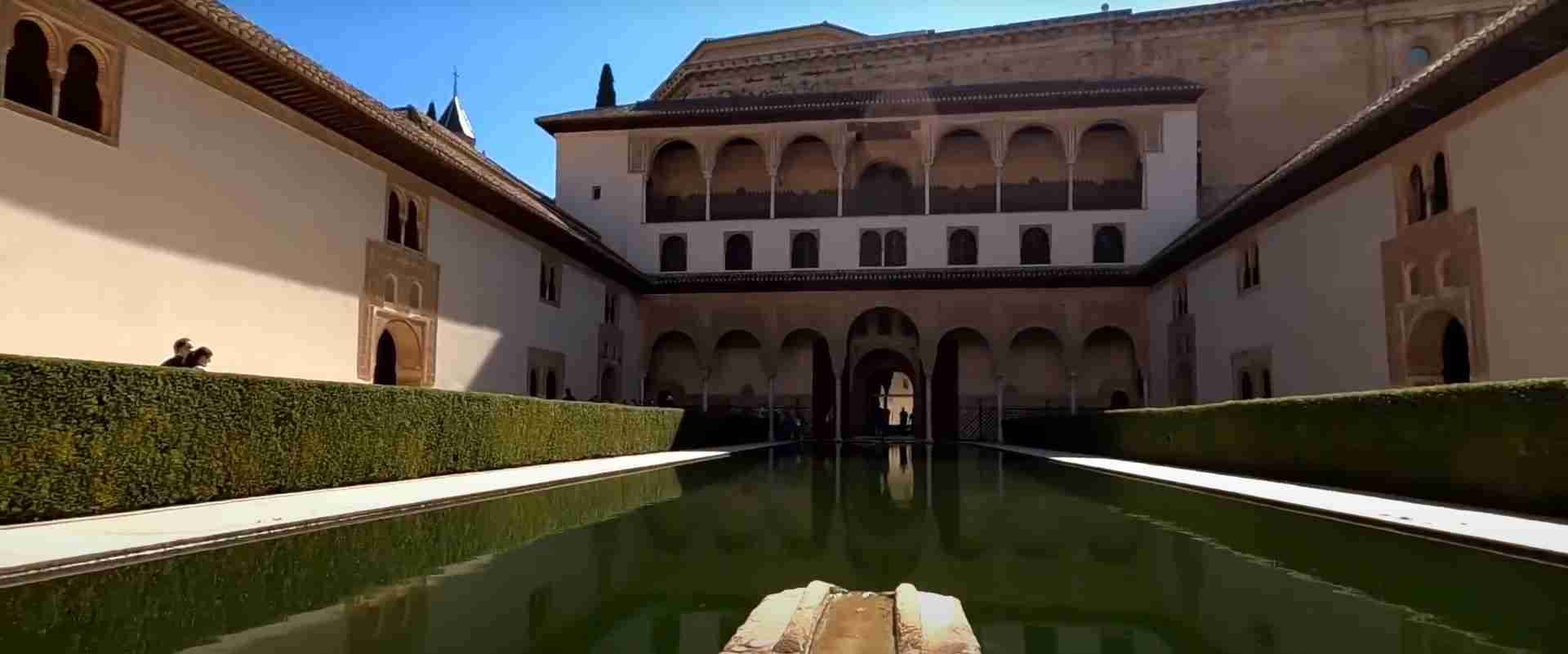
Reflection Photography: The long rectangular pool mirrors the palace façade and Torre de Comares creating symmetrical compositions. Wait for still water producing clear reflections undisturbed by wind. Morning calm provides best reflection conditions before breezes develop.
Composition Strategies: Center the composition vertically, placing the horizon line precisely at the pool’s edge for perfect symmetry. Shoot from the low arcade arches framing the scene architecturally. Polarizing filters can enhance or reduce reflections based on rotation and your creative intent.
Weather Considerations: Wind destroys reflections through water ripples. Cloudy days provide soft even lighting without harsh sun creating blown highlights in white architecture. Early morning or late afternoon offers directional light creating dimension in the arcaded facades.
Detail Opportunities: Beyond the classic reflection shot, photograph the myrtles (myrtle bushes lining the pool), geometric tile patterns in surrounding walls, and carved plaster details in the arcades. These details complement wide establishing shots.
Generalife Gardens
The extensive Renaissance gardens offer diverse photographic opportunities from formal water features to wild planted areas.
Patio de la Acequia: The straight water channel with flanking rose gardens and fountains creates the Generalife’s signature image. Shoot from the palace end looking down the channel toward the mirador (viewpoint building). Early morning or late afternoon side light enhances texture in plantings and architecture.
Garden Perspectives: Capture formal geometric patterns from elevated positions showing garden design. Include Sierra Nevada mountain backgrounds when clear days provide visibility. Photograph seasonal blooms, particularly spring roses and summer flowers providing color contrast against architecture.
Water Features: Multiple fountains and water channels throughout the gardens offer motion photography opportunities. Use faster shutters (1/500s+) freezing water droplets or slower speeds (1/30s-1/60s) showing movement blur. Experiment with different effects finding your preferred style.
Seasonal Variations: Spring (April-May) captures peak bloom periods with roses, wisteria, and flowering trees. Summer displays full garden maturity with lush green plantings. Fall (October-November) shows autumn color transitions. Winter emphasizes garden structure and evergreen elements.
Alcazaba Fortress
The military fortress provides panoramic Granada views and distinctive architectural photography opportunities.
Torre de la Vela Panoramas: The main watch tower offers 360-degree Granada views including the Albaicín neighborhood, Sierra Nevada mountains, and surrounding countryside. Wide-angle lenses capture expansive city views. Telephoto lenses compress scenes picking out distant details.
Timing Considerations: Afternoon and evening light illuminates Granada beautifully from the tower vantage point. Sunset produces golden hour magic but requires evening visit tickets (summer months only). Morning light works but backlights the city creating silhouettes.
Fortress Architecture: Red brick defensive walls, watchtowers, and weapon emplacements create strong geometric compositions. Look for repeating patterns in wall battlements. Shadow and light patterns on fortress walls photograph dramatically, especially early or late in the day.
Granada Cityscapes: Capture the Albaicín’s white buildings cascading down hillsides, the cathedral rising above rooflines, and Sierra Nevada peaks forming distant backgrounds. These cityscape shots contextualize the Alhambra within Granada’s broader landscape.
Palace of Charles V
The Renaissance circular courtyard contrasts dramatically with Islamic architecture providing compositional variety.
Circular Courtyard: The perfect circle creates strong geometric compositions. Shoot from ground level emphasizing column repetition and architectural rhythm. Second-floor gallery positions provide elevated perspectives looking down into the courtyard circle.
Architectural Details: Renaissance stonework, classical columns, and circular geometry contrast with surrounding Islamic elements. Photograph column capitals, carved stone details, and the relationship between circular interior and square exterior forms.
Light Patterns: Sunlight creates dramatic shadow patterns moving across the circular space throughout the day. Photograph these changing light patterns showing time’s passage through architecture. Columned galleries create strong light/shadow contrasts.
Hidden Gems & Lesser-Known Spots
Beyond signature locations, the Alhambra contains numerous photogenic corners offering unique perspectives without crowds.
Puerta del Vino: This decorative gate with intricate tile work and carved plaster deserves dedicated photography time. Shoot details of the geometric patterns and Arabic calligraphy. Frame Granada views through the gateway arch.
Connecting Pathways: Wooded paths, small fountains, and garden corners between major sections offer peaceful shooting opportunities. These transitional spaces photograph well without tourist crowds. Look for shaded lanes, stone pathways, and unexpected viewpoints.
Palace Windows: Arched palace windows frame external views beautifully. Position yourself inside palaces shooting through ornate windows to gardens, mountains, or courtyards beyond. These frames-within-frames create layered compositions.
Decorative Details: Intricate stucco work (muqarnas ceilings, wall patterns), ceramic tile designs (azulejos), carved wooden ceilings, and marble fountains reward close examination. These macro details complement wide establishing shots creating comprehensive photographic documentation.
Lighting & Timing Strategies
Golden Hour Magic
The hours immediately after sunrise and before sunset create optimal conditions for Alhambra photography through warm, directional light.
Morning Golden Hour (8:30-10:00 AM): Early morning light enters palace courtyards and gardens at low angles creating dimension and warmth. The Court of Myrtles receives beautiful light illuminating the reflection pool. Gardens glow with warm tones. Book the 8:30 AM first entry slot capturing golden hour before crowds build.
Evening Golden Hour (6:00-8:00 PM, Summer): Late afternoon sun bathes the Alhambra in warm golden light. Fortress walls glow red-orange. Granada cityscapes photograph beautifully in the warm light. Evening tickets (available April-October) enable sunset photography sessions.
Color Temperature Benefits: Golden hour’s warm 3000-4000K color temperature enhances the Alhambra’s red walls and earth-toned architecture. Warm light creates inviting, emotional images compared to harsh midday blue light. Post-process for accurate color or embrace the warmth aesthetically.
Midday Challenges & Solutions
Harsh midday sun from 11:00 AM to 3:00 PM creates photography challenges requiring adaptive strategies and modified shooting approaches.
High Contrast Problems: Direct overhead sun creates deep shadows and blown highlights in white architectural elements. This extreme contrast range challenges camera sensors. Expose for highlights accepting darker shadows, or bracket exposures for later HDR processing.
Strategic Adaptations: Shift focus to detailed architectural elements during harsh light. Photograph shadowed interiors, covered colonnade areas, and intricate stucco details. Use harsh lighting creatively for dramatic shadow patterns and strong geometric compositions.
Courtyard Considerations: Open courtyards like the Court of Lions photograph poorly in direct midday sun. Wait for clouds temporarily diffusing light or return during better lighting windows. Indoor palace rooms maintain consistent lighting regardless of external conditions.
Seasonal Light Variations
Seasonal sun angles, weather patterns, and atmospheric conditions affect light quality throughout the year requiring adaptive approaches.
Spring Light (April-May): Low to moderate sun angles create pleasant directional lighting. Frequent clear days provide reliable conditions. Gardens photograph beautifully with spring blooms adding color. Occasional rain creates atmospheric conditions and post-storm lighting drama.
Summer Intensity (June-August): High sun angles and intense light create challenges midday but extend golden hours. Early morning (8:30-10:00 AM) and evening sessions (6:00-8:00 PM) offer excellent conditions avoiding midday harshness. Blue skies provide reliable backgrounds.
Fall Glory (September-October): Lower sun angles than summer create more directional light throughout the day. Warm afternoon light enhances red fortress walls. Changing autumn colors add visual interest to garden photography. Weather remains generally reliable with clear conditions.
Winter Atmosphere (November-March): Low sun angles create dramatic shadows and longer golden hours. Overcast days produce soft, even lighting ideal for palace interiors and courtyards. Occasional rain creates moody atmospheric conditions. Snow-capped Sierra Nevada mountains provide dramatic backgrounds.
Weather Considerations
Granada’s weather influences photographic opportunities and techniques requiring flexible approaches and weather-appropriate strategies.
Overcast Conditions: Cloud cover creates natural softbox lighting eliminating harsh shadows and reducing contrast. Overcast days prove ideal for photographing white palace architecture maintaining detail throughout tonal ranges. Water reflections show more clearly without bright sky reflections.
Dramatic Skies: Partially cloudy conditions create dynamic backgrounds with clouds adding visual interest. Post-storm clearing produces spectacular light with clean air and dramatic cloud formations. Include interesting skies in compositions adding dimension beyond architecture.
Rain Photography: Rain creates unique atmospheric conditions, wet surfaces reflecting light, and empty locations as visitors seek cover. Protect cameras with rain covers or work from sheltered positions. Water droplets on plants, wet paving stones, and rain-filled fountains offer creative opportunities.
Technical Photography Tips
Camera Settings Guide
Optimal camera settings balance image quality, creative control, and practical shooting conditions throughout the diverse Alhambra environments.
Exposure Mode Selection: Aperture priority mode (A/Av) controls depth of field while camera automatically adjusts shutter speed. Manual mode provides complete control in consistent lighting like palace courtyards. Program mode works for quick snapshots prioritizing moment capture over technical perfection.
Aperture Recommendations: Use f/8-f/11 for architecture shots requiring sharpness throughout the frame. Wider apertures (f/2.8-f/5.6) create selective focus on details while blurring backgrounds. Stop down to f/16-f/22 only when requiring maximum depth of field, accepting diffraction softening.
ISO Settings: Keep ISO as low as possible in bright conditions (100-200) minimizing noise. Increase to 400-800 in shaded courtyards or palace interiors. Modern cameras handle ISO 1600-3200 well when necessary in dark interior spaces. Embrace higher ISO over camera shake blur.
Shutter Speed Considerations: Use speeds 1/125s or faster for handheld shooting preventing motion blur. Employ 1/500s+ for freezing water movement in fountains. Slower speeds (1/30s-1/60s) show water movement blur creating ethereal effects. Stabilization enables slower handheld speeds.
Composition Techniques
Strong compositions transform competent technical captures into compelling images telling visual stories about the Alhambra’s beauty and history.
Rule of Thirds: Place key elements along imaginary grid lines dividing frames into thirds horizontally and vertically. Position fountains, archways, or architectural features at intersection points creating balanced, dynamic compositions. This classical approach works reliably across diverse scenes.
Leading Lines: Use colonnades, water channels, pathways, and geometric patterns to create lines drawing eyes through images. Leading lines guide viewers toward main subjects while adding depth and dimension. Converging lines create perspective emphasizing three-dimensional space.
Framing Within Frames: Shoot through archways, windows, and doorways framing distant subjects. These frames-within-frames add depth, context, and visual interest. Natural architectural frames abound throughout the palace complex.
Symmetry & Patterns: The Alhambra’s Islamic architecture emphasizes symmetry and geometric patterns. Center symmetrical subjects in frames emphasizing perfect balance. Photograph repeating patterns in tiles, columns, or arches filling frames with rhythmic visual elements.
Including Scale: Incorporate people in architectural shots providing scale reference showing the palace’s impressive proportions. Tiny figures emphasize massive courtyards and soaring ceilings. Position people thoughtfully avoiding awkward cropping or distracting placements.
Exposure Strategies
Managing exposure in challenging lighting conditions separates technically proficient images from poorly executed attempts.
Highlight Protection: The Alhambra’s white architecture blows out easily in bright conditions. Expose protecting highlights, accepting shadow underexposure which recovers better in post-processing than blown highlights. Use histogram review verifying highlight retention.
Bracketing Techniques: Shoot bracketed exposures (typically -1, 0, +1 EV) in high-contrast scenes providing options for later HDR processing or selecting the best single exposure. Bracketing proves especially valuable in courtyard scenes with bright sky and dark arcades.
Metering Modes: Spot metering measures light from specific areas, useful when exposing for particular subjects in mixed lighting. Evaluative/matrix metering analyzes entire scenes working well for even lighting. Center-weighted metering balances between spot and evaluative approaches.
White Balance Management
Accurate color rendering captures the Alhambra’s authentic architectural tones while creative white balance creates mood.
Daylight Settings: Daylight white balance (5200K) works well for most outdoor photography maintaining natural color. Auto white balance handles varied conditions reasonably but may shift inconsistently across images requiring post-processing correction.
Shade Adjustments: Shaded palace interiors often photograph too blue with daylight settings. Shade preset (7000K) warms these cooler scenes. Custom white balance using gray cards ensures accuracy when color precision matters.
RAW Advantage: Shooting RAW format enables white balance adjustment in post-processing without quality loss. This flexibility proves valuable when uncertain about optimal settings or dealing with mixed lighting. RAW files preserve maximum color information for later correction.
Smartphone Photography
Maximizing Phone Camera Capabilities
Modern smartphones capture excellent Alhambra photos when users understand mobile limitations and employ appropriate techniques.
Composition Focus: Since phone cameras offer limited manual controls, concentrate effort on composition, lighting, and moment selection. Apply composition rules (thirds, leading lines, symmetry) as rigorously as with professional cameras. Great composition overcomes technical limitations.
HDR Mode Usage: Enable HDR (High Dynamic Range) mode for high-contrast scenes like bright courtyards with dark arcades. HDR combines multiple exposures balancing highlights and shadows. This feature proves particularly valuable in challenging Alhambra lighting.
Portrait Mode Effects: Portrait mode creates background blur (bokeh) simulating wide-aperture effects. Use for architectural detail shots and selective focus compositions. Test which distances and subjects work best with your phone’s depth sensing.
Exposure Control: Tap screens to set focus and exposure points. Slide exposure compensation adjusting brightness up or down. Lock exposure (AE/AF lock) maintaining settings across multiple shots. These basic controls significantly improve phone photography.
Smartphone Limitations & Workarounds
Understanding phone camera constraints enables working within them effectively rather than fighting inherent limitations.
Low Light Challenges: Small sensors and lenses struggle in palace interiors and shaded areas. Find well-lit positions, steady phones against stable surfaces, or embrace slightly higher noise levels. Night mode (available on newer phones) helps low-light situations significantly.
Wide-Angle Distortion: Ultra-wide phone lenses create barrel distortion bending straight architectural lines. Position subjects centrally minimizing edge distortion, or embrace distortion as artistic choice. Some phones offer distortion correction in processing.
Limited Zoom Quality: Digital zoom degrades quality significantly. Move physically closer rather than zooming when possible. Newer phones with multiple lenses (wide, standard, telephoto) provide better zoom options than digital crop.
Dynamic Range: Phone sensors capture less dynamic range than larger cameras. Use HDR mode, avoid extreme contrast scenes, or expose for highlights accepting shadow loss. Edit photos recovering shadows and controlling highlights in post-processing.
Smartphone Photography Tips
Specific techniques optimize smartphone photography results at the Alhambra despite mobile platform constraints.
Clean Your Lens: Phone lenses collect fingerprints, dust, and pocket lint creating hazy, low-contrast images. Wipe lenses clean with soft cloths before important shots. This simple step dramatically improves image quality.
Grid Lines: Enable grid overlay in camera settings helping align horizons, maintain level compositions, and apply rule of thirds. These visual guides improve composition consistency.
Burst Mode: Use burst shooting for moving subjects (people walking through courtyards, water features) selecting best frames later. Burst increases chances of capturing perfect moments.
Editing Apps: Mobile editing apps (Snapseed, Lightroom Mobile, VSCO) provide powerful post-processing tools. Adjust exposure, enhance colors, and correct geometry directly on phones. Develop consistent editing styles creating cohesive photo series.
Post-Processing Recommendations
Basic Editing Workflow
Systematic post-processing enhances Alhambra photos while maintaining natural appearance and authentic architectural representation.
RAW Import: Begin with RAW files preserving maximum image information for adjustments. Import into Lightroom, Capture One, or similar RAW processors supporting comprehensive editing capabilities.
Exposure & Contrast: Adjust overall exposure ensuring proper brightness. Modify contrast enhancing dimension without crushing shadows or blowing highlights. Use shadows/highlights sliders recovering detail in extreme tonal ranges.
White Balance Correction: Correct color casts from mixed lighting or auto white balance errors. The Alhambra’s authentic colors include warm earth tones, reds, and creams. Avoid over-cooling or excessive warming distorting architectural tones.
Sharpening & Clarity: Apply appropriate sharpening enhancing architectural details and texture. Clarity adjustment increases midtone contrast adding dimension. Avoid over-sharpening creating unnatural halos around edges.
Advanced Techniques
Sophisticated editing approaches address specific Alhambra photography challenges and creative opportunities.
HDR Processing: Merge bracketed exposures creating images with extended dynamic range showing detail in both bright courtyards and dark palace interiors. Use tone mapping carefully avoiding unrealistic oversaturated results. Maintain natural appearance even when employing advanced techniques.
Perspective Correction: Correct converging verticals making tilted architecture appear straight. Lightroom, Photoshop, and specialized tools offer perspective correction features. Straighten horizontal lines ensuring architectural accuracy. Some creative distortion can be embraced artistically rather than always pursuing perfect geometry.
Local Adjustments: Use graduated filters, radial filters, and brushes making localized corrections. Brighten specific areas, enhance sky drama, or draw attention to subjects through selective editing. Local adjustments offer precise control beyond global adjustments.
Noise Reduction: Apply noise reduction to high-ISO palace interior shots improving image quality. Balance noise reduction with detail preservation, as aggressive settings create plastic-looking results losing texture.
Color Grading & Style
Develop consistent visual styles through color grading creating cohesive Alhambra photo series with recognizable aesthetic qualities.
Warm Tone Enhancement: Emphasize the Alhambra’s natural warm earth tones through selective color adjustment. Boost oranges and reds in fortress walls, warm up garden plantings, and enhance golden architectural elements. Maintain color accuracy while emphasizing existing warmth.
Contrast Curves: Custom tone curves control tonal relationships creating specific moods. S-curves increase contrast for dynamic images. Flatter curves produce softer, more ethereal results. Experiment finding curves matching your creative vision.
Color Harmony: Create color relationships emphasizing architectural elements. Enhance blue sky contrasts with red walls. Bring out green garden tones against neutral stone. Develop color palettes reinforcing the monument’s inherent beauty.
Planning Your 2026 Visit
Photography-Focused Itineraries
Dedicated photography visits require modified planning prioritizing lighting, shooting locations, and technical execution over rapid section coverage.
Golden Hour Priority: Book 8:30 AM first entry capturing optimal morning light in gardens and courtyards. Alternatively, summer evening tickets (6:00-8:00 PM) provide sunset golden hour opportunities. Build itineraries around light quality rather than section checklists.
Extended Time Budgets: Allocate 90-120 minutes to the Nasrid Palaces instead of standard 60-75 minutes, allowing patient waiting for clear compositions and careful technical execution. Photography-focused visits run 5-7 hours total creating comprehensive portfolios.
Location Prioritization: Identify must-shoot locations (Court of Lions, Court of Myrtles, Generalife channels, fortress panoramas) and schedule them for optimal light. Accept that thorough photography of priorities matters more than rushed shooting of everything.
Seasonal Photography Planning
Strategic season selection affects photographic opportunities through lighting angles, weather conditions, and garden appearances.
Spring Photography (April-May): Peak bloom periods provide colorful gardens photographing beautifully. Pleasant weather enables comfortable all-day shooting. Lower sun angles than summer create directional light throughout more of the day. Book 3-4 months ahead securing prime spring dates.
Summer Considerations (June-August): Extended daylight and evening ticket availability enable sunset photography sessions. Early morning remains the only comfortable summer shooting window avoiding harsh midday heat. Book 4+ months ahead for popular summer slots.
Fall Excellence (September-October): Optimal lighting angles, autumn garden colors, and reliable weather create excellent photography conditions. Lower crowds than summer improve composition possibilities. This represents the sweet spot for many photographers.
Winter Opportunities (November-March): Low sun angles create dramatic shadows and longer golden hours. Snow-capped mountain backgrounds add visual interest. Minimal crowds enable patient, careful photography. Gardens appear less impressive but architecture shines.
Equipment Preparation Checklist
Systematic equipment preparation prevents gear-related problems during photography-focused Alhambra visits.
Pre-Trip Testing: Test all equipment before traveling ensuring everything functions properly. Format memory cards, charge batteries completely, and clean lenses and sensors. Verify you have necessary cables, chargers, and accessories.
Backup Planning: Bring backup batteries, extra memory cards, and ideally a second camera body if available. Equipment failures happen unexpectedly, and backups prevent lost photographic opportunities. Download images nightly during trips protecting against card failures.
Weather Preparation: Pack rain covers for cameras and lenses even if forecasts show sun. Granada weather changes unexpectedly, and protecting expensive gear proves essential. Lens cloths handle condensation, rain spots, and cleaning needs.
2026 Updates & Changes
Current Photography Regulations
The Alhambra maintains established photography rules balancing visitor access with monument preservation and other visitors’ experiences.
Photography Permissions: Personal non-commercial photography is permitted throughout most complex areas. Flash photography remains prohibited inside Nasrid Palace interiors protecting delicate surfaces. Tripods require separate permits with usage restrictions. These rules remain consistent and well-enforced.
Equipment Access: Standard cameras, lenses, and smartphone photography work throughout the complex. Professional equipment including tripods needs advance permit purchasing. Drones are completely prohibited throughout the Alhambra and surrounding area.
Planning for Excellent 2026 Photography
Strategic planning ensures successful photography visits through appropriate timing, equipment preparation, and realistic expectations.
Light Optimization: Book earliest morning entries (8:30 AM) or summer evening tickets for golden hour photography. Timing visits around light quality rather than convenience creates dramatically better results worth the effort.
Technical Preparation: Master your camera equipment before arrival enabling confident technical execution. Practice key techniques like manual exposure, white balance control, and composition. Preparation allows focusing on creative decisions rather than struggling with technical operations.
Flexible Mindset: Embrace unexpected opportunities, weather conditions, and lighting situations as creative challenges rather than problems. Some of the best photography emerges from adapting to circumstances rather than forcing predetermined shot lists.
Frequently Asked Questions
Do I need a photography permit to visit the Alhambra?
No special permit required for standard personal photography using handheld cameras and smartphones. Tripods require separate €5 permits with restricted usage areas. Professional commercial photography needs advance authorization. Contact the Alhambra Patronato for commercial shooting inquiries.
Can I sell photos taken at the Alhambra?
Personal photography for non-commercial purposes is freely permitted. Selling photos or using images commercially may require special authorization. Contact official channels regarding commercial usage rights before monetizing Alhambra photographs.
What’s the best lens for Alhambra photography?
Wide-angle lenses (16-35mm) prove most essential for palace courtyards and interior spaces. Standard zooms (24-70mm) offer versatility across diverse situations. Telephoto lenses (70-200mm) work well for details and fortress panoramas but aren’t essential for quality results.
Can I bring a drone to photograph the Alhambra?
Drones are completely prohibited at the Alhambra and surrounding areas. This ban protects visitor safety, monument preservation, and others’ experiences. Drone usage results in confiscation and potential legal penalties.
How do I photograph the Court of Lions without crowds?
Book 8:30 AM first entry accessing the Court of Lions immediately at your Nasrid time slot before later entries arrive. Early morning provides 30-45 minutes of relatively empty conditions. Patience during busy periods allows waiting for temporary gaps in crowds.
Is video recording allowed at the Alhambra?
Yes, personal video recording follows the same rules as photography. Flash and continuous lights are prohibited in palace interiors. Tripods require permits. Gimbals and handheld stabilizers work without special authorization. Keep audio volume low respecting other visitors.
What camera settings work best for palace interiors?
Use apertures f/4-f/8 balancing depth of field with light-gathering. Increase ISO to 800-1600 enabling handheld shutter speeds (1/125s or faster) preventing motion blur. Disable flash which is prohibited and produces poor results anyway. Shoot RAW for maximum post-processing flexibility.
Can I photograph other visitors?
You can include people incidentally in architectural photographs. Ask permission before making someone the primary subject. Respect privacy and cultural sensitivities. Many visitors prefer not being photographed, particularly in religious or cultural contexts.
How many photos should I expect to take during an Alhambra visit?
Typical visitors capture 200-400 photos during 3-4 hour visits. Photography-focused visitors may shoot 500-1000+ images during extended sessions. Bring adequate memory card capacity and plan post-visit editing time for selection and processing.
What’s the best weather for Alhambra photography?
Partially cloudy conditions create dynamic skies with soft directional light avoiding harsh shadows. Overcast days provide even lighting ideal for palace architecture. Clear blue sky days offer reliable conditions but harsher midday light. Each weather type creates different photographic opportunities.