
Albuquerque Museums & Galleries 2026: Complete Cultural Guide
Albuquerque’s cultural landscape spans centuries of Indigenous heritage, Hispanic traditions, and cutting-edge contemporary art across more than 100 galleries and world-class museums. From the largest concave fresco in North America to the premier balloon museum on Earth, the city offers exceptional cultural experiences at accessibility levels rare among major American destinations, with many institutions offering free admission days and remarkably affordable ticket prices year-round.
Key Takeaways About Albuquerque Cultural Institutions 2026
- Budget-Conscious Cultural Touring 2026: Strategic visitors can explore Albuquerque’s museums spending $63-94 per person daily by targeting free admission days (Sundays 9am-1pm at city museums, first Friday monthly at Balloon Museum, first Sunday monthly for NM residents at NHCC), focusing on lower-priced institutions, and utilizing the $2 public transit system for transportation between cultural sites.
- Mid-Range Cultural Experience 2026: Comprehensive museum touring with quality dining and convenient transportation costs $112-168 per person daily, covering admission to 3-4 major institutions, regional cuisine at established restaurants, and rideshare transportation, providing excellent value compared to coastal cultural destinations.
- Premium Cultural Immersion 2026: Luxury cultural experiences including private tours, all major museums, VIP access to special exhibitions, and upscale Southwestern dining range $235-350 per person daily, offering exceptional curator access and behind-the-scenes experiences unavailable at standard admission levels.
- Unmatched Indigenous and Hispanic Cultural Access: The Indian Pueblo Cultural Center (weekday admission $12, weekend $15) and National Hispanic Cultural Center (admission $6) represent the only institutions in North America where 19 sovereign Pueblo nations collectively tell their story and where one of the continent’s largest frescos depicts 4,000 years of Hispanic history, making these irreplaceable cultural resources.
- Gallery District Accessibility: More than 100 art galleries and studios operate across Old Town, Nob Hill, and Downtown Albuquerque, with most offering free admission and many participating in First Friday Artwalk, a monthly self-guided gallery tour featuring openings, artist talks, and complimentary refreshments across dozens of venues.
- Seasonal Programming and Free Days 2026: Every major institution offers regular free admission opportunities: Albuquerque Museum and Balloon Museum free Sunday mornings and first Wednesday/Friday monthly, NHCC free first Sunday monthly for NM residents, plus extended hours during Balloon Fiesta (October 2026) when cultural programming expands significantly.
People Also Ask About Albuquerque Museums and Galleries 2026
How much do Albuquerque museums cost per day in 2026?
Albuquerque museum costs range $63-94 per person daily for budget-conscious visitors utilizing free admission days, $112-168 for mid-range touring with comprehensive museum coverage and quality dining, and $235-350 for premium experiences with private tours and luxury amenities. Individual museum admissions span $6-24, with the city’s flagship Albuquerque Museum charging $6 for adults and $5 for New Mexico residents, while the specialized Nuclear Museum commands $24 for full access to indoor galleries and outdoor Heritage Park. Strategic planning around free admission days (Sunday mornings 9am-1pm at most city museums, first Friday at Balloon Museum, first Sunday monthly for residents at NHCC) can reduce admission costs to zero while still accessing world-class collections, though special exhibitions may carry surcharges.
Which Albuquerque museums are free in 2026?
Multiple Albuquerque museums offer regular free admission windows in 2026. The Albuquerque Museum provides free entry every Sunday from 9am to 1pm and the first Wednesday of each month (excluding Balloon Fiesta week in October). The Anderson-Abruzzo International Balloon Museum opens free to all visitors every Sunday 9am-1pm and the first Friday monthly. The National Hispanic Cultural Center grants free admission to all New Mexico residents on the first Sunday of every month, plus free entry for New Mexico seniors aged 60+ every Wednesday. Additionally, dozens of commercial galleries throughout Old Town, Nob Hill, and Downtown charge no admission at any time, with First Friday Artwalk (held the first Friday evening of each month) providing free access to gallery openings, artist receptions, and complimentary refreshments across participating venues.
What are the best museums for first-time visitors to Albuquerque in 2026?
First-time visitors should prioritize the Indian Pueblo Cultural Center (admission $12 weekdays, $15 weekends), the most comprehensive Indigenous cultural institution in North America where New Mexico’s 19 Pueblo nations collectively present their 1,000-year history through permanent galleries, rotating exhibitions, weekend cultural dance performances, and the award-winning Pueblo Harvest restaurant. The Albuquerque Museum (admission $6) anchors Old Town with 10,000 artworks spanning four centuries of regional art, 35,000 historical objects documenting 400 years of Rio Grande valley settlement, and sculpture gardens featuring Southwest masters. The Anderson-Abruzzo International Balloon Museum (admission $6) contextualizes why Albuquerque became the balloon capital of the world, featuring one of the finest ballooning collections globally with hands-on exhibits explaining lift, navigation, and the physics behind the October Balloon Fiesta that draws 900,000 annual visitors. These three institutions provide essential cultural context for understanding Albuquerque’s unique position as a crossroads of Indigenous, Hispanic, and Anglo-American cultures.
How should visitors plan gallery touring in Albuquerque’s different districts in 2026?
Old Town concentrates the highest gallery density within a walkable quarter-mile radius, featuring Southwestern contemporary art, Native American jewelry, traditional pottery, and regional landscape painting in 30+ galleries surrounding the historic plaza, with most open Tuesday through Sunday 10am-5pm. Downtown Albuquerque hosts cutting-edge contemporary galleries including 516 Arts (free admission), Secret Gallery at Arrive Hotel, and OffCenter Arts, a community art space offering free studio access during open hours, with First Friday Artwalk (5-8pm monthly) connecting these venues through self-guided walking routes marked by special signage. Nob Hill along Central Avenue presents mid-century modern buildings housing eclectic galleries like Mariposa Gallery (featuring glass art, jewelry, and contemporary crafts) and artist studios welcoming visitors during business hours. The monthly ARTScrawl events (dates vary, check local listings) provide organized gallery tours with complimentary shuttle buses connecting districts, artist demonstrations, and reception refreshments, making them ideal for visitors wanting guided cultural experiences without formal tour costs.
Extended multi-day tours – 5+ days
Featured Albuquerque Multi-Day Tour Packages

6 days
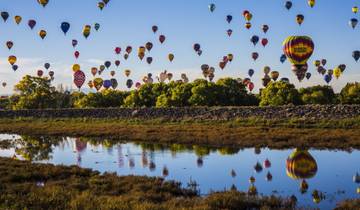
Enchanted New Mexico with Albuquerque Balloon Fiesta
- ✓ Comprehensive Albuquerque tour
- ✓ Expert local guides included
- ✓ All accommodation arranged
- ✓ Transportation provided
6 days
6-Day Albuquerque Balloon Fiesta & Santa Fe Explorer
- ✓ Comprehensive Albuquerque tour
- ✓ Expert local guides included
- ✓ All accommodation arranged
- ✓ Transportation provided

6 days
New Mexico – 6 Days Albuquerque Balloon Fiesta Santa Fe Highlights
- ✓ Comprehensive Albuquerque tour
- ✓ Expert local guides included
- ✓ All accommodation arranged
- ✓ Transportation provided
5 days
New Mexico Highlights 5 Days
- ✓ Comprehensive Albuquerque tour
- ✓ Expert local guides included
- ✓ All accommodation arranged
- ✓ Transportation provided
Multi-day tour packages powered by TourRadar. Prices and availability subject to change.
Introduction: Albuquerque’s Cultural Landscape in 2026
Albuquerque occupies a singular position in American cultural geography, sitting at the convergence of three distinct traditions that have shaped the Southwest for centuries. The Rio Grande valley’s 19 Pueblo nations maintain continuous habitation spanning more than 1,000 years, making them among the oldest continuously occupied settlements in North America. Spanish colonization beginning in 1598 introduced European artistic traditions that merged with Indigenous expression to create uniquely New Mexican art forms still practiced today. Anglo-American settlement in the 19th century added contemporary gallery culture and museum infrastructure, resulting in a cultural ecosystem unmatched in the Mountain West.
The city’s museum landscape reflects this layered heritage through world-class institutions telling specific cultural stories. The Indian Pueblo Cultural Center, owned and operated collectively by New Mexico’s 19 Pueblo nations, represents the only institution globally where Indigenous peoples control their narrative presentation at this scale. The National Hispanic Cultural Center houses the largest concave fresco in North America, a 4,000-square-foot mural depicting Hispanic history from ancient civilizations through contemporary expression. The Albuquerque Museum preserves the Southwest’s most comprehensive collection of regional art and historical artifacts, spanning conquistador armor to Georgia O’Keeffe contemporaries.
Specialized museums address Albuquerque’s unique cultural niches with surprising depth. The Anderson-Abruzzo International Balloon Museum documents why this high-desert city became the undisputed balloon capital of Earth, where October’s Balloon Fiesta draws 900,000 spectators to watch 500+ balloons launch simultaneously. The National Museum of Nuclear Science & History explores atomic age development at Los Alamos and Sandia National Laboratories, which transformed New Mexico into the birthplace of nuclear technology. The Turquoise Museum preserves five generations of gemological knowledge about the Southwest’s signature stone, housed in a castle-like structure containing one of the world’s finest turquoise collections.
Gallery culture thrives across distinct neighborhoods, each expressing different aesthetic sensibilities. Old Town galleries cluster around the 1706-founded plaza, showcasing traditional and contemporary Southwestern art, Indigenous jewelry, and regional pottery from established dealers and emerging artists. Downtown’s warehouse district transformed into an arts quarter where 516 Arts presents experimental exhibitions, Harwood Art Center houses 48 artist studios in a repurposed Methodist boarding school, and Ghostwolf Gallery curates edgy contemporary shows. Nob Hill’s Route 66 corridor features mid-century buildings containing galleries emphasizing glass art, contemporary crafts, and representational painting.
The 2026 cultural calendar builds on longstanding traditions while incorporating contemporary programming. Every institution now offers expanded digital engagement through virtual tours, online collections databases, and curator-led video content. The monthly First Friday Artwalk continues as Albuquerque’s most accessible cultural event, connecting 40+ galleries through self-guided routes with complimentary refreshments and artist talks. Special programming during October’s Balloon Fiesta expands significantly, with the Indian Pueblo Cultural Center hosting the Albuquerque American Indian Arts Festival and museums offering extended hours to accommodate the influx of 900,000+ visitors.
Pricing remains remarkably accessible compared to coastal cities, with flagship institutions charging $6-24 admission and most galleries operating free to the public. Strategic visitors can tour comprehensively for $63-94 daily by targeting free admission windows, while mid-range visitors investing $112-168 daily access all major museums with quality dining. The city’s compact geography concentrates cultural attractions within a 5-mile radius, making multi-venue days logistically simple via public transit, rideshare, or rental car.
This guide provides detailed planning resources for maximizing Albuquerque’s cultural offerings in 2026, covering major museums with admission strategies, gallery districts with neighborhood-specific recommendations, free cultural events throughout the year, budget planning for different visitor profiles, and insider tips for accessing special exhibitions, private collections, and behind-the-scenes experiences unavailable at standard admission levels.
Major Museums in Albuquerque 2026: Comprehensive Admission and Planning Guide
Albuquerque’s major museums span Indigenous heritage, regional history, specialized collections, and unique cultural niches, offering exceptional quality at admission prices significantly below coastal equivalents. Understanding each institution’s focus, optimal visit timing, and admission strategies enables efficient planning that maximizes cultural exposure while managing costs.
Albuquerque Museum of Art and History 2026
The Albuquerque Museum anchors Old Town as the Southwest’s premier regional art and history institution, housing 10,000 artworks, 35,000 historical objects, and 130,000+ photographic archive items documenting four centuries of Rio Grande valley culture. Admission costs $6 for adults and $5 for New Mexico residents in 2026, with free entry every Sunday from 9am to 1pm and the first Wednesday of each month (check the official website for current rates as pricing may vary).
The permanent art collection emphasizes 20th-century Southwestern masters including members of Los Cinco Pintores (a 1920s Taos-Santa Fe artist collective), Transcendentalist painters who documented New Mexico’s landscapes during the Great Depression, and contemporary Native American artists reinterpreting traditional forms. The “Common Ground” exhibition presents 400 years of New Mexico history through Spanish colonial artifacts, territorial-era documents, and modern cultural objects, anchored by one of the finest collections of Spanish colonial armor and weaponry outside Mexico. Rotating temporary exhibitions typically showcase traveling shows from major national museums, regional artists receiving career retrospectives, and community-curated exhibitions highlighting specific cultural traditions.
The sculpture garden features major works by Southwest artists including Glenna Goodacre’s bronze sculptures and contemporary installations, accessible during museum hours without separate admission. The outdoor sculpture walk extends into adjacent Old Town streets, creating a free public art experience. The museum store specializes in regional art books, Indigenous jewelry from Pueblo artists, and reproduction historical items, while the Casa Rondena restaurant serves New Mexican cuisine in an indoor-outdoor setting overlooking the sculpture garden.
Optimal visit strategy involves arriving during free Sunday morning hours (9am-1pm) or first Wednesday of the month to eliminate admission costs entirely. Standard visits require 2-3 hours for permanent collections, with temporary exhibitions adding 45-60 minutes. Guided tours operate at scheduled times (check website) at no additional charge. The museum sits 3 blocks from Old Town plaza, enabling combination visits covering both destinations in a half-day.
Indian Pueblo Cultural Center 2026
The Indian Pueblo Cultural Center represents North America’s only institution where 19 sovereign Pueblo nations collectively present their cultural narrative, operating since 1976 on the former Albuquerque Indian School grounds. Admission costs $12 for adults on weekdays and $15 on weekends, with military, New Mexico residents paying $10, and seniors, students, and teachers paying $8 (check official website for current rates). The center offers “Two for Tuesday” promotions providing two admissions for the price of one adult ticket.
“We Are of This Place: The Pueblo Story” serves as the permanent exhibition, presenting Pueblo history from ancestral migrations through contemporary sovereignty in a narrative structure controlled entirely by Pueblo voices rather than external curators. Interactive displays allow visitors to hear each Pueblo’s distinct language (many mutually unintelligible despite geographic proximity), examine traditional and contemporary pottery techniques, understand agricultural systems that sustained communities for centuries, and explore how Pueblo peoples maintained cultural identity through Spanish colonization, Mexican rule, American territorial acquisition, and modern sovereignty movements.
Weekend cultural dance performances (included with admission, Saturday and Sunday at scheduled times) feature dancers from different Pueblos presenting social dances, agricultural celebrations, and contemporary powwow styles, with emcees explaining cultural context and protocols for respectful observation. The Shumakolowa Native Arts gallery showcases work by contemporary Pueblo artists, while the Indian Pueblo Store (separate from museum admission) represents a trusted source for authentic Indigenous art, jewelry, pottery, and textiles directly sourced from artists.
Pueblo Harvest Café serves Native-inspired cuisine including blue corn pancakes, red and green chile stews, fry bread, bison burgers, and Native superfoods incorporating traditional ingredients like tepary beans, amaranth, and wild game. The café operates independently from museum admission, welcoming diners without museum tickets during operating hours Tuesday through Sunday 9am-4pm.
Optimal visit timing targets weekdays ($12 admission versus $15 weekends) or Tuesday “Two for Tuesday” promotions effectively halving costs. Budget 2-3 hours for permanent galleries, 45 minutes for dance performances, and additional time for shopping or dining. Special programming during October Balloon Fiesta expands significantly with the Albuquerque American Indian Arts Festival featuring 150+ Indigenous artists, expanded dance performances, and demonstrations. The center sits 1.5 miles north of Old Town, accessible via public bus or short rideshare trip.
National Museum of Nuclear Science & History 2026
The National Museum of Nuclear Science & History preserves atomic age artifacts, documents Manhattan Project development, and explains nuclear technology’s civilian applications through comprehensive indoor galleries and outdoor Heritage Park displaying aircraft, missiles, and nuclear delivery systems. Admission costs $24 for adults, $22 for seniors 60+ and youth 6-17, and $12 for veterans, active military, and their spouses/partners (check official website for current rates).
Permanent exhibitions trace nuclear science from early atomic theory through contemporary nuclear medicine, with significant focus on Los Alamos Manhattan Project development, Trinity test site, Hiroshima and Nagoshima bombings, Cold War nuclear arsenals, and modern nuclear energy. The museum presents this history comprehensively, addressing both technological achievement and ethical controversies through primary documents, artifacts, oral histories, and balanced interpretive text. Interactive exhibits explain nuclear fission, radiation types, detection methods, and safety protocols through hands-on demonstrations suitable for various age groups.
Heritage Park outdoor exhibits feature B-52 bombers, nuclear-capable fighter aircraft, missiles representing different delivery systems, and a full-scale submarine sail section, all accessible with standard admission. The nine-acre outdoor area includes interpretive signage explaining each vehicle’s role in nuclear strategy. Children’s discovery area offers age-appropriate nuclear science activities including cloud chamber demonstrations, Geiger counter stations, and energy generation simulations.
The museum periodically hosts “Science on Tap” evening lectures pairing beer service with presentations by scientists, historians, and researchers, typically costing $12 per person for those 21+ (separate from standard admission). These events require advance registration and often sell out for popular topics. The museum store specializes in nuclear history books, vintage atomic age memorabilia reproductions, and science education materials.
Located on Eubank Boulevard several miles from central Albuquerque, the museum requires vehicle access as public transit connections are limited. Standard visits require 2-3 hours for indoor galleries, 1 hour for outdoor exhibits, totaling 3-4 hours for comprehensive touring. The museum offers no regular free admission days but provides discounted rates for educators, students, and military families year-round.
Anderson-Abruzzo International Balloon Museum 2026
The Anderson-Abruzzo International Balloon Museum occupies a unique niche as the world’s premier balloon museum, documenting lighter-than-air flight from 18th-century French experiments through contemporary record-breaking achievements. Admission costs $6 for adults (check official website for current rates), with free entry every Sunday from 9am to 1pm and the first Friday of every month.
The museum’s collection includes historic balloon baskets, gondolas from record-setting flights, envelope fabric samples demonstrating material evolution, and the actual capsule from the first solo balloon crossing of the Pacific Ocean. Interactive exhibits explain balloon physics, show weather pattern analysis, demonstrate burner systems, and allow visitors to experience simulated balloon flight through immersive displays. Photographs and video document Albuquerque’s emergence as the balloon capital of Earth, explaining how the city’s unique “Albuquerque Box” wind pattern (morning winds from south, evening winds from north) enables predictable flight paths impossible in most locations.
Temporary exhibitions rotate throughout the year, often featuring balloon photography, pilot profiles, or technical innovations in balloon design and navigation. The museum maintains an extensive research library open during standard hours for those interested in detailed balloon history or technical specifications. A small gift shop sells balloon-themed items, photography books, and logoed merchandise.
The museum sits adjacent to Balloon Fiesta Park, the October event’s launch site, making it essential context for visitors planning to attend the 2026 Balloon Fiesta (October 5-13, 2026). During Fiesta week, the museum extends hours, hosts special events, and occasionally coordinates with pilots for live demonstrations visible from museum grounds. Outside October, occasional balloon launches or maintenance work occur at adjacent facilities, sometimes visible to museum visitors.
Optimal visit strategy targets free Sunday morning hours (9am-1pm) or first Friday monthly admission. Standard visits require 1.5-2 hours for permanent galleries and temporary exhibitions. Located in northeast Albuquerque near Balloon Fiesta Park, the museum requires vehicle or rideshare access. Combination visits with the National Museum of Nuclear Science & History (both in northeast quadrant, 4 miles apart) create efficient multi-museum days.
National Hispanic Cultural Center 2026
The National Hispanic Cultural Center celebrates Hispanic, Chicano, and Latinx culture through visual arts exhibitions, performing arts productions, library resources, and one of North America’s largest frescos. Visual Arts Museum admission costs $6 for adults and $5 for New Mexico residents, with free entry for youth 16 and under (check official website for current rates). New Mexico resident seniors 60+ receive free admission every Wednesday. All New Mexico residents enter free on the first Sunday of each month.
The Visual Arts Museum presents rotating exhibitions showcasing Hispanic, Chicano, and Latinx artists from throughout the Americas, with galleries dedicated to contemporary works, historical contexts, and community-curated shows. Exhibition quality matches major coastal institutions, featuring regional artists receiving career retrospectives, national traveling shows, and international exhibitions exploring Hispanic diaspora themes. Three separate gallery spaces enable multiple concurrent exhibitions, typically covering painting, sculpture, photography, installation art, and mixed media.
The Torreón houses Frederico Vigil’s “Mundos de Mestizaje,” a 4,000-square-foot concave fresco depicting Hispanic history from pre-Columbian civilizations through contemporary immigration, executed in traditional fresco technique over 12 years. Guided tours (Thursday and Friday at 11am, included with admission) provide essential context for understanding the mural’s complex symbolism, historical references, and technical achievement. The fresco’s size and curved surface create an immersive experience unlike traditional flat murals.
The genealogy center and research library (open Tuesday and Thursday 10am-3pm, free access) provide resources for Hispanic family history research, Spanish colonial documents, and New Mexico settlement records. The Roy E. Disney Center for Performing Arts hosts flamenco performances, bilingual theater productions, Latin American dance companies, and Spanish-language films throughout the year (separate ticketing from museum admission, prices vary by event).
The campus spans 20 acres along the Rio Grande, including outdoor sculpture installations, community gathering spaces, and two restaurants serving regional Hispanic cuisine. Free community events including “¡Vamos!” family programs (monthly, free admission) offer art activities, cultural demonstrations, and performances accessible to all ages without museum tickets.
Optimal visit strategy targets the first Sunday monthly for free New Mexico resident admission or Wednesday for senior residents. Standard museum visits require 1.5-2 hours for gallery exhibitions, with Torreón tours adding 45 minutes. Combined museum and performing arts attendance creates full evening experiences when shows align with travel dates. The center sits in Albuquerque’s South Valley neighborhood, accessible via Interstate 25 or public bus routes, approximately 3 miles south of Old Town.
New Mexico Museum of Natural History and Science 2026
The New Mexico Museum of Natural History and Science closed for renovation until March 2026, reopening in spring with updated galleries and exhibitions. Upon reopening, admission returns to $8 for adults, $7 for seniors 60+, and $5 for children 3-12 (verify pricing at reopening). The museum presents New Mexico’s geological and paleontological history through dinosaur skeletons, fossil assemblages, and volcanic formation displays unique to the Rio Grande Rift.
When operational, the museum features “Dawn of the Dinosaurs” exhibiting Triassic-period fossils from New Mexico’s rich fossil beds, a full-size Tyrannosaurus rex skeleton, and the “Evolator” simulated time travel experience descending through geological epochs. The planetarium (separate admission, typically $10 add-on) presents astronomy shows and science documentaries projected on the dome screen. A separate large-format theater screens nature documentaries and science films (additional ticket required).
Visitors planning 2026 trips should verify reopening status before visiting, as renovation timelines may extend beyond the projected March 2026 date. The museum sits adjacent to Old Town, sharing parking with the Albuquerque Museum and enabling easy combination visits once reopened.
Specialized Museums and Collections 2026
Several smaller specialized museums round out Albuquerque’s cultural offerings, each focusing on niche subjects with surprising depth. The Turquoise Museum (Old Town location, admission pricing varies, verify current rates) houses five generations of the Zachary and Lowry families’ gemological collections, explaining turquoise formation, mining history, and authentication techniques through displays of raw stones, finished jewelry, and antique pieces. The museum occupies a castle-like building adding architectural interest to the collection.
The American International Rattlesnake Museum (Old Town, admission pricing varies) maintains one of the world’s most comprehensive live rattlesnake collections representing species throughout the Americas, plus complementary exhibits of other reptiles, amphibians, and arthropods. Educational displays explain venom composition, ecological roles, and conservation challenges. The museum appeals particularly to families with children interested in natural history.
Casa San Ysidro in Corrales (separate ticketing from Albuquerque Museum, $8 general admission) preserves a fully furnished Spanish colonial hacienda documenting early New Mexico domestic life through original furnishings, agricultural implements, and architectural features. Guided tours (required, included with admission) explain Spanish colonial material culture, trade networks, and domestic practices. The site sits 10 miles north of central Albuquerque in the historic Corrales village, requiring vehicle access.
University of New Mexico campus museums including the Maxwell Museum of Anthropology (free admission) and University Art Museum (free admission) provide additional cultural resources accessible without charge. The Maxwell Museum emphasizes Southwestern archaeology and ethnography with strong Pueblo pottery and textile collections, while the University Art Museum presents rotating contemporary exhibitions and maintains a permanent collection emphasizing photography, prints, and regional art.
Gallery Districts and Commercial Art Spaces in Albuquerque 2026
Albuquerque’s gallery scene distributes across distinct neighborhoods, each expressing different aesthetic priorities and price points. More than 100 commercial galleries operate throughout the metropolitan area, with highest concentrations in Old Town, Downtown, and Nob Hill. Unlike museums with standardized hours and admission fees, galleries maintain individual schedules (typically Tuesday-Sunday 10am-5pm) and operate free to the public, generating revenue through art sales rather than entrance tickets.
Old Town Gallery District 2026
Old Town concentrates approximately 30 galleries within a quarter-mile walking radius surrounding the historic 1706 plaza, making it Albuquerque’s most accessible gallery district for visitors. These galleries emphasize traditional and contemporary Southwestern art, Native American jewelry, Pueblo pottery, landscape painting, and regional crafts appealing to collectors and tourists alike.
Lapis Room (connected to Noisy Water Winery tasting room) presents contemporary Southwestern art in rotating group shows and solo exhibitions, with an emphasis on emerging regional artists working in painting, sculpture, and mixed media. The gallery’s integration with the winery creates a relaxed viewing environment where visitors can enjoy local wine while examining artwork. The adjacent gift shop carries regional jewelry, botanical apothecary items, and handmade goods from local artisans.
Mariposa Gallery ranks among Old Town’s most established contemporary craft galleries, featuring art glass, ceramics, jewelry, and fiber arts from regional and national artists. The gallery maintains high quality standards, representing established makers alongside emerging talents, with price points ranging from accessible small jewelry pieces ($50-200) to major glass sculptures and paintings ($5,000-20,000+). Staff provide knowledgeable guidance about artists’ techniques, materials, and inspiration without aggressive sales pressure.
Andrew Smith Gallery specializes in fine art photography including vintage prints, contemporary Southwest landscapes, and photojournalism, maintaining one of the region’s strongest photography collections. The gallery represents major 20th-century photographers alongside contemporary practitioners documenting New Mexico landscapes, culture, and people. Serious collectors find museum-quality prints and rare vintage photographs unavailable through general galleries.
Multiple galleries focus specifically on Native American art, jewelry, and pottery, directly sourcing from Pueblo, Navajo, Hopi, and Zuni artists. These include Tanner Chaney Gallery (emphasizing turquoise and silver jewelry), Wright’s Collection of Indian Art (vintage and contemporary Pueblo pottery), and several smaller galleries representing individual artists or families. Authenticity represents a significant concern in this market; reputable galleries provide artist attribution, tribal affiliation, and certificates of authenticity for significant pieces.
Old Town’s pedestrian-friendly layout enables self-guided gallery touring without vehicle movement. Most galleries cluster along Romero Street, San Felipe Street, and immediately surrounding blocks, accessible from the central plaza in 2-3 minute walks. Weekend foot traffic peaks, though actual visitor numbers remain modest compared to major tourist cities, allowing personal attention from gallery staff and unhurried viewing experiences. Many galleries participate in special events including Old Town art walks, Native American art markets, and seasonal shows.
Downtown Albuquerque Gallery Scene 2026
Downtown Albuquerque’s arts district emphasizes experimental contemporary art, artist-run spaces, and community engagement over commercial sales, creating a markedly different aesthetic from Old Town’s traditional Southwestern focus. This district appeals to visitors interested in cutting-edge regional art and artist communities rather than collectible traditional work.
516 Arts operates as a nonprofit contemporary art space presenting challenging exhibitions, multimedia installations, performance art, and community-engaged projects. Admission remains free, with rotating exhibitions changing every 2-3 months. Past exhibitions have addressed immigration, Indigenous sovereignty, environmental justice, and border politics through contemporary art languages. The organization hosts artist talks, panel discussions, and educational programming complementing exhibitions.
Secret Gallery in the Arrive Hotel curates Southwest contemporary art emphasizing Indigenous and Latinx artists working in photography, painting, installation, and new media. The gallery’s boutique hotel location creates an accessible viewing environment for both hotel guests and local visitors, with extended evening hours matching hotel operations. Exhibitions rotate every 6-8 weeks, with opening receptions providing opportunities to meet artists.
OffCenter Arts provides a unique community arts experience, offering free studio access during open hours (check website for current schedule) where visitors can participate in art-making using provided materials and tools. The organization maintains painting supplies, printmaking equipment, lapidary tools, sewing stations, and various craft materials available to anyone regardless of skill level. Monthly community exhibitions (free admission) showcase work created by community members responding to thematic prompts. The First Friday Artwalk opening receptions (6:30pm monthly) feature performances, artist talks, and community engagement.
Harwood Art Center occupies a former Methodist boarding school transformed into an arts complex housing 48 artist studios, two galleries, and classrooms for community art education. Galleries present rotating exhibitions (free admission) emphasizing regional contemporary artists working in diverse media. Three annual Open Studio nights (dates announced on website) allow public access to artist studios, providing unique opportunities to see working spaces, meet artists, and purchase work directly without gallery commission.
Palette Contemporary Art and Craft Gallery bridges commercial and contemporary sensibilities, representing regional artists working in painting, printmaking, glass, ceramics, jewelry, and fiber arts at accessible price points ($100-5,000 for most works). The gallery maintains high aesthetic standards while remaining more affordable than blue-chip Old Town galleries, appealing to emerging collectors and design-conscious visitors.
First Friday Artwalk connects downtown galleries through a self-guided tour occurring the first Friday evening of every month from 5-8pm. Participating venues (40+ locations including galleries, studios, and alternative spaces) offer extended hours, opening receptions, artist talks, and complimentary refreshments. The event requires no registration or tickets, allowing spontaneous participation. Maps and participating venue lists are available on the Albuquerque Arts & Cultural District website and at participating locations.
Nob Hill and University Area Galleries 2026
Nob Hill’s Route 66 corridor features mid-century modern architecture housing eclectic galleries emphasizing glass art, contemporary design, and representational painting. The neighborhood’s walkable Central Avenue commercial strip enables gallery touring combined with boutique shopping, coffee houses, and restaurants representing Albuquerque’s alternative culture scene.
The Gallery ABQ (Hoffmantown location northeast of Nob Hill proper) operates as an artist-owned cooperative representing approximately 20-25 local artists working in diverse media including oil and acrylic painting, watercolor, photography, pottery, jewelry, and mixed media. The cooperative model ensures reasonable prices while maintaining professional quality standards. Monthly rotating exhibitions in the salon space provide opportunities for guest artists to show work, with opening receptions announced on the gallery’s website and newsletter.
Ghostwolf Gallery (Old Town location) presents juried contemporary exhibitions throughout the year, with calls for artists announced via website and social media. Shows like “Superfunkadelic!” and “Women’s Work” attract regional artists working in contemporary styles, creating rotating exhibitions of higher energy and experimentation than traditional Old Town galleries. Opening receptions during Saturday gallery events provide opportunities to meet artists and experience community arts engagement.
University of New Mexico campus area galleries including UNM Art Museum (free admission) and Maxwell Museum (free admission) provide additional viewing opportunities without charge. These academic galleries present exhibitions complementing university programs, often featuring faculty work, student exhibitions, touring shows from other universities, and scholarly exhibitions developed from museum collections. Exhibition quality matches professional standards while remaining accessible to general visitors unfamiliar with academic art contexts.
Free Cultural Experiences and Public Art in Albuquerque 2026
Albuquerque offers extensive free cultural programming beyond regular museum and gallery operations, including public art installations, monthly art events, outdoor cultural performances, and institutional free admission days. Strategic visitors can experience significant cultural depth spending minimal money by targeting these opportunities.
First Friday Artwalk and Monthly Gallery Events 2026
First Friday Artwalk represents Albuquerque’s largest and most accessible free cultural event, occurring the first Friday evening of every month from 5-8pm throughout Downtown and adjacent districts. More than 40 participating venues including commercial galleries, artist studios, alternative spaces, coffee shops, and cultural centers open their doors for extended evening hours, coordinating opening receptions, artist talks, and complimentary refreshments.
The self-guided format allows spontaneous participation without registration, tickets, or advance planning. Participants obtain maps from participating venues, the Albuquerque Arts & Cultural District website, or various downtown businesses. The walking routes cover approximately 1-2 miles of compact downtown territory accessible entirely on foot, though some outlying venues require short drives. Peak attendance occurs 6-7pm when multiple receptions overlap, creating festive street energy uncommon in downtown Albuquerque during other times.
Participating venues range from established commercial galleries presenting museum-quality work to raw artist studios showing works-in-progress, alternative spaces hosting experimental performances, and coffee shops displaying community member artwork. This diversity creates an accessible entry point for visitors uncertain about formal gallery etiquette or intimidated by high-end art spaces. Refreshments typically include wine, beer, soft drinks, and light snacks at gallery openings, occasionally extending to food trucks or restaurant partnerships for larger receptions.
Beyond First Friday, some galleries maintain regular opening receptions for new exhibitions on other schedules. Old Town galleries occasionally coordinate group events or art markets bringing multiple venues into aligned programming. Harwood Art Center’s Open Studio Nights (three times annually, dates announced on website) provide exceptional behind-the-scenes access to 48 working artist studios otherwise closed to public viewing.
Public Art and Outdoor Cultural Installations 2026
Albuquerque maintains one of the nation’s oldest public art programs, resulting in hundreds of permanent installations throughout the metropolitan area viewable without admission fees or access restrictions. Public art concentrations occur in several locations accessible to visitors.
Downtown Albuquerque features significant mural concentrations documented through MurosABQ.com, an online mapping resource identifying mural locations, artists, and completion dates. The murals span from 1970s Chicano movement political art to contemporary commissioned works by recognized street artists and community-engaged projects. “Mural Mosey” self-guided tours (maps available online and at visitor centers) direct visitors to notable works within walkable routes. The murals address themes ranging from cultural heritage to environmental justice to abstract aesthetic expression, representing diverse artistic voices and community perspectives.
The Albuquerque Museum sculpture garden extends into adjacent outdoor spaces including streets surrounding Old Town, creating a free public sculpture trail. Works by regional and national sculptors including bronze figuratives, abstract metal sculptures, and contemporary installations occupy plaza spaces, sidewalks, and small parks. The extended sculpture walk enables art viewing without museum admission, accessible during all daylight hours.
University of New Mexico campus features significant outdoor sculpture collections viewable by any campus visitor. The Zimmerman Library area, Duck Pond, and various courtyard spaces contain works by major 20th-century sculptors and contemporary installations. Campus maps (available at visitor centers or online) identify sculpture locations for self-guided touring. The campus requires no admission or parking fees for visitors exploring cultural resources.
Rail Trail linear park follows former railway corridors through central Albuquerque, incorporating public art installations along the multi-use path. The 8-mile paved trail connects downtown to northeast Albuquerque, passing through diverse neighborhoods while providing accessible outdoor recreation and art viewing. Trailheads offer parking access, while the continuous paved surface accommodates walking, running, and cycling.
Free Admission Days at Major Museums 2026
Strategic planning around institutional free admission days enables comprehensive museum touring without ticket costs. The Albuquerque Museum offers free entry every Sunday from 9am to 1pm and the first Wednesday monthly, covering the city’s flagship art and history institution. The Anderson-Abruzzo Balloon Museum provides free admission every Sunday 9am-1pm and first Friday monthly. The National Hispanic Cultural Center grants free entry to New Mexico residents on the first Sunday monthly, plus Wednesday free admission for resident seniors 60+.
Beyond regularly scheduled free days, occasional special free admission events coincide with holidays, cultural celebrations, or promotional periods. Bank of America cardholders receive free general admission to participating museums (including Albuquerque Museum) during the first full weekend of each month through the Bank of America Museums on Us program. Military families, veterans, and active duty personnel receive free admission to designated Blue Star museums during summer months (approximately Memorial Day through Labor Day, verify current year dates).
University museums including Maxwell Museum of Anthropology and UNM Art Museum maintain permanent free admission policies, requiring no special planning around designated free days. These institutions provide year-round no-cost access to quality exhibitions and permanent collections.
Cultural Programming and Community Events 2026
Indian Pueblo Cultural Center hosts weekend cultural dance performances (included with museum admission, Saturday and Sunday at scheduled times throughout the year) featuring dancers from different Pueblos presenting traditional and contemporary styles. These performances represent rare opportunities to experience Indigenous dance outside specific Pueblo feast days, providing cultural context through emcee explanations and question-and-answer sessions. The dances occur in the central courtyard (weather permitting) or indoor performance space, with seating available for 200+ attendees.
National Hispanic Cultural Center presents occasional free community events including “¡Vamos!” family programs (monthly, free admission) offering hands-on art activities, cultural demonstrations, story time, and performances without museum ticket requirements. These events specifically target families with children, providing accessible introduction to Hispanic arts and culture. Free bilingual story time sessions (weekly, dates and times on website) occur in the research library without admission charges.
OffCenter Arts maintains open studio hours (typically multiple afternoons and evenings weekly, verify current schedule on website) providing free access to art-making materials, tools, and community space. Visitors can participate in painting, printmaking, jewelry-making, sewing, and various craft activities using provided supplies without cost, registration, or skill requirements. This represents a unique opportunity for hands-on cultural engagement rather than passive observation.
Budget Planning for Cultural Tourism in Albuquerque 2026
Albuquerque’s cultural landscape accommodates diverse budget levels through strategic planning around free admission opportunities, varying admission prices across institutions, and affordable dining options near major attractions. The following budget breakdowns reflect per-person daily costs for different visitor profiles pursuing cultural tourism as their primary travel focus.
Budget Cultural Touring in Albuquerque 2026
Budget-conscious cultural visitors can experience Albuquerque’s museums and galleries spending $63-94 per person daily by maximizing free admission days, selecting lower-priced institutions, and utilizing public transportation. This approach requires schedule flexibility to align travel dates with free admission windows, though it enables comprehensive cultural engagement without significant financial barriers.
Museum admission on free days eliminates the largest cost category. Sunday morning visits (9am-1pm) to Albuquerque Museum and Balloon Museum provide zero-cost access to two major institutions. First Friday evening gallery touring during Artwalk covers 40+ venues without admission charges while including complimentary refreshments. University museums (Maxwell Museum, UNM Art Museum) maintain permanent free admission. Strategic sequencing allows 3-4 major cultural experiences weekly without admission costs.
When paid admission is unavoidable, budget tier visitors should target lower-priced institutions. Albuquerque Museum and Balloon Museum charge $6 each. National Hispanic Cultural Center costs $6 for adults. Indian Pueblo Cultural Center weekday rates ($12) beat weekend pricing ($15). Budget visitors can access 2-3 paid institutions spending $12-24 daily on admissions, significantly below coastal museum pricing typically starting at $20-30 per institution.
Meals emphasize affordable regional options concentrated near cultural districts. Old Town offers numerous New Mexican restaurants serving combination plates, burritos, and regional specialties for $12-18 per entrée. Pueblo Harvest Café at Indian Pueblo Cultural Center provides Indigenous-inspired cuisine at accessible prices. Downtown food trucks and casual restaurants serve international cuisines for $10-15 per meal. Budget breakfast options including coffee shops and cafés charge $8-12 for substantial morning meals.
Transportation via ABQ Ride public bus system costs $2 per ride, with day passes available for unlimited same-day travel. Most major museums sit along or near bus routes, enabling public transit access without rental car expenses. Old Town, Downtown, and University Area remain walkable once reached via bus. Budget visitors avoiding rental cars eliminate parking fees, insurance costs, and fuel expenses while experiencing Albuquerque from local perspectives.
Daily budget breakdown: Museum admissions (utilizing free days and lower-priced institutions) $0-24, breakfast $8-12, lunch $15-20, dinner $20-30, public transit day pass $8, coffee and snacks $12-18. Total daily expenditure $63-94 per person for comprehensive cultural engagement without accommodation costs.
Mid-Range Cultural Experience in Albuquerque 2026
Mid-range cultural visitors invest $112-168 per person daily accessing all major museums without free-day constraints, dining at established regional restaurants, and utilizing rideshare transportation for convenience. This approach prioritizes flexibility and comfort over cost minimization while maintaining value consciousness.
Museum admission costs reflect visiting 3-4 institutions at standard rates without free-day planning. Combinations might include Indian Pueblo Cultural Center ($12-15), National Museum of Nuclear Science & History ($24), Albuquerque Museum ($6), and National Hispanic Cultural Center ($6), totaling $48-51 for comprehensive daily touring. Alternative combinations substituting Balloon Museum ($6) or Turquoise Museum (pricing varies, approximately $8-12) maintain similar expenditure ranges. Mid-range visitors prioritize museums aligning with interests rather than lowest admission prices.
Dining upgrades to established restaurants serving regional specialties, craft cocktails, and wine programs. Lunch at quality New Mexican restaurants including Maria Teresa, Antiquity, or Seasons costs $20-30 per person before beverages. Dinner at Farm & Table, Frenchish, Los Poblanos, or comparable establishments runs $30-45 per entrée, with full meals including appetizers and drinks reaching $60-80 per person. Mid-range visitors typically dine at one upscale restaurant daily while selecting more affordable options for remaining meals.
Transportation via rideshare services (Uber, Lyft) provides convenient point-to-point travel eliminating parking challenges and public transit scheduling constraints. Museum-to-museum rides within Albuquerque typically cost $10-20, with 3-4 daily trips totaling $30-60. Some mid-range visitors rent cars for multi-day trips, though daily rental, parking, and fuel expenses ($50-70 daily) exceed rideshare costs for primarily cultural tourism itineraries.
Daily budget breakdown: Museum admissions (3-4 institutions at standard rates) $48-51, breakfast $12-18, lunch $20-30, dinner $30-45, transportation (rideshare or rental car) $30-60, coffee, beverages, and snacks $15-25. Total daily expenditure $155-229 per person without accommodation. Note: the lower total of $112-168 reflects selective rather than comprehensive daily museum touring, with visitors choosing 2-3 institutions rather than attempting all venues, plus moderating restaurant choices.
Luxury Cultural Immersion in Albuquerque 2026
Luxury cultural visitors pursuing comprehensive museum access, private guided experiences, VIP exhibition previews, and upscale dining invest $235-350+ per person daily. This tier emphasizes depth, insider access, and premium experiences unavailable at standard admission levels.
Museum admission expands beyond standard tickets to include private guided tours, curator-led experiences, behind-the-scenes access, and special exhibition previews. Major museums offer private tours typically costing $150-300 for groups up to 10 people, though individual travelers can sometimes join scheduled private tours or arrange docent-guided experiences. VIP memberships at institutions like Indian Pueblo Cultural Center or National Hispanic Cultural Center provide exhibition preview access, curator talks, and donor events supplementing standard admission.
Gallery acquisitions represent significant luxury expenditures when visitors purchase artwork from established galleries. While not daily operational costs, serious collectors might invest $2,000-20,000+ on quality Southwestern art, contemporary paintings, or Native American jewelry from reputable Old Town or Downtown galleries. These purchases transcend tourism expenditures, representing art collecting aligned with cultural travel interests.
Dining emphasizes Albuquerque’s top-tier restaurants including Campo, AZUL at La Fonda on the Plaza, Antiquity, and seasonal tasting menu experiences at Farm & Table or El Pinto’s private dining rooms. Full tasting menus with wine pairings cost $80-150 per person, while premium à la carte dining with cocktails and wine reaches $60-90 per person per meal. Luxury visitors typically enjoy two upscale meals daily plus coffee and pastries at quality bakeries.
Transportation via private car services or luxury rental vehicles provides maximum convenience and comfort. Luxury visitors often engage local guides offering combined transportation and cultural interpretation, typically costing $400-600 for full-day customized tours. These guided experiences provide insider access, cultural context, and personalized itineraries unavailable through self-guided exploration.
Daily budget breakdown: Museum admissions with private tours and special access $80-120, upscale breakfast $20-30, premium lunch $35-50, tasting menu or fine dining dinner $60-90, private transportation or guided tours $40-60 (prorated from full-day service), gallery purchases and memberships (variable, not daily). Total daily expenditure $235-350+ per person for luxury cultural immersion without accommodation.
Seasonal Considerations for Cultural Tourism in Albuquerque 2026
Albuquerque’s cultural calendar follows distinct seasonal patterns affecting museum operations, special programming, gallery activities, and overall visitor experiences. Understanding these patterns enables optimal timing for specific cultural interests.
October Balloon Fiesta Period 2026 (October 5-13)
The Albuquerque International Balloon Fiesta (October 5-13, 2026) transforms the city’s cultural landscape with expanded programming, extended museum hours, special exhibitions, and significantly increased visitor numbers. The event draws 900,000+ spectators, creating exceptional cultural energy but requiring advance planning for accommodation and museum access.
Anderson-Abruzzo Balloon Museum becomes ground zero for balloon culture during Fiesta, hosting special exhibitions, pilot talks, balloon maintenance demonstrations, and educational programming expanded beyond standard operations. The museum’s adjacent location to Balloon Fiesta Park launch field creates unique opportunities for visitors wanting cultural context paired with live Fiesta experiences. Museum hours typically extend, and special events may carry surcharges beyond standard admission.
Indian Pueblo Cultural Center presents the Albuquerque American Indian Arts Festival concurrently with Balloon Fiesta, bringing 150+ Native American artists from throughout North America for a juried art market. Cultural dance performances expand to multiple daily shows featuring Pueblo dancers plus visiting performers from other tribal nations. This represents the year’s premier Indigenous cultural event, though accommodation scarcity and premium pricing during Fiesta week pose challenges for budget visitors.
National Hispanic Cultural Center and Albuquerque Museum maintain standard operations but experience increased attendance from Fiesta visitors seeking indoor cultural activities. Lines may form during free admission windows as temporary residents from around the world explore the city between morning and evening balloon launches. Gallery receptions and special events throughout the city intensify during Fiesta week, creating exceptional cultural programming density.
Visitors prioritizing cultural tourism should consider whether Fiesta week’s exceptional programming justifies significantly higher accommodation costs, intense competition for restaurant reservations, and crowds at normally quiet museums. Budget travelers might avoid October entirely, while mid-range and luxury visitors accepting premium pricing access extraordinary special programming unavailable other times.
Winter Holiday Programming 2026 (November-December)
Winter holidays inspire special museum programming, gallery exhibitions, cultural performances, and community events particularly emphasizing Hispanic and Native American traditions. Cultural tourists visiting November-December experience programming unavailable during other seasons, often at standard admission prices without Fiesta-week surcharges.
National Hispanic Cultural Center hosts “Nutcracker in the Land of Enchantment” in December, a Southwestern interpretation of the classic ballet produced in partnership with Festival Ballet Albuquerque. The production incorporates New Mexican cultural elements including chile peppers, lowriders, and regional folklore into the traditional narrative. Performing arts tickets (separate from museum admission) typically range $25-60 depending on seating.
Indian Pueblo Cultural Center presents special programming during December including Pueblo Gingerbread House Contest exhibitions, Shop & Stroll Indigenous artist markets (early December), and traditional storytelling around fires on December Saturdays. These events provide authentic cultural experiences during seasons when many visitors expect commercialized holiday programming. The center’s gift shop expands inventory to include ornaments, Nativity sets, and holiday-specific Indigenous crafts.
Old Town galleries coordinate special holiday shows and extended shopping hours throughout November-December, making this period optimal for visitors interested in acquiring Southwestern art, Native American jewelry, or regional crafts as gifts or personal collections. Many galleries offer holiday sales or special pricing during this period.
Summer Cultural Programming 2026 (June-August)
Summer brings intensified outdoor cultural programming taking advantage of favorable evening weather for concerts, performances, outdoor films, and community events. Museums maintain extended hours compared to winter schedules, and gallery districts host evening events beyond First Friday Artwalk.
Albuquerque Museum sculpture garden programs expand during summer with outdoor concerts, sunset gallery tours, and family programming in outdoor spaces. The museum occasionally extends hours for special evening events pairing exhibitions with live music, film screenings, or cultural performances in the sculpture garden setting.
Downtown cultural venues host “Summerfest” series programming including outdoor performances, street festivals, and pop-up art markets coordinated across multiple venues. These events create festive evening atmospheres encouraging extended downtown presence beyond daytime museum visits. Food trucks, beer gardens, and outdoor seating supplement cultural programming.
Summer represents peak domestic tourism season, with visitor numbers elevated but far below October Balloon Fiesta levels. Accommodation prices rise moderately compared to winter but remain accessible compared to October. Museum attendance increases, though lines rarely form except during free admission windows. This period offers balanced experiences combining good weather, active cultural programming, and manageable crowds.
Hidden Gems and Off-the-Beaten-Path Cultural Experiences 2026
Beyond major museums and established gallery districts, Albuquerque offers lesser-known cultural sites, artist studios, specialized collections, and community spaces providing authentic engagement with regional arts and culture. These experiences require more research and planning but reward visitors with unique encounters unavailable through standard tourism channels.
Artist Studio Districts and Open Studio Events 2026
Albuquerque’s dispersed artist community maintains studio concentrations in several neighborhoods where working artists produce painting, sculpture, ceramics, jewelry, textiles, and mixed media. While individual studios generally remain closed to public drop-in visits, organized open studio events several times annually provide access to working spaces, opportunities to meet artists, and options to purchase work directly without gallery commission.
Harwood Art Center’s three annual Open Studio Nights (dates announced on website, typically spring, summer, and fall) unlock all 48 artist studios in the converted Methodist boarding school building. Visitors explore diverse practices from traditional painting and sculpture to experimental digital media, fiber arts, printmaking, and conceptual installations. Artists present work in various completion stages, discuss techniques and inspiration, and often offer studio-priced works below gallery retail. The self-guided format enables visitors to focus on practices aligning with personal interests while skipping studios working in less appealing media.
Sawmill District emerging arts area northeast of downtown houses numerous artist studios in converted industrial buildings. While not organized into formal open studio programs, individual artists occasionally host open houses announced via social media and local arts newsletters. The area lacks the infrastructure of formal gallery districts but offers raw, authentic encounters with working artists producing outside commercial gallery structures.
Specialized Collections and Community Cultural Centers 2026
Several small specialized museums, cultural centers, and community spaces operate outside mainstream tourism channels, maintaining collections and programming relevant to specific communities or niche interests. These institutions typically charge modest admission fees or operate on suggested donations, welcoming visitors genuinely interested in their specific focus areas.
Los Poblanos Historic Inn & Organic Farm (located 5 miles north of Old Town) maintains an organic lavender farm, historic hacienda architecture, and arts programming including resident artist studios and sculpture exhibitions in farm fields. While primarily functioning as a luxury inn and restaurant, the property welcomes day visitors wanting to explore the lavender fields (no admission charge), farm shop selling lavender products and local foods, and outdoor sculpture walk. The historic architecture and agricultural landscape provide context for understanding New Mexico’s farming traditions and acequia (irrigation ditch) systems predating American territorial acquisition.
National Hispanic Cultural Center’s genealogy research library (open Tuesday and Thursday 10am-3pm, free access) provides specialized resources for visitors researching Hispanic family history, New Mexico settlement patterns, or Spanish colonial documents. While not entertainment-oriented, the library offers extraordinary resources for genealogists and historians unavailable through general tourism channels. Staff provide research assistance and guidance in navigating collections.
Albuquerque Rail Yards Market (Sunday mornings, seasonal operation typically May-October) combines farmers market produce vendors with local artisan booths, food trucks, and occasional live music in historic rail yard buildings. While not specifically a cultural venue, the market provides authentic community gathering experiences and opportunities to meet working artists selling jewelry, textiles, pottery, and crafts directly to consumers. The setting in preserved industrial architecture adds historic interest beyond standard market formats.
University and Academic Cultural Resources 2026
University of New Mexico campus offers multiple cultural resources beyond Maxwell Museum and UNM Art Museum, including architecture, performing arts, special collections, and occasional public lectures or symposia. These resources require more initiative to discover but reward visitors with quality experiences without tourist-oriented marketing or admission charges.
Zimmerman Library houses special collections including notable photography archives, Southwestern rare books, and historical manuscripts viewable by appointment (inquire at special collections desk). The library building itself represents notable New Mexico Pueblo Revival architecture from the 1930s, with decorated ceiling beams, regional artwork, and period architectural details. Public access is permitted during standard library hours, though special collections access requires advance arrangements.
UNM Popejoy Hall presents performing arts throughout the academic year including touring Broadway productions, symphony concerts, dance companies, and theatrical performances. Ticket prices range $20-80 depending on production and seating. The academic setting enables access to professional performing arts at prices below commercial theater markets, though scheduling concentrates during fall and spring semesters when university is in session.
Campus walking tours (self-guided maps available at visitor centers or online) identify significant architectural landmarks, outdoor sculpture installations, and historic buildings spanning the university’s 1889 founding through contemporary construction. The Duck Pond area provides scenic campus core access with fountains, sculpture, and seating areas welcoming visitors year-round.
Practical Planning Advice for Cultural Tourism in Albuquerque 2026
Successful cultural tourism in Albuquerque requires understanding geographic relationships between museums, optimal sequencing for multi-venue days, transportation realities, and timing strategies maximizing free admission opportunities. The following practical guidance addresses common planning questions and logistical challenges.
Geographic Clustering and Transportation Strategies 2026
Albuquerque’s major cultural attractions distribute across several geographic clusters requiring transportation planning for efficient multi-venue touring. Old Town concentrates the Albuquerque Museum, dozens of galleries, public art, and historic architecture within a walkable quarter-mile radius. Downtown arts district sits 2 miles east along Central Avenue (historic Route 66), accessible via public bus, rideshare, or short drive. Indian Pueblo Cultural Center and National Hispanic Cultural Center occupy separate locations requiring vehicle or rideshare access.
Northeast Albuquerque clusters the National Museum of Nuclear Science & History and Anderson-Abruzzo Balloon Museum approximately 4 miles apart, both requiring vehicle access as public transit connections are limited. These museums combine efficiently for half-day or full-day northeast quadrant touring. University of New Mexico campus sits midway between Old Town and downtown, accessible via public bus or rideshare.
Optimal multi-venue sequencing might include: Morning at Albuquerque Museum (Old Town) during free Sunday hours 9am-1pm, followed by Old Town gallery touring and lunch, afternoon at Indian Pueblo Cultural Center (short rideshare trip), return to downtown for First Friday Artwalk evening (first Friday monthly). Alternative sequence: Morning at Balloon Museum (free Sunday 9am-1pm in northeast), early afternoon at Nuclear Museum (same quadrant), late afternoon downtown for gallery touring. These sequences minimize backtracking while clustering compatible venues.
Rental car advantages include unlimited geographic flexibility, no rideshare wait times, ability to visit Corrales or other outlying sites, and convenience for travelers uncomfortable with public transit in unfamiliar cities. Disadvantages include daily rental costs ($40-70), parking challenges in Old Town during busy periods, unfamiliarity with local traffic patterns, and fuel expenses. Budget travelers prioritizing cultural tourism over outdoor recreation often fare better relying on public transit and strategic rideshare trips rather than daily rental car expenses.
Public bus system ABQ Ride costs $2 per ride with day passes available for unlimited travel. Route 66 (Central Avenue) connects downtown to University area and Old Town with frequent service. Route maps and schedules are available online and at visitor centers. Bus travel requires more time than driving but enables legitimate local experience and eliminates parking concerns. Major museums post bus stop locations on their websites.
Timing Strategies for Free Admission and Special Events 2026
Maximizing free admission opportunities requires schedule flexibility and willingness to plan travel dates around institutional free-day calendars. Sunday mornings (9am-1pm) provide free access to both Albuquerque Museum and Balloon Museum simultaneously, though geographic separation (Old Town versus northeast Albuquerque) prevents single-morning visits to both institutions. First Friday evenings combine Balloon Museum free admission with downtown First Friday Artwalk, creating exceptional value for visitors willing to travel between northeast and downtown quadrants.
First Wednesday monthly free admission at Albuquerque Museum targets local residents and midweek travelers, typically drawing lighter crowds than Sunday free hours. First Sunday monthly at National Hispanic Cultural Center offers free admission to New Mexico residents only, excluding out-of-state visitors from this benefit. Understanding these distinctions enables realistic planning around free opportunities visitors actually qualify for rather than attempting to access resident-only benefits.
Special event timing requires different strategies. October Balloon Fiesta (October 5-13, 2026) demands booking accommodations 6-12 months advance as the city reaches capacity. Visitors prioritizing Fiesta week cultural programming must accept significantly elevated accommodation costs and intense competition for restaurant reservations. First Friday Artwalk events require no advance booking but benefit from arrival by 6pm when multiple gallery receptions peak concurrently.
Photography Policies and Cultural Protocol Considerations 2026
Photography policies vary significantly across Albuquerque cultural institutions, with some venues permitting unrestricted personal photography while others prohibit cameras entirely or restrict photography in specific galleries. Indian Pueblo Cultural Center allows non-commercial photography in most areas but prohibits photography during cultural dance performances without explicit permission announced by performers or emcees. This restriction honors Pueblo protocols regarding ceremonial content even when presented in public performance contexts.
National Hispanic Cultural Center Visual Arts Museum generally permits photography of permanent installations and most temporary exhibitions, though specific exhibitions may restrict photography at artist or lender request. Signage indicates restricted areas. The Torreón fresco “Mundos de Mestizaje” permits photography for personal use, enabling visitors to document the monumental work’s details impossible to absorb in single visits.
Albuquerque Museum restricts photography in certain temporary exhibitions per loan agreements with lending institutions, while generally permitting photography of permanent collection works. Flash photography is prohibited throughout to protect light-sensitive artworks. The outdoor sculpture garden welcomes photography without restrictions.
Commercial galleries throughout Old Town and Downtown typically permit photography for personal documentation but request visitors ask permission before photographing specific artworks for social media sharing or publication. Gallery staff appreciate respectful inquiry rather than assumptions about photography rights. Native American art galleries sometimes restrict photography of ceremonial objects or specific pieces at artists’ request.
Respectful cultural engagement requires understanding that not all cultural expressions are intended for unrestricted documentation and sharing. When visiting institutions presenting Indigenous or Hispanic cultural materials, visitors should observe posted policies, ask questions when uncertain, and prioritize experiential engagement over social media documentation. This approach honors communities sharing their cultures while respecting boundaries around sacred, ceremonial, or culturally sensitive materials.
Combining Cultural Tourism with Other Albuquerque Experiences 2026
Cultural tourism pairs naturally with Albuquerque’s other attractions including outdoor recreation, culinary exploration, architectural tourism, and regional day trips. Strategic combination creates balanced itineraries appealing to travelers with diverse interests beyond exclusively cultural focus.
Pairing Museums with Culinary Experiences 2026
New Mexican cuisine represents a distinct regional tradition separate from Mexican or Tex-Mex cooking, emphasizing chile (both red and green), blue corn, beans, and preparations unique to the Rio Grande valley. Pairing cultural tourism with culinary exploration provides comprehensive regional understanding while addressing practical meal planning.
Old Town concentrations enable combined museum and dining days. Morning visits to Albuquerque Museum followed by lunch at Antiquity (upscale New Mexican in historic hacienda), Seasons Rotisserie & Grill (farm-to-table regional cuisine), or Church Street Café (traditional New Mexican breakfast and lunch) create natural half-day sequences. Afternoon gallery touring digests lunch while providing continued cultural engagement.
Indian Pueblo Cultural Center’s Pueblo Harvest Café deserves specific planning as a cultural-culinary experience rather than incidental museum dining. The menu presents Indigenous ingredients and preparation methods including blue corn, tepary beans, wild game, and traditional stews served in contemporary refined presentations. Dining here (even without museum admission) provides cultural education through food unavailable in conventional restaurants.
Downtown cultural tourism pairs with Albuquerque’s emerging food scene concentrated along Central Avenue and Gold Avenue. Post-museum dining at Field & Fire (wood-fired contemporary), Frenchish (French-New Mexican fusion), or Zacatecas Tacos & Tequila (elevated Mexican) extends downtown presence into evening hours. First Friday Artwalk naturally leads to dinner reservations at downtown restaurants, creating integrated cultural-culinary evenings.
Architectural Tourism and Historic Districts 2026
Albuquerque’s architectural heritage spans Pueblo Revival public buildings from the 1920s-30s, Spanish colonial missions dating to 1706, territorial adobe structures, Route 66 mid-century modern commercial architecture, and contemporary Southwestern design. Cultural tourists interested in built environment can structure museum visits around architectural exploration.
Old Town Historic District presents the city’s oldest architecture including San Felipe de Neri Church (1793 construction, later modifications), territorial adobe homes converted to galleries and shops, and 1880s-1920s commercial buildings framing the plaza. The National Register historic district encompasses several blocks enabling self-guided architectural walking tours combined with museum and gallery visits. Architectural details include exposed vigas (wooden ceiling beams), carved corbels, thick adobe walls, and enclosed placitas (courtyards) characteristic of Spanish colonial and territorial New Mexican construction.
University of New Mexico campus showcases Pueblo Revival architecture from the 1930s-50s when university president James Zimmerman commissioned regional architect John Gaw Meem to create campus architectural unity. Notable buildings include Zimmerman Library, Scholes Hall, and various academic buildings demonstrating adaptation of Indigenous Pueblo architectural forms to institutional purposes. Campus walking tours identify architectural landmarks contextualizing New Mexico Pueblo Revival movement within larger American architectural history.
Route 66 corridor along Central Avenue preserves mid-century modern commercial architecture including neon-signed motels, drive-in restaurant buildings, automobile-oriented retail, and entertainment venues from the highway’s 1926-1985 active period as a primary transcontinental route. While many buildings have been demolished or modified, remaining examples provide context for understanding car culture’s impact on American Southwest urban development. This architectural layer contrasts dramatically with earlier Spanish colonial and Pueblo Revival styles, demonstrating cultural shift toward Anglo-American architectural vocabulary in the mid-20th century.
Day Trips to Regional Cultural Sites 2026
Albuquerque’s central location enables day trips to surrounding cultural destinations including Pueblo villages, Spanish colonial missions, archaeological sites, and regional museums expanding understanding of New Mexican cultural traditions beyond Albuquerque’s urban context.
Acoma Pueblo “Sky City” (60 miles west, approximately 90-minute drive) sits atop a 367-foot sandstone mesa continuously occupied for over 1,000 years, making it one of North America’s oldest continuously inhabited settlements. Guided tours (required, advance reservations recommended) lead visitors through the mesa-top village, explain architectural adaptations to the challenging site, visit San Estevan del Rey Mission (1629 construction), and provide direct engagement with Acoma community members serving as guides. The experience dramatically contextualizes materials and perspectives presented at Indian Pueblo Cultural Center through direct site visit.
Petroglyph National Monument (west Albuquerque, approximately 20-minute drive from Old Town) preserves one of North America’s largest petroglyph concentrations with 20,000+ images created by ancestral Pueblo peoples and early Spanish settlers over 400-700 years. Multiple trail options ranging from easy quarter-mile walks to longer hiking routes enable viewing petroglyphs depicting animals, humans, geometric designs, and symbols whose meanings remain debated by archaeologists. National Park Service visitor center provides interpretive context. The site requires no admission fees, though donations are accepted.
Coronado Historic Site in Bernalillo (16 miles north, approximately 25-minute drive) interprets the 1540-42 Francisco Vázquez de Coronado expedition through New Mexico, presenting Spanish conquest narrative alongside Indigenous perspectives on contact period trauma, resistance, and cultural survival. The site preserves Kuaua Pueblo ruins including reconstructed kiva with reproduced murals (originals preserved at Museum of Indian Arts and Culture in Santa Fe). Admission costs $5 for adults, making this an affordable addition to Albuquerque-area cultural tourism.
Santa Fe (60 miles north, approximately 60-minute drive) warrants at least full-day excursion for serious cultural tourists, offering Museum Hill’s four museums (Museum of International Folk Art, Museum of Indian Arts and Culture, Museum of Spanish Colonial Art, Wheelwright Museum of the American Indian), plus Canyon Road gallery district with 100+ galleries, and historic plaza architecture. While exceeding day-trip scope for comprehensive coverage, even partial Santa Fe exploration significantly supplements Albuquerque cultural experiences. This day trip requires rental car or organized tour, as public transit connections between cities are limited.
Special Considerations for Different Visitor Types 2026
Cultural tourism appeals to diverse visitor profiles with varying needs, abilities, interests, and constraints. The following guidance addresses specific considerations for families with children, travelers with mobility limitations, solo visitors, and international tourists unfamiliar with American Southwest cultural contexts.
Family Cultural Tourism with Children 2026
Family cultural tourism requires balancing educational goals with children’s attention spans, physical capabilities, and interest levels. Several Albuquerque institutions specifically design programming for family engagement, while others primarily target adult audiences with limited child-appropriate content.
Albuquerque Museum offers family programs including hands-on art activities, gallery scavenger hunts, and children’s guides designed for various age groups. The sculpture garden provides outdoor space where children can move freely between artworks. Family-friendly bathrooms include changing tables and nursing areas. Sunday free admission (9am-1pm) enables low-pressure family visits where early exits due to tired children don’t trigger concerns about wasted admission fees.
Indian Pueblo Cultural Center provides exceptional family programming including weekend cultural dance performances where emcees explain dances in accessible language welcoming children’s questions. Interactive permanent exhibition elements allow hands-on engagement with Pueblo technologies, languages, and cultural practices. The courtyard offers outdoor space for children needing movement breaks between indoor galleries. Pueblo Harvest Café’s children’s menu incorporates Indigenous ingredients in familiar formats appealing to young palates.
Anderson-Abruzzo Balloon Museum designs extensively for family engagement with interactive exhibits explaining balloon physics through hands-on demonstrations, simulated balloon flight experiences, and children’s activity areas. The museum’s subject matter inherently appeals to children familiar with balloon imagery even if unfamiliar with ballooning history or science. Indoor climate control provides comfortable year-round family visits regardless of outdoor weather.
National Museum of Nuclear Science & History (when reopened post-renovation) emphasizes hands-on science education appropriate for elementary through high school ages. Outdoor Heritage Park aircraft and missile displays particularly engage boys interested in military technology and aerospace. The museum provides extended walking distances between indoor and outdoor areas, which can challenge families with very young children or strollers.
Families should generally avoid art-focused galleries during cultural tourism days, as these venues emphasize quiet contemplation and fragile objects incompatible with energetic children’s natural behaviors. Exception: First Friday Artwalk events create festive atmosphere where children’s presence is welcomed and galleries expect family attendance as part of community engagement. OffCenter Arts specifically welcomes families during open studio hours, providing art-making opportunities where children can create alongside adults using provided materials.
Accessible Cultural Tourism for Visitors with Mobility Limitations 2026
Albuquerque’s major cultural institutions comply with Americans with Disabilities Act accessibility requirements, though specific features and limitations vary by facility. Visitors planning accessible cultural tourism should contact institutions directly regarding specific needs beyond general wheelchair accessibility.
Albuquerque Museum provides full wheelchair accessibility including accessible parking, entrance ramps, elevators to upper galleries, accessible bathrooms, and wide gallery corridors. The sculpture garden includes paved paths suitable for wheelchairs and walkers, though some outdoor areas feature gravel surfaces presenting challenges for wheelchair users. The museum provides wheelchairs for loan at no charge (availability first-come basis).
Indian Pueblo Cultural Center offers accessible parking near main entrance, accessible pathways throughout single-level facility, accessible bathrooms, and wide gallery spaces. Weekend cultural dance performances occur in accessible courtyard space or indoor performance area, both providing wheelchair seating areas with good sight lines. The gift shop and restaurant maintain accessible aisles and seating.
National Museum of Nuclear Science & History presents accessibility challenges for visitors with significant mobility limitations due to extensive outdoor Heritage Park area with uneven surfaces, gravel pathways, and aircraft positioned on grass. Indoor galleries provide full accessibility, but comprehensive museum experience requires outdoor walking unsuitable for many wheelchair users. Visitors with mobility limitations might focus exclusively on indoor galleries and skip outdoor exhibits.
Old Town pedestrian areas feature uneven brick pavers, raised curbs in some locations, and narrow gallery doorways presenting challenges for wheelchair users and those using walkers. Many historic buildings predate accessibility requirements and maintain original doorways too narrow for wheelchairs. Galleries in newer or renovated buildings generally provide better accessibility. Visitors with mobility limitations should prioritize Albuquerque Museum (fully accessible) over general Old Town gallery touring if time is limited.
Downtown galleries typically occupy ground-floor warehouse spaces with accessible entrances and open floor plans accommodating wheelchairs. First Friday Artwalk routes concentrate along flat downtown blocks more accessible than Old Town’s historic pedestrian areas. 516 Arts and other purpose-built contemporary spaces maintain full accessibility as design priority.
Solo Cultural Tourism and Safety Considerations 2026
Solo travelers pursuing cultural tourism in Albuquerque face few unique challenges compared to traveling companions, as museums and galleries welcome individual visitors and create naturally social environments through guided tours, gallery talks, and community events. Safety considerations align with general urban travel wisdom rather than Albuquerque-specific concerns.
Museum and gallery touring during daylight hours presents minimal safety concerns. Old Town, Downtown, and University Area cultural districts maintain active pedestrian traffic during business hours, with regular police presence in tourist areas. Solo travelers should exercise standard urban precautions: secure valuables, avoid displaying expensive cameras or electronics unnecessarily, remain aware of surroundings, and avoid isolated areas after dark.
Evening events including First Friday Artwalk and special performances create inherently social atmospheres where solo attendance is common and unremarkable. Gallery receptions and museum openings naturally facilitate conversations with artists, curators, and fellow visitors sharing cultural interests. Solo travelers uncomfortable with purely independent exploration might target these events as opportunities for organic social interaction.
Public transportation on major routes during daytime hours is safe for solo travelers, though some visitors prefer rideshare services for door-to-door convenience and avoiding bus stop waits in unfamiliar neighborhoods. Evening and late-night bus travel requires increased awareness, particularly on less-traveled routes. Most cultural activities conclude by 8-9pm, enabling daylight or early evening bus travel rather than late-night transit.
Solo dining represents a potential challenge more related to restaurant culture than safety. New Mexican restaurants generally welcome solo diners without reservation difficulties, though prime dinner hours (6-8pm) at popular establishments might involve waits. Counter seating at restaurants like Pueblo Harvest Café or downtown eateries creates natural solo dining experiences. Hotel restaurants often provide comfortable solo dining options.
International Visitor Considerations 2026
International visitors exploring Albuquerque cultural institutions should understand several contextual factors enhancing appreciation of regional culture, history, and contemporary Indigenous and Hispanic communities. Background understanding unavailable to international tourists unfamiliar with American Southwest history prevents confusion and enriches experiences.
American Southwest Indigenous peoples including New Mexico’s 19 Pueblo nations represent continuous inhabitation spanning 1,000+ years, fundamentally distinguishing them from immigrant populations who arrived later. Pueblo peoples are not historical artifacts or vanished cultures but living sovereign nations maintaining contemporary governance, land ownership, cultural practices, and legal status within the United States. Museums like Indian Pueblo Cultural Center emphasize this distinction, presenting Pueblo perspectives rather than external anthropological narratives.
Hispanic cultural presence reflects Spanish colonial settlement beginning 1598, predating United States territorial acquisition by 250 years. New Mexico’s Hispanic population descends primarily from Spanish colonial settlers rather than recent immigration from Mexico or Latin America, creating distinct cultural identity with unique traditions, language variations (New Mexican Spanish), and historical consciousness. National Hispanic Cultural Center contextualizes this layered history.
English language proficiency varies among museum staff and docents, with major institutions employing multilingual guides and providing translated materials for Spanish speakers. Other language support is limited, though audio guides sometimes offer additional language options. International visitors should not expect museum staff to provide translation services beyond published materials.
Tipping culture in museum cafés, restaurants, and for guided tour services follows American norms of 15-20% of pre-tax bill. Museum admission fees do not include gratuities. Docents and guides at free institutions (university museums) appreciate tips for exceptional service, though this is optional rather than expected.
Photography restrictions and cultural protocols may differ from international visitors’ home countries. Always ask permission before photographing cultural performances, ceremonial objects, or in restricted exhibition areas. Pueblos and tribes retain cultural sovereignty over their ceremonies and sacred objects even when presented in public museum contexts.
Frequently Asked Questions About Albuquerque Museums and Galleries 2026
What is the best day of the week to visit Albuquerque museums in 2026?
Sunday mornings from 9am to 1pm provide optimal museum visiting because both the Albuquerque Museum and Anderson-Abruzzo Balloon Museum offer free admission during these hours, eliminating admission costs while enabling access to two major institutions. Sunday operations otherwise mirror weekday schedules, with most museums open Tuesday through Sunday and closed Mondays, making Sunday equally viable as Tuesday through Saturday for standard admission visits. Weekdays typically draw lighter crowds than weekends at paid-admission institutions like Indian Pueblo Cultural Center and National Hispanic Cultural Center, creating less congested viewing experiences for visitors able to tour midweek. First Friday evenings (once monthly) combine Balloon Museum free admission with downtown First Friday Artwalk connecting 40+ galleries, creating exceptional cultural value for visitors willing to plan around this monthly schedule. The optimal day ultimately depends on whether visitors prioritize free admission opportunities (Sunday mornings, first Friday evenings, first Wednesday at Albuquerque Museum) or prefer weekday touring to avoid weekend crowds.
How much time should visitors allocate for major Albuquerque museums in 2026?
The Albuquerque Museum requires 2-3 hours for permanent art and history collections, with temporary exhibitions adding 45-60 minutes and sculpture garden walks contributing another 30 minutes, totaling 3-4 hours for comprehensive visits. Indian Pueblo Cultural Center demands 2.5-3.5 hours including permanent galleries, rotating exhibitions, and weekend cultural dance performances, with additional time needed if dining at Pueblo Harvest Café or shopping at Indian Pueblo Store. The National Museum of Nuclear Science & History spans 3-4 hours divided between indoor galleries (2-3 hours) and outdoor Heritage Park aircraft and missiles (1 hour), representing Albuquerque’s most time-intensive cultural institution. Anderson-Abruzzo Balloon Museum typically requires 1.5-2 hours for permanent and temporary exhibitions, making it the most compact major museum. National Hispanic Cultural Center Visual Arts Museum involves 1.5-2 hours for gallery exhibitions, with guided Torreón fresco tours adding 45 minutes. Visitors attempting multiple museums in single days should budget 4-5 hours for two institutions including travel time between sites, lunch breaks, and shorter visits to each venue rather than comprehensive coverage. Marathon touring of three or more museums daily creates exhaustion and diminished appreciation, making two-museum days with quality dining and leisure breaks more satisfying than rushed multi-venue sprints.
Are Albuquerque galleries welcoming to visitors who are not purchasing art in 2026?
Albuquerque galleries universally welcome visitors browsing without purchase intentions, operating on the principle that exposure and appreciation precede collecting relationships. Commercial galleries generate revenue through art sales rather than admission fees, creating business models dependent on foot traffic, repeat visits, and relationship building with potential future collectors even if initial visits involve no purchases. Gallery staff generally provide friendly assistance, answer questions about artists and techniques, and respect visitors who indicate they are browsing or learning rather than shopping. This cultural norm applies equally to high-end Old Town galleries representing established Southwestern masters and experimental Downtown spaces showcasing emerging artists. First Friday Artwalk events particularly emphasize open access and community engagement, with galleries expecting visitors attending for cultural experience rather than acquisition purposes. The exception involves very exclusive galleries serving established collectors where staff might assess visitor seriousness before dedicating significant time, though even these venues maintain courteous interactions with all visitors. International visitors from cultures where gallery browsing is less common should understand that American gallery culture embraces casual visitors, and expressing interest in artists or artistic techniques is welcomed regardless of purchase intention. Visitors uncomfortable with gallery environments can gain confidence by first attending First Friday Artwalk events where casual browsing is explicitly the cultural expectation.
Which Albuquerque museums are most appropriate for visitors with limited time in 2026?
Visitors with only 2-3 hours for cultural tourism should prioritize the Indian Pueblo Cultural Center as the single most essential institution, offering cultural perspectives unavailable elsewhere in North America through 19 sovereign Pueblo nations’ collective presentation of their 1,000-year history. Weekend visits coinciding with cultural dance performances (included with admission) provide exceptional cultural value within compressed timeframes. Visitors with 4-6 hours available should combine Indian Pueblo Cultural Center with either the Albuquerque Museum (comprehensive regional art and history) or Anderson-Abruzzo Balloon Museum (specialized but highly accessible ballooning focus), selecting based on personal interests in general regional culture versus specific balloon enthusiasm. Time-constrained visitors should generally skip the National Museum of Nuclear Science & History despite its quality, as the 3-4 hour requirement for comprehensive coverage exceeds available time when other institutions compete for attention. Old Town gallery touring supplements museum visits efficiently because galleries require no advance planning, operate free admission, and enable visitors to spend 10 minutes or 2 hours depending on interest level. A high-efficiency half-day itinerary might combine Albuquerque Museum Sunday morning free admission (9am-12pm, 3 hours), Old Town gallery browsing and lunch (12-2pm, 2 hours), and Indian Pueblo Cultural Center afternoon visit (2:30-5pm, 2.5 hours), covering Albuquerque’s essential cultural institutions within 8 hours while eliminating admission fees at the museum through free Sunday morning timing.
What photography restrictions exist in Albuquerque cultural institutions in 2026?
Photography policies vary significantly across Albuquerque museums and galleries, requiring visitors to observe posted restrictions and ask questions when signage is unclear. Indian Pueblo Cultural Center prohibits photography during cultural dance performances without explicit permission announced by performers, honoring Pueblo protocols regarding ceremonial content even in public performance contexts, while generally permitting photography in permanent and temporary exhibition galleries for personal non-commercial use. National Hispanic Cultural Center allows photography in most Visual Arts Museum exhibitions and the Torreón fresco for personal documentation but restricts photography in specific exhibitions where artists or lending institutions require protection, with clear signage indicating restricted areas. Albuquerque Museum permits photography of permanent collection artworks and outdoor sculpture garden without restrictions but prohibits photography in certain temporary exhibitions per loan agreements, with flash photography banned throughout to protect light-sensitive works. The National Museum of Nuclear Science & History generally welcomes photography throughout indoor galleries and outdoor Heritage Park for personal use. Commercial galleries typically permit photography for personal documentation but request visitors ask permission before photographing specific artworks intended for social media sharing, as galleries appreciate respectful inquiry rather than assumptions about reproduction rights. Photography of Native American ceremonial objects, sacred items, or culturally sensitive materials may face restrictions even when not explicitly posted, reflecting Indigenous communities’ rights to control representation of their cultural property. Visitors should adopt the practice of asking permission before photographing in any cultural institution, particularly when Indigenous or Hispanic cultural materials are involved, demonstrating respect for communities sharing their heritage while acknowledging boundaries around sacred or culturally significant content.
How does Albuquerque’s October Balloon Fiesta affect museum operations in 2026?
The Albuquerque International Balloon Fiesta (October 5-13, 2026) dramatically transforms the city’s cultural landscape with extended museum hours, special exhibitions, intensified programming, and visitor numbers tripling normal October levels as 900,000+ spectators flood the region. Anderson-Abruzzo Balloon Museum becomes the epicenter of balloon culture during Fiesta week, hosting special exhibitions, pilot talks, live balloon maintenance demonstrations, and educational programming expanded far beyond standard operations, with museum hours typically extending into evenings and special events potentially carrying surcharges beyond the standard $6 admission. Indian Pueblo Cultural Center presents the Albuquerque American Indian Arts Festival concurrently with Fiesta, transforming the venue into a juried art market featuring 150+ Indigenous artists from throughout North America, with cultural dance performances expanding to multiple daily shows and the entire campus activating for the year’s premier Indigenous cultural event. Other major museums including Albuquerque Museum, National Hispanic Cultural Center, and National Museum of Nuclear Science & History maintain standard operations but experience significantly elevated attendance as temporary residents and Fiesta visitors seek indoor cultural activities between morning and evening balloon launches. Free admission opportunities at city museums (Albuquerque Museum Sunday mornings, Balloon Museum Sunday mornings and first Friday) are explicitly suspended during Fiesta week when visitor demand peaks and institutions prioritize revenue generation. Accommodation scarcity, premium pricing (hotel rates triple normal levels), intense restaurant reservation competition, and crowds at normally quiet museums create challenges for visitors prioritizing cultural tourism over Fiesta attendance. Budget travelers should generally avoid October entirely due to elevated costs, while mid-range and luxury visitors accepting premium pricing access extraordinary special programming, intensified cultural energy, and exceptional Indigenous art market opportunities unavailable during other months. Visitors combining Fiesta attendance with cultural tourism should book accommodation 6-12 months in advance, make restaurant reservations well ahead of visit dates, and arrive at museums at opening hours to avoid peak midday crowds.
What are the best strategies for photographing art and artifacts in Albuquerque museums in 2026?
Successful photography in Albuquerque museums requires understanding both technical challenges (low light, reflective glass, color accuracy) and institutional restrictions designed to protect artworks while enabling personal documentation. Museums prohibit flash photography because repeated flash exposure damages light-sensitive materials including textiles, works on paper, photographs, and painted surfaces, requiring available-light photography using camera settings compensating for dim gallery illumination. Modern smartphones and cameras with image stabilization enable acceptable low-light photography at ISO 800-3200 without flash, though image quality degrades compared to properly illuminated photography and visitors should expect some blurriness in handheld shots. Artworks behind glass present reflection challenges best addressed by shooting at angles minimizing direct reflections, positioning the camera lens nearly touching the glass surface, or using polarizing filters on dedicated cameras. Color accuracy suffers in museum lighting environments where tungsten, fluorescent, or LED fixtures create color casts requiring post-processing correction if accurate color documentation matters for reference purposes. Photographers seeking publication-quality images should understand that museums cannot accommodate amateur photography producing professional results, with serious photographers needing special permission for tripod use, specific lighting requirements, or extended access exceeding normal visitor privileges. The most successful museum photography strategy involves treating images as memory aids and documentation rather than attempting professional-quality results, accepting image limitations imposed by institutional restrictions and environmental challenges while focusing on capturing enough visual information to recall artworks and exhibitions after leaving the museum. Visitors should photograph gallery labels alongside artworks to preserve artist attribution, dates, and interpretive information essential for later reference. Outdoor sculpture photography in spaces like Albuquerque Museum’s sculpture garden faces fewer restrictions and enables better lighting control, making these areas optimal for visitors wanting high-quality photographs documenting their cultural experiences.
How accessible are Albuquerque’s cultural institutions for non-English speakers in 2026?
Spanish language accommodation varies across Albuquerque cultural institutions, with National Hispanic Cultural Center providing the most comprehensive bilingual services including Spanish-language gallery labels, bilingual staff, Spanish-language programming, and cultural content assuming audience familiarity with Hispanic heritage and Spanish terminology. Indian Pueblo Cultural Center offers limited Spanish-language materials though most signage and interpretation defaults to English, reflecting institutional focus on Indigenous rather than Hispanic communities despite significant overlap in New Mexico’s population demographics. Albuquerque Museum and other city-operated institutions provide Spanish-language gallery guides for permanent collections (available at admission desks) and maintain bilingual staff members, though the depth of Spanish interpretation falls short of comprehensive bilingual access throughout exhibitions. Audio guides at major museums sometimes include Spanish-language options alongside English, though visitors should verify availability for specific exhibitions rather than assuming universal Spanish access. Languages beyond English and Spanish receive minimal institutional support, with major museums lacking German, French, Japanese, or Chinese interpretation despite these languages representing significant international tourism demographics. International visitors whose English proficiency is limited should expect challenges navigating detailed exhibition texts, though visual art, artifacts, and architectural spaces remain accessible regardless of language barriers. Gallery touring presents fewer language challenges than museum exhibitions because commercial galleries emphasize visual experience over text-heavy interpretation, enabling non-English speakers to appreciate artworks without requiring extensive text comprehension. First Friday Artwalk and other community cultural events create opportunities for organic language exchange and informal translation assistance from bilingual community members, though visitors should not expect formal translation services. Travelers requiring comprehensive interpretation in languages other than English or Spanish should consider private guided tours with multilingual guides hired independently from museums, though this adds significant cost to cultural tourism budgets.
What distinguishes Albuquerque’s cultural institutions from those in Santa Fe 60 miles north?
Albuquerque and Santa Fe cultural institutions serve complementary rather than competitive roles within New Mexico’s tourism ecosystem, with Albuquerque emphasizing Indigenous and Hispanic heritage presented through community-controlled narratives while Santa Fe focuses on high-end art markets, international contemporary art, and historical preservation within a heavily tourist-oriented environment. Indian Pueblo Cultural Center represents Albuquerque’s most distinctive cultural asset unavailable in Santa Fe, operating as the only institution in North America where 19 sovereign Pueblo nations collectively control their cultural presentation rather than external curators imposing interpretive frameworks on Indigenous materials. National Hispanic Cultural Center similarly provides Albuquerque-specific cultural resources addressing Hispanic heritage at institutional scale unavailable in Santa Fe despite that city’s strong Hispanic presence. Albuquerque Museum preserves New Mexico’s most comprehensive collection documenting Rio Grande valley settlement from Spanish colonial period through territorial era and statehood, offering broader historical scope than Santa Fe’s more narrowly focused institutions. Santa Fe counters with Museum Hill’s four specialized museums (International Folk Art, Indian Arts and Culture, Spanish Colonial Art, Wheelwright Museum) providing depth in specific collecting areas, plus Georgia O’Keeffe Museum dedicated to the modernist painter most associated with New Mexico landscapes. Santa Fe’s Canyon Road gallery district dramatically exceeds Albuquerque’s gallery scene in scale, quality, and price points, representing serious international art market whereas Albuquerque galleries primarily serve regional collectors and tourists. Cultural tourists maximizing New Mexico experiences should visit both cities, allocating 2-3 days in each for comprehensive coverage, with Albuquerque providing essential Indigenous and Hispanic heritage context while Santa Fe delivers high-end art market access and deeper specialized collecting areas. Budget travelers might prioritize Albuquerque given lower admission prices, more free admission opportunities, and significantly reduced accommodation costs compared to Santa Fe’s premium pricing across all categories. The cities sit 60 miles apart (60-75 minute drive depending on traffic), enabling day trips in either direction though both cities warrant overnight stays for comprehensive cultural engagement.
How should visitors plan cultural tourism combining Albuquerque with other New Mexico destinations in 2026?
New Mexico’s cultural attractions distribute across the state requiring multi-destination itineraries for comprehensive coverage, with Albuquerque serving as the logical first stop given its international airport, accommodation density, and position as the state’s largest city and cultural hub. A cultural tourism circuit might begin with 2-3 days in Albuquerque covering Indian Pueblo Cultural Center, National Hispanic Cultural Center, Albuquerque Museum, Anderson-Abruzzo Balloon Museum, and gallery districts, establishing foundational understanding of Indigenous and Hispanic heritage before exploring smaller institutions and archaeological sites elsewhere. From Albuquerque, cultural tourists might drive north to Santa Fe (60 miles, 1 hour) for 2-3 days covering Museum Hill institutions, Canyon Road galleries, and historic plaza district, then continue north to Taos (80 miles beyond Santa Fe, 90 minutes) for Taos Pueblo, Millicent Rogers Museum, and Taos art colony galleries. An alternative route heads west from Albuquerque to Acoma Pueblo “Sky City” (60 miles, 90 minutes) for mesa-top village tours, then northwest to Chaco Culture National Historical Park (additional 90 miles on partly unpaved roads, 2.5 hours) for the Southwest’s most significant ancestral Pueblo archaeological site requiring full-day commitment. Southern routes from Albuquerque reach White Sands National Park (230 miles, 3.5 hours) combining natural wonder with Alamogordo’s space history museums, or southeast to Roswell (200 miles, 3 hours) for quirky UFO culture tourism mixing sincere aerospace history with campy alien-themed attractions. Week-long New Mexico cultural itineraries typically allocate 2-3 days Albuquerque, 2-3 days Santa Fe-Taos corridor, and 1-2 days for either archaeological sites (Chaco, Bandelier) or southern attractions (White Sands, Carlsbad Caverns), recognizing that comprehensive statewide coverage exceeds one-week capacity. Two-week itineraries enable deeper engagement at each destination plus inclusion of additional sites like Silver City (south-central), Gila Cliff Dwellings, Salinas Pueblos Missions, and El Malpais volcanic landscapes. All routes require rental cars as intercity public transportation is nearly non-existent outside Albuquerque-Santa Fe Rail Runner commuter train. Cultural tourists should allocate 50-60% of itinerary time to Albuquerque and Santa Fe where institutional infrastructure is strongest, treating other destinations as supplementary rather than equivalent cultural resources.