Albanian Riviera Travel Guide 2026: Best Beaches from Vlore to Saranda
The Albanian Riviera stretches 120 kilometers along the Ionian Sea from Vlore to Saranda, offering Mediterranean beaches that rival Greece at 30-50% lower costs. Crystal-clear turquoise waters meet dramatic mountain backdrops, while authentic coastal villages preserve traditional character despite growing international attention. This guide covers everything from budget planning to hidden beach discoveries across Albania’s most spectacular coastline.
Key Takeaways About the Albanian Riviera in 2026
- Strategic Timing Saves Money: Visit in June or September for identical sea temperatures and beach access while avoiding July-August price surges of 30-60% and overwhelming crowds that pack popular beaches shoulder-to-shoulder.
- Budget Tier Daily Costs 2026: Expect €35-65 per person daily for budget comfort (two sharing hostel or guesthouse, local restaurants, furgon transport, free beaches), €75-130 for mid-range experiences, and €160-300 for luxury beach resort stays with premium dining.
- Base Selection Matters: Himarë offers the best value-to-quality ratio across accommodation, dining, and beach access, while Saranda provides convenient services but inflated tourist pricing, and Dhërmi delivers boutique experiences at premium rates.
- Transportation Strategy: Furgon minibuses connect all major towns for €4-8 per journey with flexible morning departures, while car rentals (€25-35 daily) unlock hidden beaches inaccessible by public transport along the spectacular coastal road.
- Currency and Payment Reality: Carry Albanian Lek (ALL) in cash for guesthouses, beach restaurants, and furgons, though euros are accepted at tourist-oriented businesses at slightly unfavorable exchange rates around 95 lek per euro.
- Beach Access Spectrum: Free public beaches exist throughout the coast, while organized beach clubs charge €10-25 daily for sunbed and umbrella sets, with premium resort beaches commanding €30-50 for full-day access with amenities.
People Also Ask About the Albanian Riviera 2026
How much does the Albanian Riviera cost per day in 2026?
Daily costs range €35-65 per person for budget travelers sharing accommodation, €75-130 for mid-range comfort, and €160-300 for luxury experiences. Budget travelers stay in hostels or guesthouses (€13-25 per person for two sharing), eat at local restaurants (€15-24 daily), use furgon transport (€3-8), and access free beaches. Mid-range visitors upgrade to comfortable hotels (€20-40 per person sharing), enjoy better restaurants (€30-48 daily), mix transport options (€8-15), and frequent beach clubs (€15-25). Luxury travelers book boutique properties (€50-125 per person sharing), dine at upscale venues (€60-90 daily), arrange private transfers (€20-35), and access premium beach facilities (€30-50).
What is the best time to visit the Albanian Riviera in 2026?
June and September deliver optimal conditions with sea temperatures reaching comfortable swimming levels, significantly fewer crowds than peak summer, and accommodation prices 30-40% below July-August rates. May and October offer even greater savings with most hotels cutting prices by half, though many beach clubs and tour operators close outside the main season. July and August provide guaranteed sunshine and full resort operations but bring overwhelming crowds, accommodation prices that double in popular areas like Ksamil, and beaches packed with umbrellas creating shoulder-to-shoulder density.
Is the Albanian Riviera cheaper than Greece in 2026?
Restaurant meals cost €5-15 versus €20-40 in comparable Greek destinations, while nice hotels range €40-80 per night compared to €100-200 on Greek islands. Public beaches remain free versus entrance fees common in Greece, and transportation via furgon costs €4-8 between towns rather than Greece’s €15-30 ferry and bus fares. The Albanian Riviera delivers Greek island-quality beaches, clear turquoise waters, and Mediterranean atmosphere at 30-50% lower overall costs, though specific tourist hotspots like Ksamil and Saranda during peak season have narrowed the gap with 12-20% price increases throughout 2025.
Which Albanian Riviera town should I base myself in for 2026?
Himarë provides the best balance of beach quality, accommodation value, restaurant variety, and access to surrounding beaches, with hotels ranging €45-120 depending on season and three major beaches within walking distance. Dhërmi suits travelers seeking boutique atmosphere and willing to pay premium prices (€60-150 nightly) for higher overall hotel standards and proximity to stunning Gjipe Beach. Saranda works for those prioritizing transport connections, day-trip convenience to Butrint and Ksamil, and urban amenities, accepting tourist-inflated prices (€42-185 nightly) and less authentic local character. Ksamil offers postcard-perfect island views but books completely by May for summer visits and suffers extreme crowding during July-August.
Extended multi-day tours – 5+ days
Featured Albania Multi-Day Tour Packages
3 days
Albania 3-Day Discovery Tour
- ✓ Comprehensive Albania experience
- ✓ Expert local guides included
- ✓ All accommodation included
- ✓ Transportation provided
5 days
Albania 5-Day Highlights Experience
- ✓ Comprehensive Albania experience
- ✓ Expert local guides included
- ✓ All accommodation included
- ✓ Transportation provided
7 days
Albania 7-Day Cultural Journey
- ✓ Comprehensive Albania experience
- ✓ Expert local guides included
- ✓ All accommodation included
- ✓ Transportation provided

10 days
Albania 10-Day Complete Adventure
- ✓ Comprehensive Albania experience
- ✓ Expert local guides included
- ✓ All accommodation included
- ✓ Transportation provided
Multi-day tour packages powered by TourRadar. Prices and availability subject to change.
Introduction to the Albanian Riviera 2026
The Albanian Riviera represents one of Europe’s last undiscovered Mediterranean coastlines, where dramatic mountain ranges plunge directly into the Ionian Sea creating a landscape of hidden coves, pebble beaches, and crystal-clear waters that maintain visibility to depths of 15 meters. This 120-kilometer coastal stretch from the port city of Vlore in the north to the tourist hub of Saranda in the south encompasses some of the continent’s most spectacular beach scenery, yet operates at price points 30-50% below neighboring Greece and Croatia. The coastline remains relatively undeveloped compared to established Mediterranean destinations, with small villages like Dhërmi, Himarë, Vuno, and Qeparo preserving traditional stone architecture and local character despite rapid tourism growth.
The region’s accessibility transformed dramatically with the 2023 completion of the Llogara Tunnel, cutting 23 minutes from the previous white-knuckle mountain pass and reducing travel time from Tirana to the southern beaches to under four hours. This infrastructure improvement, combined with increased international flight connections to Tirana and the ferry link between Saranda and Corfu, has opened the Albanian Riviera to mainstream tourism while maintaining the authentic Mediterranean experience that disappeared from Greek islands and Croatian coast decades ago. The coastline benefits from over 300 days of annual sunshine, swimming season extending May through October, and water temperatures reaching 24-26°C during summer months.
Understanding the geographic and cultural distinctions between different sections of the Riviera proves essential for trip planning. The northern section from Vlore to the Llogara Pass features longer pebble beaches with developing infrastructure and the emerging Green Coast area. The central Riviera between Palasë and Himarë contains the most dramatic scenery, with vertical cliffs hiding spectacular beaches like Gjipe, Jale, and Livadhi accessible primarily by boat or hiking trails. The southern section from Porto Palermo to Saranda transitions toward more developed tourism infrastructure, sandy beaches, and easy road access, culminating in the island-studded waters of Ksamil near the Greek border.
The 2026 travel landscape presents a destination in transition. The Albanian Riviera no longer qualifies as the ultra-budget secret portrayed in viral social media content from 2021-2022, with tourist hotspots like Saranda and Ksamil experiencing price increases of 12-20% during 2025 alone. However, the coast maintains substantial value advantages over Western Mediterranean alternatives, particularly for travelers who select less-touristy base towns like Himarë, visit during shoulder seasons, and mix beach relaxation with cultural exploration of inland mountain villages. The infrastructure continues improving with better road signage, expanded accommodation options, and professional tour operators, while the less-accessible beaches remain genuinely pristine and the smaller villages preserve the relaxed Balkan coastal atmosphere.
This guide provides verified 2026 pricing across accommodation, dining, transportation, and activities, explains how to navigate the informal furgon minibus system that connects coastal towns, identifies which beaches justify the journey and which disappoint despite social media hype, and offers strategic advice for maximizing value while experiencing the Albanian Riviera before it completes its transformation into a mainstream Mediterranean destination. The focus remains on practical planning information rather than generic travel inspiration, with specific costs, booking timelines, and logistical details that enable confident trip organization.
Understanding Albanian Riviera Geography and Main Towns 2026
The Albanian Riviera follows the SH8 coastal highway, a winding two-lane road that delivers spectacular views while demanding patient driving through hundreds of curves, occasional livestock crossings, and dramatic elevation changes between sea level and mountain passes reaching 1,027 meters at Llogara. The entire Vlore-to-Saranda journey covers approximately 120 kilometers but requires 3-4 hours of driving time due to road conditions and scenery that compels frequent photo stops. Understanding the character and strategic advantages of each major town along this route shapes accommodation decisions and day-trip planning.
Vlore anchors the northern gateway as Albania’s third-largest city and primary port, where the Adriatic Sea transitions into the Ionian Sea at the dramatic Karaburun Peninsula. The city serves primarily as a starting point and boat tour departure hub rather than a beach destination itself, though the long public beaches north of the city center attract local families. Vlore provides complete urban services including supermarkets, medical facilities, car rental agencies, and the departure point for boat excursions into Karaburun-Sazan Marine Park, home to hidden caves, remote beaches accessible only by sea, and one of the Mediterranean’s last remaining monk seal populations. Hotels range €30-70 nightly, with the city functioning better as an overnight stop before continuing south rather than a multi-day base.
The dramatic Llogara Pass represents the psychological and geographic boundary where the Albanian Riviera truly begins, with the road climbing from sea level to over 1,000 meters through the Llogara National Park before descending via the 5.9-kilometer Llogara Tunnel directly to the coast at Palasë. The old mountain road over the pass remains open for those seeking the full white-knuckle experience and panoramic views, while the tunnel completed in 2023 provides a seven-minute alternative to the previous 30-minute switchback descent. Llogara National Park contains walking trails, traditional restaurants serving grilled lamb, and accommodation options for travelers seeking mountain coolness as a contrast to coastal heat.
Palasë and the emerging Green Coast represent the first significant beach area after descending from Llogara, featuring a long pebble beach that remains relatively undeveloped with basic beach bars and budget guesthouses. This section appeals to travelers seeking quiet beaches without crowds, though accommodation options remain limited with most visitors continuing south to better-established towns. The Green Coast marketing initiative attempts to position this area as an eco-friendly alternative to developed southern beaches, with several boutique properties opening during 2024-2025.
Dhërmi stands as the Riviera’s boutique destination, a hillside village overlooking a spectacular pebble beach that has attracted upscale development while maintaining traditional architecture in the old village above the coastal road. Accommodation here skews toward higher-quality boutique hotels and guesthouses (€60-150 nightly) with correspondingly elevated restaurant prices. Dhërmi Beach itself stretches nearly two kilometers with organized sections operated by beach bars charging €15-25 for sunbed sets, while free public beach space exists at both ends. The town provides easy access to Gjipe Beach, one of the Riviera’s most spectacular locations reached by 30-minute hike or boat, and serves as a base for travelers prioritizing beach quality and willing to accept premium pricing.
Himarë emerges consistently as the practical favorite for extended Riviera stays, a genuine working town that balances tourism with local life, offering the best value-to-quality ratio along the entire coast. The town spreads across hillsides with the old village (Himarë Fshat) preserving Byzantine churches and stone architecture above the modern commercial center. Three major beaches lie within walking distance: Potami Beach closest to the town center, Livadhi Beach to the south offering water sports and beach clubs, and Llamani Beach to the north featuring quieter pebble shoreline. Accommodation ranges €45-120 depending on season and location, restaurants serve fresh seafood at reasonable prices (meals €8-15), and the town maintains authentic character with local bakeries, produce markets, and family-run tavernas. Himarë serves as the optimal base for day trips to surrounding beaches including Jale, Aquarium Beach, and Bunec, all reachable within 20 minutes by car or arranged boat transfer.
Smaller villages like Vuno, Qeparo, and Borsh preserve traditional character between the larger towns, offering guesthouse accommodation (€30-60 nightly) and access to less-crowded beaches. Borsh features the Riviera’s longest beach at seven kilometers of mixed pebble and sand, backed by olive groves and citrus orchards, with the hillside village containing castle ruins and churches worth exploration. These villages suit travelers seeking authentic atmosphere and willing to accept limited restaurant options and services in exchange for lower prices and genuine local interaction.
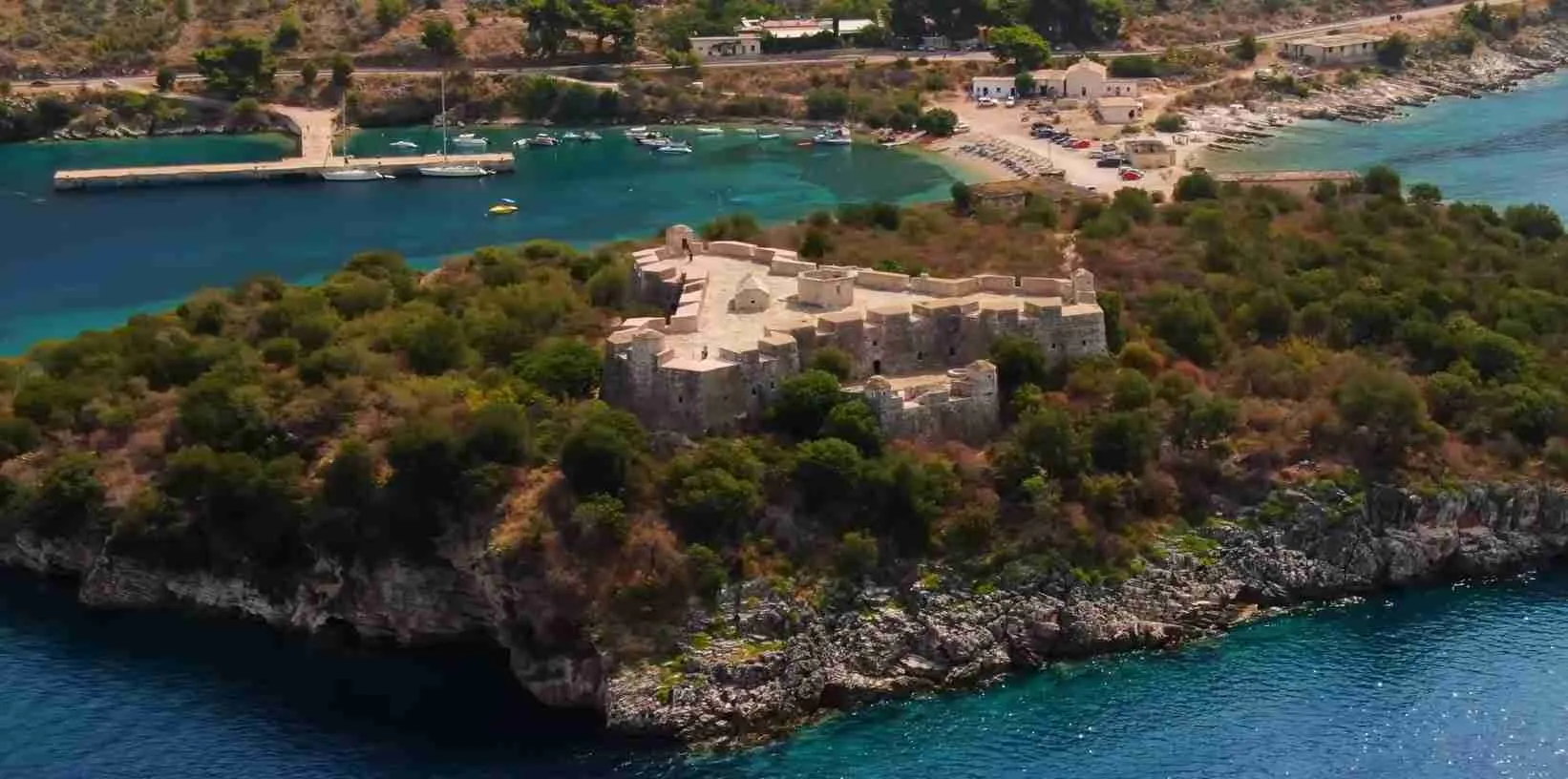
Porto Palermo occupies a strategic position where the coast turns sharply eastward, featuring the hexagonal Ali Pasha Castle on a small peninsula that once guarded the natural harbor. The castle remains open for exploration with a nearby Cold War-era submarine base carved into the cliffside visible from the fortification’s ramparts. The small pebble beach at Porto Palermo provides excellent snorkeling in the protected bay, though accommodation options remain limited with most visitors accessing the site as a day-trip stop.
Lukova and Kakome Bay represent the transition toward the southern Riviera, with Lukova serving as the departure point for boat trips to remote Kakome Bay, a deep sheltered inlet overlooked by a fortified monastery and accessible only by sea. The pristine water quality and absolute silence of Kakome make it worth the boat journey for travelers seeking genuine seclusion. Lukova itself offers basic guesthouse accommodation (€25-50 nightly) and traditional seafood restaurants.
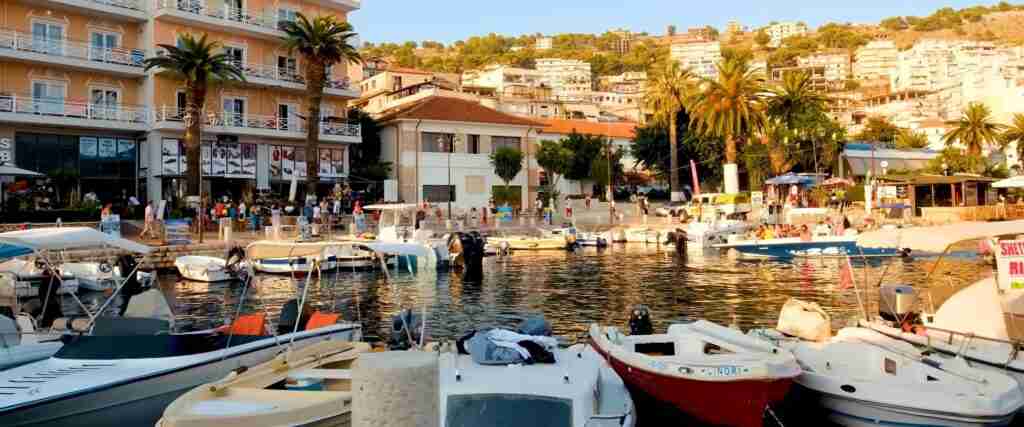
Saranda functions as the southern hub and commercial center, a proper town with a busy harbor promenade, modern apartment buildings, extensive restaurant and bar scene, and the ferry terminal connecting to Corfu, Greece. The town serves practical purposes as a transport interchange and service center rather than offering the authentic coastal village atmosphere preserved in northern towns. Saranda’s beaches are serviceable but unremarkable, with the main beach in the town center remaining crowded and the better beaches lying in surrounding areas. Accommodation ranges €42-185 depending on hotel category and season, with highest prices during July-August weekends. Saranda works well as a base for day trips to Ksamil, Butrint National Park, and the Blue Eye spring, but travelers seeking the quintessential Riviera beach experience find better value and atmosphere in Himarë or Dhërmi.
Ksamil occupies the southernmost section just 14 kilometers south of Saranda, a small resort area famous for four small islands sitting just offshore in shallow turquoise water that creates the postcard scenes dominating Albanian Riviera marketing materials. The reality matches the photographs, with genuinely stunning water clarity and color, but the location suffers from extreme overcrowding during July-August when the beaches pack shoulder-to-shoulder with umbrellas and the few access roads create parking nightmares. Accommodation books completely by May for summer visits, with boutique hotels and family guesthouses ranging €60-120 nightly. Ksamil requires visiting during June or September to experience the beauty without the crowds, or accepting that July-August visits mean sharing the spectacular views with thousands of other visitors.
Albanian Riviera Accommodation Costs 2026
Accommodation pricing along the Albanian Riviera varies dramatically based on location, season, and property category, with shoulder season rates in less-touristy towns offering genuine budget opportunities while peak season in popular areas like Ksamil and Dhërmi commands prices approaching Western Mediterranean levels. Understanding the seasonal price fluctuations, strategic booking timelines, and town-by-town cost differences enables significant savings while maintaining comfort standards.
Budget Accommodation €25-50 Per Night (€13-25 Per Person for Two Sharing)
Hostel dormitories provide the most economical option in larger towns, with beds costing €12-18 in Saranda and Vlore, €15-22 in Himarë, and limited availability in smaller villages where hostels remain scarce. Most hostels occupy converted houses or apartments rather than purpose-built facilities, offering basic amenities, communal kitchens, and social atmospheres that facilitate meeting other travelers. Book hostels at least one week ahead during summer as bed space remains limited along the entire coast compared to established backpacker destinations.
Guesthouses operated by local families represent the sweet spot for budget travelers, with private double rooms costing €25-45 in towns like Himarë, Borsh, and Lukova during shoulder season. These properties typically occupy family homes with 3-5 guest rooms, shared bathrooms or basic en-suite facilities, and generous Albanian hospitality including homemade breakfast and local advice. Prices jump to €40-60 during July-August even in these budget properties. Booking guesthouses directly rather than through booking platforms often secures better rates and room upgrades, with many family operations maintaining WhatsApp contact for reservations.
Budget hotels in the €30-50 range exist primarily in working towns like Vlore and Saranda, offering simple rooms with private bathrooms, air conditioning, and basic breakfast. These establishments serve Albanian business travelers and budget tourists, maintaining clean conditions without design aesthetics or special amenities. Himarë contains several such properties within walking distance of Potami Beach, providing practical accommodation at honest prices.
Mid-Range Accommodation €40-80 Per Night (€20-40 Per Person for Two Sharing)
This category represents the optimal value tier along the Albanian Riviera, where properties deliver comfortable rooms, genuine sea views, modern bathrooms, air conditioning, and often swimming pools or direct beach access at prices that seem impossible compared to equivalent Western Mediterranean properties. Three-star hotels in Himarë and Saranda charge €40-65 during shoulder season and €60-90 in summer for double rooms with balconies and partial sea views. Properties at this level typically occupy newer buildings with elevator access, breakfast included, and professional rather than family management.
Boutique guesthouses in restored stone buildings command €50-80 in towns like Dhërmi and the old village of Himarë, offering character-filled rooms with traditional architecture, personalized service, and stunning views from hillside locations. These properties emphasize design and atmosphere over standardized hotel amenities, with breakfast often served on terraces overlooking the coastline. Book such properties two to three months ahead for summer visits as room inventory remains limited.
Apartments for self-catering provide excellent value for groups or families, with two-bedroom units in Saranda and Ksamil ranging €50-90 nightly depending on location and season. These properties offer full kitchens, separate living spaces, and often balconies, though cleaning service may be limited to weekly rather than daily. Cooking at home delivers limited savings given Albania’s restaurant pricing, but apartments provide space and flexibility particularly for families with children.
Luxury Accommodation €100-250+ Per Night (€50-125+ Per Person for Two Sharing)
Five-star hotels and luxury boutique properties have expanded along the Riviera during 2023-2025, with properties like San Angelo Luxury Resort in Dhërmi and various upscale options in Ksamil offering full resort experiences with infinity pools, private beaches, spa facilities, and premium dining. Rates range €100-180 for four-star properties during shoulder season and €150-250 for five-star resorts in summer, with premium beachfront locations commanding even higher prices during July-August weekends.
The luxury category in Albania still delivers better value than equivalent Greek or Croatian properties, with €150 securing accommodations that would cost €300 in Mykonos or Dubrovnik. However, the gap has narrowed considerably as Albanian properties upgrade facilities and raise rates to approach international standards. Luxury properties typically include breakfast, maintain professional multilingual staff, and offer concierge services for restaurant reservations and activity bookings.
Seasonal Price Variations and Booking Strategy 2026
Understanding the dramatic seasonal price swings proves essential for budget planning. July and August command premium rates with prices doubling compared to May-June or September-October in popular areas. A guesthouse room in Ksamil costing €60 in June reaches €120 in August for identical accommodation. Saranda hotels increase rates 40-60% during peak summer weekends. Even budget properties in working towns like Himarë raise prices 30-40% during high season.
The optimal booking timeline varies by property category and season. Budget guesthouses in small villages often remain bookable with one week notice even during summer, while mid-range hotels in Himarë and Saranda benefit from two to four week advance reservations. Ksamil accommodation requires booking by March-April for July-August visits as properties sell out completely by May. Luxury resorts accept reservations up to one year ahead but also release last-minute deals during shoulder season through booking platforms.
Direct booking with properties often secures better rates than booking platforms, particularly for guesthouses and boutique hotels that avoid platform commission fees. Many Albanian properties maintain active WhatsApp communication, allowing negotiation for extended stays or shoulder season discounts. Properties in less-touristy towns show more flexibility on rates than those in Ksamil and Saranda where demand remains consistently high.
Albanian Riviera Food and Dining Costs 2026
Restaurant meals along the Albanian Riviera remain significantly cheaper than Western Mediterranean destinations despite notable price increases in tourist areas during 2025, with authentic local restaurants serving fresh seafood, traditional Albanian dishes, and Mediterranean cuisine at prices that encourage eating out rather than self-catering. Understanding where and how to dine strategically maximizes both experience quality and budget efficiency.
Budget Dining €15-24 Per Person Daily
Traditional byrek shops and street food vendors provide the most economical meals, with savory pastries filled with cheese, spinach, or meat costing €1-2 and serving as excellent breakfast or snack options. These establishments operate early morning throughout the coast, with locals queuing for fresh-baked byrek before 9 AM. Add a macchiato for €1-2 for complete breakfast under €4 total.
Local guesthouses often include breakfast with room rates, serving homemade bread, fresh yogurt, local honey, cheese, tomatoes, and strong Albanian coffee. These spreads provide substantial morning fuel without additional cost and represent one of the best value aspects of guesthouse accommodation.
Lunch at family tavernas in working neighborhoods away from beachfront locations costs €5-8 for traditional dishes like tavë kosi (baked lamb with yogurt), qofte (meatballs with fries), or fresh grilled fish with salad. These restaurants serve Albanian workers and families rather than tourists, maintaining honest pricing and generous portions. Ask locals for recommendations rather than choosing restaurants on main tourist promenades.
Supermarkets in larger towns like Vlore, Himarë, and Saranda stock basics for self-catering, though grocery prices often surprise travelers expecting Eastern European bargain rates. Many products, particularly dairy and imported items, cost similar to Western European prices. Local markets (pazari) in towns offer fresh produce at better value, selling tomatoes, cucumbers, peppers, and fruits at 30% below supermarket rates.
Budget daily dining breakdown: Breakfast byrek and coffee €3, lunch at local taverna €7, dinner at guesthouse or simple restaurant €10, plus coffee/snacks €2 reaches €22 total. Careful shoppers keeping lunch costs down achieve €15-18 daily by selecting the most economical options consistently.
Mid-Range Dining €30-48 Per Person Daily
Beachfront restaurants and tourist-oriented establishments charge €10-18 for main courses, €5-8 for appetizers, and €8-15 for fresh fish priced by weight. These venues provide pleasant atmosphere, sea views, and professional service while maintaining pricing significantly below Greek or Italian equivalent restaurants. A typical meal includes grilled sea bass or sea bream (€12-15), Greek salad (€5), and local wine or beer (€3-5) for total €20-25 per person.
Quality seafood restaurants in towns like Himarë and Saranda serve the day’s catch grilled simply with olive oil and lemon, with prices ranging €15-25 per kilogram for fish like orata, cipura, and brancino. A 400-gram portion suitable for one person costs €6-10 when selecting mid-tier fish species, while premium choices like dentex reach €18-25 per person. Restaurants weigh fish before cooking and confirm price, providing transparency unusual in Mediterranean tourist destinations.
Mid-range daily dining breakdown: Hotel breakfast included or café breakfast €6, lunch at beachfront restaurant €15, afternoon coffee and cake €5, dinner at quality restaurant €22 totals €48 daily. Trimming lunch costs or skipping afternoon breaks reduces to €35-40 while maintaining comfortable dining standards.
Luxury Dining €60-90 Per Person Daily
Upscale restaurants in Dhërmi, boutique properties throughout the coast, and premium Saranda establishments charge €25-40 per person for multi-course meals with wine, approaching Western Mediterranean pricing while delivering high quality ingredients and presentation. These venues emphasize fresh local seafood, organic vegetables from nearby farms, and Albanian wines from quality producers like Çobo and Kantina Berati.
Resort hotels often operate restaurants that non-guests can access, serving international cuisine alongside Albanian specialties in refined settings. Expect €18-30 for main courses and €40-60 for full dinner with appetizer, main, dessert, and wine. Some Dhërmi beachfront properties gained notoriety for extreme pricing, with simple fish dishes reaching €80, though such establishments represent exceptions rather than typical luxury pricing.
Luxury daily dining: Upscale breakfast €12, seaside lunch €25, cocktails and snacks €15, fine dining dinner €40 reaches €92 total. Most luxury travelers spending €60-80 daily on meals achieve excellent experiences along the Albanian Riviera where quality food remains reasonably priced even at high-end establishments.
Drinks, Coffee, and Tipping Customs 2026
Albanian coffee culture thrives along the coast, with espresso drinks costing €1-2 at local bars and €2-3 at tourist venues. Traditional raki (grape brandy) costs €1-2 per glass at authentic tavernas, while local beer (Korça, Tirana) runs €2-3 and imported varieties €3-5. Albanian wine offers excellent value with bottles of Çobo, Kantina Berati, or Çelaj costing €10-15 in restaurants compared to €25+ for imported wines.
Tipping expectations remain more relaxed than North America or Western Europe, with 5-10% considered generous for good service. Many locals simply round up bills or leave small change. Restaurants serving primarily tourists increasingly expect 10% tips, though no service charges appear on bills. For exceptional service or traditional family restaurants, leaving €2-5 demonstrates appreciation appropriately.
Albanian Riviera Transportation Costs and Options 2026
Navigating the Albanian Riviera requires understanding an informal transportation system based primarily on furgon minibuses supplemented by occasional public buses, taxis, and car rentals, with each option presenting distinct advantages for different travel styles and budgets. The coastal highway connects all major towns but remains narrow and winding, demanding either patient navigation or acceptance of local transport schedules.
Furgon Minibuses: The Backbone of Coastal Transport
Furgon minibuses represent Albania’s primary public transport system, privately operated Mercedes Sprinter vans that depart when full rather than following published schedules, connecting all coastal towns at remarkably low fares. These vehicles typically seat 12-15 passengers, load luggage on the roof or in rear compartments, and stop anywhere along routes to pick up or discharge passengers. The system appears chaotic to foreigners but operates efficiently once travelers understand basic protocols.
Major routes and typical 2026 fares include Tirana to Saranda €8-10 covering the 5-hour journey, Saranda to Himarë €4-6 for 90 minutes, Himarë to Dhërmi €2-3 for 30 minutes, and Dhërmi to Vlore €5-7 for 90 minutes. Fares are fixed and posted at departure points, with identical pricing for tourists and locals eliminating haggling concerns. Payment occurs upon arrival rather than boarding, with the driver or assistant collecting cash during the journey.
Tirana operates two main furgon departure areas depending on destination. The southwest terminal near Casa Italia serves northern coastal towns like Vlore, Dhërmi, and Himarë, while the southeast terminal near TEG Shopping Mall handles Saranda-bound departures. Travelers should arrive at terminals by 8-9 AM for best departure options, as most furgons operate morning schedules with limited afternoon service. Return trips from coastal towns to Tirana similarly concentrate in morning hours when drivers position themselves for profitable passenger loads.
Saranda maintains its open-air station on Rruga Skenderbeu in the city center, with furgons departing for Himarë, Vlore, Tirana, and Gjirokastër throughout the morning. Ksamil connections depart regularly until afternoon from the Saranda station. Smaller coastal villages flag down passing furgons on the main highway rather than maintaining formal stations, though drivers know standard pickup points in each settlement.
Practical furgon tips for 2026 success include carrying small denomination lek notes for payment, securing seats in the morning for same-day travel, asking drivers directly about routes and timing rather than searching for schedules, arriving at main terminals by 7:30-8 AM for best departure options, and booking return journeys the night before when staying in smaller villages by asking hotel owners to contact drivers. The informal system rewards flexibility and morning activity while frustrating travelers expecting Western European transport precision.
Public Buses: Limited but Improving Service
Formal bus services operate select routes between major towns, offering slightly more comfort than furgons with similar pricing but less frequent departures. Tirana-Saranda buses cost €5-8 one-way for the 5-6 hour journey, departing from Komuna e Parisit terminal in southern Tirana. Tirana-Vlore buses run more frequently given the shorter 2-hour journey, costing €4-6. Most travelers find furgons more practical than buses due to flexible departure points and higher frequency on coastal routes.
The government’s eTransport.al platform attempts to centralize bus schedules digitally, though coverage remains incomplete and information accuracy varies. Local inquiry at departure terminals provides more reliable information than online searches for 2026.
Car Rental: Freedom at a Price
Renting vehicles unlocks the Albanian Riviera’s hidden beaches and allows flexible exploration at the pace of dramatic scenery rather than transport schedules, though costs significantly exceed furgon budgets and driving demands attention on the narrow coastal road. Standard cars cost €25-35 per day during shoulder season and €35-45 in July-August, with automatic transmission vehicles commanding €10-15 daily premiums. Most international travelers book rentals at Tirana International Airport immediately upon arrival, with local agencies offering better rates than international chains.
Required documents include valid driver’s license from home country (international permits recommended but rarely checked), passport, and credit card for deposit. Insurance coverage requires careful attention as basic CDW (collision damage waiver) may exclude damage from unpaved roads, exactly where some of Albania’s best beaches hide. Full coverage insurance adds €8-15 daily but eliminates stress about scratches and dents common on narrow village roads.
Fuel costs approximately €1.60 per liter (€6 per gallon) in 2026, with Vlore-to-Saranda round-trip consuming 15-20 liters (€24-32) depending on vehicle efficiency. Petrol stations operate in all major towns but thin out between settlements, making it essential to refuel opportunistically rather than running tanks low. Many stations accept cards though cash remains safer for remote locations.
Parking costs €3-8 daily in organized lots near popular beaches during summer, free in smaller villages and off-season everywhere. Some beaches require parking 500 meters away and walking final approach on foot as roads narrow beyond vehicle passage. Consider renting cars for 2-3 day periods rather than entire stays, using furgons for point-to-point transfers and cars only when exploring multiple hidden beaches in a single day.
Taxis and Private Transfers
Metered taxis operate in larger towns like Saranda and Vlore, charging €0.50-0.80 per kilometer with €3-5 starting fees. Tirana Airport to central Tirana runs €25-30 for the 30-minute journey. Short hops within towns cost €3-7, while longer routes like Saranda to Ksamil reach €12-15. Negotiate rates before departure for trips beyond town limits as meters may not run for longer journeys.
Private transfers arranged through hotels or booking platforms cost €50-80 for Tirana Airport to Saranda, €30-40 for Tirana Airport to Vlore, and €25-35 for Saranda to Himarë. These services provide door-to-door convenience and eliminate transport uncertainty but multiply costs compared to furgon options.
Boat Transport and Tours
Water taxis and boat services connect beaches inaccessible by road, with routes operating from Himarë, Porto Palermo, and Lukova to hidden coves like Gjipe, Kakome Bay, and remote Karaburun beaches. Individual boat rides cost €10-20 per person one-way or €30-50 for private boat charter carrying 4-6 passengers. Day-long boat tours from Vlore exploring Karaburun-Sazan Marine Park, Grama Bay, and Haxhi Ali Cave cost €45-70 per person including stops for swimming and snorkeling.
Arranging boat transport directly with local fishermen at beach departure points often secures better rates than booking through hotels or tour operators. Establish clear pricing and timing before departure to avoid confusion, and carry cash as card payments remain impossible on small boats.
Albanian Riviera Best Beaches 2026: From Vlore to Saranda
The Albanian Riviera’s 120 kilometers of coastline conceals dozens of beaches ranging from easily accessible town beaches with full facilities to hidden coves reachable only by boat or challenging hikes, each offering distinct character, crowd levels, and water quality. Understanding which beaches justify effort and which disappoint despite social media hype enables strategic beach selection matching travel priorities.
Northern Section: Vlore to Palasë
Vlore’s city beaches stretch north along an eight-kilometer promenade featuring mixed sand and pebble surfaces, busy beach clubs, and urban beach atmosphere. These beaches serve local families and budget travelers rather than representing destination-worthy stops, though the long shoreline provides space even during crowded summer weekends. Skip these unless basing in Vlore for logistical reasons.
Palasë (Palasa Beach) marks the first significant beach after descending from Llogara, offering 500 meters of coarse pebble beach backed by the Green Coast area’s emerging development. The beach features beach bars charging €8-15 for sunbed sets, reasonable restaurant pricing, and turquoise water quality. Palasë works well as a first-day stop when driving from Tirana or as a quieter alternative to busier southern beaches, though it lacks the dramatic scenery of central Riviera locations.
Central Section: Dhërmi to Himarë – The Spectacular Core
Dhërmi Beach represents the Albanian Riviera’s most developed and photographed location, a two-kilometer stretch of white pebble beach with crystal-clear water backed by beach clubs and restaurants. The beach divides into organized sections where beach bars charge €15-25 for sunbed and umbrella sets with music, drinks service, and party atmosphere, plus public beach sections at north and south ends offering free access. Water entry features smooth pebbles rather than sharp rocks, making barefoot swimming comfortable. Dhërmi delivers exactly what Instagram suggests, though prices significantly exceed elsewhere on the coast and summer crowds reduce the paradise atmosphere. Visit early morning for best experience before 11 AM when beach clubs fill.
Gjipe Beach ranks among Albania’s most spectacular locations, a horseshoe-shaped canyon beach where a small stream meets the sea between towering cliffs creating a scene of raw natural beauty accessible via 30-minute hike from highway parking or boat from Himarë and Dhërmi. The approach trail descends 300 meters through canyon scenery before opening onto the pebble beach with startlingly clear water and near-complete isolation. A basic cantina operates during summer selling drinks and simple food, but bring water and snacks as options remain limited. The hike challenges in midday heat carrying beach gear, so arrive early morning or access by boat for €10-15 per person from Himarë. Gjipe justifies its reputation as the Riviera’s hidden gem, though summer weekends now see significant visitor numbers.
Jale Beach offers excellent middle ground between Dhërmi’s development and Gjipe’s remoteness, a kilometer-long pebble beach with transparent water, several beach bars, and accommodation options directly on the sand. The beach attracts younger travelers seeking party atmosphere at night while maintaining quieter daytime beach relaxation. Camping options exist at beach’s southern end for budget travelers. Jale provides easy road access with parking €5 daily and beach bar sunbeds €10-15.
Livadhi Beach in Himarë represents the town’s main organized beach, featuring water sports rentals, multiple beach clubs, restaurants, and mix of public and organized sections. The beach curves gently along the bay with calm water ideal for families and swimmers, though it lacks the dramatic scenery of isolated beaches. Livadhi works perfectly as a default beach when staying in Himarë, offering convenience without requiring vehicle transport.
Aquarium Beach north of Himarë earned its name from exceptional water clarity and marine life visible while snorkeling, accessed via 15-minute drive on unpaved road from Himarë or boat from town harbor. The small pebble beach features a single beach bar-restaurant, minimal crowds except August weekends, and genuinely pristine swimming. Aquarium justifies the rough road approach for travelers prioritizing water quality and natural setting over facility convenience.
Southern Section: Porto Palermo to Ksamil
Porto Palermo Beach occupies the small bay beneath Ali Pasha Castle, offering protected swimming, excellent snorkeling around the rocky points, and historical interest from castle exploration. The beach remains relatively quiet as most visitors come for the castle rather than beach time. Free public access with no organized facilities beyond the castle site cafe.
Borsh Beach stretches seven kilometers along Albania’s longest beach, a mix of pebble and dark sand backed by olive groves offering unlimited space even during peak summer. The beach lacks dramatic scenery but provides guaranteed uncrowded swimming, with free public access along its entire length and minimal development. Borsh works well for travelers seeking space and tranquility over Instagram aesthetics.
Bunec Beach south of Lukova features pristine turquoise water in a protected cove, accessed via rough dirt road requiring careful driving or high-clearance vehicle. The small beach rewards the bumpy approach with excellent swimming and near-total isolation outside August weekends. Bring all supplies as no facilities operate regularly.
Ksamil represents the Albanian Riviera’s most famous beach area, where four small islands sit 50-200 meters offshore in shallow water creating the postcard scenes that launched Albania’s tourism boom. The water color genuinely matches promotional photos, with turquoise shallow sections transitioning to deep blue channels between islands. Swimming to the islands takes 5-10 minutes for capable swimmers, with the closest island featuring a small sandy beach. However, Ksamil suffers severe overcrowding during July-August when the limited beach space packs with umbrellas and the access roads jam with vehicles seeking parking. Visit Ksamil only during June or September to experience the beauty without the chaos, or accept that peak summer visits mean sharing the spectacular water with hundreds of other visitors.
Hidden Gems and Boat-Access Beaches
Filikuri Beach near Himarë measures only 100 meters long and remains accessible solely by boat from Himarë harbor, preserving complete isolation and pristine conditions. Arrange boat transport with fishermen at Himarë waterfront for €15-20 per person including return pickup at agreed time. Bring food, water, and shade as no facilities exist.
Kakome Bay deep in a sheltered inlet north of Lukova creates an amphitheater of cliffs around a remote beach, with a fortified monastery overlooking the bay adding historical intrigue. Boat access from Lukova costs €20-30 per person round-trip. The isolation and pristine water quality justify the expense for travelers seeking untouched beach experiences.
Grama Bay on the Karaburun Peninsula features white pebble beach in a cliff-ringed bay, famous for over 1,500 rock carvings from Ancient Greece through World War II left by sailors sheltering in the protected anchorage. Day tours from Vlore cost €45-70 per person including swimming stops and snorkeling in the marine park. Grama represents the Riviera’s most remote significant beach, accessible only by boat and offering glimpses of rare Mediterranean monk seals if fortune favors.
Beach Facilities, Costs, and Access Logistics 2026
Public beach access remains free throughout Albania, with the concept of paid beach entrance foreign to local culture. However, organized beach sections with sunbeds and umbrellas charge for their facilities, typically €10-15 for a set of two loungers and umbrella at mid-range beaches, €15-25 at popular spots like Dhërmi and Jale, and €30-50 at luxury beach clubs with premium service and amenities. Visitors can always find free public beach sections by walking beyond organized areas, though this may mean bringing own umbrellas and towels.
Most beaches feature cantinas or beach bars selling drinks, coffee, and simple food at reasonable prices given the convenient location, with beers €3-4, soft drinks €2-3, and simple grilled items €6-10. Water sports rentals exist at developed beaches, with kayak hire €10-15 hourly, paddleboard €10-12, jet ski €40-60 for 30 minutes, and banana boat rides €10 per person.
Beach access varies from direct roadside parking at developed beaches to challenging hikes at hidden locations. Parking costs €3-8 daily at organized lots near popular beaches during summer, free at smaller beaches and throughout shoulder season. Many spectacular beaches require walking final 10-20 minutes on trails as roads end before reaching the water.
Water quality consistently exceeds expectations along the entire coast, with visibility often reaching 10-15 meters enabling fish spotting while swimming. Most beaches feature clear entry over pebbles rather than sand, making water shoes recommended for comfort though not essential. Rocky sections at some beaches harbor sea urchins making careful stepping important when exploring near rocks.
Daily Budget Breakdowns by Travel Style 2026
Understanding realistic daily costs for different comfort levels enables accurate trip budgeting and prevents the surprise expenses that derail travel plans. These breakdowns reflect verified 2026 pricing across accommodation, meals, transport, and activities along the Albanian Riviera, expressed per person daily assuming two travelers sharing hotel accommodation.
Budget Traveler Daily Costs: €35-65 Per Person
Budget travel along the Albanian Riviera remains genuinely affordable for travelers willing to stay in hostels or basic guesthouses, eat at local restaurants rather than beachfront venues, use furgon transport, and access free public beaches. This category delivers authentic Albanian Riviera experiences without luxury comforts.
Accommodation contributes €13-25 per person for two sharing guesthouse rooms (€25-50 per night divided by two), with hostel dormitory beds costing €12-18 per person in larger towns. Book guesthouses in working towns like Himarë and Borsh rather than tourist-focused Dhërmi and Ksamil for best budget rates. Staying in smaller villages further reduces accommodation costs to €13-20 per person.
Meals cost €15-24 daily when selecting byrek for breakfast (€2-3), lunch at local tavernas away from beaches (€5-8), dinner at simple restaurants or guesthouse meals (€8-12), plus coffee and snacks (€2-3). Shopping at local markets and preparing simple meals in guesthouse kitchens reduces food costs toward the €15 lower end, while eating all meals at restaurants pushes toward €24.
Transportation requires €3-8 daily for furgon rides between coastal towns, with longer journeys like Saranda-Himarë costing €4-6 and shorter village-to-beach trips €2-3. Budget travelers walking to nearby beaches from accommodation minimize transport costs. Staying in one base location for multiple days reduces this expense to €5-10 for occasional repositioning.
Beach and activity costs remain minimal at €5-10 daily when accessing free public beaches, hiking to hidden coves, and enjoying swimming and snorkeling without paid activities. Budget travelers occasionally splurge on boat trips (€15-20) or rent kayaks (€10-15) while generally avoiding organized beach clubs.
Total budget daily costs: accommodation €13-25 per person, meals €15-24, transport €3-8, activities €5-10 equals €36-67 per person daily. Careful budget travelers consistently achieving lower costs within each category can reach €35-40 daily, while those selecting higher-quality budget options within the category reach €60-65.
Mid-Range Traveler Daily Costs: €75-130 Per Person
Mid-range travel delivers comfortable accommodation, quality dining, flexibility with transport, and access to organized beach facilities while maintaining costs significantly below Western Mediterranean equivalent experiences. This category represents the optimal balance between comfort and value along the Albanian Riviera.
Accommodation costs €20-40 per person for two sharing comfortable hotels (€40-80 per night divided by two) with sea views, modern bathrooms, air conditioning, swimming pools, and breakfast included. This tier accesses three-star hotels in Himarë and Saranda, boutique guesthouses in Dhërmi, and quality properties throughout the coast. Premium mid-range properties near upper end of the range (€35-40 per person) approach four-star standards.
Meals require €30-48 daily when mixing hotel breakfast included in room rate with beachfront restaurant lunches (€10-18), afternoon coffee and snacks (€4-6), and quality seafood dinners (€15-25). Mid-range travelers select restaurants with sea views and fresh catch of the day rather than cheapest options, while avoiding the truly expensive boutique venues. This budget supports wine or beer with meals and occasional cocktails at beach bars.
Transportation flexibility costs €8-15 daily mixing furgons for longer journeys with occasional taxis for beach access (€5-10 per trip) and possibly renting cars for day trips to hidden beaches (€30-40 daily rental divided among days). Mid-range travelers might use furgons for Saranda-Himarë transfers while taxiing from hotel to beach club within towns.
Beach and activity expenses run €15-25 daily when frequenting organized beach sections with sunbed rentals (€10-15 per person for sets), occasional water sports (€10-15), and paid boat excursions to hidden beaches (€15-25 per person). This budget covers most organized beach experiences without premium luxury club pricing.
Total mid-range daily costs: accommodation €20-40 per person, meals €30-48, transport €8-15, activities €15-25 equals €73-128 per person daily. The range reflects differences between shoulder season in value towns like Himarë (lower end around €75-90) versus peak season in premium locations like Dhërmi (higher end around €120-130).
Luxury Traveler Daily Costs: €160-300+ Per Person
Luxury travel along the Albanian Riviera provides resort experiences, premium dining, private transport, and exclusive beach access while still delivering better value than equivalent Greek or Croatian luxury beach holidays. This category emphasizes comfort, convenience, and quality without compromise.
Accommodation requires €50-125 per person for two sharing boutique hotels and five-star resorts (€100-250 per night divided by two) with infinity pools, private beaches, spa facilities, premium dining, and full concierge services. Properties at this level operate in Dhërmi, Ksamil, and select locations along the coast, offering designed rooms, luxury amenities, and professional management.
Meals cost €60-90 daily when choosing upscale breakfast options (€12-15), seaside lunches at quality restaurants (€20-30), afternoon drinks and snacks at beach clubs (€10-15), and fine dining dinners (€30-40). This budget supports multi-course meals, premium Albanian wines, fresh seafood selections, and dining at the coast’s best restaurants without price concern.
Transportation convenience costs €20-35 daily through rental cars for flexible exploration (€35-45 daily rental) or private transfers and taxis eliminating reliance on furgon schedules. Luxury travelers often arrange private airport transfers (€60-80 from Tirana) and use taxis freely throughout stays.
Beach and activity expenses reach €30-50 daily accessing premium beach clubs with full-service sunbeds (€20-30 per person), private boat charters (€50-100 divided among daily activity cost), water sports without budget constraint (€20-40), and paid experiences like yacht tours and professional dive operations.
Total luxury daily costs: accommodation €50-125 per person, meals €60-90, transport €20-35, activities €30-50 equals €160-300 per person daily. The substantial range reflects differences between comfortable luxury (€160-200) and true premium resort experiences during peak season (€250-300+).
Sample Albanian Riviera Itineraries with Verified Costs 2026
These itineraries demonstrate how daily budget breakdowns translate into specific trip costs, with day-by-day expense details enabling travelers to understand total investment required for different Albanian Riviera experiences. All costs shown per person assuming two travelers sharing accommodation.
Budget 5-Day Riviera Explorer: Himarë Base
This economical itinerary bases in Himarë for five nights, using the town’s central location to explore surrounding beaches via walking, furgons, and one rental car day-trip, while eating primarily at local restaurants and accessing free beaches.
Day 1 Arrival: Furgon Tirana to Himarë €8, guesthouse room €28 (€14 per person), dinner at local taverna €9, groceries for breakfast €4 equals €35 per person. Day 2 Local Beaches: Guesthouse €14 per person, byrek breakfast €2, lunch at Livadhi Beach €8, dinner in town €10, local furgon to beach €2, public beach access free equals €36 per person. Day 3 Gjipe Beach: Guesthouse €14 per person, breakfast €3, packed lunch €5, boat to Gjipe €12, dinner €11 equals €45 per person. Day 4 Car Day Trip: Guesthouse €14 per person, breakfast €3, car rental shared cost €15 per person, petrol €5 per person, lunch €8, beach parking €4, dinner €10 equals €59 per person. Day 5 Rest Day: Guesthouse €14 per person, breakfast €2, lunch €6, coffee and snacks €3, dinner €11, beach access free equals €36 per person. Day 6 Departure: Breakfast €3, furgon to Saranda €4 equals €7 per person.
Total 5-night trip cost breakdown: Accommodation €70 (€14 × 5 nights), meals €100, transport €41, activities €16 equals approximately €227 per person. This demonstrates that budget travel reaching €35-65 daily averages achieves five-night Albanian Riviera trips for €200-330 per person excluding international flights.
Mid-Range 7-Day Riviera Journey: Multi-Location
This comfortable itinerary splits time between Dhërmi and Himarë, uses mix of furgons and rental car for flexibility, eats at beachfront restaurants, and accesses organized beach facilities.
Day 1 Arrival Dhërmi: Taxi Tirana airport to Dhërmi €35, boutique guesthouse €35 per person, dinner at beach restaurant €22 equals €92 per person. Day 2 Dhërmi Beach: Hotel €35 per person, included breakfast, lunch at beach club €18, sunbed rental €12, afternoon drinks €6, dinner €24 equals €95 per person. Day 3 Gjipe Exploration: Hotel €35 per person, breakfast included, boat to Gjipe €15, packed lunch €10, dinner €20 equals €80 per person. Day 4 Transfer to Himarë: Hotel checkout, furgon to Himarë €3, new hotel €25 per person, breakfast €6, lunch en route €12, dinner €18 equals €64 per person. Day 5 Beach Hopping: Hotel €25 per person, breakfast included, car rental shared €18 per person, petrol €6, lunch €15, parking €4, dinner €22 equals €90 per person. Day 6 Boat Tour: Hotel €25 per person, breakfast included, full-day boat tour €55, lunch included in tour, dinner €24 equals €104 per person. Day 7 Relaxation: Hotel €25 per person, breakfast included, lunch €14, beach club access €15, dinner €26 equals €80 per person. Day 8 Departure: Breakfast included, taxi to Saranda €8 for transfer.
Total 7-night trip cost: Accommodation €205, meals €190, transport €88, activities €101 equals approximately €584 per person. Mid-range comfort achieving €75-130 daily reaches seven-night trips costing €525-910 per person.
Luxury 3-Day Riviera Escape: Dhërmi Resort
This premium experience bases at luxury resort in Dhërmi, emphasizing comfort, convenience, and quality without budget constraints.
Day 1 Arrival: Private transfer Tirana airport €40, luxury resort €110 per person, cocktails at arrival €12, fine dining dinner €42 equals €204 per person. Day 2 Beach Resort Day: Resort €110 per person with breakfast, premium beach club access €25, beachfront lunch €32, spa treatment €35, dinner at resort restaurant €45 equals €247 per person. Day 3 Private Boat Charter: Resort €110 per person with breakfast, private boat to Gjipe and hidden beaches €60 per person, lunch on boat €25, champagne and snacks €18, sunset dinner €48 equals €261 per person. Day 4 Departure: Resort breakfast included, private transfer to airport €40.
Total 3-night luxury escape: Accommodation €330, meals €209, transport €80, activities €120 equals approximately €739 per person. Luxury travelers reaching €160-300 daily achieve three-night escapes for €480-900 per person, with premium resort experiences approaching €800-1,000 for three nights.
Money-Saving Strategies Albanian Riviera 2026
Strategic planning dramatically reduces Albanian Riviera costs without sacrificing experience quality, as timing decisions, location selection, and booking methods often matter more than travel style for achieving budget targets. These proven strategies help travelers at all budget levels extract maximum value.
Visit during June or September rather than July-August to access identical beaches, swimming conditions, and sunshine while avoiding peak pricing that adds 30-60% to accommodation costs and creates overwhelming crowds at popular beaches. May and October offer even deeper discounts with many hotels cutting rates 40-50%, though beach facilities and tour operators reduce operations outside core summer season.
Base in Himarë instead of Dhërmi or Ksamil to secure better accommodation value (€45-90 versus €60-150 nightly), lower restaurant pricing (€8-15 versus €12-25 for meals), and authentic town character. Himarë’s central location enables day trips to premier beaches north and south while maintaining reasonable costs. Smaller villages like Borsh and Lukova offer even greater savings but sacrifice convenience and dining variety.
Book guesthouses directly rather than through booking platforms by contacting properties via WhatsApp or email, often securing 10-20% discounts that avoid platform commission fees. Family guesthouses show particular flexibility on rates for extended stays, with week-long bookings sometimes discounted 15-25% versus nightly rates.
Master the furgon system for intercity transport rather than renting cars for entire stays, using furgons for point-to-point transfers (€4-8) and renting vehicles only for specific day trips to hidden beaches (€30-40 for one day versus €200+ for week-long rental plus fuel). Walk to beaches from town-center accommodation when possible, eliminating daily transport costs of €5-15 for taxis.
Eat lunch at local tavernas in working neighborhoods rather than beachfront restaurants, saving €8-15 per meal while accessing identical fresh fish and traditional dishes. Reserve beachfront dining for special dinners rather than every meal. Buy byrek and coffee for breakfast (€3-4) instead of hotel breakfast fees (€8-12) when not included in room rates.
Access free public beaches rather than paying for organized beach club sections, accepting the need to bring towels and create own shade rather than paying €10-25 daily for sunbed sets. Most popular beaches offer both organized and free sections, with free areas often just 50 meters from paid facilities.
Carry Albanian Lek cash rather than relying on euros at tourist businesses, avoiding the 5-10% unfavorable exchange rates that informal euro acceptance commands. Withdraw lek from ATMs in larger towns before heading to small villages where ATMs become scarce and restaurants accept only local currency.
Book summer accommodation by March-April for popular towns to secure best availability and rates before properties sell out. Last-minute shoulder season bookings sometimes access deals when properties need to fill rooms, but summer procrastination results in either no availability or inflated rates from remaining properties.
Arrange boat trips directly with fishermen at beach departure points rather than through hotel concierges or tour operators, saving 30-50% on excursions to hidden beaches. Negotiate politely and confirm exact pricing and pickup times before departure.
Best Time to Visit Albanian Riviera 2026: Month-by-Month Guide
The Albanian Riviera experiences distinct seasons affecting costs, crowds, weather, and facility operations, with strategic month selection dramatically impacting travel experience. This detailed monthly breakdown enables informed timing decisions matching travel priorities.
May 2026: Shoulder Season Opening
May represents the shoulder season sweet spot when hotels operate at 40-50% below peak rates, beaches remain nearly empty, and temperatures reach pleasant 20-24°C (68-75°F) air and 18-20°C (64-68°F) sea. Many beach clubs and tour operators open during mid-late May but maintain reduced operations. Restaurant selection remains limited compared to summer months with some venues still closed. Swimming proves comfortable for hardy swimmers though water temperatures feel cool to those accustomed to warm seas. May suits travelers prioritizing tranquility, budget savings, and hiking along coastal trails without summer heat. Expect occasional rain showers but generally sunny conditions.
June 2026: Optimal Value Window
June delivers the Albanian Riviera’s best balance of weather, costs, and crowds, with sea temperatures warming to 21-23°C (70-73°F) enabling comfortable swimming for most visitors while accommodation rates remain 20-30% below July-August peaks. All facilities operate fully with beach clubs open, restaurants serving full menus, and tour operators running complete schedules. Beaches show healthy crowds without the overwhelming density of peak summer. Temperatures reach 26-30°C (79-86°F) providing hot sunny days without the extreme heat of late summer. June represents the optimal timing for first-time visitors seeking the full Albanian Riviera experience at maximum value.
July-August 2026: Peak Season Intensity
July and August guarantee perfect beach weather with air temperatures 28-33°C (82-91°F) and sea temperatures 24-26°C (75-79°F) creating ideal swimming conditions. However, these months bring overwhelming crowds to popular beaches like Ksamil, Dhërmi, and Gjipe, with umbrellas packed shoulder-to-shoulder and parking becoming nearly impossible at peak times. Accommodation costs double compared to shoulder season, with Ksamil properties booked solid by May and Saranda hotels commanding premium rates for July-August weekends. Arrive at popular beaches before 9 AM or after 4 PM for manageable crowds. Despite challenges, July-August deliver guaranteed sunshine, full facility operations, and vibrant summer atmosphere for travelers accepting higher costs and crowd tolerance.
September 2026: Premium Shoulder Season
September rivals June as optimal timing while offering even warmer sea temperatures of 23-25°C (73-77°F) from summer heat accumulation. Accommodation costs drop immediately after August 31st with rates falling 25-35% despite excellent weather continuing through September. Air temperatures moderate to 24-28°C (75-82°F) providing comfortable beach days without extreme heat. Beaches empty substantially while facilities maintain full operations. September suits travelers seeking premium conditions without peak crowds or pricing, though international flight options reduce compared to summer months as airlines cut September capacity.
October 2026: Late Season Bargains
October extends swimming season for hardy visitors with sea temperatures around 20-22°C (68-72°F) and air temperatures 18-23°C (64-73°F) creating pleasant autumn conditions. Hotels cut rates 50-60% below summer peaks though many beach clubs close by mid-October and tour operator schedules reduce. Restaurant selection narrows as some establishments close for season. October attracts primarily European visitors seeking tranquil seaside autumn, with near-empty beaches and substantial savings offsetting cooler conditions. Weather remains generally sunny though October brings increased rain probability toward month-end.
November-April 2026: Off-Season
The Albanian Riviera essentially closes during winter months, with most guesthouses shuttered, beach facilities closed, and restaurant selection limited to establishments serving local year-round population. Air temperatures range 10-16°C (50-61°F) and seas cool to 14-16°C (57-61°F) making swimming unappealing for most visitors. Some hotels in larger towns like Saranda and Vlore remain open with drastically reduced rates, but the lack of beach-focused activities makes winter visits practical only for travelers exploring historical sites and mountain villages rather than pursuing beach holidays. Albanian winter weather brings substantial rainfall and occasional storms making coastal road conditions challenging.
Albanian Riviera Practical Travel Tips 2026
Successful Albanian Riviera travel requires understanding practical realities that differ from established Mediterranean tourist destinations, with infrastructure, payment systems, and cultural norms demanding flexibility and preparation. These field-tested tips address common challenges and enable smoother journeys.
Currency, Cash, and Payment Realities
The Albanian Lek (ALL) serves as official currency with exchange rates fluctuating around 95-100 lek per euro in 2026. Most Albanian businesses price in lek though tourist-oriented establishments often quote in euros at slightly unfavorable exchange rates. Withdraw lek from ATMs in larger towns like Tirana, Saranda, Himarë, and Vlore before venturing to smaller villages where ATMs become scarce. Select the “decline conversion” option when ATMs offer to charge your account in home currency, as this dynamic currency conversion typically costs 5-8% in hidden fees.
Carry substantial cash as Albania remains largely cash-based outside major hotels and upscale restaurants. Expect to pay cash for guesthouses, beach restaurants, furgons, taxis, beach club sunbeds, boat trips, and small shops. Credit cards work at larger hotels, supermarkets, and some restaurants in tourist towns but acceptance remains inconsistent. Daily cash needs range €40-80 per person depending on activities and dining choices.
ATMs in Albania dispense only lek, with maximum withdrawals typically 20,000-40,000 lek (€200-400) per transaction. Banks and exchange offices in towns convert euros to lek at reasonable rates, with official exchange offices offering better rates than informal euro acceptance at restaurants and hotels. Calculate rough conversions by dividing lek amounts by 100 to approximate euro value for quick budgeting.
Language and Communication
Albanian serves as official language though English proficiency varies dramatically by location and generation. Saranda, Himarë, and Dhërmi maintain high English levels at hotels, restaurants, and shops catering to international tourists, with younger Albanians generally speaking good English. Smaller villages and family guesthouses may have limited English communication, though basic needs get satisfied through gestures and translation apps. Learning basic Albanian phrases like “faleminderit” (thank you), “ju lutem” (please), and “sa kushton” (how much) generates appreciative smiles and helpful attitudes.
Google Translate’s camera function proves invaluable for reading restaurant menus and signs, while offline map downloads enable navigation in areas with spotty mobile coverage. Most Albanians show remarkable patience and helpfulness with foreign visitors struggling to communicate, often recruiting English-speaking family members or neighbors to assist with complex questions.
Mobile Connectivity and Internet Access
Albanian mobile networks provide good 4G coverage in coastal towns and along the main highway but thin out in mountain areas and remote beaches. International visitors face two connectivity options: expensive roaming charges from home carriers or purchasing Albanian SIM cards for €5-10 with 5-20GB data packages costing €5-15 additional. SIM cards require presenting passport at mobile shops in larger towns, with Vodafone and One.Al maintaining best coastal coverage.
WiFi operates at most hotels and guesthouses though connection quality varies from excellent at modern properties to barely functional at family operations. Coastal restaurants and cafes increasingly offer WiFi to customers. Mobile data proves more reliable than WiFi for consistent connectivity throughout travels, making SIM purchase worthwhile for stays exceeding 3-4 days or travelers requiring reliable internet access.
Safety and Health Considerations
The Albanian Riviera ranks among Europe’s safest tourist regions with violent crime essentially nonexistent and petty theft remaining rare even in crowded summer situations. Standard precautions of securing valuables, monitoring belongings at beaches, and avoiding walking alone late at night in quiet areas suffice. Albanian coastal residents show remarkable honesty and hospitality toward tourists, often going out of their way to return lost items or provide assistance.
Medical facilities exist in larger towns including Saranda and Vlore with basic clinics capable of treating minor injuries, sunburn, and digestive issues. Serious medical emergencies require transport to Tirana for comprehensive care. Travel insurance covering medical evacuation proves sensible given limited local medical capacity. Pharmacies in towns stock common medications though bringing essential prescriptions from home avoids potential availability issues.
Tap water quality varies by town, with Saranda and larger cities maintaining drinkable tap water while smaller villages may have water suitable for brushing teeth but not sustained drinking. Bottled water costs €0.50-1 per 1.5L bottle making it inexpensive to avoid uncertainty. Summer sun intensity demands serious sun protection with SPF 50 sunscreen, hats, and seeking shade during 12-3 PM peak hours when UV levels reach extreme ratings.
Beach Safety and Marine Hazards
The Albanian Riviera’s clear waters and rocky coastlines create some specific safety considerations. Water shoes provide comfort when entering over pebble beaches and protection from occasional sea urchins inhabiting rocky sections near shore. Step carefully when exploring around rocks and check footholds before placing weight on underwater stones where urchins commonly attach.
Jellyfish occasionally appear during August-September, typically small moon jellyfish delivering mild stings rather than dangerous species. Vinegar or seawater treat stings effectively, while freshwater worsens discomfort. Beach bars in organized sections maintain first aid supplies for treating minor stings. Jellyfish presence varies seasonally and unpredictably, with most swimmers never encountering problematic numbers.
The Ionian Sea maintains generally calm conditions along the protected Riviera coast, though occasional winds create choppy water and stronger currents. Lifeguards operate only at major organized beaches during peak summer, with most beaches lacking formal lifeguard presence. Swim conservatively at isolated beaches and respect local warnings about conditions. The clear water visibility enables spotting potential hazards before encountering them.
Cultural Norms and Etiquette
Albanians maintain conservative cultural norms despite coastal tourism development, with modest dress appreciated away from beach areas and in old village sections. Cover swimwear when entering restaurants or shops, and dress more conservatively when visiting churches or inland villages. Respect local sensibilities by avoiding topless sunbathing at public beaches, though organized beach clubs serving international tourists tolerate more liberal beach attire.
Tipping culture remains more relaxed than Western Europe, with 5-10% considered generous in restaurants and rounding up common for taxis and small services. No obligation exists to tip at casual cafes or for basic services. Restaurant bills never include automatic service charges, leaving tipping to customer discretion.
Photograph people only after receiving permission, particularly in traditional villages where older residents may object to photography. Beach photography should respect other visitors’ privacy. Albanian hospitality often expresses through offering coffee or raki, declining immediately may seem rude, though polite explanations of dietary restrictions or religious prohibitions meet with understanding.
Day Trips and Excursions from Albanian Riviera 2026
The Albanian Riviera’s location provides access to significant cultural sites, natural wonders, and inland mountain villages within day-trip range, enabling travelers to balance beach relaxation with cultural exploration and diverse landscapes. These excursions justify temporary breaks from coastal focus.
Butrint National Park and Archaeological Site
Butrint ranks among Albania’s most important UNESCO World Heritage Sites, preserving Greek, Roman, Byzantine, and Venetian ruins in a dramatic lakeside setting 25 kilometers south of Saranda. The archaeological site contains a Roman theater, Byzantine basilica, Venetian castle, and extensive city walls spanning 2,500 years of occupation. Allow 2-3 hours for thorough site exploration through wooded paths connecting various ruins.
Entry costs 700 lek ($7) for adults with Saranda-Butrint furgons departing regularly throughout morning for 150 lek ($1.50) one-way. Taxis charge €15-20 for private transport with waiting time. Combine Butrint with nearby Ksamil beach for full-day excursion, spending morning exploring ruins before afternoon swimming. Bring water and sun protection as the site offers limited shade. The adjacent Vivari Channel offers excellent seafood restaurants where boats transport diners across the water for unique lunch settings.
Blue Eye (Syri i Kaltër) Natural Spring
The Blue Eye phenomenon occurs where an underground spring emerges creating a mesmerizing deep blue pool surrounded by shallow turquoise water in a forest setting. The spring produces 6 cubic meters per second of water maintaining constant 12-13°C temperature year-round. The vivid color derives from the depth and mineral content, with the spring’s source remaining unmeasured despite multiple diving attempts.
Located 30 kilometers east of Saranda, the site requires 45-minute drive through mountain scenery. Entry costs 50 lek ($0.50) with parking €2. The site sees heavy summer crowds during midday, visiting before 10 AM or after 4 PM provides more peaceful experiences. Swimming in the bone-chilling water draws brave visitors though most content themselves with photos and the surrounding parkland. Combine with stops at mountain villages and traditional restaurants along the route for cultural immersion beyond coastal focus.
Gjirokastër UNESCO City
Gjirokastër preserves Ottoman architecture across a hillside town dominated by an imposing castle, earning UNESCO World Heritage designation for its well-preserved historic center. The distinctive stone houses with timber galleries, ethnographic museum, castle with mountain views, and cobblestone bazaar streets create atmospheric exploration through Albanian history. Allow full day for Gjirokastër with morning departure from Riviera towns.
Furgons connect Saranda to Gjirokastër for 400 lek ($4) covering the 1.5 hour journey through dramatic mountain scenery. Gjirokastër offers guesthouses and restaurants making it viable as overnight stop when combining Riviera with inland cultural exploration. The castle entry costs 200 lek ($2) and provides panoramic views across the Drino Valley. The bazaar area contains traditional craft shops, cafes in restored historic buildings, and authentic restaurants serving regional specialties away from coastal tourist pricing.
Llogara National Park Mountain Hiking
Llogara National Park straddles the mountain pass between northern and southern Riviera sections, containing hiking trails through pine forests, panoramic viewpoints over the Ionian Sea, and traditional mountain restaurants. The park’s trails range from easy walks to challenging climbs, with the Caesar’s Pass trail offering spectacular coastal views after 2-hour uphill hike.
Access Llogara when driving between Vlore and southern towns, or via dedicated day trip from coastal bases. Park entry remains free though guarded parking costs 200 lek ($2) at trailheads. The mountain restaurants serve grilled lamb and traditional mountain fare at reasonable prices while delivering views across the entire southern Riviera. Combine park hiking with descent to Palasë or Dhërmi beaches for contrasting mountain-sea day. Spring and autumn provide optimal hiking conditions while summer heat makes early morning starts essential.
Karaburun-Sazan Marine Park Boat Tours
The remote Karaburun Peninsula and Sazan Island form a protected marine park accessible only by boat from Vlore, containing hidden caves, pristine beaches, ancient Greek and Roman carvings at Grama Bay, and one of the Mediterranean’s last monk seal populations. Full-day boat tours departing Vlore cost €45-70 per person including swimming stops at multiple locations, snorkeling opportunities, and often lunch.
Tours visit Haxhi Ali Cave where sunlight creates ethereal blue illumination underwater, Grama Bay with its 1,500 historical inscriptions carved by sailors over millennia, and remote beaches accessible only by sea. The marine park maintains exceptional water quality and visibility for snorkeling. Bring underwater camera, sun protection, and motion sickness medication if prone to seasickness as open water sections can encounter swells. Book tours through Vlore operators or hotels, departing typically 9-10 AM and returning by 5-6 PM.
Frequently Asked Questions About Albanian Riviera 2026
Is the Albanian Riviera safe for tourists in 2026?
The Albanian Riviera ranks among Europe’s safest tourist destinations with violent crime essentially nonexistent and petty theft remaining rare. Albanian coastal residents demonstrate remarkable hospitality toward tourists, often returning lost items and providing unsolicited assistance. Standard precautions of securing valuables, monitoring belongings at crowded beaches, and avoiding isolated areas late at night suffice. Women traveling solo report feeling very safe throughout the coast. The most common tourist issue involves overcharging at some restaurants rather than safety threats, solved by checking prices before ordering and requesting itemized bills.
Do I need a car to explore the Albanian Riviera in 2026?
Cars provide maximum flexibility for accessing hidden beaches and exploring at your own pace but remain unnecessary for enjoying the Albanian Riviera’s main attractions. Furgon minibuses connect all major towns for €4-8 per journey, while many premier beaches lie within walking or short taxi distance from accommodation in towns like Himarë and Dhërmi. Consider renting cars for 1-2 specific days to access remote beaches like Gjipe, Aquarium, or Bunec rather than entire stay durations, using furgons for intercity transfers and walking to nearby beaches. Travelers basing in single towns like Himarë for entire stays often skip car rentals completely while still experiencing excellent beaches. Car rentals prove most valuable for travelers planning to beach-hop extensively or visit multiple inland cultural sites.
Can I visit the Albanian Riviera on a budget under €50 per day in 2026?
Budget travelers consistently achieve €35-65 daily costs along the Albanian Riviera by staying in hostels or basic guesthouses (€13-25 per person for two sharing rooms), eating at local tavernas and buying byrek for breakfast (€15-24 daily), using furgon transport (€3-8), and accessing free public beaches while avoiding paid activities. This budget delivers authentic experiences including fresh seafood, swimming at premier beaches, and comfortable accommodation while requiring selectivity about dining locations and willingness to use public transport rather than taxis. Staying in smaller villages like Borsh or Lukova rather than tourist-focused Dhërmi reduces costs further. The Albanian Riviera remains one of the Mediterranean’s last genuinely affordable beach destinations for budget-conscious travelers willing to embrace local rather than resort-style travel.
What is the water temperature like along the Albanian Riviera throughout 2026?
Sea temperatures warm gradually from 16-18°C (61-64°F) in April to 21-23°C (70-73°F) in June, peak at 24-26°C (75-79°F) during July-August, and cool slowly to 23-25°C (73-77°F) in September and 20-22°C (68-72°F) in October. Most swimmers find June through September comfortable for extended swimming, with July-August providing bath-like warm water. May and October appeal to hardy swimmers comfortable with cooler conditions. Water temperatures remain fairly consistent along the entire coast from Vlore to Saranda, varying more by season than location. The clear visibility and lack of strong currents make swimming pleasant even during shoulder season despite cooler temperatures.
How crowded does the Albanian Riviera get during summer 2026?
Crowd levels vary dramatically by specific location and timing even within peak season. Ksamil and Dhërmi Beach become genuinely crowded during July-August with umbrellas packed shoulder-to-shoulder and parking becoming nearly impossible, particularly during Italian Ferragosto holiday in mid-August. However, beaches just 10-15 kilometers away like Borsh, Bunec, and smaller coves maintain reasonable density even during peak summer. Arriving at popular beaches before 9 AM or after 4 PM avoids worst crowding. June and September deliver the optimal balance of good weather without overwhelming crowds. Himarë maintains better crowd management than Ksamil during summer by spreading visitors across multiple beaches. Travelers willing to walk 15 minutes from parking areas or boat to less accessible beaches escape crowds entirely regardless of season.
Should I book Albanian Riviera accommodation in advance for summer 2026?
Ksamil accommodation requires booking by March-April for July-August visits as properties sell out completely by May given limited inventory relative to demand. Dhërmi and popular Himarë properties benefit from 6-8 week advance booking for peak summer. Saranda maintains sufficient inventory that 2-4 week advance booking typically secures reasonable options even during summer, though best-value properties book earliest. Budget guesthouses in smaller villages like Borsh and Lukova often remain bookable with one week notice even during July-August. Shoulder season visits in June and September require minimal advance booking with one week typically sufficient for most properties. Last-minute bookings during peak summer either find no availability or pay inflated rates at remaining properties, while advance booking secures better selection and prices.
Can I use euros in Albania or do I need Albanian Lek?
Carry Albanian Lek for optimal value and universal acceptance throughout the coast, as guesthouses, beach restaurants, furgons, small shops, and most local businesses operate cash-only in lek. Tourist-oriented hotels, upscale restaurants, and tour operators accept euros but typically apply unfavorable exchange rates of 90-95 lek per euro compared to official rates around 95-100 lek. Withdraw lek from ATMs in larger towns before venturing to smaller villages where ATMs become scarce. Credit cards work at larger hotels and some restaurants but cash remains king along the Albanian Riviera. Exchange rates when paying informally in euros usually disadvantage tourists by 5-10% compared to using lek, making ATM withdrawals worthwhile despite small fees. Budget €40-80 daily cash needs per person for comfortable spending.
What’s the best Albanian Riviera town for first-time visitors in 2026?
Himarë emerges consistently as optimal base for first-time Albanian Riviera visitors, balancing beach quality, accommodation value (€45-120 nightly), authentic town character, restaurant variety, and strategic location enabling day trips north and south. The town maintains three beaches within walking distance, substantial English proficiency, good furgon connections, and mix of budget guesthouses and comfortable hotels. Dhërmi suits travelers prioritizing beach club atmosphere and willing to accept premium pricing (€60-150 nightly) for boutique properties. Saranda works for those valuing urban amenities and day-trip convenience to Butrint and Ksamil while accepting tourist-inflated prices and less authentic character. Ksamil provides postcard scenery but requires accepting extreme summer crowds and booking challenges. First-time visitors benefit from basing in Himarë for 5-7 nights while making day trips to explore surrounding diversity rather than hopping between multiple towns.
How does Albanian Riviera 2026 pricing compare to previous years?
The Albanian Riviera experienced substantial price increases during 2024-2025 with tourist hotspots like Ksamil and Saranda raising rates 12-20% as international visitor numbers surged and direct flights expanded. Properties that charged €40 in 2023 now command €50-55 for identical rooms. Restaurant meals that cost €8-10 now reach €10-15 at tourist-oriented venues. However, the coast maintains significant value advantages over Greek islands and Croatian coast where equivalent experiences cost 40-60% more. The Albanian Riviera’s budget secret status ended but it remains Europe’s best-value Mediterranean beach destination for travelers selecting strategic locations and timing. Less-touristy towns like Himarë and Borsh show more moderate increases while preserving better value than Ksamil and Dhërmi where foreign investment drives luxury development and corresponding price escalation.
What beaches can I reach without a car along the Albanian Riviera?
Basing in Himarë provides walking access to Potami Beach, Livadhi Beach, and Llamani Beach, with Aquarium Beach reachable via short boat trip (€10-12). Dhërmi Beach lies within walking distance of Dhërmi village accommodation, with boat access to Gjipe (€12-15). Saranda offers the town center beach plus furgon connections to Ksamil (150 lek). Smaller towns each provide direct beach access from accommodation though variety remains limited compared to car-enabled exploration. Furgons connect major beach towns enabling beach-hopping without vehicles, though schedules concentrate in morning hours requiring flexibility. Boat services from Himarë, Dhërmi, and Lukova access hidden beaches like Filikuri and Kakome Bay. Travelers without cars still experience excellent beaches but miss the most remote locations requiring rough road access. Consider mixing furgon-based travel with 1-2 day car rentals for accessing widest beach variety.